Profile Response: Brian McMillan, Kansas City, MO

HWWLT Logo on yellow“Before my injury I didn’t cry in my beer too much if I didn’t get into grad school or my girlfriend left me. There was always another chance. Now my perspective has changed. I was the guy on the plane that flew into the mountain. There’s no Mulligan on this one. I’m lucky to have use of my hands and a wonderful wife.”

Brian McMillan is dexterous and Donna is a wonderful wife. But when Brian’s motorcycle skidded off a twisty road in Eureka Springs, Arkansas eighteen years ago, crushing his T5 vertebrate and paralyzing him below the chest, one other thing survived intact: his upbeat attitude and positive outlook.

screen-shot-2016-11-04-at-11-28-42-amAfter months of rehab the couple retrofitted their Kansas City loft to accommodate Brian’s capabilities. Donna, who walked away from the accident with a scraped knee, continued working as a nurse. Brian’s boss at a local development firm told him, “FDR was able to fight a war from a wheelchair. You ought to be able to do this job.” Brian stayed on for eight years after his accident.

“Grief is the adaptation to loss. I had no way to measure this level of sadness. The overwhelming sadness eventually got shorter, then intermittent, and then it fell away.”
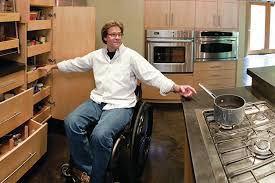
imgresTen years ago Donna and Brian decided to build a house that optimizes his independence. He thought through every aspect of his ability and explored accessible design far beyond the requirements of the Americans with Disabilities Act.

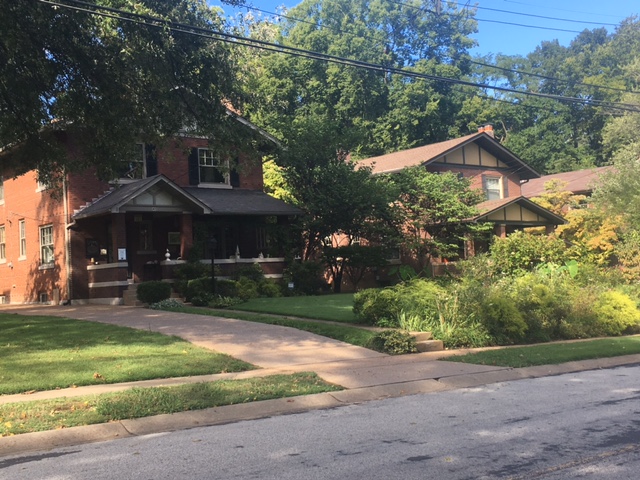
Donna and Brian built a 2600 square foot, two-story house in a historic neighborhood near downtown Kansas City. The process included commission approvals and uncooperative neighbors as well as accessibility issues. The result is a home of striking aesthetics that also happens to let a middle-aged guy eighteen years in a wheelchair lead a very independent life.

The house is a series of spaces articulated by furnishings rather than walls. The first floor entry / living / kitchen / dining space pivots around the garage in an implied curve that provides light from multiple directions and views to the street and rear garden. Toward the back is a large bathroom and guest bedroom that can accommodate Brian if a power outage disables the elevator.
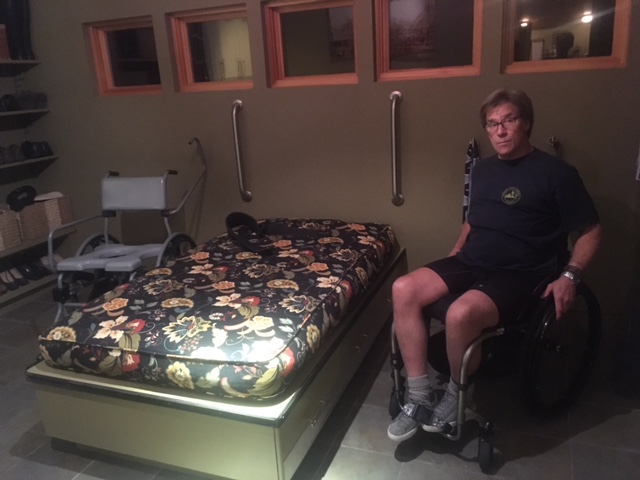
img_7341Upstairs is one large space: study, TV room, sleeping area and outdoor deck, along with a huge bathroom with separate shower and tub. The most interesting space, to me, is wrapped behind the bathroom: an ample alcove with a platform futon in the middle of the main wall. Brian can transfer from chair to platform to dress or switch to his shower chair. The flanking walls have clothes in drawers and hangers, and a front-loading washer/dryer. This space is so simple and well conceived it hardly seems designed at all. Yet it enables Brian to perform all of his regular activities without a care attendant.

Brian likes to share his house and what he’s learned with others, through his website, www.theaccessiblelife.com, outreach to spinal chord victims he meets around Kansas City, and a spread in Deb Pierce’s book, The Accessible House. He is a terrific resource for any mobility-impaired person. Not just because of what he’s built, but also because he is so open about the details of his life. I’ve designed hundreds of ‘accessible’ spaces in my career, but never really understood toileting until Brian explained his process in detail.
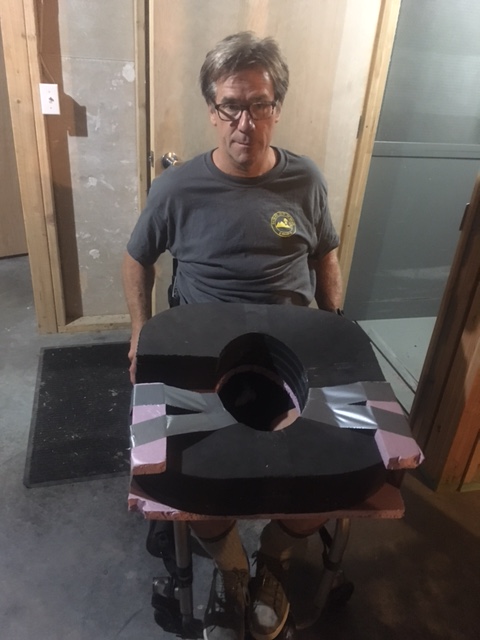
img_7342“The mobility impaired population is only going to grow. I got here early due to my accident. Ten thousand people turn 65 every day. They have been coddled since they were born. They will want good design.”

Brian wants to increase his involvement in furthering accessible design through consultation and invention. He’s prototyped a raised toilet seat that provides access to full cleaning without having to shift weight or balance. He also does speaking engagements. “My message is to design places where mobility impaired people can integrate seamlessly.”

Brian’s been in AA for over thirty years. The discipline it took him to give up alcohol has helped him persevere the grind of being partially able. He has no control over the lower half of his body, but keeps the upper half in exquisite condition. That helps him execute his favorite AA motto: “I want to do the next right thing.”

How will we live tomorrow?
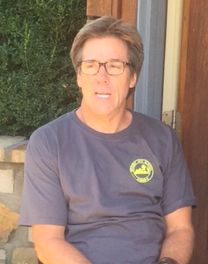
screen-shot-2016-11-04-at-11-21-26-am“What I’m really worried about is my tennis chair. I want something lighter, more mobile. Medical technology may be able to cure me, but I’m not focused on that.

“I have no fear of dying. My accident has aged me. I have an old body. If I had died, I was at the top of my game. I had this great wife, nice life. If I had died it would have been okay. But I didn’t die, so tomorrow I’m going to work out and do wind sprints and improve my tennis game and live more.”
 

Posted in Responses | Tagged , , | 2 Comments

Trip Log – Day 364 – Oklahoma City OK to Perkins OK

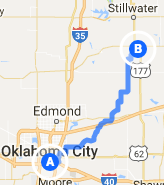
to-perkins-okNovember 14, 2016 – Sunny, 65 degrees

Miles Today: 59

Miles to Date: 18,836

States to Date: 46

Vacations are all well and good – the conference was enlightening, my niece was delightful, her three boys enchanting, and the rooms I fresh painted look good – but when you love your work like I do it’s great to be back at it, pedaling again.

screen-shot-2016-11-16-at-12-22-40-pmTurns out it was a good week to be stationary since everyone in our great land suffered a bout of disequilibrium. Who is more confused? The confident Democrats who thought Hillary was a shoo-in, the mainstream Republicans who now bow to the standard bearer they abhorred, or the Trump supporters, who relished the prospect of belly-aching Clinton crimes and rigged elections for the next four years. Now actually have to govern. There will be no fun in that.

To my mind, the only clear winner is Melania; the White House’s period rooms will set off her striking features more elegantly than her husband’s Modernist towers ever have, though I doubt she will get Michelle’s kitchen garden dirt under her nails, so that’s an instant loser. For the rest of us, the gains and deprivations will unfold with time.

img_8315Suddenly my continental meanderings take on new meaning, as if being so slow and close to the ground this entire election season empowers me to know what others missed. Tonight, In Perkins, I participated in a post-mortem dinner with a group of small town souls searching for the meaning in it all.

I did not predict Trump’s victory: no one did. But I am not surprised he won. In primary after primary we dismissed the man. In primary after primary he came out on top. Trump supporters distrust everyone and everything at the most elemental level. They’re covert operatives who provide misleading information to every arm of the political elite, and that includes pollsters. But when the curtain was drawn in the voting booth, millions of our citizens’ disgust with the Federal government trumped all other considerations.

img_8314One of my readers suggested I revise my route map to feature blue dots instead of red, in solidarity with the Democrats. My dots are not political affiliations. I am no more a Democrat than I am a Republican. I am an observer. I listen to what people say, I witness what they do, and I filter it through a sieve of human decency. My dots will remain red, my politics unaffiliated.

During the year I’ve been riding people argue we’ve suffered the most divisive election ever. I disagree. Reread John Adam’s letters to Abigail during the first presidential election ever and accept that electoral circus is a national pasttime. Rather, we have just completed an extended, exhaustive conversation about one man. Every one of us has measured ourselves against Donald Trump and determined whether he is a narcissistic buffoon or the elixir for federal indigestion. Every other player, including Hillary Clinton, has been peripheral. In the end more people voted for the woman who prepared to be President, but that doesn’t matter because The Donald concocted the winning electoral strategy.

img_8316Some people I’ve talked with call Trump a despot who, if elected, will terminate our democracy; others predict nothing will change. President Donald Trump will have a larger say in tomorrow than most of us. But he does not have the final say, unless we abdicate tomorrow to him.

Posted in Bicycle Trip Log | Tagged | 1 Comment

Profile Response: Tracy Kyle, Richmond, MO

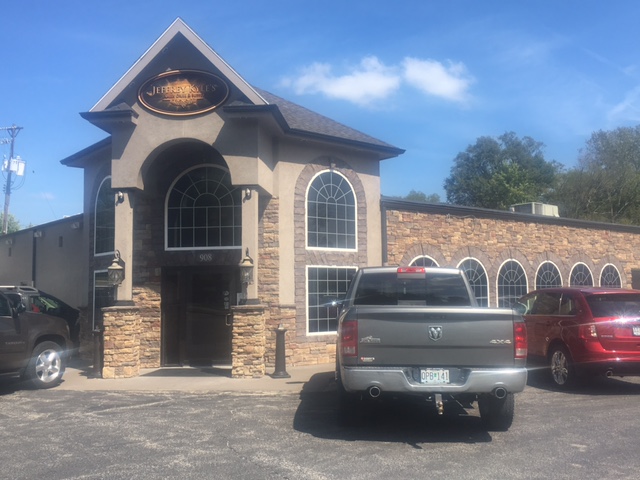
HWWLT Logo on yellowTracy Kyle works the room like she owns the place. Which she does. Ushering elderly women to their booths, clearing tables, filling waters, and greeting customers – most by their first name – the entire time. “I’ve got the biggest family ever. I know so many people.” Tracy started working at Jeffrey Kyle’s eighteen years ago, when the restaurant had another owner under another name. She met Jeff Kyle, they married, he bought the place, they had three children. Everything was good.

When he was six, their son Jeffrey died. Six months later the restaurant burned. They rebuilt it, renamed it for their son, and employed an unusual format: a buffet restaurant that also offers a full menu. “We are known for our tenderloin, which is a menu item. Some people just like to be waited on.” I asked Tracy why the buffet, at $8.59 per person for lunch, was priced bimg_7322elow most of the menu entrees. “Jeff feels that we have to remain competitive. People will go to McDonalds or KFC if we get too high.”

It is a sad commentary on our times that the only full service restaurant in Richmond has to compete with fast food franchises. The food here is fresh, real, and plentiful. True, there are more breaded items than I prefer, but Missouri is still the south and the habit of breading everything runs deep. I avoided the broasted chicken, though I did love their lightly breaded zucchini and the pumpkin bread pudding.

imgresTracy described her family’s dark time. “People ask how we survived our son dying. We have peace in the Lord. He provides the strength. He provides the Light.” Tracy will never forget what she lost, but she does not let it diminish the gifts she still has; her husband and daughters, her enthusiasm for life and her neighbors.

After I ate my hearty fill and went to the cashier, Tracy refused to let me pay. Instead we took pictures and she gave me a hug. “Can I put you on my prayer list?” “Absolutely,” I replied. I’m a small yellow thing among millions of fast moving machines. I’m eager for all the prayers I can get.

How will we live tomorrow?

img_7319“I will be here, doing what I do. I am always here. This is my community. It is where I belong.”


Posted in Responses | Tagged , | 2 Comments

Profile Response: Mat Qazi, Columbia, MO

HWWLT Logo on yellowThere’s a pattern in how people respond to the question, “How will we live tomorrow?” especially among those with an analytical bent. An initial rebuff, that the question is too broad. Then intrigue about the specific words, ‘we’ and ‘tomorrow,’ which can be defined in so many ways. Yet within a few moments, or perhaps after dinner, or even the following morning, individuals whose initial reactions of skepticism offer unique, thoughtful responses. When this happens the question has done its job: to scour our headspace and consider new possibilities.

images-1Mat Qazi is a PhD student in education from Turkmenistan, a former Soviet Republic just larger than California, yet with only five million people. “We are the Switzerland of Asia. We do not align with either super power and enjoy benefits from both.” He grew up in Ashgabat, the Capital, as well as cities in Northern Iran, and graduated college in Ashgabat.

“I chose University of Missouri because I wanted to be in a place where I was not in an international environment. I wanted the real America. Also I like nature, no pollution, fresh air. I’ve traveled to the east and west coast in two years living on a stipend. Things are easy here and good.”

images-2Mat is a keen observer of our culture. “It’s difficult for foreigners to get close to ethno-centric, supreme feeling Americans. The other day in class, there was a story about a woman fighting against ISIS to avoid rape and torture. People started talking about micro-aggression, as if they were somehow equivalent. We have lost perspective on how well we have things. It is a privilege to have micro-aggression as a problem.”

imagesBut Mat’s fascination with all things American trumps this funny and gregarious man’s criticisms. “I’ve had three cars. Each one has gotten me into different music. I had a Cadillac SDS, which got me into rap. My Grand Marquis was country. Now I drive a Pontiac Gran Pix and listen to rock ‘n’ roll.”

Mat may or may not return to Turkmenistan. “My friends are here. Right now that’s where I’m from. I was born in one place, now I am here.”

How will we live tomorrow?

img_7293

“Who’s we? There’s an infinite number of answers. I will give you a different answer two days from now.

“I am very optimistic. I will say we’ll live better. I have to believe that or I’ll be miserable. But ‘how’ better? As a PhD student I want education. Not formal education, but practical, viable education. I work in human capital theories. I believe in them. The trends go up and down. Everyone looks back and says, ‘back in the day, blah, blah, blah,’ but I think tomorrow will be better. We’ll eradicate ignorance and provide wisdom.

“Travel is a great way to learn. We are a small community, couchsurfers, who trust. That is rare in this country. Solo travel enables us to meet others. When you travel alone you learn to trust yourself and that allows you to trust others. Traveling in a group teaches you how to get along with others. Nothing is more contagious than emotion. Someone is angry – boom! – that emotion moves through the group. But traveling alone is the ultimate independence.

“I used to study literature and I have an MBA. Now, I’m studying higher education administration. My question was always, ‘What is life?’ Literature is the study of life just like astronomy is the study of stars and biology is the study of organisms. What is love? Loneliness? Sacrifice? You read and you lead these other lives and they lead you to wisdom.”


Posted in Responses | Tagged , , | Leave a comment

Responses: How will we live tomorrow?

How will we live tomorrow?

“Learning from yesterday.”

Billy Fallon, Booker T Washington High School for the Performing Arts Dallas TX

How will we live tomorrow?

“I’ve been thinking about this question and I keep coming back to being a positive person.”

Jamie Marie Fallon, VA Home Healthcare Coordinator Dallas TX

How will we live tomorrow?

“Where do I start? I think by maybe living a little simpler. We gain computer data and lose respect for how humans trust one another.”

Amanda, visiting from California, Dallas TX

How will we live tomorrow?

“Moby has this new video about technology, ‘Are You Lost in the World Like Me?’”

Ron, Steel City Pops fan, Dallas TX

How will we live tomorrow?

“In hover cars and hydroponic gardens.”

Ken, khakis and oxfords, Dallas TX

How will we live tomorrow?

“You are comfortably risky.”

Katherine Wooten, Dallas TX

How will we live tomorrow?

“About the same way we do today.”

Herman, dog walker, Dallas TX

How will we live tomorrow?

“I don’t know, but it’s really good that you’re doing this.”

Candyce, Tom Thumb Foods, Dallas TX

How will we live tomorrow?

“We believe that Jesus instituted the Kingdom of God in the here and now; that He will make it present in time. It’s called the now and not yet.”

Reverend Brendan Kimbrough, St. Peter’s Church McKinney TX

How will we live tomorrow?

“I hope the world will become a bit ‘earthy’, but the Geeks will have their way and marry us to technology.”

Ryan, British Airways pilot on furlough, Dallas, TX

How will we live tomorrow?

“How will we live tomorrow?”

Cindy, employee of Chickasaw Nation, Sulfur OK

How will we live tomorrow?

“Grateful that I have another day.”

Diane Hall, Chickasaw Cultural Center, Sulfur, OK

How will we live tomorrow?

“That depends on whether I make it ‘til tomorrow.”

Trisha, Family Dollar, Wayne OK

How will we live tomorrow?

“Hopefully greener.”

Del, Warehouse Shipper Manager, Durant OK

How will we live tomorrow?

“Whoa…. interesting time to ask that. I’m going optimistic. I will live to help others.”

Daniel, volunteer at Gatewood Elementary School fund raiser, Oklahoma City, OK

How will we live tomorrow?

“One day at a time.”

Guy, cigarette smoking, beer drinking Halloween Santa, Oklahoma City OK

How will we live tomorrow?

“We will live happy.”

Gabriella, Homeland grocery, Norman OK

How will we live tomorrow?

“Be able to go out an live your dreams.”

Naomi, Sooner booster, Norman, OK

How will we live tomorrow?

“Mary Fallon (governor of Oklahoma) has done more to damage this state in her tenure than I thought possible. We have a $1 billion deficit and she signs a tax cut for the top one percent. Where’s the compassion? The Republicans don’t want less government; they just don’t want to pay for it.

“We will have potable water. Our children will struggle for the essentials. Our grandchildren may not have a viable planet.”

Konrad Eek, photographer, Norman OK

How will we live tomorrow?

“I’m a diabetic but I cheat because it’s football Sunday. I’m only hurting myself.”

Jerome, banana split with marshmallow, strawberries and pecans at Braum’s, Oklahoma City OK

How will we live tomorrow?

“Tomorrow we will live like we do now, but more connected, more densely, and further away than ever before. That last part sounds like an oxymoron because it partly is.  I believe in the dynamism of human exploration. While the earth is yet to be 100% explored, I’m completely excited about human space exploration and it’s possibilities. And I think it will help shape how We will live tomorrow in a significant manner.  We will live here on Earth, on the Moon and on Mars within my lifetime, all in some form of connectivity with the rest of humanity as we know it.

“If cooler heads prevail, we will live simpler and wiser with a better appreciation of our humble Blue Dot and those who inhabit it with us.

“We will live the same, but different—just as those have lived before us over the last two hundred thousand years; same—but different. For better or for worse.”

Clayton Smith. Mechanical Engineering student, Norman, OK


Posted in Responses | Leave a comment

Profile Response: Corliss and Carl Thorn, Ferguson, MO

HWWLT Logo on yellow“The first time Carl told me a cyclist was coming to stay with us, I thought, ‘You invited a stranger to our house? Are you crazy?’ This guy from Korea showed up, his bicycle needed repair; he wound up staying three days. I thought I should be afraid, but he turned out okay.”

Corliss Thorn is an animated storyteller; her husband, a stoic listener. As the waitress at Marley’s Bar in Ferguson brought the second round of beers, Corliss told how her neighbor, a single African-American mother with two teenage sons, was stopped by a local police officer for running a traffic light and given a citation. The woman disagreed that she was at fault and refused the ticket. When she dropped it on the ground the officer cited her for littering. Things escalated. The officer arrested her. The woman spent hours at the police station. She got a bruise on her arm. After the altercation the neighbor called the local NAACP chapter to protest her treatment. They rejected her case: the police officer was Black. “These things have nothing to do with race. They have to do with respect. The place to contest a ticket is not with the officer; it’s in court.”

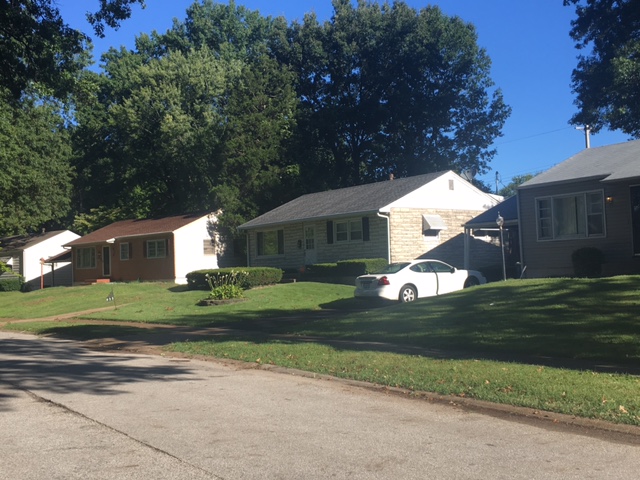
images-1Corliss and Carl Thorn have lived on the same street of small ranch houses for twenty-six years. It has always been an integrated neighborhood, though over time that’s tilted from majority White to majority Black. Like everyone I met in Ferguson they believe the attention their city received after Michael Brown’s shooting and Officer Darren Wilson’s exoneration is unbalanced, but they embrace the events as opportunity to improve. “Michael Brown was not about race. It was about respect. Michael Brown disrespected the police officer responding to a 911 call; the officer disrespected Michael Brown. A series of poor decisions on the part of the police made everything worse. Al Sharpton and the media turned it into race. Then we had riots and looting. I came home at night and heard the marches and the teargas alarms. It was scary.”

imagesSitting in Marley’s on a Saturday night, it’s hard to refute Carliss’ assessment. Marley’s is one of the most integrated places I’ve been; Black and White staff, Black and White customers. People greet each other without tension. Everyone cajoles a local drunk who wanders onto the deck begging cigarettes.

Beyond Michael Brown, my Ferguson hosts and I discussed how Carl got sent to work in Louisiana over thirty years ago, met Corliss, and brought her back to the Saint Louis area; their two daughters and four grandchildren; Corliss’ work as a pharmacy tech and Carl’s environmental safety position; their two dogs that demand constant attention; Carl’s love of cycling and Corliss’ resistance to his passion. “Who wants to ride for miles and miles? I’ve seen one tree, I’ve seen them all.”


screen-shot-2016-11-04-at-8-53-07-amWe also touched on the aches of middle age. When Carl was diagnosed with diabetes, he changed his diet, started cycling 26 miles round trip to work each day and dropped forty pounds in two months. Corliss suffers an autoimmune condition that causes indiscriminate pain.

In the morning, Corliss came back to their Korean cycling guest. “I just loved Quirt. I learned so much from him about North Korea and South Korea and the export business he ran.”

I pedaled away from their house thinking how some people turn fears to strength. How Corliss accepted a stranger into her house and came out better for it. How Ferguson suffered the judgmental glare of the world and came out more tolerant, more resilient, more respectful. Now, if we can only pinpoint Corliss’ nagging pain…

How will we live tomorrow?

screen-shot-2016-11-04-at-8-46-55-am“Same way I live today. How I wish we can live is a different story.” – Corliss

“I like science fiction shows and like how they show the future. I don’t see much changing except technology.” – Carl


Posted in Responses | Tagged , | 1 Comment

Profile Response: Linda Lipka, City Council member, Ferguson, MO

HWWLT Logo on yellowNine years ago Linda Lipka’s daughter was killed in an auto accident on I-70 near Columbia. The following day she received six college scholarship offers. Linda and her husband turned that tragic irony to good advantage by establishing a scholarship fund to worthy Ferguson youth in their daughter’s name. Four years ago a good friend’s twenty-year-old son was shot in Saint Louis. The McGartland family also set up a scholarship found. The twin funds often raise money together.

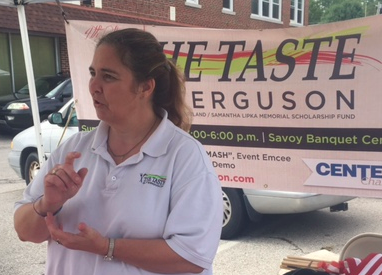
One fundraiser is The Taste of Ferguson, (www.TheTasteinFerguson.com), where over a thousand people sample food from area restaurants and caterers to raise money for the Robbie McGartland and Samantha Lipka Memorial Scholarship Fund. “We started doing this before August 2014, but it is more important than ever now. It shows Ferguson at its best.”

img_7246 screen-shot-2016-11-04-at-8-41-45-amLinda’s family has lived in Ferguson since the 1940’s. In April 2016 she was elected to the City Council. “I am not a council member. I am an advocate for the people who has a title.”

“Never underestimate the power of a smile. When my daughter died 2000 people showed up at her funeral. One girl I didn’t know came up and told me that Samantha was always nice to her, always had a smile for her, when no one else did. A single smile can save the world.”

How will we live tomorrow?

screen-shot-2016-11-04-at-8-40-41-am“What I’ve been learning is that the lessons of the past have to be respected to give hope to our future. Take what we learn, acknowledge the anger, leave it behind. Keep what each of us has to contribute to the solution.”


Posted in Responses | Tagged , | 2 Comments

Profile Response: Wesley Bell, City Council member, Ferguson, MO

HWWLT Logo on yellow“If your dreams don’t scare you, you’re probably not aiming high enough.” There comes a time when events transpire that require us to step up and participate at a higher level. Wesley Bell grew up on the north side of Saint Louis County. He attended Haywood High School East, studied political science in college, graduated law school, served as a public defender, ran campaigns for others seeking office, and had a private practice. Six years ago he began teaching law and criminal studies at St. Louis Community College- Florissant Valley. He moved to Ferguson because he liked the community.

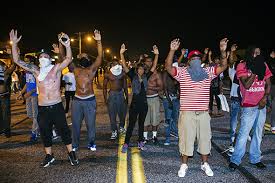
Then in 2014, Michael Brown, an unarmed Black teen, was shot by Officer Darren Wilson. Wilson was exonerated. Riots erupted. Ferguson became a national byword for police brutality or African-American overreaction, depending on where you land on the political spectrum.

images-2 images images-1

“I was never interested in running for office, but the unrest and issues behind it related to my expertise. I had support and the qualities that could address the issues.” Wesley won a three-year seat from Ward 3 in April 2015, the first election cycle after the shooting.

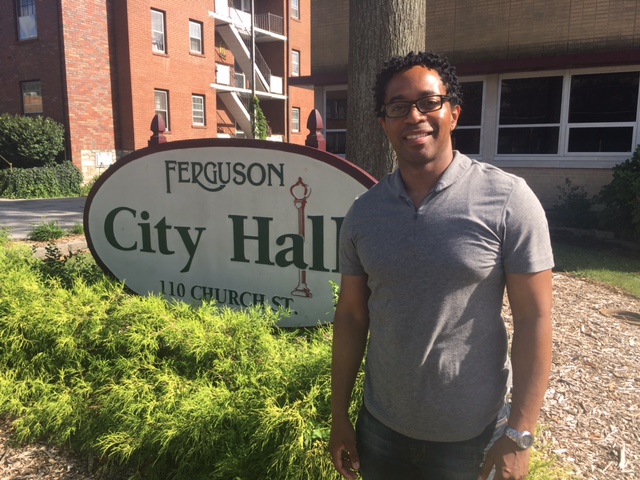
We met outside City Hall and had a far-reaching conversation on a beautiful Saturday afternoon when Ferguson, Missouri was tranquil as any town in America:

“The media focus on the unrest as if that’s all that Ferguson is about. We have a lot to address, but it’s a nice city. More businesses have come into the city since the unrest than have left.

imgres imgres-1

“Change in the police department has been both structural and attitudinal. It’s the toughest job in the world. There are cultural issues on all sides. In the poor communities people’ don’t cooperate with the police. Police have a culture of protecting each other. Both tendencies enable and protect criminal behavior.

“In our politics, especially at the national level, we try to come up with simple answers for complex problems. We can’t agree on anything and nothing gets done. It has to start with the schools. In Missouri, public schools have a $500 million deficit. Poorer communities have poorer schools. That contributes to the inequities of our prison system. In Missouri, African-America males make up about 8% of the population, but 40% of the prison population.”

img_7250 img_7254

I asked Wesley if we must have Michael Brown’s in order to create the change we deserve. “I don’t like that narrative. Michael Brown was the same age as my son. I’ve met his mother; she doesn’t want his death to be in vain. She wants his legacy to be progress, not looting. I’d like to think we could get there without his death.”


I described the range of immigrant communities I’ve visited in my journey, and the pattern of assimilation I witness over and over in every immigrant group, except African-Americans. “Don’t be baffled by that. We know why. But we have to move past it. Racism hurts everyone. It hurts individuals. It hurts economies. It limits who can buy and sell. If you’re building a police department that does not include the widest range of officers, mistakes will be made where you are underrepresented.”

I asked Wesley if he planned to run again. “Living in the most famous small city in the world, we have to live one day at a time. Serving in Ferguson, you learn by fire that you have to be accessible. You have to have public outreach. I am not a career politician. I make my stands known. If the voters don’t want my positions any longer I can go back to do what I’ve been doing.”

How will we live tomorrow?

img_7248“We are uniquely positioned to set an example of what progress and change can be. I have the honor to participate in this council. I am aware that our decisions are local, but also national and global. We are viewed as a place of police brutality but we can transcend that. These are issues that pre-date Ferguson. Ferguson can offer a path out that others can emulate.”


Posted in Responses | Tagged , | 1 Comment

Profile Response: Dana Gray and Jerry Basye, Saint Louis, MO

HWWLT Logo on yellowI arrived at Dana Gray’s home in the Southwest Garden neighborhood of St. Louis enthused about my travels in the city. “I could see the arch from the top of Cahokia Mounds, and I saw the mounds from the roof of the City Museum.” Dana laughed and burst my bubble. “Those aren’t the Cahokia Mounds you saw; it is the landfill in Illinois. It’s much higher than the Native American site.”

Dana and her husband Jerry manifest the familiar slogan, ‘Think globally, act locally.’ They own a handful of early twentieth century properties in their urban neighborhood; live in one and rent the others. They’ve organized an ‘alley’ neighborhood of connected families and planted their yards with gardens and orchards. Honey produced in their back yard won a state fair ribbon.

img_7239 screen-shot-2016-11-04-at-8-18-16-am

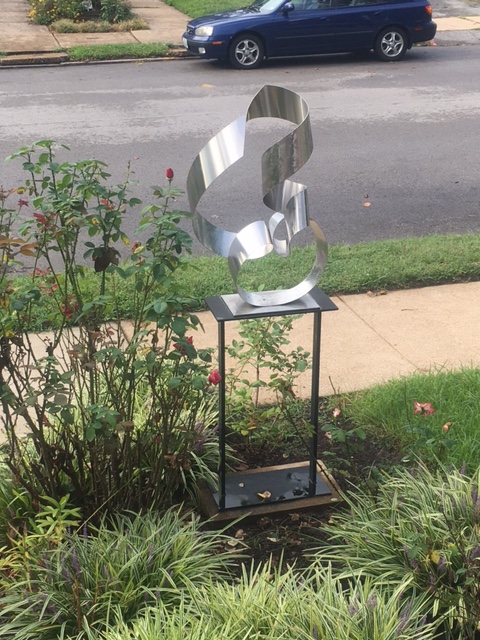
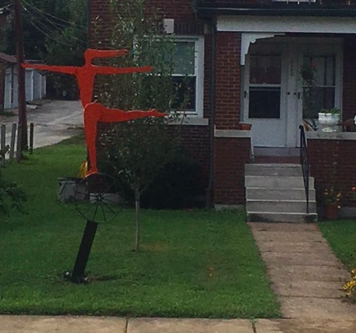
Jerry is AV electrician for individuals and companies; Dana is an art appraiser. Their home is full of striking art, and they’ve installed sculptures in front of their properties: all part of their effort to improve their immediate neighborhood in the hopes their efforts will spread.

Dana also does research on sustainable cities, focusing on alternative transportation such as bike paths and pedestrian ways. When did walking become an ‘alternative’ mode of transport?

How will we live tomorrow?

img_7237“I hope we will be undoing our mounds of excess.” – Dana (referring to the landfill in Illinois)


img_7240“We have to localize and downsize. How do I get that into one sentence? In the near future: poorly. In the distant future: probably not at all. I hope that awareness comes up. It’s not the next one hundred years that matters. It’s now that matters.

“My life is short from this point. My son and my grandchildren will live in a very different world if corporate greed goes unchecked. Look at the arctic dumping. We are changing our climate. Our current slope is a slippery down. If we can switch to centralized power we can do it cleaner.

“How do we get off our major industry being built for war? I thought the Internet would connect us, but it can be shut off at any time.

“I have a Jimi Hendrix quote on my refrigerator. ‘We will have peace when the power of love exceeds the love of power.’” – Jerry


Posted in Responses | Tagged , , | Leave a comment

Responses: How will we live tomorrow?

How will we live tomorrow?

“Your logo reminds me of the Riddler. There is a riddle in your questions. It all boils down to communication. Having a computer and social media can be a disadvantage. When people sit down and talk like this, face-to-face, there’s more respect. We have to respect each other.”

Curtis Peoples, Texas Tech Archivist, Lubbock TX

How will we live tomorrow?

“It’s going to be disconnected. We have to find our groups.’”

TR, PBS reporter, Lubbock TX

How will we live tomorrow?

“I hope for the world to continue to get better.”

Emily, camerawoman, Lubbock TX

How will we live tomorrow?

“One day at a time.

Bridget, Wal-Mart, Snyder TX

How will we live tomorrow?

“It’s a mysterious question that does make you think. I go way into the future when my grandchildren are adults. I have hope for them. Extended family is so important. I left home after college and never returned. I’m so glad my girls didn’t do that.”

Leanne Flores, quilter, Slaton TX

How will we live tomorrow?

“A better world is full of overlapping, engaged communities.”

Ann Zadeh City Council Member, Fort Worth TX

How will we live tomorrow?

“We want to make the healthy choice the easy choice.”

Ricky, Blue Zones Project, Fort Worth TX

How will we live tomorrow?

“If we can get to the point that we stop trashing our planet, that could be a start.”

Robert Solos, Sound engineer, Fort Worth TX

How will we live tomorrow?

“We’ll be too dependent on technology. If we don’t go back to nature and family we will evolve into something else. The technology advances are lateral. I want the next big thing, the vertical change that transforms education and the fundamental aspects of our lives.”

Alexa, Blue Zone Project volunteer, Fort Worth TX

How will we live tomorrow?

“We will live tomorrow in a world where humanity is in decline and the world will be a better place for it.”

Ron, former Ashram member, Weatherford TX

How will we live tomorrow?

“I’ve seen you on the news. I know God’s with you.”

Willy, victim of mistaken identity, Abilene TX

How will we live tomorrow?

“I will be here tomorrow.”

Jasmine, nursing student, Albany TX

How will we live tomorrow?

“We don’t know.”

Naji, motel clerk, Breckenridge TX

How will we live tomorrow?

“Right now we’re trying to find our way to Mineral Wells.”

Glenda, wearing John Lennon glasses, Weatherford TX

How will we live tomorrow?

“I’m taking it easy.”

Tricia, Ford Focus driver, Weatherford T

How will we live tomorrow?

“Very carefully.”

Katie, yard sale matron, Weatherford TX

How will we live tomorrow?

“I know how I’m going to live tomorrow.”

Gladys, pointing to the heavens, Dallas TX

How will we live tomorrow?

“I’m going to live for my God, since I’m a Christian. As for the rest, we have to eat, we have to breathe, you know better than me.’”

Morales, purple lined eyes, Dallas TX

How will we live tomorrow?

“Live for today, anticipate tomorrow.’”

Ryan, banana pedaler, Fort Worth TX

How will we live tomorrow?

“We’re changing every day. We’re losing our core vales, our patriotism.’”

Troy, EMS driver, Arlington TX

How will we live tomorrow?

“Simple. We need to cooperate or perish.’”

William Lewis, New Jersey native turned Texan, Abilene TX

How will we live tomorrow?

“The health of a city can be determined by the vibrancy of its downtown.’”

Doug Peters, Chamber of Commerce, Abilene TX

How will we live tomorrow?

“There are gorgeous bones to our downtown. We want to build on them.”

Jessica Adams, Vagabond Pizza Owner, Abilene TX

How will we live tomorrow?

“You have to live for tomorrow by taking care of today.”

Reggie, health administrator, Abilene TX


Posted in Responses | Leave a comment