Profile Response: Sue and Bill Cherolis, Santa Claus IN

HWWLT Logo on yellow“The way the U.S. does CAFE standards is not good energy policy.” Sue and Bill Cherolis are techies of the old school variety. Bill was a metallurgist for a variety of automobile and steel fabrication plants. Sue was a lab technician in hospitals. But that does not mean they are aligned with outdated industrial policies. “In Europe there are no CAFE standards; they don’t need them. They just have better fuel pricing, which induces conservation. You don’t see a person driving a pick-up as a personal vehicle in Europe.”

Sue and Bill built a large house on a lake in Santa Claus about fifteen miles from BiIl’s last plant assignment, with an eye toward retiring there. Last winter, their first year of full retirement, they spent two months on the Gulf Coast. The rest of the year they enjoy Southern Indiana.

imagesThey recently installed solar panels on their house and Bill showed me the distribution curve of his solar daily collection. “We have net metering in Indiana, so the utility company buys what I don’t use. You have to have that system to make solar work.”

Sue and Bill have a daughter who lives nearby and one son who’s on his fifth deployment to Afghanistan: three while on active duty and now two while in the Reserves. Another son, Tony, lives in Hartford CT where he gave up a corporate job at Pratt and Whitney and sold his car. Now he rides his bike and works at the Latino Culture Center in Hartford. It takes all kinds. Sue and Bill host cyclists in appreciation of all the people who have hosted Tony in his travels.

images-1I asked Bill if he missed work. “There’s energy in problem solving. I was a manager; I had different work every day. I enjoy being retired, but I miss that energy.” Yet retirement presents Bill with a puzzle. “We’ve saved enough to live a long time. I just don’t know how to convince myself to start drawing down. You save your whole life; it becomes your way of thinking. You can’t just turn that off and start spending.”

How will we live tomorrow?
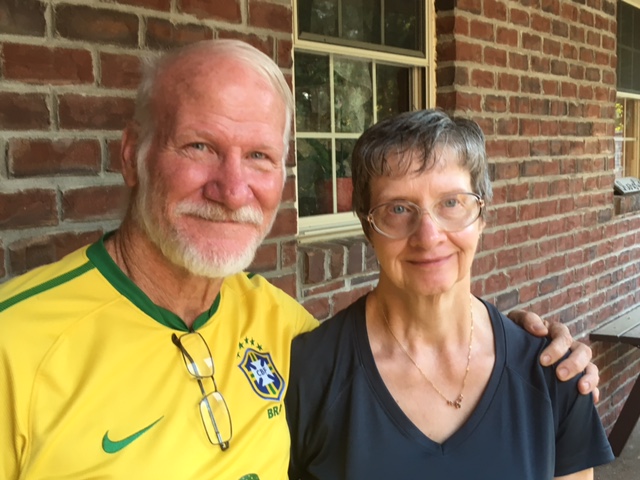
img_7143“I think the technology is going to take us places that we cannot predict. The future will be different.” – Sue

“I see a lot of turmoil on the immigration issue. We are a nation of immigrants. My grandparents came from Greece in 1914. My mother was a Smith; she came here in 1717. But they were all immigrants.

“I’ve heard of a truck convoy of semi’s where the lead is actually driving and the rest are automated. The steel plant I worked at in the mid-1970’s had 20,000 employees. Now it has 1700. It makes as much product, of better quality. Automation doesn’t get rid of all work, but it’s a different kind of work. It’s problem solving, not muscle.” – Bill

Posted in Responses | Tagged , , , | Leave a comment

Trip Log – Day 357 – McKinney TX to Durant OK

to-durant-okOctober 27, 2016 – Sun, 80 degrees

Miles Today: 75

Miles to Date: 18,568

States to Date: 46

Kudos to me: I have survived Texas yet again. The first time I exited the Lone Star State I enumerated the finer points of heckling. After 18,000+ miles, I’m keyed into the hazards cycle tourists face living on the shoulder. Pedal at your peril:

hazard-10

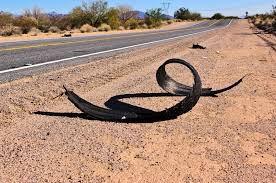
  1. Shoulder debris

hazard-09

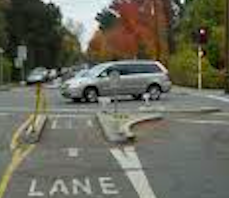
  1. Right turns from side street. Make eye contact with everyone entering from the right. Curse those tinted windshields.

hazard-08

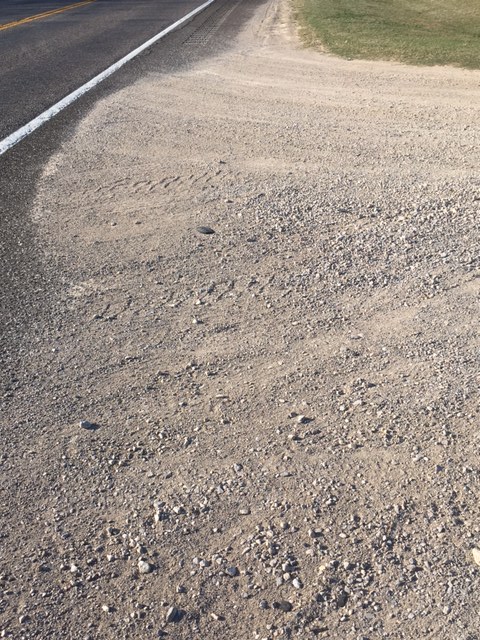
  1. Shoulder gravel. Slow down or skid.

hazard-07

  1. Trucks passing cars in the oncoming lane. They gun right down on you.

hazard-06

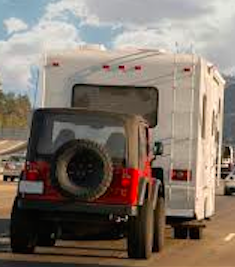
  1. RV buses pulling autos, usually driven by retired men without commercial license who are Masters of the Universe in their minds but don’t really understand how big their rigs are. Oh, and they sometimes forget to push the side steps under the chassis before pulling out of their driveway, which can clip you right in the ankle.

hazard-05

  1. Right turns from behind. People in a hurry, which is pretty much everyone, will not yield to a cyclist.
hazard-04

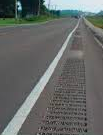
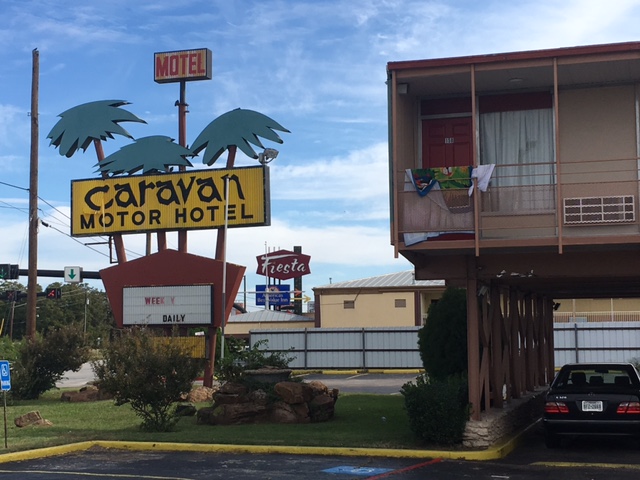
  1. Rumble strips in the shoulder. Instant migraine.

hazard-03

  1. Darting across a main road from a side street. Who looks for cyclists?

hazard-02

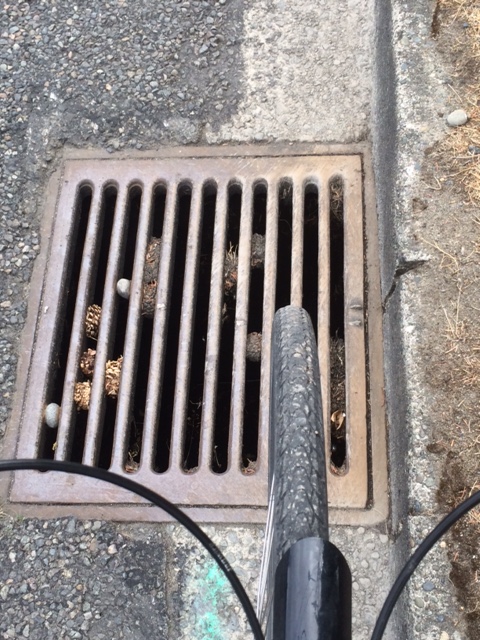
  1. Single direction drainage grates aligned with your tires. I yield to all drainage grates. Get your tire stuck in one of these and you’re flying over your handlebars.
hazard-01

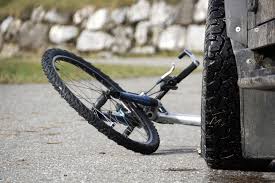
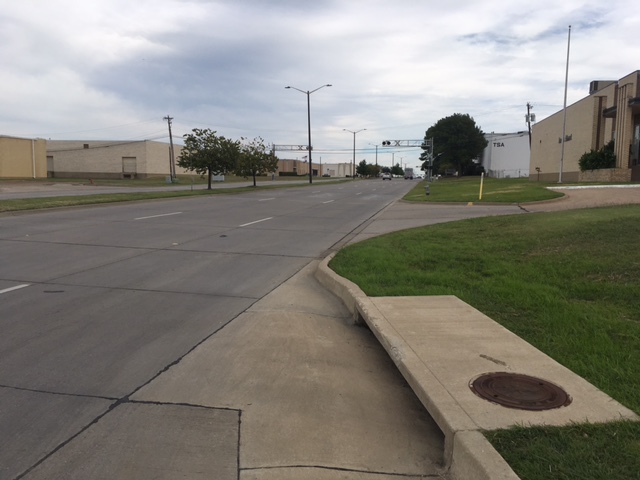
  1. Unsignaled left turns. Been there, done that. Can’t blame that one on Texas, but I am wary of it at every intersection.


Posted in Bicycle Trip Log | Tagged , | Leave a comment

Responses: How will we live tomorrow?
How will we live tomorrow?

“By overthrowing the democratic process, by rewriting the Constitution by rewriting the textbooks.”

Shane, beer chug contest winner, ace marksman, Lubbock TX

How will we live tomorrow?

“This is post-debate. I have made a career of helping others. I will continue to help people regardless of who is in the White House.”

Ben, two lattes to go, Albuquerque NM

How will we live tomorrow?

“When you look at that guy (Trump) you see an unhappy person. He touches a vein in all of us.”

Giuseppe, owner of Mimmo Espresso Albuquerque NM

How will we live tomorrow?

“By enjoying today.”

Lisa, fitness cyclist, Albuquerque NM

How will we live tomorrow?

“That’s a great question.”

Patrick, RV driver, Wagon Wheel NM

How will we live tomorrow?

“Hopefully at peace. At one with nature.”

Katie, dog walker, Albuquerque NM

How will we live tomorrow?

“One day at a time.”

Al, dog walker, Albuquerque NM

How will we live tomorrow?

“Hopefully, breathe.”

Tito, owner of Coronado Motel, which gives discounts to cyclists, Fort Sumner NM

How will we live tomorrow?

“I take that as an encompassing ‘we.’ I’m worried about the election. Not so much the outcome but the toxicity its generated, the latent racism, Muslim-phobia, that is going to drive our agenda. I’d like to think that if Hilary wins it’ll be fine, but I don’t think so. These forces still remain. For me, I’m here at a poetry conference exploring my creative side.”

Gary Alexander, poet, Ghost Ranch NM

How will we live tomorrow?

“I think about how I will live and I hope others will follow. I want a life that’s more authentic, what makes me tick as Tricia rather than mother, wife, and sister.”

Tricia Alexander, Indian bracelet wearer, Ghost Ranch NM

How will we live tomorrow?

“Hopefully in a more positive way than we live today.”

Lissa, reference librarian, Clovis NM

How will we live tomorrow?

“We can’t say.”

Rita York, Dave’s Foods, Fort Sumner NM

How will we live tomorrow?

“How do you deal with the weather? I’m freezing.”

Maria, on a 50 degree morning in Clovis NM

How will we live tomorrow?

“I don’t know.”

Tanya, Dinner Bell Restaurant, Muleshoe TX

How will we live tomorrow?

“One day at a time. I’m a free spirit.”

Jennie, Ace Hardware, Levelland TX

How will we live tomorrow?

“I saw this poetry / rap thing that was all about living tomorrow, following your dream. I want to do that, but now I’m in school.”

Kami, South Plains College music student, Levelland TX

How will we live tomorrow?

“Only God knows, and he’s not telling.”

Ed, retiree, Levelland TX

How will we live tomorrow?

“You are living tomorrow.”

Mario, drives a pink pick-up truck his lady rejected, Levelland TX

How will we live tomorrow?

“Wow. My grandkids will run me tired.”

Petra, Tienda’s Restaurant, Levelland TX

How will we live tomorrow?

“I will live as a hard-working man. I have two jobs to support a little girl who smiles because she loves the private school she goes to.”

Carlos, waiter at Leal’s, Clovis NM

How will we live tomorrow?

“How we live today.”

Lance, prepper, Hockley County TX

How will we live tomorrow?

“The futurist Esfandiary said, ‘Try as you might you cannot imagine how wonderful the future will be. Think of the caveman. He could never imagine how we live. We cannot imagine how we will live 100 years from now.’”

Randy, founder of Quest for Community Santa Fe NM


Posted in Responses | Leave a comment

Trip Log – Day 356 – Dallas TX to McKinney TX

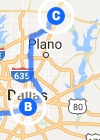
to-mckinneyOctober 26, 2016 – Sun, 80 degrees

Miles Today: 44

Miles to Date: 18,493

States to Date: 45

161025-dallas-freewayScottsdale is stylish money, Boston is old money, San Jose is tech money, New Orleans is fun money, La Jolla is laid-back money, Altoona is hard scrapple money, East St Louis is no money. Dallas is simply money – lots and lots of money. One of my hosts, who’s lived here thirty years said, “I can never get over how much money there is in this city.”

img_8132 img_8131 img_8130

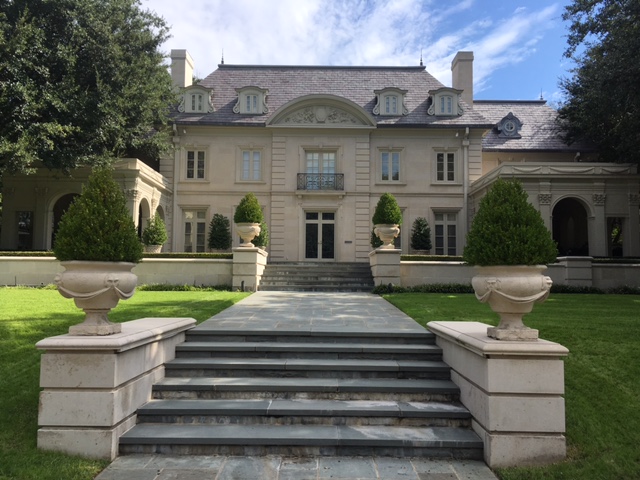
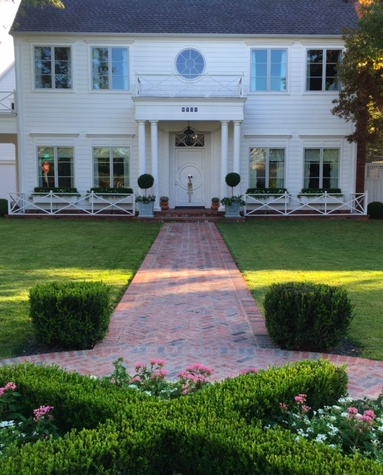
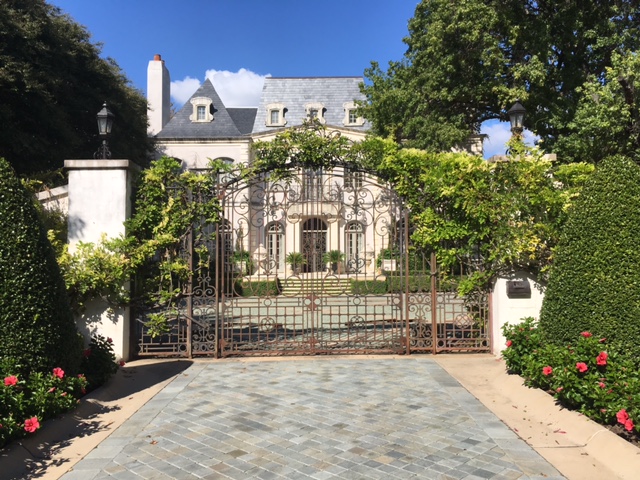
Indeed, my trek from Uptown, along Turtle Creek, through Highland Park, University Park and Preston Hollow, Northeast Dallas and Vickery Meadow, Plano, Allen and finally McKinney took me through miles and miles of million dollar homes. There are subtle differences among these neighborhoods. Closer in, architectural styles vary, but symmetry rules. Order conveys power.

img_8141 screen-shot-2016-10-29-at-6-33-27-am img_8139

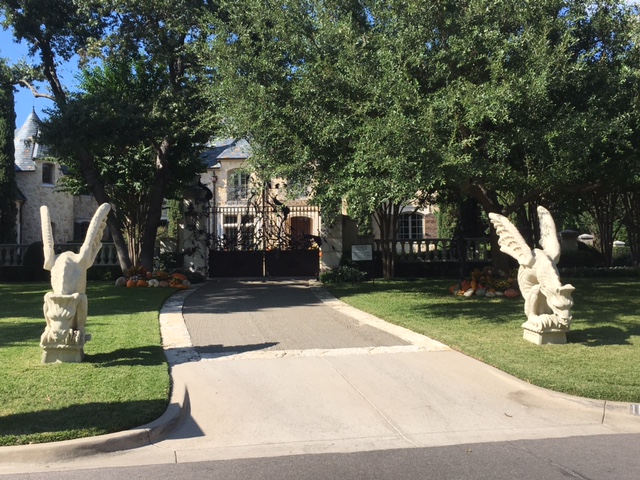
Further out, everything is vaguely English and arbitrarily asymmetrical. Roofs have too many gables and hips to count. On one street, every single house had a turret. Which, of course, neuters the whole idea that turrets define corners.

screen-shot-2016-10-29-at-6-36-11-am

Rich people in Dallas buy what all America’s purchase with their money: privacy. As a result, it is rare to meet an actual human. Houses are self-contained and air-conditioned, garages are attached. There are few parks, few sidewalks, no place for a cyclist at all. People walk their dogs in the morning and evening, and offer uniformly pleasant greetings. Canines remain humanities best hope.

img_8142Of course, with money comes excess. Why place a pumpkin on your porch when you can scatter enough along your curb to feed an entire village in the developing world.


Before you decide I’m too harsh on The Metroplex, I will mention two things I absolutely love about Dallas.

imagesFirst, Steel City Pops, Lower Greenwood that serves up frozen concoctions for a mere three dollars. I will long remember my creamy pumpkin treat. At first bite you think, ‘I wish Steel City was everywhere.’ Then you realize, no, you are glad there are only a few locations for this unique experience.


img_8156 img_8158

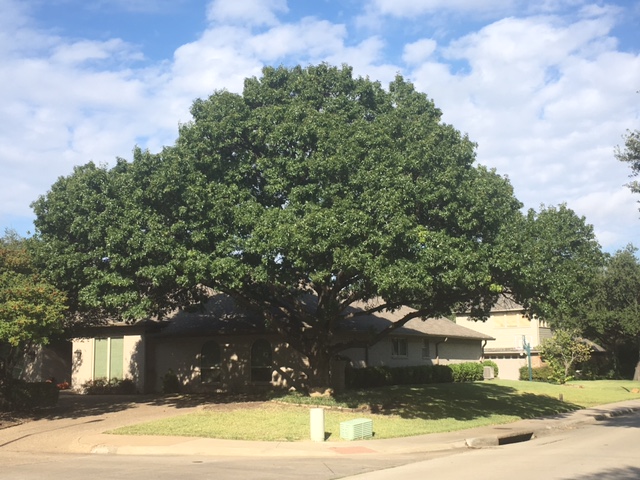
Second are Dallas’ commanding street trees: huge dome-shaped bouquets with wide arms that often span across the pavement. The best streets have one huge tree on each front lawn. In subdivisions of low-slung mid-century ranches, the trees create a canopy that links the shallow roofs. All Dallas really needs is for the citizens to come outdoors, sit in the shade of their magnificent specimens, and chat. It won’t happen; there’s no money in that.


Posted in Bicycle Trip Log | Tagged , , , | 2 Comments

Trip Log – Day 355 – Dallas TX

to-dallasOctober 25, 2016 – Sun, 75 degrees

Miles Today: 12

Miles to Date: 18,449

States to Date: 45 

I voted today. It wasn’t easy: sending a letter to the Cambridge Election Commission a month ago, requesting a ballot mailed to an address where I would land after the October 12 mail out date with enough time for it to get back to Cambridge before November 8, filling in the oval circles, pedaling to a imgrespost office in Dallas, just to have my vote counted in a state where my ballot won’t possibly matter. Massachusetts is blue as the Texas sky.

By any economic measure, voting is a waste of time, unless perhaps you live in a swing state. But if I’ve learned anything in my year on a bicycle it’s that economic measures are often too meager. I take the time to vote because it’s a civic right; a tangible, if tiny, way to participate in our governmental process; a process that will only get better if more people vote. In a world where a mere 13% of people live in ‘full democracies,’ I vote because I can.

screen-shot-2016-10-26-at-3-51-49-pm screen-shot-2016-10-26-at-3-51-21-pm

I hope that you vote too, by absentee ballot, by early voting, or on November 8. It is our privilege. It is our responsibility. It is how we shape our nation.

screen-shot-2016-10-26-at-3-50-41-pm


Posted in Bicycle Trip Log | Tagged , | 1 Comment

Profile Response: Broom Family, Corydon, IN

HWWLT Logo on yellowKatie and Nathan Broom lived in Oregon for several years, as did Katie’s sister Mims and her husband Dan. A few years ago they returned to their Southern Indiana roots to raise their children near their mother, their siblings, and their children’s cousins. The cost of living in Indiana is less than Oregon; they can live comfortably on Katie’s work as a case manager nurse; Nathan stays home with the children. Still, it was the pull of family that brought them home.

I joined them for chili and beer one evening: three couples (add longtime friends Heidi and Mike), mom, and five children ages three to eight who prepared an impromptu musical on piano, harmonica and accordion for us after the meal.

How will we live tomorrow?

screen-shot-2016-10-24-at-11-54-29-am“Jet packs and light sabers.” – Mike

“It’s the connectivity; staying ahead of technology but not letting it overrun you. Every company is charging ahead on the Internet of Things without really understanding it. Our institutions are not prepared to establish the parameters of big data, drones and technology.

“Our daughter needs to make smart choices about technology. The corporations will not do that. We need to direct it to be human-centered rather than corporate-centered. She is beginning to self-regulate her technology intake, just like she is learning to do with her food intake.” – Heidi

“I’ve seen Wall-e. It is my fear of the future. The humans cannot even stand up. Will we still want to walk? Will we take care of our bodies? I fear the end of pedestrian life. It also affects our community. In Wall-e the humans don’t even interact except with devices.

“I teach German. I was recently doing German translation and realized I was looking for the computer to give me prompts. It was beyond spell-check, it was thought prompt.” – Mims

“The more people connect to the Internet, the less they connect with nature.” – Mike

“I hope we will find community with others, with our neighbors. We need to promote community, neighborliness, and emphasis on church and family. And we can’t cut down all the trees! I saw an I-beam the other day made up of little pieces put together We don’t have any big trees left.” – Mom

“Two-thirds of the people in the United States have never seen the Milky Way. We have no more dark skies.” – Mims

“I recall seeing shooting stars. Will our children see shooting stars? We will lose the small things.” – Mom

“The question of how we will live tomorrow depends on where you ask it. In America, we want to preserve and keep. We want to maintain what’s good. Its human nature to keep what we think is good. One hundred years ago things weren’t better or worse; it was just different. One hundred years from now we will have a different life and it will be better and worse. No one could have imagined the Internet. It’s good and bad. You lose things. Time goes on. You gain a lot too.

screen-shot-2016-10-24-at-11-54-07-am“I feel hopeful that Americans will realize how much we have and we’ll want to share more. It won’t be a sacrifice; it will just be what we do.” – Katie

“We’ll live much as we do now. I’d like to have less fear. Our fear is related to what we have. The less one has, the less fear he feels to lose it. Our possessions, our education, are burdens we carry to the future.

“Cora asked us once if we were rich. When I thought about it, I replied ‘yes’. Not compared to all Americans, but compared to the rest of the world. If you define the rich as the one percent, we don’t make the cut, but I feel rich.” – Nathan


Posted in Responses | Tagged , , | 2 Comments

Trip Log – Day 354 – Dallas TX

to-dallasOctober 24, 2016 – Sun, 75 degrees

Miles Today: 16

Miles to Date: 18,437

States to Date: 45

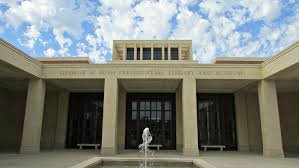
Every presidential library reflects the nature of the man it portrays. Here is the letter I sent to the visitor email address after my visit to the George W. Bush Presidential Library and Museum:

imgres

Greetings –

I am a cyclist on a journey to visit the 48 contiguous states. Along the way I ask folks the question, “How will we live tomorrow?” So far, I have travelled over 18,000 miles, visited 45 states, asked thousands of people my question and profiled over 400 individuals and organizations about their view of our future. The adventure has revealed American’s innate generosity and trust.

I’ve also visited nine presidential libraries. On Monday October 24 I visited library number ten: The George W. Bush Presidential Library. I thought you might be interested in the reception I received.

I locked my bike to the rack at the bus stop along the main road. I entered the library courtyard, in my yellow cycling shirt, carrying a pair of yellow panniers. A gentleman in a blue blazer with numerous pins on his lapel approached me. “Are you delivering pizzas?” “No,” I replied. “Then what are you here for?” I told him I was here to visit the museum. He gave me a look of doubt. “I thought you were delivering pizzas.”

I proceeded to the security area. The first words from the guard were, “What are you delivering?” With little patience, I told her that I wasn’t delivering anything. “So what’s in your bags?” I told her I’m a long distance cyclist; these were my belongings. “I hope you know you’ll have to check them.” I said, “Of course I want to check them.”

In my cycling clothes I look no more like a delivery person than you do in your office attire. However, I do look very different from people wearing street clothes. The message that your staff conveys loud and clear is, ‘if you look different you will be treated with suspicion rather than respect.’

After visiting hundreds of public places and private businesses in my cycling uniform and being greeted with curiosity and good cheer by oil company executives, permaculture farmers, police officers, and homeless individuals, I am appalled by the unprofessional manner in which your staff addressed someone differently dressed. I hope you are as well.

The message of compassion expressed throughout the exhibits of the George W. Bush Presidential Library do not ring true after a person is so rudely treated by the museum’s staff.


Posted in Bicycle Trip Log | Tagged | 6 Comments

Profile Response: Saad Riaz, Louisville, KY

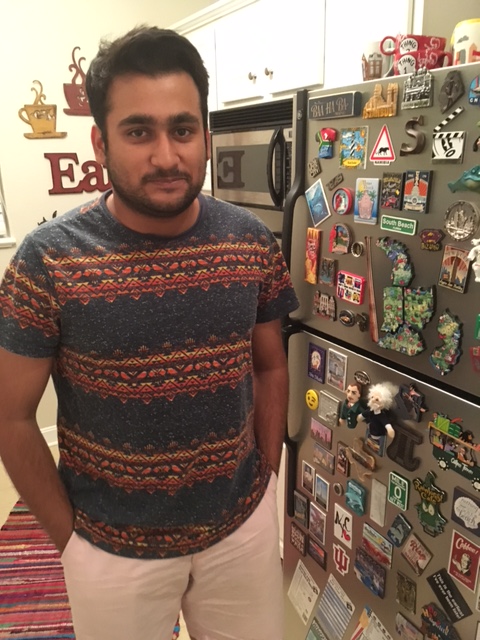
HWWLT Logo on yellowSaad Riaz came from Islamabad Pakistan to study in the US on a F-1 student visa. He’s a fraternity guy who doesn’t drink, and a Muslim who champions women’s rights. He manifests that ideological openness that accompanies exposure to a wider world

Saad graduated from Worcester Polytechnic Institute in Massachusetts last December and joined a two-year rotational internship program at Saint-Gobain as an automation engineer. His first assignment is working in a plant in Carrollton, KY about 45 minutes from his apartment in East Louisville. “I like engineering. Actually, I like the technicals, in theory. What I really like is working with people.”

During college, Saad spent three months in Namibia on a field project working with the Department of Tourism as part of his education at WPI. He enjoyed the intersection of engineering and policy. He also gained a deeper appreciation for his home country. “When I went to Namibia it was the first time I really appreciated Pakistan.”

imgresSaad was a founding member of the WPI Chapter of Beta Theta Pi fraternity and has become very involved in the fraternity, which has a focus on leadership and differentiates itself from most fraternities in that all new chapters are dry. He hopes to mentor at the University of Louisville chapter.

imgresHe’s also involved in UN Women, a group with Emma Watson as its spokesperson that engages men in issues of gender equality. “America opened my eyes to it. Inequality exists in Pakistan, but it’s not in the open. Most countries are alike with similar problems. The U.S. is different; the problems here are different because it is so diverse and so open. I come from a country where culture is more coherent but less clear.” Saad sees that changing. “In Pakistan we never talked about gender equality, but now, very recently, we do.”

How will we live tomorrow?

img_7110“When I think of the question it’s more near than way in the future. I don’t see anything easy in the next two to three years for the U.S. and the world. The election is a mess. The next few years will establish our direction. Right now, it’s difficult for everyone.

“In the longer term we will move to more globalization. In the short term Brexit and Trump are counter to that. Now we know that there are people who still want their own country, their own values. When the election’s done, when Brexit is settled, we’ll see where we land. But eventually, globalization will win out. At least, that’s what I think.

“What matters is what people think of as ‘we’. For me, ‘we’ is all of us. I don’t think of myself as anything beyond the world community. I am Pakistani. It has its values and culture, but it is not my ‘we’. I’m a Muslim and could see the world through that perspective, but I don’t.”

“It will get a little harder for now, but in the long run, I think it will get better.”


Posted in Responses | Tagged , , , , | 2 Comments

Trip Log – Day 353 – Fort Worth TX to Dallas TX

to-dallasOctober 23, 2016 – Sun, 75 degrees

Miles Today: 49

Miles to Date: 18,421

States to Date: 45

The United States is emptier than most people think. When we drive freeways at rush hour, fill up mall parking lots on weekends, load warehouse goods in the morning, or descend on baseball stadiums for a night game, we populate places for a particular activity. We associate them with bustle and crowds. But there are hours, days, entire seasons when these places sit unused. The inevitable result of an environment cordoned into specialized zones in a nation of excess, if ill maintained, infrastructure.

I spent a Sunday pedaling from Fort Worth through Arlington, Grand Prairie and Irving to Dallas, aka The Metroplex. What does the fourth largest SMSA (Standard Metropolitan Statistical Area) in our country (after New York, Los Angeles, and Chicago) look like on a mild autumn afternoon? It’s mostly empty.

img_8111 img_8115

Arlington is the sports and entertainment center of the Metroplex, home to Six Flags Over Texas, Ranger Stadium, and Cowboy Stadium. But the city’s main street is a former US Highway whose traffic has shifted to the nearby Interstate. What’s left are used car lots, repair garages, pawn shops, fried chicken in any shape, and budget motels.

img_8116 img_8117

The industrial zone is a no man’s land.

screen-shot-2016-10-24-at-4-36-56-pm

Houses in Grand Prairie have designer grates that hide any life within.

img_8120

On a perfect cycling afternoon, even the bike path in Irving is empty. Most Americans are watching their favorite football teams. The only humans I saw were Indians playing mad cricket.

img_8123 img_8125

Downtown Dallas is full of vacuous plazas where groups of poor people huddle in shade and a guy with a megaphone barks the Gospel. I.M Pei’s City Hall is brutal modern architecture with the subversive message that government could topple and crush us. Another example that just because we have the technical capacity to build something, doesn’t mean it’s a good idea. The First Baptist Church complex is also a hodgepodge of meaning. Yes, there’s a cross. But everything else looks mighty corporate to me.

img_8122

I really loved the cattle sculpture stampeding through Pioneer Square. There were more of them than humans. Actually, I rather liked the entire day. I got to pedal through every kind of landscape: residential, civic, industrial, retail, natural, without having to bother with any people.


Posted in Bicycle Trip Log | Tagged , , , , , | Leave a comment

Profile Response: Tatiana Fallon, Louisville, KY

HWWLT Logo on yellowI never met Tatiana Fallon, my niece by marriage, or her two daughters, Sarah and Anna, before pedaling up to the house in Louisville that she shares with her sister’s family. Tatiana married my nephew Andrew five years ago. He was in Salt Lake City when I was in Kentucky, so I missed him on this visit.

Like so many Mormon women I’ve met, Tatiana is a full-time devoted mother with a strong educational bent for herself and her children. Tatiana ran a political campaign at age 19, worked as a lobbyist for Citizen Action, graduated from Southern Utah University in Cedar City Utah, and hopes to attend law school. But while her two girls are toddlers, Tatiana is a stay-at home mom.

img_7066 img_7067

Tatiana’s a voracious reader who savors books after the girls are in bed. Right now she is deep into Daron Acemoglu’s Why Nations Fail (which I reference in Architecture by Moonlight). “It’s an incredible book. He explains how, in the South, the political systems are still in effect even after the economic system that created them is finished. Its why we’re still fighting the Civil War.”

How will we live tomorrow?

img_7070“I’m a huge historian. I believe in Strauss and Howe’s approach. They are historians who put American History into four cycles:

  1. The Awakening
  2. The Unraveling
  3. The Crisis
  4. The Founding

Each cycle repeats every 80 to 100 years; each phase occupies about a generation. My generation is The Hero Generation, yours is The Prophets. There are also Nomads and Artists.

“Thomas Paine wrote, ‘You must suffer change or die.’ We are entering The Crisis phase. We will move from a focus on The Self to a focus on family and community. The rise of narcissism and addiction is a result of our lack of community.

“As far as the world is concerned, we need to see ourselves as more united. If we can do that, we can address the big issues of our time.”


Posted in Responses | Tagged , , , | Leave a comment