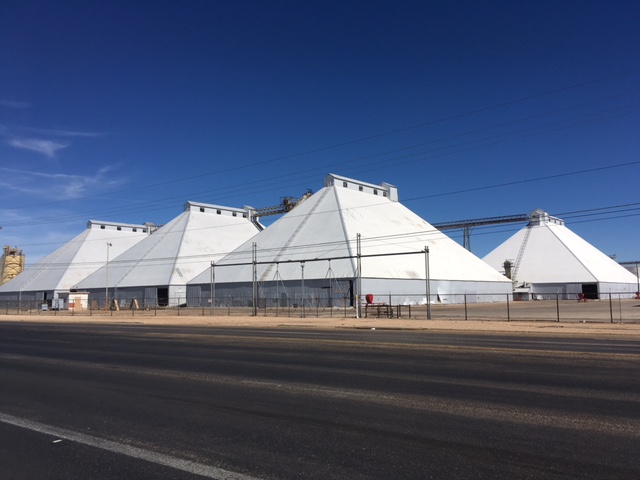
Trip Log – Day 352 – Weatherford TX to Fort Worth TX

to-fort-worthOctober 22, 2016 – Sun, 75 degrees

Miles Today: 45

Miles to Date: 18,372

States to Date: 45

Pete Parsons, a Texas gal of supersize personality, has put me in touch with fascinating people all across my journey. She outdid herself in setting up a meeting with Fort Worth Mayor Betsy Price, a cycling enthusiast and health advocate. Mayor Price and I met at the Blue Zones Project Festival at Bluebonnet Circle near Texas Christian University.
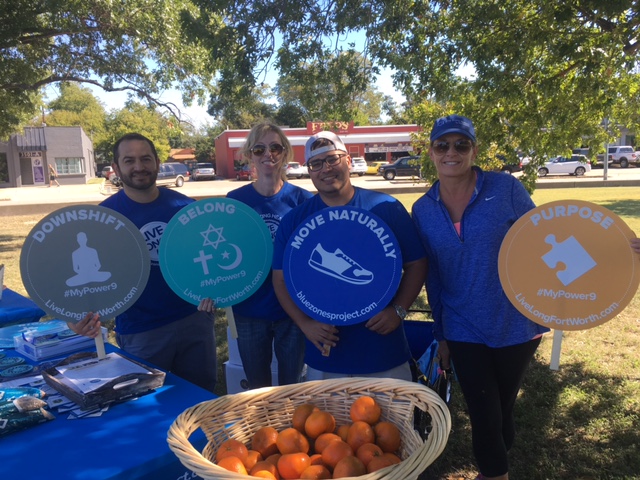
img_8081A number of cities across the United States have initiated Blue Zone Projects to encourage people to make choices that extend life and health according to the precepts of the world’s Blue Zones. There are about thirty communities in the US with active projects supported by local non-profits and foundations. Fort Worth is the largest city to fund a Blue Zones Project. The city monitored its relative health by several parameters before the project started, funded the initiative through 2018, and will assess them at the completion. The project works with individuals to take the ‘Blue Zone 9 pledge’, employers to incorporate movement and mental release in the work place, and educational groups to spread the message. Fort Worth hopes to become a designated Blue Zone City, for improving Blue Zone attributes (which is not the same as being a Blue Zone; that represent generations of behavioral traits).

screen-shot-2016-10-23-at-4-49-05-pmSteve, my host for the night, took me to a feast of barbeque ribs, cheese biscuits and local beer with his Marine buddies. Not exactly Blue Zone food, but there was a pan of green beans for color and we passed around a salad, sort of like swilling the vermouth bottle over a martini. Patrick asked if I was Steve’s dad, so everyone called me dad all night. Ryan, who served with Steve in Iraq, is a founder of the Decentralized Dance Party movement. DDP orchestrates massive public dance parties; 63 cities around the world so far. Tonight we did something smaller but equally thrilling: banana pedaling through Fort Worth’s downtown.

img_8095 screen-shot-2016-10-23-at-4-50-46-pm

img_8093Three active duty marines, two retired jarheads, two girlfriends, and me slipped on banana suits, drove downtown, and rode our bikes through the city streets on a busy Saturday night. Dance tunes blared from the suitcase turned boom box strapped to Ryan’s bike. Fort Worthian’s high fived and fist pumped us as we slipped along the sidewalks, circled the convention center plaza, and sped down the ramps of Tarrant County College. We ran into a group of skateboarders in an empty parking garage, rode up to the top and careened down seven floors of concrete ramp. I was last in line when an elegant woman outside of Circle Theater asked if I was their chaperone.
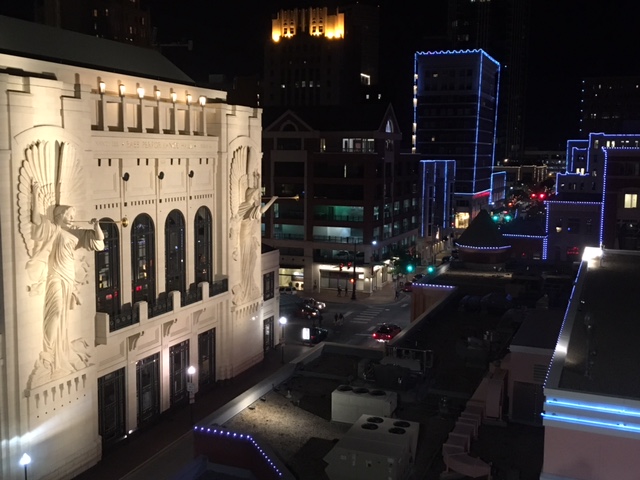
img_8101Truth is, I did tire first. Despite the exhilaration of the night breeze and downtown lights, by midnight I was keen to hit the sack. The sound system broke down a half hour later. Ryan was bummed but I was ready to call it quits. We got to bed just before two. If the tunes kept flowing, who knows how long we would have cycled downtown Cowtown?

Posted in Bicycle Trip Log | Tagged , , , , | 2 Comments

Profile Response: Tony Sciotti, Louisville Slugger, Louisville, KY

HWWLT Logo on yellowBat day at Connie Mack Stadium, 1965: I got a Louisville Slugger engraved with Richie Allen’s signature. I slept with it that night, hoping some of his power would rub off on me.

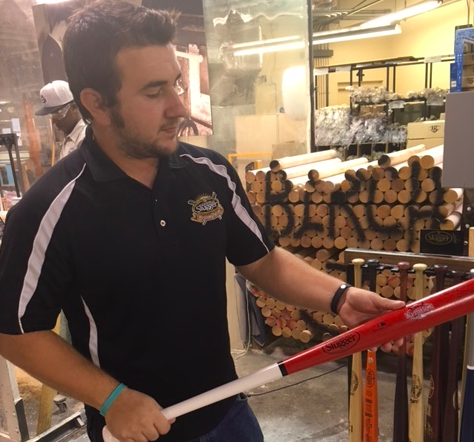
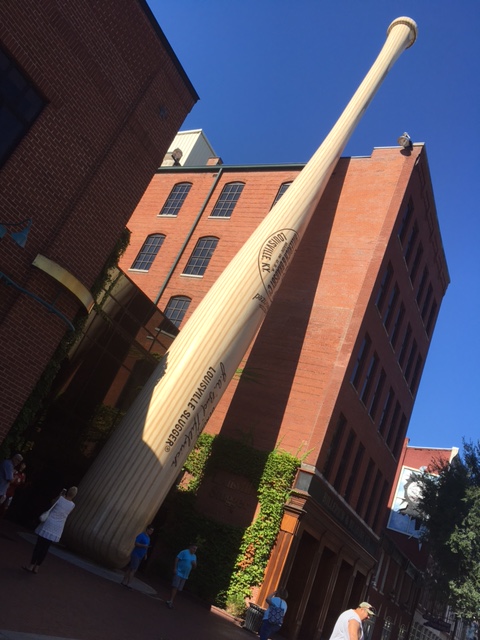
Louisville Slugger Factory, 2016: Tony Sciotti toured me through the place that bat was made. Tony played baseball in high school in Rochester, NY and in college. After he interned at Louisville Slugger in 2013, he stayed on. “It’s a way to keep myself in the game.”

img_7076I am enthralled by factory tours, amazed at the complexity of fabricating everyday objects and the sheer volume of stuff we make. Louisville Slugger creates 1.8 million bats a year in a factory that occupies the first floor of an industrial building in downtown Louisville. The place seems small for such volume, especially since groups on factory tour wind through the workplace seven days a week.

Louisville Slugger bats fall into four main categories: custom bats made for professional baseball players, retail bats sold throughout the world, commemorative bats, and miniature souvenir bats.

Seventy percent of MLB players use Louisville Slugger bats. The company makes 100 to 120 bats per season for each of them. A player typically uses a bat for four to six games. Louisville Slugger will turn a custom bat for any player, modifying the weight, length, profile and wood to his preferences, but most select from the over 3,000 unique bat designs that Louisville Sluggers has created over the years.

img_7084The tour begins with a demonstration of old-fashioned hand turning with caliper measurements to replicate a particular profile. Hand-turned bats made between 1880 and 1980 took thirty minutes to shape. Today, retail bats are shaped on a turning lathe in 25 seconds. They produce 2,000 a day. As I have observed on other factory tours, the more precise work is the most automated, Bats for specific major league players are made in small batches on a CNC Lathe (Computerized Numerically Controlled) that fabricate identical bats within 1/1000 of an inch even faster.

img_7088 img_7087

Once the wood is turned, bats are stained and finished. Although Louisville Slugger can make a bat any color, there are specific MLB approved colors and stains, and three label options. “Don’t hit the ball on the logo. It is placed purposefully in the area of weakest grain.” Every MLB player also gets ten pink bats on Mother’s Day, which are auctioned off after the games to raise money for Breast Cancer.

img_7091The factory has overhead misters to keep the relative humidity at 40%. It generates 35,000 pounds of sawdust per week, which a chicken-farming cooperative in Indiana collects for roosting.

Almost half of the bats Louisville Slugger makes are commemorative or souvenir. Coca-Cola orders 25,000 personalized bats a year. Louisville Slugger makes bats for all-star games, for the President. Everyone loves a Louisville Slugger.

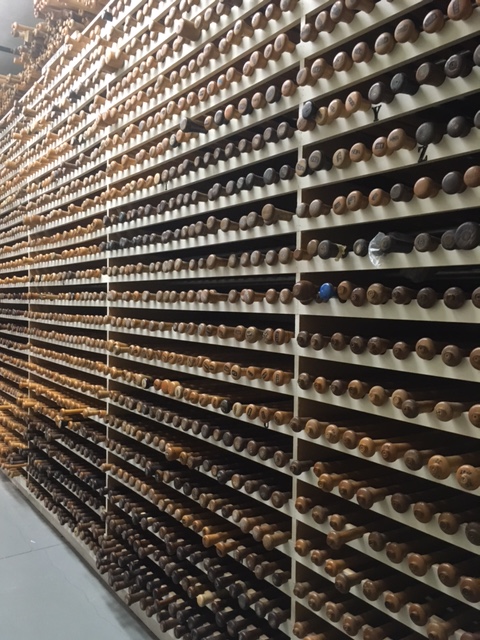
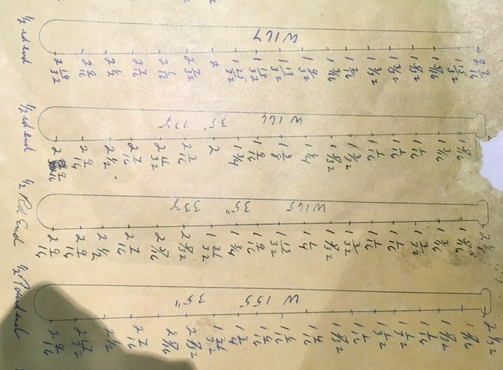
img_7095Tony took me inside the Bat Vault, where they preserve more than 3,000 custom designs created over one hundred years: the bats of all the greats in the game. “Wow!” I exclaimed the moment I entered. Tony smiled, “everyone says that.” Each unique design is categorized by the player’s last initial and a chronological number. Tony took down R43, a bat created for Babe Ruth. Several players have multiple bat designs to their credit. They change bats throughout their career or use different bats for different game conditions. Tony showed me Ted Williams’ hand drawing of the exact dimensions he required on his bats. So much of our culture is crammed into this narrow space.

screen-shot-2016-10-24-at-11-06-51-amAfter the tour Tony showed me around the adjacent museum. Over 300,000 people visit the complex every year. The exhibits are interesting, but what struck me was how the factory and museum reflect the evolution of our economy and society. A hundred years ago, few people would have visited Bud Hillerich to watch him turn bats, let along pay for the privilege. Today Louisville Slugger makes many more bats, but they also make a great experience for people with time on their hands and money to spend. More people work in the museum than on the factory floor. We don’t need as many people to create bats; we employ more to tell the story.

How will we live tomorrow?

screen-shot-2016-10-24-at-11-07-12-am“Simply. If we want to live tomorrow, we have to improve the way we treat people today.”


Posted in Responses | Tagged , , | Leave a comment

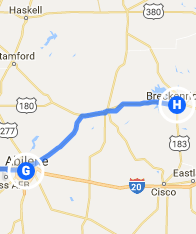
Trip Log – Day 351 – Breckenridge TX to Weatherford TX

to-weatherfordOctober 21, 2016 – Sun, 75 degrees

Miles Today: 86

Miles to Date: 18,327

States to Date: 45

screen-shot-2016-10-23-at-3-50-21-pmThe wind took a vacation day, and so I got one as well. Rare in this part of the world to have no wind, but incredibly easy to ride when the sky is calm.

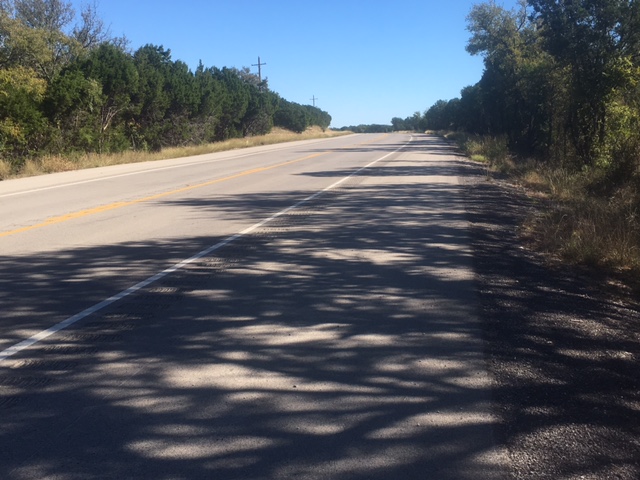
Texas has perhaps the least bike-friendly drivers in our country. Riding in any city, from Port Arthur to El Paso to Muleshoe, is precarious as Texas streets paved concrete with integral curbs. There’s no place for me to be except in the traffic lane, which annoys the pickups. Fortunately, the highways are another story. Texas has wonderful highways, with wide shoulders and rumble strips. There’s plenty of space. Everyone gets along because we don’t have to interact. Robert Frost wrote that good fences make good neighbors. In Texas, distance makes good neighbors.

img_8053

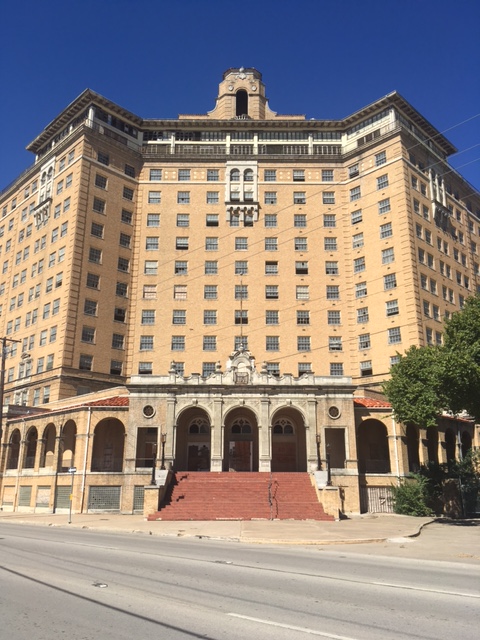
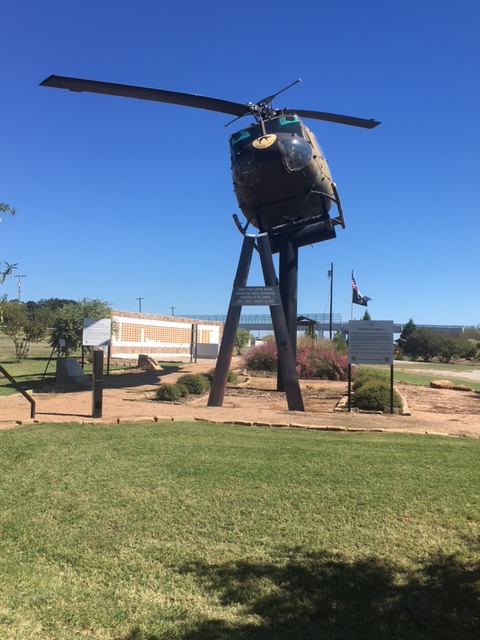
img_8058Mineral Wells is a peculiar place. The massive abandoned hotel from its early 20th century days of healing waters hovers over the near deserted downtown like a mirage from The Shining. East of town I came upon the National Vietnam War Museum, which is seriously less official than it sounds. Not a soul at the place, no staff, nothing. There’s a plywood replica of the Vietnam Memorial in DC, a stucco replica of a Vietnam camp’s honor wall, a helicopter with propellers fabricated in Mineral Wells, and well tended gardens. The big picture eluded me.


img_8061 img_8059

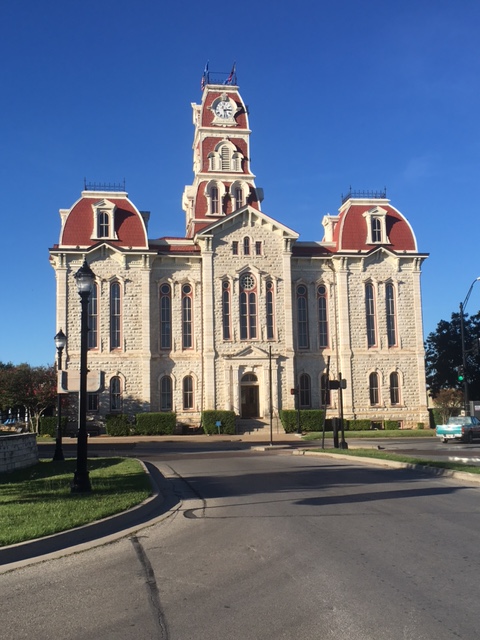
img_8067Weatherford may possess the most attractive courthouse in a state whose 248 counties include many contenders. It sits on the axis of the city’s main streets and commands attention from all directions.


Posted in Bicycle Trip Log | Tagged , , , , | 3 Comments

Profile Response: Rick Redman, Louisville Slugger, Louisville, KY

HWWLT Logo on yellowBack in the day, the 1880’s, the Louisville Eclipse were a major league baseball team with a powerful hitter: Pete Browning, aka the Louisville Slugger. Browning’s .341 batting average stands as the 12th highest in baseball history.

Fortunately, Pete had an off day, going 0 for 3 on an afternoon when a seventeen-year-old boy ducked out of his family’s woodworking shop to watch him play. After the game, Bud Hillerich invited Pete to his family’s shop where the two worked together to shape Pete’s ideal bat. Next day, Pete went 3 for 3. Other players, who often turned their own bats, wanted a Hillerich bat and the Louisville Slugger was born. The first mass produced baseball bat is now the most famous sports product in the world.

images-1Like all great American success stories, the Louisville Slugger marries a great product with great marketing. In 1905 the company invented a concept that’s ubiquitous today: they signed Honus Wagner to endorse their product. Other players followed, including Babe Ruth in 1918. Today, more than half of all MLB players use Louisville Slugger bats, which the company produces to their unique specifications.

Rick Redman, a former Louisville sportscaster who left TV for a job that enables him more family time, has been Louisville Slugger’s spokesman for thirteen years. He explained how the material Louisville Slugger uses has changed over time. “Early bats were shaped in hickory or walnut. By the 1930’s, the standard became white ash harvested from forests in New York and Pennsylvania where the growing season is short and growth rings tight. A dozen years ago Barry Boimagesnds changed to maple, which is a harder wood.” About that time a beetle infestation began to kill off the ash forests; that material will become scarce. Today, players use both ash and maple, and about 5% use birch, which is stringer than ash and less brittle than maple.


Louisville Slugger also makes lighter aluminum and composite bats for younger players that have bigger sweet spots and less sting. However, “wood bats are the heart of the brand.” Louisville Slugger remains the world’s largest manufacturer of wooden bats by a wide margin: 1.8 million per year.

How will we live tomorrow?

imgres“In the terms of baseball bats and Louisville Slugger, we are going to see an increase in birch and maple. We may see the end of ash. We will see changes in the game to make it faster paced. We’ve already seen the pitch clock and instant replay. Teams are all looking for ways to keep fans more interested. MLB has initiated the ‘Play Ball’ program to encourage activity and learning baseball.

“But the fundamental love of sport will not change. Sports have always been an important part of our culture. They bring together people from all parts of life. It’s great to see everyone sitting together and cheering.”


Posted in Responses | Tagged , | Leave a comment

Trip Log – Day 350 – Abilene TX to Breckenridge TX

to-breckenridgeOctober 20, 2016 – Sun, 75 degrees

Miles Today: 61

Miles to Date: 18,241

States to Date: 45

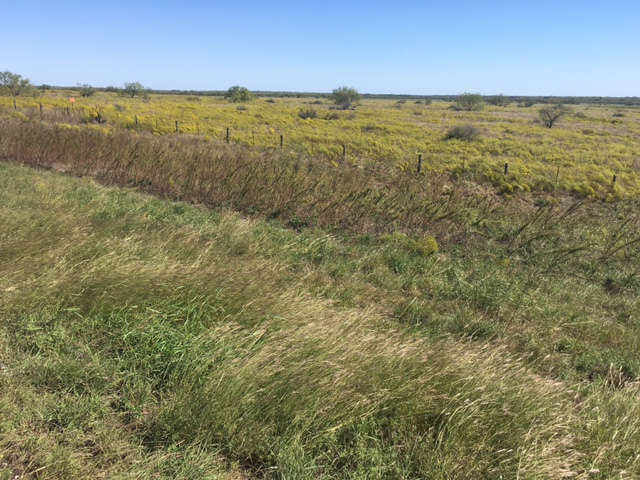
img_8021Grinding against the wind! The only constant is change. That applies to the wind as much as anything. It took me more hours to grind out fewer miles today, thanks to a wind shift that brought steady gales from the northeast. Still, it was a gorgeous autumn day and I had lots of time to savor the saving grass and golden sage flowing against me.

img_8045

I am no longer in West Texas. The high plains gave way to brush and then creeks and finally across the causeway of a big reservoir; more water than I’ve seen in a month. I was happy to pedal up the last long hill and see my motel. A bucket of fresh ice, a hot shower, can almost make a body forget about the wind. Almost.

Posted in Bicycle Trip Log | Tagged | 1 Comment

Responses: How will we live tomorrow?

How will we live tomorrow?

“We have to take care of the earth. Everybody knows that we have to do that, but no ones does.”

Gathering Flowers, Taos Pueblo artisan, Taos NM

How will we live tomorrow?

“Hopefully without Trump.”

Christine, clerk, Ghost Ranch NM

How will we live tomorrow?

“Three Thursday’s from now it will be a Trump world.”

Mary Francis, middle-aged couch surfer, Taos NM

How will we live tomorrow?

“We like living the way we do today; off the grid, making our own water, gathering our energy from the sun, living in Earthship.”

Michelle, Dustflower Fruit Market, El Prado NM

How will we live tomorrow?

“The first time I was in Taos I came here for a class in permaculture. The content wasn’t different from the books I’d read, but my perception of how the system works became much deeper. Everything has two directions. The way that is coming toward us and the way that is going away.”

Jasmine, Snowmansion, Arroyo Seco NM

How will we live tomorrow?

“I live in Hawaii and work construction. I build large, expensive houses. There’s a guy who builds nice small houses, maybe twenty feet by twenty feet that can be built off the ground to reduce foundation and make less impact on the earth. When I go back I want to build one, as a kind of demonstration. Hopefully it will take off and I can build more. That’s how we have to live – smaller.”

Randy, mountain traveller, Arroyo Seco NM

How will we live tomorrow?

“I will quote Gandhi: ‘Learn as if you’ll live forever and live as if you will die tomorrow.’”

Garth, accountant and hospice volunteer, Arroyo Seco NM

How will we live tomorrow?

“One day at a time, one season at a time. Live slow, enjoy what you have. Respect and honor traditions.”

David, traffic coordinator, Taos Pueblo, Taos NM

How will we live tomorrow?

“I like that.”

Juan, mountain bike rider, Verlado NM

How will we live tomorrow?

“We live day by day. I live on a fixed income. I wake every day and thank God for keeping the family together.”

Mary, en route to Taos for annual visit to her granddaughter’s grave, Castle Rock NM

How will we live tomorrow?

“To enjoy it.”

Eric, junior high school student, Castle Rock NM

How will we live tomorrow?

“Happy. Keep family close.”

Damian, Roswell alien T-shirt wearer, Castle Rock NM

How will we live tomorrow?

“Nice. I think about it every day.”

Wendy, Albertson’s cashier, Taos NM

How will we live tomorrow?

“Ask me after the election.”

Tom, broken-down cyclist, Castle Rock NM

How will we live tomorrow?

“In tiny ways we are reinventing our culture. If we observe the way we actually operate, we can change it. My conviction is that people can polish each other.”

Randy, founder of ‘Quest for Community’, Santa Fe NM

How will we live tomorrow?

“Healthy.”

Lisa, ED nurse, Albuquerque NM

How will we live tomorrow?

“Just living. Too many people are pursuing too much and they miss the moment.”

Diane, ED physician, Albuquerque NM

How will we live tomorrow?

“Everybody lives for today. The instant gratification is terrible. Everyone needs to get in the garden and get their hands dirty and learn where life comes from.”

Rhonda, Americano Motel, Vaughn NM

How will we live tomorrow?

“Probably more simply.”

Jack, middle-aged cyclist, Albuquerque NM

How will we live tomorrow?

“That’s a good question. I hope you have a nice day.”

Jessica, Smith’s cashier, Albuquerque NM

How will we live tomorrow?

“That’s an open-ended question. I’m going to go positive and say that we will go to space and inhabit it.”

Alaric Bender, National Museum of Nuclear Science and History Albuquerque NM

How will we live tomorrow?

“Live well.”

Evan, quad latte drinker, Albuquerque NM

How will we live tomorrow?

“I’m edging closer and closer to the mountains.”

Madeleine Durham, artist, Santa Fe NM

How will we live tomorrow?

“Maybe we’ll live on bicyclists.”

Beverly, Georgia O’Keeffe Museum, Santa Fe NM

How will we live tomorrow?

“I believe the electro frequency of the heart is 4,000 times greater than our neural capacity. We have the capability of 7.3 billion people to reach out to other creatures in the cosmos. We are light beams stuck in this carbon-based moment.”

Matthew Rhodes, artist, Santa Fe NM


Posted in Responses | 2 Comments

Trip Log – Day 349 – Snyder TX to Abilene TX

to-abileneOctober 19, 2016 – Sun, 80 degrees

Miles Today: 77

Miles to Date: 18,188

States to Date: 45

img_8003

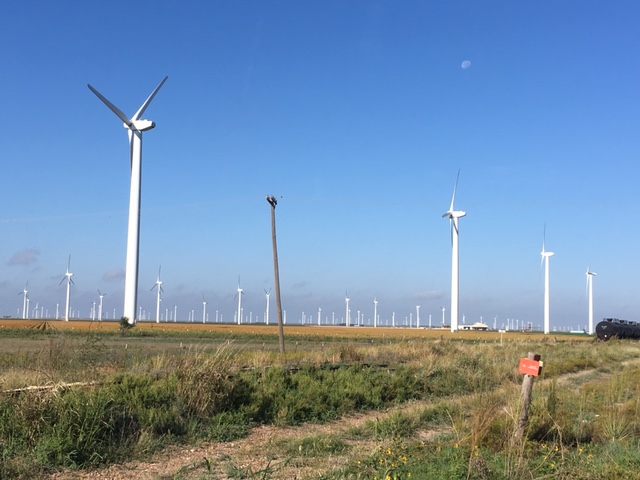
Flying with the wind! I pedaled through the largest wind turbine farm of my trip today, hundreds of turbines north of Roscoe spread out for more than ten miles. While they generated energy, I made time. A mid-morning wind shift that gave me a tail boost all day; I arrived in Abilene by 2:30 p.m.

screen-shot-2016-10-20-at-8-39-15-pm

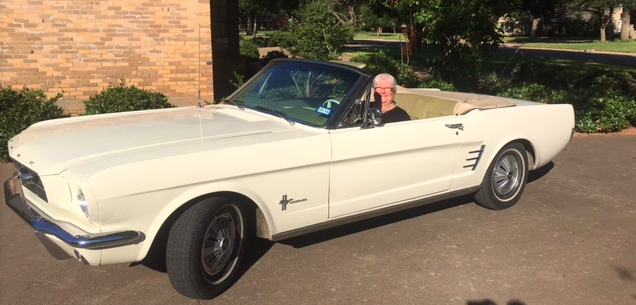
I had plenty of motivation to ride so fast. My host Cara, a designer and local artist, invited me to participate in a design charrette, downtownABI, where over a hundred people weighed in on how to improve the city’s core. Depending on your point of view I was either a ringer, since I’ve done dozens of similar exercises; or an interloper, since I’d been in Abilene all of three hours before the event began. Still, my impressions of the city were positive since Laura Lee, Cara’s mom and co-host, gave me a tour in her 1966 Mustang convertible.

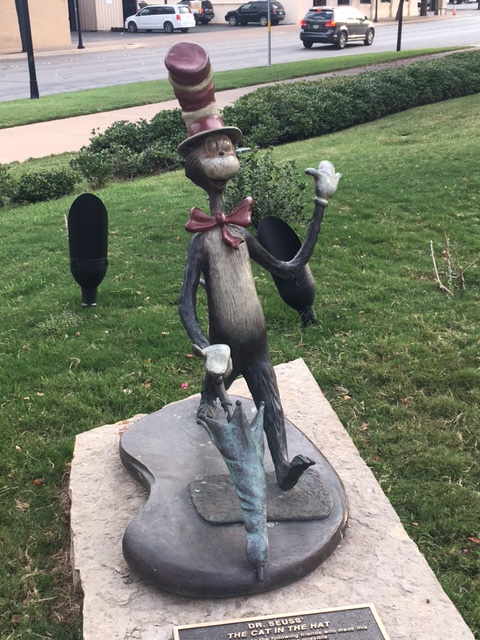
img_8034Downtown Abilene has seen better days, but it has more going for it than most small city downtowns: a handful of beautifully restored buildings, a linear green space along the railroad, whimsical sculptures that reflect Abilene’s home to the National Center for Children’s Illustrated Literature, and a handful of cool new bars and restaurants. Abilene is half the size of Lubbock, but it’s got twice the downtown.


img_8037After the charrette we all ate and drank at Vagabond’s and then continued our far-ranging discussion at home well past midnight. The people I meet make places memorable; Abilene etched a generous niche in my mind.

Posted in Bicycle Trip Log | Tagged , , | Leave a comment

Trip Log – Day 348 – Slaton TX to Snyder TX

to-snyderOctober 18, 2016 – Sun, 80 degrees

Miles Today: 75

Miles to Date: 18,111

States to Date: 45

Any day that starts with two mugs of black coffee and two helpings of sour cream and Sprite biscuits baked in a butter basted iron skillet heaped with sausage gravy is going to be a good day. My longtime West Texas friend and overnight host Leanne is a phenomenal cook.

img_7966 img_7964

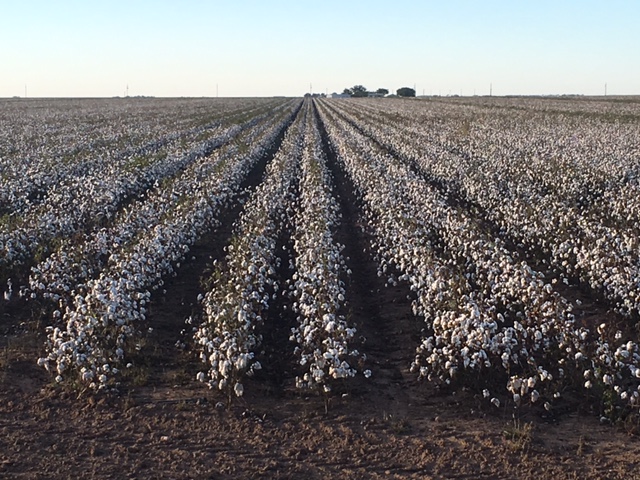
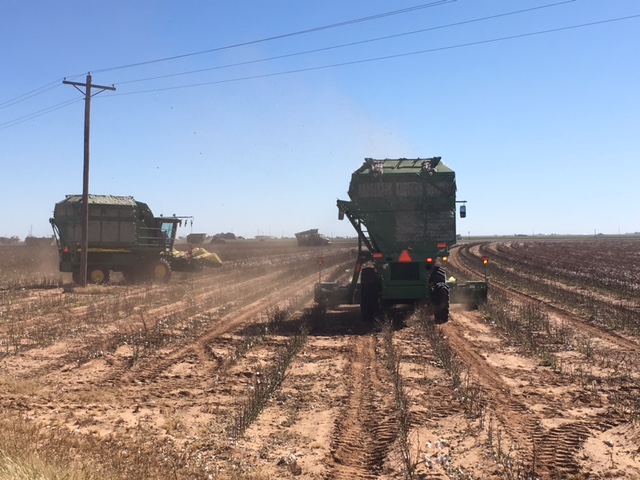
It’s cotton harvest time on the South Plains. Modern-day cotton pickers are GPS guided machines that remove the bolls off the plant and mechanically separate the seeds, hulls, and lint. One farmer told me, “I just sit there and play on my tablet, then turn around at the end of the field.”

img_7972 img_7975

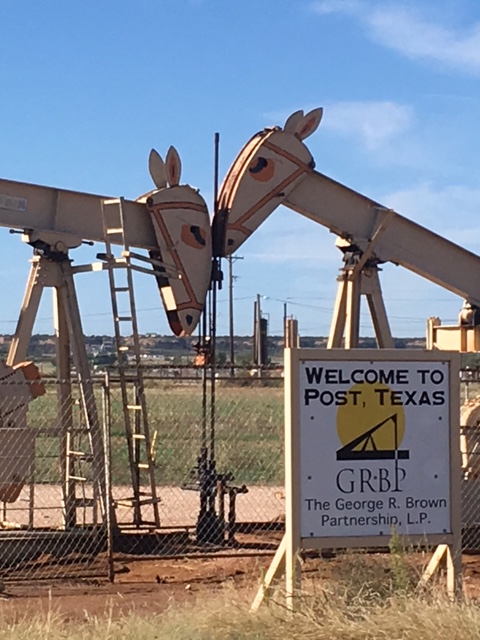
The plains end abruptly at the caprock. The earth drops 300 feet within a mile. I’m back in the land of sage and buttes, riverbeds, and oil wells. Despite the strong wind, the air is thick and stinks of tar. Post displays a sense of humor on its wells. The town’s founder, cereal magnate C.W. Post, spent over $50,000 in the early 1900’s trying to dynamite the atmosphere to produce rain. To this day, not much falls.

screen-shot-2016-10-18-at-7-14-11-pm screen-shot-2016-10-18-at-7-12-37-pm

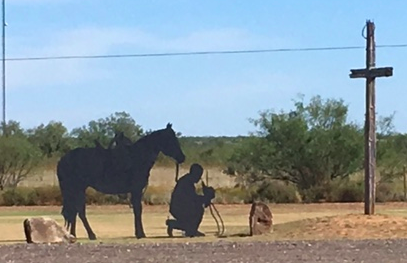
The string of windmills that line the edge of Llano Estacado remind me of Calvary, in a land where Christian crosses are plentiful.

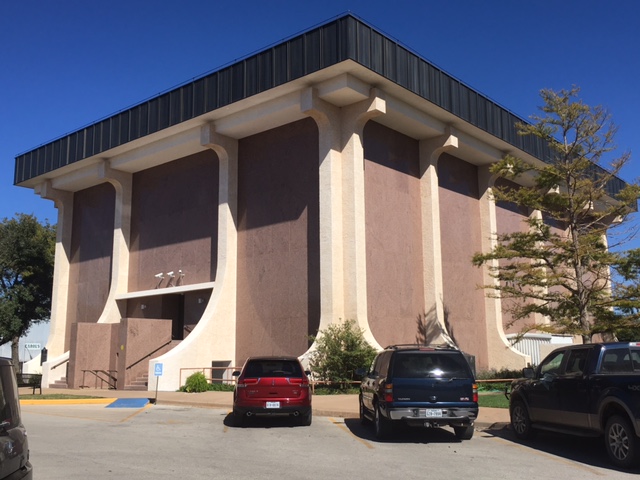
img_7991Snyder, Texas may have the single most inappropriate piece of architecture I’ve seen on my journey. A box of courthouse proportion sits in the middle of the town square. Its granite facade has no windows – none. On the center of each face is an entry door guarded by three security cameras. A brutal interpretation of ‘of the people, by the people, for the people.’

Posted in Bicycle Trip Log | Tagged , , , , | Leave a comment

Profile Response: Heath Ray, Bowling Green, KY

HWWLT Logo on yellowHosting couchsurfers is practically Heath Ray’s second job. He’s hosted over 120 different people since he purchased his ranch house northeast of Bowling Green less than a year ago. He’s had up to five people at once; one traveler stayed for 56 days. As a guy who stayed one night when Heath had no other guests, I snagged a private room with my own bathroom. But comfortable accommodations are never as important to couchsurfers as engaging interactions. Which is why Heath opens his home to so many. “I was born and raised here, I went to school here (Western Kentucky University), and now I work here. Hosting couchsurfers connects me to the wider world.”

img_7025Heath spent some time in the wider world in a major way as a Peace Corps volunteer in Tanzania from 2006-2008 and his time there has influenced his work ever since. Heath manages a refugee resettlement program for East Africans coming to Bowling Green, a job that allows him to use his Swahili every day.

Bowling Green has been accommodating refugees from many parts of the world since 1979. Every year, city and school officials evaluate how many to invite. Health believes they have assimilated rather well, primarily because local employescreen-shot-2016-10-16-at-4-41-49-pmrs have come to depend on this regular influx of good workers. Because of Bowling Green’s relatively low cost of living and eager employers, most refugees can arrive here, get established within their government loan/stipend, and be on their feet economically before that runs out.


Heath’s Peace Corps experience is also a major part of his social life: a local group of PC alums meets monthly. That fuels his interest in meeting couchsurfers from all over the world. Heath may live in his hometown, but in every respect, he’s a citizen of the world.


How will we live tomorrow?

img_7020“Our tomorrow will be lived with more inclusion and diversity.”


Posted in Responses | Tagged , , , , | Leave a comment

Trip Log – Day 347 – Lubbock TX to Slaton TX

to-slatonOctober 17, 2016 – Sun, 90 degrees

Miles Today: 27

Miles to Date: 18,036

States to Date: 45

Llano Estacado, the Palisaded Plains, also known as the Staked Plains because early Spanish explorers drove stakes to mark their route through the featureless grassland, has been geologically stable for ten million years. Larger than the state of Indiana, this flat land in western Texas and eastern New Mexico tips ever so slightly to the southeast. The Commanches called it ‘the place where nobody is.’ People passed through it for thousands of years; water was available from a series of springs that follow a line from present-day Lubbock to Portales NM. But nobody lived here permanently until the 1880’s, and meaningful settlement didn’t occur until after the First World War, when we developed mechanical methods for drawing water from the Ogallala aquifer.

img_7961To get an idea how flat this place is, consider that I have not crossed a bridge in five days. There are no rivers, even dry ones, on the Llano Estacado.

In less than a hundred years this area has become home to over a million people and an abundant source of cotton, sunflowers, sorghum, and watermelon. Lubbock is the defacto capital of Llano Estacado, home to a quarter million people, major hospitals, Texas Tech University, railroad hubs, and epicenter of rockabilly musical talent.

imgres img_7959

On a Monday afternoon, downtown Lubbock is a windblown, lonely place. But its most famous son stands tall against the West Texas Music Walk of Fame. Buddy Holly in his thick glasses. That’ll be the Day.


Posted in Bicycle Trip Log | Tagged , , , , | Leave a comment