Profile Response: Bruce Day and the Fogbees, Hendersonville, TN

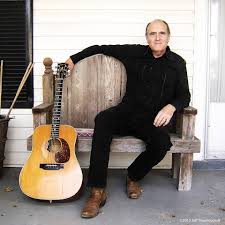
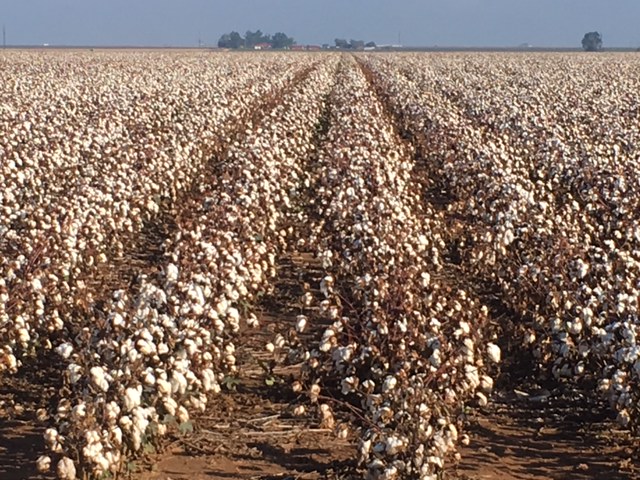
HWWLT Logo on yellowBruce Day grew up on a farm in Cullman, AL, forty acres of cotton plus forty acres of subsistence farming and forest. They picked cotton by hand, which commanded a higher price than machine picked: $1000 a bale in the 1950’s. Two acres yielded one bushel: the family took in about $20,000 a year and netted $10,000. When price supports came in, they limited the crop to five acres, so the family sold the farm and moved into town. Bruce didn’t miss rising at 4:30 a.m. and three hours of chores before school. “Life was better in town.”

One of Bruce’s brothers died from a ruptured spleen, another in a car accident. Realizing that either might have survived with better medical care motivated Bruce to become a physician. He served in the army, interned at UAB (University of Alabama Birmingham), and practiced internal medicine. “It was all old people with high imgresblood pressure, diabetes, obesity and COPD. They all needed to quit smoking, cut down eating and begin exercising, which of course they wouldn’t do.” He married a woman from Knoxville, moved to Nashville to be between their respective families and became an ED Physician, which suited him better.

Bruce is a tinkerer and a Renaissance thinker. “I can see maps in my head. I can look at a coffee maker and visualize the wiring diagram. I don’t understand how people can go through life and not wonder how things work.”
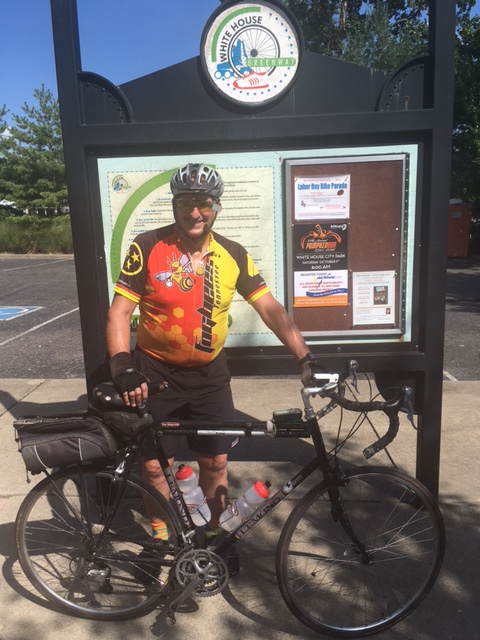
img_7009Bruce began taking long bike rides in 1996 to counter the stress of ED work. He started touring, and has crisscrossed the US and England, more recently with riding buddies. The Fogbees (fat old guys on bikes) ride all around the region and are the primary bicycle advocates in an area with better bike lanes and signage than most I’ve travelled. For the past three years they’ve been championing US Bike Route 23, which will run north/south from Bowling Green KY through Nashville to Huntsville AL. The route is approved, though not yet signed.

Fogbees have discovered shared interests beyond their bikes. Bruce and a group of four others, ages 49 to 75, have a Wednesday Night Discussion Group that focuses on science and technology. They are currently taking a Stanford online course about machine learning. The night I visited, Bill invited the group to tackle my question. Some excerpts of our discussion:

How will we live tomorrow?
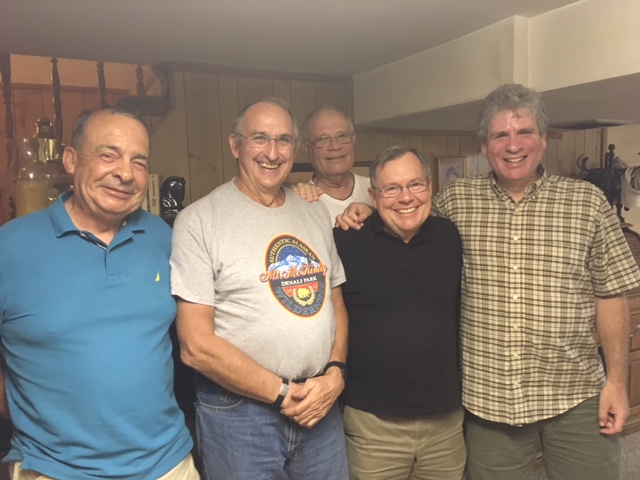
img_7005“The United States stopped investing in basic research in the 1980’s. That was the beginning of our competitive decline. Within twenty years, Watson is going to be able to take over the universe.

“Ten years ago I thought we had 200 years to continue as humans before we either evolved or disappeared. Now I wonder if we have that long. When you can get a gene kit for $100, the genie is out of the bottle.

“Look at CRISPR-CAS 9 (CRISPR = Clustered Regularly Interspaced Short Palindrome Repeats; CAS 9 = RNA sequence), bacterial viruses that can defined themselves against viral infection. We can use that process to cut out certain pieces of DNA and replace them with other genes. But once we put new genetic material out there, we can’t control how it will spread or mutate. We can create genetic wonders but we don’t know the genome well enough to know how the genes will respond.

“CRISPER CAS 9 was only discovered in 2012. It can change the way we live, or if we live, within a few years. Working on these bike routes, Tennessee Department of Transportation’s planning cycle is 20 years. Science is moving a different rate of change.

“What are the limits to our resources? So far, very few humans are living large, as we do, but more want to. What will happen when the Chinese start living large?

“I’m not a bit worried about resources. We will find ways to reduce water, use renewables. There is always a ghost that’s going to annihilate us. How many times did we duck under our desks when we were young? How many years has it been since the energy crisis? We have more energy now than ever.”
Posted in Responses | Tagged , , , , | Leave a comment

Trip Log – Day 346 – Lubbock TX

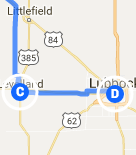
to-lubbockOctober 16, 2016 – Sun, 85 degrees

Miles Today: 9

Miles to Date: 18,009

States to Date: 45

When you travel so slow for so long ideas percolate over time until, one day, you meet a person or encounter a situation that illuminates a larger concept. All over our country people are wary of the government: almost always referred to as ‘the’ as opposed to ‘our’. They want less of it, and they want it to be more local. Yet, our government keeps getting bigger and reaching into more precincts of our lives. Why is this?

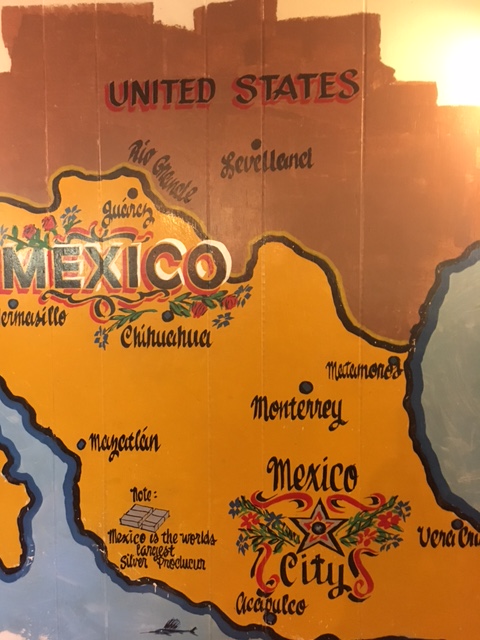
screen-shot-2016-10-17-at-4-23-02-pmOne answer can be distilled from a small building I passed in Levelland, TX: ‘South Plains Senior Companion Program.’ Forty years ago we began providing services for the elderly of this area. A few people had died in their homes and were not found for days, so we started phone trees. Some were not getting proper nourishment, so we started meals on wheels. We offered rides to doctor appointments, we insulated drafty houses, we opened senior centers to promote socialization. We did this mostly with federal block grant money, though what we provided didn’t need to come from the government at all. These services were not complex. They could have come from extended family, neighbors, churches, or civic groups. But they didn’t. So our government stepped in to provide.

The progression goes something like this. Some people in our communities don’t have family or neighbors to care for them. We create programs to fill the gap. The programs become the norm. Families and neighbors feel less responsible. More people need the services. Programs get larger, institutionalized. They develop bureaucracies, advocates, agendas; they take on lives of their own. As they grow, our sense of community shrinks.

There’s nothing wrong, in theory, with organizing society along institutionalized care and support, except the American duality of individualism and compassion renders us uncomfortable with centralized social services. We think people should be independent, and when they can’t be, we want them to be cared for locally. But families, neighbors and churches don’t have to serve everyone – only our government has that mandate.

imgresIt’s a long stretch from a federal government formed to provide for the common defense to one that provides senior companions. But until everyone is cared for locally, our government will step in, and it will continue to get bigger. We could get comfortable with that idea and stop bellyaching about the size of government. Or we could shrink our government by tending to our communities ourselves. Most likely, we just keep complaining.

Posted in Bicycle Trip Log | Tagged , | 1 Comment

Profile Response: Linda Marks and Dana Cooper, Nashville, TN

HWWLT Logo on yellowOver the telephone, Dana Cooper has a voice smooth as chocolate, rich and mellow. It’s easy to imagine this veteran singer/songwriter with twenty-five albums to his credit performing in clubs and concert halls all over the world. His voice is just as satisfying in person; we met for lunch with his wife Linda Marks at Fido’s, near Vanderbilt.

imgresDana was two days home from a US solo tour through Wisconsin, Colorado, New Mexico, Texas, and Oklahoma; just the singer and his guitar, his harmonica, and his songs. Dana describes his music as Americana: pop and rock and blues and country. He and Linda moved to Nashville decades ago because, well, this is where Americana thrives.


Linda is a visual artist and graphic designer at Vanderbilt. “I have a secure job. I have a boss who thinks that print is dead, but we keep needing print graphics.” Linda has a remarkable Facebook page that mines culture and history. “There’s a world of stuff out there that no one knows about.”

imgres-1Dana described how music’s evolution over the past fifty years. “Technology has changed how music is distributed and how we are paid. It also extends to who finds us. For instance, I like Soundhound, where you hear something and can find out what it is. But its difficult to get your music discovered even though it is more accessible Everyone can make their CD and have their website.” Without record labels keeping a reign on recording, the amount of music out there is overwhelming.

“The content has changed. There were more words and messages in the days of Top 40. Most of it didn’t have meaning, but some of it did. Now, everything is a niche.

images“I make a living at music. It’s a subsistence kind of living. Most songwriters struggle, most more than me. I’m not out to create ditties. I keep musical sketches of ideas, and come back to them. I tend to find the musical idea first and the lyrics follow. But not always. Storytelling is important to me. My songs convey mortality, carpe diem. I got to a place of ‘do no harm.”


How will we live tomorrow?

screen-shot-2016-10-16-at-4-23-32-pm“I’m a ‘be here now’ person. Aging terrifies me. Retiring terrifies me. Its something I want to do, but I’ll have to make my own life. I’ve always worked for someone else, been at the mercy of someone else’s opinion.” – Linda

“I vacillate between positive and negative, between a bleak view of the future and a cockeyed optimist view. I’d like lean toward the optimist. What will we leave behind? What will the next set of humans being have? Race will cease to be an issue. Maybe we’ll all be polka-dotted.” – Dana

“As someone who doesn’t have children, not having kids affects my view of the future. I’d be a mess if I had kids. The way they’d have to deal with religion. I worry about how religion colors our world.” – Linda

“It’s a madness, I was into religion as a kid. I was raised Catholic, I was going to be a priest. In the 1960’s, the Catholic Church was a place of discourse and inquiry. That’s gone.” – Dana

Posted in Responses | Tagged , , , | Leave a comment

Trip Log – Day 345 – Levelland TX to Lubbock TX

to-lubbockOctober 15, 2016 – Sun, 85 degrees

Miles Today: 39

Miles to Date: 18,000

States to Date: 45

img_7882

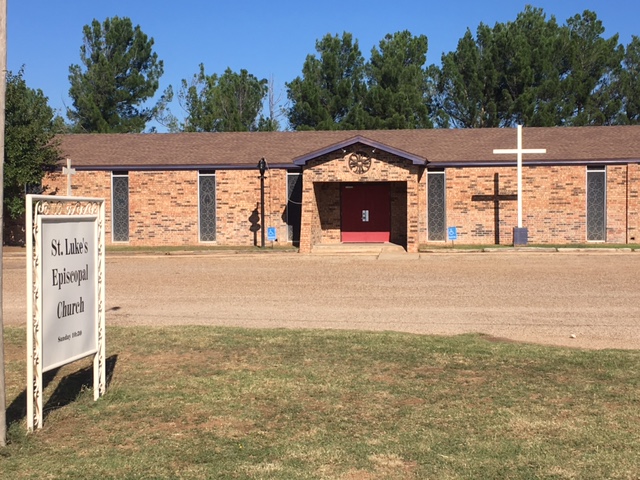
Nothing wilts an experience quicker than expectations. For months I’ve looked forward to returning to Levelland. Over the past week I’ve spent more time trying to connect with people related to my time here than in any other place on my trip. Howard Maddera, my mentor at South Plains Community Action, died in 2003; neither his predecessor nor his two daughters responded to my overtures. Emmer Lee Whitfield, who taught me about poverty and dignity, was killed in a car wreck in 1996; her daughter did not respond either. Ray Bradley, my Jaycee buddy, moved to Waco; his younger brother Hugh runs the family insurance agency. Duane Beachem, the dynamic young pastor of our church, cannot be found.

img_7883 img_7892 screen-shot-2016-10-16-at-2-32-37-pm

I woke to a grey sky, blank as my agenda. The haze burned off by ten. I pedaled out to revisit this geography of my past since I could not find any of the people that made it memorable.

Levelland hasn’t changed all that much, but it sure is different. In 1978, 12,000 residents were split in thirds: Black, White, and Latino. North of the tracks was the Black neighborhood. Despite paving all the dirt streets and renaming one Martin Luther King Blvd., the north side is a shadow of its former self. Industry, commercial, and garden apartments have replaced the shacks I used to visit. Emmer Lee Whitfield’s house is gone.

screen-shot-2016-10-16-at-2-35-34-pmI crossed the tracks and to the White part of town; now it’s Hispanic. The grid of numbered and lettered streets looked vaguely familiar, but nothing triggered specific memory. The SPCAA offices are the same, though they look smaller. Furr’s grocery has become a funeral home. The storefronts on the courthouse square are occupied by third-rate enterprises. A new supermarket and McDonald’s are out on 385; there’s a Super Wal-Mart just beyond city limits. The cluster of stucco apartments at Ninth and Avenue I where I lived among migrant workers has been demolished. The concrete slabs and sewer pipes are still there, the only testament to morning I woke up clutching the toilet after my first tequila encounter.

img_7903 img_7899

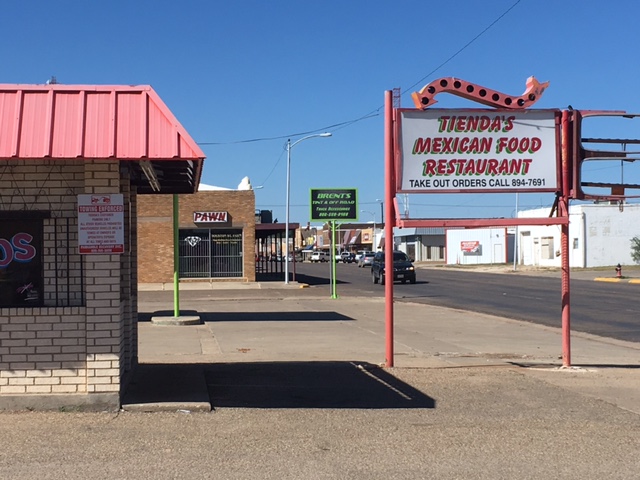
Enough of the pity party, I needed to talk to people. Mario, who runs the carnacerita around the corner from my old place, gave me a bag of cookies and lifted my spirits. I chatted with local college students, evangelicals, and went to Tienda’s for a burrito. Petra, the weekend waitress, also works at SPCAA. We shared common connections. Still, I left feeling only partly nourished. I wanted more from my homecoming.

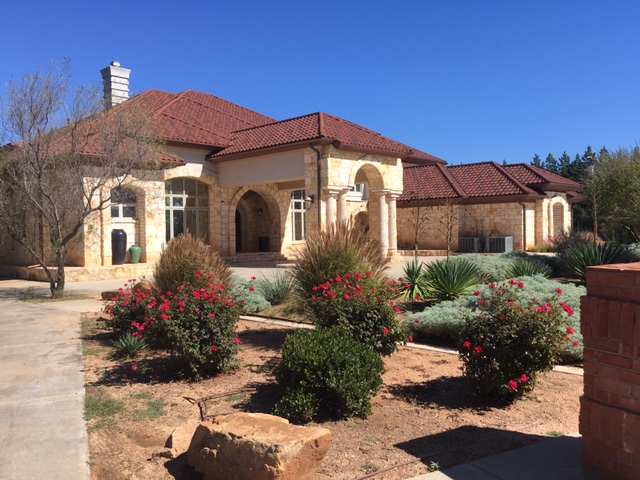
img_7906I headed east to Lubbock; the day turned summery. The east side of town has gotten fancy: $800,000 houses where white folks can hide in mansions with four zones of air conditioning.

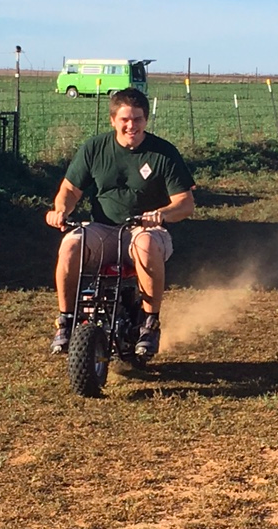
My Lubbock host asked me to arrive by five. Grant and his friend Shane explained we were going shooting. We loaded guns and ammo in Grant’s SUV and headed to their friend Lance’s ranch west of town. The trio use a VW microbus as staging area for target practice in a field of winter wheat. They shot hundreds of rounds at dangling targets, clay pigeons, and old records tossed in the air. I shot a pistol and a rifle. On my third round I hit a clay pigeon and retired in victory.

screen-shot-2016-10-16-at-2-40-19-pm img_7918

After sunset we retired to an old motorhome someone gave Lance to drink beer and vape. Toward eleven we drove back to Lubbock and stayed up a few more hours drinking Grant’s excellent home brews. A night of driving and shooting and drinking and carrying on like Willy and Waylon and the boys. Just like we used to do in Levelland, where I shot a gun for my first and only time in 1978. My hunger to recall that life, albeit with a different cast of characters, was fully satisfied.


Posted in Bicycle Trip Log | Tagged , , , | 4 Comments

Profile Response: Jeremy Raley and Chris Keshian, Nashville Entrepreneurial Center, Nashville, TN

HWWLT Logo on yellowThe morning I arrived at the former Nashville Trolley Barns turned incubator offices and trendy eateries, I counted six cranes on the city skyline. Nashville is a happening place. It’s cool, it’s growing, and it has a vibe of urban sustainability. Those things do not occur only by chance. Urban vitality is a cocktail of planning, implementation, and good fortune.

Nashville has long been a music mecca, but these days it’s more. A decade ago, the Nashville Chamber of Commerce did a study of the area and decided to emphasize entrepreneurship. In 2010 they spearheaded NEC (Nashville Entrepreneurial Center).

Jeremy Raley is the membership chair. He explained NEC’s premise to me while also staffing the reception desk. Multi-tasking is key to the place.

img_6981 img_6976 img_6982

“Let’s say you have an idea for a new kind of blanket. You join NEC. You’ll get help from people in the retail space and the financial space. Advisors are local volunteers who come in three categories: start-up operations, industry expertise, and service providers, like attorneys and developers.” NEC currently has about 800 members. Memberships begin at $50 per month. Members get two sessions a month with the more than two hundred advisors to the center. They get co-working space, office support, and access to meeting rooms. “People use this as their office address. Individuals come in and ask for so-and-so, as if it’s their actual office.”

At question time, Chris Keshian, an NEC intern, joined the conversation.

How will we live tomorrow?

img_6984“We are not very far from a future of self-driving cars powered by electricity, drones that will deliver our goods. It’s going to extend to building construction, framing, there will be Internet connectivity of everything. When a window breaks, a drone will be called up to repair it. I also see a profound shift from oil to solar energy to nuclear fission.

“Augmented reality will come to the fore in a big way. That will be detrimental to humans. We already watch six hours of TV a day. We will lose our sense of community.” – Chris

“We will create a new form of community. We’ll play video games that are so real they will become our reality. I did an Oculus AR demo. I was so into it and could not be distracted because I was totally in it.

“Technology is both great and terrible.” – Jeremy

“I also think AI is not too far in the future. We will be unable to differentiate the human from the machine. The machine has access to everything simultaneously. It will have immediate response. I’m excited about what is happening.” -Chris

Posted in Responses | Tagged , , , | 2 Comments

Trip Log – Day 344 – Clovis NM to Levelland TX

to-levellandOctober 14, 2016 – Clouds and Sun, 70 degrees

Miles Today: 89

Miles to Date: 17,961

States to Date: 45

img_7859After college I served as a VISTA Volunteer in the South Plains of Texas, an area most people would call West Texas, but locals insist is different. The South Plains are broad and flat: I did not cross a single river today. The area was mostly uninhabited until the 1920’s, when we figured out how to tap the Ogallala Aquifer and grow cotton, soybeans, watermelon, and sunflowers. By the 1970’s early settlers had become the areas first generation of senior citizens; I worked at South Plains Community Action Association to establish senior programs: meals on wheels, medical transport, and home repair. I traveled about 2,000 miles a month across thirteen rural counties to help elderly folks get new roofs, insulation, and indoor plumbing. It was gratifying work.

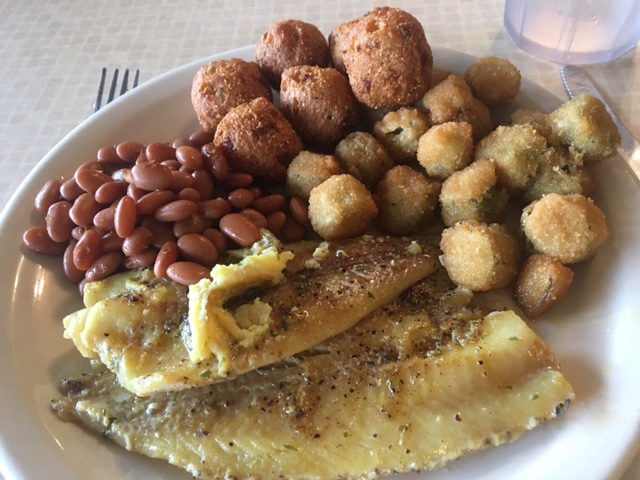
img_7866Today I cycled through a swath of that territory, from Muleshoe through Littlefield to Levelland, under a grey dome that didn’t turn sunny until mid afternoon. I look for buffet lunches on long travel days; the Dinner Bell’s Friday catfish buffet hit the spot. Fried okra, fried fish, fried popcorn shrimp… do you spot a trend? Seems I was the only patron who ate the sautéed fish. Then again, I was the only one lacking a big belly and a bigger hat.

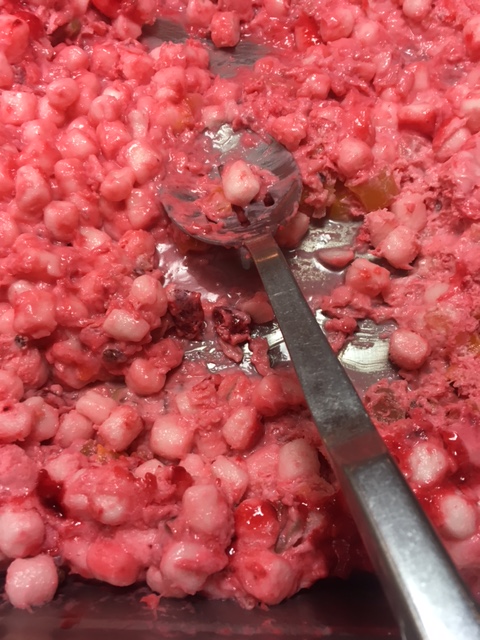
img_7868One thing I did not eat was the pink gelatin. My year of senior citizen lunches forever ruined my appetite for any dish with marshmallows or suspended in Jell-O.

The irony of riding down Littlefield’s near abandoned downtown is that the largest occupied building is the senior center, as it is in so many small towns. In less than forty years a group that was an emerging demographic has become the dominant one.

screen-shot-2016-10-15-at-8-38-44-am

So far, The South Plains has weathered rural decline better than most areas of the Great Plains, Muleshoe, Littlefield and Levelland all have just about the same number of residents today as they did when I lived here. Commerce has simply shifted from downtown to the highway. In another forty years, who knows how many will remain.


Posted in Bicycle Trip Log | Tagged , , , , , , | 2 Comments

Profile Response: Lily Hansen, Nashville, TN

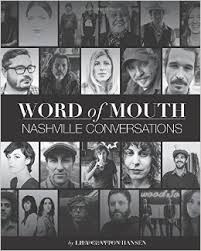
HWWLT Logo on yellowWhen Lily Hansen moved to Nashville from Chicago, she only knew a few people. She reached out to them and interviewed them about her new city. The last question she asked each of them was, “Whom should I talk to next?” Four years later she is author of a hot selling local book, Word of Mouth: Nashville Conversations, that includes profiles of 65 people from Music City. She also hosts a monthly interview podcast of a wide range of Nashville citizens. Her book is available at 18 local venues, soon including the Nashville airport, and inspired an art show at Vanderbilt. “I am floored by what happened from one passion project. People are so generous.” Lily may have been fortunate in timing her project with Nashville’s surging growth, but this journalist and marketing whiz also worked very hard to make her project relevant and exciting.

imgresLily recently moved into a studio at Ryman Artist Lofts just outside of downtown. She applied, got on the waiting list, and kept calling until, when a place opened up, she was ready to jump on it and move within a week. “I am a manifestor. I believe what you think can become a reality.”

Lily has been involved in Arts / Music / Entertainment journalism since college. The 29-year-old freelancer recognizes that success is a combination of tenacity, quality writing, and good luck. “I arrived in Nashville and got a cover story interview with Carrie Underwood within a month.” When she began working on her book freelancing kept pulling her away from her primary interest. “My mother knows me best. She said, stop doing other things and follow your heart.” These days, Lily is writing, promoting, and interviewing, but they do not tear her in different directions. “I can do multiple things when they are in the same vein. Right now, all my efforts related to Word of Mouth feed on each other.”
How will we live tomorrow?

img_6979“The whole thing I’m trying to do is to be transparent. I was raised by a mom who told me life is up and down, and it’s all good. I want to spread a 180-degree view of the world. Everything is put through this filter to look good. I want us to be more about real life.

“Tomorrow, I want to be authentic.”
Posted in Responses | Tagged , , , | Leave a comment

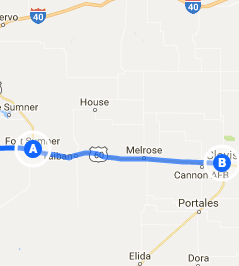
Trip Log – Day 343 – Fort Sumner NM to Clovis NM

to-clovisOctober 13, 2016 – Sun, 75 degrees

Miles Today: 66

Miles to Date: 17,872

States to Date: 45

img_7839img_7837The Internet lists two motels in Fort Sumner, both on the east side of town. Coming in from the west, I passed on the Coronado Motel despite the hand painted sign quoting single rooms at $35 a night. The place looked dusty even by my marginal standards. But the Billy the Kid Motel was full with cowboys renting by the week and Super 8 wanted $80 a night. So I pedaled back to the Coronado, which proved one of the more memorable stays of my trip. Tito gives a $10 discount to cyclists. For twenty-five bucks I got a sweet room with a powerful shower, king bed, and in-room coffee. The place even has an ice machine. Another cyclist occupied the room next to mine, though he left at dusk to distance ride at night. All the other parking spots were filled with work trucks. I doubt a woman has stayed here in ten years, at least not one who’s registered.

I woke before daylight after nine hours sleep, heard my neighbors back out to their labors, picked up some grocery store grub in this cafe-deprived town, and pedaled out on the plains.

img_7840

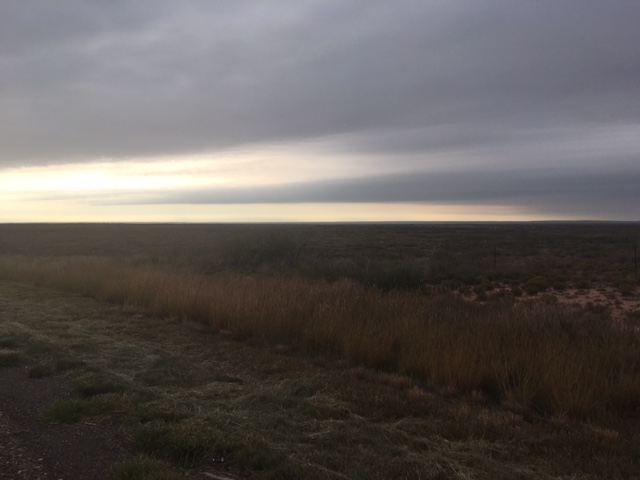
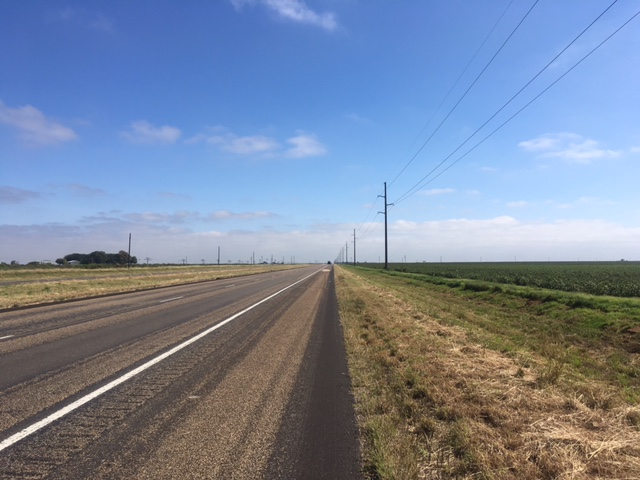
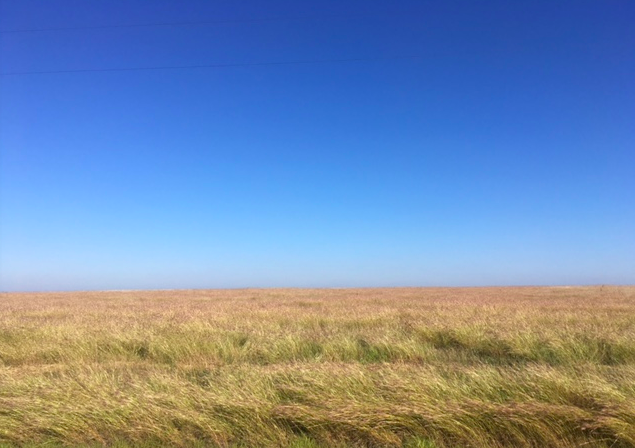
The plains are my favorite place to ride. Austerely beautiful; easy when the wind’s at your back; tough when it’s in your face; miles upon miles of raw land and wide sky with a taut horizon; the most elementary landscape. I ride mountains to their breathless peaks, but when I roll over the plains I am simultaneously grounded and on top of the world.

There’s a derivative of root cause analysis known as the five whys: take any situation and ask ‘why’ five times deep to understand its true essence. Cycling the plains is a mediation that evokes my own five ways. The regular pedal strokes, the unwavering land, prod my psyche. Today, I spun all the way back to the moment from my childhood when I grasped my fundamental nature.

img_7849

I was seven. My parents were in bed. My mother held my little brother in her arms, we four older children stood around the foot: morning-after family meeting. I don’t remember what precipitated this one. Maybe my father hit my mother the night before, or punched the wall, or knelt on the front lawn howling at the moon. My father was a sweet drunk, until he wasn’t. Morning was mea culpa time; reassurance that it would never happen again. My father glossed over the facts by enumerating all the fun things he had planned, my mother nodded in support. Our job was to replace reality with his intention.

I stood there, listening, watching, and suddenly realized that these two people were way over their heads. Two beautiful creatures whose attraction led to a slew of kids and frustrations vented through bourbon. I felt no anger, no fear, but neither did I swallow their platitudes. They were neither bad nor good: just two people juggling more than they could handle. I was their child, but I didn’t feel dependent.

img_7870

There’s something chilling about a seven-year-old who so objectively analyzes his personal situation. I knew I was supposed to be upset, to buy the emotional plea for redemption. But observing my father from the bedpost brought me to the age of reason the nun’s assumed I would reach at the first communion rail. I refused to suffer rage, then cathartic release, just to get hurt again by the next inevitable episode. I understood, in that moment, my role in life. I observe and I listen. I engage with my hands and my head, but keep a distant heart. I travel alone and never feel lonely.

Maybe that’s why I love the plains. No drama, no intention, no great heights or looming shadows. The plains are not the result of explosion. They are simply layers upon layers of sediment rolled out under the baking sun. They seem boring, until you look close at how the light strikes each quivering blade, and listen carefully to the slithering snakes and blackbirds rustling in the sage.

screen-shot-2016-10-14-at-8-49-26-pm


Posted in Bicycle Trip Log | Tagged , , , | 3 Comments

Responses: How will we live tomorrow?

How will we live tomorrow?

“As time goes on, gay and lesbian issues will disappear. I think of gay prejudice like nuclear waste, it has a half-life. The prejudice gets less, but never quite goes away.”

Richard, bisexual, Kansas City, KS

How will we live tomorrow?

“How we will live tomorrow is my job, sort of. I’m an archaeologist and have been looking at the rise and fall of large-scale, complex societies for a while (https://www.routledge.com/Why-Did-Ancient-Civilizations-Fail/Johnson/p/book/9781629582832(link is external)). My main point, I suppose, is that fossil fuels are a finite resource. We haven’t planned for what the world will be once we stop using fossil fuels. I am directing my research at what I call “low tech” solutions, that is, solutions that can help solve basic sustainability problems in a post-fossil-fuel world. By sustainability, I mean “able to support human and other organisms with a long-term view.” I think we need to create a stable-state economy and cultural ethos. In short, we need to depend on renewable resources in the amount that they are renewed. It means adapting to the changing world (unlike what we’re doing today, which is pretending the world isn’t changing or finite and attempting to maintain the “progress” status quo).

“Tomorrow” is such a nebulous term. For those living paycheck-to-paycheck it has a different meaning than for me, but regardless of how everybody lives today, it is a fact that we’re going to have big changes coming as fossil fuels run out and I don’t hear anybody talking about what comes next.”

Scott Johnson, cyclist, St. Louis, MO


How will we live tomorrow?

“Can I get back to you on that?”

Craig Lubow, attorney, Kansas City, KS

How will we live tomorrow?

“One second at a time.”

Christie, cashier trainee, Wamego, KS

How will we live tomorrow?

“Happy.”

Tamera, shapely brunette, Wamego, KS

How will we live tomorrow?

“I will look forward to the Presidential election being over. I wish I could say things will be better for my kids and grandkids, but I don’t know. We are farmers, five generations of farmers, but the prices we get are so low.”

Cindy, Grassroots Art Center Lucas, KS

How will we live tomorrow?

“I don’t dwell on it. I don’t even think about it. I just think about food, sleep, and video games.”

Emily Earhart, teenager, Bennington KS

How will we live tomorrow?

“Have you accepted Jesus as your personal Savior?”

Helen, fellow distributor of yellow cards albeit different message, Plainville, KS

How will we live tomorrow?

“One day at a time.”

Marty Nitzberg, Monument, CO

How will we live tomorrow?

“I don’t know how we’ll live tomorrow. I’m an archeologist. I live in the past.”

Don Rowlinson, curator, Studley, KS

How will we live tomorrow?

“Mine will be the same old thing; tomorrow and Sunday and Monday. I get Tuesday off.”

Tracey, cashier JD’s Restaurant, Hoxie, KS

How will we live tomorrow?

“We don’t know if we will be here tomorrow. We are between the earth and the hands of God.”

Lekbria, Moroccan immigrant, Denver CO

How will we live tomorrow?

“You’re living free, so you have it made.”

Mike, native Vermonter, Goodland, KS

How will we live tomorrow?

“We better take care of the earth.”

Barbara, KATY trail cyclist, Hingman Junction MO

How will we live tomorrow?

“You can start with ‘do no harm’: ecologically, socially. If you can get there you can move to having an obligation to others. But don’t assume they have an obligation to you.”

Wes, Casino buffet diner, Boonville MO

How will we live tomorrow?

“Eventually we will lose everything. We are destroying our earth.”

Pam, convenience store customer, Polo MO

How will we live tomorrow?

“Work. If I’m here I can’t be doing anything wrong.”

Austin, McDonald’s employee, Colorado Springs, CO

How will we live tomorrow?

“Happy. Life always throws you disappointment. You just let it go.”

Dominic, 26-year-old unmarried father of five by three mothers, Pueblo CO

How will we live tomorrow?

“Who knows?”

James Fallon, inmate, Pueblo CO

How will we live tomorrow?

“We will live pretty much like today’ just another day. Another way to look at it is to live life to the fullest and don’t regret a single thing you’ve done.”

Casey, 11th grader, Walsenburg, CO

How will we live tomorrow?

“I’ve been asking myself that. That’s why I made this change from living in a Hindu Ashram community in Taos to living here. I got a lot of the Ashram but I was never fully part of it. Already I feel a part of this community.”

Goldilocks, new employee and resident, Snowmansion, Arroyo Seco NM


Posted in Responses | Leave a comment

Trip Log – Day 342 – Vaughn NM to Fort Sumner NM

to-fort-sumnerOctober 12, 2016 – Sun, 75 degrees

Miles Today: 60

Miles to Date: 17,806

States to Date: 45

img_7823My agenda to visit all of my siblings and their children on this journey is not merely social. We are a demographically diverse bunch. Pat and Jack Fallon were third generation Irish-American Catholics from the New York area. None of their five children or fourteen grandchildren is Catholic or lives in metropolitan New York. We are scattered over eight states; we all practice a different religion, if any at all. Some of us have advanced degrees; others have not graduated high school. Some own homes; others rent. One has six children; others are committed to having none. Some are veterans, others felons; one is both. We are married or divorced or living together. We are straight and gay. We have natural children and stepchildren and adopted children. We occupy every economic quartile, though none of us is in the top 1%. Our politics run blood red and sky blue. We are the most diverse family I know that still all talk with each other. Because, whatever our differences or opinions, we are family.

screen-shot-2016-10-13-at-4-18-24-pm

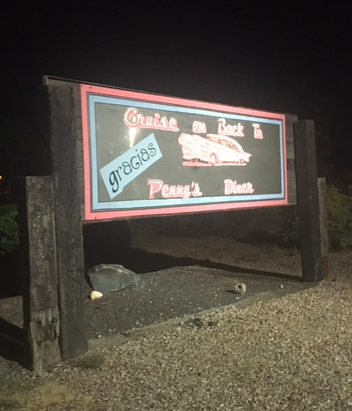
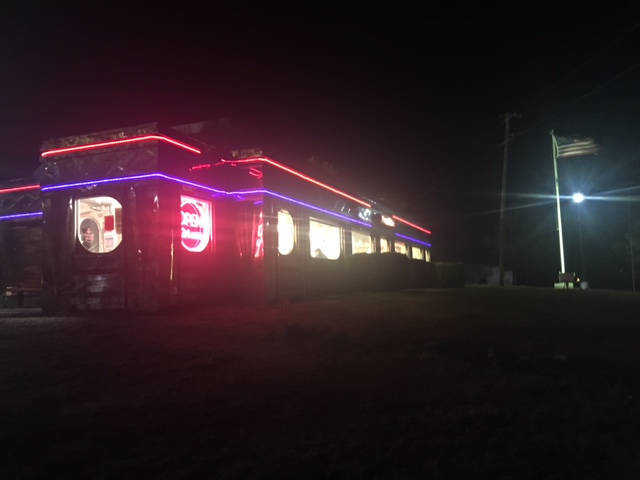
The most difficult person to meet up with on my journey has been my oldest brother Bill, a long haul truck driver based in Salt Lake City who’s home at most 36 hours a week. Over the past year we near missed in Indiana, Wyoming and Texas. Today we navigated an Apollo worthy linkup. I cycled to Vaughn, New Mexico and took a room at the faded motel next to a 24-hour diner on US 285 that Bill passes four times a week shuttling between Salt Lake City and Laredo, Texas. He gave me a 3:00 a.m. ETA but called at midnight: making good time, only fifteen minutes away. We spent three hours at Penny’s Diner, the only patrons in the oscreen-shot-2016-10-13-at-4-19-01-pmnly bright lights for a hundred miles around.

Bill is the most upbeat person I’ve ever met. No matter what travails befall him, and there have been plenty, he always says things are great. He’s also keen about whatever endeavor he’s invested in, whether it’s product sales, international construction, SBA disaster financing, or, these days, trucking. Since I’m fascinated by logistics, I enjoy hearing the intricacies of schedule and the advantages of designated routes, though the sheer volume of trucking and the fossil energy we burn on our highways overwhelms me. Bill’s company runs twelve round trips per week between SLC and Laredo alone simply to deliver parts between Autoliv’s plants in Utah and Mexico. Between shoptalk we catch up on the comings and goings of our children, which are less predictable than Bill’s junkets up and down US 285.

screen-shot-2016-10-13-at-4-18-04-pmWhen I ask Bill ‘How will we live tomorrow?” he declines to respond. Many people do that; I only ask once. I put down my pen and look out at the deep night sky, so familiar to a man who trucks all hours, so foreign to a guy who cycles all day and hunkers down in the dark. I wonder how two people so genetically linked can be so different. Which makes me ponder the challenge of forging better bonds among the rest of us.

We start by seeking out and creating bright spots where our complicated paths intersect, the Mormon trucker and the Yankee cyclist in the middle of the night in the middle of New Mexico. Not too much in common. Except that we’re human. And family.


Posted in Bicycle Trip Log | Tagged , | 5 Comments