Profile Response: Mark Higginson, Tyson Contractor, Arab, AL

HWWLT Logo on yellowMark Higginson is bigger than life, and quotes numbers that prove it. “I raise over six million pounds of chicken a year. I’ve got seven chicken houses, 16,000 square feet each. Each house has 21,000 chickens. I grow six crops a year, and have a week or two off in between. My chickens are the roasters you find at Wal-Mart, Sam’s and Costco.”

Mark has been a contract farmer for Tyson for 33 years. During that time, the gist of the business has not changed. Tyson delivers baby chicks at the beginning of each growing period. They provide the food and vaccines for each bird. They visit weekly to monitor their progress. After seven to eight weeks, they take the full-grown birds away. Mark gets paid for each full-grown chick he delivers, and works to keep his cull rate below four percent.

img_6921 The biggest change in 33 years is monitoring. Each chicken house is regulated for temperature and humidity. Mark also gets an alarm notification if water dispensers or food troughs clog. “They live better than your average house pet,” Mark shows me the airy buildings where the chickens roam at will. The place doesn’t even smell: a fertilizer company cleans out each house on a regular basis in exchange for the chicken dung they use to make 16-16-16 fertilizer.


Although Mark served me steak for dinner the night I stayed with him, he knows chicken is king. “Americans eat 72 pounds of chicken a year, to 68 pounds of beef. That’s only going to grow. Doctors tell adults to lay off the fat; kids like their chicken fingers. It takes five pounds ofimg_6895 feed to make a pound of beef. It only takes two pounds of chicken feed. Beef can never catch up.”
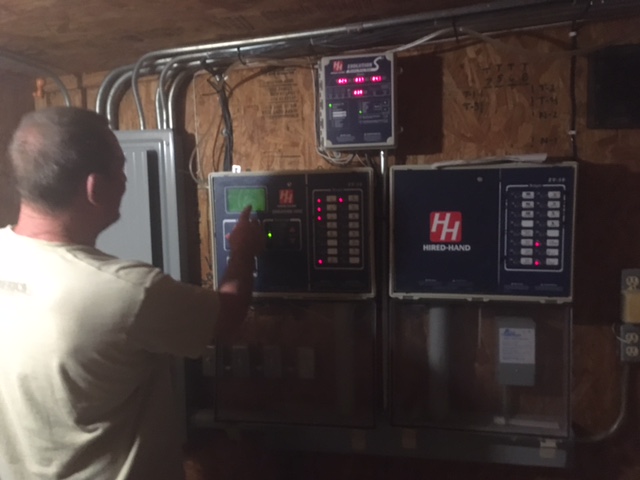
There are 150 chicken raising farms in this area that supply the Blountville processing plant. Mark’s is among the largest, and longest established. His 70-acre farm is a $6 million investment that yields him a good life. The farm has four houses, one for his mother and two to rent. He also leases 50 acres for grazing. Mark and his girlfriend Julie often travel during the break between shipments. But when the chickens roost, Mark works every day with the help of a small crew during the week.

img_6897I asked Mark why Tyson does not fold chicken growing into their operation. “If they did it, they would need three shift crews. I can do it with one. It’s win-win. They don’t have all that staff, I get to live on the land and grow animals.”

Mark believes in this system, which has provided for him well and feeds so many. “I’m not pulling a nuclear trigger. I’m not polluting the air. I’m growing food for people. One man; six million pounds a year. The American farmer is the most efficient on earth.”

How will we live tomorrow?

img_6920“I am a survivor in our society. I ain’t worried.”
 

Posted in Responses | Tagged , , , | Leave a comment

Trip Log – Day 338 – Santa Fe NM

to-santa-feOctober 8, 2016 – Clouds and rain, 70 degrees

Miles Today: 26

Miles to Date: 17,566

States to Date: 45

My hosts described Santa Fe as a tale of two cities. Yesterday, pedaling in from the north, I passed through the million-dollar rancho city. This morning I witnessed the other city. I pedaled to a local McDonald’s for a morning writing session before Santa Fe’s attractions opened only to find the bike rack full. Turns out many other middle aged men, all the rest Hispanic, most of them marginally homeless, descended on this place for their morning warmth. Some played guitar, some avoided purchasing anything, some commandeered the men’s room for long periods of wash and clothes change. Some men sat in groups chatting, laughing, while others sat alone staring blankly into fate. I was impressed with the Gringo manager who dealt with all of these demographically unfavorable customers with patience and respect. I find humanity in McDonald’s wherever I go.

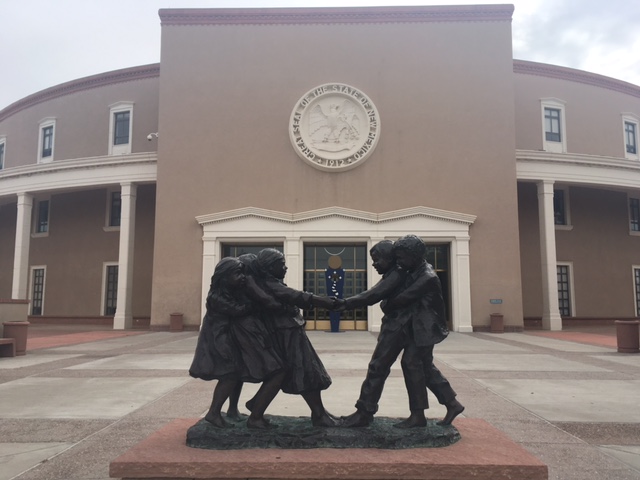
img_7694After ten I explored the streets of this charming capital city of high altitude style and colorful art. The colors were particularly welcome on this grey, featureless day. The State Capitol is among the most bizarre in our nation. Not only no dome, not even a flag. The frontcourt features a sculpture of three girls and two boys at tug-of-war; very odd for a guy accustomed to New England’s obligatory Revolutionary War hero on a horse.

screen-shot-2016-10-10-at-8-06-22-pm screen-shot-2016-10-10-at-8-07-01-pm screen-shot-2016-10-10-at-8-06-10-pm

The Santa Fe Society of Artists Show, which occurs every weekend spring through fall, featured some lovely art. I particularly liked Madeleine Durham’s wavy images on handmade paper (www.madeleinedurham.com) and Matthew Rhodes very colorful acrylics (www.matthewrhodesfineart.com).

screen-shot-2016-10-10-at-8-07-25-pm screen-shot-2016-10-10-at-8-07-54-pm screen-shot-2016-10-10-at-8-08-13-pm

All of which was a pre-act for my visit to the Georgia O’Keeffe Museum, a perfect place that does justice to a great artist without exhausting the visitor. Though I know much of Georgia O’Keeffe’s work, I was taken by her early West Texas landscapes. These horizontal layered images, painted in the early 1920’s seem to me to joyful precursors of the Abstract Expressionist color field painters of the 1950’s. The three horizontal bands hint at what Mark Rothko did, at a different scale and to different effect, thirty years late. There’s a dissertation in that for anyone interested in pursuing a Ph.D. in art history.

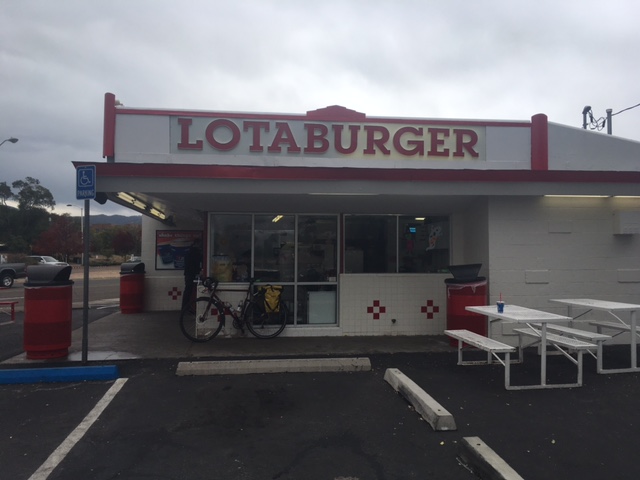
img_7707After so much culture, I indulged in a late lunch at Lotsaburger, a local fast food franchise that lives up to its hype. Full of high art and low food, I rode seventeen miles in the rain to stay with a host who lives in an Airstream. Fortunately for me, the rain stopped just in time to witness my own tri-partie horizontally banded landscape, albeit in the grey tones of the day.

img_7708


Posted in Bicycle Trip Log | Tagged , , , , , , , , | Leave a comment

Profile Response: Rev. Justin Nelson Alphonse, Pastor, Holy Family Parish, Birmingham, AL

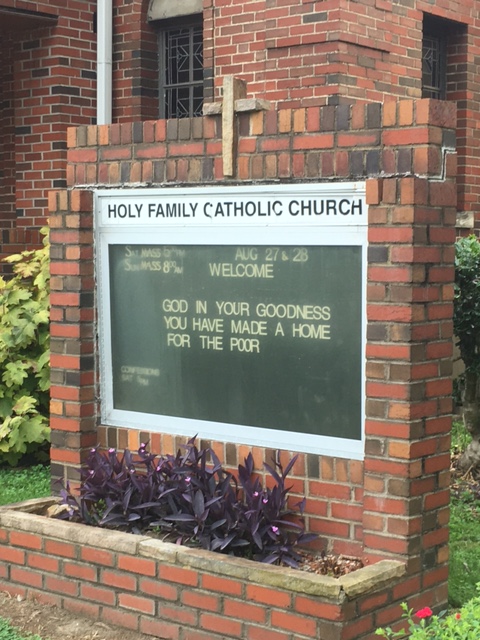
HWWLT Logo on yellow“We gave one for God, one for country, one for family, and one to give away.” Justin Nelson Alphonse is from a family in southern India who converted to Catholicism several generations ago. “The Portuguese came first to India, seeking spices. Then the Dutch, the French, and the English. Each brought their missionaries. Before the Europeans, India was over 700 small kingdoms. Now we are one country.” His oldest brother serves in the army; another brought his wife into the family home; and his sister left to be with her husband’s family. When Justin was in the tenth grade, a Passionist Priest visited his class. Justin wrote him a note, “I want to preach Christ crucified in India.” Shortly after, he entered the seminary. Justin is the child his family gave to God.

img_6876Six years ago, after twelve years of seminary study and juggling ten poor parishes in India as well as several missionary appeal trips to the U.S., Justin was transferred to our country. His first assignment, an affluent parish near Louisville, KY, was a shock to a man skilled at working with the poor. Although Father Nelson will spread the Gospel wherever he is called, he seems more content in his current assignment, pastor to two African-American parishes around Birmingham. “My parishes are small. One has 175 families, the other, 90. Only 2% of African-Americas in Birmingham are Catholic.”

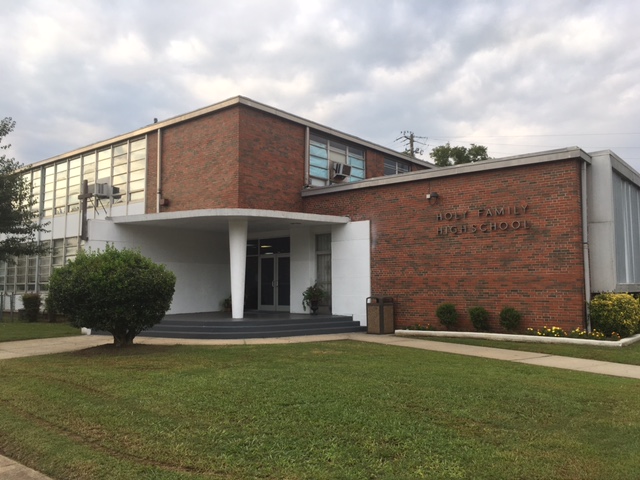
He shares a pair of rectory houses with three other Passionists, one from Ecuador who works primarily with Hispanics, and two from the United States. In addition to his parish work Father Nelson is responsible for Holy Family Middle School, which is affiliated with Christo Rey High School across the street. “The Christo Rey model is very successful. Every student works a job as well as attending classes. Four students, one from each grade, share a job. Every fourth day they go to their workplace instead of class, so one day all the freshmen are at work, the next day sophomores, etc.” Their earnings offset tuition. “One hundred percent of our students go to college, most on scholarship. Many wind up working in for the firms where they start. Itimg_6880 is aimed for the poor. Parents have to make less than $38,000 for their children to qualify.”

Justin is keenly aware of the dichotomies of American society and how it is manifested in developing countries like India. “Western dreams are changing India’s cities. Software salaries are high, young people have too much money. But in the country, living is simple.” He acknowledges India’s challenges of caste and corruption. Still, he witnesses different kinds of disruption here. “In this neighborhood, we cannot go outside at night. All of our cars are broken into; I leave nothing in my car. Every weekend or two, people are shot. There’s drugs; prostitution; people drop the mentally ill on the streets of Ensley. Actually, it’s getting better. I’ve made our parish more visible, there is more respect for what we do.” I noticed that several other churches in the neighborhood had barbed wire fences around them. “We are the only church that is open during the day. People can come into our church office any time.” In addition to his pastoral and school work, Reverend Nelson has a prison ministry and an addiction ministry. “I love people and people love me.”

imagesI asked Reverend Nelson about the dwindling number of vocations, and whether allowing priests to marry might change that. “We live in a world where people have wants and want to satisfy them. Priest life is not like that. I have many blessings. I have a house, a car, the essentials, but I don’t get to choose the house or the car or even where i live. It’s not about sex or getting married. Vocations are declining because contemporary culture does not support spiritual life.” He points to his heart. “Happiness is not out there. Happiness is in here.”

How will we live tomorrow?

img_6871“I was watching the news today. A small town in Texas is promoting tiny houses and living simply. I think we are going to live simply. In the U.S. I don’t live rich, so when I return to India I am content with what I have.”


Posted in Responses | Tagged , , | Leave a comment

Trip Log – Day 337 – Ghost Ranch NM to Santa Fe NM

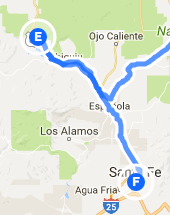
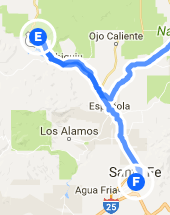
to-santa-feOctober 7, 2016 – Sun, 70 degrees

Miles Today: 68

Miles to Date: 17,540

States to Date: 45

img_7673

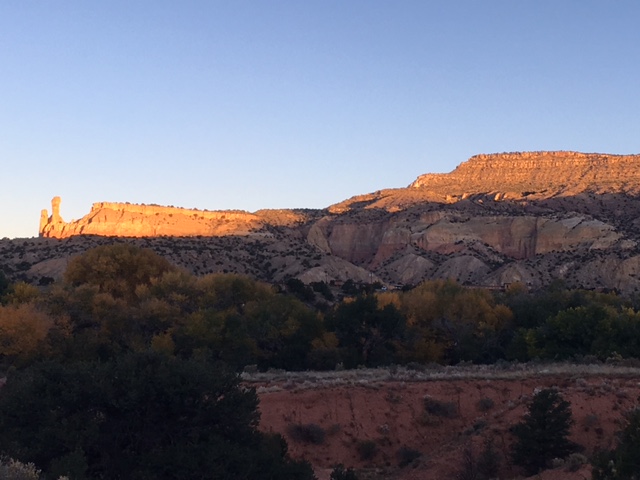
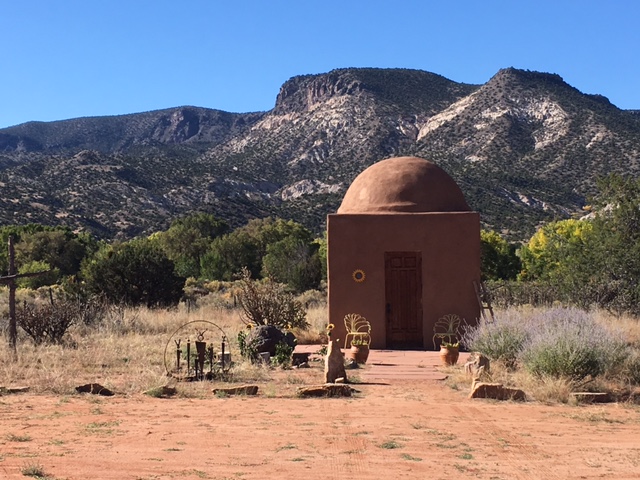
I like the rhythm of constant movement. I’ve never wanted to linger anyplace I’ve visited in my survey course of the United States. Until I came to Ghost Ranch, a dude ranch for the spirit and intellect. Here, I found the New Mexico magic so many herald. The scenery is beautiful, the people are engaging, the facilities are functionally stylish. Beyond that, the air is ambrosia and the light ethereal.

img_7676

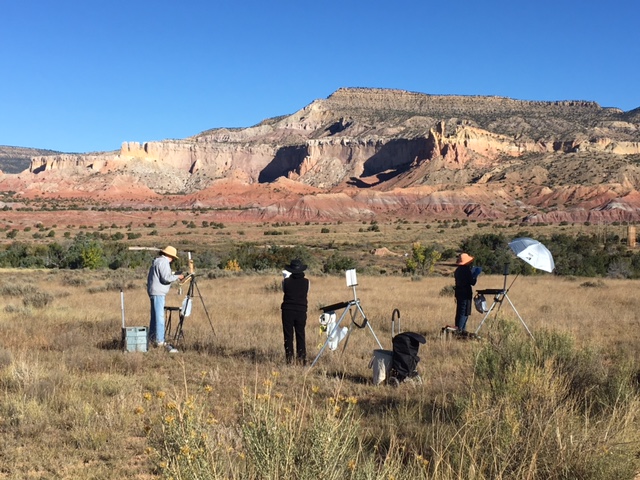
But lingering can be the agenda for another trip; this one is dedicated to rolling. So, after a morning hike up the Cliffside Trail and a terrific breakfast sauced with more interesting conversations with middle aged men penning poems and women painting plein air, I headed down (or is it up?) to Santa Fe. Down because it’s to the south. Up, because it is at 7200 feet elevation – the highest state capital in our nation and the last great height of my trip.

img_7678The ride east and south along US 84/285 wasn’t as captivating as yesterday’s trek, but I kept on, climbing against the wind, past Castle Rock, over the crest where the Santa Fe Opera perches, and down to Santa Fe.


Posted in Bicycle Trip Log | Tagged , | 1 Comment

Profile Response: Jim Douglass, Birmingham, AL

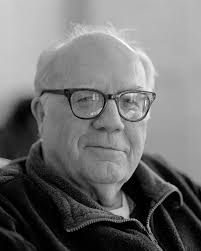
HWWLT Logo on yellowJim Douglass and his wife Shelly came to Birmingham 27 years ago to watch for a train that never came. They are non-violent activists for peace, married 45 years, devotees of Dorothy Day who live according to the three precepts of the Catholic Worker: hospitality, advocacy, and round table discussion.

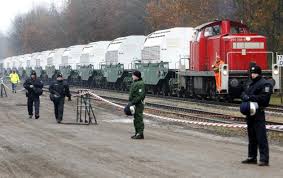
Shelly and Jim were living near Seattle, on a piece of property that the Ground Zero Center had purchased next to the Trident Nuclear Submarine base in Puget Sound, immersed in the Tracks Campaign that monitored rail shipments of nuclear fuel from the Pantex plant in Amarillo, TX to the base. “The trains were pure white. There were turrets on the cars, with guns to protect the train from the citizens.” Train monitors alerted advocacy groups along the train’s route. Protestors disrupted the passage of nuclear materials. Eventually, the trains took longer, more complex routes to avoid controversy. “The longer the routes, the more our ranks swelled. No one wanted nuclear material hauled through their town.” The government began shipping material through Birmingham to Charleston. Shelley and Jim moved to Birmingham to head the local watch effort. But the government eventually abandoned train transport altogether, opting for less traceable modes like trucks and planes.

images-1“We were here, waiting for a train that didn’t come. So we asked, ‘Why did God bring us to Birmingham?’

Before the trains, before Ground Zero, before Shelley, Jim was a young Catholic activist in Rome, where he lived from 1962 through 1964 lobbying Pope John XXIII’s Vatican Council to make a statement against total war and in support of conscientious objectors. That’s where he first met Dorothy Day, who came to Rome on a pilgrimage in appreciation of John XXIII encyclical ‘Pacem in Terris.’

Dorothy Day and her Catholic Worker precepts made a major impact on Jim, but so did others. “Martin Luther King changed my life.” When the civil rights leader was shot in Memphis in 1968, Jim was teaching at the University of Hawaii. In response, his students formed ‘Hawaii Resistance,’ and he joined. “A month later I was arrested for protesting the call-up after the Pueblo crises. It was my first experience being arrested. That was the end of my academic career. I didn’t understand the dynamics of Martin Luther King’s assassination until I read his final book, advocating massive non-violent action across the globe. That’s when I realized it wasn’t a lone assassin.”

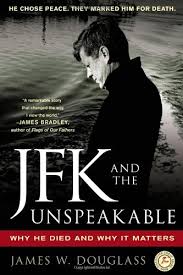
imgresJim began to question the four major assassinations of the 1960’s – JFK, Malcolm X, RFK, MLK. His research led to JFK and the Unspeakable. “I was interested in the ‘why’ of Kennedy’s assassination. The ‘how; is in there, but the ‘why’ is more important to me. JFK’s favorite poem was ‘A Rendezvous with Death.’ He was consumed by it his entire life. You have this Cold Warrior elected President, but during the Bay of Pigs he begins to turn. He realizes he must trust the enemy or we will annihilate each other.” This runs counter to military and economic interests. “The consequences are enormous. If you can take out the President of the United States without consequences, you’re invincible.”

JFK and the Unspeakable took Jim in a new direction. Now he is working on a companion book that addresses the other three major assassinations. I asked him how 911 fits into all of this. “I don’t know the details of 911, but I read David Ray Griffin. He’s written ten books on 911.”

Which brings us back to Birmingham, where Shelly and Jim have responded to the question of why God brought them here by opening Mary’s House, a refuge in the Ensley neighborhood. They share community meals and have bi-annual retreats where they discuss the big issues of the day. They work for peace by living it.

How will we live tomorrow?

imgres-1“Like this or not at all; non-violence or non-existence.

“But we need more discipline. If the army could bestow discipline on the peace movement it would be a great aid to non-violence.”


Posted in Responses | Tagged , , , , , , | Leave a comment

Trip Log – Day 336 – Taos NM to Ghost Ranch NM

to-ghost-ranchOctober 6, 2016 – Sun, 70 degrees

Miles Today: 73

Miles to Date: 17,472

States to Date: 45

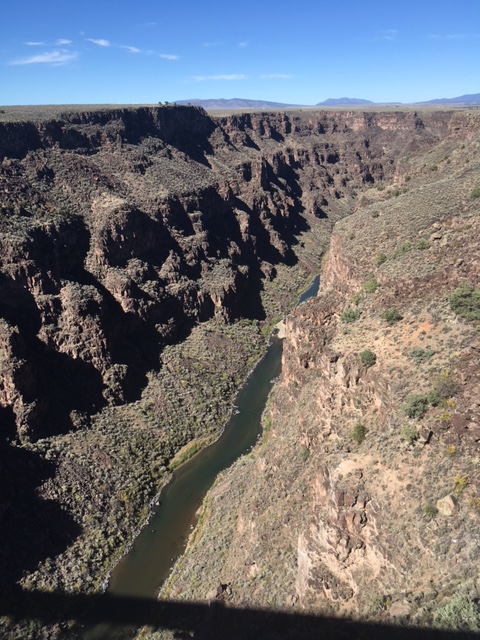
When Google informed me I had 73 miles and a half-mile of vertical rise and fall, it did not convey the beauty of today’s ride. The going was rough, the wind grew strong, but the ride was so beautiful I would do it again in a heartbeat.

img_7635

Rio Grande Canyon in morning shadow.

img_7638

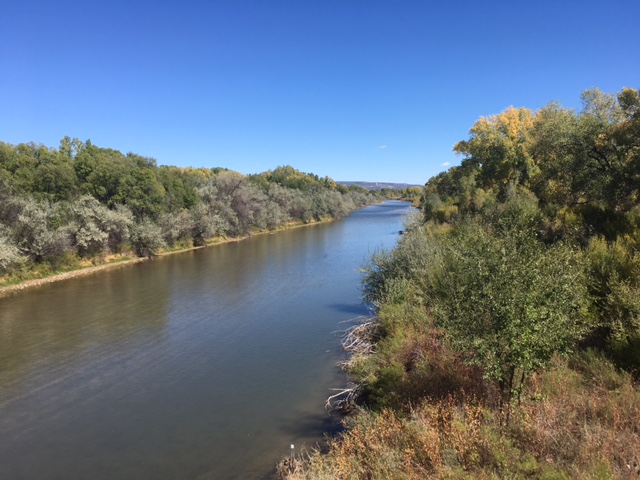
Fourteen miles through the Rio Grande Gorge

img_7639 img_7640

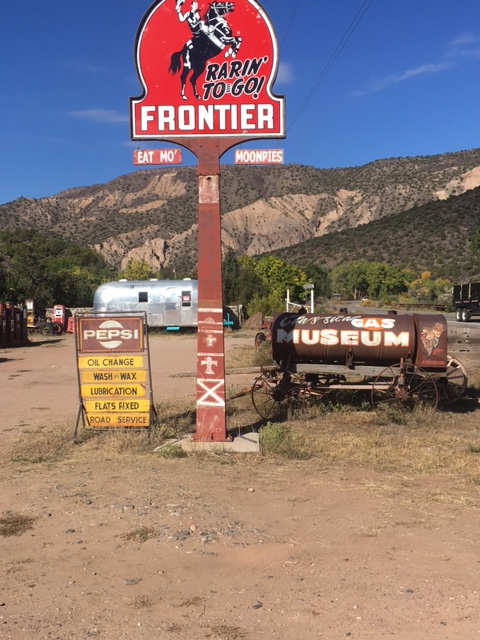
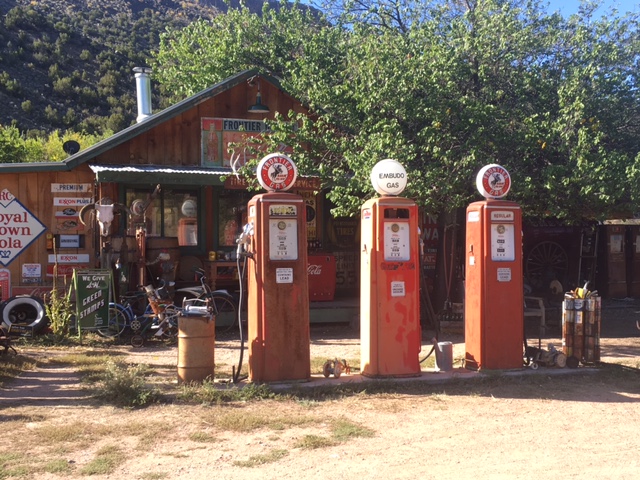
The Museum of Gas in Rinconada

screen-shot-2016-10-08-at-9-23-24-am

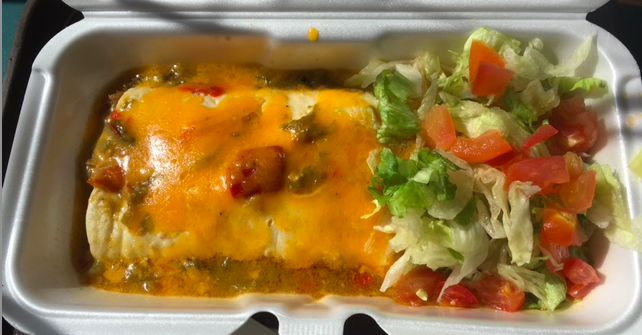
The best $5 green chile burrito north of the border

img_7645 img_7642

Rio Arriba County Road 40

img_7646

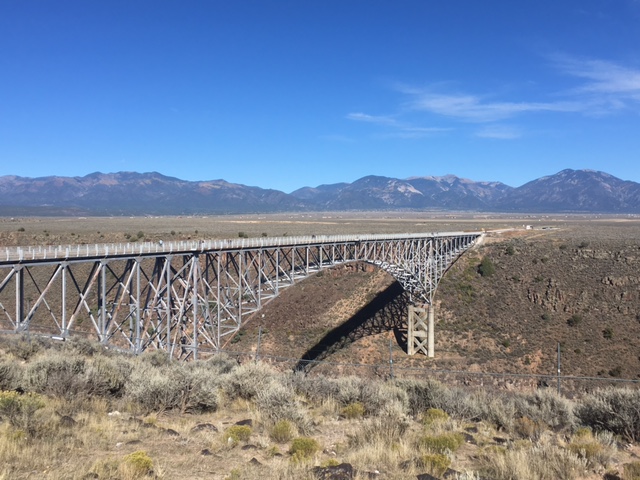
Crossing the Rio Grande

img_7652

Red Rock cliffs along US 84 north of Abiquiu

img_7654

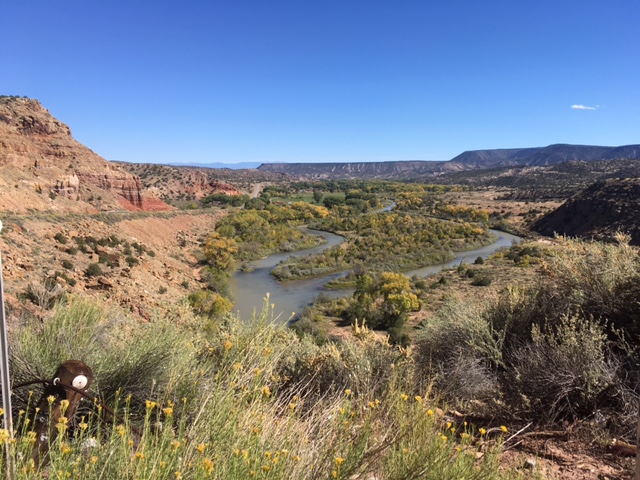
La Chama River from the top of the mesa

img_7667

Ghost Ranch labyrinth at sunset

Posted in Bicycle Trip Log | Tagged , , | 4 Comments

Responses: How will we live tomorrow?

How will we live tomorrow?

“Maybe our dreams will give us a clue.”

Bryant, seven year old, St. Charles, MO

How will we live tomorrow?

“Hopefully with a clutch in my car.”

Curtis, broken car owner, O’Fallon, MO

How will we live tomorrow?

“I am going to get up with a smile on my face and take care of my three-year-old.”

Jessica, waitress at Marley’s who’s had four back operations, two hip replacements, and nine miscarriages, Ferguson, MO

How will we live tomorrow?

“I think we should life live tomorrow just a little better than today; a little more understanding, a little more compassion, a little more empathy. We as a whole don’t always do that, but imagine if we could.”

Kyle, oil truck dispatcher, Belleville, IL

How will we live tomorrow?

“I hope we live with more thoughtfulness.”
Eric, engineer, St. Charles, MO

How will we live tomorrow?

“Great.”

Bennett, four-year-old who took the training wheels off his bike, St. Charles, MO

How will we live tomorrow?

“Tomorrow will be determined by how we live today.”

Christina, mother of three, St. Charles, MO

How will we live tomorrow?

“I am going to live like today. Better than today.”

Kirk, Coors light drinker, Belleville, IL

How will we live tomorrow?

“I will life tomorrow when it comes.”

Lisa, barbeque aficionado, Belleville, IL

How will we live tomorrow?

“Smarter. We have to have faith in each other. I’m ex-military. We have a brotherhood.”

‘Shorty Italian’, 44 years in a wheelchair, New Florence, MO

How will we live tomorrow?

“I want to be a scientist.”

Remy Chevalier, eight-year-old, New Harmony IN

How will we live tomorrow?

“Same as today.”

Sandy, Dad’s Junction Cafe, New Florence MO

How will we live tomorrow?

“Well, its nice meeting you. Have a safe trip.”

Raymond, Amish farmer, New Florence MO

How will we live tomorrow?

“We will live by continuing to breathe, eat, and drink.”

Don Jewel, Jewel’s Transport (drives Amish), New Florence MO

How will we live tomorrow?

“Good.”

Ely, second grader, Columbia MO

How will we live tomorrow?

“To the best of my ability.”

Celeste, patient tutor, Columbia MO

How will we live tomorrow?

“We need water. We are destroying our landscape.”

Karen Moreland, Community of Christ Temple, Independence, MO

How will we live tomorrow?

“Better than today.”

Travis, Manager of McDonald’s Kansas City, KS

How will we live tomorrow?

“We will live in community in the grace of God.”

Deborah, silver-haired grandmother, Kansas City, KS

How will we live tomorrow?

“Surviving. That’s all I do day to day.”

Natalie, mother of six-month-old, Cameron, MO

How will we live tomorrow?

“I will live today in the moment.”

Donna McMillan, nurse, Kansas City, MO

How will we live tomorrow?

“I wouldn’t even know how to answer that question.”

Cole, insurance agent in blue jeans, Junction City, KS

How will we live tomorrow?

“We need more wind and solar. We’ve got a big wind farm here in Lincoln County, but the State of Kansas won’t take the energy. We ship it to Chicago.”

Cindy, jeweled in turquoise, Lincoln, KS

How will we live tomorrow?

“Good question. The way we’re going, I wouldn’t even venture a guess.”

Lois, jet-black fashionista, Lincoln, KS

How will we live tomorrow?

“You just be safe out there, sweetheart.”

Steph, Pink Heels waitress, Lincoln, KS


Posted in Responses | Leave a comment

Trip Log – Day 335 – Arroyo Seco NM to Taos NM

to-taosOctober 5, 2016 – Sun, 70 degrees

Miles Today: 22

Miles to Date: 17,399

States to Date: 45

img_7626

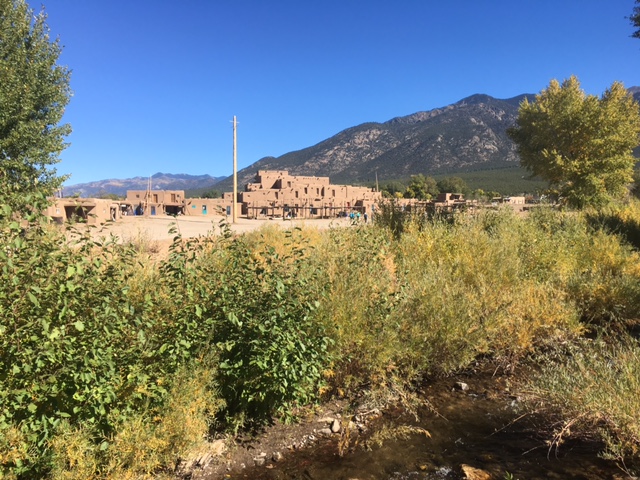
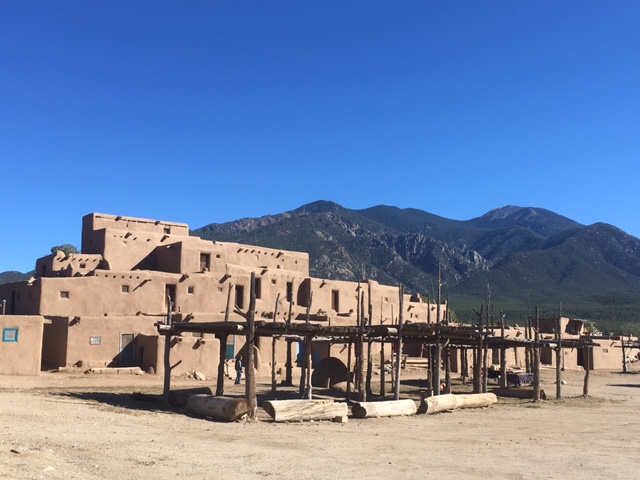
When I arrived at Taos Pueblo before 10:00 a.m. stocky guys in orange vests were directing cars to dusty parking lots. One hailed me down and demanded I pull my bike on the sidewalk. “How did you come here?” Apparently pedestrians and cyclists are supposed to take a van from the Plaza to avoid the shoulderless roads and barking dogs. I had simply followed a sign with an arrow to ‘Taos Pueblo.” Eventually David stopped barking himself, gave me a place to park my bike and store my bags and when I asked him “How will we live tomorrow?” he extolled the virtues of tradition and a slow life. Then David directed me to the ticket counter, where the woman pushed the Master Card slip for my $16 entry at me. “Hurry up, I have a bus coming in.”

img_7624

Before I even entered the gate, I witnessed the dichotomy of Taos Pueblo. It is amazing, miraculous really, that people have lived here for over 1,000 years. It is appropriate that it is a National Historic Monument and a World Heritage Site. But it’s horrific that Taos Pueblo is so commercial. Signs everywhere: don’t do this; buy that; give your guide a gratuity. For sixteen bucks you ought to get a half hour tour by someone trained and informed. Instead they tout how tours are given my tribal college students eager for tips. Mine integrated at least three plugs for tips into his spiel. The history of the place is all right; the tone of the place is all wrong. The hucksterism obscures the magic that the tour guides and shopkeepers proclaim. I want to believe that the natives’ commitment to this land, this place, this way of life, is genuine. But sincerity so polluted by the almighty dollar is difficult to swallow.

img_7625

Luckily, a different parking guard was happy to let me ride my bike out of the area instead of making me wait for a bus. The rest of the day I toured Taos; a predictable mix of commercial, artistic, and alternative attitudes coexisting on thin air. I could definitely fit in here – the place is crawling with skinny white guys with wrinkled faces and disheveled grey hair – but after one day I was ready to pedal on.


Posted in Bicycle Trip Log | Tagged , | 2 Comments

Trip Log – Day 334 – San Luis CO to Arroyo Seco NM

to-taosOctober 4, 2016 – Sun, 75 degrees

Miles Today: 84

Miles to Date: 17,377

States to Date: 45

img_7610

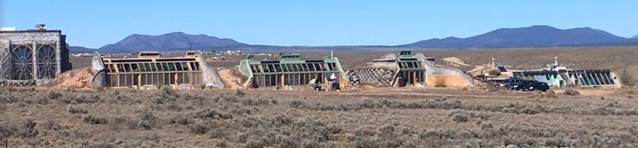
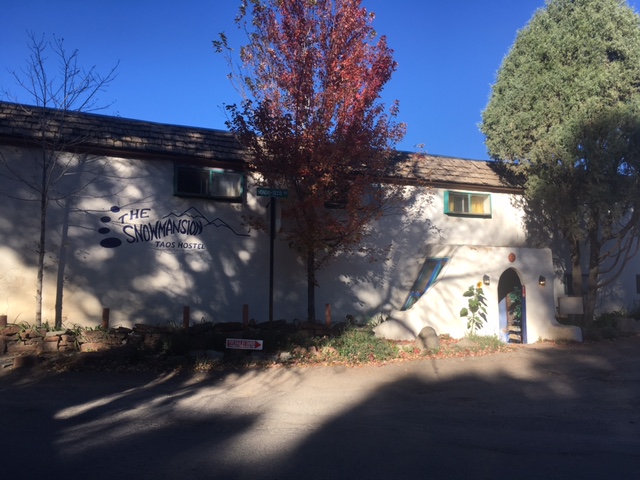
Thirty-four degrees at 7:30 a.m. and the world stood still as a Watteau painting. I dug my thermal and windbreaker and heavy gloves from the bottom of my pannier and headed south in crystalline mountain air. By ten I was warm enough to stuff the jackets back in their bag. The wind picked up around eleven. Long descent into Questa and a steady climb back up through the pine forests. I was on the outskirts of Taos by 1:30 p.m., but didn’t go into town. Instead, I headed west to cross the Rio Grande Canyon Bridge and visit Earthship, a community of net zero permaculture homes on the high desert. Then I retraced my path and pedaled a few miles north to Arroyo Seco to stay at Snowmansions Hostel.

img_7612 img_7618

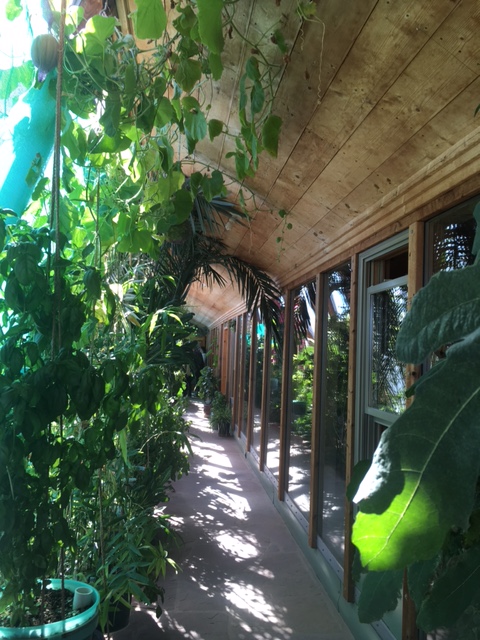
img_7614Earthship is cool, though I can’t imagine living in a place so consciously earthy. I cannot argue with the energy efficiency and sustainability, except that, as long as your vehicle burns petrol, living twelve miles from the nearest anything is unsustainable. The aesthetic works for some, but not many of us. Mostly, I felt the place would be an odd community. The low houses, paying reverence to the sun rather than each other, reminded me of guys sitting shoulder to shoulder at a bar, all looking the same direction, out of each other’s gaze. As one resident said, “People pretty much keep to themselves.” And then, as if she realized her oversight, she added, “Of course, unless you need them, and the then they’re the greatest in the world.” The whole point of an Earthship house is independence and autonomy. That they have built a collection next to each other seems like happenstance.

screen-shot-2016-10-07-at-4-25-52-pm

img_7621Snowmansions Hostel, on the other hand, is a very ordinary structure within which lies a community as well as a business. During ski season the place probably accommodates 40-50 people, but in early October there were less than ten of us, all men. Staff, however, was plentiful. They came to Snowmansions from all over to live and work in community with a level of consciousness I appreciated without being overbearing. Although I was the only guest taking dinner, Sam and Justine made a banquet of dishes. “It’s better to have leftovers then run short, and the staff will eat whatever’s left.” Sure enough, about 8:00 p.m. Snowmansion residents came out and devoured the beans, barley, quesadillas, soup, ravioli, grilled cabbage, and grapes I could not finish. I offered Justine the $10 donation requested of guests. “Don’t bother, it was mostly leftovers.”


Posted in Bicycle Trip Log | Tagged , , , , | Leave a comment

Profile Response: Nicole Herzog, Education Director, Sloss Furnaces Birmingham, AL

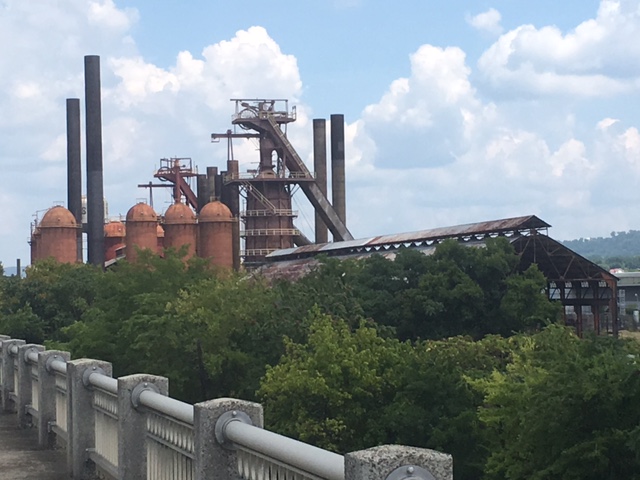
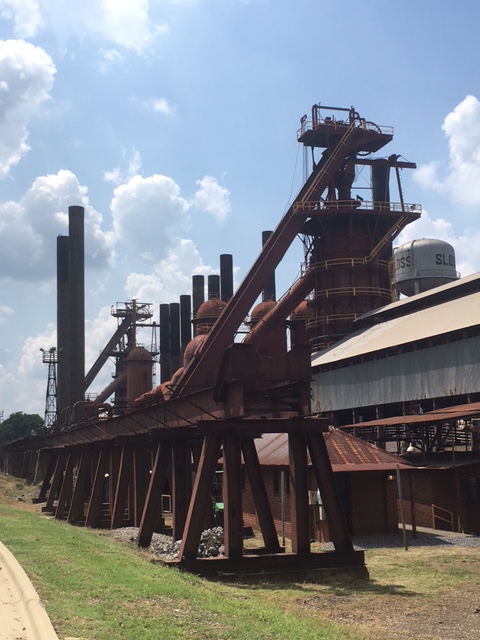
HWWLT Logo on yellowBirmingham has long been known as “Pittsburgh of the South.” All of the materials required to make iron are abundant within thirty miles. Unlike Pittsburgh, there are no major rivers. So Birmingham’s industrial might depended on the arrival of the railroad. Even today, 82 trains a day roll along the main line next to Sloss Furnaces.


img_6852

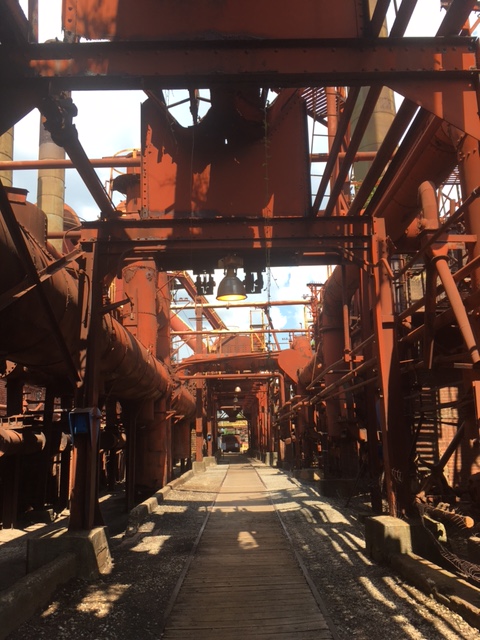
Sloss Furnaces, built in 1881, were the second commercial furnaces built in a city that eventually supported 66 iron ore furnaces. Early furnaces, based on designs from northern producers, had to be modified because the minerals from these hills were different. Nicole Herzog explains, “They were spending more time cleaning the furnaces than making iron, until they adjusted the process and the facilities.” The Sloss Furnaces continued to upgrade and expand well into the early1900’s as they optimized production.


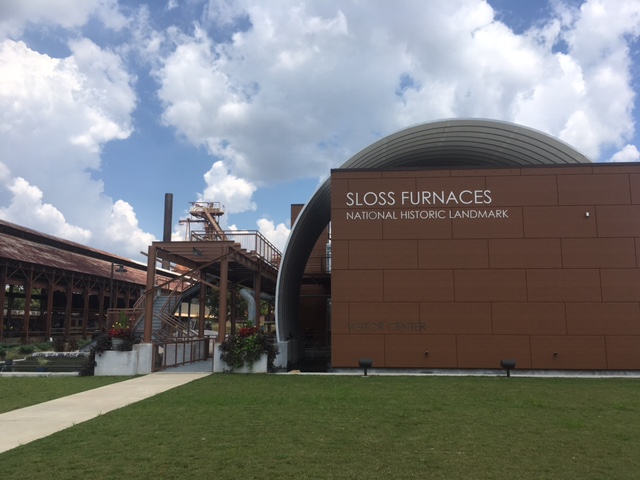
But times changed. Now there are only specialty iron producers in Birmingham. Sloss shut down completely in 1971. The furnaces sat abandoned until they were named a National Historic Site in 1983. Now, Sloss Furnaces is a historic and educational center.

img_6856 img_6862 img_6860


img_6857Nicole pointed out one attribute of iron production in Birmingham that was quite different form up north: the differences between accommodations for the Black workers and the White workers. “A lot of the Civil Rights work grew out of places like this. Blacks and Whites worked together and lived together, yet there were all these laws to keep them apart. They had separate baseball teams, but each group went to watch the other group play. 65% of the workers here were Black, but the first Black promoted to a management position wasn’t until the 1960’s. When you come out of the furnace, you’re all the same color.”

How will we live tomorrow?

img_6859“I think a lot like we live today, if you’re just talking about tomorrow. It’s amazing when you see what these men created in the 1880’s. Now, I have engineering visitors and they say, ‘This is the way we do it today.’ We used five million gallons of water per furnace per day to keep them cool. The fountains we have here are a small part of the cooling spray that was larger than a football field. The furnaces generated so much excess power they sold it. They dealt with all the same things we deal with, over a hundred years ago.”


Posted in Responses | Tagged , , | Leave a comment