Profile Response: Judy and Caesar Meladondri, Summerville SC

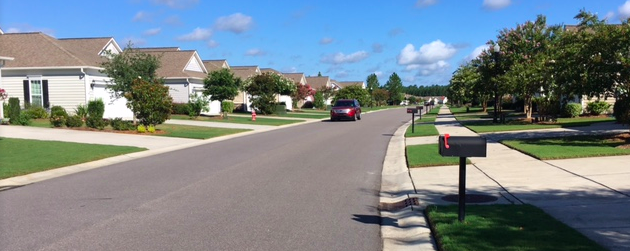
HWWLT Logo on yellowJudy and Caesar Meladondri were born and raised in New Jersey, lived in a variety of places ‘up north’ and raised their son Mark in Laconia, NH. Six years ago they retired, sold their home to their grown son and moved to a Del Webb community in Summerville, less than twenty miles from Charleston. They are careful planners and devout Catholics who researched their options before deciding on this particular community. Yet demographically they are part of the huge shift of our population from cold to warmer climates.

imgresSouth Carolina is the sweet spot for many retirees. The cost of living is lower than in the Northeast, even many parts of Florida. The weather is mild year round. There’s a sense of history, of place, that appeals to many. And, it offers healthy tax incentives to veterans like Caesar.

screen-shot-2016-09-22-at-7-08-36-pm

In a region that’s historically Protestant and insular, Judy and Caesar belong to a strong and growing Catholic community and most of their neighbors are also transplants. They live in the South; that doesn’t mean they’re Southerners.

How will we live tomorrow?

img_6605“I think if we want to continue to be a unified country, we need to be able to learn effectively, life our religious life, and know who we are as a people. Is it because I’m 74 and lived in the 1950’s, but I long for that ability to be happy, to be content with what we have.

“I am so concerned about the discord in our country. I’m fine with everything as long as I don’t watch TV. We need to come together as a people. TV divides us.” – Caesar

“I have no idea how we will live tomorrow. I’ve come to the point where each day is a gift of life. I try to take each day as a gift. I try to ‘be’ rather than ‘do’. I’m always conflicted about the Martha and Mary bit, but I’m only one woman and there is so much to be done.

“There is so much more confusion now on the big and little things. Everyone is confused. In New Hampshire we could survive a catastrophe. We had a working fireplace and a garden. We lived through four days of a snowstorm. Here we lived through four days of what they called a 1000-year flood. I felt trapped. This is not a natural environment. It is an engineered environment. We are not even allowed to have a raised tomato bed. In New Hampshire I felt more in control.” – Judy

“In New Hampshire, we were twenty years younger.” – Caesar


Posted in Responses | Tagged , , | Leave a comment

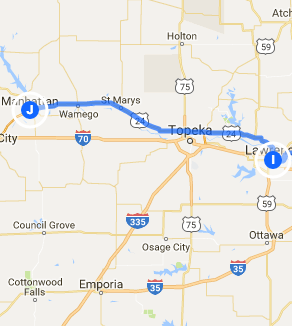
Trip Log – Day 319 – Lawrence, KS to Manhattan KS

to-manhattan-ksSeptember 19, 2016 – Sun, 95 degrees

Miles Today: 85

Miles to Date: 16,533

States to Date: 45

One word describes the challenge of crossing the plains – wind. Today the wind and I did a subtle dance as I moved west and it came out of the south. When the wind shifted a bit east or my route veered to the north, I tacked it to advantage. But if my route pivoted even a few degrees or the wind shifted to the west, it pressed against me. Either way, my cycling was easier than when I crossed North Dakota and encountered steady winds from the west for days on end. Let’s hope these breezes keep prevailing.

imgres screen-shot-2016-09-20-at-3-15-50-pm

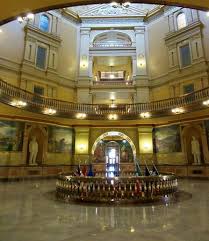
The Kansas State Capitol in Topeka is a gorgeous structure that underwent extensive restoration in 2009. They excavated the basement to expose giant granite foundations and put the museum exhibits in this grotto-like space. I thought it very effective. Then, you rise up to the ornate chambers and elaborate dome. The rough stone below and intricate ornament above create a wonderful counterpoint.

screen-shot-2016-09-20-at-3-13-00-pm images-2

It was after noon when I started the long slog to Manhattan: forty miles before I got a real break in Wamego on a very hot day. When its 95 degrees out, the contents of my water bottles keep my hydrated but don’t refresh.

img_7405After cold PowerAde, the last fifteen miles were a breeze. I stayed up past midnight talking with a wonderful local couple that lives in an old hotel downtown turned to apartments: appropriately urban for a Kansas town called Manhattan.

Posted in Bicycle Trip Log | Tagged , , | Leave a comment

Profile Response: Robert Watkins, Florence SC

HWWLT Logo on yellow“I get asked at least once a week when I’m going to get married.” Robert Watkins is a 22-year-old bachelor in a land where that age is long past marriage prime. He studied art and photography at nearby Francis Marion University, “until I realized I did not want to photograph weddings and children, which is how a photographer makes his living around here.”

Robert discovered a passion for barbering, quit school, apprenticed at a local Black bar shop, were he now has his own chair. “The barber shop is the community center for black men. They get their hair cut every week. It’s all about crisp lines at the edges.” Black hair is very different from white hair, but Robert likes the challenge of cutting both types. Now that he is full time and developing a following, he does more and more white guimagesys. “White guys don’t get their hair cut as often, but they make appointments. Black guys just show up.” Robert’s formal appointments cut back on his walk-ins.


Robert’s interest in men’s hair has expanded to grooming products. He makes moustache wax and lip balm that he sells from his house. Vacations are often trips to visit other barbers who help him expand his skills. “I just got back from Portland, Oregon where I studied with a barber I admire. I fit in so well, everyone thought I was from there. It was cool, but odd. I like it here, where it’s easy to stand out.”

img_6603

Florence is an aging railroad town whose location as a transportation hub – now the intersection of I-95 and I-20 – helps keep it lively. He lives in a vintage bungalow in a shady part of old town with a housemate, Gordon. The place is sparse, the living room has two couches and a giant flag; a drum set fills the dining room.

img_6595The real living happens on the front porch. “There’ll be a few people on the porch when we get home.” Robert casually said as we drove home from dinner at a downtown pub. Turns out many locals know about ‘Third Shift Thursday’. A steady flow of people aged 20 to 40 showed up until well past midnight. “What do I love about Florence? The people. I can visit Portland, but I could never leave here.”

How will we live tomorrow?

screen-shot-2016-09-18-at-5-21-38-pm“I watched a TED talk recently about machine learning and what jobs robots will take. I think a lot about technology and how that will define our day to day. Machines draw conclusions from relatable data. But they can’t make correlations of non-related data. Man can do that.

“I cut a lot of children’s hair in the shop. You have to put a screen in front of them to get them to sit still. They can’t settle themselves. What will that mean? They get all this input, they are accustomed to constant input. But what will they put back out?”


Posted in Responses | Tagged , , , , , | Leave a comment

Trip Log – Day 318 – Kansas City KS to Lawrence, KS

to-lawrence-ksSeptember 18, 2016 – Sun, 80 degrees

Miles Today: 44

Miles to Date: 16,448

States to Date: 45

 img_7370 img_7372

Summer Sunday – and the living is easy. I had forty-four beautiful, easy miles along the Kansas River Valley.

imgres

Kansas Speedway is a huge piece of environmental art. The painted seats are visible from State Ave for miles. There was a huge motorcycle rally planned there today, so I got up and around it before the noise got too great.

img_7375The only hill to speak of was University of Kansas campus – which sits on a precipice from all directions.

Posted in Bicycle Trip Log | Tagged , , , | Leave a comment

Profile Response: Trish Ramos and Bradley Kadel, Fayetteville NC

HWWLT Logo on yellowTrish Ramos is a local girl made good. She was born and raised in Fayetteville and spent Saturday afternoons downtown. She attended Fayetteville State University, a traditionally black college, on a minority scholarship when the school was trying to attract white students. Downtown slid way down and no one went there. There was controversy over whether the centerpiece structure was a slave market or not. Trish moved away and then returned home, taught junior high English and Journalism. Now, downtown’s picking back up with coffee shops and boutiques and Trish is a middle school principal. She likes her work, well enough, but is counting the four years until she will retire. “I’ve survived all the changes in education.”

imgresTrish met Brad, a German blond Midwesterner with a fascination for all things Irish and a PhD in History, at a music club. Brad came to Fayetteville to teach at FSU. He wrote the book on Irish pubs, plays guitar, and enjoys a pint himself now and then. He also happens to be blind. “The blind card trumps the girl card every time,” Trish proclaims as she moves about the kitchen preparing dinner. Brad smiles sheepishly, tacitly acknowledging that every disability has its benefits.

imgres-1Brad travels most summers, often to Ireland, Costa Rica, and within the U.S. This summer, Trish spent two weeks with him in Ireland, where they stayed with couchsurfing friends he’s made over the years. “I first went to Donegal in 1989. There were donkey carts in the streets, everyone was on the dole, but the pubs were full.” The Celtic Tiger clawed that era away, and then the recession laid the Tiger flat. But Ireland still charms Brad.

Fayetteville’s charms are less evident, but after eleven years here and recently tenured at FSU, Brad calls the city nourished by Fort Bragg home. “There are three communities here: the white community; the black community; and the military community. We have good restaurants from every country we’ve gone to war with.”

How will we live tomorrow?

screen-shot-2016-09-18-at-5-12-54-pm“Interdependently.” – Trish

“I hope we live more wisely than we do, especially in terms of the suburbanization of America. It is not sustainable or healthy. We drive our box car to our box store and return to our box house. We are a fundamentally lonely country. The more we’re on social media the lonelier we get. It’s individual freedom gone wild.

“I want everyone to live on little family farms and have children that are above average.” – Brad


Posted in Responses | Tagged , , , | Leave a comment

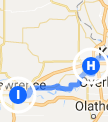
Trip Log – Day 317 – Kansas City MO to Kansas City KS

to-kansas-city-ksSeptember 17, 2016 – Sun, 80 degrees

Miles Today: 28

Miles to Date: 16,404

States to Date: 45

img_7347Everything’s up to date in Kansas City

They gone about as fer as they can go

– Oscar Hammerstein

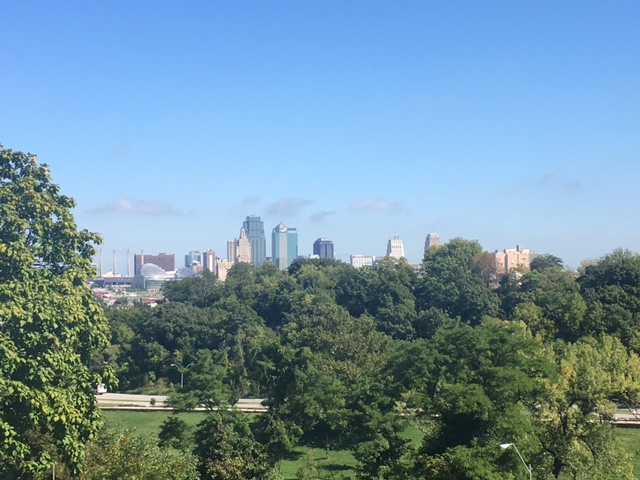
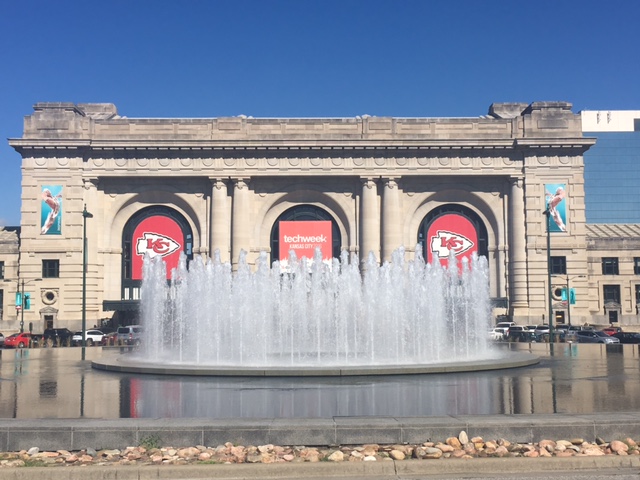
My first time ever in Kansas City: a striking, friendly place that’s really a collection of places. If Saint Louis is the last Eastern city in our country, Kansas City is the first Western metropolis. It doesn’t have a single core from which things sprawl. Rather, Kansas City includes multiple nodes of development strung together by wide boulevards and residential areas. I had a gorgeous day to explore the new place.


img_7346 img_7350 img_7363

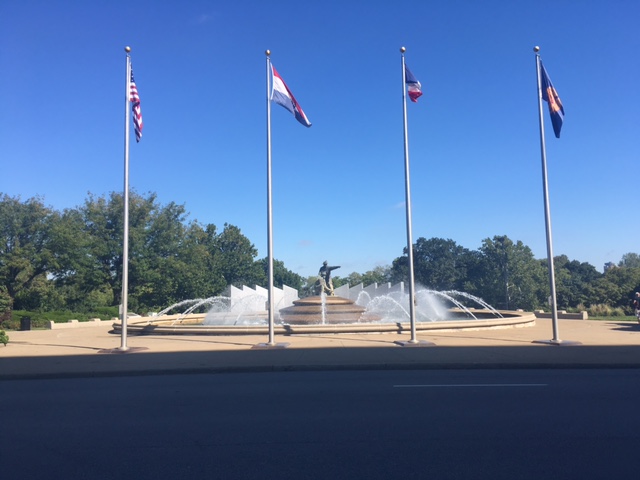
The city is famous for its fountains.

img_7360 img_7361

I like the stately 8-plax apartments with big porches that were built in the 1920’s.

img_7367Snazzy KU Medical Center sits right off State Line Road. Within a few blocks the grade descends to the Kansas River and I was in an entirely different place. Kansas City KS is Hispanic and poor. Further west thin men trembled outside of by-the-week motels and buxom women in tight skirts offered to sell what I’m not buying. Eventually State Avenue becomes just another strip of bog box stores and franchises.

screen-shot-2016-09-18-at-4-59-10-pmMy host is an ardent dog lover. We watched Benji, an awful, saccharine 70’s movie that turned funny when Craig’s dogs barked at the ones on the screen. Afterward we went to Quik Trip for dessert smoothies. We sat outside on a warm night under the full moon and watched people buy pop and fill up their pick-ups. Saturday night. Welcome to Kansas.


Posted in Bicycle Trip Log | Tagged , , , | Leave a comment

Profile Response: Green Beret Wives, Fort Bragg, NC

HWWLT Logo on yellowIt is both an honor and a distinction to be a Green Beret, the best-known Special Forces unit within the US Army. Green Berets undergo two years of intensive training, after a minimum of three years regular army service, and master a foreign language. They work in twelve-man teams to undertake sensitive missions that require quick maneuvering. It’s a prestigious, dangerous, and unpredictable job. Which creates perks and problems for the women married to them.

I met with five women married to Green Berets. All of the husbands have been deployed to the Middle East at least once. Some, as many as four times.

Aurelia had a six-year-old son and a beautician business when she married into the army. Soon after her wedding she stopped working full time because her husband’s life was so erratic, she could not depend on a regular schedule. “I was a planner. Now I’ve given that up. We never know when you’ll find things out; when you’ll be deployed.”

imagesNatalie agreed. “You get thirty days notice to change your life, and you just do it.” Natalie runs an independent fit-camp, a home-based business she can tailor around her husband’s needs.


Being comfortable with an unknown future is a daily part of a Green Beret wife’s life. Cathy remembered, “When I was a kid I used to think if I couldn’t envision the future I would die. Now I’m an army wife. I don’t pretend to know the future.”

Christine added, “I remember I saw a woman on TV saying she would wait for her man. I thought she was nuts. Four months later Ben and I married. A month later he got deployed. And I waited. You wait.”

images-1“We do so many things that we don’t think we can.” Lisa rounded out the group and the general consensus. “How many of us have had babies by ourselves? The other wives help. Things other people do as a couple, we do among ourselves. You feel strong about what you can do.”


Cathy picks up, “True, The army makes strong wives. My sister freaked out when her husband was gone for two days. I thought she was such a wimp but then I realized that’s a long separation for her.”

The stress of war, both in the battlefield and at home, has become a national concern since recent veterans have such high incidence of mental health problems, suicide, and PTSD. Are these concerns different among Special Forces? Lisa believed there were fewer problems among Special Forces because the guys are so tight, and Cathy confirmed. “Ben did five deployments; three in the regular Army and two in Special Forces. There is this big gap in the regular Army in ability and expectations. The emotional range of the troops is huge.” But Natalie observed that the soldier’s closeness makes loss even more tragic. “John lost sevimages-2en guys in this second tour in 2006. He just shut down.”

Which made me inquire about the wives’ roles while their husbands are gone. Aurelia said, “Being in the Middle East, it’s a 24/7 job. We talk, but there is no reciprocal conversation. They want to know what we’re up to, but they can’t tell you what they’re doing.” Natalie added, “Our mundane problems at home are a preferred break from whatever they’re addressing there.” Cathy continued, “As spouses, we expect them to compartmentalize. We can’t help them, but if they can express what has happened, the better it is.”

imgresAs our time came near a close, Peter, Cathy’s husband, joined the conversation. “We have to disconnect ourselves emotionally from our families. It’s important, and difficult, for others to understand that. Then I have to work hard to reconnect when I come home.” Coming home is always a time for celebration, but one that seasoned wives approach with care. Some want their children to greet dad right off the plane, others arrange a couple overnight time, and let the children come in the picture later. The transition from solider to husband and father is complex.

Will these guys retire after a twenty-year Army career? Cathy laughs, “The husbands all fantasize about retirement. They think it will be so awesome. You lead this life for 20 years. There’s no planning. Then they move from a place where everything is prescribed to having lots of time and you have to make your own decisions.” It’s another difficult transition, fraught with potential and pain. Perhaps the key challenge for Green Berets, and their wives, is constantly adapting to change, to the unknown.

How will we live tomorrow?

“If you ask that when they’re deployed, the answer might revolve around life without them. Will they return? My husband is retiring in three years and four months. I am counting the days.” – Cathy

“We are told that we are not our husband’s job, we are not in the Army. But we are. As my husband grows in his career, I have to be seen. Commandeers need to know that I am supportive of my husband and will hold this end down when my husband is called.” – Lisa

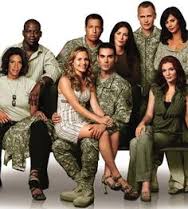
Note: All the names in this profile have been changed as requested by the conversation participants. The photos are promotional images from the TV series.




Posted in Responses | Tagged , , | Leave a comment

Trip Log – Day 316 – Cameron, MO to Kansas City MO

to-kansas-city-moSeptember 16, 2016 – Rain, 75 degrees

Miles Today: 66

Miles to Date: 16,376

States to Date: 44

images-1I woke to the threat of rain and pedaled with determination to Independence, motivated by the darkening skies and Harry S. Truman’s straightforward nature. Presidential Library #8 along my tour. Growing up, my father loved Truman’s no nonsense style, so I’ve always viewed him as a sort of hero. But he’s a complicated hero: a repeated failure in business; politically tied to patronage; a strategic rather than qualified choice for FDR’s fourth term running mate despite the near certain knowledge that this VP would ascend to the top spot.

Truman proved to be more decisive than anyone anticipated. He dropped the bomb on Japan, integrated the armed forces, solidified the Cold War, put us in Korea yet fired MacArthur when the popular general wanted to invade China as well. He lived his motto: The buck stops here.

screen-shot-2016-09-17-at-4-04-00-pm

One quote near the end of the museum sequence reinforced how much Truman created the world we inhabit today. “America in 1952 was a nation at the peak of its economic and military power. Yet paradoxically, this America of confidence, prosperity and military strength was also haunted by uncertainties, frustrations and a sense of vulnerability. Power and insecurity, plenty and want, generosity and prejudice – America in 1952 embodied all of these contradictions.” As they do in 2016.

images-2The rain was steady by the time I left Harry’s place. Still, I stopped at the Community of Christ Temple because it cut such a distinctive profile on the skyline. Turns out to be creation of a splinter group of the Church of Jesus Christ of Later Day Saints who stress Joseph Smith’s early teachings and collective peace. The theology did not grab me, but the grandeur of the building and its dedication to world peace drew me in.

img_7338 img_7339

The sky lightened and I sang Muddy Waters as I pedaled west, even if the lyrics are not quite right for me:

I‘m going to Kansas City, Kansas City here I come.
I’m going to Kansas City, Kansas City here I come.
They got some crazy little women there
And I’m gonna get me one.


Posted in Bicycle Trip Log | Tagged , , , , | Leave a comment

Profile Response: Bill Brown, 8 Rivers Capital, Durham, NC

HWWLT Logo on yellowMiles Palmer and Bill Brown were walking through Manhattan in 2007 when Bill’s phone rang. He lost the call. “How can you lose a call in Manhattan?” He wondered aloud. “Oh, I could fix that, but it won’t happen.” Miles inferred the solution would not have commercial potential. According to Bill, that was the start of 8 Rivers Capital, a technology incubator committed to bringing large-scale technological innovation to market. The MIT-educated fraternity brothers may have similar pedigree, but they are different roles in the company. Miles is quieter, more technical, an Air Force veteran with a background din defense systems. Bill, a former Morgan Stanley trader and Duke Law Professor, shapes their mammoth aspirations into appealing metaphors.

Why 8 Rivers Capital? “Eight is a lucky number in China, and rivers are a source of endless energy.” Bill sees China as a critical aspect of any major industrial change, and builds on the water analogy.

img_7476“You can’t just watch the water, you have to be in the water. It is persistent and continuous. The flow is ultimately irresistible. You wind up with the Grand Canyon. This is the story of business. Water is agnostic. It follows downstream. Business is also agnostic. It’s focused on problems. The right solution is always cheaper and better. That is the lower energy state; that is downhill; that is what we strive for.

“To take the metaphor further, the third attribute of our business is scale. We want to work on big problems. We want to have a billion dollar threshold. We want to achieve cheaper and better on a large scale.

“Our initial problem is CO2 output from burning coal. The rest of the world wants to industrialize, and that means coal. How can we get the earth to meet all of its climate goals and keep energy costs in line with current prices?

“Think of seafarers. We were born on land. Some of us fish near the shore. Others trade in boats along the coast. Only a few will go beyond the horizon. People don’t explore much anymore. 8 Rivers has audacious goals. We want to be the guys Queen Isabella supports to explore beyond the horizon.

images-1

8 River’s first project to move beyond concept is a demonstration power plant under construction in Texas that will recapture and process all CO 2 emissions. “The coal industry took an incremental response to cleaning plants and carbon recapture. That led to coal becoming an inefficient fuel source in this country. We’re throwing that whole idea out the window and starting from scratch. We want a fuel that will burn close to 100% efficient with zero emissions.


“The gist of the Netpower idea is to burn coal in pure oxygen in a sealed high-pressure container, and keep all the pollutants and the energy in one box. Extract the energy from the box and feed the CO2, still at high pressure, back into the circuit.” They anticipate reusing 94% of the CO2 in each iteration, and sending the 6% unused, still at high pressure, as a liquid into pipelines to sequester in exhausted oil wells or use to displace difficult to release oil. The key is to never return to atmospheric pressure; keep the CO2 supercritical and there will be no energy loss from phase change.

net-power_site-photo_18-july-16Netpower’s demonstration plant should be ready to commission by the end of this year and begin production in 2017. “The net cost of energy from the demonstration plant will be less than competitors plus the value of the excess CO2.”

Other ideas in the works include the cell phone reception concept that got the company rolling – “The idea has taken a pivot, but it is still in the works.” – and a scheme to move supply chains through space – “Miles is working on sending stuff to space for the same cost as airfreight. Can you imagine Amazon distribution centers in satellites?”

8 Rivers thinks big, even when it looks in the mirror. “8 Rivers is like Bell Labs for commercialization. We are not a typical venture capital firm. We grow our own ideas. We operate in a double blue ocean, a space where neither corporations nor venture capitalists operate.”

imagesThat’s not easy in a country wary of the kind of massive investment Miles’ and Bill’s ideas require. “The world does not value industrial innovation the way it used to. They value ‘apps’ which are easy to capitalize. What we do requires large capitalization.

“The 1930’s were the most technologically innovative period of our nation’s history. It was a time of great forest fires, setting up opportunities for new growth. Forest fires serve a place in our world. Mature forests are ready to die; new ones have to come forth. But we live in a world where Smokey Bear warns against forest fires. Alan Greenspan was our Smokey Bear. He prevented forest fires. He turned the world into one huge, mature, ready-to-die forest.”

How will we live tomorrow?

imgres-1“If we do not have socialization of the Commons, sooner rather than later, the hunger games will be upon us. Automation and robotics will overtake our workforce. If people don’t ‘own’ a stake in the machines, they will be impoverished.”

“We are going to have to redistribute ownership or have massive population reduction or become a 100% service economy. We will decouple our economy from ‘stuff’. That assumes that, at the limit, every person on this earth has service someone wants.”

“It’s going to be a sad place unless we invest more in education. Not the four-year country club experience, but the CUNY system that serves every strata of society, or the Berea model that doesn’t take from students, it gives things to students.”


Posted in Responses | Tagged , , , | Leave a comment

Trip Log – Day 315 – Marshall MO to Cameron, MO

to-cameron-moSeptember 15, 2016 – Sunny, 85 degrees

Miles Today: 91

Miles to Date: 16,310

States to Date: 44

img_7308I woke before dawn, excited for the ride; stretched, breakfasted, and was on the road by seven. I always enjoy riding in the morning. The horizontal light highlighted the galvanized silos and skittered off the corn tassels. I got good miles behind me before the heat set in; the breeze gentle as the contours of the land. I rode the shoulder of US 65 north, across the Missouri River to Carrollton, then thirty miles west on Missouri 10, which follows the crease between the flood plain and the foothills. I logged fifty-nine miles and reached Richmond before noon: a new personal best.

img_7312What gave me such motivation? Yesterday I received an email titled, ‘I See You are in Missouri’ from a college friend. Bill made his fortune in technology and finance and retired at age thirty-nine. I saw him three years ago at his spacious house in North Jersey with his wife and youngest child, who was following in his three older siblings’ footsteps in applying to elite colleges. We had a good visit, but I didn’t contact Bill on this journey because I bypassed North Jersey. Turns out that while I pedaled fate threw Bill a curveball. An old childhood flame from his youth in Lima, Peru contacted him on Facebook. The two reconnected. In April, Bill left his wife and affluent New Jersey for a farm in Cameron, MO. Wouldn’t you wake before dawn and pedal 91 miles out of your way to get the skinny on that?

img_7321I was famished when I arrived at Jeffrey Kyle’s, a terrific family-owned buffet and restaurant for lunch. Next time you are in Richmond, eat there.


Bill and Jan’s farm is off a dirt road that Google cannot find. I headed north on Missouri 13 without a clear destination, texted Bill from Casey’s General Store in Polo, and hung around for direction. So much buzz in a small town convenience store. One man scratched dozens and dozens of lottery tickets without any sense of joy. A queue formed at the ATM, People bought a steady stream of cigarettes and pop and beer. Four people worked the joint, always busy.

screen-shot-2016-09-17-at-3-55-30-pmBill messaged me to ride west on Highway 116 where he and Jan picked me up at a truck stop along I-35. They toted Tom and me to their patch of South America via Missouri, where they raise Alpaca and thrive on their renewed connection.


Posted in Bicycle Trip Log | Tagged , , | Leave a comment