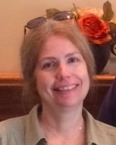
Profile Response: Dana Timaeus, Beaumont, TX


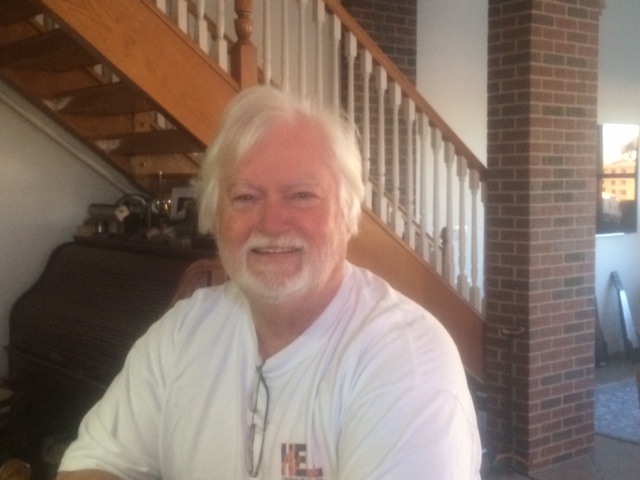
HWWLT Logo on yellow“Running for judge is about value systems rather than prejudging cases. We have differences of qualifications and length of service, my opponent and I.”

Texas has a complicated system of district courts. There are 456 district courts throughout the state; each court has a sole judge. However, court jurisdictions often overlap. Harris County, which includes the city of Houston, is home to 59 different district courts, each of which covers the geography of the entire county. Jefferson County, with Beaumont as its seat, has eight district courts. Attorneys and clients often go to great lengths to ensure particular cases are heard by particular judges.

Screen Shot 2016-04-12 at 4.37.36 PM

District court judges are elected to four-year terms. First time candidate Dana Timaeus is the Republican candidate for the 136th District Court, a court long controlled by Democratic judges. “This is a major stepping out for me. This part of Texas is predominantly Democratic. It’s a close-knit county where a small group of Democratic officials have been in office and chosen their successors for a long time.”

imgres-1

Dana was born and raised in Beaumont, graduated from Lamar University and the University of Texas Law School. He worked for a variety of law firms before opening his own practice, which has evolved over time from maritime law to product liability work to medical malpractice to civil cases, mediation, and negotiation. ”I do a very wide variety of problem solving for clients.” In addition, Dana has done considerable legal work for Honduran, El Salvadoran, and Guatemalan refugees. “My point of view is always, how am I going to best serve my clients as they move forward? If I do that, any legal punishment will take care of itself.”
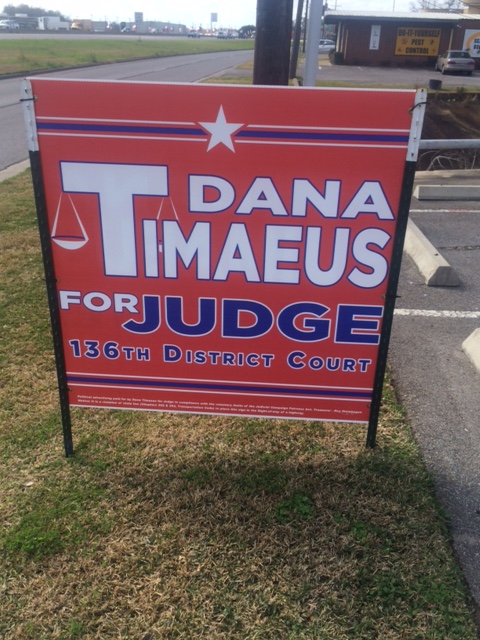
IMG_6131

Dana sees running for judge as fundamentally different from running for other political office. “What I see, as a judicial candidate rather than a political candidate with an agenda, is a desire to participate in a rational forum. There are some truths that are based in fact and then there are the people who set up absolutes based on beliefs rather than objective truths.”

Dana considers himself the underdog in this race. He has nothing to lose, but believes that the citizens of Jefferson County are seeking a more objective truth.

How will we live tomorrow?

imgres“I get to choose the ‘we’ and the ‘tomorrow?’ By what means or by what mechanism? We can break this down and write a long essay.

“I see us living with multifaceted contradictions yet I’m still an optimist. We are indulging personal preferences to society’s limits. That’s why you see so little commonality. Income disparity is growing. We’re building government deficits that will haunt our grandchildren and great-grandchildren. These will have to be faced: it’s only a question of when and who will accept the sacrifice to fix it.

“Politically we are pushing the extremes. People in the middle wonder if there is a middle, or if they have to jump to an extreme.

“There are a lot of people who are angry, and acting on their anger. People see me as a man with a strong value system who’s outside the prevailing political system. People engage me in questions well beyond the scope of judicial decisions as a way of getting to answers that will engage each other and reflect a decent society.”

 

Posted in Responses | Tagged , , , | Leave a comment

Profile Response: Michael Finley, Houston. TX

HWWLT Logo on yellow“Argumentation and debate are the two primary ways of decision. What you learn is the world is all grey.” Michael Finley grew up in Houston’s fifth ward, the poor side of town. “In 1967 I realized my grammar was holding me back from being taken seriously. Houston had transfer systems to avoid busing. I went to another school and honed my debating skills.” Michael went on to Stephen F. Austin State University in Nacogdoches, became student body president and joined the debate team. “We spent one whole year on a single question, which we had to debate from each side. Look at the decision making process. The hardest things are the beginning: define, and the last: implement. The problem is, as a statesmen, you can’t address issues in a grey way.”

imgresMichael’s worked for himself his entire life. He started his career in architectural woodwork, then got into exploration of helium, tungsten, and oil. Over the years he’s owned several companies, had staffs large and small. These days, Michael runs a lean operation. He lives in Galveston and has an ‘office’ in Houston: a two story condo in a loft building overlooking Minute Maid stadium and the city skyline.

“Houston is a dynamic city, a city of opportunity. We’ve always been part of Texas and the South but we’ve never had the racial or divisive problems that happen in other areas. Houston is a place to work. We are all about economic opportunities.”

imagesYet Michael’s comments regarding his own business focus on perceived restraints rather than opportunities. “I’ve worked for myself my whole life and I’ve been screwed by both political parties. We are just over regulated, but we regulate what’s politically expedient or has a secondary benefit.

“Take energy. We have a list that says, ‘Do This’ and ‘Don’t do that’. I think we’re a responsible industry. If I hit a bird, I get a fine of $10,000. Windmills get exempt from killing birds.

images-1“We won’t make CNG cars but we create ethanol, which takes six gallons of water per gallon to produce. Not to mention that ethanol disrupts the price of corn worldwide. All because the politicians won’t touch Iowa.”

I asked Michael whether our country should have an industrial policy. “We have no energy policies, regardless of party. We’ve had Texas Presidents who couldn’t do it. Through most of college I debated economics. I believe a free market system is the best system because it allows for the nature of man. I haven’t seen a more efficient system.

“Big government is a velvet glove on a ten ton arm. It has no sensitivity. At a federal level, we need a standing army. We need to have things like highway system. The Federal government should only do what it can do. It should decentralize as much as possible.”

IMG_6117Michael’s ideas of limited Federal intervention are not unique. Unfortunately, beyond maintaining a standing army, few people agree on what activities the government should oversee and which it should hold at arms-length.


Michael dislikes the direction of public education, “The biggest problem with education is teacher’s unions. There’s no accountability. There are problems in the growth of administration. It is the nature of bureaucracy.” Yet he decries the loss of other institutions. “We’re tearing down things but not replacing them with anything else. We’re pulling apart the Catholic Church, corporal punishment, discipline of all sorts. But what have we replaced them with? Fear and divisiveness.”

imgresMichael thinks the racial divide in our country is overstated. “I was pleased that Obama was elected but I think he’s been so divisive. In race relations he has consistently taken positions without diligence, starting with his defense of Louse Gates’ arrest in Cambridge. I think maybe twice in seven years he’s said we have to come together. The issue is socio-economic, not race. Race is used as a divisive correlation.”

Michael gave me much to ponder as I cycled east from Houston heading toward the Deep South. Human nature seeks to preserve what works well for us and to dismiss or dismantle that which does not serve our personal interest. As a self-made man who rose from a meager background to affluence and influence, I admire Michael’s tenacity, grit, and ability. But as another man of similar age and ethnicity who’s managed to climb a few socio-economic rungs myself, I’m skeptical of anyone who believes he’s made it on his own. Every successful person receives assisting hands along the way. The world is not the meritocracy we might like it to be. It’s rather grey.

How will we live tomorrow?

IMG_6118“First, I hope its vertical, that beats the alternative. And with more wisdom.

“I spent a great deal of my youth seeking truth. Around age 19 I was interested in the difference between hope and faith. I erased my hard drive and looked for my first truth: ‘There are no absolutes’ Unfortunately, that’s an absolute.”

Posted in Responses | Tagged , , | Leave a comment

Profile Response: Arla Saven, Houston, TX

HWWLT Logo on yellowArla Saven, a graduate student in Architecture, decided to study Aldo Van Eyck’s Amsterdam Orphanage for her history and theory project. When she discovered that he also designed playgrounds, an Internet search led her to Architecture that Affords Play, an obscure 1981 MIT thesis written by yours truly. Arla got in touch with me just about the time I was rounding the corner at San Diego on my current playscapade. In Houston, I had the wonderful opportunity to meet perhaps the only person who’s read my thesis in this millennium.

Screen Shot 2016-02-23 at 6.03.31 PM Screen Shot 2016-02-23 at 6.01.48 PM Screen Shot 2016-02-23 at 6.01.01 PM Screen Shot 2016-02-23 at 6.00.17 PM

Arla’s interest in play that relates to both children and adults springs from her family. “My father works with autistic adults. He has to apply tests created for children because all autism work starts with children.” Arla is well equipped to tackle the tricky subject of play. She wrote her paper about Van Eyck and play on a beach in Mexico, turned it in a week late, and still got a 96.

images imgres images-3

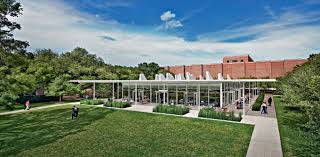
Arla and I sat on the lawn in front of The Pavilion, Rice’s latest architectural gem, on a sunny February morning. “I like to sit on this lawn, but I don’t like to go inside The Pavilion. It’s a place to be seen; a place with overpriced food where the President and other bigwigs press donors for money.”

imagesArla took a backdoor route to studying architecture. “I studied religion in college. I went to a baby-sitting interview in New York City and wound up showing the people my portfolio. They hired me to do design work instead.” After a few years Arla decided to study architecture full time. As she gave a nod for the well-dressed people inside the glass pavilion Arla acknowledged, “Rice gave me a full scholarship. Thank you oil and gas money.”

We discussed her current studio project. “Every student has one studio based on real project. We’re working on an 800 unit residential development, 75% one bedroom, on a seventeen-acre site. There are many constraints on density, parking, and budget.” Arla would like to avoid designing a high rise, but options are limited. “I want to be creative, but it’s hard.”

images-1Arla lives off campus in a largely African-American part of town. “Houston is very segregated. It’s expanding at a rapid rate. When you come here, you go to your community. You stay in the area where you’re assimilated.” She has grown to like the city quite a bit. “Houston is burgeoning. It’s very diverse.” She’d like to remain at Rice longer. “ It’s hard for me to view what I do as a job. I want it to last longer. I’m still trying the buffet.”

I asked Arla about the city’s penchant for tearing down and building new rather then renovating. Her response revealed Arla’s religious studies. “Creation is pure, god-like. Re-creation is tainted, as if touched by sin.”

How will we live tomorrow?

“My tomorrow: I’m going to watch part of a Spanish novella I really like. I will be one day closer to the beach; I’m going to Costa Rica in a couple of weeks.

“Society’s tomorrow: we will all live in hammocks on the beach; we will all grow vegetables; we will all ride bicycles; we’ll care less about our identities and more about the moment.”


Posted in Responses | Tagged , , , | Leave a comment

Profile Response: Ella Russell, Houston, TX

HWWLT Logo on yellowElla Russell doesn’t do handshakes. “I believe in hugs!” She exclaims as she comes at you with two outstretched arms and folds you into her bosom.

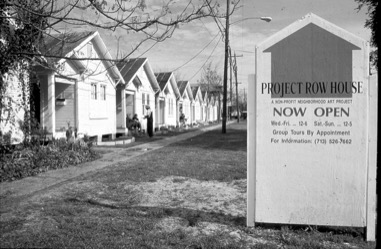
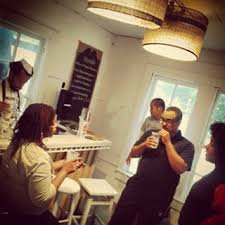
Ella is a culinary artist, one of the two pop-up shops included in Project RowHouse Round 43, ‘Small Business/Big Change, Economic Perspectives from Artists and Artrepreneurs’. Ella and her designer friend Anthony Suber transformed one of the Project Rowhouse galleries into the Crumbville Texas General Store. The cash register counter is littered with glass canisters filled with cookie samples. Cold bottles of almond and soy milk sit in an ice-filled galvanized bucket. Packages of edubilicious cookies fill a table; unique cupcakes line the shelves.

1993-photo images

Ella’s a jolly baker in luscious purple lipstick. “I don’t have the metabolism to eat cookies.” So she baked treats for her children to take to school instead. Then she started baking for friends’ parties, which led to a mobile business delivering her baked goodness.

Screen Shot 2016-04-07 at 12.14.20 PMThe menu is simple. You can buy a pair of softball-sized cookies, most of which are combinations of traditional themes, or giant, complex cupcakes. ‘Netflix and Chill’ includes popcorn and movie candy. the vegan variety is baked with kale popcorn and crystallized ginger. Being a sweet-a-holic, I went for pecan raisin cookies and a ‘Global Monsoon’ cupcake, inspired by a local band with four musicians of different ethnicities: Black, White, Korean, and Creole. “It’s a dark chocolate cookie baked into white cake with caramel frosting and peppermint.” The goodies are five dollars; Ella’s hugs and love are free.

Screen Shot 2016-04-07 at 12.14.38 PMThe Project RowHouse gig is Ella’s first opportunity to sell sweets in a fixed space. “It’s been priceless. People come in for the treats and stay for the community.” On Sundays, Ella brings in a DJ for afternoon jazz and cookies. “There’s no Wi-Fi here. Just people being real.


“Once, a woman picked out three packages of cookies. We got to talking and took pictures and she left. She came back an hour later. ‘I forgot to pay for my cookies.’ She gave me the money. How honest is that!”

images-1

True, the woman was honest. But purchasing a cookie from Ella is not a transaction; it’s just one element of the relationship this woman creates with every person she encounters.

When I finally forced myself to leave Ella’s sweet space, I pulled out my wallet. “That will be five dollars.” Ella nodded to my package of cookies. “Remember I also had the cupcake.” I handed her a ten. “Oh, I forgot. You ate that so fast.”

Ella is not a great success because of her accounting skills. She is a great success because of her people skills. And her baking skills are mighty fine. No one could a cheat a person who makes something so sweet for our belly while simultaneously nourishing our soul

How will we live tomorrow?

IMG_6107“We will live tomorrow like we live and die today. Loving ourselves and loving others.”


Posted in Responses | Tagged , , , , | 2 Comments

Profile Response: Lyman Paden, Houston, TX

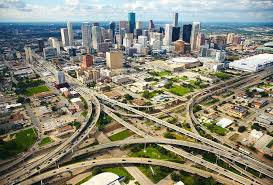
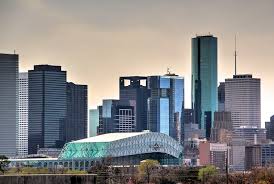
HWWLT Logo on yellowLyman Paden is a finance specialist who coordinates billion dollar deals for corporations as a partner at Baker Botts, an international law firm headquartered in Houston. Lyman and I went to high school together in Norman, Oklahoma. He attended Rice University, Stanford Law School, and then returned to Houston where he’s become a local expert on this boom and bust town’s development. He illustrated much of the city’s history and growth by pointing out landmarks from his 32nd floor office window at One Shell Plaza.

“Houston was founded by the Allen brothers, who were real estate developers. The city has been run by real estate developers ever since.

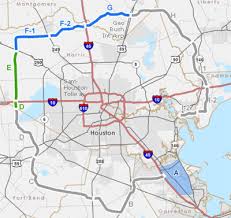
imgres“The city fathers planned the I-610 loop after World War II. At the same time they planned the Beltway (Texas Hwy 8), ten miles outside downtown and the Grand Parkway (Texas Toll Road 99) fifteen miles out. They had that much confidence in growth. Today over two million people live beyond the Beltway.

“Houston is odd because the first question people ask at a social even is not ‘what do you do?’ it’s ‘where do you live?’ The neighborhood you live in reflects your character.”

imgres-2Two factors govern development. The most desirable residential areas are to the west, removed from the industrial eastside. And then there’s drainage. “We’re fifty miles from the ocean and fifty feet above sea level. Houston is flat and it rains like heck here.” New developments set aside space for retention ponds to ensure good drainage, but that didn’t always happen in older parts of the city. “We dropped a freeway that runs west from downtown. People complain when it floods, but learn to avoid it in heavy rain. It’s actually part of our storm drainage system.”

imagesLyman lives near Rice University in a neighborhood that was platted in the 1920’s with covenants that lasted fifty years, with the option to extend them another fifty years. “We have 60-foot wide lots with cottages, two story houses, and sidewalks. Families had no car or one car. Baker Botts and other downtown firms had a fleet of cars. Lawyers took the streetcar to work and used a company car to visit clients.”

images-1All of that has changed. “Tanglewood was one of the first developments after World War II. It was west of the city, ranch houses on wide lots all designed around cars. It was very popular and altered the development pattern of the city.

Houston is famous for having no zoning. Yet despite the occasional pop-up high-rise or professional office in a residential area, the city fabric has a logical, property-value driven logic. Still, the lack of zoning creates unusual conditions. “There were no provisions for how to retain our neighborhood covenants beyond one hundred years.” Lyman’s neighborhood was not alone in this conundrum. The State of Texas intervened and determined that local covenants could be extended with a majority vote. “There was no way we would get a unanimous decision from 600 home owners. Someone would want to add a second unit to their corner lot or open a dentist office.” The first person to add a rental unit would realize a large gain, but if everyone did it, the quality of the neighborhood, and its property values, would decline.” Due the State’s intervention, Lyman’s neighborhood will likely continue without major change for the foreseeable future.

imgres imgres copy

Covenants notwithstanding, Houston is a dynamic place. “Houston is entrepreneurial. If you’ve got gumption, you come, you work, you succeed. The city is ethnically diverse. Whites are the minority majority. Only about ten percent of our population is Black, but we have a Black mayor and a majority of the School Board is Black or Hispanic. But not all members of our community have benefitted from the city.”

How will we live tomorrow?

imgres-1“How do we get away from being a bi-modal society? When we were in high school, it was more of a bell curve. We’re bimodal in that some cities are more viable than others, and bimodal within a given city. In places like Houston you have vibrancy. Then we have places like Detroit. Have we ever had communities, other than resource driven ones; that contracted? We have never had such urbanized places reducing. One hundred fifty years ago we got connected by plumbing and electricity. We were grounded to a place. Now we are connected electronically and less tied to our urban fabric.

“One of my professors at Rice ran a survey course where they ask the same series of questions every year to residents of Houston. When the survey began, high school graduates could get good jobs in tool and die plants and have a good life. Now, that’s not possible. Houston offers great opportunity, but not equally to everyone.”
Posted in Responses | Tagged , , , , | Leave a comment

Profile Response: Lisa Lin, Houston, TX


HWWLT Logo on yellowLisa Lin is a Sustainability Manager within the City of Houston. What does that mean? Recent projects include optimizing energy use in city buildings, creating a bike master plan, implementing the anti-idling ordinance, electrifying the city’s vehicle fleet, developing a downtown car share, expanding the city’s bike share program, and sponsoring a farmer’s market at City Hall Plaza.

Lisa trained as an architect and designed buildings for a few years. “I worked for a commercial firm. We addressed energy and sustainability as code required. I wanted a more tangible connection to energy use and conservation.”

images imgresThe two primary threads of Lisa’s sustainability approach can be summed up in the three R’s – Reduce, Reuse, Recycle – and a fourth one: Resiliency.


imgres-1Houston is a pilot city for the ‘one bin’ waste recycling initiative. It takes single stream recycling to the next level, in which people no longer separate any waste. Diapers, food, organics, plastics, cardboard, everything is separated mechanically at a centralized facility. The goal is less than 5% of all waste will end up in a landfill. That’s a great approach for handling our waste but, “How about creating less waste from the start? I tell my school groups, remember reduce and reuse come before recycle.”

Lisa’s other focus is resiliency. “Stop talking about why the hurricane was so strong. Think about how we can get back on track in a positive way quickly.”

How will we live tomorrow?

imgres“I see this division between sustainability professionals who feel that Big Data and technology will solve our problems and how that absolves us from personal responsibility.”


Posted in Responses | Tagged , , , , | Leave a comment

Profile Response: Ron Sass, Fellow in Climate Change at the Baker Institute, Houston, TX

HWWLT Logo on yellow“I hate the term global warming. It’s too fuzzy.” Ron Sass has been studying climate change since before the term came into favor. The Iowa chemist came to Rice University in 1958 and has been concentrating on climate issues since 1988. “It’s even more than climate change. It’s creeping up on us. I don’t know if we can get our hands around it until it’s too late.” The current rate of temperature rise is 1.7 degrees Celsius (3 degrees F) per century.

imagesStill, Ron has a rosier outlook than many scientists I’ve met. “When I teach, I draw a timeline from 4,000 years in the past to 4,000 years in the future. I chart fossil fuel use. We are 125 years into a 200-year blip. The problem isn’t energy: the sun delivers 10,000 times more energy than we need to fuel our earth. The problem is the carbon dioxide byproduct of burning fossil fuels.”

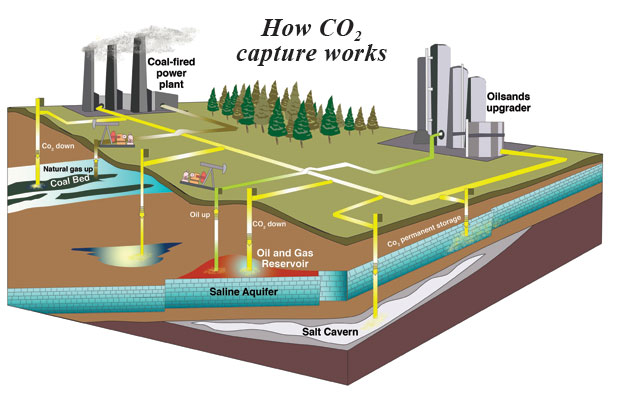
5533564“We need to capture carbon. We know how to do it. We can separate it out. We can store it stably. It would increase our energy costs by about five percent. We just need the will to do it.”

Ron thinks many oil executives understand the situation and are willing to move forward, but stockholders are remiss to embrace something that will take ten years to bring to fruition. “Gaseous wastes are difficult to deal with because they’re not noticeable. Wind and solar have transport issues. Batteries are coming far. You can make hydrogen from wind or solar and transport it directly or as a hydride. You can combine it with oxygen to burn and the waste is water. Or you can turn it into methanol and sequester the CO2.”

20130213135826376According to Ron, Henry Ford’s original idea was to run the automobile on methanol. It was John D Rockefeller who was bullish on using oil. No one worried about the byproduct. “The CO2 we’ve emitted will be there a long time. We are not at a terminal point, but the earth is getting warmer and we are in for real sea level rise. We have to do something in the next 30 to 40 years.”

Ron has been studying and advocating action on climate change for almost that long. He considers Houston a good place to do it because it is the center of the oil and gas industry. “They have to be part of the change and have to make money in the process.” Has there been any imgres-1change? “COP21 in Paris reached agreement for the first time.” 195 countries signed on – every nation in the UN, including the United States thanks to careful language that this is not a treaty. “There was a switch from the Kyoto idea of ‘this is what you have to do’ to ‘tell us what you are going to do.’”

Will our Congress ever embrace climate change? “Part of the challenge is that Congress can’t deal with such an enormous problem. Part of it is economics; we’re tied to industries that must change. And part of it is posturing. Ted Cruz says ‘God made the world and God can change the world as he sees fit.’ There is nothing more frightening than an avid believer.”

imagesRon is fascinated by constructed reality and the human tendency to deny our mortality. “We all create our own realities; religion is part of that denial.” However, he acknowledges that accepting constructed realities is key to addressing climate change. “We have to put out the message of climate change in different terms so it can fit into a wider range of realities. Not, ‘we have to get rid of fossil fuels.’ Instead, ‘we have to harness the waste.’ If you want to get someone to do something, you have to put it in their best interest.”

How will we live tomorrow?

Screen Shot 2016-04-04 at 1.05.45 PM“We are going to live with tremendous change. We are going to use fossil fuels for some time and are going to have to deal with the carbon dioxide. We have some little time left.”


Posted in Responses | Tagged , , , , | Leave a comment

Profile Response: Jean Holm, Margaret Holm and Matthew, Houston, TX

HWWLT Logo on yellowHumor is truth delivered from a fresh perspective. That’s why John Stewart and Steven Colbert are often more prescient purveyors of events than CNN or Fox News. Jean Holm, a Utah grandmother with Will Rogers’ demeanor, is funny because her no-nonsense delivery and pithy maxims are refreshing anecdotes in a world that is simultaneously overly complex and uber sensitive. The night I visited Jean’s daughter Margaret and Margaret’s boyfriend Matthew in Houston, Jean was in fine form; though I imagine her homespun euphemisms and hysterical commentary on our entitled society are funny and insightful any night of the week.

“I think what you’re doing is marvelous and I think you’re crazy.”

images-1Regular readers will note that I’ve met many Mormons along my way, far more than their proportion of our total population. Yet I haven’t met any like Jean, a former Mormon born in Ogden, where she still lives. “I am wealthy. I have a roof over my head and a toilet that flushes.”

Margaret’s nursing career brought her to Texas. “I was a floor nurse. I wanted to see the bigger picture of healthcare: philosophy, politics and economics.” Margaret got a Master’s degree, became a hospital administrator for Intermountain Healthcare in Utah, and moved to Houston to be Director of Quality for MD Anderson Cancer Center and then for Texas Children’s Hospital.

images-2When Margaret’s ranch house in Houston’s Meyerland neighborhood flooded during a storm on Memorial Day 2015, water came three inches into the house and ruined all the sheetrock. She moved out for six months, got a complete interior renovation, and just returned in January. Jean came to visit for a month to help move back in.

“By the yard, life is hard. By the inch, its a cinch.”

Margaret met Matthew when she contacted his antique and restoration company to have a piece of furniture refinished. He’s been in the antiques business for 30 years, though he admits to finding all kinds of things in dumpsters. “I collect junk and sell antiques.”

To which Jean retorts, “In my day and age, if you collect things, it showed you had wealth, discretionary income. Now the symbol of wealth is time.”

imagesMatthew told the story of Jean buying groceries. The total was $1.68. “Jean took out her purse, said she had exact change, and proceeded to lay out a dollar bill, a quarter, another quarter, a dime… By the time she got to the nickel the line was long and someone offered to just give her two dollars.”

“People are in such a rush and so inexact.” Jean completed the story. “I had the exact change and that’s what I paid. No more, no less.”

Margret exhibited the same careful deliberation Jean demonstrated counting change when I asked, “How will we live tomorrow?” Before she replied, Margaret asked about each of the five words and why I selected them. Her response reflects her precise and analytical mind.

How will we live tomorrow?

“The values we learn in life and how fast you want to change will determine our tomorrow. Too many people go too fast. My philosophy is, ‘Use it up, wear it out, make do, or do without.’” -Jean (she declined to be photographed)

IMG_6074“Recycle more. It’s a big potential industry and nobody is paying attention to it. No one is recycling beyond homeowners. Businesses, construction sties, industry; they are not recycling.

“Look at our soil and our water table. People are getting cancer every day. We have to live in a way that better reflects the reality of our world and the toxins we stir into it.” – Matthew

“I see us as a society continue to accelerate our activities. We call it innovation but I wonder if it is. In all the environments I’ve worked, people say ‘we’re so busy’. We’ll continue on that pattern for some time, but eventually we will back off and move into living, breathing, and a more calm state.” – Margaret

Posted in Responses | Tagged , , , , | Leave a comment

Profile Response: David Hitchcock, The Woodlands, TX

HWWLT Logo on yellowDavid Hitchcock is a paradox – an alternative energy guy seeped in oil pedigree, living in an oil town. David was born and raised into Phillips Petroleum in Bartlesville, Oklahoma; his family moved to Houston forty odd years ago. He worked for the City of Houston promoting green roofs, electric cars, and hydrogen vehicles; researched alternative transportation at The Rice Center until it folded in 1980’s; then shifted to alternative fuels at the Houston Alternative Research Canter (HARC).

David has the flat affect and weary demeanor of a guy whose battled too many windmills, but the more we conversed, the more animated he became. He’s a true believer that somehow we can have a more positive relationship to oil. Despite $1.50 a gallon gas and no restraints on the carbon dioxide we’re spinning into our atmosphere, David thinks that we can affect real change. “Oil is a useful chemical, but let’s use it for something other than exploding it.”

images-1David’s life has been integrally tied to George Mitchell, the oil, gas and real estate billionaire who developed fracking around the same time he founded HARC. Larger than life Texans often poke their fingers into seemingly disparate pies.

In 1996, under Mitchell’s guidance, David was a key author of Houston Environmental Foresight, which identified nineteen regional environmental issues. “Number one was air-quality, which is exasperated by our refineries. Number two was green space. Climate change was on the list but much lower down. If you read the document today, there won’t be anything new.”

imgres-1Twenty years later David thinks one thing has changed for the better: how Houston addresses environmental concerns. “Houston has always addressed environmental issues with lawyers.” HARC has shifted the discussion to science as opposed to regulation. Among other strategies, David received funding to identify refining leaks via infrared photography, which led to emission reductions.

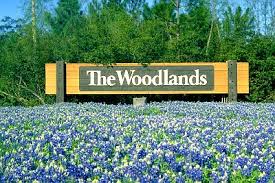
Twenty-three years ago David moved from center city to The Woodlands, one of thirteen new town developments in the United States conceived and supported by the federal government in the late 1960s. Located thirty miles north of downtown and developed by George Mitchell, The Woodlands is a collection of villages connected by bucolic parkways and a separate pathway system for non-motorized movement. There is minimal signage and thousands of trees. It’s a pleasant place to bicycle, though with every path and intersection lined with loblolly pines, The Woodlands is confusing for a first time visitor.

imgres-2David and I met for coffee at the Starbucks at Panther Creek Village Center. Although he told me, “there are 4000 people within walking distance of this center and an elementary school,” that estimate seems a stretch considering The Woodlands’ low-density, automobile focused development.

“Does The Woodlands work? I come here almost every day. This Starbucks is my community center. I see people I know. Thirty percent of our land area is drainage. The density is low. There are animal passages preserved across town. There is an interfaith coalition. Unfortunately, most of the Christian cohort dropped out.

“You can’t say this community is not a success. It is a reflection of the best ideas of its time and place. The community part has failed, yet The Woodlands is more progressive than adjacent communities. The initial town center was a mall. Now, there is a higher density commercial/residential area that reflects current development ideas. Of the thirteen model developments conceived in the 1960s, The Woodlands is the only one that was successfully built.”

imgresThe Woodlands represents an ideal from fifty years ago, the epitome of our car culture. It’s bucolic, sprawling and, despite the dedicated pedestrian paths, car-centric. Although David is trying to change the perspective of The Woodlands, “the community is 15% Hispanic and 5% black; we have gay, single, and older people,” the development does not represent a viable cross-section of our citizens. “Realistically speaking, they are all affluent.”

David continues to advocate for alternative transportation even in The Woodlands. He organized likethewoodlands.org and started the bike coalition. He rides his bicycle most everywhere since he retired two years ago. Still I can’t help but wonder if his heart isn’t in a more urban locale. “We are stuck here. It’s hard to leave.”

How will we live tomorrow?

IMG_6059“I see a lot for acceptance of transit, and acceptance of rebuilding bayous, to live downtown. I have a 30-year time horizon. It’s difficult to project 30 years forward. It’s like asking in 1970, what’s a smart phone? But we build our buildings for a long time. When we built The Woodlands Town Center, people asked would it be a success? I said we would know in 50 years.

“Humans can hold to opposing views. We can be optimistic about tomorrow and discouraged at our own prospects at the same time.”


Posted in Responses | Tagged , , , , | 4 Comments

Profile Response: Valerie Hudson, College Station, TX

HWWLT Logo on yellow“My thesis is simple. You can’t have peace on earth unless you have peace between men and women.” Valerie Hudson is not inclined to call herself a feminist. However, this Mormon mother of six and author of Sex and World Peace, (a title provocative enough to get an interview request from Playboy magazine) makes the case that equality between the sexes is fundamental to economic, political, and social balance.

Valerie is a security studies scholar. “In my graduate courses, you would not know there were any women on earth.” She spent 25 years as an academic in Utah. Four years ago she accepted the George HW Bush Chair at the Bush School of Government and Public Service at Texas A&M University. Valerie supports the ideology behind the Bush School. “George Bush wanted to establish public service opportunities at minimum cost. The tuition is approximately $11,000 per year, much less than comparable programs. He put his finger on a need.

imgres images imgres-1

“I realized that security studies was a cockeyed perspective. I wrote Bare Branches to explore societies where having XX genes is the most awful death sentence. Cultures with abnormal sex ratios are more violent, less stable.” Valerie began the Woman’s Statistics Project, which is both a research initiative and database. It has collected data on the situation of women and their relationship to the state in 176 countries. “There are two wings of any society: men and women. You attack one wing and it cannot fly. When we stop attacking women and achieve the peace that comes with equality, the bird will fly.”

When their first child was born, Valerie and her husband Dave discovered they each carry the recessive cystic fibrosis gene; their offspring have a one in four chance of manifesting the condition. Of their four biological children, three have cystic fibrosis. “Most of what goes on in your body is electrical. One of the charges in each cell is GFTR. It allows a flux. In cystic fibrosis, this is impaired or missing.

IMG_6034“People with cystic fibrosis used to die before age one. We learned that the bile ducts were blocked. We now provide enzymes to increase digestion but most people with cystic fibrosis still die by lung failure. However, we don’t use cystic fibrosis as a death sentence.”

Their son Tommy is now in ninth grade. He greeted me at the door when I arrived at the Hudson home. Throughout our afternoon together Tommy asked insightful questions and offered thoughtful perspectives on his life and my adventure. Although he struggled with language, the boy made a Herculean effort to be an integral part of our conversation.

Tommy illustrates how individuals can transcend other’s expectations and their own limitations. Ultimately, Valerie’s work is about releasing the limitations shackled upon 50% of the earth’s population. “FAO, the Food and Agriculture Organization of the United Nations says if women had equal access to planting, it would decrease malnutrition by 17% immediately. The long-term gains would be even greater. But, as long as boys will be boys we’ll continue to suffer.”

How will we live tomorrow?

Screen Shot 2016-03-31 at 1.06.56 PM“We all interact with each other every day. How we do that in our daily lives is how we will redefine self-interest and re-create society. The first otherness, man versus woman, is there for all of us. Feminism is about getting that first relationship right; respect and equality versus subordination.”

“In some areas we are making progress, in other areas we are regressing. We have seen a huge reduction in maternal mortality. In the past decade it has been cut in half. In most nations there is no difference in the number of boys and girls graduating from school. In some countries more than 50% of elected representatives are female. This is stunning progress.

“Still, problems with sexual exploitation, violence against women, and family law that subjugate women persist. Ten years ago, five countries had abnormal sex ratios: the number of boys who survived infancy far exceeded the number of girls. Now, there are nineteen countries where that is true.”


Posted in Responses | Tagged , , , , , , | 2 Comments