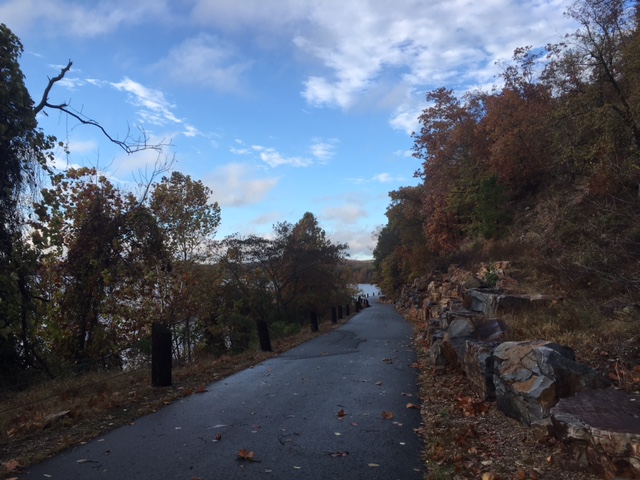
Trip Log – Day 380 – Vicksburg MS to Jackson MS

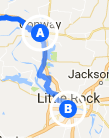
to-jacksonDecember 3, 2016 – Rain, 45 degrees

Miles Today: 63

Miles to Date: 19,749

States to Date: 47

The northwest winds that pushed me out of Arkansas shifted to the west, then south. Yesterday the air grew heavy and the breeze pushed from the east. Sure signs of rain.

img_8643 img_8645

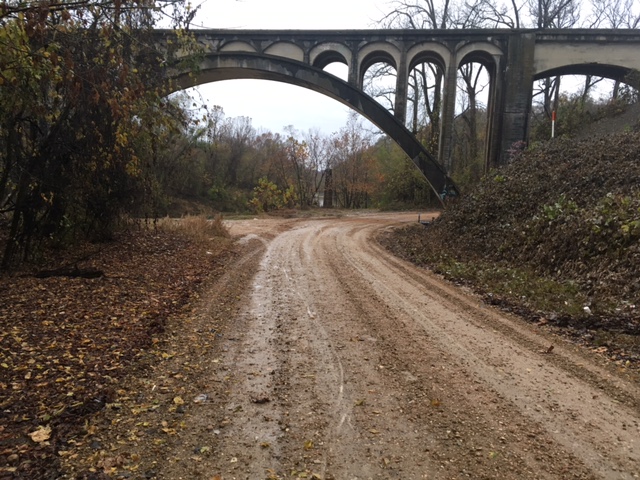
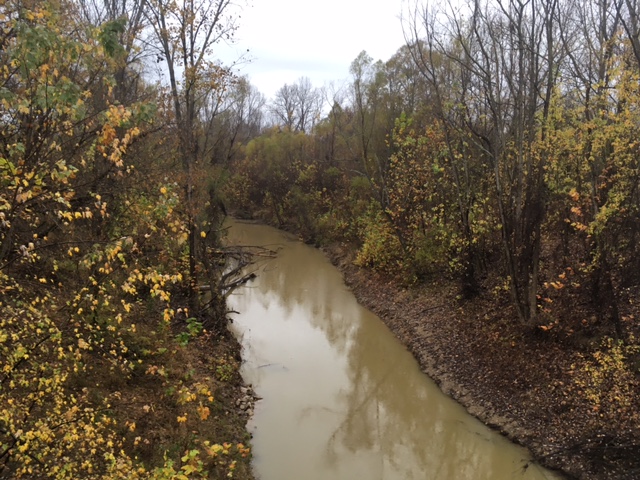
I heard the first drops on my roof about 5:00 a.m., rose in the dark at six, and was on the road by seven’s first light to give myself plenty of time to buck the storm. The weather proved less severe than it might have been, though my route turned long because of so many missed turns on unmarked roads. I sang every rain song I knew to satisfy my mind through long stretches of deep forest and rolling fields that were picturesque even in the rain.

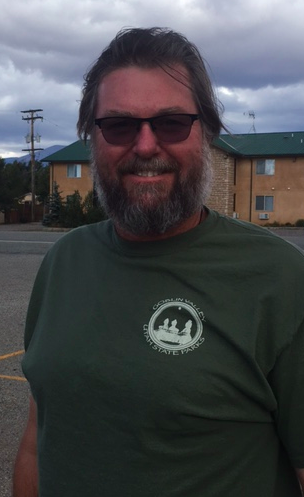
screen-shot-2016-12-04-at-4-17-12-pmNot a bit of traffic until the last few miles. My host was doing errands on busy E. County Line Road when he snapped this action shot of me in the rain. My neon sash is very bright. “I knew it had to be you. How many crazy cyclists would be out in Jackson on such a rainy day.”


Posted in Bicycle Trip Log | Tagged | Leave a comment

Profile Response: Buddy Lane La Veta, CO

HWWLT Logo on yellowBuddy Lane was a project manager for a residential construction company in the Dallas Metroplex. Every few years he would build a house for himself, sell it after the short-term capital gains period, invest the profit, and build another. “I was living in a 4800 square foot house, fully furnished, with four bedrooms that never got slept in and a media room where I’d never watched a movie. I was single. I have no kids. I was in the car four to five hours a day between job sites. I spent my life looking at the red lights of the traffic in front of me.”

imgres-1Buddy gave notice at his firm, bought a pop-top camper, filled it with tools, and travelled the US. He did odd jobs. He began singing and playing guitar in earnest. “I showed up in a town, asked whether a local restaurant wanted some live music, and I played.” Soon, he had friends in many states and lingered in favorite haunts, particularly Groveland CA, on the eastern side of Yosemite’s Tioga Pass. “We are nation of people nothing like you see on TV. We are good and kind.”

Eventually Buddy returned to Dallas and project management, but he got rid of his TV and never let the work world own him again. Now, at age 53, he’s engaged to Barb, a kindred free spirit. They own a townhouse in Euless, but spend much of their time travelling, sometimes alone, sometimes together.

imgresI met Buddy along the road to La Veta pass on a very windy day. He was in the middle of a work hiatus to help his future brother-in-law build a house in Boulder and make some improvements on land he and Barb had purchased near Spanish Peaks. “In January I’ll go get another job. I figure I’ve got five to seven years of work left before I retire completely.” I doubt traditional employment will satisfy him that long.

Buddy studied marital arts and became a black belt in four different varieties, training he credits for his patience and positive outlook. “You perfect certain moves, they get more complicated the further you progress, but the basic moves are the ones you come back to again and again. I use my training every day. Martial Arts is ninety-five percent mental. Since getting involved in marital arts I have never failed at anything.”

imgres-2Buddy has a large extended family: three older sisters, nine nieces and nephews, more grand nieces and nephews, and even a couple of great-grands. He wants to demonstrate to them how rich life can be beyond the strictures of work and debt. “Whenever one of them graduates from high school, I give them a copy of The Richest Man in Babylon. I read it over myself again as well.” Buddy’s also working on a book, just for his family, which he calls Future Generations. “I want them to know about my grandfather, how he lived his life, and how I developed my own philosophies. I want them to know that when they leap, the parachute will appear.”

On a day when nature conspired against my bicycle and I making any progress, I stuck out my thumb and Buddy appeared, like a parachute that drove me to safety. We each took a chance and in the process, met an interesting guy.

How will we live tomorrow?

screen-shot-2016-11-06-at-5-47-52-pm“Pretty simple: on my own terms. You only have so much time on this earth; not enough to be miserable.”

Posted in Responses | Tagged , , | Leave a comment

Trip Log – Day 379 – Rolling Fork MS to Vicksburg MS

to-vicksburgDecember 2, 2016 – Sun, 60 degrees

Miles Today: 60

Miles to Date: 19,686

States to Date: 47 

Today I participated in the trials of immigrants and the comforts of the established class.

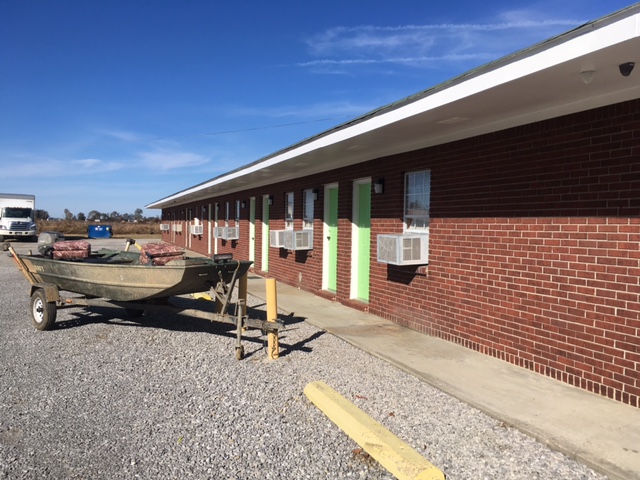
Rolling Forks Motel is representative of dozens of places I have stayed that are owned and operated by Indian immigrants, the vast majority of them named Patel. I have learned that the Patel surname is common in India as Smith is here. Patel’s belong to the merchant caste, so when they come the US they continue to operate businesses. They own virtually every aging independent motel in America (except in the Northern Plains and Northern New England). Many were doctors or engineers in India. Now they collect between $40 and $65 per night to rent serviceable rooms to the likes of me. These mimg_8616otels are never full; often I am the only guest. Some offer morning coffee, few provide free breakfast, most include reliable Wi-Fi: Indians are tech-savvy.

Most of the Indians I meet running these establishments seem particularly ill suited to hospitality. They are curt, transactional to the precipice of unfriendly. They also seem unaware of American standards of cleanliness. The beds are made and the shower is wiped down, but the lobbies are cluttered and the windows grimy.


When I checked into Rolling Forks Motel yesterday afternoon, the proprietor had trouble getting his credit card machine to work. He fiddled with the register tape and eventually produced a slip for me to sign. I asked him ‘How will we live tomorrow?’ but it was beyond his English.

This morning I got a knock on my door at 7:15 a.m. In battered phrases and hand gestures, ‘Bob’ explained that my credit card had been charged three times. Himg_8615e asked me to stop by the office for my refund before I left. Half an hour later he came back and asked for my card. I couldn’t quite understand his intention, but his honest alarm was palpable. I gave him my card; he disappeared, and then returned with the credit receipt. I figured we were finished. Until he knocked again, tablet in hand, and an elaborate explanation about some improperly loaded app. It seemed very important that I understand the error. I gestured that everything was good until he sighed relief.

When I rode away from the dingy place I pondered the hardships of immigrants: to run such a marginal business in such a strange land, to live in constant apology for all that you cannot comprehend.

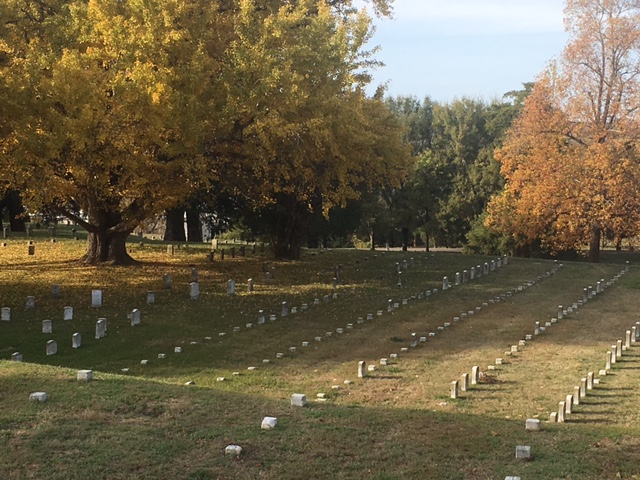
img_8623Forty miles of pleasant riding brought me to Vicksburg, where I spent a lovely afternoon exploring the city and the National Military Park. The stone monuments placed like chess pieces across the hilly terrain help a visitor visualize the opposing battalions. The park is too large to walk, but ideal to view from a bicycle.


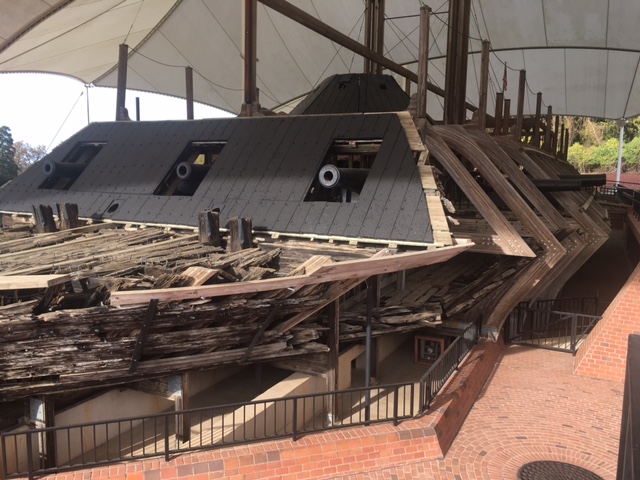
img_8621I particularly liked the US Cairo memorial, the reconstructed remnants of the torpedoed iron barge. One of the placards described that the 157-man crew were mostly immigrants who spoke as many as seventeen languages. All fighting to preserve their adopted Union.


img_8618 img_8626 img_8620

In late afternoon I pedaled to my hosts, who live in a hand-built stone house of lodge proportion on 1,000 acres with a guesthouse and hunting grounds. Some of the finish wood was salvaged from family structures over 100 years old. We ate deer stew, shot on site, sizzling cornbread and delectable pumpkin pie. We talked about education and law, media and technology.

Important to remember that there was a time, generations ago, when this family was immigrants, just like the Cairo crew and motel owner.


Posted in Bicycle Trip Log | Tagged , , , , | 1 Comment

Trip Log – Day 378 –Tillar AR to Rolling Fork MS

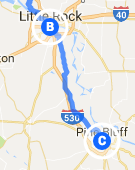
to-rolling-forkDecember 1, 2016 – Sun, 60 degrees

Miles Today: 91

Miles to Date: 19,626

States to Date: 47


I woke up to the delights of Delta Resort, where Cindy Smith, Commissioner for the Arkansas State Parks, Recreations and Travel Commission, hosted me in grand style. Such a fine day for cycling – clear and bright and just warm enough. Good thing, as I had many miles to tuck under my belt.

screen-shot-2016-12-02-at-7-32-10-am

I hoped to get out early and visit Lakeport Plantation before lunch. But I got chatting with other guests over breakfast. Then I picked up an unexpected Arkansas souvenir: a gnarly bent nail on US 65 that dug into my back tire too deep for goo tube to seal. The hiss was long and slow, but the flat inevitable. I can’t much complain; it’s been 5,000 miles since my last flat. But by the time I reached the plantation, the staff was on midday break, so I only got to see the exterior.

img_8607

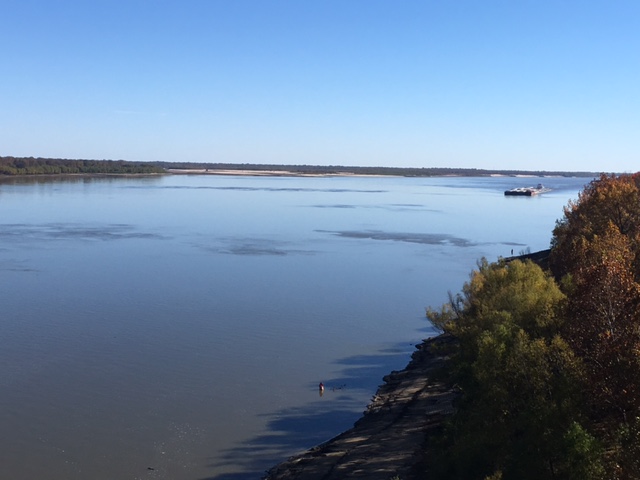
Up and over the mighty Mississippi to the state that bears its name. Some very tough riding along Highway 454: no shoulder, ruble strip, heavy traffic, unhappy drivers. At MS 1 south I took a break to eat and untangle my nerves. Then I enjoyed forty miles of smooth sailing past water glistening in the bayous, plowed rows of black earth, crop dusting planes, and a tireless dog who ran alongside me for two miles.

img_8613

Rolling Fork is a quirky town. Route 14 narrows along a ravine and a lovely wooded glen lined with stately homes. The gravelly strip along Highway 61 littered with chaotic commercial, is less nice. Perhaps tomorrow will reveal the charms of the Blues Highway.


Posted in Bicycle Trip Log | Tagged , , , , | Leave a comment

Responses: How will we live tomorrow?

How will we live tomorrow?

“Increasingly, people will look to the stars and the earth. We will continue to look for our escape to space but we will find our solutions. I think the technology exists to address our challenges; we just need to work on implementation.”

Adam, night school student, Bentonville AR

“The non-profit sector represents the failure of business and the public sector.”

How will we live tomorrow?

“We will live happy and we will work hard at being happy.”

Romano, Taco Truck Owner, Bentonville AR

How will we live tomorrow?

“We have our great grandchildren with us for Thanksgiving. Today is my husband’s 75th birthday.”

Georgy DuPriest, McDonald’s customer, Fayetteville AR

How will we live tomorrow?

“Some of the answers you get are so wacky I’m not sure I want mine among them.”

Jean Beaulieu, blog reader, Fort Smith AR

How will we live tomorrow?

“I will wake up tomorrow and eat breakfast and ask a lot of question because I have a big mouth.”

Olivia LaCaze, nine-year-old gymnast, Russellville AR

How will we live tomorrow?

“I cannot think of an answer.” Jonathan sat silent for at least ten minutes, then continued. “I’m trying to break it down and see what words I could substitute to clarify it. If we do live tomorrow I think the way we will live tomorrow depends on how we treat everything around us today. You never know what will happen: an earthquake could split us or someone could come up from behind. Our actions can influence some of that. Maybe not the earthquake.”

Jonathan Remy, proficient at drawing blind, Russellville AR

How will we live tomorrow?

“Hopefully better than we do today.”

Debbie Ferguson, retired banker, Conway AR

How will we live tomorrow?

“It’s a matter of adaptation. We have to be open to change.”

Courtney Gresham, Conway AR

How will we live tomorrow?

“We’re going down to camp to deer hunt. It’s more about the camp than the hunting.”

Wayne Stevens, retired, Dumas AR

How will we live tomorrow?

“That bike must have cost you quite a bit.”

Bobby Brown, wearing camouflage, Dumas AR

How will we live tomorrow?

“I will live in Mayflower. I’ve lived here my whole life.”

Casey, Smach’s Restaurant, Mayflower AR

How will we live tomorrow?

“Positively.”

Carolyn, Central High School, Little Rock AR

How will we live tomorrow?

“Better and in peace. There’s not much evidence of that, but you’ve got to hope.”

Douglass, National Park Service, Little Rock AR

How will we live tomorrow?

“What I hope for is the American dream – the human dream – food, clothing, shelter. I live the status quo but I am so aware of people who do not have this.”

Cindy Reyes, Clinton Presidential Library, Little Rock AR

How will we live tomorrow?

“I just bought a new bicycle.”

Michael Taylor, one earring, Little Rock AR

How will we live tomorrow?

“Just the best I can. I thank God every day for today and I will thank Him tomorrow.”

Joy Galbraith, charming receptionist, Little Rock AR

How will we live tomorrow?

“I’m afraid for tomorrow. Our kids have no respect for natural resources. They are inside on video games instead of appreciating nature. What will ife be like in twenty years? We’re depleting our natural resources. The only hope is science to win this battle: reduce fossil fuels, increase wind power, and give us a new society.”

Leah, Manager of Delta Resort and Spa, Tillar AR

How will we live tomorrow?

“I’m a little bit scared. Every day I think, how is this happening? I was watching CNN and they are taking abnormal things and reporting them as if they were normal.

“People think what they want to think. Lately, I think people don’t think at all. We just have a knee-jerk reaction to everything. A man came in here recently and said, ‘Keep those Jap camps open for the Muslims.’ Ignorance scares me to death. Muslims don’t scare me at all.”

Kay Garling Roberts, curator, Japanese-American Internment Museum, McGehee AR

“American’s tend to think that other cultures do terrible things, but we do them as well.”


Posted in Responses | Leave a comment

Trip Log – Day 377 – Pine Bluff AR to Tillar AR

to-mcgeheeNovember 30, 2016 – Clouds, Sun, 60 degrees

Miles Today: 79

Miles to Date: 19,535

States to Date: 47

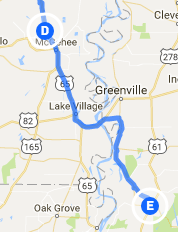
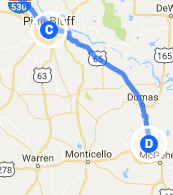
I spent my day amidst the ghosts of the Arkansas Delta. In the grey and featureless morning I rolled through the empty streets of downtown Pine Bluff; blocks of deserted buildings, some turned to rubble. Streets that once teemed with life now barricaded against detimgresritus spilling onto the pavement. Dark men wander the edges, adrift in a world that’s moved out to the highway.

A light wind guided me south along Highway 65. By noon the clouds shifted and the sun shone. Trucks roared by me. Black men and women waved from sagging porches and dusty side roads in Varner and Gould and Pickens. There was a time when the Delta was the richest part of Arkansas. A farm would support twenty, forty families. I met a farmer’s wife whose husband now cultivates 3800 acres with four hands. The rest have moved on or live on the generosity of the state, which is either too grand or too meager depending on whether you’re paying those taxes or receiving those benefits. Every white person I met told me they’re open minded and then complained about lazy Negroes.

img_8593Highway signs denote the Trail of Tears Route. I hear the spirits of Cherokee and Seminole wail as they trudge north and west, opposite direction of the path I’m traveling toward their ancestral home.

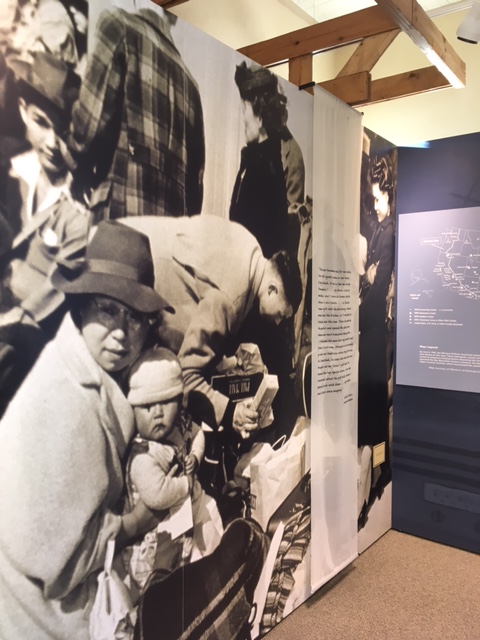
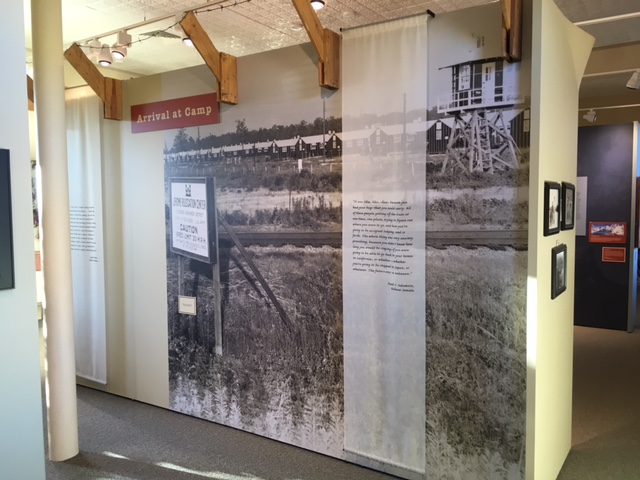
Two Japanese-American Internment camps were built near McGehee during World War II, a railroad town now past its peak. After many years and considerable local resentment, the old train depot has been turned into a museum. I toured the exhibits alone. A crusty curator with a liberal tongue warned me it could happen again; that some visitors clamor to reopen the camps for Muslims.

img_8596 img_8597

But the camps are long gone. Two small cities that housed over 16,000 Japanese between 1942 ad 1944 emerged with wartime zeal and disappeared just as fast, save a trio of commemorative stone memorials. The barracks were sold off and used as farm buildings. Only one family remained in Arkansas. They knew they were not wanted. Today, Japanese-Americans from all over the world visit to honor ancestor’s who quietly submitted to a government that stole their rights and imprisoned them for no valid reason.

img_8600

The Arkansas Delta is full of ghosts. Of natives shuttled through here when they impeded progress’ path, of citizens impounded here because of their origin, of cities left to decay after those of us who can, move on. Will we listen to the stories these empty places tell? Will we do the right thing: honor our heritage, atone for our mistakes, and bring our physical cities back to life? Or will we ignore the cries of history, abandon our heritage, and maybe even reconstruct the camps?


Posted in Bicycle Trip Log | Tagged , , , , | Leave a comment

Trip Log – Day 376 – Little Rock AR to Pine Bluff AR

to-pine-bluffNovember 29, 2016 – Clouds, 65 degrees

Miles Today: 70

Miles to Date: 19,456

States to Date: 47

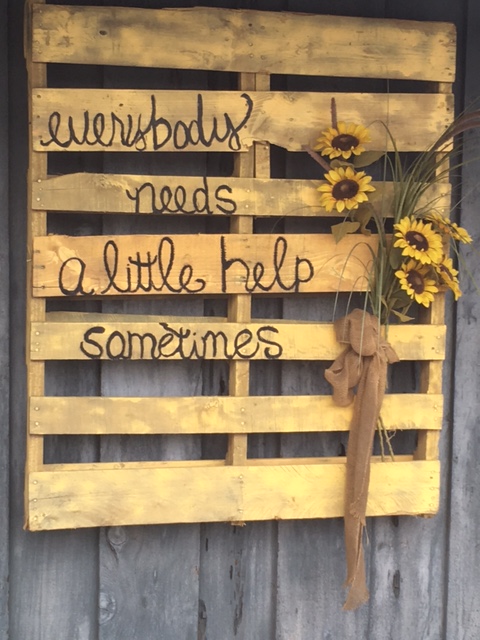
 screen-shot-2016-11-30-at-11-15-09-amI saw this sign early in my day, which resonated with a guy who’s taken a leak in 47 states so far. That got me looking at other intriguing signs along the way. I rode to Bryant for a conversation with poet June Hardin, and then continued on to Benton. Route 35 to Sheridan is one of the nicest roads of my trip; twenty miles of sweet-scented pine forests. The wind was at my back for the final stretch to Pine Bluff, so I got into town well before dark.


img_8545 img_8552 screen-shot-2016-11-30-at-11-16-39-am img_8555 img_8556

Posted in Bicycle Trip Log | Tagged | Leave a comment

Profile Response: Lilly Wakim and Kyle Anibas, Colorado Springs CO

HWWLT Logo on yellowI haven’t met anyone in my travels who embraces her work with the unabated joy Lilly Wakim has for her job – as a dentist. Lilly (and her two dogs) met Kyle Arriba (and his black lab puppy) at a dog park while she was at dental school in Kansas City. After dating over a year they decided to live together when Lilly took her first professional position in Colorado Springs, a place they chose because of the mountains and reasonable cost of living. In the three months since they arrived, things have fallen into place for both of them quite well.

Although Lilly’s father is a dentist in Wichita, she decided to join a young practice affiliated with the Pacific Dental group. “I think this office is wonderful. My boss is terrific. He’s a perfectionist, but good about it.” Lilly sees new patients and performs a variety of procedures, but has easy access to more experienced dentists when she needs guidance. Her general dentistry practice contracts with a variety of specialists – orthodontia, periodontal, and others – to work from Pacific Dental’s office once a week. “This model makes sense. It provides a comprehensive patient experience.”
images-2The only thing that perturbs Lilly is how often they use nitrous oxide. “People coming in for a general check-up are so anxious they need nitrous. At one point today, we had four patients on nitrous. It speaks to the fear and anxiety in our culture.”

Moving to Colorado Springs has turned out positive for Kyle as well. When they met, Kyle had completed a Master’s in Geography at Kansas State University. “Geography is a state of mind. You study other places and you want to know about the people who live there.” His first job was project manager for an engineering firm. “My dad was a project manager. I always thought I wanted to do it as well. Then I realized I didn’t like the work; I didn’t like the travel. Turns out my dad doesn’t like it either; he just never told me that.”

imgres-4Kyle is considering pursuing a PhD in Geography and a life of teaching, or switching gears to become a dentist. Colorado Springs provides options to explore both. Kyle works part-time in a dental lab and, next semester, will tech geography at the local community college.


Perhaps the most beneficial aspect of their move is Kyle’s opportunity to step up his passion: triathlons. He’s part of a master’s swimming class that practices at the Olympic Training Center pool and is training under the former US Olympic Triathlon coach.

imgres-3Triathlons require rigorous logistics and strategy. They usually start at 7:00 a.m. and have to be completed by midnight. The sequence is 2.4 mile open water swim followed by 112 mile bike ride, capped by a 26.2 mile run. “You eat maybe 200 calories an hour. None during the swim, gels and bars during the bike ride and run. Hydrating during the bike ride is key. You don’t try to balance your intake and your output. I usually lose about fifteen pounds during a triathlon. Afterwards you feel so weird. Your stomach is knotted. You’re not really hungry and can’t really eat.”

“So why do you do it?” Lilly asks.

“Our lives have gotten too easy. You have to challenge yourself. People used to work so hard; life was hard. There’s benefit to pushing ourselves to the limits. When I get into flow, I hardly feel what my body is doing. It’s an elevated state.”

How will we live tomorrow?

img_7547“Tomorrow, I’d like to live as gracefully as possible.” – Lilly

“I think the world will move toward greater love. There is so much access to education and communication. People are waking up from fear. It’s going to be a good place. ” – Kyle


Posted in Responses | Tagged , , , | Leave a comment

Trip Log – Day 375 – N Little Rock AR to Little Rock AR

to-little-rockNovember 28, 2016 – Rain, 55 degrees

Miles Today: 32

Miles to Date: 19,386

States to Date: 47

 img_8512The sky was heavy, the forecast dark, so I slid through downtown Little Rock before the showers began. When they arrived, they came in torrents. Despite refuge under an Interstate bridge, I was soaked when I reached the Arkansas Food Bank for my first conversation of the day. More pedaling in the rain. My feet squeaked with each step as I entered Loco Luna for lunch and my meeting with Matt from Sheriff’s Ranch. At my afternoon tour of Heifer International the accommodating receptionist let me drape my sopping jacket, gloves and hat over the floor grates. It was the kind of day when people were either empathetic or dismayed by a guy on a bike.

img_8539By the time I completed my three conversations, the rain stopped and bits of sun peaked between the clouds. I rode over the pedestrian bridge and along the north side of the Arkansas River Trail all the way to Big Dam Bridge to my hosts west of town.


imgres imgres-1Terrie and Dean Turner elevate hosting cyclists to a whole new level. Terrie served an array of hors d’oeuvres while I washed my clothes. Then they treated me to dinner at Doe’s, a Little Rock institution where tamales with chili, gargantuan steaks, tasty salads, and heaps of fries, potatoes and toast are served up family style. Our conversation was rich and satisfying as our meal.


Posted in Bicycle Trip Log | Tagged , , , , | Leave a comment

Profile Response: Jonise Roberts, Place Bridge Academy Denver CO

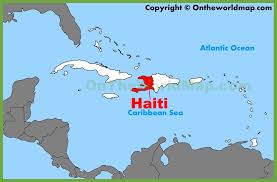
HWWLT Logo on yellowWhenever I meet someone from Haiti, even for the first time, it feels like a reunion. There’s a sympathetic sensibility that bonds all of us who’ve come to love The Magic Island and its people.

Jonise Robert’s father received political asylum in the US in the 1990’s. A few years later he was able to bring his wife and two of his three children to the United States. Jonise grew up in Miami, graduated from college, dated women as well as men. She met David, a Marine, online. They courted and married. One night, lying in bed, he confessed, “I have something to tell you.” She replied, “I know. You’re a woman.” Simple as that. David is now Dawn. They’re still married. Jonise loved David, now she loves Dawn. Whatever comes her way, Jonise glides with the flow. So Haitian.

images-1They moved to Denver by choice. “We lived in a camp ground for a few weeks until we got jobs.” They love the city, which she feels is more accepting of an interracial same-sex couple than Florida. Jonise was considering law school until she began working for Goodwill Industries, which contracts to the Denver Public Schools for special teaching services. Now, Jonise teaches eight graders at Place Bridge Academy, a refugee immigrant K-8 school, a transition course to prepare them for high school. “I teach them everything I wish I learned when I came to the United States. Not just academics, but mediation, advocacy, and self-awareness.”

imgres-2Jonise and I met during lunch; she shared her diri et sos poi with me. I laughed that she prepared it American–style; she placed a piece of fish on top of the rice and bean paste. In Haiti, that would be an exceptional treat.

Jonise returned to Haiti last summer, her first visit since leaving in 2003. She realized it would be difficult to live there again; her mindset has become too American. “The international aid community keeps Haiti in a subordinate role in the world. The philanthropy keeps people fed, but also keeps them down. Although we are no longer slaves, we are enslaved. If you give, then give. Give without conditions.”

Jonise gave me a tight hug before her next class. Actually, during less than an hour together, she gave me three hugs. So Haitian.

How will we live tomorrow?

screen-shot-2016-11-04-at-3-20-06-pm“I think there’s a lot of promise with the next generation. I have experienced a lot of compassion. I ask my students what they want to do to advance the world. They discuss GMO’s, transsexual rights, bias, issues we didn’t even now about at their age.”

Posted in Responses | Tagged , , , | Leave a comment