Responses: How will we live tomorrow?

How will we live tomorrow?

“Learning from yesterday.”

Billy Fallon, Booker T Washington High School for the Performing Arts Dallas TX

How will we live tomorrow?

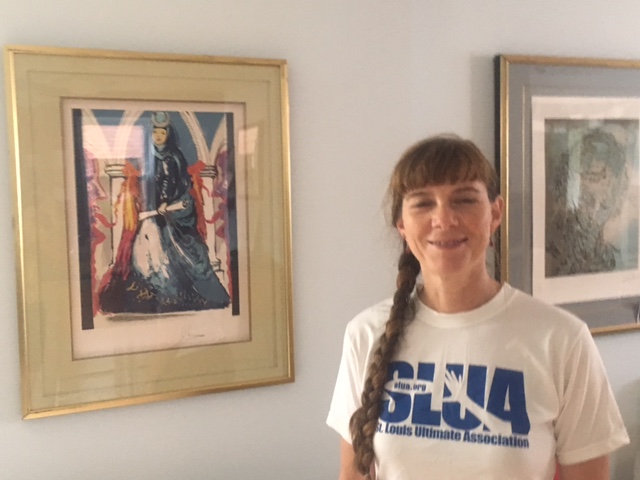
“I’ve been thinking about this question and I keep coming back to being a positive person.”

Jamie Marie Fallon, VA Home Healthcare Coordinator Dallas TX

How will we live tomorrow?

“Where do I start? I think by maybe living a little simpler. We gain computer data and lose respect for how humans trust one another.”

Amanda, visiting from California, Dallas TX

How will we live tomorrow?

“Moby has this new video about technology, ‘Are You Lost in the World Like Me?’”

Ron, Steel City Pops fan, Dallas TX

How will we live tomorrow?

“In hover cars and hydroponic gardens.”

Ken, khakis and oxfords, Dallas TX

How will we live tomorrow?

“You are comfortably risky.”

Katherine Wooten, Dallas TX

How will we live tomorrow?

“About the same way we do today.”

Herman, dog walker, Dallas TX

How will we live tomorrow?

“I don’t know, but it’s really good that you’re doing this.”

Candyce, Tom Thumb Foods, Dallas TX

How will we live tomorrow?

“We believe that Jesus instituted the Kingdom of God in the here and now; that He will make it present in time. It’s called the now and not yet.”

Reverend Brendan Kimbrough, St. Peter’s Church McKinney TX

How will we live tomorrow?

“I hope the world will become a bit ‘earthy’, but the Geeks will have their way and marry us to technology.”

Ryan, British Airways pilot on furlough, Dallas, TX

How will we live tomorrow?

“How will we live tomorrow?”

Cindy, employee of Chickasaw Nation, Sulfur OK

How will we live tomorrow?

“Grateful that I have another day.”

Diane Hall, Chickasaw Cultural Center, Sulfur, OK

How will we live tomorrow?

“That depends on whether I make it ‘til tomorrow.”

Trisha, Family Dollar, Wayne OK

How will we live tomorrow?

“Hopefully greener.”

Del, Warehouse Shipper Manager, Durant OK

How will we live tomorrow?

“Whoa…. interesting time to ask that. I’m going optimistic. I will live to help others.”

Daniel, volunteer at Gatewood Elementary School fund raiser, Oklahoma City, OK

How will we live tomorrow?

“One day at a time.”

Guy, cigarette smoking, beer drinking Halloween Santa, Oklahoma City OK

How will we live tomorrow?

“We will live happy.”

Gabriella, Homeland grocery, Norman OK

How will we live tomorrow?

“Be able to go out an live your dreams.”

Naomi, Sooner booster, Norman, OK

How will we live tomorrow?

“Mary Fallon (governor of Oklahoma) has done more to damage this state in her tenure than I thought possible. We have a $1 billion deficit and she signs a tax cut for the top one percent. Where’s the compassion? The Republicans don’t want less government; they just don’t want to pay for it.

“We will have potable water. Our children will struggle for the essentials. Our grandchildren may not have a viable planet.”

Konrad Eek, photographer, Norman OK

How will we live tomorrow?

“I’m a diabetic but I cheat because it’s football Sunday. I’m only hurting myself.”

Jerome, banana split with marshmallow, strawberries and pecans at Braum’s, Oklahoma City OK

How will we live tomorrow?

“Tomorrow we will live like we do now, but more connected, more densely, and further away than ever before. That last part sounds like an oxymoron because it partly is.  I believe in the dynamism of human exploration. While the earth is yet to be 100% explored, I’m completely excited about human space exploration and it’s possibilities. And I think it will help shape how We will live tomorrow in a significant manner.  We will live here on Earth, on the Moon and on Mars within my lifetime, all in some form of connectivity with the rest of humanity as we know it.

“If cooler heads prevail, we will live simpler and wiser with a better appreciation of our humble Blue Dot and those who inhabit it with us.

“We will live the same, but different—just as those have lived before us over the last two hundred thousand years; same—but different. For better or for worse.”

Clayton Smith. Mechanical Engineering student, Norman, OK



Posted in Responses | Leave a comment

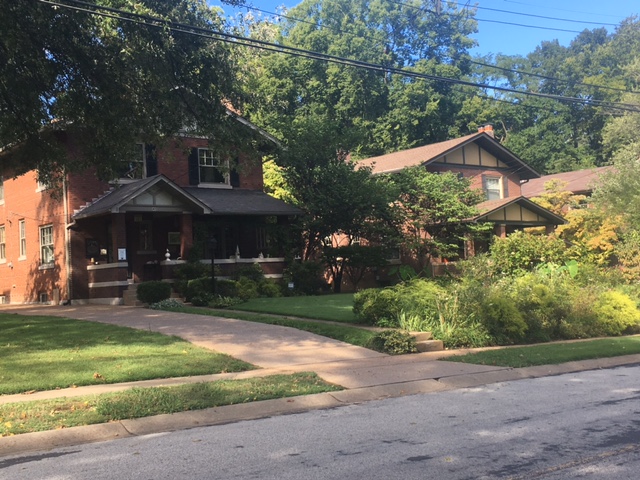
Profile Response: Corliss and Carl Thorn, Ferguson, MO

HWWLT Logo on yellow“The first time Carl told me a cyclist was coming to stay with us, I thought, ‘You invited a stranger to our house? Are you crazy?’ This guy from Korea showed up, his bicycle needed repair; he wound up staying three days. I thought I should be afraid, but he turned out okay.”

Corliss Thorn is an animated storyteller; her husband, a stoic listener. As the waitress at Marley’s Bar in Ferguson brought the second round of beers, Corliss told how her neighbor, a single African-American mother with two teenage sons, was stopped by a local police officer for running a traffic light and given a citation. The woman disagreed that she was at fault and refused the ticket. When she dropped it on the ground the officer cited her for littering. Things escalated. The officer arrested her. The woman spent hours at the police station. She got a bruise on her arm. After the altercation the neighbor called the local NAACP chapter to protest her treatment. They rejected her case: the police officer was Black. “These things have nothing to do with race. They have to do with respect. The place to contest a ticket is not with the officer; it’s in court.”

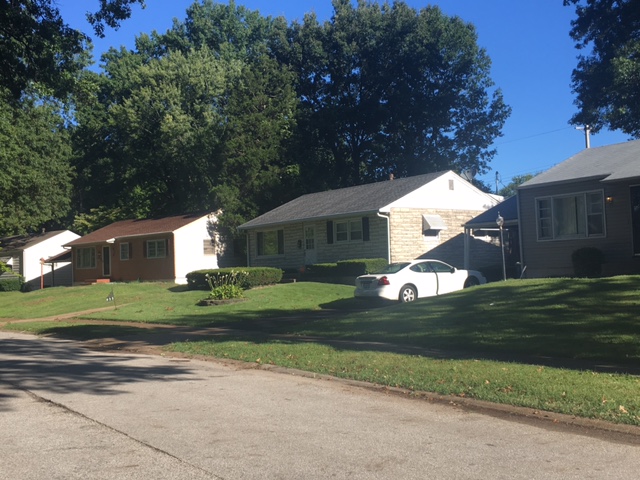
images-1Corliss and Carl Thorn have lived on the same street of small ranch houses for twenty-six years. It has always been an integrated neighborhood, though over time that’s tilted from majority White to majority Black. Like everyone I met in Ferguson they believe the attention their city received after Michael Brown’s shooting and Officer Darren Wilson’s exoneration is unbalanced, but they embrace the events as opportunity to improve. “Michael Brown was not about race. It was about respect. Michael Brown disrespected the police officer responding to a 911 call; the officer disrespected Michael Brown. A series of poor decisions on the part of the police made everything worse. Al Sharpton and the media turned it into race. Then we had riots and looting. I came home at night and heard the marches and the teargas alarms. It was scary.”

imagesSitting in Marley’s on a Saturday night, it’s hard to refute Carliss’ assessment. Marley’s is one of the most integrated places I’ve been; Black and White staff, Black and White customers. People greet each other without tension. Everyone cajoles a local drunk who wanders onto the deck begging cigarettes.

Beyond Michael Brown, my Ferguson hosts and I discussed how Carl got sent to work in Louisiana over thirty years ago, met Corliss, and brought her back to the Saint Louis area; their two daughters and four grandchildren; Corliss’ work as a pharmacy tech and Carl’s environmental safety position; their two dogs that demand constant attention; Carl’s love of cycling and Corliss’ resistance to his passion. “Who wants to ride for miles and miles? I’ve seen one tree, I’ve seen them all.”


screen-shot-2016-11-04-at-8-53-07-amWe also touched on the aches of middle age. When Carl was diagnosed with diabetes, he changed his diet, started cycling 26 miles round trip to work each day and dropped forty pounds in two months. Corliss suffers an autoimmune condition that causes indiscriminate pain.

In the morning, Corliss came back to their Korean cycling guest. “I just loved Quirt. I learned so much from him about North Korea and South Korea and the export business he ran.”

I pedaled away from their house thinking how some people turn fears to strength. How Corliss accepted a stranger into her house and came out better for it. How Ferguson suffered the judgmental glare of the world and came out more tolerant, more resilient, more respectful. Now, if we can only pinpoint Corliss’ nagging pain…

How will we live tomorrow?

screen-shot-2016-11-04-at-8-46-55-am“Same way I live today. How I wish we can live is a different story.” – Corliss

“I like science fiction shows and like how they show the future. I don’t see much changing except technology.” – Carl


Posted in Responses | Tagged , | 1 Comment

Profile Response: Linda Lipka, City Council member, Ferguson, MO

HWWLT Logo on yellowNine years ago Linda Lipka’s daughter was killed in an auto accident on I-70 near Columbia. The following day she received six college scholarship offers. Linda and her husband turned that tragic irony to good advantage by establishing a scholarship fund to worthy Ferguson youth in their daughter’s name. Four years ago a good friend’s twenty-year-old son was shot in Saint Louis. The McGartland family also set up a scholarship found. The twin funds often raise money together.

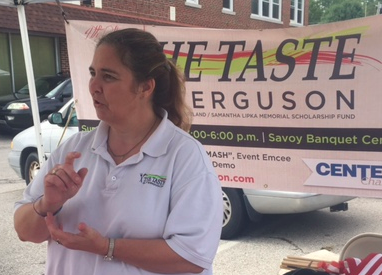
One fundraiser is The Taste of Ferguson, (www.TheTasteinFerguson.com), where over a thousand people sample food from area restaurants and caterers to raise money for the Robbie McGartland and Samantha Lipka Memorial Scholarship Fund. “We started doing this before August 2014, but it is more important than ever now. It shows Ferguson at its best.”

img_7246 screen-shot-2016-11-04-at-8-41-45-amLinda’s family has lived in Ferguson since the 1940’s. In April 2016 she was elected to the City Council. “I am not a council member. I am an advocate for the people who has a title.”

“Never underestimate the power of a smile. When my daughter died 2000 people showed up at her funeral. One girl I didn’t know came up and told me that Samantha was always nice to her, always had a smile for her, when no one else did. A single smile can save the world.”

How will we live tomorrow?

screen-shot-2016-11-04-at-8-40-41-am“What I’ve been learning is that the lessons of the past have to be respected to give hope to our future. Take what we learn, acknowledge the anger, leave it behind. Keep what each of us has to contribute to the solution.”


Posted in Responses | Tagged , | 2 Comments

Profile Response: Wesley Bell, City Council member, Ferguson, MO

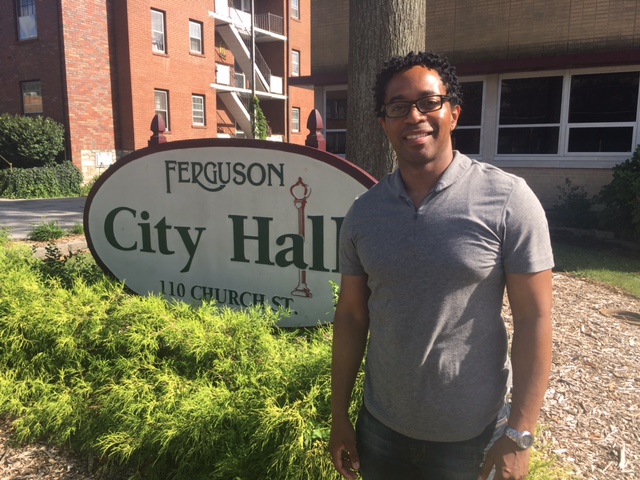
HWWLT Logo on yellow“If your dreams don’t scare you, you’re probably not aiming high enough.” There comes a time when events transpire that require us to step up and participate at a higher level. Wesley Bell grew up on the north side of Saint Louis County. He attended Haywood High School East, studied political science in college, graduated law school, served as a public defender, ran campaigns for others seeking office, and had a private practice. Six years ago he began teaching law and criminal studies at St. Louis Community College- Florissant Valley. He moved to Ferguson because he liked the community.

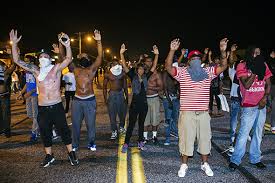
Then in 2014, Michael Brown, an unarmed Black teen, was shot by Officer Darren Wilson. Wilson was exonerated. Riots erupted. Ferguson became a national byword for police brutality or African-American overreaction, depending on where you land on the political spectrum.

images-2 images images-1

“I was never interested in running for office, but the unrest and issues behind it related to my expertise. I had support and the qualities that could address the issues.” Wesley won a three-year seat from Ward 3 in April 2015, the first election cycle after the shooting.

We met outside City Hall and had a far-reaching conversation on a beautiful Saturday afternoon when Ferguson, Missouri was tranquil as any town in America:

“The media focus on the unrest as if that’s all that Ferguson is about. We have a lot to address, but it’s a nice city. More businesses have come into the city since the unrest than have left.

imgres imgres-1

“Change in the police department has been both structural and attitudinal. It’s the toughest job in the world. There are cultural issues on all sides. In the poor communities people’ don’t cooperate with the police. Police have a culture of protecting each other. Both tendencies enable and protect criminal behavior.

“In our politics, especially at the national level, we try to come up with simple answers for complex problems. We can’t agree on anything and nothing gets done. It has to start with the schools. In Missouri, public schools have a $500 million deficit. Poorer communities have poorer schools. That contributes to the inequities of our prison system. In Missouri, African-America males make up about 8% of the population, but 40% of the prison population.”

img_7250 img_7254

I asked Wesley if we must have Michael Brown’s in order to create the change we deserve. “I don’t like that narrative. Michael Brown was the same age as my son. I’ve met his mother; she doesn’t want his death to be in vain. She wants his legacy to be progress, not looting. I’d like to think we could get there without his death.”


I described the range of immigrant communities I’ve visited in my journey, and the pattern of assimilation I witness over and over in every immigrant group, except African-Americans. “Don’t be baffled by that. We know why. But we have to move past it. Racism hurts everyone. It hurts individuals. It hurts economies. It limits who can buy and sell. If you’re building a police department that does not include the widest range of officers, mistakes will be made where you are underrepresented.”

I asked Wesley if he planned to run again. “Living in the most famous small city in the world, we have to live one day at a time. Serving in Ferguson, you learn by fire that you have to be accessible. You have to have public outreach. I am not a career politician. I make my stands known. If the voters don’t want my positions any longer I can go back to do what I’ve been doing.”

How will we live tomorrow?

img_7248“We are uniquely positioned to set an example of what progress and change can be. I have the honor to participate in this council. I am aware that our decisions are local, but also national and global. We are viewed as a place of police brutality but we can transcend that. These are issues that pre-date Ferguson. Ferguson can offer a path out that others can emulate.”


Posted in Responses | Tagged , | 1 Comment

Profile Response: Dana Gray and Jerry Basye, Saint Louis, MO

HWWLT Logo on yellowI arrived at Dana Gray’s home in the Southwest Garden neighborhood of St. Louis enthused about my travels in the city. “I could see the arch from the top of Cahokia Mounds, and I saw the mounds from the roof of the City Museum.” Dana laughed and burst my bubble. “Those aren’t the Cahokia Mounds you saw; it is the landfill in Illinois. It’s much higher than the Native American site.”

Dana and her husband Jerry manifest the familiar slogan, ‘Think globally, act locally.’ They own a handful of early twentieth century properties in their urban neighborhood; live in one and rent the others. They’ve organized an ‘alley’ neighborhood of connected families and planted their yards with gardens and orchards. Honey produced in their back yard won a state fair ribbon.

img_7239 screen-shot-2016-11-04-at-8-18-16-am

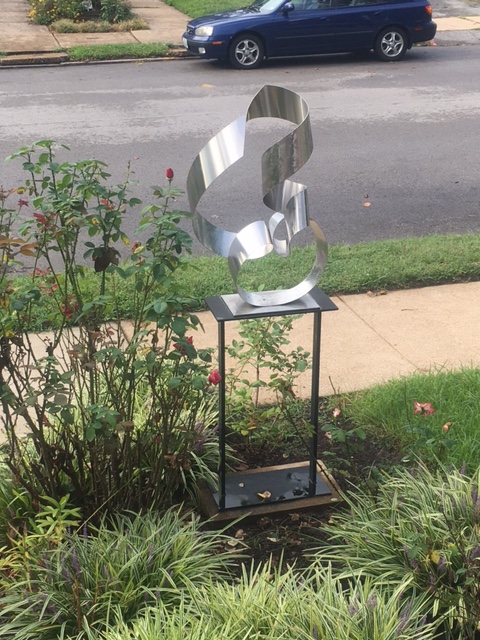
Jerry is AV electrician for individuals and companies; Dana is an art appraiser. Their home is full of striking art, and they’ve installed sculptures in front of their properties: all part of their effort to improve their immediate neighborhood in the hopes their efforts will spread.

Dana also does research on sustainable cities, focusing on alternative transportation such as bike paths and pedestrian ways. When did walking become an ‘alternative’ mode of transport?

How will we live tomorrow?

img_7237“I hope we will be undoing our mounds of excess.” – Dana (referring to the landfill in Illinois)


img_7240“We have to localize and downsize. How do I get that into one sentence? In the near future: poorly. In the distant future: probably not at all. I hope that awareness comes up. It’s not the next one hundred years that matters. It’s now that matters.

“My life is short from this point. My son and my grandchildren will live in a very different world if corporate greed goes unchecked. Look at the arctic dumping. We are changing our climate. Our current slope is a slippery down. If we can switch to centralized power we can do it cleaner.

“How do we get off our major industry being built for war? I thought the Internet would connect us, but it can be shut off at any time.

“I have a Jimi Hendrix quote on my refrigerator. ‘We will have peace when the power of love exceeds the love of power.’” – Jerry


Posted in Responses | Tagged , , | Leave a comment

Responses: How will we live tomorrow?

How will we live tomorrow?

“Your logo reminds me of the Riddler. There is a riddle in your questions. It all boils down to communication. Having a computer and social media can be a disadvantage. When people sit down and talk like this, face-to-face, there’s more respect. We have to respect each other.”

Curtis Peoples, Texas Tech Archivist, Lubbock TX

How will we live tomorrow?

“It’s going to be disconnected. We have to find our groups.’”

TR, PBS reporter, Lubbock TX

How will we live tomorrow?

“I hope for the world to continue to get better.”

Emily, camerawoman, Lubbock TX

How will we live tomorrow?

“One day at a time.

Bridget, Wal-Mart, Snyder TX

How will we live tomorrow?

“It’s a mysterious question that does make you think. I go way into the future when my grandchildren are adults. I have hope for them. Extended family is so important. I left home after college and never returned. I’m so glad my girls didn’t do that.”

Leanne Flores, quilter, Slaton TX

How will we live tomorrow?

“A better world is full of overlapping, engaged communities.”

Ann Zadeh City Council Member, Fort Worth TX

How will we live tomorrow?

“We want to make the healthy choice the easy choice.”

Ricky, Blue Zones Project, Fort Worth TX

How will we live tomorrow?

“If we can get to the point that we stop trashing our planet, that could be a start.”

Robert Solos, Sound engineer, Fort Worth TX

How will we live tomorrow?

“We’ll be too dependent on technology. If we don’t go back to nature and family we will evolve into something else. The technology advances are lateral. I want the next big thing, the vertical change that transforms education and the fundamental aspects of our lives.”

Alexa, Blue Zone Project volunteer, Fort Worth TX

How will we live tomorrow?

“We will live tomorrow in a world where humanity is in decline and the world will be a better place for it.”

Ron, former Ashram member, Weatherford TX

How will we live tomorrow?

“I’ve seen you on the news. I know God’s with you.”

Willy, victim of mistaken identity, Abilene TX

How will we live tomorrow?

“I will be here tomorrow.”

Jasmine, nursing student, Albany TX

How will we live tomorrow?

“We don’t know.”

Naji, motel clerk, Breckenridge TX

How will we live tomorrow?

“Right now we’re trying to find our way to Mineral Wells.”

Glenda, wearing John Lennon glasses, Weatherford TX

How will we live tomorrow?

“I’m taking it easy.”

Tricia, Ford Focus driver, Weatherford T

How will we live tomorrow?

“Very carefully.”

Katie, yard sale matron, Weatherford TX

How will we live tomorrow?

“I know how I’m going to live tomorrow.”

Gladys, pointing to the heavens, Dallas TX

How will we live tomorrow?

“I’m going to live for my God, since I’m a Christian. As for the rest, we have to eat, we have to breathe, you know better than me.’”

Morales, purple lined eyes, Dallas TX

How will we live tomorrow?

“Live for today, anticipate tomorrow.’”

Ryan, banana pedaler, Fort Worth TX

How will we live tomorrow?

“We’re changing every day. We’re losing our core vales, our patriotism.’”

Troy, EMS driver, Arlington TX

How will we live tomorrow?

“Simple. We need to cooperate or perish.’”

William Lewis, New Jersey native turned Texan, Abilene TX

How will we live tomorrow?

“The health of a city can be determined by the vibrancy of its downtown.’”

Doug Peters, Chamber of Commerce, Abilene TX

How will we live tomorrow?

“There are gorgeous bones to our downtown. We want to build on them.”

Jessica Adams, Vagabond Pizza Owner, Abilene TX

How will we live tomorrow?

“You have to live for tomorrow by taking care of today.”

Reggie, health administrator, Abilene TX


Posted in Responses | Leave a comment

Trip Log – Day 363 – Oklahoma City OK

to-okcNovember 2, 2016 – Sunny, 80 degrees

Miles Today: 21

Miles to Date: 18,777

States to Date: 46

 img_8284Bicycle maintenance day! Al’s Bicycles in OKC did a great job sprucing up Tom for his 2,000-mile check-up. While he was getting a new chain, cassette and tune-up, my high school friend Marion Paden took me to lunch – three hours food and talk to catch up on more than thirty years.


img_6385-jpgThe short but harrowing ride to my nephew’s house included a left turn from the traffic lane of NW 122nd Street at Hidden Creek with rush hour cars racing toward me over the blind hill. Thanks to the considerate pick-up driver who stopped to left me escape that busy road.

Jeff and Joey and I enjoyed a great evening of historic baseball as the Cubs shook off 108 years of coming up short. Jeff’s girlfriend Lana captured the identical, drab shirts and shorts all three of us wore. Fallon boys are not fashion setters.

img_0069Tom settled into the garage for an extended break. Tomorrow I fly to Seattle to deliver the keynote address at the NW Sustainability Conference and spend a week with my niece and her boys while her husband is deployed in the Middle East.

I will begin the last leg of my cycling journey on Monday November 14 and look forward to sharing more Trip Logs then.

Posted in Bicycle Trip Log | Tagged , , , | 3 Comments

Trip Log – Day 362 – Oklahoma City OK

to-okcNovember 1, 2016 – Sunny, 80 degrees

Miles Today: 20

Miles to Date: 18,756

States to Date: 46

There are two truths I run up against everywhere I go: our public education system is failing; our public library system is thriving.

imgresTo paraphrase Dallas Police Chief’s David Brown’s remarks after five Dallas police officers were killed, ‘we ask too much of our public schools.’ We expect our schools to reflect the America we hope for – a place where our children are educated and fed and socialized and integrated; while in reality our culture devalues, often denigrates, education, tolerates hunger, fosters inequality, and remains largely segregated. People argue about funding and teacher salaries, unions and charters. But ultimately our schools are failing because they are not supported by the society they are supposed to prepare our children to enter. Teachers feel beaten down and unappreciated, parents feel shortchanged; taxpayers are unwilling to pour money into a floundering system.

img_8273Our public libraries, on the other hand, are the most well utilized democratic institutions in our country. Libraries allow everyone, regardless of race or income, to access the information and technology necessary to be an informed citizen. I’ve visited hundreds of libraries across the country and am amazed at how well they’re used. Patrons respect these facilities. Librarians are consistently positive and helpful. I’ve observed librarians help non-English speaking adults navigate the Internet, assist transients in obtaining identification, and coordinate a line of homeless through the men’s room with patience and respect. They are not just reference sources; they are our new social workers.

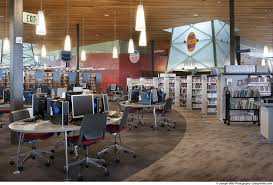
I spent most of the day at the new Patience Latting Library in Northwest Oklahoma City. When I arrived on a weekday morning most of the computer terminals were already occupied and I landed the last available study carrel. The 35,000 square foot, LEED building that opened in 2012 buzzed with purposeful inquiry. It’s bright interior is rich in Oklahoma imagery: skylights that evoke oil derricks on the roof top identify key elements of the open plan interior.

imgres-1The $8.2 million facility cost is less than one quarter of this year’s Oklahoma City Schools capital budget. The schools don’t seem to get comparable bang for their buck.

Schools are not a high priority in this state; Oklahoma ranks 46th in per pupil public school expenditure and people throughout the state report that teachers move for higher salaries. An effort to curb this trend, ballot initiative 779, would boost sales tax to increase teacher pay. Right now, it is polling favorably. (Post election note: it failed.)

Libraries are not schools. They are elective rather than mandatory use facilities. But I can’t help thinking what make libraries so wonderful – that they serve across generations, that they invite independent inquiry, that they are staffed by people who support the patron’s interests rather than deliver prescribed content – are ingredients we ought to stir into our efforts to revitalize our schools.


Posted in Bicycle Trip Log | Tagged , , , | 1 Comment

Trip Log – Day 361 – Oklahoma City OK

to-okcOctober 31, 2016 – Sunny, 80 degrees

Miles Today: 24

Miles to Date: 18,736

States to Date: 46

imagesI indulge in local culinary delights of the highbrow and fast food variety wherever I go. Today an old high school friend invited me to her favorite sushi place for lunch. Delicious.


Unfortunately, sushi hardly fills a guy pedaling against the Oklahoma wind, so I bookended lunch with snacks from Oklahoma’s premier fast food emporiums: a mid-morning pair of Sonic Drive-in 50 cent Halloween corndogs and a Braum’s double dip cone in the afternoon. Warning label: my diet is hazardous to the health of anyone burning less than 4,000 calories a day.

img_8267 imgres imgres-1


Posted in Bicycle Trip Log | Tagged , , , , | 2 Comments

Profile Response: William Iseminger, Cahokia Mounds Historic Site, Collinsville, IL

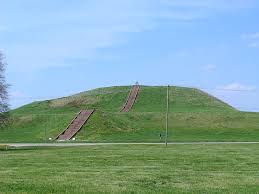
HWWLT Logo on yellowOne thousand years ago, Cahokia was the largest city north of Mexico. Twenty thousand people lived in in a complex urban environment in the wide fertile valley of the Mississippi/Missouri basin. They built mounds for ceremonial and functional use. The largest, Monk’s Mound, is one hundred feet tall and covers fourteen acres. It took twenty-two million cubic feet of earth, transported by Indians in backpacks, and three hundred years to complete. The Cahokia chief, communicator with the gods of the Upper and Lower Worlds to the inhabitants of the Middle World, lived atop this giant mound. Today, we can scale the 157 steps to the top and scan the immense basin for miles, all the way to Saint Louis’ Gateway Arch.

imgresEarly settlers to the area understood these were Indian Mounds, but preservation efforts didn’t begin until after Warren Moorehead spearheaded the first archeological study of Cahokia in 1921. He identified over 120 mounds, many of which had already been altered. He cajoled the state of Illinois to preserve a 144-acre track. By the 1960’s this grew to 2200 acres and in 1982, Cahokia was named a World Heritage Site. At this time, Cahokia State Historic Site includes 72 protected mounds. A non-profit group continues to purchase property to preserve additional mounds, much of it in platted subdivision of suburban Saint Louis.

img_7204Bill Iseminger came to work here in 1971 and never left. At that time there was a ranger station near Monk’s Mound that contained a few exhibits. Bill and others developed a museum that quickly outgrew that building. In 1989 the state opened the current interpretive center, which features a terrific introductory film and extensive background on the people of Cahokia and their world.

The State of Illinois, and Bill, would like Cahokia to be part of the National Park System. It could be a National Historic Site, which requires congressional designation. Or, it could be a National Monument, which can be created by Presidential decree. “We don’t know if Obama will do it before he leaves office. After all, he’s from Illinois.”

How will we live tomorrow?

img_7202“For the most part, pretty much as we do today. We’ll see changes in the environment and politics that will impact our lives, to various degrees. The conservative movements are expanding. There is more friction in the world. Technology has its influences. The more technology we have, the less practical our lives. Communication and the spread of knowledge is expanding, but we are losing personal communication.

“In archeology, technology offers many advantages. With remote detection we get better direction on where to dig. We have more advanced analytic techniques. Dating and DNA improve our interpretations. We can revisit former digs and learn more. Here at Mound 72, in the 1960’s we found mass ceremonial graves. Now we can analyze the bones of the remains and determine where the people were from, and their diet. We can analyze what food was cooked in a particular pot.

“Understanding the past helps to remove misconceptions about what Indians were. These people had a complex society. They had overpopulation and pollution. We think we learn from the past, but we often repeat our patterns.”

Posted in Responses | Tagged , , , | Leave a comment