Responses: How will we live tomorrow?

How will we live tomorrow?

“Drink your water and take your medicine.”

Ben Pierson, five years old, Athens, GA

How will we live tomorrow?

“Hopefully more balanced than today. The concept of balance is important to me. I don’t know how to do it yet. Hopefully, we’ll know that tomorrow.”

Sara, couchsurfing host, Athens, GA

How will we live tomorrow?

“Realistically, I have to work all day tomorrow. But I want us to be more open-minded. I want to be more active in my community.”

Stephanie, student, Athens, GA

How will we live tomorrow?

“The media makes us fear, but I don’t carry any pepper spray or any defense. We have to develop more non-violent ways of addressing conflict resolution. Cyber war is going to make conventional war obsolete.”

Kate, single woman, Athens, GA

How will we live tomorrow?

“America is going the wrong way. The system stresses collaboration and we are losing creativity and innovation. The whole world is Western. The whole world is turning into the United States. A lot of people grow up worrying about status. It doesn’t mean a thing. There’s a book about interviews of retirees in nursing homes. Their biggest regret? ‘I lived someone else’s life.’ When I started living my own life I was happier, and everyone else was happy for me.

“Capitalism makes society function economically, but not sociologically.”

Wes Livingston, PE, President of MicroLNG, Athens, GA

How will we live tomorrow?

“We can live tomorrow by not running each other off the road.”

Cassie, recent bicycle accident victim, Athens, GA

How will we live tomorrow?

“Tomorrow has no guarantee. I don’t know if I will wake up.”

Ndfior Chesi, African dressmaker, Atlanta, GA

How will we live tomorrow?

“I will wake up. I’ve got to go to work.”

Bruce Wayne Powell, journey maker, Atlanta, GA

How will we live tomorrow?

“Better disconnect from your rational brain and figure out how to get better.”

Alex, fitness man, ATL Nutrition

How will we live tomorrow?

“I’ll take it as it comes.”

Katie, motel clerk, Piedmont, AL

How will we live tomorrow?

“One day at a time. If I wake up and breathe, that’s a good day. God gave me one more.”

Hazel, McDonald’s, Anniston, AL

How will we live tomorrow?

“Or, how well will we live tomorrow?”

Steve Propst, Mental health worker, Anniston, AL

How will we live tomorrow?

“Same way I do today, happy and grateful to wake up in the morning and be blessed with another day.”

Wendy, scarf fashionista, Mountain View, AL

How will we live tomorrow?

“I have a million thoughts on that. For one, I go to the spiritual. Tomorrow we will align our physical and spiritual selves.”

Dick Richard, architect, Birmingham, AL

How will we live tomorrow?

“We need jobs in this city.”

Andrew, homeless man, Birmingham, AL

How will we live tomorrow?

“Hopefully better than today. I learned as a child to honor Him. Pay it forward.”

Amy, owner, Jaxson’s Smokehouse, Cleveland, AL

How will we live tomorrow?

“It’s scary, very scary. I’m speechless about it. One thing, there’s still a lot of good people.”

Sean Jaxson, barbecue cook, Cleveland, AL

How will we live tomorrow?

“I thank God first thing, and then I fix my mistakes.”

Chris, waitress, Cleveland, AL

How will we live tomorrow?

“It’s pretty much the same thing every day.”

Perry, mechanic, Arab, AL

How will we live tomorrow?

“I have no idea.”

Tara, motel clerk, Fayetteville, TN

How will we live tomorrow?

“I’ll have more thoughts on that on my birthday, November 9. The day after our election.”

Jane Pence, Sloss Furnaces, Birmingham, AL

How will we live tomorrow?

“Every day you wake up is a good day.”

Virginia Brown, grandmother, Fayetteville, TN
 

Posted in Responses | Leave a comment

Trip Log – Day 314 – Columbia MO to Marshall MO

to-marshallSeptember 14, 2016 – Sunny, 75 degrees

Miles Today: 68

Miles to Date: 16,219

States to Date: 44

 screen-shot-2016-09-14-at-9-01-38-pmToday was a terrific day of bicycle touring, though it still did not win me over to gravel. I spent the first 30 miles on Missouri’s famous KATY Trail. It is bucolic and serene, the limestone cliffs are striking and the Missouri River expansive. It is likely the best gravel trail I’ve been on. However, when I pedaled through a passing storm my entire bike got covered in dirt and there’s too much friction to ever feel any speed. Nonetheless I passed more cycle tourists in three hours than I’ve seen in three months. Clearly, I am in the minority on this preference.

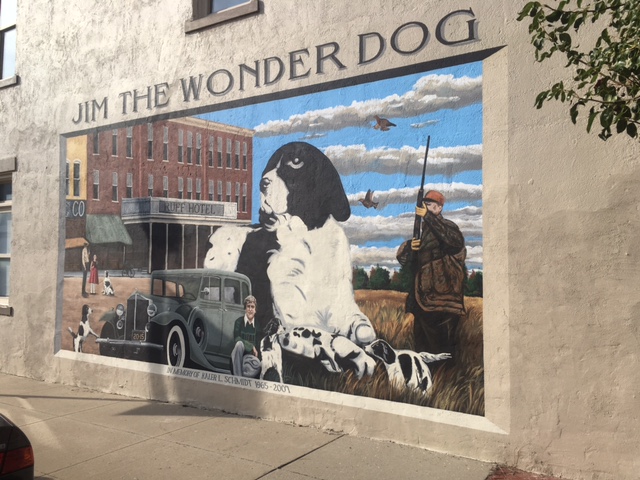
img_7307I was hungry when I reached Boonville. The town has a newish, garish casino, and I recalled that casinos have great buffets. The hostess wasn’t too keen to invite me and my panniers to the buffet line, but she kept her smile pasted. I had a terrific lunch that fueled me through an afternoon of fluffy clouds, little traffic, and great pavement. Arrow Rock is a neat little restored town; Marshall is famous for Jim the Wonder Dog. The park dedicated to this fabled animal is worth the detour off the highway and into the town square.

I looked for a coin-op car wash to clean my bike, but no such luck. So, I maneuvered Tom into the tub at the Marshall Lodge and gave him a good shower. After he dried, I lubed his chain. He’s as good as before he ever skittered along the KATY Trail. So am I. And we have some misty photos of the broad valley to show for our effort.

img_7297 img_7298 img_7300 img_7303


Posted in Bicycle Trip Log | Tagged , , , , , | Leave a comment

Trip Log – Day 313 – Kingdom City MO to Columbia MO

to-columbiaSeptember 13, 2016 – Sunny, 75 degrees

Miles Today: 28

Miles to Date: 16,151

States to Date: 44

 img_7288True confession: I do not seek out absolutely every contact I know to discuss tomorrow. I’ve passed on few Catholic recommendations because, well, I have a lot of history with that church. And today, in Columbia, I didn’t bother to seek out University of Missouri Press, publisher of Architecture by Moonlight and bane of my existence for over a year. The book came out so well, but there was no reason the birthing needed to be so difficult.

img_7290 img_7291 img_7292

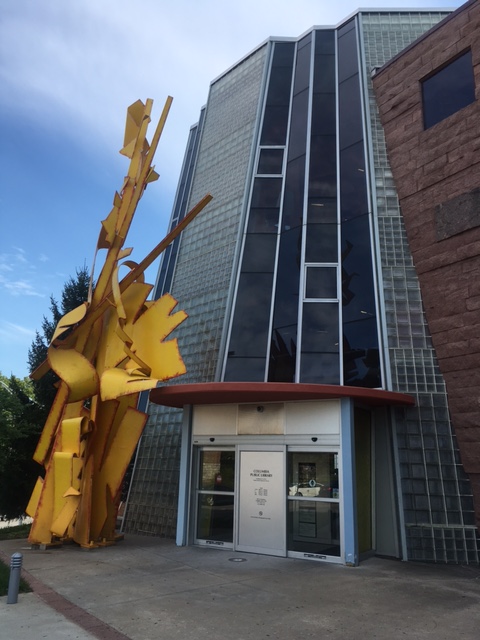
Instead, I had a short but lovely ride, toured the Mizzou campus, and spent the afternoon in the Columbia Public Library. A much better way to spend time.

Posted in Bicycle Trip Log | Tagged , , , | Leave a comment

Profile Response: Burnside Family, Rice VA

HWWLT Logo on yellowTime is spiral; history is a sine curve; tomorrow is yesterday all over again. “Everything that is happening in this country has happened before: in Rome, in Egypt, before the comet.”

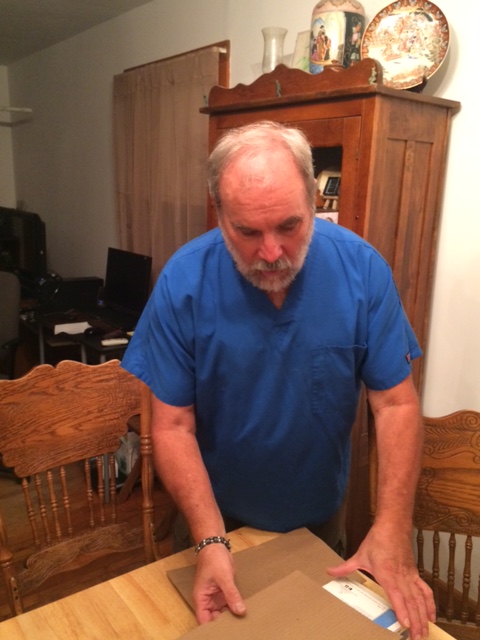
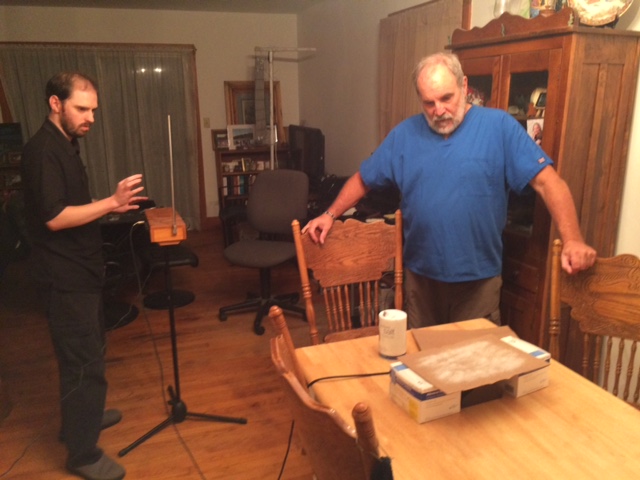
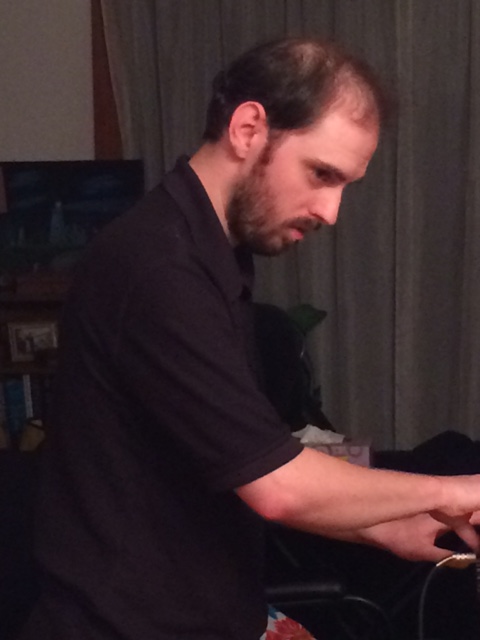
An evening with Bryan Burnside, 66 year-old retired veteran and nuclear medicine tech, and his 29-year-old twin sons Brian and Bob, dressed identical black polo shirts that contrast their pale skin, is its own cyclical experience. The boys pace through the living dining room of their snug cottage buried in the Virginia woods, lightly touching the computer table, the chair back, the doorframe along their repeated path, as if physically manifesting the electron energy that occupies their mind. Bryan sits solid in the middle of the movement, the family nucleus. Each has his own perspective in the cyclical conversation: Bob is focused on energy, Brian math, and Bryan on religion, yet their notions so tightly reinforce one another, the originator of one pronouncement simply fuels another’s idea.

imagesBryan was born in Illinois, outside of Chicago. He worked for Plymouth at the Belvidere plant. “The neon I own now was made there.” He lived in various places in the west, was in the army in Alabama, met his wife Joy and has lived in the south ever since: Tennessee, North Carolina, and now Virginia. Bryan was an x-ray tech and eventually a nuclear medicine tech. He recently retired from the local hospital in Farmville after his Lyme disease and related asthma caused increasing problems.

Bob and his wife Joy have four children, whom Joy home schooled. Their two daughters have grown and moved away, to NC and Tennessee. Their twin suns, Bob and Brian, 29, have always lived at home.


Our conversation, which was more of a dissertation, filled over twenty pages in my journal. I will offer readers only a few snippets of ideas that ricocheted across the universe, and beyond.

img_7446“We do not live in a steady state universe. We live in a catastrophic universe. Something happened to the apes we were and we became the men we are.

“Fire is the impetus of change. It could have led to our advance. Or it could be have been a virus or an environmental disaster. We have lived through catastrophes before, the last one probably 11,000 years ago, maybe from comet impact. That created the climate conditions that enabled our agricultural society.

“I was raised as Christian but have always been analytical. When I was a young man, I was involved in fundamental Christianity. There were a dozen different types of Christianity when Constantine unified it. American Christianity has nothing to do with what first century Christians believed. American Christians are the Pharisees of the modern day.

imgres“Man as been on this planet, as homo-sapian, for at least 250,000 years. The commonalties of all ancient civilizations are the zodiac, the stars, and the shamans- extra-sensory experiences. Look at the cave paintings in France. They are psychedelic imagery and imagery of man transforming into animals. The tribal basis of human groups, families of seven to twelve individuals in communities of 150 has been expanded beyond our capacity to work beneficially. All over the world there are unexplained lighting effects: the Brown Mountain Lights of North Carolina, the Marfa lights in Texas. These could be Piso electrical effects. Ancient people saw natural phenomenon every day, they was energy every day, they are shaman-based. Our society works against nature. Modern doctors don’t have a clue. The minute you think you know everything, you know nothing. There is only one system that grows unabated in its natural state: cancer.

“There’s evidence of advanced civilizations that pre-date us by millennia. An archeologist in Mexico found an intact hammer in limestone dated 400,000 years ago. We have found fully human remains from 250,000 years ago. Yet we still have ‘prehistoric’ animals like alligators on our earth. We cannot know when traits become dominant in our world. What we do know is that science has developed a story and evidence that doesn’t reinforce that story is discredited.

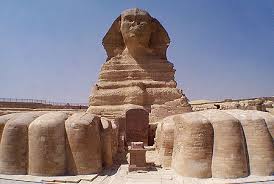
imgres-1“The Sphinx is at least 10,500 years old. The king’s tomb is giant fuel cell used by the Pharaohs to create flashing light shows to demonstrate their dominance over the people. The center of the earth is a nuclear reactor.

“The Black Death may have been the best thing that happened to Western Civilization. It killed indiscriminately but it changed society and overthrew the repression of the Dark Ages.”

As the conversation ranged from nineteenth century religious revivals to Nazis to ancient Egypt to comic books to string theory to… I asked the three animated men if their life views bring solace. Bryan said, “Every day I give thanks that I have a level of consciousness that most Americans lack.

“We talk like this every day, this is what we do.” Bob and Brian were home schooled. They each got a GED and went to community college. Bob studied electronics, Brian mathematics. Brian then went on to NC State and UNC Greensboro but never completed his degree. These days, the Internet provides the main source of their study. Joy left us to read James Patterson. The three of them continued to speak over each other; their ideas reinforcing, feeding, and building on each other.

“What people have done forever has been to try something, see if it works, and tweak that. Most of us life in one reality and perceive another one because we believe our perceptions. Mathematics is a construct that we built and tweak. It’s based on certain assumptions, for example that a point exists, even though a point has no size, shape, or weight. But we accept the reality of a point. Math is limited by our bounds. We cannot escape them.

“Arthur C. Clark says that we are all moving toward a uniform consciousness. We will lose our physical bodies and merge into one consciousness.

img_7449“There is no duality, right versus wrong. They are two sides of the same coin. All change happens with interaction. Perfect order cannot exist because it cannot change. It cannot interact with anything. It’s like a noble gas. Chaos is everything in motion. The only certainty in chaos is that, with everything moving, a point is not where it was.

“This is the range of our civilization, a helical, repeatable cycle, a sine wave oscillating between perfect order and total chaos, neither of which is sustainable.”

About 9:00 p.m. they pull out a vibration oscillator to try an experiment to get salt crystals to arrange into patterns at different frequencies. They have seen it on you tube. They don’t have exactly the right speaker or metal plate to transmit the sound, but they tweak until Brian announces, “We could talk all night. It’s time for bed.”

How will we live tomorrow?

“My background is in energy. I think we are sitting on technology we are not using. We have microwaves and induction stoves. That is the most energy efficient way to heat water. What if we broadcast radiation directly into the water? Like a microwave that uses less power over a longer period of time. If this works, it will change everything. It can be scaled up. I want to see every house have a generator that creates energy and feeds the grid. The idea is to create very efficient steam power.

img_7447“Another idea is to create a thorium molten salt reactor. This produces very low radiation in a closed loop system. 98% of the material is turned to power with only 2% waste; the opposite of conventional reactors.

“The comic books of the 40’s and 50’s with jet packs and flying cars predicted a future of revolutionary power. What we got instead is a revolution in communications.

“Look at electrons. They defy thermodynamics. They operate a different level in the space-time continuum. They operate a different level than our understanding. What is it? We don’t know. It could be dark energy. They say dark energy makes up 72% of our universe. Is that the basis of electron energy?

“Now I’m considering this comic that describes the zero point of the universe as an infinite energy source – a black hole. Black holes convert matter into energy that generates supernovas. Electrons act like water. Water changes phase as it moves through its cycle. Electrons are energy that show up in one place and then shift to another.” – Bob

“Civilizations come and go. I don’t think we came from the apes. I think we’ve always been smart.” – Joy

img_7450“I am interested in where biological and genetics research will go. Every system has corruption in it. Can we locate and tweak that corruption? Can we reverse aging? Can we genetically engineer ourselves?” – Brian

“When we go to the electron level the ‘particle’ becomes ‘energy’. It is no longer information. It’s consciousness. DNA is not just information. It is the direction of consciousness. I think how will we live tomorrow is to return to that energy. Call it the creative god.

“This society will die and be purged.” – Bryan

“The ancients worked with vibration, song and dance to address any problem. We work against nature. They worked with nature. We have to find the vibration that allows us to work with nature. We have to find the song.” – Bob

Posted in Responses | 4 Comments

Trip Log – Day 312 – Lake Saint Louis MO to Kingdom City MO

to-kingdom-citySeptember 12, 2016 – Sunny, 75 degrees

Miles Today: 70

Miles to Date: 16,123

States to Date: 44

Missouri’s bicycle claim to fame is the KATY Trail – 237 miles from Machens to Clinton, mostly along the Missouri River. But it’s gravel, and I dislike the dust that creates. It’s removed from towns and cities, which I seek out. So, despite Google Map’s consistent attempts to route me on the KATY Trial, I stay on paved roads. Today, instead of paralleling the Missouri River, I paralleled Interstate 70. It may not have been as pretty, but it was a more representative view of our country in this century than following the river Lewis and Clark mapped two centuries ago.

screen-shot-2016-09-12-at-9-21-45-pm

I was not just pedaling west, I was pedaling into the West, following in the shadow of the fur traders, the trappers, the Conestoga pioneers, the renegade Confederates, the railroad builders, the homesteaders, the Depression farmers, and the beatniks; generations of people who pushed this direction for fortune or security or plain old fun. As thousands and thousands of people whizzed by me in air-conditioned comfort I thought about how hard this journey had been for those who came before; how easy it is today.

screen-shot-2016-09-12-at-9-20-35-pmThe Interstate highway system is our nation’s second most auspicious feat, superseded only by depositing a man on the moon. It changed our conception of space and time: Americans live at a mile a minute. It changed our geography from discrete cities and towns whose streets ended in countryside to continuous strings of pavement that sprout houses and stores and industrial nodes all along their path. I passed more construction along the I-70 corridor fifty miles from downtown Saint Louis than I did in the city core. Eventually, the path from Saint Louis to Kansas City will be a linear city in its own right.

screen-shot-2016-09-12-at-9-21-06-pm

One ironic thing about the Interstate highways is that, in their determination to make us go fast and safe, they blur distinctions. We build up the low lands and hollow out the hills to make smooth grades. We bring universal commerce to the on-ramps, which undermine local purveyors. In making it so easy to cross our land, we’ve made it virtually impossible to identify where we are. Our landmarks are not ravines and cliffs; they’re exit signs and golden arches.

screen-shot-2016-09-12-at-9-19-24-pm

Another irony is that, in making it so easy to go west, we’ve commoditized the adventure. Sure, it’s fun to drive coast to coast. But it’s not an achievement, its not difficult in any way. Since anyone can do it, there’s nothing remarkable in the feat.

screen-shot-2016-09-12-at-9-22-05-pm

The Interstates are just another example of how our culture, in its rush to make life easy, has smoothed our experiences and made them less distinct. Our physical lives are so comfortable, yet our mental and spiritual lives are not comparably satisfied. As someone I talked with recently said, “We are fat cats, starving.”


Posted in Bicycle Trip Log | Tagged , , , | Leave a comment

Profile Response: Curtiss Hoffman, Anthropologist, Charlottesville VA

HWWLT Logo on yellowWhen is a pile a rocks just a pile of rocks? When does it have deeper significance? Perhaps it is a section of stonewall that separated colonial farms. Perhaps it is the remnant of a building foundation. Or perhaps it is part of a Native American spiritual site. Curtiss Hoffman, archeology professor at Bridgewater State University in Massachusetts, travels throughout the Southeast documenting known Native American spiritual sites in order to help evaluate the likelihood that newfound sites have significance to Native Americans. “Stories are passed down about these places, but I’m trying to add some science, which is useful in obtaining recognition and preservation.”

imagesCurtiss has documented hundreds of sites in South Carolina and Georgia. “One thing I’ve learned is that sacred sites were often places where water flows in two directions.” Stone formations where rivers diverge are more likely to be Native American sites. Curtiss is perplexed by the theories some people espouse in order to minimize Native America claims. “One colonial historian suggested that when better farm land became available further west, local famers invited people to ‘stone bees’ to create decorative stonework’s to make their farms more attractive. Although there are many documented ‘stone bees’ to build churches and public buildings, there is nothing that suggests people did it to beautify farms.” Another favorite from a former state archeologist of Connecticut: stones naturally rolled downhill and formed piles. “How did the stones climb up those piles?”

images-1 images-2

Curtiss’ work is unlikely to ‘prove’ that any given stone assembly is, in fact, a Native American spiritual site. He is simply applying scientific method that may, or may not, bolster Native American claims; claims that, in their culture, are usually founded on different ways of tracking truth.

How will we live tomorrow?

imgres“I think we’re going to have to come to terms with the reality that we are a global community. Every culture’s traditions need to be respected, which does not mean they have to be accommodated. We have to find our place on this small planet: take care of this earth; take care of each other; and be kind to each other.”


Posted in Responses | Tagged , , , | 1 Comment

Trip Log – Day 311 – Ferguson MO to Lake Saint Louis MO

to-lake-saint-louisSeptember 11, 2016 – Sunny, 75 degrees

Miles Today: 38

Miles to Date: 16,053

States to Date: 44

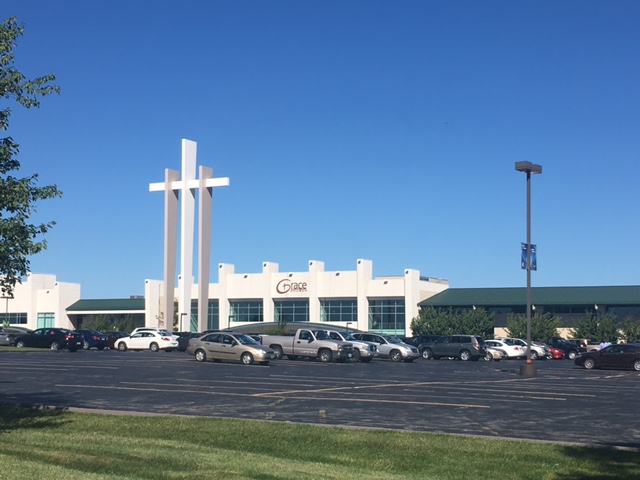
 img_7258I spent most of today noodling over what I learned yesterday, which included a long writing break to consider Ferguson and the people I spoke with from several angles. I still managed some wonderful riding as the day was perfect and there was no traffic. People must have been in their mega churches. From a distance, I thought this one was an airport concourse – it was at least twice as long as the photo frame would accommodate. You need a pan feature to reckon how big Jesus is in this part of the world.

img_7259 img_7260

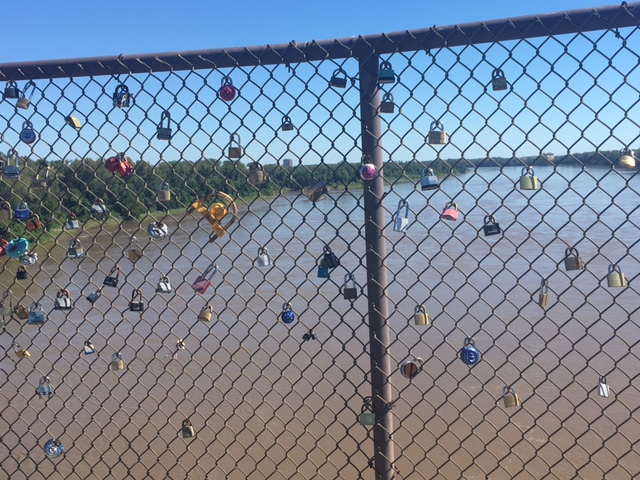
I don’t know why there are bike locks all over the chain link fence that protects cyclists from a better view of the Missouri River, but the vehicle structure that dwarfs the bicycle span is impressive. I felt the circles of my trip lap back on each other when I crossed the Missouri River near its mouth at St. Charles after tracing it for weeks last summer through the Dakotas and Montana.


Posted in Bicycle Trip Log | Tagged , | Leave a comment

Profile Response: Raven Long, Innkeeper, Charlottesville VA

HWWLT Logo on yellowFair Haven Guest House is not your Bob Newhart idea of a country inn. It isn’t in the country. It’s not littered with antiques. Host Raven Long and his wife Flame Bilyue do not bake muffins or brownies. After their children had grown and left, they wanted to live at a more appropriate scale. They also wanted satisfying work that liberated them from the 9 to 5. So, instead of downsizing to a smaller house or apartment, they capitalized on Charlotteville’s zoning allowance for an owner occupant to host up to three short-term guests in their home. They moved to the lower level of their 1960’s era bi-level, rent out the three upstairs bedrooms, and turned the former living and kitchen area into the public space of the inn. “We used to be part of the hostel here in town. When that closed, we realized we could pick up some of that slack.”

imgresRaven and Flame are front and center about their hippie roots. “We met in a commune. I chose the name Raven.” Flame is an artist whose cards are on display for sale in the main space, and a massage therapist who offers sessions for guests. In the past three years, Raven has been able to leave his day job to run their inn and be the technical spine of Flame’s pursuits. “This is all about working for ourselves. We’re looking for a way to not be tied to a job and a place, so we can travel. The inn takes care of the ‘job’ part, but we’re still tied to ‘place.’”

screen-shot-2016-09-13-at-6-34-33-amRaven is good at being an entrepreneur with a soul. Fairhaven has an 8.9 guest rating on Booking.com as well as a Certificate of Environmental Commitment from Virginia Green. When he took me on a tour of the premises he pointed out the recycling system, the organic fruit, eggs, and cereals available for breakfast. “We have everything you could want except a TV and microwave.”

imgres-1He’s interested in cooperative business enterprises. This winter, during the slow season, he plans to form a cooperative business group in Charlottesville. In the meantime, “I feel a ministry, a sense of community, here in the guest house. Every night we create a mini-community.”

Indeed, when I stayed at Fairhaven I set up my laptop in the dining area and met others coming and going. I would never do that at Super 8.

How will we live tomorrow?

screen-shot-2016-09-13-at-6-36-51-am“We have to come together and downsize.”


Posted in Responses | Tagged , , , | Leave a comment

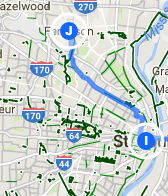
Trip Log – Day 310 – St. Louis MO to Ferguson MO

to-fergusonSeptember 10, 2016 – Cloudy, 70 degrees

Miles Today: 16

Miles to Date: 16,015

States to Date: 44 

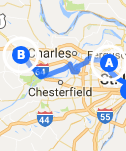
16,000 miles after I left Cambridge I arrived at one of the very first push pins I placed on my map: Ferguson, Missouri. What I encountered was worth all that effort.

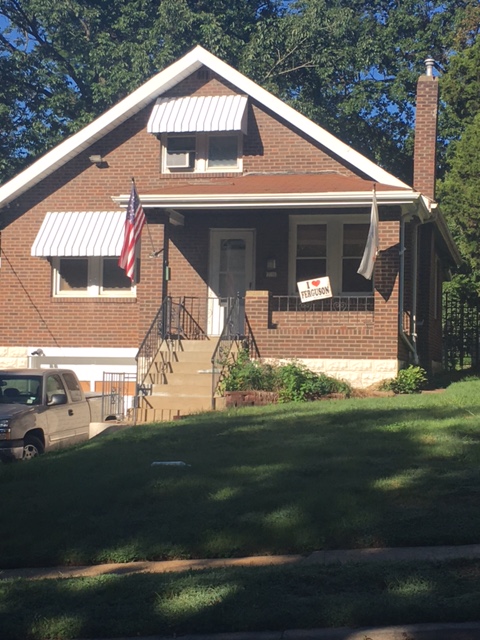
imgresFerguson looks nothing like the images etched into our televisions two summers ago. It looks like the middle class community it is: modest houses with nice lawns, solid businesses, no-nonsense public buildings and shady trees. My day included a few hours at the Ferguson Farmer’s Market; a visit to the public library, which won 2015 library of the year award for its work after Michael Brown’s shooting and Darrell Wilson’s exoneration; time along West Florissant Ave, where the worst of the rioting and looting occurred; and dinner at Marley’s, a local pub, with long-time residents who hosted me for the night.

I am particularly grateful to Linda Lipka and Wesley Bell, two Ferguson City Council representatives who talked with me about their work and responded to my question. I have asked dozens of candidates and elected officials along my route; Linda and Wesley are the first to participate in my project. They typify what I found everywhere in Ferguson: transparency, respect, and tolerance.

img_7250 img_7255 img_7254

Toward the end of my locally brewed Ferguson Pale Ale, I realized that what transpired in Ferguson could not have happened just anywhere. It couldn’t happen in a lily-white community, a pitch-black community, or a gated community. It could only happen in a community that was already on the road to integration, a community where Whites and Blacks rubbed shoulders on a regular basis. A string of disrespect and bad decisions sparked that rubbing into friction and violence, a young man died, and the world reprimanded Ferguson. But when do we reprimand the places so guarded and fearful they do not even allow racial discourse to occur?

We’ll never knoimg_7246w if Michael Brown had to die in order to create the respect and tolerance I witnessed in Ferguson. But we should give credit to the citizens of this city who, under a microscope, took his death and its aftermath as a call to come together. Ferguson is far from perfect, but it’s further along the path of respecting all our citizens than most places in our nation.


Posted in Bicycle Trip Log | Tagged , , , | 4 Comments

Profile Response: Debra, Server at Michie Tavern, Charlottesville VA

HWWLT Logo on yellowIn 1927, after a century as a public house and almost as long in disrepair, Mrs. Mark Henderson, a local businesswoman purchased Michie Tavern and, in a stroke of genius, moved the historic structure downhill from Monticello four years after the Thomas Jefferson Foundation purchased it to create a museum. Now, the percentage of Monticello visitors who lunch at Michie Tavern is high, and they are all happy.

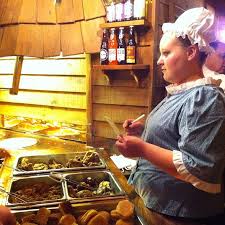
Michie Tavern has a gift shop, a mill shop, and a museum, but the centerpiece of their operation is ‘Midday Fare’ from 11:15 a.m. to 3:30 p.m. every day except Christmas. Women in colonial garb greet and direct you to the Keeping Room, which contains a serving line that never changes: cole slaw, cold beets, black-eyed peas, stewed tomatoes, mashed potatoes, biscuits, cornbread, fried chicken, baked chicken, and pork. $17.95 per adult, $10.95 for the vegetarianimg_7429 selection. They also offer a number of beverages and dessert cobblers although, after a double portion of biscuits topped by the sweetest stewed tomatoes I ever tasted, I had no room for dessert.

I visited Michie mid-afternoon on a drizzly day; they were uncharacteristically slow. Debra, my server, explained that though they only served the public four hours a day, there were so many charter buses and private parties, she had a full time job. “We can have four buses in here at 10:30 in the morning, people eating fried chicken.” When you do something right, you can just keep doing it.

images-3Debra is from Norfolk, where she used to work the Chesapeake ferry. “I saw all kinds of cyclists on their cross-country trips. I started to cycle myself. Did it for nine years. I was never in better shape. I figure I saved $10,000 in gasoline.” Debra doesn’t ride in hilly Charlottesville. “It’s too dangerous.” I agree with her assessment. Though drivers are friendly, there are few accommodations for bicycles in this college town. Shoulders are narrow, bike paths rare. “We need to get out of our cars and onto bikes.”

We chatted for some time, though Debra was not allowed to sit on one of the polished stools that line the dining room. At one point she snatched my check away. “I’ll take care of that.” I protested, to no avail. She laughed. “What goes around comes around. There’s good in this for me.”

How will we live tomorrow?

screen-shot-2016-09-13-at-6-23-07-am“The world is going to hell. There’s too much building. Where is our food going to come from? The economy is a mess. Where is our retirement going to come from? It can’t keep going. We’ve spun out of control.”


Posted in Uncategorized | Tagged , | Leave a comment