Profile Response: Victor Dzidzienyo, Bradford C. Grant, and Sylvia Robinson, Howard University, Washington DC

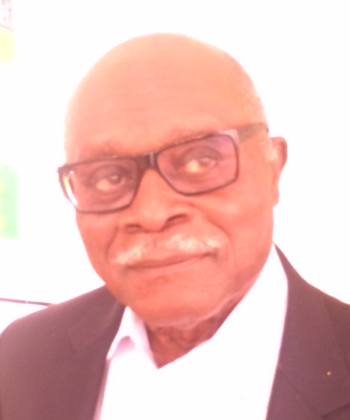
HWWLT Logo on yellowVictor Dzidzienyo, Associate Professor of Howard University’s School of Architecture emigrated from Ghana to study here. He completed graduate work at Howard and has taught at the School of Architecture, under numerous academic titles, for forty years. He worked with Rev. Walter Fauntroy during protests of the 1960’s and was involved in the Model Inner City program in the Howard University neighborhood, HUD’s first investment in community participation as a planning and development tool.
Screen Shot 2016-08-23 at 4.28.35 PMI first met Victor when I spoke at Howard about my work in Haiti and Architecture by Moonlight. Although Victor has taught students, especially students of color, from all over the world and has seen many changes in higher education, his perspective on architectural education remains consistent. “You have to address the basic concerns of architecture: space, structure and light. Beyond that, what are you doing to improve the human condition? We want to research and understand how the physical environment affects, and can improve, the human condition.”

When Victor heard about my current project invited me visit with himself, Brad, and Sylvia, a local community activist.


“Community participation grew out of civil disturbances. They shocked many people, but they prompted affirmative action. What LBJ did cut across political lines. The disenfranchised had an opportunity to see what was possible. Whether that became real is another question. The community developed a plan, the people’s plan. The agency had their plan. Bringing the subway here was an impetus for development. Unfortunately, the inner city line, the Green Line, was the last to be built.” Construction dragged on for thirty years and many elScreen Shot 2016-08-23 at 4.29.18 PMements of the people’s plan did not come to pass. “The process benefits those who can build, but ownership, which guarantees stability, is another issue. It didn’t happen.” Howard students were involved in the planning and physical projects that resulted. One of the benefits that did occur was a flourishing of local African-American architects and designers who began their own firms. Today, all major cities have Howard students who play key roles in design and planning, and several large cities have Black mayors who are Howard graduates.
 

I visited with Victor, Brad, and Sylvia on the day after the Democratic Convention in Philadelphia closed. They were all enthusiastic about the convention’s content and tone. As the nation’s preeminent black university, located in Washington DC, Howard is steeped in the political arena. Brad’s perspective on our evolving politics is that, “Obama could not have happened if not for Bush. He screwed up so bad people who would have never voted for a Black man did.”
Screen Shot 2016-08-23 at 4.28.02 PM

How will we live tomorrow?

Screen Shot 2016-08-23 at 4.26.21 PM“It reassures me, what Mrs. Clinton said yesterday. She spoke of how we can use our resources to create a better tomorrow. She made it personal in terms of our children and the children unborn so that they can inherit our values and ideals.” – Victor
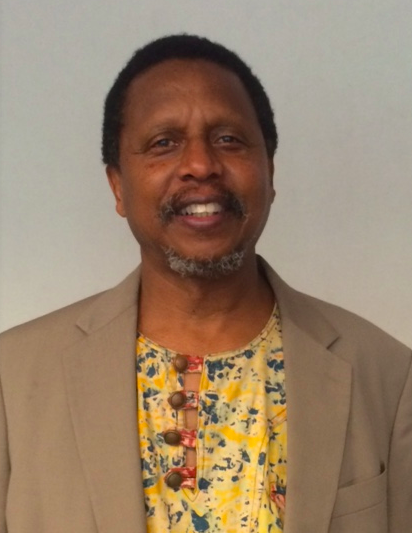
 

Screen Shot 2016-08-23 at 4.25.41 PM“I am really happy after the convention. Mr. Khan, Reverend Barber, they were outstanding. If you asked me your question after the Republican Convention, it was all doom and gloom. But this was like a revival. I am energized.

“I’m involved in the Contemplative Mind Society a group that promotes the spiritual being in our everyday lives. We explore a contemplative pedagogy. We are good at teaching students the hard skills, but we need to focus on the soft skills, the inner life, rather than the outer life.

“In a global world we need to have the contemplative skills to know what we’re capable of and how we can contribute to tomorrow. That’s why the convention enthused me. It represented everyone today and offered a positive way to be tomorrow.

“There’s a dichotomy in this. The contemplative element deals with living in the moment. Your question is about the future. Only Allah knows that, it’s in His hands. Posing the question is awkward. The only way to live for tomorrow is to live for today. Yet architecture is a futuristic endeavor. We conceive something that doesn’t exist.” – Brad
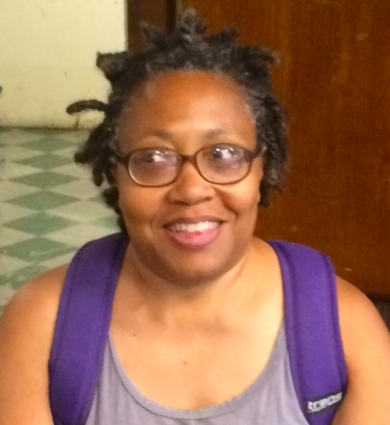
Screen Shot 2016-08-23 at 4.25.55 PM“I could answer from a spiritual context, a technological context, a literal context. The sun will come up; the systems will still be in place.

“Tomorrow will be the projection of seven billion people. Tomorrow will be the culmination of seven billion projections. I hope it’s different from today. I hope we grow.

“I have a friend who is a techie, just moved here to Tucson. He’s going through dementia. He knows he’s going through different dimensions, moving beyond our 3-D world. But he still worries about money and food and things. He doesn’t know where things are. I told him, ‘Alan, you were never about that stuff. You live in a place where your basic needs are met. Go experience your other dimensions.’

“In terms of tomorrow we should all be moving into that space. The more complex the details, the less we focus on who we are.” – Sylvia

 

Posted in Uncategorized | Tagged , , , , | Leave a comment

Trip Log – Day 296 – Arab AL to Fayetteville TN

to Fayetteville TNAugust 27, 2016 – Partly cloudy, 85 degrees

Miles Today: 63

Miles to Date: 15,238

States to Date: 42

 IMG_6923 IMG_6925

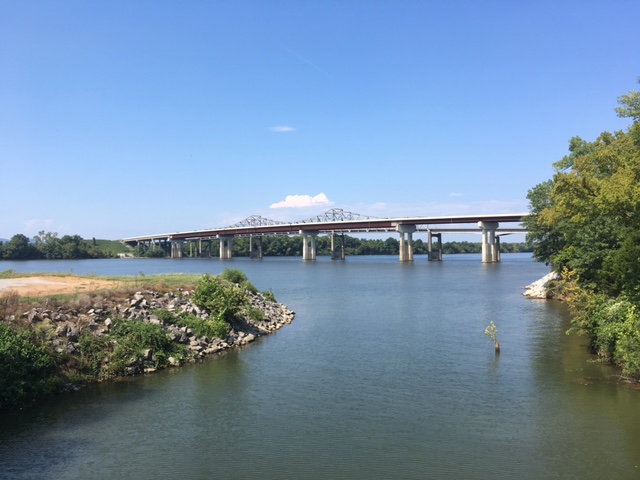
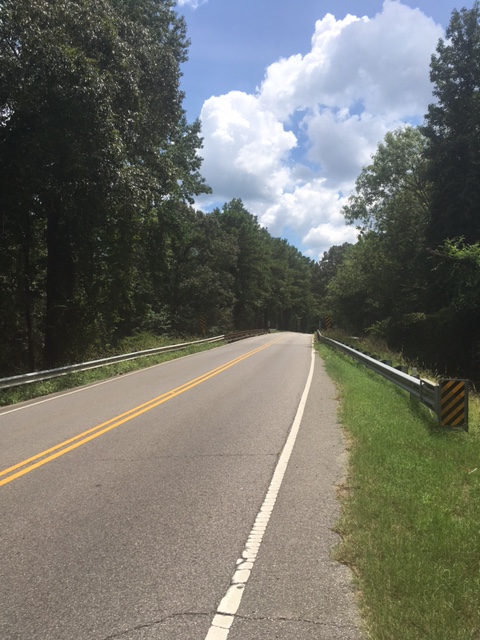
A day of easy riding down the broad slope of US 231 to the Tennessee River, winding along the bicycle path up Aldridge Creek, meandering through Huntsville’s lovely suburban streets into historic downtown, and rising up Meridian Street past Alabama A&M.

IMG_6931

Then things got tricky. US 431 is one of the busiest, least bike friendly roads of my trip. A thunderstorm storm led me to lunch at a mediocre Mexican place. I stayed dry but was hardly satisfied. Once I entered Tennessee, and passed the lottery shops that line the border, the road improved. By the time I reached Fayetteville, the sun shone once again.

IMG_6932 IMG_6933

Any day I reach my destination in one piece is a good day. Today felt particularly good since I managed to get in and out of Alabama without mishap, which was not the case the last time I cycled Dixie.


Posted in Bicycle Trip Log | Tagged , , , | Leave a comment

Profile Response: Andrew Umentum, Mount Rainier MD

HWWLT Logo on yellow“I don’t aspire to live a safe, comfortable, suburban life.” Andrew Umentum is a lanky Midwestern graduate from University of Wisconsin – Madison. When he began working for National Geographic as a cartographer he lived in College Park, but moved to neighboring Mount Rainier because he liked the vibe of a place with a Food Coop and a Bike Coop. “It’s poorer than DC or Northwest, but more diverse.” He lives in a second floor apartment in an old house, but is soon moving to a group house that he hopes will be an urban demonstration project of life off the grid.

Screen Shot 2016-08-23 at 2.00.40 PM

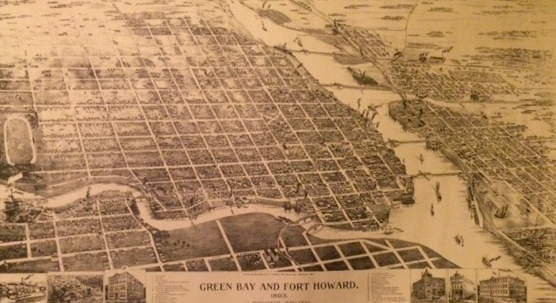
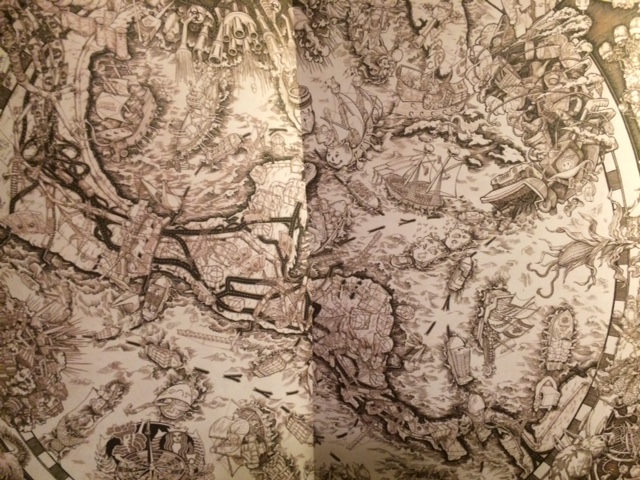
Andrew’s living room walls are full of maps, an antique map of Lake Winnebago, Wisconsin; a bird’s eye view of his hometown, Green Bay; a topographic map of the District of Columbia; and a phantasmagorical vision of Mesoamerica. But the coolest map – the one that changed Andrew’s life – is ‘The Road from Madison.’

IMG_7221

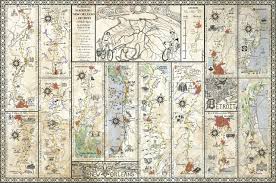
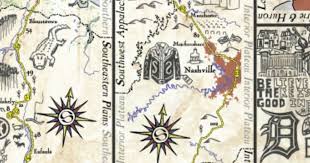
Andrew has completed several bicycle tours. The longest was Madison to New Orleans to Detroit and back to Madison: 4,706 miles over five months with two companions. Andrew created a map of their route for a Senior Thesis project; a gorgeous work of art that won him an internship at National Geographic and was published in Atlas of Design Volume 2 (NACIS, National Cartographic Information Society, 2014).

imgres imgres-2

“I wanted to create a map with a soul that illustrated the beauty and chaos of the road. The typical road atlas has sanitized the landscape and sucked all life out of place, which I believe has a direct impact on the degradation and homogenization of culture. As Americas, we constantly define place and ourselves based on arbitrary boundaries of statehood, and continue to ignore the land and people that truly differentiate this country.”

How will we live tomorrow?

IMG_7225“Part of my Catholic upbringing included service. I spent time in the Dominican Republic as a teenager. I thought their culture was spiritually rich, if not materially rich. We need stronger spiritual connections.

“Bikes can do so much for us. They can lead the restructuring of our urban infrastructure. They can also help you so much as an individual. Go at your own pace; build your confidence. In every other form of transportation you are helpless, waiting passively for something outside of you to move. The energy I put into the bike coop helps people to access bicycles. Not everyone is mechanical. Bicycles are a metaphor for where we need to go: power ourselves.

“You are a political statement. How you live is how you vote every day for how you want to live. I want to be able to live your question; to live cooperatively, to live off the grid, and then expand that to the neighborhood and the city.

“I would like less of a divide between citizens and government. I think police need to live in the communities they serve. Now, they show up, armed, and automatically escalate any situation. They are the government enforcing its will by fear. Police are on the frontline of enforcing our politics, allowing protest but drawing a solid armed line between the protestors from everyone else.”


“Scale is a huge question. As a cartographer I think a lot about scale. We need to be able to make change at a local level.


“We need to be dedicated to the art of work. I’ve done HelpX and Woofing. People say its indentured servitude, but they’re taught me how to do manual labor and get satisfaction from it. Not everyone needs to know how to fix everything, but it’s empowering if you can do something. There’s this progression that we’re supposed to follow. Our grandfathers’ did manual labor and we’re supposed to seek sitting back at a desk and making decisions. I don’t think that’s a good way to go.


“Right now I come home at night and sit in the apartment I pay rent on; I don’t have to do anything to keep it running. When I move into the coop I will be responsible for making it work. I want to make it work, and make it an example for the neighborhood, for the city, of a different way to live.


“How will we live tomorrow? Through action. Start today.”


Posted in Responses | Tagged , , , , | Leave a comment

Trip Log – Day 295 – Birmingham AL to Arab, AL

to ArabAugust 26, 2016 – Partly cloudy, 85 degrees

Miles Today: 70

Miles to Date: 15,175

States to Date: 41

Southern Cycling

Screen Shot 2016-08-27 at 7.45.35 PM IMG_6888 Screen Shot 2016-08-27 at 7.46.39 PM

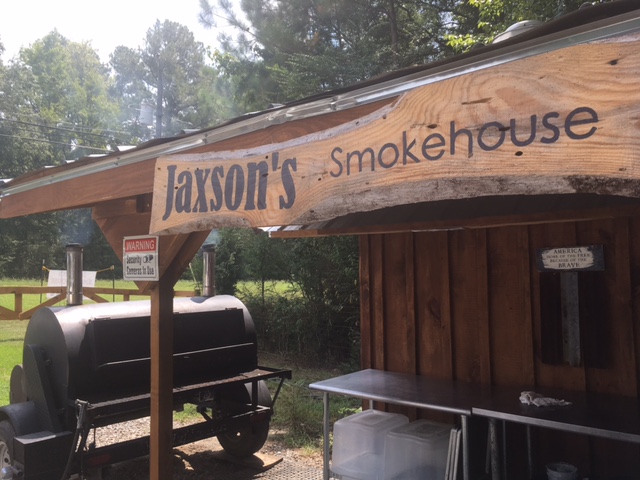
…chased by dogs… pithy slogans on church signs… rebel flags on trailer houses that never move… propane farms… chased by dogs… Get the US out of the UN… Jaxson Smokehouse smackin’ hot bar-be-cue… fresh rain rising off blacktop steams the sweat right up my neck… making good time… chased by dogs…

Posted in Bicycle Trip Log | Tagged , , | 3 Comments

Profile Response: Megan Young, Sheila Maffay-Tuhill, and Michael Hartman, Greenbelt MD

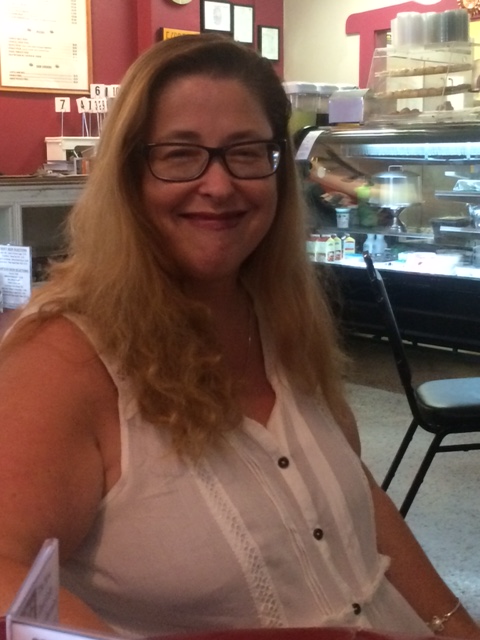
HWWLT Logo on yellowThe place to meet in Greenbelt MD is The New Deal Cafe, which serves very good Middle-Eastern food. I met Megan Young, Director of the Greenbelt Museum, Sheila Maffay-Tuthill, the museum’s Education Coordinator as well as long-time Greenbelt resident, and Michael Hartman, a more recent resident, retired from nearby NASA Goddard Space Center.

Greenbelt was conceived in 1935 as part of the FDR’s New Deal; the most ambitious of more than 100 new community projects of the Resettlement Agency, headed by FDR Brain trustee Rexford Tugwell. The three rationales for the resettlement program were:

  1. Provide recovery work
  2. Create new housing outside major cities with housing shortages
  3. Utilize modern town planning concepts

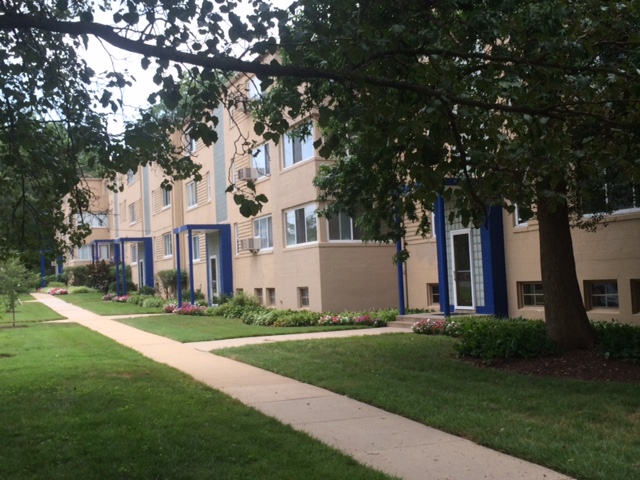
IMG_7206Greenbelt is based on Ebenezer Howard’s Garden City movement in Britain and Clarence Stein’s Sunnyside in New York; narrow row houses set amidst green space with separation of pedestrians and vehicles.

Although Greenbelt was conceived as a demonstration project, it was built amidst protest: why was the federal government building housing, and why was it so nice? The town was aimed at low to moderate-income people. The units were small, from 500 to 1100 square feet, but the site plan was generous and the inclusion of a planned commercial center and community buildings had socialist overtones.

imagesGreenbelt was immediately popular; it was very difficult to get one of the rental units when the town opened in 1937. There were strict criteria; almost all dual-parent families, where the father had a job. Although the original town had no churches, residents were distributed 63% Protestant, 30% Catholic, and 7% Jewish. The most disturbing criterion, which haunts Greenbelt to this day: no African Americans were allowed. Langston Gardens in DC was built around the same time for Blacks, though it is hardly as nice as Greenbelt. In 1937, Utopia was still segregated.
The project employed many workers, both Black and White. Some construction was done by hand rather than machine to increase the amount of manual labor. By the middle of World War II the community was built out at 1600 units. But after the war people wondered, ‘What to do with an entire town owned by the federal government?’ The resolution was GHI, Greenbelt Housing Initiative, a cooperative ownership model that exists to this day and is the primary reason Greenbelt remains different from its neighboring communities (see Aaron Marcavitch Profile for more on this).
imgres-1The cooperative culture spills into every other aspect of life. Greenbelt is a place where people are involved and volunteerism flourishes. The New Deal Cafe is a cooperative, as is the vintage movie theater. There are groups that provide services of aging-in-place, transportation, whatever neighbors may need.

“Greenbelt has a legacy of segregation that still lingers.” A few years ago NAACP threatened the city with a lawsuit; no African-American had ever served on City Council and their role in the community was minimal. This was disturbing, yet true, to a place with certified liberal leanings. The City Council expanded from five to seven members, to facilitate electing a Black councilman.

imgres IMG_7213 IMG_7212

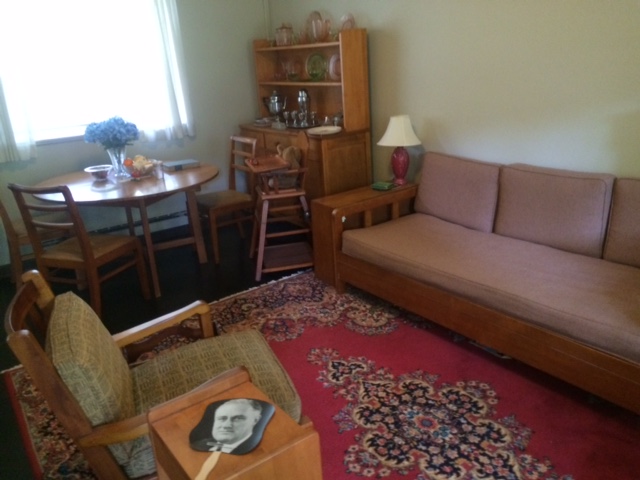
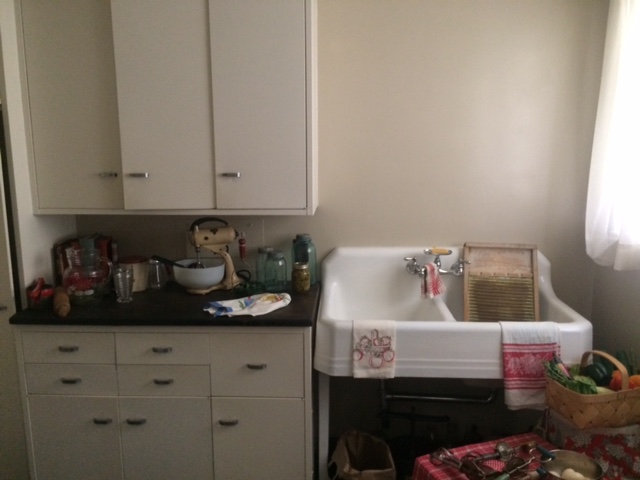
In 1987, upon the 50th anniversary of Greenbelt, the city designated one of the original houses as the Greenbelt Museum, a 857 square foot townhouse with two bedrooms specifically built for a family with one child. Sheila toured me through the small but well-designed space that contains features like a deep porcelain sink, streamlined furniture, and a central radio. The place looks old, yet familiar, filled with objects similar to those of my childhood.

IMG_7203What I like most about Greenbelt, and what preservationists abhor, is that it’s still an evolving, mostly middle class community. Some utopian cities, like Forest Hills NY, became so successful they turned into affluent enclaves. Others, Like Columbia MD were so driven by commercial motives they’re indistinguishable from other suburbs. Greenbelt is clearly different and clearly available to folks bent on cooperative living. The quality of life here is probably nice, spacious and green outside albeit tight indoors. Yet its no surprise Greenbelt has sired no offspring. The town offers a vision of how we might live in a community where real estate enables healthy habitation. But in the United States, our houses are not just roofs over our heads; our neighborhoods are not just our community. They are economic assets we maximize. Cooperative values don’t calculate into that equation.

How will we live tomorrow?

IMG_7209“The best and the brightest developed this place. It is not dense enough, even according to New Urbanists, to be replicated. But the quality of life here, the oral histories are rich in value. Greenbelt was a social experiment. It represents how we can work toward a sharing economy.” – Megan


IMG_7208“On a giant scale, a realization of the need to band together and be in harmony will take root.” – Sheila


Posted in Responses | Tagged , , , , | Leave a comment

Trip Log – Day 294 – Mountain Brook, AL to Birmingham AL

to BirminghamAugust 25, 2016 – Partly cloudy, 90 degrees

Miles Today: 28

Miles to Date: 15,105

States to Date: 41

Birmingham: I was lost, but now I’m found; was blind but now I see.

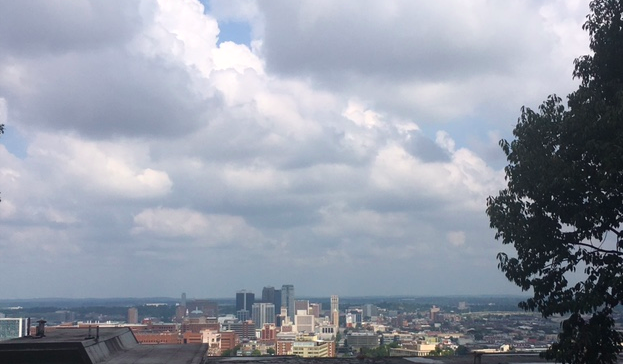
 Screen Shot 2016-08-27 at 7.29.25 PMToday I got so lost I could not tell north from south, right from left. Clouds obscured the sun. The city has numbered streets in all directions. What’s the point of a sign telling me I’m at the intersection of 8th Street W and 4th Court W when I’m supposed to be Northeast? Eventually I got my bearings, found my way and met wonderful people who did not discredit my being late.

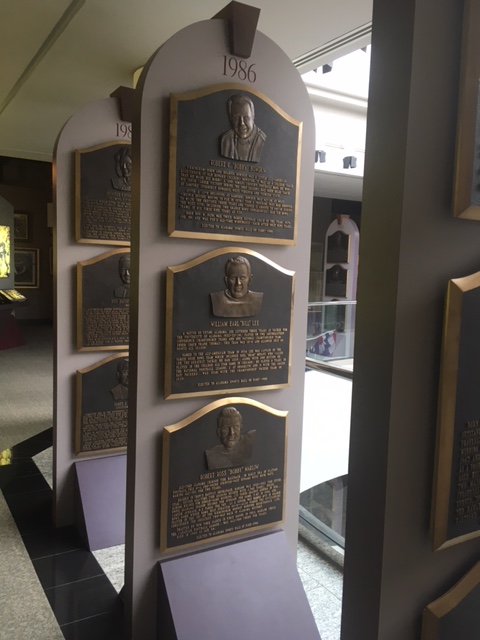
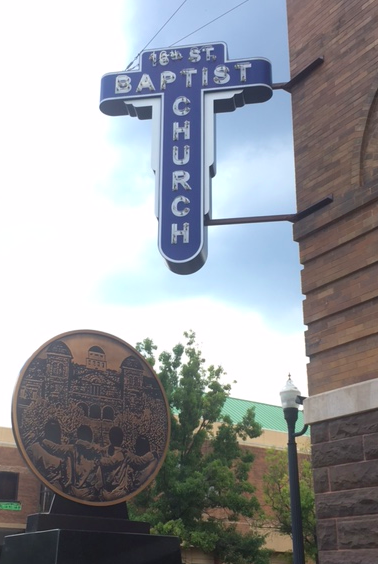
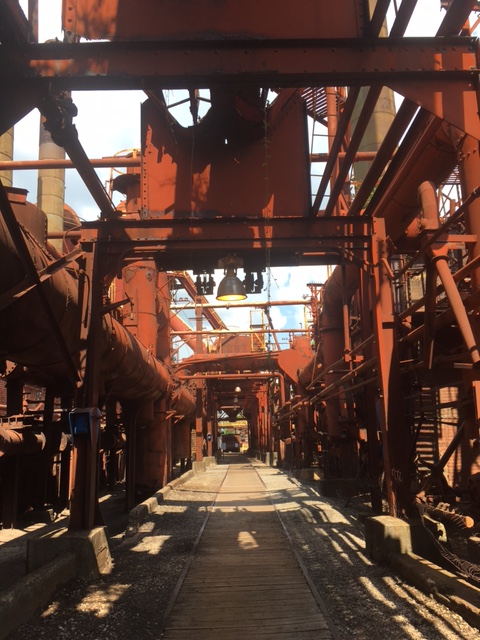
I began well enough, visiting my friends at TRO, the Birmingham branch of the firm I worked for in Boston. Then I pedaled more than ten miles to complete the five-mile distance to the Alabama Sports Hall of Fame. After lunch I got back on track; toured the Sloss Furnaces, an incredible preservation of the city’s industrial past; went to the 16th Street Baptist Church, where my body trembled contemplating the explosion; and took the Civil Rights walk from Kelly Ingram Park to City Hall.

IMG_6851 copy Screen Shot 2016-08-27 at 7.33.45 PM IMG_6860 copy

There, the lost and found metaphor sunk in. This city, the most segregated and entrenched bastion of Jim Crow in our country, was lost for so long. Yet, today Birmingham owns, even celebrates, its pivotal position in the struggle for racial equality and justice. That is not to say that opportunity is equally distributed. But how Birmingham acknowledges where it was and how it changed is a credit to all sides.

IMG_6867I pedaled to Mary’s House on the far west side (which by then I could navigate quite well) and enjoyed a community supper with Shelley and Jim Douglass, long time Catholic Worker activists, and other folks from the Ensley neighborhood. Shelley arranged for me to sleep at the local rectory, where I stayed up too late talking with Rev. Justin Nelson, a fascinating priest from India whose vocation led him to pastoring a pair of African-American Catholic Churches in Alabama.


Posted in Bicycle Trip Log | Tagged , , , , , , | Leave a comment

Responses: How will we live tomorrow?

How will we live tomorrow?

“We have lost faith in science. It began with the Cold War, when ‘duck and cover’ didn’t give us confidence against the threat of nuclear war. White-coated scientists lost their prestige. Then science began to delve into grey areas. It wasn’t offering clear answers. Now, we can’t separate feeling from fact. You can’t argue against a feeling.”

Nick Snow, Physician, Boyce, VA

How will we live tomorrow?

“If we stay fit, we’ll be fine.”

Greg, AT Conservancy Volunteer, Harper’s Ferry, WV

How will we live tomorrow?

“I just live day to day. And I go to church.”

Ginger, Wilt’s Fruit Stand, Millville, WV

How will we live tomorrow?

“I hope it’s better than today. I can’t complain though.

Wilt, Wilt’s Fruit Stand, Millville, WV

How will we live tomorrow?

“I’m 78 years old. Things don’t bother me.”

Irving Jenkins, downtown patron, Charles Town WV

How will we live tomorrow?

“I should give a NASA appropriate response: looking to science and space to guide our future.”

Kristen Metropolis, NASA Goddard Visitor Center, Goddard, MD

How will we live tomorrow?

“I have no idea about tomorrow, I am focused on today.”

Marcia, Volunteer, NASA Goddard Visitor Center, Goddard, MD

How will we live tomorrow?

“I stay focused on one day at a time.”

Nicole, Walmart Cashier, Charles Town, WV

How will we live tomorrow?

“My two girls keep me plenty busy.”

Tony, tattoo sleeved with his children’s names, Charles Town, WV

How will we live tomorrow?

“We have to be open to whatever comes our way.”

Daniel, Walmart clerk, Charles Town, WV

How will we live tomorrow?

“Just look at the world. A guy here got murdered last month. You have to keep your eyes up.”

Melvin, Bermuda shirt guy, Front Royal, VA

How will we live tomorrow?

“As far as tomorrow goes, I’ll be here. I’ll sneak out for a ride if I can.”

Justin, Element Sports, Winchester, VA

How will we live tomorrow?

“Life is not going to be long enough.”

Cathleen Snow, physician, Boyce, VA

How will we live tomorrow?

“Foreign governments are so afraid of what will happen if Trump wins. We can’t just pull out of Asia. There’s a reason we have defensive relationships with non-defensive countries. We need their access to the Middle East. But does Trump realize that? He knows nothing of history. That’s how we get into international wars.”

Chuck Downs, retired Asia agent, Boyce, VA

How will we live tomorrow?

“Hopefully I’ll be living the same as today: for God.”

Felisha, tattooed mom, Front Royal VA

How will we live tomorrow?

“Be careful out there. People don’t know how to drive.”

Jeremy, Trek cyclist, Front Royal VA

How will we live tomorrow?

“A lot depends on the upcoming election.”

Quinn, research librarian, Front Royal VA

How will we live tomorrow?

“Everything bad becomes good. No one complains about coffee and eggs anymore. We can have them now.”

Karen, 7-11, Madison, VA

How will we live tomorrow?

“Were having a special treat at McDonald’s today. Tomorrow is gradation to Kindergarten.”

Teresa, teacher at Wee-Go Preschool, Charlottesville, VA

How will we live tomorrow?

“I just believe in faith.”

Adalia, Stonehenge Commons Leasing Agent, Charlottesville, VA

How will we live tomorrow?

“Just take a breath every morning and be grateful that your feet touch the ground.”

Teresa, Hostess, Michie Tavern, Charlottesville, VA

“When I was a buck-eyed girl, my Daddy took me to Colonial Williamsburg. I stared at the lady in the colonial dress. Now, here I am, full circle. I substitute teach for my insurance, I work here for history, and at a senior center for service. I have it all.”


Posted in Responses | 2 Comments

Trip Log – Day 293 – Anniston AL to Mountain Brook, AL

to BirminghamAugust 24, 2016 – Partly cloudy, 90 degrees

Miles Today: 78

Miles to Date: 15,077

States to Date: 41

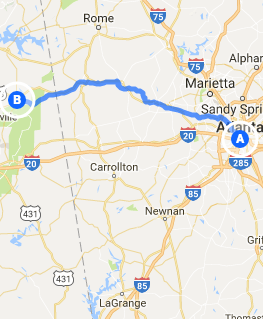
IMG_6838 After two days of being spoiled by the Silver Comet / Chief Ladiga Trails it was hard to share the pavement with cars again. Google Maps offered a nice looking route that took me to Eulaton Gate Road, which I’ve learned is code for entering a military base. Sure enough I came up to the gate of the Anniston Depot where the friendly guard turned me around. Instead of navigating any complex on the run, I simply took US 78 all the way to Birmingham. This proved a good decision. US 78 runs parallel to I-20 so it has almost no traffic. The pavement is good and the shoulder adequate.

IMG_6836IMG_6834 IMG_6835

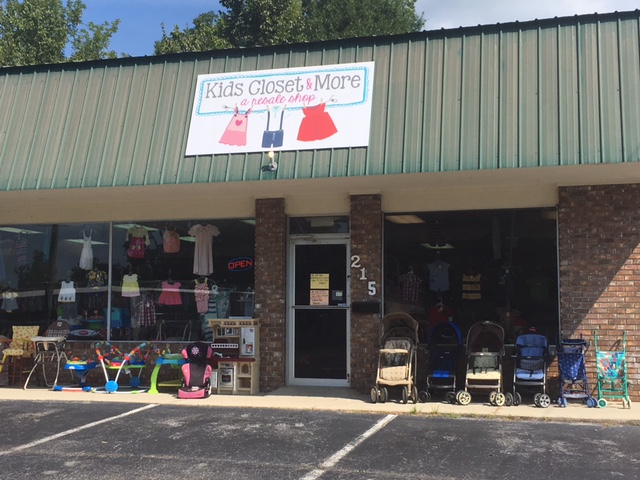
IMG_6833I enjoyed Pell City, a sleeping little town where I mused about the activities that occupy downtown storefronts after Wal-Mart shifts commerce to the superstore on the highway. One result of our world full of stuff: lots of thrift shops.


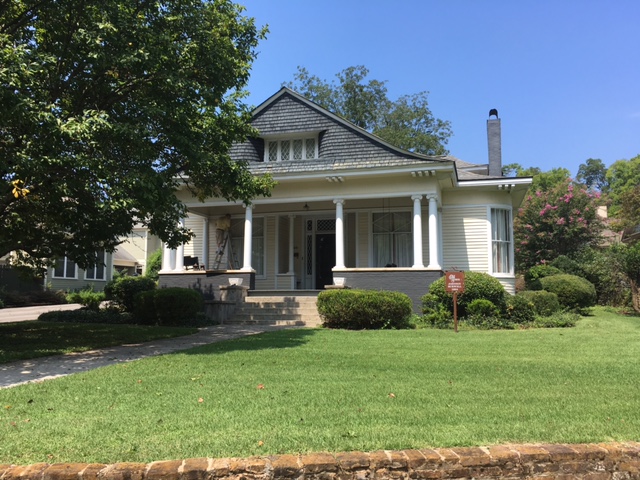
IMG_6839The town also had some excellent examples of small-stone houses that I see all over northern Alabama.


Posted in Bicycle Trip Log | Tagged , | Leave a comment

Trip Log – Day 292 – Piedmont AL to Anniston AL

to AnnistonAugust 23, 2016 – Partly cloudy, 80 degrees

Miles Today: 29

Miles to Date: 14,970

States to Date: 41

imagesCycling through Piedmont, a town that has seen better days, reminds me of something a guy in Atlanta said. “The Civil War was the first time the 1% coerced the 99% into doing something stupid, based on the fear that they would be worse off if things changed. At least the 99% of poor whites were above the slaves.” I’m not sure if the Civil War was the first time that happened; the powerful have divided minions to control for centuries. Piedmont seems like a place where the 1% has moved beyond city limits, rending the racial differences among the folks left behind irrelevant.

IMG_6818 IMG_6823

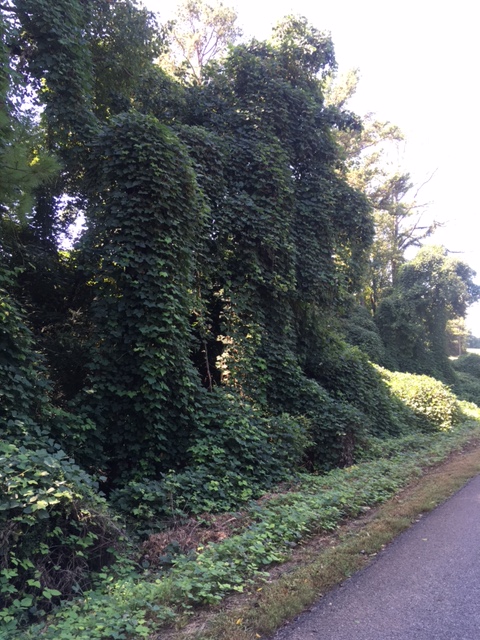
Back on the Chief Ladiga Trail I spun twenty more sweet miles until trail’s end in Anniston. Along the way I passed vines so thick they spread like cancer, cloaking each discrete piece of vegetation into a leafy contour.

IMG_6825Anniston has a classic downtown that still shows signs of life, including what may be the last extant Western Auto store, a franchise we had in my hometown over fifty years ago.


Posted in Bicycle Trip Log | Tagged , , , | Leave a comment

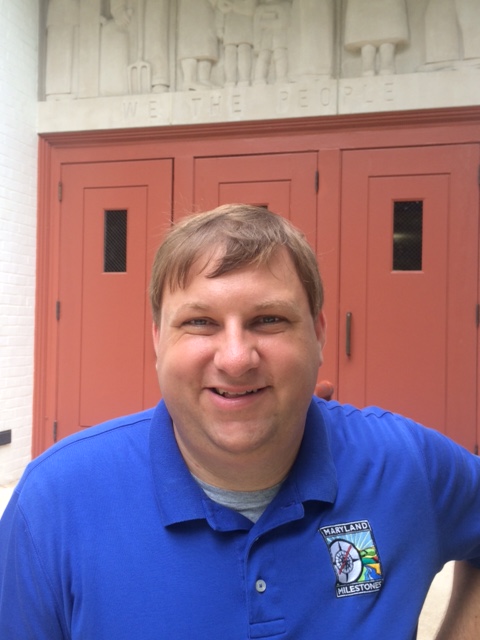
Profile Response: Aaron Marcavitch, Executive Director, Maryland Milestones, Greenbelt, MD

HWWLT Logo on yellowRexford Tugwell, a man with an aristocratic name and impeccable white suits, ran the Resettlement Administration under FDR’s New Deal. In 1937 Greenbelt, MD – a new town modeled on Europe’s Garden City movement, became one of the agency’s most utopian endeavors.

Aaron Marcavitch and I met at the Greenbelt Community Center, a deco-style 1930’s building that used to be the town’s elementary school. When the school became antiquated the town purchased it and runs a gamut of activities – from circus camp to artist studios, to a museum display, to senior meals – out of central edifice of this planned town.

imgresThe original area of Greenbelt included 1600 dwellings, a civic quad and a small commercial center. The apartments and townhouses don’t have front and back doors; they have garden entrances, which lead onto walks that connect places by foot; and service entrances, that allow automobile access. The town grew after World War II, and newer precincts on the east and west have more typical houses and condos. But the original Greenbelt is still unique, and will remain so due to its unusual ownership structure.

imagesThe Federal government owned Greenbelt when it was built, and placed strict restrictions on who could live there: no Blacks, no single mothers, religious quotas. In the 1940’s and 1950’s the government sold off its direct interest to GHI, Greenbelt Homes Incorporated, which owns all 1600 units. Each resident family has a share. Although there are no longer restrictions against Blacks or single mothers, other aspects of cooperative living that make it ideal for some, and less appealing to others.

images-2Aaron is a member of the GHI Board. “The houses, are small by todays standards, a three-bedroom unit is 1100 square feet. Residents own a share. They cannot rent, except with Board permission, and cannot sell within two years.” Aaron is the third owner of his 75-year-old house. There are still many original descendent owners. Houses in Greenbelt sell for less than in surrounding communities, but that does not factor into most residents decision to live here. “This is a self-selecting community. It’s architects and planners and people who want community. People come here for the long haul. Many grew up here, moved away, and return. It’s hardest for new comers who don’t fully understand what it’s like to be part of a cooperative, to have everyone up in your business.”

How will we live tomorrow?

IMG_7199“The thing that comes to mind is a statement my dad made. We were taking about sustainability, collecting runoff water. ‘That’s a cistern! We had them growing up. There’s nothing new in that.’

“People are resistant to change. The Industrial Revolution took some time before it changed our lives. The Information Age has yet to change our architecture and physical environment. It is starting to change our culture, but the physical changes are still to unfold.

“From a historic preservation perspective, tomorrow is 50 to 75 years. We will have changes in how we use energy sooner than that – we have to do that. But other changes will take time.”

Posted in Responses | Tagged , , , , | Leave a comment