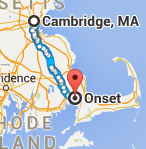
Trip Log – Day 247 – Cambridge, MA to Onset, MA

to OnsetJuly 9, 2016 – Clouds, 60 degrees

Miles Today: 68

Miles to Date: 12,644

States to Date: 31

 IMG_6563

It doesn’t take long on a bike to get out of the community you inhabit and come upon a different sensibility. Even though I live in Boston, navigating through the exurbs of our metropolis are just as difficult as any other major city, especially to the South, where I am less familiar with the roads. It doesn’t help that Massachusetts has the worst road signage in the country. Part of that New England hubris: “Why would you want to go anywhere, when you’re already here?”

IMG_6566 IMG_6568

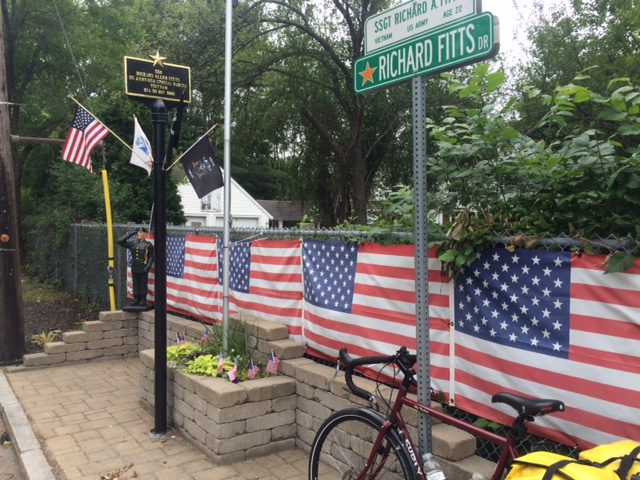
Thirty miles out, after many missed turns, I got to open road where the vehicles, memorials, and patriotic banners had more in common with Pennsylvania or Texas than Cambridge and Boston.

IMG_6570

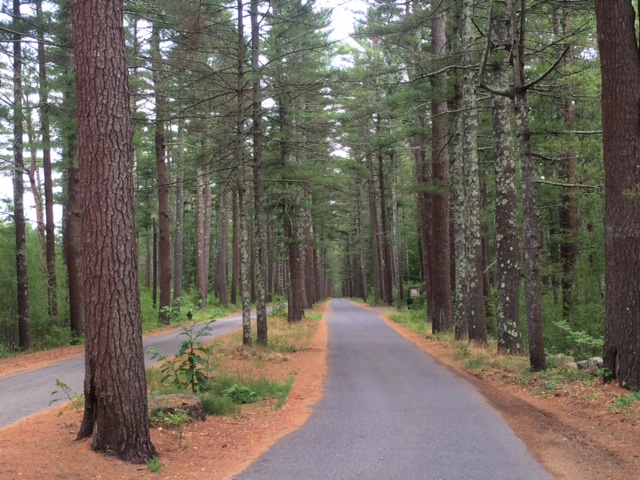
The day was cool and cloudy, which made for great cycling, though the only color was the day lilies and sunflowers that thrive in many gardens.

IMG_6743

Total trivia: Savery Avenue in Carver, MA is the first divided boulevard in the US, created in 1861. Today it is only a half-mile long, but it is a terrific path of shady pavement.

IMG_6748

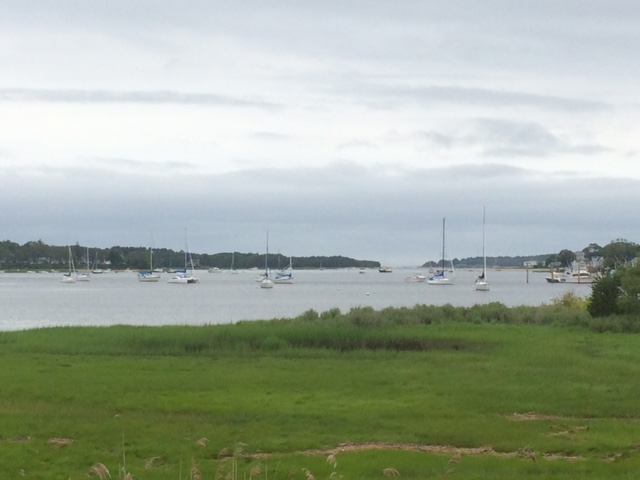
I reached Onset in late afternoon, a lovely neighborhood of cottages perched above marshes and a sandy beach. I spent the evening with my friends Barbara and Eric Elfman, and Barbara’s parents, Jan and Stu Feldstein, whom I met back in November in Scottsdale. The tentacles of this journey are getting beautifully tangled.

Posted in Uncategorized | Tagged , , , , | 2 Comments

On the Road Again

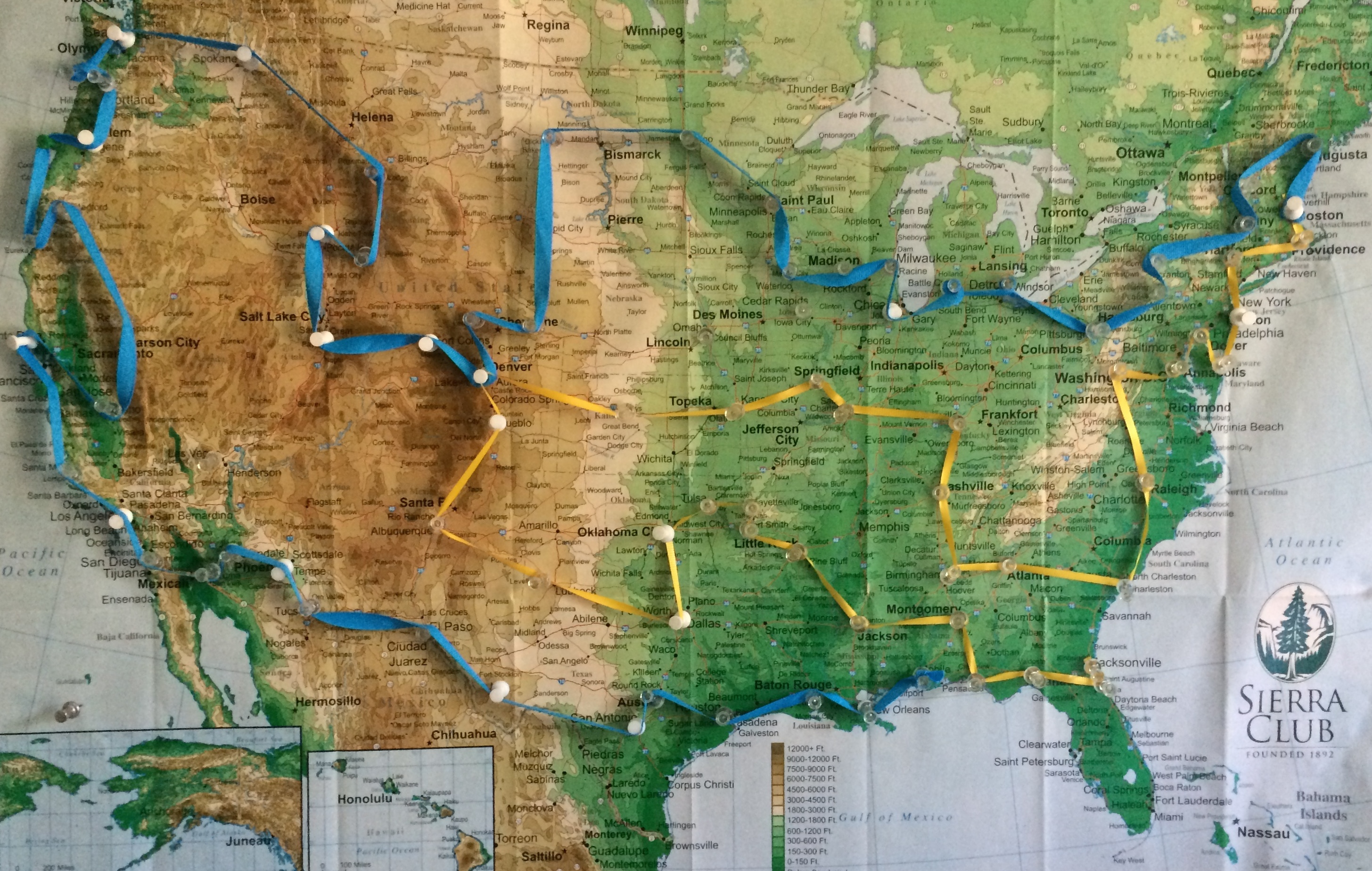
HWWLT Logo on yellowFour months and change after my altercation with a Porsche, I am back on the road, spinning a route that is basically the reverse of what I planned, though shorter in order to try and complete the circuit before the end of this year. Still, my proposed route includes more than simply hitting the 17 states outstanding. In five months I hope to visit a whole lot more of America.

I plan to leave Cambridge and wind up in Florida in December. As always, weather dictates. Some elements of my route are less ideal than the original plan – South Carolina in August is not ideal – but riding in heat is easier than in cold. I hope to hit all the highlights I’ve envisioned and still spend at least one night in each of the continental United States.

I will resume my daily trip blogs to chart my progress, post a weekly compendium of responses to my question, ‘How will we live tomorrow?’ as well as unique profiles of some responders.

US Map cropped

A yellow ribbon is a flexible thing, and my route changes often. If you know anyone along the East Coast, South, Midwest, or Plains states who might like to participate in my project, please send me their contact information. I always welcome the opportunity to meet new people. Please don’t wait for me to post a Trip Blog from their town. By then I’ve already moved on.

Posted in Uncategorized | Tagged , | 10 Comments

Leap Year Leap

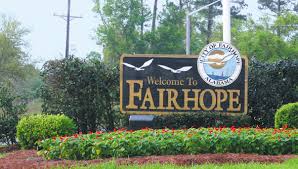
imgresOn February 29 I turned off Alabama Highway 98 to visit the historic town of Fairhope. An elderly Porsche driver took a sudden left turn across my path. I tried to veer away. Surly’s front tire hit the vehicle’s passenger side door. I flew off to the left; my left hand and shoulder landed on the pavement and I winced into fetal position on my right side. Immediately, onlookers surrounded me, cautioned me not to move, called 911, and kept the intersection clear. An off duty medic at the scene checked my vitals. The driver stopped and stood to the side. Our eyes met though we exchanged no words. EMS arrived, police. I was the centerpiece of a small town event.

images-3

I argued with the medic against cutting the gloves off my bloody hand. He insisted. All I could think was they were new since Tucson and would be difficult to replace in a small town. Accident victims focus on the minutia in order to avoid larger realities.

Within half an hour I was at St. Thomas Hospital emergency. I refused the tech’s attempt to give me morphine. “How am I going to feel where I hurt if you shoot me up?” Dr. Sharp ordered a battery of images and tests. A no nonsense nurse debrided my hand with ruthless precision. Everyone parading in and out of the room asked me to move my toes, fearful of paralysis. Except the police officer, who wanted my side of the story.

images-4

The driver didn’t see me. Two witnesses confirmed the man turned too quick. The police report faulted him, though the gentleman didn’t receive a citation. Infractions against cyclists don’t carry the same weight as those against vehicles. Odd, considering the brunt cyclists bear in altercations.

I asked about Surly, who landed outside my field of vision. The officer explained that my bike reared over the car, damaged the side panel and broke the windshield. I’m not so noble that the news didn’t provide a swell of satisfaction. Apparently, my traveling companion broke into several pieces and the police disposed of her. I’ve never been so attached to anything that wasn’t human. I love that bike. We were a good pair; she proved a trusty steed to the end.

I am also broken into several pieces. I suffered a burst fracture in my L2 vertebrate, the fifth metacarpal on my left hand sheared in two, my left scapula cracked like a china plate in too hot an oven; and I popped my AC (acromioclavicular) joint as well. Fortunately, the barium CT ruled out internal organ damage, and my limber toes reflected neurological continuity. Still, Dr. Sharp was concerned about bone fragments infiltrating my spinal column, so he transferred me to Sacred Heart Hospital in Pensacola.

imgres-1

I spent three days in Sacred Heart’s ICU and step down, where monitoring ruled out anything beyond breaks and bruises. My initial hand set proved unsatisfactory, so the orthopedist surgically pinned my metacarpal. The neurosurgeon’s assessment was hopeful. “Surgery is indicated, but in your case not required.” In the face of trauma, it helps to be fit. I was fitted for a custom back brace. My hand was cast and slinged. Those restraints together immobilized my shoulder as well. Within five days I was walking. Eight days after kissing Alabama blacktop I flew home to Boston, never once setting my eyes on Pensacola’s famous beach.

Recovery at home is smooth. My housemate Paul takes exquisite care of me. My principal therapy is walking to strengthen my back. Two trips around Fresh Pond every day is five miles, usually accompanied by my children or my friends.

imgres-2

Since April, my primary occupation is physical therapy, first, on my hand, then my shoulder, and finally my back. My manipulations require three 1-1/2 hour sessions per day plus walking. I watch hours of mindless television while rolling putty and yanking pulleys, grateful to whoever invented miniseries and fortunate to be retired.

Today, I am free of casts and splints; I wear my back brace about half time. I have a green light on my hand, but still attend weekly PT appointments for shoulder and back. I’ve added swimming three times a week to my walks and at-home exercises. I hope to be cleared for yoga or the gym or to get on a bike soon. Which triggers the question: am I going to finish my trip?

Screen Shot 2016-05-23 at 11.11.55 AM

My trip has already exceeded any expectations; I don’t need to ride any farther. I cycled 12,576 miles over 246 days. I visited 31 states. I profiled 286 people’s thoughts about ‘How will we live tomorrow?” and published short-form replies from even more. I stayed with 159 different hosts – 134 of them I’d never met before. I was immersed in a United States that is so much more generous, thoughtful, and caring than our political, social, and economic systems can ever acknowledge; that our media will ever report. Even in Pensacola, I received visits and flowers from strangers who’d learned about my journey. In the process I believe I’ve become more generous, thoughtful and caring myself. I do not need to pedal another mile.

Yet, why not finish? It’s so much fun and, I believe, worthwhile. Every one of us who lives authentically today enhances our prospects for a healthier world tomorrow. And I’ve discovered I’m most authentic on my bike.

images-5

Unfortunately, I am not healed enough to know if or when I can return to my journey. I’m not strong enough to ride, and still skittish when I hear a car screech. However, I will continue to work toward the objective of mounting another Surly another day

Every trip log and profile has been posted on www.howwillwelivetomorrow.com; this will be my last post on for some time. I will continue to post essays about life (unrelated to my cycling project) on my personal blog, www.theawkwardpose.com. I invite you to visit me there. If and when I commence cycling the country and asking folks, ‘How will we live tomorrow?’ I will resume posting to this site.

I offer sincere thanks to all of my readers and everyone who’s participated in this project so far. Good luck in all of your endeavors.

 

Posted in Uncategorized | Tagged , , , , , , | 7 Comments

Profile Response: Jesse Florence Zenor, Ocean Springs, MS

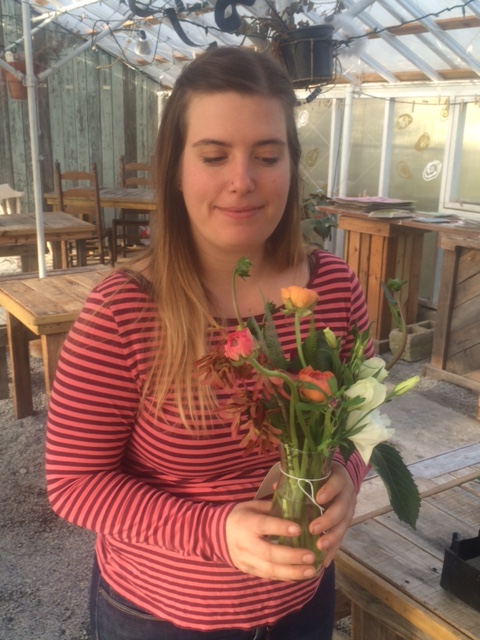
HWWLT Logo on yellowJesse Florence Zenor wants to make a difference. After completing architectural studies at Auburn, she moved to the Gulf Coast to do Hurricane Katrina relief work. She stayed. After the cleanup and a stint in an architectural design firm, Jesse craved a deeper community connection. She opened The Greenhouse on Porter, a coffeehouse in the small town of Ocean Springs.

The coffee house is located in a former greenhouse that had been empty since Katrina. The menu is simple: hand cut biscuits and coffee and beer. The social itinerary is more complex. The coffee house sponsors Saturday morning bike rides, musical events, lectures, and art shows. This week it got a ”takeover” by a group of high school girls who coordinated music and art to an Instagram feed.

IMG_6436 images-1 images

The night I arrived in Ocean Springs, Jesse took me to a dinner party: four women and six men, only one of whom had gray hair. Some were single, some coupled. They worked a variety of occupations, from shipyard worker to State Department official, school administrator to hurricane chaser. The group meets every Sunday for potluck. “What we have in common is no children.”

imgresThe potluck group began as a social activity. However, they have developed a vested interest in local issues. They regularly attend city council meetings, where they tweak the established powers. They organize community forums to surface and debate local concerns. We sat on deck raised over a swamp discussing the stuff of Mississippi life: wind and flood insurance premiums that exceed monthly mortgages, the resurgence of otters, the demise of Lightning bug’s. These folks know a lot about snakes.

How will we live tomorrow?

“Free.” – Charlie

“As a scientist I think we have two change many things in our world. I hear the stories my father told me about how things were when we were young. So much of that is gone. What will I have two give my children that’s valuable, that’s still left? That’s why I do what I do.” – Charles, Oyster Researcher for State of Mississippi.

IMG_6437“Brewing and bonding. The way the world is changing requires us to be able to change and accept change. I think the enthusiasm over Wal-Mart and McDonald’s is turning around and we are returning to small-scale, decentralized commerce.” – Jesse

“Without pressure.” – Ali

“I suppose ultimately everything we do is based on experiences we’ve already had. Tomorrow, we will make decisions in the moment that will determine what we do. No decisions are made without prior information.” – James


Posted in Responses | Tagged , , , | Leave a comment

Profile Response: Gina Champion & Phyllis Wursteisen, New Orleans, LA

HWWLT Logo on yellow“So, you want to interview me to see if I have an acceptable place to spend the night?” Gina Champion met me with worthy skepticism. Shannon Weber, whom I met in San Francisco, suggested I stay with Gina when in New Orleans. Gina and I had exchanged emails. She offered me a place for the night, though she was going out. I suggested we meet late afternoon, as I don’t like to stay in the homes of people I haven’t met. The point of my adventure is to meet people, not snare free digs.

Although our messages communicated accurate information, they lacked warmth. Fortunately, within ten minutes of sharing beers on Gina’s porch, our affinity clicked. Gina laughed when she understood I was not interviewing her to vet a place to stay. I immediately accepted her invitation to join Gina and partner Phyllis for a female-dominant evening at a Canal Street club; not an invitation she was inclined to make an unknown man until she discovered we were GBLTQ related.

imgresGina and Phyllis are Crescent City natives. Gina was briefly married to a man and has a 26-year-old son; she and Phyllis have been together over twenty years. “People from New Orleans never leave, but we had this urge to explore.” They moved to San Francisco in 2008. Two years later they put everything in storage and travelled the world. Phyllis said, “All my people are here. When we said we were moving to San Francisco, both families thought we were crazy. When we said we would travel the world, they thought we were off our rocker.” Their plan was to be gone a year, but after spending five months in Asia and Europe, family needs pulled them back to New Orleans.

images-1 images

The best adventures expose us to new people, new ideas, and help us better appreciate our homes when we return. “We didn’t realize how racist New Orleans was until we lived in San Francisco. This is a gay friendly city, in pockets, but about a year ago we had a series of gay bashing incidents.” Still, The Big Easy’s problems cannot eclipse the city’s charms. “There is a soul in this city. How can we get that good news out?”

How will we live tomorrow?

Screen Shot 2016-04-20 at 11.23.11 AM“I am a pessimist. The country is going to shit. The going to shit of America will lead us back to provincialism. That will return us to community. Will it also reinforce bigotry and prejudice?” – Gina

“When we first moved back to New Orleans, we lived in an area where people were petty and ugly. When we moved to this neighborhood, those people were surprised. All of our neighbors here are black. I like living in a black neighborhood. They mind their business, I mind mine, but we keep our eye on each other.” – Phyllis


Posted in Responses | Tagged , , , , | 1 Comment

Profile Response: Dave Culpepper, New Orleans, LA

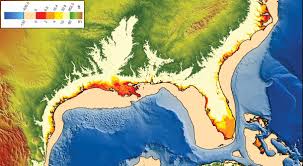
HWWLT Logo on yellow“Louisiana has one of the highest rates of relative sea level rise in the world. Fifty years from now, New Orleans could well have a smaller footprint and a higher levee. The city is trying to develop more water features to prevent flooding.” Dave is concerned we may not have the political will required to rebuild our city if it gets flooded again.

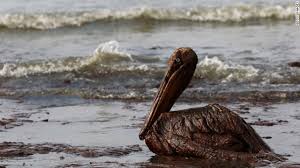
Dave Culpepper is a geoscience consultant who specializes in groundwater issues. His clients include government agencies, such as an NOAA, as well as oil companies, including BP after the oil spill. Dave often serves as an expert witness in lawsuits involving geoscience issues. Since he started in 1981, there are more geoconsulting firms. “I used to do work all over, now I mostly work in Louisiana.”

images-5Fortunately for Dave, if not the rest of us, there are plenty of geological challenges in the Pelican State. “The deltas have giant faults; perhaps 80% of our coastal land loss is from subsidence and development can accelerate subsidence. As organic matter deteriorates, the land compacts. It’s gradual in some areas, others are losing several inches per decade.”

images-8

“If we look at a map of the United States with one or two feet of sea level rise, we lose a lot of land and a lot of cities. One study from NASA shows more soil absorption in the mainland. Another shows ice caps melting faster due to warm water beneath ice flows. What will the United States look like? Much of the sediment in the Mississippi River is now flowing off the continental shelf. Ile de Jean Charles recently got a grant to move the entire village to higher ground. We are going to fortify and retreat. Are the financing mechanisms taking this into account?

images-1 images-3 images

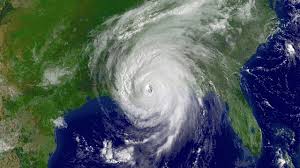
Dave was in Amsterdam when Katrina hit; he questions the idea that hard barriers, like the dykes that protect that tiny country, are applicable here without a better understanding of the geology beneath us. “They don’t get hurricanes. We’ve done a lot of good work since Katrina, but we can’t control the area we now try to keep dry. We have a 100 year flood risk area that will get less protective every decade.”

images-7Despite the wake-up calls of Hurricane Katrina the BP spill, and their subsequent cleanups, Dave doesn’t believe we’ve made any fundamental change that will retard the encroaching seas.


How will we live tomorrow?

IMG_6410“I think we’re going to have to live with a lot more changes. I have grandkids. What will it be like for them 100 years from now? It’s the most drastic change in recorded history. I have no doubt humans will adapt, but at what cost? We survived the Ice Age. We will survive high water.”


Note: This profile was first published on May 19, 2016 and revised on June 11, 2016 in conjunction with Dave Culpepper.


Posted in Responses | Tagged , , , , , | Leave a comment

Profile Response: Elyse and Roger Hackett, New Orleans, LA

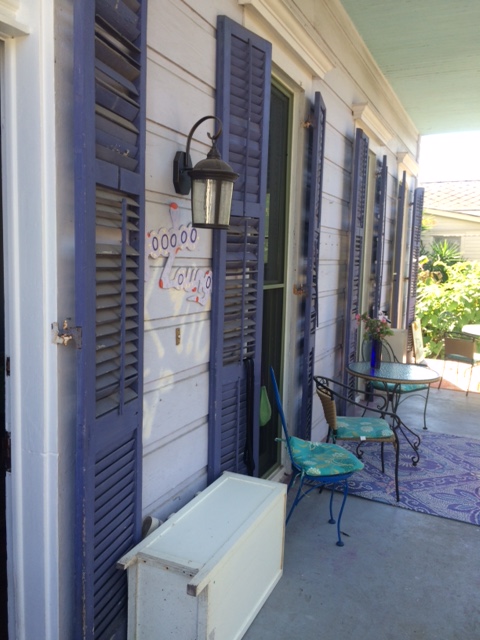
HWWLT Logo on yellow“We are quintessential audience members. Elyse is the first to dance and break the ice.” From this Yankee’s point of view, Elyse and Roger Hackett are textbook New Orleanais. Elyse greeted me in a breezy shift printed with a map of the Crescent City. Roger wore a brim hat. Born and raised here; Elyse’s father was a musicologist who arrived in the early 1950s, Roger’s father was an Alabama jazzman who came in the 1940s and helped start Preservation Hall. Elyse and Roger have lived in a century-old frame house in the Carrollton District, five blocks from the Mississippi, for the past 24years. We began a leisurely afternoon visit on the back porch, but when the sun shifted, we moved to the shadier front side, beside a fragrant, overgrown Angel’s Trumpet.

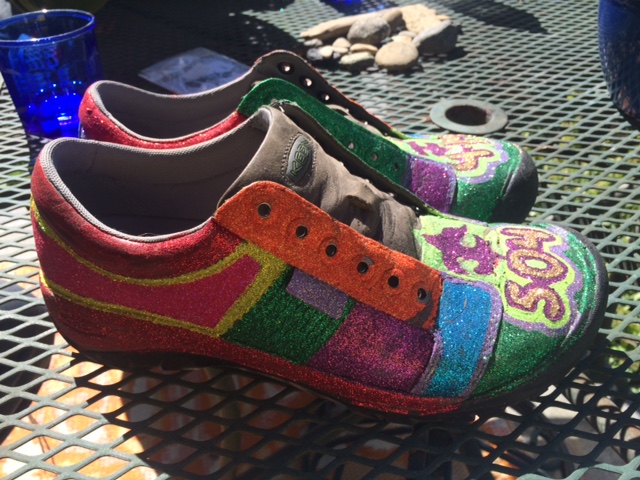
IMG_6398Elyse is an artist who works in acrylic and glitter. She applies paint to objects, often shoes and clothing, and adds glitter while it’s wet. Elyse sells her artwork at festivals and events. Roger boasts, “My job is to be her canvas.” When not sporting his wife’s art, “I am a computer guy. I spent many years providing Unix support for oil companies. We are in a period of oil company layoffs, so I am going to Oshner Healthcare to do disaster planning.”


Elyse and Roger share two things common to all locals: Mardi Gras and Katrina.

IMG_6401They are strategic revelers. “These days, all Mardi Gras parades follow the same route. There can be three parades in a row, from 5 PM until 11 or so. The routes are five or six miles long. You develop a relationship with the people around you; you become friends with the folks nearby.”

This year, their son Robin’s girlfriend came from Portland Oregon for her first Mardi Gras. “The first night of parade is Muses’ Night. Participants create beautiful glittering shoes and to bestow amIMG_6407ong watchers along the route.” Unlike the tradition of tossing beads, which are plentiful, most marchers have only one or two pair to give away. It is an extraordinary honor to receive one. “Robin’s girlfriend approached a muse, explained that it was her first Mardi Gras parade and how much she would like to have a pair of shoes. She got one.”


After Katrina, Elyse and Roger stayed with a variety of family and friends. “I call it our Katrina Tour. We started in Memphis and wound up in New Jersey.”

How will we live tomorrow?

IMG_6405“I am going out to Tipitina’s tonight but I am going to behave well since I have a walking tour tomorrow.

“I am not going to get into the whole climate change thing because I can’t do anything about that. I think we need to get more compact. We are planning to turn our upstairs space into a studio apartment to rent to someone who can become part of our community, our immediate community of running this household. I see us in coops, with growing our own food as much as possible. My sister has an immense lot. I suggested she lease part of it to urban gardeners.” – Elyse

IMG_6402“Immediately here, I am pleased that we are making progress in managing water without dykes and levies. One of the wetlands groups that came out of the BP spill has made progress in wetland creation. We have to balance dykes and levees with wetlands. We have the first project underway in Gentilly.” – Roger


Posted in Responses | Tagged , , , | 2 Comments

Profile Response: Marguerite Oestreicher, Habitat for Humanity, New Orleans, LA


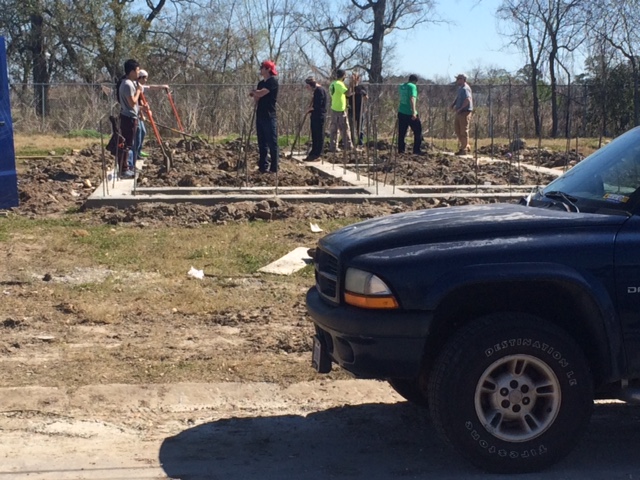
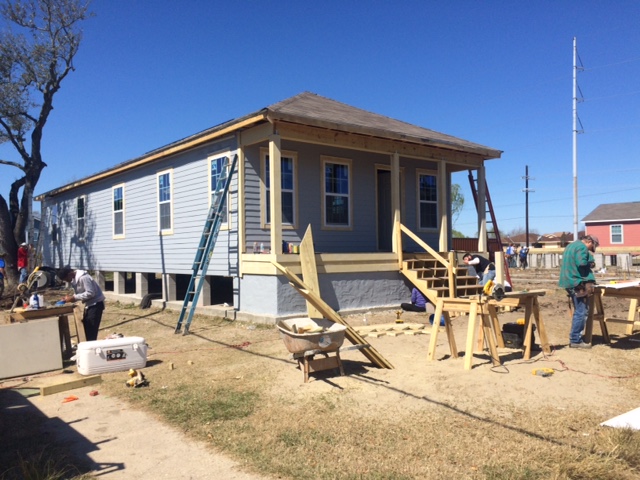
HWWLT Logo on yellowLast I was in New Orleans was a week during the winter of 2005 and again in 2006 to built houses at Musician’s Village, part of Hurricane Katrina reconstruction. Habitat for Humanity’s work there is long finished. All of the homes are complete, purchased, and occupied. The first years after the hurricane, HFH NOLA was the Crescent City’s largest homebuilder; it continues to be a major developer. Marguerite Oestreicher, Director of Advancement, invited me to HFH’s construction area on America Street in New Orleans East on a Saturday morning.

About a hundred people gathered on a half-dozen sites: a handful of HFH supervisors, AmeriCorps volunteers, weekend warriors from local colleges and volunteer fire departments, Marine regulars, as well as future homeowners, who must contribute at least 350 hours of volunteer service as part of their purchase agreement. Groups were excavating trenches, installing foundations, attaching siding, and finish painting. As in any volunteer endeavor – as in any endeavor of any kind – some people worked diligently while others picked at their paintbrushes or leaned on their shovels. In sum, the energy was palpable; progress real.

IMG_6391 IMG_6390

Last spring, HFH NOLA sponsored a build-a-thon: ten houses in ten days to commemorate ten years since Hurricane Katrina. “Over five hundred people came from across the world to participate. Dozens of international media covered the event and aired stories during the August anniversary. National media was caught off guard; they arrived a few days before the anniversary and wanted instant stories.” Most Americans don’t appreciate the global significance of Katrina. “Until the Ninth Ward comes back, in any eyes of the world, New Orleans has not come back.”

I asked Marguerite how the hurricane affected planning and construction in the city. “The City never changed development patterns, it was politically impossible. But it changed the way we build. We build higher, from 4 to 13 courses of block vertically. We are trying to build to the environment, but who knows what that will be a hundred years from now? We have coastal erosion and subsidizing.”

IMG_6392The hurricane also left the city owning many abandoned lots. “The City passed an ordinance called, ‘The lot next door.’ It gives people living next to blighted property a favorable claim to it. The program has done much to alleviate blight, but there are due process implications.”

With so many buildable lots available, HFH NOLA has a backlog of houses waiting to be built. “We build 30 houses per year. We are one of the largest, though not the largest, Habitat for Humanity organizations. We like to build a group of houses together to create the halo effect. We initiate other community development.

“We have just been awarded 48 lots in the Lower Ninth Ward, our first development in that area. We plan to build one hundred units within three to five years. Some will be rentals that Habitat for Humanity will own and operate. We have created an incubator program to move residence from rentals to ownership.”

IMG_6393HFH NOLA builds an Energy Star equivalent three-bedroom house for $85,000. The homeowner needs $2500 in escrow, Habitat for Humanity carries the primary mortgage, and the buyer receives a soft second to make up the gap to market rate.

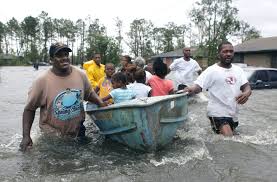
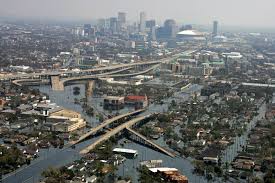
Marguerite is a long time New Orleans resident who evacuated during Katrina. “I woke to 6 feet of water.” She went to Shreveport, unaware of the extent of damage until a photo of her neighborhood made the cover of the New York Times. “I was devastated, but my son said, ‘You don’t get it. We get to start over. Most people don’t have that chance.’

“Katrina is history to most of the people working here today. But for me, it was a new beginning. I used to be an art dealer and analyst. Now I do meaningful work in neighborhoods I never knew. We create authentic connections that create community. This is the most enjoyable job ever.”

How will we live tomorrow?

IMG_6386“I think holistically, but I have to think locally. We are going to see more shared resources, more house sharing, more extended families. We are living in a world of environmental uncertainty. Climate change is happening so fast here; we lose three football fields of land per day in Louisiana. Before Katrina it never crossed my mind that the levees would fail. I worried about wind and rain, but never flood.”


Posted in Responses | Tagged , , , , , , | Leave a comment

Profile Response: Ms. Pearl, Buskers’ Bunkhouse, New Orleans, LA

HWWLT Logo on yellowBuskers’ bunkhouse is a self-proclaimed artist refuge in New Orleans’ Bywater neighborhood; its couchsurfing profile indicates everyone is welcome. The Big Easy proved to be a city of fascinating people, yet I received few invitations for a roof over my head. So, I called Ms. Pearl, Buskers’ proprietress, if that term applies, a day in advance. She seemed surprised and half bothered that I got in touch beforehand, told me I could stay, and instructed me what to do if she was absent upon arrival.

There were nine of us: Ms. Pearl; Ian and Lara, Skooch the guitar player; Mike, the raisinet man, two girls who never introduced themselves, a woman who hacked phlegm in bed during my entire stay, and me.

IMG_6384Two weeks before, the kitchen building burned down. The charred remains filled the back corner of the lot. In its place, a refrigerator, sink, and washing machine sat beneath a lean-to roof sheltering the back stoop. Ian made a continuous pot of Pho on a portable propane stove. As folks scooped the broth into large bowls, Ian added more liquid, more vegetables, and more noodles.

Four twenty-something’s showed up; claimed they drove straight in from Austin. The two girls had purple mascara, nose rings, and wore long striped shirts that doubled as dresses. Two guys had fledgling beards that didn’t quite mask their college scrubbed faces. Ms. Pearl told them welcome and then started a maelstrom about racism; fifteen solid minutes of rising tide, white privilege, and black anger. The discomforted quartet excused themselves to get dinner. Ms. Pearl boasted, “There’s different ways to make people leave. You don’t have to turn them out.” Although everyone is welcome at Buster’s Bunkhouse in theory, Ms. Pearl’s tongue can make that welcome rancid.

IMG_6382After dark, we moved into the main room, which includes two sets of bunk beds and a few random chairs. Scooch cleaned his guitar and took off to play the streets. Ian explained the app he’s creating, fartpnp, which GPS locates free public bathrooms. Mike continued to pop raisinets; the girls remained silent.

Ms. Pearl sat in the center of the room in a straight back chair. She wore a black fleece with a hood that enveloped her rice paper skin. The pale oval of her head, the lines of her face, her persistent tirade against the ills of our nation brought Edvard Munch’s painting, The Scream, to life.

“This neighborhood became popular when the flooding stopped at the red light and we stayed dry. The city has raised taxes and driven all the blacks out. Now it’s full of rich white people. There are over 250 AirBNB’s here. The average price is $175 per night. The Ninth Ward is going to turn into a place that rich white developers own.”

IMG_6383Ms. Pearl was recently served notice from the city to improve her property, a $500 fine per day until improvements are made. Before Katrina her taxes were $350 a year, now they are $1800. “The city of New Orleans is the largest owner of blighted property in the city.

“Immigrants used to come here and work hard. That’s how we developed liberal ideas. Now there are no liberals. I know how Fascism happened.

“Anthony Robbins was a personal coach his motto was, ‘try something. If it doesn’t work, try something else. If that doesn’t work, try something else…’ Trump does that. He’s also not tied to a party. I think that fierce party loyalty is damaging.

IMG_6381“They assassinate five cops a week in America.

“This isn’t America. America is on the other side of Canal Street.

“We don’t have colors, we just have shades.

“They just love their bombs, these Americans.

“I think there are energies here in this house. It heals people.”

How will we live tomorrow?

Screen Shot 2016-04-19 at 11.09.44 AM“I’m interested in multicultural, but it only works if everyone is on board. The Muslims coming in here now are angry and aggressive. That’s not multicultural. They want to take Jackson’s statue out of Jackson Square.

“When they zoned the cities and took away Norman Rockwell’s America, we lost our empathy. We sit in our houses alone and isolated.”


Posted in Responses | Tagged , , | 3 Comments

Profile Response: Joshua Nuss, Ellis Marsalis Center, New Orleans, LA

HWWLT Logo on yellowJoshua Nuss studied opera singing as an undergraduate. “As a slight man with the bass voice, few parts were written for me, so I went to graduate school in nonprofit administration.” Josh came to New Orleans to be Development Associate for the Ellis Marsalis Center at Musician’s Village.

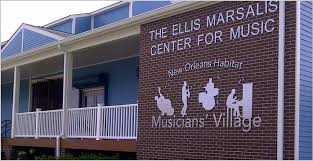
Harry Connick, Jr. and Branford Marsalis conceived of Musician’s Village as a way for the musical world to lift The Big Easy out of Hurricane Katrina’s devastation. The 72 homes, built by Habitat for Humanity, plus the $8 million center for music education and performance have spurred redevelopment of New Orleans’ Upper Ninth Ward. The Ellis Marsalis Center for Music, which opened in 2012, is a nonprofit enterprise with eight full-time employees, 25 part-time staff, and 300 students.

IMG_6371 IMG_6373 imgres

Students, all from the Ninth Ward, attend the center from 3:30 p.m. to 7:00 p.m. five days a week. Each takes four classes, “One in your chosen instrument, one in piano and theory, a homework tutorial, and a computer lab. Brass is really popular, but we stress that learning other instruments can make the bridge to professional musician easier.” There are also a few vocal students and dancers, who follow a different curriculum.

IMG_6376The Ellis Marsalis Center includes music classrooms, a piano lab, computer lab, dance studio, and state-of-the-art AV room where teen students, paid interns sponsored by the City of New Orleans, learn technical performance and recording skills. The jewel of the center is a 300-seat performance space for student recitals and performances by global artists.

IMG_6375

The Ellis Marsalis Center grooms musicians for lives that will span far beyond the Ninth Ward. It guides many aspects of these talented, though impoverished, students’ lives. At the end of every school day, the center provides a meal. “Once a month we have a catered meal served in the main hall where students practice etiquette. Students from the Ellis Marsalis Center are invited to many outside events; we expect them to be at home anywhere in the world.”

How will we live tomorrow?

IMG_6378“It’s got to be together. The (presidential) debate last night showed we can’t do it without each other. In New Orleans, we depended on the rest of the world in the 2000s to keep us going. This facility is funded by all 50 states and international organizations. The outside community created us and put us on the map. Only now can we begin to tap our own city’s resources.

“I don’t see how someone could have lived through Katrina and think we can do it alone. People don’t appreciate other people and what they can do. They expect too much.”


Posted in Responses | Tagged , , , | 2 Comments