Profile Response: Tanya Hall, Greenleaf Book Group, Austin, TX

HWWLT Logo on yellowTanya Hall worked in television in Los Angeles and flipped a few houses up the property ladder, but she wanted to find a tighter community for her two daughters to grow up. After visiting friends in the Hill Country, Tanya replied to a posting from Greenleaf Book Group. She came to Austin in 2004. “The real estate prices were all missing a zero.” She signed on as Greenleaf employee #4; Austin’s been her adopted hometown ever since.

Greenleaf started as a distribution company for self-published authors. Eventually, they built a sales force and enhanced their editorial and publishing capacity. Tanya hopscotched around the company, became COO, and in 2014 took the reins as CEO when Clint Greenleaf, founder, moved on to other endeavors. Today, Greenleaf is a midsize firm that publishes about 140 titles a year, mostly nonfiction with an emphasis on self-help .“The last two years have been the best ever. We’ve added lots of health titles and Paleo cookbooks.

imgresGreenleaf Book Group provides an alternative model to traditional publishing houses: author-funded, menu-based services. Authors own their book. They pay Greenleaf service fees and retain a higher percentage of their sales. Agents are not usually part of the mix. Greenleaf offers straightforward publishing and distribution services as well as editing and public relations. Recently, they began providing content marketing: speaking and consultation gigs, websites and social media.
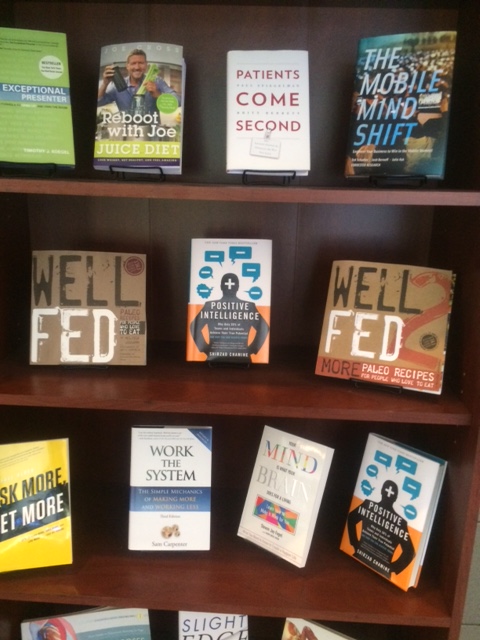
IMG_5954Each author creates a package of services for their needs and content. The author of a typical 200-page manuscript will pay in the range of $30,000 to create her book. Greenleaf has the capacity to place it in bookstores and on Amazon. “No publisher has a good relationship with Amazon, but we do well. We know how to optimize their algorithms and our authors received 35% of the cover price.” That’s significantly more than an author would receive through a traditional publishing house.
 

IMG_5955

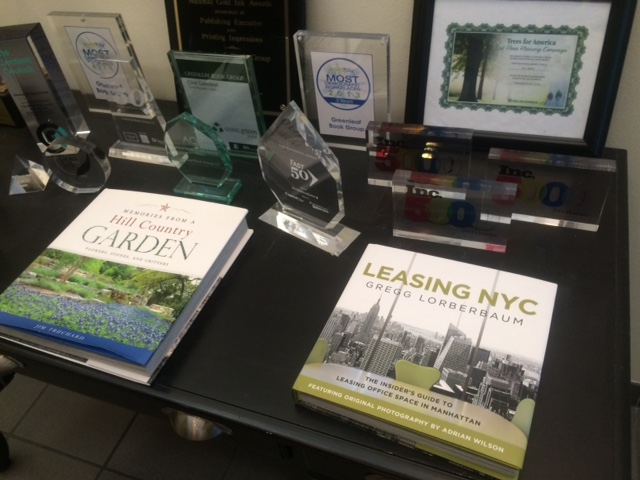
Greenleaf Book Group was included in the WorldBlu List of Most Democratic Work Places in 2011, 2012, and 2013. “Tracy Fenton, founder of Worldblu is based in Austin. She liked the Greenleaf model and Clint Greenleaf thought it important to pursue designation. Our business model speaks to a more democratic way of publishing. We align our interests with our authors.”

Since Tanya became CEO in 2014, Greenleaf has not pursued Worldblu designation, though the principles that won the company distinction are still in place. “Our company is very flat. We rally people around what we do. One hallmark of our operations is our staff brainstorming sessions. We create a ‘Stupidest versus Hardest’ list to identify and weed out poor processes.” Every one of the forty employees, from receptionist to corner office, participates.
images-7 images-6 images-3 images-5 images-8

From Tanya’s perspective, the democratic activities incorporated in Greenleaf’s operations are not as important to the company’s workplace success as the culture of respect that permeates the company. “The most positive attribute of working at Greenleaf Book Group is the prevailing attitude: ‘assume best intent.’” This basic tenant values and respects each employee’s point of view and contribution. “When you unravel issues from the perspective of each person’s best intent, the resolution acknowledges everyone.”

How will we live tomorrow?
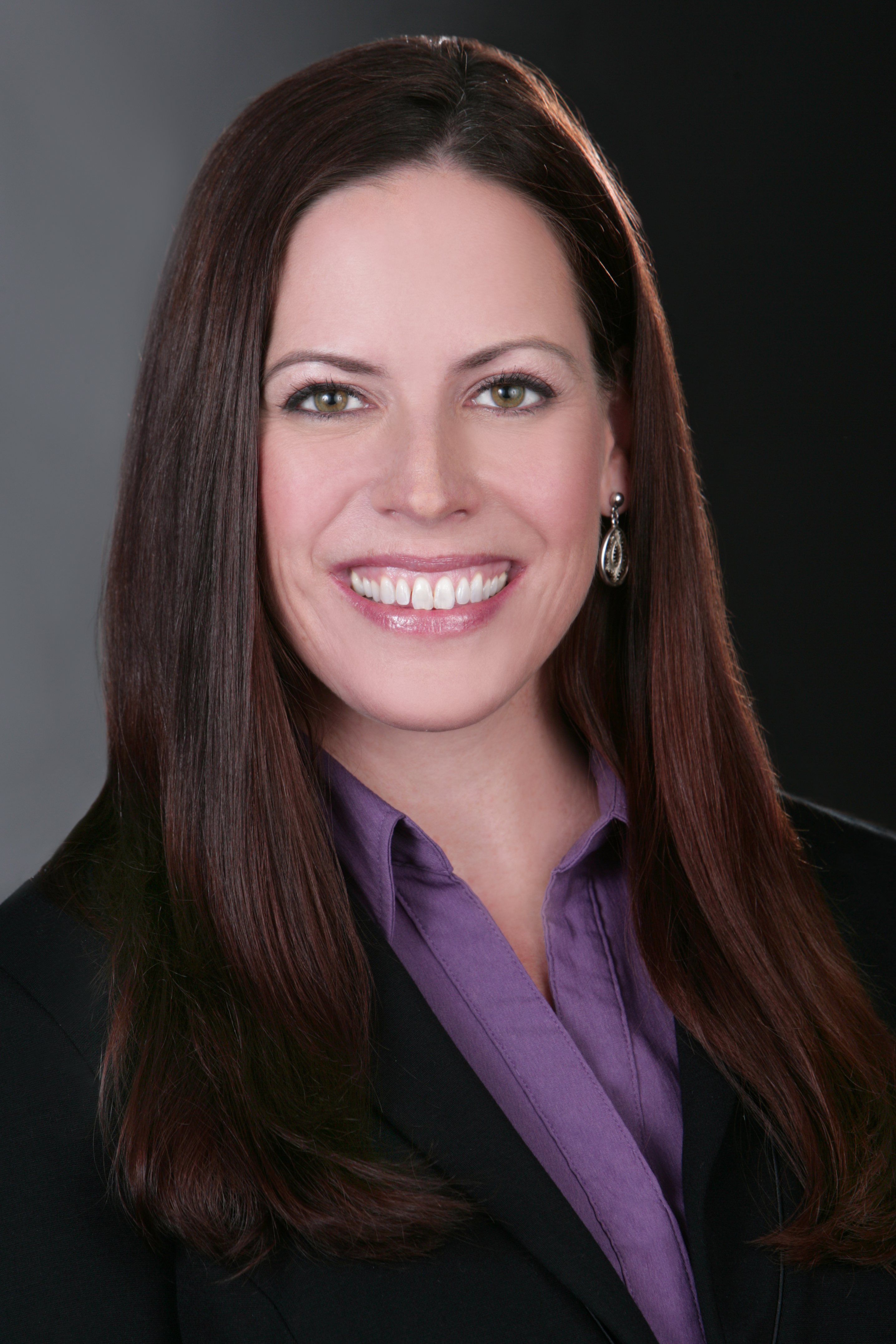
Tanya_highres“Wiser than today. From a personal growth perspective that’s all we can hope for. All of our books are trying to help people lead better lives.”




Posted in Responses | Tagged , , , | Leave a comment

Profile Response: Cynthia Beeman and Friends, Austin, TX

HWWLT Logo on yellowCynthia Beeman values the past. Her home is filled with antiques, each of which has a familial story. She studied history at Texas Tech and spent her career at the Texas Historical Commission. After retirement, Cynthia co-founded the Ruth Winegarten Memorial Foundation for Texas Women’s History.

Cynthia invited me to stay at her Hyde Park home in north Austin, then invited a group of friends to discuss, ‘How will we live tomorrow?’ “We’re a bunch of Episcopalians and Historians.” Here are excerpts of our rambling discussion about the challenges and promise tomorrow might bring.

How will we live tomorrow?

Nancy (historian): I am interested in how we are going to evolve as a society. Gun control is much in the news. What is the implication of our gun culture?

Ginny (history professor UT): When I grew  up there was a lot of shooting: snakes, hunting, marksmanship, but there was a different ethic of what guns were used for. There were still tragedies, an angry husband could shoot his wife or there could be an accident, but there wasn’t the animosity we now associate with guns. They weren’t primarily lethal weapons.

imgresNancy: Gun use didn’t grow out of fear. They were tools.

Ginny: The Sandy Hook shooting was the moment when you knew that nothing would change. That was the most pointless massacre of the most innocent victims and nothing…

Al (historian): My dad took us to join the NRA when I was twelve; I had been shooting since age seven. It was about learning how to shoot and safety; it wasn’t about politics.

Martin: All boys shoot things. They turn everything into a gun. My sister calls it the ‘Quoo’ genes after the sound they make when they pretend shoot.

Ginny: My sons had these popguns and they played with their fiends in the yard. I heard them all afternoon going, ‘quoo,’ ‘quoo.’ At least I knew where they were.

Ann (arts consultant): It’s not simply that we can’t have a discussion about guns; we can’t even research the problem. It’s a public health issue, but there is no research on the implication of guns or alternatives to our current practices. The NRA will not allow it; no politician will fund it. I heard that Michael Bloomberg was thinking about buying Smith and Wesson so that he could influence the gun industry. It’s an interesting idea, to get inside the gun world in order to bring some rationality to it.

—+—

Ginny: I really like my stuff, but I’m in the middle of clearing out my mothers stuff and I’m realizing I don’t like her stuff; I don’t like having to deal with it.

imgres-1Martin: We are going to have less stuff. Our kids are going to have less stuff.

Linda (retired historian): We are going to live in smaller spaces, with less stuff.

Ann: Did you hear the IKEA executive talk about us hitting ‘peak stuff’? IKEA is going to move toward being a broker for people to trade and reuse.

Ginny: I was living in New Orleans during Katrina. I know dozens of families who evacuated. They loaded one car with their stuff and left. Everything else was lost. At first they were happy for their health, they said, ‘it’s only stuff’. But the longer time passed the more they missed it. It was only stuff, but it was their stuff.

Martin: We are wired to collect.

—+—

Martin: Our work world has changed so much. When we got out of school we went to work in the mailroom and worked our way up to the corner office. It’s not like that anymore.

imgres-2Ginny: There’s no mailroom, for starters.

Cynthia: When I started at the Texas Historical Commission, there was an understanding you worked your way up. That culture changed. New staff wanted promotions faster, and their tenures got shorter. By the time I retired, with another long-time staffer, he said, ‘We didn’t leave the THC. The THC left us.’

Ginny: I like Millennials, which is good since I spend so much time with them. They don’t have a sense of entitlement. I don’t even know what to tell them. The careers we had won’t even exist for them. The future isn’t giving them much to work with, yet they’ve become passionate and capable. They are inpatient, but hardworking.

Ginny: I have learned that I cannot stand in front of them and talk and expect they will take notes. That is over. I have to put things in a digital format. When I make them post things, they do better.

—+—

Ann: I feel more positive about tomorrow than I do a year from tomorrow. I am an optimist by nature, but I am not optimistic about climate change.

imagesNancy: We are at an end of the world situation. We had the Cold War, but that was a deterministic end of the world scenario that we managed to back away from. This is another level of destruction, one we cannot turn back.

Sandra (public health nurse): Climate change and income inequality are spurring terrorism. I think poverty is worse than ever. I see families who live east of Austin who have one room, a mattress, and a few utensils.

Ginny: Is it the poverty that’s intractable, or is it our inability to address the problems that people face?

Martin: The poor will always be with you.

—+—

Steve (Episcopal Priest): I am at the end of watching the series Lost. My son told me, ‘That’s me, that’s my life, my story.’ So I felt I had to watch it.

Ginny: But that’s not his life. It’s someone else’s vision.

images-1

Steve: Each generation plays in its own way. My father tried to get me to play jacks. I couldn’t have been less interested. Now my son isn’t interested in what I did. I don’t understand how Lost is my son’s life, but if he thinks it is, I have to accept that it means more to him than it does to me.

—+—

Nancy: I want to know how we move forward in a positive. Take Alan Graham, whom Paul met with from Mobile Loaves and Fishes. He is a change agent, a force for change and good in this community. What motivates him to do what he does?

images-2Ginny: It all comes down to relationships. Look at the TED talk about longevity and happiness. The single most important factor is positive relationships.

Ann: I can confirm that. I have to work with the Texas Legislature. Forget social media and all the rest. The only way to get things done is to have positive personal relationships.


Posted in Responses | Tagged , , , , , , | 2 Comments

Profile Response: Alan Graham, Community First, Austin, TX

HWWLT Logo on yellow“The problem of homelessness is not Obama’s, it’s ours.” For 18 years, Alan Graham’s ministry, Mobile Loaves and Fishes, has provided food, clothing, health products, and social activities to Austin’s homeless. “The old model of service was based on scarcity. The homeless came to a place and got what was served. We took a different approach. We came to them. We served food that’s fresh, the highest quality. In our country, high quality food is not available to the poor. Many people in the Third World eat better. We let people choose.”

Mobile Loaves and Fishes’ unique approach led to something Alan considers more important than food and clothing; relationships with homeless individuals rather than transactions across a soup counter. “Homelessness is created as a manifestation of hopelessness. It is not economic abuse. It’s a failure of the family, whenever that happens.”

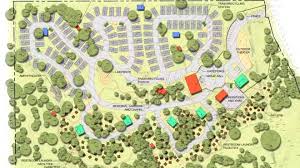
imagesThe organization began to provide housing in RVs throughout Austin, at one point 115 folks. The rent structure of private RV parks proved problematic. Alan realized there would be advantages to bringing formerly homeless people together. The result is Community First, a village of RVs, tiny houses, and teepees on 27 acres in northeast Austin.

imgresAlan teamed with a variety of local companies and philanthropic individuals to build the 250 dwelling campus organized into five neighborhoods. One neighborhood is a collection of RV sites. The other four neighborhoods consist of tiny houses ranging from 252 to 400 square feet, and permanent tent dwellings. Each tiny house has indoor space, electricity, and a front porch, but no plumbing. Each neighborhood includes a collective toilet/shower/laundry building and a cooking pavilion where residents can prepare meals. Tent shelters rent for $225 per month; tiny houses are approximately $325 per month; RV’s rent for $380 per month plus electricity. Since baseline SSI in the state of Texas is $780 a month, even people who have no other source of income can afford to live at Community First. Construction is well along; 35 people have already moved in.

IMG_5950At the entrance to the community is a grocery and health center as well as an outdoor amphitheater with movie screen, amenities the village will share with neighboring developments. Within the compound, neighborhoods are organized around a six-acre garden and a central space that includes a prayer labyrinth, a playground, a human size chess set, and a burial memorial. Alan calls it the circle of life. “For many homeless, there is no marker that commemorates their death. We want to change that.”

The week before we met, the Chamber of Commerce named Alan Austinite of the Year; an honor he was too humble to reveal that I learned it from his Communications Director. For all that Austin’s affluence obscures its bohemian roots, I appreciate that the Chamber of Commerce recognized a citizen so vocal about the community’s problems:

imgres-1“Austin may be the most elite city in United States, except maybe San Francisco.

“The city attempted to enact regulations against Lyft. In three weeks we gathered 65,000 signatures on an initiative petition to put that on the ballot.

“Most of the homeless are not W-2 employable but they are entrepreneurial. Unfortunately, Our society obstructs them. I can panhandle on the street but I can’t sell flowers or water without a license. The city criminalizes poverty.

IMG_5930“What kills community? Refrigerators. Before refrigerators, we shared bounty. Now we store it and protect it from others.

“Don’t use the term sustainable unless you’re Amish.

“The cell phone is the biggest environmental disaster in history of man. Millions of people are going to suffer adverse effects from what the phones are doing to us.”

IMG_5940Alan acknowledges that when we move beyond warm and fuzzy slogans, the actions required to make the earth a more equitable place are difficult. “Consider Stuart Brand and his whole earth discipline. When he actually outlined the steps society would need to take, people were outraged:

  1. If we want to sustain, we have to build nuclear.
  2. If we are going to support seven billion people we are going to need laboratory food.
  3. You can’t mess with the world. Mother will retaliate; she’ll eliminate you. Don’t fix the earth; fix the people.”

IMG_5929As our culture has diminished community, we’ve diminished our quality of life. “When I was a kid we had a community pool. Now we each have our own in our backyard.” Alan believes the community Mobile Loaves and Fishes is creating will strike a healthier balance between private space and common resources than the adjacent subdivision of 2000 square-foot, self-contained houses.

Approximately 20% of Community First residents are what Alan calls ‘missionaries,’ people who have the financial and social ability to live other places but choose to live here. I met a cardiac nurse who moved into an RV. “We are building a community for the homeless that the richest will want to live in.”

How will we live tomorrow?

IMG_5934“Are you familiar with the Seven Habits of Highly Effective People? One habit is is to begin with the end in mind. I am writing a book. The last chapter is called, ‘With Beginning in Mind.’

“Start with Genesis Chapter 2, God created the Garden of Eden. It had everything man needed. The river penetrated and split four ways. Genesis 2:15: ‘The Lord God took the man, settled him in the garden to care for him.’ We as human beings have a desire to reconnect, back to the beginning. Community First isn’t paradise, but it puts us in a position to get back to paradise.”

Posted in Responses | Tagged , , , , , | Leave a comment

Profile Response: Austin Kessler, Austin, TX

HWWLT Logo on yellowI will never forget the first time I met Austin Kessler. He was eating an apple in the cafeteria at University High School cafeteria in Norman, Oklahoma in 1971. He took a few big bites, crunching through the skin. But after he’d eaten around the middle he kept nibbling ever-smaller bites, digesting every bit of skin and pulp. In the end, all that was left was a filament connecting the stem to the core and a few raw seeds. The way Austin ate that apple encapsulated everything about him; respectful of all nature’s bounty, conservative in the essential sense: a prudent steward of our world.

Screen Shot 2016-03-15 at 5.14.06 PM imgres-2 imgres

More than forty years passed until I saw Austin again. In the interim he graduated from Grinnell College, got an MBA with a public administration focus at Cornell, spent four years working with David Stockman at Office of Management and Budget during the Reagan years, moved to Health and Human Services to develop a specialty in healthcare, married a DC attorney and had two sons, moved to his namesake city to be Director of Health Policy, Research, and Economics for the State of Texas, bought a house on the far side of town, got involved in the Unitarian Universalist church, had his position eliminated by a legislative pen swipe, started a consulting gig, got a divorce, spent fifteen years as contract administrator for diabetes programs, fell in love, married again, and retired from his state job as soon as he hit his pension mark. “I loved my first job at the State; I was very good at it. Contract administration was never more than a means to an end.”

Screen Shot 2016-03-15 at 5.18.32 PM Screen Shot 2016-03-15 at 5.18.07 PMAustin’s oldest son, Ben, joined the armed forces. “How do you protest hippie parents? Join the Marines.” Now Ben is a philosophy graduate student at North Texas University. He introduced Austin to a provocative concept. “We are in a post-argument society. There is no room for debate, no tolerance for other ways of thinking. My whole life I’ve been looking for common ground, the middle way. Agnostic pantheism is what I embrace.”

images-2In the two years since he retired, Austin’s life has taken several unexpected turns. His dad, now 87, is failing fast. Austin is managing his care in an Oklahoma nursing home but the time will come for his Dad to relocate to Austin. He and his wife Connie are selling the house Austin bought 26 years ago; they purchased a smaller place further out. “It’s not the retirement I planned, but thank god I’m retired.” Among all their obligations, the couple enjoyed a 60-day camping trip to fifteen national parks last summer. The trip is still rich in Austin’s psyche. Sleeping in the back of their Pathfinder, hiking serene trails, feeling connected to nature, appreciating it to the core.

How will we live tomorrow?

Screen Shot 2016-03-15 at 5.03.39 PM“Our system is more broken than it’s ever been. I’ve always been an optimist, but I can’t find anything to be optimistic about. I’m just left with a cheerful countenance.

“We can’t have a debate on guns, healthcare, or religion. Domestic terrorism is more threatening than international threats.

“We’ll muddle through for 15 to 20 more years. But after that?


Posted in Responses | Tagged , | Leave a comment

Profile Response: David Lanham, Austin, TX

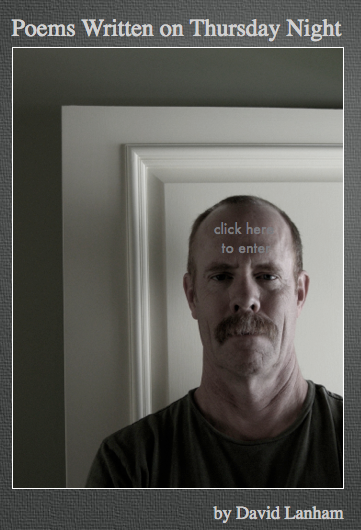
HWWLT Logo on yellowSometimes I have the uncanny good fortune to land in a city and discover my host is a perfect reflection of the place I’m visiting. In his initial e-mail to me, David Lanham said, “Austin is the living embodiment of the most ominous and wonderful trends in American culture.” In many ways, David Lanham is the living embodiment of Austin, and the dissonance between its funky image and affluent reality.

David is a musician and a poet. He studied writing at the famous Interlochen high school in Michigan and Beloit College. He was a musician in New York City, owned an array of guitars, had a penchant for his pedal steel instrument, wore skinny jeans and cowboy boots, but got tired of endless rent. He decided to move, “as far South as I needed until people stopped asking me what a steel guitar was.” He landed in Austin in 1995 and bought a bungalow south of the river.

Screen Shot 2016-03-15 at 2.56.37 PM“Where are all the cowboys?” he wanted to know. Dave was directed to the rodeo northeast of town. The rodeo occurs on the same weekend ‘South by Southwest’ takes center stage downtown. The two simultaneous events illustrate Austin’s dichotomy. “The cowboys are all working class guys while Austinites wear five hundred dollar boots to work on heritage days.”

Dave played music here, “for $40 a night and plate of ribs.” He appreciates Austin’s musical breadth, but acknowledges few locals make a living at it. “The music scene is being cut back by the cost of living and noise reduction ordinances. People move to the condos downtown because of the vibe, then complain about the noise. Now, there are fewer outdoor venues.”

Dave calls himself a mapmaker. “As a cartographer, I’m a short order cook.” He creates custom maps of the city of Austin for three primary clients –a law firm, a development firm and a real estate firm; each of whom want specific information about traffic patterns, soil conditions, zoning restrictions, and Starbucks locations to understand where Austin’s at, and where it’s going. If you want to know where the population of $50,000 per year families is growing in order to locate the newest Chipotle, Dave has a map for you. “Six thousand people make over $100,000 per year and live alone within a half mile of the Whole Foods mothership at 5th and Lamar. That explains the store’s focus on prepared food. It also explains Snap Kitimgres-2chen, which sells ready-to-eat meals designed to make you fit. Convenience and status matters more than price to those folks.”

As the unofficial expert of Austin demographics; Dave has his finger on the pulse of a city that is growing diametrically opposite from its beloved image. “Balcones’ Fault runs right through Austin. It is the geographic and physical division between the poor, who live on the flats east of town, and the west side rich who live in the hills. Now, the east side is gentrifying and poor people are being pushed out. The SMSA counts two million people in Austin. Only 9% are black. Austin’s black population is small compared to neighboring cities, and decreasing. In twenty years, I have never worked with a black person.”

Hispanics represent 35 to 40% of the population. “They are fully integrated into the city’s economy, but not in terms of neighborhood or socially. Many will tell you they are invisible.” Although Dave points out there are no barriers to Hispanic/Anglo relationships at a friendship or romantic level, the city has much less Hispanic flavor than the Latino proportion implies. “The University of Texas and the State Government set the tone of the city. Yet all the work done in this town is by Hispanics. They’re not all illegal, but a lot of them are. The entire economy of Texas is predicated on it. The poorer Hispanic community fears being exploited by illegals. The affimages-1luent Hispanic community often takes advantage of illegals.”


Sometimes Dave provides text to accompany his maps. “I used to stress Austin’s laid-back atmosphere. That was part of our charm. But about ten years ago the commercial and real estate interests didn’t want to hear that. Now I stress our competitive advantages and high-tech.”

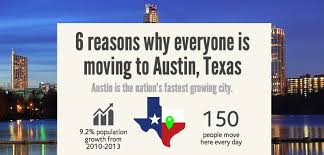
Dave reports that 120 people move to Austin every day. Few leave. “A person can move here from a Palo Alto, sell a $1.2 million ranch, buy a $600,000 McMansion, and live like a king.” Austin accommodates its newcomers through sprawl. “Austin has an absolute primacy of neighborhood associations. They suppress zoning changes and therefore density.

images“I was in New York, working with musicians who had incredible drive. I moved to Austin and started working in commercial real estate. I work with people who have incredible drive. In each case, if you did not have anything to offer them, they have no use for you. Some are nice about it; others are not. Either way, it’s the same ambition.”

Dave is uncomfortable about Austin’s trajectory. The city cannot ‘stay weird’ if grows so affluent, so fast, and so wide. Yet, Dave owns a single-family house less than 2 miles from downtown that has quadrupled in value. It’s hard to rail against a paradigm that delivers such bounty. “My parents are 90 and 91. I’m going to be responsible for them. I feel responsible to my partner, who has less financial stability than me. Thanks to what’s happened in Austin, I have enough, but I’m always figuring on it.”

imgres-1Although Austin may not be as weird as it fancies, it’s still a place where a guy who works in commercial real estate gets his feet washed in counterculture. Dave still plays guitars with abandon. He writes poetry and publishes in small magazines. “It is my way of having an immediacy with the world. I write poetry to understand the world I am in. My writing is always focused on a moment. It is not profound.”

After meeting Dave, and spending four days in Austin, his insights on his adopted city rang true. I also had an opportunity to read some of his poetry. I disagree with him on that point. Much of it is profound.

How will we live tomorrow?

imgres“As a people, we will live far more economically separated. The main indications I see driving this are the gerrymandering of political districts and the movement toward economic inequality. Zoning, neighborhood associations, wealth is separating us. Educated poor people will live in common. Uneducated poor people will not do that as much. The wealthy have separated themselves for a long time. Middle class people will do that as much as possible.

“I am 62. We are the last generation to experience widespread economic growth. We are going to face problems in retirement and aging.

“In a more positive light, when aspiring for stuff is thwarted, that might realign us to relationships with each other and with society.”


Posted in Responses | Tagged , , , , , , | 3 Comments

Profile Response: Ali Stone, Phillip Balke, and Carlos Melendez, San Marcos, TX

HWWLT Logo on yellowAli Stone, Phillip Balke, and Carlos Melendez are three friends leading lives centered on conscious aquaculture in Texas Hill Country.

Ali’s a Minnesota native by way of Bend, Oregon. After a day tending livestock at Happy Chicks Farm, she sat beside me on the sofa, stretching her legs straight out and then tucking them under herself like a gymnast doing warm-ups. Ali moved to San Marcos three months ago to live with her boyfriend, Phillip, a fair skinned Bryan, TX native with a full beard, who remained in San Marcos after college. Phillip writes music, DJ’s at local venues, and contributes to the local permaculture movement.

IMG_5877Carlos, a New Braunfels guy whose family traces back before Texas independence, even before Mexican independence, has never traveled beyond the state’s borders. He sat near the computer, jiggling the You Tube soundtrack of our evening. His brown skin, shiny long black hair and big bone structure suggest Carlos’ rich racial heritage. “I got Spanish, Indian, Mexican all mixed together into one big breakfast taco.”

Carlos described New Braunfels and San Marcos as two very different places only fifteen miles apart. “New Braunfels is proud of its German heritage. Everything there is Germanic. San Marcos is looser, full of college students and Hispanics. There are a lot of Hispanics in New Braunfels as well, but you won’t see them name a school after one.”

IMG_5879Carlos likes to cook for friends. He boiled spices and oils down to syrup; baked sweet potatoes, carrots, beets and other root vegetables; then stir-fried them with broccoli and greens. He stirred in his pungent sauce and served over mung noodles. It was delicious.

Phillip and Carlos met digging a grey water pit for a friend. “We have lots of work parties here.” Next weekend they’ll participate in a work blitz with two friends who received a Young Farmers Grant. “We’ll be planting trees and doing some carpentry work.” They’ve already built one barn, from mostly recycled materials. The 1600 square feet space only cost $9,000. “About sixty people will attend, we’ll work all day, and eat a feast of barbequed pig afterward.”

‘Perma-blitz’ like these happen at least once a month among the permaculture community here. Carlos explained, “San Marcos is the psychedelic cow-paddy of Texas. We aren’t video gamers. We like to work with our hands. We are a group of plant nerds but we all bring a different perspective.”

IMG_5878Phillip is an anarchist. “I have no borders, no masters, no gods.” He doesn’t give credence to any of the presidential candidates. “Any state is oppressive. It doesn’t matter who is in charge.” He does, however, note Donald Trump’s appeal. “The man is a vampire. In a group of people, mention his name and immediately everyone talks about him. He sucks all the energy from the room. That’s what a vampire does. He sucks away life.”

Ali’s been a wwoofer (World Wide Opportunities on Organic Farms) at several organic farms around the U.S., where people interested in organic farming practices intern with local farmers. They work 4-5 hours a day in exchange for room and board, but aren’t paid. “It’s a 60/40 positive thing. A few farmers provide good teaching, more just have us work; some work us long and don’t teach much.”

Screen Shot 2016-03-15 at 2.48.13 PMAli and Phillips’ agricultural endeavors permeate the 500 square foot cottage they share. A table is covered with seedlings waiting for a March planting. Their small backyard is a vegetable garden. Beneath the porch is a pen for raising quail.

Somehow, the messages of our consumer culture have not permeated into Ali, Phillips, and Carlos’ world. It’s as if they live in a previous century, where people were more self-sufficient on a daily basis, yet more cooperative when many hands are needed.

How will we live tomorrow?

“Having empathy is a difficult thing in an industrialized society. We are passive and disconnected from each other.” – Carlos (declined photo)

“Having food in your own backyard is important. Our garden is easy and makes us less dependent on the grocery store.

“People have to follow their heart and not give into the machine.”- Ali

IMG_5883 IMG_5884 IMG_5885

“That depends on a lot of things and the time frame you consider. Obviously, tomorrow is a construct of the future. The change is happening, slowly. I hope we can design and redesign our cities to integrate human’s better. We do water well. Everyone has access to water, though we have to pay for it. But we don’t do as well with food. We need to get food environmentally connected to our lives.

“If people were taught all aspects of being human, not just knowledge, not just consuming, we’d be better off. I had a cooking class in high school. It was one of the most valuable things I learned.

“When you get older, you see things for their true nature.” – Phillip


Posted in Responses | Tagged , , , , | Leave a comment

Profile Response: Vicky and Phil Weinheimer, Converse, TX

HWWLT Logo on yellowThere was a moment, driving to San Antonio for dinner in the passenger seat of Phil Weinheimer’s sedan, when I realized how much I missed something I didn’t even know I’d lost. His voice. Although I hadn’t seen Phil in over thirty years, and more than forty have elapsed since we were in high school together, his words and intonation, his tales of brothers and sisters and classmates were instantly familiar. Phil and I were not great friends. We hung out in the same group; he was a jock; I was not. Our respective girlfriends were tight so sometimes we double dated. I don’t recall ever doing anything just the two of us. But things imprint upon us when we are young, they seep into our subconscious, only to become precious when reprieved later in life. Phil’s voice brought me uncanny comfort. It flowed over me like a rejuvenating fountain. I was so happy to be in his company once more.

Phil’s dad was a chemistry professor at the University of Oklahoma. Phil grew up in Norman and attended University High School, which I entered in my junior year. Shortly after graduation, I went east, Phil’s father took a position at the University of Houston, and although Phil graduated from OU, it’s been a long time since either of us were Okies.

Phil met Vicky in Salina Kansas in 1980, where he was selling commercial water treatment systems. The shy guy winked at her at the café where she waitressed. Eventually they spoke, fell in love, and got married. Vicky already had two children, now in their 30s. Phil’s a levelheaded guy with a positive disposition. Instant family agreed with him.

imgresVicky and Phil spent the next 25 years in Salina. Phil became involved in a parking lot cleaning company, which he eventually purchased. After ten years, business went slack. At age fifty, Phil needed a job. He went to work for Blue Beacon, the country’s largest truck washing company, willing to relocate to become a General Manager. Over the past nine years, Phil’s worked in five locations, they’ve moved seven times, but he’s still an Operations Manager: 2 p.m. to midnight, six days a week.

imgresTruck washing is the sort of task I’ve never even thought about. Sixty to eighty guys wash semis at the truck stop off of I-10. Half of the crew is Hispanic, the other half African-American. Truckers wash their rigs often as once a week. A wash takes about 15 minutes: $65 for the basic, up to $100 with extras. The two bays that Phil oversees are busy 24/7.

Vicky’s a receptionist at the local Toyota dealer. Her stories illustrate her friendly demeanor and helpful streak. “People are in a lot of stress buying or repairing a car. The other day a woman was sitting in the corner of the waiting area, crying. I went up to her; I didn’t need to. Turns out her son was just air lifted to a hospital in Austin and she was stuck at auto repair. I listened. I gave her a hug.” In another story the crying flipped. “Two guys came in, each with Vietnam caps. You would have thought they were best friends, though they had never met. They talked about their experiences and gave each other hugs. I’m sure they’re friends to this day. I thought it was so beautiful, I just cried.”

Vicky and Phil celebrated their 25th wedding anniversary just before they left Salina. A decade later, they’ve had more tragedies than triumphs, but Phil focuses on the positive. “We had a good marriage then. But in the past ten years, with all the moves, and me being injured and Vicky being sick, we’ve grown so much closer.”

imgres-1 images-1It’s difficult to meet new people in place after place. Vicky stays in touch with the folks they’ve met through Facebook but their most constant friend is Jesus, the third wheel of their tight-knit world. Every time Vicky and Phil arrive in a new town, Vicky searches for a welcoming place to worship. “If I wrote a book, that’s what I’d write about: how hard it is to find a church. In Kansas we went to a legalistic church. When we moved to the South I was excited about finding a welcoming church, but I never have. People are more concerned about you sitting in their pew than seeking Christ. One time, in Arkansas, I sat near the back. I knew I was in someone’s seat when the woman behind me yelled, “Where am I going to sit? How are they going to know I’m here?” She was so upset to be one row behind her usual place. Of course I moved.”

imagesPhil was raised Catholic but left the church early in life. “In Catholicism you are called to have a relationship with the Church. In Christianity we’re called to have a relationship with Christ.” Despite Vicky’s wariness of churches with, “a man-based structure versus a God-based structure,” her commitment to a Christ-centered relationship is firm. “Everyone is searching for something and not happy with it unless they find it in Christ.”

The circumstances that have caused Vicky and Phil so much disruption and brought them closer together have also made them economically and politically independent. They are skeptical of broad approaches to our nation’s ills. Phil described Blue Beacon’s insurance before the Affordable Healthcare Act. “We provided something, but it was less than Obamacare requires. Now, the company can’t offer anything. Most of the guys take the penalty. It’s not helping anyone.” He sees it as just another government overstep. “The blue states want to delegate. They say ‘This is good for you, go do it,’ and then move on to something else. The problems of our country are going to take people working together and they are going to take time.”

images-1We went to Papacito’s, one of their favorite restaurants, for dinner. There was a Friday night wait, so we milled in the crowd. At one point I glanced over at Phil, standing with his back to the wall, watching the scene, his arm wrapped around Vicky, who nestled into him, gazing in the same direction. Instantly, I recognized Phil in that exact same position, many years ago, embracing his high school girlfriend the exact same way. Something I hadn’t considered in over 40 years; something important and reassuring, etched deep within me.

How will we live tomorrow?

IMG_5862“I’m glad I had some time to think about this. I will live tomorrow by God’s grace. Not by anything I have done, but with the grace He offers.” – Phil

“I’m going to live tomorrow with God’s blessing and as much joy as I can give to others. If I didn’t pray to Christ I’d be a different creature. I will help somebody even if they treat me bad.” – Vicky


Posted in Responses | Tagged , , , , , | 1 Comment

Profile Response: Joseph Dial, San Antonio, TX

HWWLT Logo on yellowCategorize Joseph Dial at your own peril. He is a cattle rancher whose grandfather imported Brahman cattle to South Texas in 1876. He belongs to the Natural Resource Foundation, “We need our eco-system, yet we allow people to exploit nature rather than live with it.” He has a liberal arts degree from University of Texas with little scientific training. He is Chairman of the Science Advisory Board of the Aspen Brain Forum in Aspen, Colorado. He’s a hearty looking cowboy with a big laugh. He has a body worker and practices neural feedback. “The body will heal itself if you eat right, exercise, and sleep well. You work with the body and mind outward to achieve health.”

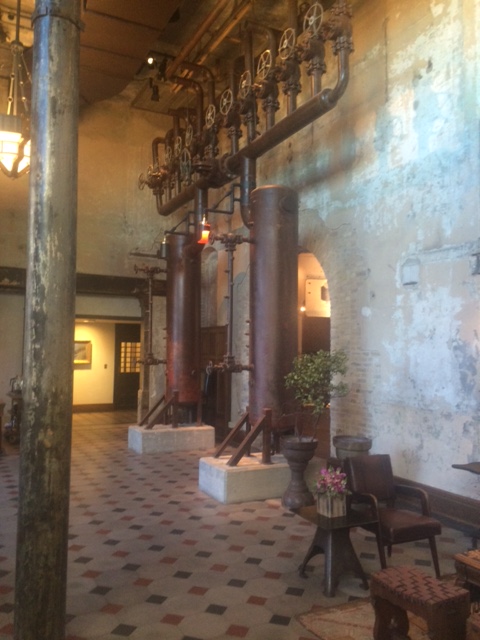
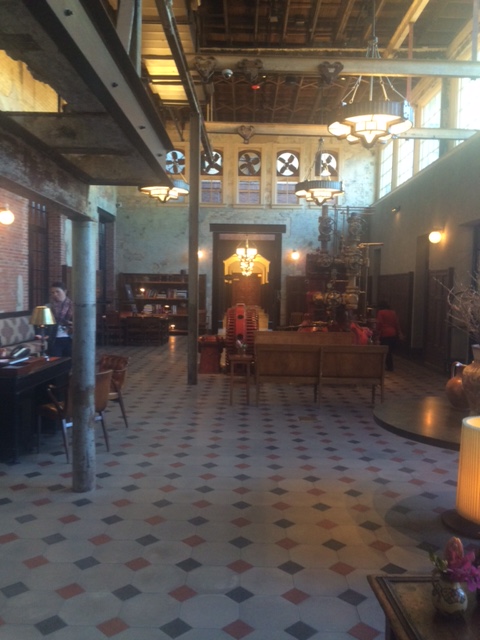
Perhaps the most consistent thing about Joseph is how he bridges ideological and scientific categories. During the first half hour of our breakfast meeting at the Emma Hotel in the restored Pearl Brewery north of downtown San Antonio, he described my journey from varied perspectives.

IMG_5854On the random nature of cycling encounters: “If the bird’s are all in a group, that’s called shooting. If you have to work and search them out, that’s hunting. That’s the adventure part.”

On my irregular route: “Zombie consciousness is the things that we do without thinking. If you go to the typical places, you’ll find the typical responses. But if you venture to fresh places, you’ll find original knowledge. That’s how you accumulate wisdom beyond zombie-knowledge, which is corporate and political speak.”

On integrating what I learn: “In the neuroscience of sleep, sleep is where memory consolidation takes place. This is what you’re doing when you’re cycling.”

Eventually, our conversation turned to Joseph’s work in neuroscience. Oilman Tom Slick – that’s really his name – went to India in 1958, met the Dali Lama, and started a foundation to explore how our minds work. Joseph joined the Mind Science Foundation board in 2003 and became Director shortly thereafter. The foundation’s budget, supported by Slick’s oil income, was substantial during the early 2000’s. Joseph initiated research in neuroselfconsicousness, trying to decipher how we are self-reflective. The great strides in neural imaging: MRI, fMRI, and PET scan, allowed researchers to make connections between experiential and experimental aspects of brain study.

IMG_5855After inheriting his family ranch in 2009, Joseph stepped away from the Mind Science Foundation but maintained an affiliation with the Aspen Brain Forum, which hosts two major neuroscience conferences every year. This May’s conference in New York City is ‘The Addicted Brain: New Frontiers in Treatment.’ The conferences are multidisciplinary of the highest order and boast a broad array of neuroscience perspectives.

“Frank Church of Harvard came to a conference a few years ago and said, ‘Discovering DNA and cracking the genetic code was the great scientific challenge of the last century. We did that faster than we anticipated. Now it’s the brain turn. You can crack the neural code.’


“The Buddhists are the mountain men of the mind. They are the initial explorers and have an intuitive understanding of our brains. Western Scientists are the cartographers who come afterward to measure and analyze with precision. Ask a Buddhist a question and he gives a short answer, based on experience. Ask a scientist and get a discourse; scientists are compelled to explain.”

IMG_5856Joseph is particularly keen on architect Frank Gehry’s approach to the design process. “After he visits a site and talks with his clients, Frank unrolls long sheets of paper, which he crumples into various forms. Almost always, he winds up working with the first or second concept. They are the ones derived from intuition, the expression of his flow. He takes something we consider static, like architecture, into something active that triggers our neural fibers.” Joseph bemoans that such intuition is lacking in so much of our physical environment. “We make our public education buildings so block-like, so prison-like, yet we want our children to be creative.”


Joseph is interested in ‘narrowness of conscious’, human’s ability to focus. “Our unconsciousness is swimming with capacity. We access flow when we eliminate distractions of the whole around us and focus full attention to the task at hand.” He explains how, “the boxer Jesse James Leija knew that he was on his game if he was humming when he was in the ring.”

As our conversation came to a close, Joseph returned once more to my own journey. He encouraged me to unfettered exploration. “The role of the true artist is to take your original vision and put it our there as raw as you can. If you let it be whitewashed, you forfeit your role as an artist,” and left me with a favorite quote by Joseph Campbell: “The goal of the hero trip down to the jewel point is to find those levels in the psyche that open, open, open, and finally open to the mystery of yourself being Buddha consciousness or the Christ. That’s the journey.”

How will we live tomorrow?

IMG_5859“I hope we are as focused on humans being in nature as we are in high technology today. Human beings are like big-mouthed bass. We float through life attracted to all these shiny lures. The Internet is the newest, shiniest lure. We can’t get hooked by it.

“Technology alone only yields faster/better/cheaper. That only works in the service of contemplation and flow. Technology offers opportunity to build a tribal community, but contentment can only happen in synchronism with nature. I hope we will use technology as a tool rather than an end.

“Technology will never bring happiness, but it can enable it. We have the capability to have transformative experiences. We don’t have to be part man / part machine.

“In Eastern traditions, peace only comes from not grasping. We can all be in flow and contentment that is sustainable. Happiness is great, but it’s not a continuous experience.”

Posted in Responses | Tagged , , , , , , , , | 3 Comments

Profile Response: Adam Turcotte, Ranger Firearms, San Antonio, TX

HWWLT Logo on yellowAdam Turcotte is a nice looking young man with a four-year-old daughter who goes to work in jeans and a checked shirt with a gun on his hip. He manages Ranger Firearms, a comprehensive gun store in San Antonio. “I was out of school and looking for a job. A friend of mine knew the owner and suggested I work here. My degree was in marketing. One way or another, we are all in marketing.”

On January 1, 2016 a Texas law allowing open carry firearms went to effect. “People thought there would be shoot-outs in the street. One month after, we’ve had no incidents. Ninety-five percent of people prefer to conceal. Just because I can do something doesn’t mean I should. I always carry my pistol on my hip in the store, but I conceal it when I go outside.”

imgresRanger Firearms has a Federal Firearms License to sell guns. In order to purchase a pistol or rifle, a customer needs a valid ID and complete a background questionnaire that is filed electronically with the FBI. The system can deliver three possible responses: approved for purchase, denied, or three-day delay. Felons, persons convicted of domestic abuse, and those mentally adjudicated are automatically denied. The three-day delay is usually a function of system capacity. “If your name is John Smith and the system is busy, it’s going to take some time to review your application.” Adam says that few people are denied because, “you know if you’re not allowed to buy a gun.”

IMG_5837Adam explained the reasoning beyond calls for a waiting period to buy a gun. “It’s a form of deterrent, a cooling off period so that hotheads don’t buy a gun and do something rash.” He feels they are unnecessary. “The State of Texas allows us to delay or deny selling a gun to anyone. If someone comes in agitated, I can tell him that his background check has been delayed.”

The safeguard of background checks doesn’t exist in the private market. “If an individual sells another individual a gun, no background checks are required. It is illegal for a felon to purchase that gun, and it is illegal for the gun owner to sell a felon that gun, but that’s difficult to trace and almost never prosecuted.” Despite this, Adam feels that nation-wide gun registration is unlikely and unworkable. “There are millions of guns out there in people’s closets. Unless we go knocking down doors, we’re never going to find them all.”

IMG_5838At this time, when Ranger sells a firearm to someone who’s passed the background check, they keep the receipt for twenty years, after which time it is set to the Bureau of Alcohol, Tobacco, Firearms and Explosives to be archived. “There is record trail, but that’s not the same as registration.”

The process is different for assault weapons, which have been regulated since 1986. Ranger has a special license to sell fully automatic machine guns. The application process to purchase is more rigorous and takes up to six months. “The term assault rifle is a media invention. The AR-15, the Aerolite Rifle, is now called an assault rifle. It is not an automatic weapon; it’s semi-automatic. Different models can hold between fifteen and one hundred bullets, but you have to pull the trigger each time.” I wondered who purchased these guns. “Rich hobbyists. These guns are very expensive and rarely used in crimes.”

IMG_5840Forty percent of the guns Ranger sells are hunting rifles; most of the rest are handguns for defense. Twenty-five percent of their customers are female. Ranger provides individual and group instruction – in the store, at home and at shooting ranges – to encourage proper handling and use. “I want to match your needs to your gun.”

I asked Adam what we might do to enhance gun safety in the home. “Every gun we sell comes with a lock. That’s required by law. But we can’t make people use them. I have a four-year-old daughter at home. All of my loaded guns are in my safe. I have practiced many times how to open it quickly. The rest are stored on high shelves in closets. There are fingerprint locks. We have guns that are coded to my fingerprints and my wife’s. But fingerprint locks are not required when we sell a gun, and most people don’t want to pay the extra money for them.”

How will we live tomorrow?

IMG_5834“Once a gun is out there, it’s out there. Firearms are part of the American way of life. We need to teach responsible use and prosecute to the full extent of the law. If you use a gun in a crime, most people don’t get prosecuted to the full extent of the law. Everything is plea-bargained. Until you put fear in the criminals you will have firearms crimes.

“The Second Amendment was not written about hunting; it’s to safeguard us against a tyrannical government.”

Posted in Responses | Tagged , , , , , | 2 Comments

Profile Response: Simms Goff, San Antonio, TX

HWWLT Logo on yellow“Everyone should live a life you don’t have to escape, take a vacation, or retire from.” Simms Goff, an expectant father in his mid-30s, is moving ever closer to realizing that ideal.

Simms grew up in the Philippines where his father, uncle, two brothers, and one sister all served in the military. At age 24 Simms quit his position as an account executive and moved to San Francisco. “I had just broken up with my girlfriend and life was not right.” Immediately, Simms knew San Francisco was his heart’s home. “When I arrived, a sea gull flew down to me, looked me in the eye, and gave me a telepathic message ‘welcome home’. Unfortunately, I partied like it was 1999 and spent all my money. My oldest stepbrother said, “Come to Texas and learn to be a man”. Simms came to San Antonio and became Director of Communication for a large medical practice.

Simms and his ex-girlfriend are expecting a baby in March. They plan to raise the child together. ”This shattered my illusions. The whole idea of love, commitment, marriage and family vanished. I had to accept this is how I am having a child.

11230665_689969337797524_7638718121439759451_n

“I knew in my heart it was going to be a girl. I want her to grow up to follow her heart. Then I thought what if she asks me if I followed my heart? That’s when I realized what I was doing wasn’t right. I quit my job. People were surprised that I quit my job when expecting a baby. But I’ve done some consulting, I had my first art show, I am paying my bills.” Simms does 3-D multi-media art. After his latest show, the main piece was moved to display at a local office building.

Like many who live beyond the constraints of ordinary jobs, Simms lives a simple life. He shares the 1960s era ranch he purchased from an elderly friend with a housemate. His New Year’s resolution of 2015, to live a vegan lifestyle, has simplified many aspects of his being. “Vegan is not just a diet. It is a philosophy.”

Simms made us a delicious dinner. He started with his own five-bean blend, which he soaks in water for one day, vinegar for another day, and slow cooks on the third. He fried up onions and spices; he burnt them a bit. Then he added full tomatoes with vine and simmered everything another hour or more.

IMG_5830“Vegan is a way of living. All beings are sentient. The diet is just one part of living in a way that respects and does not harm to other sentient beings. 400 million less animals were killed in 2015 than in 2014 for human consumption. That makes me feel good.

“Even though I’ve been successful at many jobs, our real work is to heal the earth and help each other. We desensitize ourselves from our enemies and other animals. Chickens don’t want to die. They are active in this world and see god in their own way.

Simms is extending his vegan lifestyle by training to become a Shaman. “Shamanism is healing through spirituality and natural substance. When you know yourself you can heal yourself. God is whatever has the power to extend and further life. God is the bud of spring and also the force that tells trees to drop their leaves in the fall and conserve energy. All living things have inherent divinity.

11108831_689967344464390_5879209689093522825_n“Ancient civilizations lasted ecologically through understanding plants and herbs. Modern pharmaceuticals distill pieces and parts of plants to find a curative component. They’ll ravage the rain forest in search of one particular ingredient but they don’t embrace the complex whole.

“Modern medicine reflects modern culture. It takes the good out of man. It says goodness is an external applied to us, that we need a path to goodness, instead of accepting that man is inherently good and the goodness that exists in nature holds everything we need.


“We live in a culture where it is not acceptable to be anything but ‘good’. It’s okay to be sad or hungry. Sit with it, let it be. We don’t always have to act on it.”

11351378_690589487735509_1101779357443198913_nAs Simms moves further away from our dominant culture, his commentaries on life become more astute. “If god is omnipotent, then why pray to him? If he has a plan, it’s the plan. Why do Christians believe they are in his hands and yet think they affect the outcome?”

He considers himself an anarchist. “Anarchy is not chaos. It’s village democracy – government without leadership. As an anarchist I feel Hillary Clinton is the first representative of the Empire who would sell our personal freedoms. Donald Trump is the same, but he’s more of a clown. Hillary knows what she is doing, selling out the citizens to her corporate sponsors.”

The clearest evidence of how Simms would like to live is how he interacts with his four-year-old dog, Xerra, the mellowest dog I’ve ever encountered. Xerra is silent and attentive. “Xerra has no need to bark or wag her tail. She can look at me and I can understand her needs.” Simms looks forward to developing a relationship that transgresses mere speech with his soon to be born daughter.

How will we live tomorrow?

12119179_753169268144197_3158165030472339738_n“Armed with the wisdom we find today.”


Posted in Responses | Tagged , , , | Leave a comment