Profile Response: Realistic Taxidermy, Hondo, TX

HWWLT Logo on yellowThere are many taxidermy shops along U.S. 90 heading toward San Antonio. But when I saw the mammoth stuffed elk in the open door of an industrial building during a long day of riding, I decided to take a break and learn something.

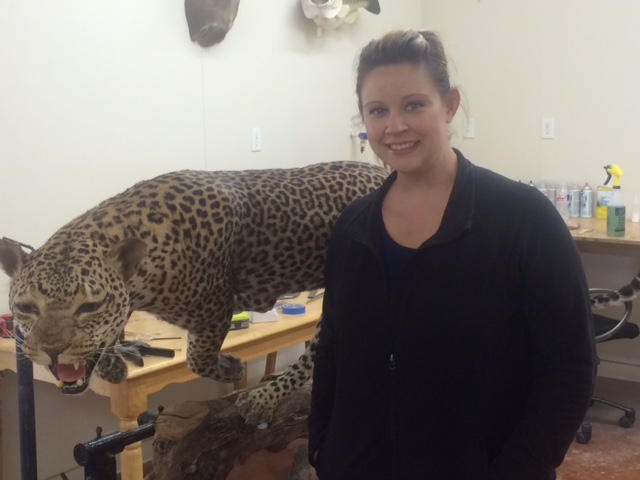
Joe Schneider, owner of Realistic Taxidermy, and his assistant Amanda toured me through their operation outside of Hondo, TX. They preserve and mount all sorts of animals, half of which are white-tailed deer from the local region.

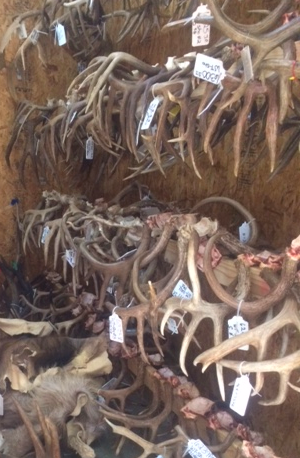
imgresHere’s how it works. Hunters bring them a deer. They take specific measurements along the neck, nose, brow, and antler mount of each animal. They remove the antlers and number match each part of the specimen. Then they remove the hide. They turn it inside out – every crevice – for tanning, which takes three to four weeks of salt drying and chemical treatment.

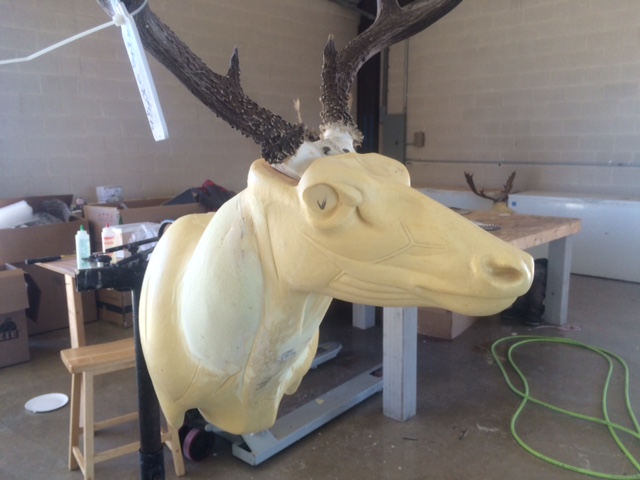
IMG_5806They select a prefabricated foam manikin that close matches the deer’s measurements. They elongate / shorten / adjust it to match their original measurements. No two deer are alike, though they all have the same color eyes. Glass eyes vary only in size. Once the hide has turned to leather, they mount the antlers and stretch the hide onto the form, a process that resembles shrink-wrapping.

Screen Shot 2016-03-12 at 12.45.40 PMAmanda was in high school when she began working with Joe. “People used to think I was Joe’s daughter. Now they think I’m his wife.” She is neither. She’s just a taxidermy expert in a successful business. “A lot of taxidermists work out of their garage. They’ll take a hide, sell it, and then disappear. People know we’re here. We have a half million-dollar shop and Joe lives right next door. We’re not going anywhere.”


Deer hunting has a specific season in Texas. First, there is a period for bow hunters only, followed by rifle hunting for bucks, and then does. But in these parts, hunting is a year round occupation. “There are over sixty introduced species to this region that can be hunted anytime.” Some of the species are confined to huge ranches that have become hunting preserves. Others have escaped and become nuisances. Wild boars are particularly destructive, though few hunters want to mount one of them over their mantle.

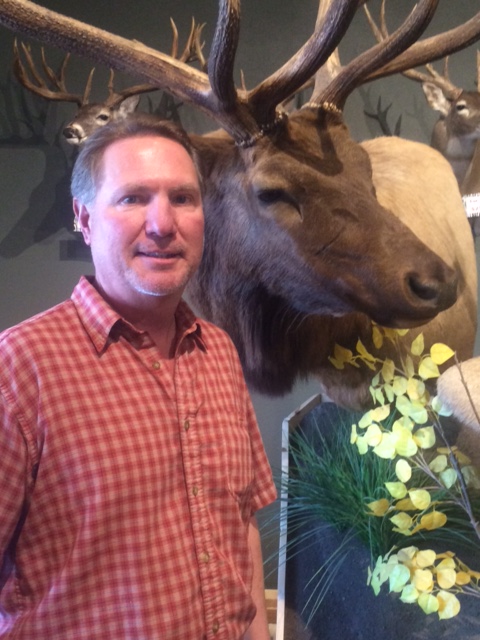
IMG_5814Joe Schneider is a bow hunter. He killed the giant elk Realistic Taxidermy displays along the road as well as all the other elk on display in their showroom. “I started taxidermy in my garage thirty years ago. Four years ago we built this.” Judging from their backlog of work, it’s a good business. Mounting a white-tailed deer starts at $795, more exotic specimens run into the thousands. The mounting process takes a month to complete, but they work on a strict first-in, first-out basis. The current backlog: fourteen months. “Hunters will wait because we do such a good job.”

How will we live tomorrow?

IMG_5813“I prepare for tomorrow but I don’t live for it. I live for today, not tomorrow.” – Amanda


IMG_5816“I interpret your question as dreaming of the future. I’m a bad predictor. In the near future there is an election that will change how we live tomorrow. International terrorism can affect things we have no control over.” – Joe


Posted in Responses | Tagged , , , , | Leave a comment

Profile Response: Sul Ross State University Rio Grande College Students, Del Rio, TX


HWWLT Logo on yellowKevin Young had a biology class to teach the evening I spent with his family. When he returned from class we spent several hours talking about today and tomorrow. The following day, he sent me these responses to my question, which he received from students the evening I was in Del Rio. They represent a wonderful cross-section of aspirations and fears among young people striving to improve themselves.

How will we live tomorrow?


“How will we live tomorrow is a broad and challenging question no one will be able to answer correctly. However, under the circumstances that we currently live, it can give us a hint of what we could expect in the future. Unsolved wars and global warming are influential factors that can control our tomorrow. It really depends on us if we want to continue destroying our world or take care of it and have long peaceful lives.”

Irma Rodriguez

Most of my life I have lived in Del Rio, Texas. I am currently pursuing a career in education hoping for one day to become a great teacher. One of my favorite things to do is to dance. Due to my experience in dancing, I am currently a ballet teacher at Rodz Dance Studio in Del Rio, Texas.

How will we live tomorrow?

“Well I believe that technology will continue in the future. So technology is a big part of our daily life and will continue to be a huge part of our daily life in the future. Technology has advanced in the past 20 years. I could only imagine how interesting and advanced the technology will be when I also 50 years old.”

Melissa Alvarez

My name is Melissa Alvarez I have many goals in life. One of my goals I will accomplish is to graduate and obtain my bachelor. I am 22 years old. I do not have many interest. I love to travel. I am lucky to have traveled to many places in the U.S. And I wish I could travel to all the places I have in my bucket list.

How will we live tomorrow?

“The phrasing of this question may have several different points of view. My position in this question is how technology will continue to advance and provide us with more ways to interact and explore. But the disadvantage of technology is how people are forgetting family values, morals, and communicating face to face without a device. We live by depending on technology to be there for us rather than us being there for people.”

Alicia Tarango

My name is Alicia. I married my high school sweetheart almost 22 years ago. We have 3 children. One son who is now in basic training for the army, a 17 year old daughter who keeps us busy with many school activities and a 7 year old who just keeps us busy. I have always stayed at home with my children but now that they are growing i decided to pursue my career in teaching.

How will we live tomorrow?

“Everyday is a different day full with surprises. It is hard to know what tomorrow will bring. I feel when you plan some events they just do not turn out how you would picture them. That is the beauty of waking up tomorrow and starting new. Every “tomorrow” is a new start to accomplish goals dreams and desires. If you fail today you always look forward to tomorrow. I feel humans get caught up with the same routine school, work etc. That is why people do not accomplish much because they live their “tomorrow” just like the past. Humans should try and get out of the same routine and explore more.”

Lluvia Oviedo

My name is Lluvia Oviedo, I was born in the U.S but lived my life in Mexico. I am the first in my family to attend college. I love to travel and explore the world. Science is a subject I enjoy I feel it is necessary for every age level. Everywhere you go on this earth there is science and that is amazing.

How will we live tomorrow?

“Tomorrow I will get up and give thanks for another day and for my family. I start each day on a positive note, and plan for a productive day. I will not sweat the small stuff. Laughter is key to keeping sane, don’t take myself to seriously! Family is always first priority. Slow down, find some quiet time at the end of the day to gather your thoughts.”

Elizabeth Coronado

I work for the school district, this is my 28 year all with Head Start, current position library assistant.. I was a teacher’s assistant for many years and worked with many wonderful teachers which I feel has given me opportunities to learn and observe different teaching styles.
I have been married for 29 years, have three boys. I have spent most of my life caring for my family putting my education on the back burner for many years until last year when I decide to finish.
My interests are gardening, arts and crafts.

How will we live tomorrow?

“We will live in a better planet, if people recycle more and contaminate less to preserve the natural environment of the world. I have faith that tomorrow will be better than today, if we start by taking care of what we eat first and paying close attention on how we treat our planet. We need to take care of our planet, because our planet needs our love, protection and respect. Also, planting more fruits and vegetables in our backyard and buying less processed food will help us live a healthier life and contribute to the environment. We can love our planet by recycling and consuming less energy at home. We can protect our planet by walking or riding bikes more and driving less. We can respect our planet by planting more trees to help purify the contaminated air. If we decide to take this responsibility, together we can fight global warming. Tomorrow can be a better day, if we do our part.”

Diana Diaz

I am Diana Diaz, I try to eat healthy everyday and have my own garden in my backyard. My dad is a doctor in Mexico and my mom is a high school teacher. On May 25, 2015 a powerful tornado hit Acuna, Coahuila, my hometown in only a few seconds. This was the strongest tornado in Mexico’s history. I remember it was six in the morning, it was raining and the thunderstorm would not let me sleep. At around 6:30 the tornado hit the ground and I was really scared, it almost felt as if it was the end of the world. I’m not even kidding. This tragedy made me realize that we are doing something wrong to this planet and it is like the world is trying to tell us something. We need to take care of the world and respect it, or else mother nature will try to eliminate us from it. Because she is the boss after all.

How will we live tomorrow?

“As the years pass the technology advances and scientists create different things. Things that can either help us or hurt the world. I believe we would live in a world that technology will take control over us. For example having something else do the things that we don’t want to do. Like a robot that will do the washing, cleaning, cooking, etc.”

Guadalupe Delgado

I am 22 years old and I love to spend time with my family. I have a 7-month baby girl and she has change my life. She has complete my life and made my life happier. I have been married for almost 3 years and they have been the best years of my life. Spending time with my husband and daughter is what I love to do the most. As well as going out to have dinner, movies, shopping, visiting new places and go out dancing with my husband.

How will we live tomorrow?

“Probably not much different from how we are right now- maybe even worse or something. There may be some breakthroughs in technology, science, etc. but I feel we are still in the infancy of it. It takes time to perfect things and get them to be how we want them to be. I worry about the weather conditions due to global warming. The drastic weather as we are witnessing nowadays. That can affect life as we know it.”

Maria Flores

Looking forward to eventually graduate from Sul Ross with a bachelors degree in Interdisciplinary Studies and teach elementary kids. I currently work full time for the school district as a secretary. I’m married but no kids yet. Work and school is pretty much what I do. I love to read and like to learn new things.

How will we live tomorrow?

“We live our lives surrounded by technology. We tend to forget to have human interaction just because of all social media accounts and gossip we see online daily. Many live day by day and depending on what happen the day before, predicts the way we will live the following day. For instance, if we had a flat tire which made us late to work the day before, we will say that our whole week is ruined because we had a bad day. We always have to share our whole life stories online and then wonder why we have so many child/adult pedophiles or tragic accidents happening in schools nationwide. We have become so into who we should live our lives by the misleading information in our social media accounts and by celebrities lifestyles always on blast by the news.”

Claudia Felan

I am a mother of a beautiful, smart and a definite duplicate of me 7 year old. I work full time at Academy Sports and Outdoors as a Cashier Team Lead and am enrolled full time in school as well. God willing I will be able to finish my degree by December as a Bilingual generalist Teacher 4-8grade, I am excited for this class because it is very usual unlike other science classes. Your way of teaching is interesting and makes time pass by fairly quickly. I hope to learn some of your ways to make teaching fun and interesting.

How will we live tomorrow?

“We will live tomorrow by waking up and being thankful first and foremost for another day of breathe-life.. We will live everyday with joy aspiring to be healthy, live healthy, and taking in the world around us with it’s beauty. We will live tomorrow appreciating all things with a duty to protect and preserve it-our environment for our children and their children.”

Regina Hernandez

I am a single mother full of joy of life and blessings from God. I come from a loving family that I have passed on to my own. My life experiences are like many, had it’s share of ups and downs. The most rewarding however is when I gave my life to the Lord which seems like yesterday, everyday. My interests are to strive to always be better than the day before. To instill good values and morals in my children, family, reading and to finish school.

How will we live tomorrow?


“I feel that by attempting to be more friendly to our environment we could continue to live tomorrow. There are many things that we could do to help. For example we could pick up after ourselves more and dispose certain waste correctly. Everyday we see this problem. Other examples would be taking shorter showers and turning off all the lights when leaving the house. Another good start is to educating our younger generation about how important this topic is. In the end it is all up to us to continue to make these changes big or little in order to better our planet and by that we will continue to live tomorrow.”

Xylina Moctezuma

I’m twenty one years old and from Carrizo Springs, TX. I come from a family of six. I have three siblings, two sisters and one brother. One thing I love doing is watch and go to basketball games. Some of my other favorite hobbies are playing video games and exercising.


 

Posted in Responses | Tagged | 2 Comments

Profile Response: Kevin Young, Del Rio, TX

HWWLT Logo on yellow


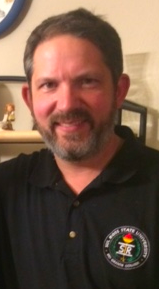
Kevin Young met his wife April when she invited him to a Girls Choice dance in high school. April was too shy to talk before the dance, so they exchanged notes. In one, she revealed her dream to move to Africa and live among cheetah. On their first date, April confessed that she did not dance. No matter, her Africa dream alone won Kevin’s heart.

They studied at BYU where April did her Master’s studying black bears, and then at Utah State University in Logan for Kevin’s PhD research on lizards. “We went down the evolutionary ladder.” Academic life often requires moving for positions. Kevin taught in Yuma, AZ for five years and the family recently moved to Del Rio where he has a three-year position teaching biology to current and prospective schoolteachers at Sul Ross State University Rio Grande College as well as Southwest Texas Junior College.

imgres

When Kevin moved from a 4-year university, he realized he had to adjust his expectations to the realities of community college. “Southwest Texas Junior College is typical of small, border-town community colleges that I have seen. The students often come from low-income backgrounds—most receive Pell Grants. Most are first-generation college students. There are hardly any men; it’s more than 80% female. Field trips are difficult because many of them have young children. With so many demands on their time, it can be hard to distinguish between students who are actually trying but just lack a skill set and those who may simply not care. It is hard to get them to communicate, to come to my office for help.”

Screen Shot 2016-03-11 at 1.12.53 PM

Kevin related the story of his first class at a community college. He was proceeding with his lecture, writing on the white board, when he realized the students were simply sitting, watching him. No one was taking notes. He had to explain that taking notes might be a useful way to recall what he was saying.


Kevin struggles to find the balance between college-level curriculum and his students’ capacity. “Every once in a while a student catches fire. But that is rare. I am supposed to teach a college level class, but they generally aren’t ready for that. We have this giant textbook, but they can’t read it well. A chemistry teacher I spoke with says he teaches to the one or two who are capable and loses the rest. I can’t do that—I want to help all my students. What am I supposed to teach? I am in education, but I think the system is broken, and I have not figured out the answers.”

IMG_5787

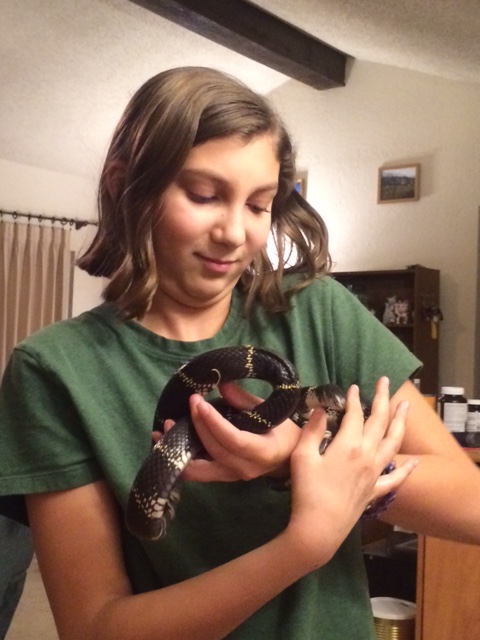
The educational struggles that Kevin describes are nowhere evident in his home. His eldest, Megan, is a freshman at Brigham Young University. April homeschools their other children: Ian, Erin, and Dallin. Each is articulate and engaging well beyond their grade level. Teenager Ian described fractals to me and quoted Nikolai Tesla. Erin has primary custody of the household dog, cat, serpent, scorpion, tarantula, and savannah monitor lizard. Dallin is just a sharp seven-year-old who beat us all at cards.


Despite the challenges Kevin is experiencing, he finds much to recommend his new community. “I like Del Rio. The pace of life is slower than anywhere I’ve lived and people are very friendly. The other biologist I work with still collects specimens and we get to teach traditional classes like mammalogy and ornithology. Few campuses are doing that anymore. Everywhere else, its cellular biology, data and statistics.”

He also realizes that teaching at a community college level is an important challenge. “Somehow you hope to lift the community.”


How will we live tomorrow?

Screen Shot 2016-03-11 at 1.06.44 PM“I think the general trend is positive. I think we’ll be more connected and realize that other people’s problems are my problems too.”


Posted in Responses | Tagged , , , | Leave a comment

Profile Response: GB, Sanderson, TX

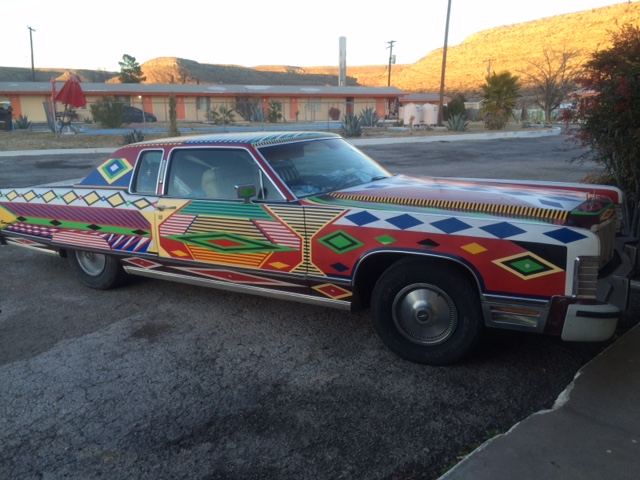
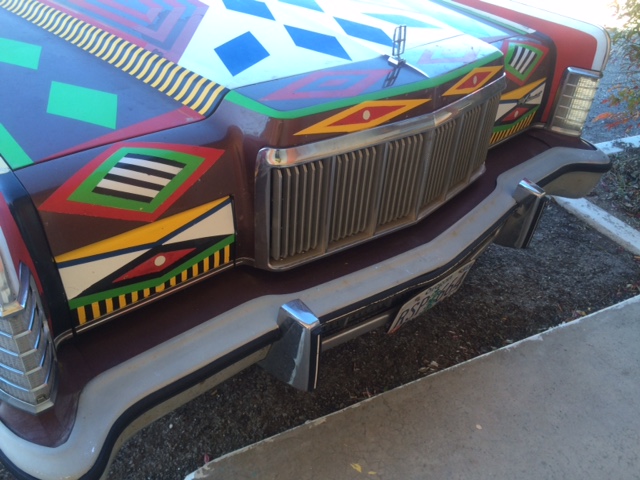
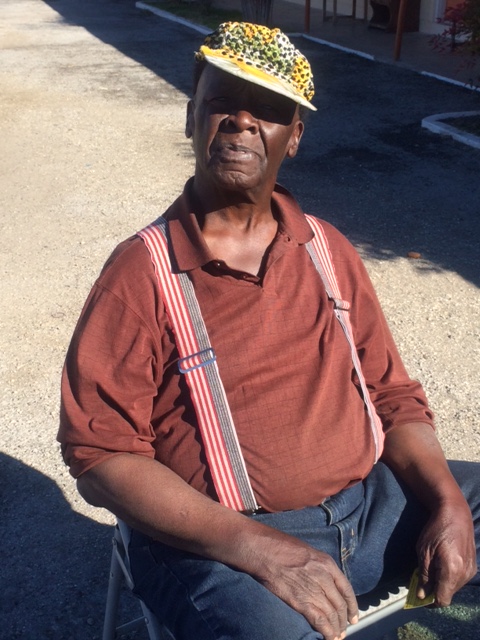
HWWLT Logo on yellow“When I pull into Wal-Mart, I get swamped.” GB is proud of his car, which is a showpiece. The 1975 Lincoln Continental, which he got five years ago, has an elaborate, and ever-changing exterior paint job. “I had a 1971 Continental before that, and a 1968 Seville before that. I have good taste.”

GB is a 68-year-old retiree born in Sandis MS who has lived all over the country. His father was a schoolteacher. GB quit school after eighth grade but is a self-taught engineer. “I have four sisters, all school teachers, but they can’t figure out what I can.”

IMG_5761 IMG_5754

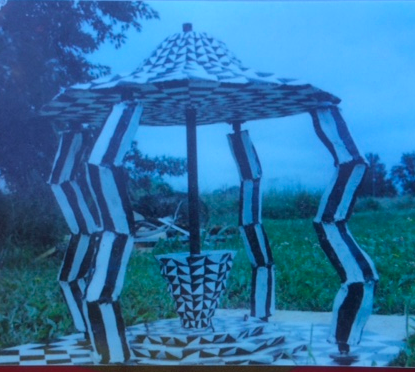
GB had been staying at the Budget Inn in Sanderson for several weeks, but was planning to decamp for Del Rio in a day or two. “I created something for people to sit around that I am trying to sell; a large scale metal and ceramic picnic structure. I know there’s demand, but everyone wants to see the first one built before they buy it.” He also needs to pick up his Social Security check. “I would get more except I didn’t work for thirty-one years.”

IMG_5752GB has lived in northern Minnesota, Kansas, Oregon, and Hawaii. “I went to Hawaii in 1980 for a Portuguese girl. Really pretty and she didn’t talk much – my kind of girl. I was in Kansas when I got diagnosed with diabetes. It took me some time to get it under control. Haven’t had a drink since I was 42, stopped smoking at age 55. I lost my teeth along the way. Was going to get a partial in Oregon, but they put some sort of anesthesia in my mouth that didn’t feel good, so I never went back.”

Wherever GB goes he tries to get backers and fabricators for his gazebo. “I figure the basic model will take $40,000 for materials and I can sell it for $100,000. I have this idea for a transparent model that will be worth a million. I keep changing it up; that’s what creation is all about.”

Screen Shot 2016-02-21 at 10.35.58 AM Screen Shot 2016-02-21 at 10.35.29 AM

How will we live tomorrow?

IMG_5758“You live in Boston. I’ve never been there. I’ll come visit you.”


Posted in Responses | Tagged , , | Leave a comment

Profile Response: Georgia and Mark, Freedom Pedalers, Alpine, TX

HWWLT Logo on yellowI spotted the two shadows a half-mile or more away, approaching on the shoulder of U.S. 90. A pair of cyclists. As we got closer I crossed the road to greet them. They were traveling heavy: four panniers each plus a tent rack on the woman’s bike; the man pulled a trailer.

Georgia and Mark, aka freedompedalers, set off from North Carolina in August, headed south to Florida, crisscrossed the South and came full across Texas. They are heading to Phoenix, up into Utah and Colorado, over to Wisconsin and then west to Seattle They’ll be gone a year.

IMG_5694Every cyclist makes his own journey, but Georgia and Mark are unique in two ways. First, their trailer is a portable doghouse; they travel with two dogs. Second, they are in their early forties. Most long distance cyclists are adventurers in their twenties, exploring life’s options. A few, like me, have careers behind us. It’s rare to find people in the generative years out on the road. But here was Georgia, Mark and two dogs, hauling everything they own across the continent on a serpentine route.

We exchanged the usual mutual support and hailed the virtues of cycling life. Then they offered a new perspective to me. “Everywhere we go, people we meet who are in their fifties and older are so supportive of what we’ve done. They all wish they’d opted out earlier. The surprising thing is how many people our age and younger, even in their twenties, don’t understand what we’re doing. They say we’re missing out. We think they’re missing out.”

How will we live tomorrow?

Screen Shot 2016-02-21 at 10.02.12 AM“We quit our corporate jobs, sold the house, the knives, forks and spoons an put everything we own in these sacks and trailer. We have a general plan to get to Seattle. After that who knows.” – Mark


Screen Shot 2016-02-21 at 10.02.04 AM“We both had jobs that required we control things. When you work toward an outcome you have a good chance of achieving it, but you’ll never achieve more. Now we don’t try to control things; we are open to whatever happens. As a result we receive so much more.” – Georgia


Posted in Responses | Tagged , | Leave a comment

Trip Log – Day 246 – Ocean Springs, MS to Fairhope, AL

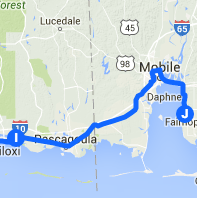
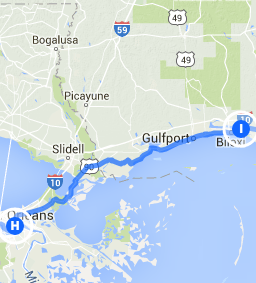
to fairhopeFebruary 29, 2016 – Sun, 75 degrees

Miles Today: 86

Miles to Date: 12,576

States to Date: 31

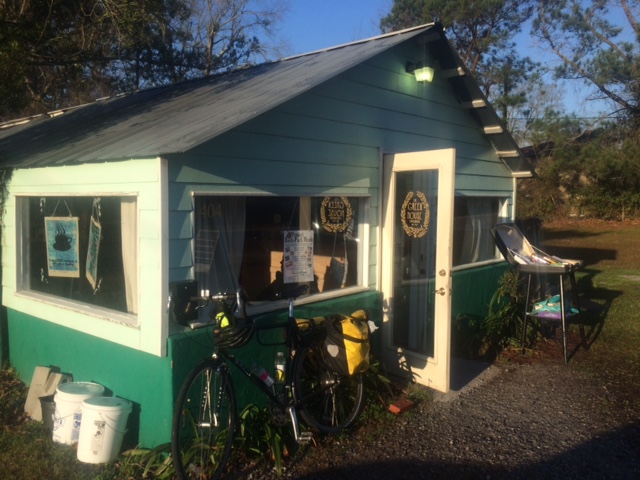
 IMG_6436I spent a leisurely morning at the Porter Greenhouse Coffee Shop that my host Jesse owns: coffee, biscuits, and conversation. About ten, I headed toward Mobile, sixty miles away.

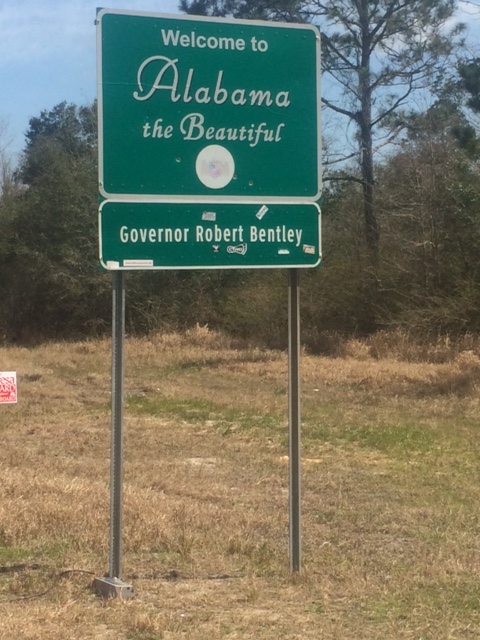
By the time I reached the state line the terrain changed considerably; gentle hills and broad farms that could pass for Ohio. Around noon I received a message from my New Orleans friend Elyse that her friend Cathi in Fairhope would like to host me. I was making good time, so Fairhope before dark seemed doable.

IMG_6441

IMG_6444

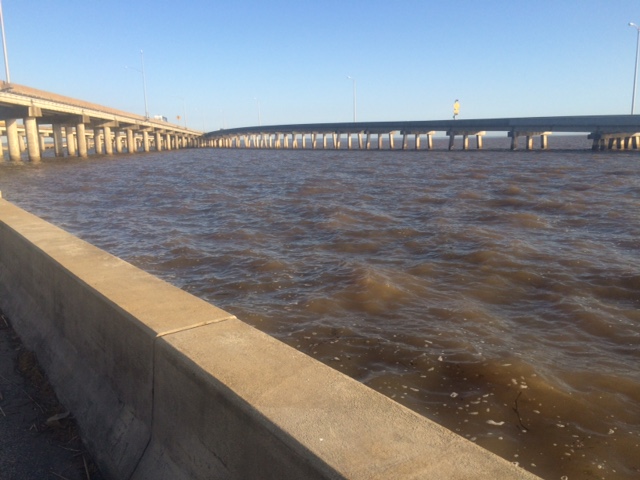
Mobile is a challenging city to cycle. As I approached downtown I realized the primary way across the river was a tunnel; I took an eight-mile detour to cross on a bridge that offered me a great view.

Mobile Bay is immense and the US 90 causeway no more than six inches above sea level. It must flood at the mere threat of weather. But on a clear crisp day it was exhilarating to roll along at water level with the sea scent filling my lungs.

I got to Fairhope about 5:30 p.m. I had heard the old town was extraordinary so I veered onto scenic 98. About a quarter mile in, a Porsche took a sharp left in front of me. Surly hit the passenger side door. Paul flew off his steed and hit the pavement.

Everything changes in an instant. I broke my fifth left metatarsal, my left shoulder, and burst my L2 vertebrae. I have no internal injuries, no paralysis, and an excellent prognosis.

Screen Shot 2016-03-03 at 3.22.06 PMThe goodwill I have found everywhere in our land thrives in Pensacola. I’m locally famous at Sacred Heart Hospital where many staff exclaim, “You’re the bike guy!” Strangers who are now friends visited with cookies and flowers. I’ve received local offers of places to recuperate. I’ll likely remain in Florida through March; it’s easier to rehab at the beach than in Boston this time of year.

I won’t post any more Trip Logs for some time, but will continue to post my conversations as I master the art of one hand typing with my non-dominant hand. It’s never too late to learn new skills.

Screen Shot 2016-03-03 at 3.21.54 PMThanks to everyone who’s contributed love, support, and their ideas along my journey thus far. I have witnessed how great our nation is, not through its strength, but through its compassion. I have had one heck of a ride, which may not be over yet.

Stay tuned, because I think tomorrow is gonna be a good one.

Posted in Bicycle Trip Log | Tagged , , , , | 12 Comments

Profile Response: Tom, Marathon, TX

HWWLT Logo on yellowI am not Will Rogers. I have met men I don’t like. Not many. Nearly always middle-aged white guys similar to me in some way, but radically different in others. Or so I hope. I spend a lot of time cogitating over men that rub me wrong. First, because I want to like everyone, Second, because there’s always something for me to learn, about human nature in general and myself in particular, that dislike reveals.

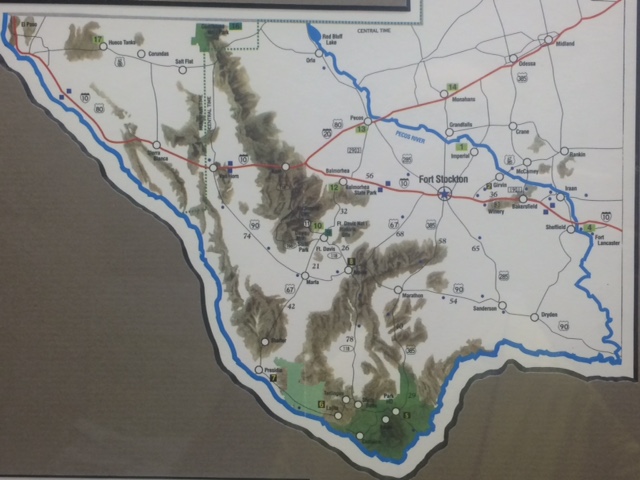
When I arrived at La Loma del Chivo, the cyclist-friendly hostel in Marathon TX, I saw four panniers and a pile of stuff next to a bunk, so I knew there was a guest I had not met. The sun was already set when a pick-up truck dropped off a guy with four bags of groceries from Wal-Mart. Tom had been at La Loma for a few days and hitched a ride to Fort Stockton for supplies. He untwisted a Diet Dr. Pepper, tore open a box of Crunch’n’Munch and offered me some. I declined both. We chatted while he shelved two six packs of soda, a case of Ramen, and a family pack of hot dogs.

imgres-1Tom was a general practice lawyer in San Diego for 35 years. I imagine he was good at it; he thought like a lawyer. “When I pick a jury I either want smart people or people I can mold. The first thing you want to do is put aside the non-critical issues. Get the distractions out of the way.” He boasted of never losing a domestic violence case. I wondered which side he represented.

Tom lived his whole life in San Diego. “Why leave a place where you can surf in the morning and snow ski in the afternoon? I took advantage of it all.” He retired, took a year to unload his San Diego life, and prepared for a cross-country cycling trip. “I wanted to go on this trip in 1972, bought a top of the line Peugeot, but never did it.” Tom left Encinitas in October 2014. On his second day he climbed the pass to Julian. “When I reached the top I stopped at Julian Pie Company and ate a pie.”

Tom reached Van Horn, TX in February 2015. One night, camping outside of town, he woke to blue fingers: frostbite. It took three weeks for his fingers to regain their feeling. He got to Fort Stockton, but every time he ventured east he hit major storms. He decided to wait out warmer weather. Summer came; the days were hot so he got a job as a cashier in Wal-Mart to be in air conditioning. He planned to get back on the road in the fall so he could reach the South by spring.

Screen Shot 2016-02-21 at 10.28.01 AM“Living with these Bible-Belters is weird. They’re abusive to their women, mean to their animals, and litter all over. I went to the Stockton Museum. Most of the soldiers who fought in the Indian genocide were black. Do we ever see black cowboys in movies? The officers were white, but the soldiers were black. It was after the Civil War and they put savage on the savages. All over this country there are museums and memorials to Native Americans. Do you see any around here? Not one.

imgres“I have no schedule, no problems. Never married, I have no children.” Tom described sleeping in the open in Arizona and waking with two coyotes flanking him. After that, he got a collapsible walking stick, which he now carries. He demonstrated how to use it as a defensive weapon.

I don’t doubt the veracity of Tom’s stories. I doubt the premise. The self-described bicycle tourist has been within one hundred miles of Marathon for almost a year. He states plans to leave in the fall as if unaware the calendar is about to flip over to February. He’s a three hundred pound guy bunking in a hostel and bumming rides to buy bulk hot dogs, judging the locals for being judgmental and narrow minded. Yet he’s an affable, articulate guy and a great storyteller. If my internal calculator didn’t register faulty math, his story might seem coherent, even charming. But something’s off with this guy I cannot dismiss.

images-1“Typical Texan: the problem is we need more guns. The fashion rage of Fort Stockton is camouflage. People believe that ISIS is in Mexico waiting to invade. They believe that Obama is going to send the Army to invade Texas. Ask them why they don’t like Hillary, why they hate Obama, they don’t have an answer. It’s just what they hear on Fox News.”

Once Tom goes there I extricate myself from the conversation. He suggests perhaps he will ride with me to Sanderson tomorrow. I know it won’t happen; there’s all that Diet Dr. Pepper and Ramen to consume. Still, I get up and out before he’s awake just to avoid the possibility.

How will we live tomorrow?

images“With this election, what is this country going to do if Trump gets in? They’re not talking about anything important, by design. A lot of big people want it that way.”


Posted in Responses | Tagged , , | 1 Comment

Trip Log – Day 245 – New Orleans, LA to Ocean Springs, MS

to ocean islandFebruary 28, 2016 – Sun, 65 degrees

Miles Today: 89

Miles to Date: 12,490

States to Date: 30

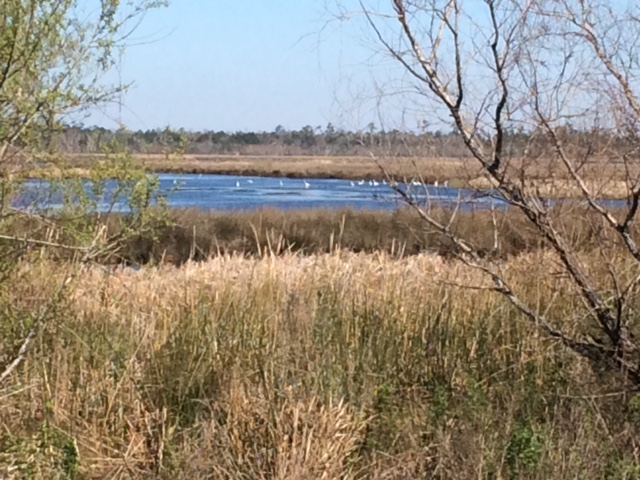
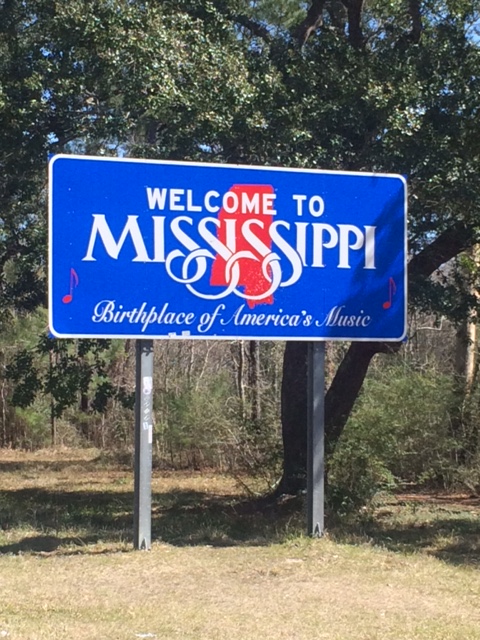
I rose early, despite my Saturday night partying, and headed to Mississippi. The city of New Orleans stretches far to the east; more than twenty miles along US 90 of mostly deserted highway on a Sunday morning. By the time I reached Lake Catherine, dry land was a narrow isthmus with fishing camps on either side. The lakeshore turned into marsh with flocks of heron. Upon entering Mississippi, I was surrounded by sweet, pungent pine forest.

IMG_6416 IMG_6423 IMG_6425

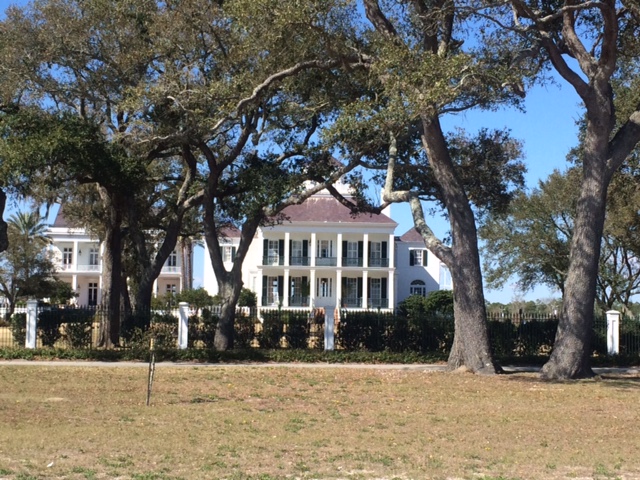
IMG_6427I crossed the first of two wonderful causeways at Bay St. Louis, two miles long with a dedicated bike lane: great sign of progress for cyclists. The causeway leads to over thirty miles of beachfront from Pass Christian to Biloxi. The beach at Pass Christian is one of the most beautiful I’ve ever seen; white crystal sand on my right, stately mansions on my left.


IMG_6430 IMG_6429

Cycling this stretch was gorgeous but tricky. US 90 has zero shoulder. The ‘boardwalk’ is sometimes only three feet wide, shared by cyclists, roller bladers, runners and pedestrians: scenic but not speedy. It gets more complicated in Biloxi where they’ve built casinos along the shore. It appears to be as big a gambling spot as Reno.

On the far side of the splendid causeway over Biloxi Bay I arrived at Ocean Springs, a scenic beach town. My host, Jessie, took me to a weekly Sunday potluck where her group of friends welcomed me to their community.

Posted in Bicycle Trip Log | Tagged , , | Leave a comment

Profile Response: Andy Cloud, Center for Big Bend Studies, Alpine TX

HWWLT Logo on yellowThanks to Harrison Ford, being an archeologist is undeniably cool. “You have your Indiana Jones moments. One day I was out on a dig and the weather took a turn for the worse. The wind picked up and it began to rain. I finished documenting a fragmentary spear point I had found, picked it up and raced to the vehicle to pack it in the collection as the rest of the crew covered the excavation with tarps. While there I compared it with another fragmentary spear point found in that same area the previous day and discovered that the two fit, together representing an unfinished Plainview point. I was the first human to connect the two since it was broken ca. 9,000 years ago.”

Those moments, however, are rare according to Andy Cloud, Director of the Center for Big Bend Studies in Alpine, Texas. Like almost every other job, archeology requires a fair amount of grind. “We are trying to determine the extent of human habitation throughout this region. We do it by hand. When studying an area, we begin with a long line of people moving as one across the landscape, looking for evidence of artifacts. We have a predictive model that tells us, if we find something in a particular microclimate, there is good likelihood other evidence will exist in similar locales.”

IMG_5682Big Bend National Park and its adjacent ranches are rich in evidence of ancient people. “Genvieve Lykes Duncan site, forty miles south of Alpine, has dated remains 11,000 years old. The people were nomads. We believe they stayed in one area for three or four weeks, and them moved on, in a regular circuit based on plant foods available. They used rock structures and caves for shelter or camped in the open.

“Later, along the river at La Junta, near Presidio, we’ve found evidence of agricultural villages dating from about 1200 AD.They lived in houses (jacals) constructed in pits, as the summers get very hot in this area and the pithouses were cooler than above-ground dwellings. We think they were semi-sedentary. They had to stay near their fields during the growing season, reverting to a hunting and gathering lifeway during other parts of the year.”

Survivors of the Cabeza de Vaca shipwreck who traveled through West Texas in the 1530’s wrote about such people. When Spanish explorers arrived in the 1580’s, the local people told stories about earlier white visitors, which corroborates Cabeza de Vaca’s account from another perspective.

IMG_5680Andy grew up in Austin. At age 12 he visited Guadalupe Canyon before it was a National Park. The landscape and remains triggered his interest in archeology. He worked in Big Bend National Park in the 1980’s, returned to Austin to work for the Texas Historical Commission, came to the Center for Big Bend Studies (CBBS) in 1995, and became Director in 2008. He loves his work and life in West Texas. “When I give lectures to school children, I tell them, ‘Try to find what you like to do and follow through.’”

CBBS’ original director, 1987, was a historian. The first Journal of Big Bend Studies was published in 1990 with articles about the area’s history and pre-history. Since then archeology has become a larger focus on CBBS’ work, but Andy values a balance between history and archeology. “History is what we document by written record. In this area, that is from about 1800 to today. Protohistory is the period of sketchy or referenced writing; 1535 to 1800. Prehistory is what occurred before written record, prior to 1535.”

Screen Shot 2016-02-21 at 9.49.34 AMArcheological exploration of this area began in the 1930’s but fell behind after World War II. “Archeology entered a period where it focused on sites that were exposed during development. Out here, where there were fewer pipelines and projects, we fell behind.” Since 1995, the pace of exploration has increased. “We’ve made a lot of progress in twenty years, but our work will never be done.”

Andy considers history as more fluid than archaeology. This surprised me until he explained; “Writing is always subject to new interpretation, based on new understanding.”

Andy’s office is full of artifacts as well as history. His ancestor, Daniel Cloud, wrote a letter on his way to the Texas fight for independence that is on display at the Alamo in San Antonio: “If we succeed, the Country is ours. It is immense in extent, and fertile in its soil and will amply reward all our toil. If we fail, death in the cause of liberty and humanity is not cause for shuddering. Our rifles are by our side, and choice guns they are, we know what awaits us, and are prepared to meet it.”

Screen Shot 2016-02-21 at 9.50.48 AM

How will we live tomorrow?

IMG_5685“I am big into gardening and cycling. I am also rapidly approaching retirement, so my tomorrow will be different from many others.

“As a society, we are going to have to monitor limited resources. Capitalism can be a good thing, but it can be evil, driven by greed. I kind of like what Bernie Sanders is saying.

“Some things I am learning about prehistoric peoples I may need to apply. For instance, the aboriginals learned there were plants in the desert, such as agaves and yuccas, that had to be slow-cooked at low heat in order to break down the complex sugars and provide sustenance. They developed slow cooking earth ovens, thermal features that used heated stones that were buried with the plant foods for ca. 24–48 hours. This technology opened up the enormous amount of sustenance available in the desert to prehistoric peoples. At least I know how to replicate these ovens!”

IMG_1274


Posted in Responses | Tagged , , , , , | 2 Comments

Profile Response: Alan Dickson, Marfa, TX

HWWLT Logo on yellowAlan Dickson has a sign on his kitchen wall, a list of daily activities. It includes items like, ‘eat breakfast’, ‘feed the dog’, and ‘eat lunch’. Half kidding, I ask if he would forget to eat if he didn’t check his list. He responded, half serious, “When I make my art, I forget everything, even to eat. I moved here to have more routine and made that list when I moved in.”

Alan grew up in Northern California, attended Chico State University, and moved to New York City. “I thought I would stay three months, but I stayed nine years. People were so much nicer than I expected.” Alan built sets for fashion industry events and made art photography. A striking series of women with fruits and vegetables fills one wall of his kitchen. Ultimately, Alan decided to leave New York. “I wanted to build bigger things, which is diIMG_5663fficult to do in a bedroom so small I could reach out my arms and touch each wall.” He travelled for thirteen months, staying with friends and spending time in Chico. In April of last year, he moved to Marfa.


Marfa’s a good fit for Alan. He fell into a job at Communitie, a clothing boutique on Highland Street. He built displays before the store opened and now runs their online business. He found it easy to be accepted in Marfa, easy to make friends. “After a month here, everybody knows you.”

images-3Alan shares a house with another artist. They have a shed where Alan keeps his tools and a yard where he builds projects. There are plenty of things to do: art openings and film festivals, discussion groups and author talks. “The culture in Marfa is that everything is free, or minimal cost. The art here is funded by oil money. I get to enjoy the art that the energy guys fund.” On quiet nights Alan stays home and makes puzzles on the large table his grandmother left him. He has a shelf full of complex puzzles.

images-1Our conversation drifted to large art, environmental art. Alan thinks the movement to preserve large-scale art is often misguided. They should be left to weather. “There are large pieces in Joshua Tree that are being allowed to decay. I like to see them; they are different every time. When environmental pieces are preserved, they’re always the same, like Disney.”

imagesAlan enjoys his job at Communitie but doubts it will be long lasting. “My credit cards were maxed out; I had to get a job. Now that I have the job, I can’t really travel anymore. The other day my boss said, ‘Let’s talk about where this is going.’ My first response was, ‘I want to be working less.’”

How will we live tomorrow?

IMG_5664“When I saw your question I was reminded that my school slogan is, ‘Today describes tomorrow’. You can kind of gauge stuff but the more you try to define the future the more off you’ll be. I used to be more dystopian. Now, that’s going away. I’m okay with things.

“I try not to get down on people. Our oil based energy economy was in our natural progression. We now know it’s not a viable approach. Some are pulling back and changing. Some will not be able to do this.

“I’d like to see us move toward a European model: socialism with a capitalist overlay.

“Instead of going to the naysayers and yell at them, do the right thing in your own home and then invite them over.”


Posted in Responses | Tagged , , , | Leave a comment