Trip Log – Day 244 – New Orleans, LA

to New OrleansFebruary 27, 2016 – Sun, 50 degrees

Miles Today: 22

Miles to Date: 12,401

States to Date: 29

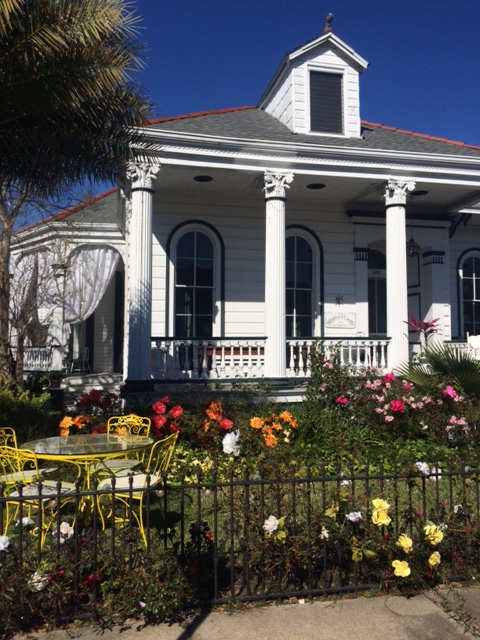
I’ve been to New Orleans half a dozen times: with family, with friends; to come to Jazz Fest, to build after Katrina. I appreciate New Orleans. I value it. Which is not to say it suits me all that well. I’m a New Englander, by choice and disposition. I am prudent and sensible, perhaps to a fault. I’m preoccupied with time, space and schedule. My wild fantasies are just that, fantasies; I have no need to act them out. New Orleans is a healthy anecdote for me: spontaneous, impulsive, unstructured and unscheduled.

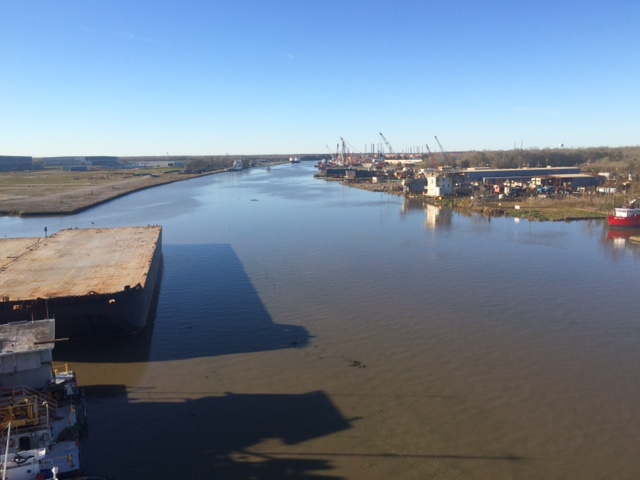
IMG_6389The afternoon I arrived in NOLA I had more ‘potential’ meetings and places to stay than anyplace I’ve visited on my tip. Yet, nothing was firm. I took a Big Easy breath and let it all unfold in a rich, chaotic New Orleans way. I visited Musician’s Village and stayed at Buskers Bunkhouse on Friday. This morning I rose at dawn and made me way to New Orleans East to visit a Habitat for Humanity build site. NOLA has one of the largest and most successful HFH operations in the country. Then I pedaled clear across town to Carrollton to meet a pair of NOLA natives whose fathers’ were musician and musicologist involved in establishing Preservation Hall. Back in Mid City I met with a geotechnical consultant expert in the unique combination of rising tides and subsiding earth that makes Louisiana give up so much land the sea – second only to Bangladesh in coastal land loss.

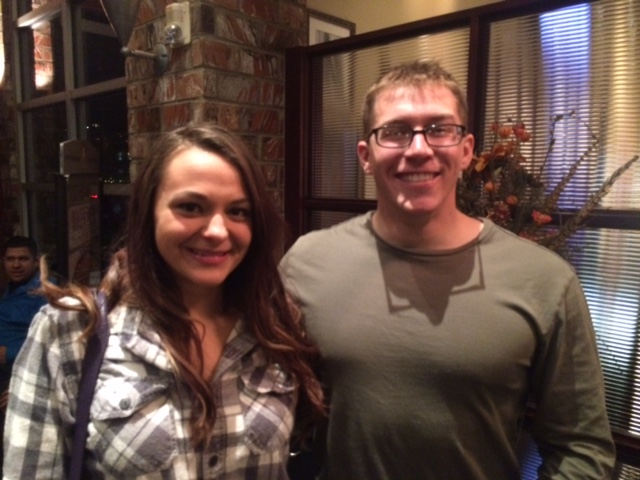
IMG_6396Finally, after an odd string of texts, I arrived at Gina and Phyllis’. Gina invited me to stay but said they were going out. As a rule, I do not stay in houses where I haven’t met my hosts, so I suggested we get together late afternoon. She thought I was interviewing her to see if I wanted to stay, which must have made me seem like a prick. (She didn’t know I just came off a night at Busker’s Bunkhouse, not a place for the fussy.) No matter. We clicked when we met and they invited me to join their female friends to hear Susan Cowsill, longtime NOLA resident of Cowsill fame, channel Karen Carpenter.

IMG_6412We went out to dinner, where I snarfed down a variation of a Mufeletta called a Frenchuletta. NOLA being nothing more than a really big small town, we met two other women they know and all ate together. We arrived at Chickie Wah Wah almost an hour late, plenty of time before the main show stared. The place was jammed. We heard some good original stuff, a superb double drum jam, and a seven-piece ensemble that did justice to all the Carpenter’s greatest hits in full reverb. It wasn’t Preservation Hall, but it was wicked fun.

IMG_6415


Posted in Bicycle Trip Log | Tagged , , , , , , | Leave a comment

Trip Log – Day 243 – Gramercy, LA to New Orleans, LA

to New OrleansFebruary 26, 2016 – Sun, 50 degrees

Miles Today: 56

Miles to Date: 12,379

States to Date: 29

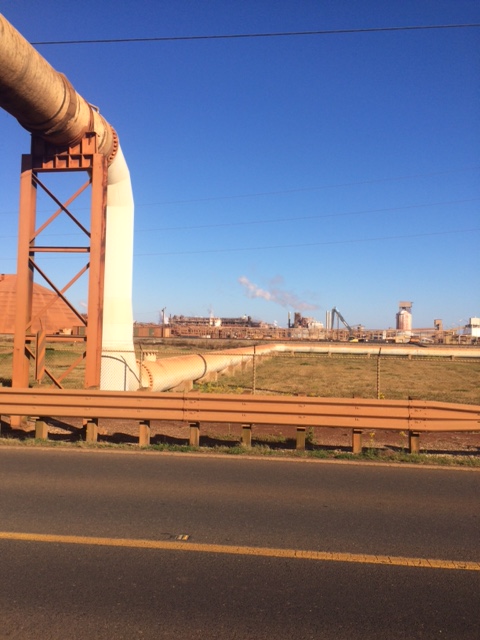
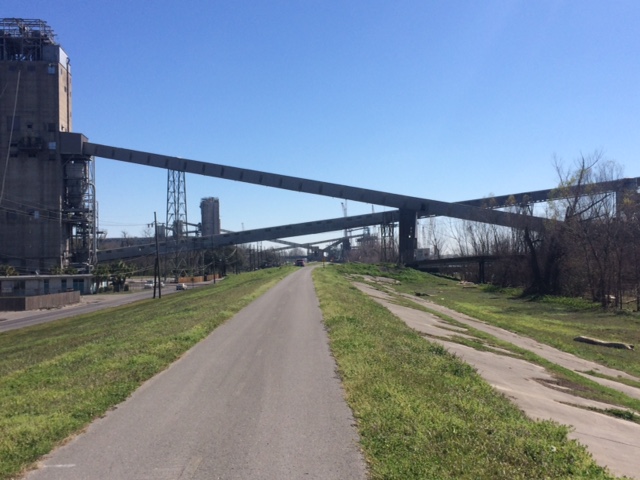
The east bank of the Mississippi River, which is actually the north side in these parts, is a smidge higher than the west bank, which is in fact the south. My host in Gramercy boasted of being six feet above sea level. Perhaps that is why as industrialization supplanted the plantation economy most factories located on the north side. Oil refineries, sugar refineries, and granaries cover former sugar fields with miles of pipes and towers. Conveyor belts long as football fields span across River Road and the levee to connect riverside docks with the behemoths that turn raw materials into the stuff of contemporary life.

IMG_6330 IMG_6358

My ride into New Orleans oscillated between navigating narrow River Road and riding the Mississippi Levee Trail bike path along the crest of the levee. When completed, the trail will give cyclists an elevated approach to the Crescent City. Now, there’s quite a bit of up and down involved.

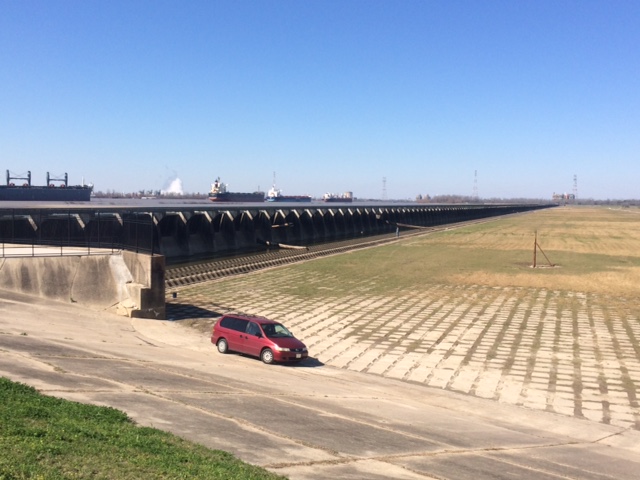
IMG_6344The Bonnet Carre Spillway is a creepy stretch of pavement. The spillway provides a relief valve to divert the Mississippi directly to Lake Pontchartrain during high waters. The dam proper is concrete, but above is a section of vertical wood slats. I have no idea what they’re for, since light shines between them and would easily let water through. A few timber sections have been pierced by floating logs – whole trees really. The large specimens look like toothpicks against the mammoth spillway. I picked up my pace along the low side for over a mile, feeling a need to get higher than the river ASAP.

Beyond the spillway heavy industry gives way to fabrication and assembly plants, residential neighborhoods and commercial strips. From the top of the levee I realized that the streets of small homes sit quite a bit lower than the river surface, even in February when the mighty Mississippi is relatively low.

IMG_6356I recalled my very first trip to New Orleans. I was ten or twelve years old on some instantaneous family excursion my father concocted. We visited Grandmother Schumacher, a tiny old woman, grandmother to our neighbors, who came to live on our New Jersey street every summer when New Orleans was hot. When the adult conversation grew tedious in her Jefferson Parish home, I snuck outside. I saw a hill at the end of her street. I climbed the steep grassy slope. The word ‘awe’ was created to describe what I saw. The vast Mississippi River, one of the world’s most majestic thoroughfares, sluggish green, cluttered with barges and tugs and tankers, happened to be down the street, and a few dozen feet higher, than Grandma Schumacher’s cottage. My first experience of the Mississippi River was perplexing and magical. It cemented my belief that wonder can lie around any corner.

Although the entire relationship of land and water, monumental and domestic is bizarre in this land where low is dry and high is wet, traversing the top of the levee is different from climbing it dumb. The current was swift. A single tug guided fifteen barges downstream, while it took a pair to push just one up. Pipes and conveyors and service roads and wires connect ships and docks to land. Raw materials from all over the world on my right zoomed over my head to be turned into stuff on my left. I sat on a bench, drank water from a plastic bottle and ate a granola bar. Either of whose constituent parts might have one day been here before.

IMG_6359 IMG_6363 IMG_6360

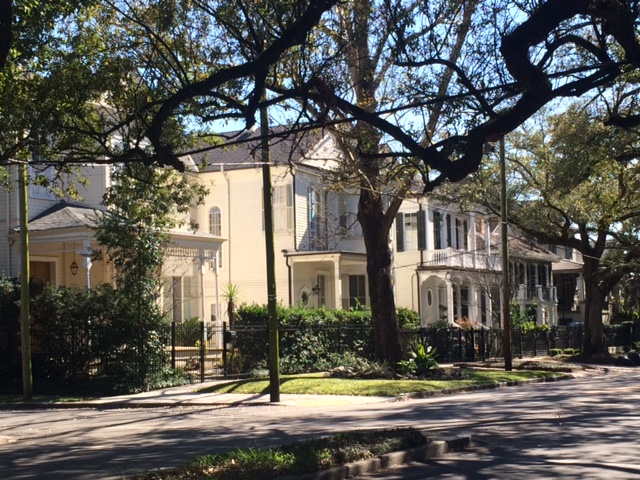
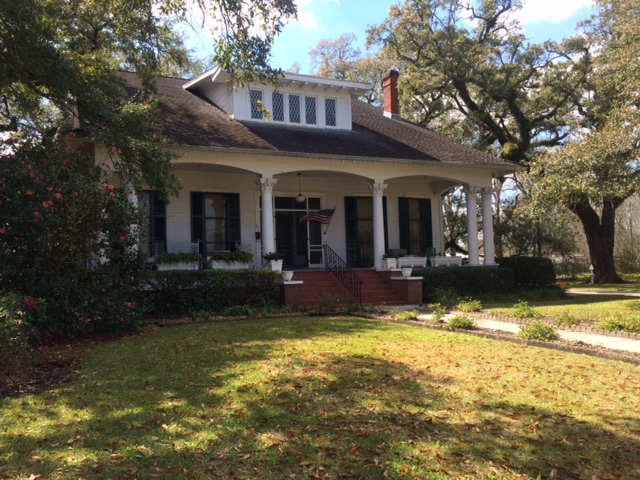
I left the levee to pedal down St. Charles Street and around the Garden District, which look fully polished ten years after Katrina, even though the trees and telephone wires still sported beads from last week’s Mardi Gras’ parades. I spent too much time meandering the Convention Center area, all new and overscaled. It takes like five minutes to bike around the carbuncle that is Harrah’s. The French Quarter was packed even on a cold day in Lent.

IMG_6369Finally, I got to the east side and made my way to Musician’s Village, where I’d lent a construction hand post-Katrina. I got a tour of the performance and training spaces, which did not open until 2012. Then I made my way back to Busker’s Bunkhouse, an artist commune run by Ms. Pearl only five blocks from New Orleans most famous side street: Desire. I spent an evening, a fly on a tattered paper wall, among heavy smokers with gravelly voices who sounded profound, though I have no interest in fact-checking their political assertions or conspiracy theories.

IMG_6370The exception being one silent woman who wouldn’t even share her name: she lay in her dark room next to mine with a phlegmy cough. I couldn’t help feeling sorry that she had arrived at the wrong French city, reenacting the tubercular La Boheme within shouting distance of where Tennessee William’s Stanley, Stella, and Blanche raised such a sexually induced ruckus.

Posted in Bicycle Trip Log | Tagged , , , , , | 2 Comments

Responses: How will we live tomorrow?

How will we live tomorrow?

“Fast and furious. Tomorrow is Sunday and we’ll go fishing. It’s Lenten season and those Catholics need fish on Friday.”

Jake, towing crab traps, Creole, LA

How will we live tomorrow?

“If you go back to our parents and grandparents, they said we were Juvenile Delinquents, but we weren’t. The kids today are the same. They’ll be okay.”

Gene Broussard, former Navy man, Jeanerette, LA

How will we live tomorrow?

“We cannot know, and you can quote me on that.”

Bob, moving from CA to FL with an improvised trailer via Cameron, LA

How will we live tomorrow?

“Great.”

Anil, Owner of Cameron Motel, Cameron, LA

How will we live tomorrow?

“Feed the homeless, get off oil, get off this planet.”

Preston Houser, bartender, Houston, TX

How will we live tomorrow?

“Respect. You got to give it to get it.”

Gary, motorcycle driver, Cameron, LA

How will we live tomorrow?

“Poor, if the government has its way.”

Cody Winch, Kaplan, LA

How will we live tomorrow?

“It never too late to do good. God bless you abundantly, that the remaining days are living multiplies of love, health and joy.”

Jean Phillipe Delvar, Grand Goave, Haiti

How will we live tomorrow?

“I know some people to get in touch with you on that.”

Danny, library groupie, Lafayette, LA

How will we live tomorrow?

“By making it better than today.”

Megan Arceneux, Owner, Hub City Cycles, Lafayette, LA

How will we live tomorrow?

“We’re going to have chips in our blood running our bodies.

Diego, bike repairman and dog owner, Lafayette, LA

How will we live tomorrow?

“There is no place on earth like New Orleans. Let’s keep that a fact.”

Maureen Lewis, librarian, New Orleans, LA

How will we live tomorrow?

“I am living with the grace of God and that’s the truth.”

Peggy, Winn-Dixie Cashier, Gramercy, LA

How will we live tomorrow?

“Honestly, I want a beer and hot wings.”

Ben, panhandler with dog, New Orleans, LA


Posted in Responses | Leave a comment

Trip Log – Day 242 – Morgan City, LA to Gramercy, LA

to LaPlaceFebruary 25, 2016 – Clouds, 60 degrees

Miles Today: 62

Miles to Date: 12,323

States to Date: 29

 IMG_6279 IMG_6289 IMG_6282

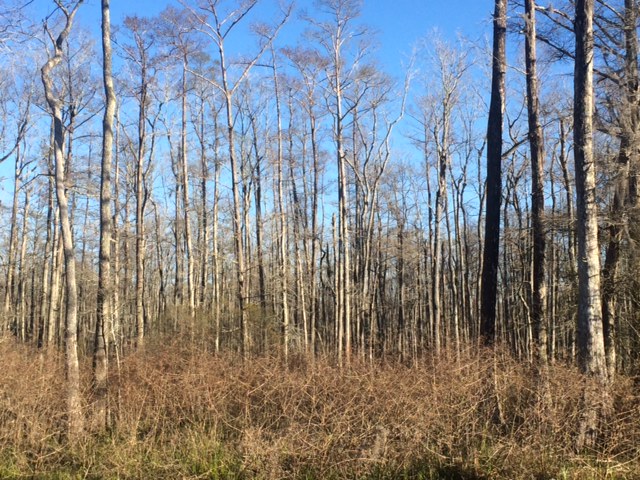
Up at out early along Highway 182 east with the wind at my back. After a few miles of industry and a nice climb over the causeway at Amelia the road turned sweet: fresh blacktop with a wide shoulder. I turned onto Highway 20 and things got even better: a marked bike lane flanked by gorgeous cypress forest.

IMG_6290

Thibodaux is a featureless town except for its fields of new houses. This one has perhaps the biggest roof cap I’ve ever seen, easily twice as tall as the house itself.

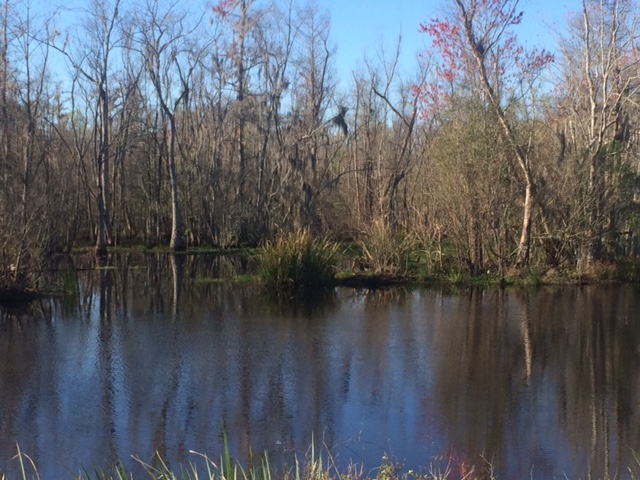
IMG_6286The land around me sank from wetland to marsh to pure swamp. The shoulder shrank to a narrow strip and then disappeared. One bridge over a bayou sported a ‘no bikes’ sign. Too late. I signaled with my right arm and pedaled over. Thankfully, drivers in Louisiana are among the most polite I have encountered on my journey.


IMG_6296People who focus on Wal-Mart are not spending enough time in the truly small towns of our country, where the dollar stores are the main thread of commerce. They often sit right next to each other.


When I reached Highway 18 I knew the Mississippi River was near, but it is invisible behind the levee and the swatch of trees that grow in the flood zone. Thanks to an early start and tailwinds I reached my destination – Whitney Plantation ninety minutes early. I am much better about reaching destinations on time on my bike than in a car; I allow ample time for mishaps.

IMG_6310The Whitney Plantation opened just over a year ago as a historical site and tourist attraction focused on slave life rather than the life in the Big House. Whitney borrows, with great success, from the WPA Writer’s Program narratives of former slaves. The tour is among the best I’ve attended, and since I’m the writing guy on the bike, I had a nice conversation afterward with the Director of Operations.

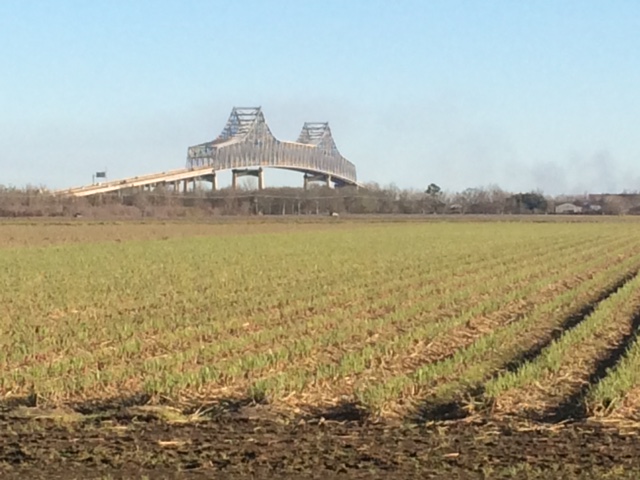
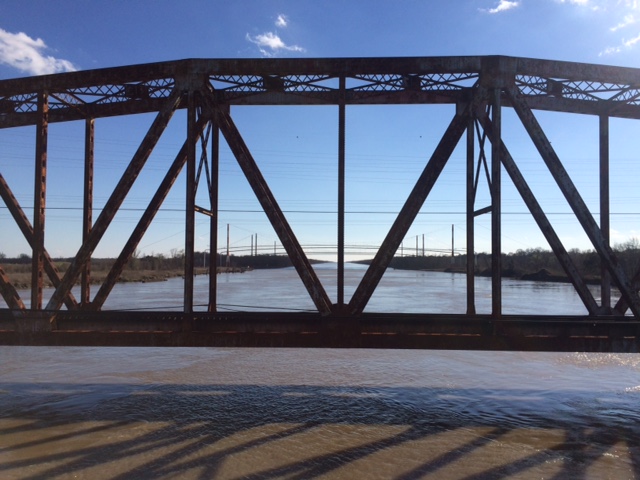
In late afternoon I crossed the mighty Mississippi to Gramercy. The Gramercy-Wallace Bridge is the first choice among cyclists because it has a generous shoulder. However, it is very steep and high and has six expansion joints that are the biggest I’ve ever seen. I had to stop my bike at each one and guide my wheels over the gaps to avoid taking a header. Fortunately, I crossed safely and live to tell stories another day.IMG_6323


Posted in Bicycle Trip Log | Tagged , , , | Leave a comment

Profile Response: Melissa Lopez, Diocesan Migrant and Refugee Service, El Paso, TX

HWWLT Logo on yellow“El Paso is a different place from other parts of the country. The flow of immigrants is our lifeblood. In 2014 there were many families coming through from Central America. INS was going to release three hundred of them. They notified non-profits and aid groups. INS knew the community could find places to put people up overnight, and that was preferred to putting three hundred people on the street.”

Melissa Lopez is Executive Director of Diocesan Migrant and Refugee Service (DMRS), the largest legal service immigration provider in West Texas and New Mexico. DMRS’s staff of seven attorneys and ten paraprofessionals provides services to those applying for immigration and a variety of community education programs.

imgresAlthough a ministry of the Catholic Church in El Paso, DMRS receives funding from a variety of sources including federal grants for refugee settlement, the Texas Access to Justice Foundation, the State Attorney General’s office, United Way, and small local contributors. “We are lucky in the diversity of our funding.”

DMRS is one component of a complex web of interests and organizations dealing with immigration along our Mexican border. One major focus is unaccompanied alien children. DMRS offers ‘Know Your Rights’ presentations and individual screenings to assess potential legal status. If they determine a child may be eligible for immigration relief, they can provide legal representation. However, the tangle of immigration regulation prohibits DMRS from providing direct representation to adults. Instead, they offer legal referrals and refugee resettlement services; including financial, job, and work permit assistance.

imgresI wondered how illegals felt safe coming to a public place for services. “We have attorneys on site who know our client’s rights. We’ve established good working relationships with the law enforcement organizations. It would be a publicity nightmare for them to pick up people here. El Paso is riddled with law enforcement agencies with different responsibilities. We all respect the role that each of us plays in the process. A few weeks ago there were reports that law enforcement officials were sitting outside our building. I called the agency and addressed the issue immediately. ‘If you come down here, it would not go well.’ That is the first time we’ve had an incident in almost thirty years.

“The biggest issue we are seeing is more unaccompanied minors. There is the misconception that everyone came in 2014, but they are still coming. The violence in some parts of Central America has only gotten worse, not better.

images-1“Nationally, we keep coming back to the same thing. There is a strong need for immigration reform. No matter what side of the issue we are on, at a minimum we need a better system. That is becoming more and more apparent as time passes. Obama initiated executive action because there has been no change in immigration since 1996. The system has been flawed for many, many years and not been tackled in a comprehensive way in a very long time.

In the past decade, the United States has reinforced our border. The fence is nearly continuous from California east. How does the reinforced border affect DMRS’ work? “Every once in a while Border Patrol will stress enforcement of a particular area. When they do that, patterns shift. If they make it difficult for Central American people to enter through El Paso, they keep going and try to enter through Arizona. The issue is more complex than people think. If it were just economic, the motivation to get in would not be as great as it is. When they can’t in at one port, people try other areas.”

How will we live tomorrow?

AIbEiAIAAABCCPSLtN6P8dF0Igt2Y2FyZF9waG90byooMTg3ZWM1ZTQ1YTBjMjZkOGQ0MjBjYTE3ZWUyZWFkZjY3MTMwNjZlNDABQTYtpos1xpPGRR3EH30zi77KDi0“If we continue in our current pattern of ignoring immigration issues, we are going to see things get worse. My fear is, everyone you return who has a legitimate fear for their life is being returned to harm’s way. Many of them return and are killed.

“I would like to be able to have a true conversation on both sides of this issue. The reality is scary that we can’t have this conversation.

“We can have a more humane immigration system, one that is less black and white and takes into account an individual’s achievements. An outstanding person should be able to come here and participate on their merits. I worry about what will happen in the U.S. if we cannot be more compassionate toward our immigrants.”

Posted in Responses | Tagged , , , , , , | Leave a comment

Trip Log – Day 241 – Lafayette, LA to Morgan City, LA

to Morgan CityFebruary 24, 2016 – Clouds, 60 degrees

Miles Today: 77

Miles to Date: 12,261

States to Date: 29

I slept in a craftsman-style studio with a tin roof adjacent to a woodworking shop last night. Yesterday’s rain ended but gales of wind continued throughout the night, dropping branches on the roof, blowing the shop door open and slamming it shut. My dreams were the sound track of a Grade B horror movie.

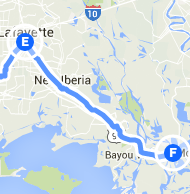
I got turned around several times trying to get out of Lafayette, but eventually found US 90, which had a frontage road just for me! Within a few miles I connected to LA Highway 182. I didn’t mind the cool morning and heavy clouds. The strong wind had my back.

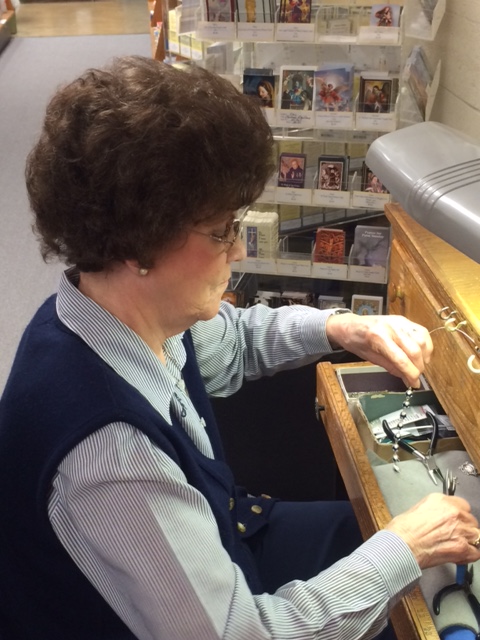
IMG_6254As the day progressed the clouds broke and shadows spread across Louisiana. The wind remained my friend. I made excellent time, which I used for more stops along the way. In New Iberia I visited Rosary House, where devout women assemble rosaries by hand. Top of the line jewelry grade rosaries cost over $350, but this superstore of all things Catholic also sells less expensive lines, including rosary bracelets and rosary rings, for as little as 95 cents.

IMG_6264Since I’ve been doing what Catholic ladies tell me since I was a boy, I headed across the road when they told me to visit Konrico, the oldest rice mill in the United States. Wendy gives a terrific four dollar tour of the three-story cypress and galvanized steel plant that’s been hulling and polishing rice since 1912.

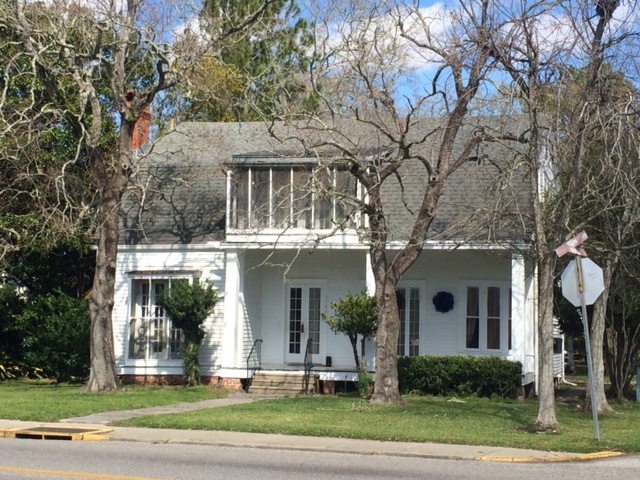
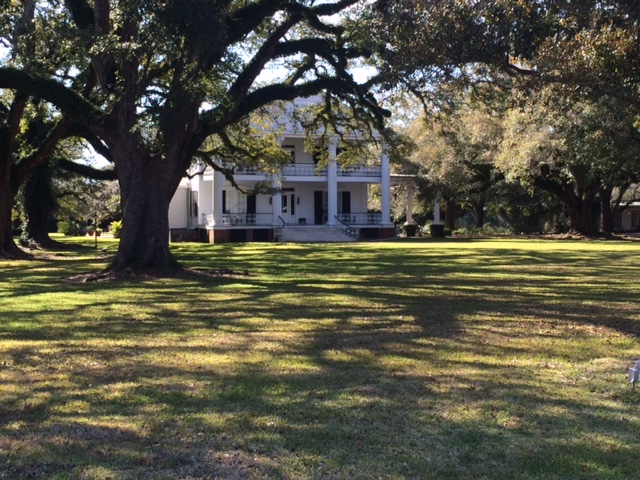
I was enchanted by Jeanerette’s domestic architecture. The further south I went along Bayou Teche, the more grand homes lined the river.

IMG_6267 IMG_6272 IMG_6274

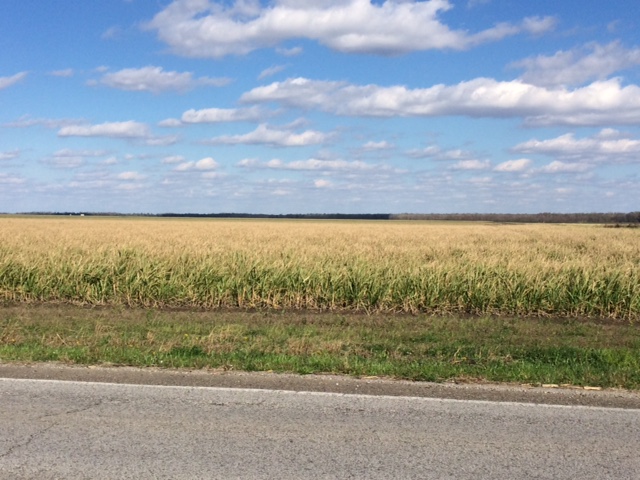
I passed fields of waving sugar cane, not unlike the fields I encountered in North Dakota in June. Just sweeter.

IMG_6273

IMG_6277The last ten miles of my route was mostly industrial. Morgan City is an oil and fishing industry town without strong Cajun roots. I was surprised and pleased to see the German couple I met in Marathon, TX at an intersection, making their way toward New Orleans at about my same speed.

The Red Roof Inn in Morgan City is newly renovated; a great deal for $40 a night. And there’s a decent barbeque place with notable baked beans only half a block away. I appreciate the Cajun food I’ve tasted the last few days, but don’t think its going to become a new favorite cuisine.

Posted in Bicycle Trip Log | Tagged , , , , , , , | Leave a comment

Profile Response: Miguel Salcedo-Gomez, El Paso, TX

HWWLT Logo on yellowMiguel Salcedo-Gomez is an intelligent man with a very long lens on his objectives. Miguel is a medical doctor from Columbia who wants to further HIV research and treatment in his homeland. After medical school, he spent seven years earning a PhD in Japan researching HIV drugs that can bypass the blood/brain barrier. “Many HIV patients who are otherwise well maintained develop early onset dementia because the treatments cannot access the brain.”

Now, Miguel is a post-doc at Texas Tech Medical School. He lives in a small apartment with memorabilia from South America and Asia and studies ‘elite controllers’; people who have HIV but never develop full-blown AIDS. Their CD4 cell counts never decrease. Miguel studies tissue samples that have been collected from an overwhelmingly Caucasian study group from across the United States. “This may imply an ethnic bias to who is an ‘elite controller’ or it may be related to the prevalence of white males who agree to be part of HIV studies.”

IMG_5601Doing an international post-doc, especially in the United States, is a positive career move for Miguel. His J-1 visa allows him to work here up to five years, but he’s hoping his post-doc will be over in three. “I am almost forty. I should not still be a post-doc at age forty-five. I want to do work in my home country.” There is little HIV research in Columbia. “Diagnosis and treatment of HIV in Columbia is good, but research is more focused on public health issues like tuberculosis and malaria. It’s also a taboo in our culture to deal with HIV. I decided to work in HIV because I like the topic and want to be a pioneer.”

Miguel still retains his Columbian health insurance, which costs $70 per month. It allows him to access their system when he is home. “Texas Tech covers my insurance here, which is over $600 per month.” That is just one example of how Miguel sees life in Bucaramanga, Columbia as better than in the United States. “Life there is much more advanced than EIMG_5602l Paso.”

I asked Miguel how Columbia managed to turn around the problems of the Medellin Drug Cartel. “We Columbians were tired of being labeled as drug lords. Columbians wanted to change and show the world a different face. We worked with the US to change the reality of the drug situation. The government stressed education: we’re all bilingual. The media began to show Columbia in a different light. Columbia is much more than illegal drugs. Columbia is beautiful. We have 20% of the bird population in the world.

“Economic change occurred as a result. During Escobar there were two to three flights a day between the US and Columbia. Now there are at least ten cities in the US connecting to at least five in ColumbIMG_5603ia. I am never stopped in an airport with a Columbian passport. I get a stamp and a welcome.

“We learned a lesson. Citizens must be involved in governing the State because we are part of the State.”

Miguel segues comments of his homeland to a local example. Miguel bikes to work, no easy task in El Paso. He attended a City Hall meeting to advocate for a citywide bike plan. “Four people showed up. The other three drove cars to the meeting. The city won’t invest in bicycles if only four show up.”

How will we live tomorrow?

IMG_5608“I envision more competition: for water, for resources, and for energy. I want to be optimistic, but it’s difficult. We have summits every year, but they lead nowhere. How vicious this planet is going to be if we don’t stop doing what we are doing. I hope the next generation will be more aware of how to sustain so many people on such a small planet.”


Posted in Responses | Tagged , , , , , , | Leave a comment

Trip Log – Day 240 – Lafayette, LA

to LafayetteFebruary 23, 2016 – Rain, 60 degrees

Miles Today: 8

Miles to Date: 12,184

States to Date: 29

 IMG_6238-1Lucky me! A huge storm hit on the day I planned a bike repair day in Lafayette. I arrived at Hub City Cycles right after they opened. Mike Broussard of the Cajun French Music Association met me at the shop and treated me to lunch at Don’s, ‘Louisiana’s First Cajun Restaurant’ since 1934. He introduced me to fried alligator and shrimp etouffee over a long conversation about Cajun music and culture.

After lunch, I scuttled back to Hub Cycles and lingered there throughout the afternoon until the skies cleared and I made my way to my evening’s host. My ongoing dance in and around nature continues to sing a benevolent tune.

IMG_6239


Posted in Bicycle Trip Log | Tagged , , , | Leave a comment

Profile Response: Cat Layne and Lake Thompson, El Paso, TX

HWWLT Logo on yellow“It’s like that Jim Carrey movie, ‘Yes Man.’ I try to say ‘yes’ to as many people as I can. That’s how I have experiences and stay open to life.” Cat Layne’s thoughts about saying yes, life in the army, and being flexible reflect her larger view of the world. She’s not about big moves. Rather, Cat seeks individual connection and balance between personal and societal interests.

Cat and Lake went to high school in Columbus, Ohio. Lake’s been in the army four years; they’ve been married for three. Lake attended one year of college; Cat graduated from Ohio State University. He was deployed in Afghanistan and stationed in Fort Knox. Now he’s at Fort Bliss, an E4 enlisted man who just signed up for four more years. They enjoy El Paso because it’s larger than other army towns.

images

For eight years, age 14 through 22, Cat worked in the Pharmacy Department at Kroger’s. She considered being a pharmacist or a doctor, but realized she would be in debt in time and money for years. “I have a friend who will pay off her pharmacy school loans when her child is twenty-two.” In El Paso Cat waited tables. A few months ago she go her first ‘real’ job at ADP payroll services. Cat likes the work, but she still waitresses on weekends. “I like my one-on-one customer connections.”

imgresCat’s redirected her medical ambition in more personal ways. “I used to volunteer in a homeless shelter. More than anything, you need to treat people like they’re normal. People give money to charity and it only puts a distance between them and people in need. Invite a homeless person to dinner. Or at least, open you house through couchsurfing.”

imgres

Cat and Luke host couchsurfing travelers two or three times a week. “My friends have gotten used to me showing up with new people all the time.”

In college, Cat let the traditional ‘freshman fifteen’ get away from her: she gained sixty pounds.” People in college have the first opportunity to make their own decisions, and the right choices are the most expensive ones. I could get hummus and celery at OSU for, like, seven dollars. Or I could get a sandwich with chips and pop for the same amount. If I only have ten dollars, which am I going to pick?”

imgres-1 imgres-2

Eventually Cat started exercising and lost weight. For a number of years she was vegetarian. Now she balances meat with more vegetables. “Read a nutrition label; it will change your life.”

Cat’s experience gaining and losing weight enhanced her perspective on what knowledge and discipline can do. “We need doctors but we don’t need them as much as we think we do.”

How will we live tomorrow?

IMG_5583“Wherever the wind takes me.” – Cat

“To put it bluntly, to f**k shit up. I relish chaos. I have this alpha mindset. I don’t back down. I say ‘let’s do it’. I’m in the moment.” – Lake

“It’s harder to put yourself in a global perspective. I go to global warming and war.” – Cat

“Even globally, we are all more alike than not.” – Lake

“In my mind, I say, why can’t we all just get along?” – Cat

Posted in Responses | Tagged , , , , | Leave a comment

Profile Response: ET Collinsworth, Portal, AZ

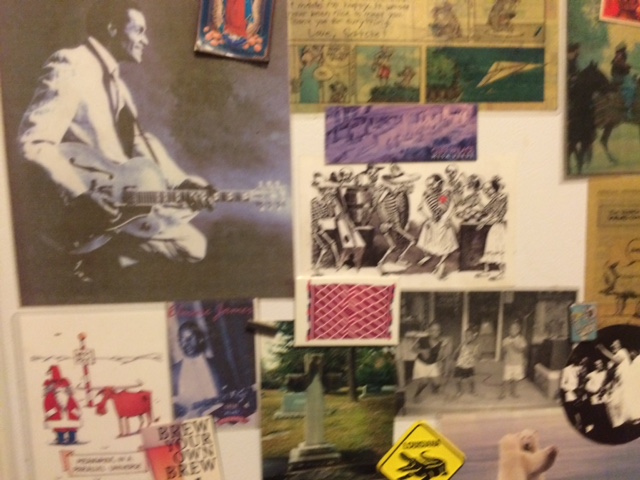
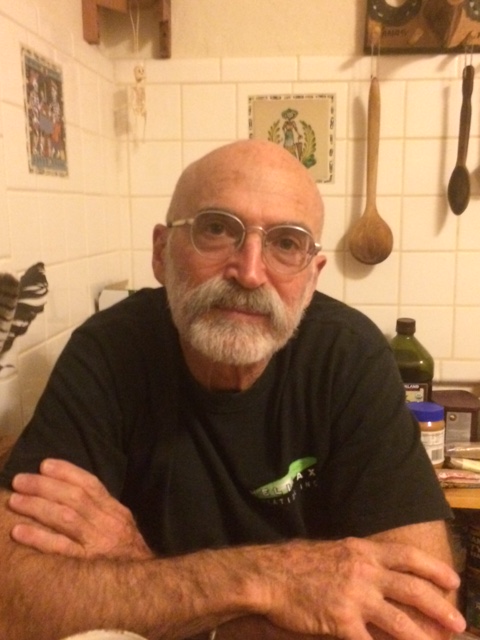
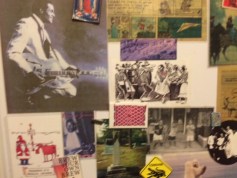
HWWLT Logo on yellow“Check out G.K.Chesterton, the early 20th century essayist. ’You can tell a man by the books he reads and the jokes he laughs at…’ I add the twentieth century variation: ‘…and what he puts on his refrigerator.’” ET Collinsworth, cowboy, firefighter, and voracious reader, has a refrigerator covered in wisdom. His favorite is, “Stories are all the human race has got. You just got to find the one you like and stick with it.” (James Lee Burke). ET is rich in stories.

ET graduated from Antioch College in 1972, “just when it was beginning to slide. I was one of five majors in business rather than Marxist history.” He bought a new yellow pick-up truck, which he still owns, came to Tucson and started punching cattle along the border. He lived on the ranches he worked until fourteen years ago, when he bought a three room partially finished house along a power line gravel road outside of Portal, AZ. Since then, he’s added a room, finished the interior, completed a deck and installed a pellet stove. “I’ve got it just the way I want it.”
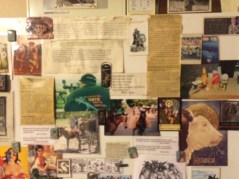
IMG_5552I sat in ET’s kitchen drinking homebrewed hefeweizen while he boiled spaghetti, skilleted red sauce bolstered by a quart bottle of Tabasco, and shared insights of a life lived out of doors and a mind enriched by reading.

“In 1910 Arizona was dry. Phelps Dodge ran a Friday night excursion train from Douglas. Workers from the smelter came to Rodeo, New Mexico, which was wet, for the weekend. There were shootings in front of the bar and fornicating behind it. Then the train returned to Arizona on Sunday. The cathouse in Rodeo is now a church.

“I don’t know who I’m going to vote for. I can’t vote for a clown like Trump but I don’t want Hillary. The fact that we take Trump seriously tells you where we’ve come.

Screen Shot 2016-02-13 at 10.09.38 PM“Phoenix is the future now. Isn’t that scary.

“I had two chances to marry. One spoke English, both wore shoes.”

“Live somewhere you can piss off a porch, kick in your TV, butcher your own beef, and brew your own beer. That’s Edward Abby.”

ET’s father was a Southern gentleman who attended Harvard Business School and married an immigrant he met in New York City. ET was conceived in Cambridge but his parents returned to Knoxville so their son would be born in the south. “I’m half Southern Baptist and half European Jew, which is just great for me. They cancel each other out.”

IMG_5553In 1990 ET augmented his cowboy work by becoming a mule guide for the forest service. Then he became a wildland fire fighter, and more recently a medic. ET was in northern California fighting the fires I rode near this summer. “We all knew those were going to happen, the conditions were ripe.” ET attends fire training every February in Missoula, MT. “This year, at the end of training, everyone said, ‘see you this summer on the West Coast.”

ET lived in Mexico for two years, and feels he can always go back there. “The two countries are connected. We are married to each other. Do you know that throughout the US, the consumption of salsa is greater than ketchup?”


ET has a complicated blend of compassion and anger toward illegal immigrants. “Phoenix is the termination point in this area for illegal immigrants. There are all sorts of safe houses and ways to migrate further north from there.” When ET first worked with illegals, seventeen years ago, the coyote fee to get from Aqua Prieto to Douglas to Phoenix was $200 to $300. Now it is $4000 to $5000.

Screen Shot 2016-02-13 at 10.09.23 PMLast year ET got a call to go to a campground in Coronado National Forest and found a young woman with a broken ankle. “She was perhaps 22 and strikingly beautiful, with sharp Mayan features.” The Border Patrol did not arrive. (According to ET, they have a habit of not being first on the scene when someone is injured, to avoid being responsible for the illegal’s medical treatment costs). ET was cautious, there could be others nearby, but it turned out the woman was alone, abandoned two days before by a coyote and fifteen others when she got hurt. ET took her to the hospital in Douglas. She was from El Salvador, wanting to get to New Jersey. The woman remained stoic throughout the ordeal until ET asked how much she’d paid the coyote. ‘Four thousand dollars in El Salvador,’ she replied, ‘and four thousand more at the border.’ “When she told me that, she finally broke down and cried.” So did ET. As he told the story, tears streaked his weathered skin.


Nonetheless, ET made sure I locked my bike to his porch rail, despite being three miles to the nearest house. “All kinds of people pass through here at night, especially when the moon is full.” He explained how when he first moved here he gave passing illegals food and drink and directions that skirted Border Patrol. “But they’ve broken in five times. Now, I greet them with a shotgun and give them directions that I know will send them toward the Border Patrol. But I still give them water. You cannot turn a human being out in the desert without water.”

He feels the Border Patrol’s hands are often tied. “When Border Patrol apprehend groups traveling through the desert, the officers often ‘know’ who the coyote is, but they can’t prosecute without two material witnesses, and none of the illegals will identify the coyote, in fear of reprisals to their families back home.”
IMG_5554ET thinks it’s unrealistic to think that United States policies can influence life in Mexico such that people no longer want to leave. At the same time, he thinks our current approach to illegal immigration only makes the situation worse. “They don’t want to be here long term. But today, it is so difficult to cross the border, illegal immigrants who land here must remain.”

It’s also unrealistic to think that we can function without the work that illegal immigrants do throughout our country. ET favors a worker’s permit program. “We had Bracero back in World War II. It wasn’t perfect but it was the right idea. Let them come, work, and go home. Now, our immigration policy requires them to stay. They hole up in Stockton or Fresno, lay over, and use our Emergency Rooms.”

“For too many people, life sucks. I know enough of Mexico that if I was a Mexican I’d leave.”
IMG_5560ET’s father’s mother died when he was young. He lived with various aunts and became a conventional success, eventually leading a Fortune 500 Company. Now ET’s father is 94, in assisted living in Sarasota, FL. At this point ET eyes tear once more. He’s taken a very different path than his father and only ET can determine whether it constitutes an improvement over the accomplishments of his old man.

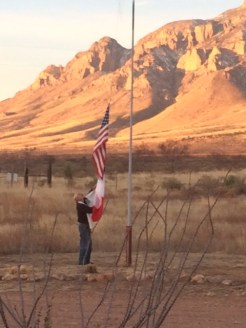
The following morning, ET raised three flags: the United States flag on top of the third flag of the Confederacy on top of the flag of an independent Texas. “My family fought for all of those flags.” He explained as he waved me off toward New Mexico, with a tear in his eye.

How will we live tomorrow?

IMG_5557“Do what you can as an individual. Donate to charities, put a face on it. Give a scholarship to a kid. Tell stories. Collect stories. This idea of a global village, started by Marshall McLuhan, is catching.”


Posted in Responses | Tagged , , , , , , , , , , | Leave a comment