Profile Response: Alli Sehon and Garrett Spear, College Station, TX

HWWLT Logo on yellow‘The best way out is always through.’ Alli Sehon and Garrett Spear may be Texas transplants from the heart of Appalachian Kentucky, but their approach to life reminds me of Yankee poet Robert Frost. They grapple with the hard stuff of life in order to achieve a deeper, richer understanding of how to be human.

“In 2010 and 2011, I thought something drastic was going to happen. I bought supplies. I stored stuff. I was a prepper. Nothing happened.” Garrett realized that barricading himself was not a viable way to address the future, no matter how bleak its prognosis. “I offloaded all that stuff and decided to go to graduate school.”

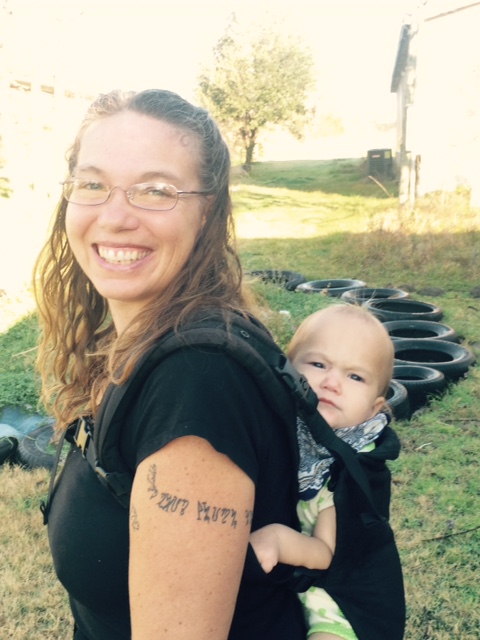
imgresHe met Alli at a local Marxist group. “We call it Marxist Club.” Although Marxism barely registers on the American political spectrum, they consider it a valuable perspective from which to observe and critique our society. “Take private property. Private property is an excellent conundrum, which we often refer to as the Tragedy of the Commons. British nobility began to enclose land and claim it for themselves. As a result, the Commons, left open, got overused.” Our devotion to private property is in response to the Tragedy of the Commons. But where are its limits?

Alli and Garrett don’t believe in abolition of all private property. “Take the toothbrush. There is no logic in having a community toothbrush. Each person should have their own. That may also apply to a home.” There are advantages to individuals and families owning their own home, but allowing the wealthy few to claim unlimited amounts of property is morally wrong and bad for society.

Garrett studies project development at Texas A&M School of Architecture; he wants to understand how our real estate system works in order to change it. “Planners regulate stuff. I want to do that. I am looking for my place in the paradigm shift.” Eventually, the couple would like to return to Kentucky. “My endgame is Berea, home of Berea College; a tightknit community, full of storytellers, the center of Appalachian culture.”

Screen Shot 2016-03-30 at 3.31.50 PM Screen Shot 2016-03-30 at 3.32.41 PM Screen Shot 2016-03-30 at 3.33.07 PM Screen Shot 2016-03-30 at 3.33.24 PM

Allie is a transcriptionist who adds close captioning to movies and turns audio files to Word documents, a job she found through Craigslist that’s entirely digital and totally flexible. “I’ve never met anyone that I work with.” It’s a perfect position for the short time the couple will be in College Station, after which Alli, who has an undergraduate degree in anthropology, plans to pursue a PhD in psychology.

Alli and Garrett are not planning to have children. “What opportunity can exist for them?” Yet the couple’s work and study toward a better future undermine Alli’s bleak comment. “Ultimately, I’m hopeful. That’s why we make our own medicines and learn computer programming.”

imgres-1The couple shares a zest for exploring new things, sharing them with others, and adapting the way they live to whatever they find useful. Garrett was a vegetarian, and then vegan, for 10 years. “I ate a chicken Gyro and felt surprisingly good.” Now he incorporates some meat into his diet, and also eats Soylent, which he considers a nutritious alternative to a conventional meal. Alli is unconvinced Soylent is a viable food replacement, but she tries it from time to time.

There is nothing doctrinaire or strident about Alli and Garrett. They wear their Marxist ideology lightly, with humor. “I want to see a Star Trek episode that shows what place can be like in a post-capitalistic system.”

Screen Shot 2016-03-30 at 3.32.16 PMGarrett has published 20 books through Amazon on a range of artistic topics and produces a blog that explores sacred geometry. His interests range from Voicespeak, the art and poetry of transcendent unity, to comics as ways to explore the Internet. “I like to share and find others who want to share.”

He has multiple tattoos. “Being tattooed is a permanent change to my body that reminds me of the impermanence of life; it takes a couple of tattoos to realize this.”

Their experimental approach to life acknowledges that some things will work, others won’t. The value is always in trying and learning from both success and failure. As Alli says, “If we can get to a place where there are no barriers to helping people, then we will find a way to get everyone what we need.”

How will we live tomorrow?

IMG_6028“Hopefully, better than today. The humanist school of psychology says the tendency of mankind is toward growth and positive thinking. The people I have in my life are very good people and understand it’s time to do better with each other and our planet.” – Alli

“How will we grow? Spiritually? Mentally? Physical growth has limits. I envision us on a steady state – Marxist of course – as opposed to an expansionist perspective. I take studying development seriously because our buildings are the longest assets we create. I want to do small-scale, permaculture development.

“There’s a pessimistic piece that says we won’t be alive. Are we in the end times of civilization? I read Cradle to Cradle. We need to redesign the system to have no waste, but can we create a sustainable cycle? Our economic system is predicated on constant growth. Can we change this? In 1990 20% of our economy was based on financial transactions. Now it is 60%. What is that exponential growth? It’s a cancer. I don’t believe that life will end or the planet will end. Our future children will come up against the hard pitch of being human.” – Garrett



Posted in Responses | Tagged , , , , , , , , , , | Leave a comment
Profile Response: Victoria Everett, Rockdale, TX

HWWLT Logo on yellowAlong my journey I’ve met many people who’ve made non-economic choices. All are glad in their decision. But none have made such bold personal choices as Victoria Everett. Unlike young people who move to a preferred location or pursue an arcane passion without direct responsibility to others, or older people who spread their wings after conventional family and careers, Victoria is a middle-aged woman with an infant who left everything behind and struck out on a new life.

In November of 2006 Victoria was a 34-year-old Idaho native and mother of three middle school children. She weighed 250 pounds. “I could barely get out of bed. Doctors just gave me more pills. I prayed to the universe and it gave me a message through TV. I woke up one night during an infomercial for a food book. I bought it. That’s where I was.”

IMG_6005In one year Victoria lost 120 pounds through diet and exercise. She parented her three children to independence. “Everything I had was in Boise; my cleaning business and my family. But I was done with winter. It didn’t bother me when I was fat, but it did when I was thin. I decided to move south. Two years ago, I picked Austin. But when I got there I couldn’t afford it, so I moved to Rockdale. I love it here.”

IMG_6006Since leaving Idaho, Victoria has put her life in the hands of the universe and the universe has provided well. She arrived in Rockland pregnant, with a teenage daughter, and no job. Within months she found community and sustenance. “Seven people participated in the birth of my daughter. After she was born, I was very weak. A man from France I had met stayed with us for two months while I recuperated.”


Victoria is a micro entrepreneur with a baby in tow. She works in a greenhouse where she recently earned a partner share. She is also a housekeeping companion for an elderly man in Round Rock. She rents out her spare room through AirBNB. She is a fruitarian who grows produce in her backyard. She makes kale chips to sell at the local farmers market. Victoria is also a devotee of inspirational speaker and author Esther Hicks. “All you need to do is manifest money and money is there. I do what I like, I grow plants and I care for my baby. I am confident that money will come.

IMG_6009“I follow my heart and the doors open. I’m leading a life without resistance. I allow myself to get angry now. Yesterday, I wasn’t taking such good care of myself. I was talking to my mom on the phone and she was complaining about minimum wage, but not doing anything about it. I realized the conversation wasn’t healthy. I hit the button and it was nice and quiet.

IMG_6007“All beliefs are true to the believer. However we can change our beliefs and have new truths. But some truths are fixed. I don’t worry about Monsanto or Dow because they’re going against Mother Nature. I believe the laws of nature are infallible and cannot be changed. That’s why Monsanto can’t win.”

Victoria has a puzzle table set up in her living room. “I like puzzles because the answer is right in front of me. I just have to find it.”

How will we live tomorrow?

FullSizeRender-1“I can only say about me. The 9-to-5-work thing is not working for people. I follow my heart. I live my passions. I am going to trust that I will have everything I need. I am going to live my life in love and compassion, which is so much easier when you are happy.

“I am 44. I want to live a traveling life with the baby. That’s the way I’m going to raise her.”


Posted in Responses | Tagged , , | 2 Comments

Profile Response: Gail Vittori, Center for Maximum Potential Building Systems, Austin, Texas


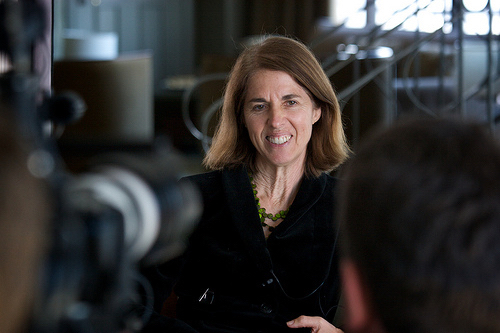
HWWLT Logo on yellow“I came to an open house here two weeks after I moved to Austin. I was so impressed, I took Pliny’s course in architecture at UT.” Gail Vittori was a Massachusetts transplant and fresh undergraduate with a degree in economics in 1977. She landed got a City of Austin job in a federally funded energy weatherization program. “That opened me to the idea of access to resources for all.” In 1979, she came to work at Center for Maximum Potential Building Systems (CMPBS), and has been here ever since.

IMG_5986“I am a non-architect at the table with all architects. I ask questions that no one asks. I want to know about the building, the environment, and the people. Things can go wrong because people take too much for granted. They focus on aesthetics. They talk about the entry for hours, but not about the termiticides in the specs.”

IMG_5952The Austin Green Building Program, which CMPBS developed in 1989, was the first building energy model to include water, waste, and site issues in evaluating the environmental impact of construction. At the 1992 Earth Summit in Rio, it was the only US-based program recognized and eventually became the template for the nationwide LEED system for promoting energy conscious development.

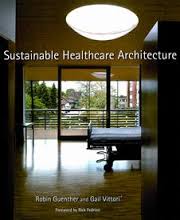
imgres“Decades ahead, in the 2000’s, someone asked me to write a paper on healthcare and sustainability to set the healthcare environmental agenda at Kaiser Permanente. I was not a healthcare expert, but healthcare proved a good direction for CMPBS as a way of thinking.” This led Gail to be part of creating the Green Guide for Healthcare. “Let’s create the tool without, ‘you must do this, you shall not do that.’” She also co-authored Sustainable Healthcare Architecture. “The issues applicable to healthcare are applicable beyond healthcare facilities. They raise issues of toxins and exposure. As a result, people are much more literate about environmental health within the built environment.”

How will we live tomorrow?

gvittori_E462x“It’s a profound question. We have to undo much of what we’ve done. We have to unbundle our buildings that do not serve us well. They are not grounded with primary definitions of shelter. If a building denies us health, it is not addressing primary function.

“What are facilities addressing? Another green hospital is not going to address our upstream problem. It can’t promote wellness. It’s not even appropriate for chronic diseases. If a beautiful building is not accessible by foot or bike, it is robbing us of an essential need: movement and being human.

“In my office I never have to turn on a light during the day. It’s not just about the electricity. It’s about how the eye reacts and the mind responds to artificial light sources. The cisterns at our entry have an aesthetic contribution, but they are all about performance. If I like the way something looks but it doesn’t deliver on performance, it loses its validity.

“In 2014, Austin went for six months with no rain. We had 90 days with temperatures over 100°. We did not run out of water, but we came close. Now, Austin uses 140 gallons of water per person per day and we are adding 100 to 150 people every day. Other cities consume under 100 gallons of water per person per day. We are moving in the wrong direction.”


Posted in Responses | Tagged , , , , , , | Leave a comment

Profile Response: Pliny Fisk, Center for Maximum Potential Building Systems, Austin, Texas

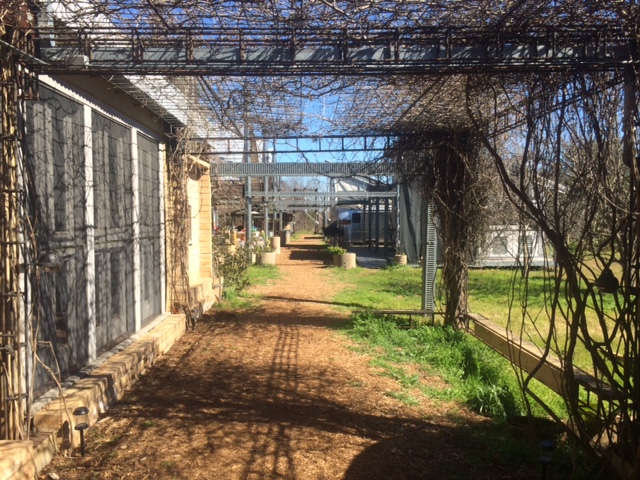
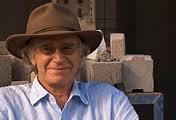
HWWLT Logo on yellowPliny Fisk is an architect and visionary who began the Center for Maximum Potential Building Systems (CMPBS) on a rise northeast of Austin forty years ago. The term ‘maximum potential’ refers to a hypothetically perfect state beyond our present, where our built environment sustains us in an ecologically balanced way. CMPBS is a think tank that’s influenced sustainable planning, policy, and design throughout our country. The Center also addresses fundamental issues such as testing materials for construction and evaluating their impact on our environment. It also develops physical prototypes, like the solar decathlon houses which were exhibited on Washington DC’s mall. “Look around. It’s a candy store of craziness. There is no other organization like it in the United States.”

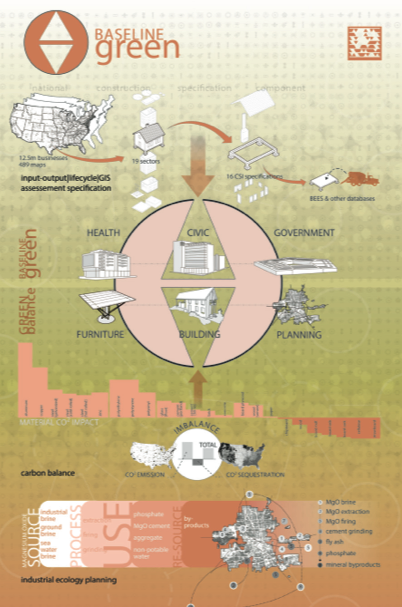
images-2Pliny spent considerable time explaining a long drawing, unscrolled beneath a pergola, that illustrates CMPBS’s primary focus. The three P’s: Prototypes, Protocols, and Policies, describe the potential for environmental equilibrium and what we have to do as a society to achieve it. He referred to a Potenti-o-meter, a way of measuring the connectivity of these three forces, to evaluate a variety of implementation and assessment strategies. “I am totally overeducated. This is an entire graduate program.” It took some time for me to absorb the scope that the drawing represents. Eventually, I came to understand what initially looks complex is both integrated and elegant.

3P CMPBS 3 Eco Balance S8 Baseline Green 11 Meta Max

Pliny is a few years older than me. He studied architecture at the University of Pennsylvania in the golden days of Renzo Piano, Louis Kahn, Robert Venturi, and Romaldo Guirgola. “I thought it was heaven. I thought the world would continue to be like this.” He was also influenced by operations studies at the Wharton School of Business. Although Pliny is an academician and theorist of the highest degree, his explorations are always rooted in the practicality of how things can be built, disseminated, and accepted.

The City of Austin adopted a green building program, based on work done by CMPBS, in 1989. Austin’s model has influenced over 15,000 buildings within the city, and has served as the model for the green building program for the State of Texas and national LEED standards.

IMG_5953These days, Pliny is exploring the concept of eco-balance; the boundary within one can define a sustainable system. “If you don’t have a boundary, you can’t measure the impact of what you’re doing.” The most sustainable places are those with the smallest boundaries within which energy input and output, agriculture, shelter, and commerce are in equilibrium.

This concept resonated with me; I thought of places I’ve visited along my journey. For example the city of Boulder, Colorado has drawn a tight boundary around areas of development. This appears to be sustainable strategy. However, there are many more jobs within the city than housing opportunities. As a result over 60,000 people a day drive into Boulder for work, creating an energy imbalance. Similarly, the 4.5 million people who live in metropolitan Phoenix have to import water and energy from beyond regional, even state lines. Phoenix’s balance boundary, if it exists at all, is immense.

How will we live tomorrow?

images“We need organizations like this that advocate with the public from a perspective of both thinking and doing.

Trim Tab, the magazine of the International Living Future Institute, wrote an article about the theory that the world will become a brain. We will develop universal empathy at the time our planet reaches a population of seventeen billion. All projections show that we will exhaust our planet’s resources when human population reaches nine billion. Biophilia looks at the primitive brain. It has demonstrated that our neocortex is evolving as our population grows. Our brains continue to be expanded by cell phones and mass communication. Sustainable design is about quickening the cycles of the brain. Can we speed the development of the neocortex through design? Can we achieve the universal empathy projected for a population of seventeen billion by the time our population reaches nine billion? If so, we may find a way to all share this planet before we destroy our ability to survive on it.”


Posted in Responses | Tagged , , , , | 2 Comments

Profile Response: Will van Overbeek, Austin, TX

HWWLT Logo on yellowWill van Overbeek rushed me and my bicycle into his studio, stood me against a backdrop, and started clicking away. I got the impression that he evaluates everyone he meets through his lens; digital capture was as rudimentary to our introduction as eye contact or a handshake.

Will is one of the few I’ve met who did not wait even a few moments before addressing my question. After clicking Surly and me, he pointed me to his dual screen monitor and simultaneously manipulated my image while he offered a continuous visual and verbal stream.

Robin Hanson (Research Associate at the Future of Humanity Institute of Oxford University) believes there is a great filter that winnows out civilizations from coming into existence. The easier it is for us to evolve to this point, the bleaker the chance for us to continue evolving.

Screen Shot 2016-03-26 at 6.06.17 PM Screen Shot 2016-03-26 at 6.05.03 PM Screen Shot 2016-03-26 at 6.05.21 PM

“Consider the Goldilocks Principle. There are 100 billion neurons in our brains, 100 billion stars in 100 billion galaxies, and yet so few places ‘just right’ for life as we know it.

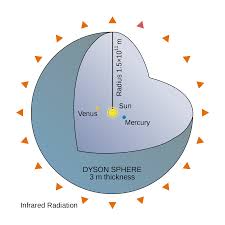
imgres“Look at the Dyson Sphere. You know what that is, don’t you?” He knows from my tepid response I haven’t a clue what he’s talking about. “It’s the hypothetical megastructure that encompasses a star and all of its energy. Our Dyson sphere has three main stages. First, people will harness all the energy that falls on the earth. Second, people will harness all of the energy emitted from the sun. Third we will harness the total energy output of the entire galaxy.”

IMG_5976Will zoomed into his photos of me, tweaked my tonality and enlivened the contrast. He made me look different, possibly better. “The eye has three columns: red, green, and blue. Birds have a fourth, ultraviolet.” As he brightened my face, Will described the evolution from film photography to digital imaging, to increased pixel density. Once he was satisfied that my image could absorb no more improvement, he downloaded me onto a stick. Then he offered me a century of van Overbeek history, scrolling through family photos from before he was born, through his youth, marriage, and children, to the present. Will is the family archivist, the Dyson Sphere of the van Overbeek family, capturing their energy across generations.

How will we live tomorrow?

IMG_5977“The question of how we will live tomorrow is embedded in the Fermi Paradox. Where is everybody? All of these suns, all these planets, the mathematical probability that there is life out there is very high, but we can’t find any.”

Posted in Responses | Tagged , , , , , | Leave a comment

Profile Response: Patrice Peach, Austin, TX

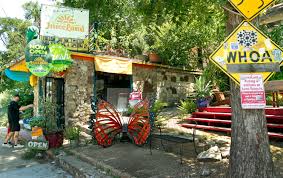
HWWLT Logo on yellowWhen I arrived at JuiceLand on Barton Springs Road, Patrice Peach had already arrived ordered me ‘The Originator’, JuiceLand’s singular concoction of fresh apple juice, banana, blueberry, cherry, peanut butter, brown rice protein, flax oil, and spirulina. The middle-aged woman, her friend Carlos, and I sat in the mid-morning sun enjoying our nutritious drinks and discussing tomorrow.

“I went to UT, but my real education is from everywhere else.” Patrice moved to Austin in 1982, via Durango Colorado and Houston, got involved in the permaculture movement, and has lived in Hill Country ever since. “We have a place in Blanco where Bill Morrison, founder of permaculture, started his work.”

imgres-1 imgres images

Twenty-four-year-old Carlos was born and raised in Austin, grew up with a single mom, currently lives with his dad, but spends a good deal of this time with Patrice. They refer to each other as mentor, which reminded me of the Crosby Stills Nash song, ‘Teach your Children’ in which wisdom transcends age. The first refrain: ‘teach your children well; is countered by the second: ‘teach your parents well.’ Although Patrice and Carlos count different numbers of years on this planet, they acknowledge equal capacity to enrich one another.

Patrice is an acupuncturist and biochemist that works with long-term patients, often up to 20 years. Recently she’s been busy with a 26-year patient who had cancer that went into remission, and has recurred. She does body and mind healing work with him to augment traditional medical treatment.

imagesPatrice learned her healing skills from other acupuncturists; now she works with apprentices. She envisions a time when acupuncture will be codified with postgraduate education and credentialing. She is hopeful that the new Dell Medical School in Austin will someday offer combined studies with the Academy of Oriental Medicine.

One of Patrice’s interns is an MD delving into eastern medicine. She also offers a meditation practice for physicians. “We have to be inside a system in order to change it. We have to get deep enough to know it, but not so deep as to be completely enmeshed. Without meditation I would not know where I am, when I need to get out, and when I can affect change. There is a broader perspective that covers it all.

“Austin is moving in better directions than any city I know, and it’s grass-roots. We need to focus on bioregional solutions. Keep everything within your region: food, shelter, governance.”

How will we live tomorrow?

IMG_5971“In villages, with young children and elders all with us. I have only ever lived in multigenerational households. I’ve always lived in community. Right now I live with four people from two generations.”


Posted in Responses | Tagged , , , , | Leave a comment

Profile Response: Patrick Fries, Austin, TX

HWWLT Logo on yellowFor some people, contemplating how we will live tomorrow invokes a global, even cosmic response, whether Nirvana or Armageddon. Others focus closer to home: accommodating aging parents, appreciating spouses, or shepherding children. Still others look inward for the strength, faith, and fortitude to navigate what might come. Among the individuals I’ve met, Patrick Fries most fully integrates these personal, familial, and worldly perspectives.

imgresPatrick is a documentary filmmaker. Arrowhead Films, named for an artifact he found hiking near Barton Springs, produces environmental documentaries, most recently in Bangladesh and India. ”In America, people have lost their compass on what constitutes a bad day. It used to be considered good to get out and see the world, but that did not mean to take a cruise.”

Patrick is the youngest of six children. His older sister has cerebral palsy. ”We grew up when there were no accommodations for people with disabilities.” His daughter Claire also suffers CP. “My wife and I adopted a 10-day-old infant who appeared healthy. At nine months, we realized she was not progressing.”

Patrick’s sister Karen has led a protected life, marked by institutions and dependence, while Claire will graduate from high school. She has a passion for medicine, works as a pharmacy tech, and anticipates an independent life. ”There are things Claire can’t do: drive, put on shoes, but there is so much she can do.

Sweet18“I’ve always experienced this parallel universe. Karen looks at Claire and sees the life she never had. Claire does not want to live like Aunt Karen, in old folks homes, with no boyfriend or social life. Karen is happy for the opportunities that Claire has; Claire questions why Karen didn’t get what she’s received.”

Patrick foresees things only getting better for Claire. Rideshare services are going to make it easier for her to get around; social acceptance of people with disabilities is growing larger every day. There is even a chance that cerebral palsy research in stem cell augmentation could lead to treatment or a cure.

But he understands that progress for people like Claire requires advocacy and vigilance. Patrick and his wife filed a class action lawsuit against the Eanes Independent School District. “The leaders promised to make Claire’s school compliant with ADA and passed $100 million to do so, but instead built a new football field. My daughter still couldn’t use the playground or have an accessible bathroom. Our lawsuit took a lot of courage; my wife and I never once worried about what people would think of us. It was just the right thing to do. I wish my parents had done something years ago to help my sister, but it wasn’t really possible.”

760x760-when_i_have_your_wounded-380x380 760x760-himalayan_meltdown-380x380 760x760-access_to_energy-380x380

In his films, Patrick’s advocacy achieves global scale. “We were fortunate twenty years ago to make our corporate ad clients pay for our documentaries. We restored a Vietnam era helicopter and flew across United States, made a documentary talking with Vietnam War participants, and sold it to Discovery. Eventually this led to a series of ‘problem’ films for Discovery: glacier melting, people without energy, overfishing.”

How will we live tomorrow?

Screen Shot 2016-03-26 at 5.32.56 PM“How I live tomorrow is with gratitude. I am grateful for having had a sister with CP who taught me the lessons I would need to fight for my daughter; grateful to live in a country with laws that protect minority populations; grateful to have a life partner who looks for the righteous path and not the easiest. I am grateful for the opportunity to continue to work. My travels allow me to understand my good fortune, despite the challenges with our daughter. Never in my wildest dreams would I have imagined the life I have today. I will live with a grateful tomorrow.”


Posted in Responses | Tagged , , , , , | Leave a comment

Profile Response: Tanya Hall, Greenleaf Book Group, Austin, TX

HWWLT Logo on yellowTanya Hall worked in television in Los Angeles and flipped a few houses up the property ladder, but she wanted to find a tighter community for her two daughters to grow up. After visiting friends in the Hill Country, Tanya replied to a posting from Greenleaf Book Group. She came to Austin in 2004. “The real estate prices were all missing a zero.” She signed on as Greenleaf employee #4; Austin’s been her adopted hometown ever since.

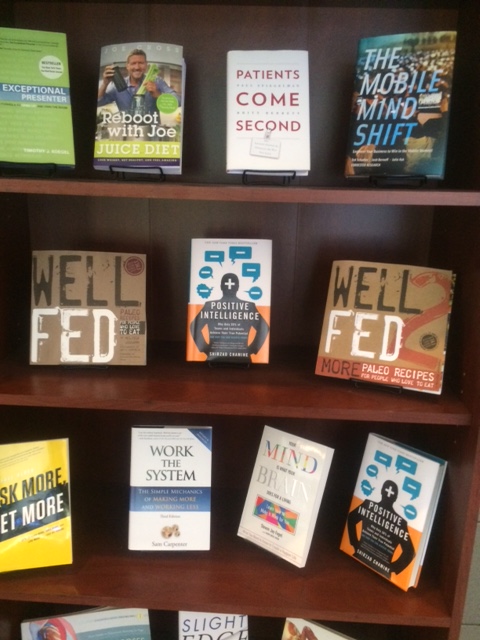
Greenleaf started as a distribution company for self-published authors. Eventually, they built a sales force and enhanced their editorial and publishing capacity. Tanya hopscotched around the company, became COO, and in 2014 took the reins as CEO when Clint Greenleaf, founder, moved on to other endeavors. Today, Greenleaf is a midsize firm that publishes about 140 titles a year, mostly nonfiction with an emphasis on self-help .“The last two years have been the best ever. We’ve added lots of health titles and Paleo cookbooks.

imgresGreenleaf Book Group provides an alternative model to traditional publishing houses: author-funded, menu-based services. Authors own their book. They pay Greenleaf service fees and retain a higher percentage of their sales. Agents are not usually part of the mix. Greenleaf offers straightforward publishing and distribution services as well as editing and public relations. Recently, they began providing content marketing: speaking and consultation gigs, websites and social media.

IMG_5954Each author creates a package of services for their needs and content. The author of a typical 200-page manuscript will pay in the range of $30,000 to create her book. Greenleaf has the capacity to place it in bookstores and on Amazon. “No publisher has a good relationship with Amazon, but we do well. We know how to optimize their algorithms and our authors received 35% of the cover price.” That’s significantly more than an author would receive through a traditional publishing house.


IMG_5955

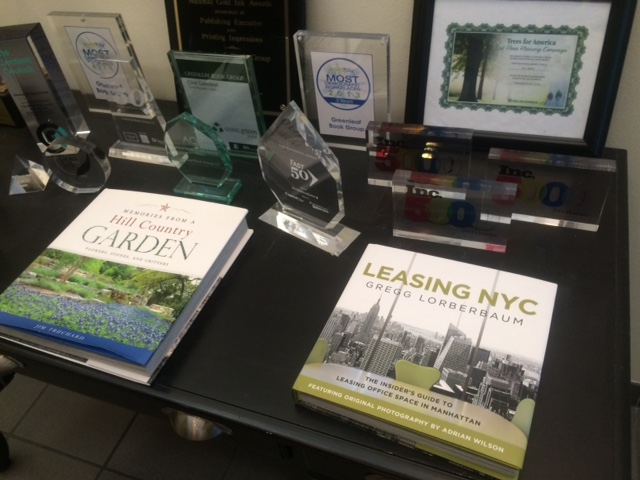
Greenleaf Book Group was included in the WorldBlu List of Most Democratic Work Places in 2011, 2012, and 2013. “Tracy Fenton, founder of Worldblu is based in Austin. She liked the Greenleaf model and Clint Greenleaf thought it important to pursue designation. Our business model speaks to a more democratic way of publishing. We align our interests with our authors.”

Since Tanya became CEO in 2014, Greenleaf has not pursued Worldblu designation, though the principles that won the company distinction are still in place. “Our company is very flat. We rally people around what we do. One hallmark of our operations is our staff brainstorming sessions. We create a ‘Stupidest versus Hardest’ list to identify and weed out poor processes.” Every one of the forty employees, from receptionist to corner office, participates.

images-7 images-6 images-3 images-5 images-8

From Tanya’s perspective, the democratic activities incorporated in Greenleaf’s operations are not as important to the company’s workplace success as the culture of respect that permeates the company. “The most positive attribute of working at Greenleaf Book Group is the prevailing attitude: ‘assume best intent.’” This basic tenant values and respects each employee’s point of view and contribution. “When you unravel issues from the perspective of each person’s best intent, the resolution acknowledges everyone.”

How will we live tomorrow?

Tanya_highres“Wiser than today. From a personal growth perspective that’s all we can hope for. All of our books are trying to help people lead better lives.”


Posted in Responses | Tagged , , , | Leave a comment

Profile Response: Cynthia Beeman and Friends, Austin, TX

HWWLT Logo on yellowCynthia Beeman values the past. Her home is filled with antiques, each of which has a familial story. She studied history at Texas Tech and spent her career at the Texas Historical Commission. After retirement, Cynthia co-founded the Ruth Winegarten Memorial Foundation for Texas Women’s History.

Cynthia invited me to stay at her Hyde Park home in north Austin, then invited a group of friends to discuss, ‘How will we live tomorrow?’ “We’re a bunch of Episcopalians and Historians.” Here are excerpts of our rambling discussion about the challenges and promise tomorrow might bring.

How will we live tomorrow?

Nancy (historian): I am interested in how we are going to evolve as a society. Gun control is much in the news. What is the implication of our gun culture?

Ginny (history professor UT): When I grew  up there was a lot of shooting: snakes, hunting, marksmanship, but there was a different ethic of what guns were used for. There were still tragedies, an angry husband could shoot his wife or there could be an accident, but there wasn’t the animosity we now associate with guns. They weren’t primarily lethal weapons.

imgresNancy: Gun use didn’t grow out of fear. They were tools.

Ginny: The Sandy Hook shooting was the moment when you knew that nothing would change. That was the most pointless massacre of the most innocent victims and nothing…

Al (historian): My dad took us to join the NRA when I was twelve; I had been shooting since age seven. It was about learning how to shoot and safety; it wasn’t about politics.

Martin: All boys shoot things. They turn everything into a gun. My sister calls it the ‘Quoo’ genes after the sound they make when they pretend shoot.

Ginny: My sons had these popguns and they played with their fiends in the yard. I heard them all afternoon going, ‘quoo,’ ‘quoo.’ At least I knew where they were.

Ann (arts consultant): It’s not simply that we can’t have a discussion about guns; we can’t even research the problem. It’s a public health issue, but there is no research on the implication of guns or alternatives to our current practices. The NRA will not allow it; no politician will fund it. I heard that Michael Bloomberg was thinking about buying Smith and Wesson so that he could influence the gun industry. It’s an interesting idea, to get inside the gun world in order to bring some rationality to it.

—+—

Ginny: I really like my stuff, but I’m in the middle of clearing out my mothers stuff and I’m realizing I don’t like her stuff; I don’t like having to deal with it.

imgres-1Martin: We are going to have less stuff. Our kids are going to have less stuff.

Linda (retired historian): We are going to live in smaller spaces, with less stuff.

Ann: Did you hear the IKEA executive talk about us hitting ‘peak stuff’? IKEA is going to move toward being a broker for people to trade and reuse.

Ginny: I was living in New Orleans during Katrina. I know dozens of families who evacuated. They loaded one car with their stuff and left. Everything else was lost. At first they were happy for their health, they said, ‘it’s only stuff’. But the longer time passed the more they missed it. It was only stuff, but it was their stuff.

Martin: We are wired to collect.

—+—

Martin: Our work world has changed so much. When we got out of school we went to work in the mailroom and worked our way up to the corner office. It’s not like that anymore.

imgres-2Ginny: There’s no mailroom, for starters.

Cynthia: When I started at the Texas Historical Commission, there was an understanding you worked your way up. That culture changed. New staff wanted promotions faster, and their tenures got shorter. By the time I retired, with another long-time staffer, he said, ‘We didn’t leave the THC. The THC left us.’

Ginny: I like Millennials, which is good since I spend so much time with them. They don’t have a sense of entitlement. I don’t even know what to tell them. The careers we had won’t even exist for them. The future isn’t giving them much to work with, yet they’ve become passionate and capable. They are inpatient, but hardworking.

Ginny: I have learned that I cannot stand in front of them and talk and expect they will take notes. That is over. I have to put things in a digital format. When I make them post things, they do better.

—+—

Ann: I feel more positive about tomorrow than I do a year from tomorrow. I am an optimist by nature, but I am not optimistic about climate change.

imagesNancy: We are at an end of the world situation. We had the Cold War, but that was a deterministic end of the world scenario that we managed to back away from. This is another level of destruction, one we cannot turn back.

Sandra (public health nurse): Climate change and income inequality are spurring terrorism. I think poverty is worse than ever. I see families who live east of Austin who have one room, a mattress, and a few utensils.

Ginny: Is it the poverty that’s intractable, or is it our inability to address the problems that people face?

Martin: The poor will always be with you.

—+—

Steve (Episcopal Priest): I am at the end of watching the series Lost. My son told me, ‘That’s me, that’s my life, my story.’ So I felt I had to watch it.

Ginny: But that’s not his life. It’s someone else’s vision.

images-1

Steve: Each generation plays in its own way. My father tried to get me to play jacks. I couldn’t have been less interested. Now my son isn’t interested in what I did. I don’t understand how Lost is my son’s life, but if he thinks it is, I have to accept that it means more to him than it does to me.

—+—

Nancy: I want to know how we move forward in a positive. Take Alan Graham, whom Paul met with from Mobile Loaves and Fishes. He is a change agent, a force for change and good in this community. What motivates him to do what he does?

images-2Ginny: It all comes down to relationships. Look at the TED talk about longevity and happiness. The single most important factor is positive relationships.

Ann: I can confirm that. I have to work with the Texas Legislature. Forget social media and all the rest. The only way to get things done is to have positive personal relationships.


Posted in Responses | Tagged , , , , , , | 2 Comments

Profile Response: Alan Graham, Community First, Austin, TX

HWWLT Logo on yellow“The problem of homelessness is not Obama’s, it’s ours.” For 18 years, Alan Graham’s ministry, Mobile Loaves and Fishes, has provided food, clothing, health products, and social activities to Austin’s homeless. “The old model of service was based on scarcity. The homeless came to a place and got what was served. We took a different approach. We came to them. We served food that’s fresh, the highest quality. In our country, high quality food is not available to the poor. Many people in the Third World eat better. We let people choose.”

Mobile Loaves and Fishes’ unique approach led to something Alan considers more important than food and clothing; relationships with homeless individuals rather than transactions across a soup counter. “Homelessness is created as a manifestation of hopelessness. It is not economic abuse. It’s a failure of the family, whenever that happens.”

imagesThe organization began to provide housing in RVs throughout Austin, at one point 115 folks. The rent structure of private RV parks proved problematic. Alan realized there would be advantages to bringing formerly homeless people together. The result is Community First, a village of RVs, tiny houses, and teepees on 27 acres in northeast Austin.

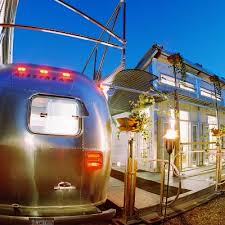
imgresAlan teamed with a variety of local companies and philanthropic individuals to build the 250 dwelling campus organized into five neighborhoods. One neighborhood is a collection of RV sites. The other four neighborhoods consist of tiny houses ranging from 252 to 400 square feet, and permanent tent dwellings. Each tiny house has indoor space, electricity, and a front porch, but no plumbing. Each neighborhood includes a collective toilet/shower/laundry building and a cooking pavilion where residents can prepare meals. Tent shelters rent for $225 per month; tiny houses are approximately $325 per month; RV’s rent for $380 per month plus electricity. Since baseline SSI in the state of Texas is $780 a month, even people who have no other source of income can afford to live at Community First. Construction is well along; 35 people have already moved in.

IMG_5950At the entrance to the community is a grocery and health center as well as an outdoor amphitheater with movie screen, amenities the village will share with neighboring developments. Within the compound, neighborhoods are organized around a six-acre garden and a central space that includes a prayer labyrinth, a playground, a human size chess set, and a burial memorial. Alan calls it the circle of life. “For many homeless, there is no marker that commemorates their death. We want to change that.”

The week before we met, the Chamber of Commerce named Alan Austinite of the Year; an honor he was too humble to reveal that I learned it from his Communications Director. For all that Austin’s affluence obscures its bohemian roots, I appreciate that the Chamber of Commerce recognized a citizen so vocal about the community’s problems:

imgres-1“Austin may be the most elite city in United States, except maybe San Francisco.

“The city attempted to enact regulations against Lyft. In three weeks we gathered 65,000 signatures on an initiative petition to put that on the ballot.

“Most of the homeless are not W-2 employable but they are entrepreneurial. Unfortunately, Our society obstructs them. I can panhandle on the street but I can’t sell flowers or water without a license. The city criminalizes poverty.

IMG_5930“What kills community? Refrigerators. Before refrigerators, we shared bounty. Now we store it and protect it from others.

“Don’t use the term sustainable unless you’re Amish.

“The cell phone is the biggest environmental disaster in history of man. Millions of people are going to suffer adverse effects from what the phones are doing to us.”

IMG_5940Alan acknowledges that when we move beyond warm and fuzzy slogans, the actions required to make the earth a more equitable place are difficult. “Consider Stuart Brand and his whole earth discipline. When he actually outlined the steps society would need to take, people were outraged:

  1. If we want to sustain, we have to build nuclear.
  2. If we are going to support seven billion people we are going to need laboratory food.
  3. You can’t mess with the world. Mother will retaliate; she’ll eliminate you. Don’t fix the earth; fix the people.”

IMG_5929As our culture has diminished community, we’ve diminished our quality of life. “When I was a kid we had a community pool. Now we each have our own in our backyard.” Alan believes the community Mobile Loaves and Fishes is creating will strike a healthier balance between private space and common resources than the adjacent subdivision of 2000 square-foot, self-contained houses.

Approximately 20% of Community First residents are what Alan calls ‘missionaries,’ people who have the financial and social ability to live other places but choose to live here. I met a cardiac nurse who moved into an RV. “We are building a community for the homeless that the richest will want to live in.”

How will we live tomorrow?

IMG_5934“Are you familiar with the Seven Habits of Highly Effective People? One habit is is to begin with the end in mind. I am writing a book. The last chapter is called, ‘With Beginning in Mind.’

“Start with Genesis Chapter 2, God created the Garden of Eden. It had everything man needed. The river penetrated and split four ways. Genesis 2:15: ‘The Lord God took the man, settled him in the garden to care for him.’ We as human beings have a desire to reconnect, back to the beginning. Community First isn’t paradise, but it puts us in a position to get back to paradise.”

Posted in Responses | Tagged , , , , , | Leave a comment