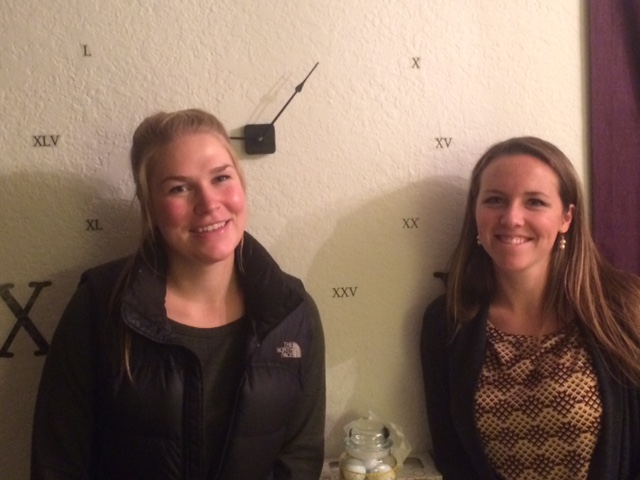
Profile Response: Grady McGonagill, Climate Activist, Brookline, MA

HWWLT Logo on yellow“What can one person do?” When confronted with the overwhelming challenge of climate change, Grady McGonagill follows Kathleen Dean Moore’s advice, “The first thing you can do is stop being one person; join a group.”

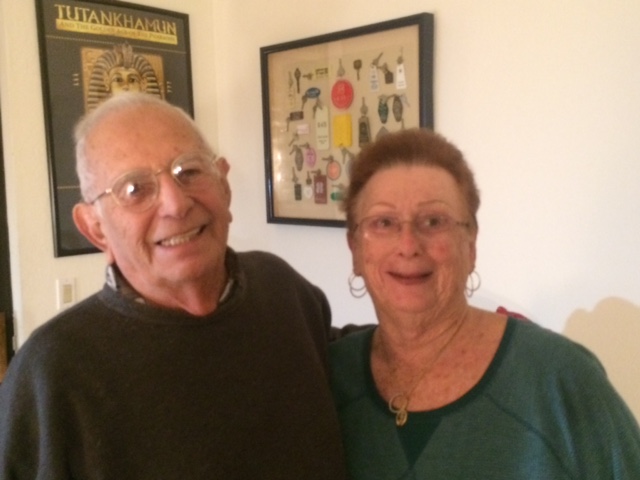
Grady’s credentials, an Ed.D from Harvard and thirty years as a leadership consultant, illustrate his conventional success. However, his life is streaked with unconventional, even rebellious, actions. He hitchhiked from his native Texas to Tierra del Fuego in the early 1970’s. He was robbed once along the way, and held at gunpoint twice. But many more times he was welcomed into people’s lives. “I envisioned myself as a Henry Miller character floating free in the world, but I was more anxious than I cared to admit. It’s easy to romanticize youth and travel.”

Two years ago Grady shifted his personal and professional focus to climate change. He announced his commitment in a New Year’s letter to friends and constituents – publicly announcing a position reinforces it. Now he offers executive leadership and coaching services gratis to environmental organizations, devotes personal time to building organizations dedicated to climate change and participates in environmental protests. “Sometimes, the important thing is to just show up.”

imagesGrady’s dedication to climate change has revitalized his life. He started the Massachusetts Chapter of Elder Climate Action. He’s travelled to Washington D.C three times to participate in demonstrations. Last fall he got arrested for protesting the extension of the West Roxbury gas pipeline. He’s taking an organizational strategy course at the Kennedy School of Government. “I’ve worked with leaders my entire career but have never been a leader. These are new skills for me.”

Although climate change is occurring with unprecedented speed per geologic time, from a human perspective it’s a slow process and our contribution builds over time. It’s difficult to get people to act upon phenomenon that don’t strike with the immediacy of hurricanes, earthquakes, and floods; whose causes are rooted in the fabric of our lives, and whose remedies require dramatic rethinking of how we live. I wondered how Grady maintains his enthusiasm for such abstract work, and how his commitment can grow in mainstream consciousness. “I see this as the contemporary equivalent of the Holocaust. We know what is going on but we pretend not to know. We can’t mobilize the doubters, but we don’t need to. The majority of people believe in human-induced climate change. We need to mobilize them. My daughter is my motivator. I want to leave a legacy for her. When she asks what I did to combat this, I want to be able to say I did my part.”

images-1Grady has a strategic vision for how to mobilize the majority. “We have to build alliances with broader constituencies. Climate change is being reframed as a moral issue, thanks to people like Pope Francis.” It impacts every group and every agenda.

Grady provides a firm, clear voice that the track we’re on is wrong, that we must redirect. But his activism also has personal benefits. At age 70, Grady has suffered some health problems. Since focusing his energy on climate change, both his conscience and his physical health have improved. “I am pessimistic but hopeful. I am energized to be engaged. I sleep better at night.”

How will we live tomorrow?

search“I don’t think of myself as somebody who has a vision, but I’ll start with my current commitments. Let’s be carbon neutral and work back from that. Does it mean the end of a growth economy? Climate change is just one of the many things that can kill us. An ever-expanding economy will do it as well.

“I’d like to see a combination of what we know from the past, in a nature-equilibrium economy, and what we are capable of now. We are the master species, but have become prisoners of our own talents. How do live with our technology, but in nature, and in community?

“I don’t believe in god but I consider myself religious. We need to revere the majesty of what has evolved. I aspire to a vision of ancient Eastern and Western religions with our technological capabilities.”
Posted in Responses | Tagged , , , , , , | 2 Comments

Trip Log – Day 217 – Sanderson, TX to Comstock, TX

To ComstockJanuary 31, 2016 – Sunny, 86 degrees

Miles Today: 88

Miles to Date: 11,170

States to Date: 28

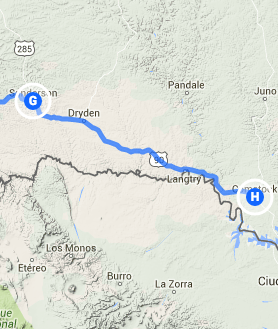
86/88/90: eighty-six degrees for eighty-eight miles on U.S. 90: what a sweet day. The wind was my friend, pushing me east and keeping me cool as I climbed in and out of gorgeous canyons all day.

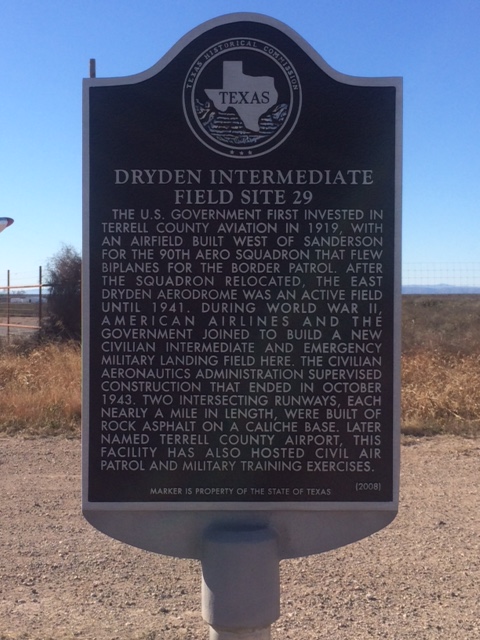
IMG_5767Texas loves Historical Markers. They line U.S. 90 as often as Border Patrol vehicles. They herald Yankee financiers who built the railroads, bandits who robbed the trains, former Confederates who founded towns turned ghost, and the natural wonders of the Pecos. They’re a physical encyclopedia. I stop at most of them.


IMG_5771I detoured to Langtry to visit the site where Judge Roy Bean was the Law West of the Pecos. The site is run by the Texas Department of Transportation and boasts a snazzy visitor center, though there were only five us this afternoon – one being the jocular employee, another being a neighbor woman from across the road. No matter, they had lots of good stories to tell of murder and escaped convicts holed up in Langtry, from the Judge’s time to the present. Upstanding citizens don’t get much airtime here.

IMG_5773

IMG_5779No matter how good you are at something, you can always improve. Today, I reached new plateaus in bike riding. Six months ago my anxiety and balance peaked when coasting downhill at 26 to 28 miles per hour. I would sit up tall to block the wind and ease into the brakes. With todays perfect conditions and so little traffic I could often claim the road, I commanded those speeds in a crouched position and surpassed 30 without hesitation. Top speed: 39 miles per hour descending toward the Pecos River. My fastest cycling ever.

IMG_5778

No place for breakfast in Sanderson, no place for dinner in Comstock. I managed to snag a BBQ sandwich and Gatorade in Langtry, but dinner was peanuts and a chocolate bar. I’ve become enchanted with Chocolove bars – dark chocolate with raspberries is my favorite. I recommend them to anyone, but only after you’ve ridden your bike 88 miles. How am I ever going to get back to modest eating when this ends?

imgres


Posted in Bicycle Trip Log | Tagged , , , , , , , | 1 Comment

Profile Response: Janice and Stewart Feldstein, Scottsdale, AZ

HWWLT Logo on yellowRetired Guys Wanted. Low Wages. No Benefits. When Stewart Feldstein saw that ad, it was just what he was looking for. After a career as a clothing importer from Asia, the UC Berkeley graduate and his wife Janice had retired to Scottsdale three months earlier. Although Stewart liked Arizona, retirement did not suit, so he took a job managing homeowner’s associations. That was twenty-five years ago. Today, at age 87, Stewart still works three to six hours a day handling six local associations. He is the company’s most senior member in both age and length of employment. The man loves to work, though he took an important break two years ago when he went on the Honor Flight to Washington, DC. Stewart is one of two World War II veterans’ I’ve met; the tribute he experienced in our nation’s capital was a moving experience.

images imgres

It took Janice a bit longer to warm up to Arizona, but she also worked through her traditional retirement years. Janice was a school librarian in the Bay Area, but she left that to run a doctor’s office for 26 years. When she moved to Arizona, Janice went to the local hospital and asked the OR nurses which doctors they used for their own care. She pursued those doctors and spent 23 years running their office. Two years ago, at age 79, Janice stopped working. Now, she volunteers at the Musical Instrument Museum in Scottsdale and plays a lot of Mahjong.

images-1There is a popular conception that people grow more conservative as they age. Janice and Stewart Feldstein are the oldest hosts I’ve stayed with on my trip. They come from solid, liberal Jewish stock. I know their two children and have heard much about their grandkids. Stewart claims to have been an “ultra-liberal” but now espouses many conservative ideas to which Janice quietly acquiesces. Does this transformation validate that we grow more conservative with age? The reality is not so clear. There is evidence on both sides of the liberal / conservative divide as to whether our politics shift with age, though Stewart makes a strong case that we grow more conservative with time.

How will we live tomorrow?

IMG_5324“I’m not very confident. I’m afraid we’re heading toward a welfare state. In many instances it’s more lucrative for people to take government assistance. I read about a woman in California with eight kids and eight different fathers. She gets $4,000 a month to sit and collect checks. When I was at Berkeley I was an ultra-liberal. As I got older I became conservative. A lot has to do with unions. Two unions tried to take over companies I worked with. As you get older, you get more conservative.

“We have become slaves to technology. We’ve become so enamored of technology, kids text their every move. There is too much information about individuals out there. Consequently, a lot of bad people can do a lot of bad things. What happened in France (terrorist attacks in Paris) couldn’t have happened without all of this electronic communication.

“If I were President, I’d get the CEO’s of the major electronics companies in one room and tell them they can’t leave until they solve the problem. We have to be able to dismantle these devices when they get into the wrong hands.” – Stewart

“I led a very different life than Stewart did. My grandmother raised me because both of my parents worked. She told me I could go to the University of California and meet a nice Jewish boy and get married. And I did that.

“I lost my parents very young. I am an independent person; I like to do what I want when I want. But I’m also a pessimist. I have my political views, but I let Stewart articulate them. I am more of a pacifist. I don’t worry about who will be the next President because I think he’s a figurehead. I don’t worry about tomorrow because it’s not here.” – Janice

Posted in Responses | Tagged , , | 2 Comments

Trip Log – Day 216 – Marathon, TX to Sanderson, TX

to SandersonJanuary 30, 2016 – Sunny, 75 degrees

Miles Today: 55

Miles to Date: 11,082

States to Date: 28

I slept fitfully; preoccupied by the night noises of my heavy-set cabin-mate Tom and the half-hearted allusions he made yesterday to pedal out with me today. I knew the guy wasn’t going anywhere. Still, I got up early, left La Loma del Chivo hostel before anyone else woke, and was back at Oasis Cafe when it opened at 7:30 a.m.

IMG_5736I’m on a new riding schedule here. The mornings are dark and cold this far west in the Central Time Zone. The sun warms things up after nine in the morning, and its light ‘til past six. So, I spent two hours in the cafe. By the time I rolled out, the weather was fine.

IMG_5735Actually, the weather was more than fine. It was perfect; a light breeze on my back, not a cloud in the sky, and seventy degrees by noon. Despite terrific conditions I was sluggish. Enchiladas with two sunny-side eggs and beans had been tasty but not a bike-size portion. I stopped for a snack five miles out, and again twelve miles out, trying to get my mojo. Just past twenty miles I reached a crest, which coincides almost exactly with the mid-point between El Paso and San Antonio. I began the longest downhill of my trip – a full thirty miles into Sanderson It was great fun going fourteen, eighteen, twenty miles per hour mile after mile.

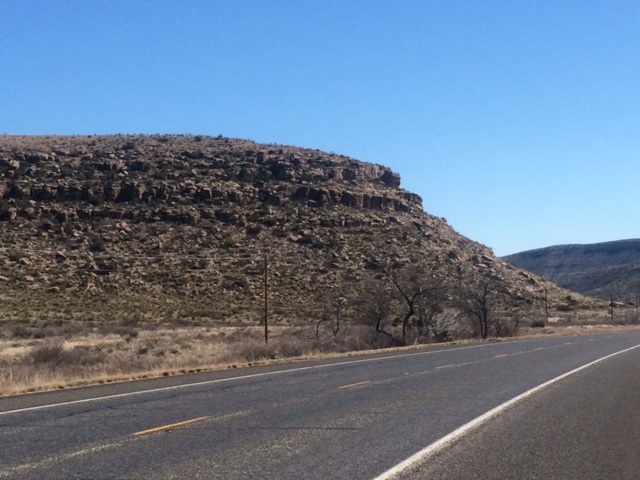
IMG_5733If yesterday was about assorted people, today was about assorted rocks, and I was content to contemplate less complex things. The geology of Big Bend encompasses three distinct periods. There are vertical up thrusts, the Ouachita fold, that date back more than 250 million years, before the Permian Sea submerged this area. Limestone reefs laid over the folds 125 million years ago and lava layers from volcanic activity a mere 25 million years ago infill some areas and erode others. The result is a variety of jagged, sharp, and worn landforms juxtaposed against each other.

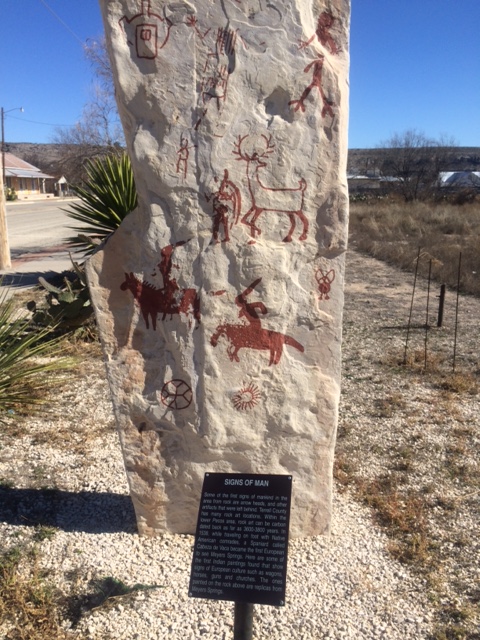
IMG_5739I arrived at Sanderson, the cactus capital of Texas, well before three and enjoyed the outdoor museum where various cacti were planted in and around rocks with faux primitive paintings that illustrate various stages of local history; so much more engaging than an indoor museum on such a nice day.


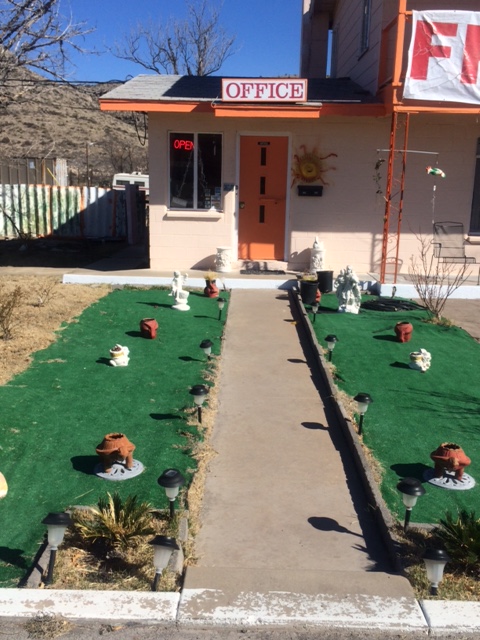
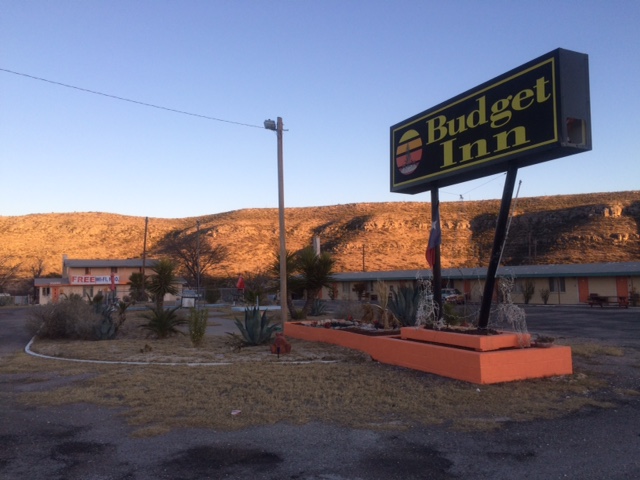
IMG_5742U.S. 90 is part of Adventure Cycling Association’s ‘Southern Tier’; there is quite a bit of bicycle touring activity. I had been told that Danny, manager of the Budget Inn, was particularly nice to cyclists. That is an understatement. He welcomed me to the office, gave me energy bars, asked about my trip, and showed me photos of other cyclists who’ve stayed there, including Georgia and Mark whom I met yesterday.


IMG_5750There is nothing open in Sanderson on a Saturday night. In the evening Danny brought me a silver tray with a pungent potato soup, curried rice with vegetables, and a delicious papadam, then satyed for nice conversation. All for $45 a night!
IMG_5760


Posted in Bicycle Trip Log | Tagged , , , | Leave a comment

Profile Response: Madeline Basse and Lisa Neff, Scottsdale, AZ

HWWLT Logo on yellowIndustrialized societies thrive on specialization. As systems grow more complex, we divide tasks and responsibilities. In best-case scenarios, specialization makes our processes more accurate, efficient, and economically productive. However, specialization can also lead to fracturing and disorientation. During my thirty years of designing healthcare facilities, clinics and hospitals became more and more complicated. In part, due to the increase in medical knowledge and diagnostic possibilities; in part due to increased technology; in part, due to more and more clinical staff with increased levels of specialization.

Madeline Basse and Lisa Neff are PA (Physician Assistant) students from Colorado studying at Midwestern University in Glendale, AZ. In the lexicon of medical professions, PA’s are relatively new. Duke University developed the country’s first PA program in 1965. The two-year training model responded to the shortage of physicians and provided army medics returning from Vietnam, veterans with solid medical skills, a path to civilian credentials. Now, there are dozens of PA programs throughout the country. PA’s fulfill a variety of clinical roles in emergency, outpatient, and inpatient services throughout the United States. The title Physician Assistant is misleading, as it implies a direct connection with a doctor. PA’s work under a supervising physician, but that supervision is often at arms length. Many PA’s are the primary care provider for their patients.

images images-1 images-2

Traditional medical school requires two years of classroom and dissection training plus two years of clinical rotations among a variety of specialties, followed by a one year internship and two to five years of specialty fellowship. It takes a long time to be a cardiologist. PA training is twenty-seven months total. One year of classroom and dissection followed by nine clinical rotations, each five to six weeks long. My dinner companions were mid-way though their clinical rotations; Madeline in OB/Gyn and Lisa internal medicine.

images-3PA’s do not specialize. Madeline explained, “One of the things I like about being a PA is that I can do emergency medicine for a few years, and then go into a clinic. Doctors are so specialized they don’t have that flexibility.” Lisa was clear about why she chose to be a PA rather than a traditional physician. “I want to get married and have a family. I didn’t want eight years of training.”

images-4Most PA students take time off after undergraduate school. Madeline and Lisa gradated with science degrees, worked for a few years, and realized that being PA’s was a better fit for their life objectives than being a traditional physician. Madeline explained, “The application process for PA School is long. It takes a full year of applications and interviews. Most people can’t do it while undergraduates, especially since many of us are trying to figure out if we want to go to regular medical school.”

When Lisa and Madeline graduate in August there will be many opportunities available for them. Lisa’s boyfriend is a medical student at Creighton, which offers third and fourth year clinical rotations in Phoenix, so she is planning on finding a job here. Madeline would like to return to Denver, but is realistic about her prospects. “Everyone wants to go to Colorado, so there are fewer jobs, and the jobs there pay less. I’ll be looking at other places in the West – maybe Wyoming or Montana or Idaho.”

How will we live tomorrow?

IMG_5307“There will be a lot more PA’s. There’s a mass exodus from primary care of traditional physicians. New PA Schools are opening every year.” – Madeline Basse

“We learn so much from the doctors who are our preceptors. The doc I work with now doesn’t tell people what to do. They are mostly older patients; their habits are set. If we think the doctor’s job is to tell people want to do, people just won’t come. My dad hasn’t been to a doctor in twenty years. He knows the doctor is going to tell him to quit smoking and loose weight. He doesn’t want to hear it. We have to accept people as they come to us. We all have our addiction, whether it’s smoking or eating or sugar. We have ten minutes with a patient to guide them to feeling better. We’re not going to change them in that time.” – Lisa Neff


Posted in Responses | Tagged , , , | Leave a comment

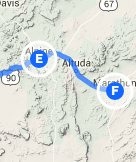
Trip Log – Day 215 – Alpine, TX to Marathon, TX

To MarathonJanuary 29, 2016 – Sunny, 65 degrees

Miles Today: 31

Miles to Date: 11,027

States to Date: 28

West Texas was sunny and bright today, the desert jagged and brown, the people as varied as any I’ve met during my trip.

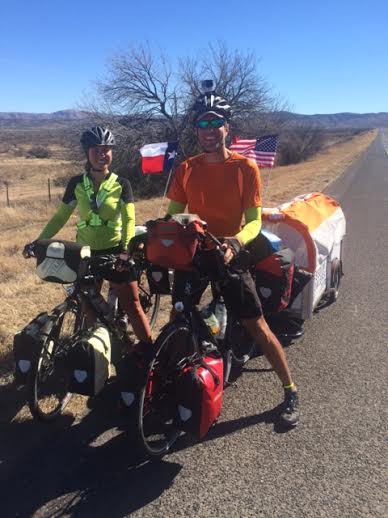
f4f109a2-f07c-46ce-9163-3eb3feda7969I started at Sul Ross State University in Alpine, where I had a conversation with Andy Cloud about the archeological work of the Center for Big Bend Studies. By the time I rolled downhill from campus the day was already warm, almost summery. Ten miles out I met Georgia, Mark, their two dogs and over 200 pounds of gear, including a dog trailer, on a 10,000-mile trip with a route as circuitous as mine.

IMG_5706 IMG_5713

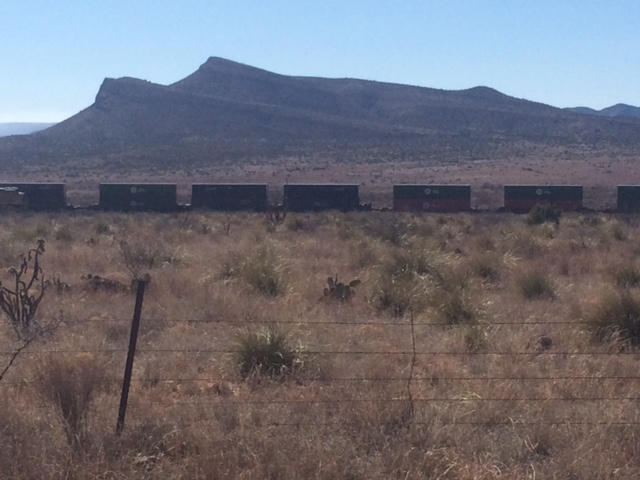
IMG_5696U.S. 90 parallels a major railroad line, Half-mile long freight trains pass several times a day, an Amtrack Silverliner slithers by daily, and I hear train whistles all night long. Giant snakes of containers stacked on the flat beds; often bright blue, red, or green; move across the monotone landscape like cubes of modern art. Of course, due to the Marfa effect, there are also conscientious pieces of landscape art here, the most recent being the Target outside Marathon.


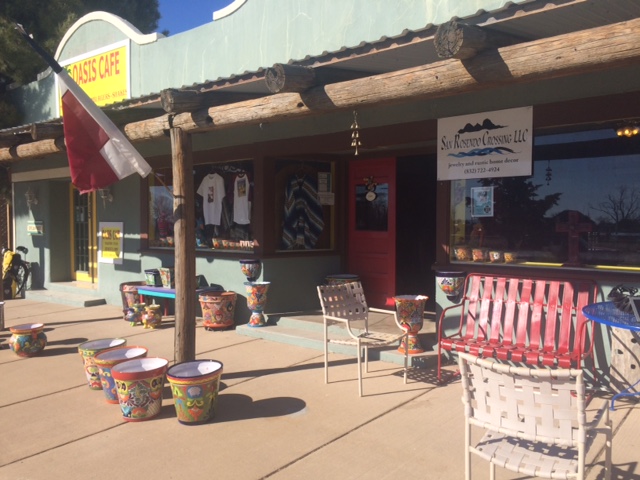
IMG_5718I pedaled into Marathon a few minutes before three. A woman sitting beneath the covered walk that connects the storefronts flagged me down. “Oasis Cafe closes at three. Get in there for the best burger in West Texas.” Of course, I complied. Phoebe, my waitress, is one of the most patient people on earth. “I’ve got plenty to do here. Enjoy your lunch. Use our Internet. Take your time.” By the time I was finished Phoebe was mopping up. “You can move outside, our Internet works there as well.”

IMG_5717I checked in at San Rosendro Crossing, a collectibles shop next door. JJ, the proprietress, said, “Sit here as long as you like.” In a few minutes Carol came by with a pair of longnecks between her fingers. “Its beer-thirty, want one?”


Suddenly, I was in a group of eight people, including Carol, JJ, Phoebe, and Phoebe’s cowboy friend Howdy drinking beer and smoking Marlboro’s along Main Street. The conversation probably doesn’t vary much from day to day: the merits of the candidates running for Sheriff, a murder in the IMG_5720next town, a local brush fire, Border Patrol hassles, how to draw a red circle around Marfa and delete it from the state of Texas. Carol’s husband Charlie stopped by. “Lord, I cannot hide from that man.” I reminded here she was sitting smack dab on Main Street. She got up and gave the guy a kiss.

IMG_5721 IMG_5722

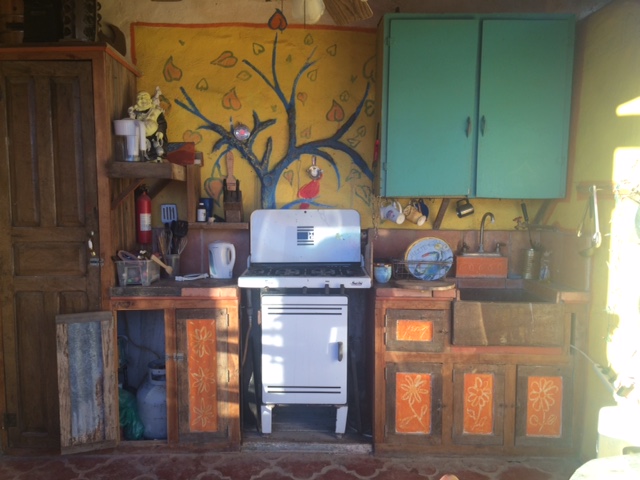
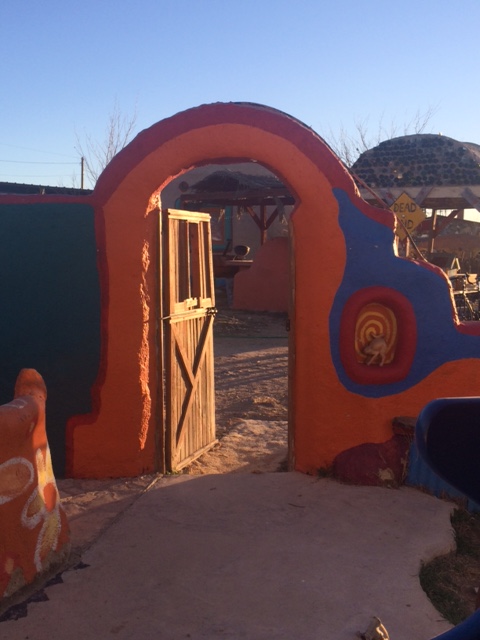
IMG_5724When the sun slung low I pedaled to the locally famous hostel, La Loma del Chivo, a remnant of hippie days that welcomes itinerant cyclists. Hostels are odd places; purposefully disorganized. La Loma has a wonderful, warm host, Ingrid, aka Goat Queen. The gestalt of the place probably changes every day. This night, a profoundly quiet German couple kept to the edges while Tom, an obese former lawyer fresh from a Wal-Mart grocery run who claimed to be a long-distance cyclist filled the silence. He was engaging until I distilled he’d been drifting within a hundred miles of here for nearly a year. We were a disparate group of guests. Nevertheless, I enjoyed strolling around the bizarre place, taking in the perfect sunset, followed by amazing stars. Since the longer-term guests had claimed the bunks, I slept on a comfy sofa beneath heavy quilts.

Posted in Bicycle Trip Log | Tagged , , , , , , , , | 2 Comments

Responses: How will we live tomorrow?

How will we live tomorrow?

“Americans want cures, not healing.”

Mrs. Korn, Mormon settler to California, Santa Maria, CA

How will we live tomorrow?

“I could sell my house tomorrow and see America and visit my kids. I worry about my kids. I pray they have the time to sort through a set of beliefs that will bring them peace.”

Susan, RV traveller, Mission Viejo, CA

How will we live tomorrow?

“The sun will come up and continue to warm the earth. On a day-to-day basis we won’t see much change. Big change takes time.

Angel, College Student, Tempe, AZ

How will we live tomorrow?

“We won’t be driving cars.”

Bill Korn, California State Building Inspector, Orcutt, CA

How will we live tomorrow?

“I watched this movie based on your question. I haven’t thought about it actually. We will live tomorrow as robots. There’s going to be a time when there’s a robot that’s smarter than us. We’ll live in fear of our place in the world.”

Karan Patal, Construction Management Student, Tempe, AZ

How will we live tomorrow?

“Technology is going to rule. It’s going to take us places we can’t conceive. That makes this a question mark for me. I’m a nurse practitioner and see the changes in medicine. We can’t see what the change will be, but a big parachute will open and we’ll have a big change.

“If you ask me in an hour, my answer will be different.”

Lainie Luc, bird watcher, Benson, AZ

How will we live tomorrow?

“We will be more communal. One of my jokes is if I win the lottery I will open an assisted living facility next to a day care center. They can do arts and crafts together in the morning and take naps in the afternoon.”

Zaida, wife, mother, and godmother; Tucson, AZ

How will we live tomorrow?

“We have no guarantee we will be here tomorrow.”

Bill Quinn, International Facility Management Association, Scottsdale, AZ

How will we live tomorrow?

“Hopefully better than today.”

Diane, Arizona Biltmore, Scottsdale, AZ

How will we live tomorrow?

“Unfortunately I would say cramped. But then again, I’m an advocate for less population.”

Vincent Wicks, Owner of Vincente’s Fine Art Gallery, Bisbee, AZ

How will we live tomorrow?

“You’re going to have to be more specific.”

Aaron, Metalmorphosis, Bisbee, AZ

How will we live tomorrow?

“By being ready to die today.”

Matt, long distance cyclist, Mile marker 400 on Arizona 80

How will we live tomorrow?

“By being stoked about what I’m doing today.”

Eli, long distance cyclist, Mile marker 400 on Arizona 80

How will we live tomorrow?

“Today I will live for Jesus and tomorrow I will do the same.”

Gary Dwyer, Lincoln Navigator driver, Apache, AZ

How will we live tomorrow?

“Hopefully better.”

Martha Rodriguez, Motel Owner, Columbus, NM

How will we live tomorrow?

“Will we live tomorrow?”

Harold, author, Portal, AZ

How will we live tomorrow?

“I take one day at a time. There is no guarantee of tomorrow.”

Liquor clerk, Animas, NM

How will we live tomorrow?

“I’m glad that we live in this little village. We have to go to El Paso and Deming for our shopping, but we enjoy living here.”

Chico, husband of the owner of La Casita Restaurant, Columbus, NM

How will we live tomorrow?

“I spent twenty years working for a large financial institution in St. Louis. I was working 80 hours a week. I moved out here and traded quality of life for money.”

Karen Klein, Rodeo Cafe Cashier, Rodeo, NM


Posted in Responses | Leave a comment

Trip Log – Day 214 – Marfa, TX to Alpine, TX

To AlpineJanuary 28, 2016 – Sunny, 65 degrees

Miles Today: 28

Miles to Date: 10,996

States to Date: 28

 IMG_5670I enjoyed a beautiful, easy day of bicycle touring. US 90 from Marfa to Alpine is a gorgeous stretch with vast vistas. About ten miles outside of town is a striking pavilion built to watch ‘Marfa Mystery Lights’, fantastic light displays of undetermined science that occur a few times a year. There was nothing but bright sky this morning. Fortunately, a musician was there who had seen them. What he described was magic even in daylight.

IMG_5672

Paisano Pass was a nice climb that introduced varied terrain all the way to Alpine. I got to town and indulged in Chinese Buffet: vegetables, sushi, and sweet cakes. I stayed about three hours, catching up on writing and planning my foray into San Antonio before exploring Alpine and checking into a sweet Patel-motel.

IMG_5677I took an evening stroll through the downtown strip. Alpine has a movie theater that projects two shows every weekend, a bookstore, and a former gas station turned coffee shop / laundromat. Perhaps not the most exotic commercial, but mighty pleasant under the amazing stars of Big Bend.

images


Posted in Bicycle Trip Log | Tagged , , , , | Leave a comment

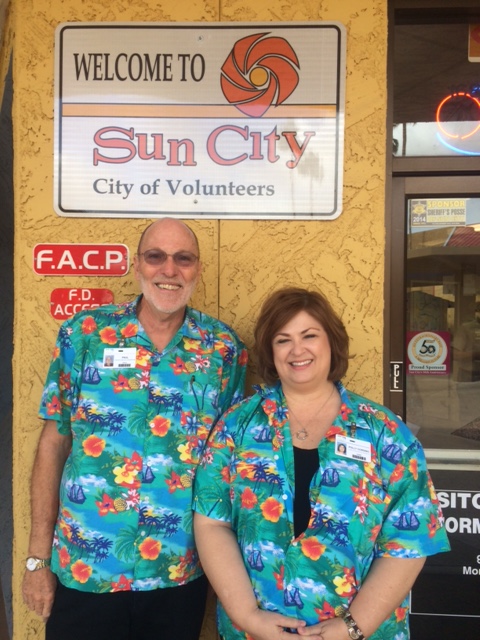
Profile Response: Paul Hermann and Polly Corsino, Sun City Visitor’s Center, Sun City, AZ

HWWLT Logo on yellowThe Bell Recreation Center looks like a vintage 1970’s shopping mall, solid walls of rusticated block with a few glass front entrances framed by dramatic roofs, the kind of Class B shopping center that might be occupied by Payless Shoes, Work’n’Gear, and a nail salon. But that tired exterior is deceiving. Inside, Bell Recreation Center pulses with life: aerobics, bowling, swimming, crafts. It also houses the Sun City Visitor Center, which Paul Hermann’s run for fourteen years. Paul will retire next month. His successor, Polly Corsino, is already on board to facilitate the transition.

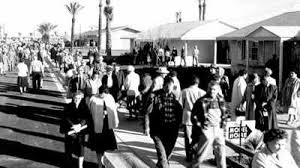
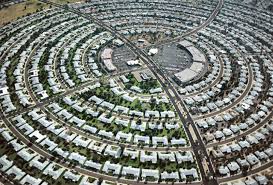
imgresWhen Del Webb developed Sun City in the 1960’s and ‘70’s, his company handled marketing. When the 27,465-home community was fully built out in 1978, Del moved on to Sun City West. The original still needed a marketing arm to promote the community and welcome visitors from all over the world who come to witness the world’s first 55+ retirement community. “A group is coming in from China next week. The government wants to start a community there it calls Silvertown. The whole world looks to Sun City; we’ve had a 56-year start on how to do this.”

imagesThe four original house models, circa 1960, sold for $8500; air-conditioning cost $600 more. Now, there are dozens of housing styles scattered across Sun City, including townhomes and garden apartments. Turnover is low, less than 250 homes are on the market today, although prices are about ten percent lower per square foot than in adjacent communities.

imgres-1Paul explains, “The covenants and restrictions require that at least one person over age 55 live in a household, and no one under 19 is allowed. The only exception is, if a spouse dies and the survivor is under 55, he or she can remain.” Each household is assessed $462 per year for recreation fees, which provide access to the seven recreation centers and pools, eight golf courses, and over 125 clubs. “Anybody with an idea and 25 participants can start a club. The newest one is darts. My favorite is the bike club; it doesn’t need any rec center space ” There is a small greens fee for golf rounds and a club entry fee that varies between $2.50 and $30 per year, “depending on how fancy they want the food to serve at meetings.”


imgres-3Sun City has always attributed much of its success to the fact that it’s amenities were realities, not promises. When the first models opened, miles away from anything else in Phoenix, a recreation center, a 5&10, and a grocery store opened as well. Today, the US 60 commercial strip that bisects Sun City has a full range of conveniences. Del Webb provided land for churches, assisted living centers, nursing homes, and a hospital, so people could age in place.

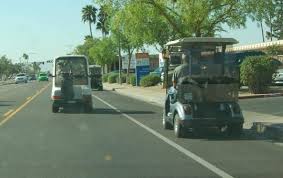
images-2Today, the biggest challenge to aging in place in Sun City is transportation. Golf carts are permitted on all streets with speed limits below 35 mph; they offer an economical and playful means of getting around this town focused on fun. But once a resident no longer drives, transportation becomes a challenge. “SCAT, Sun City Area Transit, used to run a twelve passenger bus, but it went out of business six years ago. Now, we have discount cab vouchers. A person can get a cab anywhere in Sun City for four dollars a ride.”

imgres-2Sun City is old enough to need capital improvements. The community assesses a one-time fee of $3500 whenever anyone purchases a home. This is used for all community projects over $300,000. In the past decade each of the rec centers has been renovated, and there is $8.6 million in the fund. “In 56 years we’ve never had a special assessment or gone into debt.” That’s a pretty good track record.

How will we live tomorrow?

IMG_5296“I don’t see an end to this type of community. We’ve been here 56 years. There are more than 400 55+ communities in this country, over 50 in this county alone. People used to retire to rest. People retire now to be active. We have a 90-year-old who plays in our softball league. Activities become meaningful. One of our residents wanted to play golf until he was 100. He made it to his goal, and died two months later. He didn’t have another goal.” – Paul

“I’ve been here three weeks and never seen camaraderie like we have here.” – Polly

“Here, it’s easy to make friends. Shared ages, shared backgrounds, lots of activities. In Sun City we will continue to live the way we do. The activities will change, but our style of life will remain. If you’re looking for the best value in the country – low fees, no debt, lots of activities, Sun City can’t be beat.” – Paul

Posted in Responses | Tagged , , | Leave a comment

Trip Log – Day 213 – Van Horn, TX to Marfa, TX

To MarfaJanuary 27, 2016 – Sunny, 50 degrees

Miles Today: 77

Miles to Date: 10,968

States to Date: 28

Is Marfa, Texas ironic or prophetic?

IMG_5638

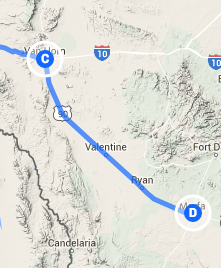
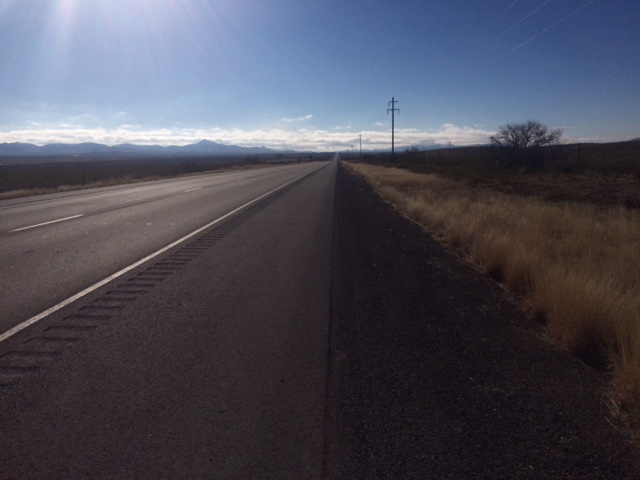
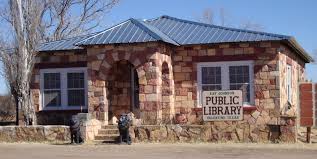
imgres-1I will ride along U.S. 90 more than any single route of my journey. I was pleased that my inaugural morning, heading east from 90’s Van Horn terminus, was clear and calm. Thirty-eight miles on I pedaled through Valentine. The sign said 217 souls call it home, but aside from the world’s most adorable public library, there was no sign of life in the deteriorating buildings that lined the road. This town is dying.

IMG_5644

Less than ten miles further on, in the middle of a vast plain, I came upon Prada Marfa; a pristine, non-functional box with an assortment of Prada fashion goods. This art is thriving.

IMG_5646Later, a pinkish balloon appeared on the horizon. More art, I thought. Until I got closer. Turns out its Border Patrol’s Tethered Aerostat Radar System. Miles before I reached the world-renowned rural Art Capital, I was already confused about contemporary art, abandoned commerce, and ubiquitous surveillance.

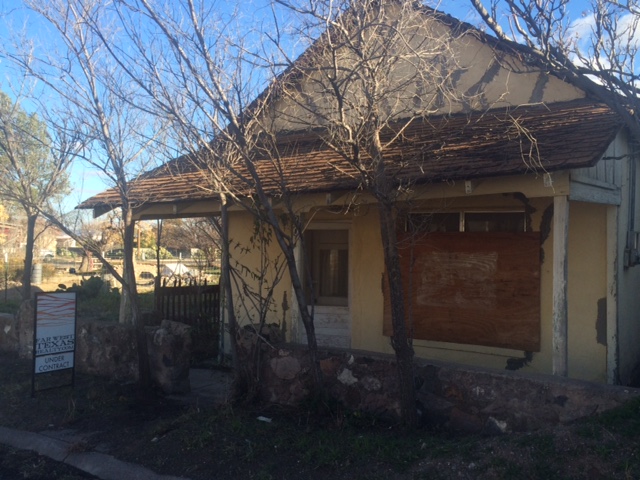
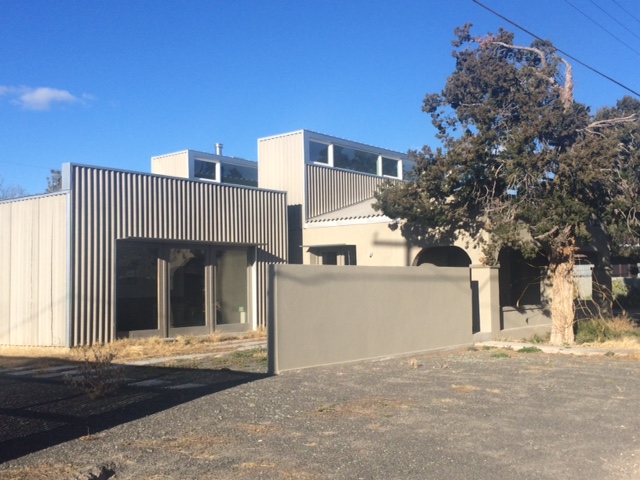
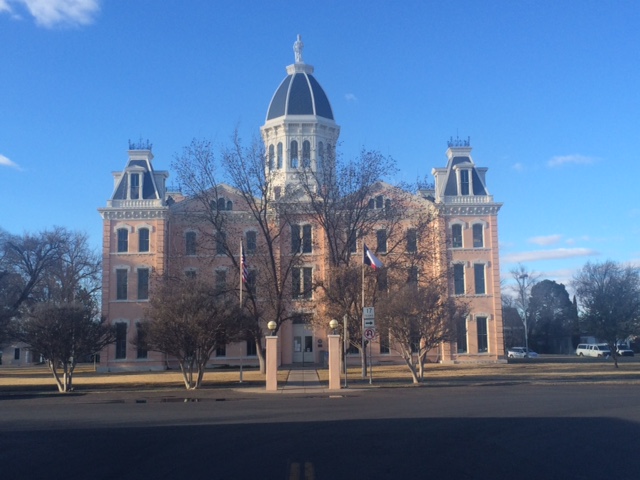
IMG_5652Once I reached town, the contrast continued. Slab a coat of turquoise paint, plant a bunch of cacti, and the same motel I paid $39 a night for in Van Horn charges $119 here. One gas station is full of broken down cars, another has been refurbished into an art moderne statement. A dilapidated cottage that would be abandoned in most West Texas towns is ‘under contract’ and many have been transformed into sharp angled adobe galleries and second homes for affluent artists. The grocery store was full of heavy-set Mexicans in polyester shifts just like any other town around here. But Highland St, the main thoroughfare leading to the stately courthouse, is lined with boutiques full of merchandise those locals don’t need and can’t afford.

IMG_5653 IMG_5659

Marfa has a knack for reinvention. The 1883 ranch town boomed in the early twentieth century on the cusp of an oil boom that went bust. The area was used for internment camps during World War II. When that base was purchased by artist Donald Judd in the 1980’s, the town’s latest incarnation as a hip art center was born.

IMG_5655 IMG_5657

IMG_5660So the question remains. Is Marfa – a town where wealthy oil tycoons fly in to shake their heads at art they find bizarre – an ironic bit of whimsy? Or, is Marfa a prophetic view of life once machines liberate us from the tedious tasks of daily living and we celebrate our creativity in whatever direction the West Texas winds blow. Either way, it’s great fun and wicked cool.

Posted in Bicycle Trip Log | Tagged , , , , , | 2 Comments