Mr. and Ms. Politician: Answer Me This

This piece was published as a guest column in the Cambridge Chronicle on 2/5/2016, just in time for the New Hampshire Primary:

HWWLT Logo on yellowFor seven months I’ve been bicycling throughout the United States: 11,000 miles and twenty-eight states to date. Along the way I pose the question, ‘How will we live tomorrow?’ Hundreds of individuals and organizations have responded. My adventure’s not over; too soon to infer where our nation is headed. Still, I’ve asked the question enough to spot trends. The most basic one being: who actually answers my question?

Riding a bicycle is a non-scientific endeavor. I occupy a small slice of space in time. Nonetheless, I seek a wide range of answers. Every day I ask at least one random local, ‘How will we live tomorrow?’ I ask friends, friends of friends, and strangers who offer me food and shelter. I solicit interviews with organizations representative of their locale: glass technologists in Corning; Muslims in Dearborn; oilmen in Dickinson; event planners in Sturgis; cattlemen in Cheyenne; Mormons in Provo; organic farmers in Missoula; librarians in Seattle; futurists in San Francisco; retirees in Sun City; immigration lawyers in El Paso. Most people accept my invitation to participate. When I ask why they offer me their time, the universal response is, “because you’re on a bike!”
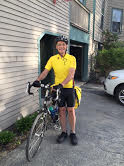
Start 3Not everyone is equally intrigued by my question. College townies love to talk about tomorrow. Most North Dakotans give me a blank stare. People of faith; Christians and Muslims, Hindus and Jews; are keen to share their vision. Even atheists are eager to respond. Most people under the age of fifteen interpret my question literally; they tell me what’s planned for the next 24 hours. Many over age 60 bemoan some aspect of community they feel has been lost. People of all ages discuss economic, environmental, and climate concerns. Tech savvy people tend to be more upbeat than computer illiterate souls. Businesses are receptive to my query; every entrepreneur has a plan to move forward, albeit skewed toward her particular market segment. Non-profit organizations thirst to share their mission.

One group, however, stands alone in resisting entreaties to talk about tomorrow. Politicians. Before I left Massachusetts, I asked every one of my elected officials: City Council members, State Representatives, Governor Baker, Congresswoman Clark, Senators Markey and Warren, “How will we live tomorrow?” Not one responded. Councilor Lelaimagesnd Cheung considered my endeavor noteworthy enough to initiate a Cambridge City Council resolution endorsing my journey, but he didn’t actually answer my query: a political display of form over substance.

Every elected official I meet ducks my question. I’ve posed it to all announced Presidential candidates. None of them responded. Several added me to their email lists; I now receive donation requests from every ideological slant. A Seattle resident assured me Kshama Sawant, the city’s activist councilwoman, would share her vision. She demurred. Over lunch, the Mayor of Palm Springs told me he’d get back with a response. He never did.

At first, politicians’ disinterest perplexed me. Doesn’t every candidate salivate for an unedited platform to articulate his vision? Until I realized, my question offers no upside to the world’s most tactical players. If a television commentator asked ‘How will we live tomorrow?’ in a debate, she’d be forced to cobble a response. But politicians sidestep anything substantive, even a vision, unless their back is to the wall.

Head shot at LovelandWhich argues the point, why ask this question? Why postulate about something we cannot control? I acknowledge that we cannot define the future. But I believe we can influence it. A vision offers a direction of where we want to go. We can work toward that vision; make it more plausible.

I’ve met many people with valuable ideas of what tomorrow might hold. But our politicians refuse to engage in the discussion. This primary season, they run all over the country asking us for our vote. Before I decide whose box to check, I’d like some answers from them.


Posted in Published Articles | Tagged , | 6 Comments

Trip Log – Day 222 – San Antonio, TX to Converse, TX

To ConverseFebruary 5, 2016 – Sunny, 60 degrees

Miles Today: 15

Miles to Date: 11,405

States to Date: 28

Food and people took center stage today. My cycling was nothing more than linking them together through San Antonio’s busy streets.

IMG_5857I met with Joseph Dial, cattle ranger and neuroscience philanthropist at Hotel Emma in the beautiful restoration of the former Pearl Brewing Company just north of downtown. The development, which is spurring other construction in the former industrial area beyond the tourist precinct, was conceived and funded by the Pace Salsa family. There are no franchises; the retail and businesses located there all have San Antonio roots. They also suffer the current trend to give everything simple names. Want to eat? Go to Supper. Need a protein fix? Dine at Cured. A toothbrush? There’s Larder. An upscale gift? Curios. A book? Twig.

After a delicious brunch of steel cut oatmeal with assorted fruit and fresh beignets, I headed over to McDonalds to meet with Melissa Lopez, an immigration attorney. No actual food consumed.

images-1Then I pedaled to Converse to meet with my high school friend Phil and his wife Vicky. They took me to Papacito’s, their favorite Tex-Mex place. Modelo on draft, outstanding tacos, enchiladas, and tamales spiced our happy and long overdue reunion.

Posted in Bicycle Trip Log | Tagged , , , | Leave a comment

Responses: How will we live tomorrow?

How will we live tomorrow?

“You live in America. You sit on the sidewalk drinking beer. You got to have a conspiracy theory.”

JJ, Owner of San Rosendro Crossing, Marathon TX

How will we live tomorrow?

“It is my job to make you happy. I have only five fingers, so sometimes I can’t do it.”

Danny, Manager Budget Inn, Sanderson, TX

How will we live tomorrow?

“Rhesus monkeys have DNA that is only 2% different than our own. Rhesus moneys are 98% human. What if we are 98% of something else? What would that something else look like?”

Karan Patel, Indian expat, Tempe, AZ

How will we live tomorrow?

“Hopefully, healthy.”

Estabon Lopez, El Paso Museum of History, El Paso, TX

How will we live tomorrow?

“We will have a city-wide bike plan by May: bicycle month.”

Scott White, Velopass Bicycle / Pedestrian Coalition, El Paso, TX

How will we live tomorrow?

“I’ve never heard this question. I don’t know. Day to day I guess.”

Jacky, Dollar General, Alpine, TX

How will we live tomorrow?

“What will we leave for our children? I’d like to see all the countries agree to work together on the environment.”

Ralph, Actor, NCIS: New Orleans, Marathon, TX

How will we live tomorrow?

“I’m preparing, putting solar panels on my house. I’ve been here three years and have no steady job but I have lots of odd jobs here in Marfa. I am done with child support and credit card bills. I have seven bikes I’ve picked up along the way. If God had made me rich instead of handsome, I’d have a Surly like you.”

Mark Graybeal, custodian cowboy, Marfa, TX

How will we live tomorrow?

“I am not thinking about tomorrow. I am trying to stay in the present. Time is not important on the road. The only time that matters is sound check and the opening number.”

Parks, member of All Them Witches, on tour in Marfa, TX

How will we live tomorrow?

“That’s a hard question, especially because I move around a lot. I just got here from Michigan two weeks ago. Hopefully, this is it.”

Cindy, waitress at Dip-it, Sierra Blanca TX

How will we live tomorrow?

“Thanking God in His glory for another day.

Rizzi Mendoza, grocery clerk, Marfa, TX

How will we live tomorrow?

“With Jesus’ blessing.”

Edgar Rodriguez, grocery clerk, Marfa, TX

How will we live tomorrow?

“Vertical integration will increase. Warren Buffet bought CRX and is vertically integrating transportation. Wal-Mart is the largest employer in 20 states. Colgate is tied into how many bars of soap are sold at Wal-Mart and they adjust production accordingly.”

Martin Siegenthaler, reluctant consumer, San Francisco, CA

How will we live tomorrow?

“I am going to respond from a counseling point of view. An interesting perceptive for those of us who graduated from college in 1994 is how the explosion of computers has taken over. We have a fear reaction of less connecting with individuals. Yet, on an interpersonal level, the research is showing that we are starting to shift. Younger people are wanting more direct interaction. I think its a natural reaction to our over-dependence on computers That is one of the more hopeful things I have learned about tomorrow.”

Mary Schwartz, Counselor, Sul Ross State University Alpine, TX

How will we live tomorrow?

“Better than today.”

Ingrid, Goat Queen of La Loma del Chivo, Marathon, TX

How will we live tomorrow?

“The way we live today. We’ll have to make some adjustments.”

Randy, Manager Comstock Motel, Comstock, TX

How will we live tomorrow?

“We do breakfast from 7:30 to 11 and lunch after that. Get your carbs up and pedal the world. I’ll be off tomorrow. I’ll be playing games on my iPad. Can’t sleep late anymore.”

Phoebe, Waitress, Oasis Cafe, Marathon, TX


Posted in Responses | Leave a comment

Trip Log – Day 221 – San Antonio, TX

To San AntonioFebruary 4, 2016 – Sunny, 60 degrees

Miles Today: 11

Miles to Date: 11,390

States to Date: 28 

I finally broke down and bought a gun. Not from Adam Turcotte, General Manager of Ranger Firearms, who spent an hour with me this morning discussing the gun business and what it heralds for tomorrow. I bought one from Valerie, proprietress of the San Antonio General Store, one of the many souvenir shops opposite the Alamo. It doesn’t shoot bullets. It shoots water.

IMG_5852 IMG_5838

Many people along my route have counseled that I’m foolish to cycle through this great land unarmed. I have two responses to their warnings. First, I don’t feel unsafe. Second, even if I did, having a gun wouldn’t make me feel any safer. I shot a gun once (in Texas, naturally). I acknowledge how few talents I have in that department.

imgresMany cyclists along my route have discussed the trials pedaling the South, a region famous for roaming dogs. I have solicited advice from anyone who’s ridden Mississippi, Alabama, Tennessee or Kentucky. Some outrace the dogs. Some dismount and put the frame between themselves and the beast. Some spray mace. Last week a couple that traversed the South told me they sprayed dogs with water bottles, a harmless shock that stopped the dogs cold. I like their strategy and upgraded it – to a squirt gun. So watch out, Fido; Tex here is coming your way fully loaded.

In addition with dealing of all manner of guns today, from water pistols to assault rifles, I played San Antonio tourist. I visited the Alamo, strolled the Riverwalk, and the Milam Building, where air conditioning was born.. There are few visitors mid-week in February. Nothing was crowded, yet the weather was perfect for sightseeing.

IMG_5848 IMG_5847 IMG_5846


Posted in Bicycle Trip Log | Tagged , , , , , | Leave a comment

Profile Response: Reza Barkholder, Santa Ana, CA

HWWLT Logo on yellow“Making law is a lot like sausage. Everyone agrees it’s a good thing, but no one wants to see it made. Same with a recycling yard. It’s an ugly thing.”

Reza Barkholder graduated from Berkeley at the time when California passed an integrated waste management plan that set a 50% recycling goal. The realities of supporting a young family put law school on hold; Reza got a job managing trucks for a disposal service. More than twenty years later, Reza laments, “I’ve tried to reinvent myself many times, but I’ve never been successful. I keep coming back to scrap.”

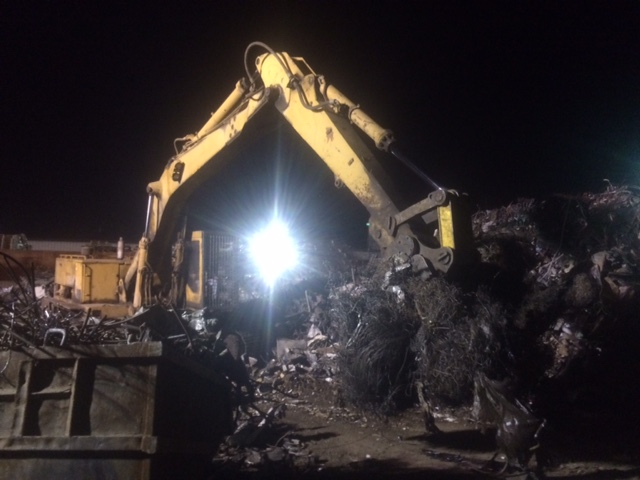
Truth is, Reza makes scrap a heck of a lot more exciting than law. After dinner we sped beneath brilliant streetlights along uncluttered freeways to visit the operation he oversees. Every day six dump trucks collect scrap from all over LA and dump it in a Santa Rosa lot. A crane operator sorts through it and fills a metal hopper about the sixe of a dumpster. A forklift driver lifts the hopper and discharges it into the mouth of a shipping container. Then, a bobcat operator compresses the scrap into the 8’x8’x40’ volume. When Reza and I arrived at ten p.m. a truck dropped off the day’s final load, while the sorting crew filled shipping containers. They fill twelve containers and don’t stop until they’re done. Tomorrow, semi’s will haul the containers to the Port of Long Beach while Reza’s six trucks will deliver more scrap.

IMG_5095Two days before meeting Reza, I’d visited the Port of Long Beach, where Lee Peterson told me half the containers returning to China were empty. I never asked what we put in the full ones. We import finished goods from China. What do they buy from us in return? Reza explained that we ship hay and cotton from the Imperial Valley, some of which is grown in contaminated soil and cannot be used in the United States. We also export scrap metal, which the Chinese repurpose. “We try to make our containers 45,000 pounds, near the legal limit for transporting on our roads.” With so many empty containers onboard, ships returning to Asia need weight, ballast. They are glad to have Reza’s scrap. “We only pay $450 to shop a container to China. It would cost three times that to ship one to Oakland.”

So the dance of moving stuff across America, across the world, continues.


How will we live tomorrow?

IMG_5100“Hand to mouth.

“The scrap industry is the pulse of our society’s digestive system. We’re the backend. We are seeing a slowdown in scrap. It’s going to continue. We’ve already scrapped the large factories in LA. Now we’re seeing scrap auctions on small containers.”

Posted in Responses | Tagged , , | Leave a comment

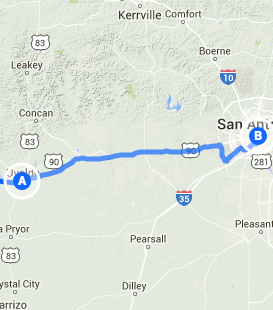
Trip Log – Day 220 – Uvalde, TX to San Antonio, TX

To San AntonioFebruary 3, 2016 – Sunny, 60 degrees

Miles Today: 91

Miles to Date: 11,379

States to Date: 28

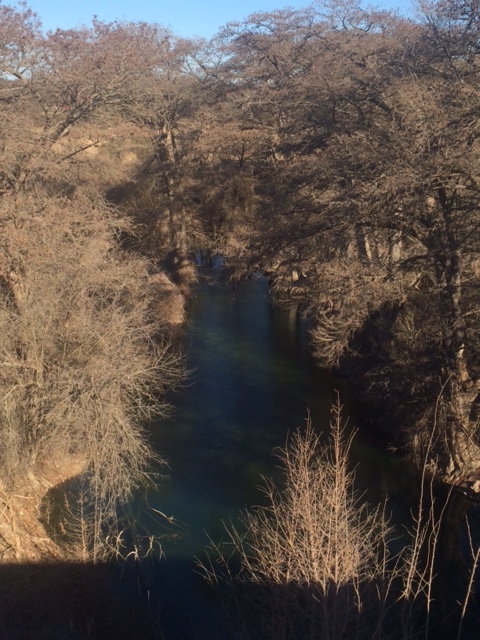
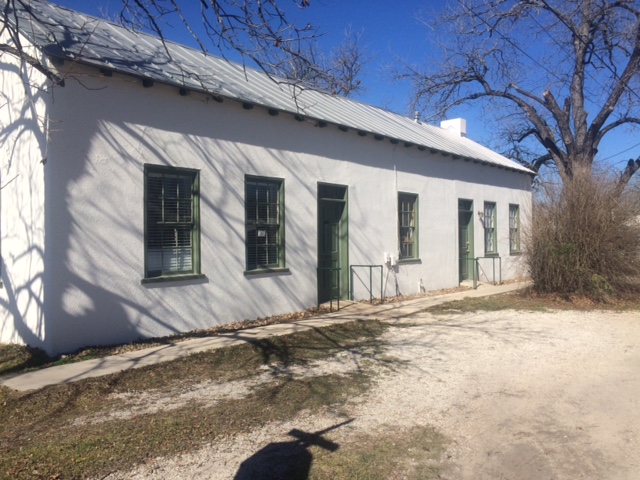
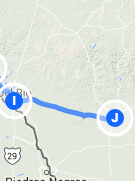
Today it was just me and the bike and the last of the wide-open spaces before I reached San Antonio. The small towns along U.S. 90 came more frequent. Each reflected some aspect of history, geography or commerce. Sabinal had gorgeous cottonwood trees lining the river. D’Hanis was full of Dutch surnames. The cafes in Hondo welcomed hunters; the markets hawked Deer Corn. Castleville has a district of traditional Alsatian buildings.

IMG_5801 IMG_5819

IMG_5804In mid morning the sky began to cloud. I watched moisture form into white wisps. The air I inhaled, tinged with humidity after so much desert, felt heavy. It smelled like a laundromat. Small changes are perceptible when traveling slow.

IMG_5814I rode by several taxidermy signs. When I passed a large shed with an open garage door displaying a giant elk, I decided to investigate. Joe Schneider of Realistic Taxidermy and his assistant Amanda explained the taxidermy process while they toured me through their showroom and workshop. The extent of hunting in this region and the range of animals that hunters want to display surprised me.

Facing a long ride with the wind often against me, I took several short breaks to keep my energy up and still make good time. I mixed traditional peanut/almond/raisin/M&M trial mix with dried cranberries. That makes a high-energy combination.

IMG_5818Texas roadsides are full of urgent messages, mostly political, strung out in multiple signs so speeding motorists can absorb their full intent. Ben Carson 2016: How to irritate most liberals. Enforce the Constitution. Believe the Bible. Have a job. After the Iowa caucuses, the person living in that trailer can’t be too happy.

I reached the outskirts of San Antonio by 3:00 p.m. But since I entered from the southwest and was staying in the northeast I faced twenty-five miles of bicycle treacherous sprawl.

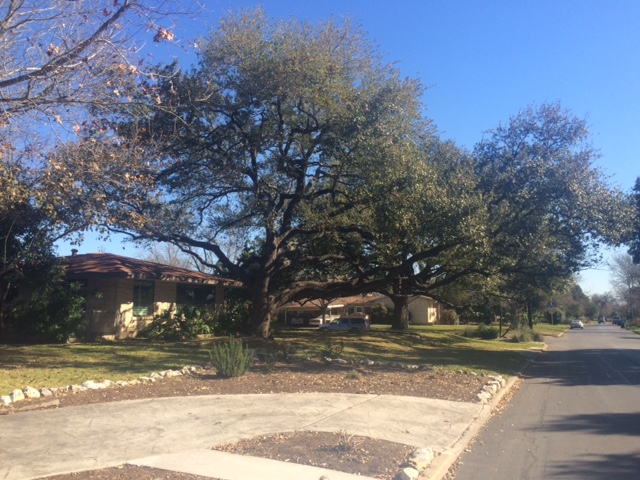
After eight days in small towns and rural outposts, riding past new subdivisions was dispiriting: so many houses, so many cars, so little environmental regard, all in service of such an unappealing way to live. San Antonio is sunny and warm. Why do the houses have dark roofs that absorb heat? Why are they packed across the landscape without regard to solar orientation? The rows of beige boxes with windows punched at random and roofs that slant toward nothing in particular sapped my enthusiasm; what people endure to escape city taxes and claim a scrap of private property numbs me.

Screen Shot 2016-02-05 at 1.56.12 PM

There’s no place for pedestrians or cyclists along this stretch where gas sells for $1.45 a gallon, a new low in my informal survey of tumbling oil prices. After a few nasty honks and much defensive riding I arrived inside the I-410 loop. Post World War II San Antonio is less dense than the exurbs; a city of ranch houses and expansive trees. Yet beyond the exclusive enclaves, affluent people have abandoned the city proper. Neighborhoods are falling into various degree of deterioration. Still, cycling within the loop was better. Traffic is more dispersed; there are even a few marked bike paths.

IMG_5831I arrived at my host’s before dark, invigorated by the accomplishment of traversing West Texas on my bike; ambivalent about returning to urban America.

Posted in Bicycle Trip Log | Tagged , , , , , , | Leave a comment

Profile Response: Rajesh Kasturirangan, Belmont, MA

HWWLT Logo on yellowWhen we say a glass is sitting on a table we know that it is sitting on a horizontal surface. If there is a cloth on the table, we don’t say it’s sitting on the cloth; we say it’s on the table. When we say a picture is hanging on the wall, it’s actually hanging from the wall. Our understanding of the term ‘on’ is the same, even though it’s applied differently.

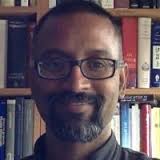
Rajesh Kasturirangan came to the United States from Delhi to study math at University of Wisconsin. Then he studied Cognitive Science at MIT. “The tie between these two disciplines is not strong. Cognitive Science is more experimental and experiential than analytical. However, thanks to Big Data, Cognitive Science uses more math today than previously, though not at the level that would be interest to mathematicians.”

images-2Rajesh’s doctoral work investigated how we are able to talk about what we see. His research explored comprehension that lies beyond a shared understanding of word’s literal meaning. That we understand a glass on a table sits horizontally while a picture on a wall is vertical is not language. It’s culture.

Rajesh’s background in cognitive science influences how he approaches his passion: climate change.

images“I have two perspectives. One. I am always political. The world doesn’t change unless we change the way politics is done. Climate justice requires a new way to organize politically. 350.org and being on the Board of the Better Future Project in Cambridge are part of that, though I think eventually the political response to climate will require more than new organizations. It will require broader coalitions. It will require people to become climate voters, just as now we have abortion rights voters and guns rights voters.

images“Two. We need to imagine a future that’s radically different from today. How do we think about the human future on earth? Traditionally, artists have done that. Now, we need technologists’ imagination.

“I call this ‘foreshaping’ versus ‘forecasting.’ If we develop the skills to contemplate the future, we can influence its shape. This leap is discouraged in academia. Spinning dreams into plausibilities is not science. To get a vision of the future right now, you can join a cult. I want something better related to science. We need to start by gathering people who share these ideas and this approach.”

Rajesh’s careful understanding of language, culture, and meaning makes him sensitive to how we align our objcctives to relevant issues. “It’s important for the things you bite off to be big. Don’t say, ‘let’s go solar.’ Say, ‘no fossil fuel.’ The latter is bigger and more comprehensive. Solar is a means for obtaining renewable energy, but it is only one vehicle. The real issue is balancing our energy use with renewable alternatives.”

imgres-1Rajesh realizes that we cannot change how we live in relationship to our earth unless we change our attitudes about wellbeing. “I come from a Hindu monastic background. I have come to see that is not what most people want, and is not a viable option for a large cross-section of our population.

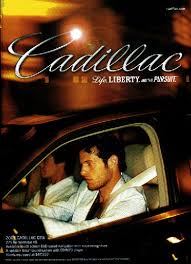
“We have to like where the future is going. There’s this Cadillac ad I have stuck in my head. At the end of the commercial, when the big black car with the beautiful man or woman drives off to the horizon, the tag line is, ‘Life, liberty, and the Pursuit.’ The ad is predicated on a particular view of happiness. How do we change that? What would a 21st century city on a hill look like?”

imgres-2Rajesh is involved with an MIT Alumni group working on climate change initiatives. He also has an idea for a series of what he calls, TED-future talks. “Typical TED talks are about people who have observed or accomplished something, which they share with others. I want something more projective, where someone postulates an idea of the future, outlines a scenario or range of options, and that becomes the catalyst for testing and troubleshooting it.”

One refreshing thing about talking with Rajesh is how he embraces, rather than bemoans, politics. “We are political animals. It’s okay for politics to drive our lives. We are also social animals. We associate and identify with large communities, nation states. In Massachusetts, we have a responsibility to the people of Florida during a hurricane. During major tragedies, like the earthquake in Haiti, we feel a responsibility that eclipses national boundaries. If we evolved to a world government, we would have a responsibility to everyone all the time. We would need to care about Iraq and Iran in war and peace, disaster and calm.

images-3“Politics is evolving beyond human beings. We have self-interests beyond the human realm. Politics is related to technological issues that it didn’t need to deal with before. Physics is now relevant in a fundamental way.

“Climate change can be the catalyst for bringing us together, or it can tear us apart.”

How will we live tomorrow?

imgres“There are two things that I think will define our existence; two themes that interconnect everything else. First is the ability of technology and science to organize this world. Second is the precariousness of human existence among the other creatures of the earth. These are currently moving in opposite directions. One feeds our sense of being gods on this planet; the other recognizes our interconnectivity. Equilibrium will require that we pull those strands together.

“Consider this. Instead of our twentieth century image of human beings flying off to the stars, human beings are going to merge with the earth.”

Posted in Responses | Tagged , , , , | 2 Comments

Trip Log – Day 219 –Del Rio, TX to Uvalde, TX

To UvaldeFebruary 2, 2016 – Sunny, 80 degrees

Miles Today: 74

Miles to Date: 11,288

States to Date: 28

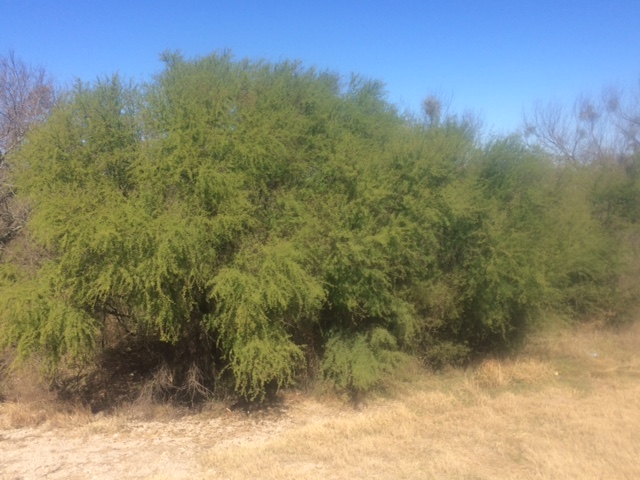
IMG_5794-1The earth stretches out from Del Rio toward San Antonio. The desert brush gets dense. Plants with leaves emerge, actual trees. The creeks run in trickles, the rivers run green. The land begins to undulate, to fold. I see my first spring green, tiny leaves tinged with a base of gold flutter in the breeze. I spin out of West Teas’ canyons, and enter Hill Country.


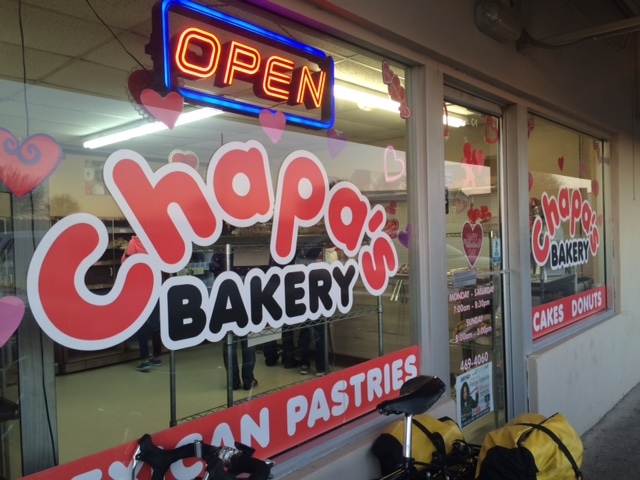
Screen Shot 2016-02-04 at 3.21.04 PMIMG_5791-1I left early, leery of whether the wind would be friend or foe. I passed Chapa’s Bakery in Del Rio; of course I had to carb up on Mexican pastries The young man behind the counter was friendly; we discussed my trip while he waited on other customers. The rhythm of a place like Chapas in a town like Del Rio, which is 90% Hispanic, is so much less rushed than the typical drive through Dunkin’ Donuts back East. People take their time choosing which pastries they want and placing them on round trays. They chat while they pay. One particularly ample Gringo omitted Mexican pastries from his tray: only traditional donuts to fill his gut.

IMG_5792-1 IMG_5793-1

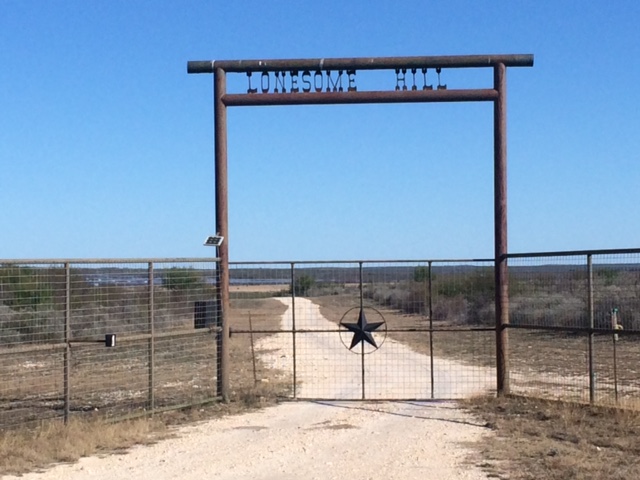
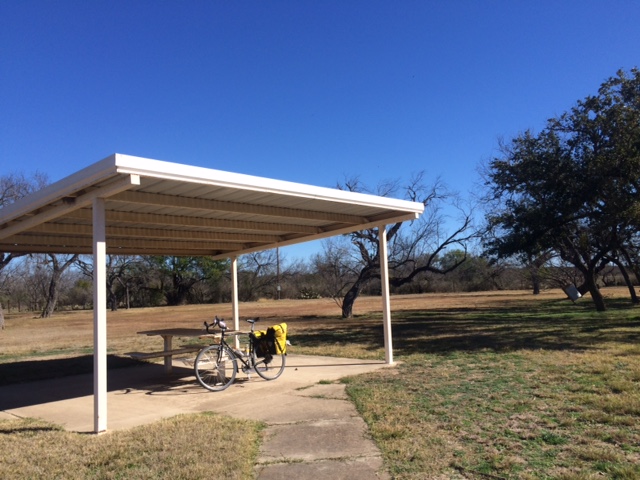
The robust wind pushed me along more than it braked my progress. I passed many huge ranches with elaborate gates. Lonesome Hill was suitably spare. There were no cattle beyond the gate, however, but acres and acres of solar collectors. A new type of ranch. I took a break at one of Texas’ lovely roadside picnic spots, and pedaled into Uvalde by mid-afternoon.

Posted in Bicycle Trip Log | Tagged , , , | Leave a comment

Profile Response: Abby Yanow, Watertown, MA

HWWLT Logo on yellowAbout halfway through our Saturday morning conversation at Starbucks in Watertown Square I realized I was speaking with a different person than half an hour ago. It wasn’t just that we’d shucked our overcoats and were warmed by coffee. The more Abby spoke about her studies in adult development and her advocacy for workplace change, the more animated, the brighter she became. Her enthusiasm was contagious. It’s always energizing to be around people who know their passions and pursue them in every aspect of life.

Abby zeroed right in on my question. “How I answer will vary depending on which part of my life we reference: my work, my studies, my community, my advocacy.” But as we talked, the threads of Abby’s interests entwined to form an integrated whole.

imgres

Abby is an Organizational Effectiveness Consultant and chair of the Boston Facilitator’s Roundtable. “People say I started it, but I didn’t. I created what it is today. When I joined in 2000 it was a dying organization, but I didn’t know that.” Abby became president in 2001, and has held that post ever since. The roundtable now has 320 paying members and even more participants.

Screen Shot 2016-01-11 at 8.35.52 AMAbby is a disciple of psychologist Erik Erikson’s eight stages of personal development, further refined by Robert Kegan’s focus on adult development (Immunity to Change) and Carol Gilligan’s contributions to gender difference (In a Different Voice). “Erikson’s eight stages of development were identified during the 1950’s and 60’s. They are linear and male-oriented.” Kegen’s five stages, which he refers to as Orders of the Mind, describe how individuals progress from objects subjected to physical and emotional forces to subjects who can objectify emotions and therefore better control them. “Kegan describes how we learn attribution-taking; how we take responsibility for our actions and feelimages-1ings; how we move from an either/or to a both/and. Gilligan highlights the collaborative nature of personal dynamics.” All three theorists are important in Abby’s endeavors to transform the workplace.
Abby envisions work environments that are harmonious, where people participate in their workplace. “I want to create joyful – that’s too big a word, but I’ve already used harmonious so it’s not too big – places to work. We need to end suffering in the workplace. We need to create workplaces based on adult relationships, not parent/child relationships.”

How will we live tomorrow?

imgres“There are so many streams that lead to your question. I am a community member, a social activist, and work to involve more people in their own government, in addition to my professional pursuits. The future is now. Models of community employment are happening in many places around the world. The progressive vision of the future is already happening.

“If we are committed to the environment we need to create jobs in the environment. This makes your question a political question. There is a difference between how we will live and how we want to live. I want to see less jobs in defense. I want to see more in solar, energy, affordable housing, tidal change. I only hope that we can achieve this before the military overtakes us.

“It will start a the local level. In Watertown we are instituting a ban on plastic bags. We spoke up for citizen input on hiring the new police chief. These may seem like small things, but we are requiring that the citizens have a voice.”


Posted in Responses | Tagged , , , , , , | Leave a comment

Trip Log – Day 218 – Comstock, TX to Del Rio, TX

To Del RioFebruary 1, 2016 – Sunny, 80 degrees

Miles Today: 34

Miles to Date: 11,214

States to Date: 28

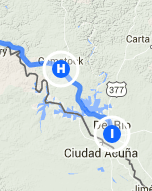
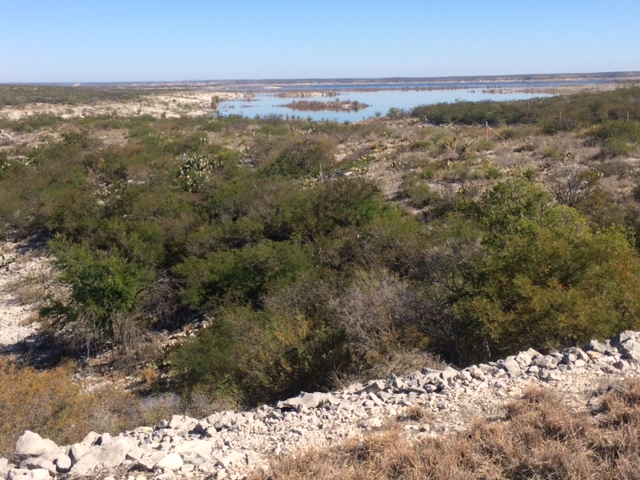
 IMG_5782A short ride but plenty of exercise, as the wind was in my face the entire route. Ten miles outside of Del Rio, The Amistad Reservoir spreads out across the US and Mexico. The U.S. and Mexico dammed the Rio Grande to control floods in Del Rio and its larger neighbor, Ciudad Acuna. Flood gauges still line local streets, despite no floods since the dam opened in 1969.

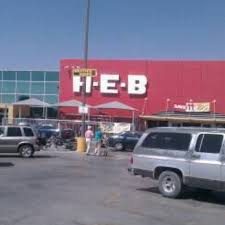
imagesI stopped at H-E-B for lunch and supplies. JC and Israel, two of the guys serving up roasted chicken with rice and beans, fried onions, jalapenos, and fresh tortillas, topped off my order with proclamations of our world vis-a-vis the predictions of The Book of Revelation. Then they gave me my meal for free.

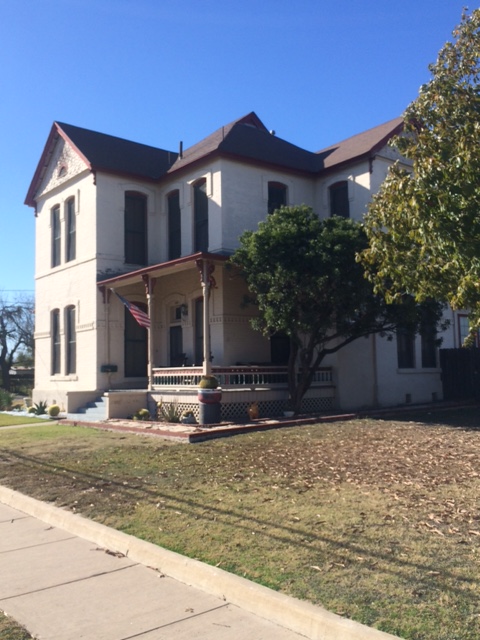
Del Rio is a town of big commercial strips. Main Street is not a commercial center. Rather it’s a residential boulevard with gorgeous examples turn-of-last-century residential architecture.

IMG_5784 IMG_5783

My couchsurfing host Kevin requested I arrive early since he had to teach a Monday evening class. He invited another long distance cycle friend for an early supper with his family, which left lots of time for playing cards and more talk when Kevin returned.

Posted in Bicycle Trip Log | Tagged , , | Leave a comment