Trip Log – Day 228 – Austin, TX to Rockdale, TX

to RockdaleFebruary 11, 2016 – Sunny, 80 degrees

Miles Today: 73

Miles to Date: 11,644

States to Date: 28

I pedaled out of Austin early to meet Gail Vittori and Pliny Fiske of the Center for Maximum Potential Building Systems, an environmental think tank and hands on laboratory that’s been creating innovative approaches to how we build for over forty years. Their work was an integral part of my architectural education, and they are still fomenting forward thinking ideas.

IMG_5990It was almost noon by the time I reached Austin city limits. I spotted a woman standing beside a van on the side of the road and screeched to a halt. It was Patrice Peach, a local acupuncturist I’d met the previous day. I don’t know how she came to be waiting for me, but I accepted the fingerful of malli energy powder she offered and gave her a hug: my farewell to Texas’ counter cultural center.

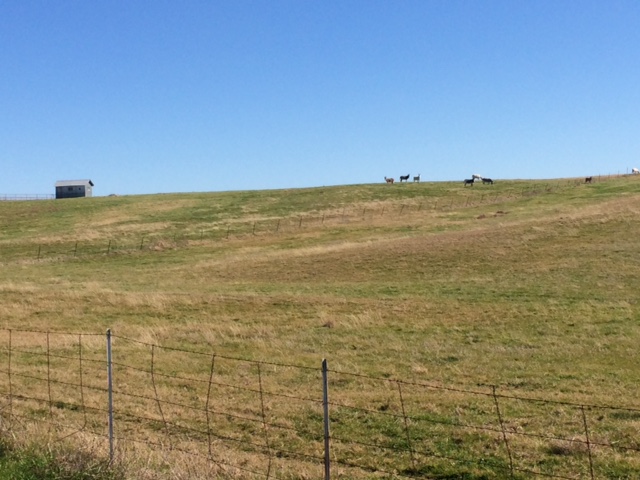
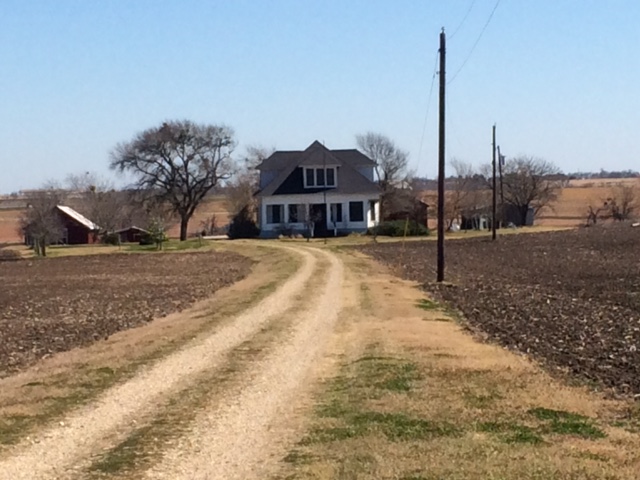
IMG_5999The day was fair, the countryside gentle and the wind benign. After too many miles on the shoulder of U.S. 290 I turned north on Country Line Road. I was supposed to connect to Texas 93, but when I reached that highway I simply couldn’t pass up the opportunity to meander more local roads. So I continued an unchartered route, using wind and shadow to guide my north and easterly direction. I passed rolling ranches, watering holes, longhorn cattle, sheep, and donkeys: twenty miles of the most pleasant cycling of my trip.

IMG_5998 IMG_6001

Eventually I reached U.S. 79 and twenty more miles of easy highway riding. I was surprised how tired I felt given such good conditions; until I realized that every day in Austin I’d stayed up late visiting friends and got up early to meet new people. When eight hours of sleep ratchets back to six for several nights in a row, the body suffers.

IMG_5991Just outside of Rockdale I spotted a woman standing beside a car on the side of the road. Turned out to be Victoria Everett, that evening’s couchsurfing host who spotted me on the road. Just as Patrice fared-me-well out of Austin, Victoria welcomed me to Rockdale. Texas is huge. But such hospitable folk make it feel small and friendly.

Posted in Bicycle Trip Log | Tagged , , , , , , , | Leave a comment

Profile Response: Center for Science and the Imagination, Arizona State University, Tempe, AZ

HWWLT Logo on yellowBob Beard, Communication and Public Engagement Strategist for the Center for Science and the Imagination (CSI) took me out for a rambling lunch at House of Tricks on a January day so lovely we ate outdoors. During our meal, three other CSI cast members joined us for a rolling conversation. Ed Finn is CSI’s Founding Director. Ruth Wylie, (from yesterday’s profile) has a joint appointment as CSI Assistant Director. Joey Eshrich is Editor and Program Manager. If ASU’s focus on the future portends anything, it’s that we’re all going to live in a world of many titles.

Besides being the most ubiquitous television show in history, CSI is a non-academic unit of ASU that draws people from multiple disciplines and departments. When ASU President Michael Crow met Futurist/Science Fiction writer Neal Stephenson at a conference the two engaged in a productive academic tangle. Stevenson had written a paper called “Innovation Starvation” in which he challenged universities with thinking bigger. President Crow retorted that science fiction wasnimages-1’t giving us big enough pictures to pursue. All that dystopia. The result of their interchange was Hieroglyph scientists and science fiction writers working together. Although Hieroglyph pre-dated CSI, it was the kernel from which CSI formed.


Today, CSI is a handful of thought leaders and a Futurist in Residence (currently inventor and sci-fi author Brian David Johnson). CSI is funded by NSF, NASA, ASU as well as the World Bank. Considering the size of the staff, breadth of funders, and scope of the future, I asked how they decide what to pursue. Joey laughed, “Everybody in future space is connected. We want to do what we do well and not duplicate other efforts.” Ruth explained CSI’s two basic criteria: “First, it has to align with our mission as a center. Second, it has to be something that at least one of us is really excited about. Actually, the second is more important than the first.”

images-7

Other excerpts from our conversation:

Ruth: “Our focus is creating a shared vision of the future. The future is not waiting to be unveiled. That’s why your question is so valuable. It’s accessible: a simple question to ask that is difficult to answer. I believe that you don’t ask a question unless you think there is an answer that you can enact.”

images-9Ed: “The point of CSI is to create agency – to give people choice and responsibility. We are lazy in our storytelling. It’s either post-nuclear apocalypse or some other Michael Bay movie. It’s damaging. It replaces agency with disillusionment. The dystopian scenarios are rote. The best stories are the ones we inhabit. That’s why Frankenstein is a great myth. He’s scary but vulnerable. He’s this sort of messy, raggedy guy. We reshape the story all the time. That’s what makes it so good.”

Ruth: “The bigger, crazier ideas invite participation. Outlandish stories invite response. People fill in the gaps between now and the big idea. No one thing defines the response.”

images-8Ed: “Breaking out of the present allows us to create new perspectives. A drone delivering stuff in one hour is a great thing. But where does it lead? What is the logical conclusion of it? Faster? More? Sustainability is a good narrative frame for discussing the future. But it’s only one way to look at the world we live in.

“All narrative frameworks have to be set in our best interests. There is latitude of how we define self-interest. Immediate satisfaction and long-term satisfaction are often not satisfied by the same thing. Biological self-interest should include our children and our children’s children’s interests.

images“The thickness of the social media network will bring us together. The Boston Marathon bombers were real people. We heard from their friends from high school. Knowing this didn’t change the magnitude or trauma of their crime. But they were not cardboard demons. They were complex people, with real lives, more like us than we cared to admit. This is a positive that counters the shallow aspects of social media.”

Joey: “I’ve been at CSI since the beginning. I’m Ed’s Jack-of-all-trades.I do whatever falls in the cracks. Not everything we do is big funded. The Intel Tomorrow Project, five volumes of science fiction writing by high school students, was a collaboration, not a grant. They supported the project, CSI provided editorial guidance, and devoted time to selecting stories, and helped with distribution.

imgres“‘Future Tense’ is a joint venture of ASU, Slate, and the New America Foundation. The tag line is ‘A citizen’s guide to the future’. The online publication discusses how technology can affect our lives. Recently, the focus has been on privacy.

“I teach one class a year. This year, its “History of the Future’ which includes historical writing about the future from different periods and perspectives. At the end of the course, each student will write a future scenario for Arizona.”

How will we live tomorrow?

images-3“We will be surprised by how much it’s like how we live today. It will be about being present in the moment.

“What I’d like to see is a tomorrow where we worry less about what we know and more about that we understand. Knowledge by itself is not that valuable. Applying knowledge to bridge understanding is the key.” – Ed Finn

images-6“Information is easy to get but people don’t take advantage of it. We want to cut through the clutter and try to engage people. I hope that people will acclimate, use, and embrace what is available to us.

“Another piece. There is all this great culture out there. But we’re bad a ferreting out information to know what is valuable. Our relationship to pop culture has changed. It used to be that we bought records and newspapers and books and tickets to concerts. Now we don’t pay. There’s good journalism out there, with ads. We’ve replaced paying with money with paying with our time. I have started subscribing to things digitally. I pay because I don’t want to live in a world of ads. I subscribe to Dan Savage because I appreciate what he has to say and I want him to get paid for it.” – Joey

images-5“The idea is communities shared communities, knowledge communities. Shared information allows us to find our communities and our identities earlier in life. Our families of origin are important, but they will become less so. They will be supplanted by on-line communities of choice.” – Bob

Posted in Responses | Tagged , , , , , , , , | Leave a comment

Trip Log – Day 227 – Austin, TX

To AustinFebruary 10, 2016 – Sunny, 80 degrees

Miles Today: 15

Miles to Date: 11,571

States to Date: 28

Austin is a city where Prius drivers cut off bicyclists.

Austin is a city where the Hispanics are getting shoved off Cesar Chavez Blvd to make room for bungalows turned into boutique hotels and auto shops turned into Austin School of Film.

Austin is a city where too many people quote the original purchase price and current value of their home to a guy a in yellow shirt who’s just passing through.

Austin is a city where the parking lot at the Whole Foods mastership has an electronic space counter to minimize aggressive space mongering among the hurried healthy.

Austin is a city in which people with walk-in closets reminisce about swimming naked at the Barton Springs pool.

Austin is a city where funky juice bars are franchised and ‘The Originator’ is an energy concoction rather than a video game hero.

Austin is a city where vehicles wanting to make a right turn on a red light breathe down my fenders.

Austin is a city where natives’ anxiety about 120 to 150 people moving in every day is eclipsed by the resulting economic boost.

IMG_5980 IMG_5979

Austin is a city famous for its laid-back vibe and music scene: an oasis of liberalism in a Blood Red State. It’s got a high cool factor. After four days of cycling every corner of town, Austin is just another urban leviathan smearing tranquil hillsides with freeways, shopping centers and boxy dwellings. The inner core is riddled with angular additions that agitate the easy rhythm of the old neighborhoods.

imgresThe dichotomy between lore and reality doesn’t make Austin a bad place; just more like San Antonio or Houston than it wants to admit. Whenever America cities grow, the dazzle of profit drives us to move fast and grow hard. We dilute what makes us distinctive.


Posted in Bicycle Trip Log | Tagged , , , | Leave a comment

Trip Log – Day 226 – Austin, TX

To AustinFebruary 9, 2016 – Sunny, 75 degrees

Miles Today: 43

Miles to Date: 11,556

States to Date: 28

I encountered every quadrant of the city in pursuit of interesting people, and found them in all quarters. Many freeways feed center city from the north; I crossed several to reach Austin’s east side, the traditionally industrial, Black, and Hispanic precinct. Of course I found a great Mexican market and panaderia.

IMG_5925 IMG_5924

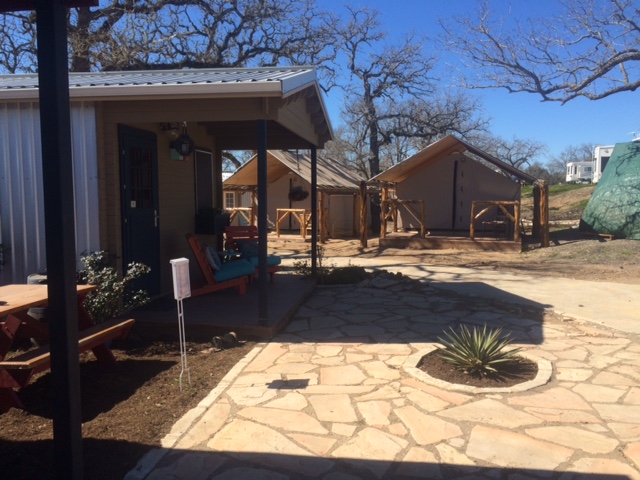
Just beyond city limits, Alan Graham, recently named Austinite of the Year, is building a community of tiny houses and RV’s for formerly homeless people through Mobile Loaves and Fishes: one of the most inspiring visits of my trip.

IMG_5940 IMG_5950

I wound back to town along Walnut Creek Trail. Throughout the near East Side the minority population is being squeezed out by rampant gentrification. On the south side of Colorado River (not the big one that flows to the Pacific, the small one that bisects Austin) I meandered through Travis Heights to visit Tanya Hall, CEO of Greenleaf Book Group, an innovative multi-platform publisher.

IMG_5915Pedaling back north, I bypassed the Whole Foods megaplex to provision at a new Trader Joe’s, continued past the Capital and UT to Hyde Park. My host Cynthia assembled a group of lively thinkers to discuss how will we live tomorrow.

Austin may be the best cycling city in Texas, but that ain’t saying much. During my three weeks in Texas I’ve endured more honks and heckling than the rest of my trip combined. It continues here. Riding north on Guadalupe, along the UT campus, a group of guys whizzed by and spritzed me with a water bottle. What could I do but laugh? After all, I recently bought a squirt gun to distract dogs that cross my path. A cyclist in Texas is nothing more than a wayward dog.

Posted in Bicycle Trip Log | Tagged , , , , , | Leave a comment

Profile Response: Dave Guston, School for the Future of Innovation in Society, Arizona State University, Tempe, AZ

HWWLT Logo on yellow“The future is for everyone. The more people have a voice, the better.” I met Dave Guston, Director of the School for the Future of Innovation in Society (SFIS), at the Planetary Conference: Climate 3.0 at Arizona State University (ASU). He explained why ASU has a focus on the future. “The vision comes from the top. Michael Crow, President of ASU, trained in public administration with a focus on science and technology policy. In the late 1990’s, at Columbia, he set up the Center for Science, Policy, and Outcomes in Washington DC.” Since coming to ASU in 2002, Michael has created over a dozen trans-disciplinary schools and major research initiatives. He’s championed the effort to model ASU as the ‘New American University’, making ASU a national leader in online education and revising its charter: ‘Access, Excellence, Impact.’

imgresDave worked in D.C. on climate issues and emerging technologies during the time Michael Crow was there. He studied Technology and Society at Yale then Political Science at MIT. While there, he picked up one of his favorite phrases, attributed to Einstein: ‘Politics is a lot harder than physics.’

‘Anticipatory Governance’ is a term Dave uses often. It is not foresight. It is thinking about a variety of futures and what they might be. “There are a whole lot of options beyond laying on the tracks and giving up and saying ‘no’ to everything. We want a pluralism of visions.”

imgres-3SFIS offers a PhD in Human and Social Dimensions of Society and Technology and several Master’s degrees. The school focuses on science’s implications on society. What is the impact of large-scale solar energy infusion in Northern Africa? What is ‘responsible development’? How does nanotechnology enhance the human condition? SFIS will begin an undergraduate major in Fall 2016. The intro course for the undergraduate degree is, ‘Welcome to the Future’. Students will explore theories of the future to promote skills that allow them to co-create their future.

What does Dave think about studying the future in Phoenix, a place often cited as one of the least sustainable places for humans? (Bird on Fire: Lessons from the World’s Least Sustainable City by Andrew Ross). “What does that mean? The Salt River Valley has supported human life for over 2,000 years. Now 4.5 million people live here. It is unsustainable by many measures, but here we are. We create more externalities than other places: it takes a lot of energy to get our water; we use a lot of fossil fuels. We have long-term water/energimgres-4y nexus issues. But how sustainable we are depends on where you draw the boundaries of the sustainability circle.

“In some ways living in a place that is considered unsustainable sharpens our focus. One of our graduate students wrote an anticipatory governance scenario of a land use plan for this region. A Phoenix city planner picked up on it and asked us to develop a Phoenix 2050 studio. Twenty-five graduate students from six disciplines developed plans, which were shared and well received by the city.” That aligns well with President Crow’s vision of access, excellence, impact.

How will we live tomorrow?

imgres“The simple answer is, some of us better, some of us worse. I am not in the business of predicting. I want to work toward articulating predictions that include what people want as we move forward. The more that people can participate in creating predictions and envisioning options, the better we are doing. If we can’t get pluralism right, it won’t matter whether we get the science right. Oops, I guess that’s a prediction.”

Posted in Responses | Tagged , , , , , , | Leave a comment

Trip Log – Day 225 – Austin, TX

To AustinFebruary 8, 2016 – Sunny, 60 degrees

Miles Today: 22

Miles to Date: 11,513

States to Date: 28

There are times when even cyclists need an admin day. I spent the morning in McDonald’s, America’s Living Room, catching up on my posts, chatting with homeless folks and a trio of cross-country backpackers. I spent the afternoon at a public library, America’s other Living Room, scheduling my hosts and conversations in Houston amidst pairs of elementary students and after-school tutors struggling through the task of formal learning.

IMG_5913 images

In between I enjoyed a Texas-size lunch at Whataburger. The regional chain has a great system and distinctive food, which explains why it was packed while McDonald’s was near empty.

IMG_5911 IMG_5917 IMG_5918

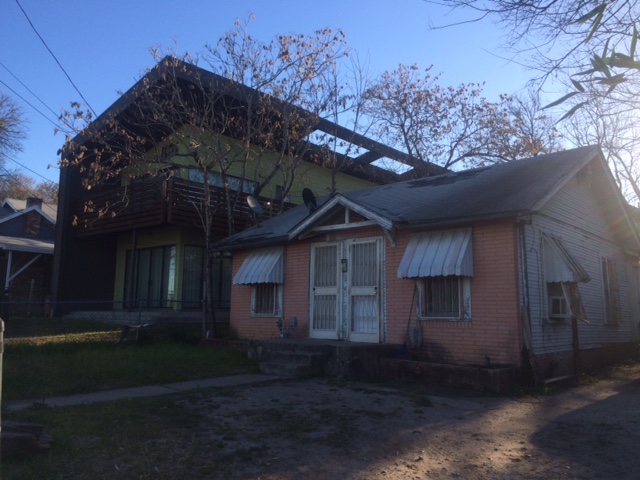
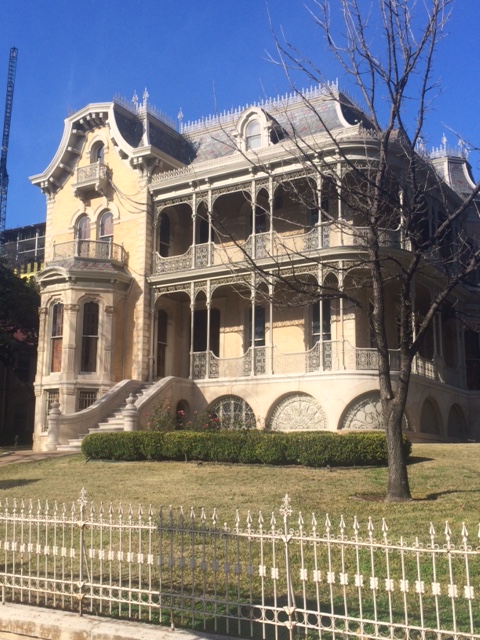
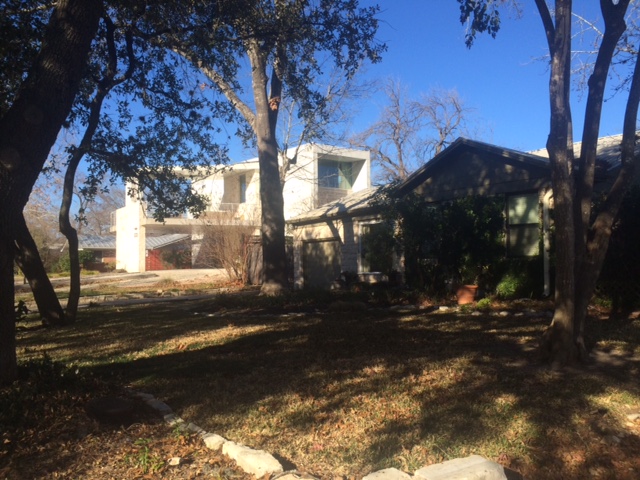
I also rode through a variety of Austin neighborhoods. The city is a patchwork of classic Southern bungalows, wood frame cottages, and basic houses exploding with contemporary additions; modest homes being demolished for monster replacements, stately old mansions, and less elegant new ones. There is residential construction on every other street.

In late afternoon I pedaled north and west to spend the night with a high school friend, Austin. We had a superb time catching up on forty years of our (mostly) satisfying lives.

Posted in Bicycle Trip Log | Tagged , | Leave a comment

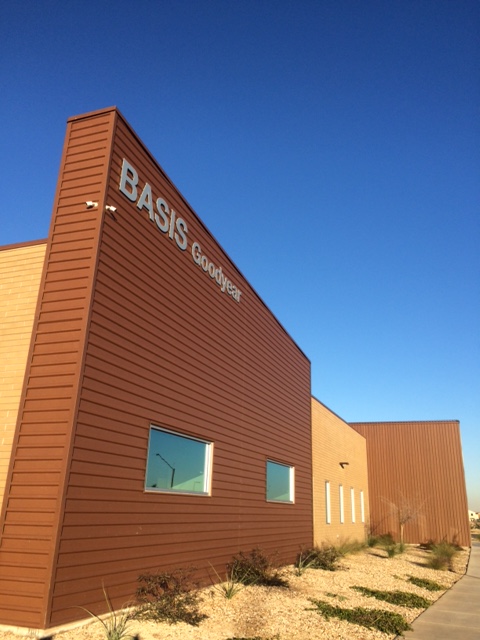
Profile Response: Fourth Grade Students, BASIS Goodyear, Goodyear, AZ

HWWLT Logo on yellowI was invited to speak with the fourth graders of BASIS Goodyear about my trip and my question. Most people under age 12 respond to my question literally: they tell me what they plan to do in the next twenty-four hours. That wasn’t the case at BASIS. Perhaps it was because I asked for responses after talking about my route, telling stories from the road, and explaining my daily routine. Perhaps it was because of the way a group conversation builds upon itself. Most likely, it’s because I witnessed BASIS students acting in more sophisticated ways than their peers. They’re disciplined. They’re aware that the world is large and complex, but that complexity isn’t frightening. Fortunately, they’re also still ten years old, so some of their responses border on silly.

After our discussion and the many questions that followed, I compiled their responses in the order the students offered them. I was impressed at the variety of ideas; one did not necessarily hinge on the previous. I was struck how these students represented a similar range of responses I receive from adults. They touch on family and technology, faith and change.

IMG_5382

How will we live tomorrow?

“It depends on us.”

“We’ll have flying cars and jumping shoes.”

“We’ll have better food.”

“We’ll have high-tech space stations.”

“We’ll have to adapt to our surroundings.”

“We will live better than today.”

“It will be very nice.”

“We’ll have fresh water.”

“It will be different from today.”

“We will be much smarter.”

“We will work harder.”

“We don’t know. There is no future unless we make it.”

“It depends on how we live today.”

“We’ll have homework that does itself.”

“Everything changes a little bit.”

“We will live in peace.”

Posted in Responses | Tagged , , | 1 Comment

Trip Log – Day 224 – San Marcos, TX to Austin, TX

To AustinFebruary 7, 2016 – Sunny, 60 degrees

Miles Today: 42

Miles to Date: 11,491

States to Date: 28

LBJ Day! I started at the campus of Texas State University in San Marcos, which LBJ graduated from in 1930. Although our 37th President has a commemorative statue on the quad, I imagine he would not recognize the place. I have never seen a college campus with so many parking garages; more places to park than to attend class. Every student must come with her own car.

IMG_5888 IMG_5886

My ride was so pleasant; past the spring that creates the San Marcos River and along quiet Farm to Market Roads through Kyle and Buda. The closer I got to Austin on this placid Sunday morning the more packs of enthusiastic cyclists left me in the dust. Weekend warriors of the Hill Country are fierce indeed. the parade of horseback riders with a Conestoga wagon were more my speed.

IMG_5889 IMG_5892

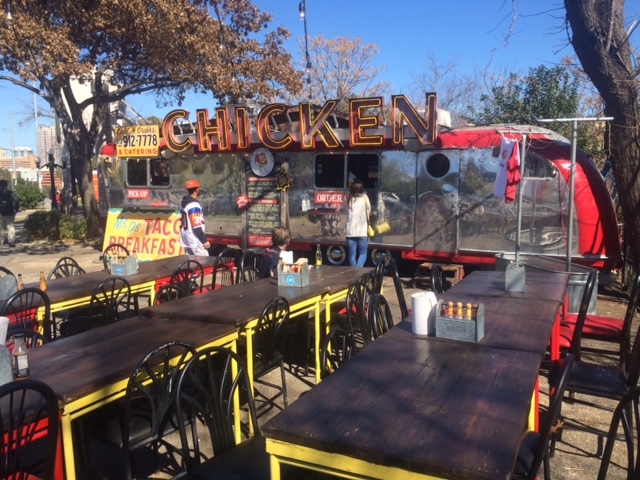
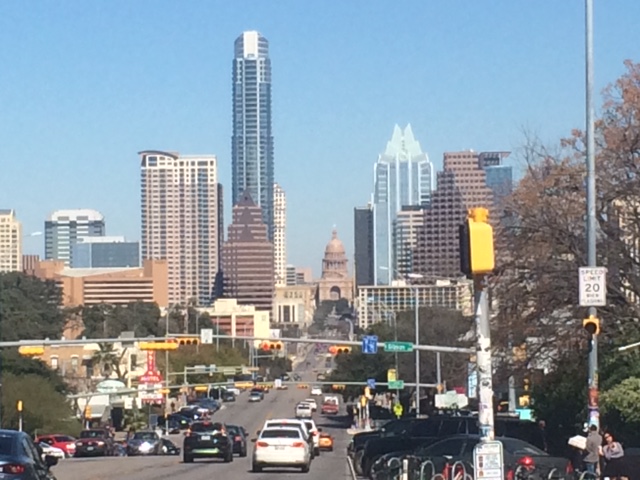
Entering Austin from the south, Congress Street evolved from an industrial area to a pawn strip to new angular apartment buildings to the funky Travis Hill neighborhood. I stopped for lunch at a fried chicken food truck and pedaled over the Colorado River, through downtown’s office and residential towers, past the capital, Longhorn’s stadium, and UT’s tower, from which former marine Charles Whitman invented the modern phenomenon of random mass shootings in 1966.

IMG_5894 IMG_5898 IMG_5896 IMG_5910

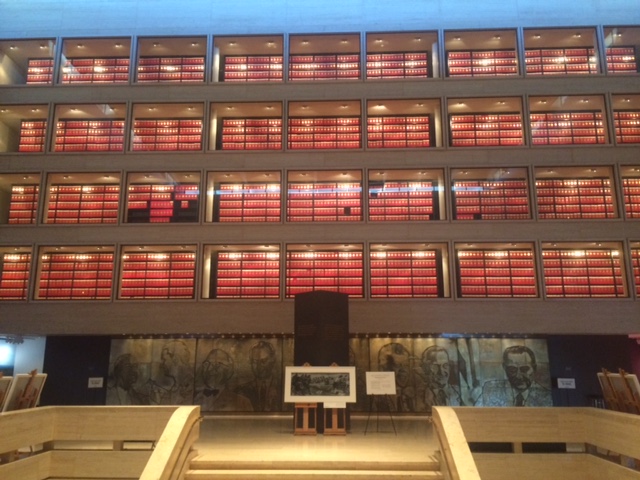
As part of my quest to visit Presidential libraries, I spent an informative afternoon at the LBJ Library and Museum. The museum does a great job balancing the dichotomy between LBJ’s domestic success and his Vietnam conundrum. I found the museum more interesting than either Reagan’s or Nixon’s. Perhaps that’s because LBJs Great Society resonates with me. Perhaps it’s because the museum owned LBJ’s failings better than Reagans (which admitted to none) or Nixon’s (which is clouded by his). Or perhaps it’s because LBJ was president during my own coming of age. I was eight when he was sworn in; thirteen when he stepped down. So much of my worldview, both good and bad, was shaped by the LBJ years. He was a ruthless and manipulative man, demonized for Vietnam more readily than heralded for the domestic transformation he imprinted upon our country.

IMG_5903 IMG_5905 IMG_5906


Posted in Bicycle Trip Log | Tagged , , , , , , , | Leave a comment

Profile Response: Robert Bowley and Michael Beaulieu, BASIS School, Goodyear, AZ

HWWLT Logo on yellow“BASIS is open to everyone, but it is not for everyone.” Robert Bowley, Head of School at the Goodyear BASIS School that opened last fall, is proud of the talent and diversity of his students. The kindergarteners through eight graders who compose this inaugural class represent a spectrum of socio-economic and ethnic backgrounds. However, they do have one thing in common: rigor.

BASIS is a for-profit company that teaches a highly structured and challenging curriculum in a number of settings throughout the United States. In some states they operate as private schools. In states where the charter school laws enable BASIS to operate without modifying its pedagogical approach, it operates Charter Schools. Arizona has a flexible charter school law; BASIS operates thirteen charter schools in the state. BASIS Goodyear, an exurb thirty miles west of Phoenix, is the newest.

IMG_5387BASIS receives 75% of the per-student funding a public school receives. The school has equal-opportunity access for incoming students. However, it does not have to provide bus transportation, operate a kitchen, hire teachers with college degrees in education, or keep students in its program who fail to meet standards.

The core of the BASIS model is LET/SET: Learning Expert Teacher / Subject Expert Teacher. Classes are large, 30 to 32 students, but team-taught. The Learning Expert Teacher, who often has traditional childhood education training, stays with his students all day. The Subject Expert Teacher has unique knowledge in math, science, language skills, or other disciplines. This combination infuses people with deep expertise at the elementary level. The idea also infuses BASIS’s administration. As Head of School, Robert Bowley, is a longtime educator while Michael Beaulieu, Operations Manager, brings business world experience to running the facility.
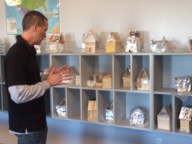
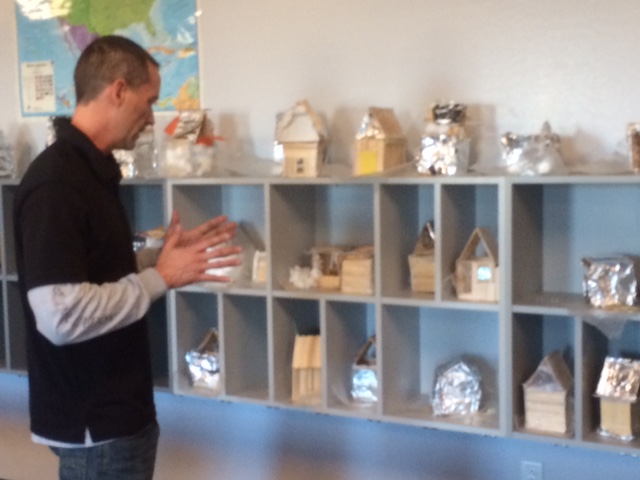
IMG_5377A typical day for fourth graders includes three 85 minute specialty sessions: math/science, humanities, and a rotating specialty which might be art, music, engineering, or Connections, a project-based curriculum. Mike, the engineering Specialty Expert, was a toolmaker by training. He described the engineering curriculum, focused on the design process: propose, research, develop scenarios, choose an option, design and construct, text, communicate results, evaluate and redesign. “All of our students are academically challenged. Engineering and connections allow our students to get their hands dirty.”

In addition, all students receive 40 minutes of Mandarin, 30 minutes of PE and 30 minutes of independent reading. “Why Mandarin?” Robert explains. “Exposure to Mandarin triggers different aspects of the brain. The characters are not just symbols, they are ideas.”

imagesThe result of this rigorous schedule is that all BASIS students are at least one year ahead of their public school peers. Grades 5 through 8 are AP prep years. Fifth graders have two science periods per day; sixth through eighth grade students follow 3/3/3: three sciences three times per week for three years: biology, chemistry, and physics. “The curriculum is vertical. All classes build upon each other.”

Over the next four years, BASIS Goodyear will add one grade level per year until they have a full high school, during which they will take two years of AP level courses.

BASIS is unapologetic about testing. Students take mid-term comp exams in January and year-long comprehensive tests in June. If a student fails even one comp exam, they cannot continue to the next grade. However, BASIS offers opportunities, including a summer learning packet, to help students retake, and pass, their comps.

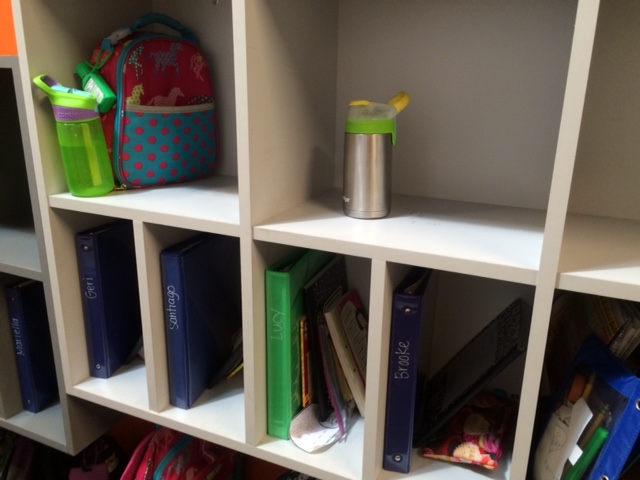
IMG_5376BASIS operates on the idea that every part of our lives has to be modeled and can be learned. Its not just about subject matter, it’s about how children relate to one another and adults, how to manage time, how to be organized. Every student has a cubby in the hall, and there are shared cubbies for small groups of students. Mike Beaulieu, explains “We are all about helping our kids to become organized.”

The BASIS Schools throughout Arizona have an exemplary track record in placing students in competitive colleges. The state embraces this parallel path of public education. “The City of Goodyear gave us $5 million toward our new building. The mayor came to visit. She sees BASIS as a draw for industry; she wants the town to be more than a bedroom community.”

How will we live tomorrow?

robert_bowley_LThumb“I lived in Japan for nineteen years. I have seen the influence of boundaries. We are going to live in a borderless world. Technology is going to break down artificial barriers. Google will be able to translate every language, no matter how obscure. It will be able to translate gesture and nuance. Technology is going to allow us to communicate far easier, far faster, far better than we do now.” – Robert

michael_beaulieu_LThumb“We need to put in the time to prepare the next generation so they can have health and education. Those are the two big things. If you have health and education, the greater you can participate in our world, the less violence you will suffer. I believe morals are learned. The foundation for that is a good education.” – Michael

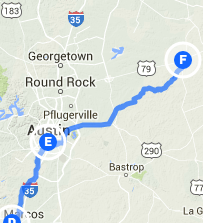
Posted in Responses | Tagged , , , , , , | Leave a comment

Trip Log – Day 223 – Converse, TX to San Marcos, TX

To San MarcosFebruary 6, 2016 – Sunny, 60 degrees

Miles Today: 44

Miles to Date: 11,449

States to Date: 28

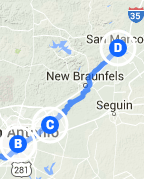
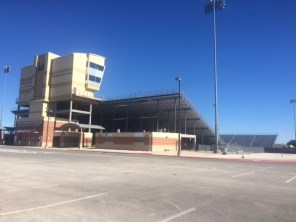
 IMG_5863Welcome to the Texas Hill Country – gigantic high school football stadiums and the cheapest gas yet. Fill up your car for $135.9 per gallon in New Braunfels. According to the inflation calculator, that’s cheaper then the 25-cent per gallon gas I used to fill up my very first tank as a fledgling driver in Oklahoma in 1971.
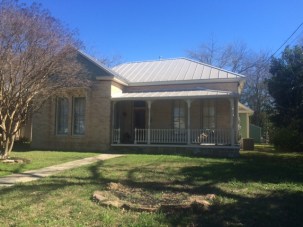
The weather was perfect for cycling, although the wind gave me a workout. I oscillated between three environments: lovely quiet Farm to Market Roads, miles of big box houses along the I-35 corridor, and the picturesque town of New Braunfels, which has vintage Texas architecture, both commercial and residential.

IMG_5872 IMG_5874

I took a break at the New Braunfels library to get relief from the wind and enjoyed two hours writing at a counter with a vista of the blue skies sand rolling hills. Two old men near me discussed presidential politics. “This guy Bernie Sanders is a communist. He lived in a kibbutz!”

IMG_5876Beyond New Braunfels the village of Gruene is a busy tourist spot. I navigated around a phalanx of parked cars, heard the folk singers entertain from the outdoor open stage, and marveled at the number of people who gathered to shop and eat at this crossroads on a sunny Saturday afternoon. I seemed to be the only person riding open on two wheels instead of being enclosed by four.

The final stretch to San Marcos was pure delight. The wind dissipated, the shoulder was smooth. I cast a long late afternoon shadow. Last night’s rain left the air crisp and fresh. The deeper I inhaled, the more I wanted to draw it into me.

Posted in Bicycle Trip Log | Tagged , , | Leave a comment