Profile Response: Neil Smith, Airscape, Medford, OR

HWWLT Logo on yellowSometimes my architect’s eye picks up details of our built environment that become relevant later. Cycling through Oregon I noticed many more roof vents on new houses had than I’ve seen in other areas. I figured local building codes required high ventilation levels. Then I met Neil Smith, Owner of Airscape, a company that manufactures programmable, quiet, and energy efficient whole house fans that accommodate Oregon’s stringent requirements. “California has changed its energy code to require whole house fans in certain regions as well. That’s good for us, but not as good as it might seem. The changes only apply to new construction.”
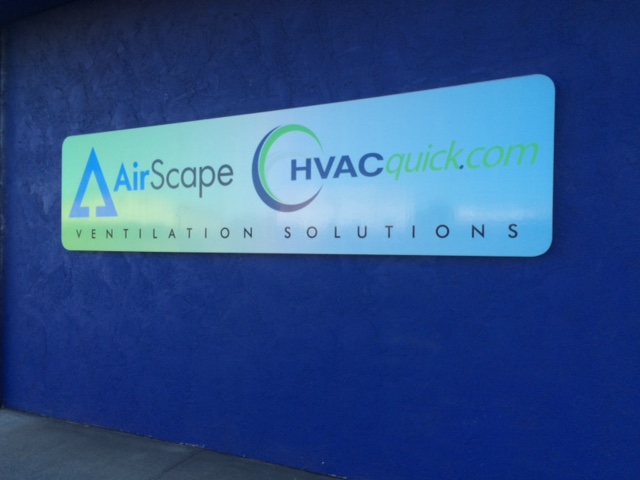
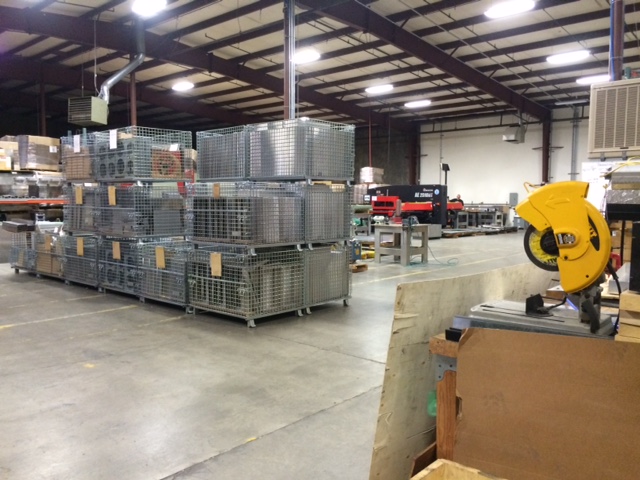
IMG_4205Neil is a small business owner – Airscape has fifteen employees, one location and $6 million in sales – holding his own against some larger competitors by making high quality products and selling related components online. “We offer fully sealed closing doors when the fan’s not in use. That’s an energy saver.”
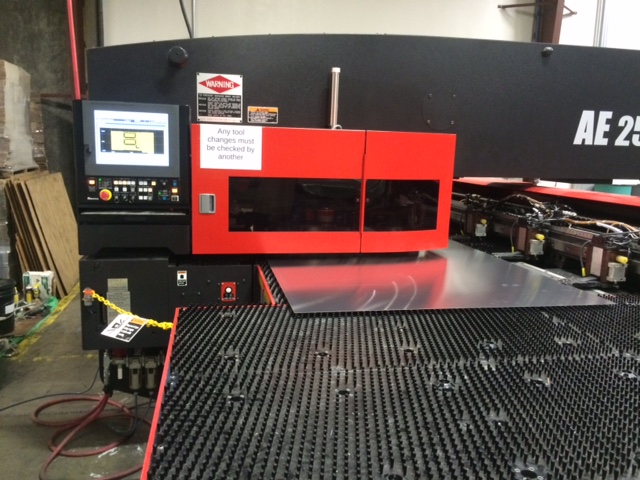
IMG_4202Neil toured me through his operation and showed off his latest improvement, a large-scale CNC punch. “Last year I spent $550,000 in equipment. This year I want to invest in people. If we grow to be a $10 million company the staff doesn’t have to grow in a linear way.” But along the way, his philosophical diversions proved to be as interesting as his fabricating shop.

IMG_4198 IMG_4199“I used to only distribute stuff, now I make it. When you make something, you live it. That makes it more important and rewarding.

“What do you do when you have everything? You worry about what you can lose.

“I think we’ve had an artificial Middle Class, put in place by the prosperity of the last century, as opposed to good habits.”

How will we live tomorrow?

IMG_4203“Who’s we?

“I really don’t know the answer. I can tell you for sure it won’t be this way. Nobody is happy following the American experience. That’s why they come to Ashland, to get away from the rat race.

“What scares me most is our libertarian streak. Have you been to Silicon Valley? For once, engineers and technocrats have power. They are in control now and are worse than anybody.

“We are set up to recognize fast moving danger, but we’re blind to slow danger. It’s a blatant defect in our programming. I will stop worrying when my children start worrying. We need to be engaged. In the Army, at my work, we have comrades. They are tighter than friends. We have moved from the positive aspects of unions to the protectiveness of guilds. They skew our perspectives on the individual by protecting the few.

“Money is the only free speech we have. Politicians use our money to get us to like them. We are a nation of myths. We are so caught up in being sold things, it’s as if our brains short circuit to advertising.”

 

Posted in Responses | Tagged , , , | Leave a comment

Profile Response: John Javna, Ashland, OR

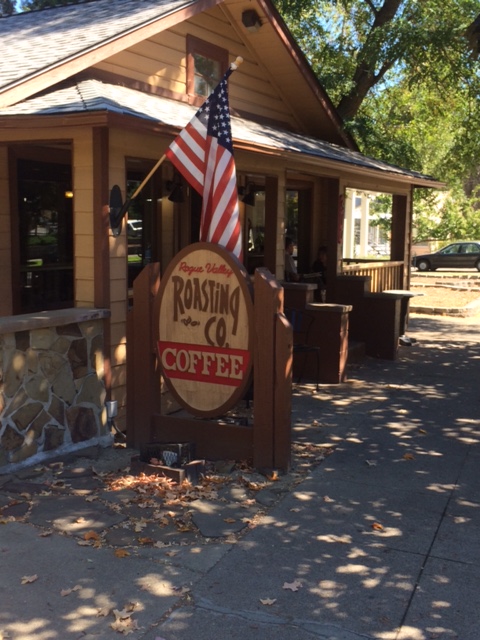
HWWLT Logo on yellow“I like the idea of talking about myself, but I have limited time.” John Javna said as he checked his flip phone. We were sitting on the front the porch of Valley Roasting Company in Ashland OR at 10:30 a.m. on a Monday morning. The place was packed. Life and work in this town revolves around coffee shops. Despite his comment, John spoke for more than an hour more.

IMG_4174To hear John describe his life, he’s bounced among a variety of curios adventures and, by serendipity, each has turned into a personal and economic success. I suppose that’s how a self-proclaimed Berkeley liberal who made dollhouses in Vermont, wrote a series of pop culture books about the 1960s, and eventually penned the five million copy bestseller, Uncle John’s Bathroom Reader, needs to describe himself. His persona depends upon appearing counterculture. Regardless, John must have worked hard to publish over fifty books and create a brand he sold for enough money to devote the last twenty years or so to community pursuits in Ashland. “I became a self-publisher, though I am not a business man. Businessmen think of money as a commodity I just happened to make money from what I did.”

imgresI don’t buy that line of reasoning, but as a chronicler of the1960’s, John is savvy to the vagaries of reality and illusion. “If you want to talk about how will we live tomorrow, you have to be honest about how we live today. People create truths to suit their purpose. What people believe is not what really happened. The iconic milestones that define our world are often fabricated. We think they represent the best part of ourselves, but the reality is disillusioning.”
John met his wife in Vermont, they moved to the Bay Area during his publishing phase, and when their son was five they moved to Ashland. After he sold the Uncle John brand he spent two years helping reenvision what is now Scienceworks. “I sat in that empty space and thought, ‘What should this look like?’ If you have a vision you can go far. I had a vision for the museum and thirteen years later, here it is.”

imgres-1The 2004 election drew John back to publishing and he wrote 50 Simple Things you Can Do to Fight the Right. “I didn’t want my kids to live in a world where others define how we’ll live. “ It was a terrible experience. Politics is so adversarial and John had to “live in the enemy’s camp” to write it.


John turned his focus back to Ashland. During the 2008 recession, the local Food Bank closed one day a week for lack of food. John came up with the idea of collecting donated food door-to-door. Thus began the Ashland Food Project, through which a quarter of the people in town donate food every month. “My persona credo is ‘A small thing done well is a big thing.’” The Ashland Food Project started small, but created a template for other communities to followimgres-2. There are now similar projects in 45 communities in 11 states. John provides guidance and support for new endeavors. “This is the most powerful thing I’ve ever done.

“I believe in collective consciousness. Everyone knows something; no one knows everything. We are social beings. We need to know that what we do matters. Community is not large. It’s concentric circles. The largest circle is our town. Beyond the perimeter of our city, community isn’t real. Its an idea.”

How will we live tomorrow?

IMG_4172“How will we survive tomorrow? That’s about water. How will we live tomorrow? That’s about community. Not community of choice; that fosters polarization We need to have enough in common to understand our connection yet include a range of diversity.”

Posted in Responses | Tagged , , , , , , | Leave a comment

Profile Response: Chip Lindsey, Scienceworks, Ashland, OR

HWWLT Logo on yellowThe natural history museum in Ashland is extinct. It was a great idea, with lots of money and a spiffy building back in 1993. But after three years, the museum closed and the building was shuttered for six years. Community leaders investigated how to repurpose the contemporary structure on the edge of town. They decided that something more participatory, with a science bent, might succeed where dioramas had failed. A consultant proposed a $4 million retrofit, which didn’t fit either the spirit or budget of the new enterprise. So they got local volunteers to build exhibits and refurbished the place for a tenth that amount. Now Chip Lindsey, Executive Director, oversees a thriving educational resource. “The intellectual bank of capital in this area is huge. There’s no reason a museum like this exists in a community this size. It’s the community’s museum. It could only happen in Ashland.”

images

As museums go, Scienceworks is not splashy. But the homegrown quality of some of the exhibits actually adds to the participatory gestalt. Nothing seems precious here. Chip, his staff of fourteen, and their army of volunteers provided science opportunities for almost 75,000 people last year – more than three times the entire population of Ashland. They’ve even turned their ability to create exhibits into a profit-center, earning $100,000 last year by building exhibits for other institutions.

IMG_4163

Chip’s background is in biology and education; he takes an organic view of learning. “The phrase, ‘a man never steps into the same river twice’ applies to how children learn.” We cannot know, in advance how a given child will respond to a particular opportunity. Scienceworks’ objective is to provide opportunities unlike those found in traditional classrooms. “All learning is free choice. Here, we are masters of free choice learning.”

imgresOregon has no standardized test requirements in science, only Language Arts and Math. As a result, science can be relegated to as little as fifteen minutes of classroom time every other week. Many elementary school teachers are uncomfortable with science, and so aren’t keen to teach it. “If you look at a child’s total waking time from birth until adulthood, only 15% of it is spent in school. We have to focus on capturing some of that other 85%. On Saturdays, we see affluent white and Asian families. We don’t see working class families and people of color. Our challenge is to make this place relevant to people who didn’t grow up going to museums. If people don’t put wrinkles on kid’s brains early, their brains won’t get wrinkled.”

IMG_4169Although Scienceworks, like most science museums, has a focus on school-age children, it also promotes programs that merge art and science, provide hands-on opportunities for adults, and offers family-centered programs. “We simulcast the Mars Landing in our theater at 10:30 at night. The place was full, although people could have watched it at home. We made it a group experience. One that spanned across our entire community.”


How will we live tomorrow?

IMG_4170“The museum of the future will be a place where people go to learn on their own terms and share. We have to make it interesting and relevant.”


Posted in Responses | Tagged , , | Leave a comment

Nature Bats Last Radio Interview

imgresOn Tuesday 11/17 I was the interview guest on prn.fm radio program, Nature Bat’s Last to discuss my journey and question to date.  Here is a podcast link for anyone interested in listening to the program.

Posted in Published Articles | Tagged , | Leave a comment

Trip Log – Day 197 – Scottsdale, AZ to Tempe, AZ

to PhoenixNovember 18, 2015 – Sun, 65 degrees

Miles Today: 39

Miles to Date: 10,142

States to Date: 26

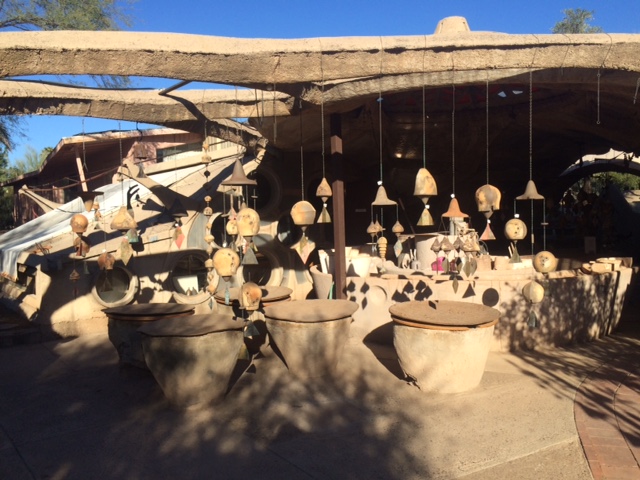
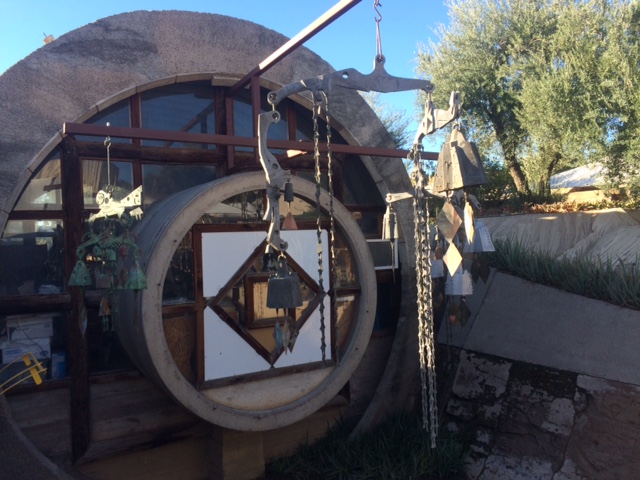
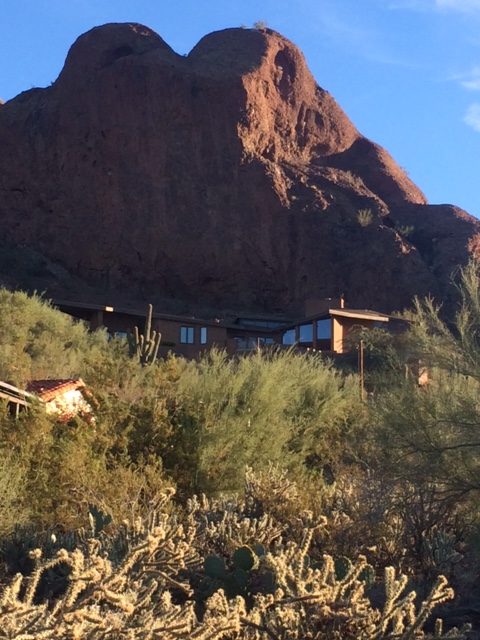
My hosts, Janice and Stew, are long time Scottsdale residents who suggested I visit Pablo Soleri’s studio, only a few miles away from their home. Soleri was an architectural darling back when I was in graduate school. His writings about ecological architecture and constructing Arcosanti, a self-sustaining city in the desert north of Phoenix, were visionary.

IMG_5326 IMG_5328 IMG_5327

Unfortunately, they still are. Soleri is now best known for his beautiful bells and wind chimes, which craftsmen devotees still create by hand at his Pleasant Valley Studio. As I strolled through the fascinating but weird place, I couldn’t help but think about my question. Soleri had great insights and ideas, but he dealt in the future, promoting ideas untethered to contemporary reality. Forty years on, his devotees are still hawking bells to finance construction of a conceptual city. I’ve always been more interested in tomorrow, which is always a direct outgrowth of today and starts from where we are.

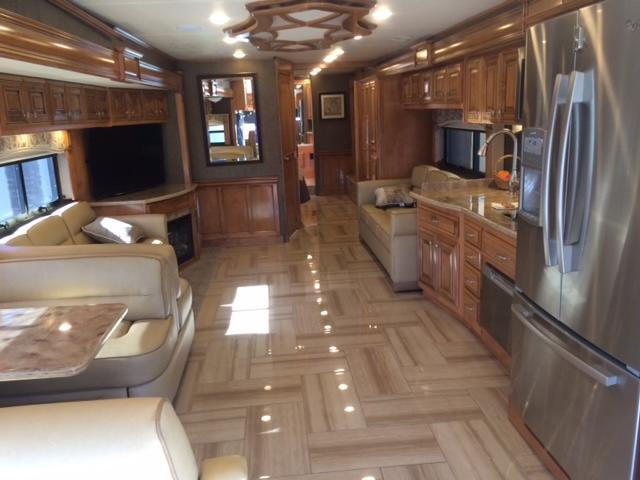
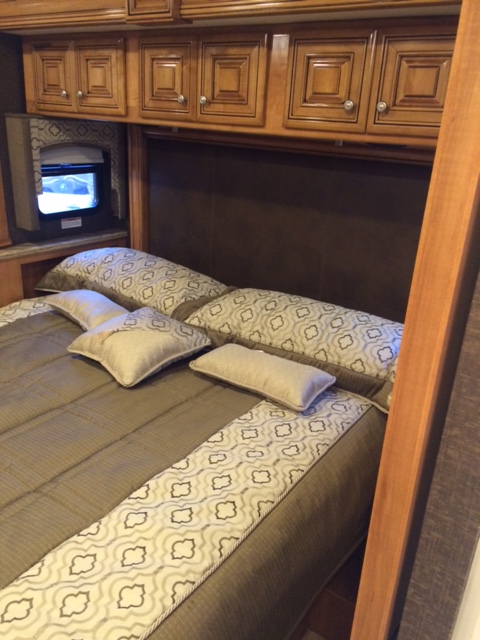
IMG_5329I left Soleri’s fantasy world to grapple with a hard reality that all tour cyclists fear – motorhomes. I’d sent an interview request to Camper World, one of the largest dealers along Mesa’s RV mile. But sales people and managers hot pototoed me until I stopped bothering trying to get any perspective on the RV industry and just enjoyed touring the models. Van conversions are nifty but feel like camping. Small motor homes, in the $100,000 range, have plastic laminate partitions and dingy showers. If you want top of the line, with extensions to make your ride twelve feet ride when parked, luxury leather sofas, and a full French door refrigerator, the list price is $405,000. From now on, when these behemoths storm me down the road, at least I’ll know I’m being unbalanced by a whole lot of dough.

IMG_5333 unnamed IMG_5331

Since today was my last riding day for some time I indulged in Golden Corral Buffet, two hours of pretty good food that, cumulatively, constituted a pig-out. When I couldn’t delay any longer, I rode my bike to Landis Cyclery, checked Surly in for a major overhaul, changed into street clothes, caught one bus, then another, transferred to light rail, and got to the airport.

IMG_5334Everything was smooth until I reached security. The TSA agent analyzed my bike lock and decided I couldn’t carry it on. At $25 each way, it was hardly worth checking. I considered locking it to an airport bike rack, hoping it wouldn’t get hacksawed off in my absence, until an Information agent offered to deliver it to the bike store for me. Glenda and I became fast friends. I learned all about her grandkids, her daughter-in-laws spending habits and growing up in Pennsylvania. Even though I was separated from my trusty Surly, Glenda proved to be yet another bicycle Samaritan. At least I hope so. I won’t know for sure until I return to Phoenix and see if my lock found my bike.

IMG_5335A misplaced bike lock is the lame cliffhanger to this chapter of my journey, a journey that will never grace the silver screen because my mishaps are dramatically trivial compared to the goodness and light I have experience everywhere.

This is my last Trip Log until I return to Phoenix in January. I hope readers will continue to enjoy profiles and responses. And if you haven’t contributed your thoughts to my question, make that your end-of year resolution. How will we live tomorrow?

Posted in Bicycle Trip Log | Tagged , , , , , , , | 9 Comments

Profile Response: Dorothy and Steve Miner, Ashland, OR

HWWLT Logo on yellowDespite my attempt not to draw conclusions across people I talk with until my journey is over, some themes are so striking they cannot be ignored. Without exception, every person I speak with who’s made a non-economic life choice – whether how they work or where they live or what they study – is happy with their decision to step sideways from the economic ladder. No one exemplifies this truth more clearly than Dorothy and Steve Miner, who uprooted their family from suburban Boston and moved to Ashland OR seventeen years ago.

images-1“When our oldest son Jake was in middle school, he was diagnosed autistic. It was our wake-up call to move to a place where he, and our other two boys, could thrive in their best possible way.” Steve’s an engineer, by training and temperament. He and Dorothy built a checklist of places that met their criteria of small cities with four-season climates and a community focus. They identified seventeen potential places, all in the West, flew to Albuquerque with their sons, rented a van, and struck out to visit them all.

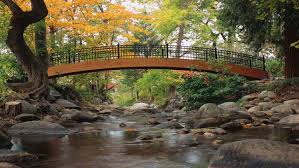
images“The day we landed in Ashland, we knew this was the place.” Steve described their experience as the three of us walked through the gorgeous preserve that runs from downtown, past the Oregon Shakespeare Festival outdoor performance arena, and up a ravine. “We came to this park. It was a night when Mars was orbiting close to earth. Half a dozen people had set up telescopes and let anyone passing by take a look. I though it was some astrological group, Turns out it wasn’t anything organized. Guys with telescopes figured that if they wanted to view Mars, others would as well. So instead of watching from their homes, they brought their scopes to the park. Six of them, without coordinating their effort.” Dorothy and Steve knew that instant Ashland was the place, but being the thorough engineer he is, they still visited the rest of the towns on their list.

images-3Dorothy and Steve have no regrets of their decision. They love Ashland. They like how the community looked out for their sons as they grew up. “Living here is like being in a fish bowl. That is both good and bad. But when you’ve got three teenage boys, it’s mostly good.”

Like most people I’ve met who’ve made ‘non-economic’ life choices, the economics of Dorothy and Steve’s decision have worked out just fine. Steve’s an expert at turning around tech-driven businesses. Sometimes he works in Ashland or nearby Medford, other times he’s worked remotely. Dorothy’s a Physician’s Assistant whose skills are needed anywhere. The ability to make ‘non-economic’ choices is easier for well-educated people with valuable skills.

images-2Dorothy and Steve’s three sons are grown now. They live far from Ashland, though one is about to return for a stint. But Dorothy and Steve are not about to follow their boys. In fact, they recently downsized from their family home to a smaller place down the street. Ashland is their town now. They aren’t going anywhere else

How will we live tomorrow?

me and miner“I’m thinking about what has to change. The disparity between the ‘haves’ and the ‘have-nots’ has to end. I am a ‘have.’ As a ‘have’, I am trying to balance the things I do with what I think are good deeds, but they don’t seem to do much to address the problem.

“The food issue is huge. The American way is free enterprise, but that’s not okay if you’re harming people. The big food companies are doing harm.

“The ‘me’ component of things is more extreme. We have become more isolated and more narcissistic. On the other hand, our children’s generation is better. They are content with less.” – Dorothy Miner

“There are three requirements for happiness in life: something to do today; something to look forward to, and someone to do it with. That’s all you need. If you have the fourth, a stable foundation, then the first three can be sustained over time. We have all four. We want everyone else to have them as well.” – Steve Miner


Posted in Responses | Tagged , , | Leave a comment

Trip Log – Day 196 –Scottsdale, AZ

to PhoenixNovember 17, 2015 – Sun, 60 degrees

Miles Today: 26

Miles to Date: 10,103

States to Date: 26

Lifestyles of the rich and famous! I loitered all morning at my hosts’ house, overlooking the pool and golf course in the backyard. Madeline was gracious to let me stay so that I could take my radio interview on Nature Bat’s Last from her house instead of having to find a quiet place for my call-in on the streets.

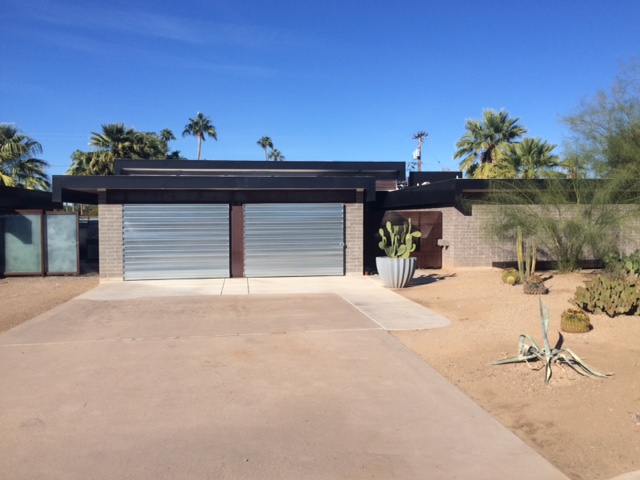
IMG_5302Afterward, I took off to explore Arizona’s tony neighborhoods and was not disappointed. San Francisco, New York, LA, even Seattle may have higher real estate prices, but they can’t match the pizzazz that Scottsdale’s and Pleasant Valley’s immense lots and sprawling homes deliver. True, some houses are ill proportioned; you can’t make a successful 10,000 square foot statement by just pumping up a 2,000 square model and adding a string of garages. But many of the residences are architecturally striking; with corrugated metal, weathered steel and crisp stucco that fits the desert well. Although the scale of these low-lying mansions is conspicuous beyond reason, I appreciate that most people in Phoenix don’t succumb to the California penchant to grow lawns where they don’t belong. The gravel, sand, and native plant landscaping is terrific.

IMG_5309 IMG_5321 IMG_5310

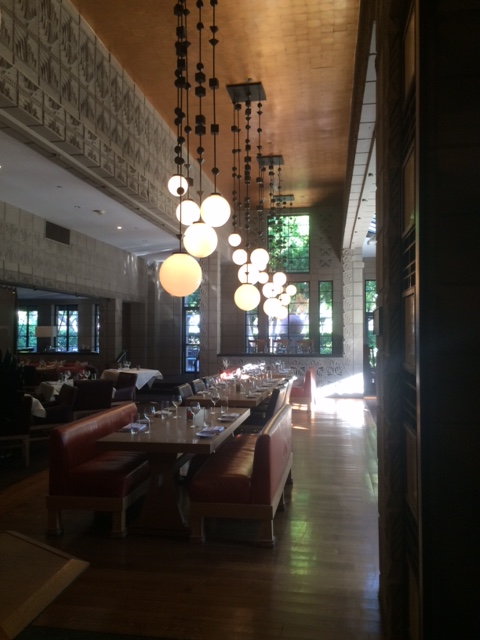
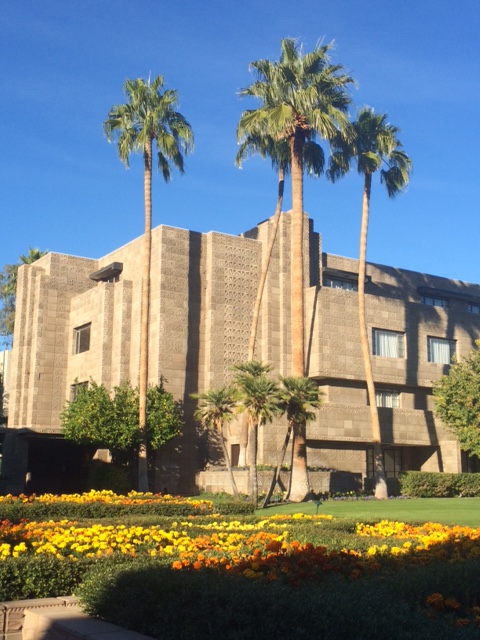
IMG_5312I wound my way to the Arizona Biltmore, the lavish 1920’s resort for which Frank Lloyd Wright was consulting architect. Everything about it is classy. The staff was very accommodating to a guy who clearly wasn’t registering for a room; the valet kept a personal eye on my bike. The Biltmore turned out to be one of my favorite Wright buildings, beautifully conceived and exquisitely executed. It may be the best example of his two dominant aesthetic ideas, as it was built toward the end of his Prairie / Usonian work and at the beginning of his larger scale, surface ornamented work.

IMG_5313The Biltmore plan and massing grow out of the Prairie tradition, albeit with a Southwest sensibility, while the wonderful use of decorative modular block precursors his work at Marin County and the Guggenheim. In addition to the great architecture, there are cool photos of Clark Gable, Rita Hayworth, Bob Hope, and other glitterati to cement Biltmore’s cultural status. Every President since Herbert Hoover has stayed there.


IMG_5314 IMG_5315 IMG_5318

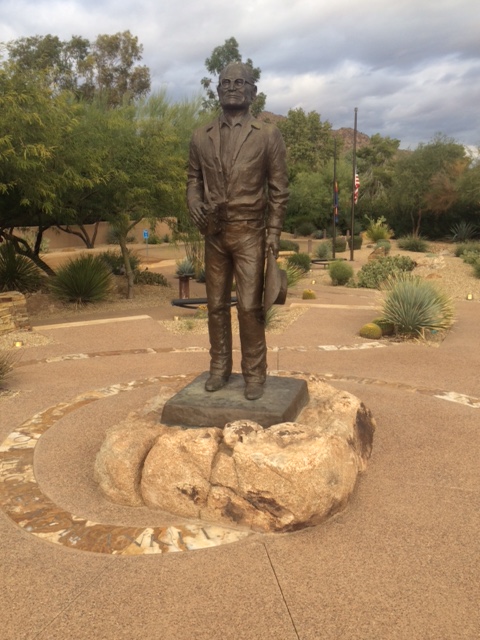
IMG_5301On the way to my second Scottsdale host, I stopped at the Barry Goldwater Memorial. Though he doesn’t merit a Presidential Library, the affluent citizens on this area have erected an elaborate memorial to their favorite son, which includes two marble paths with inlaid bronze letters. Problem is, the quote about the natural beauty of the West is banal, while the one about preserving our nation’s security is fearfully bellicose. Like all of us, Goldwater reflected his origins. In his case, individualism and emphasis on private property led to a logical preoccupation with security. I am glad to be rolling along with everything I need and little that anyone else wants.

Posted in Bicycle Trip Log | Tagged , , , , , , | Leave a comment

Profile Response: Brian Heron, Presbyterian Minister, Grant’s Pass, OR

HWWLT Logo on yellowBrian Heron moves from place to place working himself out of a job. He’s a peculiar expert; taking the helm at a struggling congregation and transitioning it into something stable, though that often means merging or closing a church. He recently spent six years with a congregation near Portland that successfully merged with a growing United Church of Christ and turned their remaining real estate into a homeless shelter and community garden. Now Brian’s assigned to a shrinking church in Grant’s Pass. Since more than half of all Presbyterians are over age 65, and sixty percent of Presbyterian churches will close in the next ten years, Brian’s role a work-out man is a necessary gig.

imgres-1The growth of religion in this country, and worldwide, reflects the increased polarization of our economic, social, and political lives. Religions with strict doctrines: Mormons, Fundamental Christians, Muslims, even Atheists, are on the upswing. But traditional Protestants, Reformed Jews, and Buddhists are declining. “The main stream religions are nuanced. People who align with ambiguity can do that without a church.”

People once described as liberal Christian’s now back off the term ‘religion’. “There’s a shift taking place from religion to faith and spirituality. Take marriage. I haven’t performed a wedding in a church since the 1990’s. People don’t want to be married within church walls; they want to be married outdoors or in a place meaningful to them.”

images imgres

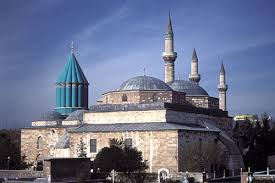
A few years ago Brian made a bicycle pilgrimage from Rome To Konya Turkey, where the poet Rumi is buried. The Rome to Rumi route took Brian from the seat of traditional religion to the heart of mysticism, a journey that reflected humanity’s move from a belief system to an experiential system. Brian’s written a book about his experience, which he hopes to use as the centerpiece for retreats and conferences about pilgrimages. “I have done my own work. Now its time for me to lead others.”

Brian thinks the world is at an awkward time. Part of his congregation, the older people, wants the ‘truth’, while others want to embrace ambiguity. “I want to articulate what we share in community by listening to the community rather than delivering what we believe from a position of authority. I listen first and then articulate from what I hear.”

imgresIn order to put some structure to the ambiguity, Brain’s identified what he considers five essential beliefs within the Presbyterian Church. They are far from commandments and don’t dictate behavior. Rather, they outline commonalities while allowing for personal interpretation.

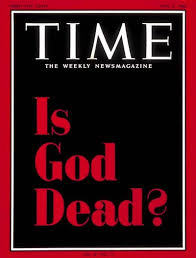
First, God is sovereign. Theology built the idea of God around an omnipotent being. This is dropping away. God may be spiritual energy. In the 1960’s, Death of God theories flourished in response to the Holocaust. How could God be both all powerful and all loving? Actions proved otherwise. The language of the omnipotent God fell away in seminaries, but it never trickled down to congregations. “We would be in a better, more honest, place today if we had followed the Death of God idea, but congregations didn’t want to hear it.”

imgres-2Second, we are Christo-centric. Different denominations stress different aspects of God. Pentecostals focus on the Holy Spirit. Unitarians are theists. Presbyterians know God through Jesus.

Third, we believe The Bible is the ultimate criterion for hearing God’s voice. Other writings can be inspired, but The Bible is the primary source.

Fourth we are a priesthood of believers. This goes directly to the Reformation idea that we are all priests. What is happening now, with people developing their own faith perspectives, is really the logical evolution of Martin Luther’s ideas.

Finally, we are reformed and are always reforming. We don’t believe that we have the ‘right’ interpretation, but will continue to search for deeper truth.

images-1“Christianity is a death and resurrection narrative. Death is an enemy in our culture, but it doesn’t need to be; it isn’t in The Bible. When the church in Portland died, new life came from that.

“I want to believe that people have a basic yearning for a deeper connection with the soul of the world. At the same time, I’ve met people who don’t have that yearning. Sometimes I open that spark in others.”

How will we live tomorrow?

IMG_4139“We’re living out and embodying our ideals. People are taking charge of their lives. It’s the breakdown of authority. Doctors, pastors, we are jumping off points for personal discovery. There was this idea that ‘right preaching’ is the word of God. It used to be that you believed before understanding. Now, we have to understand to believe. We are taking democracy to another level. We are moving to a post-religion, post-authoritarian time. The Internet equalizes the playing field. We are taking over the means of our lives.

“As a pastor with aging populations, thirty to fifty percent want me to articulate the faith for them. I give them all the benefit of my belief and training. But when I say ‘Amen’ they need to figure out how to apply it to themselves.”


Posted in Responses | Tagged , , , | 2 Comments

Trip Log – Day 195 – Sun City, AZ to Scottsdale, AZ

to PhoenixNovember 16, 2015 – Clouds, 55 degrees

Miles Today: 48

Miles to Date: 10,077

States to Date: 26

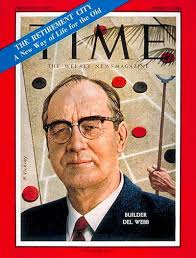
imgres copyWhen I was a pudgy seven-year-old with a girder & panel construction set and a binder full of house plan sketches, Del Webb was on the cover of Time Magazine. This meant that Del spent a week in the center spot on our coffee table. I read every word in the five-page spread about the master developer who built casinos, museums, missile silos, and, ultimately, turned raw desert into an entire community dedicated to adult play. Despite building Las Vegas’ Flamingo Hotel, the LA Museum of Art, and our country’s first enclosed shopping mall, Del Webb’s boldest stroke was Sun City’s curved streets lined with pastel cottages. It wasn’t the houses so much as the idea. Retirement wasn’t an end; it was a beginning; another opportunity for Americans to reinvent themselves. I studied the photos of grey-haired men playing shuffleboard and the big-haired women laughing at bingo. I didn’t know anyone like them, but I liked the idea of escaping my childhood home of too mucimages-4h noise and too many stairs, of living in perpetual sun with a pool and golf course in my backyard. I didn’t know then that swimming makes me claustrophobic or that I’d never break 140 in golf.

Three years later my grandmother, recent widow, became the first resident of Leisure Village in Lakewood, NJ, a pastoral gated community with lakes and pools and ceramics studios. In no time I stretched the limits of my bicycle adventures and rode ten miles from Toms River to spend the afternoon with my beloved grandmother and her newfound friends; all single women. A world of flowered print dresses, root beer floats, and afternoon bridge that I adored.

images-3I’m almost the same age as my grandmother when she joined the active retirement community she lived in for 28 years; the longest she lived any place in her life. In the past 55 plus years we’ve all come to consider retirement a distinct phase of life, a phase that gets longer every year. Sun City, and the thousands of other 55 and older communities across our country, played a significant role in shaping that view. Of all the ‘Utopian’ communities I’ve visited – Oneida, Seventh-day Adventist, Chrysalis Cooperative – none has had as broad an impact on how we live today, and tomorrow, as Sun City. Ironically, Del Webb wasn’t trying to do anything utopian at all. He was just trying to make a buck.

IMG_5296I spent a leisurely morning with my Sun City hosts Trudy and Larry. Larry had to leave for a 9:10 tee time. Trudy was around until Ukulele club in the afternoon, followed by her first ever voice lesson and a small group for dinner. I pedaled through acres of winding streets of single story homes to interview the Director of the Sun City Visitor Center. Like everyone who works in Sun City’s seven recreation centers or eight golf courses, Paul Hermann wears a loud Hawaiian shirt. Who knew Trader Joe’s stole their uniform concept from a retirement community?

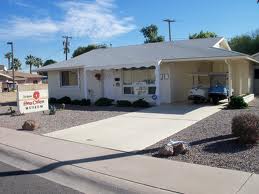
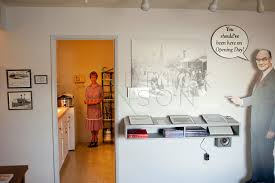
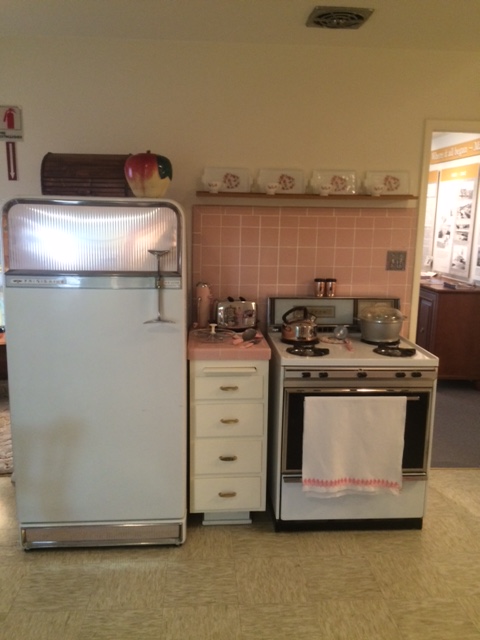
I visited the Sun City Museum, located in the first model home. It was boxy and small, not nearly so spacious as my youth envisioned. Still, the midcentury modernity appealed to the times: 100,000 people visited Sun City on opening weekend and Del Webb sold 12,000 houses within the first year.

images-8 images-9 IMG_5299

I pedaled east along the Arizona Canal Path, through Glendale, Phoenix, and Paradise Valley into Scottsdale. I left the over 55 crowd behind and stayed with a group of PA students in the their 20’s. The weather was unseasonably cold and overcast. The sun finally broke through very late in the day. Odd that it never shone in Sun City.

IMG_5304


Posted in Bicycle Trip Log | Tagged , , , , , , | 4 Comments

Profile Response: Meadow Martell, Cave Junction, OR

HWWLT Logo on yellowSometimes it seems as it Oregon is paved with chewing gum. So many people come here, or just plan to pass through, and wind up sticking around. Margaret Martell was 21 years old, on her way to Alaska. When she got to Bandon, recognized Oregon’s call, and stayed. That was 45 years ago. In the interim Margaret became Meadow. She married, had children, and married again. She was Director of the local Community Health Canter, then Interim Director at several others. Now she works on contract with the State in recruitment and placement. “I’m good at transitions, at helping groups get through difficult times.”

Meadow and her husband Barry bought a small acreage near the Illinois River west of town. They traded in the manufactured house on the lot for one that suited them better. They planted a garden, raised chickens, and leased out a few acres to others. They liked their neighbors.

imgres-1In the early 2000’s the economic boom pressed close. A developer platted a 65-lot subdivision next door; laid smooth bitumen up against their gravelly road; installed curbs and sidewalks and hydrants. This precise land arrangement became their call to arms. Meadow and Barry and four of their neighbors banded together. Not to fight what had been done, but to preserve what remained. Five households, owning 65 acres, crafted a set of Covenants and Conservation Easements to preserve the land closest to the river from further development. They protected wildlife corridors, designated pastures and orchards, gave each other easements and limited development to five houses total – one per family.

IMG_4123More than ten years in, circumstances have changed for several of the covenant members. Meadow’s husband Barry died. She’s getting older and finding it more difficult to care for her gardens. She would like to add a second housing unit, a place she could offer someone in exchange for helping her. Her neighbors, Prasna and Shohoma, are building a new house with passive solar features. When it’s finished, they can repurpose their existing house to a barn or outbuilding, but they cannot rent it out. The covenants crimp their ability to use their property as they might like, yet they understand that ‘development creep’ will undermine their broad intention. So far, the group has not relaxed any restrictions.

The adjacent subdivision floundered. A half dozen houses were built before the crash of 2008, few after. But it coalesced the five conservation members into action. As a result, their community is both more formal and stronger.

How will we live tomorrow?

Screen Shot 2015-11-15 at 7.59.26 AM“The first thing I had to deal with in your question is the ‘we’. It comes down to individuals. Then I struggle with tomorrow. It comes down to today. This moment is all we have.

“We have to care and respect each individual. We need to live in partnership with nature, or we won’t survive.”


Posted in Responses | Tagged , , , | Leave a comment