Profile Response: Janet & Robert, Coos Bay, OR

HWWLT Logo on yellowSerendipity is one of life’s great treats. I needed a cycling break along Route 126 toward Florence, so stopped at a riverside park for shade and nourishment. I noticed an unusual bike strapped to a parked car. A woman called out, “Are you the guy looking for a place to stay in Coos Bay?”

Janet and Robert are warmshowers hosts who couldn’t accommodate my request to stay with them as they were leaving town themselves. Coincidence landed us in at the same roadside park as we travelled in opposite direction.
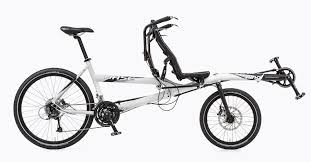
images-1They explained their bicycle: a tandem with a recumbent seat in front and traditional one behind. Janet told me, “I developed neck problems and couldn’t use a standard bike anymore. We saw this, used, bought it and we love it. It’s not perfect, any momentum you gain going down is lost, so every climb starts from scratch.” Robert demonstrated how independent pedaling works via three chains, though the recumbent person doesn’t have to pedal at all.

The bike draws interest wherever they go. The person on the front seat can contribute to pedal, via the three-chain system, or they can just sit and enjoy the ride. “We were at a fair and people were looking at the bike. A ninety-year-old woman studied it. I asked ‘Would you like a ride?’ She swung her purse at me to hold, climbed on the front, and Robert pedaled her all arimagesound the fair. She didn’t want to stop. Turns out the last time she was on a bike was 1939, in Hungary, before the Nazis confiscated it.”
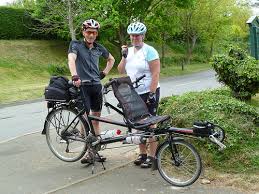
Robert added, “We’re going to Eugene for a few days. We have a friend with an autistic son. He’s nineteen, a big kid. He loves to ride with me.”

I asked where the front rider put his hands; as there is no handle bar. “The front rider puts his hands wherever he wants. They might catch some air over a railroad track, but basically gravity holds them in place. The autistic kid, he shoots his arms straight out. When he’s on this bike he’s a superhero.”

How will we live tomorrow?

picture-42299“I don’t know. Ever since I got your request it has made me think. There’s the environment, the economy, the big things. Then there’s my life; I have a lot of health problems. Then there is tomorrow, like tomorrow, and tomorrow as in the future. It’s a big question.” – Janet

“I think of it in two ways. What am I going to do on Sunday and what am I going to do beyond that to provide lasting good? I am going to ride my bike tomorrow, with this autistic kid. Hopefully my bike riding and the experiences I give people riding this tandem will mesh with the greater good. I hope so.” – Robert

 

Posted in Responses | Tagged , , | Leave a comment

Trip Log – Day 188 – San Diego, CA to Spring Valley, CA

Screen Shot 2015-11-09 at 2.57.14 PMNovember 9, 2015 – Cloudy, 70 degrees

Miles Today: 59

Miles to Date: 9,615

States to Date: 25

IMG_5162I really love bopping around cities on my bike, and metropolitan San Diego is a place of great variety to explore. I started early and cruised along the harbor, past downtown and the bike path along the port and Navy yard. At 8:00 a.m. the Star Spangled Banner plays on loudspeakers throughout the entire base and everyone, I mean everyone, stops what they’re doing and salutes in the direction of the nearest flag.

IMG_5164 IMG_5165 IMG_5166

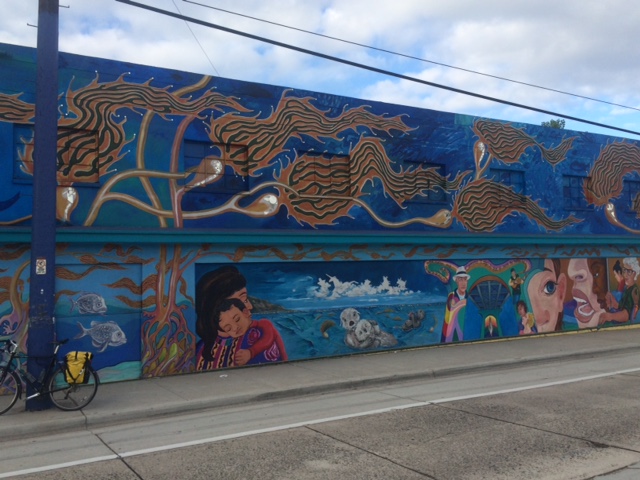
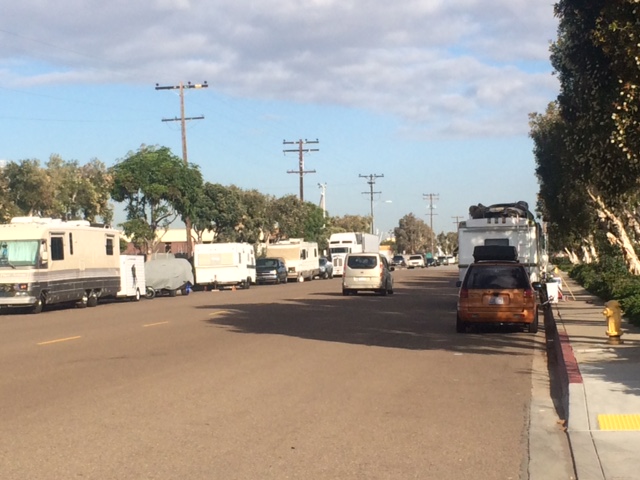
South of the base, the bike path continues through a light industrial maritime area. The road is lined with mini-vans, old trailers, and recycled motor homes. I saw many fewer street people in San Diego than in any other West Coast cities, but there’s an entire community of people struggling to hang on by living along these roads.

IMG_5168 IMG_5170

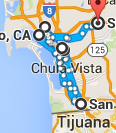
IMG_5172The Mexican border is almost twenty miles from San Diego by my circuitous bike route, but worth the trip. There’s a big outlet mall tight to the border fence in San Ysidro. I pedaled up the ramp to the pedestrian bridge. From the top I surveyed one of the most complex urban spaces anywhere: vehicle lanes, stop points, trolley terminus, pedestrian aisles, fast food joints and open retail stalls; a gigantic Mexican flag and human chaos. The Tijuana border crossing is lively place, though I could hardly interest anyone in my question. Legal or not, people here are close-lipped.

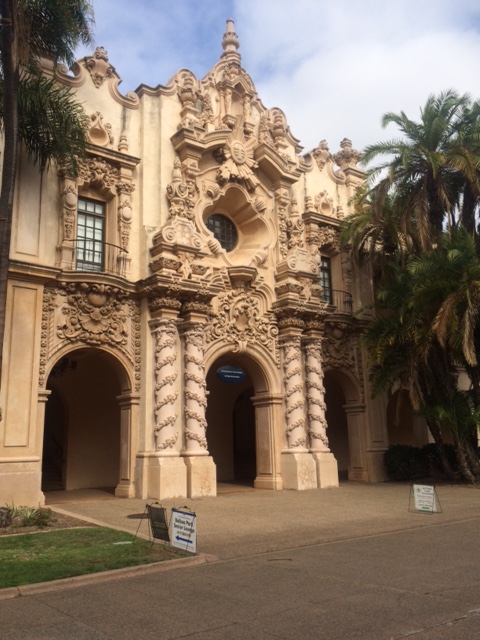
I rode back up through Chula Vista and National City and returned to San Diego to explore Balboa Park, a preserve since 1835 and site of two expositions, in 1915 and 1935. The Spanish Baroque pavilions have been repurposed into a variety of museums and a lovely botanical garden.

IMG_5181 IMG_5176 IMG_5180 IMG_5178

IMG_5174In the afternoon I cycled through the working class neighborhoods of East San Diego to my host’s in Spring Valley. Everyone was in hats and sweaters, unaccustomed to the heavy clouds and intermittent sprinkles.

A highlight of my day was this wall at the entrance of the public library in National City. A quote by Jorge Luis Borges in multiple languages: “I always imagined that Paradise will be a kind of library.”

Posted in Bicycle Trip Log | Tagged , , , , , | Leave a comment

Profile Response: Sherri McCutchen and Zander Chanin, Eugene, OR

HWWLT Logo on yellow“Architecture is just one step of cycling materials from earth for our use.” Zander Chanin explained to me over breakfast at Brail’s, a Eugene food institution. Zander’s a recent graduate from University of Oregon’s School of Architecture and studied under Erin Moore from the design firm Float. “Her idea is that we borrow materials from the natural world. During the process of creating the built environment, materials are taken from their natural state, manipulated by man, and then they’re returned to their natural state.” How we manipulate materials influences how appropriately they return to nature.

Although Zander studied architecture, he doesn’t plan to become an architect in the traditional sense, “I love design as a way to actually change how things are, but I wonder how much architecture can actually change. Architecture has too many compromises.” Zander’s design work is centered on smaller scale projects: landscaping, furnishings, writing, and media. He built a set of mirror-backed birch cubes that are easy to move and reassemble. “We need to change the way people ‘read’ the world. It’s a more expedient way to make change.”

imagesZander backpacked in Japan for several months. “I felt completely liberated from stuff. I began to value things as potential art objects, particularly fragile things like paper.” Now Zander lives in Eugene with his girlfriend and works part-time for a moving company. “It’s amazing what people have and what they move. Junk that means so much to them.”

imgresSherri, Zander’s mother, elaborated, “The candlestick is meaningless when you’re not there. But when you’re present with it, it’s valuable.” Sherri moved back to Eugene from Denver a few years ago, in part to be near Zander, in part because her dad died and she inherited his house. “I need to sell my Dad’s house, but I can’t, yet. Every piece in it has to be touched, picked up, assessed.” Sherri’s dad’s home is alive with a man she revered. Once she lets it out of her hands, she knows from personal experience she will forfeit that connection. “I had a house in Denver, the one Zander grew up in. I sold it. The new owner bulldozed it to build a new home. Everything was gone, the physical vestige of memory, just like that.”

imgresSherri’s a reading teacher in nearby Springfield and works part-time at Home Depot. She enjoys the rewards of her teaching job, and the camaraderie of her retail work. “Home Depot is a great company. They assign you hours according to your availability and give benefits to part-timers. You’ve seen those commercials about Olympic athletes who work at Home Depot? That’s why athletes work there.”

When we sat to breakfast I had no idea where our conversation would flow. It turned into yet another spin on how we deal with stuff. Sherri sells things – big things – and is conflicted about how to deal with the things her father left behind. Zander spends his working hours moving other people’s stuff and explores how to make meaningful objects that are lighter, more fragile than traditional architecture. What we create and own are intimate extensions of our selves.

How will we live tomorrow?

IMG_3948“STEM needs to become STEAM – we need to add Art to Science, Technology, Engineering and Math.

“People are underemployed yet working so many hours. Let’s talk about reducing the 40-hour workweek. People would have more time to be creative. Can we work 20 or 25 hours a week and more time? We have enough resources, we just don’t share them.” – Sherri

“I think we are going towards greater awareness. Even in the past fifty years, we’ve changed our attitudes. When we damned the Columbia we thought it was a waste of the river to flow to the sea. Now, we question that. More awareness will get us far.” – Zander

“My belief is that when we die we all go back to the web of life. I get what happens to the body, but what about our consciousness? That’s what I wonder about.” – Sherri

“That’s a whole other breakfast.” – Zander


Posted in Responses | Tagged , , , , , , , , | Leave a comment

Trip Log – Day 187 – Carlsbad, CA to San Diego, CA

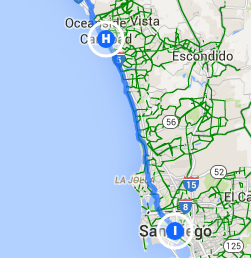
to San DiegoNovember 8, 2015 – Sun, 75 degrees

Miles Today: 46

Miles to Date: 9,556

States to Date: 25

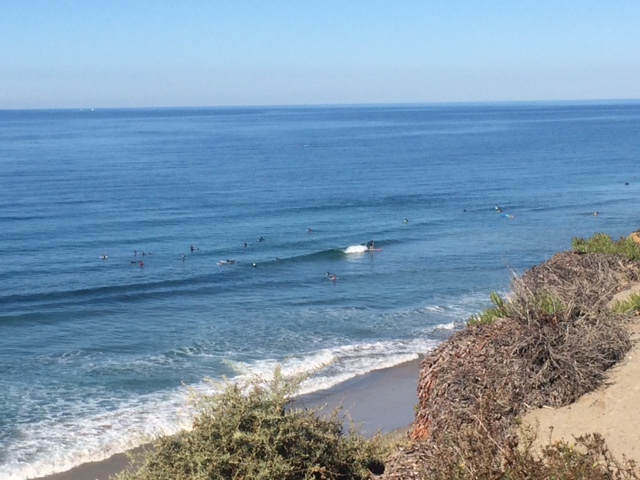
Sunday morning in Southern California seems to trigger dual devotions: coffee and the ocean. Dozens of coffee shops were jammed with cyclists, surfers and motorist’s starting their day. But the dead end overlooks along the Coast Highway were also lined with solitary souls contemplating the sea.

IMG_5130 IMG_5132

Swami’s in Encinitas is both a mystical self-realization compound and an internationally famous surfing spot. There’s logic in that, sort of.

IMG_5134 IMG_5138

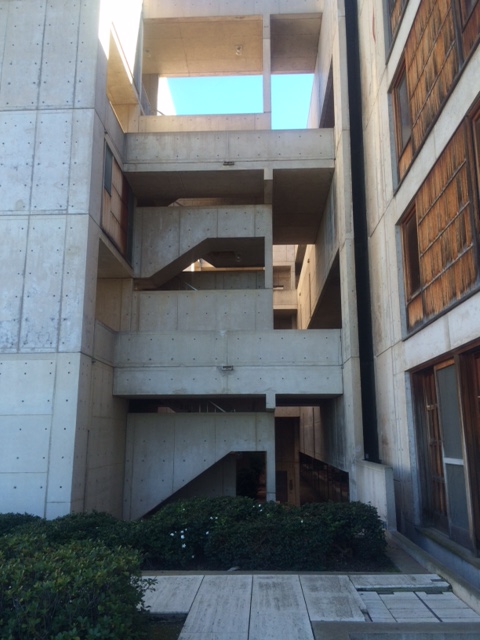
I visited Louis Kahn’s renowned Salk Institute. The older I get, the less impressed I am by architecture designed to shape behavior rather than allowing human potential to blossom. Unlike Richard Meier’s nuanced and suggestive work at The Getty Center, The Salk Institute is heavy-handed. Despite Kahn’s signature attention to hand and body dimensions, humans are subservient to the relentless order. The complex doesn’t even relate to the sea very well, which I suppose is the point. You’re always supposed to focus on the architecture. Despite my misgivings, I can appreciate Kahn’s discipline in creating his vision. Unfortunately, that vision isn’t weathering well. Wood is splintering, concrete’s spalling, and terrazzo’s cracked. Buildings conceived as monumental testaments need to be solid.

IMG_5144 IMG_5141

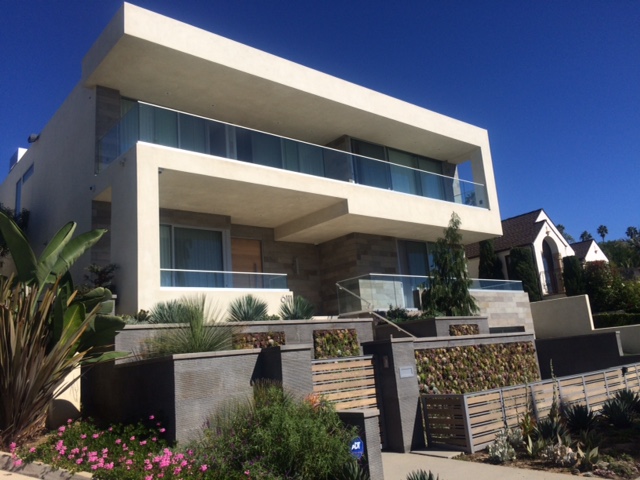
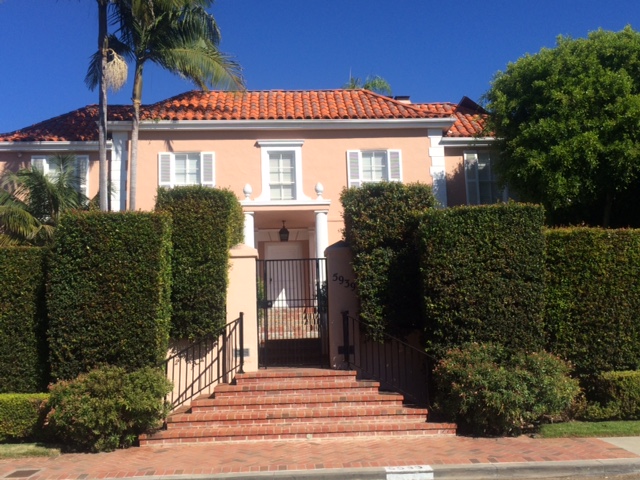
LaJolla is full of extravagant houses. Any style will do, as long as it looks expensive.

IMG_5148 IMG_5145 IMG_5153

I rather liked Pacific Beach and Mission Beach, which are funkier, tighter neighborhoods.

images IMG_5154 IMG_5155

But what is ultimately cool about San Diego is how the sea and the city sit tight to one another.

IMG_5158 IMG_5151

Posted in Bicycle Trip Log | Tagged , , , , , , , | Leave a comment

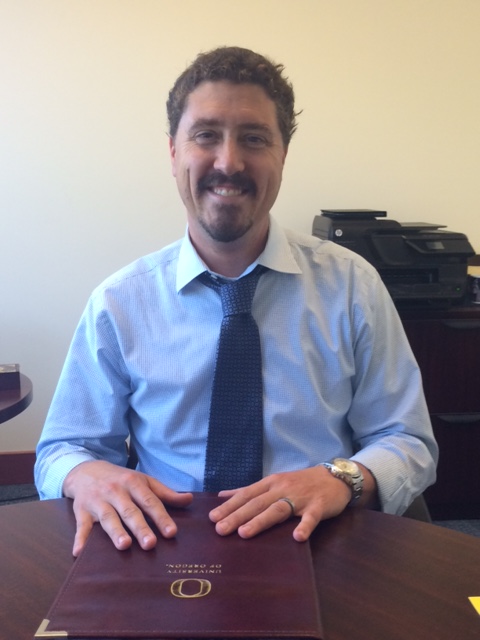
Profile Response: Abe Schafermeyer, Director, International Student and Scholar Services, University of Oregon, Eugene, OR

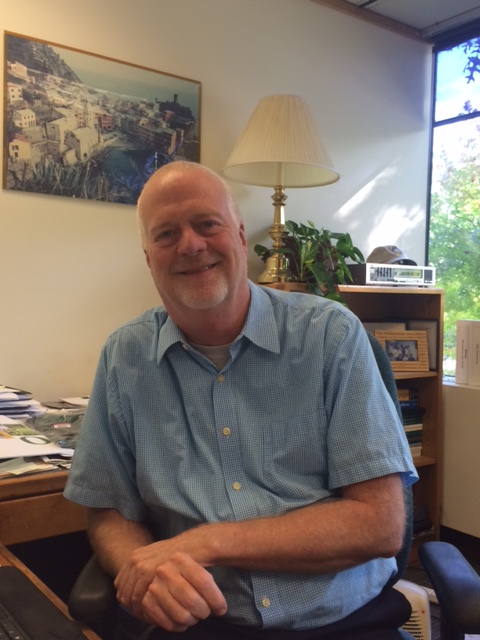
HWWLT Logo on yellowAbe Schafermeyer caught the bug for international travel early. The New Hampshire native spent his junior year of college in Chile and later taught ESL in Columbia. “Travel abroad was both an immersive experience, diving into another culture, and an isolating one. Each aspect was beneficial in my understanding of myself and others.” Abe decided to focus his career on study abroad. He joined International Student and Scholar Services thirteen years ago, and became Director in 2011.

imgresInternational students are an increasingly important financial component of American universities since they typically pay full tuition. However having international students on campus also contributes to a broader experience for everyone. University of Oregon’s international efforts fall into three distinct categories: UO runs three academic centers overseas, in Sydney, London, and Vienna; a staff of 25 runs programs for domestic students to study abroad; and Abe oversees twelve people dedicated to the needs of international students studying in Eugene. International students pay an additional $700 per year fee to cover the educational and cultural support services Abe’s office provides.

imgres“9-11 changed International student offices; it added a security component. Many people left the field and there were many jobs for people willing deal with the more complex requirements. That’s when I got into this work.”

The demographics of international students vary from year to year, often due to factors beyond the university’s control. “We had 250 students from Singapore. Singapore invested heavily in higher education at home; now we have four. We had 250 students from Saudi Arabia through programs initiated by President Bush. They usually brought their families and added significantly to the local economy. Now we have none.” Sixty-two percent of UO’s current international students are from the People’s Republic of China. “The issue is, will China continue to have strong economic growth? Will the government continue to devalue the Quan, which makes education here even more expensive? Will they start to limit access? Chinese students are often attracted to the American lifestyle. The government does not want to lose smart kids, nor do they want US-savvy kids returning to China with ideas that don’t fit the government’s ideology.”

imgres-1What will UO do is China pulls the reigns on foreign study? “The United States is still the Number One market in the world for higher education. People want to go where English is the main language. The UK is innovative and Australia is gaining ground, but we are still the preferred choice. I see more students coming from emerging nations like India and Brazil.”

How will we live tomorrow?

IMG_3930“I hope we will continue to recognize that diverse global perspectives enrich our lives in so many ways. International exchange creates richer experiences for everyone.”


Posted in Responses | Tagged , , , , | Leave a comment

Trip Log – Day 186 – Mission Viejo, CA to Carlsbad, CA

to CarlsbadNovember 7, 2015 – Sun, 75 degrees

Miles Today: 57

Miles to Date: 9,510

States to Date: 25

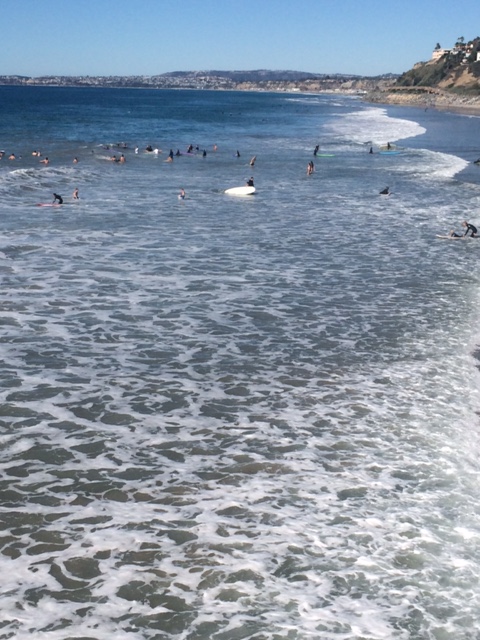
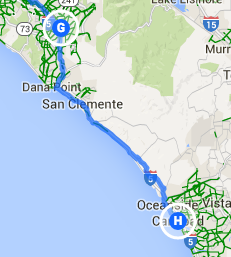
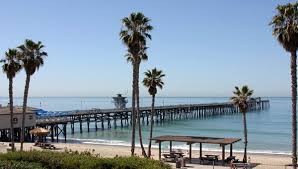
Summertime! The sky was clear, the breeze was light, the surf was up, and everyone was out on a sunny Southern California afternoon. I rode from Mission Viejo to San Juan Capistrano, which has one of the most extensive Missions I’ve seen. The rest of the ride was well marked bike path along the coast through San Clemente, Camp Pendleton Marine Base, Oceanside, and Carlsbad. Aside from teh sun setting before 5 p.m. for the first time, it could have been a July day.

imgres imgres-1 IMG_5121 IMG_5122

I didn’t see much wildlife, but birds of paradise were in bloom all along my route.

IMG_5124

Posted in Bicycle Trip Log | Tagged , , , , , | Leave a comment

Responses: How will we live tomorrow?

HWWLT Logo on yellowHow will we live tomorrow?

“We live in such a segmented society. When people ask me how old I am, I just say, ‘older’. I’m older than I was yesterday. If we can enjoy the moment, see the beauty before us; we’ll be all right. But life is like a radio dial. Hard to keep the static at bay.”

Seton Smith, vintage pick-up driver, Watts, CA

How will we live tomorrow?

“Very difficult. Let’s face it. We’re going down the tubes.”

Bill Hull, Army veteran 1970-1976, Lake Forest, CA

How will we live tomorrow?

“With as much adventure as possible.”

Chelsea, Museum staff, Richard Nixon Presidential Library, Yorba Linda, CA

How will we live tomorrow?

“What I’d like to see is living partially or totally off the grid. This can build a community of people who come together. I lived like that among Shikhs in the Sonora Desert outside of Tuscan. They were very open-hearted.”
Magarlit, Reed College student, Portland, OR

How will we live tomorrow?

“Was the mission system good or bad? People debate that. The Chumash built these buildings. People argue whether it was beneficial or whether they were slaves. As far as colonization goes, there have been worse things. But it was defiantly colonization.

“One thing is clear. California would not be what it is without the mission system. It is the backbone of California.”

Linda Bentson, Docent, Old Mission Santa Barbara, Santa Barbara, CA

How will we live tomorrow?

“The older the generation, the weaker their critical skills. The younger the generation, the sharper their critical skills. The reason is because of the Internet. We are in good hands.”

Steve Gallandti, Stout drinker, Santa Barbara, CA

How will we live tomorrow?

“As an environmental student, I have studied people’s evolving relation to the environment. I am moving away form pre-occupation with climate change and war to focus on taking care of myself. How I am going to live tomorrow is to take care of myself, so that I am able to help others. I see myself training to be a wellness practitioner and/or play music.”

Helen Spencer, Reed College student, Portland, OR

How will we live tomorrow?

“Live like there is no tomorrow.”

Joe, Caltrans Bridge Inspector, Long Beach, CA

How will we live tomorrow?

“We’ve got think about a really big ‘we’. That is hard to couple with what ‘I’ need to do. It’s not all about me, or even us.

“The good fight I want to be involved in is permaculture. It resonates with my creativity and collaboration. Its therapeutic and practical and spiritual.”

Tara, Reed College student, Portland, OR

How will we live tomorrow?

“Hopefully better than today in terms of energy. Hopefully simpler, smaller.”

Joe Walker, video editor for Notre Dame football series, at Watts Towers, CA

How will we live tomorrow?

“More than likely without my hearing….How in God’s name did you end up in Elmore? Elmore Ohio is noisiest place I’ve ever lived……Elmore is where silence went to die….I once had a T shirt made up that said…”if you’re NOT making noise, how do you really know you’re alive? No one even noticed….the volunteer fire department is the loudest….now, I know they have to use sirens but honestly, when they pass my store they are so loud I can’t help getting the image of a crew of 6 year old boys all dressed up, hunched over a steering wheel making siren noises at the top of their lungs. The frequency of these “emergency” trips are so often….(sometimes 3 time a day) at all hours of the day or night, that I wonder what the criteria is for a trip….I’ve always assumed it was when life or property is in danger…..but I can’t say for sure, anymore.
Folks here don’t so much talk as holler; as well they love to let whatever vehicle (car, truck, combine, tractor, or cyclotron) sit and idle for hours at a time, at the curb, while they shop or eat breakfast…..I ask people….why do you do this?…I mean there is this thing called global warming…..aren’t you ashamed that you’re poisoning the planet with NEEDLESS carbon dioxide….don’t you have any Grandchildren?…….they just look at me like I have lobsters crawling out of my ears…….I’ve surmised that local residents are immune to any appreciation of causality and I have come to believe, that they believe, that none of them are going to die……and life will just go on indefinitely….that is unless they spend some money…..because as we all KNOW….if you don’t spend money, you will not die…”

Ernest Scarano, Elmore Antiques, Elmore, OH


Posted in Responses | 1 Comment

Trip Log – Day 185 – Santa Ana, CA to Mission Viejo, CA

to Mission ViejoNovember 6, 2015 – Sun, 75 degrees

Miles Today: 22

Miles to Date: 9,458

States to Date: 25

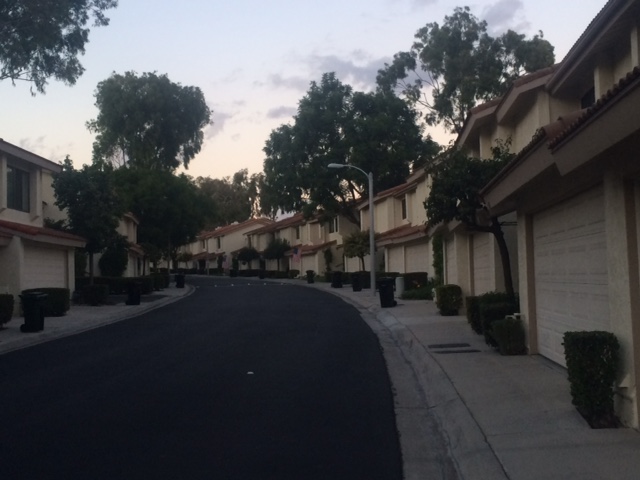
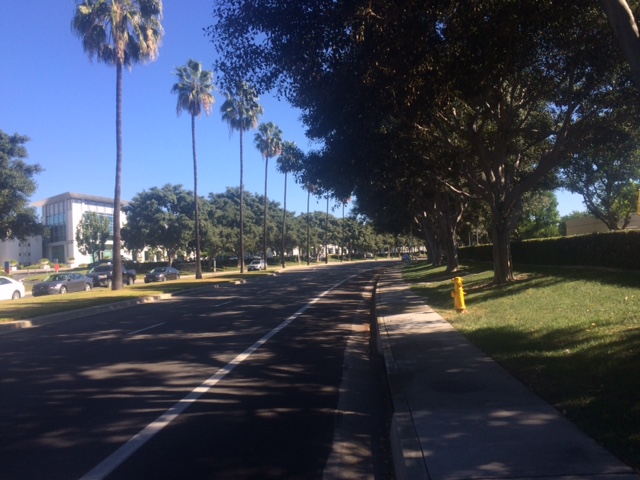
Today I am six months on the road. In a sort of reverse celebration I took a very easy riding day through the most banal landscape of my trip. Orange County California is a vast sea of low-rise development, wide streets, manicured landscaping, and few humans. The only folks about are city workers sweating in the afternoon sun while stringing Christmas lights on deciduous trees.

IMG_5103 IMG_5105 IMG_5086 IMG_5108 IMG_5112 IMG_5107 IMG_5109 IMG_5113

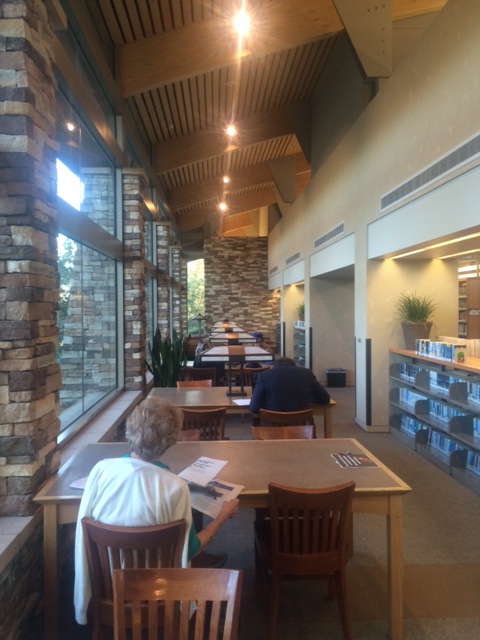
The cycling is easy, but uninteresting. The people, however, are generous. A series of welcoming hosts offered me hospitality without my asking. Since I have plenty of time to get to Phoenix before my Boston hiatus, I accepted them all and am filling out my short riding days with extra library time. The library in Mission Viejo is one of the loveliest in our country.

images-1 images IMG_5116

Posted in Bicycle Trip Log | Tagged , , | Leave a comment

Profile Response: Kirk Koenig and Lorena Landeros, University of Oregon Admissions, Eugene, OR

HWWLT Logo on yellowGetting into college is no easy feat. In fact, it gets more complex all the time. The Common Application, designed to simplify the process, has resulted in many more students applying to many more schools. University of Oregon doesn’t accept the Common App; others add additional requirements. Regardless, the Common App has resulted in more applications all around and requires competitive schools like University of Oregon to rethink their acceptance strategy. The objective is always to have many top students choose UO, but not so many as to flood the freshman class.

imgresKirk Koenig, a 37-year veteran of college admissions; and Lorena Landeros, a recent addition to the University of Oregon Admissions Department; represent the breadth of background and skills required in college admissions. Kirk explains, “Admissions as a separate process didn’t really exist until the 1970’s. Registrars used to handle it. Now admissions has its own procedures and professional organizations.”

images-2

The University of Oregon receives about 35,000 applications a year: 22,000 for fall semester freshman; the rest spread over the other three quarters and graduate schools. Last year UO admitted about 16,000 students for 4,000 spots. Half of all Oregon residents admitted accept, 17% admitted from out-of-state accept. Only about five percent of UO’s budget comes from the state, so out-of-state students provide higher per-student revenue, but there’s a political imperative to accept in-state students.

Oregon has several incentives to make college more affordable for underrepresented students. The state waives out-of-state tuition for undocumented students, offers merit scholarships for academic achievers, and initiated Pathway Oregon, state grants that supplement Federal Pell grants for low-income students.

imagesHow does UO evaluate so many applications and calculate their hit rate? Kirk is responsible for creating each years master matrix; a system of key indicators that determine how to sort applications. Each application receives a ‘total rating’ according to an algorithm that includes GPA, test scores, essays, and experience. Students with a total rating above a prescribed threshold are automatically admitted. Students below that cutoff are individually evaluated or rejected. A second admissions counselor reviews all rejected applications. No one is rejected based on a single review.

Lorena, a Mexican-American UO graduate, focuses on admissions from predominant Mexican regions: central Oregon and metropolitan Seattle. She takes a broad view of her job as encouraging Mexican-American students to consider college as a viable option. She visits schools as early as eighth grade to help students be more college-aware and college-ready. Although Lorena believes the financial assistance programs are good, “There is no more affirmative action. All students need to be academically prepared to be accepted.”

images-1I asked Kirk how college admissions will change. “In the past 37 years it’s changed completely; it’s driven by data and numbers. How it will change is for others to grapple.” Lorena added, “I’m young enough to have a good idea where students are at. UO is an option, but not everyone’s best option. My role is to help student’s find their right spot. If it’s not University of Oregon, I’m okay with that.”

How will we live tomorrow?

IMG_3924“I want to retire soon and remain in Eugene. People in Eugene are content. We go to Portland and we like it, but Eugene is our true home.” – Kirk Koenig

IMG_3928“You are asking on the anniversary of 9-11. I hope we live with more compassion.” – Lorena Landeros


Posted in Responses | Tagged , , | Leave a comment

Trip Log – Day 184 – Fullerton, CA to Santa Ana, CA

to Santa AnaNovember 5, 2015 – Sun, 70 degrees

Miles Today: 31

Miles to Date: 9,436

States to Date: 25

Poor Richard Nixon, the Rodney Dangerfield of Presidents. He gets no respect. After visiting the Ronald Reagan Library, teeming with people, upscale cafe, and Air Force One suspended in a hanger-size pavilion, I decided to visit Nixon’s Library in Yorba Linda.

IMG_5090The first thing the Admissions staff said was, “The permanent exhibits are closed.” Nixon’s birthplace home and the Marine One helicopter were open, as well as the gardens and personal timeline. But there was nothing juicy – nothing about Watergate – to whet my appetite. Even small things seemed to denigrate the man and his office: as many books on Kennedy and Nixon in the bookshop, and a presidential seal on the ice cream case in small convenience store that’s called a cafe.

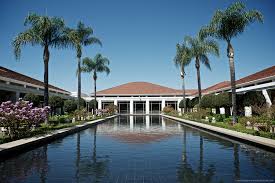
images images-1  Architecturally the library is terrific, less derivative than Reagan’s, yet appropriately formal and Mediterranean. And Nixon’s birthplace is a gem. When his parents died, Dick’s brothers kept all their original possessions knowing that Richard M. Nixon was a force whose birthplace would warrant preservation. The 1920’s kit house bungalow is perfectly preserved. And the helicopter is cool, every bit as cool as Air Force One, though ever so much smaller.

imgresA smattering of people dotted the grand foyers and halls; I can only hope more people visit when the main exhibits are open. What I wanted most to know, of course, was how Nixon’s official memorial addressed Watergate and resignation. But whatever spin was appropriate when the library opened in 1990 is now history; completely new exhibits are being installed. When they open next year, Nixon will be reinvented yet again.
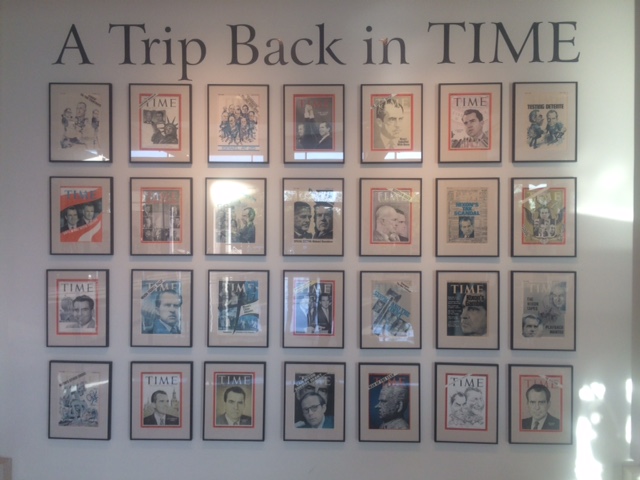
IMG_5092The most effective exhibit is the wall of Nixon Time Magazines. Nixon was on the cover of Time fifty-four times – more than any other person. Growing up, the man was always smiling or scowling at me from the coffee table. From the first cover, as Eisenhower’s VP choice, to the last, when he died, Nixon reflected his time. He did great things, which are now overshadowed by terrible things. He exuded confidence that was ultimately feeble.

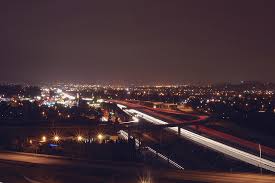
I left the library with plenty of time to get to my host’s house, but missed a turn in Anaheim, wound up adding miles to my route and doing what I strive not to: riding at night. My mistake required me to make two sizable climbs. Fortunately Anaheim has great roads with wide shoulders, and I witnessed an incredible red sky over the basin.

images-2The night harkened me again after dinner. My host, Reza, whizzed me through a labyrinth of freeways to the immense scrap operation for which he runs the trucking operation. Every day six trucks haul scrap from all over SoCal to the yard. A huge claw machine deposits it into hoppers, a forklift weighs and loads the metal into containers, and a bobcat compresses the mess. They work until three in the morning to fill thirteen containers a day to empty the yard for the next day’s scrap. The containers are hauled to the Port of Long Beach and shipped to Asia. We buy finished goods from China and export our debris in return. See what Nixon ‘s China diplomacy has wrought.

IMG_5095


Posted in Bicycle Trip Log | Tagged , , , , | 4 Comments