Profile Response: Elan Nelson, Medicine Man Marijuana Dispensary, Denver, CO

HWWLT Logo on yellowIf you want to know how we will chill tomorrow come to Colorado, the first state to legalize recreational marijuana. I met with Elan Nelson of Medicine Man, one of Denver’s largest dispensaries, to discuss this fledgling industry. Before I even got in the door, I realized that buying marijuana is unlike any other shopping experience. Medicine Man is not located in a shopping center; it’s in a light industrial district near the airport. The sign is corporately sedate rather than retail bold. The bars over the windows are severe. The security guard inside is polite but clear. He checks every ID, requires a sign-in, and says, ”We are unable to process credit cards right now” as he points out the ATM machine. Marijuana is a cash only business.
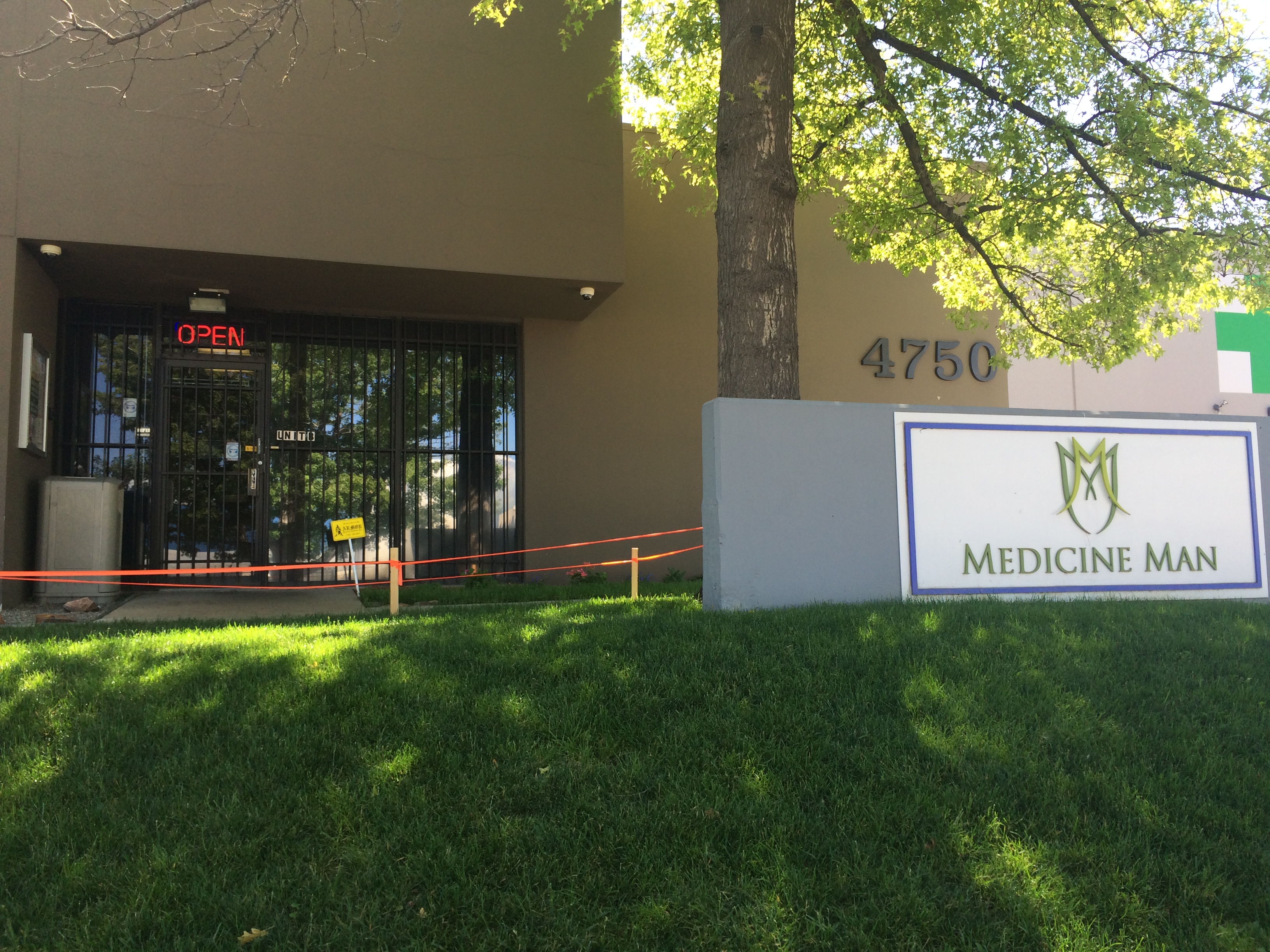
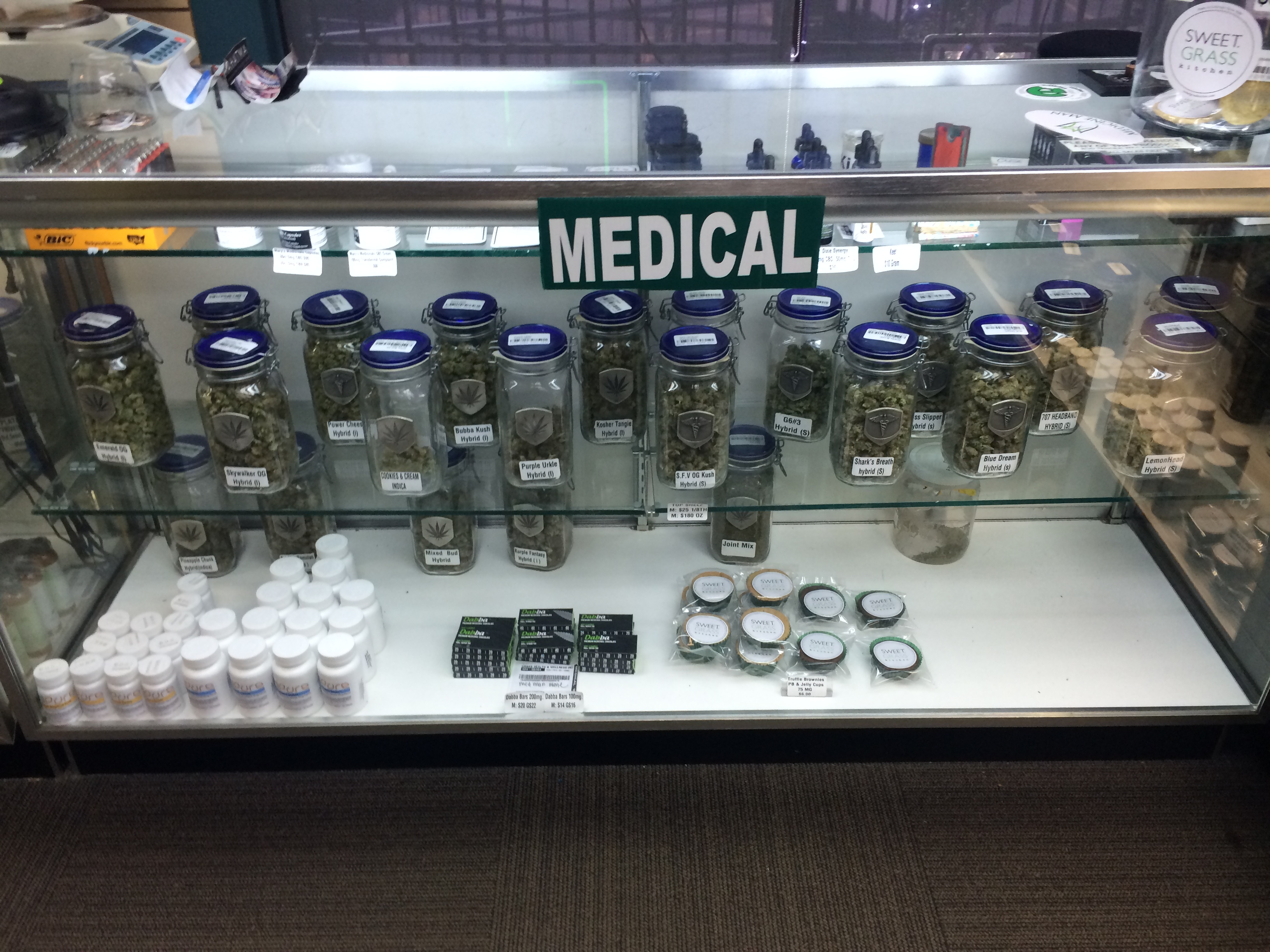
IMG_2913An information window lies straight ahead, but most customers – there are dozens on this Wednesday morning – know where to go. Retail sales are to the left, medical sales to the right. The retail side doesn’t have any merchandize on display. Four clerks stand behind a counter, like in a plumbing supplying house, taking orders, retrieving product from back of the house, and completing transactions. The medical side is gentler. There are a few leather chairs for customers who need to rest. Sales people stand behind glass counters with product on display beneath and behind them. It’s more like visiting your pharmacist.

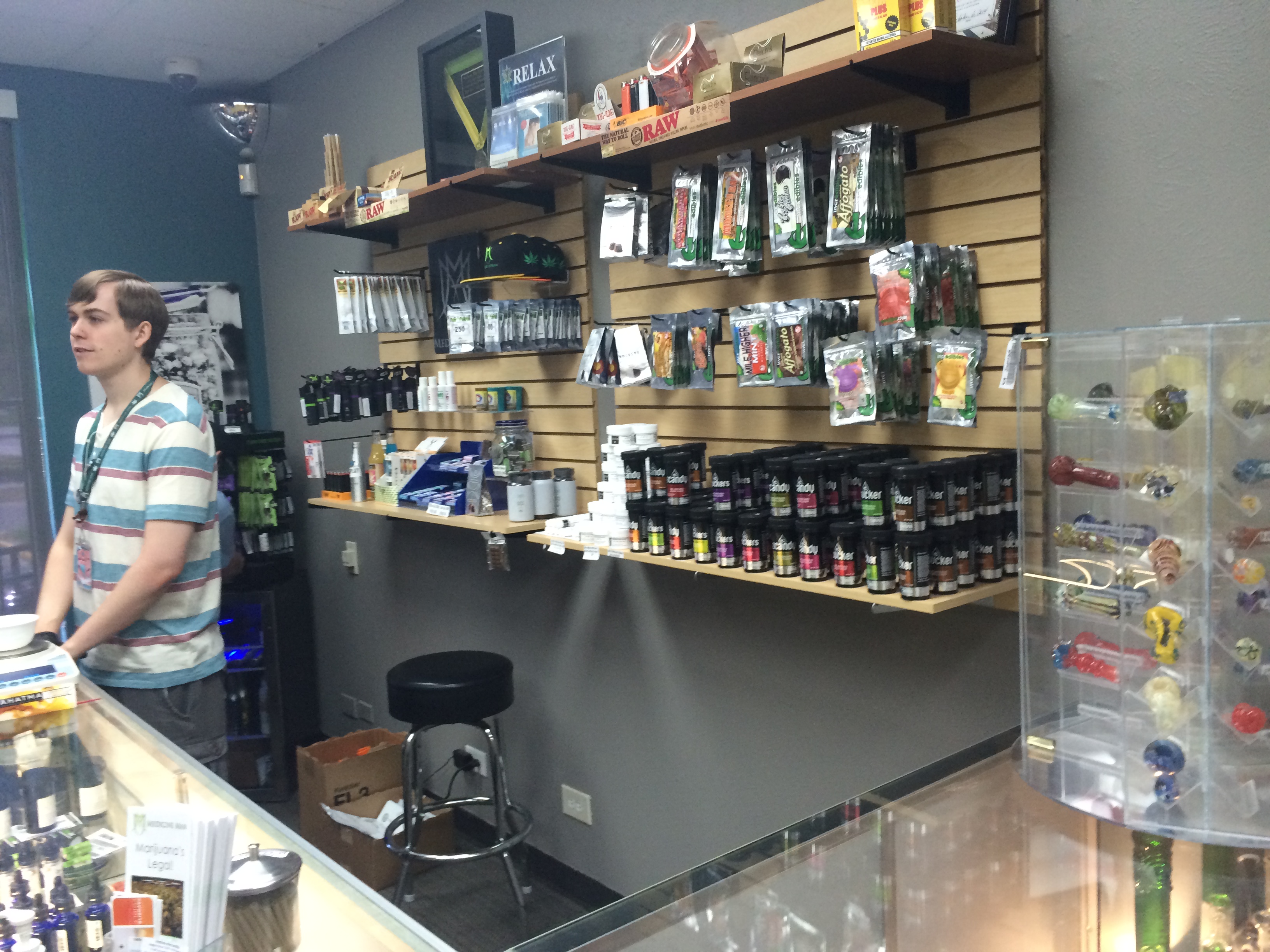
IMG_2929 IMG_2931 IMG_2930

The customer area is a small fraction of Medicine Man’s vertically integrated 40,000 square foot marijuana facility. Elan explained that the State of Colorado requires companies grow what they sell, and only sell what they grow. She toured me through a conditioned warehouse / factory / farm that employs 68 people who produce – and sell – a lot of marijuana.

IMG_2916The facility is divided into multiple grow rooms, each with racks and lighting designed to optimize growing conditions for different strains. One of the first steps in the growing process is tabbing seedlings as medical or recreational. Every plant is RFID tracked until it is processed and sold. Elan explains that the plants are identical, but the taxation streams are different. Medical marijuana is taxed 7.62% when it is ‘sold’ from the back of the house to the front; recreational weed is taxed 15%. The State then taxes an additional 21% on recreational marijuana at the point of sale.

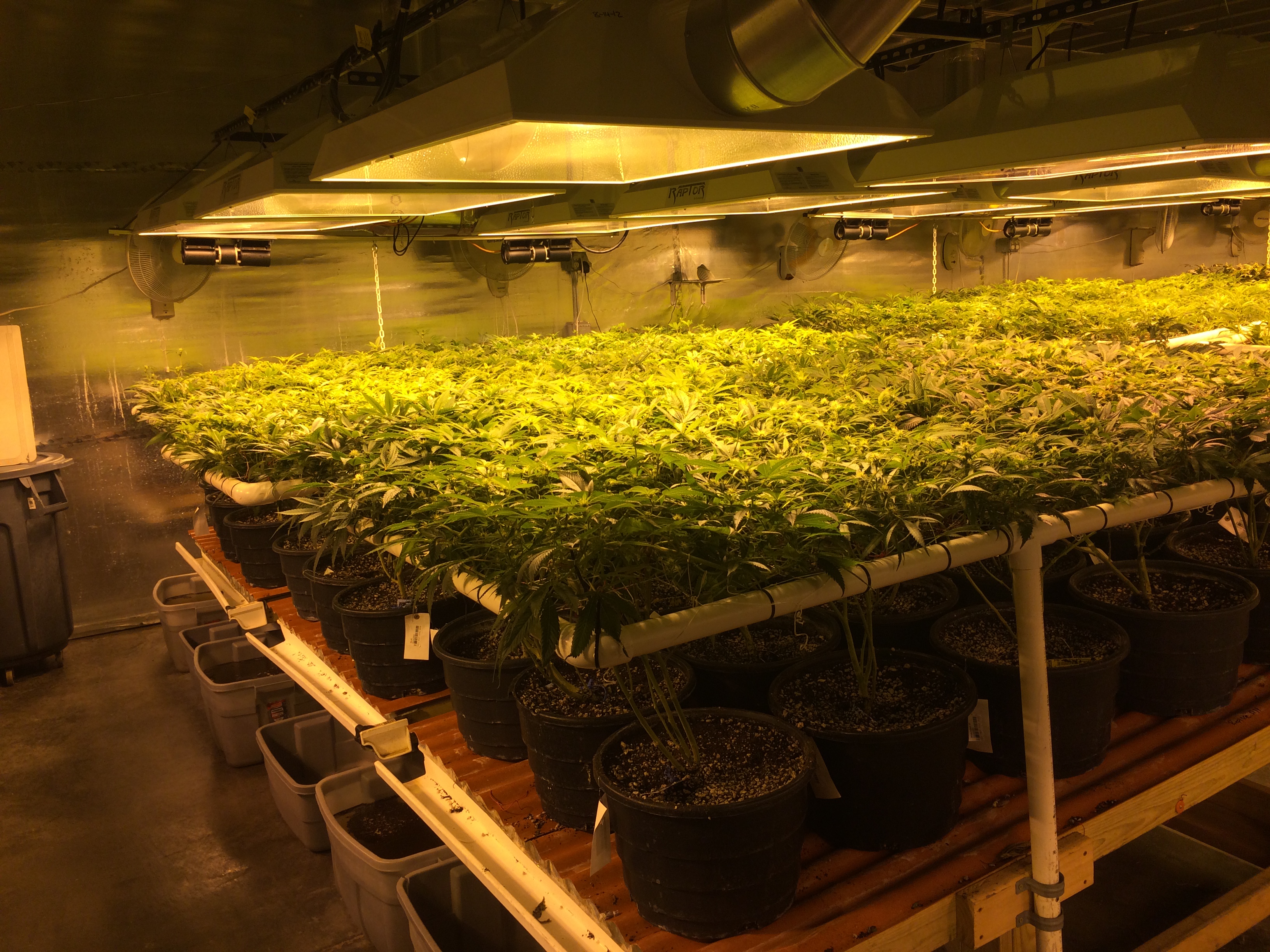
IMG_2917 IMG_2920

Marijuana is heavily regulated: Medicine Man has had three random visits by the Department of Revenue Marijuana Enforcement Division this year. One limiting factor is the limitations on plant count. Medicine Man is licensed to grow 10,600 recreational plants plus six medical plants for every patient who has assigned their prescription to Medicine Man. The company focuses on optimizing quality product from each plant. Elan toured me though their latest expansion, where the light and humidity controls are more sophisticated than in the original grow rooms. She also explained how they use different parts of the plant for different products. Small leaves are cured and ground into joint mix. Larger leaves are sold to cannabis kitchens to create hash, edibles, and topicals.

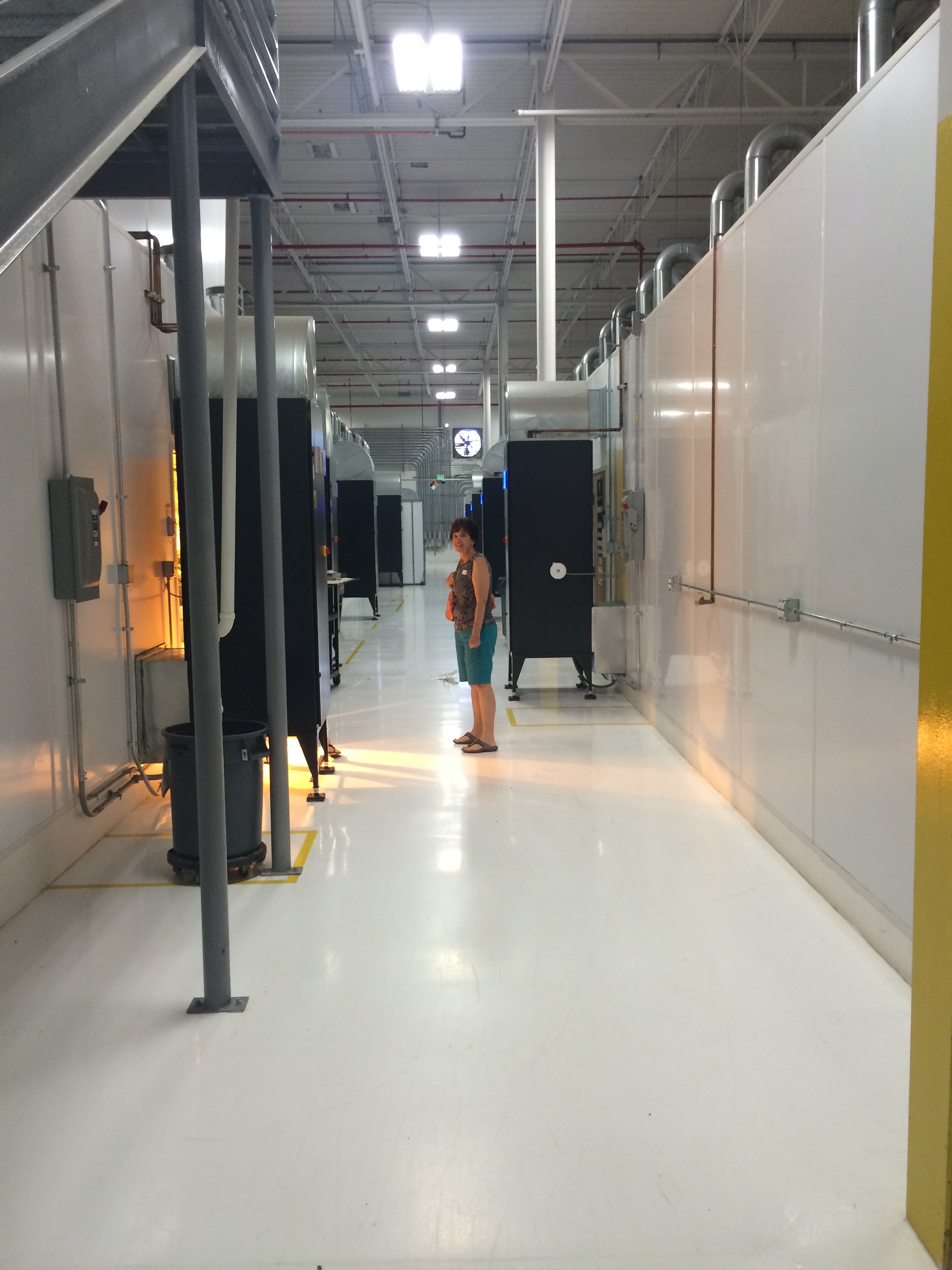
IMG_2926 IMG_2927Medicine Man is a leader in indoor marijuana growing. They often consult with start-up operations on how to set up indoor processes. However, Elan predicts that as Medicine Man grows they will transition to outdoor growing. It has different security concerns, but is much less energy intensive than growing marijuana indoors.

Medicine Man’s biggest challenge – the biggest challenge for the entire industry – is being a cash business. Selling marijuana is illegal at the federal level, and banks are federally regulated. Colorado passed legislation to establish a Coop Bank, but the Federal Reserve will not support it. Right now, Elan says that Medicine Man has some bank capacity, but she is understandably vague about it. Given that this is America, where money talks loud and recreational marijuana is now legal in three states, this problem will be addressed. But when and how, is still not clear.

How will we live tomorrow?
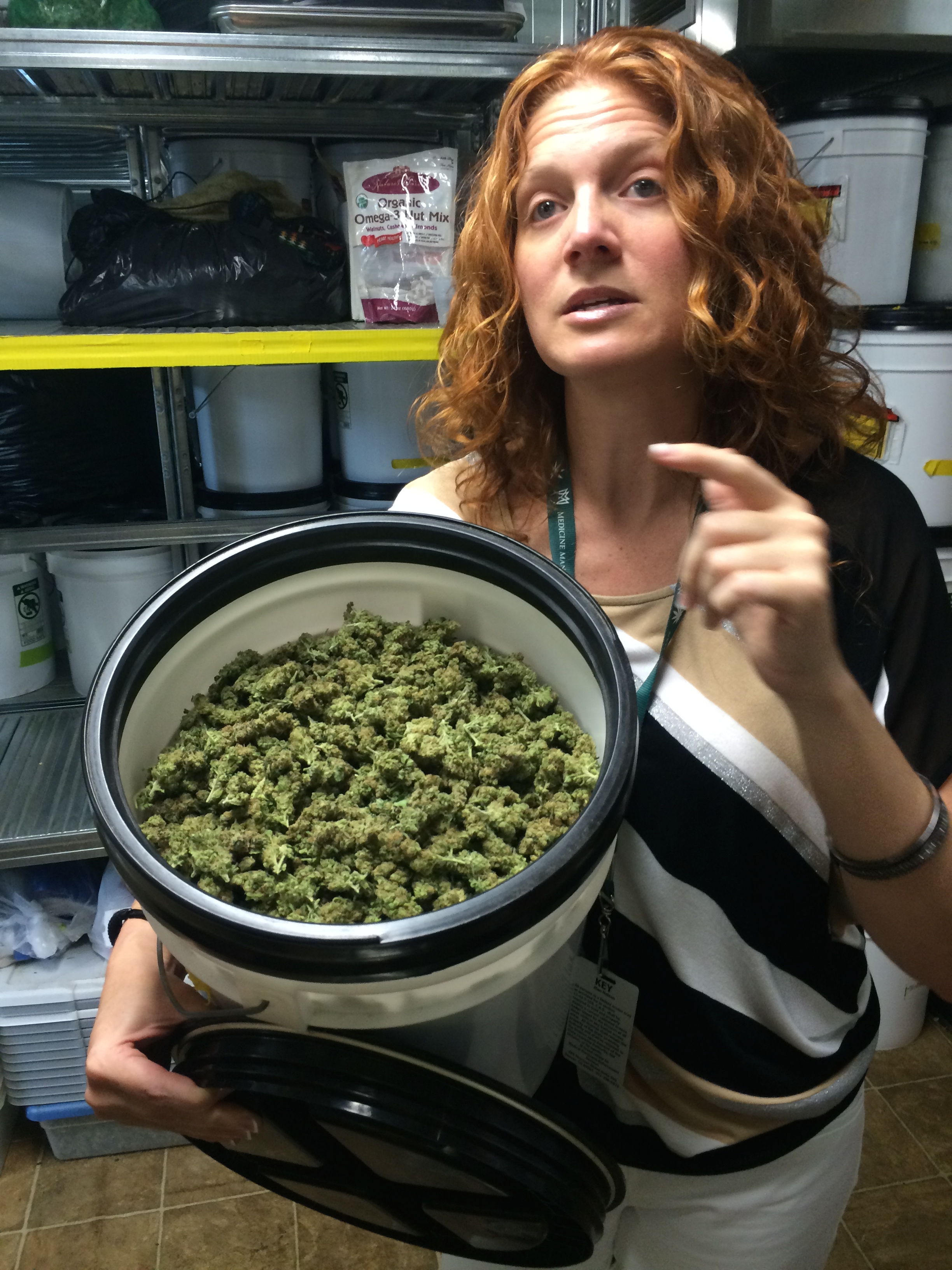
IMG_2924“A lot of people will see the example of Colorado as well-regulated and well run. People will realize that recreational marijuana is safer than alcohol. People will find that this is a safe pain reliever. There will be more research and it will lead to more acceptance.

“But right now, I suggest you go home and change your clothes. When you get out of here, you are going to stink of weed.”

 

Posted in Responses | Tagged , , , , | Leave a comment

Trip Log – Day 109 – Wenatchee, WA to Leavenworth, WA

Went to eavenworthAugust 22, 2015 – Hazy, 80 degrees

Miles Today: 25

Miles to Date: 6,070

States to Date: 22

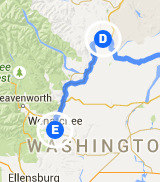
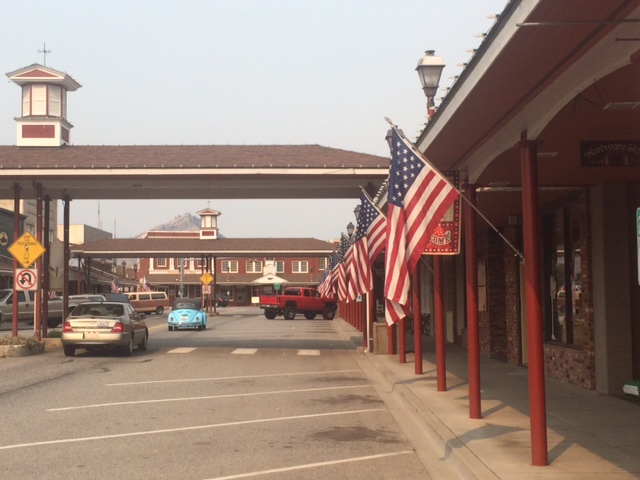
I meandered out of Wenatchee for an easy travel day and some fun touring along the way. First stop climbing the Wenatchee River Valley: Aplets Candy Factory and Store in Cashmere. Their harvest bars are without doubt the best energy bars I’ve ever eaten, so I added a dozen to my pack.

IMG_3656 IMG_3659 IMG_3658

Back on US 2 outside of Cashmere I met up with Peter, the cross-country cyclist I connected with a few days ago. He was travelling with Brian, a guy doing the perimeter of the United States, and a third cyclist. As we chatted, Matt, the British cyclist I stayed with last night, caught up with us. The end of summer is near, and folks with Seattle as their terminus are zeroing in on their destination.

IMG_3662We disbanded to all ride at our own pace, but four us met again at the McDonalds in Leavenworth. They were heading over Stevens Pass today; I am waiting until tomorrow. I’ll see Brian again for sure; we both have the same warmshowers host tomorrow night in Sultan. The long distance cycling community is a small, tight world.

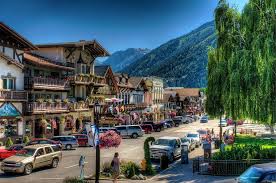
imagesWhat can I say about Leavenworth, WA? To call this pretend Bavarian town kitsch is an understatement. But that doesn’t stop us from flocking here on a summer Saturday to stroll the three blocks along Front Street, eat all kinds of festival food and shop. The town is festive, the people watching superb.

I made special effort to go to the Nutcracker Museum. Truly a gem of a place. Perhaps my next major trip will be to visit every $5 museum in America. Each delivers a half hour of fascinating insight into the peculiar human fetishes. The Nutcracker Museum has thousands of nutcrackers, useful and ornamental, sentimental and political, austere and sexual. The proprietress at the register in her long Martha Washington gown and bobbed white hair is as much part of the experience as any wooden-jawed statue.

IMG_3667 IMG_3668  IMG_3666  IMG_3674 IMG_3673 IMG_3672

My warmshowers host, Kristin, is a waitress, so she asked me to come in the afternoon and visit before she headed out to work. Like many who choose to live in a resort area, Kristen has an assortment of odd jobs to cobble a living. She drove me up Icicle Road through a beautiful valley. We traded stories while she showed me houses she cleans and fed horses she tends. After she went to work, her neighbor Sally brought dinner over for me.

My bicycle is so much more than a vehicle to take me from A to B. It’s my conduit into people’s lives and the key that unlocks their generosity.

Posted in Bicycle Trip Log | Tagged , , , , | Leave a comment

Responses – How will we live tomorrow?

How will we live tomorrow?

“There is always another tomorrow. It never ends.”

Naomi Holloway, motel clerk, mother, pug owner, Brewster, WA

How will we live tomorrow?

“I think the biggest changes we are going to see in the next twenty years is in transportation. People are dialing into personalized aircraft.”

Devin Marks, Director of Lodging, Schweitzer Resort, Sandpoint, ID

How will we live tomorrow?

“I will live simply in the future (even more than now!) and live with others
cooperatively (which i already am doing) to preserve what we have left of our
energy supply. Also, grow most of my own food.
I have a goal of “divorcing” my car and just walk, ride by bike or use public
transportation now that i am retired.
Will continue to do volunteer work in my community within walking distance of
my home. Keep running bicycling, meditating and….”

Mary Naber, light treader on the earth, Spokane, WA

How will we live tomorrow?

“As a species, we are not doing so good.”

Criss, Yoke’s Market Cashier Sandpoint, ID

How will we live tomorrow?

“At the rate we’re going, there won’t be a tomorrow. We need another Tea Party. The first one didn’t work out too well. They’re all crooks.”

Brian, Sunday morning burger man, Noxon, MT

How will we live tomorrow?

“How we as a family will live tomorrow is to be more self-sufficient. That’s why we raise chickens and grow vegetables. Our goal is to pay our house off early.”

Francie Marks, mother, nurse, LDS member, Sandpoint, ID

How will we live tomorrow?

“My significant partner and I have just gotten involved in climate change. Coeur d’Alene hasn’t really started on that. We have lots of work to do.”

David Weeks, cyclist, Coeur d’Alene, ID

How will we live tomorrow?

“I hope that we live with more respect and spirituality. I fear we will live with less options and fewer freedoms.”

Stephen Courtney, photographer Los Angeles, CA

How will we live tomorrow?

“There will be flying cars and elevators to the moon.”

Liam Marks, middle school student, Sandpoint, ID

How will we live tomorrow?

“Different from today. I am trying to right my wrongs.”

Isley Worthy, former Spokane River rapids rider, Spokane, WA

How will we live tomorrow?

“Same way we live today.”

Ely Marks, high school student, Sandpoint, ID

How will we live tomorrow?

“A lot of that is wrapped up in my work. I am a Director of the Vermont Land Trust. Ten percent of the state of Vermont is now under trust. I live in a bubble. Vermont is a bubble. We produced Bernie Sanders. Vermont leads the nation in CSA’s and local food consumption.

“Tomorrow we will be much more connected to our local resources. Twenty years ago we didn’t have this conversation. In that time we put 100,000 acres into conservation. Prior to my first bike trip I worked for Monsanto. I wore protective suits and needed blood tests every four days to check the toxins in my blood. I did it to save for an around the world trip. When I came home, I couldn’t go back to that.

“We need to get a handle on the corporations. They run the show. Nobody likes them but they are the way we live.”

Al Karnatz, Regional Director, Champlain Valley for Vermont Land Trust, Bristol, VT

How will we live tomorrow?

“Tomorrow I will eat and sniff and poop and sleep.”

Bailey Wolfe, Lab mutt, Spokane, WA, as translated by his provider, Ryan Wolfe

How will we live tomorrow?

“We will go to Silverwood and eat as much candy as today.”

Grace Marks, will turn eleven years old tomorrow, Sandpoint, ID

How will we live tomorrow?

“Flying cars. Flying unicorns, flying everything.”

Emma, Tour Guide at Aplet’s Candy Factory, Cashmere, WA

How will we live tomorrow?

“Oh, gosh. I don’t know. Happy and Healthy.”

Arlette, mother, Spokane, WA

How will we live tomorrow?

“For me it’s interesting to see the cultural differences. That makes it hard to where we’re going. Everything here is so controlled. There are no wildflowers. I leave the dandelions in our lawn.

“In Austria, it’s okay to live with your family, have time unemployed. You don’t have the pressure to ‘do more’ than your parents. We have more time for vacation. We close for three weeks in August and people just wait until we’re back to place their orders.”

Sabina Wolfe, Austrian immigrant, Spokane, WA


Posted in Responses | Leave a comment

Trip Log – Day 108 – Brewster, WA to Wentachee, WA

Brewster to WentAugust 21, 2015 – Sunny, 90 degrees

Miles Today: 67

Miles to Date: 6,045

States to Date: 22

Washington State has a way of turning even the most benign ride – 65 miles downhill along the Columbia River – into a challenge. Dawn broke with smoky haze and strong winds that kept me working hard all morning. It’s discouraging to see whitecaps break upstream on the mighty Columbia. Thankfully, the skies cleared and the wind settled toward the end of my ride, so I could focus less on pumping my legs and more on the splendor of the valley.

IMG_3631 IMG_3629 IMG_3634

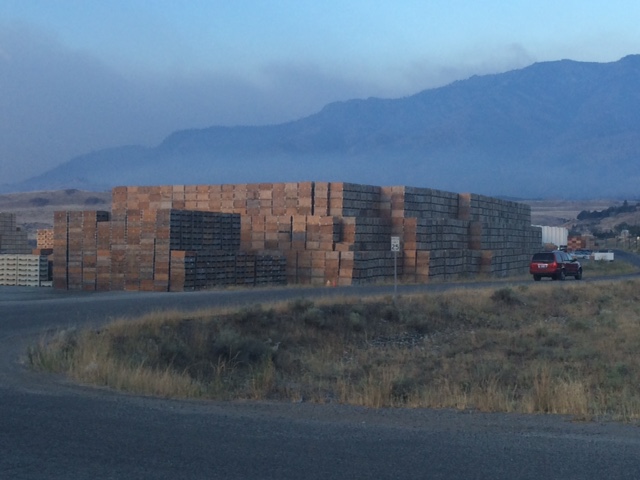
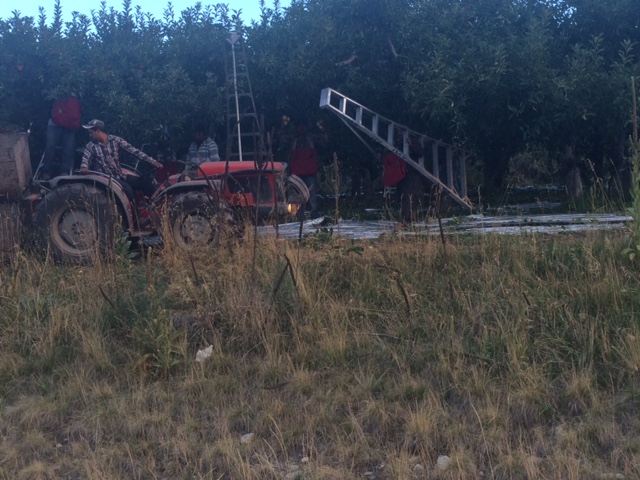
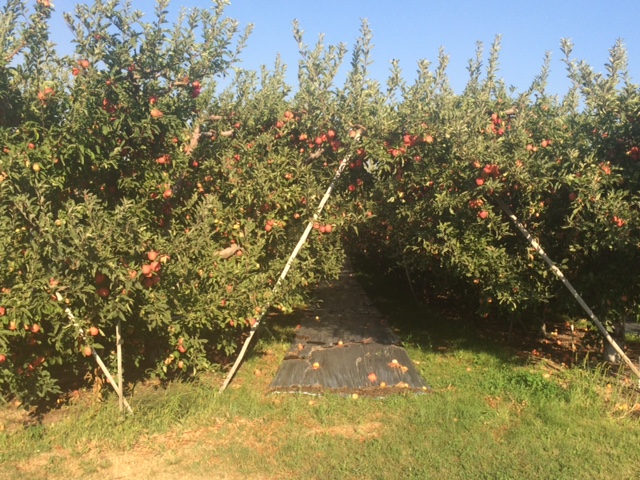
The vagaries of the ride could not distract from the day’s main event – apples! I saw enough steps in harvesting along my route to piece the process together, and appreciate the hard working Mexican-Americans who bear the biggest burden to ensure we have Washington Applies all year long.

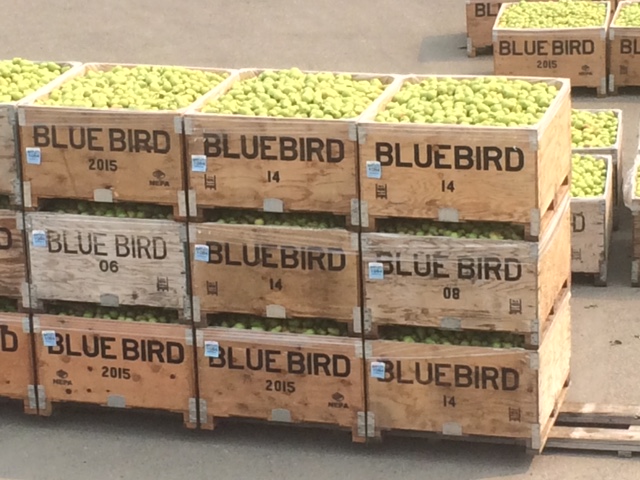
The basic unit of harvest is the crate: four feet square and 30” deep. They come in wood or plastic, with the orchard’s name and apple type stenciled on the side. When an area is ready for harvest, wide strips of plastic are laid out between the rows of trees and an empty crate is set beneath every second or third tree. Farm laborers with three-legged ladders and frontpacks that look like giant snugglies climb into the trees, pick apples, and deposit them into their pack. When full, they amble down and transfer the produce to a crate. Then repeat the process. I asked one guy how many crates he filled per day. He said twenty, but since his English wasn’t much better than my Spanish, don’t quote me on that. There are a variety of small tractors that run between the apple trees and convey full crates to a loading area. Many semis with 40 or more crates whizzed by me on US 97.

IMG_3638 IMG_3632 IMG_3661

Some laborers have cars, but many go from orchard to orchard in school buses or white vans. Other white vans transport the fire fighters I see on break in many towns. A few parks have been commandeered into makeshift camps for fire crews. Others are still full of RV’s and campers enjoying their vacation. There is a sense of an emergency: near, but not here.

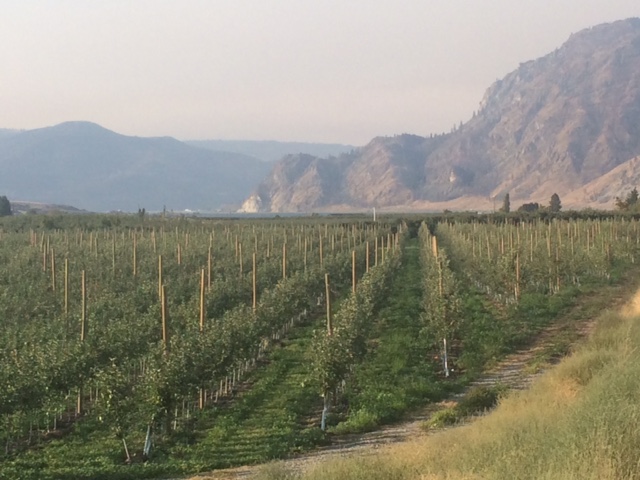
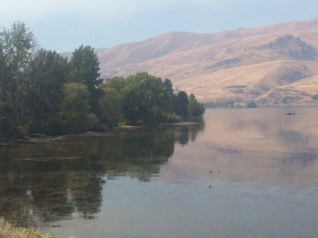
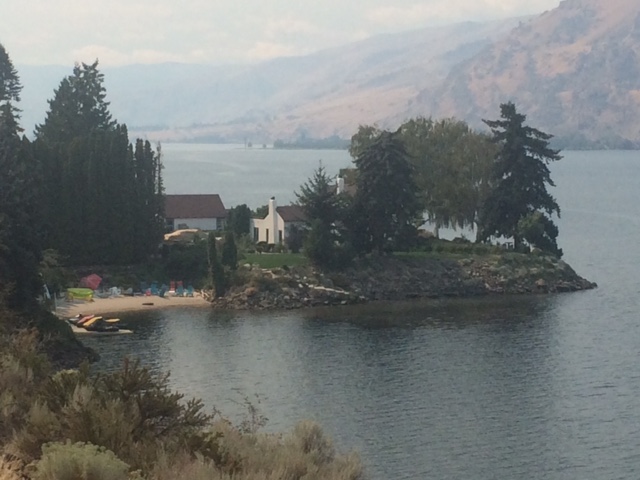
IMG_3651By noon the sky turned blue as I’ve seen in a week and the river turned ultramarine. I passed a few more dams. Dams along the Columbia River are frequent as service areas along the New Jersey Turnpike. The dams turn the river into a series of lakes. Elaborate vacation compounds line the shore. The difference between the lush vegetation,  irrigated orchards, and barren mountains is striking.
IMG_3644 IMG_3650

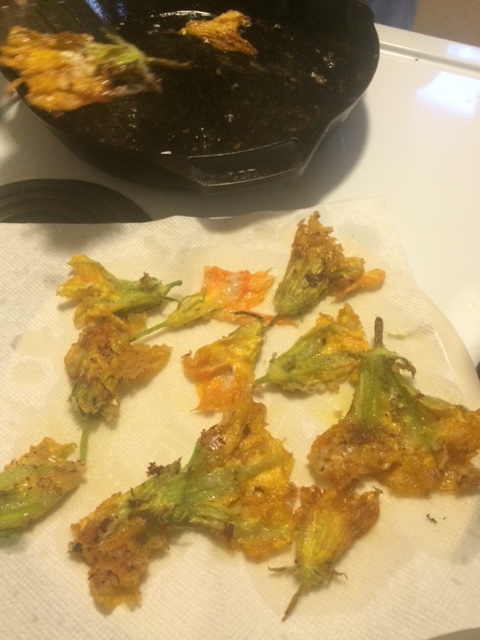
IMG_3654I stayed with a top-tier warmshowers host in Wenatchee, along with another cyclist from England. Dinner was terrific, especially squash blossoms: the flowers of a squash plant, stuffed with goat cheese and lightly batter-dipped. Yummy!

Posted in Bicycle Trip Log | Tagged , , , , , , | Leave a comment

Profile Response: Shane Rehman Denver, CO

HWWLT Logo on yellow“I like the unknown and taking chances. When I am older I want to tell my grandkids what I did. A lot of people don’t understand that. A lot of people don’t take chances. I am a wild person. I like to climb, dive, scuba, anything that takes a risk.”


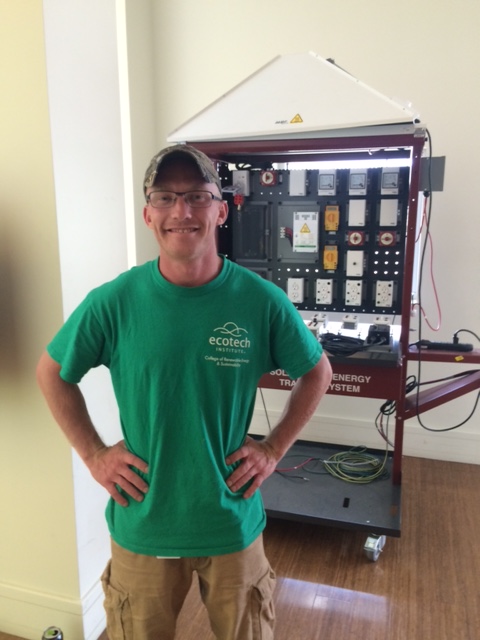
Shane Rehman was born and raised in Tennessee, but he’s been so many other places since then: roustabout in Cold Foot, Alaska; bull rider in Hawaii; helicopter mechanic in the Marines. He served four Middle East deployments during eight years in the service; two in Iraq and two in Afghanistan. Now he lives in Denver and attends Ecotech Institute to become a learn how to service wind turbines.

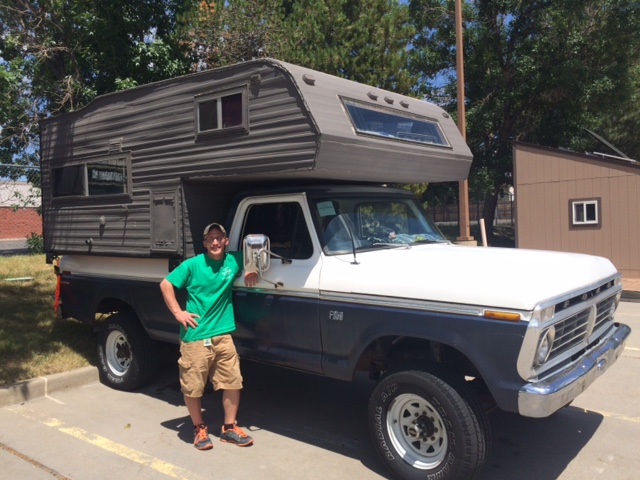
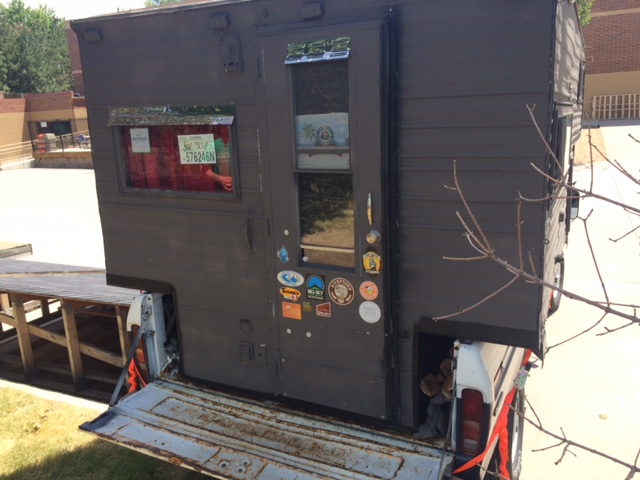
IMG_2945Shane lives in a camper that he bought for $1200 that sits on the back of his $3300 1973 Ford pick-up. “Rent was $945 a month for my one bedroom apartment. I get $1700 a month from the military. The rent was too expensive. Besides, I have PTSD, and all the noise of living in a neighborhood bothered me.”


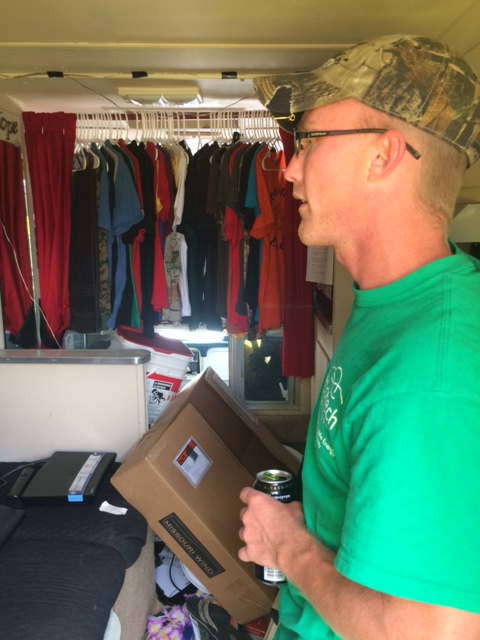
I met Shane in the lobby of Ecotech Institute. He spends much more time at the school than most students since he parks his camper in the back lot. He gave me a tour of his living space, which amounted to little more than ducking our heads into the hot metal camper on a sweltering summer afternoon. “I live out of the camper. I park it here during the day and at 24 Hour Fitness or Walmart at night. It sends a message to people.”

IMG_2943 IMG_2944But Shane is vested in the camper’s potential more than its present. “I have lots to do to this camper. I want to paint an ocean scene on the ceiling. I want to add solar collectors to the roof and install a solar oven. I want to raise the counter and make more storage. I want to paint the outside with slogans like, ‘Living off the gird’ and ‘Be your own energy.’ Maybe I’ll put your question on there too.”

How will we live tomorrow?

IMG_2942“I will live in paradise. I am an optimist. There’s a lot of negativity in this world but I stay positive. I am a parrot head. I live casually. I go with the flow.”


Posted in Responses | Tagged , , , | 2 Comments

Trip Log – Day 107 – Wilbur, WA to Brewster, WA

Wilbur to BrewsterAugust 20, 2015 – Smokey, 90 degrees

Miles Today: 78

Miles to Date: 5,978

States to Date: 22

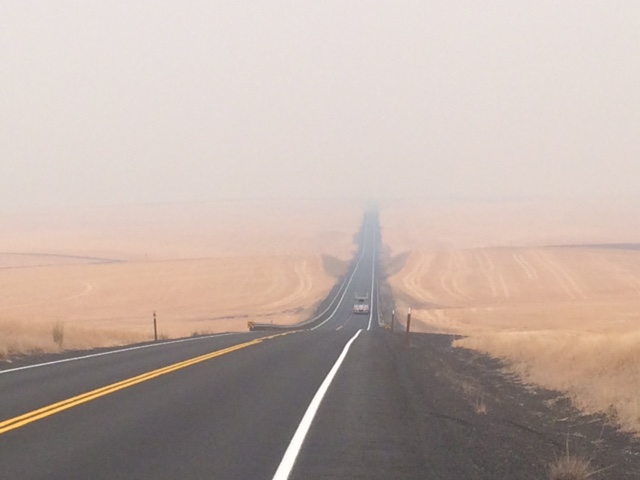
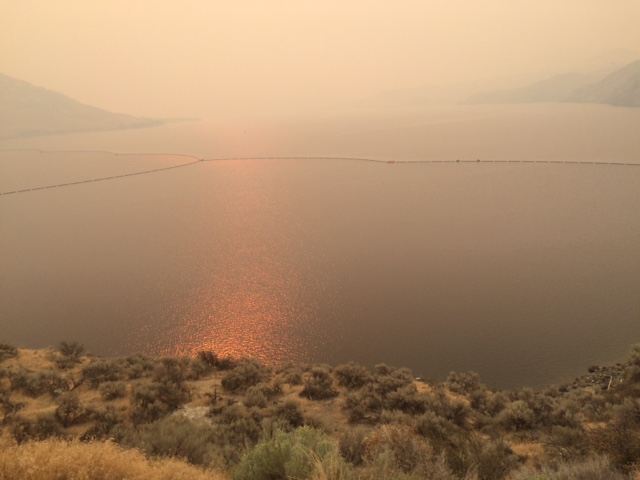
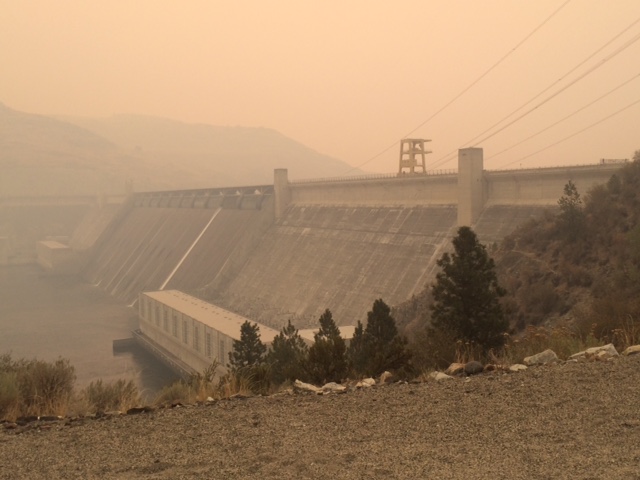
Fires to my north. Desert to my south. Smoke in my nostrils. Wind in my face. Rough aggregate roads. Washington is a trial. I will persevere until Seattle.

IMG_3607

No horizon line this morning

IMG_3612

Roosevelt Lake stretches 150 miles toward Canada

IMG_3613

Grand Coulee Dam

IMG_3624

Chief Joseph Dam

images-1 images imgres

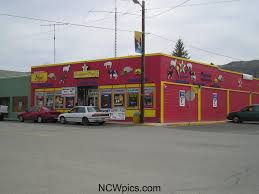
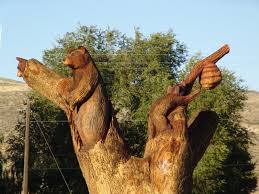
After 66 miles I reached Bridgeport, a funky Mexican community with cool carved trees (enjoy these stock photos – in my pictures the sky is green). I finally reached Brewster where Naomi, the motel clerk made everything good. I met her three pugs, heard about her four daughters and the husband that got away. She gave me a discount. She nodded toward the window, “No one should have to pay to breath this.” Then she gave me a memorable response to my question.

Posted in Bicycle Trip Log | Tagged , , , , , , | Leave a comment

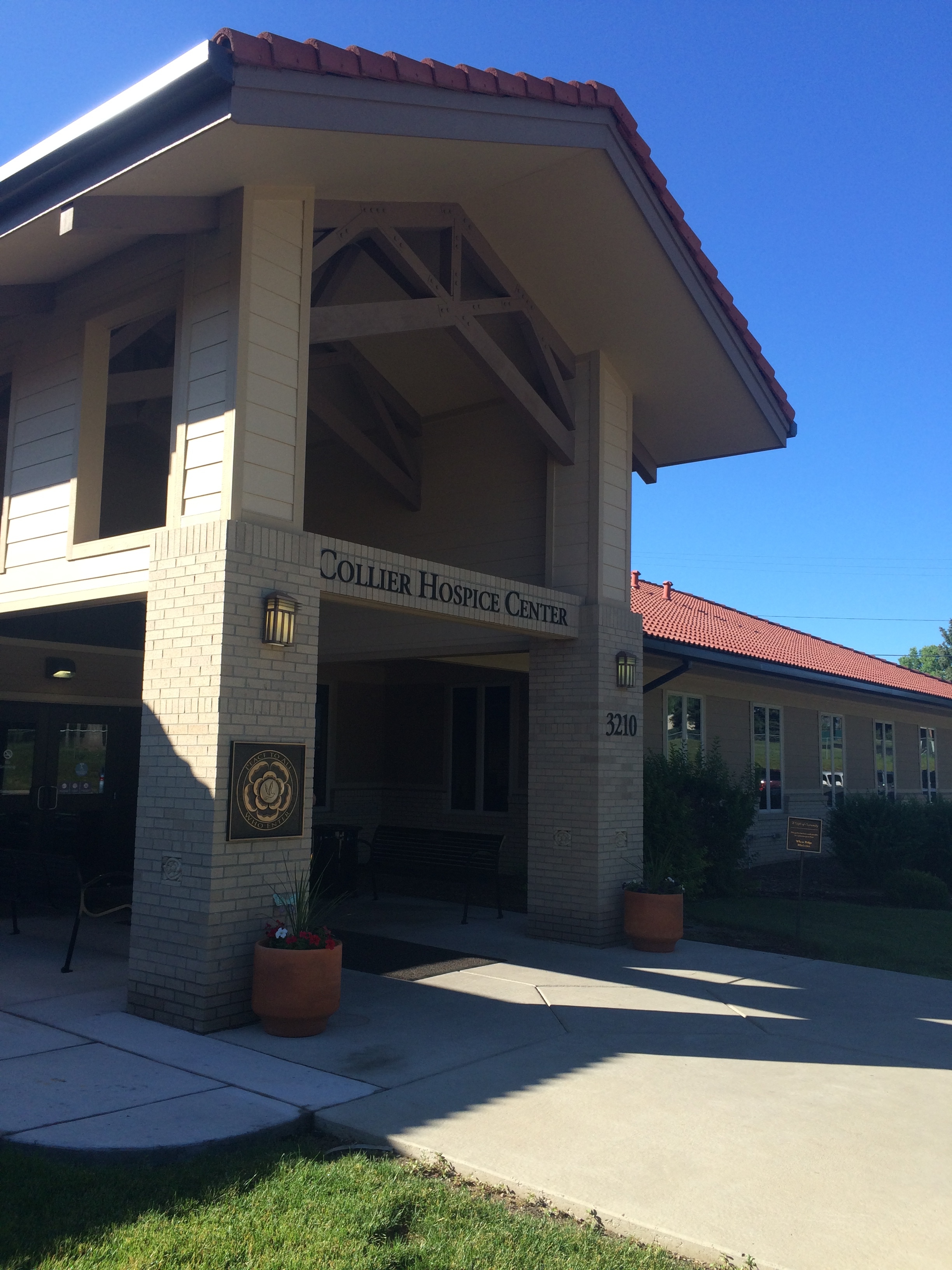
Profile Response: Collier Hospice Center, Wheat Ridge, CO

HWWLT Logo on yellowMy mother spent the last eight days of her life at the Collier Hospice Center. Our family was moved by the dignity that Collier staff provided everyone who participated in our mother’s final days. Five years later, I returned to reiterate that thanks and ask the care team how the way in which we die will impact how we will live tomorrow. My sister Pat and I met with Judith Kadlec-Fuller, Director of Patient Services and Dr. Shannon Ryan, Palliative Care Medical Director, at Collier Hospice Center

In medical school, Dr. Ryan was interested in the difference between treating people as “disease processes” versus a patient-centered focus on managing disease and distress. She became a family medicine physician, worked at Kaiser, developed an interest in geriatric care, and shifted to palliative care. “People exist in a context of family and community. Our focus on treating disease only and ignoring individual contexts sometimes hurts patients.” Hospice provides a different platform from which to make end of life decisions than traditional medicine requires.

IMG_2908Judy explained, “Seventy-five percent of people say they want to die at home, yet only twenty-five percent actually do.” Hospice can help realign people’s wishes with reality. Eighty percent of hospice patients remain in their homes because hospice support optimizes their ability to stay there. A typical at-home patient has a weekly visit from a nurse, three to five visits a week from a care assistant, and 24/7 phone access to a nurse. “Medicare pays us $165 a day for at-home care, versus $800 a day for inpatient care. They limit inpatient care to no more than twenty percent of our patients. It’s useful to have the inpatient option, but it’s not the core of our care model.” Judy believes that as palliative care and hospice care become better know, more people will choose palliative care.

Dr. Ryan added, “There’s a ground breaking study from Mass General Hospital that showed advanced cancer patients who had standard cancer treatment PLUS palliative care actually lived longer – not just had a better quality-of-live, they actually lived longer – than patients who underwent only standard treatment without palliative care.”

There are additional indicators that critical patients and their families suffer in other ways from medical treatment. Long-term ICU patients develop depression and PTSD. Families of patients who die in the ICU have higher levels of grief-related depression.

IMG_2911Judy explained, “When hospice started in this country, it was considered the last resort of cancer patients. Now 60% of our patients suffer other illnesses. Many are deteriorating chronic conditions. Too often, we have patients who come to hospice and die the same day. We can offer chronic patients benefits well before that time.”

Dr. Ryan sees increased exposure and acceptance as the key to more people considering, and selecting, hospice toward end of life. “Atul Gawande’s book, Being Mortal is doing so much for us. There is also discussion under ACA (Affordable Care Act) to compensate for end-of-life discussions. Right now, if they occur, they are on the doctor’s own time.

“Physicians have abdicated our responsibility to provide clear guidance. Malpractice and liability concerns cloud this. Families are put in places where they have to make difficult decisions. Sometimes they bully physicians when they reach an impasse. Younger people question every milligram of every medicine. I am for empowerment, but reading a WebMD article is not the equivalent of 40,000 hours of medical training. Physicians are seen as the public face of the healthcare problems in our country. Yet our judgment is increasingly questioned by algorithms about outcomes and cost-effectiveness.”

How will we live tomorrow?

IMG_2910“We will return to the day when people die at home. There will be more telemedicine to support it, but death will be more integrated into life. We see Hispanic families who care for their loved ones like you can’t believe. I envision more families caring that way.” – Judith Kadlec-Fuller

“We, as physicians, have propagated the myth that we are more in-charge than we are. We are going to see more patients and families involved in reaching consensus about end-of-life care. Caring for a patient is much more complex than treating a disease. Physicians will let go of some treatment in order to have a more satisfactory outcome overall. We say we want to die at home, yet we die in hospitals. Will we die in hospitals or will we die at home?” – Dr. Shannon Ryan

Posted in Responses | Tagged , , , , , | 2 Comments

Trip Log – Day 106 –Spokane, WA to Wilbur, WA

Spokane to WilburAugust 19, 2015 – Hazy, 90 degrees

Miles Today: 66

Miles to Date: 5,900

States to Date: 22

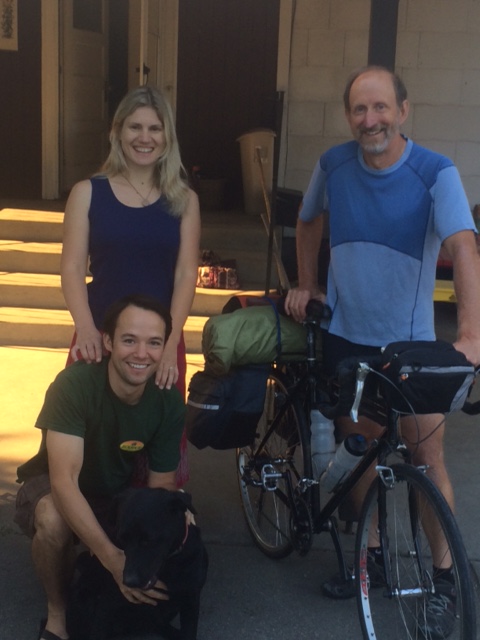
 IMG_3589Every few weeks I forget the rule than fifty miles before noon is easier than thirty miles after noon, and have to learn that lesson all over again. It was hard to leave Ryan and Sabina and their other warmshowers guest Al. We had a great breakfast conversation and it was pushing nine by the time I left. How hard could 66 miles be?


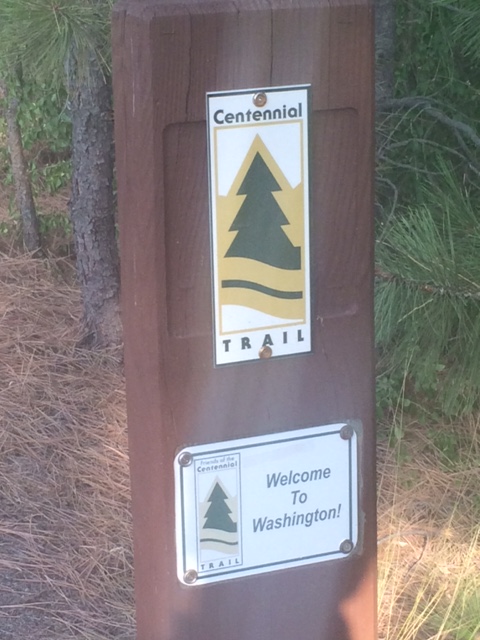
 IMG_3595The first ones were easy, across the Spokane River and rising up along the Centennial Trail. Cool shady mornings even make climbing pleasurable.

By the time I reached the plateau, about ten miles along US 2, the sun was high, the fire smoke made a brown band in the sky and I knew it would be hot. But the road surface was good. Beyond Quest Casino and Wal-Mart, Fairchild Air Force Base and McDonald’s, the land became an immense, undulating blanket of tawny wheat; as if the past six weeks of mountains disappeared and I was back in the Dakota’s. I spun fast, in keeping with the gigantic scale, until the wind imitated the Dakota’s as well, bearing straight at me with no relent.

IMG_3599

I was famished by lunch, and disappointed when Davenport’s Safeway was the dinkiest possible store: no prepared foods or place to sit down. Still, I can always put together a good lunch in a grocery store. A dozen tired guys in white pick-ups with flames on their T-shirts came in as well: fire crews on break.

Beyond Davenport the road was recently paved with rough aggregate safety engineers must love for the friction, and cyclists abhor for the same reason. I jostled on an oily goo of tiny pebbles for twenty miles. Everything vibrated, my bike, my hands, my head. It was an interminable MRI test. No matter how much I savored the scenery, which had turned to sagebrush, or was thankful for no of rain, or no fire, I could not forget the bumpy shoulder. Finally, I came to Cresston, where I promised myself a break. But Cresston’s a shell town; nothing left. Until I passed a roadside chapel that was open and cool and let my jangled nerves approach equilibrium.

IMG_3601 IMG_3602 IMG_3603

The road wasn’t all that much better for the last ten miles, but my spirits were. I found the energy to pump hard up the hills, and brace Surly against the cross winds. Every flag stood straight out from its pole. The Willows Motel in Wilbur is much nicer than I would expect from such a sleepy place. I found adequate eats at their local grocery and was simply happy not to be vibrating anymore.

Posted in Bicycle Trip Log | Tagged , , , , | Leave a comment

Profile Response: Alana Wilson, Boulder, CO

HWWLT Logo on yellowAlana Wilson is a member of the Chrysalis, coop, a sixteen member cooperative living group in downtown Boulder. Except not right now. This summer, Chrysalis is sharing a fraternity house with their sister coop, Masala, while both of their houses are being renovated. Alana is a PhD student in Hydrology with a special focus on frozen water environments (studying the variation of snow melt vs. glacier melt in High Asia). Unlike many graduate students, Alana is deeply involved in her local community, both Chrysalis and Boulder. She is informed and active in local issues, particularly when it comes to housing, which is a complex, lightning rod issue in Boulder.

Boulder, home of University of Colorado main campus, has a reputation as an uber progressive community, yet not all progressive experiments yield the desired results. Boulder has a strict ‘no growth’ ring around its core in order to curb sprawl. This is desirable, in theory, yet results in inflated real estate prices of existing homes and triggers up to 60,000 people each day commuting by car to Boulder because housing near jobs is both expensive and rare. The environmental benefits of the ‘no growth’ ring are more than offset by the fossil fuels required to enable all that commuting.

IMG_2881Boulder also has strict limitations on household size, a feature common in college towns; no more than four unrelated adults in the downtown core, three in the rest of the city. This inhibits shared living situations, which offer high density, more economical, and more sustainable living. Boulder has three city-sanctioned cooperatives (Chrysalis and Masala are two). A recent proposal to allow legal cooperatives for older people seeking to live in community could not even get to a City Council vote. The interests of private homeowners here, like everywhere else in the U.S., are strong.

Yet there are curious ways in ways in which Boulder supports its coops. They are considered affordable housing, and as such, qualify for certain advantages. The Chrysalis renovations are being funded through the city from a fund supported by developer contributions in lieu of providing a minimum 20% affordable component in new developments. As low income housing, the coops also receive food from Boulder Food Rescue, an innovative program that collects viable, though unsellable, food from local markets and distributes it to the community. I arrived just after the Saturday shipment from Whole Foods arrived. The kitchen overflowed with out-of-date pastries, slightly blemished fruit, and more fired chicken than this mostly-vegetarian group would ever eat. Coop members sorted through the goodies, and then gave much of them away to other neighbors.

IMG_2877Which leads to the fact that Alana and other Coop members don’t live as they do just to prickle the city. They want to live in community. Coop members devote time to cook and clean, but also to meet regularly, to take workshops in communication and conflict resolution. Living in a community is their choice, and they invest time and energy to make their groups vital.

Alana has lived at Chrysalis for three years. With a turnover rate close to 30% a year, she is a senior member. The mix is pretty even men and women, and the group’s first mom with two children is moving in this fall. When an opening occurs, there are typically twenty applicants who want the spot. The demand for cooperative living in Boulder far exceeds supply.

IMG_2879Alana thrives on living in community, but sees limitations due to legal restrictions that promote nuclear family housing over other models. As coop members age they want an ownership share in real estate, but group home ownership of more than three people is not allowed in Boulder.

How will we live tomorrow?

“We need more options for how people live. Living in community is more sustainable by any measure, and for many, is a preferred way to life.”

Posted in Responses | Tagged , , , | Leave a comment

Trip Log – Day 105– Coeur d’Alene, ID to Spokane, WA

Couer d'Alene to SpokaneAugust 18, 2015 – Hazy, 80 degrees

Miles Today: 52

Miles to Date: 5,834

States to Date: 22

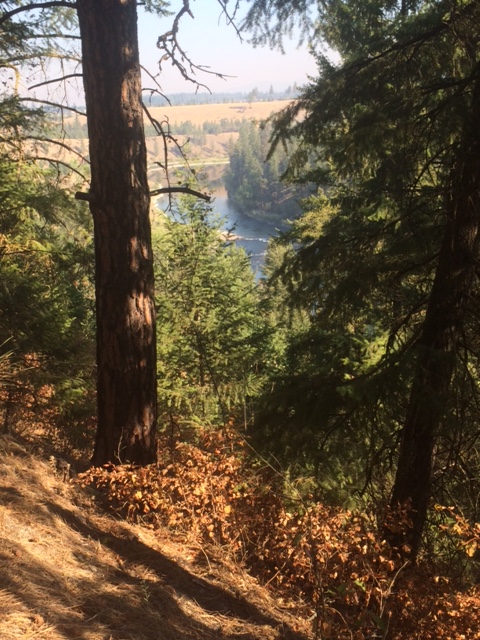
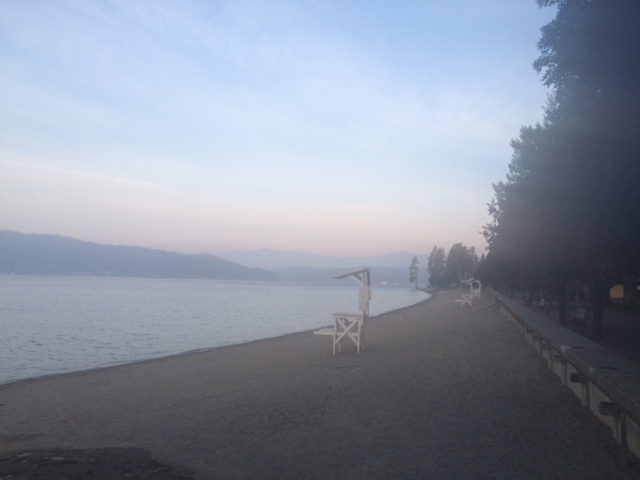
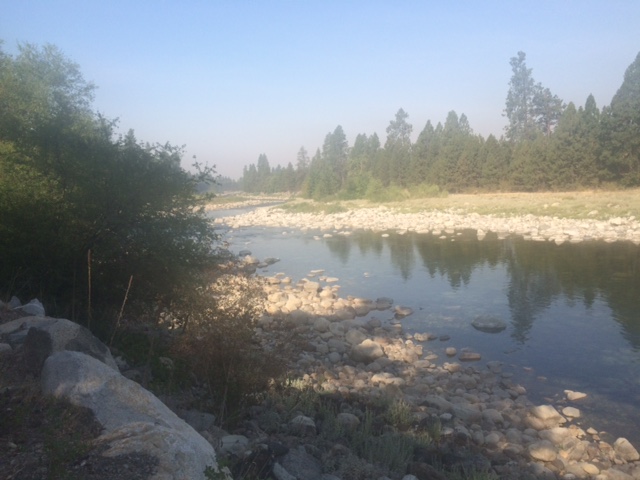
 IMG_3555My nephew Joey has an early job, so I was on the road shortly after six, revisited Coeur d’Alene’s lakefront in the early morning light, and was on the Centennial Bike Trail before the morning commute. Centennial is one of the best trails I’ve been on: great pavement, generous width, and terrific views along the Spokane River. The river’s water level changed dramatically along the route. A series of markers explained how the Prairie Aquifer feeds the river and vice versa, as the relative height of the aquifer and the river change along the route.

IMG_3558 IMG_3563 IMG_3567

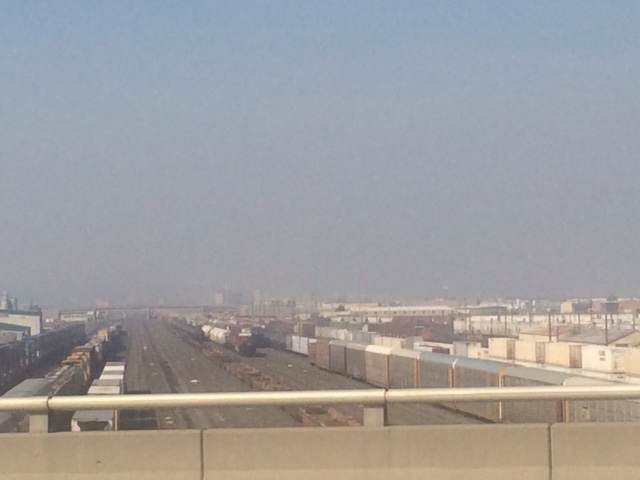
IMG_3570By eight the sky turned hazy and smoke from the region’s fires masked the sun. By the time I arrived in Spokane, this railroad hub was shrouded in pollution. I meandered through Spokane’s industrial east side to visit Self Storage of Spokane. I’ve seen so many storage facilities across the country I wanted to investigate how they figure into tomorrow. The manager gave me a terrific interview and different perspectives on who rents storage facilities and why.

East Spokane includes miles of pawnshops and used car lots on streets not well suited to bicycles. Eventually I made my way to the University district (Gonzaga, the perennial NCAA basketball contender is in Spokane) and landed downtown, where I found a cool Mexican restaurant for a satisfying lunch.

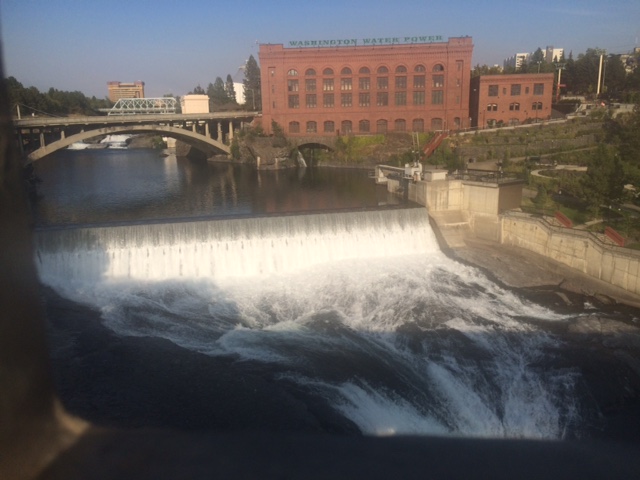
IMG_3586Downtown Spokane is all about fun – it’s easy to see why the city hosted a World Expo back in 1974. There’s a carousel along the rive, an amusement park on the island that held the Expo, and cable cars that traverse across the spectacular Spokane Falls and under the impressive Monroe Street bridge.


IMG_3579 IMG_3580I took a writing break at the Spokane Library, where I had a study carrel with a view o the falls as well as the not-too-distant fires. I am so impressed by the libraries in this country. Cites have invested so much in them over the past twenty years and in town after town I enjoy seeing how well used.

My warmshowers hosts, Ryan and Sabine, live a few miles out of downtown in a quaint 1920’s bungalow. They set a high standard for friendliness and amenities, including fresh garden salad with our al fresca pasta dinner. Such thoughtful people make me feel good about tomorrow.

Posted in Bicycle Trip Log | Tagged , , , , , , , | Leave a comment