Profile Response: Utah County Emergency Preparedness Provo, UT

HWWLT Logo on yellowHow do we prepare for the unpredictable and the unknown? That is what emergency preparedness planners do every day. They study past disasters to understand how earthquakes, tornadoes and floods affected us in the past. They evaluate how well we responded. They analyze how we can improve and even simulate disaster scenarios. They can never know for certain what will happen tomorrow or how we will respond to it. So they model potential disasters and create plans to minimize their impact. These are people who live my question.

I met with five people from Utah County whose job includes preparing us for future emergencies: Chris Blinzinger, Emergency Coordinator City of Provo; Ron Tobler, Emergency Coordinator Utah County Health Department; Jan Rogers, Utah County Medical/Surgical Coordinator; Marilyn Watts, Utah County Medical Rescue Commissioner; and Joanne Larsen, Emergency Manager for the City of Orem.

images-2Chris described the primary objective of emergency preparedness. “How are we going to ensure continuity of our community in the event of disaster – continuity of individual health, essentials services, and government? We do it through partnerships of existing community resources. The governmental representatives coordinate NGO’s, the military, and faith based organizations.”

At one level, discussing emergency preparedness in Utah doesn’t make much sense. Utah doesn’t experience hurricanes, tornadoes, or even many earthquakes. Only Wyoming has fewer disasters within our United States. The biggest public health issue is an increased level of lung cancer due to radon and the ramifications of having a very young population (36% of people in Utah Country are under 18). However, Jan reminded us how Utah’s Mormon founders placed a high priority on preparing for the unknown. “Our grandfathers were really prepared. They were driven from their homes, came here, and built Utah from nothing. They chose the beehive as our state symbol – cooperation and industry. They handed this tradition down to us.”

images-1Mock simulations of disaster events are often used to test emergency preparedness plans. Last March Utah County ran a ‘plane down’ simulation that modeled a mass casualty incident with police, fire departments, and hospitals. They’ve also run earthquake exercises. An alternative approach is to use actual events to test strategies. “We model our evacuation plans on the flows we observe from mass events. 500,000 people attend Provo’s Freedom Fest. Sixty thousand people exit the stadium after every BYU football game. These are excellent simulations of mass movement, which is an important part of emergency planning. We also learned a lot from the 2002 Salt Lake Olympics, which was a logistical feat.”

Funding and maintaining emergency preparedness staff is an ongoing challenge: they are not seen as essential until an emergency occurs. Chris and Joanne are the only two full-time emergency preparedness staff among all the cities in the county. The three country officials are all federally funded, and federal funding varies with the country’s mood. As Marilyn put it, “Money flows when anthrax or Ebola are in the news. Then we forget and the funding disappears.”

imgresBy definition, emergency preparedness means responding to unusual conditions. But it can also be a catalyst for community building. Jan described a coalition of hospitals, who often compete for patients and dollars, which works together in mass casualty situations. Joanne described a citizen acounting program in Orem that strives to account for each of the city’s 100,000 residents, in person, within 2-1/2 hours of an emergency. It’s essentially a pyramid scheme of neighborhood groups, with captains responsible for a small number of people. In the event of an emergency, they will congregate (often at the location of the weakest link, the elderly or infirm), send a runner to the next size group up the chain, and continue in succeeding levels until a full accounting for everyone is made.

“The program began in Bishop, a small town in Utah County. Scaling it to Orem is a challenge, but if it can happen anywhere, it can happen here. The LDS (Church of Jesus Christ of Latter-day Saints) community is very large in Orem, well organized, and behind our effort. They are committed to making it a success.” If the model succeeds in Orem, it could be applied to communities even without the inherent cohesion the Mormon’s provide.

How will we live tomorrow?
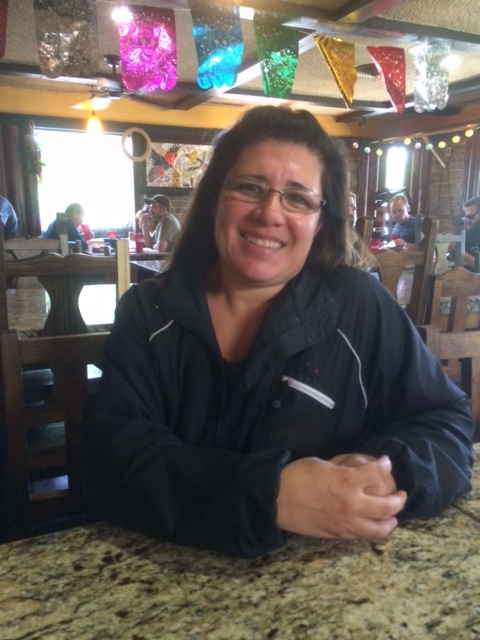
IMG_3157“I get up in the morning and put one foot in front of the other.” – Joanne


“We are on a trajectory. We are going to keep doing what we have done. We have to help people realize that we are dependent on each person in the community. It is hard to get people to commit to things that may never happen. Each individual has to put energy into an unknown activity.” – Marilyn

“We will start small, take care of our family and neighbors and move out from there.” – Jan
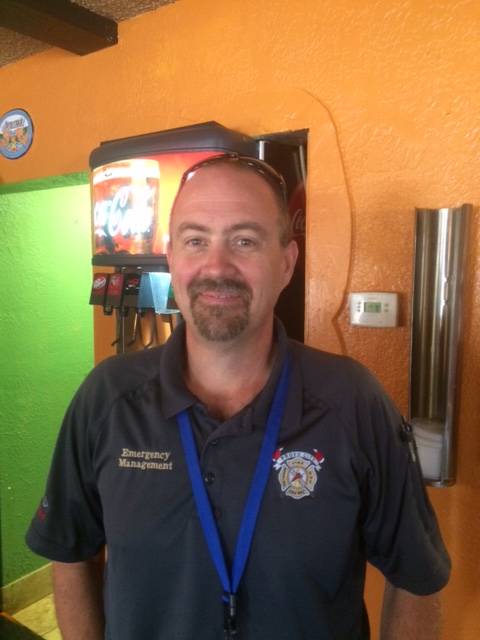
IMG_3158“Life is meant to be lived. I am always in search of the next adventure. We get skewed, as emergency management personnel; into thinking that everything can go wrong. But mostly the bad things don’t happen. I am healthy and looking forward to adventure.” – Chris
Posted in Responses | Tagged , , , , , , | Leave a comment

Cycling the U.S with a question: How will we live tomorrow?

HWWLT Logo on yellowThis opinion essay was published in The Seattle Times on Thursday August 27, 2015.

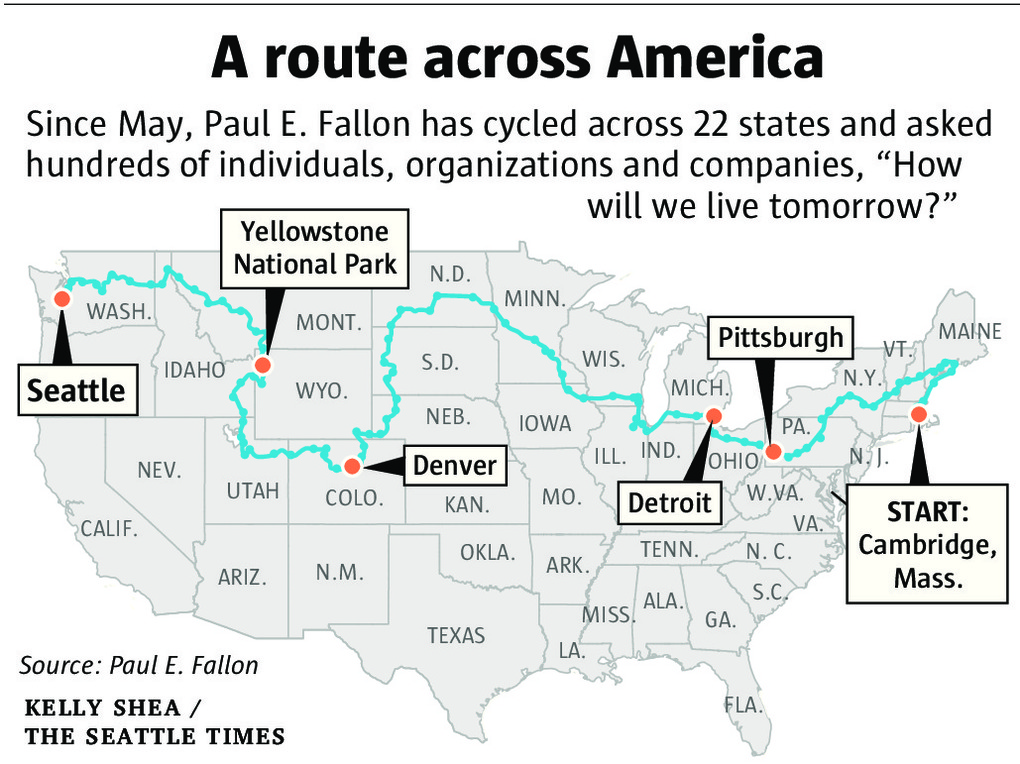
I am cycling toward Seattle at ten miles per hour, fueled by 5,000 calories a day and a question. Since May, I’ve logged 6,000 miles, traversed 22 states, and asked hundreds of individuals, organizations and companies, “How will we live tomorrow?”

Seattle is a key terminus for many cross-country cyclists. More than half of the riders I’ve met start or end here. For me, Seattle is a turning point, the place I stop moving west and start heading south. Seattle marks only the third point in my objective to pedal and pose my question in the 48 contiguous states. Still, reaching the upper left corner on the map is a significant landmark in my journey.

ab843242-4c3c-11e5-b355-ca70f9e95b29-1020x764

I undertook this adventure because I love to cycle and wanted to see America at an intimate scale. More importantly, I am concerned about the negative tone of our national conversation. I’ve no confidence the 2016 election cycle will rise above partisan discord to generate the thoughtful debate we deserve. So I decided to generate my own discussions, one on one, with people I meet riding a bicycle.

A guy on a bike is like a woman in pearls: my accessory earns me special attention. I supposed that people would be inclined to talk to a cyclist; I underestimated that by a wide margin. People love to talk to a guy on a bike. They seek him out. They open up. The bike sets me apart, and triggers unconstrained responses to my question.

imagesI appreciate strangers who engage in lively discussion, but I marvel at the private audiences I’ve earned. I’ve discussed tomorrow with Chiefs of Police, scientists, cattlemen, futurists, oilmen, shaman, museum directors, farmers, and executives. I’m not a credentialed journalist, just a good listener in yellow spandex. Sometimes I ask my interviewees why they offer me their time. To a person, their answer is, “because you’re on a bike.”

Some people respond to ‘How will we live tomorrow?’ by describing their plans twenty-four hours hence; others talk of space travel. Many respond from a global perspective, others answer in the first person singular. Many rephrase the question to how should we live, or how they hope to live tomorrow. One man, a Navy veteran who put me up overnight, told me my question was too broad and diffuse. But the next morning he said, “I’ve been thinking about your question: We will live tomorrow in the memories of those who love us.”

Retirees give me cold water along the road, truck drivers buy me lunch, mechanics offer me money, and gardeners give me produce. I turn down money, but I’ve learned to accept food and drink. As one collared businessman said, “You’re living the dream, man. You’ve got to let others join in.” Strangers invite me into their homes, make me supper, give me a bed, and cook me breakfast. More then stuff, I appreciate people’s concern for my safety. Nuns give me blessings; Buddhists give me Karma; Native Americans give me talismans. Evangelicals pulled me into a prayer circle in a McDonald’s. As a tiny creature crawling across this huge continent, I’m grateful for all protection.

I could return to Massachusetts after I reach Seattle – most transcontinental cyclists are one-way travelers – and count my journey a success. Not that I’ve solved our nations’ problems. Rather, I’ve countered my worries with example upon example of personal generosity.

imgres-1But I won’t dip my tire in Puget Sound and head home. After Seattle, I want to ask my question in San Francisco and Fresno, El Paso and Tampa. Everyday brings fresh responses and fresh energy. And often, a savvy local exposes the real purpose of my inquiry. “You know, the answers aren’t all that important. The important thing is asking the question.”

Posted in Published Articles | Tagged , , | 1 Comment

Trip Log – Day 114 – Seattle, WA

Bothell to SeattleAugust 27, 2015 – Sunny, 80 degrees

Miles Today: 5

Miles to Date: 6,226

States to Date: 22

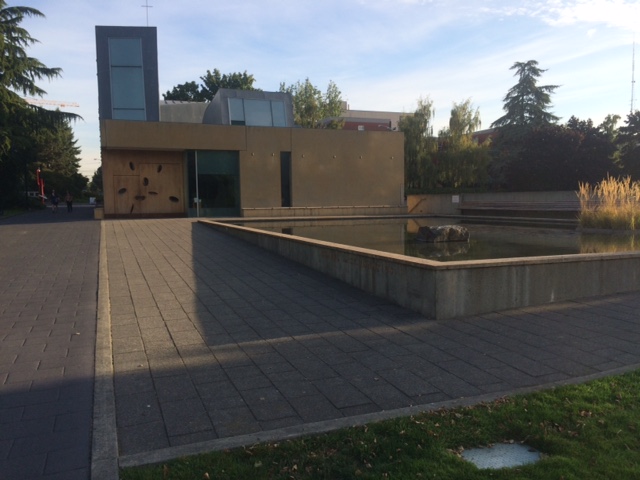
I started the day with a quiet visit to Steven Holl’s chapel at Seattle University, a contemporary building with many references to LeCorbusier’s Chapel at Ronchamp.

 IMG_3725 IMG_3726 IMG_3727

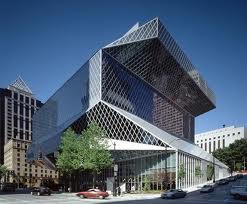
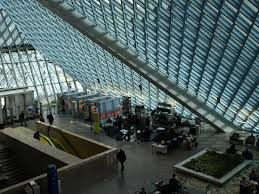
I quit that solitude for the frenzy of Rem Koolhaus’s magnificent Seattle Public Library, where I had two interviews about tomorrow.

 images-5 imgres-2

One of the cyclists I met on my way to Seattle told me, “Being a cyclist is as close to being a celebrity as I’ll ever get. Everyone wants to talk with me.” I had one of those celebrity moments as I left the library and a passerby recognized me as the author of today’s op ed in The Seattle Times. Like actual celebrity, it was both gratifying and creepy. I didn’t actually see the piece until late afternoon. After lunch at the Pike Market, I returned to my favorite Seattle haunt, Elliott Bay Book Company, for a writing break. The hyper-skinny Seattle cafe habitués bemoaned summer on this sunny, perfect day.

No time for fame to go to the head of a guy who pedals for a living. Tomorrow I quit Seattle and head south.

Posted in Bicycle Trip Log | Tagged , , , , , , , | Leave a comment

Trip Log – Day 113 – Seattle, WA

Bothell to SeattleAugust 26, 2015 – Sunny, 65 degrees

Miles Today: 14

Miles to Date: 6,221

States to Date: 22

IMG_3701I woke up to a Seattle panorama this morning. My host said, “Lots of people in Seattle have good views.”  The fact that its shared does not distract from its magnificence.

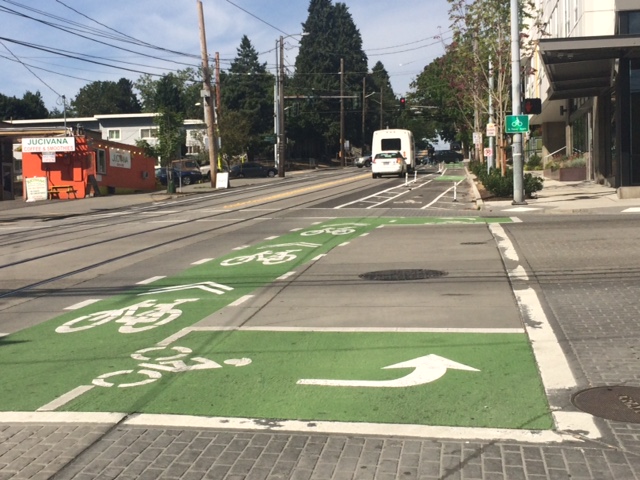
Seattle is a joy in every respect. It’s the first city I’ve been in that treats cycling as a legitimate form of transportation. The bike routes are well marked and connect places of work as well as places to play. Bike lanes are robust and vehicle drivers treat cyclists as equal participants on the pavement.

IMG_3717 IMG_3716

Seattle is also growing – fast. I don’t know if the city invented the Lego style of mid-rise condo development with boxy pop-outs of varied cutouts and materials, flat roofs, and angular surfaces, but they are everywhere, and more are under construction.

IMG_3714 IMG_3702 IMG_3720

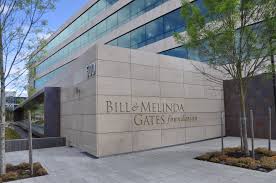
I had a series of interesting interviews today that took me to several different neighborhoods: Atlantic, Belltown, North Queen Anne, and Capitol Hill. My routes went through Seattle University, past the Gates Foundation Building (very elegant) and Gehry’s Experience Music Project (everything but elegant). Thank goodness for my granny gears – the gradient of many Seattle streets is steeper than any US Highway.

 images-1 images

My warmshowers hosts were a delight. They topped off a great dinner with molten chocolate cake that was so rich I had a difficult time getting to sleep. Or maybe it was because I only rode 14 miles. Or maybe it was because I am a city guy at heart, excited by the pulse of this place.

Posted in Bicycle Trip Log | Tagged , , , , | 2 Comments

Profile Response: Pam and Steve Williams, Steamboat Springs, CO

HWWLT Logo on yellowPam and Steve Williams have tied themselves to the land. They own and operate Glas Deffryn Ranch, a 200-acre specialty operation outside of Steamboat Springs where they raise Scottish Highland cattle. Although their ranch requires daily work, its hold on them is loose enough to enjoy retirement. “We never miss a day of powder. We have a parking space and locker at Steamboat. It’s thirty-five minutes from our home to the gondola.”

Steve had a career as a petroleum engineer for Amoco, Pam taught high school biology for 28 years. They are inquisitive, fix-it folks who thrive in retirement by having a small business that requires their attention and ingenuity. They take their time. First bought the ranch, built a barn, and then a loft house,. They recently moved into their permanent house full of quirky, exquisite detail. There are still finishing touches to be done, and they will get to them in time.

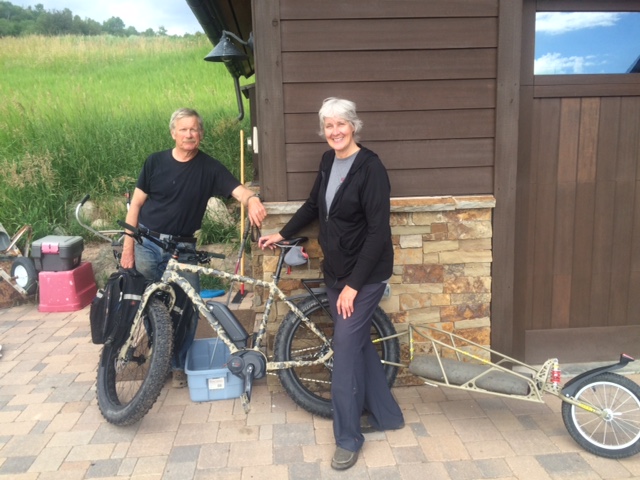
IMG_3020Pam and Steve are long-time cyclists. Their latest assistant is a motor-assist off-road cycle. Steve adds a trailer to and pedals it all over the ranch and triggers the motor on uphills. They save money and energy over driving their pick-up on ranch chores. The motor-assist bike has essentially replaced the horse.

IMG_3015Pam and Steve expanded their ranch by purchasing a scenic portion of the Yampa River that includes seven major bends. Then they put the whole property into permanent conservation. “We never had any children. Leaving this land untouched will be our legacy.”

IMG_3013Steve drove me around the ranch and introduced me to the cattle, all of who know him as if they were pets. Right now they have three bulls, kept in their own pasture, plus seven breeders, five two-year-olds, five one-year-olds, and a good assortment of calves. They’ll sell the two year olds at the end of the season. Each 1100-pound steer will yield about 400 pounds of grass-fed beef, but the ranch is a break-even operation. The economies of scale required for real profit would require a larger operation.

How will we live tomorrow?

IMG_3017“I will pinch myself and be thankful that I am here on the ranch. If I go tomorrow, it’s not the end of the world because I’ve had such a great time.” – Pam Williams

“I can’t imagine the technology of tomorrow, but the human condition will be the same. Bulls will be roaring and humming. People will be doing what we have done all over the west.” – Steve Williams


Posted in Responses | Tagged , , , , | Leave a comment

Profile Response: John Bringenberg, President Colorado Solar Energy Industries Association, Denver, CO

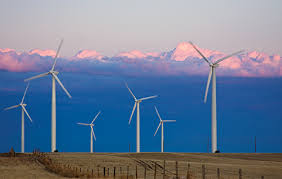
HWWLT Logo on yellowSunny Colorado was one of the first states in the nation to embrace solar energy. The solar industry trade group COSEIA, Colorado Solar Energy Industries Association, is a leading advocate for solar energy. John Bringenberg is COSEIA’s current President.


“Back in 2004, Colorado was the first state to require utilities to incorporate renewable energy sources into their power mix. The original mandate was 20% of utility power from renewables by 2020; that percentage has been increased to 30%.” Thirty-five states now require some percentage of renewable energy in their power grid.

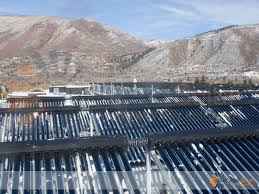
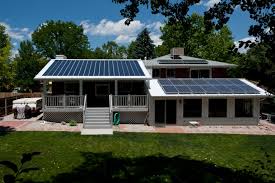
imgres-3Several years ago Colorado provided incentives for homeowners to install solar systems on their homes and the solar industry boomed. Those incentives have been reduced and the industry has slowed down. Meanwhile, other states offered generous incentives that triggered growth. The economics of installing solar are not favorable for most homeowners without subsidies. “In 2008 the Federal government set a 30% tax credit for solar installations. This has been a boon to our industry, but the credits are set to end in 2016. They may be extended; they may not. This is creating uncertainty.”

John explained that all of our energy sources are subsidized in some way. “Subsidies for fossil fuel are hidden: ethanol support is in farm subsidies; BP’s cleanup has been financed in large part by insurance claims; nuclear plants are all insured by the government. Subsidies for renewables are transparent. That 30% tax credit is an easy target in variable political winds.

imgres“The costs of installing solar are stable across the United States, while other energy sources have more variable costs.” In Colorado, as in most of the country, conventional electricity is 10 to 15 cents a kilowatt-hour, in California it is closer to 20 cents, and as high as 30 cents in Hawaii.

The solar industry seeks grid parity – creating a marketplace where the cost of solar is equal to or less than its conventional counterparts. “We are backwards about how we approach this. For most of history, wood was our primary fuel source. Then we added coal, gas, and oil. In each case we established costs based on extraction, ignoring the external costs on our health and environment.”
images-1There are many ways to work toward grid parity. COSEIA is pushing for CO2 reductions as a positive environmental move that will also enhance grid parity. “A carbon tax, or cap and trade mechanism will raise fossil fuel costs. People in Colorado embrace renewable energy. We have the will of the public here to create CO2 reductions.”

John clarified that all renewables are not created equal. Hydroelectric is cost effective if the right water conditions exist. Public utility companies like wind energy because it is easier to align with their mission to generate, transmit, and distribute. They buy wind for 4 cents a kwH, mark that up in transmission and distribution and still make money. However, solar is so decentralized, utilities don’t have a clear way to benefit. “If you are a public utility, solar works like the enemy. However, battery systems are going to be the disruptive technology that will change everything.” They will make solar a more consistent energy source, easier to transport and distribute. Right now, solar peaks (midday) don’t correspond with peak loads (early evening). Batteries can adjust that disconnect.

How will we live tomorrow?

imgres“When you think about energy, you have to think years, generations. Climate change happens so slowly and diffusely. We cannot say that the increased rainfall we are experiencing in Colorado this season is due to one particular factor.

“Reactions to climate change fall into three major categories: Technology will save us. We are already cooked; it is too late to do anything. We can affect it with technological help.

“The United States recently agreed to eliminate CO2 emissions in electricity generation by 2100. Many say that is too late, others say it cannot be done. I believe we have to discontinue generating electricity that creates CO2 by 2050, that it’s possible, and could help turn us around.

images-2“We are making progress in reducing our CO2 output, but we are still going to see a lot more warming. We should outlaw coal plants, but we are far from doing that. We have to get off coal now, use oil as a bridge for the next 25 years, and then rely on renewables to supplement whatever the next major energy source will be. I would like to say that we can meet our energy needs through renewables, but that is not realistic.
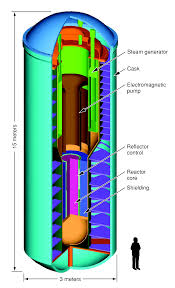
imgres-2Even with conservation, there simply isn’t enough land to create an energy system based on solar and wind without drastic changes in the way we live. Self-contained, neighborhood-scale nuclear reactors that are permanently planted where they provide energy and eventually decay are not a viable technology yet, but they are our best bet for the core of our long term energy needs.
“If we can’t do this by 2070 we will be living in a Mad Max world. That is only two generations away.


imgres-1“There is so much to do in that period. Wealthy nations will spend trillions on weather-related protections as the planet changes. None of that will forestall warming. We should be focusing on how to compensate developing nations to preserve their rain forests. There is evidence that CO2 at 350 ppm is dangerous for humans. We have been above 380 ppm for three years. The CO2 level reached 400 ppm every day in March of 2015. Our CO2 emissions have not stabilized. They have to stabilize before they can come down.”


Posted in Responses | Tagged , , , , , | 1 Comment

Profile Response: Christopher Gorrie, Campus President Ecotech Institute, Aurora, CO

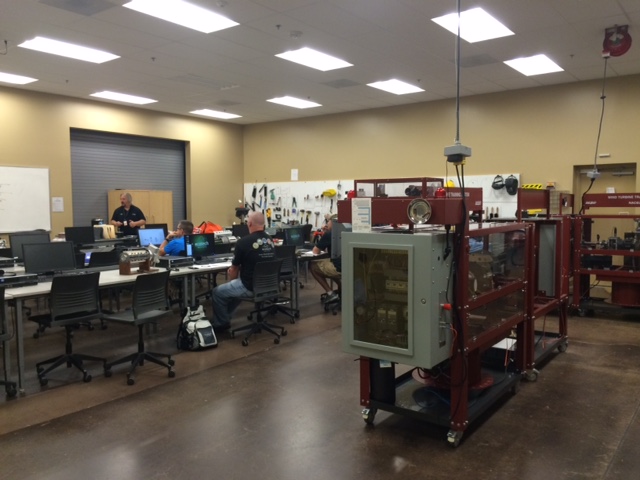
HWWLT Logo on yellowEcotech Institute represents an emerging facet of America’s educational system: a private institution that provides focused training for high school graduates. Ecotech is the only school in the United States that offers an AA degree in renewable energy resources. About 400 students are enrolled in the Aurora campus, which opened five years ago in a renovated warehouse facility along metropolitan Denver’s interstate loop.

Ecotech students are different from traditional college students. The average age is between 30 and 35, many have full time jobs, and more than a quarter are veterans who use their educational benefits to become trained as power utility technicians, solar specialists, wind system installers, or obtain business degrees with a sustainability focus. Christopher Gorrie, Campus President, sees a demographic shift toward younger students as more people seek training related to specific employment over traditional liberal arts.

IMG_2935Ecotech offers degrees accredited by ACICS (Accrediting Council for Independent Colleges and Schools) but maintains close partnerships with renewable energy businesses. Several local companies have representatives on Ecotech’s advisory board, and the curriculum is designed to make students job-ready for the sustainable energy industry.
IMG_2939

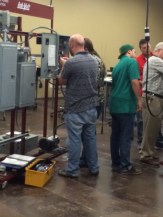
The school is highly structured both in terms of class work and student expectations. “Part of the curriculum is to bolster a level of professional behavior among our students. That is part of why veterans succeed here. They are good students, have benefits so they don’t have to work full time while in school, and have a level of discipline that enables them to succeed.” It is possible to complete an Ecotcech degree in as little as 18 months; 80% of students earn their AA within two years.

IMG_2941Chris feels that traditional colleges and schools like Ecotech operate on unequal fields. “Students are admitted if they have a high school diploma and specific score on the Wonderlic Test. We have to maintain high academic standards, but are also evaluated on attendance, retention, and job placement. Our students are non-traditional in every sense of the word. They support themselves and are skills-focused. But outside jobs, families and emergencies create potential pitfalls to completing our program. It is very expensive to live in Denver; money is an issue for all of our students.”

Chris acknowledges that there have been some “bad apples’ in for-profit education that have tainted the entire basket. However, he sees President Obama’s initiatives to make two years of post-high school education available to more as a positive thing.

Ecotech has the capacity to accommodate up to 800 students at their Aurora campus. At one time they considered expanding to other cities. However, Ecotech has acquired Kaplan Higher Education, so expansion will take a different form: adding Ecotech’s focus on sustainability to existing Kaplan locations in twenty-eight other cities.

How will we live tomorrow?

IMG_2937“The whole world’s economy is a fossil-fueled economy. Not just our energy for transport, but the chair I’m sitting in and the bottle I’m drinking from. These are finite resources. We need to build a new infrastructure for renewable energy. That will require an educated workforce. Ecotech is part of that solution. Not all – it will take PhD’s and scientists as well as technicians.

“It took over a century to build our power grid. It will be a similar process to build a smart grid.

“I don’t see it as a choice. The sooner we do it the easier and cleaner it will be for all.”

Posted in Responses | Tagged , , , , | 4 Comments

Trip Log – Day 110 – Leavenworth, WA to Sultan, WA

Levenworth to BaringAugust 23, 2015 – Hazy, 80 degrees

Miles Today: 79

Miles to Date: 6,149

States to Date: 22

The ride out of Leavenworth and up Stevens Pass is beautiful and strenuous, but at this point a 4,000 foot pass is not too difficult. I reached the summit by eleven.

IMG_3683

Unfortunately, the path down proved much more challenging. US. Route 2 west into Seattle is like a country road, with narrow bridges and tight shoulders. The traffic out of the mountains on a Sunday afternoon was heavy and none too happy about the cyclists in their midst. I was very cautious, pulled over to let traffic pass many times, and signaled when I had to ease into the lane at constrictions. Still, I got horns and hollers. I was mighty pleased to pull into La Hacienda in Gold Bar for a long lunch.

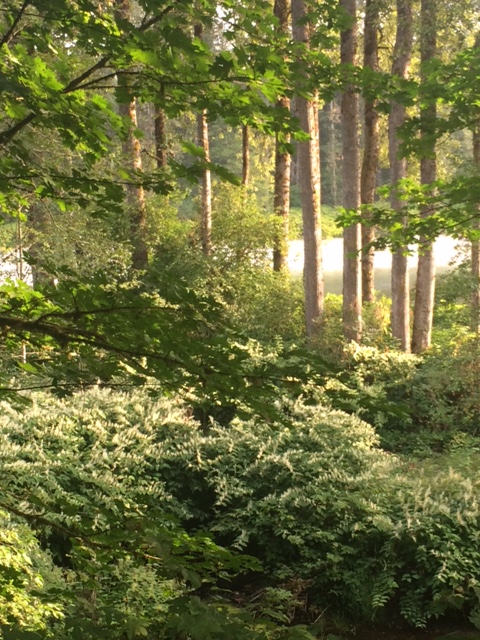
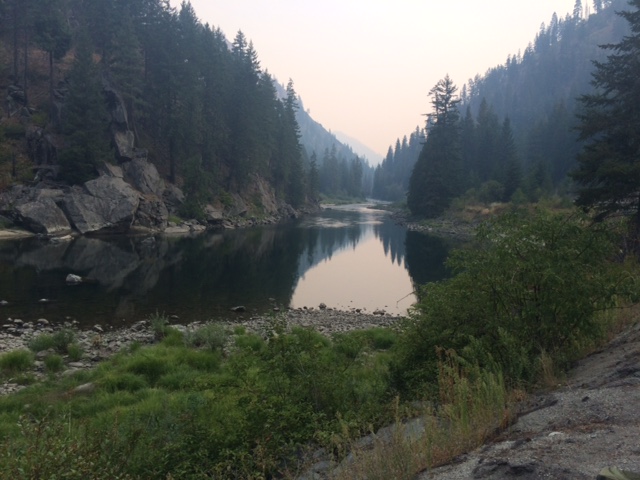
IMG_3685I got off US 2 at Sultan and pedaled a gorgeous side road to my warmshowers host. That’s when reality finally sunk in: I have left the mountains behind and am in the incredible rainforest of the Pacific Northwest.

Brian, another long distance cyclist staying with the same host, let me into a spectacular vertical house deep in the woods. Turns out our hosts had to go out, so Brian and I spent the evening together and turned in early. Maybe I’ll meet the owners in the morning…

Posted in Bicycle Trip Log | Tagged , , , , | Leave a comment