Profile Response: Chad Lundberg, Spearfish, SD


HWWLT Logo on yellowChad Lundberg left a traveling sales position a few years ago to be the social media coordinator for the Alumni Association of Black Hills State University. Chad bought a century old house in Spearfish that has been added to many times. He’s configuring it into a series of separate living spaces that he can rent as apartments or Airbnb accommodations as part of an ongoing effort to make his life more independent and sustainable. Chad was my warmshowers host in Spearfish, SD. After dinner we walked to a local pub for a beer where we had a wide-ranging conversation about tomorrow. Chad’s story of two bicycles struck me as the essence of his ideas.

“I bought two new bikes last year. First, I bought a carbon fiber lightweight mountain bike. It retails for $5500, and I got it for $3000. But the bike has had ongoing costs. The brake pads went. It needed new tires often, at $80 a pop. At some point I picked up a second bike, a single speed, for $700. The single speed was harder to ride at first. Once you get the feel of it, it actually makes you a better rider.

IMG_2621

“I go for a ride every day after work, at least an hour, usually longer, up through the trails. For a while I traded off the carbon fiber bike and the single speed. Then I found myself taking the single speed bike more and more. I kept putting money into the expensive bike; it hardly cost anything to maintain the single speed. At one point I needed to replace a loose bolt on the carbon bike. It was $21. That numbed my mind.

“I started to evaluate the ride on the carbon bike versus the single speed with a simple question: ‘At the end of the ride, am I happy?’ I realized I am happy when I don’t have repairs, when I don’t have to oil the chain as much. I am happy when I don’t have to worry about changing gears. The simpler bike brings more happiness.

“There’s a trend in mountain bikes now to have a single front sprocket instead of a dual sprocket. They add a few more sprockets on the back and it gives you almost as big a range without having to shift from two places. But you know what – they charge more for the single front sprocket than the dual. Why is that? It doesn’t make any sense, it’s marketing.”

How will we live tomorrow?

“We are making things way too complex. Good design needs to take the complexity of an object and make it simple.”

Posted in Responses | Tagged , , , | Leave a comment

Trip Log – Day 83 – Midway, UT to Pleasant Grove, UT

Midway to ProvoJuly 27, 2015 – Sunny, 80 degrees

Miles Today: 46

Miles to Date: 4,703

States to Date: 19

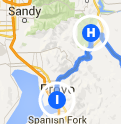
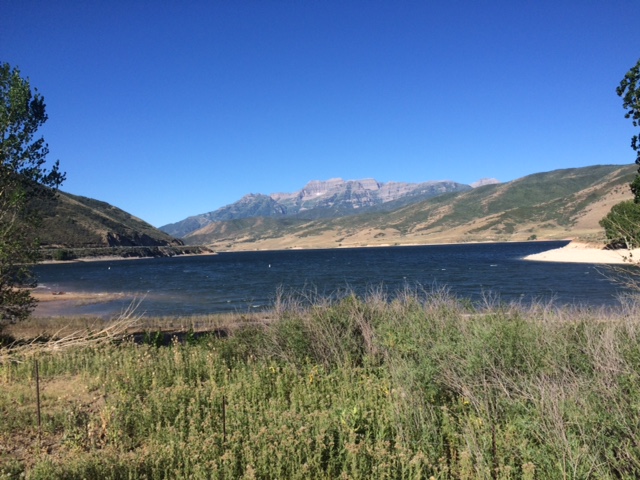
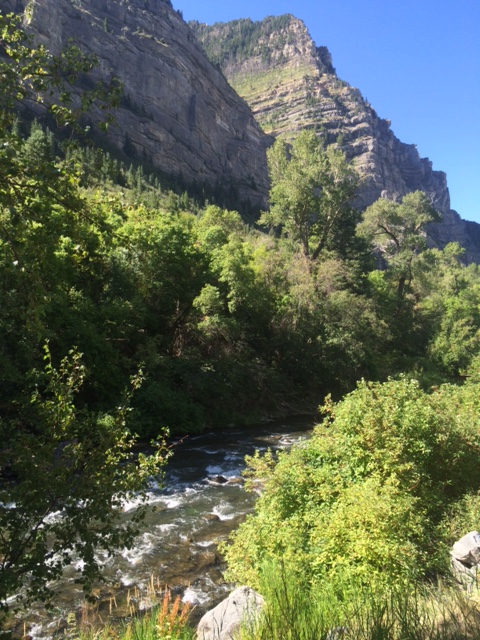
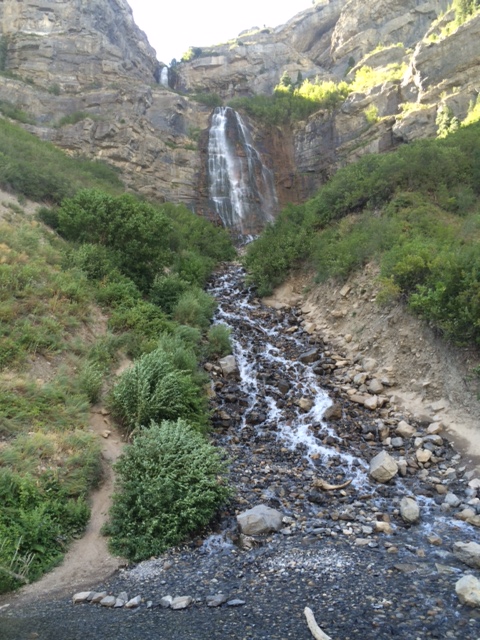
IMG_3139The ride from Midway through Provo Canyon is yet another gorgeous slice of Utah scenery. US. 189 is a wide and twisting road that hugs Deer Creek Reservoir at the base of Mount Timpanogos, the largest peak in this area. About halfway down a side turn leads to a bicycle path that runs right under the spectacular Bridal Veil Falls and then continues down to Provo. I rolled through Brigham Young University, had an odd interchange with a coed in a car who insisted she knew me, and cycled through downtown on my way to Fire Station No.5, where I met Chris Blinzinger, the Manager of Emergency Preparedness for the City of Provo. Chris took me out to lunch with four other people involved in medical, civil, and natural disaster preparation to talk about tomorrow.

IMG_3141 IMG_3147

Provo is similar to Madison, WI; State College, PA; and Boulder, CO in that it is a college town, but is unlike them in that BYU students, mostly Mormon, are quite different from many college students. There aren’t any bars, the campus is full of married student housing, off campus housing advertises itself as ‘men’ or ‘women’ only.

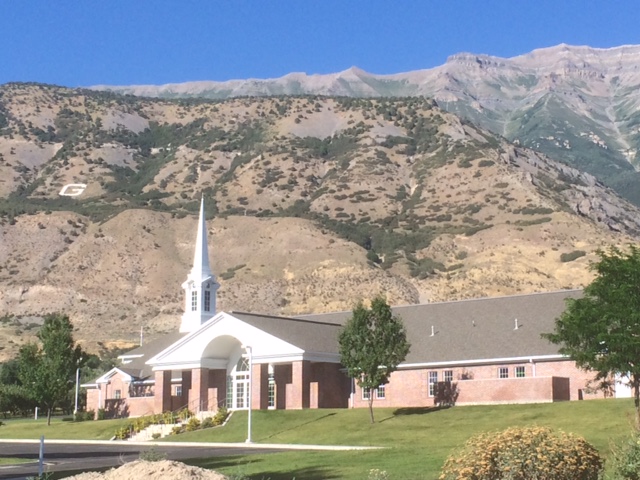
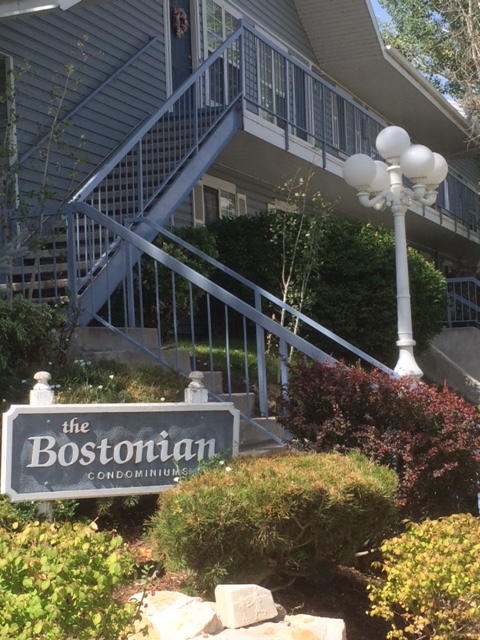
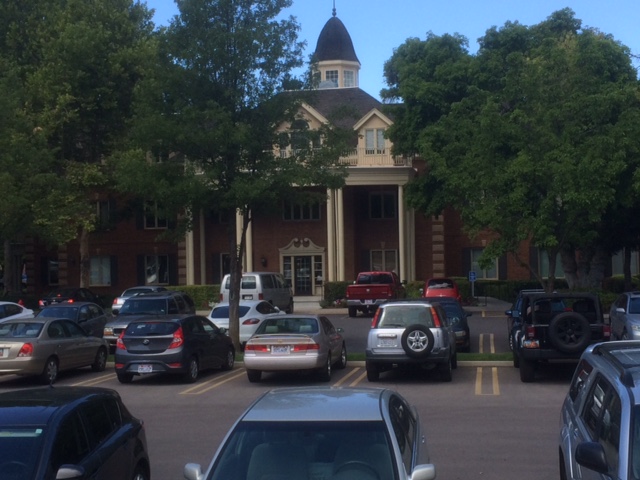
I was struck by Provo’s architecture, which doesn’t reflect the rugged West, as lodge style buildings do in Colorado. Rather, it harkens to colonial stability with brick, moldings and symmetry. The LDS churches, which occur within blocks of each other, are subtly different combinations of traditional elements. Even the condominiums complexes seek historical connections. I loved The Bostonian, Cape Cod forms in the shadow of giant mountains.

IMG_3161 IMG_3151IMG_3149

After lunch I took a writing break, then pedaled back toward Provo Canyon and over the Murdoch Creek Trail to Pleasant Grove, where I stayed with Chris and his family. Kendra and Chris and their eight children could be featured in a heart-warming reality program. They went to their high school prom together, drifted apart, married others, had children, divorced, and then reunited. We shared a terrific barbeque supper and then everyone pitched in to help Chris and his stepson Spenser prepare for a four-day backpack trip with 25 scouts. My two panniers with a credit card for emergencies are easier to manage.


Posted in Bicycle Trip Log | Tagged , , , , , | Leave a comment

Profile Response – Bill Gross of Farm Rescue Fargo, ND

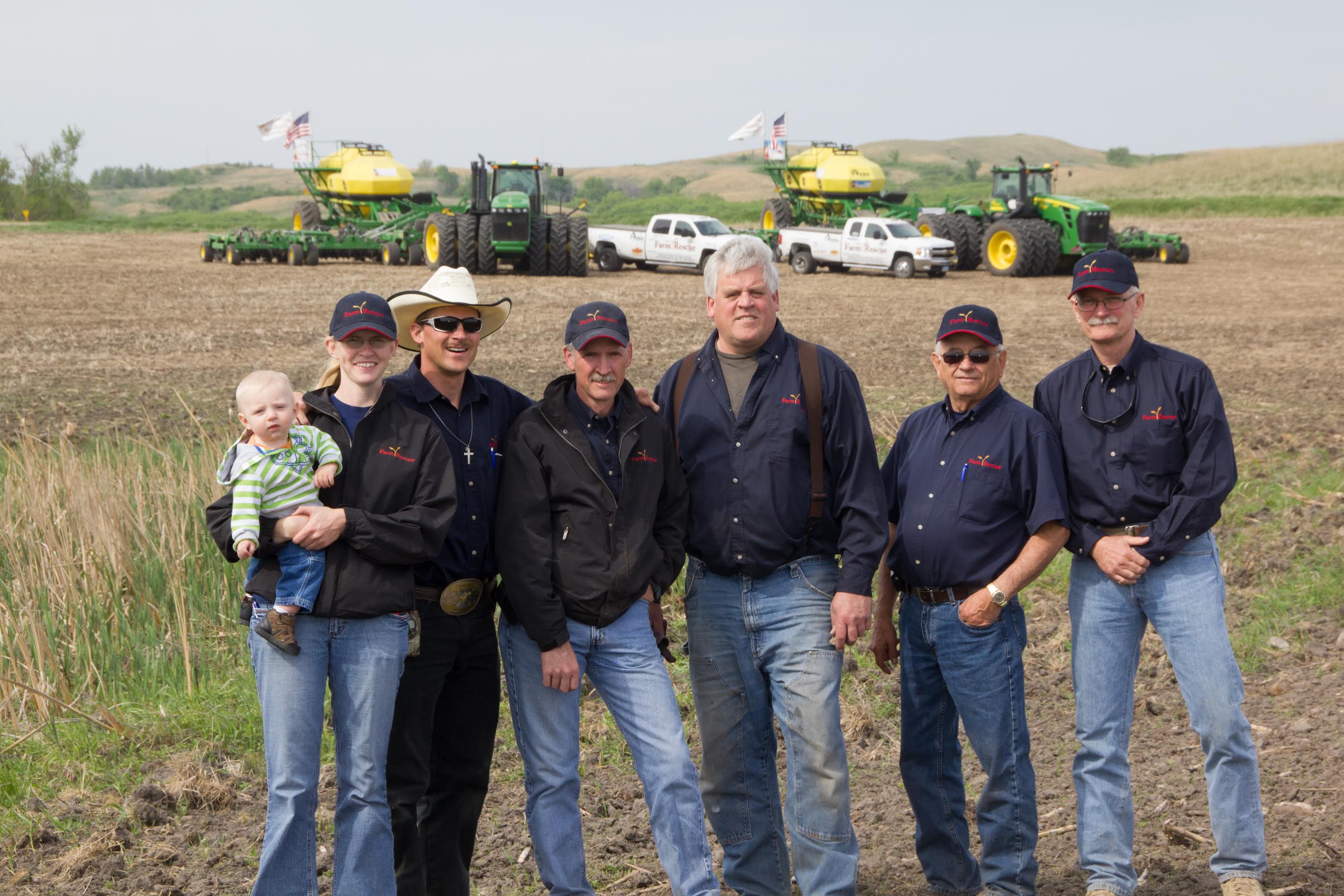
HWWLT Logo on yellowFarm Rescue is nominally based in Fargo, ND, but like so many contemporary endeavors, is an affiliation of people and skills working out of multiple locations. I met up with founder and President Bill Gross via conference call when I was in Bowman, ND and he was in Alaska. Bill is a UPS pilot, and like many in the airline industry, his sense of space and time is a bit different from the rest of us. He’s based in Anchorage, has a house in Seattle, and owns a share in his family farm in Jamestown, ND.

“I was 22 when I got hired by Pan Am and worked for them until the day they closed; December 1, 1991. I’m the youngest of five. My grandfather homesteaded in North Dakota. My parents took over the farm. They had financial struggles in the 1980’s and sold off half their land. When I was growing up, we had 2,500 head of cattle, by the end of the 1980’s all but 100 cattle were sold.” Bill and a brother in Minneapolis own what remains. They farm part of it themselves and rent some out. “There’s excess capacity. We have sixty head of cattle; a neighbor has three hundred. The neighbor oversees daily operations of them all in exchange for using their land.”

P1000934“I used to go on missions trips overseas through the church, in Croatia and other countries, but I wanted to do something at home. I got this idea of buying a big tractor when I retired and being a Good Samaritan by doing planting for others. My heart was always in farming; this was going to be my way of farming and helping other people.” I told a friend, Kevin Mateer, a chaplain in Army. He said, ‘Why wait until retirement? Do it now, you don’t know what tomorrow will bring. And why be a random Samaritan? Target people who are injured. Farming is the most dangerous occupation in the world.’”

Bill realized that Kevin was right on two counts. He should act now, and focus on helping farmers who are injured. “So I founded Farm Rescue ten years ago, bought a domain name, incorporated in North Dakota, had a $99 banner made, and started going to farm shows in the winter. I got free booth space from event holders and made up a brochure. I didn’t know what I was in for. Our slogan became ‘Helping farm families in crisis.’”

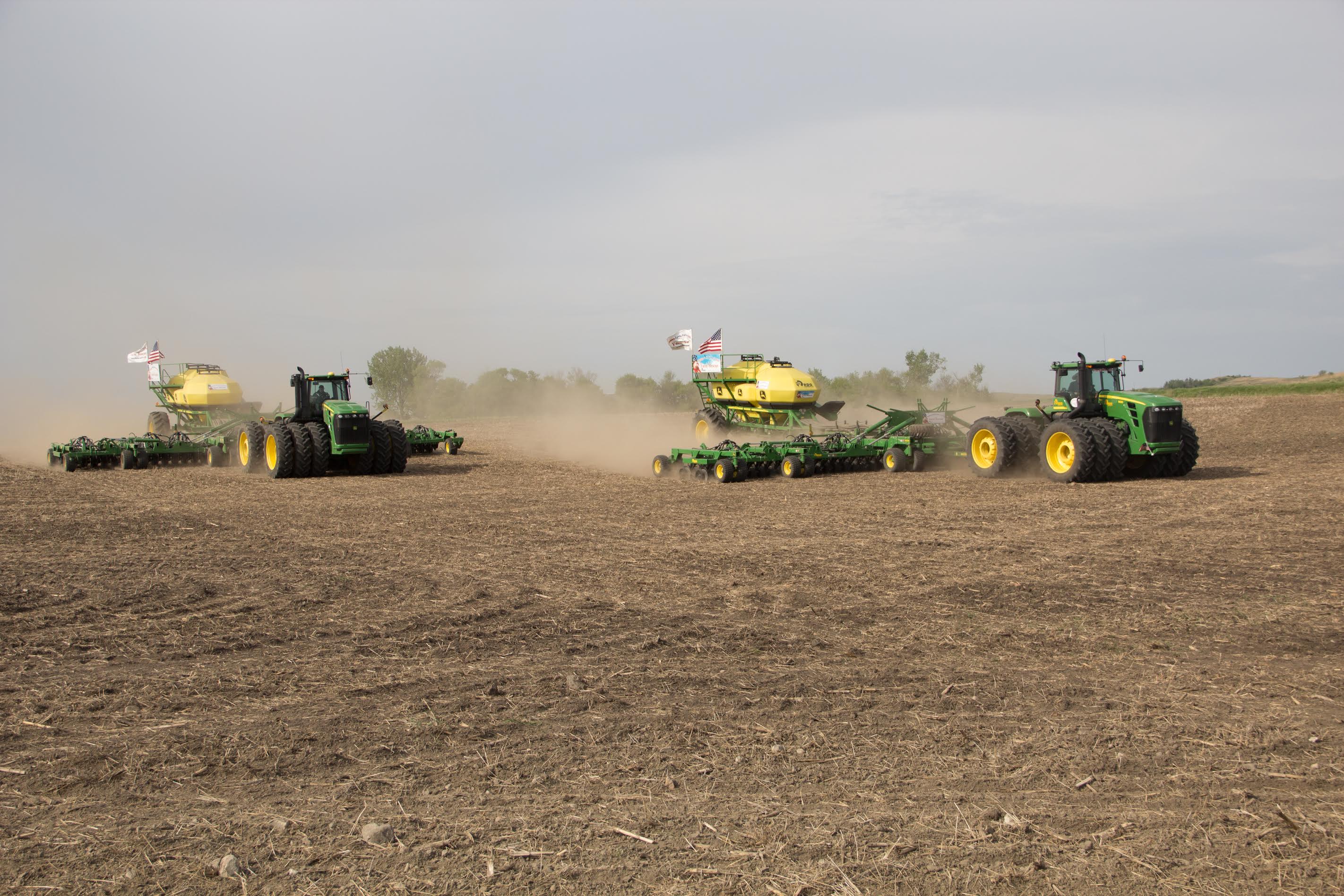
Farm Rescue 1Bill had three volunteers that first year. He got equipment sponsors, raised $40,000 to $50,000 and assisted ten families. Then the organization snowballed. Farm Rescue has aided 325 farm families to date in North Dakota, South Dakota, Iowa, Minnesota, and even Montana.

Farming is a time sensitive occupation. If a farmer gets hurt at planting or harvest, an entire year’s crop can be lost. “The first guy we helped was Matt Beale, just south of Dickinson. April 11, 2006. His right hand had gotten cut off and we finished his planting. We get applications from families who suffered fires, tornadoes, hurt children, and cancer; we get so many applications about cancer.”

Farm Rescue Volunteers“Now we have 1000 volunteers and so many applications we schedule months in advance. We have work from when spring comes through the fall. In any given season, we have volunteers from fifteen different states; multiple teams in multiple states. Some are retired; others use their vacation time. All sorts of people volunteer. Most come for at least ten days; it’s their vacation. They bring their campers and their families. Others are retired and stay up to three months.”

Bill is the head and heart of Farm Rescue; he has risen over 90% of their revenue in the past ten years. But he is assisted by three staff; one in Fargo, a coordinator in Sioux City, IA, and an Iraq war veteran in Colorado Springs who handles logistics.

unnamed (1)“We don’t give money to farmers. It’s not a hand out or a bailout of any crazy thing like that. It’s to help a farm family get the work done during a crisis. It helps them get back on their feet. Every small farm is important to every small town. My town of Cleveland ND closed the high school when I was a junior. I finished by correspondence. Now there is nothing but a PO in a trailer and one elevator. That’s what happens when farm families go out of business and the towns close up. I wouldn’t want to think we get to the point we only have large corporate farms. Our stated mission is just to help people but there’s so much more. It’s about supporting rural communities and rural America.”

How will we live tomorrow?

“I figured you would ask that. It’s not something I’ve given a lot of thought to, which is how you get your best answers.

“From my perspective, I believe that how we will live tomorrow is to help each other more. Our country does not have the resources to help everyone. You see where people start sharing cars in big cities. In Farm Rescue you have volunteers coming from all over to help people. Not just your neighbor. People are helping others, strangers. Some of it is Good Samaritan work. But some is just good sharing. Even farmers, if they ran things more like a coop, sharing equipment, they could be more efficient. As we are more efficient using our resources, whether money or land or material resources, people will share more.

imgres

“In America we need to create more Avenues of Goodness. It doesn’t matter if it’s in your family or through your employer or a non-profit; we have to find more creative ways to pool our resources.

I’m getting married next week. My fiancé is Filipino. The Philippines is a poor country. Her family farms four acres of land, plant by hand, plow with oxen, harvest by hand. They lack what we consider necessities, but they do have community. I believe in America people do have that spirit, but it has to be promoted more.”

Posted in Responses | Tagged , , | 2 Comments

Trip Log – Day 82 – Roosevelt, UT to Midway, UT

Roosevelt to MidwayJuly 26, 2015 – Sunny, 90 degrees

Miles Today: 101

Miles to Date: 4,657

States to Date: 19

Every time I feel flat or overwhelmed on this project, something happens to rejuvenate me. Today was a challenging day, but two high points made all the effort worthwhile.

I woke up early, filled with the anxiety that comes in facing a century through unknown terrain with over 4,000 feet of vertical climb. I rolled my packed Surly to the motel breakfast right at 6 a.m. to find hot coffee, bagels and fruit. More importantly, I found Alaina, the morning clerk who apologized for ‘not having my face on yet’ and then proceeded to brighten my day. I had not heard that expression since Oklahoma days, and sure enough, Alaina had just moved back to Roosevelt form Oklahoma. She was a sweet open person, and when I pedaled west on US 40, her hearty best wishes gave me more energy than the caffeine.

IMG_3124Roosevelt has grown long and ugly to the west, where the haphazard business of oil exploration has littered the valley with metal buildings, material stockpiles and a general disrespect for our earth’s surface. Since the latest oil boom’s tapered, structures less than five years old are already abandoned. The energy business is not conducive to thoughtful or stable development.

IMG_3127Duschesne is the third major town of the Uintah Basin, the smallest and the least affected by recent energy exploration. The Mormons who settled this area mastered water control. A system of canals enables the arid land to turn into lush green fields. The prosperous looking farmhouses reflect their success.


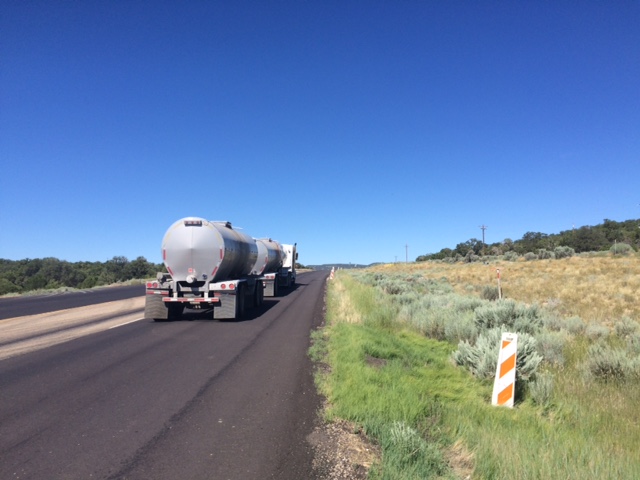
IMG_3128I enjoyed a fantastic breakfast at Cowen’s Cafe – perhaps the best sausage patty of my life – before heading into 60 miles without services. I climbed up a steady twelve miles to leave the Uintah Basin. Dozens of dual trailer oil trucks huffed past me. I descended into Fruitlands, a wide valley with more signs of land for sale than residents. I needed a noon break, but there wasn’t a scrap of shade, so I propped my bike on a guardrail and sat with my back to the glare. Then I climbed again, ten more miles at a steeper grade. More trucks passed me, along with all sorts of weekend warriors pulling trailers and boats. I saw a peak; it proved false. The next one was a rouse as well. When yet another rise showed itself I took another shadeless break to regenerate, then soldiered on.

IMG_3131At the top of the final rise was Strawberry Reservoir. On the East Coast the basic rules of gravity apply; water lies at low points. In the West, thanks to our prodigious damming, water is high up. Strawberry Reservoir is thousands of feet above its adjacent valleys.

My warmshowers host asked me to call a few hours out; he might ride out to meet me. It was 3:30 p.m. when I told Steve I was entering Uinta Forest, 28 miles from Midway. I had been averaging well under ten miles an hour, so projected I would get there around 7:30 p.m. The moment the words left my mouth I was depressed. Did I have energy to pedal four more hours of this hot sun and grueling climb?

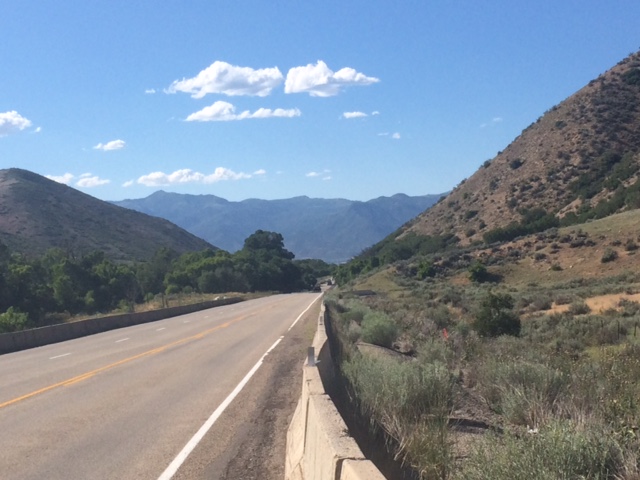
IMG_3132The Entrance to Center Canyon seemed promising, but around a curve was a rise, than another, and more headwind. I was considering putting my thumb out for a sag ride but decided to persevere one other crest. Finally, I saw the summit sign – 8,020 feet – followed by the most satisfying downhill of my entire journey. Twelve miles at a nice 6% grade through a glorious canyon all the way into Heber City. I was at Steve’s door before 6:30 p.m., tired in body but energized in spirit.

Posted in Bicycle Trip Log | Tagged , , , , , , , , | 2 Comments

Profile Response – Blaine Hoffman, Whiting Oil and Gas Company Dickinson, ND

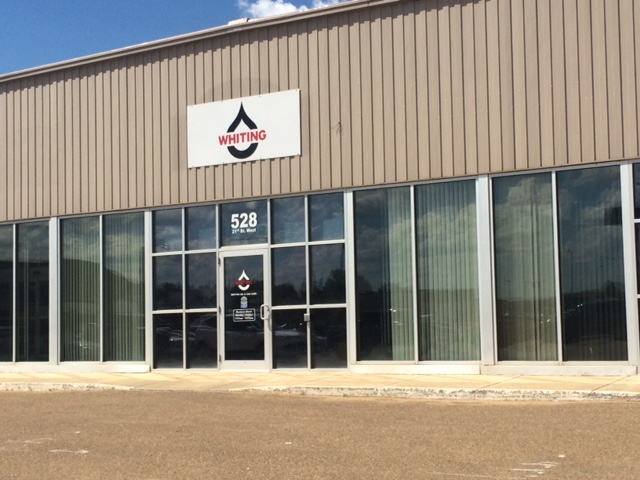
HWWLT Logo on yellowWhiting Oil and Gas is a public energy company that drills for oil and gas in many locations throughout the United States. The company extracts oil and gas to sell to others, and also has its own natural gas refining capabilities. I spoke with Superintendent Blaine Hoffman at their North Dakota headquarters in Dickinson, ND.


Blaine was born in Watford City, raised in North Dakota, and has worked in the North Dakota oil business for 39 years. He lives on 40 acres outside of Dickinson. “We’ve got a 2200 square foot house that my wife put together and I’ve got a 50’x80’ shop for me.” Blaine’s wife is in Arizona now. They bought property near Prescott and she is overseeing construction of another home where they plan to retire within a few years. “She can do whatever she wants, so long as I have another shop. It doesn’t have to be as big, maybe 40’x50’.”

IMG_2594Whiting first came to North Dakota in 1999, and drilled in Mission Canyon in 2002. In 2007 they began drilling the Bakken Formation, one of the largest oil and gas formations in North America. Fracking technology was just developing. “We did some ‘Hail Mary Fracking’ wells, dropped vertically and then went 10,000 feet horizontally and had some success. Now we can go up to 20,000 feet horizontally.”

I asked Blaine why fracking requires horizontal drilling. This led to a concise geology lesson. “The Bakken is a tight rock formation with horizontal fractures. The oil rich zone is between six and seventy feet thick. We use MWD (measurement while drilling) directional tools to drill straight down to that zone and then horizontally. We drill horizontally to tap into the transcendental fractures. Longitudinal drilling is easier, but vertical production in a place like the Bakken would be very little. The Middle Bakken is the target zone. We pump a mix of water and sand, six pounds of sand per gallon, into the well at 8,000 psi pressure. That deep in the ground, the hydrostatic pressure of the slurry is 14,000 psi or more. The water/sand mix infiltrates the fractures and releases the trapped oil.” The Bakken and Three Forks formations contain more than seven billion barrels of oil. Yet only 3%-10% is recoverable by current methods (source: Heritage Center of North Dakota).

Here’s how Blaine describes fracking:
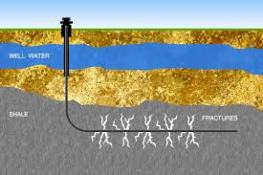
images– Start with 9-5/8” surface casing that we drill about 2500 feet deep, to get below any potable water. Fill that casing with cement to eliminate any leaks.

– Run an 8-5/8” bit filled with oil-based mud to keep the hole stable to a depth of 10,000 feet. (Blaine mentioned those two dimensions in the same breath, but I realized they are drilling with a slenderness ratio of 14,000:1. The vertical hole is proportionately thinner than an unspooled thread).

– Cement that hole in a 7” casing.

– Drill a 6” horizontal bit with a 4-1/2” liner up to 20,000 feet, nearly four miles.

– Insert a series of P-valves along the length of the horizontal bit. After the well is drilled, fracking begins from the end. Open the last P-valve, pump in the water/sand slurry, and open fractures. Stop the slurry flow and allow the released oil to flow up the well. Pull back to the next valve. Repeat.

I’m not savvy about geology or resource extraction. However, having spent my career designing healthcare facilities, I make the analogy between fracking and interventional procedures. Fracking is like performing an endoscopy on mother earth. Since endoscopy and other forms of minimally invasive surgery depend on cameras, I ask whether cameras determine their location in a well. “No, it is too muddy to get any camera image. The MWD tools show exactly where we are within a few feet.”

images-1Blaine makes fracking sound benign, so I ask why people are so worried about it. “When this started in Pennsylvania, there were no rules in place to protect groundwater. They didn’t always cement the surface and intermediate casings. Now, 99.7% of states have some rules. North Dakota leads in writing many of these rules.”

Then Blaine reveals that there are other substances, beyond water and sand, in the slurry mix. “We add a guar gum to the slurry to help the sand and water flow better. Guar gum is a plant material. All of the components of the fracking fluid are public record. We don’t have to list them by percent, but we have to list everything we put down the well.”

Fracking was developed by large companies and/or universities (Halliburton, Delco, Texas A&M) working alone or sometimes together. It continues to evolve. “Initially, we didn’t use the P-valves. We had sliding screens placed at intervals along horizontal well runs. We applied pressure to a location, the screen expanded and the slurry flowed out into the fractures, which allowed the released oil to come up the well.” Again, I am struck by the medical analogy, as Blaine describes what is essentially a stent. “Introducing P-valves and plugs is a more accurate way to control the fracking process and gives us better quality control.”

The North Dakota energy boom has tapered way back, but the industry is still robust. North Dakota remains the second largest oil and gas producing state, after Texas. “At the height of the most recent boom, there were 212 rigs operating in North Dakota, now there are 80. Whiting had twenty-one rigs at the peak and was producing 500,000 barrels a day. Now we operate seven and produce 175,000 barrels a day. The number will increase again, as the price will come back, but it is influenced by many factors: the Middle East, Wall Street and politics. Consumption doesn’t drive the prices all that much. Politicians know how to work the numbers to get prices to sway the way they want.”

imgresBlaine is proud to be affiliated with Whiting. He highlights that the company hasn’t had any layoffs despite the downtick. He points out Whiting’s high safety standards and the company’s leadership in community projects. “My message is; if it’s not good for North Dakota, it’s not good for Whiting. We want to maintain our quality of life. With all of the industry that’s come in here over the last few years, life has changed. If we leave the infrastructure in place, including pipelines, we can have everything in place to return to a high quality of life.”

I ask Blaine about changes in fracking. “The next thing is secondary recovery. We are getting between 5% and 25% of what’s there. When we run parallel well bores we can get maybe 25%. Parallel wells run between 300 feet and 700 feet apart, sometimes at different elevations to access different oil strata. There are certain efficiencies in drilling parallel bores, but at some point they reach diminishing returns. We are always looking for ways to capture more oil.”

“Whiting is a big family. I was the number 9 employee in North Dakota, now we have 515. It’s been a lot of work and a lot of fun, with a lot of rewards. Not many people have the opportunity to start something like the Bakken from zero. It’s been hard and really good, but I’m tired. What I’m most proud of in 39 years in the North Dakota oil business is our safety record and our environmental progress. These last seven years have been a godsend to North Dakota: oil, agriculture, cattle; all have been good. They are a bit down now, but they will be back.”

How will we live tomorrow?
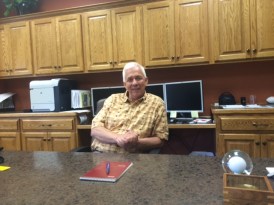
IMG_2593“We are going to live better. This is good for the entire state. Going forward, we want to stay involved with our community and our state. Being involved in our communities is the key to long-term success.”


Posted in Responses | Tagged , , , , | Leave a comment

Trip Log – Day 81 – Dinosaur, CO to Roosevelt, UT

Dinosaur to RooseveltJuly 25, 2015 – Sunny, 80 degrees

Miles Today: 64

Miles to Date: 4,556

States to Date: 19

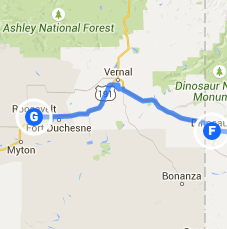
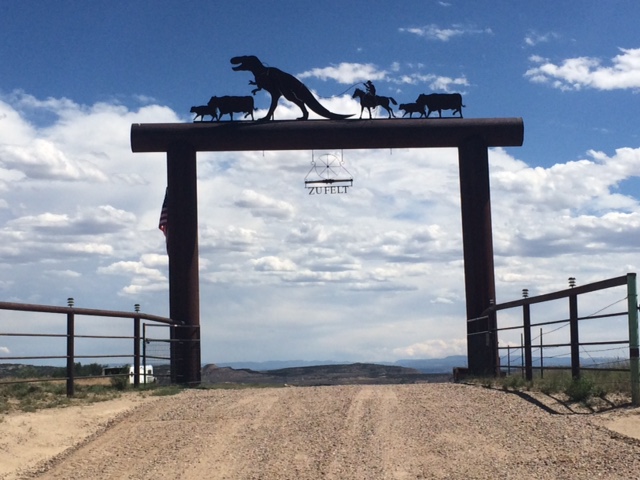
 IMG_3103I continued my journey along US 40 into Utah. The scale is grander than Colorado, the road kill more exotic (bucks and snakes), the shoulder a cyclists puzzle of different pavements and rumble strips irregular as crispy bacon.

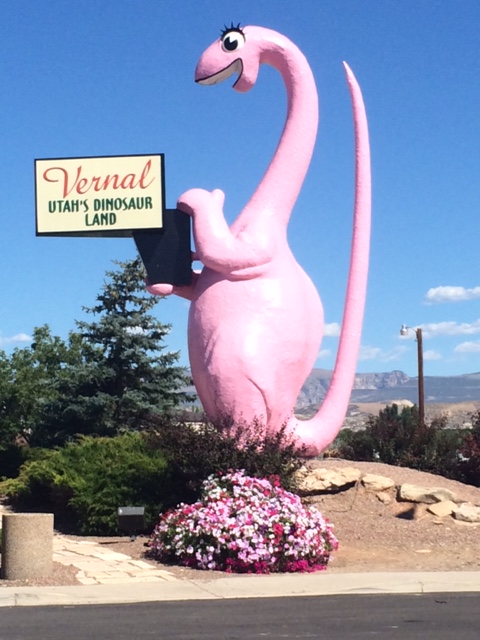
IMG_3108I left early to avoid the wind and was in Vernal by ten. I was in Vernal ten years ago or so at the start point for a family rafting trip. The town has grown in size but not in my affection. It’s hard to love a place so naturally beautiful befouled by the detritus of our energy business. The air should be so fresh. Instead it is heavy and rank.
 

IMG_3110Beyond Vernal the Uintah Basin is stark and gorgeous, except for the drilling sites. Around fifty miles I needed a break and sought shade. I spotted a row of trees, which turned out to line the driveway of a rare house. As I slowed to see if it might be suitable spot, I met Darlene and her granddaughter searching the roadside for a stray dog that came by their place and then ran off. I’m a sucker for Pamela Anderson types. Darlene’s ample figure and platinum hair were offset by the most gorgeous nails I’d ever seen. She invited me to rest in the shade while they searched. I enjoyed a bit of breeze. Unfortunately, they found the dog on the far shoulder, yet another road kill victim. Darlene used the dog to lecture me on being careful. The speckled pink nail of her pointer finger dazzled me. Then I pedaled, refreshed and careful, toward Roosevelt.

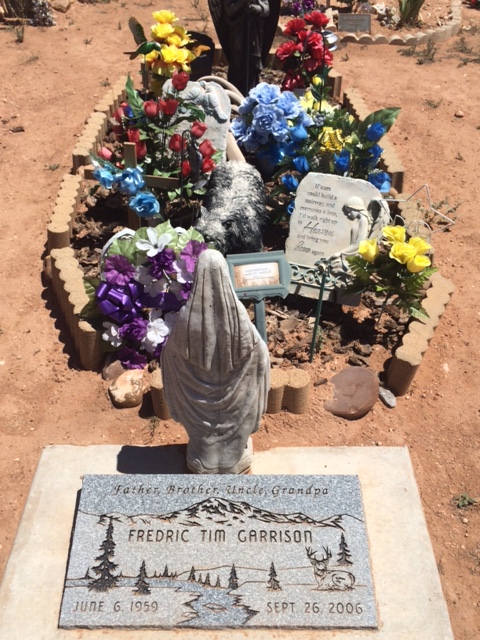
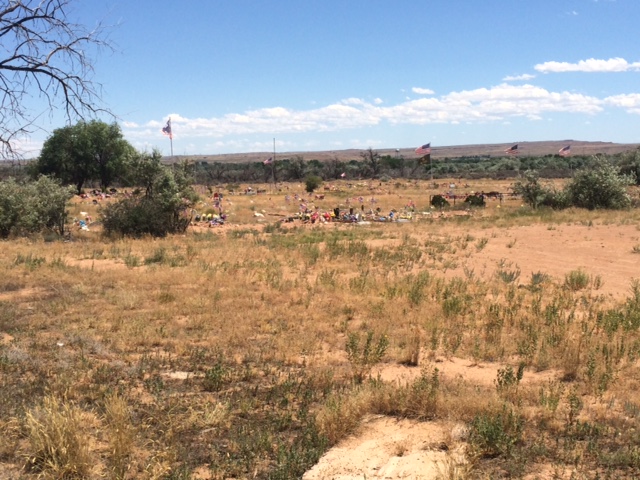
The Uintah Basin is an ancient seabed, which explains both the dinosaurs and the oil. More recently it was home to the Ute Indians, whose reservation is centered at Fort Duchesne. Several tribal businesses line US 40, but what caught my eye was the Fort Duchesne Cemetery, one of the most remarkable places I’ve encountered on my trip. It’s a barren place of hard furled flags, garish plastic flowers, antler ornaments and markings of Americans who died much younger than most of us, set off the highway just enough for cars to ignore but not so far as to be serene. A woman and her daughter vacated a mini-van and placed two fresh plastic bouquets on a man’s grave. I did not ask her about tomorrow. This was the kind of place where tomorrow and today mingle in a way Native people understand and Westerners only guess about.

IMG_3116 IMG_3118 IMG_3117 IMG_3119

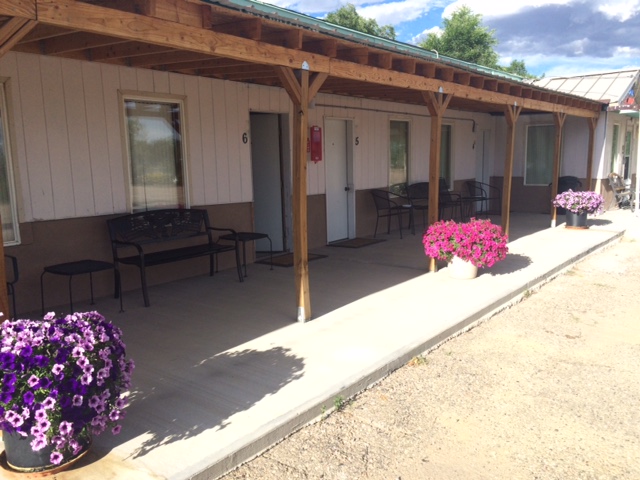
I got to the Frontier Motel on Roosevelt’s main street before three and had a nice conversation with the clerk, also owner, about her seven children and their interest in cycling. The Frontier cost a notch above my usual joint, so I was disappointed the pool wasn’t open and I had to make several calls to get the Internet to work. I want to patronize local places, but everything is easier at the budget chains. I finally abandoned my room and settled into a booth at the Frontier Grill, where the Internet worked great and I had my first full restaurant meal alone – soup, salad bar, steak, baked potato, vegetable medley, scone, and peach cobbler a la mode: a very satisfying treat.

You might wonder about a scone in a restaurant in rural Utah. Not to worry. It was fried dough, served with honey, under a gussied-up name. There’s nothing British about this part of the world.

IMG_3106IMG_3105

Posted in Bicycle Trip Log | Tagged , , , , , , | Leave a comment

How will we live tomorrow? Responses

How will we live tomorrow?

“Our ancestors came here on foot. They experienced natures subtle changes. When they arrived they had the feel of the land. You must get that on your bike. In our cars, whoosh, we zoom right by everything. We have to slow down.”

Kathy, Utah Visitors Center Jensen, UT

How will we live tomorrow?

“I have this idea to attach a small road sweeper to the back of my bike. As I ride I can clean off the shoulder for the other cyclists. I have $10,000 in debt to pay off before I can invest in this, but I am committed to it.”

Mark Weiler, 250 mile per week cyclist, Littleton, CO

How will we live tomorrow?

“Like the Golden Girls with your own place, a basement for the kids, and a central place to meet when we want to see one another.”

Kaycie Artus, Retired Rehab Therapist, Evergreen, CO

How will we live tomorrow?

“Day by day.”

Patricia, convenience store clerk, Yampa, CO

Patricia has a four-year-old son with Type 1 diabetes. Everyday is a new challenge.

How will we live tomorrow?

“We are over incarcerating. That causes families to break up. Sometimes they move children in with extended family, but the primary relationship, the mother and child or father and child, is severed.”

Byron Peterson, Retired Social Worker, Scottsbluff, NE

“A broken home is a terrible thing. It’s a gift to work to keep it together.”

How will we live tomorrow?

“Tomorrow is going to be a great one. Can’t think of anything I’d rather do.”

Tammy, Manager of Kum & Go Haydn, CO

Kum & Go staff wear white shirts and personalized ties. Tammy and her crew wore very flamboyant ties.

How will we live tomorrow?

“I am 76 years old, I have been running this for 25 years. It is time to get out. But we deserve something. I don’t have to sell is at just any price. As long as we move, we keep active. If we stop, we’ll fall over.”

Peter Gular, Owner of Western Motel, Steamboat Springs, CO

How will we live tomorrow?

“I have no idea.”

Russell Gage, Owner of Toponas General Store, Toponas, CO


Posted in Responses | Leave a comment

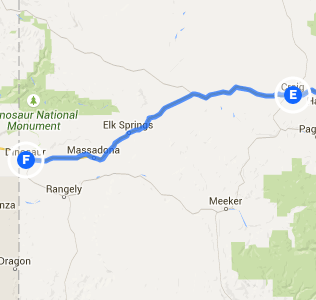
Trip Log – Day 80 – Craig, CO to Dinosaur, CO

Craig to DinosaurJuly 24, 2015 – Sunny, 80 degrees

Miles Today: 87

Miles to Date: 4,492

States to Date: 18

Monty Python could have made a great sketch out of my Super 8 breakfast this morning. I mangled my coffee filter, so got brackish brew; my batter stuck hard to the waffle flip; my oatmeal exploded in the microwave; and I couldn’t stop the orange juice dispenser once it flowed. Still, I managed to consume enough calories to head off for a long day with no services.

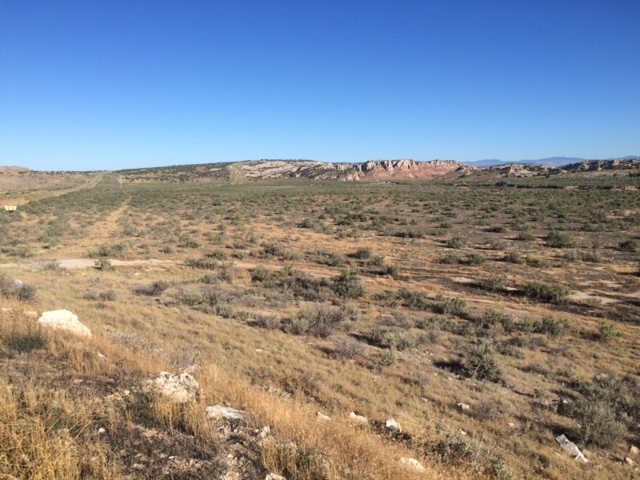
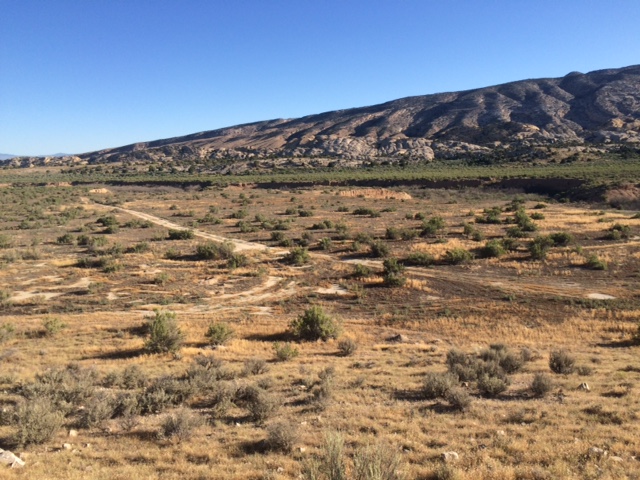
IMG_3085I rolled west in a landscape that grew grander and more prehistoric with every mile. My thoughts might have dwelled among our mighty cousins the dinosaurs, whose remains are so much in evidence here. Alas, I was preoccupied by two more mundane realties: road kill and wind.

IMG_3098On the first ridge our of Craig I had to navigate around a beautiful deer cut down in its prime only a few moments before I arrived; her blood was still fresh ( No visuals, this is a family-friendly blog). From there, I encountered more road kill than I’d ever seen in a single day: rabbits; crows; possums; voles; more deer; prairie dogs; the shoulder was an obstacle course. Despite these tragedies, I also saw many live animals dart across the pavement. I wondered what possesses a prairie dog to set off across the road. Surely, the blacktop cannot feel good under his feet, and it’s a sizable distance to an animal less than a foot long. Still, they do it all the time, and many don’t make it.

IMG_3094Then there was the wind. I decided today that the wind is the single most significant factor in the ease/enjoyment of road cycling. Rain is never desired, but is not really a problem unless accompanied by wind. Heat I don’t much mind. Cold is okay, except for my hands. Even terrain is less exhausting than wind. Yesterday I did only 44 miles, but when I dismounted I was wobbly from the eternal headwind. Today the wind was variable; sometimes a gentle whisper, sometimes a full-on blast. I realized my energy and stamina were directly related to its character. At one point I was pedaling, hard, downhill, going seven mph. The wind was practically pinning me in place.

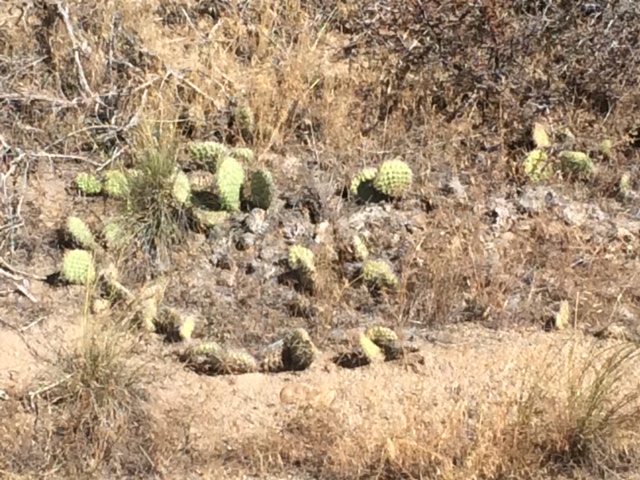
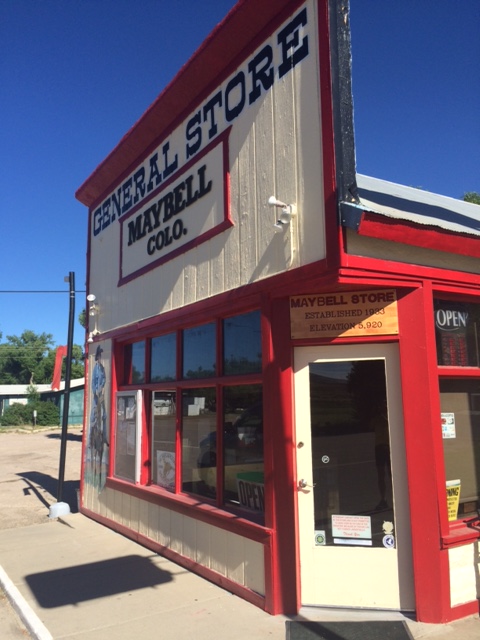
Wind notwithstanding; it was a lovely day to pedal through country whose scale dwarfs a mere bicycle. I saw my first cacti of the trip. I was pleasantly surprised to find a town not even on my Google map, Maybell, which had a general store where I got a Gatorade and ice cream sandwich. Considering how many so-called towns are little more than 300 square foot US Post Office shacks, Maybell deserves an upgrade. My other rest stops were specs of shade under cottonwood trees where US 40 dips to a stream.

IMG_3093IMG_3089 IMG_3088

IMG_3099I took in the Dinosaur National Monument Visitor Center and then pedaled to the town of Dinosaur, which isn’t much, though the Terrace Motel is very nice. I was famished, it wasn’t quite five, and the only grocery is the gas station. So I pedaled over, got milk and cereal for the morning and Gatorade for tomorrow’s ride. A 1.5-liter of ice cream caught my eye. When I got back to my room I realized that my mini-fridge had no freezer compartment. Shucks, had to eat the whole thing in one sitting. Was I sad? Not one bit.

IMG_3100 IMG_3102

The only honest way to cap an indulgence like that on a Friday night was to follow up with a beer at the Highway Bar & Grill. It advertises $2.50 beers as ‘cheap therapy’ and $2 Jell-O shots. The place was authentic Dinosaur, which left me feeling very far from Cambridge.


Posted in Bicycle Trip Log | Tagged , , , , , | Leave a comment

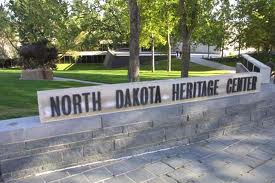
Profile Response – Beth Campbell, Director of Visitor Services, Heritage Center of North Dakota


HWWLT Logo on yellow“I’ve lived here my whole live and never seen North Dakota like this. Things that would never have been proposed ten years ago – creative ideas – are being discussed and embraced. The upside of the boom is visible everywhere.”

Beth Campbell speaks from a position close to the center of power. She married to a man who grew up within blocks of the State Capital in Bismarck. Beth began volunteering at the Heritage Center, adjacent to the capital, in 1991. She joined the staff in 1999 and was instrumental in overseeing the major addition that opened last spring.

“The downside is, are we caring for the land the way we need to for the next generation? It’s the question we all ask. But the freight train is out of control, so we just hang on.”

images images-4 images-2

Beth explains that Visitor Services is an updated term for volunteer services. “What volunteers want to do is changing. Baby boomers do not want to sit at our information desk once a week. They want something project based that brings results. Many people want to volunteer but have specific requirements that make it hard to find the right spot. We have volunteers in archives, in anthropology, in every aspect of the center.”

imgresI asked Beth how the Heritage Center determined whether a position is a volunteer one or a paid one? “We like to have the information desk staffed by volunteers. The reality is that we can’t get volunteers to do that on weekends, so we have paid staff then. But the community sees the information desk as a volunteer position, which is good. The volunteers are our ambassadors to the community.”

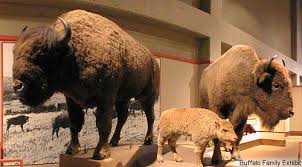
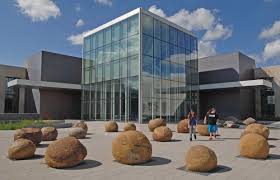
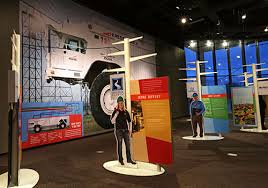
Beth gave me a tour of the Heritage Center. She explained that the expansion was in the works before the energy boom, but the increased revenue from oil and gas made it come together much faster than anyone anticipated. “Visitation has more than doubled. We’ve haimages-3d over 200,000 visitors in the first twelve months since opening; we used to average 100,000. This month we have over fifty events planned here. Most people who attend have a North Dakota connection. They are from here, Minnesota or the West coast; many North Dakotans have moved to Washington, Oregon and California. They come home and they visit here.”
How will we live tomorrow?

“I don’t know how much different tomorrow will be from today. I hope it is more calm and contemplative. I am in a good position; I have a good job, home, a spouse I like, good health, and healthy friends. I worry about what we’re leaving behind, but those are good worries. I want us to be kinder to the earth, kinder to people.”

Posted in Responses | Tagged , , | Leave a comment

Trip Log – Day 79 – Steamboat Springs, CO to Craig, CO

Steamboat to CraigJuly 23, 2015 – Sunny, 80 degrees

Miles Today: 44

Miles to Date: 4,405

States to Date: 18

IMG_3079Today was the first of four days I will spend on US 40 West heading toward Salt Lake City. Like most ‘easy’ days when I futz around and leave late, the ride proved more difficult than I expected. My route was a gentle down through the gorgeous Yampa Valley, but a North Dakota caliber headwind kept me hard at the pedals. Still, I was glad for the leisurely morning and hanging around Steamboat it more fun than being in Craig, a coal-mining town with an acrid smell that even a strong breeze can’t eliminate. I had a big breakfast before I left and a satisfying pizza around two in Haydn. Which was good since my Super 8 in Craig is on the way out of town and I had no interest in getting back on my beloved Surly to seek out dinner. I often enjoy what I call the Cliff bar duo for one meal a day (a traditional Cliff bar with a Builder’s Bar chaser), although not usually for dinner. Tonight, they made a perfect meal.

IMG_3060 IMG_3065 IMG_3067 IMG_3068 IMG_3070 IMG_3069  IMG_3071 IMG_3075 IMG_3081


Posted in Bicycle Trip Log | Tagged , , , , , | Leave a comment