Responses: How will we live tomorrow?

HWWLT Logo on yellowHow will we live tomorrow?

“I’m going to be one of your problem children. I spent most of my life thinking about tomorrow. Now that my daughter is gone and I have my diagnosis, I don’t think about it.”

Lynn Battle, accountant, Birmingham, AL

How will we live tomorrow?

“Keep doing what we’re doing.”

Shelley Douglass, Mary’s House, Birmingham, AL

How will we live tomorrow?

“You question happens to be essentially the same as the fourth question in a series of questions often asked by Ravi Zacharias, one of my favorite philosophers.  As Ravi puts it, God has put it in the heart of every man to ask himself and attempt to answer for himself, four essential questions, which have to do with origin, meaning, morality & destiny.  Where do we come from? Why are we here?  What determines right & wrong?  Where am I going?”

Richard Richard, spiritualist, Birmingham, AL

How will we live tomorrow?

“I’m going to be working. Electrical and heating and cooling.”

Jake, van driver, Birmingham, AL

How will we live tomorrow?

“Hopefully by reaching a point where we realize we are in this chaos together, for better or worse.

“If we can’t find honest, sincere people to manage this nation we are doomed to fail and those that follow will be also.

“You can’t take it with you, and no amount of planning can really determine completely what tomorrow may bring.  

‘”Opportunities are like sunrises,

You wait too long and they are gone.’”

Hal Starkey, architect, Birmingham, AL

How will we live tomorrow?

“I hope we’re going to be okay. I’m an all-natural person. I have citronella plants to keep mosquitoes away. I try to use no chemicals and do no harm.”

Ann Riley, artist, Bell Buckle, TN

How will we live tomorrow?

“I’m going for the third party candidate. The world needs a change. Then, I’m going to have some champagne.”

Martha, restaurant owner, Bell Buckle, TN

How will we live tomorrow?

“Hopefully, better than today, right?”

Wes, grandfather, Bell Buckle, TN

How will we live tomorrow?

“I have no idea how we will live tomorrow. I will live my today. Though your question does make me think about technology.”

Zach, optimistic Cubs fan, Bell Buckle, TN

How will we live tomorrow?

“There’s got to be some changes.”

Virginia Brown, Wal-Mart shopper, Fayetteville, TN

How will we live tomorrow?

“I get excited when I think about whiskey.”

Lauren, Tour guide at Jack Daniel’s Distillery, Lynchburg, TN

How will we live tomorrow?

 “For me, allowing me to be present in anything I am doing.”

Tamika, PhD. candidate in Sociology, studying the effects of meditation on prisoners, Nashville, TN

How will we live tomorrow?

“I’m going to live mindfully.”

Layla, PhD. candidate in Sociology, studying changes people getting married, Nashville, TN

How will we live tomorrow?

“It’s a thought provoking question It’s vague. Do you mean how we hope to live tomorrow? I just want to be happy.”

Ashley, hostess, Pinewood Social, Nashville, TN

How will we live tomorrow?

“Tomorrow I will be serving breakfast.”

James, waiter, Pinewood Social, Nashville, TN

How will we live tomorrow?

“The way I see it, God is good all the time and we are His children. This land belonged to the Indians; they took care of it. Now we are here and making a mess of it. I could tell you the story of my life. We don’t know who God is; anyone of us could be God. That’s the blessing that I met you.”

Victor Davis, walker, Nashville, TN

How will we live tomorrow?

“By the grace of God.”

Dave Hardin, Biker’s Choice, Hendersonville, TN

How will we live tomorrow?

“I watch Free Speech on television It gives you a different perspective on the news and our government.”

David, man of the Sixties, Bowling Green, KY

How will we live tomorrow?

“That’s a very interesting question.”

Amber, Grayson County Librarian, Leitchfield KY

How will we live tomorrow?

“I am thinking of how we will take care of our planet. I am thinking about health. It may be yoga or eating right.”

Lauren, Social Impact Alliance, Nashville, TN


Posted in Responses | Leave a comment

Trip Log – Day 321 – Bennington KS to Lucas KS

to-lucas-ksSeptember 21, 2016 – Cloudy, 90 degrees

Miles Today: 56

Miles to Date: 16,659

States to Date: 45

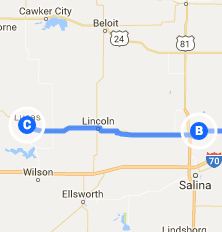
I am like an eight-year-old. I ride my bike all day and sleep like a baby all night. After ten solid hours in the sack I woke to full daylight. My home-schooling hosts were still snoozing when I got on the road at 8:30 a.m. I figured, no problem starting late on a short riding day. But the wind had picked up; its angle less benign, and there was no coffee or breakfast to be found in Bennington.

imgresI pedaled for 32 miles along Highway 18 weary, despite two snack breaks, until I reached Lincoln and discovered the Sunrise Cafe. Today’s special: meatloaf, creamed peas, baked potato, salad bar, roll and peach cobbler, plus coffee for $8.25. Excellent conversation with local customers and a snappy waitress came free of charge.

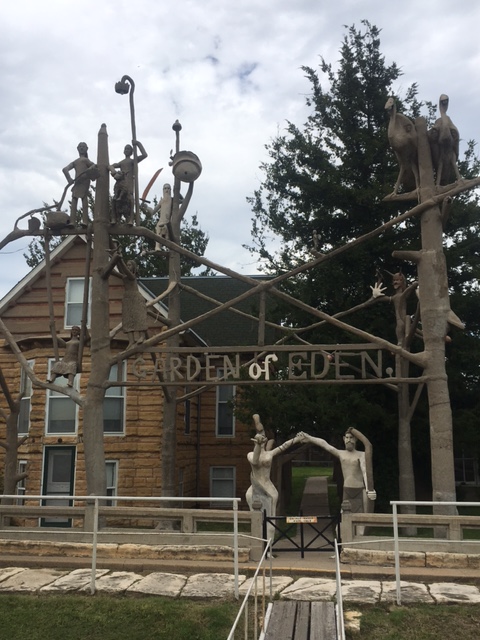
img_7431Real food in my belly and caffeine in my veins blunted the wind on my cheeks. I arrived at Lucas, Grassroots Arts Capital and one of Kansas’ 8 Wonders of Art, in plenty of time for a full tour of the Garden of Eden. I also got see, and use, the world’s most fantastic public toilet. Kansas proclaims ‘Wonders’ of all kinds, and Lucas is plenty neat, but grassroots art can’t stop the place from hemorrhaging a slow death. Having a gorgeous mosaic public bathroom is nifty, but when the only grocery in town is shuttered, that’s a real problem for a town 25 miles from anywhere.


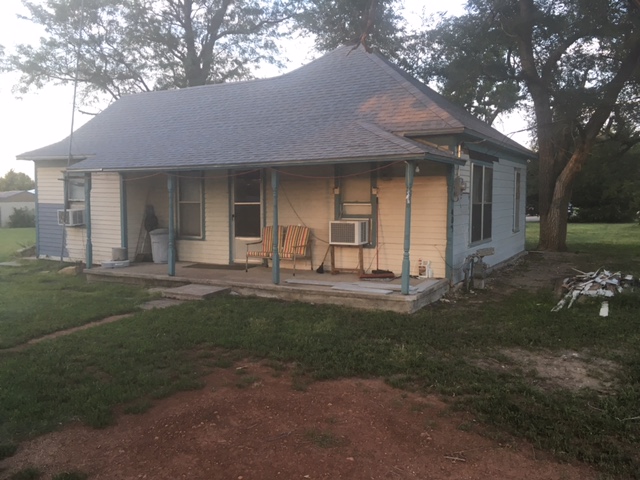
img_7439There are no motels in Lucas. I had called a listing for Thacker’s Cottages looking for a place to stay. Mr. Thacker explained that he rents cottages by the week or month. Then he offered, ‘How much do you usually pay?’ I said “$50.” He replied, ‘Stop by, we’ll fix you up.”

img_7438

Three blocks west of the public toilet, Mr. Thacker owns a couple of houses on the border of town. His dog barked before I even pressed the bell. He took me to a house next door. The place sleeps five, has a full kitchen and dining table big enough for Thanksgiving. It was clean; all the beds fitted; the AC already on. He’d stocked the fridge with water and Gatorade. “Don’t drink the tap water; it’s got too much lime.”

img_7441He told me his litany of seven back surgeries, how he had to give up horseback riding; how he’d swallowed a mosquito and got West Nile Virus, how he was luckier than the guy who lived in Mr. Thacker’s trailer around the corner for free. “When I was a fool teenager the jack slipped from a car I was under. My chest was crushed; I couldn’t even holler. He pulled the car off me; must have been the adrenaline let him do it. He saved my life. Now that’s he’s feeble, I owe him.”

After a good amount of visiting, I surmised that Mr. Thacker wasn’t actually going to charge me to be his neighbor for the night. So I suggested we settle up and gave him $50 in cash. Half an hour later, I got a knock on the door. He brought me a taco salad and saltines for dinner.

Posted in Bicycle Trip Log | Tagged , , , , | Leave a comment

Trip Log – Day 320 – Manhattan KS to Bennington KS

to-bennington-ksSeptember 20, 2016 – Sun, 95 degrees

Miles Today: 70

Miles to Date: 16,603

States to Date: 45

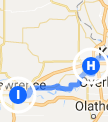
 img_7410Bicycle route challenges crop up in the oddest places. Google Maps showed me a great route from Manhattan to Abilene, but my hosts cautioned that it went through Fort Riley, where bicycles are not allowed. They helped me map another route, complicated by rivers and dirt roads and limited access highways. Kansas limits bicycle access more than any state I’ve visited; not just Interstates but certain US Highways as well.

img_7412Fourteen miles out I encountered a ‘Bicycles Prohibited’ sign. While I was checking alternatives on my phone, a guy in a pick-up hauling a boat stopped to check his hitch and offered me a ride past the restriction. Such is the luck of my journey.

Back in bicycle friendly territory, Old US 40 through Chapman to Abilene proved a great route. Navigating Abilene proper was less easy; there are railroad tracks everywhere and an oil tanker train decided to sit astride several for half an hour.

img_7417

imgresEisenhower’s Presidential Library and Museum is misnamed. It’s a laborious, dark, text-dense labyrinth about World War II with a postscript about Mamie’s style and a few displays about 50’s prosperity. The museum doesn’t even contain a recreation of the Oval Office, which I’ve come to appreciate as a reflection of a President’s personality. One display, however, was super-cool: a model of how the Allies linked barges to offload trucks and supplies for the Normandy Invasion.

imgres-1

New rule of bicycle touring: never try to repair a flat at a McDonald’s. I finished my writing break with enough time to pedal 27 miles to Bennington only to find my front tire flat. Very odd, as front tires almost never go flat. I suspected a local prankster or the gravel road I used to skirt the oil train. Whatever the cause, my trauma attracted Abilenians like flies, all keen with advice and their own bicycle stories. I finally had to move Tom away from the golden arches to focus on the problem.

screen-shot-2016-09-22-at-1-59-23-pmEventually, flat fixed and wind coming up from my left flank; I sailed across Kansas Highway 18 to Bennington, through wide countryside and gentle swales. I reached my host’s home in time for a delicious dinner and libertarian discourse. Kansas is not just a red state. Utter the two words ‘federal government’ in sequence and some people thirst to draw blood.


Posted in Bicycle Trip Log | Tagged , , | Leave a comment

Profile Response: Judy and Caesar Meladondri, Summerville SC

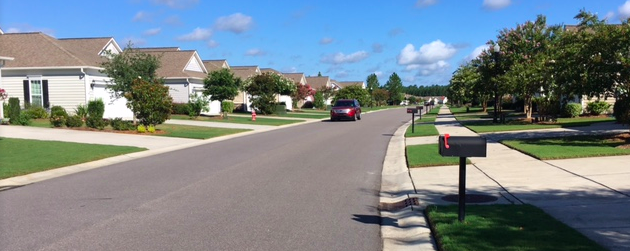
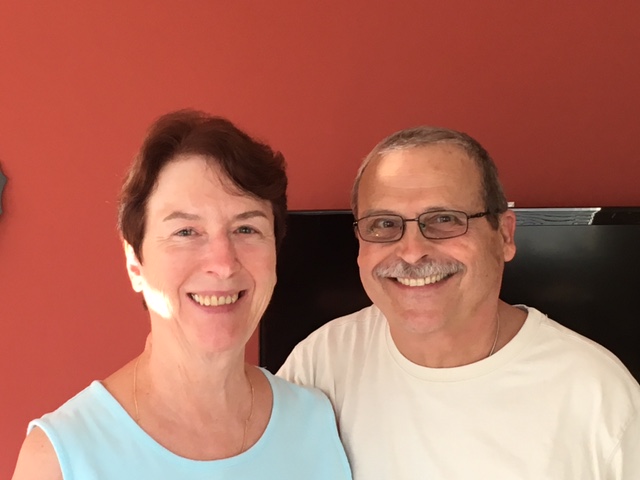
HWWLT Logo on yellowJudy and Caesar Meladondri were born and raised in New Jersey, lived in a variety of places ‘up north’ and raised their son Mark in Laconia, NH. Six years ago they retired, sold their home to their grown son and moved to a Del Webb community in Summerville, less than twenty miles from Charleston. They are careful planners and devout Catholics who researched their options before deciding on this particular community. Yet demographically they are part of the huge shift of our population from cold to warmer climates.

imgresSouth Carolina is the sweet spot for many retirees. The cost of living is lower than in the Northeast, even many parts of Florida. The weather is mild year round. There’s a sense of history, of place, that appeals to many. And, it offers healthy tax incentives to veterans like Caesar.

screen-shot-2016-09-22-at-7-08-36-pm

In a region that’s historically Protestant and insular, Judy and Caesar belong to a strong and growing Catholic community and most of their neighbors are also transplants. They live in the South; that doesn’t mean they’re Southerners.

How will we live tomorrow?

img_6605“I think if we want to continue to be a unified country, we need to be able to learn effectively, life our religious life, and know who we are as a people. Is it because I’m 74 and lived in the 1950’s, but I long for that ability to be happy, to be content with what we have.

“I am so concerned about the discord in our country. I’m fine with everything as long as I don’t watch TV. We need to come together as a people. TV divides us.” – Caesar

“I have no idea how we will live tomorrow. I’ve come to the point where each day is a gift of life. I try to take each day as a gift. I try to ‘be’ rather than ‘do’. I’m always conflicted about the Martha and Mary bit, but I’m only one woman and there is so much to be done.

“There is so much more confusion now on the big and little things. Everyone is confused. In New Hampshire we could survive a catastrophe. We had a working fireplace and a garden. We lived through four days of a snowstorm. Here we lived through four days of what they called a 1000-year flood. I felt trapped. This is not a natural environment. It is an engineered environment. We are not even allowed to have a raised tomato bed. In New Hampshire I felt more in control.” – Judy

“In New Hampshire, we were twenty years younger.” – Caesar


Posted in Responses | Tagged , , | Leave a comment

Trip Log – Day 319 – Lawrence, KS to Manhattan KS

to-manhattan-ksSeptember 19, 2016 – Sun, 95 degrees

Miles Today: 85

Miles to Date: 16,533

States to Date: 45

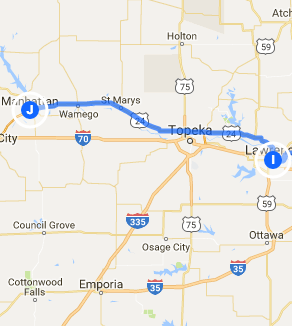
One word describes the challenge of crossing the plains – wind. Today the wind and I did a subtle dance as I moved west and it came out of the south. When the wind shifted a bit east or my route veered to the north, I tacked it to advantage. But if my route pivoted even a few degrees or the wind shifted to the west, it pressed against me. Either way, my cycling was easier than when I crossed North Dakota and encountered steady winds from the west for days on end. Let’s hope these breezes keep prevailing.

imgres screen-shot-2016-09-20-at-3-15-50-pm

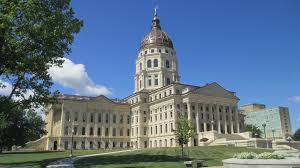
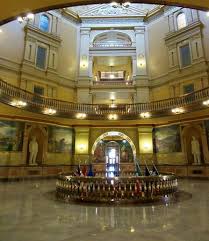
The Kansas State Capitol in Topeka is a gorgeous structure that underwent extensive restoration in 2009. They excavated the basement to expose giant granite foundations and put the museum exhibits in this grotto-like space. I thought it very effective. Then, you rise up to the ornate chambers and elaborate dome. The rough stone below and intricate ornament above create a wonderful counterpoint.

screen-shot-2016-09-20-at-3-13-00-pm images-2

It was after noon when I started the long slog to Manhattan: forty miles before I got a real break in Wamego on a very hot day. When its 95 degrees out, the contents of my water bottles keep my hydrated but don’t refresh.

img_7405After cold PowerAde, the last fifteen miles were a breeze. I stayed up past midnight talking with a wonderful local couple that lives in an old hotel downtown turned to apartments: appropriately urban for a Kansas town called Manhattan.

Posted in Bicycle Trip Log | Tagged , , | Leave a comment

Profile Response: Robert Watkins, Florence SC

HWWLT Logo on yellow“I get asked at least once a week when I’m going to get married.” Robert Watkins is a 22-year-old bachelor in a land where that age is long past marriage prime. He studied art and photography at nearby Francis Marion University, “until I realized I did not want to photograph weddings and children, which is how a photographer makes his living around here.”

Robert discovered a passion for barbering, quit school, apprenticed at a local Black bar shop, were he now has his own chair. “The barber shop is the community center for black men. They get their hair cut every week. It’s all about crisp lines at the edges.” Black hair is very different from white hair, but Robert likes the challenge of cutting both types. Now that he is full time and developing a following, he does more and more white guimagesys. “White guys don’t get their hair cut as often, but they make appointments. Black guys just show up.” Robert’s formal appointments cut back on his walk-ins.


Robert’s interest in men’s hair has expanded to grooming products. He makes moustache wax and lip balm that he sells from his house. Vacations are often trips to visit other barbers who help him expand his skills. “I just got back from Portland, Oregon where I studied with a barber I admire. I fit in so well, everyone thought I was from there. It was cool, but odd. I like it here, where it’s easy to stand out.”

img_6603

Florence is an aging railroad town whose location as a transportation hub – now the intersection of I-95 and I-20 – helps keep it lively. He lives in a vintage bungalow in a shady part of old town with a housemate, Gordon. The place is sparse, the living room has two couches and a giant flag; a drum set fills the dining room.

img_6595The real living happens on the front porch. “There’ll be a few people on the porch when we get home.” Robert casually said as we drove home from dinner at a downtown pub. Turns out many locals know about ‘Third Shift Thursday’. A steady flow of people aged 20 to 40 showed up until well past midnight. “What do I love about Florence? The people. I can visit Portland, but I could never leave here.”

How will we live tomorrow?

screen-shot-2016-09-18-at-5-21-38-pm“I watched a TED talk recently about machine learning and what jobs robots will take. I think a lot about technology and how that will define our day to day. Machines draw conclusions from relatable data. But they can’t make correlations of non-related data. Man can do that.

“I cut a lot of children’s hair in the shop. You have to put a screen in front of them to get them to sit still. They can’t settle themselves. What will that mean? They get all this input, they are accustomed to constant input. But what will they put back out?”


Posted in Responses | Tagged , , , , , | Leave a comment

Trip Log – Day 318 – Kansas City KS to Lawrence, KS

to-lawrence-ksSeptember 18, 2016 – Sun, 80 degrees

Miles Today: 44

Miles to Date: 16,448

States to Date: 45

 img_7370 img_7372

Summer Sunday – and the living is easy. I had forty-four beautiful, easy miles along the Kansas River Valley.

imgres

Kansas Speedway is a huge piece of environmental art. The painted seats are visible from State Ave for miles. There was a huge motorcycle rally planned there today, so I got up and around it before the noise got too great.

img_7375The only hill to speak of was University of Kansas campus – which sits on a precipice from all directions.

Posted in Bicycle Trip Log | Tagged , , , | Leave a comment

Profile Response: Trish Ramos and Bradley Kadel, Fayetteville NC

HWWLT Logo on yellowTrish Ramos is a local girl made good. She was born and raised in Fayetteville and spent Saturday afternoons downtown. She attended Fayetteville State University, a traditionally black college, on a minority scholarship when the school was trying to attract white students. Downtown slid way down and no one went there. There was controversy over whether the centerpiece structure was a slave market or not. Trish moved away and then returned home, taught junior high English and Journalism. Now, downtown’s picking back up with coffee shops and boutiques and Trish is a middle school principal. She likes her work, well enough, but is counting the four years until she will retire. “I’ve survived all the changes in education.”

imgresTrish met Brad, a German blond Midwesterner with a fascination for all things Irish and a PhD in History, at a music club. Brad came to Fayetteville to teach at FSU. He wrote the book on Irish pubs, plays guitar, and enjoys a pint himself now and then. He also happens to be blind. “The blind card trumps the girl card every time,” Trish proclaims as she moves about the kitchen preparing dinner. Brad smiles sheepishly, tacitly acknowledging that every disability has its benefits.

imgres-1Brad travels most summers, often to Ireland, Costa Rica, and within the U.S. This summer, Trish spent two weeks with him in Ireland, where they stayed with couchsurfing friends he’s made over the years. “I first went to Donegal in 1989. There were donkey carts in the streets, everyone was on the dole, but the pubs were full.” The Celtic Tiger clawed that era away, and then the recession laid the Tiger flat. But Ireland still charms Brad.

Fayetteville’s charms are less evident, but after eleven years here and recently tenured at FSU, Brad calls the city nourished by Fort Bragg home. “There are three communities here: the white community; the black community; and the military community. We have good restaurants from every country we’ve gone to war with.”

How will we live tomorrow?

screen-shot-2016-09-18-at-5-12-54-pm“Interdependently.” – Trish

“I hope we live more wisely than we do, especially in terms of the suburbanization of America. It is not sustainable or healthy. We drive our box car to our box store and return to our box house. We are a fundamentally lonely country. The more we’re on social media the lonelier we get. It’s individual freedom gone wild.

“I want everyone to live on little family farms and have children that are above average.” – Brad


Posted in Responses | Tagged , , , | Leave a comment

Trip Log – Day 317 – Kansas City MO to Kansas City KS

to-kansas-city-ksSeptember 17, 2016 – Sun, 80 degrees

Miles Today: 28

Miles to Date: 16,404

States to Date: 45

img_7347Everything’s up to date in Kansas City

They gone about as fer as they can go

– Oscar Hammerstein

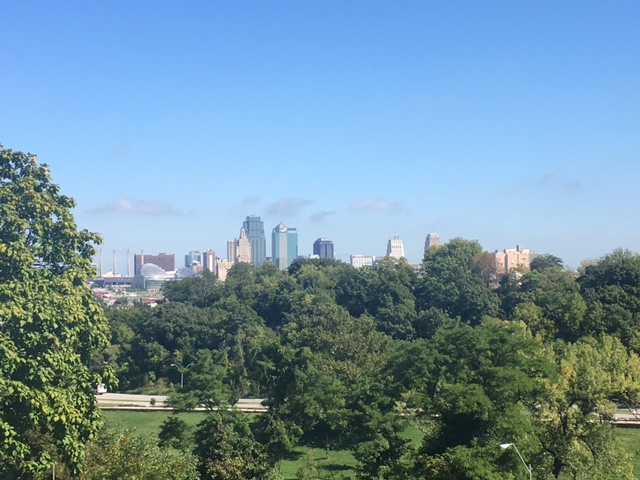
My first time ever in Kansas City: a striking, friendly place that’s really a collection of places. If Saint Louis is the last Eastern city in our country, Kansas City is the first Western metropolis. It doesn’t have a single core from which things sprawl. Rather, Kansas City includes multiple nodes of development strung together by wide boulevards and residential areas. I had a gorgeous day to explore the new place.


img_7346 img_7350 img_7363

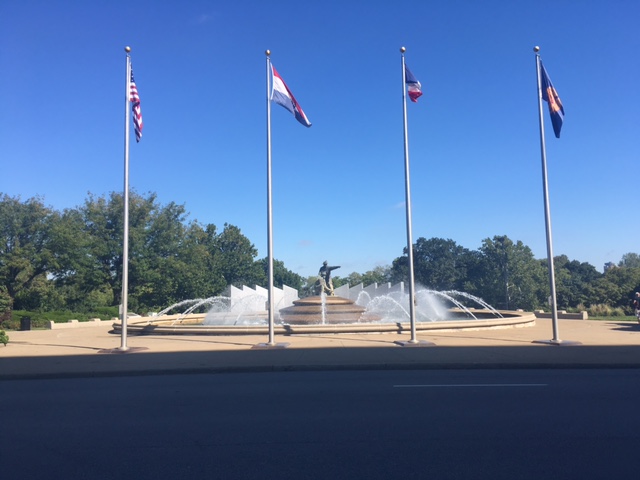
The city is famous for its fountains.

img_7360 img_7361

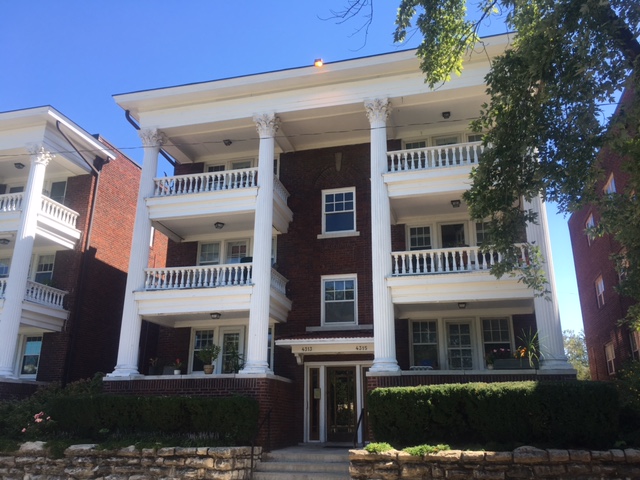
I like the stately 8-plax apartments with big porches that were built in the 1920’s.

img_7367Snazzy KU Medical Center sits right off State Line Road. Within a few blocks the grade descends to the Kansas River and I was in an entirely different place. Kansas City KS is Hispanic and poor. Further west thin men trembled outside of by-the-week motels and buxom women in tight skirts offered to sell what I’m not buying. Eventually State Avenue becomes just another strip of bog box stores and franchises.

screen-shot-2016-09-18-at-4-59-10-pmMy host is an ardent dog lover. We watched Benji, an awful, saccharine 70’s movie that turned funny when Craig’s dogs barked at the ones on the screen. Afterward we went to Quik Trip for dessert smoothies. We sat outside on a warm night under the full moon and watched people buy pop and fill up their pick-ups. Saturday night. Welcome to Kansas.


Posted in Bicycle Trip Log | Tagged , , , | Leave a comment

Profile Response: Green Beret Wives, Fort Bragg, NC

HWWLT Logo on yellowIt is both an honor and a distinction to be a Green Beret, the best-known Special Forces unit within the US Army. Green Berets undergo two years of intensive training, after a minimum of three years regular army service, and master a foreign language. They work in twelve-man teams to undertake sensitive missions that require quick maneuvering. It’s a prestigious, dangerous, and unpredictable job. Which creates perks and problems for the women married to them.

I met with five women married to Green Berets. All of the husbands have been deployed to the Middle East at least once. Some, as many as four times.

Aurelia had a six-year-old son and a beautician business when she married into the army. Soon after her wedding she stopped working full time because her husband’s life was so erratic, she could not depend on a regular schedule. “I was a planner. Now I’ve given that up. We never know when you’ll find things out; when you’ll be deployed.”

imagesNatalie agreed. “You get thirty days notice to change your life, and you just do it.” Natalie runs an independent fit-camp, a home-based business she can tailor around her husband’s needs.


Being comfortable with an unknown future is a daily part of a Green Beret wife’s life. Cathy remembered, “When I was a kid I used to think if I couldn’t envision the future I would die. Now I’m an army wife. I don’t pretend to know the future.”

Christine added, “I remember I saw a woman on TV saying she would wait for her man. I thought she was nuts. Four months later Ben and I married. A month later he got deployed. And I waited. You wait.”

images-1“We do so many things that we don’t think we can.” Lisa rounded out the group and the general consensus. “How many of us have had babies by ourselves? The other wives help. Things other people do as a couple, we do among ourselves. You feel strong about what you can do.”


Cathy picks up, “True, The army makes strong wives. My sister freaked out when her husband was gone for two days. I thought she was such a wimp but then I realized that’s a long separation for her.”

The stress of war, both in the battlefield and at home, has become a national concern since recent veterans have such high incidence of mental health problems, suicide, and PTSD. Are these concerns different among Special Forces? Lisa believed there were fewer problems among Special Forces because the guys are so tight, and Cathy confirmed. “Ben did five deployments; three in the regular Army and two in Special Forces. There is this big gap in the regular Army in ability and expectations. The emotional range of the troops is huge.” But Natalie observed that the soldier’s closeness makes loss even more tragic. “John lost sevimages-2en guys in this second tour in 2006. He just shut down.”

Which made me inquire about the wives’ roles while their husbands are gone. Aurelia said, “Being in the Middle East, it’s a 24/7 job. We talk, but there is no reciprocal conversation. They want to know what we’re up to, but they can’t tell you what they’re doing.” Natalie added, “Our mundane problems at home are a preferred break from whatever they’re addressing there.” Cathy continued, “As spouses, we expect them to compartmentalize. We can’t help them, but if they can express what has happened, the better it is.”

imgresAs our time came near a close, Peter, Cathy’s husband, joined the conversation. “We have to disconnect ourselves emotionally from our families. It’s important, and difficult, for others to understand that. Then I have to work hard to reconnect when I come home.” Coming home is always a time for celebration, but one that seasoned wives approach with care. Some want their children to greet dad right off the plane, others arrange a couple overnight time, and let the children come in the picture later. The transition from solider to husband and father is complex.

Will these guys retire after a twenty-year Army career? Cathy laughs, “The husbands all fantasize about retirement. They think it will be so awesome. You lead this life for 20 years. There’s no planning. Then they move from a place where everything is prescribed to having lots of time and you have to make your own decisions.” It’s another difficult transition, fraught with potential and pain. Perhaps the key challenge for Green Berets, and their wives, is constantly adapting to change, to the unknown.

How will we live tomorrow?

“If you ask that when they’re deployed, the answer might revolve around life without them. Will they return? My husband is retiring in three years and four months. I am counting the days.” – Cathy

“We are told that we are not our husband’s job, we are not in the Army. But we are. As my husband grows in his career, I have to be seen. Commandeers need to know that I am supportive of my husband and will hold this end down when my husband is called.” – Lisa

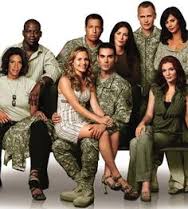
Note: All the names in this profile have been changed as requested by the conversation participants. The photos are promotional images from the TV series.


Posted in Responses | Tagged , , | Leave a comment