Trip Log – Day 316 – Cameron, MO to Kansas City MO

to-kansas-city-moSeptember 16, 2016 – Rain, 75 degrees

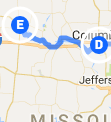
Miles Today: 66

Miles to Date: 16,376

States to Date: 44
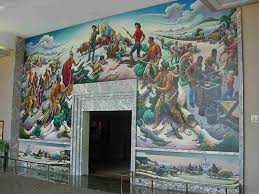
images-1I woke to the threat of rain and pedaled with determination to Independence, motivated by the darkening skies and Harry S. Truman’s straightforward nature. Presidential Library #8 along my tour. Growing up, my father loved Truman’s no nonsense style, so I’ve always viewed him as a sort of hero. But he’s a complicated hero: a repeated failure in business; politically tied to patronage; a strategic rather than qualified choice for FDR’s fourth term running mate despite the near certain knowledge that this VP would ascend to the top spot.

Truman proved to be more decisive than anyone anticipated. He dropped the bomb on Japan, integrated the armed forces, solidified the Cold War, put us in Korea yet fired MacArthur when the popular general wanted to invade China as well. He lived his motto: The buck stops here.

screen-shot-2016-09-17-at-4-04-00-pm

One quote near the end of the museum sequence reinforced how much Truman created the world we inhabit today. “America in 1952 was a nation at the peak of its economic and military power. Yet paradoxically, this America of confidence, prosperity and military strength was also haunted by uncertainties, frustrations and a sense of vulnerability. Power and insecurity, plenty and want, generosity and prejudice – America in 1952 embodied all of these contradictions.” As they do in 2016.

images-2The rain was steady by the time I left Harry’s place. Still, I stopped at the Community of Christ Temple because it cut such a distinctive profile on the skyline. Turns out to be creation of a splinter group of the Church of Jesus Christ of Later Day Saints who stress Joseph Smith’s early teachings and collective peace. The theology did not grab me, but the grandeur of the building and its dedication to world peace drew me in.

img_7338 img_7339

The sky lightened and I sang Muddy Waters as I pedaled west, even if the lyrics are not quite right for me:

I‘m going to Kansas City, Kansas City here I come.
I’m going to Kansas City, Kansas City here I come.
They got some crazy little women there
And I’m gonna get me one.

 

Posted in Bicycle Trip Log | Tagged , , , , | Leave a comment

Profile Response: Bill Brown, 8 Rivers Capital, Durham, NC

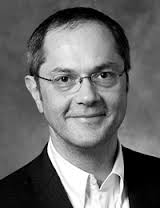
HWWLT Logo on yellowMiles Palmer and Bill Brown were walking through Manhattan in 2007 when Bill’s phone rang. He lost the call. “How can you lose a call in Manhattan?” He wondered aloud. “Oh, I could fix that, but it won’t happen.” Miles inferred the solution would not have commercial potential. According to Bill, that was the start of 8 Rivers Capital, a technology incubator committed to bringing large-scale technological innovation to market. The MIT-educated fraternity brothers may have similar pedigree, but they are different roles in the company. Miles is quieter, more technical, an Air Force veteran with a background din defense systems. Bill, a former Morgan Stanley trader and Duke Law Professor, shapes their mammoth aspirations into appealing metaphors.

Why 8 Rivers Capital? “Eight is a lucky number in China, and rivers are a source of endless energy.” Bill sees China as a critical aspect of any major industrial change, and builds on the water analogy.

img_7476“You can’t just watch the water, you have to be in the water. It is persistent and continuous. The flow is ultimately irresistible. You wind up with the Grand Canyon. This is the story of business. Water is agnostic. It follows downstream. Business is also agnostic. It’s focused on problems. The right solution is always cheaper and better. That is the lower energy state; that is downhill; that is what we strive for.

“To take the metaphor further, the third attribute of our business is scale. We want to work on big problems. We want to have a billion dollar threshold. We want to achieve cheaper and better on a large scale.

“Our initial problem is CO2 output from burning coal. The rest of the world wants to industrialize, and that means coal. How can we get the earth to meet all of its climate goals and keep energy costs in line with current prices?

“Think of seafarers. We were born on land. Some of us fish near the shore. Others trade in boats along the coast. Only a few will go beyond the horizon. People don’t explore much anymore. 8 Rivers has audacious goals. We want to be the guys Queen Isabella supports to explore beyond the horizon.

images-1

8 River’s first project to move beyond concept is a demonstration power plant under construction in Texas that will recapture and process all CO 2 emissions. “The coal industry took an incremental response to cleaning plants and carbon recapture. That led to coal becoming an inefficient fuel source in this country. We’re throwing that whole idea out the window and starting from scratch. We want a fuel that will burn close to 100% efficient with zero emissions.


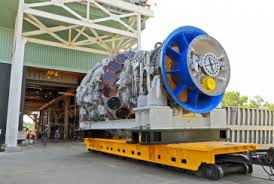
“The gist of the Netpower idea is to burn coal in pure oxygen in a sealed high-pressure container, and keep all the pollutants and the energy in one box. Extract the energy from the box and feed the CO2, still at high pressure, back into the circuit.” They anticipate reusing 94% of the CO2 in each iteration, and sending the 6% unused, still at high pressure, as a liquid into pipelines to sequester in exhausted oil wells or use to displace difficult to release oil. The key is to never return to atmospheric pressure; keep the CO2 supercritical and there will be no energy loss from phase change.

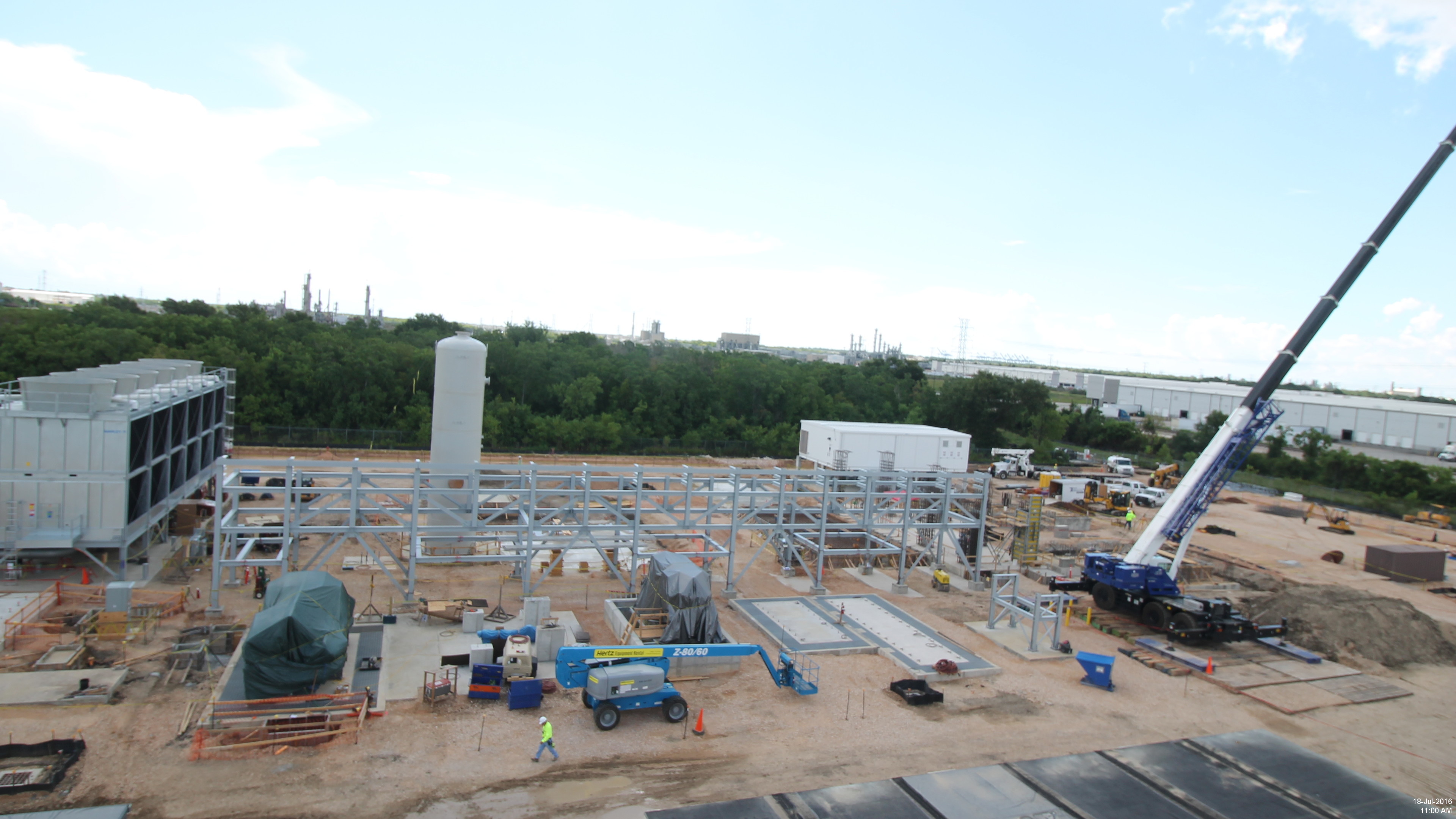
net-power_site-photo_18-july-16Netpower’s demonstration plant should be ready to commission by the end of this year and begin production in 2017. “The net cost of energy from the demonstration plant will be less than competitors plus the value of the excess CO2.”

Other ideas in the works include the cell phone reception concept that got the company rolling – “The idea has taken a pivot, but it is still in the works.” – and a scheme to move supply chains through space – “Miles is working on sending stuff to space for the same cost as airfreight. Can you imagine Amazon distribution centers in satellites?”

8 Rivers thinks big, even when it looks in the mirror. “8 Rivers is like Bell Labs for commercialization. We are not a typical venture capital firm. We grow our own ideas. We operate in a double blue ocean, a space where neither corporations nor venture capitalists operate.”

imagesThat’s not easy in a country wary of the kind of massive investment Miles’ and Bill’s ideas require. “The world does not value industrial innovation the way it used to. They value ‘apps’ which are easy to capitalize. What we do requires large capitalization.

“The 1930’s were the most technologically innovative period of our nation’s history. It was a time of great forest fires, setting up opportunities for new growth. Forest fires serve a place in our world. Mature forests are ready to die; new ones have to come forth. But we live in a world where Smokey Bear warns against forest fires. Alan Greenspan was our Smokey Bear. He prevented forest fires. He turned the world into one huge, mature, ready-to-die forest.”

How will we live tomorrow?

imgres-1“If we do not have socialization of the Commons, sooner rather than later, the hunger games will be upon us. Automation and robotics will overtake our workforce. If people don’t ‘own’ a stake in the machines, they will be impoverished.”

“We are going to have to redistribute ownership or have massive population reduction or become a 100% service economy. We will decouple our economy from ‘stuff’. That assumes that, at the limit, every person on this earth has service someone wants.”

“It’s going to be a sad place unless we invest more in education. Not the four-year country club experience, but the CUNY system that serves every strata of society, or the Berea model that doesn’t take from students, it gives things to students.”


Posted in Responses | Tagged , , , | Leave a comment

Trip Log – Day 315 – Marshall MO to Cameron, MO

to-cameron-moSeptember 15, 2016 – Sunny, 85 degrees

Miles Today: 91

Miles to Date: 16,310

States to Date: 44

img_7308I woke before dawn, excited for the ride; stretched, breakfasted, and was on the road by seven. I always enjoy riding in the morning. The horizontal light highlighted the galvanized silos and skittered off the corn tassels. I got good miles behind me before the heat set in; the breeze gentle as the contours of the land. I rode the shoulder of US 65 north, across the Missouri River to Carrollton, then thirty miles west on Missouri 10, which follows the crease between the flood plain and the foothills. I logged fifty-nine miles and reached Richmond before noon: a new personal best.

img_7312What gave me such motivation? Yesterday I received an email titled, ‘I See You are in Missouri’ from a college friend. Bill made his fortune in technology and finance and retired at age thirty-nine. I saw him three years ago at his spacious house in North Jersey with his wife and youngest child, who was following in his three older siblings’ footsteps in applying to elite colleges. We had a good visit, but I didn’t contact Bill on this journey because I bypassed North Jersey. Turns out that while I pedaled fate threw Bill a curveball. An old childhood flame from his youth in Lima, Peru contacted him on Facebook. The two reconnected. In April, Bill left his wife and affluent New Jersey for a farm in Cameron, MO. Wouldn’t you wake before dawn and pedal 91 miles out of your way to get the skinny on that?

img_7321I was famished when I arrived at Jeffrey Kyle’s, a terrific family-owned buffet and restaurant for lunch. Next time you are in Richmond, eat there.


Bill and Jan’s farm is off a dirt road that Google cannot find. I headed north on Missouri 13 without a clear destination, texted Bill from Casey’s General Store in Polo, and hung around for direction. So much buzz in a small town convenience store. One man scratched dozens and dozens of lottery tickets without any sense of joy. A queue formed at the ATM, People bought a steady stream of cigarettes and pop and beer. Four people worked the joint, always busy.

screen-shot-2016-09-17-at-3-55-30-pmBill messaged me to ride west on Highway 116 where he and Jan picked me up at a truck stop along I-35. They toted Tom and me to their patch of South America via Missouri, where they raise Alpaca and thrive on their renewed connection.


Posted in Bicycle Trip Log | Tagged , , | Leave a comment

Responses: How will we live tomorrow?

How will we live tomorrow?

“Drink your water and take your medicine.”

Ben Pierson, five years old, Athens, GA

How will we live tomorrow?

“Hopefully more balanced than today. The concept of balance is important to me. I don’t know how to do it yet. Hopefully, we’ll know that tomorrow.”

Sara, couchsurfing host, Athens, GA

How will we live tomorrow?

“Realistically, I have to work all day tomorrow. But I want us to be more open-minded. I want to be more active in my community.”

Stephanie, student, Athens, GA

How will we live tomorrow?

“The media makes us fear, but I don’t carry any pepper spray or any defense. We have to develop more non-violent ways of addressing conflict resolution. Cyber war is going to make conventional war obsolete.”

Kate, single woman, Athens, GA

How will we live tomorrow?

“America is going the wrong way. The system stresses collaboration and we are losing creativity and innovation. The whole world is Western. The whole world is turning into the United States. A lot of people grow up worrying about status. It doesn’t mean a thing. There’s a book about interviews of retirees in nursing homes. Their biggest regret? ‘I lived someone else’s life.’ When I started living my own life I was happier, and everyone else was happy for me.

“Capitalism makes society function economically, but not sociologically.”

Wes Livingston, PE, President of MicroLNG, Athens, GA

How will we live tomorrow?

“We can live tomorrow by not running each other off the road.”

Cassie, recent bicycle accident victim, Athens, GA

How will we live tomorrow?

“Tomorrow has no guarantee. I don’t know if I will wake up.”

Ndfior Chesi, African dressmaker, Atlanta, GA

How will we live tomorrow?

“I will wake up. I’ve got to go to work.”

Bruce Wayne Powell, journey maker, Atlanta, GA

How will we live tomorrow?

“Better disconnect from your rational brain and figure out how to get better.”

Alex, fitness man, ATL Nutrition

How will we live tomorrow?

“I’ll take it as it comes.”

Katie, motel clerk, Piedmont, AL

How will we live tomorrow?

“One day at a time. If I wake up and breathe, that’s a good day. God gave me one more.”

Hazel, McDonald’s, Anniston, AL

How will we live tomorrow?

“Or, how well will we live tomorrow?”

Steve Propst, Mental health worker, Anniston, AL

How will we live tomorrow?

“Same way I do today, happy and grateful to wake up in the morning and be blessed with another day.”

Wendy, scarf fashionista, Mountain View, AL

How will we live tomorrow?

“I have a million thoughts on that. For one, I go to the spiritual. Tomorrow we will align our physical and spiritual selves.”

Dick Richard, architect, Birmingham, AL

How will we live tomorrow?

“We need jobs in this city.”

Andrew, homeless man, Birmingham, AL

How will we live tomorrow?

“Hopefully better than today. I learned as a child to honor Him. Pay it forward.”

Amy, owner, Jaxson’s Smokehouse, Cleveland, AL

How will we live tomorrow?

“It’s scary, very scary. I’m speechless about it. One thing, there’s still a lot of good people.”

Sean Jaxson, barbecue cook, Cleveland, AL

How will we live tomorrow?

“I thank God first thing, and then I fix my mistakes.”

Chris, waitress, Cleveland, AL

How will we live tomorrow?

“It’s pretty much the same thing every day.”

Perry, mechanic, Arab, AL

How will we live tomorrow?

“I have no idea.”

Tara, motel clerk, Fayetteville, TN

How will we live tomorrow?

“I’ll have more thoughts on that on my birthday, November 9. The day after our election.”

Jane Pence, Sloss Furnaces, Birmingham, AL

How will we live tomorrow?

“Every day you wake up is a good day.”

Virginia Brown, grandmother, Fayetteville, TN


Posted in Responses | Leave a comment

Trip Log – Day 314 – Columbia MO to Marshall MO

to-marshallSeptember 14, 2016 – Sunny, 75 degrees

Miles Today: 68

Miles to Date: 16,219

States to Date: 44

 screen-shot-2016-09-14-at-9-01-38-pmToday was a terrific day of bicycle touring, though it still did not win me over to gravel. I spent the first 30 miles on Missouri’s famous KATY Trail. It is bucolic and serene, the limestone cliffs are striking and the Missouri River expansive. It is likely the best gravel trail I’ve been on. However, when I pedaled through a passing storm my entire bike got covered in dirt and there’s too much friction to ever feel any speed. Nonetheless I passed more cycle tourists in three hours than I’ve seen in three months. Clearly, I am in the minority on this preference.

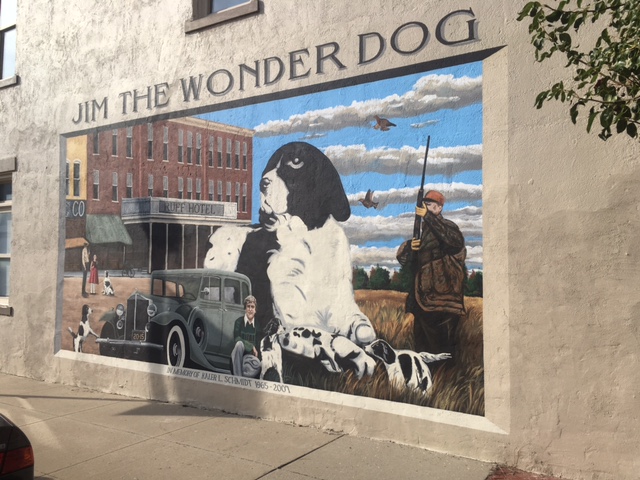
img_7307I was hungry when I reached Boonville. The town has a newish, garish casino, and I recalled that casinos have great buffets. The hostess wasn’t too keen to invite me and my panniers to the buffet line, but she kept her smile pasted. I had a terrific lunch that fueled me through an afternoon of fluffy clouds, little traffic, and great pavement. Arrow Rock is a neat little restored town; Marshall is famous for Jim the Wonder Dog. The park dedicated to this fabled animal is worth the detour off the highway and into the town square.

I looked for a coin-op car wash to clean my bike, but no such luck. So, I maneuvered Tom into the tub at the Marshall Lodge and gave him a good shower. After he dried, I lubed his chain. He’s as good as before he ever skittered along the KATY Trail. So am I. And we have some misty photos of the broad valley to show for our effort.

img_7297 img_7298 img_7300 img_7303


Posted in Bicycle Trip Log | Tagged , , , , , | Leave a comment

Trip Log – Day 313 – Kingdom City MO to Columbia MO

to-columbiaSeptember 13, 2016 – Sunny, 75 degrees

Miles Today: 28

Miles to Date: 16,151

States to Date: 44

 img_7288True confession: I do not seek out absolutely every contact I know to discuss tomorrow. I’ve passed on few Catholic recommendations because, well, I have a lot of history with that church. And today, in Columbia, I didn’t bother to seek out University of Missouri Press, publisher of Architecture by Moonlight and bane of my existence for over a year. The book came out so well, but there was no reason the birthing needed to be so difficult.

img_7290 img_7291 img_7292

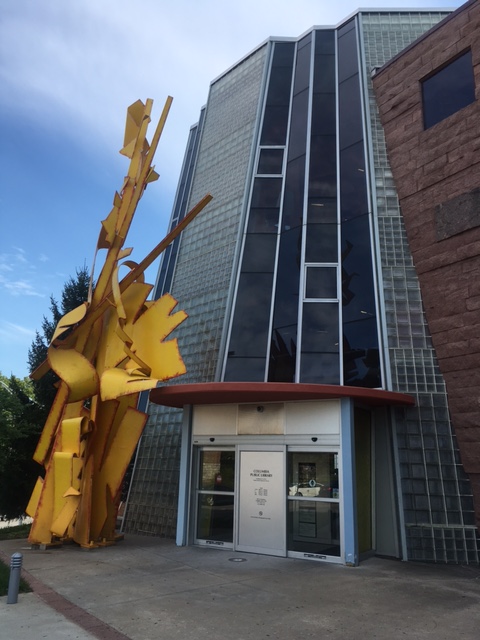
Instead, I had a short but lovely ride, toured the Mizzou campus, and spent the afternoon in the Columbia Public Library. A much better way to spend time.

Posted in Bicycle Trip Log | Tagged , , , | Leave a comment

Profile Response: Burnside Family, Rice VA

HWWLT Logo on yellowTime is spiral; history is a sine curve; tomorrow is yesterday all over again. “Everything that is happening in this country has happened before: in Rome, in Egypt, before the comet.”

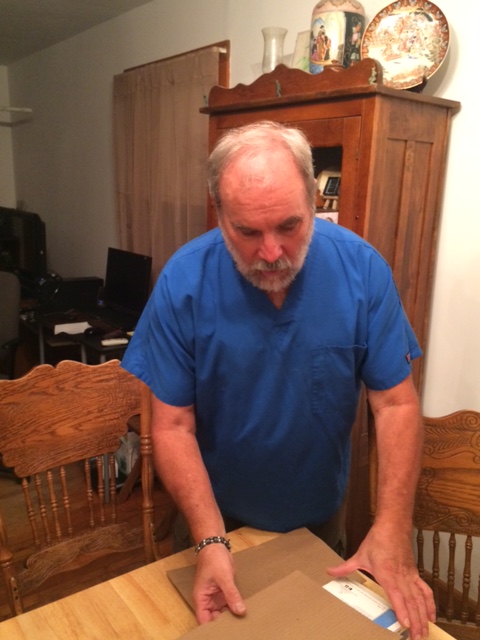
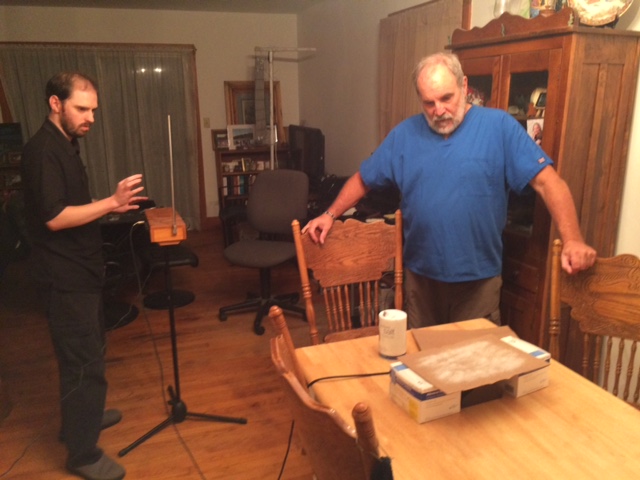
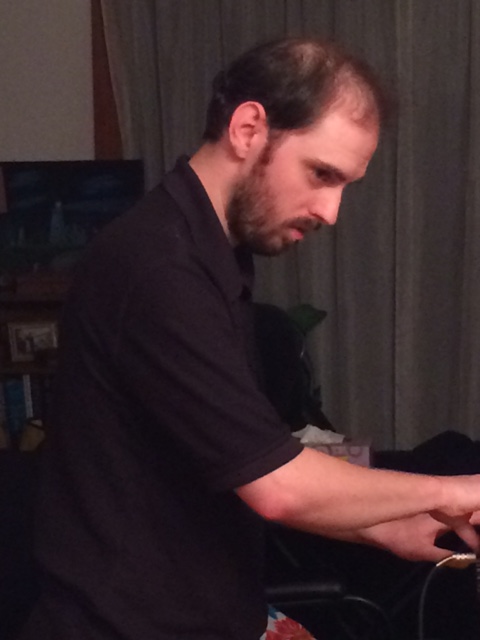
An evening with Bryan Burnside, 66 year-old retired veteran and nuclear medicine tech, and his 29-year-old twin sons Brian and Bob, dressed identical black polo shirts that contrast their pale skin, is its own cyclical experience. The boys pace through the living dining room of their snug cottage buried in the Virginia woods, lightly touching the computer table, the chair back, the doorframe along their repeated path, as if physically manifesting the electron energy that occupies their mind. Bryan sits solid in the middle of the movement, the family nucleus. Each has his own perspective in the cyclical conversation: Bob is focused on energy, Brian math, and Bryan on religion, yet their notions so tightly reinforce one another, the originator of one pronouncement simply fuels another’s idea.

imagesBryan was born in Illinois, outside of Chicago. He worked for Plymouth at the Belvidere plant. “The neon I own now was made there.” He lived in various places in the west, was in the army in Alabama, met his wife Joy and has lived in the south ever since: Tennessee, North Carolina, and now Virginia. Bryan was an x-ray tech and eventually a nuclear medicine tech. He recently retired from the local hospital in Farmville after his Lyme disease and related asthma caused increasing problems.

Bob and his wife Joy have four children, whom Joy home schooled. Their two daughters have grown and moved away, to NC and Tennessee. Their twin suns, Bob and Brian, 29, have always lived at home.


Our conversation, which was more of a dissertation, filled over twenty pages in my journal. I will offer readers only a few snippets of ideas that ricocheted across the universe, and beyond.

img_7446“We do not live in a steady state universe. We live in a catastrophic universe. Something happened to the apes we were and we became the men we are.

“Fire is the impetus of change. It could have led to our advance. Or it could be have been a virus or an environmental disaster. We have lived through catastrophes before, the last one probably 11,000 years ago, maybe from comet impact. That created the climate conditions that enabled our agricultural society.

“I was raised as Christian but have always been analytical. When I was a young man, I was involved in fundamental Christianity. There were a dozen different types of Christianity when Constantine unified it. American Christianity has nothing to do with what first century Christians believed. American Christians are the Pharisees of the modern day.

imgres“Man as been on this planet, as homo-sapian, for at least 250,000 years. The commonalties of all ancient civilizations are the zodiac, the stars, and the shamans- extra-sensory experiences. Look at the cave paintings in France. They are psychedelic imagery and imagery of man transforming into animals. The tribal basis of human groups, families of seven to twelve individuals in communities of 150 has been expanded beyond our capacity to work beneficially. All over the world there are unexplained lighting effects: the Brown Mountain Lights of North Carolina, the Marfa lights in Texas. These could be Piso electrical effects. Ancient people saw natural phenomenon every day, they was energy every day, they are shaman-based. Our society works against nature. Modern doctors don’t have a clue. The minute you think you know everything, you know nothing. There is only one system that grows unabated in its natural state: cancer.

“There’s evidence of advanced civilizations that pre-date us by millennia. An archeologist in Mexico found an intact hammer in limestone dated 400,000 years ago. We have found fully human remains from 250,000 years ago. Yet we still have ‘prehistoric’ animals like alligators on our earth. We cannot know when traits become dominant in our world. What we do know is that science has developed a story and evidence that doesn’t reinforce that story is discredited.

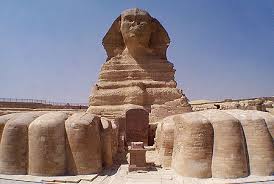
imgres-1“The Sphinx is at least 10,500 years old. The king’s tomb is giant fuel cell used by the Pharaohs to create flashing light shows to demonstrate their dominance over the people. The center of the earth is a nuclear reactor.

“The Black Death may have been the best thing that happened to Western Civilization. It killed indiscriminately but it changed society and overthrew the repression of the Dark Ages.”

As the conversation ranged from nineteenth century religious revivals to Nazis to ancient Egypt to comic books to string theory to… I asked the three animated men if their life views bring solace. Bryan said, “Every day I give thanks that I have a level of consciousness that most Americans lack.

“We talk like this every day, this is what we do.” Bob and Brian were home schooled. They each got a GED and went to community college. Bob studied electronics, Brian mathematics. Brian then went on to NC State and UNC Greensboro but never completed his degree. These days, the Internet provides the main source of their study. Joy left us to read James Patterson. The three of them continued to speak over each other; their ideas reinforcing, feeding, and building on each other.

“What people have done forever has been to try something, see if it works, and tweak that. Most of us life in one reality and perceive another one because we believe our perceptions. Mathematics is a construct that we built and tweak. It’s based on certain assumptions, for example that a point exists, even though a point has no size, shape, or weight. But we accept the reality of a point. Math is limited by our bounds. We cannot escape them.

“Arthur C. Clark says that we are all moving toward a uniform consciousness. We will lose our physical bodies and merge into one consciousness.

img_7449“There is no duality, right versus wrong. They are two sides of the same coin. All change happens with interaction. Perfect order cannot exist because it cannot change. It cannot interact with anything. It’s like a noble gas. Chaos is everything in motion. The only certainty in chaos is that, with everything moving, a point is not where it was.

“This is the range of our civilization, a helical, repeatable cycle, a sine wave oscillating between perfect order and total chaos, neither of which is sustainable.”

About 9:00 p.m. they pull out a vibration oscillator to try an experiment to get salt crystals to arrange into patterns at different frequencies. They have seen it on you tube. They don’t have exactly the right speaker or metal plate to transmit the sound, but they tweak until Brian announces, “We could talk all night. It’s time for bed.”

How will we live tomorrow?

“My background is in energy. I think we are sitting on technology we are not using. We have microwaves and induction stoves. That is the most energy efficient way to heat water. What if we broadcast radiation directly into the water? Like a microwave that uses less power over a longer period of time. If this works, it will change everything. It can be scaled up. I want to see every house have a generator that creates energy and feeds the grid. The idea is to create very efficient steam power.

img_7447“Another idea is to create a thorium molten salt reactor. This produces very low radiation in a closed loop system. 98% of the material is turned to power with only 2% waste; the opposite of conventional reactors.

“The comic books of the 40’s and 50’s with jet packs and flying cars predicted a future of revolutionary power. What we got instead is a revolution in communications.

“Look at electrons. They defy thermodynamics. They operate a different level in the space-time continuum. They operate a different level than our understanding. What is it? We don’t know. It could be dark energy. They say dark energy makes up 72% of our universe. Is that the basis of electron energy?

“Now I’m considering this comic that describes the zero point of the universe as an infinite energy source – a black hole. Black holes convert matter into energy that generates supernovas. Electrons act like water. Water changes phase as it moves through its cycle. Electrons are energy that show up in one place and then shift to another.” – Bob

“Civilizations come and go. I don’t think we came from the apes. I think we’ve always been smart.” – Joy

img_7450“I am interested in where biological and genetics research will go. Every system has corruption in it. Can we locate and tweak that corruption? Can we reverse aging? Can we genetically engineer ourselves?” – Brian

“When we go to the electron level the ‘particle’ becomes ‘energy’. It is no longer information. It’s consciousness. DNA is not just information. It is the direction of consciousness. I think how will we live tomorrow is to return to that energy. Call it the creative god.

“This society will die and be purged.” – Bryan

“The ancients worked with vibration, song and dance to address any problem. We work against nature. They worked with nature. We have to find the vibration that allows us to work with nature. We have to find the song.” – Bob

Posted in Responses | 4 Comments

Trip Log – Day 312 – Lake Saint Louis MO to Kingdom City MO

to-kingdom-citySeptember 12, 2016 – Sunny, 75 degrees

Miles Today: 70

Miles to Date: 16,123

States to Date: 44

Missouri’s bicycle claim to fame is the KATY Trail – 237 miles from Machens to Clinton, mostly along the Missouri River. But it’s gravel, and I dislike the dust that creates. It’s removed from towns and cities, which I seek out. So, despite Google Map’s consistent attempts to route me on the KATY Trial, I stay on paved roads. Today, instead of paralleling the Missouri River, I paralleled Interstate 70. It may not have been as pretty, but it was a more representative view of our country in this century than following the river Lewis and Clark mapped two centuries ago.

screen-shot-2016-09-12-at-9-21-45-pm

I was not just pedaling west, I was pedaling into the West, following in the shadow of the fur traders, the trappers, the Conestoga pioneers, the renegade Confederates, the railroad builders, the homesteaders, the Depression farmers, and the beatniks; generations of people who pushed this direction for fortune or security or plain old fun. As thousands and thousands of people whizzed by me in air-conditioned comfort I thought about how hard this journey had been for those who came before; how easy it is today.

screen-shot-2016-09-12-at-9-20-35-pmThe Interstate highway system is our nation’s second most auspicious feat, superseded only by depositing a man on the moon. It changed our conception of space and time: Americans live at a mile a minute. It changed our geography from discrete cities and towns whose streets ended in countryside to continuous strings of pavement that sprout houses and stores and industrial nodes all along their path. I passed more construction along the I-70 corridor fifty miles from downtown Saint Louis than I did in the city core. Eventually, the path from Saint Louis to Kansas City will be a linear city in its own right.

screen-shot-2016-09-12-at-9-21-06-pm

One ironic thing about the Interstate highways is that, in their determination to make us go fast and safe, they blur distinctions. We build up the low lands and hollow out the hills to make smooth grades. We bring universal commerce to the on-ramps, which undermine local purveyors. In making it so easy to cross our land, we’ve made it virtually impossible to identify where we are. Our landmarks are not ravines and cliffs; they’re exit signs and golden arches.

screen-shot-2016-09-12-at-9-19-24-pm

Another irony is that, in making it so easy to go west, we’ve commoditized the adventure. Sure, it’s fun to drive coast to coast. But it’s not an achievement, its not difficult in any way. Since anyone can do it, there’s nothing remarkable in the feat.

screen-shot-2016-09-12-at-9-22-05-pm

The Interstates are just another example of how our culture, in its rush to make life easy, has smoothed our experiences and made them less distinct. Our physical lives are so comfortable, yet our mental and spiritual lives are not comparably satisfied. As someone I talked with recently said, “We are fat cats, starving.”


Posted in Bicycle Trip Log | Tagged , , , | Leave a comment

Profile Response: Curtiss Hoffman, Anthropologist, Charlottesville VA

HWWLT Logo on yellowWhen is a pile a rocks just a pile of rocks? When does it have deeper significance? Perhaps it is a section of stonewall that separated colonial farms. Perhaps it is the remnant of a building foundation. Or perhaps it is part of a Native American spiritual site. Curtiss Hoffman, archeology professor at Bridgewater State University in Massachusetts, travels throughout the Southeast documenting known Native American spiritual sites in order to help evaluate the likelihood that newfound sites have significance to Native Americans. “Stories are passed down about these places, but I’m trying to add some science, which is useful in obtaining recognition and preservation.”

imagesCurtiss has documented hundreds of sites in South Carolina and Georgia. “One thing I’ve learned is that sacred sites were often places where water flows in two directions.” Stone formations where rivers diverge are more likely to be Native American sites. Curtiss is perplexed by the theories some people espouse in order to minimize Native America claims. “One colonial historian suggested that when better farm land became available further west, local famers invited people to ‘stone bees’ to create decorative stonework’s to make their farms more attractive. Although there are many documented ‘stone bees’ to build churches and public buildings, there is nothing that suggests people did it to beautify farms.” Another favorite from a former state archeologist of Connecticut: stones naturally rolled downhill and formed piles. “How did the stones climb up those piles?”

images-1 images-2

Curtiss’ work is unlikely to ‘prove’ that any given stone assembly is, in fact, a Native American spiritual site. He is simply applying scientific method that may, or may not, bolster Native American claims; claims that, in their culture, are usually founded on different ways of tracking truth.

How will we live tomorrow?

imgres“I think we’re going to have to come to terms with the reality that we are a global community. Every culture’s traditions need to be respected, which does not mean they have to be accommodated. We have to find our place on this small planet: take care of this earth; take care of each other; and be kind to each other.”


Posted in Responses | Tagged , , , | 1 Comment

Trip Log – Day 311 – Ferguson MO to Lake Saint Louis MO

to-lake-saint-louisSeptember 11, 2016 – Sunny, 75 degrees

Miles Today: 38

Miles to Date: 16,053

States to Date: 44

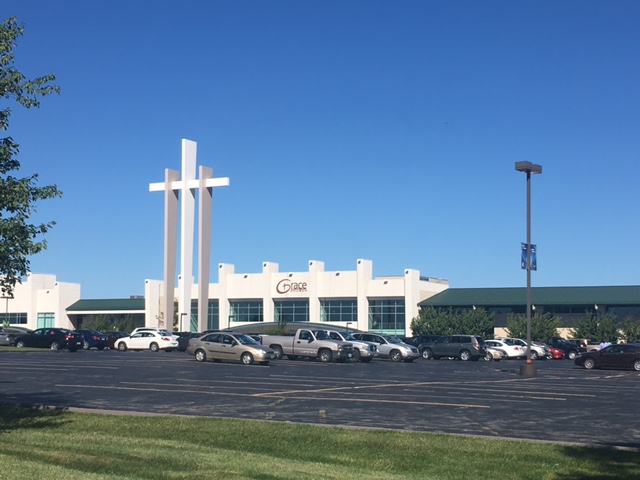
 img_7258I spent most of today noodling over what I learned yesterday, which included a long writing break to consider Ferguson and the people I spoke with from several angles. I still managed some wonderful riding as the day was perfect and there was no traffic. People must have been in their mega churches. From a distance, I thought this one was an airport concourse – it was at least twice as long as the photo frame would accommodate. You need a pan feature to reckon how big Jesus is in this part of the world.

img_7259 img_7260

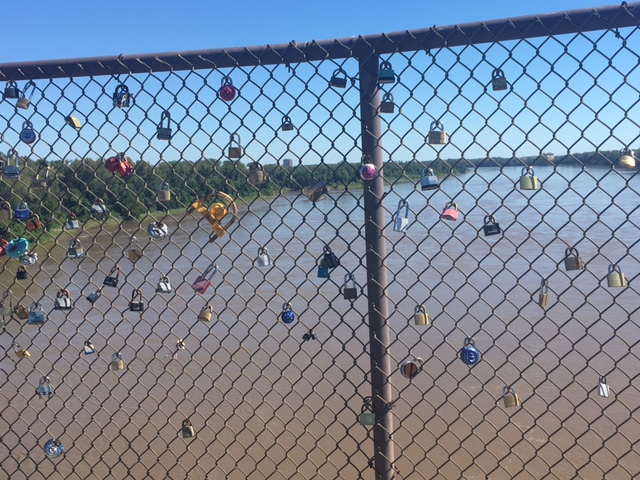
I don’t know why there are bike locks all over the chain link fence that protects cyclists from a better view of the Missouri River, but the vehicle structure that dwarfs the bicycle span is impressive. I felt the circles of my trip lap back on each other when I crossed the Missouri River near its mouth at St. Charles after tracing it for weeks last summer through the Dakotas and Montana.


Posted in Bicycle Trip Log | Tagged , | Leave a comment