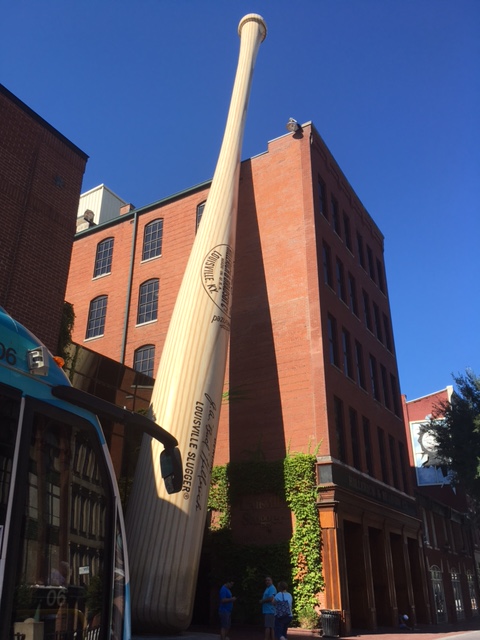
Trip Log – Day 309 – Belleville IL to St. Louis MO

to-saint-louisSeptember 9, 2016 – Rain, 70 degrees

Miles Today: 33

Miles to Date: 15,999

States to Date: 44

 It’s hard not to love a place that embraces you. I sent out four conversation requests in metro Saint Louis, thinking I might get two invites. I got four. I sent out a handful of warmshowers and couchsurfing requests over four nights. I got so many invites I had to turn some down.

img_7207I met heavy rain this morning riding through East Saint Louis; a city so poor and empty there is no traffic to splash a cyclist. The sky brightened when I arrived at Cahokia State Historic Park, the World Heritage Site that preserves the largest city north of Mexico circa 1200 A.D. This is a fascinating place, packed with school children and tourists. The introductory film is excellent and the exhibits informative. Walking up Monk Mound – one hundred feet high and 22 million cubic yards of hand carried earth that took 300 years to build – gives a greater appreciation for the capabilities of our native people.
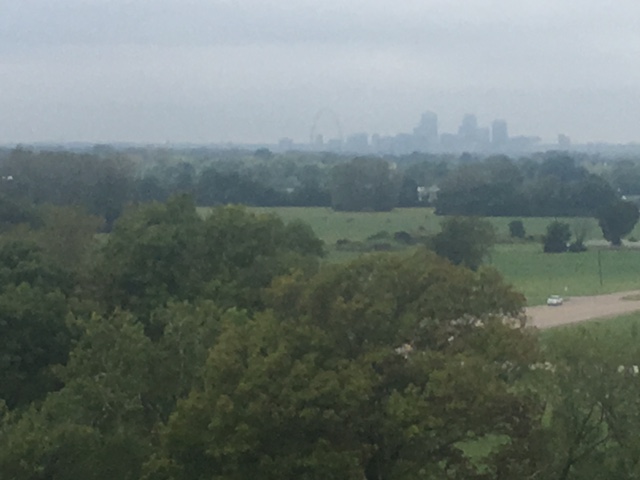
img_7206At the top, the sight of the Gateway Arch in the distance creates a link between the symbolic structures of two cultures that inhabit the same broad valley 1,000 years apart.
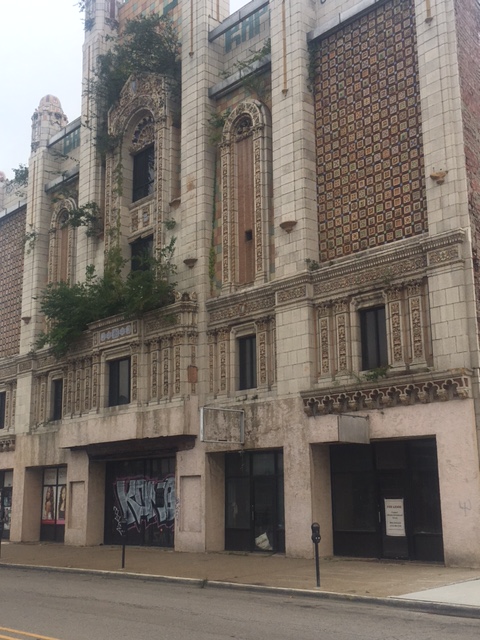


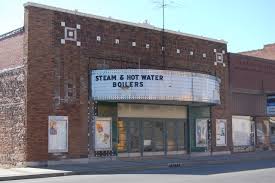
img_7210After visiting our efforts to preserve an ancient culture, it was dispiriting to ride through East St. Louis and witness how quickly we abandon our own cities. The vacant theater on Broadway has one of the most beautiful terra cotta facades I’ve ever seen, left to spall and peel.


screen-shot-2016-09-10-at-1-22-01-pmI often call Tom ‘the Crown Victoria of bicycles:” sturdy and heavy but reliable in rough conditions. I may have to reevaluate that analogy after seeing this souped-up Crown Victoria in East St. Louis. This car is light years apart from its police cruiser cousins.

 

img_7214 img_7212

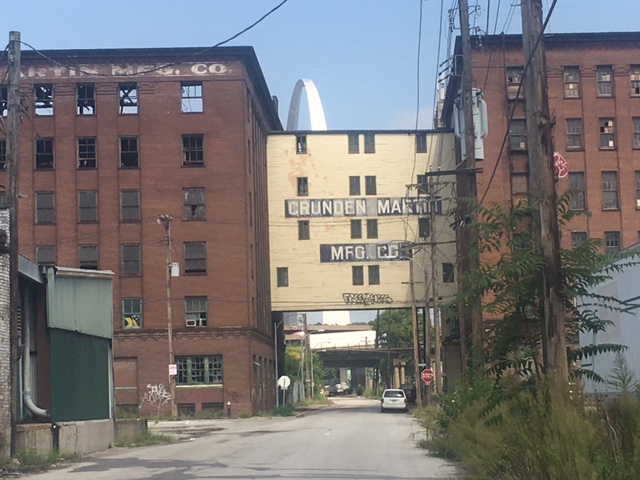
I crossed the Mississippi on the Eads Bridge and rode around the Gateway Arch from all directions. It is stately when viewed from the river, quirky when glimpsed from the aging industrial buildings south of downtown, and surprisingly fresh when viewed from the west, where it pops through the rectangular skyline in unexpected ways.

img_7216Spent the afternoon at City Museum, one of the most innovative ‘museums’ anywhere. It is educational and informative, but the learning always comes in the service of play. City Museum is also a fascinating study of a failing non-profit turned itself into a profitable asset for the entire city.



screen-shot-2016-09-10-at-1-27-43-pmIn late afternoon I rode to my hosts in the Southwest Garden neighborhood. Saint Louis is on the rebound – the population of 25-34 year olds is on the rise for the first time in decades. It’s got a cool vibe with lots of local shops, eateries and bars. The city grew bonkers just over a century ago, when it hosted the 1904 Word’s Fair and popularized ice cream in a cone. Miles of stately brick homes on generous streets form the core of neighborhoods, most of which appear to be bouncing back from their low points. The city was sliced with too many interstate highways, but it seems the wounds are finally healing, the neighborhoods finding new centers after being ripped apart.
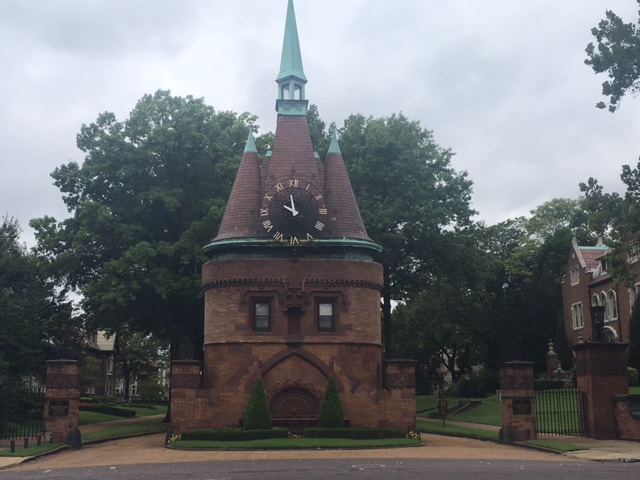
img_7243Not all neighborhoods are rising equally. Rich and poor live cheek by jowl in St. Louis. The gatehouses of private streets are often larger than the burned out shells of derelict buildings only a few blocks away.


img_7242The city has terrific bike paths, including one feature I’ve never seen: a two-foot zone striped between parked cars and bicycles so that cyclists don’t get car-doored. There are so many reasons to love Saint Louis!

 

Posted in Bicycle Trip Log | Tagged , , , , , , , | 2 Comments

Profile Response: Kathy and Robert Ellis, Rixeyville, VA

HWWLT Logo on yellowIn 1710, the King of England appointed Alexander Spotswood Lieutenant Governor of Virginia. In order to explore and settle the frontier, Spotswood brought two large groups of German indentured servants (1714 and 1717) who worked seven years and were then granted homesteads along the foothills of the Blue Ridge Mountains, a dangerous frontier tight to Native Americans.

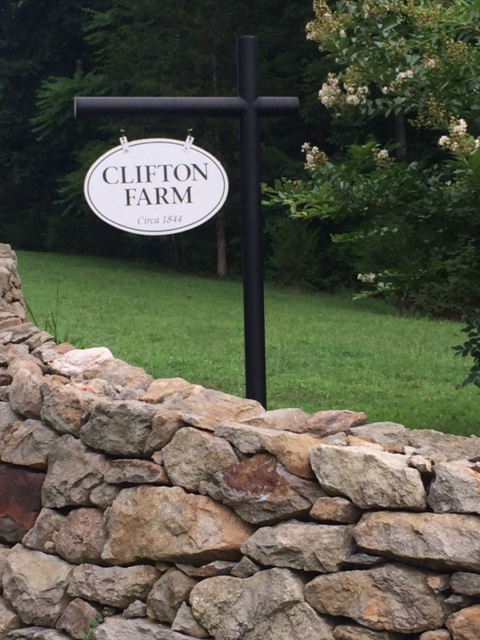
Kathy Ellis is not prone to simple stories or quick answers, which is why describing how she came to live in the Virginia Piedmont begins over 300 years ago, accompanied by numerous maps and gestures. Kathy is fascinated with history. The tangential influences of geography, politics, and culture meander through her stories with the same ease that the Hazel River wanders along the edge of Clifton Farm, the family homestead that Kathy’s ancestors, descendent from those indentured Germans, founded over 170 years ago.

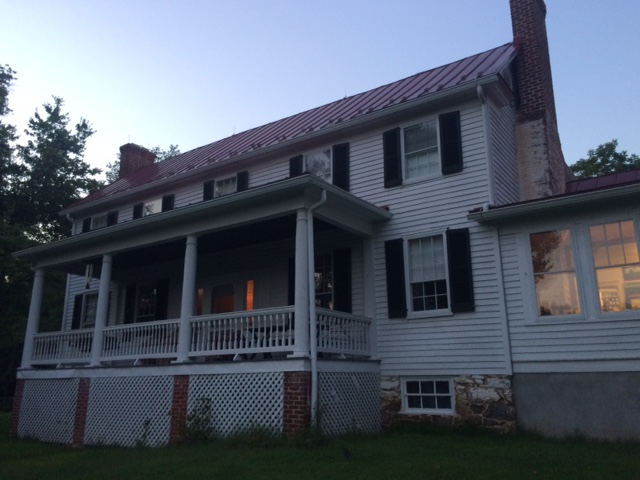
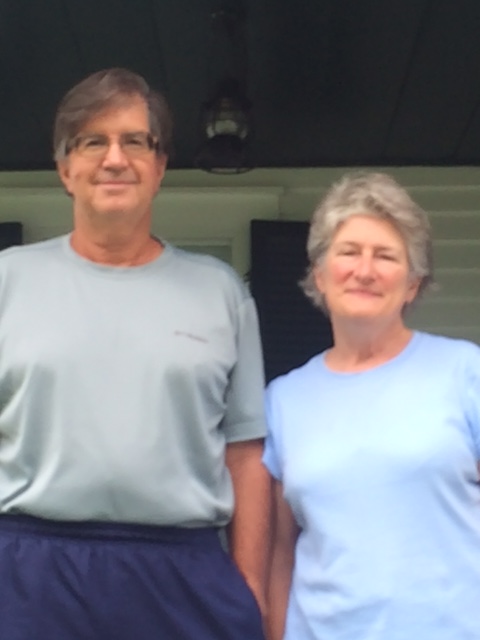
img_7406Kathy is the fifth generation Crigler to live at Clifton Farm. She and her husband Robert moved here more than a decade ago after retiring from their respective work in public health and civil engineering. As Robert puts it, “We either had to take a match to it or preserve it.” They are both glad they chose the later, more challenging course.

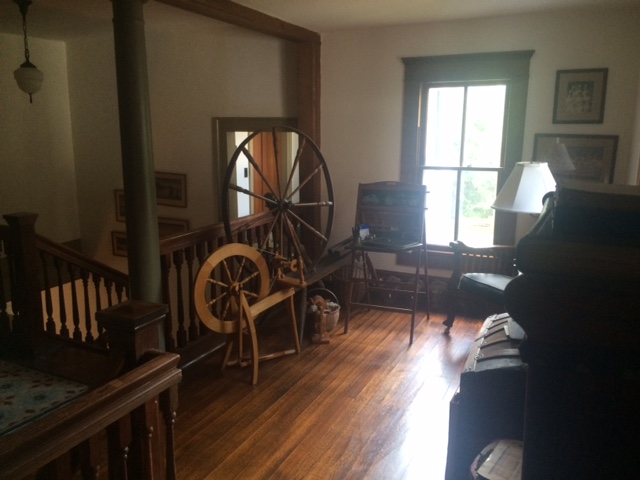
The main house is a ‘side entry’ representative of many Germanic houses in the area. The original 1845 structure features a generous stair hall and one large room on each floor: a basement dining room, a main floor bedchamber, second floor combination bedchamber / school room, and third floor sleeping loft. Separate buildings beyond the main house included a kitchen with slave quarters above, wood shed, smoke house, meat house, ash room, and – last in line but not least – the privy.

img_7403

By 1860 the property supported a large family plus nine slaves. The Crigler’s added the ‘second side’ to the main house, turning it into a center entrance home. The farm was pillaged in the Civil War. The Crigler’s filed for bankruptcy in the Panic of 1873 but managed to keep the place and gain prosperity.


In 1910 they enlarged the house again, creating a ‘T’ building with a second stair and updating much of the building with Arts and Crafts woodwork popular at the time. The farm was prosperous through most of the 20th century, but by the time Kathy’s parents died there were only two heirs, neither of whom resided here.

img_7400Kathy and Robert undertook extensive renovations and a fourth addition in 2007, updating all the services, reconstructing the kitchen and stabilizing other outbuildings. Today Clifton Farm is a beautifully restored property listed on the Registry of Historic Places. Kathy and Robert live in one portion of the house; the original areas are kept for tours and lucky guests like me. They maintain the immediate grounds and gardens (where they grow the best cucumbers I’ve ever tasted) and lease the remaining 300+ acres to local farmers.

Kathy’s stories fill every room along with the family portraits and antiques. Tales of cooks and confederates, former slaves and present friendships with their descendants. The past seems so alive to her, the wounds of the Civil War remarkably fresh. “There was a dance of etiquette between the races. A desire for order that is gone.”

img_7401Although I appreciate Kathy and Robert’s responses to my question, I longed to pose it to the house itself, to learn what hopes and fears lay in these old bones and new appliances. The house has never been so polished and grand. It is capable of embracing a large family, even a community. Will Kathy and Robert’ two sons, now in Oklahoma and Alaska, return to their roots as their parents did? Will this incredible property find a new, larger life in its tomorrow?


How will we live tomorrow?

img_7405“What is tomorrow? My tomorrow is going to be pretty similar to my today. I would hope to live smarter; that something I’ve learned today I can use tomorrow. I hope I’ve done something that people will want to come to my funeral.” – Robert

“Being an agricultural community, you make decisions every day that influence the land you are steward of. You try to take care of it.” – Kathy

After this profile was published, Kathy sent me the following additional information about the farm, their restoration efforts, and its relevance for today and tomorrow:

How will we live tomorrow? We consider climate change, safe food production, and race relations priority challenges of the future, and we have worked hard to use this farm to give context and offer some answers to all three.

(1) 150 years ago, this farm was essentially self-supporting in energy, clothing, and food. In 2016, we do the best we can to reduce our use of resources, recycle everything we can, and added solar photovoltaic panels that provide our own daily energy use as well as adding some back into the grid.

(2) We have used farm programs to reduce runoff into the Chesapeake Bay tributaries which surround the house. We research any materials added to the land for productivity and try to make responsible decisions as stewards of the land that will maintain its health centuries into the future.

(3) We have done everything we can to research the history and to honor both enslaved and free workers who were here. We have allowed African American artists and film makers, re-enactors from the Civil War U. S. Colored Troops to use it. In 2013, we received the William H. Carney “Trail to Freedom” award for our efforts.

https://www.youtube.com/watch?v=8arcE7lOVtg

http://www.dailyprogress.com/starexponent/news/local_news/culpeper-born-artist-to-show-spirits-of-clifton-farm-as/article_a7eb25fc-b36f-11e4-953a-0f215ab527d8.html

https://www.youtube.com/watch?v=BEDbCDYrA-8

We tried to restore the farm accurately because that is the only way to tell its story accurately. The Criglers, arriving as indentured servants in 1717, had been persecuted for religious beliefs in Germany. When they finally owned a house and farm here in Virginia, they lived with hard work, faith, frugality: there were no crystal chandeliers, cut glass wine decanters, or silver service tea sets here.

We do not “celebrate” the Civil War here  but see it as a reminder of the violence that we Americans were capable of inflicting on each other. And the fact exists that we all (North and South) benefited from labor from people enslaved because of their skin color. A friend once said that the best reparations for the past are to live for peace and justice today; can you imagine our world today if everyone who benefitted from slavery did that? We feel that at Clifton farm, we have a unique ability to open that discussion on many levels–and that is part of how we try to make a tomorrow a better place.

In the politically tense time in which we live, it is very, very important to remember all these things.


Posted in Responses | Tagged , , | Leave a comment

Trip Log – Day 308 – Benton IL to Belleville IL

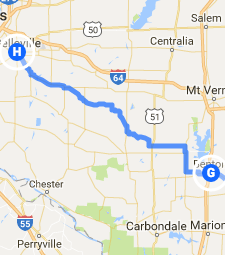
to-bellevilleSeptember 8, 2016 – Rain, 80 degrees

Miles Today: 87

Miles to Date: 15,966

States to Date: 43

One look at the window this morning told me rain was on the way. They interrupted the TV newscast of crime, bloodshed, and accusation to describe a storm of Biblical proportion, a giant boomerang of red thunderstorm warnings across our nation’s middle. If we heed the weather warnings we’ll never venture out of doors. If we succumb to the news fears we’ll suspect every neighbor of a crime. When does this message of fear cease?

screen-shot-2016-09-10-at-12-36-30-pm

Despite the warnings, I cycled out of Benton and enjoyed hours of wonderful riding; plenty of corn to keep me in good cheer.

img_7194The lunch buffet at Pistol City Restaurant and Saloon in Coulterville compensated for the food desert I pedaled through yesterday. Fried chicken, roast pork, brats with onions, a solid salad bar, tasty stewed tomatoes, and the absolute best peach cobbler I’ve even eaten. I downed two servings of that. The tab? $7.59 plus tax and tip.

Come afternoon the rains arrived. I got wet. I persevered. But I did not get swallowed by that big red boomerang or flooded out in a ditch. I arrived at my host’s on time; a little soggy but no worse for the weather.

img_7196


Posted in Bicycle Trip Log | Tagged , , | Leave a comment

How will we live tomorrow?

“That’s a wide open one. If I avoid politics and religion I can’t give you a fun answer. Do away with elections and appoint a king?

“If we all learned to listen before we spoke, that would take us in a good direction. I can’t say I always do that myself, but I try.”

Andy Archer, Charleston Preservation Society, Charleston, SC

How will we live tomorrow?

“In Denmark we have a law, a custom really, called Jante’s Law, that requires that you don’t think yourself better than anyone else It is a hallmark of our culture and helps us not to want more. That’s why Danes are often considered the happiest people in the world.”

Kate, Danish-American, Athens, GA

How will we live tomorrow?

“There are lots of different ways you can come at that, from lifestyle, motivation. I have not planned my life. I met my wife dong missionary work in Albania. I didn’t know I would be a librarian, but it’s a good fit for me. I don’t plan too far ahead.”

Jeff, librarian at University of Charleston, Charleston SC

How will we live tomorrow?

“Always looking for the next adventure.”

Sandra, tourist, Charleston SC

How will we live tomorrow?

“Smarter, wiser, stronger.”

Blake, visiting Yankee, Charleston SC

How will we live tomorrow?

“I don’t have an answer for that one. How about you?”

Sharon, Manager of Shoney’ Walterboro SC She turns the question over to Monica, waitress:

“You don’t know. But you hope for the best. What you think?”

Monica asks Jason, bus boy.

“If I wake up, it’s a good day.”

How will we live tomorrow?

“What is your definition of tomorrow? Hopefully, better than we do today. We have thousands of years of history to look back on to guide us to new possibilities.”

Kevin Wright, college graduate, Charleston, SC

How will we live tomorrow?

“We don’t have an answer for tomorrow. We don’t even have an answer for the next moment. But if we have a positive attitude, that will make a difference.”

Dhirjas Patel, motel manager, Walterboro, SC

How will we live tomorrow?

“For God.”

Germaine, business card collector, Augusta, GA

How will we live tomorrow?

“Day by day.”

Teresa, potato chip vendor, Augusta, GA

How will we live tomorrow?

“Me and him going to have a talk with the Lord.”

Linda Dawson, wife of Alzheimer patient, Augusta, GA

How will we live tomorrow?

“I think private motor vehicles will go away. It’s not sustainable. Fifty years ago no one thought tobacco would go away, but it has. Cultural change happens, it’s just slow. Climate change will be huge. The unexpected is what is going to happen.”

Alan Saul, neurological researcher, Augusta, GA

How will we live tomorrow?

“Let’s hope it’s not with Hillary.”

Donald Harrah, open carry smoker, Washington, GA

How will we live tomorrow?

“I hope to live in love with myself and others.”

Frederico, Italian travel agent visiting Atlanta, GA

How will we live tomorrow?

“I show up and do the best I can. Clean and sober 23 years.”

John McConnell, road surveyor, Washington, GA

How will we live tomorrow?

“Just as I do today.”

Robert, boiled peanut vendor, Summerville, SC

How will we live tomorrow?

“That’s a loaded question. There are so many ways to answer. I will live by the grace of God. Aside from that, humans are making a mess of it.”

Libby, Scuppernong farmer, Washington, GA

How will we live tomorrow?

“Better than we do today.”

Jeremy, Aldi cashier, Athens, GA

How will we live tomorrow?

“To the bet of my ability. I’m here to share love.”

Delca Viva, patient advocate, Atlanta, GA

How will we live tomorrow?

“You never know the next day is guaranteed to you.”

George, urban driver, Atlanta, GA


Posted in Responses | 2 Comments

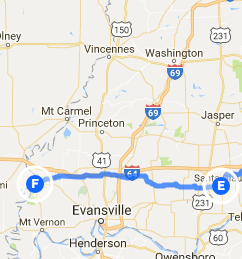
Trip Log – Day 307 – New Harmony IN to Benton IL

to-benton-ilSeptember 7, 2016 – Sunny, 90 degrees

Miles Today: 84

Miles to Date: 15,879

States to Date: 43

 img_7175

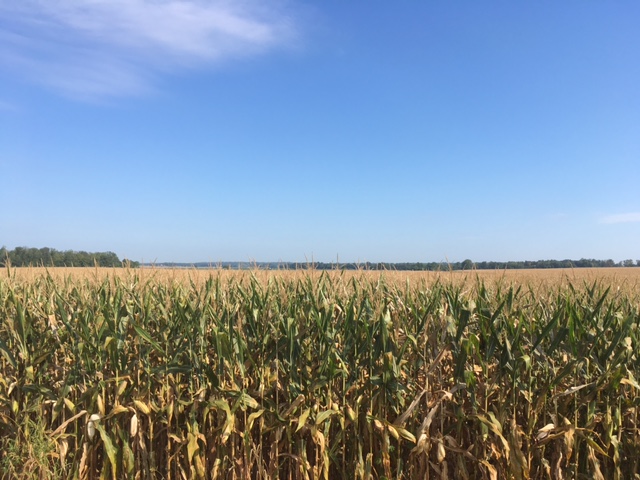
img_7173If the only constant in life is change, the only certainty in bicycle touring is that expectations will be dashed. The day began with such promise. Rising from my sumptuous bed in The Poet’s House, absorbing the Harmonie Labyrinth on the way out of town, riding on smooth blacktop with a fresh breeze and light filtering through the trees. And, of course, there was corn. Acres upon acres of it. I hardly minded the head wind because it made the tassels dance all the way across the Wabash, and the Little Wabash, and through miles of Illinois.

img_7181Forty miles in I turned onto US 45 and everything changed. Six miles of dusty road construction, widening a highway with such scant traffic I wondered whose palm got scratched to make it happen. Hungry and parched and powdered as Pig Pen, I looked forward to a nice lunch in Eldorado.

The nicest thing I can say about Eldorado is that it needs so much more than a wider highway leaving town. It’s big enough to have a Subway and a McDonald’s and a Hardee’s, but not so large that those chains allow any other eateries to survive. I exited US 45 and pedaled through downtown in vain search of a cafe: nothing but ‘antique’ stores dusty as my bike and town offices plopped into aging storefronts.

imagesOn the way out of town I passed a city park on a hill with covered picnic tables and a drinking fountain. At least, I thought, I could have some shade while I ate lunch from the food stores in my pannier. My arrival attracted too many drifters to comfortably attend to the middle-class functions of checking email and applying sunscreen I usually do during a break. I gobbled my Cliff bar, gave a smile and a wave, and spun out of town.

img_7186 img_7185

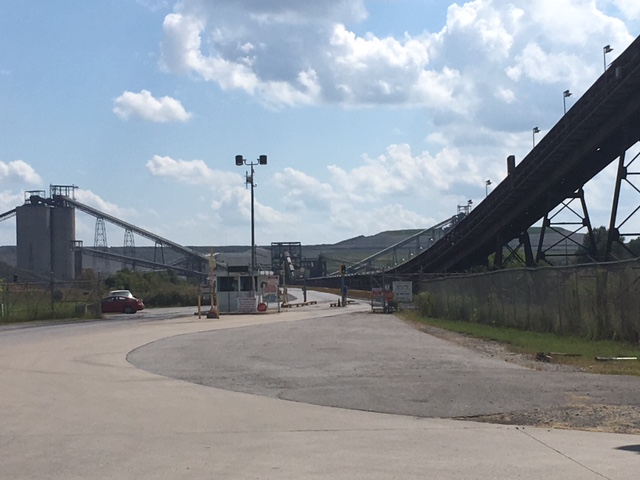
screen-shot-2016-09-07-at-8-53-41-pmNo more cornfields, no more dabbled light. Who knew Southern Illinois produced coal, by strip mining? The remaining little towns didn’t offer so much as a convenience store.

According to the sign on the edge of town, Benton has 7,100 people, but I don’t know where they are. True, there were more buildings in downtown than I’d seen all day, but they were just as underutilized. My EconoLodge next to I-57 was very nice, but there was nothing, nothing near it. I don’t mind savaging one meal one meal a day from my bag: trial mix or power bars of dried fruit. But when lunch and dinner are high-density energy food, I go to bed unsatisfied. Which is all right. I imagine that people who live here all the time are unsatisfied in many ways as well.


Posted in Bicycle Trip Log | Tagged , , , | Leave a comment

Trip Log – Day 306 – Santa Claus IN to New Harmony IN

to-new-harmony-inSeptember 6, 2016 – Sunny, 95 degrees

Miles Today: 68

Miles to Date: 15,795

States to Date: 43

img_7151 

img_7153Let the corn begin! I am so fascinated by these top-heavy plants standing tall on their spiky toes, lined in such perfect rows. Every five minutes I want to stop and take yet another photo of how they flow in the breeze. Enough already – each photo looks pretty much like the last one. But in my eye they appear as an ever-changing sea. Good thing I enjoy them so much – I’ll have plenty of corn for companionship over the next few weeks.

My warmshowers host Bill rode me out of Santa Claus and past Lincoln’s Boyhood home, then let me loose to pedal along Indiana 62 to Evansville, where I took a writing break before pedaling on to New Harmony. Although the day was hot, I made a good breeze and the light filtering through the trees was sublime.

img_7165I first visited New Harmony, the Rappist / Robert Owen nineteenth century Utopian community, on my cycling tour in 2011. It is the first place I am returning to on this trip as well. In part, because the town is so lovely, but mostly because in the interim I became Internet chums with Docey Lewis. Docey’s an artist and philanthropist whose work in developing countries, most recently Nepal, dovetails with things I did in Haiti. Her invitation to visit New Harmony was a highlight of my trip.

img_7162 img_7163

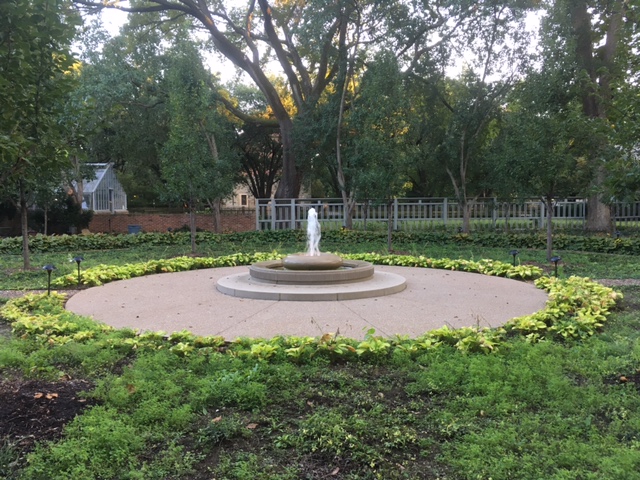
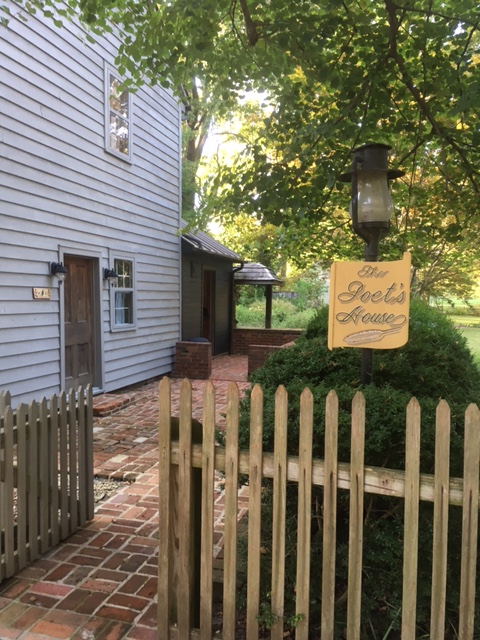
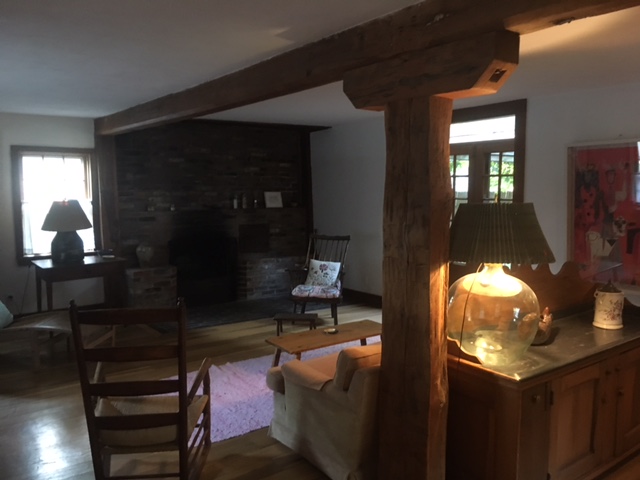
Docey arranged for me to stay in ‘The Poet’s House,’ one of the nineteenth century post and beam cottages now used as guest accommodations. She invited more than a dozen locals to her home to share food and talk about tomorrow, a subject that people drawn to live in a rural Utopian community expound upon with gusto.


Posted in Bicycle Trip Log | Tagged , , , , , | Leave a comment

Trip Log – Day 305 – Croydon IN to Santa Claus IN

to-santa-claus-inSeptember 5, 2016 – Sunny, 90 degrees

Miles Today: 57

Miles to Date: 15,727

States to Date: 43

 img_7131

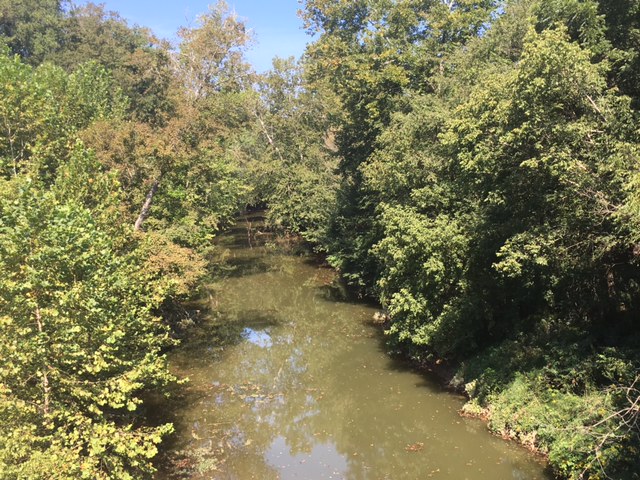
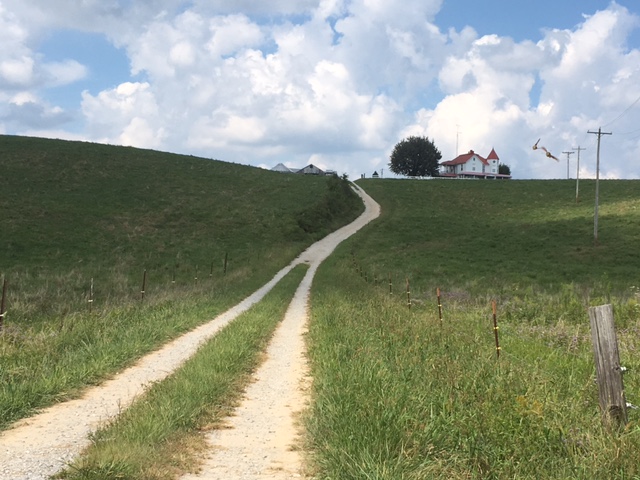
Fifty miles in Indiana State Highway 62 west is about as good cycling as it gets. It’s challenging: lots steep climbs; and exciting: lots of curvy downhills. At Leavenworth, the horseshoe curve of the Ohio River is extraordinary. The hills begin to taper by mile thirty, and forty miles in I was in undulating farmlands.

img_7132 img_7138

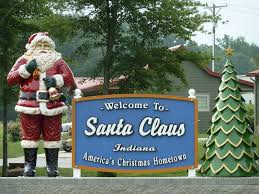
imgresThen I turned onto Highway 162 and rolled into Santa Claus, a holiday-themed town with a huge amusement park that is every bit as kitschy as it sounds.


Posted in Bicycle Trip Log | Tagged , , , , | Leave a comment

Trip Log – Day 304 – Louisville KY to Croydon IN

corydon-inSeptember 4, 2016 – Sunny, 80 degrees

Miles Today: 45

Miles to Date: 15,670

States to Date: 43

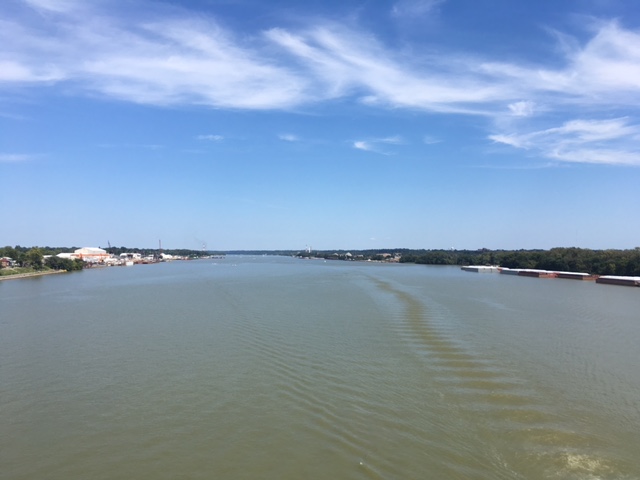
 img_7112I left Louisville over the Big Four, a former rail bridge converted to a pedestrian use and packed on a holiday Sunday. I headed west in Southern Indiana, first along the Ohio River and then climbing up the limestone bluffs. I cycled this area from west to east on my first bicycle trip in 2011 and enjoyed it so much I included it this trip in the opposite direction. The perfect weather reinforced my decision to turn away from the East Coast when I did; I’ve avoided Hurricane Hermine.

img_7113 img_7115

Since I had a short travel distance and ideal conditions, I took a long writing break. On a holiday weekend libraries are closed, so I headed to my default: McDonald’s. McDonald’s are universally clean, their staff are universally pleasant, their customers often eager to engage in conversation. If I purchased anything other than coffee, PowerAde or an occasional ice cream cone, I could be their spokesperson. But I doubt their marketing wants a guy who typically lays out only one dollar per visit.

imagesBack in Elizabethtown Kentucky I had a memorable McDonald’s conversation. Amanda, a woman in her thirties who’s almost as wide as she is tall, brought six children, ages 3 to 11, some hers, others in her care, to McDonalds. I caught the eye of the oldest boy. “That’s the computer I want,” he told his mother, eyeing my laptop. We started talking. When I explained that I had cycled over 15,000 miles, the middle boy’s mouth dropped; the oldest said, “I could never do that.” “Yes, you can,” I said. I explained that cycling takes no special talent, just determination. Amanda, sweet as could be, asked about my journey, and let her children inspect my bike.

We never know whom we touch in life, who we inspire to extend themselves. I’d like to think Amanda’s oldest boy left that McDonalds’ with a heightened sense of his capabilities and a broader view of what his life might hold.

img_7118 img_7120 img_7123

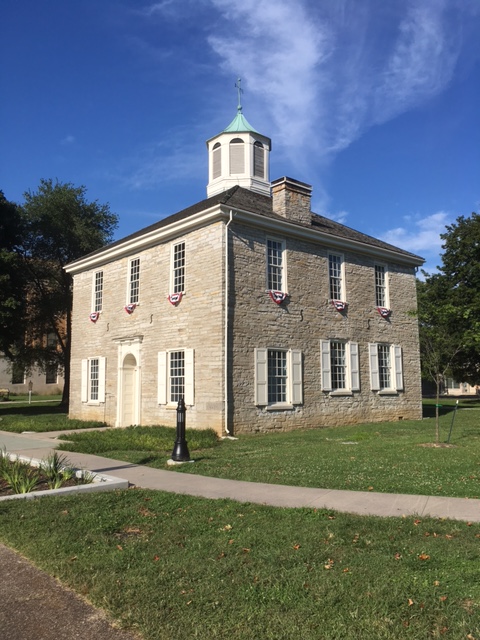
The Ohio River Greenway turned in from the river and climbed through Indiana limestone bluffs until I arrived in Corydon, Indiana’s first State Capital, all decked out in bunting for 2016: the Bicentennial year of Indiana’s statehood.

Posted in Bicycle Trip Log | Tagged , , , , , | 2 Comments

Profile Response: Clark County Dinner Party, Boyce, VA

HWWLT Logo on yellowWashington DC has perhaps the most hierarchical geography in our country, an odd distinction for the capital of a supposed democracy. The tops dogs live in the tony parts of the District, Georgetown and Northwest. The suburbs have a clear pecking order: Fairfax VA is preferred to Montgomery MD, which is superior to Prince George MD. The lowest rung belongs to the souls relegated to the poorer precincts of DC, a city with a large income/opportunity divide.

As the Federal government grows, so do the Maryland and Virginia suburbs. The Metro is slated to extend all the way to Loudoun County. Frederick County, more than sixty miles west, is filling up with single-family homes. That growth, however, skips over Clark County, a bucolic place of plantation grace that is seemingly unaffected by the rush to growth.

Screen Shot 2016-08-23 at 5.12.59 PMMy friend Chuck Downs lives in a cabin, albeit a very large one, on the crest of Hickory Knob, a thirty-acre wooded parcel with commanding views of the Shenandoah River. He invited Cathleen and Nick Snow to dinner; they live in a passive solar, geothermal heated house on 60 acres of fields that they lease to local farmers. Carmen Barros and Warren Howell also joined us. They’ve lived in Loudoun County for over forty years and recently subdivided their land to create a second lot, where they built a Glide House and organically farm seven acres. Our far-reaching conversation kept coming back to how Clark County remains rural in the face of development pressure.

“In Virginia, the counties have the biggest say in how development occurs. What’s interesting is how each county does it differently. In Loudoun County we’ve developed a two-prong approach.” Warren explained how the eastern part of the county, where the subway will extend, continues to urbanize. There are fewer restrictions there. The western side, where Carmen and Warren live, will retain a rural, farming character. That actually requires more restrictions.

imagesClark County has a long pastoral tradition. It contained some of the largest plantations in Virginia, though wheat was the main crop, not tobacco or cotton. In the 1970’s the county established a stringent approach to development that has successfully kept the area rural and fended off development challenges. Parcels have ‘DUR’ (dwelling unit right) designations. Chuck’s thirty acres has two DUR, though there are larger parcels that have none. DUR’s are a form of real estate currency, affecting a property’s value. However, many DUR’s are not exercised. Numerous conservation groups will ‘buy back’ DUR’s and retire them in perpetuity.

How will we live tomorrow?

Screen Shot 2016-08-23 at 5.15.58 PM“I will get up and see my personal trainer and do Pilates. I see our trends as positive. More people are growing their own food. Even Trump, I see him as the dark side we need to get to the light. We have to have more respect for nature. We have to respect our choices, even when they are mistakes. We have to govern a little less. It’s about each individual finding their own place.” – Cathleen

Screen Shot 2016-08-23 at 5.16.44 PM“Most rural areas are failing. People are moving to cities. Are we post-city people? We are Jeffersonian plutocrats. We will survive.” – Warren


Screen Shot 2016-08-23 at 5.16.37 PM“We moved here almost fifty years ago to live communally. We weren’t trying to get away from it all; we wanted a new set of ‘all.’ This is the South. Our children (part Chilean) were not welcome in the schools here.” – Carmen


Screen Shot 2016-08-23 at 5.16.09 PM“”I have a prepper kitchen downstairs on a separate generator.” – Chuck (with laughter)


Screen Shot 2016-08-23 at 5.16.25 PM“We’ve got to fight the good fight, but ultimately I’m a pessimist. Humans will always take the easiest path.” – Nick


Posted in Responses | Tagged , , , | Leave a comment

Trip Log – Day 303 – Louisville KY

Louisville KYSeptember 3, 2016 – Sunny, 80 degrees

Miles Today: 40

Miles to Date: 15,625

States to Date: 43

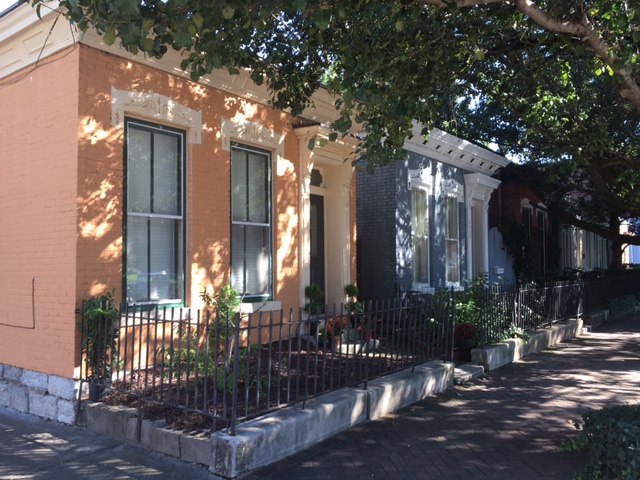
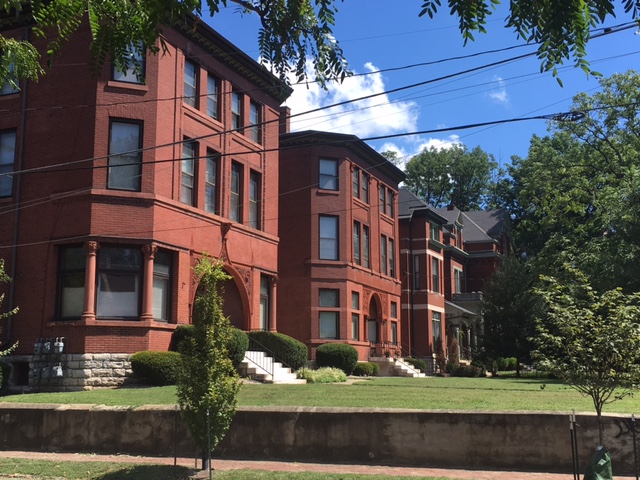
 IMG_7073If you arrived in Louisville from the north, you might think it was a Southern city; there are shotgun houses reminiscent of Charleston or New Orleans. Coming up from the south it feels like my first Northern city, Italianate details you might find in Western New York and solid Denver Squares.


IMG_7101 IMG_7104

Louisville Metro credits itself as the 16th largest city in America, though I couldn’t find a source that agreed with that claim. I would agree it is the San Jose of the East – a swiss cheese city that’s annexed land around and beyond older, usually more affluent, towns. Louisville’s got a lot of square miles, a lot of roads, but not much density.

IMG_7077I spent the morning at the Louisville Slugger factory and museum, a terrific place that evoked memories of my baseball childhood. Louisville Slugger is one of the most iconic brands, and items in all of sport. I wondered what make this so. Tools are an extension of our human capabilities. Baseball bats allow us to power a ball very far. Yet, unlike universal tools, we are not equally adept at using a baseball bat. Elite athletes swing them much, much better than the rest of us. We ascribe hero status to masters of the bat. When I walked in the bat vault, where over 3,000 custom bat designs created for professional players are stored, I let out an unconscious ‘Wow.’ My personal guide, Tony smiled, “Everyone says that when they come in here.”


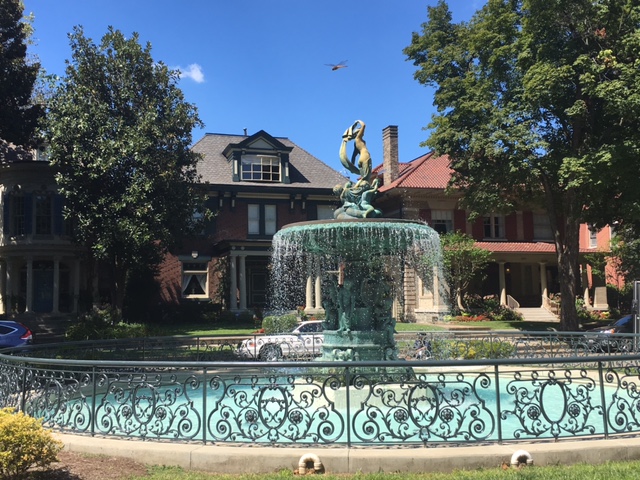
I took a short ride to the west side of town, the other side of the tracks in every respect, then spent the rest of the day touring Old Louisville, downtown and the riverfront. The Ohio River is mighty wide at this city founded on its fall line.

IMG_7105Just as Louisville seems suspended between north and south, so too it seems suspended in the early 21st century; neither a boomtown like Nashville, nor a decaying shell like Augusta. One of the few cities I’ve visited that appears to be in stasis, viable without growing pains.

I pedaled back to the east side of town and logged a good number of miles without leaving city limits. My second Louisville host lived only a mile from where I stayed the previous night!


Posted in Bicycle Trip Log | Tagged , , | 2 Comments