Profile Response: William B. Helmreich, Sociologist, New York, NY

HWWLT Logo on yellowWhen William Helmreich was a kid growing up in New York City, he and his father played a game they called ‘Last Stop.’ “We would ride to the end of the subway line, get off and explore the neighborhood. Once we’d completed the last stops of every line, we went to the ‘second to last stop’ and so on, getting closer and closer to the center of the city.” He walked the city many times in a casual way until, in 2008, he decided to take a systematic approach. He has walked every block of the United States’ largest city; 30 to 35 miles per week, at all times of day, in all seasons and all weather: 6,048 miles total, the equivalent of walking across the United States and back again.

“Riding your bike is good, but it’s not as good as walking. When you walk, you don’t have to dismount to interact with others. Driving is even more remote. A nice car driving through a poor neighborhood is out of place. When you walk, you look like you belong.”
imgres-2Bill realized that no sociologist had written a comprehensive book of all of New York City. Most sociologists focus on a discrete area and extrapolate. He decided to walk the entire city to get to the heart and soul of New York. “I study New York City because I’ve lived here my whole life.” Bill’s portrait of his hometown is The New York Nobody Knows: Walking 6,000 Miles in the City. The book has been a remarkable success; Bill now has contracts to write five more books – one on each borough.

“When you walk systematically, you are forced to confront every aspect of the city. People walk their relevant blocks. There are other blocks in the same zone that people never know.

images“Sometimes it gets boring and you don’t often find things, but you sublimate and let your mind wander. At the very least, it’s healthy.

“I didn’t have a strategy for interacting; I talk with people as opportunity presents itself. My idea is to engage people; I talk with them first. If you are an extrovert, it comes naturally.”


Bill had two criteria for evaluating which of his experiences to include in his book: things that he encountered often, which represent the pattern of the city; and things that were truly unique, landmark experiences.
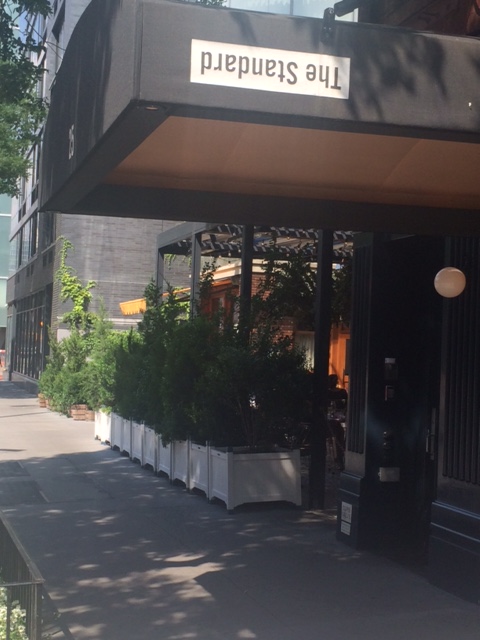
IMG_6916He directed me to visit the corner of Third Avenue and East Fifth Street in the Bowery, where the Hotel Standard is distinguished by its upside down sign. “Look at how the Bowery has been renewed. In the 1960’s, the Bowery was full of flophouses; the fancier the name, the worse the place.” In the spring of 1966 Bill stayed in a Bowery flophouse for five weeks to interview people in the area. “I specialize in interviewing people who are difficult to interview.”

“We haven’t solved our homelessness problem. It’s getting worse. The sense of disorder it creates makes the streets feel unsafe. If you walk from 34th Street to 14th Street, ten to fifteen people will approach you. This does not engender feelings of love. Ninety-five percent of the time nothing happens, but the fear is consistent.”

Bill is a savvy streetwalker, who dispels potential danger before it presents itself. He’s disarmed gang members by complimenting them on their jackets. When he can tell someone is going to approach him for money, he sometimes approaches him first. “My wife was worried about me, but I know how to walk the streets. No one ever bothered me in 6000 miles.”
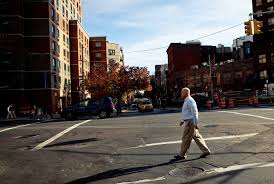
images-1At CCNY, where Bill is a sociology professor, he plays a game with his students: “Tell me your street and I’ll tell you a story about it.” He doesn’t like lecture format and avoids giving prepared talks. “I like to get questions. I like dialogue and conversation more than presentation.”

“Since 2000 we’ve become a surveillance society. We value our security over our privacy. There are cameras everywhere. Crime is down because people are aware that cameras are documenting everything. I used a recorder for interviews and no one even worried about it. We have come to assume that recording is natural.

“In order for me to understand the city, I have to be part of the city. I’m not doing Statue of Liberty and the Empire State Building. I’m doing the hidden parts of the city.”

How will we live tomorrow?

imgres“In a city like this it is impossible to predict how will we live tomorrow unless you narrow the focus. Maybe we should attack it from a different direction. Who will live in the city? Will we be a city of elites or will we be integrated?

“I see three groups emerging: the assimilationists who seek common identity, the separationists who want national and ethnic definition, and the large middle in between. However you divide us by ethnicity or black lives matter of any other component, the trend is that we are growing into a multi-ethnic society. We are growing more integrated, not less. Within 100 years, we will be a blend.

“How will Black Lives Matter be resolved? I don’t think it will. It’s fifty years since civil rights. We have had a black president for eight years. The people who have been killed are at the fringes of black society. More and more of black society is included within our society. The 1/3 are outliers. Nothing we’ve done seems to work. The Great Society and affirmative action have not been able to touch this group. They are an intransigent part of our legacy.”


Posted in Responses | Tagged , , , , | Leave a comment

Trip Log – Day 274 – Charlottesville VA

To CharlotteAugust 5, 2016 – Rain, 75 degrees

Miles Today: 14

Miles to Date: 13,915

States to Date: 38

People are often surprised that I rarely check the weather. If it’s clear when I get up in the morning, I ride. If there’s a major weather event on the horizon, I hear about it. If I stayed put just because the forecast suggested showers, I would still be in Ohio.

IMG_7414

Today, however, was different. I woke to steady rain; only the second time on my trip. I checked weather.com and learned that it was not raining in Charlottesville and would not rain all day. Dubious data in the face of actual drops. The rain was real, but not really dangerous. So I pedaled off in my yellow slicker to visit Monticello.

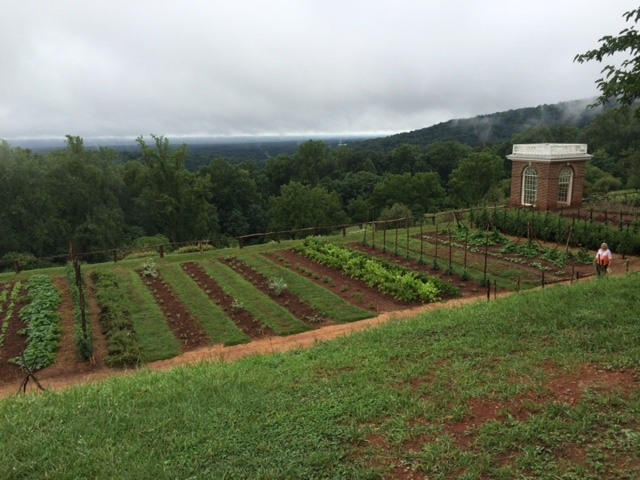
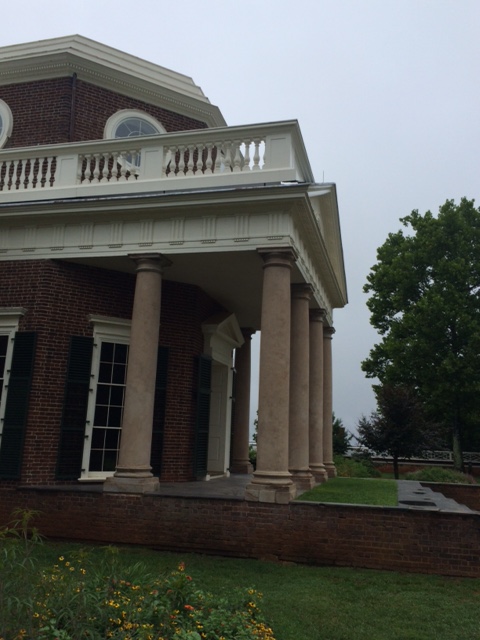
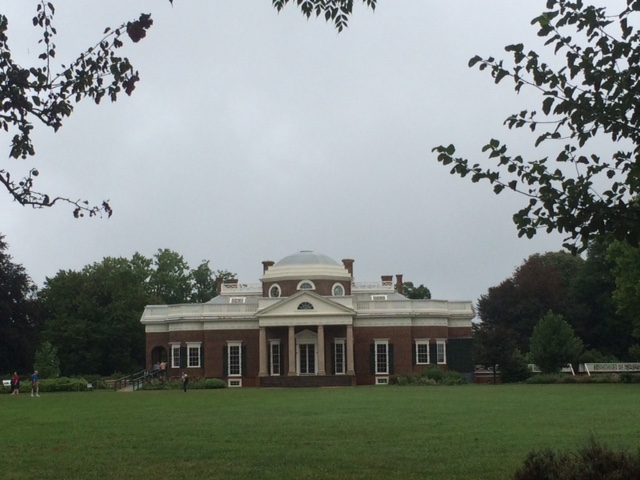
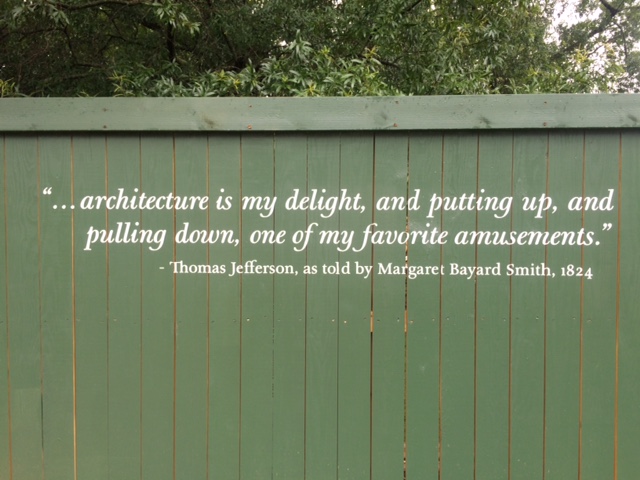
IMG_7422The full paradox of the South is on display in this incredible place constructed over the forty years of Thomas Jefferson’s public life. The man who penned the words, “All men are created equal” owned 600 human beings. That takes a lot of rationalization, which the guides and displays at Monticello weigh with great aplomb. I took the house tour and the slave tour (I’m not a garden tour kind of guy). Each guide was insightful, knowledgeable, and thoughtful.

I imagine the tours were very different thirty years ago. But since the Thomas Jefferson Foundation, which owns Monticello, acknowledged the descendants of Sally Hemming’s six children as part of the Jefferson family in 1998, it cannot shy away from the complex integrations that enabled this segregated society. Jefferson referred to his slaves as ‘servants’ or ‘family’. Every reference to every owned person today is preceded by the word ‘enslaved’.

IMG_7421 IMG_7420 IMG_7413

The amazing thing about Monticello is how the ideals of this great Enlightenment man, its magnificent architecture, the ingenious devices, careful planning, and breathtaking site all become secondary to the careful dance of how the masters and slaves coexisted. One tour guide closed with the Emerson quote: “If you put a chain around the neck of a slave, the other end fastens itself around your own.”

Two hundred years later, all that is best and worst about our nation can be distilled from Monticello: incredible resources, noble ideals, inconsistent opportunity, equality, and justice.

IMG_7431By two the rain had lifted and I rolled downhill to a sumptuous lunch at Michie Tavern, a southern food fest that included the best stewed tomatoes I’ve ever tasted. Sometimes I forget tomatoes are a fruit. I ladled them over fresh biscuits, sweet as any dessert. Bloated with history and sustenance, I returned to town and stayed in a nice alternative-vibe guesthouse.


Posted in Bicycle Trip Log | Tagged , , , , , | 1 Comment

Profile Response: Hillary Brown, New York, NY

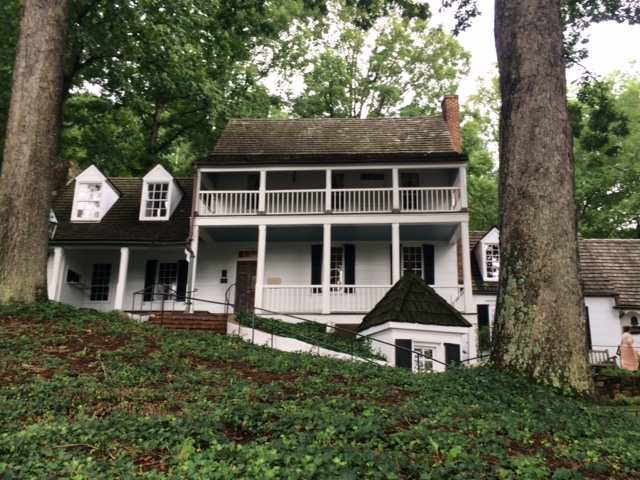
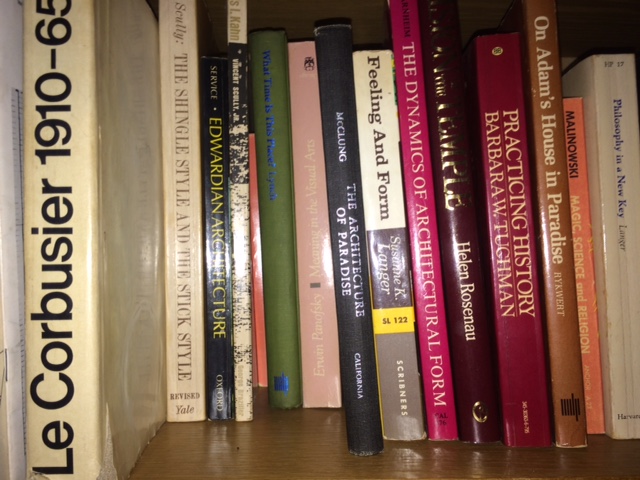
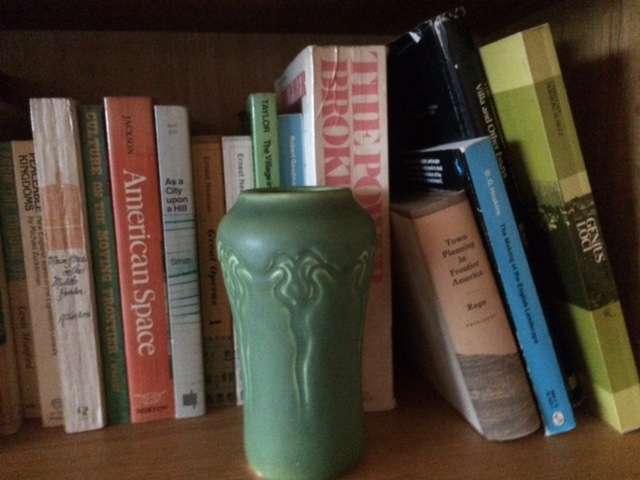
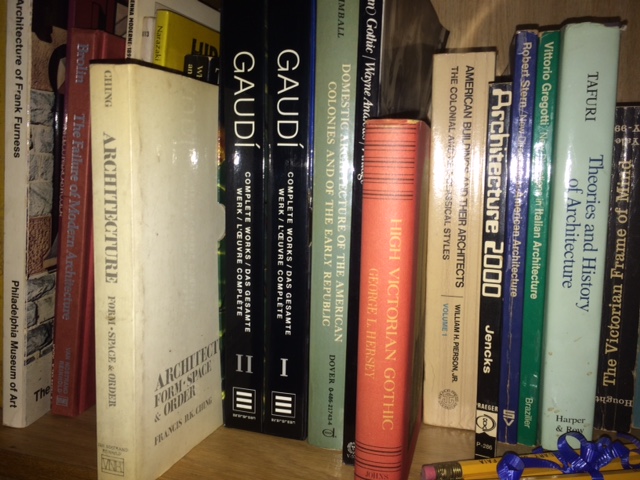
HWWLT Logo on yellowIf books reveal affinities among people, Hillary Brown and I are twins. I never met anyone whose library is so similar to mine. There is a certain logic in this. Hillary and I are both architects schooled during the period of participatory design. Though our careers took different trajectories, we share kinship with Kevin Lynch, Vince Scully, Frank Chang, and Robert Caro.

Actually, Hillary’s career has had several trajectories of its own. After graduating from Yale she worked in Edward Larrabee Barnes’ office back when discrimination against women in architecture was both quiet and ubiquitous. After he told her, “I am the idea, you are the pencil,” she decided to move out on.

IMG_6866Over the years she’s run her own firm – twice. She wore numerous hard hats in the NYC Department of Design and Construction under Mayors Koch, Dinkins, and Giuliani. She founded the Office of Sustainable Design, which wrote New York City’s High Performance Building Guidelines, and oversaw fifteen demonstration projects, all of which were built. Then she consulted with various US cities to develop their sustainability programs. Now Hillary is Director of the MS Program in Sustainability at the Bernard and Anne Spitzer School of Architecture at CCNY. “It’s my fourth career. I never would have thought I liked academia, but the students are so wonderful. CCNY started as a school for immigrants. You walk into the classroom and there’s not a Christian name.”

IMG_6867I met Hillary through a serendipitous Haiti connection. She and several of her Haitian students did some planning work there. They visited Grand Goave, the town where I contributed to reconstruction after the earthquake. Her book, Next Generation Infrastructure, addresses how to simultaneously reinforce our infrastructure while making it more sustainable and resilient. “The training I received in architecture school was less effective about how to build a building than how to identify problems, recognize patterns, and formulate solutions.”

IMG_6868Hillary understands that sustainability is more than matter of reducing consumption and boosting renewable energy. “The bleeding edge of sustainability is, ‘What is the new economic paradigm?’ Slowing down. Working less. Right now, it is only a theoretical model.” To move beyond theory will require a shift in consciousness. “We don’t even know who we are anymore. We on the coast are disconnected from the middle.” We have to acknowledge and appreciate our interconnectedness.

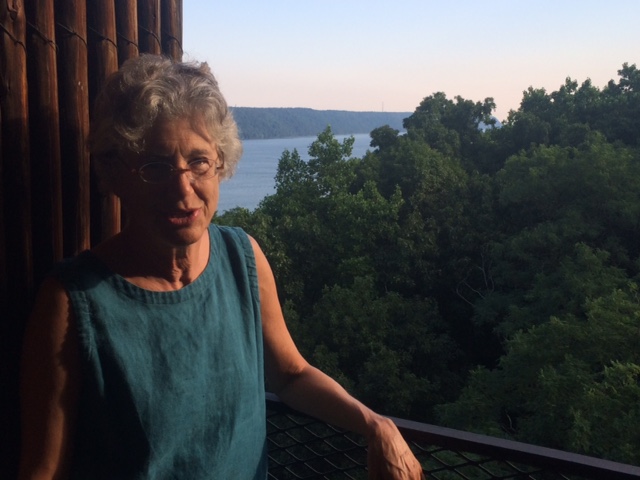
Hillary grew up in the Riverdale section of The Bronx. After living in a downtown loft for over thirty years, she returned to Riverdale two years ago where she lives in a 1950’s mid-rise with a gorgeous view up the Hudson River. “I had an interesting urban view from my loft, water towers and rooftops, but not a bit of green. I realized I needed that.”

How will we live tomorrow?

IMG_6870“I don’t have a revelatory answer, but I still get up in the morning and try to address the situation.

“The trajectory of the future is not in looking at the United States. It’s looking at how emerging societies adopt our values and our consumption.

“We shall live tomorrow if we get in stride with each other and align ourselves with the dictates of the planet. Or we shall not. It’s an either/or.”


Posted in Responses | Tagged , , , , , , , | 1 Comment

Trip Log – Day 273 – Rixeyville VA to Charlottesville VA

To CharlotteAugust 4, 2016 – Overcast, 80 degrees

Miles Today: 55

Miles to Date: 13,901

States to Date: 38

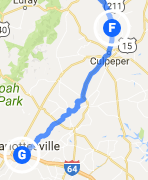
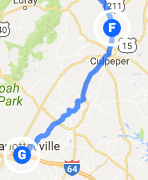
IMG_7411My hosts, Kathy and Robert, served a breakfast of eggs and scrapple, muffins and fresh fruit with yogurt that rivaled the garden fresh vegetables and chicken we enjoyed the night before. I rolled away from their farm well nourished for a ride through more of Virginia’s bike friendly byways. Motorists here are very nice; slowing down in tight spots and pulling up beside me to chat through open windows. Eventually I merged with US 29 South, which was picturesque for a few hours. Ten miles or so outside of Charlottesville, the traffic increased and the shoulder decreased, until construction made it disappear altogether. I was disappointed to find that a huge road project to accommodate the increasing number of cars to the big box chains littering the highway included absolutely no provisions for cyclists: no bike paths, no bike lanes, not even a clear shoulder.

I love the quirky signs I pass in rural areas. It’s comforting to know that God is going to help us in disaster, Jesus has rooms available, and that chili and cheese are yours at 7-11 for the push of a button.

IMG_7407 IMG_7410 IMG_7412

I had a premonition that my warmshowers host for the evening was an iffy thing: a Chinese student arranged for me to stay with her parents. I figured if it panned out, we might have a fascinating cross-cultural exchange. No such luck. Her parents spoke no English. Her younger brother guided me to a solitary place for the night. All fine and safe: just not very interesting.


Posted in Uncategorized | Tagged , , , | Leave a comment

Trip Log – Day 272 – Front Royal VA to Rixeyville VA

To RixeyvilleAugust 3, 2016 – Partly Cloudy, 80 degrees

Miles Today: 32

Miles to Date: 13,846

States to Date: 38

I come from an area of our country rich in history. I stroll by Old South Church where the Adams boys, Sam and John, roused the rabble. I cross the intersection where the Boston Massacre occurred. I pedal past the Lexington Green and Concord footbridge; ‘the shot heard round the world’ echoes still. I pass Washington’s Brattle Street Headquarters during the siege of Boston almost every day. These places rest easy in my mind, unambiguously positive landmarks commemorating our independence from England.

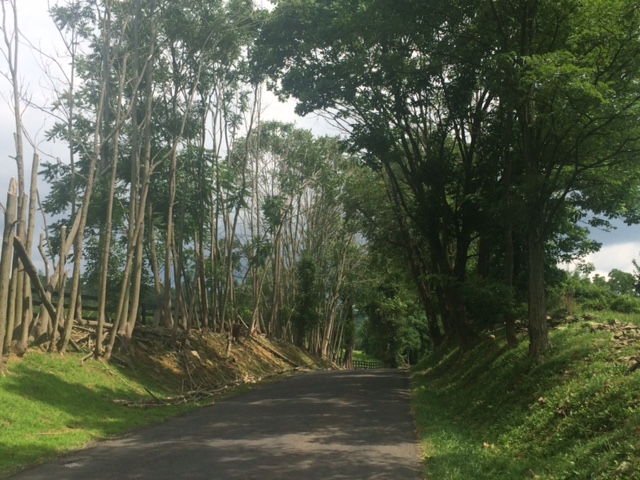
IMG_7390Today, as I pedaled over Chester Gap from Front Royal to Flint Hill and along scenic Benvenue Road, I was keen to the altogether different weight of history in Northern Virginia. Huge clouds, occasional sprinkles, and intermittent sun created thermal updrafts and cool undercurrents. The land itself sighed under its ambivalent burden: a land of honor and glory; a land of ignoble defeat. The Civil War is history. But in Virginia, history is ever present.

The Confederate Army marched from Culpepper to Gettysburg along the route I traversed in both directions. First they headed north: 60,000 confident, strong men; four abreast and three miles long, trailed by artillery and support in a bold move to take an offensive stance against the North. A much smaller number returned along the same route, in the direction I spun, in defeat. As one local said, “After Gettysburg, everything fell apart. The rest of the war was defense and retreat. If we could have just stopped then, perhaps the destruction would not have beeIMG_7389n so great. But fighting continued and we were humbled.”

One hundred fifty years later the landscape is gorgeous. The stately plantation houses are grand. The few slave quarters still standing appear quaint. There is no evidence of pillage; that hardly a tree stood in all of Culpepper County. But the natives remember. Caught between romantic affection for a way or life out of step with evolving equality and justice, yet baffled why the remedy came so hard. They recall the Civil War. Not as if it were yesterday. As if it were today.

Posted in Bicycle Trip Log | Tagged , , , , | 2 Comments

Trip Log – Day 271 – Boyce VA to Front Royal VA

to Front RoyalAugust 2, 2016 – Partly Cloudy, 85 degrees

Miles Today: 34

Miles to Date: 13,814

States to Date: 38

 IMG_7327The moment I wake up I wonder: is my bike tire good? Though I have a very short day, I take a quick appreciation of the Shenandoah River from my host Chuck’s deck and then I’m out. Tom looks fine; my tire is firm. I speed down Chuck’s steep hill. It’s all great, until it isn’t. Two and half miles out, my back tire is flat again; my fifth flat in less than 36 hours.


Screen Shot 2016-08-02 at 6.18.09 PMI ride Schwabe Marathon Plus tires, expensive, heavy-duty tires renowned for no flats. I did over 6,000 miles flat free on my last set. Today I learned the downside of such sturdy tires. When something does penetrate, it can nestle in the rubber and not puncture the tube until the wheels roll and things heat up. That’s the only reason I can explain why repeated repairs held pressure, even overnight, and I could ride for a few miles before the tubes lost pressure.

While Chuck sagged me again, this time to a bike shop in Winchester, I wondered if perhaps this whole bike thing was played out. From inside a car, the world looks pretty good and the AC feels great. But once I got a new tire/tube assembly from Element Sports and tested a few miles around town, I returned to open road and rediscovered there is nothing like being on a bike.

IMG_7375 IMG_7333 IMG_7380

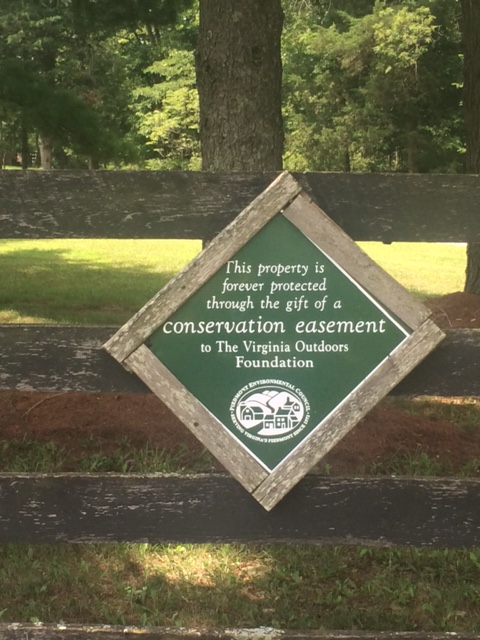
I had a perfect scenario, a summery day winding through the Shenandoah Valley, one of the most bucolic places on earth. I rode past plantations and mills, horse country and small villages. There is much conservation land in Clark Country and Virginia has wonderful, well marked, paved, side roads: cousins to Texas’ Farm-to-Market Roads.

IMG_7386Despite so many snags over the past three days, I arrived in Front Royal by mid-afternoon, in part because I set my bicycle tour objectives light, but more because a good friend came to my aid.

IMG_7385


Posted in Bicycle Trip Log | Tagged , , , , , , | 2 Comments

Responses: How will we live tomorrow?

How will we live tomorrow?

“We go to church. Jesus Christ will come again.”

Noborto, fitness walker, Middlebury, CT

How will we live tomorrow?

“Will we live tomorrow? That’s the question. I listen to the news but I let it go. I have to stay positive.”

Constance Quinn, grandmother, Newtown, CT

How will we live tomorrow?

“I was taught to be colorblind. But this can be destructive. We have to understand our differences. Ten years ago I would have thought we are further along than we are.”

Katie, Interpretive Guide, Harriet Beecher Stowe Center, Hartford, CT

How will we live tomorrow?

“I am an idealist and positive at heart. I hope that as our environmental destruction and terrorist violence increase, so will our sense of community. The stresses on our next generation are huge. One of the things I am doing with the time I have left is to increase our sense of community.

“Our founders set up a tension between the individual and the community. The recent rise in nationalism in Europe (Brexit) is unusual. It’s a denunciation of the political elite. Which is what Trump is in this country.”
Greg Andrews, historian and civic booster, Hartford, CT

How will we live tomorrow?

“Cooking. That’s how I want to live my days. I want to put love in my food. You can taste it.”
Alison Sprang, Culinary Institute of America student, Hyde Park, NY

How will we live tomorrow?

“When I was a girl, my mother wanted me to be a seamstress Her sister worked as a seamstress and gave my mother leftover thread, which my mother sewed into panties or a camisole for me, 25,000 colors of thread. I didn’t want to be a seamstress, and told my mother so. She sent me to typing school instead. I didn’t like that either. Do you know how much it costs to get a zipper installed or a skirt hemmed? There’s money in that. Now I am on my feet all day as a waitress because I didn’t listen.

“On Fridays, after finishing our chores, we could either get a quarter or an ice cream cone. One day I am at the ice cream store with my mother. There is a sign that says, “Cash today, Credit tomorrow.’ I ask my mother what it means. She slapped me up the head. ‘What do I send you to school for? Come in tomorrow, look at the sign, and you will still have to pay cash.’

“So that’s my answer to your question. Tomorrow is the day that never comes.”
Rudi, waitress at Noni’s Coffee Shop, The Bronx, NY

How will we live tomorrow?

“I believe that a real Biblical life has concern for others. But I believe these are rooted in God, and as a Christian, in Jesus.”

Tom Hollis, FDR Museum Visitor, Hyde Park, NY

How will we live tomorrow?

“The sun will come out tomorrow. Bet your bottom dollar that tomorrow, there’ll be sun.”

Annie, optimistic orphan, New York, NY

How will we live tomorrow?

“I hear all this terrible stuff in the news. Then two nights ago people took us in, made us dinner, let us sleep in their camper. It gives you hope.”

Shaggy, Appalachian Trail thru-hiker, Stormville, NY

How will we live tomorrow?

“It seems like we’re trying to come together as a nation.”

Buckley, Security, Franklin Delano Roosevelt Museum, Hyde Park, NY

How will we live tomorrow?

“No Clue.”

Miguel , Free Hug giver, New York, NY

LightSourceTemple.org: The Secret Keys: Love thy self, Be present and aware, Create positive energy

How will we live tomorrow?

“The way we grew up and left home at age 18 and lived independent of our parents was an aberration of the Baby Boom. No generation before did it, the Millennial are not doing it now. In every other country and every other generation children live with their families until they begin their own families. We will revert to that model in the United States as well.”

John Burke, Hosing Demographer, New York, NY

How will we live tomorrow?

“The way we’re going, it’s not very good.”

Nelli Galvarez, Physical Therapist who visits clients on a folding bicycle, New York, NY

How will we live tomorrow?

“I hope everyone lives openly and freely and follows their dreams.”

Jeff Gorcyca, actor, New York, NY

How will we live tomorrow?

“I take whatever comes.”

Omar, soccer player, Red Bank, NJ

How will we live tomorrow?

“We will be healthier. People will eat better food. Right now, no one cooks.”

Debra Evans, aspiring cyclist, Toms River, NJ

Posted in Responses | Leave a comment

Trip Log – Day 270 – Harper’s Ferry, WV to Boyce VA

to Boyce VAAugust 1, 2016 – Cloudy, 80 degrees

Miles Today: 20

Miles to Date: 13,780

States to Date: 38

Maybe its because I dealt West Virginia a short hand, staying only one night in a state of many contrasts. Maybe its because I spun 20 miles on gravel yesterday, which I dislike as much as my bike Tom must. Maybe its because during our email exchange my host for tonight, Chuck Downs, offered to pick me up along the way and Tom, like a petulant adolescent, decided to slough off. Whatever the reason, I pedaled out of Harpers Ferry on a nice firm back tire but after I stopped at a fruit stand for some excellent local peaches, it came up flat.

IMG_7306Thus begins a comedy of errors worthy of the Marx brothers. I fix the flat, but am down to one tube. So I ride out of my way to Charles Town where Goggle suggests a bike store will be open in an hour. On the way, another slow leak develops. I pump it up every few miles until I arrive to discover the store has gone bust. I push Tom through the historic county seat where ‘John Brown’s body lies a-mouldering in the grave.’ Two swell, tattooed bubbas in a pick-up stop and haul us to Wal-Mart. Way more West Virginians in Wal-Mart than in historic downtown, that’s for sure. I snag three more tubes and eat a Subway foot long before changing another flat. Four miles out and I’m flat again. I push Tom to the Panda Garden, order some food, though I am not hungry, so I can sit inside and use their Internet to find a bike shop. I call my friend Chuck, who swoops down from this mountaintop to save me. The closest bike shop is twelve miles back in Maryland. The mechanic checks the tire with the same care I did and finds no abrasion. He has no suitable replacement anyway, so he fixes the flat and I pray that his more experienced hands will yield success.

IMG_7311 Screen Shot 2016-08-02 at 5.57.12 PM IMG_7317

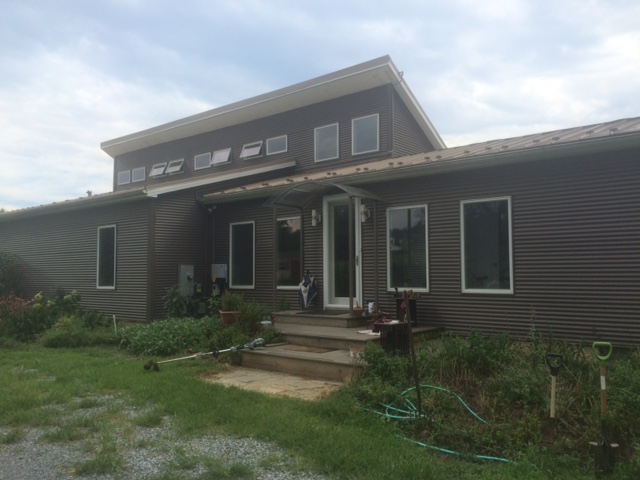
In the meantime Chuck has taken my question to heart and arranged two house tours with local folks who’ve built sustainable, geothermal, passive solar houses with extensive gardens. We speed through the Virginia countryside to see these interesting places, then climb up to the top of Hickory Knob where Chuck lives in a cabin with a phenomenal view of the Shenandoah River. Despite spending the entire afternoon bailing me out, he throws a terrific dinner party. Seven of us drink beer while the sun sets over the mountains. We dine on grilled salmon and talk about tomorrow. It’s almost enough to make a guy stop worrying whether his tire is holding its pressure…

Posted in Bicycle Trip Log | Tagged , , , , , | Leave a comment

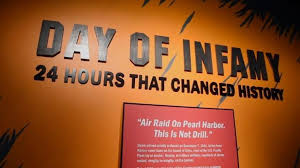
Profile Response: Kirsten Strigel Carter, Supervisory Archivist, Franklin Delano Roosevelt Library and Museum, Hyde Park, New York

HWWLT Logo on yellowThe Franklin Delano Roosevelt Library was the first presidential library, and the only one actually used by a president. Prior to FDR, presidential papers were considered private, and kept (or not) without any particular system. FDR decided to donate his papers to the nation, so he planned the library, built it with private funds and gifted it to the United States toward the end of his second term. When he broke tradition and ran for a third (and fourth) term, the fieldstone building on his estate in Hyde Park became his workplace away from Washington, DC.

imgresSince FDR, all presidents have built libraries dedicated to maintaining their legacy and preserving their documents. To date, I have toured six, and hope to visit five more (sorry, Ford and Hoover). The libraries offer fascinating glimpses of their period and creatively reinterpret (spin?) the man they celebrate. Like all libraries, they are fact full, though that is not always the same as being objective.

images-1All presidential libraries have a museum component, and FDR’s museum seems more balanced than most. In part, because the building constricts the extent of hoopla allowed; the limousines, helicopters and even planes at other libraries simply won’t fit here. In part, because FDR’s presidency is more distantly past, history has sorted out his successes and shortcomings. In part because, the events of his presidency were so momentous that the dramatic displays, updated in 2013, don’t come off as hyperbole. They match the tenor of those tumultuous times.

imagesKirsten Strigel Carter is the supervisory archivist at the library, the custodian of seventeen million documents arranged in 400 collections, available for unrestricted use in the research area by anyone who registers with the National Archive. Over a million documents have been scanned and are available online. Kirsten and her staff supply documents to over 700 in-person researchers every year and field over 2,000 online requests for FDR related information.

Kirsten is from Arkansas, a graduate of Little Rock’s famous Central High School, where she met Bill Clinton when he spoke at the 1997 Commemorative Event of that school’s integration. She came east for college, majored in Cultural Studies and went on to Library School. She settled in the Hudson River Valley because, ‘this place has everything, beauty and culture and history.”

How will we live tomorrow?

IMG_6856“We will live more flexibly than we have in our past. How we access and use the information in our past, the records of the people who came before us, will continue to expand.”


Posted in Responses | Tagged , , , | 2 Comments

Trip Log – Day 269 – North Bethesda, MD to Harper’s Ferry, WV

to Harper's Ferry WVJuly 31, 2016 – Overcast, 85 degrees

Miles Today: 47

Miles to Date: 13,760

States to Date: 37

I was happy to head west and leave three weeks of pedaling the Boston-Washington corridor behind me. Maryland has a nice network of bike paths that parallel many major roads, and there was no Sunday traffic, so the riding was easy.

IMG_7281 IMG_7283 IMG_7284

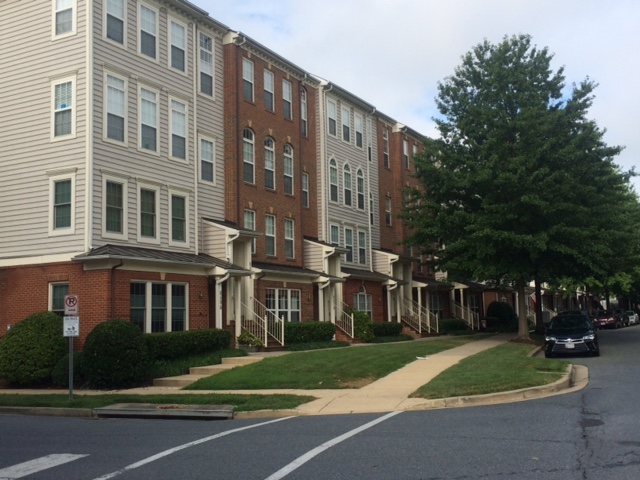
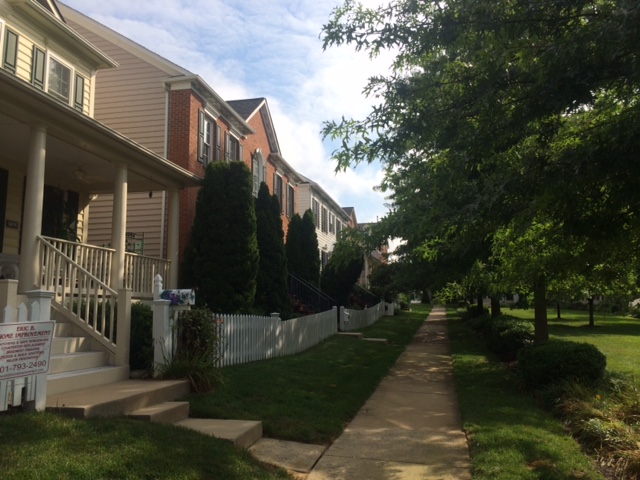
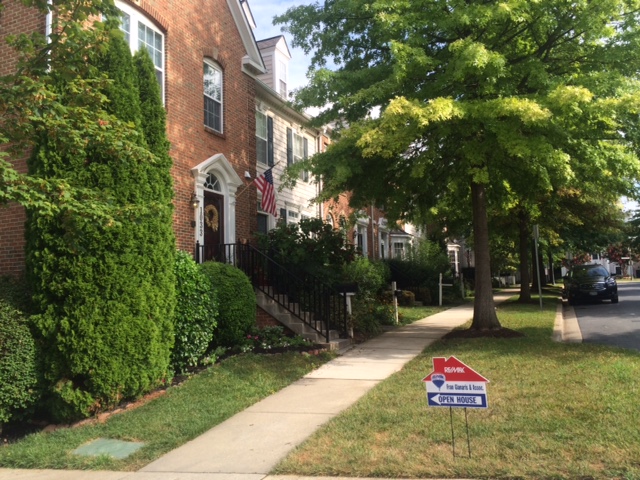
In Gaithersburg I came upon a ‘New Urbanism’ development with tight packed single-family homes giving over to townhouses, giving over to stacked townhouses as I got closer to the commercial center. The place has a Whole Foods / Panera vibe, corporately conscientious. Hard to believe all the little mom and pop storefronts can survive – how many framing galleries can one town support? Still, the picturesque place is far better than the big boxy single-family houses on half-acre lots that littered the rest of the landscape.

IMG_7285And then, with the abrupt end of sewer and water, development ceased and I was in the country. Farms and forests and narrow roads I shared with occasional drivers.

IMG_7291 Monocacy to Dickerson 2016-07-31 004

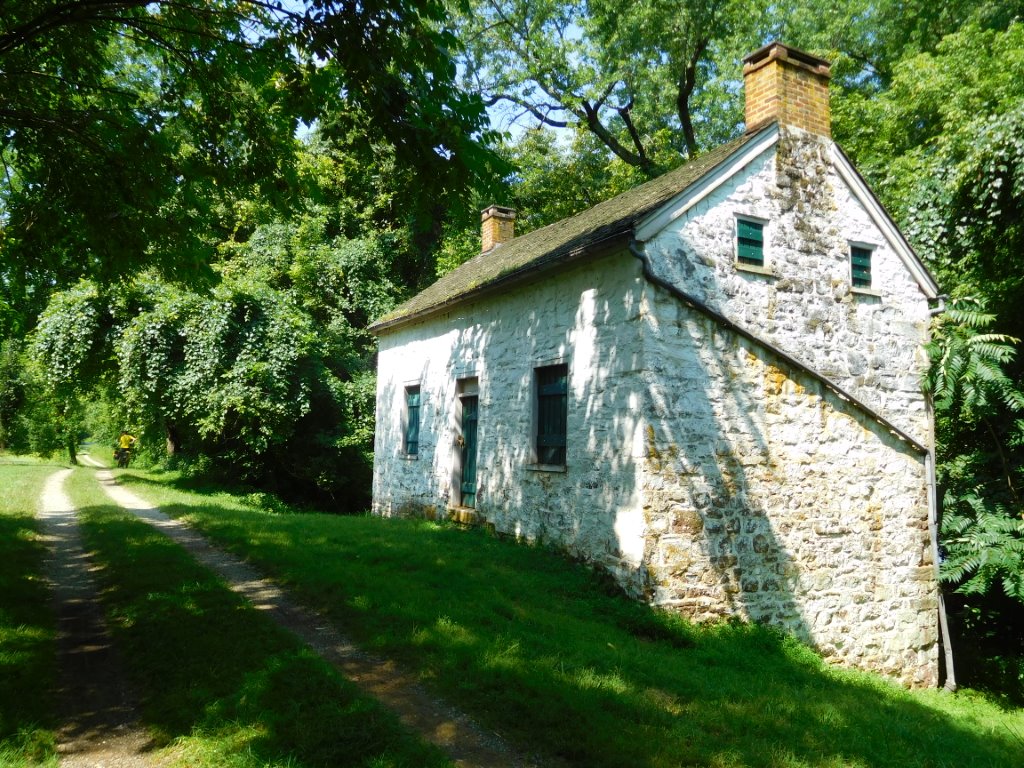
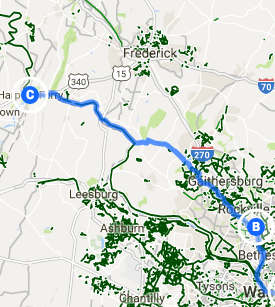
Just beyond twenty-five miles out I got on the C&O Canal Trail and headed north to Harper’s Ferry. It was cool and breezy, but the gravel path was littered with mud and puddles after last night’s rain. I’m not a fan of dirt paths, but it was scenic and historical. Difficult to imagine how different life was during the canal days of the 1840’s and 50’s, when civil engineering marvels were just beginning to bend nature to our will. Harnessed mules and tug laborers used to trod the towpath and camp out in the lock houses that are now photo opportunities for Sunday hikers and distance cyclists.

IMG_7294 IMG_7302 IMG_7304

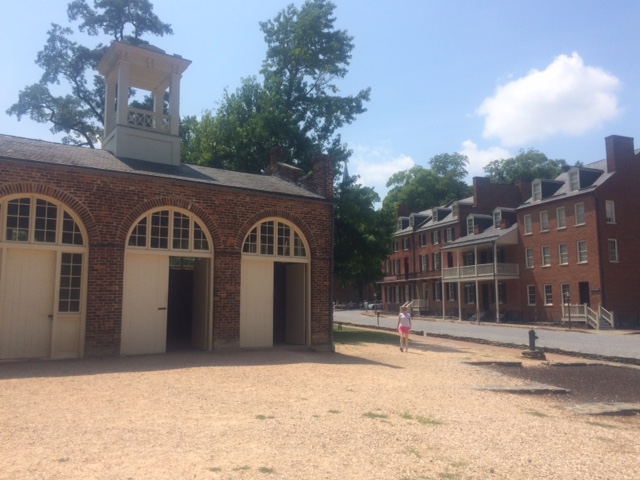
I lugged my bike up the stairs to cross the old railroad bridge in Harper’s Ferry, toured the historic downtown and climbed the steep hill that separates the Shenandoah and Potomac Rivers. I sat out a thunderstorm at the AT Conservancy, which welcomes long distance cyclists with the same enthusiasm they greet hikers.

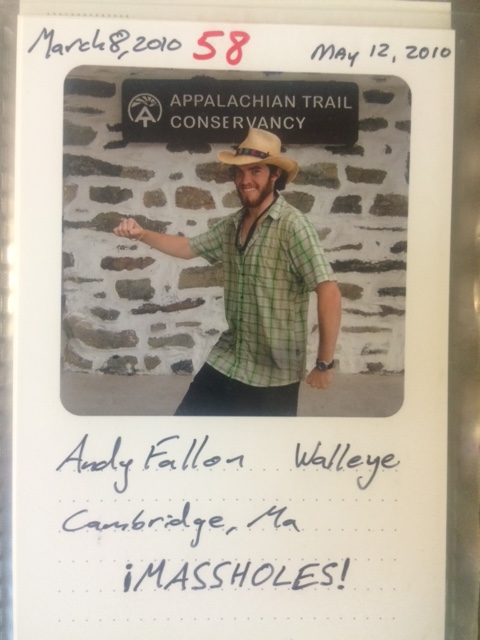
IMG_7299I found my son Andy’s photo, May 12, 2010, when he stopped here as an Appalachian Trail Thru-hiker.

When I arrived at my hosts, I noticed my back tire was very low, so I changed out the tube. I also washed down the entire bike, filthy from the gravel path, and cleaned the chain. I was all set to move out in the morning…

Posted in Bicycle Trip Log | Tagged , , , , | Leave a comment