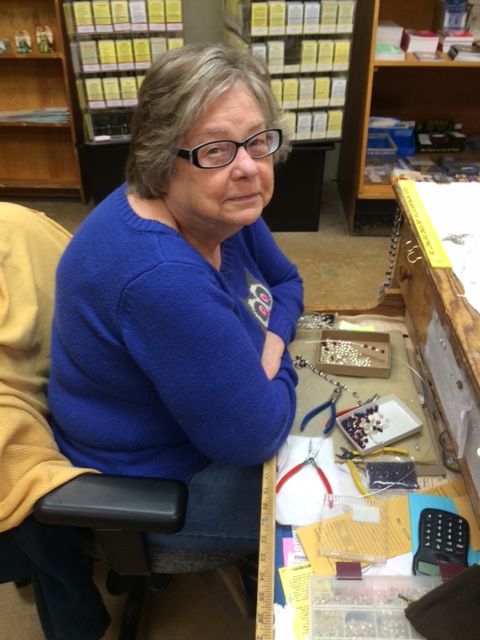
Profile Response: Marguerite Oestreicher, Habitat for Humanity, New Orleans, LA


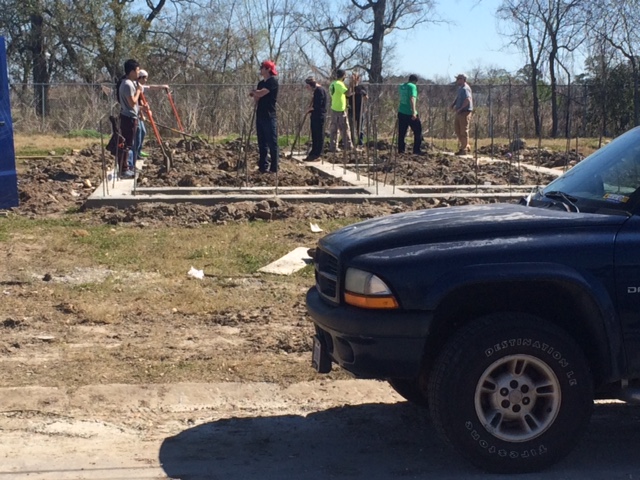
HWWLT Logo on yellowLast I was in New Orleans was a week during the winter of 2005 and again in 2006 to built houses at Musician’s Village, part of Hurricane Katrina reconstruction. Habitat for Humanity’s work there is long finished. All of the homes are complete, purchased, and occupied. The first years after the hurricane, HFH NOLA was the Crescent City’s largest homebuilder; it continues to be a major developer. Marguerite Oestreicher, Director of Advancement, invited me to HFH’s construction area on America Street in New Orleans East on a Saturday morning.

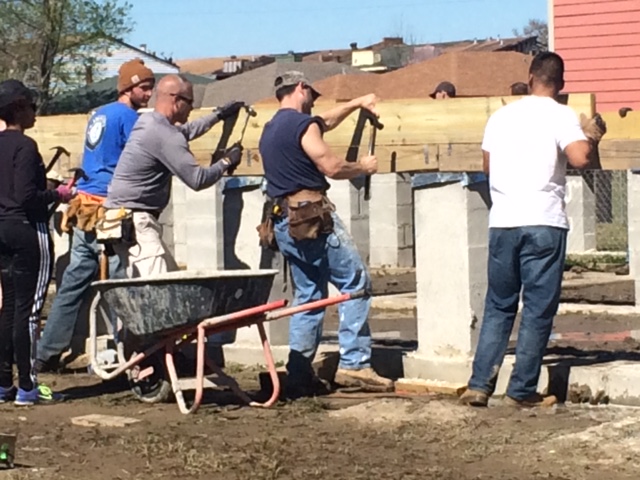
About a hundred people gathered on a half-dozen sites: a handful of HFH supervisors, AmeriCorps volunteers, weekend warriors from local colleges and volunteer fire departments, Marine regulars, as well as future homeowners, who must contribute at least 350 hours of volunteer service as part of their purchase agreement. Groups were excavating trenches, installing foundations, attaching siding, and finish painting. As in any volunteer endeavor – as in any endeavor of any kind – some people worked diligently while others picked at their paintbrushes or leaned on their shovels. In sum, the energy was palpable; progress real.
IMG_6391 IMG_6390

Last spring, HFH NOLA sponsored a build-a-thon: ten houses in ten days to commemorate ten years since Hurricane Katrina. “Over five hundred people came from across the world to participate. Dozens of international media covered the event and aired stories during the August anniversary. National media was caught off guard; they arrived a few days before the anniversary and wanted instant stories.” Most Americans don’t appreciate the global significance of Katrina. “Until the Ninth Ward comes back, in any eyes of the world, New Orleans has not come back.”

I asked Marguerite how the hurricane affected planning and construction in the city. “The City never changed development patterns, it was politically impossible. But it changed the way we build. We build higher, from 4 to 13 courses of block vertically. We are trying to build to the environment, but who knows what that will be a hundred years from now? We have coastal erosion and subsidizing.”

IMG_6392The hurricane also left the city owning many abandoned lots. “The City passed an ordinance called, ‘The lot next door.’ It gives people living next to blighted property a favorable claim to it. The program has done much to alleviate blight, but there are due process implications.”

With so many buildable lots available, HFH NOLA has a backlog of houses waiting to be built. “We build 30 houses per year. We are one of the largest, though not the largest, Habitat for Humanity organizations. We like to build a group of houses together to create the halo effect. We initiate other community development.

“We have just been awarded 48 lots in the Lower Ninth Ward, our first development in that area. We plan to build one hundred units within three to five years. Some will be rentals that Habitat for Humanity will own and operate. We have created an incubator program to move residence from rentals to ownership.”
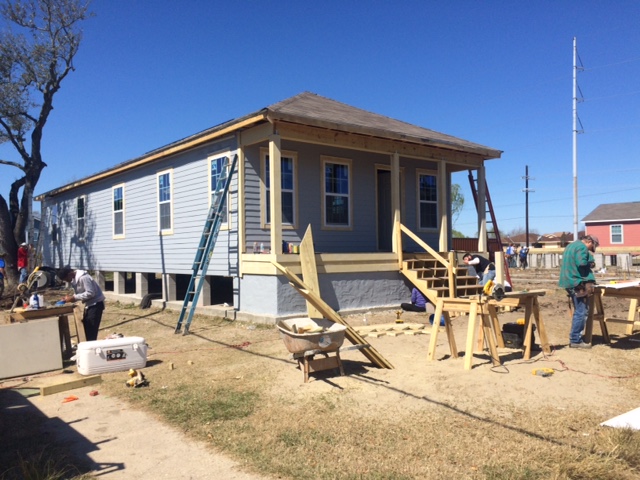
IMG_6393HFH NOLA builds an Energy Star equivalent three-bedroom house for $85,000. The homeowner needs $2500 in escrow, Habitat for Humanity carries the primary mortgage, and the buyer receives a soft second to make up the gap to market rate.

Marguerite is a long time New Orleans resident who evacuated during Katrina. “I woke to 6 feet of water.” She went to Shreveport, unaware of the extent of damage until a photo of her neighborhood made the cover of the New York Times. “I was devastated, but my son said, ‘You don’t get it. We get to start over. Most people don’t have that chance.’

“Katrina is history to most of the people working here today. But for me, it was a new beginning. I used to be an art dealer and analyst. Now I do meaningful work in neighborhoods I never knew. We create authentic connections that create community. This is the most enjoyable job ever.”

How will we live tomorrow?

IMG_6386“I think holistically, but I have to think locally. We are going to see more shared resources, more house sharing, more extended families. We are living in a world of environmental uncertainty. Climate change is happening so fast here; we lose three football fields of land per day in Louisiana. Before Katrina it never crossed my mind that the levees would fail. I worried about wind and rain, but never flood.”


Posted in Responses | Tagged , , , , , , | Leave a comment

Profile Response: Ms. Pearl, Buskers’ Bunkhouse, New Orleans, LA

HWWLT Logo on yellowBuskers’ bunkhouse is a self-proclaimed artist refuge in New Orleans’ Bywater neighborhood; its couchsurfing profile indicates everyone is welcome. The Big Easy proved to be a city of fascinating people, yet I received few invitations for a roof over my head. So, I called Ms. Pearl, Buskers’ proprietress, if that term applies, a day in advance. She seemed surprised and half bothered that I got in touch beforehand, told me I could stay, and instructed me what to do if she was absent upon arrival.

There were nine of us: Ms. Pearl; Ian and Lara, Skooch the guitar player; Mike, the raisinet man, two girls who never introduced themselves, a woman who hacked phlegm in bed during my entire stay, and me.

IMG_6384Two weeks before, the kitchen building burned down. The charred remains filled the back corner of the lot. In its place, a refrigerator, sink, and washing machine sat beneath a lean-to roof sheltering the back stoop. Ian made a continuous pot of Pho on a portable propane stove. As folks scooped the broth into large bowls, Ian added more liquid, more vegetables, and more noodles.

Four twenty-something’s showed up; claimed they drove straight in from Austin. The two girls had purple mascara, nose rings, and wore long striped shirts that doubled as dresses. Two guys had fledgling beards that didn’t quite mask their college scrubbed faces. Ms. Pearl told them welcome and then started a maelstrom about racism; fifteen solid minutes of rising tide, white privilege, and black anger. The discomforted quartet excused themselves to get dinner. Ms. Pearl boasted, “There’s different ways to make people leave. You don’t have to turn them out.” Although everyone is welcome at Buster’s Bunkhouse in theory, Ms. Pearl’s tongue can make that welcome rancid.

IMG_6382After dark, we moved into the main room, which includes two sets of bunk beds and a few random chairs. Scooch cleaned his guitar and took off to play the streets. Ian explained the app he’s creating, fartpnp, which GPS locates free public bathrooms. Mike continued to pop raisinets; the girls remained silent.

Ms. Pearl sat in the center of the room in a straight back chair. She wore a black fleece with a hood that enveloped her rice paper skin. The pale oval of her head, the lines of her face, her persistent tirade against the ills of our nation brought Edvard Munch’s painting, The Scream, to life.

“This neighborhood became popular when the flooding stopped at the red light and we stayed dry. The city has raised taxes and driven all the blacks out. Now it’s full of rich white people. There are over 250 AirBNB’s here. The average price is $175 per night. The Ninth Ward is going to turn into a place that rich white developers own.”

IMG_6383Ms. Pearl was recently served notice from the city to improve her property, a $500 fine per day until improvements are made. Before Katrina her taxes were $350 a year, now they are $1800. “The city of New Orleans is the largest owner of blighted property in the city.

“Immigrants used to come here and work hard. That’s how we developed liberal ideas. Now there are no liberals. I know how Fascism happened.

“Anthony Robbins was a personal coach his motto was, ‘try something. If it doesn’t work, try something else. If that doesn’t work, try something else…’ Trump does that. He’s also not tied to a party. I think that fierce party loyalty is damaging.

IMG_6381“They assassinate five cops a week in America.

“This isn’t America. America is on the other side of Canal Street.

“We don’t have colors, we just have shades.

“They just love their bombs, these Americans.

“I think there are energies here in this house. It heals people.”

How will we live tomorrow?

Screen Shot 2016-04-19 at 11.09.44 AM“I’m interested in multicultural, but it only works if everyone is on board. The Muslims coming in here now are angry and aggressive. That’s not multicultural. They want to take Jackson’s statue out of Jackson Square.

“When they zoned the cities and took away Norman Rockwell’s America, we lost our empathy. We sit in our houses alone and isolated.”


Posted in Responses | Tagged , , | 3 Comments

Profile Response: Joshua Nuss, Ellis Marsalis Center, New Orleans, LA

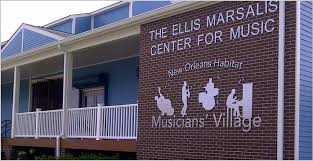
HWWLT Logo on yellowJoshua Nuss studied opera singing as an undergraduate. “As a slight man with the bass voice, few parts were written for me, so I went to graduate school in nonprofit administration.” Josh came to New Orleans to be Development Associate for the Ellis Marsalis Center at Musician’s Village.
Harry Connick, Jr. and Branford Marsalis conceived of Musician’s Village as a way for the musical world to lift The Big Easy out of Hurricane Katrina’s devastation. The 72 homes, built by Habitat for Humanity, plus the $8 million center for music education and performance have spurred redevelopment of New Orleans’ Upper Ninth Ward. The Ellis Marsalis Center for Music, which opened in 2012, is a nonprofit enterprise with eight full-time employees, 25 part-time staff, and 300 students.

IMG_6371 IMG_6373 imgres

Students, all from the Ninth Ward, attend the center from 3:30 p.m. to 7:00 p.m. five days a week. Each takes four classes, “One in your chosen instrument, one in piano and theory, a homework tutorial, and a computer lab. Brass is really popular, but we stress that learning other instruments can make the bridge to professional musician easier.” There are also a few vocal students and dancers, who follow a different curriculum.

IMG_6376The Ellis Marsalis Center includes music classrooms, a piano lab, computer lab, dance studio, and state-of-the-art AV room where teen students, paid interns sponsored by the City of New Orleans, learn technical performance and recording skills. The jewel of the center is a 300-seat performance space for student recitals and performances by global artists.

IMG_6375

The Ellis Marsalis Center grooms musicians for lives that will span far beyond the Ninth Ward. It guides many aspects of these talented, though impoverished, students’ lives. At the end of every school day, the center provides a meal. “Once a month we have a catered meal served in the main hall where students practice etiquette. Students from the Ellis Marsalis Center are invited to many outside events; we expect them to be at home anywhere in the world.”

How will we live tomorrow?

IMG_6378“It’s got to be together. The (presidential) debate last night showed we can’t do it without each other. In New Orleans, we depended on the rest of the world in the 2000s to keep us going. This facility is funded by all 50 states and international organizations. The outside community created us and put us on the map. Only now can we begin to tap our own city’s resources.

“I don’t see how someone could have lived through Katrina and think we can do it alone. People don’t appreciate other people and what they can do. They expect too much.”


Posted in Responses | Tagged , , , | 2 Comments

Profile Response: Chad Weidert, Gramercy, LA

HWWLT Logo on yellow“The rules are simple. Show up three afternoons a week. Bring a snack and something to drink: no sugar drinks, no sweet snacks. Invite the parents to come along and run with their children. Do warm-up stretches in a circle; there are no lines. Compete against yourself, not others. Complete the half-mile track as many times as you set for your goal, and cross the finish line.”

The most effective way to reach out and make a difference is to take on something you love and share it with others. Chad Weidert and his wife Susan are neither self-proclaimed, nor selfless, do-gooders. Chad supervises painting crews on offshore platforms for Shell Oil (each platform has twelve full-time painters; salt air devours paint), Susan is an administrator at the local Catholic school. They have three children, mostly grown, and are looking forward to a vacation at Disney World, just the two of them, to celebrate Chad’s 50th birthday.

imgresA few years ago Susan and Chad decided to invite children to the track after school. Not the kids on the track team, or even athletes. Anyone, any age, any ability was welcome. Their message: come out and move and you’ll feel good. “You never have to do better. You may not be better on day two than on day one. But I guarantee you’ll do better on day ten.”

Over a hundred children, and many parents, have participated. They meet three times a week for an hour or so. “We have a second-grader who does the 5K in 21 minutes. Others walk one half-mile. Most of those who start by walking a half-mile end the season by running one to two miles.”

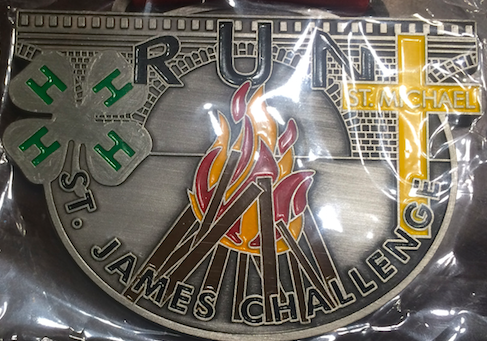
Screen Shot 2016-04-18 at 2.58.33 PMThe kids don’t compete against each other; their only measure is with themselves. But there are rewards. Four different groups sponsor 5K races around Gramercy. The local community hospital provides medals to any youth who runs in three of the four local races. Last year, over fifty of Susan and Chad’s kids earned a medal. That’s a nice boost to childhood wellness from a program that costs nothing but a few hours a week and a caring attitude toward each child.

How will we live tomorrow?

Screen Shot 2016-04-18 at 3.08.49 PM“Dustin is our middle son. He’s at LSU and wants to be a doctor. Your question makes me think of Dustin when he was four. We were at the grocery store. We stood in line at Piggly Wiggly. He asked if he could have a candy. I said ‘yes.’ He asked if I would get one for Chase, his older brother, and Emily, his younger sister. I said ‘no,’ since they didn’t come with us. He put his candy back.

“Dustin had a scholarship opportunity at Spring Hill College. On our way to his interview I said, ‘They might ask you where you want to be in 10 years.’ ‘Oh that’s easy. I’ll be where He wants me to be.” Dustin is a young man of great faith. Tomorrow we’ll be alright.”


Posted in Responses | Tagged , , , | Leave a comment

Profile Response: Reverend William T. Walter, Gramercy, LA


HWWLT Logo on yellow“Here, I got another one for you.” When Revered William T. Walter catches your eye and commands your attention, he doesn’t let go. Since I’m in the business of seeking out people who want to talk, we’re a natural match.

“Guess how big I was when I was born? I figure William’s going to boast of being small rather than large, since he’s mighty ample now. He’s in his sixties at least and it would unusual for a four-pound baby to survive in the 1950’s, so I guess three pounds eight ounces. “Lower.” He grins. “Two pounds twelve ounces?” “Lower.” Since we’ve entered the realm of fantasy, my guesses hardly matter. “Two pounds.” Lower, man, lower. I weighed eight ounces when I was born.” Once I accept that fairy-tale size, anything is possible.

images-1William is a patchwork quilt of astounding facts. His mother had thirty children. He has no idea where he fits in the order. His birth mother was a drunk who hung around the fields and was repeatedly raped by hands. His father was a Cherokee, which might be true considering the man’s reddish ebony sheen. After being born so small his birth mother gave William up. The doctors in the orphanage declared him dead, but his adoptive mother took the infant, placed him in shoebox and fed him with an eyedropper. She brought him to church, placed the box a prayer circle that prayed the fledgling boy to life.

imgres“Here, I got another one for you.” William tells stories out of school. He was called ‘Ugly Jim.’ His mother told him to throw taunts back at the aggressors by exclaiming, “You’re jealous.” He banded with the other social rejects. Sometimes, when they triumphed over the popular kids, his peers saw an aura envelope Ugly Jim. “At age fourteen I was called to preach. Been preaching ever since.”

imgres-1“I’m writing a book about my life, Death of a Preacher. I asked God if my book would be a best seller. He said ‘it’s our book, not your book. It won’t be a best seller. It will be a best teller.’

“Here, I got another one for you. I was sick and needed dialysis. I told God my fingers were cramped and I couldn’t write. The next night I woke in the middle of the night and there on the TV they were selling a dictation machine. So I got one, and that’s what I’ll use.

images“There’s one part I don’t want to write. About my mother and getting raped. I told the Lord I could not write that. God told me I had to write that to free others with problems from the shackles of their past. The Lord is giving me the strength to tell all.”


How will we live tomorrow?

IMG_6325“First, we are going to live by faith, by faith in God. Second, you got to live in reality. Third, we have to get along with each other. I have more to say, but that’s just the start.”


Posted in Responses | Tagged | Leave a comment

Profile Response: Ashley Rogers, Whitney Plantation, Wallace, LA

HWWLT Logo on yellow“Tisn’t he who has stood and looked on that can tell you what slavery is – ‘tis he who has endured.” – John Little, fugitive slave, 1855

After touring Whitney Plantation, I met with Ashley Rogers. As I approached, Ashley was discussing research of a former slave with another staffer. “We’ve documented that Lucinda Williams had fifteen children by fifteen different men in fifteen years. Apparently, she was hardy and fertile and each year the overseer would pair her with the strongest man in his stock.”

IMG_6300As Director of Operations Ashley oversees daily business, yet she is deep into Whitney’s research as well. Ashley grew up in a family of museum curators, pursued history and museum studies in college, and was assistant director of a small house museum in Colorado when she learned about Whitney Plantation. She knew where she needed to be. “I read my first slave narrative of my own volition at age 10. I found this position open and just came down.” She started working in September of 2014; the museum opened three months later.

“We are the only plantation museum in Louisiana the deals directly with slavery; one of a handful of sites that deal with ‘difficult history.’ Plantation house tours have existed for 40 years; all the others focus on the lives of the masters. We are turning that upside down. A lot of people come here and do another tour: Oak Alley or Laura. I think it’s beneficial for people to see the differences in interpretation.

imgres-2 IMG_6310

“Slavery is something that a great number of people have only a fuzzy understanding about. Some guests ask us what created slavery. Others ask how plantations came into existence.” But the story doesn’t have a simple narrative sealed in the past. “12.5 million people were taken from their homes in Africa. After 1807, the international slave trade was abolished. This prompted an increase in domestic slave sales. More slaves were moved to the south where there was greater need.” Ashley and her staff have firm documentation of 354 people who lived at Whitney Plantation, though since the plantation operated with 250 to 300 slaves at any time, the total number must be higher.

IMG_6307During the Civil War, slaves remained at Whitney on their own accord; no one was running the plantation yet there was no place for them to go. The effects of slavery lasted beyond the war, to this day. “Slavery is not as far away as we like to think. There are people walking all around us who have been touched by slavery. We have a local matriarch whose father was a slave.

“Our schooling is that there was slavery and then there wasn’t; there was Civil Rights and then there were no new wants. The descendants of the African Diaspora are still here. Many are still shortchanged as citizens.

IMG_6308“There is a rich history in 20th-century sugar labor; people who worked this area until a few years ago. Anyone who lived on the margins of society worked here.” Ashley has found records of African-American, Hispanic, and illegal immigrant labor used throughout the 20th century in the fields that were originally part of the Whitney Plantation. “It’s also interesting how descendants of slaves continue to work in the sugar industry. One of our tour guides; five generations of her family worked this land.”

How will we live tomorrow?

imgres-1“I hope we will continue to learn from our past and live more thoughtfully and more gently in the future.”


Posted in Responses | Tagged , , , , | 1 Comment

Profile Response: Adina, Whitney Plantation, Wallace, LA

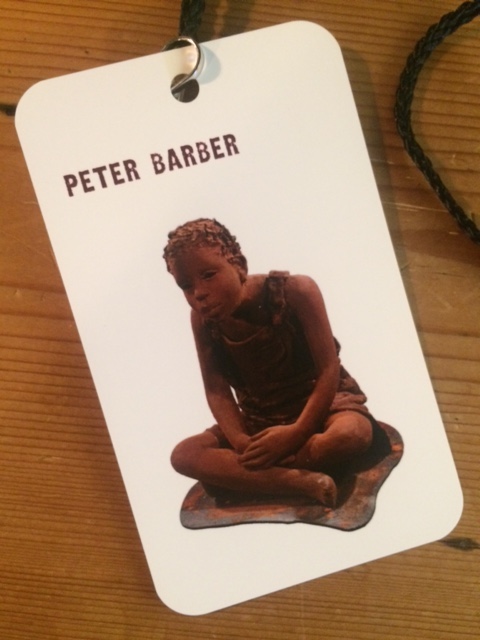
HWWLT Logo on yellowEvery visitor to the Whitney Plantation wears a slave around his neck. Tour tickets are lanyards with placards bearing the name and sculpted image of a slave child on the front. The backside includes an autobiographical statement from The Federal Writer’s Project, FDR’s Depression-era narrative history initiative. Since seventy years elapsed between the Emancipation Proclamation and the Federal Writers Project, the recollections of former slaves are tales of the elderly reliving their youth. I wore Peter Barber, a slave from Charlottesville, Virginia, sold down to Louisiana as a boy, 96 years old when his memories were recorded.

IMG_6302Seventy years after the Federal Writer’s Project scribed American lives, John Cummings, a successful New Orleans attorney, acquired Whitney Plantation and turned it into the only plantation museum to look beyond the Big House to focus on slavery. Ten million dollars and fifteen years later, Whitney Plantation opened its doors in 2014. Testimonies from one lifetime ago provide the foundation for reconstructing the slave world of two lifetimes ago. At Whitney Plantation, distant history drums near.

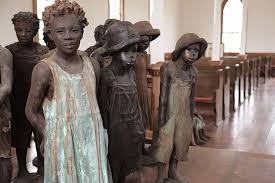
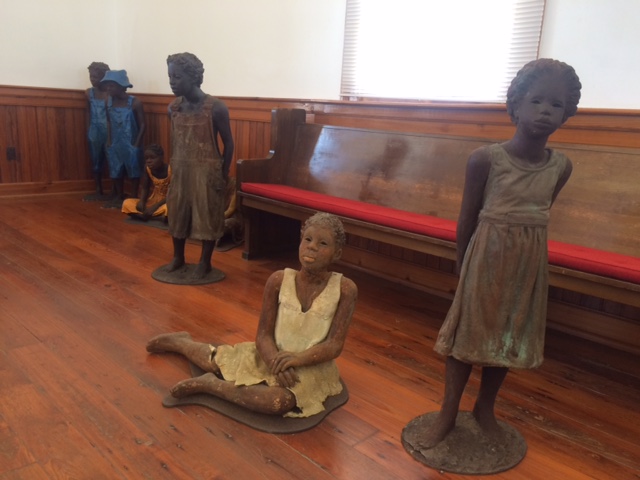
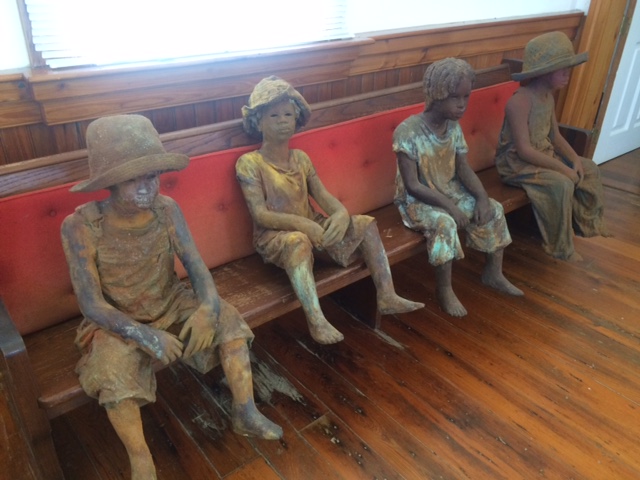
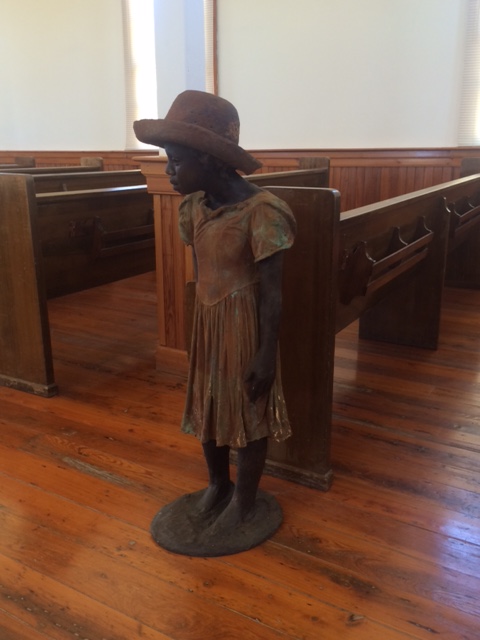
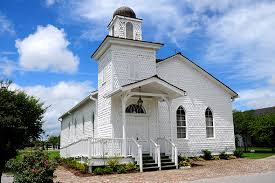
The plantation tour includes four distinct elements. Our guide Adina, a local woman with ancestral ties to slaves who worked these fields, began at the Antioch Baptist Church, the oldest African-American church within three parishes, which was relocated here. The church is a solid architectural specimen, noteworthy for the slave children statues scattered about the space. Their spirits, given substance by contemporary sculptor Woodward Nash, haunt the sanctuary. I sought out Peter Barber, sitting pensive near the altar.

images-4 images-2 images-3

imgres-1Then, Adina escorted us to three memorials that both honor slaves and forge the link between this former sugar plantation, the Federal Writer’s project, and Whitney Plantation’s mission. The Allees Gwendolyn Midlo Hall Memorial includes the names of all 107,000 slaves documented in the Louisiana Slave Registry. The Wall of Honor is dedicated to all of the slaves who served at the Whitney Plantation. The Field of Angels honors the 2,200 Louisiana slave children who died in St. John the Baptist Parish. Quotations of former slaves, collected through the Federal Writer’s Project, bring the plaques of names and dates to life.

imagesBy the time we reached the actual slave compound, two rows of shacks plus a blacksmith shop and a carriage house lining a lawn dominated by gigantic sugar kettles, the place was so crowded with ghosts the still air buzzed with life. “During harvest, slaves kept the sugar kettles boiling twenty-four hours a day. They needed to be stirred constantly. Heat, burns, accidents, no matter; for days on end, the endless churn of the sugarcane kettles stopped for nothing.”

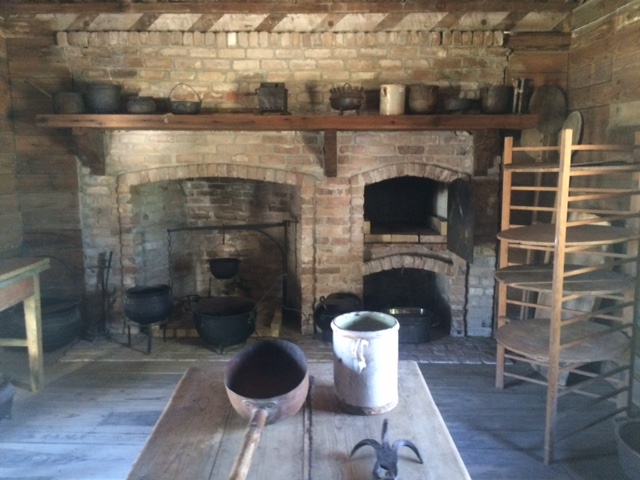
IMG_6315In the oldest outdoor kitchen in Louisiana, Adina described how two cooks and two apprentices, “prepared six meals every day. Three meals served on china with silver for the family in the Big House. Three meals carted to the commons in buckets for the 300 slaves.

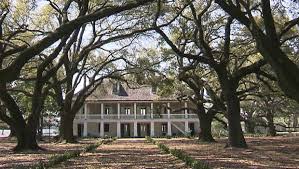
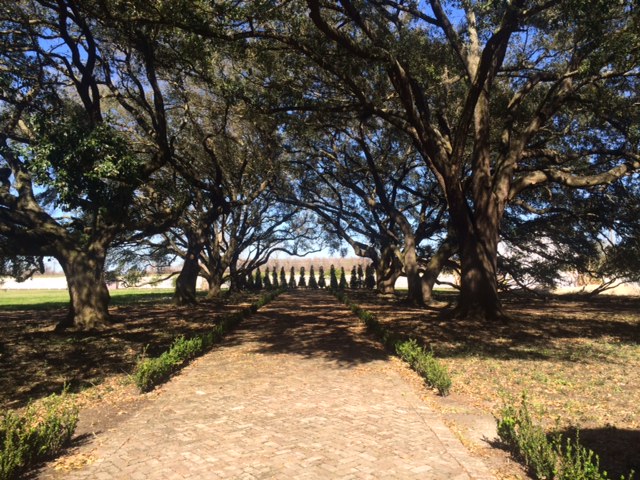
Last, we toured the refurbished plantation house at the end of an allee of trees that leads to the Mississippi River. The house is large, though not so grand as others along River Road. It has interesting features, elaborate faux painting, and notable furnishings. Adina described the history of the Haydel family, who ran the plantation for four generations before selling it to Mr. Whitney just before the Civil War. But compared to the slave quarters, the mansion is lifeless.

imgres  IMG_6321 IMG_6318

The Whitney plantation presents a more balanced view slavery than I anticipated. Quotations mounted on the memorial walls from the Federal Writers Project depict as many heartwarming vignettes as tales of inhumanity and violence. Perhaps it’s because human memory grows generous with the passing of seventy summers. More likely, it’s because even within life unjust as slavery, there are humane moments. Adina, whose ancestors stirred those kettles, admitted, “The institution of slavery was a bad institution, but within it you find the good, the bad, and all variations of human behavior.”

How will we live tomorrow?

Screen Shot 2016-04-18 at 12.26.54 PM“I hope that we will live peacefully. I just buried my husband four months ago. I’ve witnessed ugliness close-up. If we can live in peace, it doesn’t have to be perfect, but it will take us far.”

“In high school I was athlete but I have an attitude. A college professor took me aside and told me my attitude was in my way. Shortly thereafter my car broke down. A woman stopped and helped me. She gave me a yellow ribbon. I wanted to pay her. She said, ‘pass it on to someone else.’ She may not even remember me now, but that woman changed my life.”


Posted in Responses | Tagged , , , | Leave a comment

Profile Response: Wendy, Konriko Company, New Iberia, LA

HWWLT Logo on yellowThe four-dollar tour of the Konriko Rice mill includes a short film on the history and culture of Acadiana and a guided stroll through our nation’s oldest rice mill still in operation. The cypress timber and galvanized steel facility opened in 1912, became a National Historic Landmark in 1981, and continues to process, package and sell rice the same way it has for over one hundred years. Yet I can’t help thinking how the tour script has changed with the times. My guide Wendy focused on the inherent sustainability of century old methods.

IMG_6258

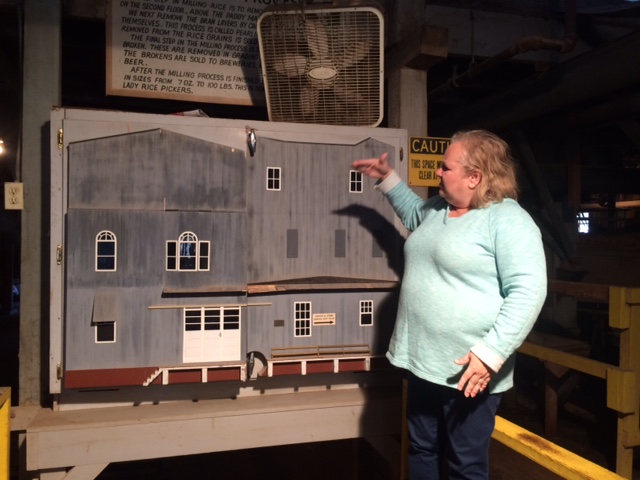
“Gravity is working for us all time.” Wendy unfolded the shadow box section of the mill that illustrates how raw rice is conveyed to the top floor and its bran is pearled off to become livestock feed. Pearled rice drops to the second floor to separate full grains from nubs. Nubs are used to make beer while full grains are polished for human consumption and conveyed to the first floor for packaging.


Wendy explained how the vertical organization creates a chimney effect that keeps the non-air-conditioned building habitable even in summer, how they reuse every byproduct so the six building complex generates only one dumpster of waste per week, even how the cats roaming the place provide organic pest control.

IMG_6259 IMG_6260

The Konriko tour also fed me grains of rice truth: no one is allergic to this gluten free wonder that comes in over 500 varieties. But the real question the tour posed was, can we survive if we loose the cheap energy that’s allowed us to construct a world without regard to gravity, sun, and wind? According to Wendy, if we return to the ways of our great-grandparents, apparently so.

images-2 images-1 images-3

However, shrinking production to the scale of Louisiana rice processing circa 1912 won’t be easy in a globalized economy where even small communities like New Iberia are subject to political and economic winds far away. When I asked Wendy the current price of rice, she replied, “It’s mediocre. Everyone’s waiting to see how the Cuba market is going to flush out. Cuba eats more rice than the entire statue of Louisiana can produce. If relations open and they stop buying from Asia, that will be good for us.”

How will we live tomorrow?

Screen Shot 2016-04-15 at 5.05.01 PM“We will find a way. We think we need bigger plants, bigger production, but we can do with less pretty well.”


Posted in Responses | Tagged , , , , | 3 Comments

Profile Response: Rosary House, New Iberia, LA

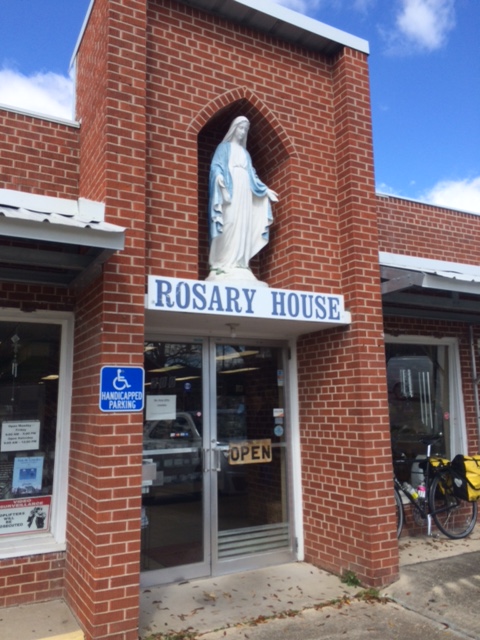
HWWLT Logo on yellowWhen the Rosary House store opened, during the 1960’s peak of Catholicism in the United States, it was about the size of an A&P grocery or Woolworth 5 & 10. Since then both A&P and Woolworth have gone bust. Meanwhile their successors, the Albertson’s and Wal-Mart’s of the world, sell food and sundries in structures larger than football fields. Rosary House holds steady, with plenty of space to display vestments, chalices, statues and Bibles as well as rosaries, cases and cases of rosaries. But don’t look for a Rosary House franchise to open in your town anytime soon. The market for handmade rosaries is a shrinking one, and this throwback retail/handicraft outlet can handle all of our devotional demand.

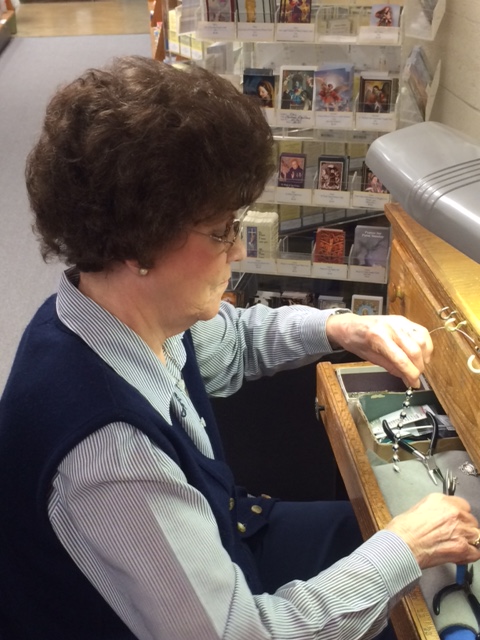
IMG_6246A highway sign, painted on the wall of an abandoned warehouse in New Iberia, advertised rosary manufacture. Since I love factory tours, I had to stop. Turns out, there is no factory; Rosary House assembles rosaries by hand. Half a dozen small desks with mirrors and a drawer of supplies are scattered around the store. The middle-aged women who wait on customers and stock the shelves bead rosaries between tasks. Ruth Herbert usually assembles two or three a day. “It depends on how busy we are with other things.”

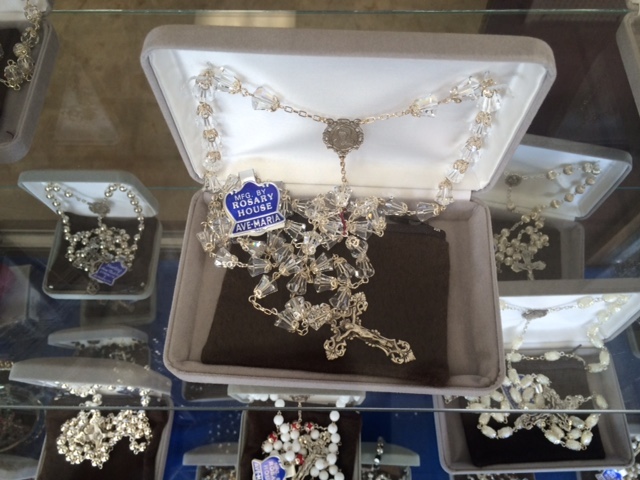
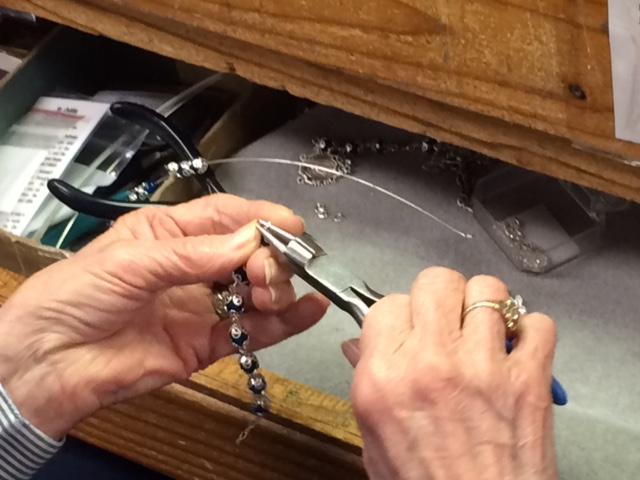
IMG_6247Rosary House’s signature creation is composed of 58 single color glass beads, each with a decorative sterling silver cap on either end, pieced together in reverse order from which rosary prayers are recited. The women crimp and curl a silver wire to the Madonna medallion that forms the rosary’s locus, slide a cap, a bead, and another cap onto the wire, snip it, and curl the end. Then they curl another wire in place, add another cap/bead/cap, and so on. Five decades of ten Hail Mary beads each with chain spacers and an Our Father bead between each decade. They attach the three introductory prayer beads from the bottom of the Madonna medallion. Last step is to attach the crucifix that prompts The Apostle’s Creed, the first prayer of the rosary.


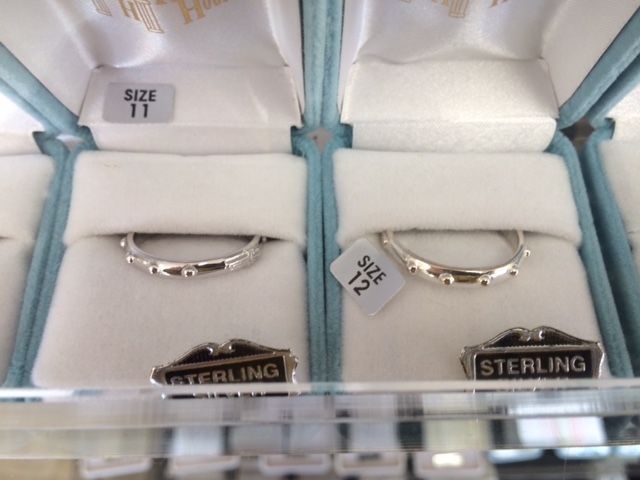
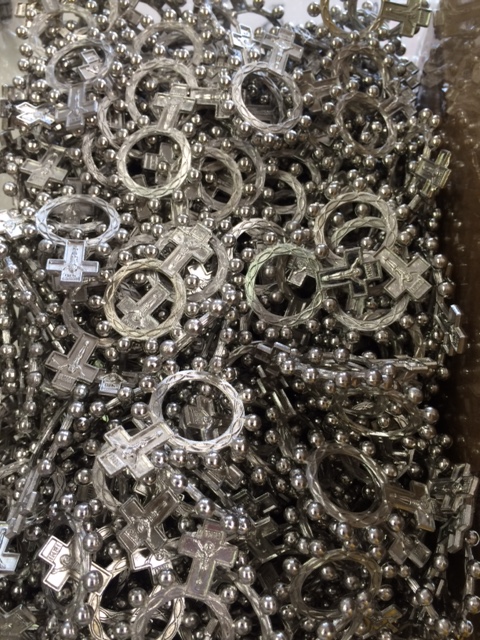
A handmade sterling sliver rosary in a jewelry case costs about $350. Rosary House also makes rosary bracelets (a set of ten beads that the faithful finger forward and back), and rosary rings that count prayers by twirling. In silver, these run from $30 to $50. For the budget minded, Rosary House offers manufactured rosaries and trinket rings, shipped from the other side of the world rather than assembled on site, for as little as 95 cents.

IMG_6248 IMG_6249 IMG_6250

Ruth has worked at Rosary House 29 years. She’s the oldest employee by age, although Rose Istre has worked there longer. Rose manages the inventory and determines who needs to make what. She usually creates the special orders herself. “We do birthstone rosaries with beads for the birth month of each child or grandchild. They get pretty colorful.”

IMG_6254 IMG_6252

Linda makes funeral rosaries, nickel instead of silver, and therefore less expensive. “The men say the rosary over the body and then give the beads to the family. Sometimes the family keeps them. Sometimes they lay them with the body. Nickel’s not as good as silver. Once it turns, it can’t be brought back. You can make silver shine forever.”

How will we live tomorrow?

IMG_6255“I am going to New York City in May. My son is graduating from John Jay School of Justice. I’ve never travelled away from here before.” – Rose Istre

“Amen. We live with Jesus each day. His will be done.” – Ruth Herbert


Posted in Responses | Tagged , , , | 2 Comments

Profile Response: Mike Broussard, President, Cajun French Music Association, Lafayette, LA

HWWLT Logo on yellowBroussard Avenue, Broussard insurance, Broussard attorney, Broussard gastroenterology, Broussard on every third mailbox, even a town called Broussard. Like the surname Yeager in Ohio, Meyer in New York, (or Fallon in Boston); Broussard is common lingo in Acadiana. Mike Broussard, President of the Cajun French Music (CFMA), explained his lineage over shrimp etoufee and jambalaya at Don’s, Louisiana’s First Cajun Restaurant. “Cajuns came here in the 1750s. First we went to the French territories in the Caribbean and then to Louisiana. Seven Broussard brothers came to Acadiana and split between Lafayette and Baton Rouge. They had many descendants.”

imgresMike was born and raised in Beaux Bridge, just east of Lafayette. The telephone company transferred him to Baton Rouge, then Munroe. “North of Alexandria is different; Monroe was culture shock to me.” He returned to the Hub City and retired in 2001. “Lafayette is the most hospitable place on earth.” Eighteen months later Mike went back to work for small-company but finally retired for good last fall.

“We Cajuns like to party. We work hard and party hard. In Baton Rouge, my wife and I heard about CFMA’s local dances, joined the club, and kept our membership when we moved back to Beaux Bridge.” Now, Mike is president of the organization’s eleven chapters, which span from southern Louisiana to Houston, San Antonio, even Chicago. “CFMA’s mission is to promote Cajun music andimgres-3 culture. Mardi Gras is rooted in Cajun culture. It started with big celebrations around Biloxi area, then NOLA took over.” From CFMA’s perspective, New Orleans’ Mardi Gras has strayed from its Cajun roots. The organization focuses on traditional celebrations like Courir de Mardi Gras, a rural pilgrimage where a band of locals in costume go from farm to farm to collect items for a collective celebration.

Those of us who hail from north of I-10 know Cajun culture through its music. “Most Cajun bands have five members. You have to have an accordion and a fiddle. Others add a steel guitar, bass, rhythm guitar, triangle, and drums.” Bands used to be all male, but many are now co-ed. “One has all girls but the drummer and Sheri Cormier’s the Queen of Cajun Music.” All Cajun songs have lyrics. Any musician can be the singer. “Vocals are done in French. Some musicians can’t even speak French, they just sing the hell out of it.”

imagesAlthough just about every band produces CD’s, live performance is Cajun music’s soul; dances happen every weekend. “There are a lot more Cajun bands now than there were thirty years ago. Cajun music is a slow waltz or two step; Zydeco has a snappy beat. It comes from Black Americans and Creoles with Cajun influence. There are traditional songs and new songs; CFMA stresses new songs in the traditional styles.”

Screen Shot 2016-04-15 at 4.29.11 PMCFMA sponsors Le Cajun Festival, “a three day event that takes place the third weekend in August. On Thursday we have a dance with awards to children for French immersion and ‘Youth Night’ to celebrate new talent. Friday evening we present awards. Saturday is an all day dance: five bands from 10 a.m. to 6 p.m., followed by a feast of pork stew, gumbo, hamburgers, and jambalaya. There’s no politics: just culture and music.”

I asked Mike why he thought Cajun music was increasing in popularity. “The music grows from the family. Parents and grandparents bring children to festivals from an early age. Young people play at our monthly meetings. It is an active music. We ask the children that win our awards what motivates them, and they talk about being introduced to this music by their parents.”

images-5 images-1 images-2

When I asked Mike if he played an instrument, he smiled. “I’m not a musician; I’m a dancer. I told my wife I want Cajun music at my funeral.”

How will we live tomorrow?

IMG_6237“I thought about it a lot. Here, in Louisiana, in Cajun country, we are going to bring our culture with us for sure. Many kids are learning our music, it will survive me.”


Posted in Responses | Tagged , , , , , , , , , | Leave a comment