Profile Response: Paula Yang, Hmong Activist, Merced, CA

HWWLT Logo on yellowPaula Yang is a faithful Hmong daughter, an advocate for women, and a force of nature; petite in stature, feminine in appearance, with a backbone of steel. Paula’s beautiful fingernails dazzled me just as much as her fiery speech. Her cellphone rang multiple times during our conversation: a news reporter, a city councilman, an elderly Hmong woman needing transportation. Paula addressed each mini-crisis and returned to our conversation without missing a beat.

IMG_4502Paula’s parents and their nine children migrated from Laos to Anaheim in 1976. Her father was a general in the Laotian army. The Hmong were US allies during our military incursion into Southeast Asia and many came here as war refugees. “In another country, your parents are stripped of their title. They cannot communicate. The children become the conduit for communication.” The Hmong culture is rooted in male dominant hierarchy; life in the United States was difficult for the former general at every level.

In the 1980’s, California’s Hmong community centered in Merced. “I was depressed, I liked Southern California.” But Paula moved to the Central Valley with her family. She fell in love with a boy who suffered epilepsy. Her family would not give its blessing, so she broke it off. She started working for her community.

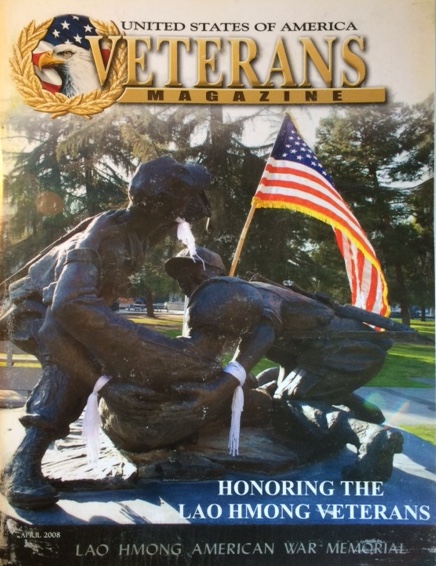
IMG_5343After 2005 there were no more refugees and Paula’s focus turned to finding ways for her people to navigate American culture. In 2007, Paula’s father was arrested. It became her call to action, to raise consciousness in the United States about what her father, and other Hmong military men, did to aid our nation. She held rallies, got on television and eventually the charges were dropped. Paula continued to tell the story of the Hmong in the Vietnam War public. She has used every form of media to promote the honor of her father and other Hmong veterans.

At the same time she continued to work with Hmong women and children. Like most minorities who live in a community for more than a generation, the Hmong in Merced are beginning to infiltrate the region’s economic and political life. Paula hosts a local TV how that highlights the Hmong community and recently developed, ‘Stand by your Woman, Stand by your Daughter’ to help Hmong men and women adapt to life in the United States while retaining their Hmong identity.

How will we live tomorrow?

Screen Shot 2015-11-27 at 2.58.12 PM“I want to find my passion and purpose. I am serving my people. It’s difficult, as a Hmong woman, where we are second-class citizens. I listen to women from all over the country who are suffering. Tomorrow we need to respect and understand our culture. What would be ideal would be to combine our cultures, to join them.”


Posted in Responses | Tagged , , , | 2 Comments

Profile Response: Surge Legaspi, History Teacher, Fresno, CA

HWWLT Logo on yellow“The more a student knows his history, the better he does in class.” Surge Legaspi assigns each student to write a personal family history. “So many of my students live with step moms, with aunts. I hear reasons why they have problems.” Surge, the 35-yer-old son of illegal immigrants, teaches tenth grade world history in Madera, half an hour north of Fresno. Eighty-five percent of the students are Hispanic, but only fifteen percent of the teachers. “I never had an Hispanic male teacher until I went to college.”

Surge grew up in Ivanhoe, a farming community south of Fresno with 5,000 people. ”Three thousand of them are from Villa Hidalgo, outside of Guadalajara.” His father was a farm worker, his mother a seamstress. “My parents were never part of the system. They were not citizens, not part of the United Farm Workers, they did not vote.”

imgresSchool was a mixed bag for Surge. “As a child, school was my sanctuary. It was the only interesting thing in my life. I was enthralled with travel. I thought perhaps I could be a truck driver. That was as exciting a future as I could imagine, being a farm worker. I never thought I could be a teacher.” Surge went to community college near his home, then transferred to Fresno State. “I hated going to school. It was only an hour from home, but I had no one to turn to.” Surge dropped out, but eventually returned and graduated.

Surge taught in a public school, paid off his student loans, and got laid off in the 2008 cutbacks. That inspired him to travel. He went to Guatemala, then Bolivia. He taught in private schools and travelled during breaks. He returned to the Central Valley and lives in Fresno’s Tower District, the city’s funkiest neighborhood, midway between his family and his job.

images-1Surge was considering extensive travel once again when his father died in a car accident last April. “The accident changed everything. For my parents, returning to Mexico was always the goal. I think that was always nostalgia. Now, that’s not going to happen. My mother has nothing to hide. There was a time when we couldn’t talk, she and I, about sex, religion, anything. This tragedy opened us up.”

Surge has a younger brother who still lives at home and cares for his mother on a daily basis, but he is hesitant to leave his mother to move abroad, so he travels during breaks and tries to impress on his students the value of seeing the world. It’s a challenge because travel, beyond immigration, is not part of Mexican culture. “I visit my relatives in Mexico and after a few days I want to go to Mexico City. They warn me not to go. They have fear. I meet 18, 20, 21 year old Europeans travelling for a year. That would never happen in Mexico. Mexicans stay close.

“I am a broken record with my students. I just tell them to travel, travel, travel. But the girls get pregnant at 18 and the guys join gangs. I used to be involved with gangs. It’s a dead end. I just keep telling them to get out and see the world.”

How will we live tomorrow?

Screen Shot 2015-11-25 at 7.25.03 PM“To one person, how you can live tomorrow is your own world. To me, it is different. To the migrant worker, it is completely different. If everyone travelled more, we could solve most of the world’s problems.”

Posted in Responses | Tagged , , , , , | Leave a comment

Profile Response: Tom Etheridge, Manager of Auto Pawn, Fresno, CA

HWWLT Logo on yellow“Pawn shops are the second oldest business in the world; you know the first.” Tom Etheridge, a twenty-year veteran of the pawn world, retold the legend that Queen Isabelle pawned her jewelry to finance Christopher Columbus’ voyage to America. “People have pawned things forever.”

Like every other business, Pawnshops have become more complex, and more regulated, over time. Tom outlined the basics:

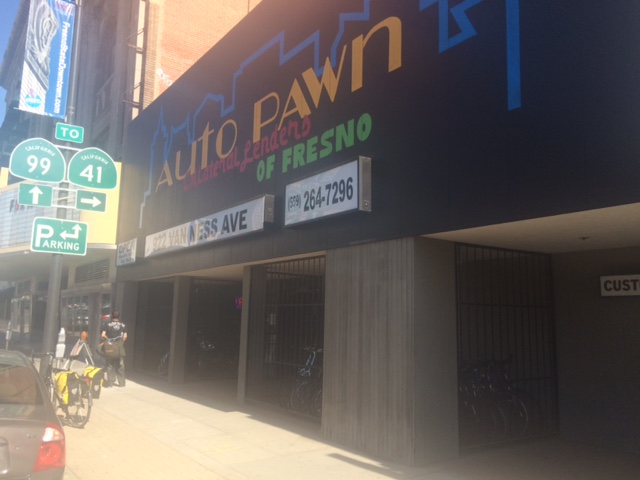
IMG_4469Pawnshops use the Blue Book, which is now on line rather than an actual book, to determine the value of an item. They will lend between ten and thirty percent of the Blue Book value. Auto Pawn makes up to a hundred loans a day. Owners have four months to retrieve their item, for the amount they borrowed plus interest and storage. If they fail to do so, Auto Pawn owns it. “Every item we accept is reported to the police, who check to see if it’s stolen. The interest rates are determined by the State.” The rates are higher than a bank can charge. “Let’s say you bring in a $500 bicycle. I give you $50 for it. In four months, you’d have to pay maybe $75 to get it back. That’s because it’s a big item that requires storage. It would be less if I gave you $50 for jewelry.”

IMG_4468For years, jewelry was the mainstay of the pawn business. “Gold buying has killed us. I used to get fifty or sixty pieces of jewelry a day. Now I might get six. The credit and check cashing stores all buy gold, at higher prices than we can offer.”

I asked Tom how they decided what to accept. “We don’t trade in guns anymore, the regulations and paperwork got too difficult to bother. We don’t take clothes, except for motorcycle stuff. We don’t take many cellphones these days either. Now that everything’s connected to the cloud, the phone can be disabled and it’s useless to us. People will argue their stuff is worth more, but we offer what we offer. There are about a dozen other pawn shops in Fresno.”

IMG_4466Tom’s staff asks people if the items they’re pawning belong to them. “If they say yes, we are in the clear. If they say no and we take it anyway, we are accessories.” Sometimes Tom won’t take an item regardless what the supposed owner says. “If some guy comes here with a cell phone and he can’t use it, we know it’s not his. If the police discover that something’s been stolen, they confiscate it and we are out our money.”

The store is full of merchandise: rings, musical instruments, electronics, leather jackets. Next-door is agarage where they have lawnmowers, bikes, and cars. “We keep airplanes out at an airstrip.” I am amazed that people pawn airplanes. “People pawn all sorts of stuff. I’ve done loans of over $50,000. We serve every clientele here, from homeless to judges. This is a cash business, and sometimes people want money that cannot be traced. We report everything we are required to report, but we don’t ask what people do with the money we give them.”

IMG_4467Is the stuff on display on hold for their owners? “Everything you see here is for sale. We own it.” Items within their four-month loan period are stored in back. “Between 60% and 80% of people retrieve their items.” I looked at the shelves and shelves of DVD players and wondered how long they hold on to stuff for sale. “We never get rid of anything. We might lower the price, but we never give it away. I sold an Atari for $3200. Probably gave a guy five bucks for it years ago. In the meantime it became a collector’s item.”

How will we live tomorrow?

IMG_4465“I probably won’t be here. The earth is going to be a sad place. We have to value life and authority. Look at the college shootings. Young people have no respect for life. A lot of older folks don’t either.”


Posted in Responses | Tagged , , | Leave a comment

Profile Response: Flynn and Savannah Gabriel, Carson City, NV

HWWLT Logo on yellowFlynn Gabriel bought 88 microwaves for three cents a pound. Total cost: $68. He will take them apart, strip them of resalable metals and separate the copper from the aluminum from the brass. He keeps the motors intact (they sell for 15 cents per pound) and will sell the carcasses back to the landfill for a half-cent a pound. He’ll gross about $300 for his work; less than ten dollars an hour after spending ten minutes stripping each microwave. His return is less if you factor in the cost of transporting and reselling the components. But Flynn doesn’t analyze it that way. It’s interesting work he can do on his own time and doesn’t require interacting with other people. Flynn’s not keen on working with others.

IMG_4338Flynn Gabriel has Asperger’s Syndrome. “My son get diagnosed with it, so I started investigating it on the Internet and I realized, ‘Hey, that’s me’. That’s why I like scrapping. I can do it by myself. The diagnosis doesn’t change anything. I’m still me.”


Flynn’s the oldest of seven children. He grew up in a poor family that never threw anything away. Now, Flynn has three jobs. Twice a week he delivers papers in the wee hours of the morning. He handles trash removal for three local motels. And he scraps. “I’ve worked since the day I graduated high school. I do what I want when I want.”

IMG_4345

Flynn, his wife Savannah, and their daughter Aria live in a modest ranch a few blocks from the Nevada State Capital. The house is easy to find; their driveway and yard is cluttered with stuff. My initial reaction was chaos, but on closer inspection their mini-fridges, bicycle wheels and copper pipes are well ordered. “Our neighbors don’t complain because we keep things neat and give them anything they might like.”

Flynn and Savannah live in a post-consumption world. They don’t buy much, and never buy retail. “Ninety percent of what we have someone else was throwing away.” They find stuff others discard, fix it, and resell it on eBay, Craigslist or Facebook penny. During dinner, the doorbell rang and Savannah collected $25 from the top bidder in a Facebook auction for a printer Savannah had found, cleaned up, made operational, and sold.

IMG_4344Although Savannah has a paid job in a thrift store, the family lives beyond the world of banks. “We have our pawn pile; rings we’ve collected, our Wii, our projection system. Things we like but don’t need. They are our savings account. When we need money we pawn something. It doesn’t cost much. Say the pawnshop gives us $90 for the Wii. We have ninety days to retrieve it, for $120. If we don’t have that yet, we just pay the interest and they hold on to it.” In reality, pawning is a costly savings account. But traditional loans aren’t available to folks like Flynn.

Savannah and Flynn recently got healthcare for the first time through the Affordable Healthcare Act. Getting regular medical care is a new experience for them. Flynn’s in the process of getting his self-diagnosis of Asperger’s certified. “I’ve had four major auto wrecks, my body’s pretty shot. The diagnosis will come in handy if I need to go on disability.” Flynn’s 31.

IMG_4336“Savannah went to her first appointment. “The doctor just wrote ‘obese’ on her form without even talking to Savannah about it. Look at her, she’s a big girl but she’s active, she moves all the time.” Flynn was clearly hurt that this outsider slapped his wife with an offensive label.
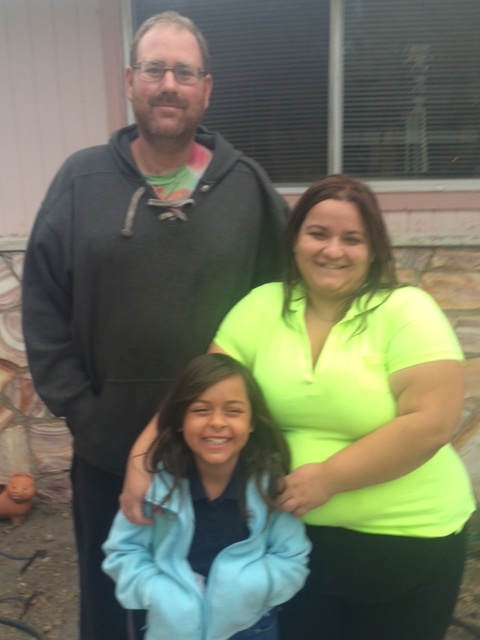
The more time I spent with the Gabriel’s, the more I witnessed their binding love and support. The world is not forgiving to men who speak with Flynn’s clipped abruptness, or kind to women with Savannah’s heft. Yet, within their home, Flynn, Savannah and Aria share nothing but praise and patience for each other. I felt like I’d landed in The Enchanted Cottage, where blemishes the outside world is quick to condemn evaporate, allowing an individual’s true goodness to shine through. At first glance, it’s easy to dismiss Flynn and Savannah as junk collectors who don’t fit the model of an American family. Yet on reflection, their livelihood is more sustainable than many I’ve seen, and their mutual devotion is beautiful.

How will we live tomorrow?

IMG_4342“Great.” – Aria

“I will learn new things every day.” – Savannah

“I will live the same way I do today. Seriously, if I see someone who needs help, I am the first person to stop. One night I literally gave a guy my shirt. Once I sold a guy my shoes.” – Flynn


Posted in Responses | Tagged , , , , , | 5 Comments

Profile Response: Sherry Ashby and Bob Nesbitt, Reno, NV

HWWLT Logo on yellowSherry Ashby and Bob Nesbitt are beyond being bicycle enthusiasts. Cycling brought them together, they organize their lives for cycling, and when they can’t be touring, they invite cyclists into their home, put them up in a room full of cycling memorabilia, and trade stories of the road. Though I’d travelled 7,500 miles and visited 25 states when we met, Sherry and Bob had way cooler stories to tell.
Sherry’s originally from South Dakota. Her dad attended the earliest Sturgis rallies; riding on two wheels is in her blood. She’s a contract nurse, which allows her to take weeks off at a time for road trips. In 2006, Sherry and a nurse friend, Deimagesbra, rode the Northern Tier from Seattle to Bar Harbor, ME to raise money for Camp Heartland, a camp for children with HIV/AIDS. I asked how female cyclists manage personal hygiene along the road – the logistics are more complicated than for men. Sherry demonstrated the Hiawatha Lookout. “I stand at the side of the road, put my hand on my forehead, and gaze into the distance. Passing drivers look to where I’m staring, rather than at my partner squatting in the opposite direction.” She described favorite hosts, navigating Indian reservations, and raising over $30,000. Oh, and she met Bob in Upstate New York.

Screen Shot 2015-11-25 at 6.42.29 PMBob’s a contract IT consultant for Wells Fargo. Consulting gives him freedom to take chunks of time and cycle. After they met, courted, and married, Sherry and Bob moved to a neighborhood in Reno near Debra, a hillside house that had a terrific view of the lunar eclipse that occurred the night I visited them. They have three children from former marriages and a pair of grandchildren.

IMG_4313On her first cross-country trip, Sherry and Debra visited Camp Heartland in Minnesota and escorted campers to the airport. When the transport bus left, they realized there was no bicycle route out of Minneapolis airport. They went to the airport police. Upon hearing of their charitable journey, the police created a convoy of two cruisers and two officers on bikes. The cruisers entered I-494, blocked traffic, and zig-zagged along the highway while the officers on bicycles stayed with the women until the first exit. For a half hour, airport traffic slowed to bicycle speed so Sherry and Debra could continue their journey.

How will we live tomorrow?

Screen Shot 2015-11-25 at 6.41.08 PM“I’m not sure I understand the question. Is it us, or the next generation? Are you talking about the US? We are unequal in the world. We are a consumption-based economy. We are going to become less consumption based. We will get to the point the bicycle is more important than the car. This neighborhood is like that. People are into their experience more than their stuff. But consumption also makes this country great.” – Bob

“We are becoming more paralyzed and that will continue. We are becoming less accommodating of each other. That’s the great thing about being on a bicycle. You are not homeless, you are an adventurer.” – Sherry

“We have this incredible neighborhood. We talk about creating a compound, a community where we can live together when we get older. Dan Buettner, author of Blue Zones, writes about having a life, a place to be, and a purpose. Sherry’s parents are 87 and 82 and they do things every day. For us, the idea of a compound is cool.” – Bob

“We are going to live simply. We will be forced to live simply.” – Sherry


Posted in Responses | Tagged , , , | Leave a comment

Profile Response: Elizabeth Soto, Nevada Divorce and Document Services, Reno, NV

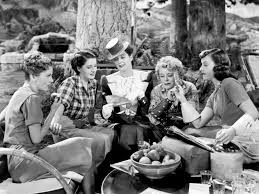
HWWLT Logo on yellowIn the easy come, easy go state of Nevada it follows that easy marriage ought to be accompanied by easy divorce. Since the glory days of the old West it’s been easier to get a divorce in Nevada than any other state, due to a ‘no-fault’ attitude and short residency requirements. By the 1940’s a person could go to Reno, stay six weeks in a divorce ranch, and get unhitched with few questions asked. Glitterati of the day, including Mary Pickford, Gloria Vanderbilt, and Rita Hayworth, made a Reno Divorce a stylish exit from marital woe.

images-2The rest of the country keeps chasing Nevada’s loose moral codes. Just as casino’s spread from Nevada to Atlantic City to virtually every state, so too ‘no-fault’ laws have made divorce easier to obtain everywhere. But Nevada stays ahead of the pack by still offering the easiest route to divorce. Why? Because there’s money to be made. A Reno divorce still costs more than a Reno wedding.

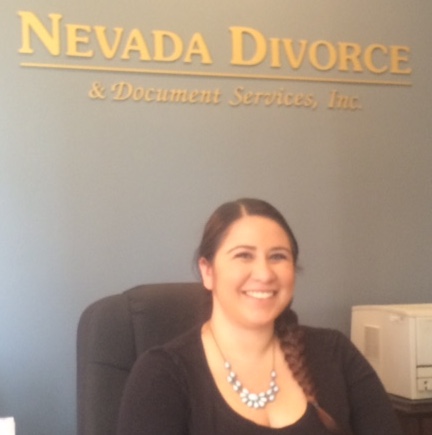
IMG_4324Elizabeth Soto is the administrator at Nevada Divorce and Document Services, one of many divorce mills that line California Street near the Reno Courthouse. NDDS is a three-person operation with one supervising attorney and a manager, all women. Virtually all divorce professionals in Reno are women. Although the office can process a variety of legal paperwork such as wills and quit claims, NDDS mostly processes divorces and annulments.

images-1Nevada still has only a six-week residency requirement. Tack on a short time to complete, file paperwork, and receive the decree. Uncontested divorces can be processed within two to thee months. If one partner is out of the country the process is a bit more complicated, but the person filing in Nevada gets custody.

Annulments are even easier. There’s no residency requirement so long as you were married in Nevada. “People go to Reno or Vegas, get drunk, get married, wake up on Monday morning and get an annulment. That’s not considered a real marriage, so you don’t need to get a real divorce.”

How will we live tomorrow?

IMG_4322“People need to live in the moment. If you want to get married, do it. If it doesn’t work out, get a divorce.”


Posted in Responses | Tagged , , | Leave a comment

Profile Response: Kathy and Vic, Arch of Reno Wedding Chapel, Reno, NV


HWWLT Logo on yellowGoin’ to the chapel
And we’re gonna get ma-a-arried
Goin’ to the chapel
And we’re gonna get ma-a-arried
Gee, I really love you
And we’re gonna get ma-a-arried
Goin’ to the chapel of love

imgresThe Chapel of Love described in The Dixie Cups’ biggest hit could well be Arch of Reno, the premier wedding chapel in the Biggest Little City in the World. Owners Vic and Kathy toured me through the place where birds sing, flowers bloom, and the sun shines every day of the year. Thousands of couples marry at Arch of Reno every year. They declare their love for eternity and fulfill the song’s more modest dream that “we’ll never be lonely anymore.”

People come from all over the world to play in Nevada. When that euphoria bubbles into love, Nevada makes it famously easy to tie the knot. Arch of Reno makes weddings even easier by offering one-stop full marriage services to suit any budget. It’s fast, easy, and inexpensive yet still memorable.

imgres-2 p697721701-3 images-4

Here’s how to get married at Arch of Reno. First, find someone you want to marry. Most of their marriages are folks from out-of-state, on holiday, feeling good.

images-2 images-3 images-1

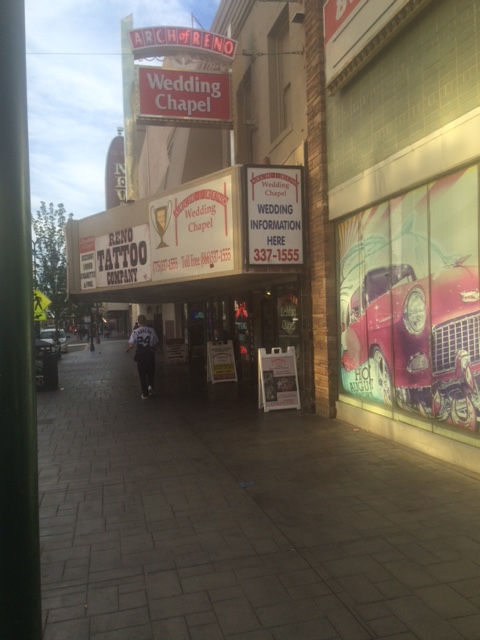
Second, walk into Arch of Reno’s downtown chapel or their chapel at The Sands Casino. Arch of Reno’s limo will drive the happy couple to the State of Nevada Marriage Bureau. It’s only a three-block ride, but the limo adds a classy touch. Since the bureau is open, by law, from 8 a.m. until midnight 365 days a year, there’s a good chance you won’t have to wait. Show a driver’s license or photo ID, pay $60 and walk away with permission to marry.

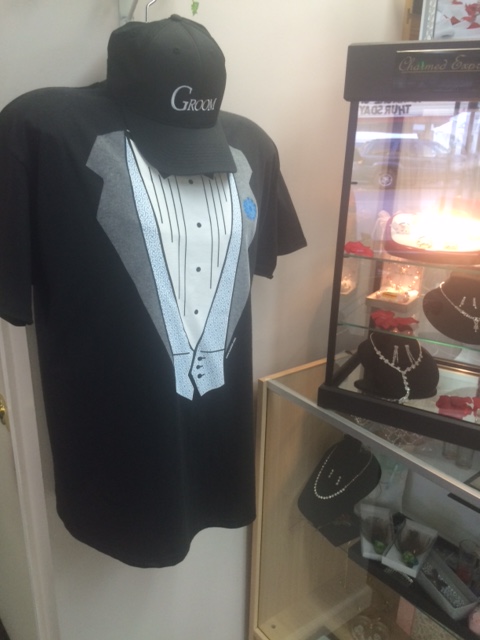
images IMG_4275Return to Arch of Reno and determine how lavish you want the wedding to be. The basic package, $89, includes a ceremony in their small chapel. The tastefully decorated room accommodates up to 12 people, though you don’t need to provide any guests: Arch of Reno always has two legal witnesses on hand. However, you may want to ante up the basic package with flowers, rings, or a champagne toast. The bride may rent a wedding dress, the groom a tuxedo, or at least a tux T-shirt. If you do have a crowd of guests, you can move up to the larger, 60-person chapel. The add-ons can add up, but compared to a full-blown wedding / reception, Arch of Reno is still a bargain.

The wedding official, usually Vic, asks the couple a few questions. Do you want to have a prayer? Do you wish to make personal statements? Do you want to embellish traditional vows? He covers culturally sensitive issues, like whether public touching or kissing is appropriate. Arch of Reno can also add religious icons to their non-sectarian chapels a cross; a crescent; a Star of David.

IMG_4281After the wedding parameters are established, the bride and groom prepare. Fitting the bride to her dress is often the longest single activity in the process. Kathy reports, “Wedding dress makers are cruel. They label dresses four sizes smaller. The bride insists she’s a twelve, but cannot fit into a twelve.” But getting the dress and hair right is worth the trouble. “For most of our couples, this is the first time they’ve ever seen each other in a long dress or tuxedo.” The bride and groom come together and get married. Dreams are fulfilled. Memories made.

Since Kathy and Vic orchestrate 200 memorable events a month, they are rich in stories. Last weekend they performed a double wedding; a mother got married for the second time with her daughter getting married for the first. One family had all three of their daughters marry at Arch of Reno. “We had one woman, a Bridezilla, on New Year’s Eve. She was so difficult. Kept changing her mind on the dress, the imgres-1jewelry, the hair. She was so unhappy. A few months later she returned, brought a friend to marry here, and apologized for being such trouble.”

Fortunately, Arch of Reno doesn’t get a lot of repeat business, but they do get lots of referrals. “What we hear all the time is, ‘This is so much better than we thought it would be.’”

I asked Kathy and Vic how the wedding chapel business is changing. “There are always new wrinkles. We do commitment ceremonies for people who don’t want full-blown marriage, and, of course, same sex weddings are an added business. But our total numbers have dropped since California legalized Indian gaming. The casinos in Tahoe changed Reno’s entire economy. Still, all of those changes are secondary to the basic reality that people like to get married. At Arch of Reno, we are inexpensive, yet classy.”

How will we live tomorrow?

IMG_4284“For us, this is a service that is needed in our society. We can walk each person through this process and do it with respect.” – Vic

“People want simplicity. We meet so many people who regret having a big event. Simplicity is going to rule.” – Kathy

“Save the pageantry for television.” – Vic


Posted in Responses | Tagged , , , , | Leave a comment

Profile Response: Bob Quiltich, Reno, NV

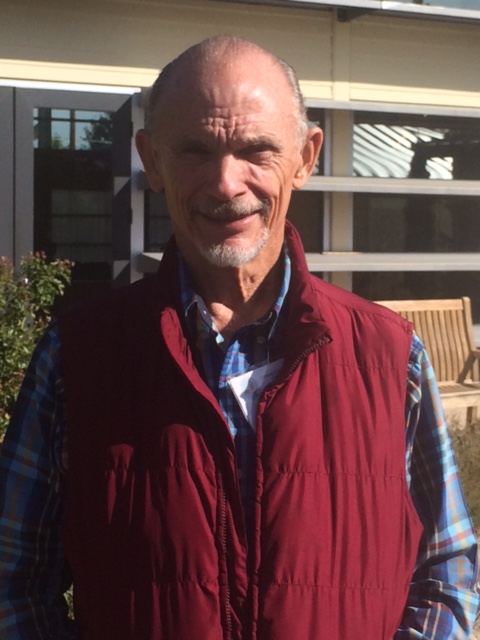
HWWLT Logo on yellow“I’m bored.” Bob Quiltich mentioned three times during our evening and morning together. The words struck me with the force of an hour chime each time he uttered them: perhaps because no one else I’ve met spoke of boredom; perhaps because Bob’s life didn’t seem boring. He’s a 75-year-old clinical psychologist, a devotee of Skinner. He travels extensively, is involved with the local Unitarian Church, has a broad personal library, and still works. Yet his comment resonated. Some spark was missing in Bob’s life. It’s not my place to try and name it in a 24-hour visit, but since our visit, I’ve spent miles pedaling and trying to fathom why this smart guy with so many balls in the air is bored.

Bob was born in Long Beach, raised in D.C, Miami and Knoxville, completed his doctorate at Kansas University and moved to Reno in 1973. He’s been ambivalent about his home base ever since. “The appeal of the new is great. For me, the appeal is ‘not Reno’. I’ve never had a bad trip. In San Francisco, just walk out on the sidewalk and adventures begin.” Yet Bob, who’s enjoyed a few long relationships but never married or had children, never moved to San Francisco. He always returns to Reno and endures several days of low spirits while he adjusts to being home.

imagesBob’s not emotionally volatile. On the contrary, he’s rational and data driven. “I did one-on-one clinical work for years, but now I’m a program guy. I’ve developed a specialty in program evaluation. It’s unsuccessful. Nobody wants to evaluate their program. To do that, you have to work with a funder. The evaluation criteria have to be set up first.” He even tossed me what he called my take-home quote, “Great organizations are built on great data.”

Bob’s penchant for data and analysis resonated with me. After all, I’m plenty analytical and was a Lean process improvement facilitator for years. But Bob’s analytical focus appears to contribute to, rather than diminish, his ennui. “The way I have put things together is not good. It’s becoming monotonous and not fun.”

imgresBob’s newest professional endeavor is teaching a course in family meeting. The idea is to schedule regular meetings to address planning issues, tasks and activities within a family group. The meetings don’t occur at dinner, “that would be a distraction,” or during an emergency or when someone is particularly upset. Family members learn how to use an agenda and allow everybody to talk in a genial environment. His newest travel endeavor is an upcoming trip to Cuba. Based on his animation alone, the Cuba trip is much more exciting than teaching a class about how to hold meetings.

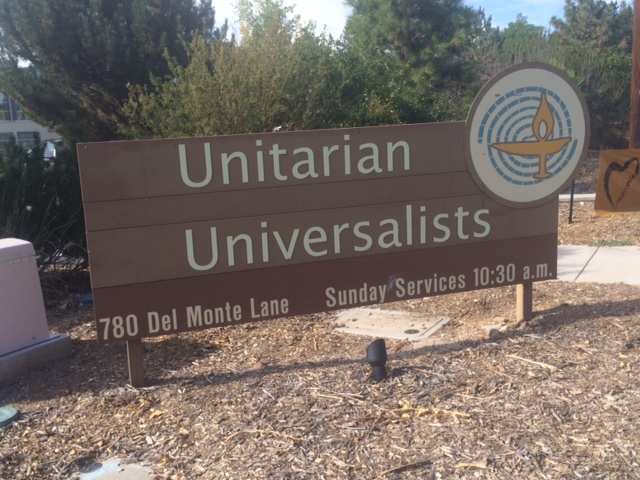
IMG_4307Even Bob’s spiritual connection, the Unitarian Church, is murky. “I joined the church in 2004 to help defeat George Bush the second’s reelection. That is the wrong reason to join a church.” He invited me to a Sunday Forum talk on income inequality. “The Forum talks are much more interesting than the actual services.” He was correct, the Forum was fascinating and informative. Still, I took his advice and cycled on before the service began.

Bob is 100% right that great organizations are built on great data, but great organizations are also built on great people, great culture, and a great product. Program evaluation is critically important and rarely done correctly, but good evaluation doesn’t make a great program. It would be nice, and rational, if human behavior could be molded to the optimum data curve. But that’s not human behavior, that’s robot behavior. I hope Bob finds greater meaning in life; he is a seeker with so much to offer. But I doubt he’ll find it in data. Humans are both more complex and less reliable than data and evaluation can describe. Which may not make us efficient, but keeps us from being boring.

How will we live tomorrow?

IMG_4306“I’m thinking of my church. My pet peeve at church is that I am read to, not talked to. It goes along with our academic bent. All they know is how to read. But reading aloud lacks the life, and conviction, of direct talk.”


Posted in Responses | Tagged , , , , , | Leave a comment

Profile Response: Rick Zukowski, Casino Dealer, Reno, NV

HWWLT Logo on yellowRick Zukowski spent his Saturday afternoon break with me. Rick’s a blackjack dealer at the Cal-Neva Casino in downtown Reno. He was wearing a #12 Packers shirt; sports gambling is huge here and one of the ways Nevada differentiates itself from the Indian gaming establishments popping up all over the country. Dealers wear team clothing to perk interest.

imgres“Dealers make minimum wage plus tips. I started out at Circus Circus. A lot of people do. I would make about $30 in a shift. A friend suggested I move to Silver Club in Sparks. I had to audition for that job, but the first night I made $120 in tips. When Silver Club closed I moved to Cal-Neva. We’re a downtown casino with a lot of regulars. We have lower limits than other places, $3 tables.” Rick doesn’t make as much at Cal-Neva as he did at Silver Club, but since 2000, when Indian gaming began in California, Reno’s gambling revenues are off by one third. A less lucrative dealing gig is better than none.

imagesRick grew up on LA, moved to Reno at age 38, and has been a dealer for 30 years. “I like it when I have a good table. A good table is one where people are having fun, they are good players, and they leave good tips. A bad table is one where I get no response. They just want me to ‘dummy up and deal’”
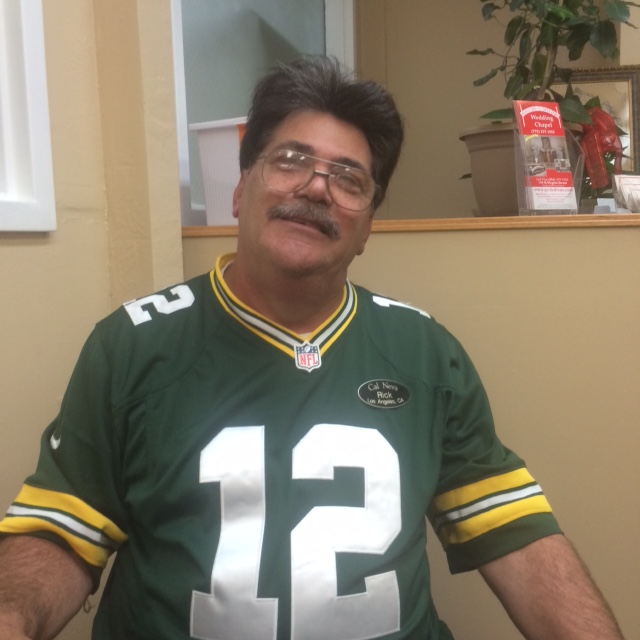
“Tipping is not a function of winning or losing. If people tip as they go along, or play for the dealer as they go, they may eventually lose, but I can still come out ahead.”

How will we live tomorrow?

IMG_4291“Comfortably. I have two jobs. I work two days a week at a local wedding chapel and four days a week at Cal-Neva. I’ve put aside plenty for the future.”


Posted in Responses | Tagged , , , | Leave a comment