Trip Log – Day 196 –Scottsdale, AZ

to PhoenixNovember 17, 2015 – Sun, 60 degrees

Miles Today: 26

Miles to Date: 10,103

States to Date: 26

Lifestyles of the rich and famous! I loitered all morning at my hosts’ house, overlooking the pool and golf course in the backyard. Madeline was gracious to let me stay so that I could take my radio interview on Nature Bat’s Last from her house instead of having to find a quiet place for my call-in on the streets.

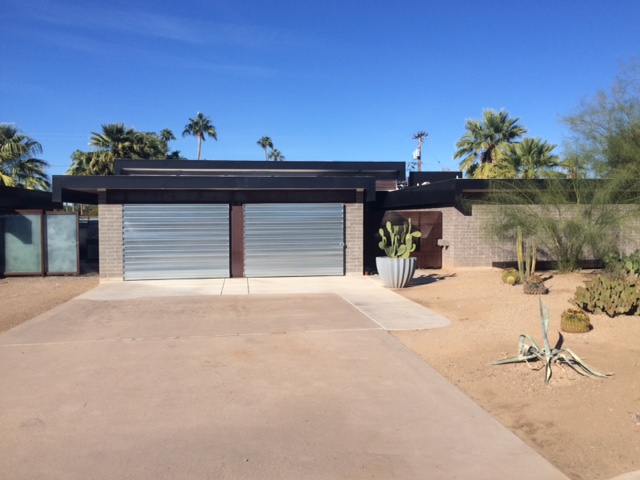
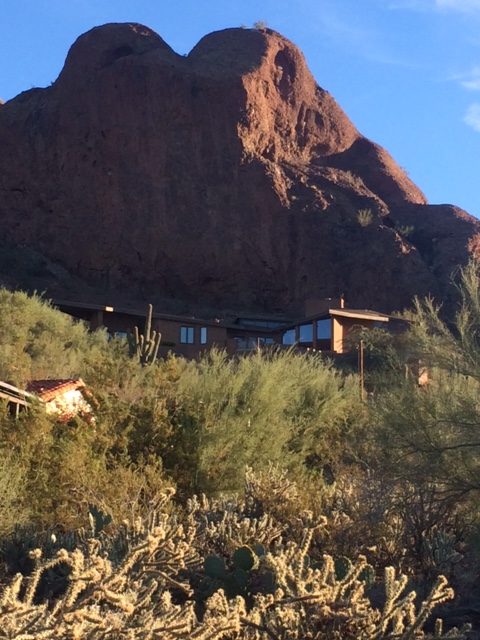
IMG_5302Afterward, I took off to explore Arizona’s tony neighborhoods and was not disappointed. San Francisco, New York, LA, even Seattle may have higher real estate prices, but they can’t match the pizzazz that Scottsdale’s and Pleasant Valley’s immense lots and sprawling homes deliver. True, some houses are ill proportioned; you can’t make a successful 10,000 square foot statement by just pumping up a 2,000 square model and adding a string of garages. But many of the residences are architecturally striking; with corrugated metal, weathered steel and crisp stucco that fits the desert well. Although the scale of these low-lying mansions is conspicuous beyond reason, I appreciate that most people in Phoenix don’t succumb to the California penchant to grow lawns where they don’t belong. The gravel, sand, and native plant landscaping is terrific.
IMG_5309 IMG_5321 IMG_5310

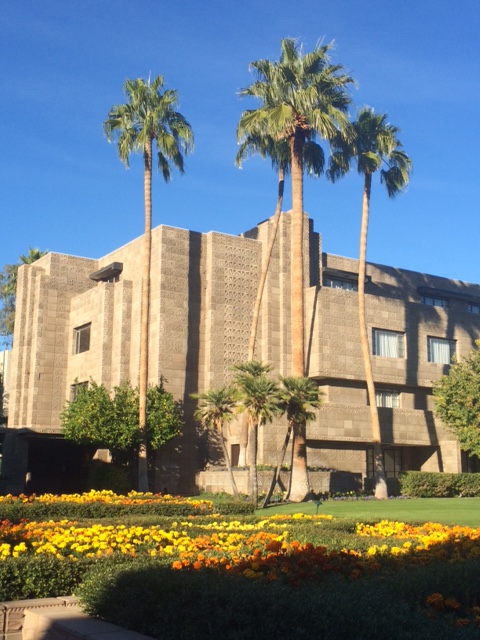
IMG_5312I wound my way to the Arizona Biltmore, the lavish 1920’s resort for which Frank Lloyd Wright was consulting architect. Everything about it is classy. The staff was very accommodating to a guy who clearly wasn’t registering for a room; the valet kept a personal eye on my bike. The Biltmore turned out to be one of my favorite Wright buildings, beautifully conceived and exquisitely executed. It may be the best example of his two dominant aesthetic ideas, as it was built toward the end of his Prairie / Usonian work and at the beginning of his larger scale, surface ornamented work.
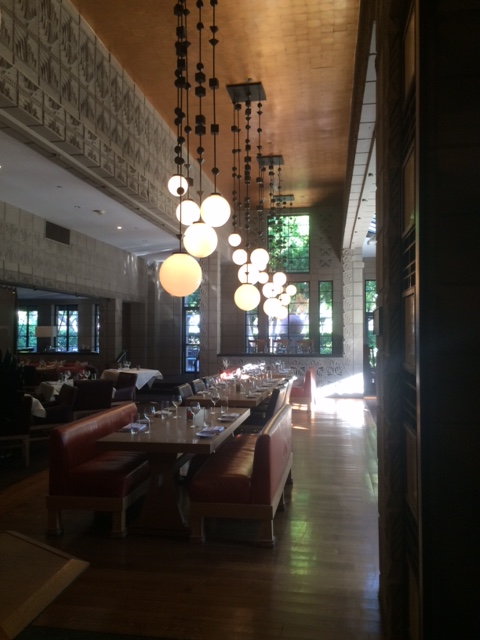
IMG_5313The Biltmore plan and massing grow out of the Prairie tradition, albeit with a Southwest sensibility, while the wonderful use of decorative modular block precursors his work at Marin County and the Guggenheim. In addition to the great architecture, there are cool photos of Clark Gable, Rita Hayworth, Bob Hope, and other glitterati to cement Biltmore’s cultural status. Every President since Herbert Hoover has stayed there.

 

IMG_5314 IMG_5315 IMG_5318

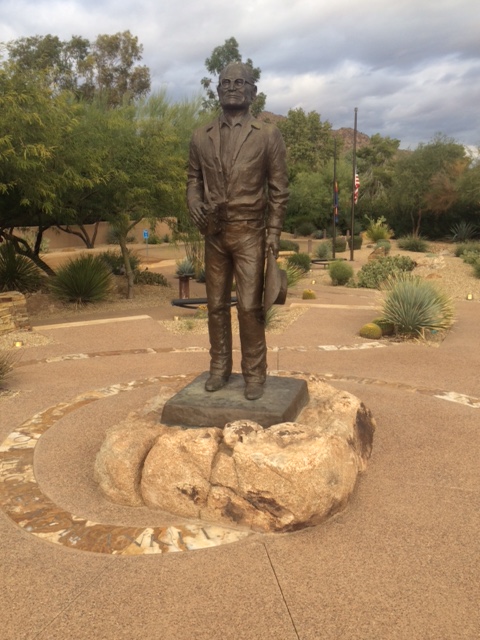
IMG_5301On the way to my second Scottsdale host, I stopped at the Barry Goldwater Memorial. Though he doesn’t merit a Presidential Library, the affluent citizens on this area have erected an elaborate memorial to their favorite son, which includes two marble paths with inlaid bronze letters. Problem is, the quote about the natural beauty of the West is banal, while the one about preserving our nation’s security is fearfully bellicose. Like all of us, Goldwater reflected his origins. In his case, individualism and emphasis on private property led to a logical preoccupation with security. I am glad to be rolling along with everything I need and little that anyone else wants.

Posted in Bicycle Trip Log | Tagged , , , , , , | Leave a comment

Profile Response: Brian Heron, Presbyterian Minister, Grant’s Pass, OR

HWWLT Logo on yellowBrian Heron moves from place to place working himself out of a job. He’s a peculiar expert; taking the helm at a struggling congregation and transitioning it into something stable, though that often means merging or closing a church. He recently spent six years with a congregation near Portland that successfully merged with a growing United Church of Christ and turned their remaining real estate into a homeless shelter and community garden. Now Brian’s assigned to a shrinking church in Grant’s Pass. Since more than half of all Presbyterians are over age 65, and sixty percent of Presbyterian churches will close in the next ten years, Brian’s role a work-out man is a necessary gig.

imgres-1The growth of religion in this country, and worldwide, reflects the increased polarization of our economic, social, and political lives. Religions with strict doctrines: Mormons, Fundamental Christians, Muslims, even Atheists, are on the upswing. But traditional Protestants, Reformed Jews, and Buddhists are declining. “The main stream religions are nuanced. People who align with ambiguity can do that without a church.”

People once described as liberal Christian’s now back off the term ‘religion’. “There’s a shift taking place from religion to faith and spirituality. Take marriage. I haven’t performed a wedding in a church since the 1990’s. People don’t want to be married within church walls; they want to be married outdoors or in a place meaningful to them.”

images imgres

A few years ago Brian made a bicycle pilgrimage from Rome To Konya Turkey, where the poet Rumi is buried. The Rome to Rumi route took Brian from the seat of traditional religion to the heart of mysticism, a journey that reflected humanity’s move from a belief system to an experiential system. Brian’s written a book about his experience, which he hopes to use as the centerpiece for retreats and conferences about pilgrimages. “I have done my own work. Now its time for me to lead others.”

Brian thinks the world is at an awkward time. Part of his congregation, the older people, wants the ‘truth’, while others want to embrace ambiguity. “I want to articulate what we share in community by listening to the community rather than delivering what we believe from a position of authority. I listen first and then articulate from what I hear.”

imgresIn order to put some structure to the ambiguity, Brain’s identified what he considers five essential beliefs within the Presbyterian Church. They are far from commandments and don’t dictate behavior. Rather, they outline commonalities while allowing for personal interpretation.

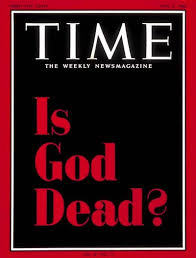
First, God is sovereign. Theology built the idea of God around an omnipotent being. This is dropping away. God may be spiritual energy. In the 1960’s, Death of God theories flourished in response to the Holocaust. How could God be both all powerful and all loving? Actions proved otherwise. The language of the omnipotent God fell away in seminaries, but it never trickled down to congregations. “We would be in a better, more honest, place today if we had followed the Death of God idea, but congregations didn’t want to hear it.”

imgres-2Second, we are Christo-centric. Different denominations stress different aspects of God. Pentecostals focus on the Holy Spirit. Unitarians are theists. Presbyterians know God through Jesus.

Third, we believe The Bible is the ultimate criterion for hearing God’s voice. Other writings can be inspired, but The Bible is the primary source.

Fourth we are a priesthood of believers. This goes directly to the Reformation idea that we are all priests. What is happening now, with people developing their own faith perspectives, is really the logical evolution of Martin Luther’s ideas.

Finally, we are reformed and are always reforming. We don’t believe that we have the ‘right’ interpretation, but will continue to search for deeper truth.

images-1“Christianity is a death and resurrection narrative. Death is an enemy in our culture, but it doesn’t need to be; it isn’t in The Bible. When the church in Portland died, new life came from that.

“I want to believe that people have a basic yearning for a deeper connection with the soul of the world. At the same time, I’ve met people who don’t have that yearning. Sometimes I open that spark in others.”

How will we live tomorrow?

IMG_4139“We’re living out and embodying our ideals. People are taking charge of their lives. It’s the breakdown of authority. Doctors, pastors, we are jumping off points for personal discovery. There was this idea that ‘right preaching’ is the word of God. It used to be that you believed before understanding. Now, we have to understand to believe. We are taking democracy to another level. We are moving to a post-religion, post-authoritarian time. The Internet equalizes the playing field. We are taking over the means of our lives.

“As a pastor with aging populations, thirty to fifty percent want me to articulate the faith for them. I give them all the benefit of my belief and training. But when I say ‘Amen’ they need to figure out how to apply it to themselves.”


Posted in Responses | Tagged , , , | 2 Comments

Trip Log – Day 195 – Sun City, AZ to Scottsdale, AZ

to PhoenixNovember 16, 2015 – Clouds, 55 degrees

Miles Today: 48

Miles to Date: 10,077

States to Date: 26

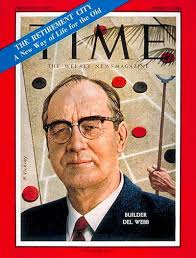
imgres copyWhen I was a pudgy seven-year-old with a girder & panel construction set and a binder full of house plan sketches, Del Webb was on the cover of Time Magazine. This meant that Del spent a week in the center spot on our coffee table. I read every word in the five-page spread about the master developer who built casinos, museums, missile silos, and, ultimately, turned raw desert into an entire community dedicated to adult play. Despite building Las Vegas’ Flamingo Hotel, the LA Museum of Art, and our country’s first enclosed shopping mall, Del Webb’s boldest stroke was Sun City’s curved streets lined with pastel cottages. It wasn’t the houses so much as the idea. Retirement wasn’t an end; it was a beginning; another opportunity for Americans to reinvent themselves. I studied the photos of grey-haired men playing shuffleboard and the big-haired women laughing at bingo. I didn’t know anyone like them, but I liked the idea of escaping my childhood home of too mucimages-4h noise and too many stairs, of living in perpetual sun with a pool and golf course in my backyard. I didn’t know then that swimming makes me claustrophobic or that I’d never break 140 in golf.

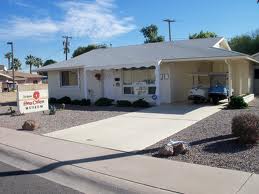
Three years later my grandmother, recent widow, became the first resident of Leisure Village in Lakewood, NJ, a pastoral gated community with lakes and pools and ceramics studios. In no time I stretched the limits of my bicycle adventures and rode ten miles from Toms River to spend the afternoon with my beloved grandmother and her newfound friends; all single women. A world of flowered print dresses, root beer floats, and afternoon bridge that I adored.

images-3I’m almost the same age as my grandmother when she joined the active retirement community she lived in for 28 years; the longest she lived any place in her life. In the past 55 plus years we’ve all come to consider retirement a distinct phase of life, a phase that gets longer every year. Sun City, and the thousands of other 55 and older communities across our country, played a significant role in shaping that view. Of all the ‘Utopian’ communities I’ve visited – Oneida, Seventh-day Adventist, Chrysalis Cooperative – none has had as broad an impact on how we live today, and tomorrow, as Sun City. Ironically, Del Webb wasn’t trying to do anything utopian at all. He was just trying to make a buck.

IMG_5296I spent a leisurely morning with my Sun City hosts Trudy and Larry. Larry had to leave for a 9:10 tee time. Trudy was around until Ukulele club in the afternoon, followed by her first ever voice lesson and a small group for dinner. I pedaled through acres of winding streets of single story homes to interview the Director of the Sun City Visitor Center. Like everyone who works in Sun City’s seven recreation centers or eight golf courses, Paul Hermann wears a loud Hawaiian shirt. Who knew Trader Joe’s stole their uniform concept from a retirement community?

I visited the Sun City Museum, located in the first model home. It was boxy and small, not nearly so spacious as my youth envisioned. Still, the midcentury modernity appealed to the times: 100,000 people visited Sun City on opening weekend and Del Webb sold 12,000 houses within the first year.

images-8 images-9 IMG_5299

I pedaled east along the Arizona Canal Path, through Glendale, Phoenix, and Paradise Valley into Scottsdale. I left the over 55 crowd behind and stayed with a group of PA students in the their 20’s. The weather was unseasonably cold and overcast. The sun finally broke through very late in the day. Odd that it never shone in Sun City.

IMG_5304


Posted in Bicycle Trip Log | Tagged , , , , , , | 4 Comments

Profile Response: Meadow Martell, Cave Junction, OR

HWWLT Logo on yellowSometimes it seems as it Oregon is paved with chewing gum. So many people come here, or just plan to pass through, and wind up sticking around. Margaret Martell was 21 years old, on her way to Alaska. When she got to Bandon, recognized Oregon’s call, and stayed. That was 45 years ago. In the interim Margaret became Meadow. She married, had children, and married again. She was Director of the local Community Health Canter, then Interim Director at several others. Now she works on contract with the State in recruitment and placement. “I’m good at transitions, at helping groups get through difficult times.”

Meadow and her husband Barry bought a small acreage near the Illinois River west of town. They traded in the manufactured house on the lot for one that suited them better. They planted a garden, raised chickens, and leased out a few acres to others. They liked their neighbors.

imgres-1In the early 2000’s the economic boom pressed close. A developer platted a 65-lot subdivision next door; laid smooth bitumen up against their gravelly road; installed curbs and sidewalks and hydrants. This precise land arrangement became their call to arms. Meadow and Barry and four of their neighbors banded together. Not to fight what had been done, but to preserve what remained. Five households, owning 65 acres, crafted a set of Covenants and Conservation Easements to preserve the land closest to the river from further development. They protected wildlife corridors, designated pastures and orchards, gave each other easements and limited development to five houses total – one per family.

IMG_4123More than ten years in, circumstances have changed for several of the covenant members. Meadow’s husband Barry died. She’s getting older and finding it more difficult to care for her gardens. She would like to add a second housing unit, a place she could offer someone in exchange for helping her. Her neighbors, Prasna and Shohoma, are building a new house with passive solar features. When it’s finished, they can repurpose their existing house to a barn or outbuilding, but they cannot rent it out. The covenants crimp their ability to use their property as they might like, yet they understand that ‘development creep’ will undermine their broad intention. So far, the group has not relaxed any restrictions.

The adjacent subdivision floundered. A half dozen houses were built before the crash of 2008, few after. But it coalesced the five conservation members into action. As a result, their community is both more formal and stronger.

How will we live tomorrow?

Screen Shot 2015-11-15 at 7.59.26 AM“The first thing I had to deal with in your question is the ‘we’. It comes down to individuals. Then I struggle with tomorrow. It comes down to today. This moment is all we have.

“We have to care and respect each individual. We need to live in partnership with nature, or we won’t survive.”


Posted in Responses | Tagged , , , | Leave a comment

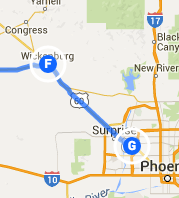
Trip Log – Day 194 –Wickenburg, AZ to Sun City, AZ

to Sun CityNovember 15, 2015 – Rain, 55 degrees

Miles Today: 38

Miles to Date: 10,029

States to Date: 26

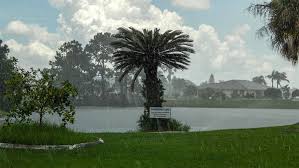
I arrived in Sun City in the rain. Which only goes to proves that wherever I go in this country, the weather is off kilter. The ride was easy and uneventful, which is the best one can hope for on a day more akin to New England spring than Arizona autumn. No matter, because I arrived at my hosts’ safe and on time, took a warm shower, enjoyed a great meal and even better conversation, toasted surpassing my 10,000 mile mark, and watched the Arizona Cardinals snatch victory from the Seattle Seahawks. Sorry to be fickle Seattle; my allegiances move along with me.

images


Posted in Bicycle Trip Log | Tagged , | Leave a comment

Profile Response: Rick Mangella, Franklin NC

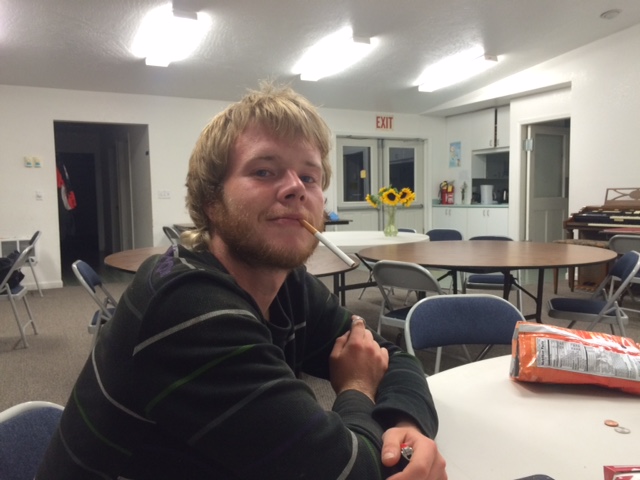
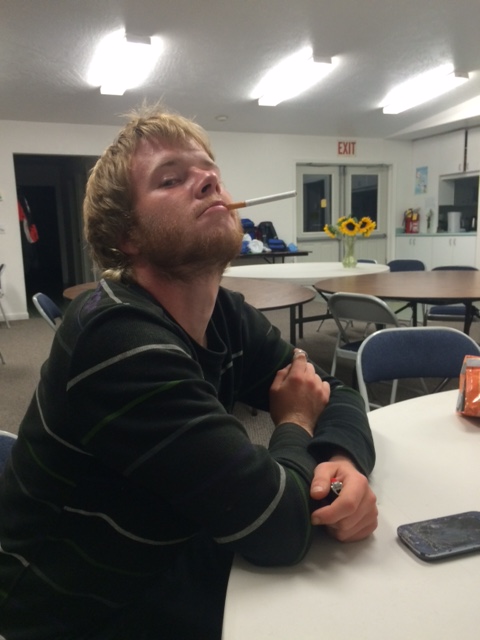
HWWLT Logo on yellow“The problem with your trip is that you are missing the hiker/biker culture.” Rick Mangella (alias at his request) tapped his unlit Marlboro against his hard pack on the table in St. Paul’s Episcopal Church hall in Crescent City, CA, where we were crashing for the night. He wanted a smoke, but was holding off. “There’s a whole world out there of people who sleep outdoors. We trade stuff, we live light.”

Rick’s a 25 year old man-child with a scrawny beard, tawny hair, freckles, a history of odd jobs and a drug bust felony. “I went to Florida for vacation and came back a felon.” He jokes about being arrested at age nineteen and asking the officers for a souvenir. They gave him a 911 first responder patch that he always carries with him. You’d be hard pressed to find a nicer felon than Rick.

Rick’s from Franklin, NC, a small town in the mountains near the Georgia border along the Appalachian Trial. ”No one cycles there; they all think I’m crazy.” He left his job cooking in an Italian Restaurant and headed to Alaska for the summer, where he worked in a canning factory in Petersburg. “They hire anyone who’s not a violent offender.” It took Rick nine days to greyhound and ferry from Franklin to Alaska. “I started at minimum wage, but got a dollar raise. The money’s not good but the hours are long. Sixteen hours a day, seven days a week. It adds up.” He made enough money to return to Bellingham, buy a used Schwinn and start cycling down the coast. “I was wearing jeans and construction boots. But when the rains came they were so uncomfortable.” Rick shows off the new sneakers he bought in Crescent City and his nylon shorts.
IMG_4103This was Rick’s second night at St. Paul’s. He was well versed in the protocol of the church hall renowned for sheltering cyclists riding the Pacific Coast. When I asked him out for a beer he replied, “Don’t bother; we can have beer here.” I gave him ten bucks, he returned with two six packs. “I don’t drink too much, but when I do, I drink fairly fast.” Two other cyclists joined us for the evening, a guy from Glasgow riding to San Francisco and another from Quebec going all the way to Mexico. They were each traveling more casually than me, though with more focus than Rick. And they each brought their own beer, so we had plenty to toast the folks in the AA meeting in the adjacent room.

Every so often Rick disappeared outside. He’s the only cyclist I’ve met who smokes. “I’d quit smoking, but then my legs would get tired.” He laughed, but I didn’t get it, so he explained that smoking made his lungs the weak link. Rick only travels 40 or 50 miles a day, less than any long distance cyclist I’ve met.

When Rick returned, he grabbed another beer and twiddled his next cigarette as long as his addiction allowed. “A guy left a bivouac tent in a campsite, so I took it. I thought I’d sell mine. Then I met this 65-year-old guy, Blue, whose been living off his bike for years. We traded my tent for some pot. I’ve had a hard time getting it since I left Washington.” I asked Rick if he wanted to live like Blue. “Since I’ve been cycling, I’ve met my own people. But to live like Blue, an alcoholic hobo, I don’t think so.”

IMG_4102Rick wants to travel to San Diego and then back to North Carolina. “I won’t make it that far. I’ll run out of money. Money just runs through me. I’ll probably get flat broke and then need to get a job for the bus fare. But I promised my sister I’d be home for her birthday, November 25.”

How will we live tomorrow?

“With a smile on my face.”

Posted in Responses | Tagged , , | Leave a comment

Trip Log – Day 193 – Quartzite, AZ to Wickenburg, AZ

to WickenburgNovember 14, 2015 – Sun, 70 degrees

Miles Today: 94

Miles to Date: 9,991

States to Date: 26

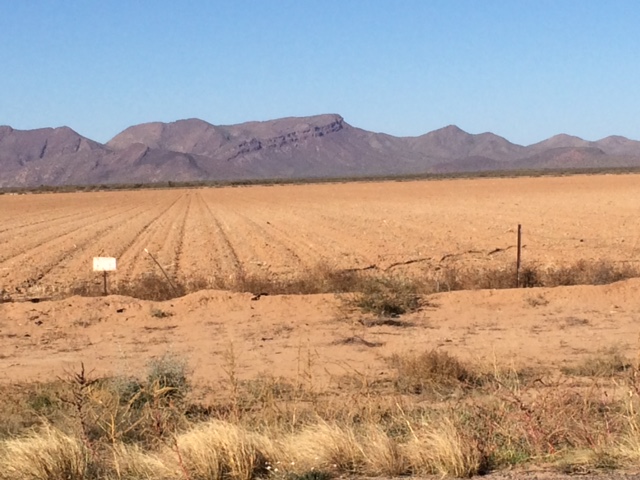
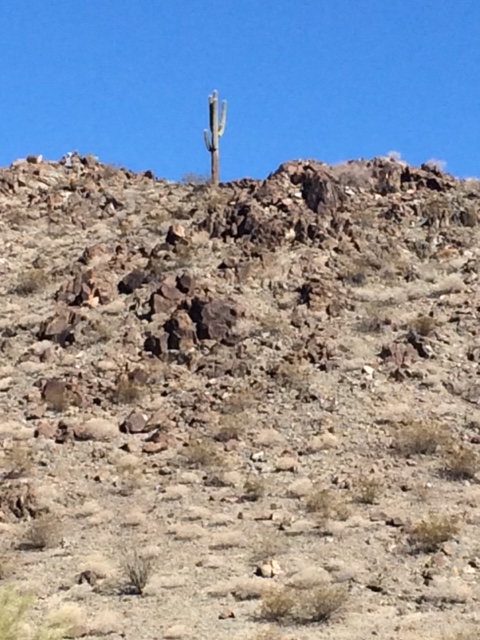
The distance was great but the road was smooth and oh, so straight. The sun was bright but not hot, the breeze benign. The rises steady, the falls gentle. The little towns harbored quirky Western charm. Except Aquila, which is too poor to enchant. Coyotes and quail, snakes and jackrabbits crossed my path. Cacti and thistle spread out for miles cottonwood and sage lined the washes.

By midafternoon my legs churned mechanically. My mind drifted from the pavement. I thought of everything and nothing. It’s a Lazy Afternoon spun in my head. The miles clicked by.

IMG_5269IMG_5276 IMG_5278 IMG_5285 IMG_5281 IMG_5287IMG_5283 IMG_5273IMG_5282 IMG_5288


Posted in Bicycle Trip Log | Tagged , , , , , | Leave a comment

Responses: How will we live tomorrow?

HWWLT Logo on yellowHow will we live tomorrow?

“People have to realize that we have to be better stewards. It used to be you would look out for your own, your tribe. Now, that’s not enough. We have to pay attention to people beyond the mountain, beyond the ocean. We are all connected.”

Tom, 25-year Marine veteran, San Diego, CA

How will we live tomorrow?

“Society is getting greener. Look at all the Tesla’s in California.

“Our basic method of delivering necessities will become more interesting. The power grid will become more solarized.

“I am concerned about political polarization. We are going to need a crisis to end this stalemate. We will be irrelevant if we don’t come together. The Chinese can close our country any time they want to.

“I worry about our children. We are spoiling them too much. When my son turned sixteen I gave him a new pick-up truck. Stupidest thing I ever did. He never took care of it. He bought himself a motorcycle and he keeps it in pristine condition. That which is given is not appreciated.”

Scott Eaton, financial analyst, Mission Viejo, CA

How will we live tomorrow?

“Hopefully with another person in our life.”

Erin and Mike, expecting parents, Encinitas, CA

How will we live tomorrow?

“Sorry I can’t answer your question. It’s too confusing.”

John, day-trip cyclist, San Diego, CA

How will we live tomorrow?

“A project I worked on for a non-profit organization was to help people who lived in a mobile home park to buy the park and run it as a cooperative. Most everyone was excited about it, but there was a small group who wanted to stop it. I went door-to-door advocating for the project. The other group did as well. I was trying to help. The ringleader of the opposition put out apocalyptic views of the future. They eventually formed the group and the park is thriving. Some members refused to join. They pay higher rent as a result. I hope that we will live tomorrow making decisions that are in our best interests.”

Bruce Newman, housing advocate, Gold Coast, OR

How will we live tomorrow?

“When we watch the news and there is fire, we hear about what is lost, materially. We don’t hear about who is safe and what relationships are secure. That’s what I want to hear.”

Paul Hempel, AIDS activist, Gold Coast, OR

How will we live tomorrow?

“I have lived all over the world, but never lived in a place like Santa Barbara. Santa Barbara celebrates everything; our Spanish heritage, our Mexican heritage, and our American heritage; even our Chumash heritage. That’s why this is such a vital place, and will continue to be for so long.”

Linda Bentson, Docent, Old Mission Santa Barbara, Santa Barbara, CA

How will we live tomorrow?

“I choose not to make any assessment of how we are doing. I think it is foolish for any individual to evaluate the condition of the world.”

Helen Spencer, environmentalist, Portland, OR

How will we live tomorrow?

“God bless you.”

Gloria, Gloria’s Panaderia, San Ysidro, CA

How will we live tomorrow?

“We are trying. People are trying Look at politics. It sucks. But a lot of people are working on it. I’ve got solar and a Prius and an electric car. Look at LA – the auto capital of the world – it’s full of Prius’”

Mike Casey, roadside clean-up guy, Dulzura, CA

How will we live tomorrow?

“Family and love.”

Sharon Aiello, Red Box Supplier, Campos, CA

How will we live tomorrow?

“Take it as it comes.”

Lynn, Bartender at Lazy Lizard, Ocotillo, CA

How will we live tomorrow?

“My faith and my family are the most important things to me. That is how I’ll live tomorrow.”

Fernando Desardon, County of Yuma Health Inspector, Yuma, AZ


Posted in Responses | Leave a comment

Trip Log – Day 192 –Yuma, AZ to Quartzite, AZ

to QuartziteNovember 13, 2015 – Sun, 70 degrees

Miles Today: 76

Miles to Date: 9,897

States to Date: 26

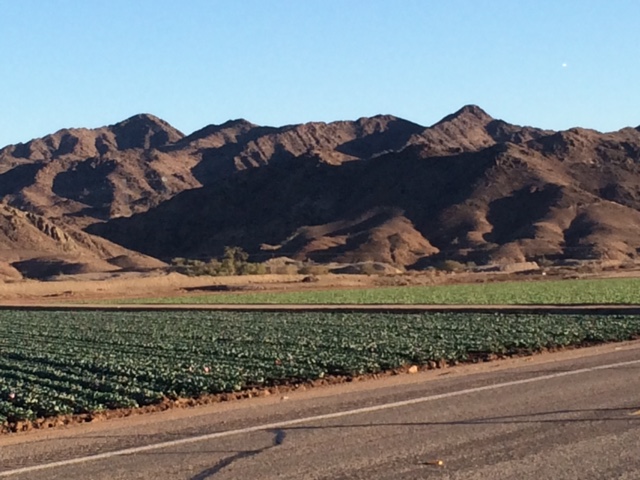
There is no way to champion the wind. It must be accommodated and respected. Seventy-five miles with a moderate grade through gorgeous desert could be pleasant. But when you’re facing the prevailing wind the entire day, all you can do is plan for a slow-go and endure.

IMG_5249Fortunately I planned well. I was up before down. My couchsurfing host Michael made the most exquisite breakfast. I was on the road by seven, before the sun peaked over the mountains. The only malady I’ve had this trip has been a persistent scratchy throat, the result of so much air rushing through me. I try to ride with my mouth closed, but my throat is still coarse at the end of each day. This morning, after two days in the desert, my scratchy throat turned into a full-blown cold despite ten hours sleep. I had runny nose, clogged head, and whisper voice. Fortunately, it wasn’t flu – no achy legs – so I pedaled off.

IMG_5252 IMG_5253

The light breeze from the north turned into a steady wind by nine and a flag stiffening current by ten. The invisible force came at me strong and consistent, but I kept moving. I hit the halfway point at noon and sat for ten minutes on gravel in the sun, downing a bottle of water and finishing off a bag of trail mix. Ten miles further on I came upon the day’s only services – a seasonal burger and ice cream stand. I enjoyed my first date shake and rested with the proprietor, a man of many stories. Feeling the sun begin to descend, I pulled myself away for the final thirty miles.

imgres IMG_5257

I reached Quartzite at five. Surely one of the oddest places I have been. Quartzite’s a tiny town along Interstate 10, but in winter the population swells to a hundred thousand with snowbirds who camp inexpensively. In Yuma, a place to park your RV for a winter month costs several hundred dollars, which includes the social center, shuffleboard, and a pool. Folks park their RV’s in the desert around Quartzite for an entire season for $125. They aren’t connected to anything. Freelancers refuel generators and empty sewer connections. You make whatever community you want. Closer to the freeway, RV’s sit on paved lots, like a drive-in theater, with posts for electricity. No trees, no green; just a field of concrete for motor homes.

IMG_5264 IMG_5263 IMG_5266

Quartzite is just coming alive this time of year. Portable buildings and big tents will become hardware stores, vape shops, even gun permit stores. Snowbirds flock south, Quartzite swells, and next spring it will contract again.

IMG_5268I stopped at Love’ Country Store before heading to my Super 8 for the night. The place has absolutely nothing country about it, but it’s a fascinating view of Interstate America. Traveling families, gangs of guys, homeless people in cluttered cars. I decided to celebrate my success in navigating the wind, and soothe my scratchy throat, with an ice cream dinner.  Excellent choice.

Posted in Bicycle Trip Log | Tagged , , , , , , , | 1 Comment

Profile Response: Dave Salmon, Pelican Bay Prison, Crescent City, CA

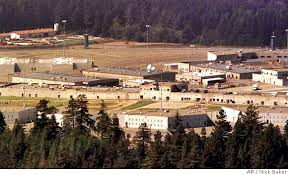
HWWLT Logo on yellowPelican Bay Prison’s massive white blocks cannot be disguised by the slender pines that surround it. It has no sign; it doesn’t need one. Any passerby understands that the State of California is locking up evildoers in this remote corner. Everyone nudges the accelerator pedal and moves on.

Dave Salmon, the sole social worker for 2500 inmates, explained that the high security facility was built in the 1980’s as a response to gang infiltration of the prison system. It was located here, remote from cities and gang influence, and designed to minimize prisoner interaction. Most of the facility is divided into secure housing units (SHU). Prisoners spend 22 hours a day in solitude and have 90 minutes of exercise.

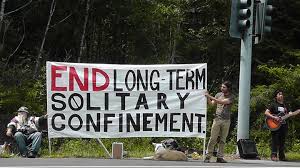
images“The prisoners filed a lawsuit that the organization of Pelican Bay itself constitutes cruel and unusual punishment.” A settlement was reached the week before I spoke with Dave. As a result, some things at Pelican Bay will change. “Now, men are assigned to Pelican Bay based on gang affiliation. That’s no longer a justifiable reason. Prisoners can only be in long term solitary based on behavior.” There will also be increased exercise and social time.

In theory, men are transferred from SHU to a recovery hub for three to five years before release, to provide more interaction and better opportunities to get a GED or job training. Despite these efforts to prepare men to reenter the world; almost two-thirds of California inmates return to prison within three years of discharge.

images-1Prior to discharge, inmates meet twice with Dave. About three weeks before release, Dave determines what public benefits the former prisoner may receive. They meet again, a few days before freedom, to confirm benefits and issue a state ID. “Released prisoners receive $200 and an ID and have to report to the parole office in the county of their last legal residence within 48 hours. About 2/3 of the men have a place to go. The rest are mentally ill or have no family where they have to do parole.” There’s a mechanism for transferring parole to another county, but it’s complicated, particularly for men who are already struggling to navigate the system. “A mentally ill prisoner was paroled to Oakland after twenty years in prison. His family was in Fresno. He spent most of his $200 just getting to Oakland. How was he supposed to function there?”

I asked Dave why he does this work. “If you want to see the most broken people in our society, start in the mental health ward of a prison. Somebody needed to be in my position. I thought I could make a difference.”

How will we live tomorrow?

“Things are really changing in California. Parole is working better. We’re using the carrot more than the stick. We’re putting more money into prevention. It’s better to shape lives before guys go to prison. Last fall California passed Proposition 47; the third strike conviction can be a misdemeanor instead of a felony if it’s not violent. That will help thin our prison population.”


Posted in Responses | Tagged , , , , | 2 Comments