Trip Log – Day 191 – Brawley, CA to Yuma, AZ

to YumaNovember 12, 2015 – Sun, 70 degrees

Miles Today: 86

Miles to Date: 9,821

States to Date: 25

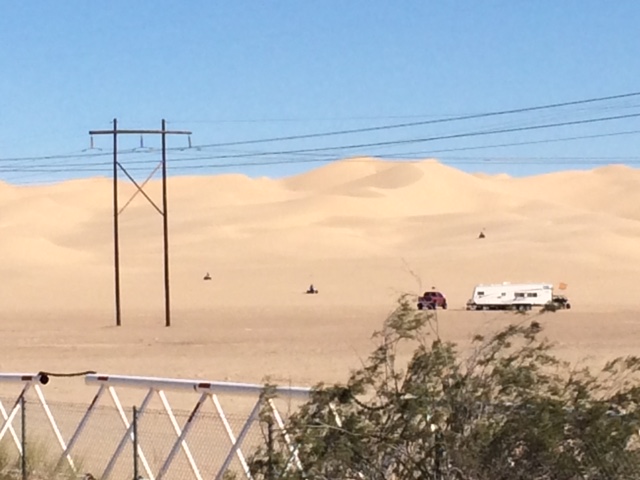
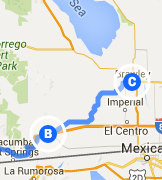
California must allocate highway funds from north to south, as there seems to be no money left for paving near the border. Or perhaps, after being in California for a whopping fifty days, the state simply didn’t want to let me go, so the asphalt uprooted all over the place in protest. Regardless, I bumped along farm roads to get out of the Imperial Valley, careened over cracks in Old Highway 80 where it acts as frontage road for Interstate 8, and bounced on a terrible shoulder along the freeway when the frontage road disappeared.

IMG_5235

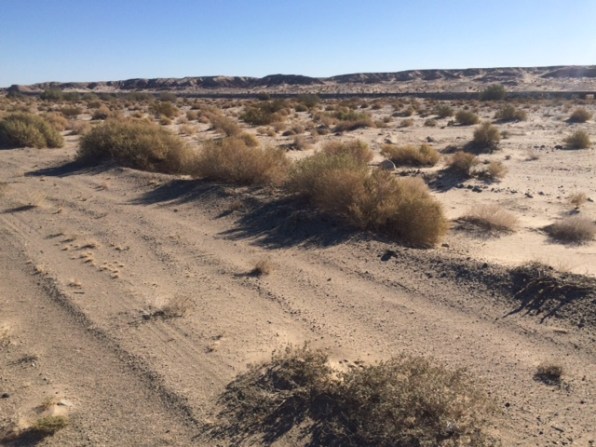
Despite lousy roads, everything else was great. I had a nice tail wind in the morning, and a manageable cross breeze when the wind picked up and shifted. I am enthralled by the surreal desert landscape. The kids riding buggies over the dunes looked like little bugs climbing about the massive sand hills. The channels from the Colorado River are such deep blue against the tawny land. There’s much more water here than the parts of California fed by the Sierras. All that rain I witnessed in Colorado got here before me.

IMG_5239 IMG_5240

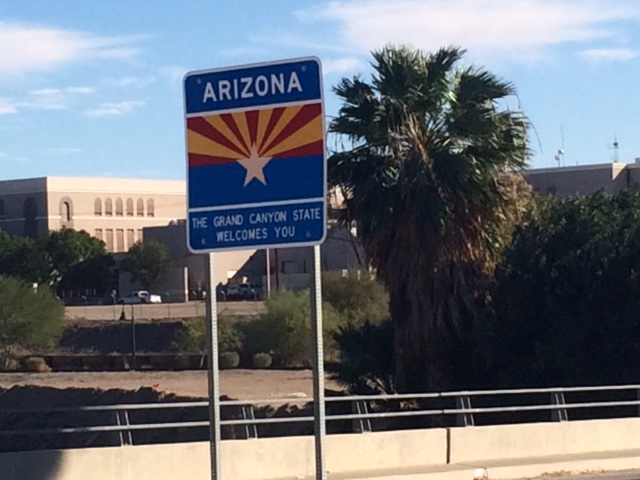
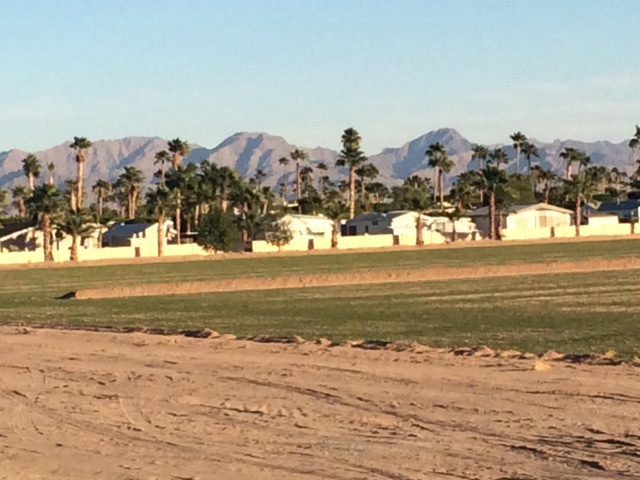
IMG_5244I was happy to get Yuma, not only for the better roads, but because its time for me to move to a new state. Some differences are immediately apparent. Arizona is much less expensive than California, from gasoline to real estate. Yuma is also more transient. Whether fixed homes (sitting 2” off the dirt on thin slabs), modular houses, mobile homes or RV parks, many people call Yuma home only a few months a year. Some snowbirds had already tickled in, but most will not roost until January.

IMG_5245 IMG_5246


Posted in Bicycle Trip Log | Tagged , , , , | Leave a comment

Trip Log – Day 190 – Ocotillo, CA to Brawley, CA

to BrawleyNovember 11, 2015 – Sun, 70 degrees

Miles Today: 41

Miles to Date: 9,735

States to Date: 25

My first day in the desert. Eleven hours sleep last night; pot of coffee courtesy Ocotillo Motel; breakfast burrito courtesy The Red Feather; gentle breeze and gorgeous day courtesy whatever God you favor. Everything was perfect, except the lousy pavement on the side road alternative to Interstate 8. Then again, the minor annoyance helps us appreciate the perfection of everything else.

IMG_5214

IMG_5222The Imperial Valley is full of hay farms. Most of it is exported to Chia and the Middle East. Some say it is due to Colorado River water regulations. Others say its because the land is too contaminated to grow crops for US consumption. Either way, it’s bizarre that we’re irrigating the desert to grow hay to ship halfway around the world.

IMG_5225The Imperial Valley is the lowest place in the USA, well below sea level. Everything from here is uphill.

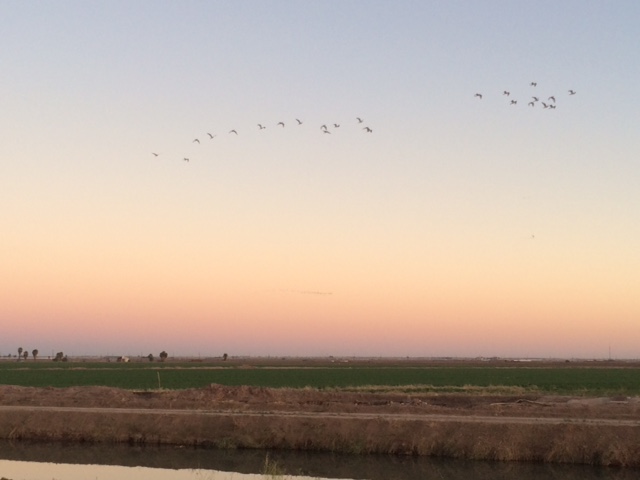
IMG_5219The fields are full of birds. Dozens of snowy egret feast upon mown hay. At sunset, whole flocks rise out of the fields and fly in graceful formation overhead.

IMG_5228


Posted in Bicycle Trip Log | Tagged , , | 2 Comments

Profile Response: Hope and Dave Salmon, Crescent City, CA

HWWLT Logo on yellow“Every winter we talked about moving from Alaska to the Lower 48. But you can’t move in the winter. Then summer came and we were captivated by Alaska all over again.” Hope and Dave Salmon have lived in a number of places, mostly in the West. They raised their four children in Alaska in a large suburban house. Dave is a social worker. In 2012 he left the State of Alaska penal system for a US State Department position in South Sudan. Hope stayed behind with their youngest daughter, a high school senior. While Dave was away, Hope finally made the move to California. They went to Redding first, and eventually settled outside of Crescent City.

Last winter Hope and Dave bought a two-acre parcel with three structures and dozens of fruit trees for $75,000, less than three miles from Dave’s job. Dave explained, “The man who lived here died. The property sat vacant for five years. When we bought it, we didn’t know where anything was – the well, the septic. We’ve had to figure it out as we went along.” Hope added, “We didn’t know if we could live in the house, it was in such bad shape. But we worked on it for a few months and moved in this past June.”

IMG_4052Hope and Dave are still living amidst construction as Dave insulates the walls, replaces windows and installs a new roof. They are also enjoying the bounty of their property – Hope made delicious squash soup from their garden.

What struck me about Hope and Dave’s transition from large house to small, landscaped property to working property, was that they do it with little fanfare. They didn’t talk about simplifying their life – they just did it. They bought a house without a mortgage, they grow food on their land, they are living in confusion while they repair, over time, a property that had fallen into disuse.

IMG_4050Dave recalled a conversation he had with his daughter’s boyfriend. “He said not everyone has the luxury of two acres of land. Most people live in cities and we have to find ways to be sustainable in cities.”

It’s a valid point, but Hope and Dave are not holding out their live as a model for all. They are simply living it, wit a much smaller footprint than they did previously. When I compare their modest yet productive two acres with most houses on two acres I see across the United States – mini-estates with ornamental landscapes and lawns maintained by riding mowers – I think they are on to something good.

How will we live tomorrow?

“This is basically how I grew up. Living in a small house, growing our own food, consuming less.” Hope Salmon

“We will live more simply out of necessity because we’ve depleted most of our resources. We can’t keep up our first world habits. We need a third way.” Dave Salmon


Posted in Responses | Tagged , | 1 Comment

Trip Log – Day 189 – Spring Valley, CA to Ocotillo, CA

to OcotilloNovember 10, 2015 – Cloudy, 55 degrees

Miles Today: 79

Miles to Date: 9,694

States to Date: 25

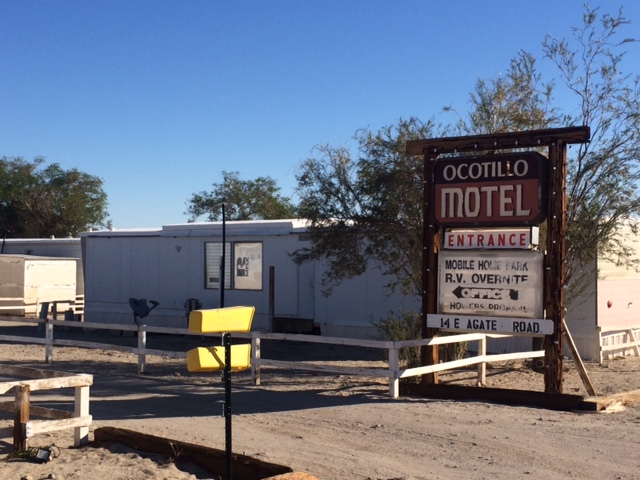
Bicycle touring is ripe with contrast. I rose with the sun and breakfasted on Greek yogurt with fresh blackberries and excellent coffee with my host Matthew. The sun shimmered off the Pacific Ocean and San Diego skyline when we rode away from his spacious hillside home. By sunset I was grinding the final kernels from a bag of microwave popcorn in my concrete block room at the Ocotillo Motel, the only guest in the four-room compound set in the middle of a dusty trailer park. The Red Feather general store was already closed for the day and it was too early to go to the Lazy Lizard Saloon.

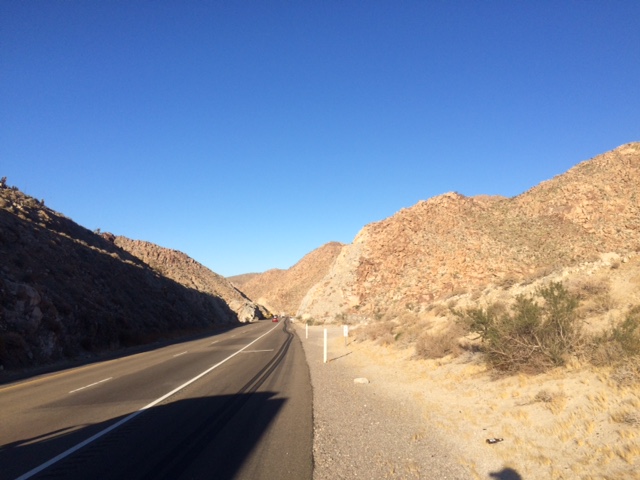
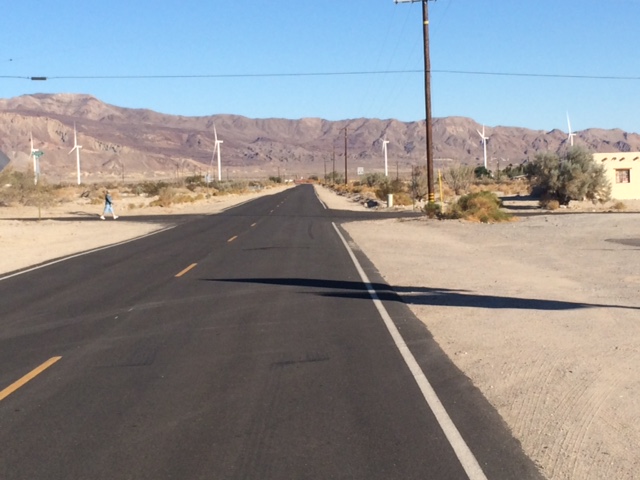
IMG_5197In between, I made the physical and psychic shift from coast to inland, a shift aided by favorable tailwinds and the excitement of turning the second corner of my journey. I’m heading east! The ride was a series of big climbs, over 6,600 vertical feet, with small dips until the end, when I had to join Interstate 8 for a harrowing eight-mile descent. As I moved east, the close-cropped hills began sprouting boulders. Then the mix of soil and rock equalized. By the time I reached the western edge of the Imperial Valley, the mountains were literally gigantic piles of rock.

IMG_5189 IMG_5199 IMG_5204

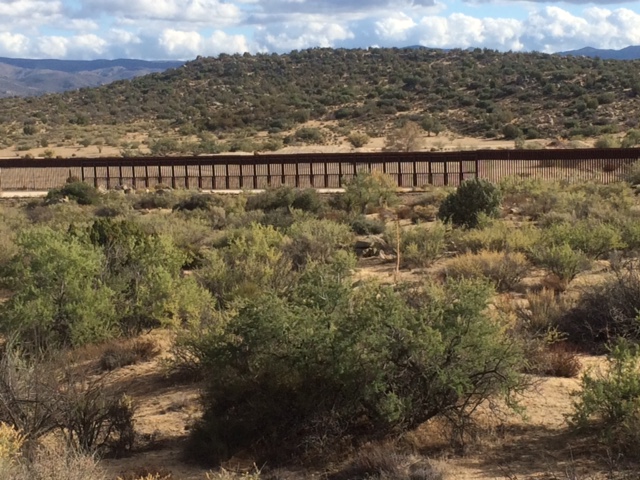
IMG_5200California 94 is a superb road with fun twists and great views despite the clouds and chill. I figure it’s so well maintained for security reasons: there’s little traffic except for Border Patrol and Sherriff vehicles. It’s quiet except for the helicopter’s tracking the corridor overhead. I stayed off I-8 as long as possible by taking Old Highway 80 through Jacumba, a remnant place within a stones throw of Mexico bypassed by the freeway. I took a break and contemplated the wall. When it comes to nations, I don’t agree with my fellow New Englander Robert Frost that good fences make good neighbors. This fence inhibits our ability to be good neighbors. It may be an obstacle to immigration, but it is not a solution.

IMG_5207 IMG_5206 IMG_5209

Dinner at the Lazy Lizard (home of the Testicle Festival) was a low-culinary experience worth remembering: microwaved sandwiches and soft pretzels. The food hardly mattered since I got to wash it down with Shock Top on draft. I was the last customer when I left at seven p.m. Walking back to the Ocotillo Motel, the night was pitch black, except for magnificent stars.

IMG_5210

Posted in Bicycle Trip Log | Tagged , , , , , | Leave a comment

Profile Response: Janet & Robert, Coos Bay, OR

HWWLT Logo on yellowSerendipity is one of life’s great treats. I needed a cycling break along Route 126 toward Florence, so stopped at a riverside park for shade and nourishment. I noticed an unusual bike strapped to a parked car. A woman called out, “Are you the guy looking for a place to stay in Coos Bay?”

Janet and Robert are warmshowers hosts who couldn’t accommodate my request to stay with them as they were leaving town themselves. Coincidence landed us in at the same roadside park as we travelled in opposite direction.

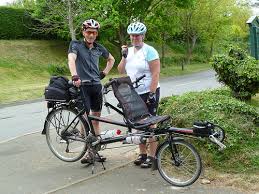
images-1They explained their bicycle: a tandem with a recumbent seat in front and traditional one behind. Janet told me, “I developed neck problems and couldn’t use a standard bike anymore. We saw this, used, bought it and we love it. It’s not perfect, any momentum you gain going down is lost, so every climb starts from scratch.” Robert demonstrated how independent pedaling works via three chains, though the recumbent person doesn’t have to pedal at all.

The bike draws interest wherever they go. The person on the front seat can contribute to pedal, via the three-chain system, or they can just sit and enjoy the ride. “We were at a fair and people were looking at the bike. A ninety-year-old woman studied it. I asked ‘Would you like a ride?’ She swung her purse at me to hold, climbed on the front, and Robert pedaled her all arimagesound the fair. She didn’t want to stop. Turns out the last time she was on a bike was 1939, in Hungary, before the Nazis confiscated it.”

Robert added, “We’re going to Eugene for a few days. We have a friend with an autistic son. He’s nineteen, a big kid. He loves to ride with me.”

I asked where the front rider put his hands; as there is no handle bar. “The front rider puts his hands wherever he wants. They might catch some air over a railroad track, but basically gravity holds them in place. The autistic kid, he shoots his arms straight out. When he’s on this bike he’s a superhero.”

How will we live tomorrow?

picture-42299“I don’t know. Ever since I got your request it has made me think. There’s the environment, the economy, the big things. Then there’s my life; I have a lot of health problems. Then there is tomorrow, like tomorrow, and tomorrow as in the future. It’s a big question.” – Janet

“I think of it in two ways. What am I going to do on Sunday and what am I going to do beyond that to provide lasting good? I am going to ride my bike tomorrow, with this autistic kid. Hopefully my bike riding and the experiences I give people riding this tandem will mesh with the greater good. I hope so.” – Robert


Posted in Responses | Tagged , , | Leave a comment

Trip Log – Day 188 – San Diego, CA to Spring Valley, CA

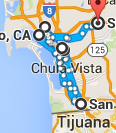
Screen Shot 2015-11-09 at 2.57.14 PMNovember 9, 2015 – Cloudy, 70 degrees

Miles Today: 59

Miles to Date: 9,615

States to Date: 25

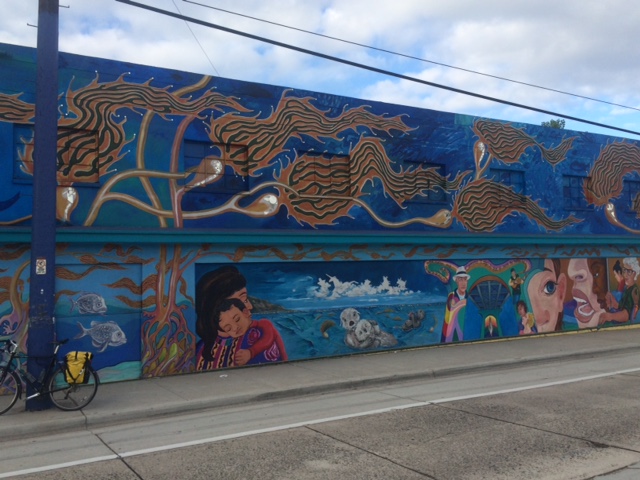
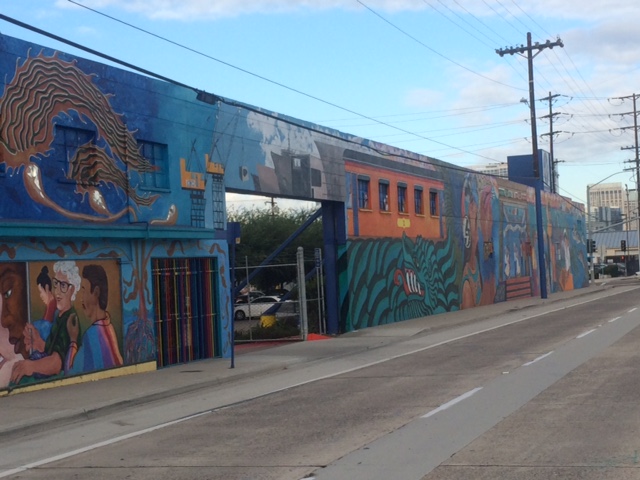
IMG_5162I really love bopping around cities on my bike, and metropolitan San Diego is a place of great variety to explore. I started early and cruised along the harbor, past downtown and the bike path along the port and Navy yard. At 8:00 a.m. the Star Spangled Banner plays on loudspeakers throughout the entire base and everyone, I mean everyone, stops what they’re doing and salutes in the direction of the nearest flag.

IMG_5164 IMG_5165 IMG_5166

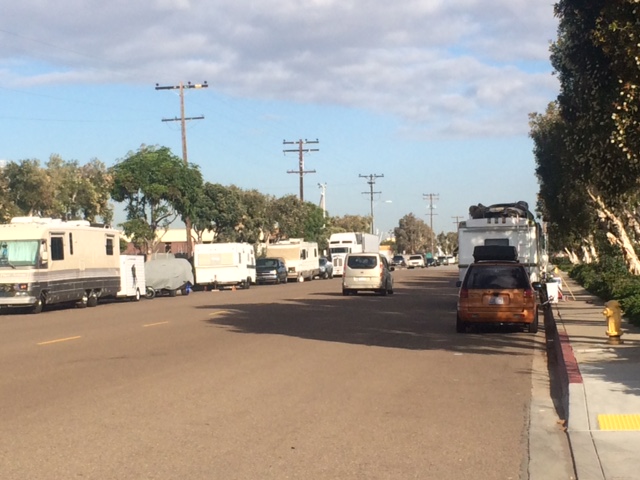
South of the base, the bike path continues through a light industrial maritime area. The road is lined with mini-vans, old trailers, and recycled motor homes. I saw many fewer street people in San Diego than in any other West Coast cities, but there’s an entire community of people struggling to hang on by living along these roads.

IMG_5168 IMG_5170

IMG_5172The Mexican border is almost twenty miles from San Diego by my circuitous bike route, but worth the trip. There’s a big outlet mall tight to the border fence in San Ysidro. I pedaled up the ramp to the pedestrian bridge. From the top I surveyed one of the most complex urban spaces anywhere: vehicle lanes, stop points, trolley terminus, pedestrian aisles, fast food joints and open retail stalls; a gigantic Mexican flag and human chaos. The Tijuana border crossing is lively place, though I could hardly interest anyone in my question. Legal or not, people here are close-lipped.

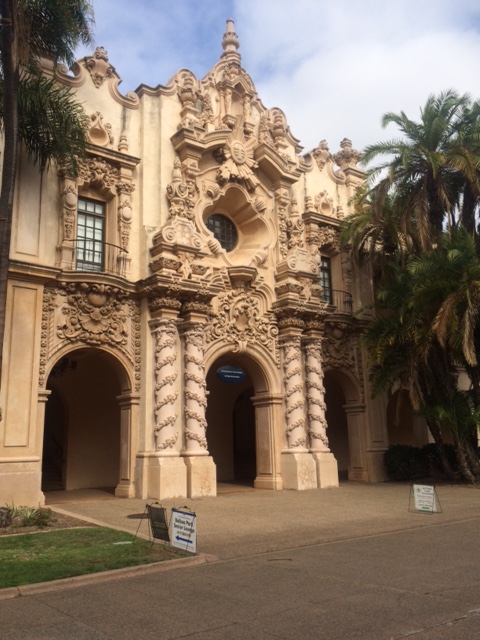
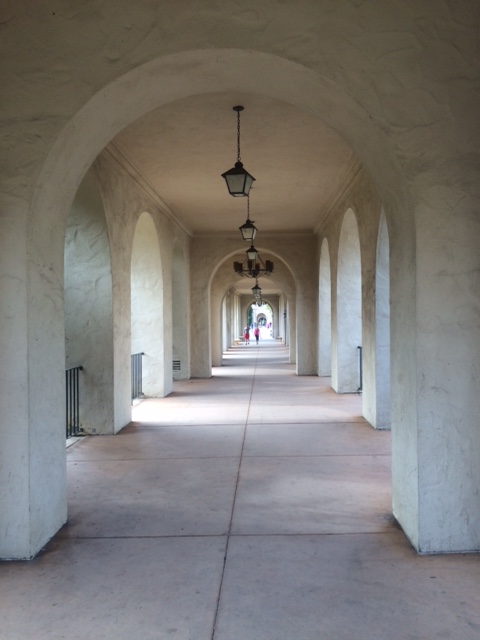
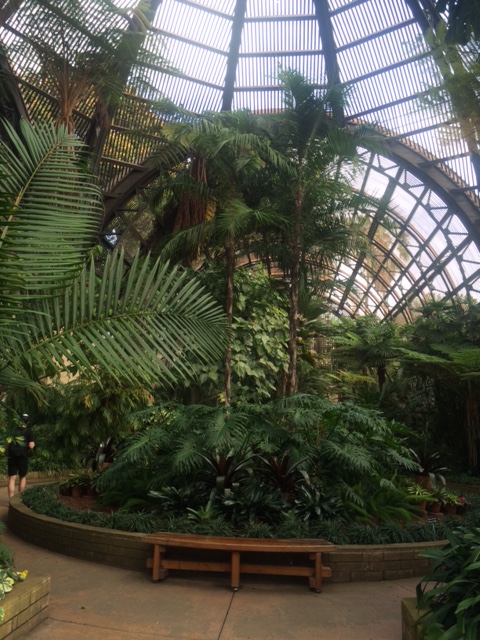
I rode back up through Chula Vista and National City and returned to San Diego to explore Balboa Park, a preserve since 1835 and site of two expositions, in 1915 and 1935. The Spanish Baroque pavilions have been repurposed into a variety of museums and a lovely botanical garden.

IMG_5181 IMG_5176 IMG_5180 IMG_5178

IMG_5174In the afternoon I cycled through the working class neighborhoods of East San Diego to my host’s in Spring Valley. Everyone was in hats and sweaters, unaccustomed to the heavy clouds and intermittent sprinkles.

A highlight of my day was this wall at the entrance of the public library in National City. A quote by Jorge Luis Borges in multiple languages: “I always imagined that Paradise will be a kind of library.”

Posted in Bicycle Trip Log | Tagged , , , , , | Leave a comment

Profile Response: Sherri McCutchen and Zander Chanin, Eugene, OR

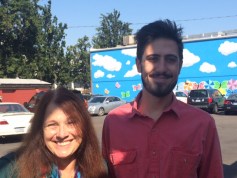
HWWLT Logo on yellow“Architecture is just one step of cycling materials from earth for our use.” Zander Chanin explained to me over breakfast at Brail’s, a Eugene food institution. Zander’s a recent graduate from University of Oregon’s School of Architecture and studied under Erin Moore from the design firm Float. “Her idea is that we borrow materials from the natural world. During the process of creating the built environment, materials are taken from their natural state, manipulated by man, and then they’re returned to their natural state.” How we manipulate materials influences how appropriately they return to nature.

Although Zander studied architecture, he doesn’t plan to become an architect in the traditional sense, “I love design as a way to actually change how things are, but I wonder how much architecture can actually change. Architecture has too many compromises.” Zander’s design work is centered on smaller scale projects: landscaping, furnishings, writing, and media. He built a set of mirror-backed birch cubes that are easy to move and reassemble. “We need to change the way people ‘read’ the world. It’s a more expedient way to make change.”

imagesZander backpacked in Japan for several months. “I felt completely liberated from stuff. I began to value things as potential art objects, particularly fragile things like paper.” Now Zander lives in Eugene with his girlfriend and works part-time for a moving company. “It’s amazing what people have and what they move. Junk that means so much to them.”

imgresSherri, Zander’s mother, elaborated, “The candlestick is meaningless when you’re not there. But when you’re present with it, it’s valuable.” Sherri moved back to Eugene from Denver a few years ago, in part to be near Zander, in part because her dad died and she inherited his house. “I need to sell my Dad’s house, but I can’t, yet. Every piece in it has to be touched, picked up, assessed.” Sherri’s dad’s home is alive with a man she revered. Once she lets it out of her hands, she knows from personal experience she will forfeit that connection. “I had a house in Denver, the one Zander grew up in. I sold it. The new owner bulldozed it to build a new home. Everything was gone, the physical vestige of memory, just like that.”

imgresSherri’s a reading teacher in nearby Springfield and works part-time at Home Depot. She enjoys the rewards of her teaching job, and the camaraderie of her retail work. “Home Depot is a great company. They assign you hours according to your availability and give benefits to part-timers. You’ve seen those commercials about Olympic athletes who work at Home Depot? That’s why athletes work there.”

When we sat to breakfast I had no idea where our conversation would flow. It turned into yet another spin on how we deal with stuff. Sherri sells things – big things – and is conflicted about how to deal with the things her father left behind. Zander spends his working hours moving other people’s stuff and explores how to make meaningful objects that are lighter, more fragile than traditional architecture. What we create and own are intimate extensions of our selves.

How will we live tomorrow?
IMG_3948“STEM needs to become STEAM – we need to add Art to Science, Technology, Engineering and Math.

“People are underemployed yet working so many hours. Let’s talk about reducing the 40-hour workweek. People would have more time to be creative. Can we work 20 or 25 hours a week and more time? We have enough resources, we just don’t share them.” – Sherri

“I think we are going towards greater awareness. Even in the past fifty years, we’ve changed our attitudes. When we damned the Columbia we thought it was a waste of the river to flow to the sea. Now, we question that. More awareness will get us far.” – Zander

“My belief is that when we die we all go back to the web of life. I get what happens to the body, but what about our consciousness? That’s what I wonder about.” – Sherri

“That’s a whole other breakfast.” – Zander


Posted in Responses | Tagged , , , , , , , , | Leave a comment

Trip Log – Day 187 – Carlsbad, CA to San Diego, CA

to San DiegoNovember 8, 2015 – Sun, 75 degrees

Miles Today: 46

Miles to Date: 9,556

States to Date: 25

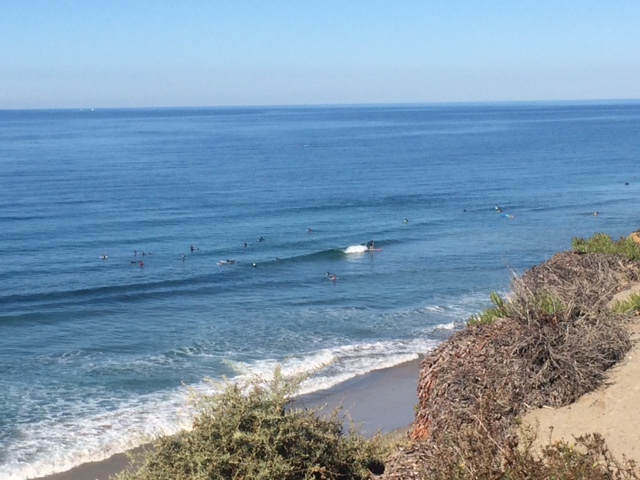
Sunday morning in Southern California seems to trigger dual devotions: coffee and the ocean. Dozens of coffee shops were jammed with cyclists, surfers and motorist’s starting their day. But the dead end overlooks along the Coast Highway were also lined with solitary souls contemplating the sea.

IMG_5130 IMG_5132

Swami’s in Encinitas is both a mystical self-realization compound and an internationally famous surfing spot. There’s logic in that, sort of.

IMG_5134 IMG_5138

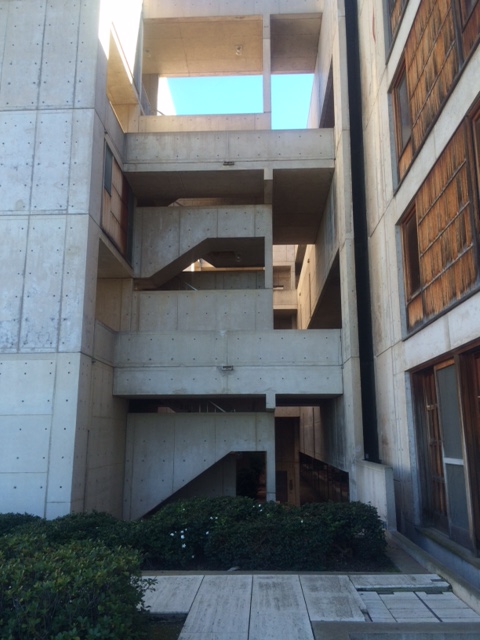
I visited Louis Kahn’s renowned Salk Institute. The older I get, the less impressed I am by architecture designed to shape behavior rather than allowing human potential to blossom. Unlike Richard Meier’s nuanced and suggestive work at The Getty Center, The Salk Institute is heavy-handed. Despite Kahn’s signature attention to hand and body dimensions, humans are subservient to the relentless order. The complex doesn’t even relate to the sea very well, which I suppose is the point. You’re always supposed to focus on the architecture. Despite my misgivings, I can appreciate Kahn’s discipline in creating his vision. Unfortunately, that vision isn’t weathering well. Wood is splintering, concrete’s spalling, and terrazzo’s cracked. Buildings conceived as monumental testaments need to be solid.

IMG_5144 IMG_5141

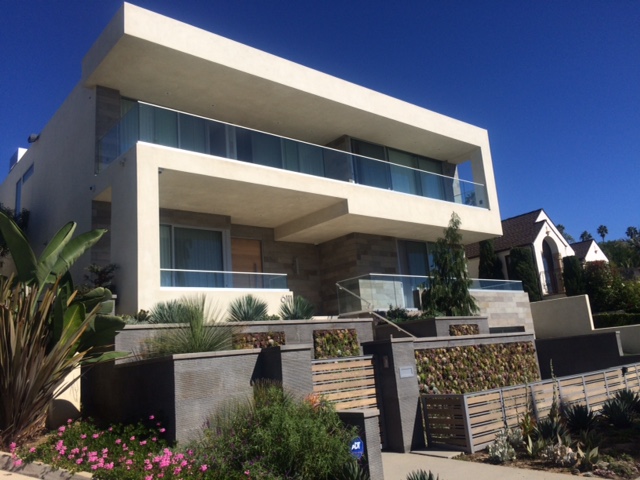
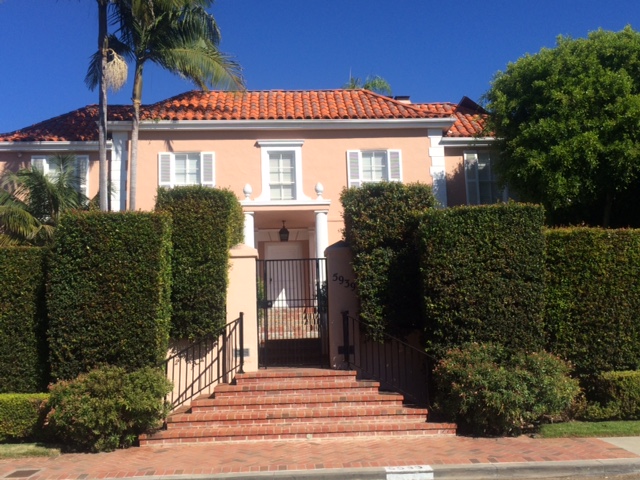
LaJolla is full of extravagant houses. Any style will do, as long as it looks expensive.

IMG_5148 IMG_5145 IMG_5153

I rather liked Pacific Beach and Mission Beach, which are funkier, tighter neighborhoods.

images IMG_5154 IMG_5155

But what is ultimately cool about San Diego is how the sea and the city sit tight to one another.

IMG_5158 IMG_5151

Posted in Bicycle Trip Log | Tagged , , , , , , , | Leave a comment

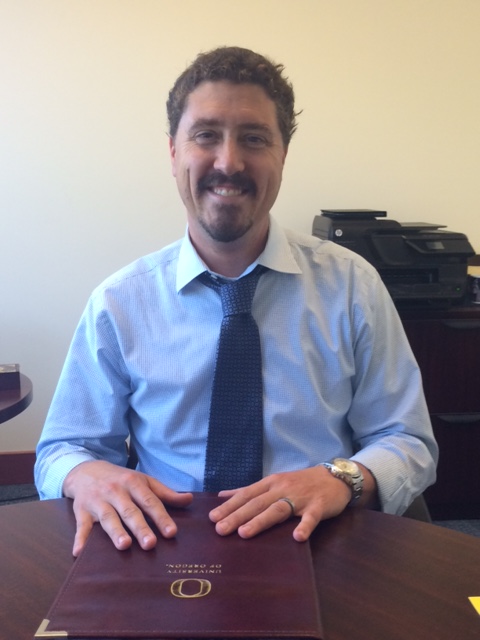
Profile Response: Abe Schafermeyer, Director, International Student and Scholar Services, University of Oregon, Eugene, OR

HWWLT Logo on yellowAbe Schafermeyer caught the bug for international travel early. The New Hampshire native spent his junior year of college in Chile and later taught ESL in Columbia. “Travel abroad was both an immersive experience, diving into another culture, and an isolating one. Each aspect was beneficial in my understanding of myself and others.” Abe decided to focus his career on study abroad. He joined International Student and Scholar Services thirteen years ago, and became Director in 2011.

imgresInternational students are an increasingly important financial component of American universities since they typically pay full tuition. However having international students on campus also contributes to a broader experience for everyone. University of Oregon’s international efforts fall into three distinct categories: UO runs three academic centers overseas, in Sydney, London, and Vienna; a staff of 25 runs programs for domestic students to study abroad; and Abe oversees twelve people dedicated to the needs of international students studying in Eugene. International students pay an additional $700 per year fee to cover the educational and cultural support services Abe’s office provides.

imgres“9-11 changed International student offices; it added a security component. Many people left the field and there were many jobs for people willing deal with the more complex requirements. That’s when I got into this work.”

The demographics of international students vary from year to year, often due to factors beyond the university’s control. “We had 250 students from Singapore. Singapore invested heavily in higher education at home; now we have four. We had 250 students from Saudi Arabia through programs initiated by President Bush. They usually brought their families and added significantly to the local economy. Now we have none.” Sixty-two percent of UO’s current international students are from the People’s Republic of China. “The issue is, will China continue to have strong economic growth? Will the government continue to devalue the Quan, which makes education here even more expensive? Will they start to limit access? Chinese students are often attracted to the American lifestyle. The government does not want to lose smart kids, nor do they want US-savvy kids returning to China with ideas that don’t fit the government’s ideology.”

imgres-1What will UO do is China pulls the reigns on foreign study? “The United States is still the Number One market in the world for higher education. People want to go where English is the main language. The UK is innovative and Australia is gaining ground, but we are still the preferred choice. I see more students coming from emerging nations like India and Brazil.”

How will we live tomorrow?

IMG_3930“I hope we will continue to recognize that diverse global perspectives enrich our lives in so many ways. International exchange creates richer experiences for everyone.”


Posted in Responses | Tagged , , , , | Leave a comment

Trip Log – Day 186 – Mission Viejo, CA to Carlsbad, CA

to CarlsbadNovember 7, 2015 – Sun, 75 degrees

Miles Today: 57

Miles to Date: 9,510

States to Date: 25

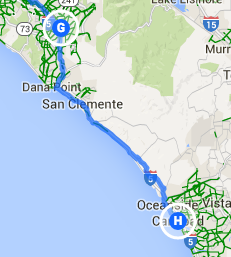
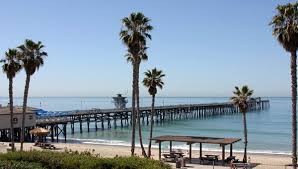
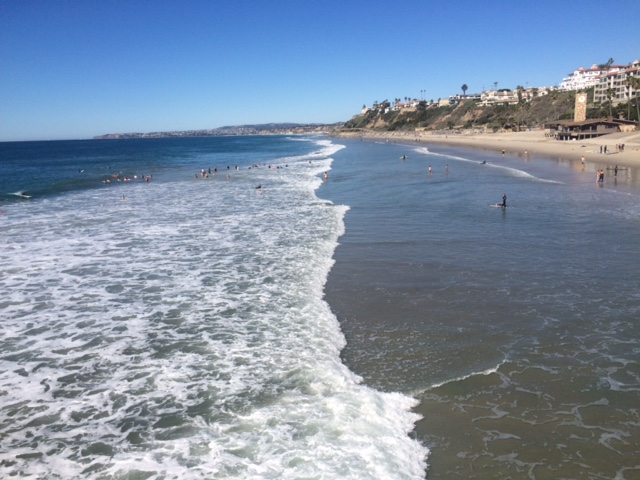
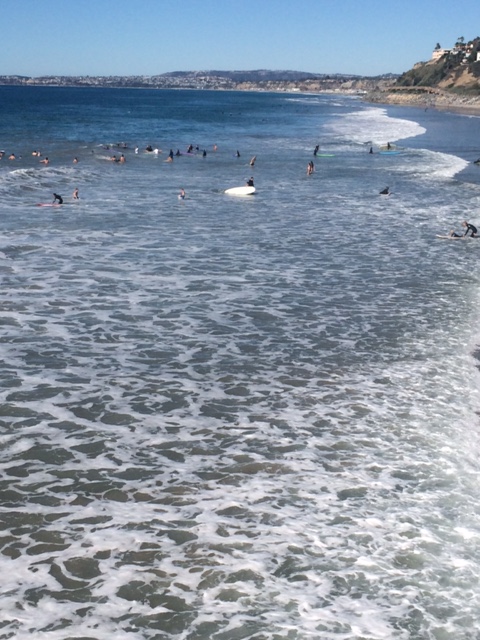
Summertime! The sky was clear, the breeze was light, the surf was up, and everyone was out on a sunny Southern California afternoon. I rode from Mission Viejo to San Juan Capistrano, which has one of the most extensive Missions I’ve seen. The rest of the ride was well marked bike path along the coast through San Clemente, Camp Pendleton Marine Base, Oceanside, and Carlsbad. Aside from teh sun setting before 5 p.m. for the first time, it could have been a July day.

imgres imgres-1 IMG_5121 IMG_5122

I didn’t see much wildlife, but birds of paradise were in bloom all along my route.

IMG_5124

Posted in Bicycle Trip Log | Tagged , , , , , | Leave a comment