Profile Response: Aaron Yaris, Santa Rosa, CA

HWWLT Logo on yellow“Society is full of people chasing stuff that will kill them. Each day we decide to wake up or go to sleep; to engage in life or escape it; to grow a garden or go to Vegas.” Aaron Yaris could be a preacher, maybe even a prophet. He’s a big man with a booming voice who intones memorable phrases with pronounced certainty. Like the Prodigal Son, he’s visited the edge of excess and returned to testify how life should be lived. In Aaron’s case, excess took the form of overeating. He keeps a photo of his immense girth before his epiphany. Aaron lost over 200 pounds, took up exercise, and became a raw vegan. Now his fitness and food regimen is his way of life. “Meat makes you feel sated. But I overdid it. I ate like eight hamburgers. After I lost weight I had energy. I walked, then started biking. I was empty-minded in the beginning. I felt invincible. Then I found obstacles, but I just kept getting back up.”
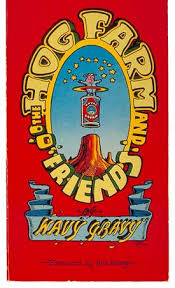
imgresAaron met his partner Marian at the Hog Farm, Wavy Gravy’s commune, “a place where people are expressing themselves without outside interference; no money, no mortgages.” Marian grew up in a Lesbian community outside Portland, OR; Aaron was born to hippie parents and adopted by a pair of college intellectuals. They lead a home-centered life. Their living room is home school classroom for their five children, ages one through nine. Their kitchen looks like a lab; jars raw vegan food in various stages of fermentation. Their spare bedroom is an office; they both work from home in the medical marijuana business. Despite somewhat unorthodox backgrounds, Marian feels unsupported by how her family lives. “My parents have offered to pay tuition for the kids in private school, but they won’t help us home school.”
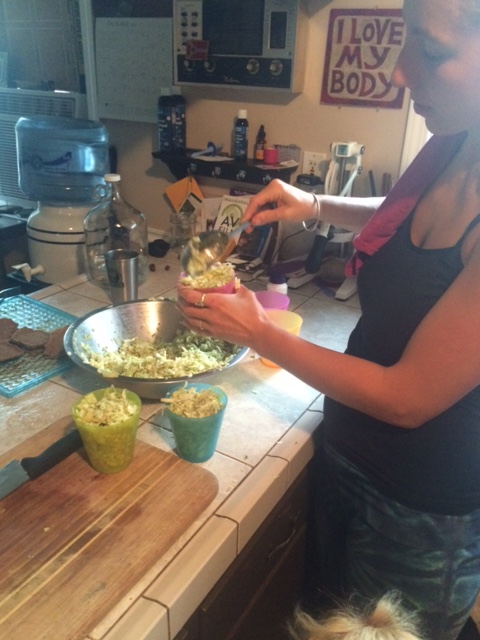
IMG_4561“My body is a gift.” Aaron has a keen appreciation for his trimmer self. “I had to learn to eat well because my metabolism burns energy slow. When we cook our food, we have a physical degradation of our bodies and a mental degradation of our psyches. Cooking our food is an extension of eating the apple in Eden. We will go to great lengths to have cooked food.”

Aaron is also aware how his new way of being moderates his labile temperament. “I am an extremely unbalanced person. I’m celebratory, high energy, then depressed. I have this Joseph Campbell thing to ‘follow your bliss’. I find it on my bike. The bike is more than a means of transportation. It is a form of enlightenment.”

Aaron is proud of being radical, “You’re not going to meet anyone more ‘out there’ than me.” Yet, because he and Marian live in opposition to so many norms, their family is bound tight. “Americans have more stuff and artificial choices, but we are actually the most oppressed people in the world.”
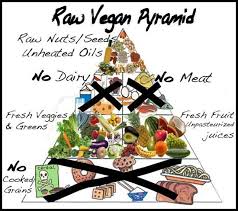
imagesAaron and Marian also believe that their way of living is ultimately sustainable. “The ecological impact of meat is immense. One pound of beef takes 2000 gallons of fresh water to produce. California is the canary in the water mine. It hasn’t hit the rest of the world yet.” But when it does, being raw vegan won’t seem radical. It will seem prophetic.

How will we live tomorrow?
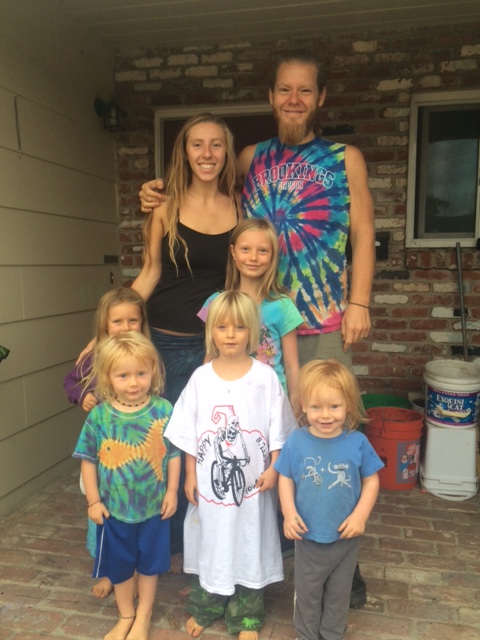
IMG_4562“We are going to live in proportion to how we want to live. What does it mean to say, ‘we will live better’? That’s meaningful? The will is the key word. We will live as well as we prepare.” – Aaron

“If I said how could we live, I think it is going vegan. The world isn’t made peaceful by wearing an Ohm tattoo. Check your carbon footprint and change.” – Marian


 

Posted in Responses | Tagged , , , , | Leave a comment

Profile Response: Lindy Ruddiman, Napa, CA

HWWLT Logo on yellowPeople grow grapes and produce wine in Modesto. People grow grapes and produce wine in Napa. But the people aren’t the same; the wine isn’t the same. Modesto is a Gallo town, politically Red with sizzling summers. Napa is a cooler, Bluer preserve of boutique vineyards. As I climbed the pass outside of Fairfield and left the Central Valley behind I didn’t just enter a more temperate climate. I entered a set of different sensibilities. The light is less harsh, as are the social and political attitudes. People are less strident; more comfortable with ambiguity.

imgresLindy Ruddiman was raised in Yreka and studied Art at Humboldt State. She married a Harvard guy who went into the wine business. They had two daughters, now grown; got divorced; stayed friends; and still work together. They each remarried. Lindy’s second marriage didn’t stick. She owns a bungalow on a quiet side street in Napa, converted the garage to her studio, and rents out the in-law apartment to a friend. They each have little dogs, which are also friends.

Screen Shot 2015-11-30 at 4.55.03 PMLindy designs wine labels and takes ‘bottle shot’ photographs. Like any pursuit, it’s more complex than meets the eye. Labels have to be evocative; they have to grab a wine buyer’s attention. But there are technical details of paper and sheen and application during production. Lindy’s deliberate during the gestation period of design. “I have a new label I’ve been thinking about. The wine is called Solano, which is the name of the next county but also the name of an Indian chief. The wine maker wants a Native American reference, but Solano is a Spanish word; Spanish Padres gave the chief that name. I’m trying to figure out how to evoke the Native American without being insensitive. This isn’t the Redskins.” Lindy lets ideas percolate. Then she creates graphics on the computer. “The sketching happens here,” she points to her head, “and the computer makes is visible. I get better results working right on the computer rather than trying to translate hand work.”

IMG_4549Lindy was looking forward to a weekend with her former husband and his wife. For many, socializing with an ex- and their spouse would be unpleasant, if not downright impossible. I’d like to think that being able to accommodate changing relationships over time, to accept the good aspects of people we loved even when our love has changed, is a positive thing. But it requires that we persevere the discomfort of transition, that we accept change with out harsh judgment, and embrace different forms of connection. Characteristics we should all aspire to, but are perhaps easier to attain in a land of good wine.

How will we live tomorrow?

IMG_4550“I am an optimist. I look at all the little things in life. We will make mistakes. We will struggle. But we will make it.”


Posted in Responses | Tagged , , , | Leave a comment

Profile Response: Jeannette and Jerry Neuberger, Lodi, CA

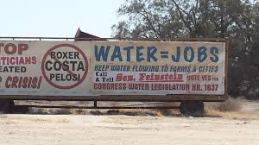
HWWLT Logo on yellowJeannette and Jerry Neuberger occupy a quarter acre oasis in the midst of drought-induced calamity. During my time in the Central Valley I heard many tales of drought. Some of them implored God for rain; others damned Obama and Pelosi. Some people wanted more dams, others more pipelines. Everyone wanted rain, or even better, snow in the Sierras.


images copyThe most common fable I heard goes something like this: ‘we grow the nation’s crops, so the country has to provide us the water the we need, and by the way it’s uncomfortable in this desert, so we also need to keep our lawns and foliage.’ As I witnessed less conservation in the Central Valley than in the Pacific Northwest or along the California coast, my empathy dwindled to a trickle.

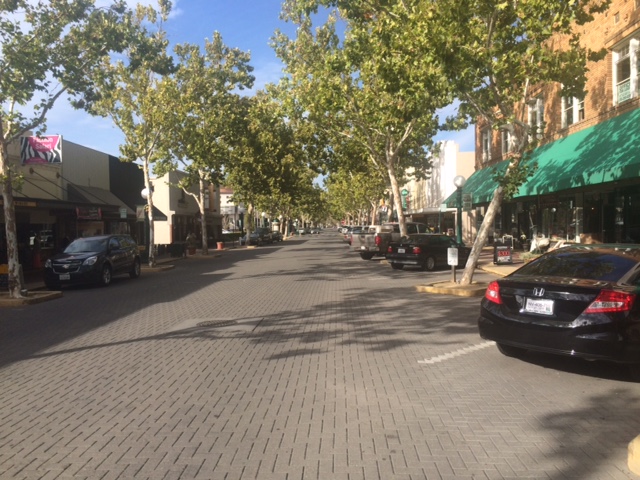
images-1Jeannette and Jerry were like a summer shower that dissipates heat. Sure, we talked about water: it’s topic number one in the Central Valley. But Jeannette and Jerry spoke from an informed, rather than emotional center. They knew the history of 1972’s Central Valley Project Improvement Act and the State Water Project. They acknowledged the political shortcomings that continue water flow into Kern County’s desert despite agreements to only open the spigot when there’s surplus. They’re flummoxed by agreements that provide water at $200 per acre-foot that can be resold for $6000 per acre-foot. They’re frustrated by how the water interests line politician’s pockets to continue unsustainable policies. They understand, “there will be no solution to this water problem until we stop framing the desert.” Yet, they’re not immobilized by these realities.

IMG_4528Jeannette and Jerry live in a charming 1920’s era bungalow a few blocks from downtown Lodi. They’ve added solar on the roof and built a sizable greenhouse in the backyard. They’re a net electricity generator – their electrical meter runs backwards – and they grow a good amount of food in a tight urban space. Their steps toward self-sufficiency may be tiny compared to the mammoth political, economic, and climate issues that determine the regions water woes. But at least they are doing something.

How will we live tomorrow?

images“The short answer for us in Lodi is a huge cesspool from Stockton to San Francisco if the powers that be continue to get the water they want to divert to the desert.” – Jeannette

“I’m hoping more people live like we do with our own garden and solar. But I’m concerned about the initial investment. When I look at the cost of land and real estate today, I don’t see how they are going to do it.” – Jerry


Posted in Responses | Tagged , , , , , | Leave a comment

Profile Response: Jim Andrews, Ceres, CA

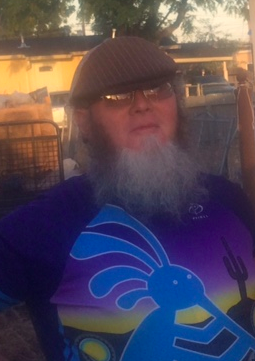
HWWLT Logo on yellowJim Andrews’ profile on warmshowers.org appealed to me: a father with two sons who like to play board games. As I cycled through a squat neighborhood on the other side of the tracks, I realized my conception of a guy in his forties with a pair of darling tweens was incorrect. Jim’s run-down stucco house sits amidst a yard littered with stuff many of us call junk. I took a cleansing breath, rolled my bike down the drive, greeted the resident Pit Bull, and met my heavy-set host with his huge grey beard and loud shirt.

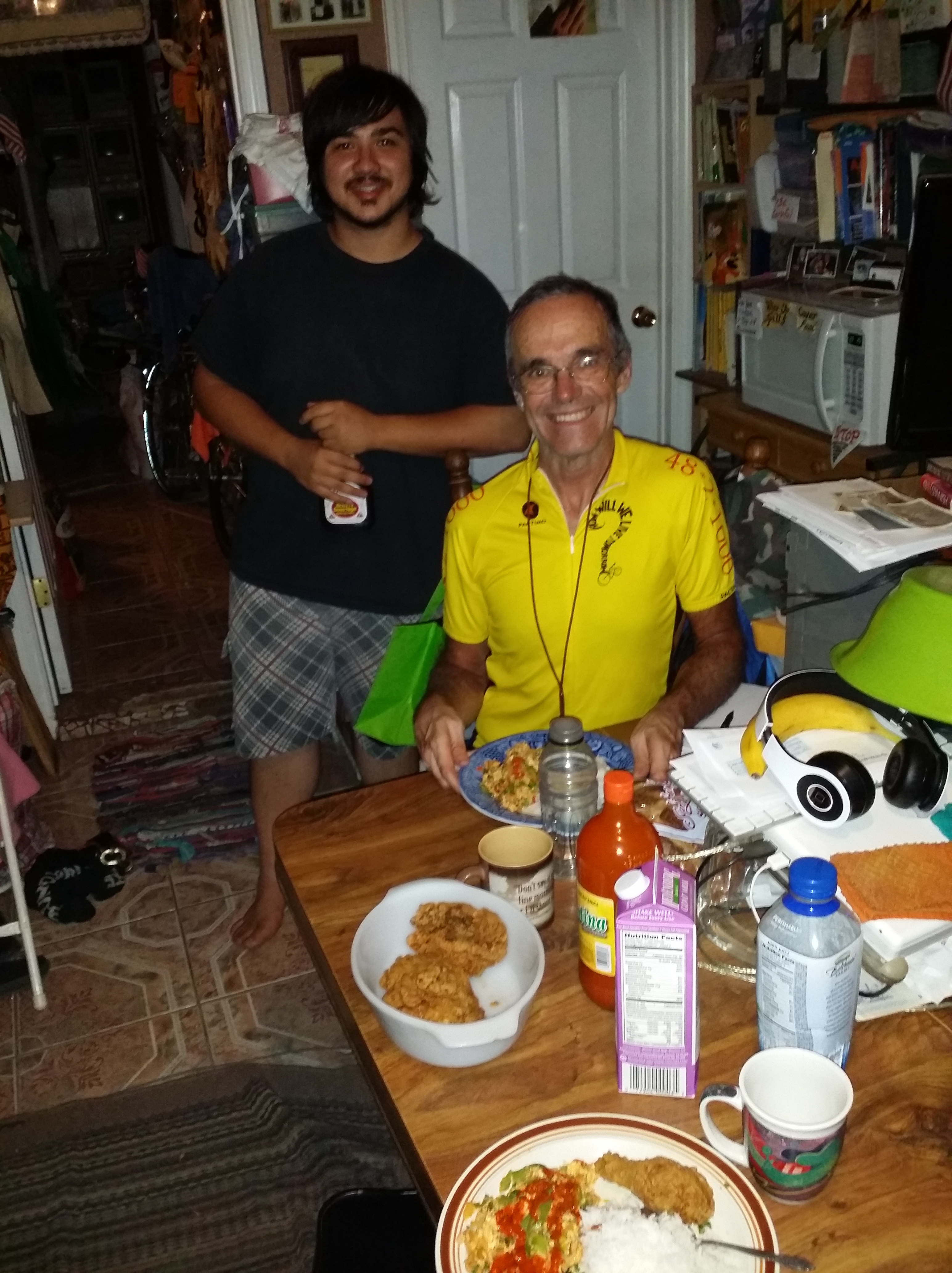
I’m used to people sussing me out in the first few minutes we meet. Who’s this guy in the garish bike jersey? Is he kooky or cool? This time, I was the one trying to get a compass fix as Jim guided me through the dark back hall and through the kitchen, where his 18-year-old son Benjy fried chopped stuff in a pan. Eventually, people realize I present no harm and might actually be interesting. Similarly, by the time I was settled at the table in Jim’s main room, I realized that the evening was going to be all right. In fact, it proved to be one of the most memorable of my trip. Jim was gracious as any host I’ve had, and if hospitality could be measured against available creature comforts, Jim Andrews would top the chart.

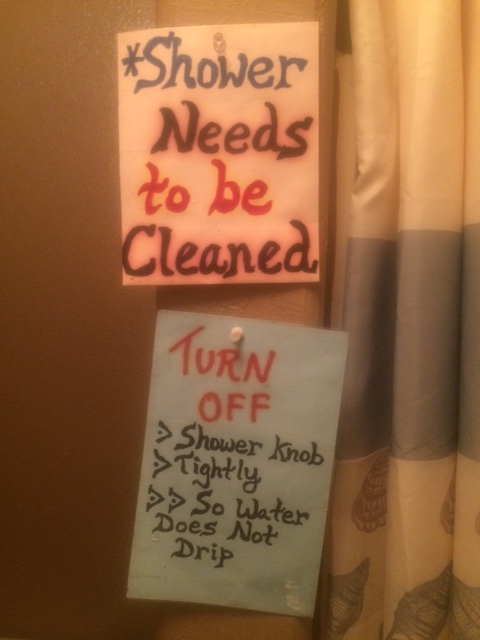
20151006_191555Jim and Benjy rent a small house. The main room has a table and three chairs; the kitchen is a galley with stove, refrigerator, sink and counter. Benjy’s room is beyond the dining area, separated by a curtain. Jim’s room is in the opposite direction, larger, with a door. There are two other bedrooms, which Jim and Benjy sublet: one to a woman with a two-year-old daughter, the other to a young Vietnamese man. The place is crowed with stuff, but its organized clutter. The five souls share one bathroom, possibly the cleanest bathroom I’ve seen on my trip.

IMG_4517Jim grew up in rural Oregon. He wanted to be a missionary in Cambodia, learned Khmer, but never realized his dream. He married a woman who’d escaped the Khmer Rouge. They had two sons. The oldest recently moved out with his girlfriend. Benjy just graduated high school and is figuring out his next steps. There was a stack of board games in the dining rom, though no one suggested we play.

Jim is patient and persevering; he graduated from college twenty-eight years after matriculation. He’s a substitute teacher in nearby Modesto. He gets called two to three days a week but can’t work further away because he sold his car and ten miles is about the limit of how far he can ride his bicycle.

IMG_4518Benjy prepared spicy fajitas for dinner. Jim told stories of growing up and asked about my life on the road. He’d like to tour. He showed me the Portuguese sweetbread, a local specialty, he’d purchased for my visit. I knew it was an expense, so was appreciative, but I didn’t request any. Jim hoped a school would call for him to sub the next day.

After dark, Jim cleared a circle of floor space in his room where I could lay my sleeping bag. In the morning he made oatmeal and coffee, and a pair of cheese sandwiches with the special bread. He took pictures of me, of Benjy and me; Benjy took pictures of Jim and me. Even the friendly pit bull got in the action. No school called to work that day.

As I was getting ready to roll, Jim said, “Not many cyclists stay with us. We’d like to host more. Please give us a good review, so others will choose us.” I gave them a great review: the truth. Jim and Benjy Andrews may not look like exceptional hosts, but they are.

How will we live tomorrow?

Screen Shot 2015-11-29 at 1.25.05 PM“I don’t complain about being poor. What bothers me is when people look down on me. When I got rid of my car and invested in a bike I had friends who thought it was a mistake not to have a car. Are they really my friends?

“When I look back at my life I messed up so much. I’m trying to slow down, not focus on stuff. I have things to be thankful for.

“Part of my answer is hope. I’ve taken several stress tests. I should be dead. My health is terrible: bad back, no pigment in my skin, hernia. I am dealibg with depression. But, I have hope. I have my sons, my mom, my belief in God. We all have problems but I take one day at a time and I have hope. My motto is ‘Let go and let God.’

“My great aunt was born in 1920. She survived the Great Depression herding sheep for 25 cents a day. My dad was a good man, not a good father. We have no air conditioning. We have an evaporative cooler but it costs too much to run. I just don’t focus on the negatives. I focus on the positive.


Posted in Uncategorized | Tagged , , | 2 Comments

Profile Response: Paula Yang, Hmong Activist, Merced, CA

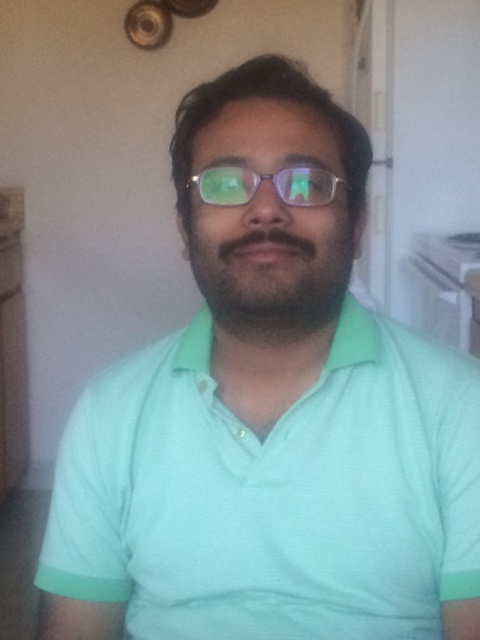
HWWLT Logo on yellowPaula Yang is a faithful Hmong daughter, an advocate for women, and a force of nature; petite in stature, feminine in appearance, with a backbone of steel. Paula’s beautiful fingernails dazzled me just as much as her fiery speech. Her cellphone rang multiple times during our conversation: a news reporter, a city councilman, an elderly Hmong woman needing transportation. Paula addressed each mini-crisis and returned to our conversation without missing a beat.

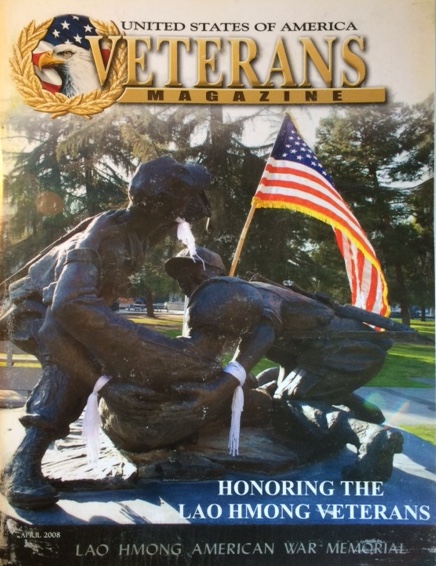
IMG_4502Paula’s parents and their nine children migrated from Laos to Anaheim in 1976. Her father was a general in the Laotian army. The Hmong were US allies during our military incursion into Southeast Asia and many came here as war refugees. “In another country, your parents are stripped of their title. They cannot communicate. The children become the conduit for communication.” The Hmong culture is rooted in male dominant hierarchy; life in the United States was difficult for the former general at every level.

In the 1980’s, California’s Hmong community centered in Merced. “I was depressed, I liked Southern California.” But Paula moved to the Central Valley with her family. She fell in love with a boy who suffered epilepsy. Her family would not give its blessing, so she broke it off. She started working for her community.

IMG_5343After 2005 there were no more refugees and Paula’s focus turned to finding ways for her people to navigate American culture. In 2007, Paula’s father was arrested. It became her call to action, to raise consciousness in the United States about what her father, and other Hmong military men, did to aid our nation. She held rallies, got on television and eventually the charges were dropped. Paula continued to tell the story of the Hmong in the Vietnam War public. She has used every form of media to promote the honor of her father and other Hmong veterans.

At the same time she continued to work with Hmong women and children. Like most minorities who live in a community for more than a generation, the Hmong in Merced are beginning to infiltrate the region’s economic and political life. Paula hosts a local TV how that highlights the Hmong community and recently developed, ‘Stand by your Woman, Stand by your Daughter’ to help Hmong men and women adapt to life in the United States while retaining their Hmong identity.

How will we live tomorrow?

Screen Shot 2015-11-27 at 2.58.12 PM“I want to find my passion and purpose. I am serving my people. It’s difficult, as a Hmong woman, where we are second-class citizens. I listen to women from all over the country who are suffering. Tomorrow we need to respect and understand our culture. What would be ideal would be to combine our cultures, to join them.”


Posted in Responses | Tagged , , , | 2 Comments

Profile Response: Candice Adam-Medefind, Executive Director of Healthy House, Merced, CA

HWWLT Logo on yellowThe Spirit Catches You and You Fall Down by Anne Fadiman changed my perspective on medicine and culture. The story of an epileptic Hmong child, her American doctors, and the collision of two cultures changed Merced, CA in more profound ways. Merced is an agricultural town in California’s Central Valley where many Laotian refugees – US allies during the Vietnam War – settled in the late twentieth century. The saga of a toddler with a disease that Western medicine wants to treat aggressively, but is considered a mysterious gift among the Hmong, is a tragic epic of well intentioned people working at cross purposes.

imgresThe book raised awareness of medical / cultural dissonance across the country. In Merced, the book led to changes in medical protocol, integrated Hmong Shaman into the local hospital, and triggered the formation of Healthy House, a non-profit organization that provides education and translation services to Hmong and other non-English speaking groups, as well as cultural training for clinicians. Candice Adam-Medefind has been Director of Healthy House for five years.

Healthy House’s foundational work is providing medical translation in fourteen different languages to patients across the Central Valley. “Any provider who receives federal funding must provide translation services. Family members can provide translation, but we discourage it.” Translating within the family, usually younger generation to older, creates problems in comprehension; children often don’t understand the medical terms. It also violates cultural norms. Older people will not disclose personal issues, especially about their bodies, through their children. Professional translators are more effective.

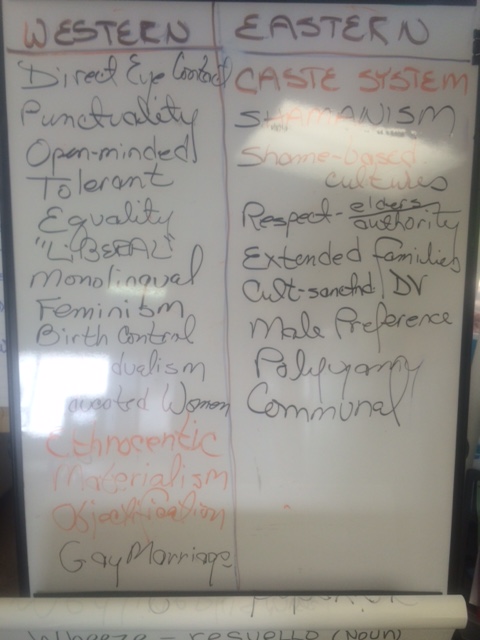
imgres-1Since the last group of Hmong refugees arrived in 2005, Healthy House’s work has expanded beyond direct medical services to include cultural and language classes for young Hmong. “We want to give them the tools to appreciate Hmong values – like respect for elders – in the context of the United States.

As second, and third generation Hmong live in Merced, they are becoming more integrated in the community. “A Hmong is leading our local redistricting effort. We have the first Hmong judge and a city councilwoman. Hmong are very community minded. The Kiwanis youth group is almost all Hmong kids. And my kids tell me they are really good a math, which makes it harder for everyone else.”

IMG_4501Healthy House’s challenges are becoming more refined. Living in a country with a different diet and less exercise, Hmong have developed adult-onset diabetes, a disease they call ‘sweet blood’. Healthy House has started an initiative to stem that trend. They also work with other minority communities in the Valley with culturally selective medical issues. “Right now we’re doing an African-American disparities project to increase breast feeding among new mothers and provide more breast cancer care among older women.”

Although Healthy House values integrating Hmong culture, sometimes the dissonance is so great they try to adapt Hmong values to American ones. “Powerful men in the Hmong community often practice polygamy. Sometimes they neglect the older women who are left. Late in life abuse of women is common.” Healthy House has started an ‘Honor Human Rights’ initiative to extend the respect Hmong children show their elders across the entire community, including elder males.

How will we live tomorrow?

IMG_4503“We will live in more diverse communities. We will have more multicultural conditions through marriage and shared culture.

“We have to act less like victims. Identity politics can be divisive as well as empowering. We have to be culturally sensitive yet not take offense so easily about cultural snubs. Look at the issues of men, boys, and race versus the police. We have to be comfortable about being uncomfortable. As director of a cultural program, I appreciate our need to be sensitive, but not to the point of being victims.

“People have abdicated our free speech rights. Students don’t value or even know what we’re entitled to under our free speech. Too many people take offense and then limit what’s acceptable speech.”


Posted in Uncategorized | Tagged , , , , , | Leave a comment

Profile Response: Surge Legaspi, History Teacher, Fresno, CA

HWWLT Logo on yellow“The more a student knows his history, the better he does in class.” Surge Legaspi assigns each student to write a personal family history. “So many of my students live with step moms, with aunts. I hear reasons why they have problems.” Surge, the 35-yer-old son of illegal immigrants, teaches tenth grade world history in Madera, half an hour north of Fresno. Eighty-five percent of the students are Hispanic, but only fifteen percent of the teachers. “I never had an Hispanic male teacher until I went to college.”

Surge grew up in Ivanhoe, a farming community south of Fresno with 5,000 people. ”Three thousand of them are from Villa Hidalgo, outside of Guadalajara.” His father was a farm worker, his mother a seamstress. “My parents were never part of the system. They were not citizens, not part of the United Farm Workers, they did not vote.”

imgresSchool was a mixed bag for Surge. “As a child, school was my sanctuary. It was the only interesting thing in my life. I was enthralled with travel. I thought perhaps I could be a truck driver. That was as exciting a future as I could imagine, being a farm worker. I never thought I could be a teacher.” Surge went to community college near his home, then transferred to Fresno State. “I hated going to school. It was only an hour from home, but I had no one to turn to.” Surge dropped out, but eventually returned and graduated.

Surge taught in a public school, paid off his student loans, and got laid off in the 2008 cutbacks. That inspired him to travel. He went to Guatemala, then Bolivia. He taught in private schools and travelled during breaks. He returned to the Central Valley and lives in Fresno’s Tower District, the city’s funkiest neighborhood, midway between his family and his job.

images-1Surge was considering extensive travel once again when his father died in a car accident last April. “The accident changed everything. For my parents, returning to Mexico was always the goal. I think that was always nostalgia. Now, that’s not going to happen. My mother has nothing to hide. There was a time when we couldn’t talk, she and I, about sex, religion, anything. This tragedy opened us up.”

Surge has a younger brother who still lives at home and cares for his mother on a daily basis, but he is hesitant to leave his mother to move abroad, so he travels during breaks and tries to impress on his students the value of seeing the world. It’s a challenge because travel, beyond immigration, is not part of Mexican culture. “I visit my relatives in Mexico and after a few days I want to go to Mexico City. They warn me not to go. They have fear. I meet 18, 20, 21 year old Europeans travelling for a year. That would never happen in Mexico. Mexicans stay close.

“I am a broken record with my students. I just tell them to travel, travel, travel. But the girls get pregnant at 18 and the guys join gangs. I used to be involved with gangs. It’s a dead end. I just keep telling them to get out and see the world.”

How will we live tomorrow?

Screen Shot 2015-11-25 at 7.25.03 PM“To one person, how you can live tomorrow is your own world. To me, it is different. To the migrant worker, it is completely different. If everyone travelled more, we could solve most of the world’s problems.”

Posted in Responses | Tagged , , , , , | Leave a comment

Profile Response: Tom Etheridge, Manager of Auto Pawn, Fresno, CA

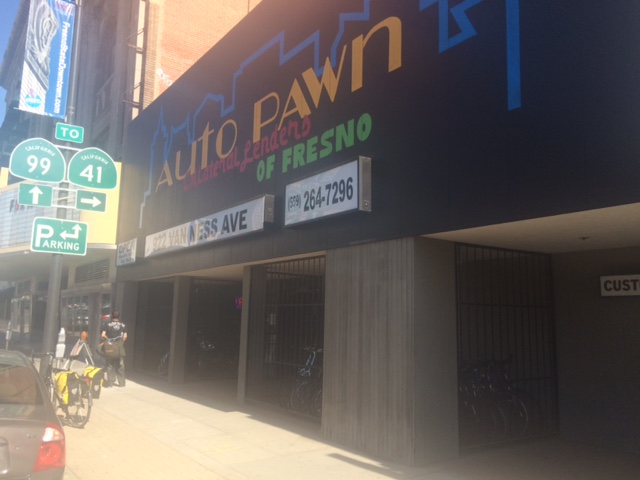
HWWLT Logo on yellow“Pawn shops are the second oldest business in the world; you know the first.” Tom Etheridge, a twenty-year veteran of the pawn world, retold the legend that Queen Isabelle pawned her jewelry to finance Christopher Columbus’ voyage to America. “People have pawned things forever.”

Like every other business, Pawnshops have become more complex, and more regulated, over time. Tom outlined the basics:

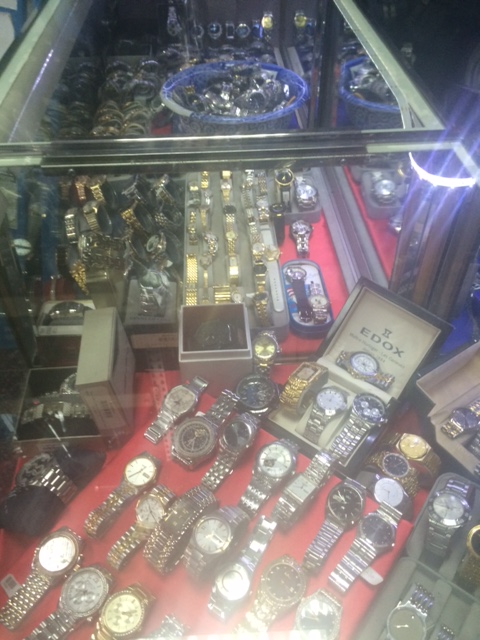
IMG_4469Pawnshops use the Blue Book, which is now on line rather than an actual book, to determine the value of an item. They will lend between ten and thirty percent of the Blue Book value. Auto Pawn makes up to a hundred loans a day. Owners have four months to retrieve their item, for the amount they borrowed plus interest and storage. If they fail to do so, Auto Pawn owns it. “Every item we accept is reported to the police, who check to see if it’s stolen. The interest rates are determined by the State.” The rates are higher than a bank can charge. “Let’s say you bring in a $500 bicycle. I give you $50 for it. In four months, you’d have to pay maybe $75 to get it back. That’s because it’s a big item that requires storage. It would be less if I gave you $50 for jewelry.”

IMG_4468For years, jewelry was the mainstay of the pawn business. “Gold buying has killed us. I used to get fifty or sixty pieces of jewelry a day. Now I might get six. The credit and check cashing stores all buy gold, at higher prices than we can offer.”

I asked Tom how they decided what to accept. “We don’t trade in guns anymore, the regulations and paperwork got too difficult to bother. We don’t take clothes, except for motorcycle stuff. We don’t take many cellphones these days either. Now that everything’s connected to the cloud, the phone can be disabled and it’s useless to us. People will argue their stuff is worth more, but we offer what we offer. There are about a dozen other pawn shops in Fresno.”

IMG_4466Tom’s staff asks people if the items they’re pawning belong to them. “If they say yes, we are in the clear. If they say no and we take it anyway, we are accessories.” Sometimes Tom won’t take an item regardless what the supposed owner says. “If some guy comes here with a cell phone and he can’t use it, we know it’s not his. If the police discover that something’s been stolen, they confiscate it and we are out our money.”

The store is full of merchandise: rings, musical instruments, electronics, leather jackets. Next-door is agarage where they have lawnmowers, bikes, and cars. “We keep airplanes out at an airstrip.” I am amazed that people pawn airplanes. “People pawn all sorts of stuff. I’ve done loans of over $50,000. We serve every clientele here, from homeless to judges. This is a cash business, and sometimes people want money that cannot be traced. We report everything we are required to report, but we don’t ask what people do with the money we give them.”

IMG_4467Is the stuff on display on hold for their owners? “Everything you see here is for sale. We own it.” Items within their four-month loan period are stored in back. “Between 60% and 80% of people retrieve their items.” I looked at the shelves and shelves of DVD players and wondered how long they hold on to stuff for sale. “We never get rid of anything. We might lower the price, but we never give it away. I sold an Atari for $3200. Probably gave a guy five bucks for it years ago. In the meantime it became a collector’s item.”

How will we live tomorrow?

IMG_4465“I probably won’t be here. The earth is going to be a sad place. We have to value life and authority. Look at the college shootings. Young people have no respect for life. A lot of older folks don’t either.”


Posted in Responses | Tagged , , | Leave a comment

Profile Response: Flynn and Savannah Gabriel, Carson City, NV

HWWLT Logo on yellowFlynn Gabriel bought 88 microwaves for three cents a pound. Total cost: $68. He will take them apart, strip them of resalable metals and separate the copper from the aluminum from the brass. He keeps the motors intact (they sell for 15 cents per pound) and will sell the carcasses back to the landfill for a half-cent a pound. He’ll gross about $300 for his work; less than ten dollars an hour after spending ten minutes stripping each microwave. His return is less if you factor in the cost of transporting and reselling the components. But Flynn doesn’t analyze it that way. It’s interesting work he can do on his own time and doesn’t require interacting with other people. Flynn’s not keen on working with others.

IMG_4338Flynn Gabriel has Asperger’s Syndrome. “My son get diagnosed with it, so I started investigating it on the Internet and I realized, ‘Hey, that’s me’. That’s why I like scrapping. I can do it by myself. The diagnosis doesn’t change anything. I’m still me.”
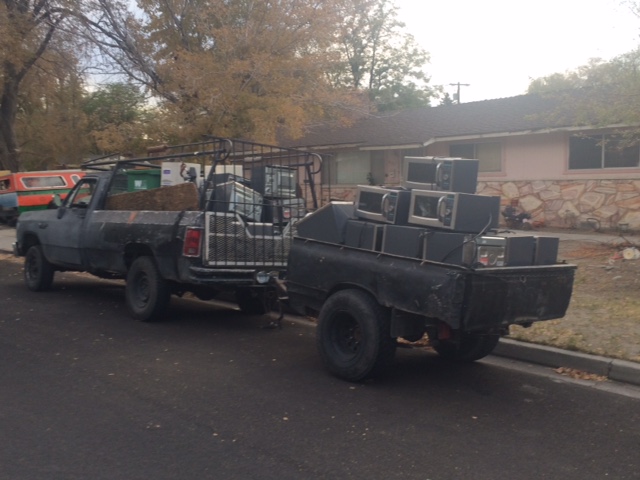
Flynn’s the oldest of seven children. He grew up in a poor family that never threw anything away. Now, Flynn has three jobs. Twice a week he delivers papers in the wee hours of the morning. He handles trash removal for three local motels. And he scraps. “I’ve worked since the day I graduated high school. I do what I want when I want.”

IMG_4345

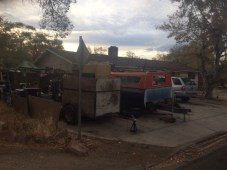
Flynn, his wife Savannah, and their daughter Aria live in a modest ranch a few blocks from the Nevada State Capital. The house is easy to find; their driveway and yard is cluttered with stuff. My initial reaction was chaos, but on closer inspection their mini-fridges, bicycle wheels and copper pipes are well ordered. “Our neighbors don’t complain because we keep things neat and give them anything they might like.”

Flynn and Savannah live in a post-consumption world. They don’t buy much, and never buy retail. “Ninety percent of what we have someone else was throwing away.” They find stuff others discard, fix it, and resell it on eBay, Craigslist or Facebook penny. During dinner, the doorbell rang and Savannah collected $25 from the top bidder in a Facebook auction for a printer Savannah had found, cleaned up, made operational, and sold.

IMG_4344Although Savannah has a paid job in a thrift store, the family lives beyond the world of banks. “We have our pawn pile; rings we’ve collected, our Wii, our projection system. Things we like but don’t need. They are our savings account. When we need money we pawn something. It doesn’t cost much. Say the pawnshop gives us $90 for the Wii. We have ninety days to retrieve it, for $120. If we don’t have that yet, we just pay the interest and they hold on to it.” In reality, pawning is a costly savings account. But traditional loans aren’t available to folks like Flynn.

Savannah and Flynn recently got healthcare for the first time through the Affordable Healthcare Act. Getting regular medical care is a new experience for them. Flynn’s in the process of getting his self-diagnosis of Asperger’s certified. “I’ve had four major auto wrecks, my body’s pretty shot. The diagnosis will come in handy if I need to go on disability.” Flynn’s 31.

IMG_4336“Savannah went to her first appointment. “The doctor just wrote ‘obese’ on her form without even talking to Savannah about it. Look at her, she’s a big girl but she’s active, she moves all the time.” Flynn was clearly hurt that this outsider slapped his wife with an offensive label.
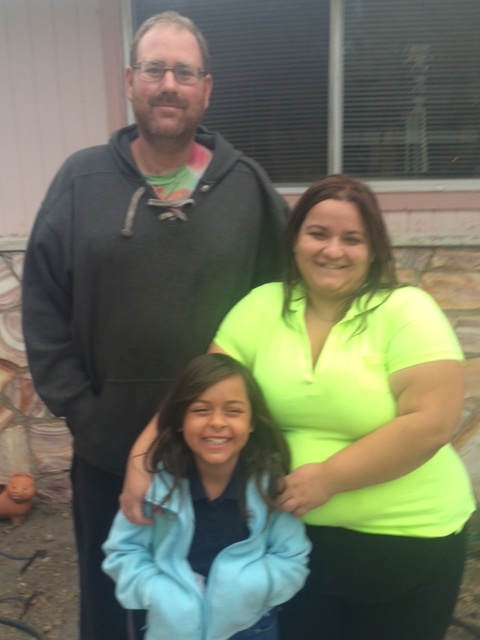
The more time I spent with the Gabriel’s, the more I witnessed their binding love and support. The world is not forgiving to men who speak with Flynn’s clipped abruptness, or kind to women with Savannah’s heft. Yet, within their home, Flynn, Savannah and Aria share nothing but praise and patience for each other. I felt like I’d landed in The Enchanted Cottage, where blemishes the outside world is quick to condemn evaporate, allowing an individual’s true goodness to shine through. At first glance, it’s easy to dismiss Flynn and Savannah as junk collectors who don’t fit the model of an American family. Yet on reflection, their livelihood is more sustainable than many I’ve seen, and their mutual devotion is beautiful.

How will we live tomorrow?

IMG_4342“Great.” – Aria

“I will learn new things every day.” – Savannah

“I will live the same way I do today. Seriously, if I see someone who needs help, I am the first person to stop. One night I literally gave a guy my shirt. Once I sold a guy my shoes.” – Flynn


Posted in Responses | Tagged , , , , , | 5 Comments