Profile Response: Ruth McFarlane, Director of Programs, LGBT Center, San Francisco, CA

HWWLT Logo on yellowWhen I arrived at the LGBT Center on a Friday morning, the building was locked, the glass in one of the front doors was shattered, and plywood covered the opening. I texted Ruth McFarlane; she came down to let me in. The computer area in the main lobby was cordoned off. “We had a problem here on Wednesday. A guy at a computer, he must have been on something, went after another person. We managed to get him outside, but he broke the glass trying to get back in. We’re all a little shell-shocked.”

The LGBT Center is open to anyone. That’s a good thing. But as San Francisco’s street population expands up Market Street toward the Castro, the Center has to balance open access with providing a safe place for the LGBT community. Before Ruth and I even settled into our seats to discuss tomorrow, I’d witnessed how San Francisco’s gaping inequality threatens the Center’s mission.
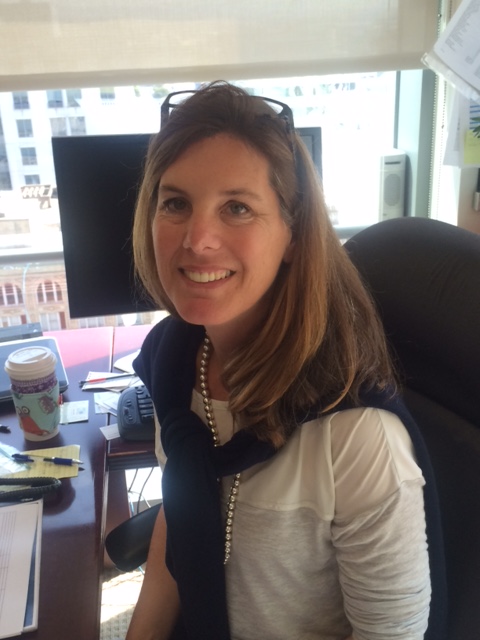
IMG_4710“What I get passionate about is the nitty-gritty of people’s lives. What is their story? In law, you don’t do that. You craft pieces to fit the narrative you want.” Ruth McFarlane is an accomplished drifter. Born in Toronto, Ruth spent her childhood with missionary parents in Africa. She came to the US at fourteen, studied law, and spent six years as an international tax attorney in New York. She about faced her practice and geography by going to South Africa to work with a legal resource center. When she still wasn’t getting the stories she craved, she abandoned law and got a Masters in Social Work, worked in affordable housing, and moved to San Francisco in 2014 to be Director of Programs for the LGBT Center. “This is a dream job for me; supporting my staff and developing programs to meet the needs of this community.”

images-1San Francisco has had openly gay organizations since the 1960’s, though the LGBT Center was not officially formed until the 1990’s. I asked Ruth whether, as time and tolerance progress, the Center might become unnecessary. “We see an ongoing need for the Center, though its role keeps changing.” San Francisco is a transient city, and a magnet for gay people. The Center supports many gay youth. “Thirty percent of the of homeless in San Francisco identify as LGBT; forty percent of the homeless teens. At the same time, more elderly are coming out, and they need support and services.”

How does AIDS figure into the Center’s work? “AIDS is less of a program focus, but from a cultural perspective, it is inescapable.” The LGBT Center doesn’t provide medical or other direct ADIS services. Their AIDS focus is intergenerational. Older people, the guys who fought for rights and survived the plague, have an important perspective for younger people, who may underestimate the impact of the disease.

images-2The LGBT Center is at the leading edge of how we establish personal identity. “Youth are identifying as GBLT younger. Many are not even using those labels. They are queer or gender fluid.” As a person with multiple identities, Ruth prefers the term ‘queer’. Every meeting at the LGBT Center begins with a pronoun check-in. Many use ‘they’ as a singular. “We need an ungendered third person singular.”

How will we live tomorrow?

imgres“In terms of the LGBT Center’s future, we are starting a significant renovation of this building to create space that will be more sustainable over time. We are going to manifest our commitment to connection among all people: this will be yet more difficult in a world of increasing disparity.

“From a personal perspective, living in San Francisco makes me pessimistic. We are going to confront disparities that boggle our current mind. Economic and resource inequalities will shape our lives, our families, and our society. Our income inequality is stark but there is memory loss because there’s so much transience in this city. We confront human misery every day on Market Street. There is no way we can confront that without being changed. Whether you intervene or not, you are changed.”

Posted in Responses | Tagged , , , | Leave a comment

Profile Response: Danielle Engelman and Catherine Borgeson, The Long Now Foundation, San Francisco, CA

HWWLT Logo on yellowWhere does man reside on the spectrum of time? We are conditioned to think of time as linear, with today always at the right hand margin and Homo sapiens representing evolution’s epitome. A few graphic representations show dotted lines projecting into the future, but for the most part, tomorrow is off the page. What would it mean if, instead of seeing ourselves on the cusp of evolution and time, we thought of ourselves in the middle of it? Would it change the way we think about tomorrow? Or how we think about today? What if today were not a mere 24 hours, a blip in time. What if today spanned the breadth of human civilization? What if we are dwelling in the middle of a long now?

images

Stewart Brand (Whole Earth Catalog) founded The Long Now Foundation in 1996 to ‘foster long-term thinking and responsibility in the framework of the next 10,000 years’. Ten thousand years ago agriculture began; projecting ten thousand years hence centers us in this settlement-based period.

IMG_4711I was excited to meet two Long Now staffers since, in many ways; the Long Now Foundation and I are on the same journey. We are extraneous to the flow of everyday society. We are presumptuous in exploring what humans cannot control. Yet we both believe in postulating tomorrow as a means to gain a steadier hand in guiding our destiny.

imagesA middle-aged guy pedaling the country is kind of silly, as are intelligent folks tinkering with a clock that will supposedly tick for 10,000 years. Yet those same activities are profound. People accept my question with more gravity because it’s accompanied by sweat. Contemplating how to build something to survive 500 generations invites new ways to think about design and sustainability.

What does The Long Now Foundation do? Its pursuits are as varied as the responses I receive to my question. The Long Now is measuring time by building a 10,000-year clock that will operate via air currents. The Long Now is documenting our culture for future generationsimages-1: the Rosetta Project encrypts disks that contain the first book of Genesis in 2300 hundred languages that can be read with a magnifying glass; the Internet Archive project explores permanent ways to archive digital information; the 3,000 Book Project is a living manual of our civilization. The Long Now is also shaping today’s culture through seminars and workshops to encourage long-term thinking in science, economics, linguistics, and politics. I’m most fascinated by The Long Now’s scientific endeavor to genetically reconstitute extinct species. The passenger pigeon may one day fly again.

IMG_4713Besides Quixotic pursuits that are both economically worthless and spiritually deep, The Long Now and my adventure share a positive sensibility. According to Danielle Engelman, “Stewart Brand doesn’t have much time for pessimism.” It’s easy enough to paint disaster scenarios for our future, but more rewarding to speculate on how it can be good.

The Long Now deserves more time and attention than this short profile. Check out its website, and savor Michael Chabon’s inspiring essay on the 10,000 year clock. The Long Now’s value won’t be measured by whether it’s clock lasts 10,000 years or passenger pigeons reemerge from beyond death. Its value exists by the foundation’s very existence – now – as an aspirational platform to ponder the future and explore our role in it.

How will we live tomorrow?

IMG_4718“We live in such an incredible area here; we are incredibly fortunate. I hope we will use our resources to be more informed, with better information to make better decisions.” – Danielle

“Our Mission Statement is to foster long term thinking and responsibility. If we can live outside our comfort zone, no matter where we are in our present, we will flourish. I want to see more intention with what we do. Not let efficiency govern. Slow down.” – Catherine


Posted in Responses | Tagged , , , , , , , | Leave a comment

Profile Response: Kathy Schaefer, San Anselmo, CA

HWWLT Logo on yellowMany people leverage academic achievement, a college or professional degree, into a career. Kathy Schaefer is doing the opposite; using her knowledge and experience as a FEMA engineer to get a PhD. “I want to explore how to apply new concepts of risk, many of which corporations use, to fund infrastructure improvements.” Kathy explained that FEMA requires people who live in flood zones to buy flood insurance, but on average people only pay for four years before they let it lapse. As mortgages are sold down the line, the buyers don’t verify that flood insurance is up to date. There’s little incentive to maintain flood insurance because, “FEMA disaster compensation is easier to get if you don’t have flood insurance.”

imagesKathy wants to draw on private sector resources to explore how we tighten up flood insurance requirements and use premiums to create infrastructure that would minimize disaster impacts. She plans to apply Katrisk, a supercomputer model that private insurers use to assess flood risk, to FEMA. “FEMA maps are tied to building restrictions. You have requirements like, ‘raise your house 9.43 feet’ In Katrisk that level of detail doesn’t matter.” It’s actuarially based, not construction based.

images-1I asked Kathy why, after one career in the Air Force and a second at FEMA, she wants to pursue a PhD. “The PhD. is a focal point, it will drive me. Also, I worked and commuted while getting my college degree. I want that collegiate experience I never had.”

How will we live tomorrow?

Screen Shot 2015-12-05 at 5.48.20 PM“I think it’s going to be wonderful. I think we’ll be much more connected. The future is going to be amazing in ways we cannot imagine. Repetitive tasks will be done by machine unless we want the Zen experience.

“Governing will be more fluid. City and county government is going to go away. We’ll make decisions by consensus.

“I think the younger people get it better than we do.”


Posted in Responses | Tagged , , , | Leave a comment

Profile Response: Ed Curtis, Senior Civil Engineer, FEMA, Oakland, CA

HWWLT Logo on yellowMuch of the Southern California coast is a long beach with tall cliffs. The cliffs, topped with pricey real estate, are erodible. According to Ed Curtis, we have two options. “Option one; stabilize the bluff and eventually lose the beach. Option two; provide beach nourishment by planting dunes. Beach nourishment is not sustainable. All the rivers we’ve dammed have stopped natural sediment, which would have naturally distributed sand. There is no natural replenishment.”

Ed Curtis is an upbeat guy with a ready smile, a bum knee, and a grim prognosis for tomorrow. He was also my college roommate, fellow civil engineering student, and best man at my wedding. For the past ten years or so, Ed’s been an engineer in FEMA’s Mitigation Division, where his focus is how the water meets land, during storms and rising seas.

floodloss-mapFEMA is responsible for creating and maintaining the maps that establish the 100-year flood zone, an all-important line that determines flood insurance requirements and affects the development of millions of acres in the United States. Everyone wants property on the water; no one wants it designated in the 100-year flood zone. From an engineering perspective, its a big task but not all that difficult. From a political perspective, it’s a nightmare. “FEMA’s regulations state that manmade barriers are not factored into flood control. But if someone’s built a levee around a retention pond, and they raise a ruckus, there will be debate.”

images-3The Mitigation Division’s charge is to make communities more resilient, so fewer natural disasters occur, and when they do, community response saves lives. Ed attends many CERC meetings – Community Engagement and Risk Communication. His task is to inspire community groups and elected officials to take mitigation action: rezoning, erecting hard barriers, and creating evacuation plans. “It’s difficult for us, as engineers, to convince people to make major changes.” That’s why FEMA has contracted with Oglesby Communications to craft a story around the engineering facts that will help motivate communities to action.

images-1Congress requires that FEMA assess their maps every five years to determine whether the represent current conditions. They’ve also funded map updates to create digital maps. But the land and the sea continue to change faster than FEMA can track. Ed’s current focus is to digitally update all of California’s coastal maps. The plan requires FEMA to make new maps, but has no provision for assessing how sea level rise will affect them. FEMA created a pilot project to apply their 2050 / 2100 sea level model to San Francisco’s open coast. Unfortunately, the model indicated that sea level rise would actually amplify the impact of a 100-year storm. Twelve inches of sea level rise resulted in storm waves 36” to 54” higher than what the city experiences currently under those conditions.

images-2Ed believes the sea is rising, but not everyone in Congress is on board with that science. FEMA’s coastal mapping effort is limited to documenting existing conditions; it does not address how conditions will shift as the climate changes. There’s is a glimmer that Congress is catching up. “The 2012 Flood Insurance Bill requires some extrapolative work to map future conditions.” For Congress, that represents a giant step.

Regardless of how we map and project, Ed doesn’t see long-term engineering solutions as viable options along California’s long coast. “Mitigation, from a climate change perspective, has to be adaptation.”

How will we live tomorrow?

Screen Shot 2015-12-05 at 5.34.05 PM“I’m not optimistic. Poor little Morgan (Ed’s granddaughter); I don’t think the planet can support the affluence Americans are used to. I think the damage is irreversible. The persistent drought has already changed some areas.

“The question is, how quickly can we respond when areas that we rely on for agriculture are no longer viable? Right now we don’t have the political will to make long-term commitments. I think the time is now, or it’s already passed. We will pay the consequences.”


Posted in Responses | Tagged , , , , , , , | Leave a comment

Profile Response: Juliette Hayes, Risk Analysis Branch Chief, Mitigation Division, FEMA Region IX, Oakland, CA

HWWLT Logo on yellow“Disasters are 100% political.” For a federal employee, Juliette Hayes says downright radical things. Yet she gets away with it because: one, she’s right; and two, you know she’s coming from a place that wants to help, not hinder. She’s also smart and persuasive and adheres to Dr. Helen Caldicott’s dictum that ‘a woman in pearls can say anything.’ Juliette’s title, Risk Analysis Branch Chief, Mitigation Division, FEMA Region IX, entitles her to a corner office, albeit the smallest one I’ve ever seen. The sun pours through her twin windows. The space is both toasty and cozy, but Juliette’s assessment of FEMA’s strengths and challenges is cool and analytical.

Juliette grew up in San Francisco, studied social policy and planning, attended the London School of Economics and returned to the Bay Area in 2000. Juliette decided to work for the government instead of a non-profit, “I wasn’t prepared to be an armchair activist. If you want to make real change, you have to be in the thick of things.” Most people don’t understand FEMA’s scale. “FEMA is one of the largest development agencies in the United States. Wimgres-2e use the lens of emergency, but we are on par with HUD on development.”
Juliette began working at FEMA in 2004. The following year the country was hit by three hurricane disasters. “Mississippi and Louisiana after Katrina were two different disasters. The Mississippi effort was good. Mississippi has a paternalistic tradition, which may not always be a positive, but is great in a disaster. Louisiana had none of that.” FEMA changed many procedures after Katrina, but “FEMA always designs to the last disaster,” so the changes may or may not be relevant to new calamities.

images images-2 images-3

FEMA is divided into four divisions. Response provides water, food, fuel and shelter immediately post-disaster. Recovery captures the largest chunk of FEMAs budget. It restores infrastructure, which usually takes three months to a year after a disaster. Individual Assistance provides money to individuals to restore private property. FEMA distributes that money but doesn’t track how it is spent. Finally, there is Mitigation, Juliette’s division, charged with reducing or eliminating threats. Mitigation is the only division whose focus is pre-disaster. “We are the least cool group. When we are successful, it’s not on the news. It’s hard to get funding for mitigation since there’s no political will behind it.”

imgresJuliette is reasoned in assessing FEMA. “We should be better. We should address what’s broken. We should work toward sustainability and resilience If we have to address climate change and resiliency, we need to do it in a thoughtful way.” But she knows that there are hard choices ahead. “We are going to have to go eminent domain on water rights. It is going to become a property rights issue.” And she speculates whether FEMA provides a crutch that hinders local responses to disaster. “If we didn’t have FEMA, what would disasters look like? Would communities be stronger?”

imgres-1FEMA also struggles with governmental fiats that hinder technological capabilities. FEMA flood control maps, which establish flood insurance requirements throughout the country, are approved by Congress. The maps are supposed to be updated every five years. But real time mapping data exists. “What does it mean to have five year old ‘legal’ data, when newer, more accurate data is available?”

The number of natural disasters is escalating, and FEMA’s fundamental charge is to provide relief. However, the more FEMA can expend resources to avoid disasters, the fewer emergencies we may face. “We are trying to promote Smart and Safe growth. Let rising tides and flood plains follow their natural course.”

images-4Juliette is excited that San Francisco, Oakland and Berkeley are among the 100 Rockefeller Communities around the world, places examining long-term resiliency strategies. “We need a balanced approach to natural hazard mitigation. It can include short term, like adding culverts to divert runoff, as well as long-term, like providing financial incentives to limit coastal development. There’s money to do this work. FEMA, NOAA, EPA, we all have money. But the money is project focused. Projects have to meet specific criteria. Some good ideas; far-reaching, all-inclusive ideas; fall outside of the funding realm.”

How will we live tomorrow?

IMG_4678“My happy vision is that we are more collaborative and solution oriented. Data is part of getting us to that place. I’m going to stop there. The other vision is the one I see on the news every day.”


Posted in Responses | Tagged , , , , , | Leave a comment

Profile Response: Peter Shalek, Joyable, San Francisco, CA

HWWLT Logo on yellowPeter Shalek wanted to be a therapist. “I read Freud and Jung at age 16. I’m interested in why people do the things we do.” As a college freshman Peter began a laundry service and enjoyed building a business. which led him, after completing a math degree at Columbia, to business school. But his interest in what makes us tick persisted. “I shadowed emergency docs at Stanford to see what business opportunities existed. There were so many patients with mental health issues.”

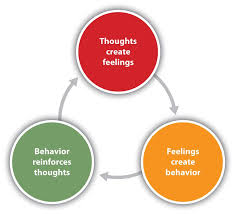
imagesThe result of Peter’s twin passions is Joyable, online Cognitive Behavior Therapy. While the average cost of a single visit for traditional therapy is $162, Joyable provides CBT software plus a personal coach for $99 a month. “The software handles the therapy. Our coaches’ goal is to get clients motivated. The coach gives feedback and is proactive if the client’s not following through.”

IMG_4706Joyable recently moved to start-up chic offices in the South of Market district. The company has grown from a staff of five in May, to thirty the day Peter and I met. Five more employees were starting the next week. Staff growth centers on new coaches, to maintain an consistent client to coach ratio as subscriptions rise. “We have unlocked a lot of demand, though we can’t get below $99 a month and offer personal coaching.”

Just as Amazon began its online retail empire selling books and CD’s that people didn’t feel the need to see and touch before buying, Joyable is strategic in the therapy it offers. Its first therapeutic product addresses anxiety. “Social anxiety is well suited to online interaction; these folks don’t want to meet others in person.”

images-1Peter interviewed clinicians and patients to develop a series of computer-based activities that clients use in a self-help way to become more comfortable with social interaction. “CBT is about putting yourself in a difficult situation, learning that failure is rare, but that if you fail, you can rebound. For people with mild anxiety, an activity might be to invite someone for coffee. For those with serious anxiety, going to the grocery store might create a success.”

Joyable accepted their first clients in March of 2015. They have a core therapy program in place and a clinical consulting group that guides its evolution. At present, no insurers provide reimbursement for services, nor has Joyable determined what therapies to offer next, though Peter sees opportunity in treating depression and PTSD.

Screen Shot 2015-12-04 at 4.45.55 PMAt the party celebrating the company’s first year in business, 30-year-old Peter realized joyfully, “I never impacted so many people in one year.” Like all San Francisco start-ups, growth is embedded in the Joyable business model, and as Joyable grows, Peter will impact more lives. “We want everyone to lead a better life through better mental health.”

How will we live tomorrow?

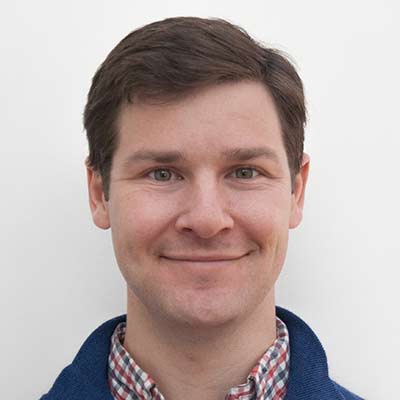
square-pete“I’ll speak to mental health, since that’s where I spend my time. Ten years from today, we will think of mental health at a social level, the same as physical health. Thirty years ago people did not talk about physical health. Now we share about cancer and talk about weight loss. We will get to the same place with mental health and evaluation of feelings.

“Joyable is part of that evolution. We start by normalizing a mental health experience, then we help people act on it.”


Posted in Responses | Tagged , , , , | Leave a comment

Profile Response: Jessica, Good Vibrations, San Francisco CA

HWWLT Logo on yellowSan Francisco is renowned as a place of sexual exploration, at least by American standards. I met a body artist who creates fire-breathing brassieres. She suggested I take my question to Good Vibrations, a female-owned sex shop. When I stopped by 603 Valencia on a Tuesday morning, the sales clerk said, “I can talk for a few moments until someone comes in, but if you are going to write about us, please don’t use my name.” We may be sexually liberated, but we’re still wary of having our names attached to it. Let’s call her Jessica.

imgres-1Good Vibrations is the Nordstrom’s of sex shops. The Mission District store is spacious and well appointed. The vibrators are displayed with the same care as a vase at Pottery Barn. Joani Blank opened Good Vibrations in 1977; there are now seven locations in San Francisco and one in Brookline, MA, which certainly shifts my image of that staid Boston suburb.

imgresJessica invited me to peruse, and suggested I start in the book section. The Sex and Pleasure Book – Good Vibrations Guide to Great Sex for Everyone, penned by Good Vibrations Staff Sexologist Carol Queen PhD and Shar Rednour, is prominently displayed. “We recommend that as an excellent general guide to sexual exploration.” There’s also a range of more specific titles, celebrating and dissecting sex for people with disabilities, seniors, transgendered, groups, even fat girls.

Moving clockwise around the shop I found colorful displays of condoms, lubricants, and elegantly shaped vibrators that might have been inspired by Juan Miro figures. “Try anything you like. Just let me know if you have a problem turning something off.” Jessica assumed that turning these objects on was intuitive. I didn’t actually touch anything in the store. Partly because I wasn’t buying. Partly because I was squeamish. After all, it was only my second day in San Francisco.

imgres-2 images-1

That didn’t stop me from marveling at dildos of all shapes, colors and anatomically impressive sizes. Are the bright blue ones popular among people with a thing for Smurfs? Then there are ‘packers’ that give the illusion of a penis where perhaps there isn’t one. “There is no gender definition here.” Jessica explained. “No products are marketed by gender, as gender identity has nothing to do with what parts people have.” Or what parts provide sexual satisfaction.

imagesThe area with cuffs, whips and leashes confirmed my Nordstrom’s suspicions. Domination at Good Vibrations is a light affair. Velcro cuffs and flexible crops give the illusion of bondage rather than the actual danger of metal locks and barbed whips. Nothing in Good Vibrations is going to draw blood. Ultimately, the sexual satisfaction espoused by Good Vibrations is a sweet one, right down to the edible bras, nipple tassels, and garters. There are likely other stores in San Francisco, less well lit and airy, where true dungeon wear can be found, for a price.

How will we live tomorrow?

images-2“Interest in sexuality and access to sexual exploration is increasing. That is a good thing. It allows people to be more comfortable with their bodies and their preferences.”


Posted in Responses | Tagged , , , , | Leave a comment

Profile Response: Shannon Weber, San Francisco, CA

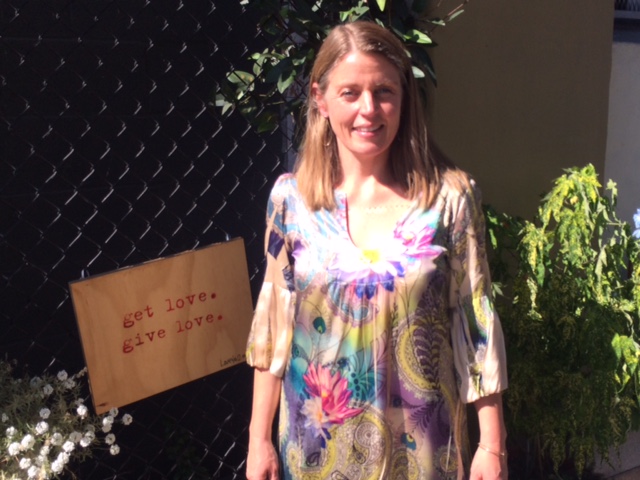
HWWLT Logo on yellowShannon Weber is the mother of three teenagers. Shannon Weber is a Social Worker in a program for pregnant women with HIV. Shannon Weber is an artist (www.loveyou2.org). Shannon Weber is a subversive who mounts her art in public places without permission. But whether mother, social worker, artist or activist, Shannon Weber spreads love.

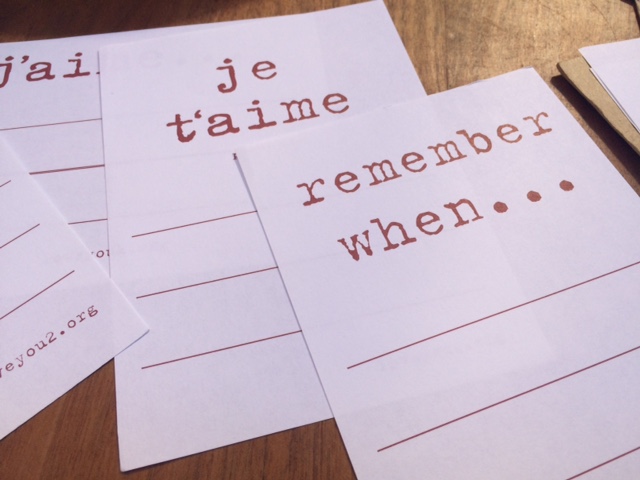
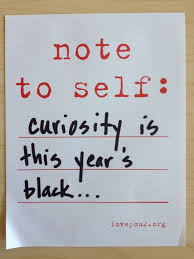
Shannon Weber’s art is simple, yet profound. She creates messages, love notes, and posts them on walls and fences, often in poor or industrial landscapes. She humanizes these places and reaches out to people who may not feel embraced. “It’s about capturing the connection between us. We want to love and be loved.”

images-6When Shannon’s children were young, she had to travel for work. She left ‘I love you’ notes on the refrigerator, then on the fence outside their house. “When I tell my kids I love them, I am telling myself as well.” Others saw Shannon’s notes and responded in love and gratitude.

Creating and posting love notes became a family project. “I keep signs in my car. My kids have an intuitive sense about good places for notes.” Once mounted, Shannon is unattached to her work. “It’s enough to do it for me and my kids. I also do it in response to my own need; it’s my radical rebuttal to the news and media.” But her signs are usually well maintained, sometimes embellished, evidence that they’re meaningful to others as well.

“I didn’t think of myself as an artist until I started love notes. Now I see my whole life as art. Being an artist is the fulfillment of my true self.”

IMG_4663“When I first started doing this, people would say, ‘are you looking to meet someone?’ I would say, ‘yes, I just met you.’” Like many artists, Shannon’s work is evolving. Her first notes almost all had the word ‘love’ in them. Then she created a set with high schoolers in mind that used ‘like’ and ‘cool’. More recently she’s developed a project that’s more participatory, 5×7 sheets with a few words and blank lines that people can complete.

images-4Four years after Shannon began ‘love notes’ her brother committed suicide. At his service, people said wonderful things about him. Shannon wondered whether expressed their feelings while he was alive, or whether he could hear this from the other side. That service reaffirmed her commitment to her project. Hearing that story stirred my own shortcomings in sharing love, a word I sometimes write, occasionally say on the phone, but rarely voice in person. Why is it so hard for me, and many others, to say the word? Stating an emotion so powerful face to face, out loud, is daunting. Perhaps Shannon’s art can make it easier.

images“In my job, I worked with a couple, a straight couple, who came forward about having HIV. Their disclosure drew negative comments. I made signs, ‘Love is the answer’ and connected them to the couple’s statement. I helped to celebrate their courage rather than denigrate their disease.” Shannon’s signs helped turn the conversation around. “Hatred doesn’t honor what we have in common. What we have in common is love and wanting to be loved.”
How will we live tomorrow?

IMG_4665“The only thing we need for us to live tomorrow is to foster human connection. We have such abundance – of stuff and information – but we are going to thrive on human connection.

“I see a world of love notes. I want to travel the world in an Airstream and post love notes wherever we need them.”


Posted in Responses | Tagged , , , | 2 Comments

Profile Response: Lisa Feldstein, San Francisco, CA

HWWLT Logo on yellowGood fortune shined on me when Lisa Feldstein invited me to stay with her family my first night in San Francisco. As a former member of the San Francisco Planning Commission and candidate for Board of Selectman who placed third in a field of twenty-two, Lisa is savvy to the inner workings of the City by the Bay. She provided the perfect introduction to a place whose political, social, and economic landscapes are as steep and sharply defined as its geography.

images“Everything here is about land.” San Francisco is a peninsula, and like all cities surrounded by water, boundaries are firm. Except to the south, you’re either in San Francisco, or you are on the other side of the bay. The city has always been wealthy and rich in civic pride. San Francisco was the principal port of our nation’s westward expansion and hosted the splendid 1915 Pan American Exposition less than ten years after the devastating 1906 earthquake to demonstrate its resilience. Until World War II, when Southern California mesmerized our psyche, San Francisco was the major city and power center of the West. “The land border used to be further south, but the State legislature reigned it in long ago to try and curb San Francisco’s influence.” These days, San Francisco is dense packed, desirable, and wealthy. It boasts the highest real estate values in the country; a distinction not everyone applauds.

imgres-1“The concept of participatory democracy is different here. It’s like a New England town meeting with 850,000 people. Things take a long time. There are many public hearings and opportunities for the public to weigh in.” I asked Lisa whether that was good. “No. If you elect people, you should let them do what they were elected to do. People understand San Francisco by their neighborhood. How do you make informed decisions at the city scale?” To demonstrate her point, Lisa hauled out her 200-page ballot book for November’s upcoming election. “This is light. Last year’s was over 500 pages.”

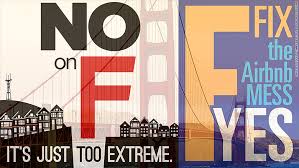
San Francisco’s latest infusions of wealth are technology companies seeking urban vitality rather than Silicon Valley banality. Twitter, Uber, Autodesk, and Dropbox help drive San Francisco. One hot issue this election was Proposition F, a measure to limit Airbnb-style rentals in the city. Proponents contend it contributes to escalating real estate prices and deteriorating neighborhood cohesion. Airbnb is headquartered in San Francisco. Not many cities would stir the pot aimgresgainst a local business success, but San Francisco can afford to bite a hand that feeds it. (The election occurred after my visit. Airbnb spent $8 million against the proposition, which failed 55% to 45%.)

Lisa teaches in the Masters of Public Affairs program at University of California San Francisco. The curriculum includes speech writing, lobbying, policy, and research. Most of Lisa’s students have a local, rather than national focus. They know San Francisco’s political energy doesn’t reverberate through the rest of our country. There is a lot of activity here, but the bandwidth of discussion is rather narrow. As Lisa puts it, “There is only the left here.”

imgres-2This semester Lisa is teaching a qualitative research course and a labor seminar. “The labor movement is in tatters, and it’s about to get a whole lot worse.” At present, if you work in an open shop, you can join the union and pay the member’s fee to cover political and lobbying work of the union, as well as the direct costs of bargaining. If you don’t join the union, you pay an agency fee that just covers the direct costs the union provides to that shop. “The Supreme Court is hearing a case out of Southern California brought by a teacher’s union that argues all union work is political, questioning the legitimacy of the agency fee. The Supreme Court has sent out messages over the past few years that it would welcome a case like this. It is likely they will get rid of agency fees.”

Although Lisa is active on national issues, she’s keen on local issues, which are often harbingers of problems still emerging beyond the Left Coast. The flip side of San Francisco’s affluence is its large and visible homeless population. “The homeless are one of our big community challenges. There are advocates who say we aren’t doing enough and need to provide more services. And there are people who just want them gone. They don’t care where the go, they just want them gone.”

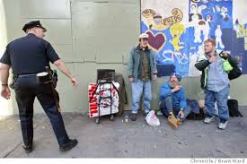
imgres-3My time in the city confirmed Lisa’s assessment. San Francisco is full of street people; pimply scars on San Francisco’s pristine complexion. I witnessed citizens and police officers rough them over in ways I never observed in Portland or Seattle. The city is crowded, the chasm between the haves and have-nots is immense; the friction created when they run up against each other is palpable.


How will we live tomorrow?

Screen Shot 2015-12-03 at 5.43.30 PM“Resources are shrinking rapidly. Over the next hundred years we will have water issues, whether it’s privatized or public, how equitably it’s allocated.

“As educational divides grow, we are going to see more discontent among the less educated. The world will be a more violent place. Borders will be less important but protected more.

“We have this spasm of religious fervor. It will shape global politics and be a more defining factor than race is right now.

“Climate change will be the other defining factor. Can we grow enough food to feed ourselves? I see the most interest in solving that problem coming from the least developed countries. I see power shifting to the global south.”


Posted in Responses | Tagged , , , , , , | Leave a comment

Profile Response: Michael Bridge at McDonald’s, Sebastopol, CA

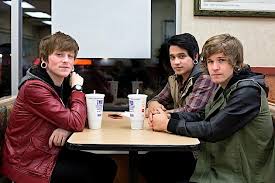
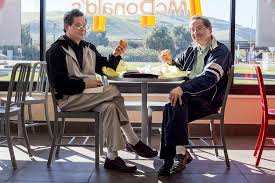
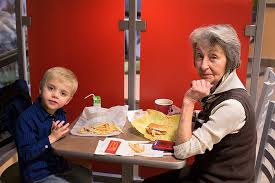
HWWLT Logo on yellowThe United States is a nation of many rooms. On my journey, I’ve spent many good hours in two places I call ‘America’s Living Room’. One is the public library found in most every town. The second is McDonald’s, which is also found in almost every town, and keeps longer hours.

I spend a lot of time in McDonald’s and celebrate its merits. Besides being ubiquitous, McDonald’s are clean, the Wi-Fi is good, the staff is uniformly friendly, and a dollar plus applicable tax, will buy me all the coffee or PowerAde I want while I linger for hours. But what I like most about McDonald’s is the range of people I meet there. Although some may not admit it, everyone goes to McDonald’s: single moms, teenagers, elderly, businessmen, homeless, handicapped, Hispanic, women alone, girls together, birthday partiers, motorcyclists; even bicycle tourists. I’ve met a wide range of people at McDonald’s, and many of them are chatty. Starbucks’ demographic is narrower and glued to their devices. Folks at McDonald’s are more inclined to shoot the breeze.

images imgres-3 images-1 imgres-1 images-2 imgres-2

Following is an actual conversation I overheard between two middle-aged men at the McDonald’s in Sebastopol, CA. It had been going on for some time, in the same vein; before I realized it’s value and began to transcribe:

“What does government mean to you?”

“Government is a wounded word. Government is what produces life. It is a choreography. It is nature’s prerogative.”

“I don’t know what that means, but it feels absolutely right.”

“Each morsel of the universe contains within it the entire knowledge and meaning of the universe.”

“It is all connected. It is all the center and there is no center at all.”

“Ultimately, god is the center and god is the surface.”

“But what is your point of reference? Where is the center of infinity?”

“You are providing me with a point of reference by sitting at the table with me. We provide each other a point of reference. Points of reference are what we give our attention to, what invites our attention, what commands our attention. There’s a difference between inviting attention and demanding it.”

“The point of reference for our lives is America. It is the wedding of everything. It is the wedding that holds us here, that invented us, and that reinvents and reinvents us.”

“It is an expression of nature.”

“Look at how a word finds its way out through our mouth and our ears. The journey a word has taken to arrive here in this morning. How the sounds and the meanings and the feeling have found each other. How those feelings have found each other and put themselvees together to create something that has value.”

“Perception.”

“I think value. Value comes before perception. We wouldn’t bring things forward unless we thought they had value. And yet value has perception.”

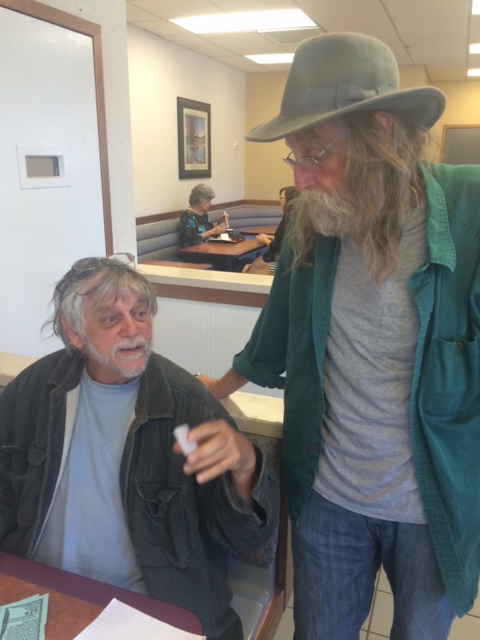
At that point I stopped eavesdropping and introduced myself to Michael Bridge and his companion, Paul. Paul was finished his coffee and rose to leave, though he called me later to talk more. Michael used to live in Cambridge. “In 2004, when the Red Sox were eleven games out of first place, I made a bet they would win the World Series and break Babe Ruth’s curse. That series confirmed my faith in the impossible.”

IMG_5347Michael’s son Joshua wrote a book, A Book About Life, when he was five years old. It’s only eight pages but it contains a clear and enduring philosophy. Michael sold it to MIT students. Joshua is grown now, a programmer in Oxnard, but his father still carries copies of the book. Michael gave me one. He autographed it ‘Childhood is forever.’


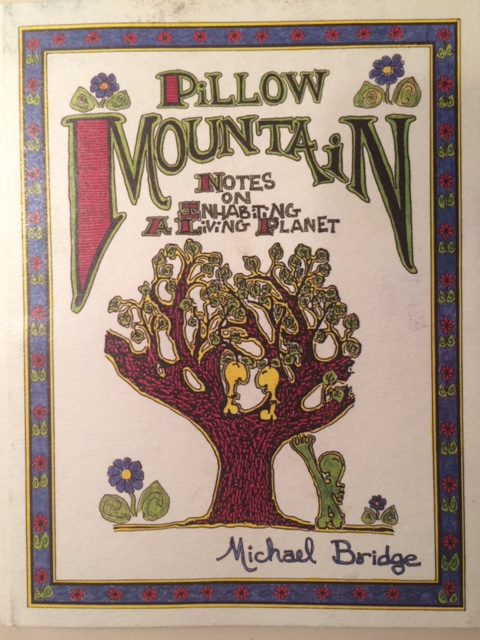
IMG_5348Michael’s also an author. He’s written a pamphlet on the system of six hand signals he created that people can use in conversation to indicate how they are responding to what is being said without verbal disruption. The signals include: inviting, retreat, pause, distress, inner stirring, and urgent inner stirring. He’s also written Pillow Mountain: Notes on Inhabiting a Living Planet, a beautiful book with thoughtful ideas and charming sketches. “I’m starting an earth government. The earth was created as a sphere. Everyone sits at the head and the center. When we get out of the circle our center becomes distorted.”

Eventually Michael left. Lunch rush was on and my coffee empty. As often happens during a McDonald’s break, the people around me proved more interesting than my laptop. I left with two books and the affirmation that a trip to McDonald’s is an adventure. You never know whom you are going to meet in America’s Living Room.

How will we live tomorrow?

IMG_4566“By deepening our relationship with the very question you ask. Let the question arise and let it resolve itself. When we focus on answers rather than questions we lose inquiry and adopt fixed ways of thinking.”


Posted in Responses | Tagged , , , , | Leave a comment