Responses: How will we live tomorrow?

How will we live tomorrow?

“We have to be more conscious of how we live our lives in relationship to the environment, other people, and other cultures. We have to give up our arrogance our ’Our way of the highway’ approach.”

Jean Brown-Perry, quilter, Longview, WA

How will we live tomorrow?

“I would like to see the guys who represented us in Iraq, and were involved in community building there, take a role in our political arena.

“So few people serve in the military, we have developed a military caste. What brings out the best aspects of our military are our shared hardships. How do we manufacture that in civilian life? In Ranger School, the challenges were great in difficult conditions. I am a good scolder, but in Ranger School I was so exhausted I would have cut corners if I could, but I couldn’t. My community wouldn’t let me.

“We need more of that in politics and in life.”

U.S Army Captain, Joint Base Lewis McCord, WA (name withheld on request)

How will we live tomorrow?

“We’ve had this extremely warm year in Seattle. This makes climate change more real to me. I know that’s not rational, but that’s how I acknowledge the change. I was in California this spring and saw the politics around water were severe. There is a lot of action in the Pacific Northwest around extraction. That’s new in the year. For me, there is a correlation between me being aware of climate change and my emerging awareness. I don’t want Seattle to be warm.”

Lucy Williams, mathematician at advertising technology company, Seattle, WA

How will we live tomorrow?

“I pray we don’t go through prohibition again. I love beer and wine. I’m a Type 1 diabetic and used to have a medical marihuana card. I like the legalization of marijuana. I go into the store and they ask, ‘What kind do you want?’ and I’m amazed that I have these options. Marijuana can be fun.”

Tymer, medical marijuana user, Seattle, WA

How will we live tomorrow?

“On my bike.”

Peggy O’Brien, on the first day of her ride Portland to Los Angeles, Bend, OR

How will we live tomorrow?

“I was homeless for six years. Two years ago a friend took me in here. Now I stay in a trailer on a piece of land nearby. Another friend let us put the trailer there after my boyfriend got out of prison. We don’t have electricity or running water, but we have each other. We’re not strung out on drugs anymore. We’re doing better.”

Mindy Malloy, walking the side of the road with a broken bicycle and a purse inscribed ‘Peace and Love’, Long Beach, WA

How will we live tomorrow?

“I will be clean and sober.”

Josh Sundstrom, local fan, Long Beach, WA

How will we live tomorrow?

“I will be with my daughter’s girl. She has two. One has cancer. On Friday’s my daughter takes the three year old to Tacoma for chemotherapy. I stay with the other, who’s 14 months. She’s bow-legged but runs like crazy. She wears me out.”

Richard, retired Weyerhaeuser worker, Raymond, WA

How will we live tomorrow?

“I think about this question often. I interpret “tomorrow” as the middle to distant future. At our current rate, I am not confident that our Earth will be a nice place to live in 100 years. Every year in Hawaii there is a hurricane season. In most years’ past we’d have one or two warnings. These past two weeks we’ve had four!

“I am encouraged by innovations in solar and alternative sources of energy. In Hawaii we are trying to eliminate our dependence of fossil fuel by 2050, but the government I feel is corrupt and ruled by the islands’ monopolies and unions will overlook environmental concerns to make a quick buck.

“How will we live tomorrow? Resources will be fewer and the wealthy will dictate what we have failed to do in our duties as informed and responsible citizens. We will have to be less self centered and greedy if we will keep this island (Earth and Hawaii) sustainable and affordable. With the crop of politicians and capitalistic forces, I don’t see change coming any time soon unfortunately. To make tomorrow a nice place to want to live, we will have to change our current way of thinking. If more people would take time off to travel the country by bike, and ask important questions, maybe that thinking will change more quickly! People doing daily yoga practice would also help.”

Michael Romero, Iyengar Yoga Teacher and Home Yoga Practice blogger, HI

How will we live tomorrow?

“Just as we always have, I suppose.

“Inertia often wins out, but by taking your life in your hands literally, you can take your life in your hands. We took a year to ride around the country on a tandem bicycle, and it changed us. Technology was different twenty years ago; we sent email updates to family, friends and anyone who cared to know, by dial up modem.

“Since then, we’ve committed to balancing some of those opposing tensions you might have encountered in your journalism. What started us on the road was the death of my mother. At 60, she’d had other plans than to die of lung cancer, but the cancer won and all her ‘somedays’ faded as she did. It took us five years to figure out how to simplify our lives and unencumber ourselves from home ownership and occupational responsibility.

“In twenty years, we’ve gotten good at living simply and living small, while still living for today everyday. Personally, there is no tomorrow.

“Yet how can you live life with abandon, and still be part of a community where tomorrow is what we’re all working toward?

“One day on our tandem tour, we were graced to encounter artist Robert Waldmire. While his posters are works of art, so is his life. Out in the desert along old Route 66, Robert oversaw a station in Hackberry Arizona. We enjoyed our visit with him so much that we were thrilled to see him riding along on a flat-tired Schwinn escorting us on our way. His philosophy has stayed with me: Small is beautiful, old is beautiful, slow is beautiful, safe is beautiful.

“So as we ask how will we live tomorrow, amidst the fast pace of a changing world, I expect our values to guide us. Just because we can do more things than ever before doesn’t mean we should.

“It’s our choice. Inertia wins if you don’t take your life in your hands.”

Claire and Bob Rogers, www.newbohemians.net, Portland, OR
Posted in Uncategorized | Leave a comment

Trip Log – Day 122 –Long Beach, WA to Longview, WA

Long Beach to LongviewSeptember 4, 2015 – Mostly sun, 60 degrees

Miles Today: 94

Miles to Date: 6,525

States to Date: 22

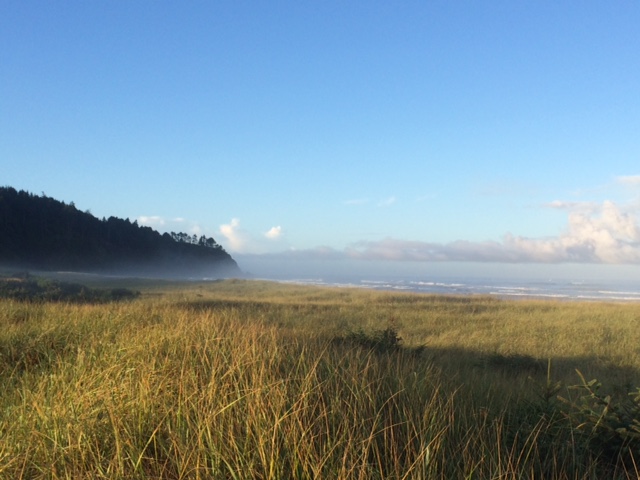
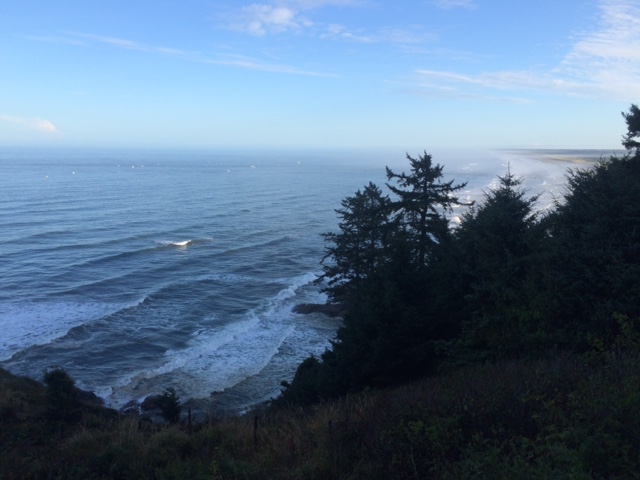
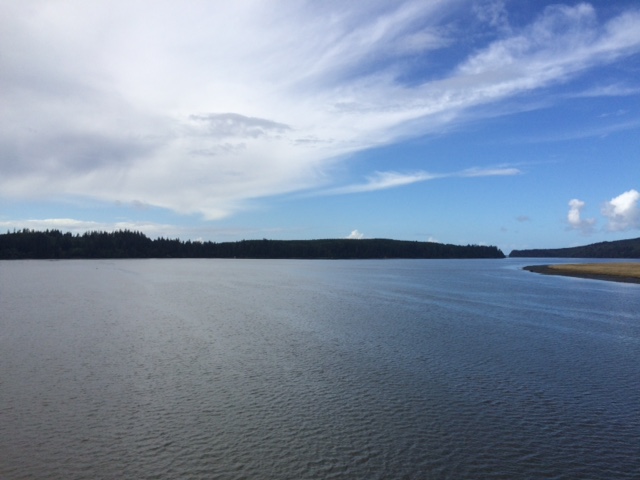
I had a solid 75 miles ride today which extended, over and over with detours, some by choice, others by necessity. Since I hate going back the way I came, I decided to take the longer route around 101 and the Columbia River shore. Then I decided to take the Discovery Bike Trail to Cape Disappointment, so named because 1788 explorer John Meares was disappointed in finding a bay when he was seeking the mouth of the Columbia River. The irony is, of course, that he had found the mouth of the Columbia. There is nothing disappointing about this cape: it is spectacular.

IMG_3813 IMG_3815

I stopped by Fort Columbia, which had a nice campus of old buildings. It also had odd parking fines. Washington state has both high and bizarre fine amounts for littering, speeding and other citizen infractions.

IMG_3824 IMG_3825

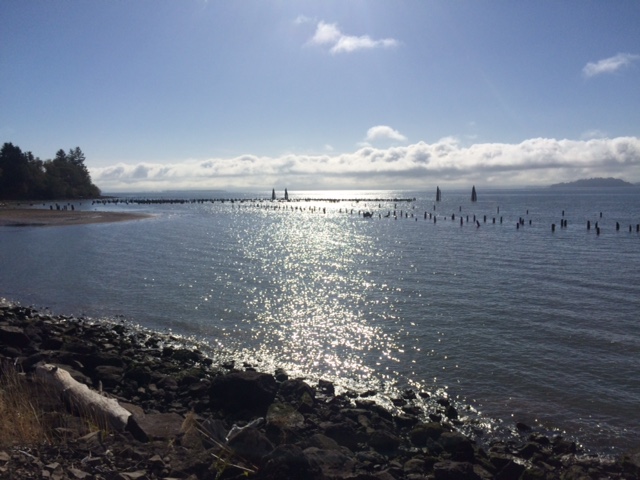
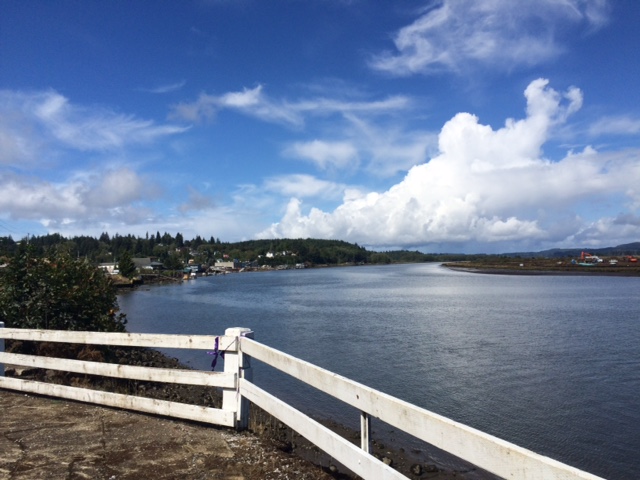
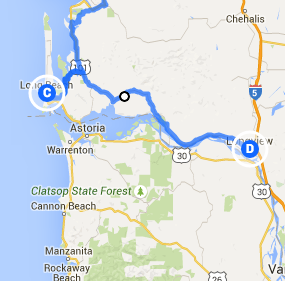
My fear of heights kept me off the four mile Astoria causeway/bridge, so I took the longer route on the Washington side: Route 401 north to Naselle and Route 4 east to Longview. I enjoyed long stretches along the north side of the Columbia River, steady climbs through tall forests and windy descents.

IMG_3818 IMG_3833 IMG_3826

The sky was full of giant clouds all day, though in mid-afternoon they turned grey. Rain fell coincident with a state-imposed detour around Route 4 construction.

IMG_3834

Longview is not a bike friendly city. After too many honks and exhaust revs directed at me along Ocean Highway coming into town, I resorted to riding the sidewalk. Even though I am supposed to be on the roadway, it’s better to be safe than to be right. I was happy to arrive at my warmshowers hosts, who had a good meal, great conversation, and nice bed for me.

Posted in Bicycle Trip Log | Tagged , , , , , , | 1 Comment

Profile Response: Palmer Court Housing, Salt Lake City, UT


HWWLT Logo on yellow“Housing First” is Utah’s slogan for its program to put chronically homeless people in permanent supportive housing. The original slogan, “Housing First, Employment Second” has been abbreviated because employment often comes later than second, if it comes at all. Yet, the benefits of housing first, even if it doesn’t led to employment have proven to be both a humane and economical way to help chronically homeless people secure long term homes.

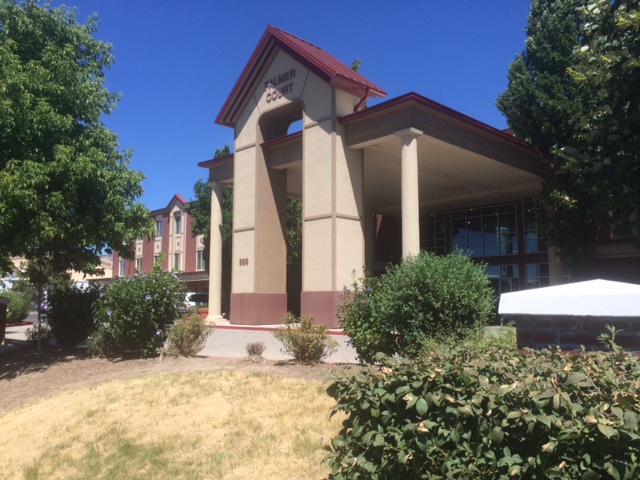
IMG_3185Palmer Court used to be a swank motel a few blocks from downtown Salt Lake City. The lobby is three stories tall; a 1960’s era framed photo in the staff conference room shows Doris Day languishing at the pool. Now, the neighborhood is past its glory, the pool has been filled in, and the motel rooms have been converted into 281 apartments, mostly studios. Banquet rooms have been repurposed as staff offices, classrooms, a fitness center, and other support spaces. The architect in me was excited to see such an appropriate reuse.

IMG_3184Many of the 278 adults and 77 children who live in Palmer House have not had a consistent address in years. In order to qualify for admission, a person has to be homeless for more than a year, (or four episodes in three years). Most have a physical or mental disability, substance abuse, or other chronic condition that makes it difficult to function independently. The facility is owned by the Road Home, a non-profit that provides services to the homeless. Other organizations work with the Road Home to provide vocational, employment, medical, childcare, and social services.

Kelli Bowers, Director of Supportive Services, toured me through the facility. “Palmer Court has a high level of support. If people just need housing, the Road Home has local apartments they ‘sublease’ to individuals and families who cannot get market housing. People here need much more.” Besides human services, Palmer Court helps people get the ‘stuff’ of independent living. The LDS church provides basic furnishings, and a handmade quilt, to people moving into Palmer Court. Organizations also donate accessories and cleaning supplies.

IMG_3178Karen Grenko, Property Manager, oversees maintaining the facility. “Our challenge is to help people learn to be good tenants, while understanding that they are already in housing of last resort. Kelli and I play good cop/bad cop. People here will test the system, but they are are keen to keep what they have. They come around before eviction.”

Kelli added, “The residents lack trust. When they see us keep trying to work things out with them, that is the beginning of trust.”

Mary McConaughy is an employment specialist for the State of Utah who is based in Palmer Court. “Everybody here is at a different point in their journey. Some people take a year or more just to be settled Almost everyone who does work participates in ‘supportive employment’ which include onsite work positions like cleaning the public areas or staffing the laundry room. We often take positions that would be 1 or 2 FTE’s and split them up into smaller parcels so people have meaningful work every week. They may work up to supportive employment outside the facility, and eventually, private workplace jobs.”

IMG_3177

After meeting with Kelli, Karen, and Mary I had a deeper understanding of the term ‘permanent supportive housing’. Most Palmer House residents will need economic and social support for their entire lives. It is a credit to the Road Home and the State of Utah that their inability to function independently does not deny them the dignity and security that comes from having a permanent address – a place they can call home.

How will we live tomorrow?

“Very carefully.” – Karen Grenko

“I don’t have a quick answer. There is no quick answer. I read about a place in the Netherlands where a community of families take in the weaker people of the community, people with mental health issues, and care for them in a family setting. That seems like such a good direction.” – Mary McConaughy

IMG_3183“I think about what Lloyd Pendleton said. The extremely rich; their main concern is connection. For the middle class it’s possessions. For the extremely poor it’s relationships.

“I hope we become better stewards of the earth by taking better care of the earth and its inhabitants instead of taking advantage of them.

“I believe the people I serve are heroes. I don’t know if I could go through what they have gone through, or do what they have done.” – Kelli Bowers


Posted in Responses | Tagged , , , , , , , , | Leave a comment

Trip Log – Day 121 – Aberdeen, WA to Long Beach, WA

Aberdeen to Long BeachSeptember 3, 2015 – Sun and rain, 60 degrees

Miles Today: 74

Miles to Date: 6,431

States to Date: 22

IMG_3780Highway 101! My first day on this storied highway. I will follow 101 on and off for the next two months. I originally planned to take it around the Olympic Peninsula, but local cyclists warned it was narrow and the logging trucks dangerous. Since I listen to local counsel, I opted to cross below the peninsula to Aberdeen and hook onto 101 South there.


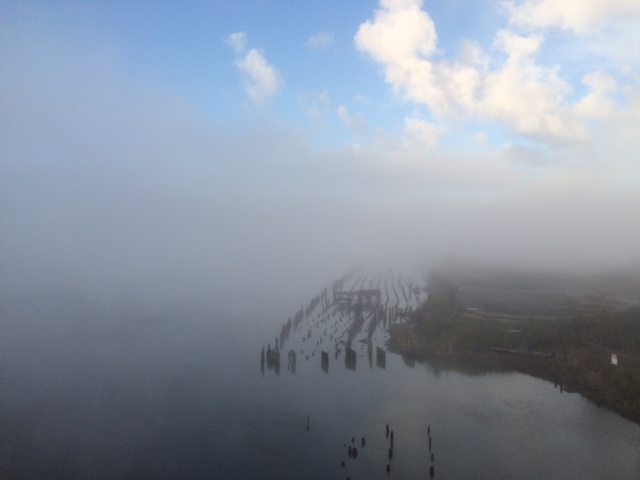
Dense fog wrapped me as I crossed the bridge from Aberdeen at 7:30 a.m. The September days are markedly shorter. The mornings are cool.

IMG_3772

IMG_3783Within an hour the fog lifted and I logged twenty-seven miles to Raymond. Up and down and up again through a county that ought to named ‘Weyerhaeuser’ since apparently they own all the land. There are all sorts of signs about when what is planted, and these large clearings smack against tall trees. Route 101 lived up to all aspects of its reputation. The scenery is beautiful, the riding sketchy. Nice shoulders disappear without notice. Trucks barrel along at great speed.

IMG_3785There is a belching mill at Raymond, though the town is very poor. Another of those predictable yet counter intuitive truths. Just as we pay the people who provide our most essential needs – farmworkers, garment workers, laborers – less than people with specialized skills – lawyers, surgeons, football players. So to, towns rooted in natural resources; be it lumber, coal or wheat; are poorer than towns rooted in ideas; education, culture or technology. The 2×4’s that the Raymond mill produces are commodities. The people who get rich off of them do not live in Raymond.

Just south of town a guy in a pickup coming north called from this window, “Big rain ahead.” The sky was grey, which is not unusual in the Northwest, but since I listen to locals, I decided to stop. Only the second time this trip I’ve made a weather stop. Each time there’s been a McDonald’s at hand. I took an early break, locked my bike under an overhang, and sat out a humongous storm. It was noon before it let up, so I ate a grocery store lunch and headed on in the crisp after-storm air.

IMG_3788 IMG_3787

I should be as lucky with my food as the weather. After Raymond, 101 flattens out. Five miles beyond is South Bend, the oyster capital of the world, a real working fishing town with pungent marsh smells and great places to eat. My lunch was fine, but it wasn’t fresh oysters! I was full and still had forty miles to go, so I pedaled on.

IMG_3781 IMG_3793 IMG_3795

Forty miles on the Highway 101 cyclists adore. The road was good, the terrain gentle, the views amazing. Sometimes I hugged the shore. Other times the water was distant. There were fewer trucks past Raymond. In fact, there wasn’t anything except trees and more trees. I startled a huge buck in the woods. A mile later a parade of six large deer crossed the road. I saw more deer than houses.

I reached the Long Beach peninsula about four. On a map it looks like a barrier island off New Jersey. But instead of a sand spit, the peninsula has the same terrain and tall pines as the rest of this area.

IMG_3802Long Beach is my kind of beach town – a little tacky and very salty. ‘Our Place by the Beach’ proved a nice place to stay: salt water taffy in a jar at check-in; a room with sitting area and picture window overlooking pines; a soothing hot tub. Marsh’s Free Museum, downtown, is gaudy as any souvenir shop. Fudge stores, frozen yogurt parlors, pizza stands, and T-shirt emporiums round out he rest of the commerce. The summer season is short here. The bumper cars and merry-go-round were already closed.

IMG_3798 IMG_3800 IMG_3801

No one could recommend a good oyster place, but I enjoyed fish and chips and good beer at the local sports bar where the Seahawks were beating the Raiders so bad I left in the second quarter. If I ever ride this way again a #12 jersey is in order. Seahawk’s fans take their twelfth man status seriously.

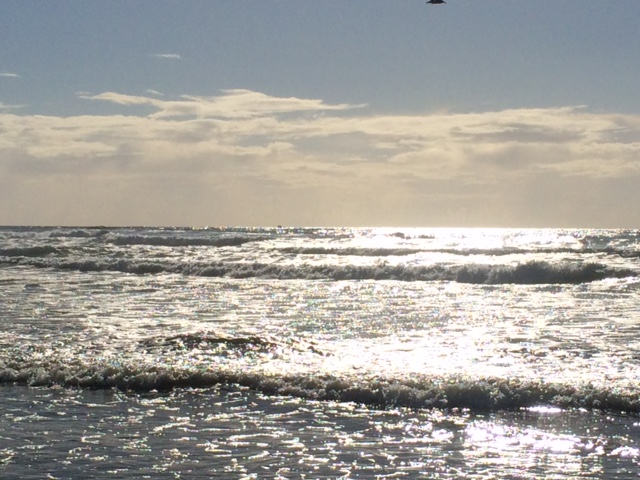
Before dinner and football I walked out to the ocean and waded in the Pacific. It was not nearly as cold as everyone says, about the same as the ocean on Cape Cod this time of year. But no one swims in it. The waves are rough, the undertow strong. Still, I enjoyed my first dip ever in another ocean.

IMG_3809

Posted in Bicycle Trip Log | Tagged , , , , , , , , , , | Leave a comment

Profile Response: Sara Tlamka of Honey Stinger, Steamboat Springs, CO


HWWLT Logo on yellow“Honey Stinger is a company with 90 human employees and about 25 dogs.” For Sara Tlamko, Marketing Specialist, that balance represents why it’s great to work for Honey Stinger. Bill Gamber, a local entrepreneur, started three companies in Steamboat Springs. BAP (Bwear Active Protection) is an outdoor clothing company, Big Agnes manufactures premium tents and camping gear, while Honey Stinger sells honey-based energy bars, gels, chews and waffles. Although Sara insists each employee works for only one entity, the offices, repair shop and warehouses of the three companies have fluid dividing lines. And the dogs have outsized influence in the workplace; they lounge on the coolest areas of the floor while people walk over and around them.

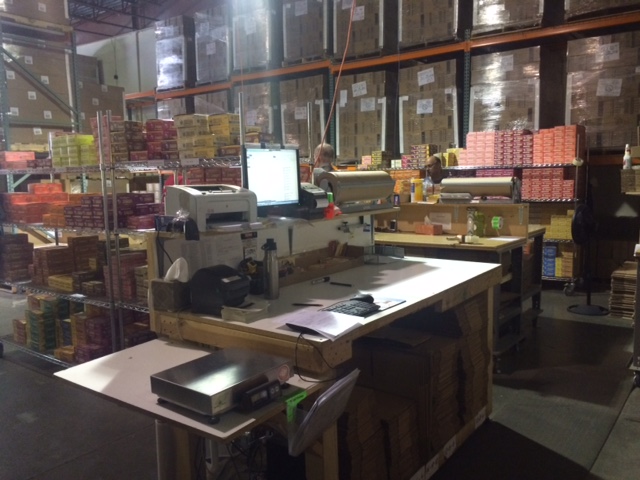
The manufacturing required for the three companies is distributed among niche production sites all over the world. Some of Honey Stinger’s honey still comes from Bill Gamber’s parent’s farm, but the company has other sources, including a ‘certified organic’ island off the coast of Brazil that produces all of Honey Stinger’s organic honey. All products are shipped to Steamboat Springs where they are inventoried, warehoused, repackaged for sale, and sent to to retailers. “The UPS and Fed Ex guys just love us.”

IMG_3024 IMG_3025

Sara toured me through the distribution center where Honey Stinger product orders are packaged and mailed. We visited the marketing area and chatted with folks who negotiate with stores to get Honey Stinger on the shelves. “We started in bike and ski shops. Now we are in organic food stores, Whole Foods, and conventional groceries. We also sell directly to individuals, the military, boy scouts, and nutritionists.”

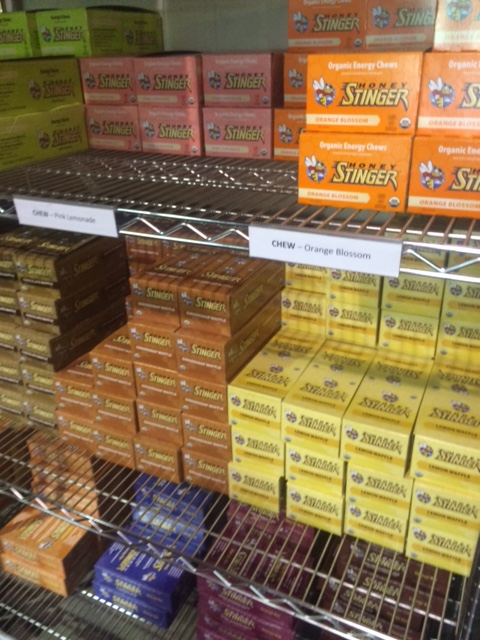
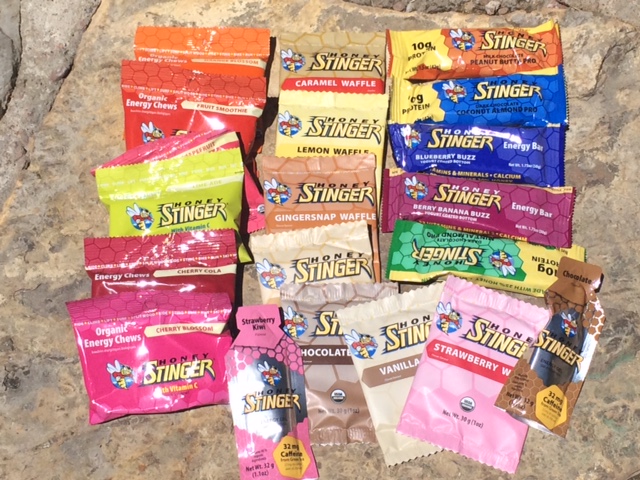
Each of Honey Stinger’s four product lines: energy bars, waffles, chews, and gels; come in a variety of flavors. At the end of the tour, Sarah gave me one sample of each product. I enjoyed honey-based snacks for the next few weeks of my trip.

IMG_3097Honey Stinger is a successful company in the expanding market of easy to carry energy foods. They are smaller than the market leaders like Power Bar and Cliff Bar, but differentiated as the only energy snack that uses honey as its principle energy source. “People are more conscious of their manufactured foods. We are moving toward creating our foods with fewer ingredients.”

How will we live tomorrow?

“Tomorrow we’re going to be more aware of our food sources and natural resources because there’s a limit. We’ll come full circle. Microwave dinners are not ‘in’ anymore. Natural ingredients are important. My mother says that I live like my grandmother because I knit and cook and fix things.”

Posted in Responses | Tagged , , , | Leave a comment

Trip Log – Day 120 – Dupont, WA to Aberdeen, WA

DuPont to AberdeenSeptember 2, 2015 – Sun and rain, 65 degrees

Miles Today: 74

Miles to Date: 6,357

States to Date: 22

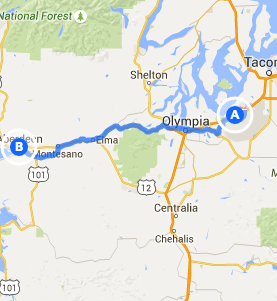
Back on the road again! I rolled out of DuPont on a beautiful morning. After a short stint on I-5, I pedaled along tree lined back roads to Olympia where I spent the morning absorbing the sites. I chatted up Zach of Zach’s Window Cleaning while I ate my grocery store breakfast and can vouch for his work. Then I visited the State Capitol. Docent Dave gives one of the best tours I’ve ever attended. He made good fun of the guy in the yellow bike shirt while knowing every detail of the carpet, furnishings, chandeliers and worldwide assortment of marble in the building. On the way out of town I discovered a salmon spawn viewing platform. The salmon will soon swim upstream, and are swarming in apparent excitement. Finally, I stopped by a fruit stand and enjoyed two huge Washington apples.

IMG_3763 IMG_3764 IMG_3765

Fully satisfied, I spent the afternoon pedaling the wide shoulders of Washington 8 and US. 12. I got on local roads for a bit, but the rugged pavement so typical to Washington sent me back to smoother surfaces. A few rain showers kept me cool; then the sun came out and dried me off.

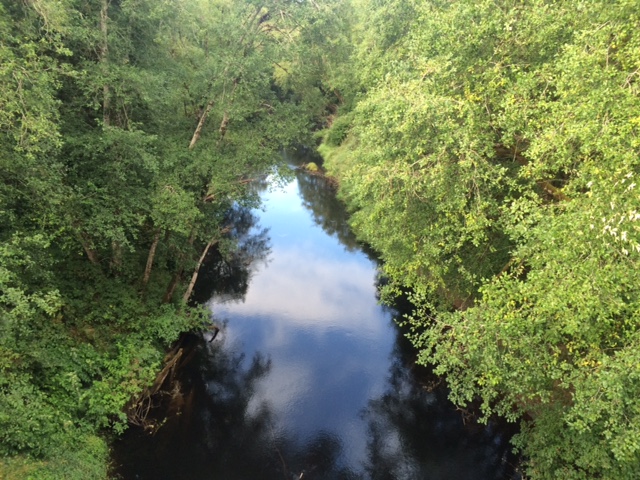
IMG_3766At Montesano I turned south on Washington 107 and cross the Chehalis River. The road glistened from recent rain; the breeze was cool. I noticed several cars turn off on Blue Slough Road and figured it went in my direction, though it wasn’t on Google’s route. My adventurousness was rewarded with five miles of extraordinary cycling. The road was narrow and smooth, the terrain varied, the river picturesque. It’s noteworthy that cycling on narrow roads is often safer than ones with skimpy shoulders. I claim space in the right lane and motorists don’t attempt to pass me against oncoming traffic.

IMG_3770

Aberdeen is a dreary town, but I landed a super nice room at the Travelodge, just a few blocks from the phenomenal Taqueria Las Mulitas where I enjoyed an adobada burrito and basket of chips with a large garnish bar for a whopping seven dollars. Eating in abundance is an integral part of touring.

Posted in Bicycle Trip Log | Tagged , , , , , , , | 2 Comments

Profile Response: LDS Humanitarian Center, Salt Lake City, UT


HWWLT Logo on yellowI’ve met a disproportionate number of Mormons on my trip, not just in Salt Lake but also throughout the United States. It may be coincidence. Or it may that these family-centered, health conscious, missionary focused believers are more likely to engage with itinerant cyclists and invite them into their homes. Regardless, I can understand why Mormonism is one of the world’s fastest growing religions. The Church of Jesus Christ of Latter-day Saints offers an ordered worldview, purpose, and security. The Wasatch Range is an oasis of traditional family values, personal safety and comfortable affluence. Adherents consider it an earthly reflection of heaven. Detractors feel oppressed by its patriarchal hierarchy.

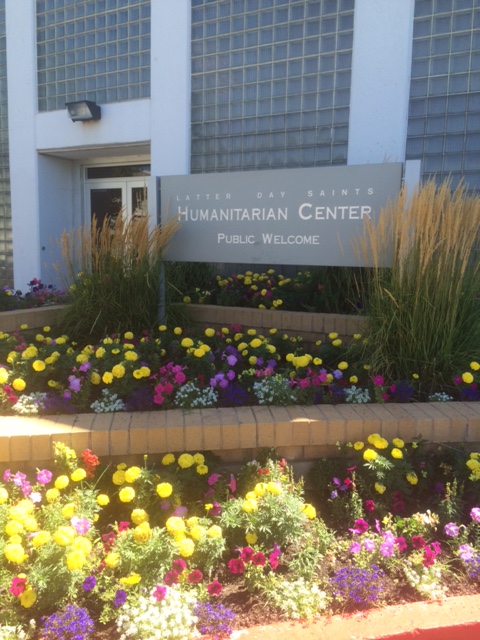
IMG_3165Mormons take very good care of each other. The Relief Society, the largest woman’s organization on earth, provides material assistance to families in need. Church representatives also drop in, unannounced, to visit young mothers at home to encourage harmonious family life. Since the religion believes in living prophets, it provides direction in virtually every aspect of daily living, from dietary choices to pierced ears. I wondered whether Mormon’s philanthropy extended beyond their fold, so when I passed the LDS Humanitarian Center in Salt Lake, advertising free tours, I decided to stop and explore.

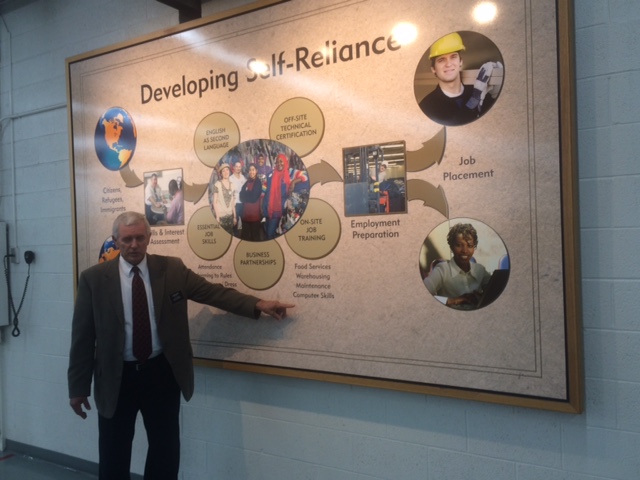
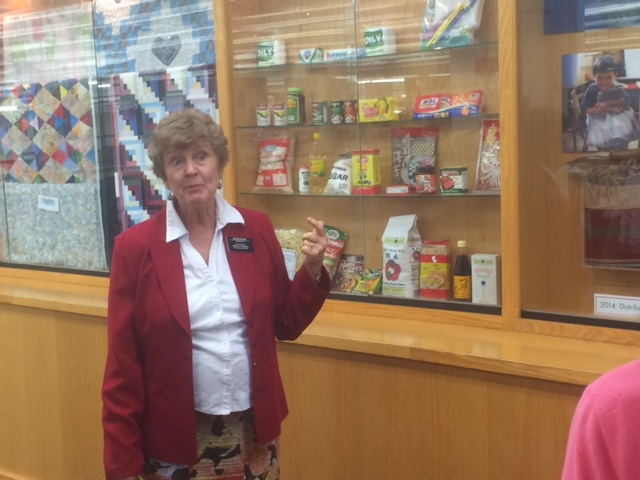
IMG_3171The LDS Humanitarian Center’s mission is to provide assistance to non-Mormons. I went on a tour led by Elder Klein and Sister Klein, two long-time LDS members who served as missionaries in Africa. They described the LDS Humanitarian Center’s triple purpose to help the needy, provide opportunities for immigrants, and allow Mormons to grow through service. Every Mormon church has a monthly fast contribution. Local bishops allocate the funds collected, and many send funds to the Humanitarian Center. All other Center donations are 100% distributed; general LDS funds cover overhead.

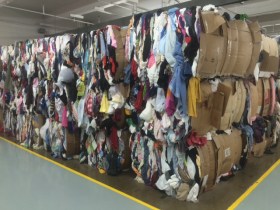
The primary activity in the Humanitarian Center is to collect and distribute clothing; the church receives over 39 million pounds every year. The best items are distributed to the 42 Deseret Stores (similar to Goodwill) although only 15% of that clothing is actually sold. The majority of donated clothing winds up here, where it’s sorted, processed into bales, and shipped to developing countries.

IMG_3169 IMG_3167

The center also assembles other charitable items and processes goods made by local relief societies. In 2014, the LDS Humanitarian Center distributed 99,000 hygiene kits, 33,000 school kits, 57,000 wheelchairs, and 4,968 quilts. Sister Klein said, “In the United States we say we’re confined to a wheelchair. In developing countries, physically disabled people are liberated to a wheelchair.” She also explained that the Center is shifting from sending physical items to providing funds to developing countries where agents can assemble more culturally appropriate goods.

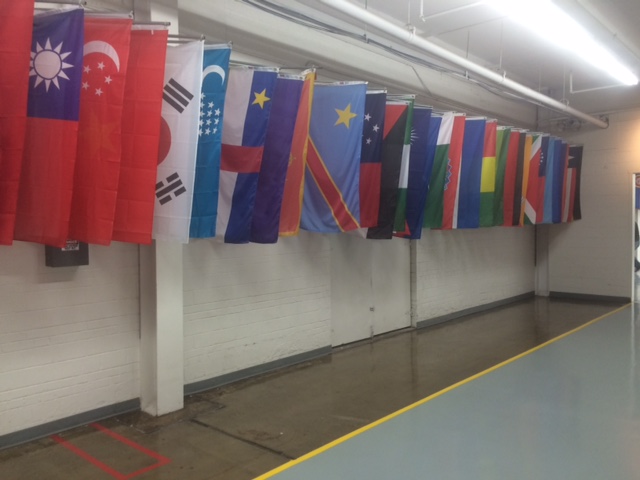
IMG_3168About 170 immigrants, mostly refugees, staff the Humanitarian Center. Workers come from 45 countries and speak 35 languages. They sort and package clothes four hours a day, and spend four hours learning English and receiving assimilation training. LDS provides housing assistance and social services for about a year. After that, most workers are ready to move on to other training.

IMG_3174Like every philanthropic endeavor, the LDS Humanitarian Center helps others while enhancing the evangelical mission of the LDS Church. Abroad, it provides basic materials to people in developing countries while introducing millions to the Mormon Church. In Salt Lake, it provides immigrants work in conjunction with training that reflects Mormon ideals.

How will we live tomorrow?

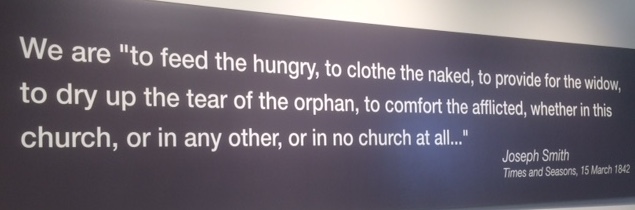
IMG_3173“We are to feed the hungry, to clothe the naked, to provide for the widow, to dry up the tear of the orphan, to comfort the afflicted, whether in this church, or in any other, or in no church at all.” Joseph Smith, 1842


Posted in Responses | Tagged , , , , | Leave a comment

Featured Response: Joe Mamayek, architect, Boston, MA

HWWLT Logo on yellowJoe Mamayek and I worked together in a large healthcare design firm in Boston. Like the American healthcare system, hospital design is complex and specialized. My focus was on clinical planning; making healthcare facilities that streamlined processes and accommodated medical technology. Joe embraced broader issues of context and connection. During a project’s conceptual phase, Joe created elaborative, evocative image boards, collages of visual ideas that reflected our client’s aspirations. When Joe sent me this response to ‘How will we live tomorrow?’ I asked him for images to accompany his words. As always, what he sent are beautiful and meaningful.

How will we live tomorrow?

Mtn Washinton_my daughter Siena the next generation 1“How will we live tomorrow is probably best answered after we address, How should we live.

mtn washington and the elementsI was involved in a recent bike event where the proceeds went towards the education of children with a focus on planet ecology. Quite a noble effort and in every way commendable, until one understands the details.


Apparently, the education will enable/allow children to ‘inherit the Earth.’ What struck me was this mindset that we have this right or privilege to ‘inherit the Earth,’ when in fact, we should be willing partners … authoring solutions for co-existence.

the result of NO PARTNERSHIP

Yes, having an ecological consciousness is key, but fundamentally, having the right attitude towards land value/ownership is essential.

the VALUE of LAND

Aldo Leopold was an environmentalist from my home state Wisconsin and I’ve found great wisdom in his writings through the years. Aldo developed a Land Ethic which reflects his belief that, “land is not a commodity to be possessed; rather, humans must have mutual respect for Earth in order not to destroy it.”

DISTORTED land value

Could men actually be stewards of land without having an economic mindset of property lines, fences and dollar values? If so, then Man, without distractions of economics, can be an equal partner with the planet. Perhaps a tipping point is needed to help influence How We Will/Should Live Tomorrow.”

mtn washington_the ROCK PILE


Posted in Responses | Tagged , , , , , | 2 Comments

Trip Log – Day 116, 117, 118, 119 –Dupont, WA

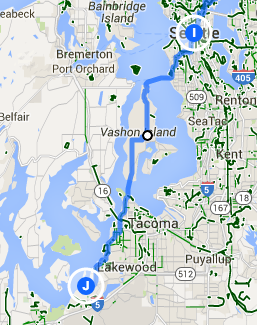
Screen Shot 2015-08-29 at 1.34.00 PMAugust 29 to September 1, 2015 – Rainy, 65 degrees

Miles Today: 7

Miles to Date: 6,283

States to Date: 22

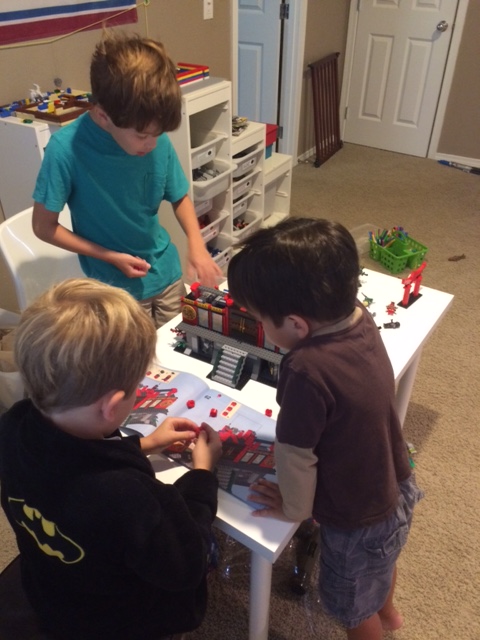
IMG_3760Vacation is not only doing something pleasant; it’s doing something different. So, after riding my bike for over three months, I took a four-day vacation. I visited my niece, her husband and their three boys in DuPont. I hardly rode my bike; I scarcely went outside. We watched The Lego Movie and built our own Lego creations. Ate dinner out and ordered pizza in. Three boys can keep three adults amused without any other diversions. I like to think that I helped my niece around the house, but mostly I just took it easy and enjoyed my extended family.

2015083095180328

Posted in Bicycle Trip Log | Tagged , , | Leave a comment

Profile Response: Zach England and Brandon Harrison, C.R.England Company, Salt Lake City, UT


HWWLT Logo on yellowTrucks are always on my mind. As they approach on the highway they literally pull me toward them. Alongside me, I feel the heat of their engines. Once past, their tailwind pulls me in their wake. I grip my handlebars extra tight to steady my meager bike against their massive tug.

Trucks are also everywhere. Every object we see and touch has been on a truck. Every finished product has been on multiple trucks in its transformation from raw material to consumer good. There are 15.5 million delivery trucks in the United States, one truck for every 21 people.

IMG_3164Zachary England and his brothers are the fourth generation to run C.R. England, an international trucking firm with 1,700 staff and over 6,000 drivers. “My great grandfather started with one truck. We have survived and grown through World War II, gas rationing, and the deregulation of the 1980’s. We continue to address the issues that face material transport. These days that focus is on technology, safety, and sustainability.”

C.R England has a company pledge, ‘Work Safe, Home Safe,’ that combines a focus on safety and personal responsibility to create a positive work environment as well as, “to come home safely to my loved ones.” The pledge permeates C.R. England’s culture – down to being posted on the restroom walls.

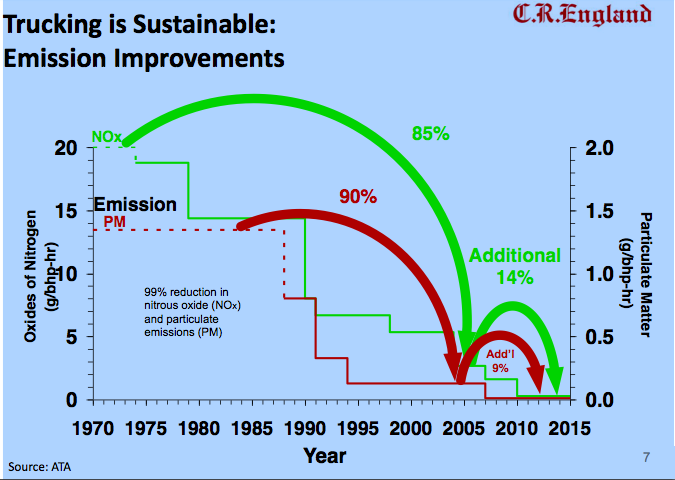
EmissionsZach his co-COO Brandon outlined key issues facing C.R. England, and the entire trucking industry. “Trucks continue to get cleaner. Today’s trucks emit 60 times less emissions than we did in 1988. In the fifty most polluted areas of our country, the exhaust from our trucks is cleaner than the outside air. We don’t like to say ‘add regulation’ but regulation got us there.”

“We have more trucks on the road than ever before, but are also seeing a shift toward intermodal transport: truck to rail to truck. Intermodal transport provides a 60% reduction in the carbon footprint of moving goods.

“Natural gas trucks are becoming a reality. We purchased our first five LNG trucks in 2011, added two more in 2013 and ten in 2014. All of these are operating in Southern California. LNG trucks cost 50% more to buy, but our early purchases were aided with grants. Much of our network is long haul trucking, which is not well suited to LNG. It takes a long time to refuel an LNG truck, so they work best for trucks that run daily routes with a rest period, often overnight, for refueling. Natural gas is still finding its niche in the industry.”

Screen Shot 2015-08-28 at 8.26.34 AMAn interesting trend is partnering with dedicated customers to invest in more environmentally friendly trucks. Where we have regular routes for prominent national companies, we share the increased cost of sustainable trucks. It becomes part of their overall sustainability effort.

One of C.R England’s challenges right now is finding drivers. “There is a serious shortage of drivers. Part of it is a generational change: truck driving is not viewed as a desirable occupation. People don’t want to be away from home.” C.R. England operates its own driver training school at five locations throughout the country in order to help meet demand and create drivers that follow their protocols. Ninety percent of their drivers come without a CDL (Commercial Driver’s License). The school lasts 17 days, followed by 30 days of in-cab training. New classes start every week, and there is a tuition payback option that allows people to attend for free if they fulfill a minimum nine-month work commitment. One key aspect of C.R. England’s driving strategy is driving in pairs. Regulations mandate maximum drive time for a driver, so having pairs allows C.R. England to better utilize their equipment and create a less isolating experience for drivers. “We help many people embark on new careers. It is satisfying to give people the opportunity for stable, career level employment.”

Along my trip, many people cite autonomous, or self-driving, vehicles as a feature of how we will live tomorrow. Brandon explained his thoughts on this. “We think about autonomous vehicles in four stages. The first is providing drivers with automatic aids, such as adaptive acceleration and braking. We already have these. The next phase is adaptive systems like self-parking and proximity detection of obstacles and other vehicles. These are happening now or will be in place soon. The third stage will be fully automated driving with a driver in the cab to handle stops, fueling, and unloading. The fourth stage will be fully automated vehicles moving between points without any humans. We are too far from that to actively plan for it now.” Zach added, “A few times a year I drive a route to stay in touch with our drivers experiences. I recently drove from Salt Lake to Las Vegas. I don’t think I touched the brake or accelerator pedals more than five times total on the entire trip.”

How will we live tomorrow?

Screen Shot 2015-08-28 at 8.24.57 AM“Better than we live today. We’ve always been forward thinking. We believe in continuous improvement for employees, customers, and communities. We have to adapt and adjust to new conditions, but we will continue to improve.” – Brandon Harrison, COO

“We will continue to focus on our core competency with training. We have made improvements in the past, and will continue to do so moving forward.” – Zach England, COO


Posted in Responses | Tagged , , , , | Leave a comment