Responses: How will we live tomorrow?

How will we live tomorrow?

“How we live tomorrow is anchored in the past. We have to understand the past to make the present and future better. As for the big picture, global warming, I am concerned but don’t have the answers. We have to be aware of our resources and utilize them well. And we have to have compassion. That is the key. To care for each other.”

Mitch Bradley, Owner of Heebs, locally owned market, Bozeman, MT

How will we live tomorrow?

“Do what you love and love what you do.”

Joan, retired national park employee, Livingston, MT

How will we live tomorrow?

“God’s laws are created to give us order and create family. Our sprits love God’s laws and His plans. But we occupy these carnal bodies. Our bodies want to experience everything. They are free of our spirits. But how will we harness our bodies to support and enhance our spirits?.”

Julie Fallon, Member of LDS Church, Bountiful, UT

How will we live tomorrow?

“I just came back from a nine day retreat. People in other countries are way ahead of us in energy work. Tomorrow will be about working with our own energy, not knives and sticks.”

Sherry Thurston, retired teacher, Rapid City, SD

How will we live tomorrow?

“Gas equals Time.”

Anthony Reisse Jenkins, online follower

How will we live tomorrow?

“Global warming is real. Up in British Columbia, which is rain forest, you can pick up moss and crumble it in your hand. It’s that dry. You used to walk on it and it cushioned your feet. When that happens, there is something wrong.”

Eric Grant, handyman, Livingston, MT

How will we live tomorrow?

“Are we even going to be here tomorrow?”

Brin, retired Special Education Teacher, Phoenix, AZ

How will we live tomorrow?

“We are getting ready for our tribal festival this week.”

Raymond, Sage Hill Travel Stop and Casino, Shoshone Tribe, Blackfoot, ID

How will we live tomorrow?

“I don’t know how we are going to live tomorrow. There are people who simply don’t believe this climate is getting warmer.”

JoAnne, Stop’n’Shop, Firth, ID

How will we live tomorrow?

“It’s hard. I’ve been in exercise physiology. We are getting rid of the programs in the schools, but we need them anyway.”

Brent, Student at BYU-Idaho, Rexford, ID

How will we live tomorrow?

“I moved to Jackson from Mexico City when I was seven. I am 21 now. I love living here, but it has become so expensive. I have lived in Victor for the past eight years, where I get a four-bedroom house for just over $1000 a month. A two-bedroom in Jackson rents for $2000 a month. A local photographer, Anne Muller, has started a group called Awareness to raise consciousness about the problem. When a new hotel opened, a large group of long-term residents was displaced. This is a huge issue in Jackson.”

Montherrat Brinal, Great Harvest Bread Company, Jackson, WY

How will we live tomorrow?

“Someone once told me to remember the past, live for today, and plan for the future. How the future turns out depends on what we do today.”

Willard, Teton County worker, Jackson, WY

Willard was applying pesticide to an invasive weed species in Grand Teton National Park

How will we live tomorrow?

“Technology. That’s what it’s all about.”

Sean, Yellowstone National Park Visitor, Gettysburg, PA

How will we live tomorrow?

“It’s not about money. It’s about the treasure of the experience along the way.”

Tom Wann, cyclist, Cheyenne, WY

How will we live tomorrow?

“I hope we are less destructive.”

Mike Oswald, author of Your Guide to the National Parks, Yellowstone, WY

How will we live tomorrow?

“Hopefully, simpler.”

Lisa, Librarian, Livingston, MT


Posted in Responses | Leave a comment

Trip Log – Day 94 – Gardiner, MT to Livingston, MT
Jackson to YellowstoneAugust 7, 2015 – Sun, 80 degrees

Miles Today: 57

Miles to Date: 5,352

States to Date: 21

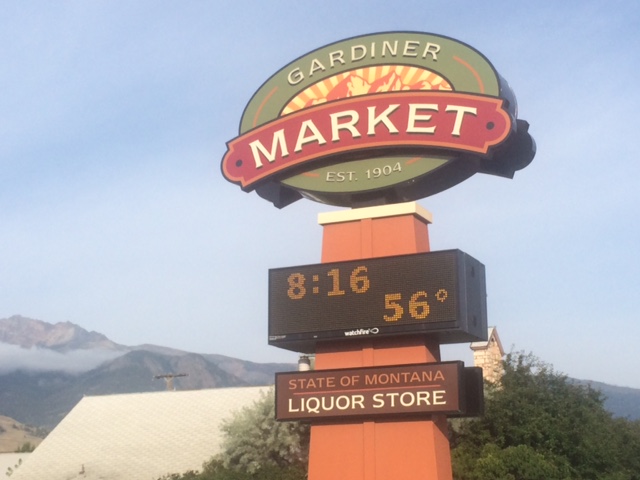
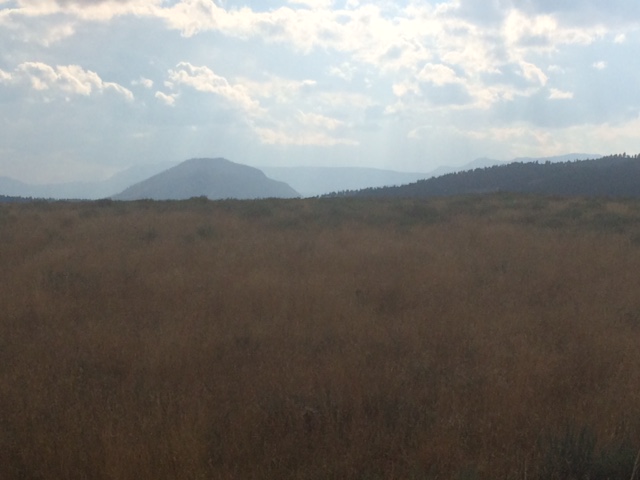
IMG_3373Today was a dream cycle touring day. I woke without an alarm, enjoyed eggs and English muffins with my warmshowers host, and stopped by the Gardiner Market for a few supplies. So many of my Boston friends have been commenting on the hot, humid weather back home, I couldn’t help but document the perfect morning temperature here.

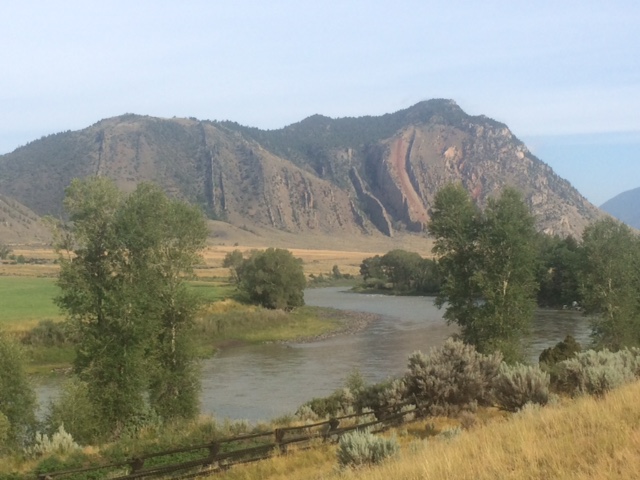
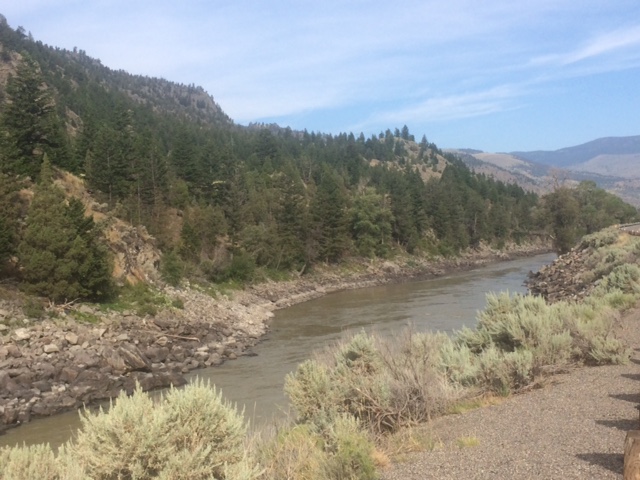
Fifty-five miles along the Yellowstone River to Livingston. The first twenty miles on US 89 descended a meandering canyon. I really loved the vertical rock formations on Devil’s Slide. The next thirty miles followed East River Road, a lightly travelled byway through aptly named Paradise Valley. Throughout the valley, the particular yellow that gives the region its name shows through on the bluffs. The two roads joined for the final descent into Livingston.

IMG_3374 IMG_3384 IMG_3377 IMG_3386

IMG_3390After navigating the usual ugliness where US 89 meets I-90, I cycled north to downtown Livingston, a hip little city with lots of galleries, coffee shops and boutiques. I wonder who frequents these places, but they all seem to thrive. I had an exquisite lunch at Chadz, topped off by a cinnamon bun at the Bodega Bakery. Downtown goes on siesta about three, so I took at writing break at the library; a classic Carnegie building with a truly pleasant addition.

I pedaled to the outside of town to my warmshowers host. We had a bit of miscommunication, and Eric only offered camping Thankfully the night was beautiful and his yard lush. My second night of sleeping outdoors was terrific.

Posted in Bicycle Trip Log | Tagged , , , , , | 2 Comments

Profile Response: Jim Magagna, Executive Vice-President Wyoming Stock Grower’s Association Cheyenne, WY

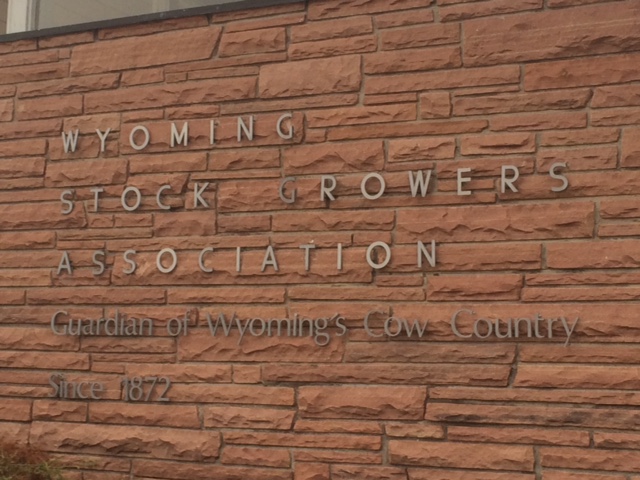
HWWLT Logo on yellowThe Wyoming Stock Grower’s Association was founded in 1872, eighteen years before Wyoming joined the Union. It is the oldest trade association in the state, which reflects the importance of ranching in Wyoming. Cattle are the WSGA’s primary focus, though most issues relevant to cattle also pertain to sheep.

The agency is located within blocks of the Wyoming State Capital. Although the state legislature is favorably disposed to the needs of ranchers, WSGA puts special focus on state issues during Wyoming’s short legislative sessions (40 days for General Assembly in odd numbered years and 20 days for Budget Assembly in even numbered years). “Beyond that, most of our focus is on the plethora of new federal regulations.” These include grazing rights on public lands, endangered species protection, and water distribution. “Our job is to weigh in on behalf of cattle growers on any regulations or legislation that affects their interests.”

IMG_2782Cattle production is in an unusual position right now. The number of animals in production is the smallest since the 1970’s; Wyoming has 25% fewer head. Beef consumption is also down 8 to 10 percent. Yet the industry is resilient and profitable. In the last two years the United States has witnessed record high cattle prices and we export 19% of our national production. However, we also import ‘trim meat’, mostly from Australia and New Zealand, to mix into bulk ground beef because American feedlot beef alone is too fatty for hamburger. The cattle industry’s success is due in part to individual animals being much larger than their predecessors as a result of improved feeding techniques. Ninety percent of cattle graze free range for part of their life, but yearlings go to a feedlot. Jim acknowledges some demand for fully free-range cattle, and people willing to pay a premium for that. But free-range cattle are a tiny fraction of the total market.

IMG_2781Sheep production is in greater decline. Sheep have more predators and require a different kind of supervision: 24/7 labor for months at a time. Jim uses this as an example of WSGA’s advocacy work. Since the 1950’s, shepherds; originally from the Basque region of Spain, more recently from Peru or Chile, were governed by Department of Labor rules that allowed them to live in mobile housing and work up to 33 months with the herd. Recently, Legal Services in Colorado brought suit questioning these labor practices. New rules are up for review. WSGA considers the current proposals impractical and, if implemented, will make raising sheep economically impractical in this country.

Jim Magagna has a personal interest in raising sheep; he owns a sheep ranch in the Western part of Wyoming. At one time he ran 8,000 head, now that number is in the hundreds. During the summer he spends three to four days a week on his ranch, but he doesn’t handle daily operations. His sheep graze on about 200,000 acres, of which Jim owns less than five percent. The rest is permitted grazing, on Federal Land or through other arrangements.

IMG_2784WSGA occupies an interesting position within the web of organizations focused on sustainability. Jim describes animal rights groups and extreme environmental groups as threats to ranching, but mainstream conservation groups consider ranching a benign way to preserve open space. Being from a small state, population-wise, Jim regrets that Wyoming doesn’t have a larger voice in our nation’s sustainability discussion. “We can work with conservation groups on sustainability, but we can’t work with folks who are anti-growth.”

How will we live tomorrow?

IMG_2779“The global demand for red meat will continue to grow as more countries become more affluent. We can produce much more efficiently.”

Posted in Responses | Tagged , , , , , , | Leave a comment

Trip Log – Day 93 – Yellowstone National Park to Gardiner, MT
Screen Shot 2015-08-07 at 2.00.21 PMAugust 6, 2015 – Sun and clouds, 70 degrees

Miles Today: 111

Miles to Date: 5,295

States to Date: 21

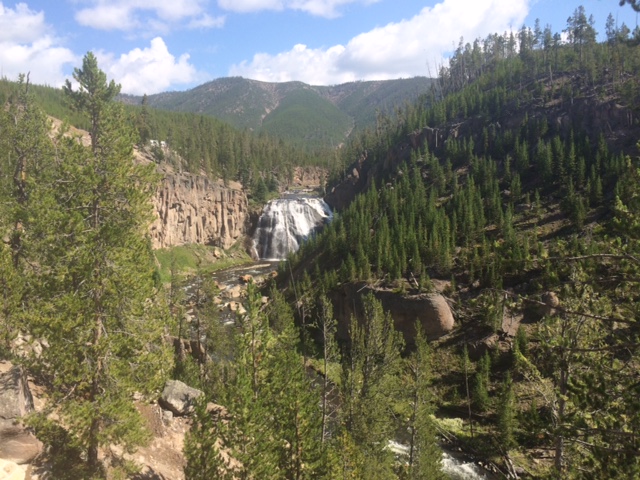
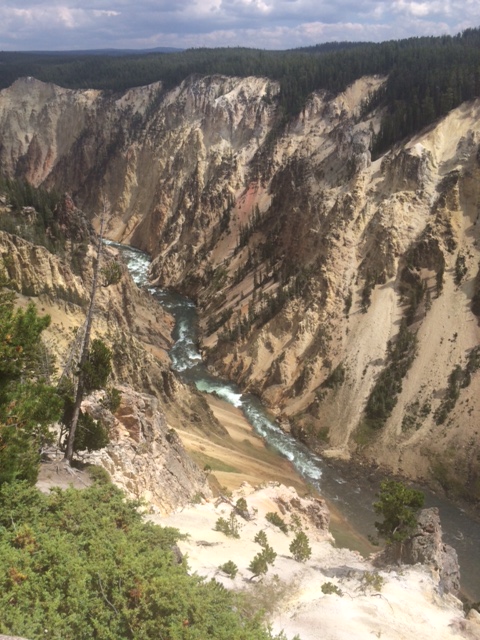
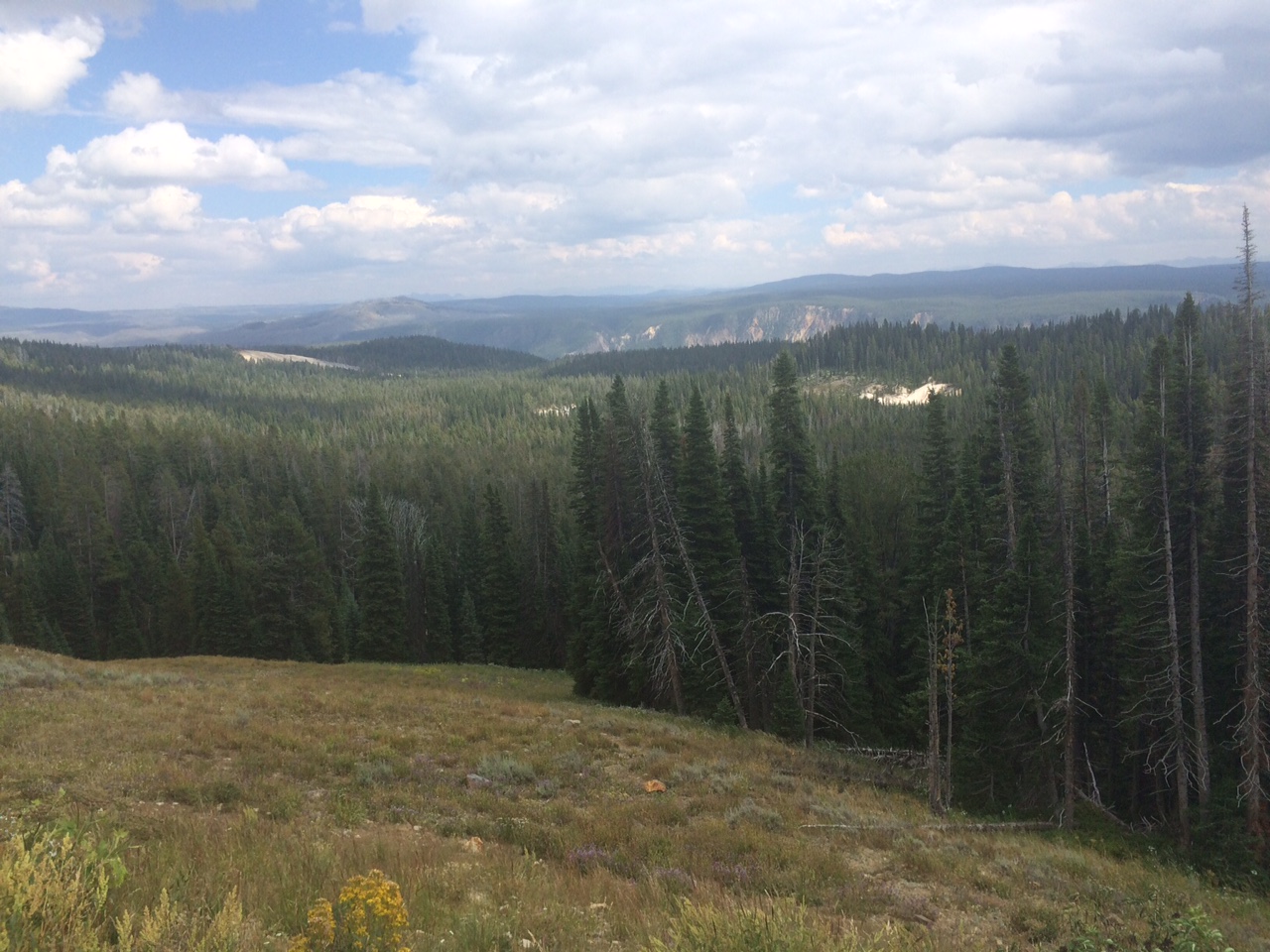
I saw more of Yellowstone than I anticipated, which turned out to be good thing. I planned to leave my campsite at Grant Village and take the west side of the Grand Loop, to see Old Faithful and then head north on US 89 past most of the geysers to Gardiner, MT. However, a ranger told me there was 17 miles of construction, i.e. gravel, north of Norris. So I revised my 76-mile route into 110 miles by taking in Old Faithful and then looping back to Yellowstone Canyon, up and over Mount Washburn, past Tower Falls and back through the northern tier of the park to get to Gardiner. I began at break of day and spent thirteen hours pedaling, stopping at vistas, and talking to folks.

IMG_3343

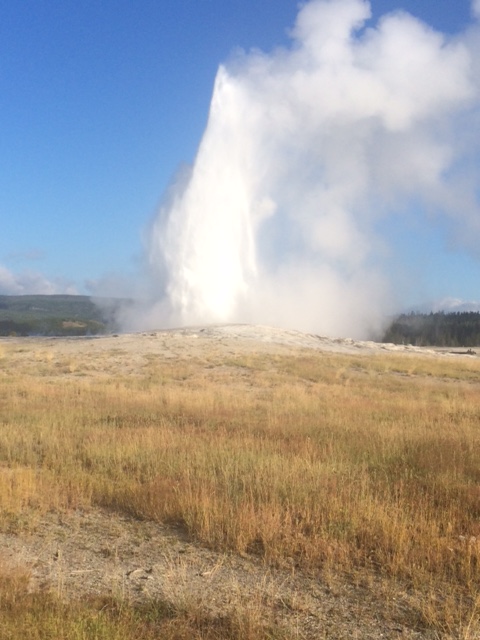
The requisite picture of Old Faithful

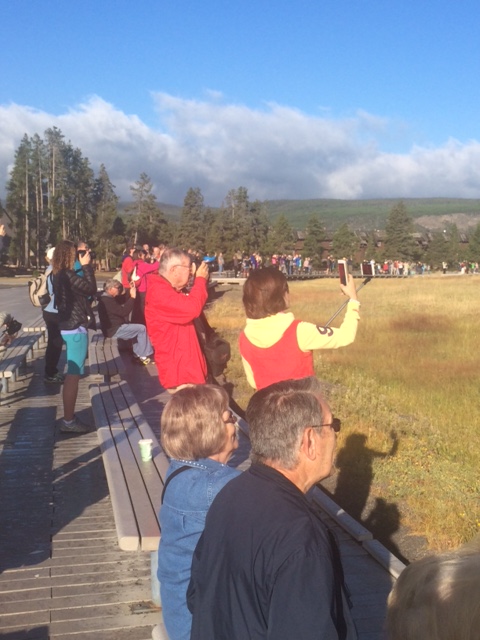
IMG_3344I was intrigued by how many people were glued to their lens throughout the entire event. A worker in the Park told me that selfie-stacks are the most popular sales item.


IMG_3345

The steam glistens off the smooth earth in the morning light.

IMG_3353

Nearly twenty years after the 1988 fires, new longpole pines are growing through the fire debris.

IMG_3348

Gibbon Meadow is a beautiful stretch of mountain scenery.

IMG_3349 IMG_3351

Gibbon falls are spectacular. I met Michael Joseph Oswald, author of Your Guide to the National Parks. His camera would probably not even fit in my panniers: his books must have terrific photos.

IMG_3358 IMG_3355

I was in the Canyon area at lunchtime, the only time I experienced the impact of over three million summer visitors to the park. The canyon is incredible, the chaos of people, traffic, and animal gawking a lot less inspiring.

IMG_3361

Everything calmed down as I climbed up Mount Washburn.

IMG_3365

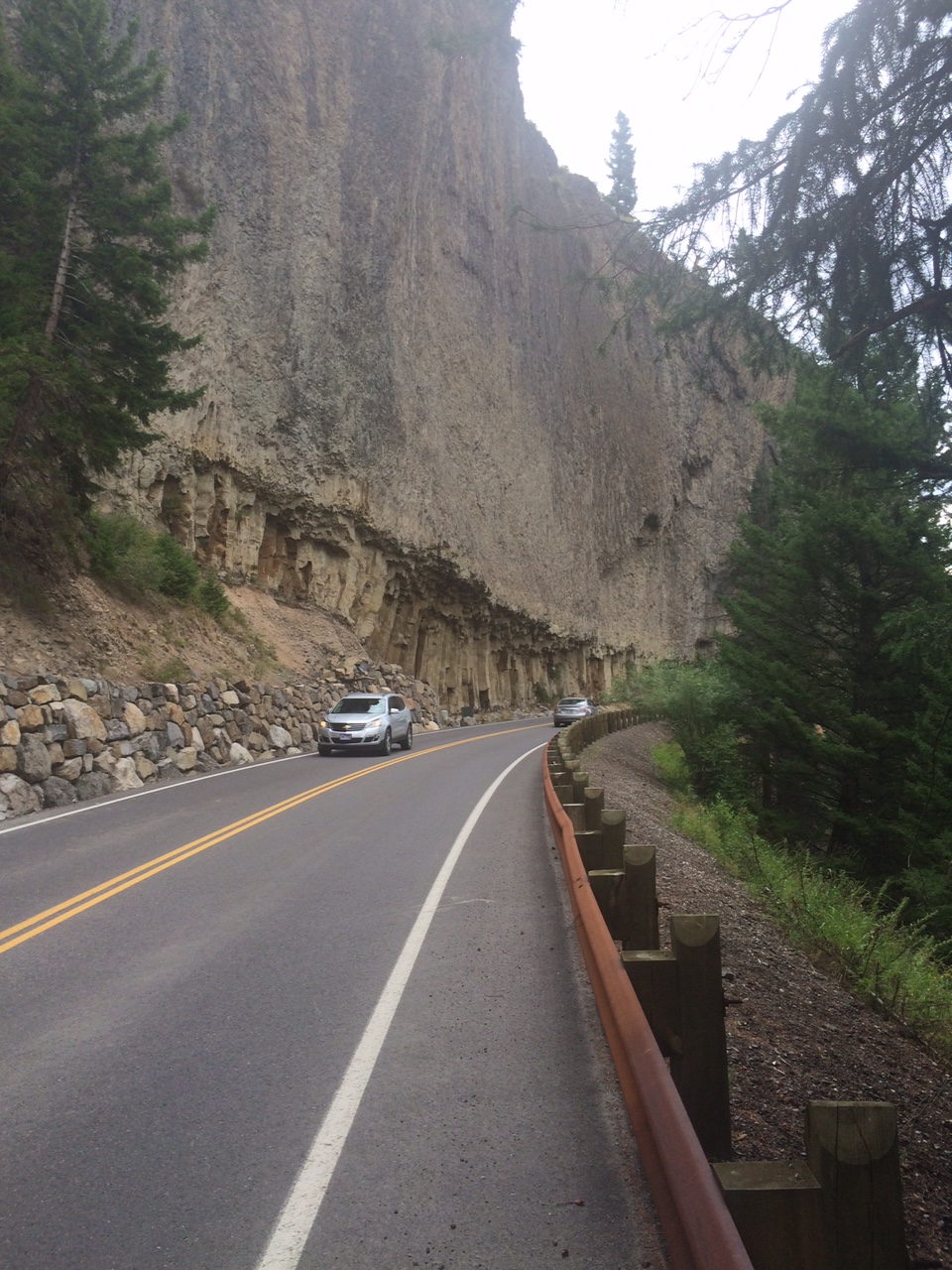
This outcropping that towers over the road blew me away.

IMG_3370 IMG_3371

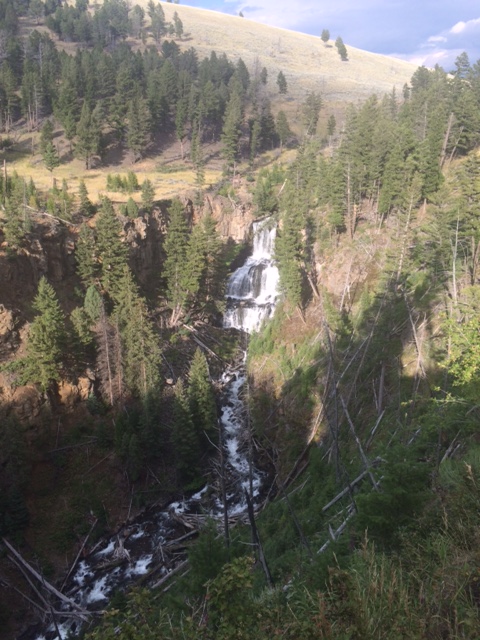
The northern portion of the park is the least spectacular, yet I found it very satisfying in the early evening light, and Undine Falls was a treat to close my Yellowstone day.

Posted in Bicycle Trip Log | Tagged , , , , | Leave a comment

Profile Response: Tom Wann, Cheyenne, WY

HWWLT Logo on yellowIt’s not unusual to live without a car in New York or Chicago, easy to do in Boston or Minneapolis, and takes special planning to manage in Portland, ME or Milwaukee. But Tom Wann lives carless in Cheyenne WY, which makes him unique indeed. Interestingly, Tom doesn’t live downtown, which, like so many smaller cities relies on funk rather than essentials to drive its economy. Tom lives three miles away from Depot Square, in a ranch house on a suburban street that he selected because it’s three miles to his office at Blue Cross of Wyoming, and a block away from a strip center with an Albertson’s, a few eateries, and a decent bar. His two-car garage has three bikes in it plus a bike trailer that he uses on big shopping days.

Aside from not owning a car, Tom is a true representative of what I think of as the American West. He has clear, well-reasoned ideas about how we ought to do things unmuddied by ideology or the distracting opinions of people who live too close to one another.

Taxes: charge everyone 10% on every purchase, income, and property. Split it 50/50 between the state and the feds. Have an election every year and let people vote how to allocate their tax money. Let them vote on more for highways, more for education, less for defense.

Gun Control: Create a rigorous educational and registration program for anyone who wants to own and carry a gun. Tom figures it will take about 40 hours of training in gun handling and maintenance, psychological tests, and firearm safety. Make people pay a fee for the training and registration. Once passed, they can carry any weapon anywhere except where there are armed personnel guards (like the White House). This will stop the crazy pattern of people going on shooting sprees in places where they know others will be unarmed, like schools and churches. If psychotics know that trained, armed people are everywhere, they will stop killing.

IMG_2788Tom’s ideas are consistently fresh and often bold, but not half-baked. He’s a well-considered college graduate, eleven-year Army veteran, a Master Sergeant in the Special Forces who served three tours in Iraq. He even applies his straightforward honesty to himself. After leaving the Army and finishing his Bachelor’s in Computer Animation, Tom was unemployed for months before he landed a job as a Security Guard. “The problem with Vets is that we think so highly of ourselves. We have all these great skills, combat skills, readiness skills; but we can’t adjust to civilian life and our skills aren’t easy to transfer. That’s why so many turn to drugs or alcohol or have mental issues. I just faced reality and became a security guard.”

Tom eventually landed a career-path position on the IT staff of Blue Cross of Wyoming. He eyes shine when he describes the automation potential. “I like technology. I get excited about technology. I get TOO excited about technology. The people I work with are, like, ‘I don’t know how to use computers,’ and I’m like, fellow, computers have been around for sixty years, its time to get on board.”

Tom’s mother moved her daughter and son from outside Baltimore to Good Rock WY when Tom was nine. Aside from his time in the military, Tom’s spent most of his time since then in Wyoming and Colorado. More than a year ago, Tom and his wife split up. That’s when he decided to buy his house, sell his car, and get more involved in cycling. “I ride to work every day. The faster I ride the better I feel. One day I left work really mad; I rode home in 10 minutes 23 seconds. I felt great when I walked in the door.”

Cheyenne’s cycling community has become one of Tom’s main social outlets: group rides, charity events, and social evenings. It has been a good community while Tom continues to adjust to being single. “I never really wanted to have kids, so when I was 25 I did the V-thing. The dating scene for a 33-year-old atheist with no car who doesn’t want kids is pretty limited in Christian Wyoming.” Tom laughs when he says this, as if he doesn’t really believe it. I sure don’t.

How will we live tomorrow?

“I would like to think that we are going to make the world better for others, if not for ourselves.”

Posted in Responses | Tagged , , , | Leave a comment

Trip Log – Day 92 – Jackson, WY to Yellowstone National Park

Jackson to YellowstoneAugust 5, 2015 – Overcast, 70 degrees

Miles Today: 79

Miles to Date: 5,185

States to Date: 20

IMG_3306

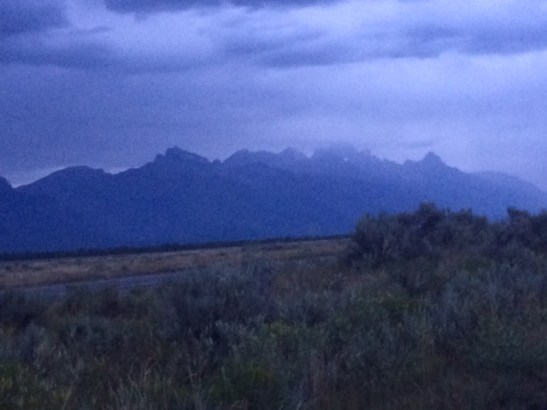
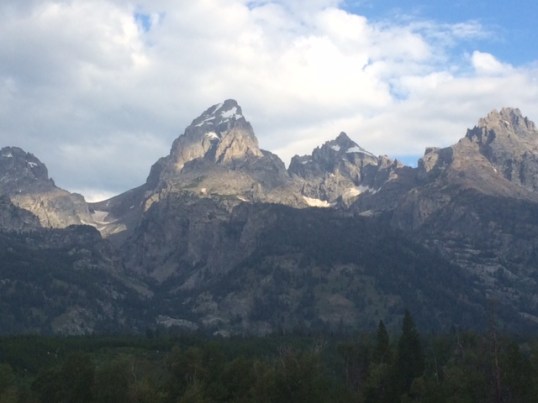
The Grand Tetons are magic! I pedaled in their shadow for over thirty miles, and was mesmerized by their dynamic angles, immense scale, and the play of light and shadow. I woke to light rain and a grey forecast but pushed out for the long ride up to Yellowstone. The first twenty miles followed a new bike path out of Jackson, into Grand Teton Park, all the way to South Jenny Lake. The rain never turned serious. As I rode, the Tetons morphed from looming shadows to stark relief.

IMG_3311 IMG_3318 IMG_3322

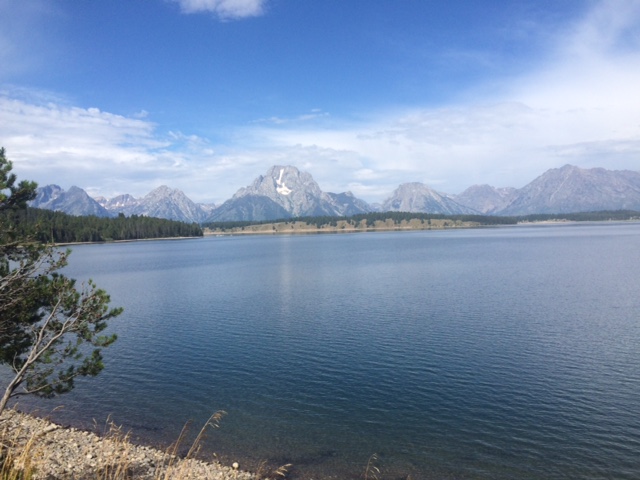
After breakfast at the South Jenny camp area I had thirty solid miles along the Teton Range. The glacier at Mount Morain is impressive, though dwindling. The highway curves around Lake Jackson, which offers spectacular views of Morain from many angles.

IMG_3325

I stopped for lunch and enjoyed great bacon mac’n’cheese at a restaurant along the five-mile stretch between Teton and Yellowstone Parks. Refueled, I headed into a national park I have long dreamed of visiting.

The southern portion of Yellowstone is the Teton’s figure-ground cousin. The Tetons splendor is easy to see: the roads in the wide valley are generous; the mountains rise like knives out of the plain. In Yellowstone, the view from the road reveals only millions of longpole pine trees. But as the road cants up, giant crevices and deep canyons fall off on either side. You have to stop at intermittent turnoffs to appreciate them. Riding along the base of the Tetons filled me with awe at the giant sculptural forms. Pedaling along the narrow Yellowstone Road with no shoulder and big drop-offs triggered my vertigo, though I enjoyed many scenic pit stops along the way.

IMG_3333 IMG_3329

When I stopped at the Continental Divide the sky behind me was black, lightning raging. I cycled four miles downhill to the Grant Village Visitor Center, and arrived at 4:30 p.m. By the time the rain caught up with me, I was safe inside. I stayed there until 7 o’clock closing, during which time I met Laura, a lovely French woman who works in San Francisco and loves to travel the West. She invited me to diner with her boyfriend, Olivier, and we had a lovely meal. Afterward we all attended an informative, funny ranger program on bears. By ten the rain had stopped the stars were bright, and I spent my first night sleeping outside. (FYI: reservations for any accommodation at Yellowstone have to made months in advance, which is not my style. However, they provide same day tents sites for hikers and cyclists. Isn’t that great!)

Posted in Bicycle Trip Log | Tagged , , | 1 Comment

Profile Response: John Verser, Managing Editor of The Western Nebraska Observer, Kimball, NE


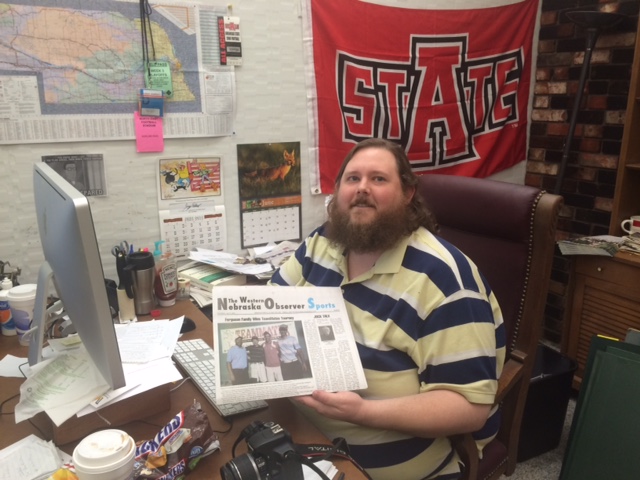
HWWLT Logo on yellowThe Western Nebraska Observer began publishing in 1885; John Versey became Managing Editor last September. I was interested how small town newspapers fare in the Internet age, and was intrigued that a young man from Arkansas would move to Nebraska to take the helm of this newspaper that has four full-time employees and a part time sportswriter (who is pushing eighty and has covered local sports in this part of the panhandle for fifty years).

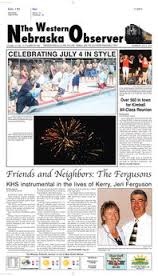
imgresThe Western Nebraska Observer is one of three local papers owned by an out-of-state conglomerate. It’s printed every Wednesday in nearby Sydney, for Thursday delivery. The paper runs from 16 to 24 pages, sports being the biggest variant in its size.

According to John, the local paper has changed less than many other things in this world. Over 90% of the subscribers take the print edition, ads still create the largest revenue stream, and classifieds are still strong. “We may not have as many cars for sale was used to, but employment ads, garage sales, and rentals are still listed here rather than on Craigslist.”

imagesJohn believes the local paper will be relevant for the long haul because they cover things people want to know, that no one else covers. “People read the paper to see their friends and neighbors. Nobody else is going to go to the county events, the city hall meetings, the school board. Facebook offers bits and pieces; the Internet age is not invading this area. We cover it all.”

Still, John is making changes that reflect this unique form of communication. “In February we started a ‘Friends and Neighbors’ feature. It profiles a person or couple from our community. It fills the bottom of the front page and is very popular.

How will we live tomorrow?

IMG_2762“As far as the newspaper goes, I don’t think there will be a lot of change as long as do what we do well, which is to cover the community. We have an online edition and have started to add web video. It is just another revenue stream.

“Everyone says that print is going to die. I don’t necessarily agree.”

Posted in Responses | Tagged , , , , , | Leave a comment

Trip Log – Day 91 – Driggs, WY to Jackson, WY

Driggs to JacksonAugust 4, 2015 – Clouds and sun, 80 degrees

Miles Today: 34

Miles to Date: 5,106

States to Date: 20

A short day of intense riding. Eight miles along an easy bike path and then fortified myself with a huckleberry shake in Victor, ID.

IMG_3289 IMG_3291 IMG_3290

Eight miles at 6% grade plus three miles at 10% grade to climb Teton Pass. Met couples from LA, MS and CA at the Wyoming sign.  Am I going backwards? I’ve already been in Wyoming! No worry, Jackson Hole beckons.

IMG_3293 IMG_3294 IMG_3295

The descent is more hair-raising than the climb – brakes full throttle for four miles along the old road turned into bike path: too many switchbacks to count.

Arrived in Jackson by two. What am I doing here? A tourist mecca flooded with Asians and guys with big guts all wearing Jackson Hole T-shirts. Don’t they already know where they are? However, the antler arches in the main square are great and it’s cool how the mountains form the backdrop to absolutely everything.

IMG_3298 IMG_3301

My warmshowers host is a long time Jackson summer resident and bit eccentric. Hooray!

Off to Yellowstone tomorrow – my first night of sleeping outside and no Internet. Goodbye civilization as I know it.

Posted in Bicycle Trip Log | Tagged , , , , | Leave a comment

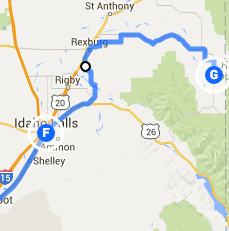
Trip Log – Day 90 – Idaho Falls, ID to Driggs, ID

Idaho Falls to DriggsAugust 3, 2015 – Overcast and rain, 75 degrees

Miles Today: 79

Miles to Date: 5,072

States to Date: 20

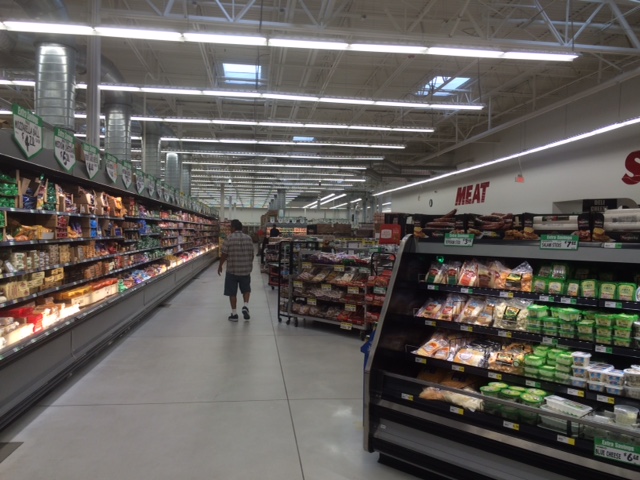
IMG_3277 IMG_3276 Everything about today was super-scaled, which left me feeling a bit small and overwhelmed. It started at WinCo, a new grocery chain to me where I stopped to pick up breakfast. It’s Costco meets Safeway: I watched people load cartons of milk and pop and dozens of bags of groceries into the back of their pickups at 7 a.m. while I ate my yogurt and drank a Powerade.

IMG_3278 IMG_3282I had a nice 35-mile ride through farmlands and towns. Eastern Idaho is much more populated than I expected, cultivation like Minnesota at the immense scale of the Dakota’s. In Rexford, a squeaky-clean Mormon town, I stopped at Walgreen’s. When I gave the fresh-scrubbed counter boy my card and asked him about tomorrow, he said, “We’ve been following you!” Turns out he’s an exercise physiology student at BYU-Idaho and his professor used my blog s a case study. How cool is that!

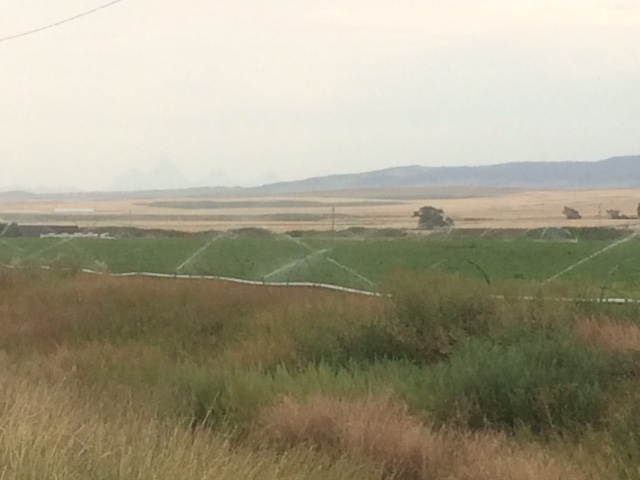
Today may be the only day of my trip that took me in all four directions as I skirted west and north before Highway 33 turns east and finally south into the Teton Valley. Potato fields undulated deep green, wheat shimmered in the breeze, the distant hills were spotted with fir trees, and in the far distance the Grand Tetons, seventy miles away, dominated the horizon. Despite the overcast skies they were a mighty force.

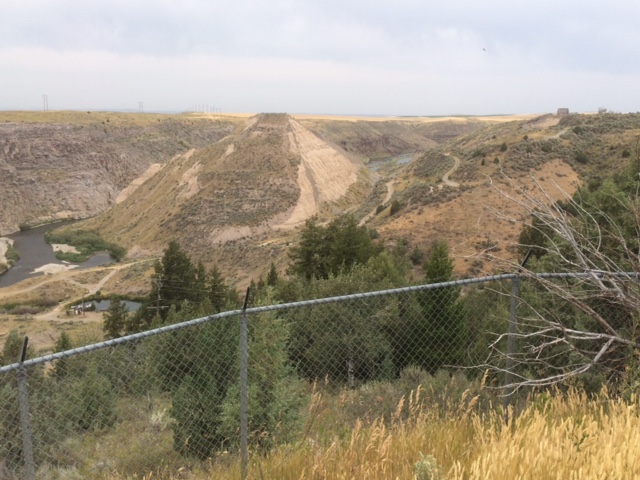
IMG_3284I detoured to visit the site of the Teton Dam disaster; a tremendous pile of dirt still stands almost forty years after the 280 foot deep dam broke in 1976 and devastated the nearby towns. The Teton River snakes along a narrow path at the bottom. It looks so benign yet countered man’s attempts to tame it.

By the time I reached Tetonia the sky turned from grey to dark. Three miles outside of Driggs the rain began to fall. Within a mile I was drenched. There was no place for cover, so I just kept coming on until I reached The Pines, a really pleasant guest house in town. I was a dirty, wet, tired creature. After getting clean and dry I walked to the fancy supermarket across the street and got delicious ribs, salad, and watermelon for dinner, with cookies for dessert. I climbed into bed by nine.

Posted in Bicycle Trip Log | Tagged , , , , , , | 2 Comments

Profile Response: Fred Thurston Rapid City, SD

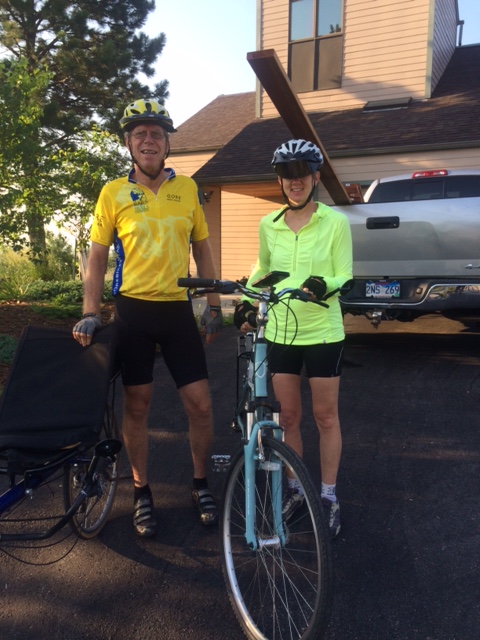
HWWLT Logo on yellowSherry and Fred Thurston met fifteen years ago through an eBay ad for a unique fountain pen that Fred purchased from Sherry. The pen led to a correspondence, and eventual meeting. Sherry, who is from Western New York, and Fred, who’s lived in South Dakota for years, cycled the West Coast on recumbent bicycles. “If we could survive that, we decided we could be married.” Sherry recalls. Sherry moved to Rapid City, where Fred has been a successful architect and illustrator. Now they are both retired, though Fred still does occasional projects for favored clients. Sherry and Fred were my warmshowers hosts in Rapid City. After Sherry went to bed, Fred and I discussed tomorrow.

portraitHow will we live tomorrow?

“I oriented most of my career about being able to live tomorrow. I have intelligent clients who do not believe in global warming. They don’t believe we are doing any harm. But I do.

“Tomorrow for me is one hundred years from now. We need to keep this planet for the next generations. We are seeing changes in the weather that we are responsible for. We may not see the consequences, but our children and grandchildren will.

work“I do a lot of historic renovation. One argument is preservation as a link to our past, but the other argument is resource preservation. A number of my projects follow LEED criteria. LEED is not a panacea, but it is a good thing. It is pointing in the right direction.


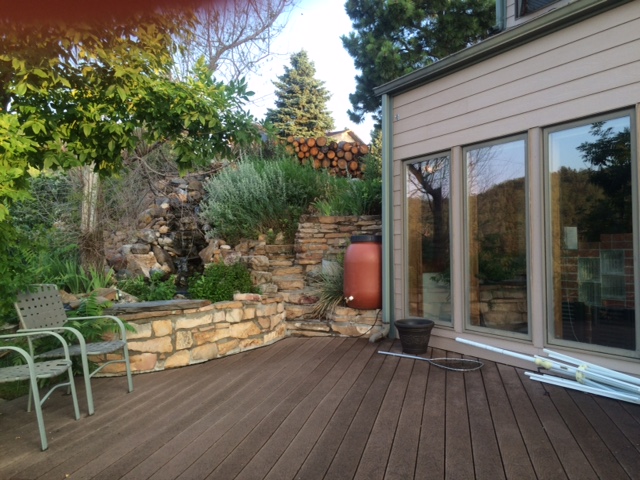
deck“I can’t control what China will do; I can only do what I can do, in my projects, in my own live, with my staff and with my clients. We don’t have a lawn – the largest single use of domestic water. I drive a Prius. I use low-flow toilets. It is not much, but it is what I can do. I want people to know that I drive a Prius. It makes a statement, especially in South Dakota.

“Tomorrow scares me a little bit because I don’t think we know enough about what we are doing. Why are we fracking, which increases the propensity for earthquakes? Why not use solar and wind on some combination instead? I use a wood stove. It is more work than turning on the furnace, but I want to show people that I care about our present and our future.

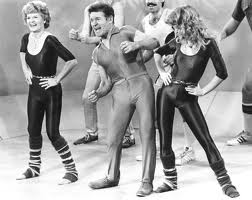
lalanne“I did a seventy mile ride this weekend. Around mile fifty my legs started cramping. I started to talk to myself. I talked to my mother, who told me so much without using words. She got up every morning and did Jack LaLanne. She told me, in that activity, that we have to care for ourselves. She made an example that I have followed. I want to leave that lesson to my own children, through my own actions.

Posted in Responses | Tagged , , , , , | Leave a comment