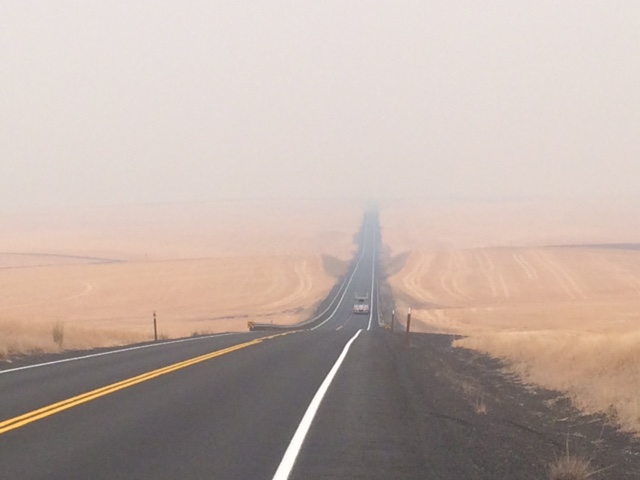
August 24, 2015 – Sunny, 65 degrees
Miles Today: 33
Miles to Date: 6,182
States to Date: 22
August 24, 2015 – Sunny, 65 degreesMiles Today: 33
Miles to Date: 6,182
States to Date: 22
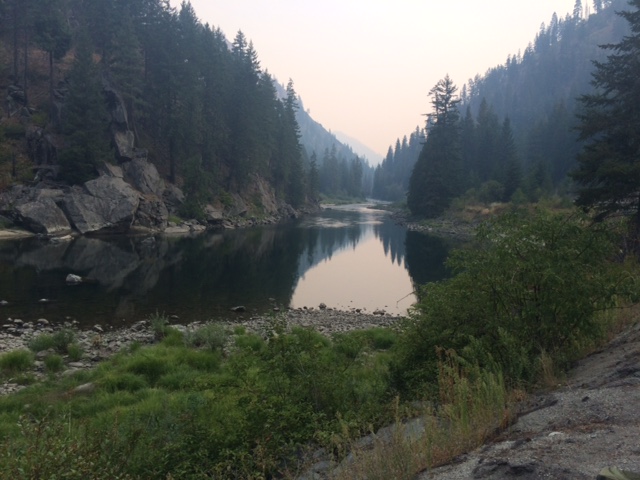
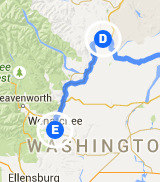
For the next week or so, my trip will take on a different rhythm, as I will be four days around Seattle and then visiting my niece and her family in Dupont. In the early morning I took a gorgeous ride from Sultan to Monroe. I spent most of the day there setting up my Seattle itinerary and interviewing a Microsoft consultant. Then in late afternoon I took an equally tranquil ride to Bothell. Except that somewhere I made a wrong turn, went way out of my way, and was running late. I decided to get onto Highway 523 to avoid being too late. Oops, bad shoulder and another flat tire. My sixth for the trip. At least I am getting speedy at the repairs. I arrived in Bothell late but warmshowers hosts are understanding about the delays that accompany bike travel.
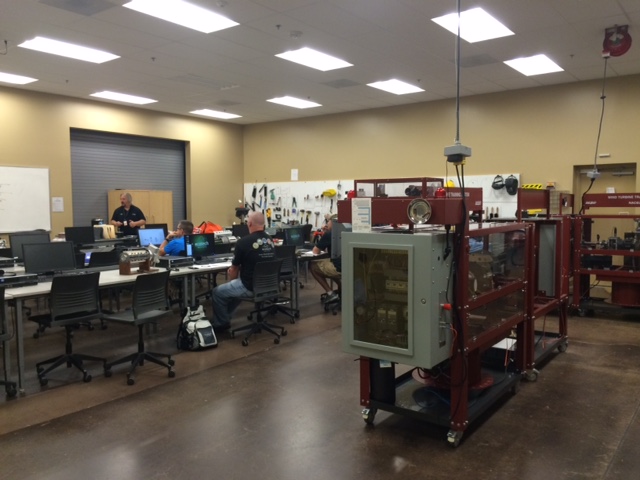
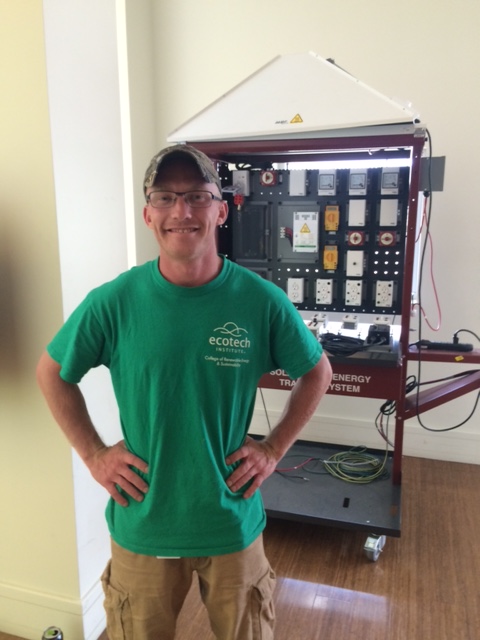
Ecotech Institute represents an emerging facet of America’s educational system: a private institution that provides focused training for high school graduates. Ecotech is the only school in the United States that offers an AA degree in renewable energy resources. About 400 students are enrolled in the Aurora campus, which opened five years ago in a renovated warehouse facility along metropolitan Denver’s interstate loop.
Ecotech students are different from traditional college students. The average age is between 30 and 35, many have full time jobs, and more than a quarter are veterans who use their educational benefits to become trained as power utility technicians, solar specialists, wind system installers, or obtain business degrees with a sustainability focus. Christopher Gorrie, Campus President, sees a demographic shift toward younger students as more people seek training related to specific employment over traditional liberal arts.
Ecotech offers degrees accredited by ACICS (Accrediting Council for Independent Colleges and Schools) but maintains close partnerships with renewable energy businesses. Several local companies have representatives on Ecotech’s advisory board, and the curriculum is designed to make students job-ready for the sustainable energy industry.
The school is highly structured both in terms of class work and student expectations. “Part of the curriculum is to bolster a level of professional behavior among our students. That is part of why veterans succeed here. They are good students, have benefits so they don’t have to work full time while in school, and have a level of discipline that enables them to succeed.” It is possible to complete an Ecotcech degree in as little as 18 months; 80% of students earn their AA within two years.
Chris feels that traditional colleges and schools like Ecotech operate on unequal fields. “Students are admitted if they have a high school diploma and specific score on the Wonderlic Test. We have to maintain high academic standards, but are also evaluated on attendance, retention, and job placement. Our students are non-traditional in every sense of the word. They support themselves and are skills-focused. But outside jobs, families and emergencies create potential pitfalls to completing our program. It is very expensive to live in Denver; money is an issue for all of our students.”
Chris acknowledges that there have been some “bad apples’ in for-profit education that have tainted the entire basket. However, he sees President Obama’s initiatives to make two years of post-high school education available to more as a positive thing.
Ecotech has the capacity to accommodate up to 800 students at their Aurora campus. At one time they considered expanding to other cities. However, Ecotech has acquired Kaplan Higher Education, so expansion will take a different form: adding Ecotech’s focus on sustainability to existing Kaplan locations in twenty-eight other cities.
How will we live tomorrow?
“The whole world’s economy is a fossil-fueled economy. Not just our energy for transport, but the chair I’m sitting in and the bottle I’m drinking from. These are finite resources. We need to build a new infrastructure for renewable energy. That will require an educated workforce. Ecotech is part of that solution. Not all – it will take PhD’s and scientists as well as technicians.
“It took over a century to build our power grid. It will be a similar process to build a smart grid.
“I don’t see it as a choice. The sooner we do it the easier and cleaner it will be for all.”
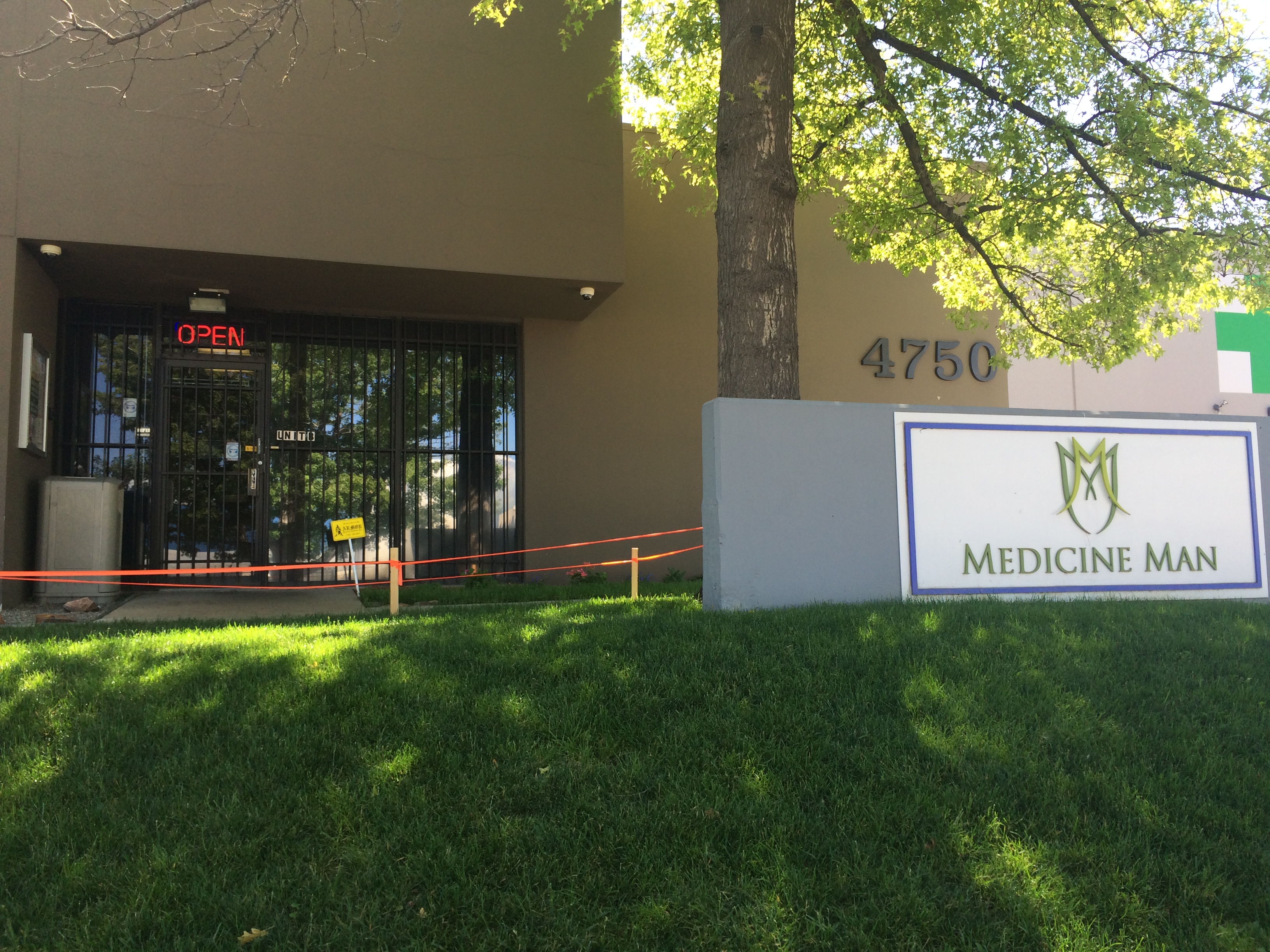
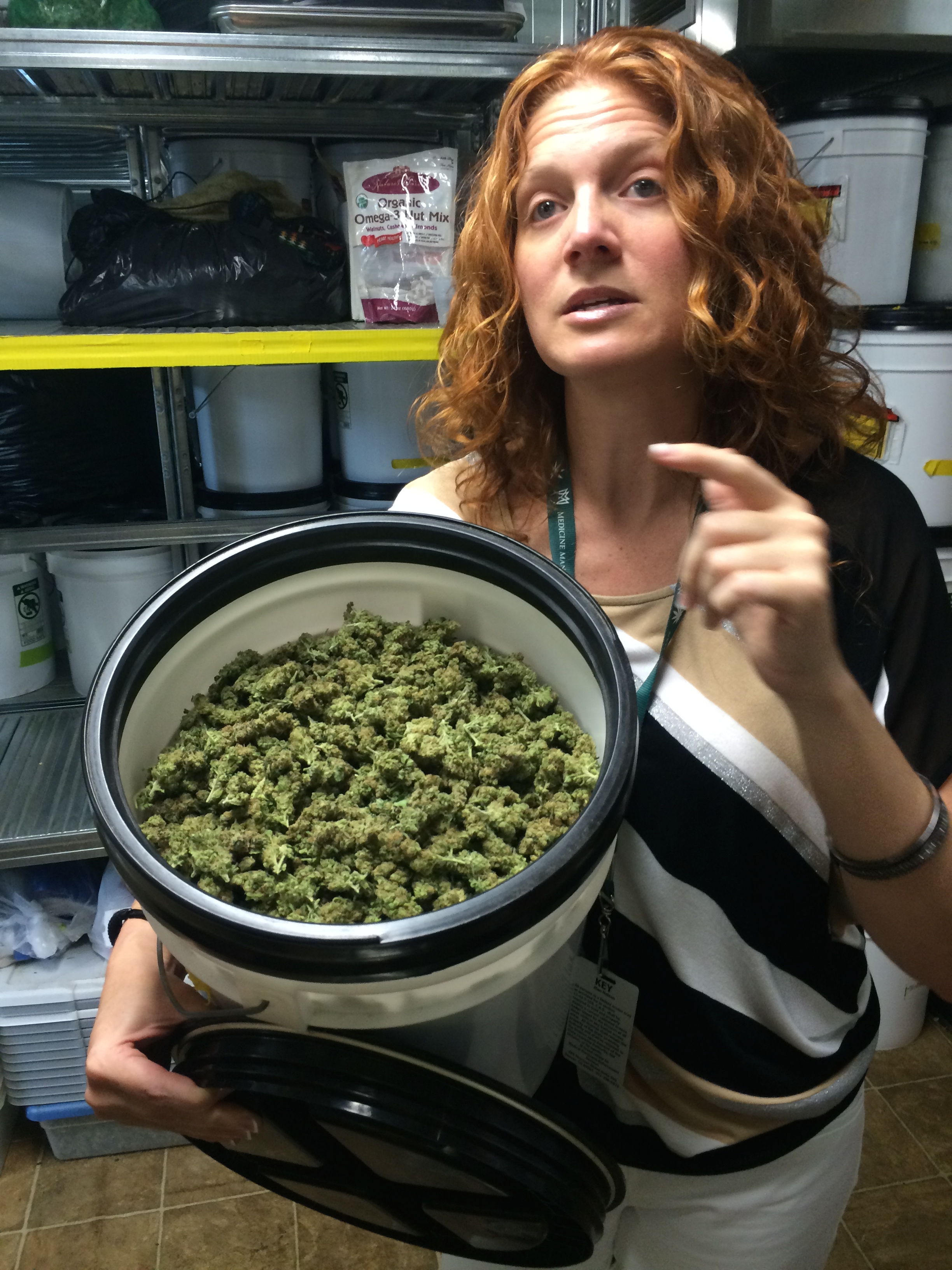
If you want to know how we will chill tomorrow come to Colorado, the first state to legalize recreational marijuana. I met with Elan Nelson of Medicine Man, one of Denver’s largest dispensaries, to discuss this fledgling industry. Before I even got in the door, I realized that buying marijuana is unlike any other shopping experience. Medicine Man is not located in a shopping center; it’s in a light industrial district near the airport. The sign is corporately sedate rather than retail bold. The bars over the windows are severe. The security guard inside is polite but clear. He checks every ID, requires a sign-in, and says, ”We are unable to process credit cards right now” as he points out the ATM machine. Marijuana is a cash only business.
An information window lies straight ahead, but most customers – there are dozens on this Wednesday morning – know where to go. Retail sales are to the left, medical sales to the right. The retail side doesn’t have any merchandize on display. Four clerks stand behind a counter, like in a plumbing supplying house, taking orders, retrieving product from back of the house, and completing transactions. The medical side is gentler. There are a few leather chairs for customers who need to rest. Sales people stand behind glass counters with product on display beneath and behind them. It’s more like visiting your pharmacist.
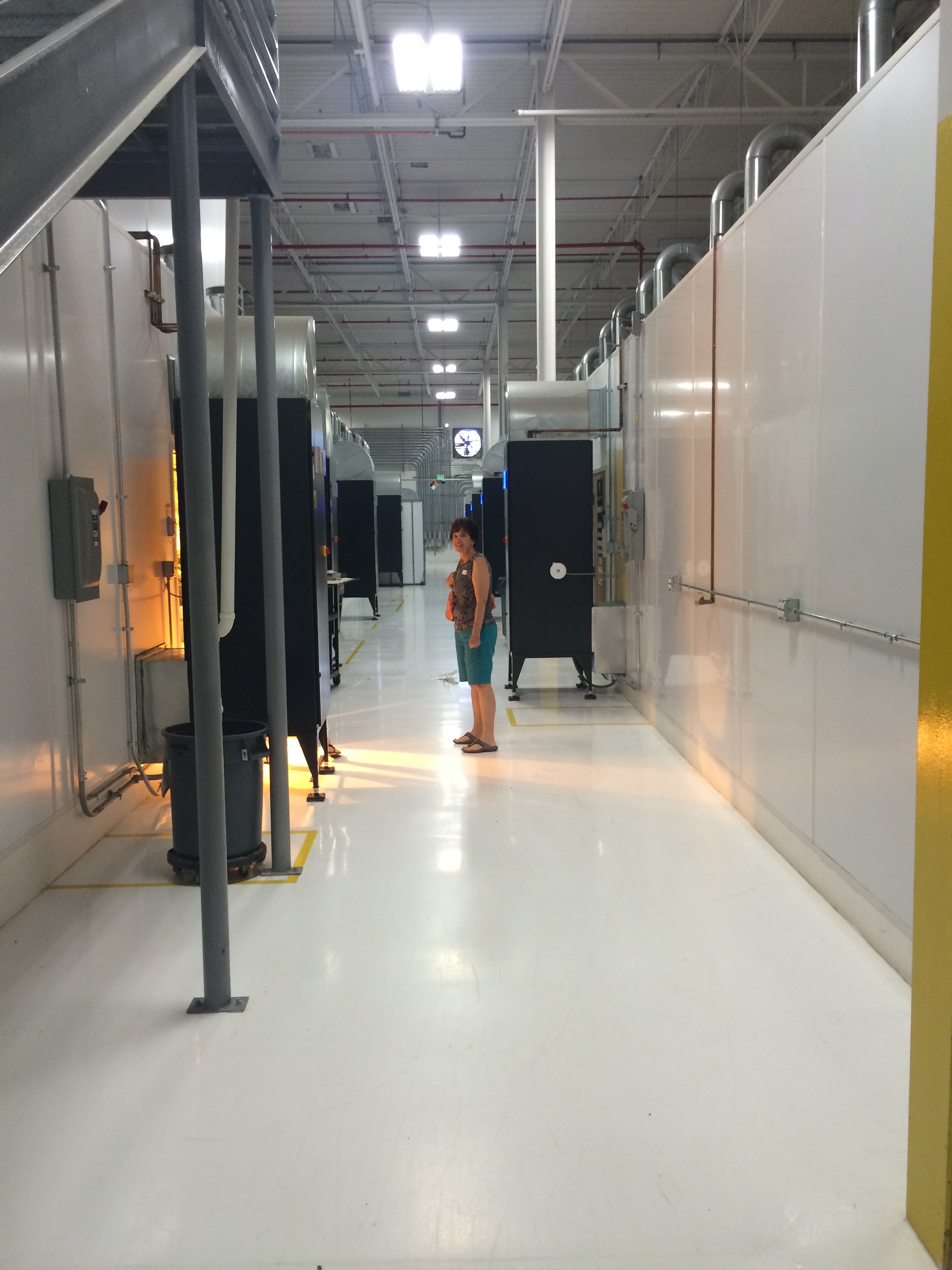
The customer area is a small fraction of Medicine Man’s vertically integrated 40,000 square foot marijuana facility. Elan explained that the State of Colorado requires companies grow what they sell, and only sell what they grow. She toured me through a conditioned warehouse / factory / farm that employs 68 people who produce – and sell – a lot of marijuana.
The facility is divided into multiple grow rooms, each with racks and lighting designed to optimize growing conditions for different strains. One of the first steps in the growing process is tabbing seedlings as medical or recreational. Every plant is RFID tracked until it is processed and sold. Elan explains that the plants are identical, but the taxation streams are different. Medical marijuana is taxed 7.62% when it is ‘sold’ from the back of the house to the front; recreational weed is taxed 15%. The State then taxes an additional 21% on recreational marijuana at the point of sale.
Marijuana is heavily regulated: Medicine Man has had three random visits by the Department of Revenue Marijuana Enforcement Division this year. One limiting factor is the limitations on plant count. Medicine Man is licensed to grow 10,600 recreational plants plus six medical plants for every patient who has assigned their prescription to Medicine Man. The company focuses on optimizing quality product from each plant. Elan toured me though their latest expansion, where the light and humidity controls are more sophisticated than in the original grow rooms. She also explained how they use different parts of the plant for different products. Small leaves are cured and ground into joint mix. Larger leaves are sold to cannabis kitchens to create hash, edibles, and topicals.
Medicine Man is a leader in indoor marijuana growing. They often consult with start-up operations on how to set up indoor processes. However, Elan predicts that as Medicine Man grows they will transition to outdoor growing. It has different security concerns, but is much less energy intensive than growing marijuana indoors.
Medicine Man’s biggest challenge – the biggest challenge for the entire industry – is being a cash business. Selling marijuana is illegal at the federal level, and banks are federally regulated. Colorado passed legislation to establish a Coop Bank, but the Federal Reserve will not support it. Right now, Elan says that Medicine Man has some bank capacity, but she is understandably vague about it. Given that this is America, where money talks loud and recreational marijuana is now legal in three states, this problem will be addressed. But when and how, is still not clear.
How will we live tomorrow?
“A lot of people will see the example of Colorado as well-regulated and well run. People will realize that recreational marijuana is safer than alcohol. People will find that this is a safe pain reliever. There will be more research and it will lead to more acceptance.
“But right now, I suggest you go home and change your clothes. When you get out of here, you are going to stink of weed.”
August 22, 2015 – Hazy, 80 degrees
Miles Today: 25
Miles to Date: 6,070
States to Date: 22
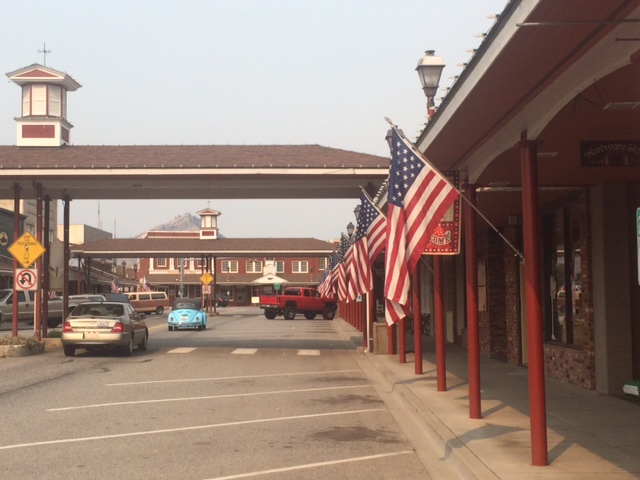
We disbanded to all ride at our own pace, but four us met again at the McDonalds in Leavenworth. They were heading over Stevens Pass today; I am waiting until tomorrow. I’ll see Brian again for sure; we both have the same warmshowers host tomorrow night in Sultan. The long distance cycling community is a small, tight world.
What can I say about Leavenworth, WA? To call this pretend Bavarian town kitsch is an understatement. But that doesn’t stop us from flocking here on a summer Saturday to stroll the three blocks along Front Street, eat all kinds of festival food and shop. The town is festive, the people watching superb.
How will we live tomorrow?
“There is always another tomorrow. It never ends.”
Naomi Holloway, motel clerk, mother, pug owner, Brewster, WA
How will we live tomorrow?
“I think the biggest changes we are going to see in the next twenty years is in transportation. People are dialing into personalized aircraft.”
Devin Marks, Director of Lodging, Schweitzer Resort, Sandpoint, ID
How will we live tomorrow?
“I will live simply in the future (even more than now!) and live with others
cooperatively (which i already am doing) to preserve what we have left of our
energy supply. Also, grow most of my own food.
I have a goal of “divorcing” my car and just walk, ride by bike or use public
transportation now that i am retired.
Will continue to do volunteer work in my community within walking distance of
my home. Keep running bicycling, meditating and….”
Mary Naber, light treader on the earth, Spokane, WA
How will we live tomorrow?
“As a species, we are not doing so good.”
Criss, Yoke’s Market Cashier Sandpoint, ID
How will we live tomorrow?
“At the rate we’re going, there won’t be a tomorrow. We need another Tea Party. The first one didn’t work out too well. They’re all crooks.”
Brian, Sunday morning burger man, Noxon, MT
How will we live tomorrow?
“How we as a family will live tomorrow is to be more self-sufficient. That’s why we raise chickens and grow vegetables. Our goal is to pay our house off early.”
Francie Marks, mother, nurse, LDS member, Sandpoint, ID
How will we live tomorrow?
“My significant partner and I have just gotten involved in climate change. Coeur d’Alene hasn’t really started on that. We have lots of work to do.”
David Weeks, cyclist, Coeur d’Alene, ID
How will we live tomorrow?
“I hope that we live with more respect and spirituality. I fear we will live with less options and fewer freedoms.”
Stephen Courtney, photographer Los Angeles, CA
How will we live tomorrow?
“There will be flying cars and elevators to the moon.”
Liam Marks, middle school student, Sandpoint, ID
How will we live tomorrow?
“Different from today. I am trying to right my wrongs.”
Isley Worthy, former Spokane River rapids rider, Spokane, WA
How will we live tomorrow?
“Same way we live today.”
Ely Marks, high school student, Sandpoint, ID
How will we live tomorrow?
“A lot of that is wrapped up in my work. I am a Director of the Vermont Land Trust. Ten percent of the state of Vermont is now under trust. I live in a bubble. Vermont is a bubble. We produced Bernie Sanders. Vermont leads the nation in CSA’s and local food consumption.
“Tomorrow we will be much more connected to our local resources. Twenty years ago we didn’t have this conversation. In that time we put 100,000 acres into conservation. Prior to my first bike trip I worked for Monsanto. I wore protective suits and needed blood tests every four days to check the toxins in my blood. I did it to save for an around the world trip. When I came home, I couldn’t go back to that.
“We need to get a handle on the corporations. They run the show. Nobody likes them but they are the way we live.”
Al Karnatz, Regional Director, Champlain Valley for Vermont Land Trust, Bristol, VT
How will we live tomorrow?
“Tomorrow I will eat and sniff and poop and sleep.”
Bailey Wolfe, Lab mutt, Spokane, WA, as translated by his provider, Ryan Wolfe
How will we live tomorrow?
“We will go to Silverwood and eat as much candy as today.”
Grace Marks, will turn eleven years old tomorrow, Sandpoint, ID
How will we live tomorrow?
“Flying cars. Flying unicorns, flying everything.”
Emma, Tour Guide at Aplet’s Candy Factory, Cashmere, WA
How will we live tomorrow?
“Oh, gosh. I don’t know. Happy and Healthy.”
Arlette, mother, Spokane, WA
How will we live tomorrow?
“For me it’s interesting to see the cultural differences. That makes it hard to where we’re going. Everything here is so controlled. There are no wildflowers. I leave the dandelions in our lawn.
“In Austria, it’s okay to live with your family, have time unemployed. You don’t have the pressure to ‘do more’ than your parents. We have more time for vacation. We close for three weeks in August and people just wait until we’re back to place their orders.”
Sabina Wolfe, Austrian immigrant, Spokane, WA
August 21, 2015 – Sunny, 90 degrees
Miles Today: 67
Miles to Date: 6,045
States to Date: 22
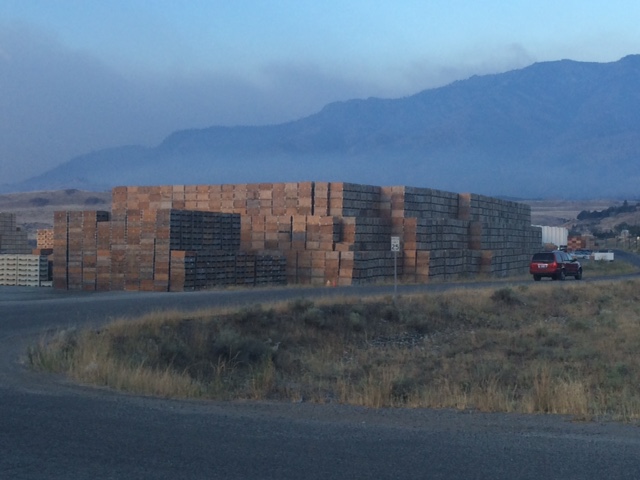
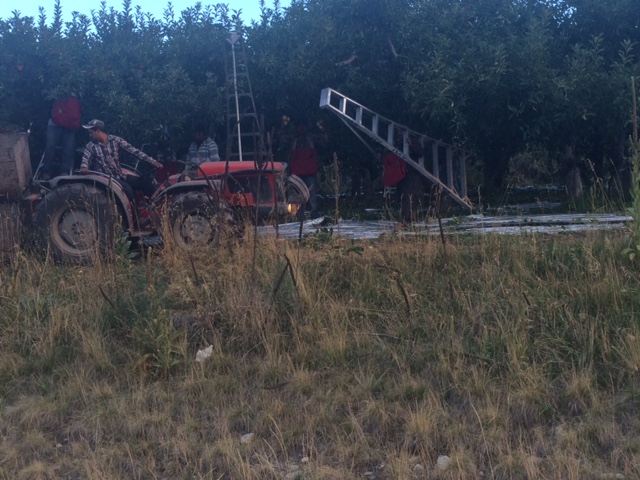
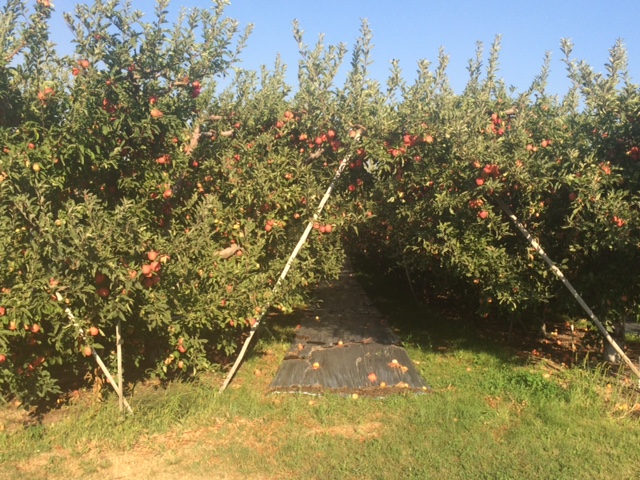
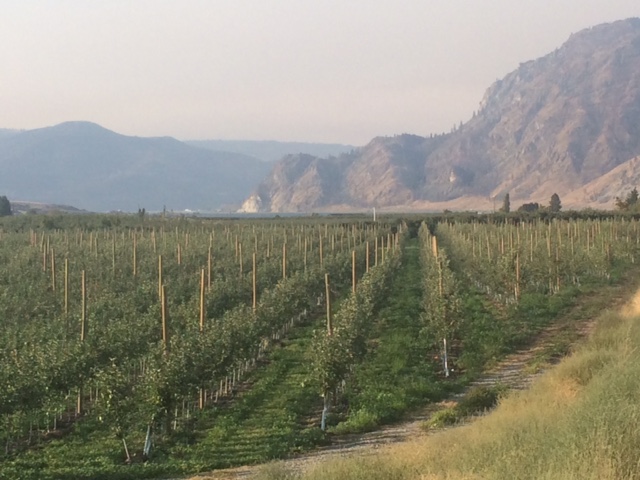
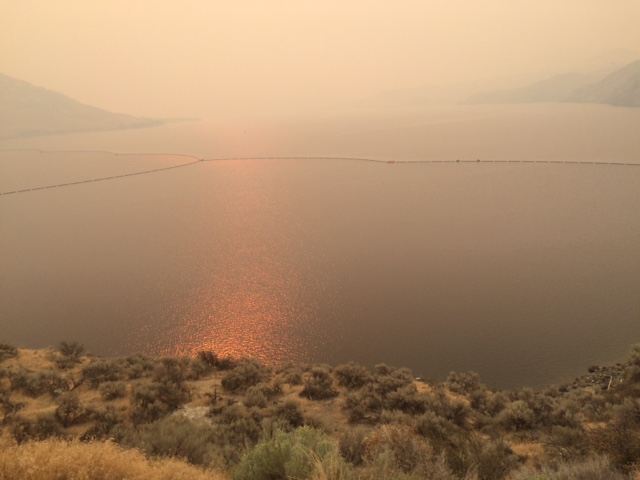
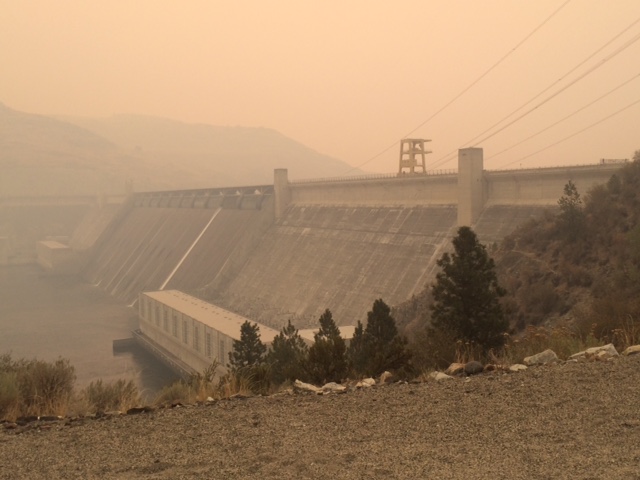
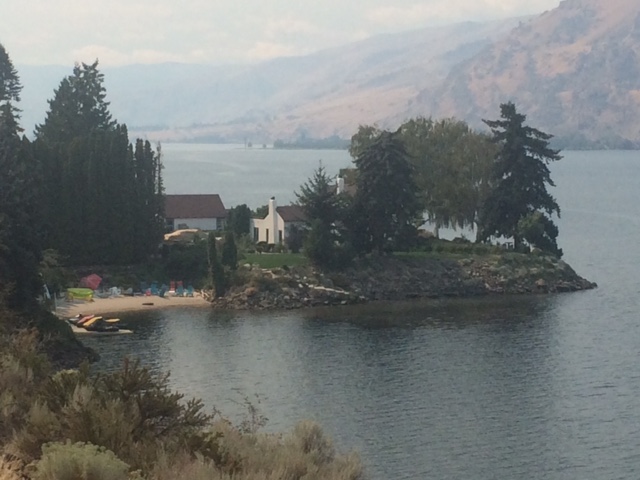
By noon the sky turned blue as I’ve seen in a week and the river turned ultramarine. I passed a few more dams. Dams along the Columbia River are frequent as service areas along the New Jersey Turnpike. The dams turn the river into a series of lakes. Elaborate vacation compounds line the shore. The difference between the lush vegetation, irrigated orchards, and barren mountains is striking.
I stayed with a top-tier warmshowers host in Wenatchee, along with another cyclist from England. Dinner was terrific, especially squash blossoms: the flowers of a squash plant, stuffed with goat cheese and lightly batter-dipped. Yummy!
“I like the unknown and taking chances. When I am older I want to tell my grandkids what I did. A lot of people don’t understand that. A lot of people don’t take chances. I am a wild person. I like to climb, dive, scuba, anything that takes a risk.”
Shane Rehman was born and raised in Tennessee, but he’s been so many other places since then: roustabout in Cold Foot, Alaska; bull rider in Hawaii; helicopter mechanic in the Marines. He served four Middle East deployments during eight years in the service; two in Iraq and two in Afghanistan. Now he lives in Denver and attends Ecotech Institute to become a learn how to service wind turbines.
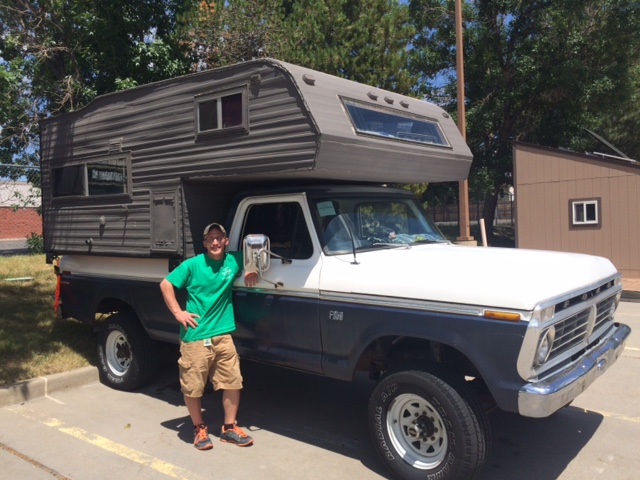
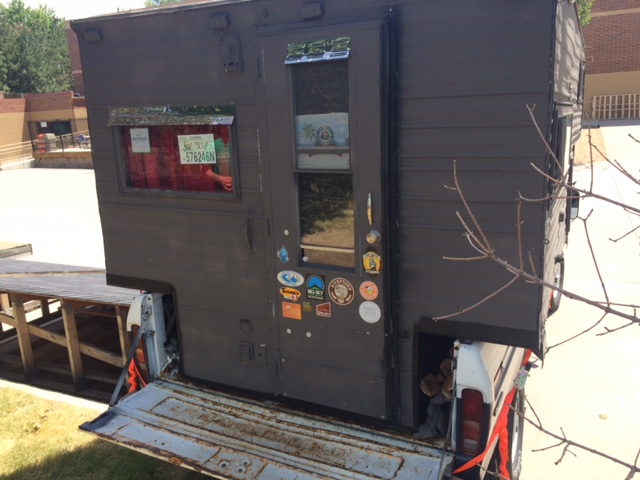
Shane lives in a camper that he bought for $1200 that sits on the back of his $3300 1973 Ford pick-up. “Rent was $945 a month for my one bedroom apartment. I get $1700 a month from the military. The rent was too expensive. Besides, I have PTSD, and all the noise of living in a neighborhood bothered me.”
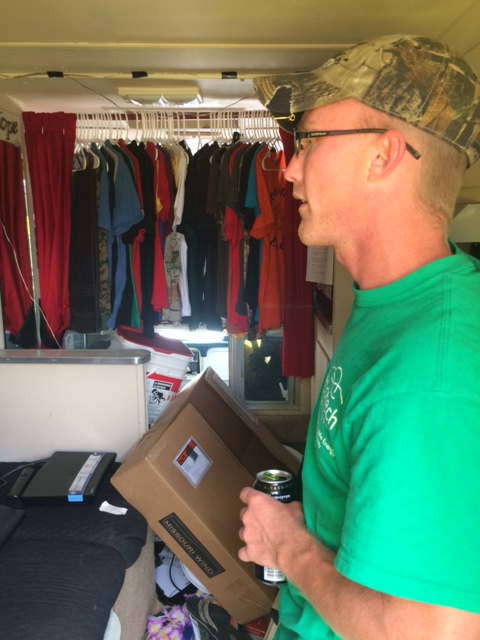
I met Shane in the lobby of Ecotech Institute. He spends much more time at the school than most students since he parks his camper in the back lot. He gave me a tour of his living space, which amounted to little more than ducking our heads into the hot metal camper on a sweltering summer afternoon. “I live out of the camper. I park it here during the day and at 24 Hour Fitness or Walmart at night. It sends a message to people.”
But Shane is vested in the camper’s potential more than its present. “I have lots to do to this camper. I want to paint an ocean scene on the ceiling. I want to add solar collectors to the roof and install a solar oven. I want to raise the counter and make more storage. I want to paint the outside with slogans like, ‘Living off the gird’ and ‘Be your own energy.’ Maybe I’ll put your question on there too.”
How will we live tomorrow?
“I will live in paradise. I am an optimist. There’s a lot of negativity in this world but I stay positive. I am a parrot head. I live casually. I go with the flow.”
August 20, 2015 – Smokey, 90 degrees
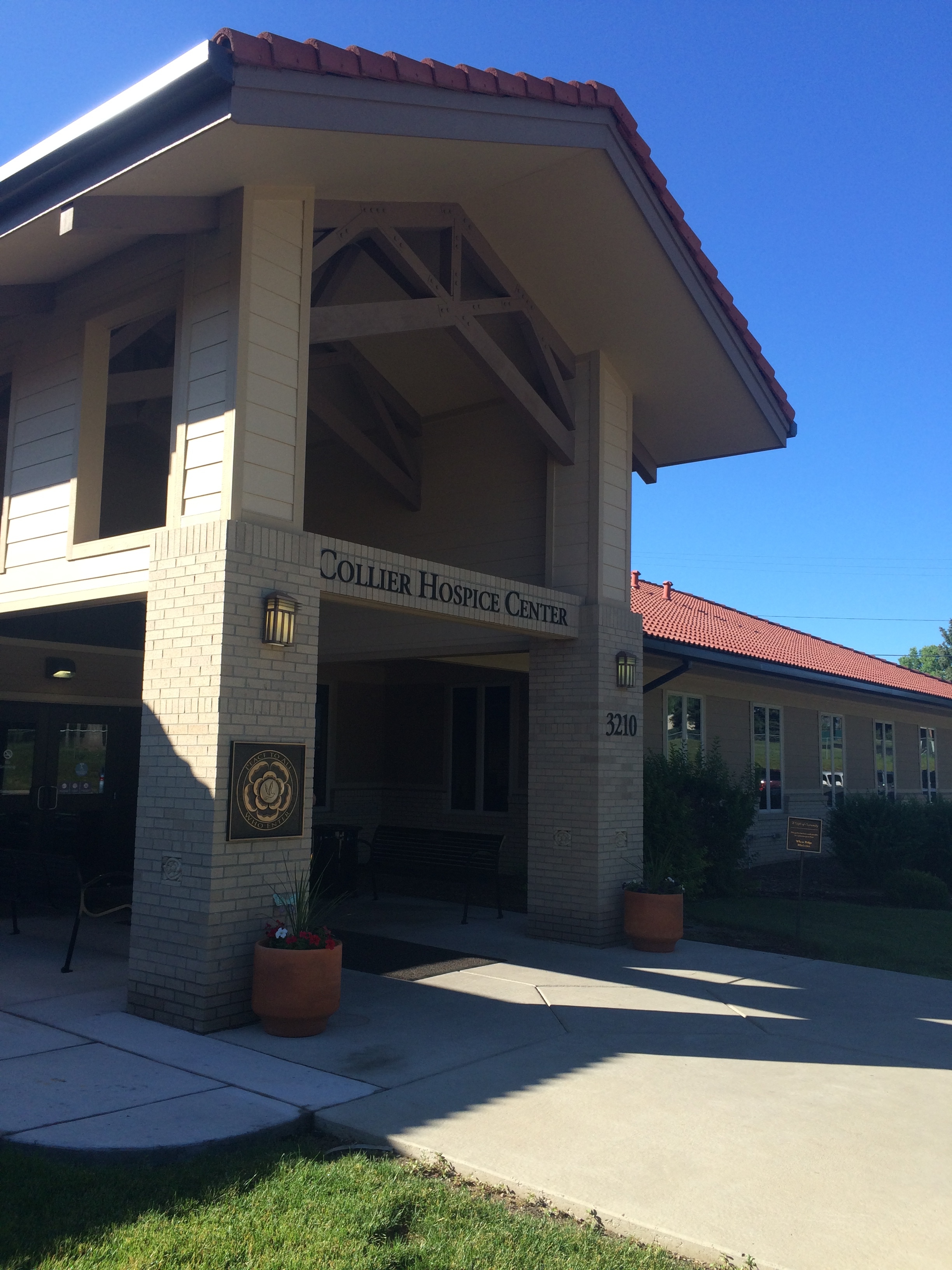
My mother spent the last eight days of her life at the Collier Hospice Center. Our family was moved by the dignity that Collier staff provided everyone who participated in our mother’s final days. Five years later, I returned to reiterate that thanks and ask the care team how the way in which we die will impact how we will live tomorrow. My sister Pat and I met with Judith Kadlec-Fuller, Director of Patient Services and Dr. Shannon Ryan, Palliative Care Medical Director, at Collier Hospice Center
In medical school, Dr. Ryan was interested in the difference between treating people as “disease processes” versus a patient-centered focus on managing disease and distress. She became a family medicine physician, worked at Kaiser, developed an interest in geriatric care, and shifted to palliative care. “People exist in a context of family and community. Our focus on treating disease only and ignoring individual contexts sometimes hurts patients.” Hospice provides a different platform from which to make end of life decisions than traditional medicine requires.
Judy explained, “Seventy-five percent of people say they want to die at home, yet only twenty-five percent actually do.” Hospice can help realign people’s wishes with reality. Eighty percent of hospice patients remain in their homes because hospice support optimizes their ability to stay there. A typical at-home patient has a weekly visit from a nurse, three to five visits a week from a care assistant, and 24/7 phone access to a nurse. “Medicare pays us $165 a day for at-home care, versus $800 a day for inpatient care. They limit inpatient care to no more than twenty percent of our patients. It’s useful to have the inpatient option, but it’s not the core of our care model.” Judy believes that as palliative care and hospice care become better know, more people will choose palliative care.
Dr. Ryan added, “There’s a ground breaking study from Mass General Hospital that showed advanced cancer patients who had standard cancer treatment PLUS palliative care actually lived longer – not just had a better quality-of-live, they actually lived longer – than patients who underwent only standard treatment without palliative care.”
There are additional indicators that critical patients and their families suffer in other ways from medical treatment. Long-term ICU patients develop depression and PTSD. Families of patients who die in the ICU have higher levels of grief-related depression.
Judy explained, “When hospice started in this country, it was considered the last resort of cancer patients. Now 60% of our patients suffer other illnesses. Many are deteriorating chronic conditions. Too often, we have patients who come to hospice and die the same day. We can offer chronic patients benefits well before that time.”
Dr. Ryan sees increased exposure and acceptance as the key to more people considering, and selecting, hospice toward end of life. “Atul Gawande’s book, Being Mortal is doing so much for us. There is also discussion under ACA (Affordable Care Act) to compensate for end-of-life discussions. Right now, if they occur, they are on the doctor’s own time.
“Physicians have abdicated our responsibility to provide clear guidance. Malpractice and liability concerns cloud this. Families are put in places where they have to make difficult decisions. Sometimes they bully physicians when they reach an impasse. Younger people question every milligram of every medicine. I am for empowerment, but reading a WebMD article is not the equivalent of 40,000 hours of medical training. Physicians are seen as the public face of the healthcare problems in our country. Yet our judgment is increasingly questioned by algorithms about outcomes and cost-effectiveness.”
How will we live tomorrow?
“We will return to the day when people die at home. There will be more telemedicine to support it, but death will be more integrated into life. We see Hispanic families who care for their loved ones like you can’t believe. I envision more families caring that way.” – Judith Kadlec-Fuller
“We, as physicians, have propagated the myth that we are more in-charge than we are. We are going to see more patients and families involved in reaching consensus about end-of-life care. Caring for a patient is much more complex than treating a disease. Physicians will let go of some treatment in order to have a more satisfactory outcome overall. We say we want to die at home, yet we die in hospitals. Will we die in hospitals or will we die at home?” – Dr. Shannon Ryan