Featured Response: John Bringenberg


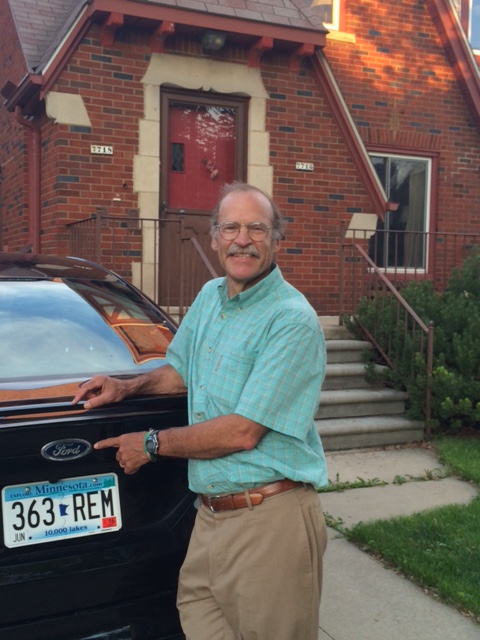
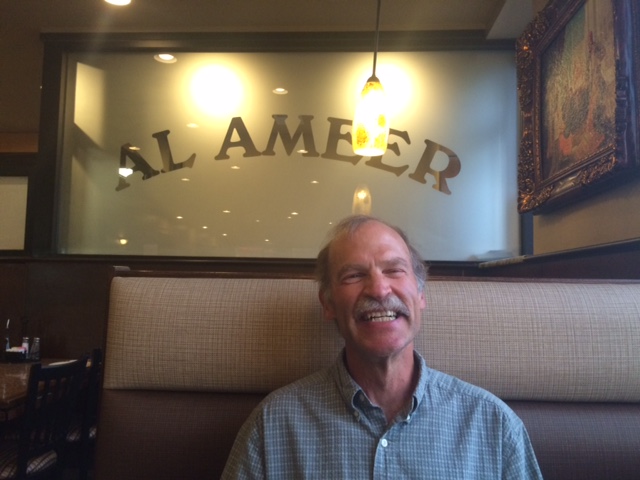
HWWLT Logo on yellowJohn Bringenberg is an empty-nester father of two and grandfather of three from Denver, Colorado, where he works in the solar industry. Many people chose to rephrase the question, ‘How will we live tomorrow?’ as ‘how we should live’ or ‘how we hope to live’. Others choose to put time parameters on ‘tomorrow’. John simply decided to respond to the question from two different perspectives.  There is no single answer, and no limit on any individual’s responses.

How will we live tomorrow?

I found this a heavy question as soon as I begin to ponder it.   So there are two answers  here … the instant response, and the introspective. 

Instant:

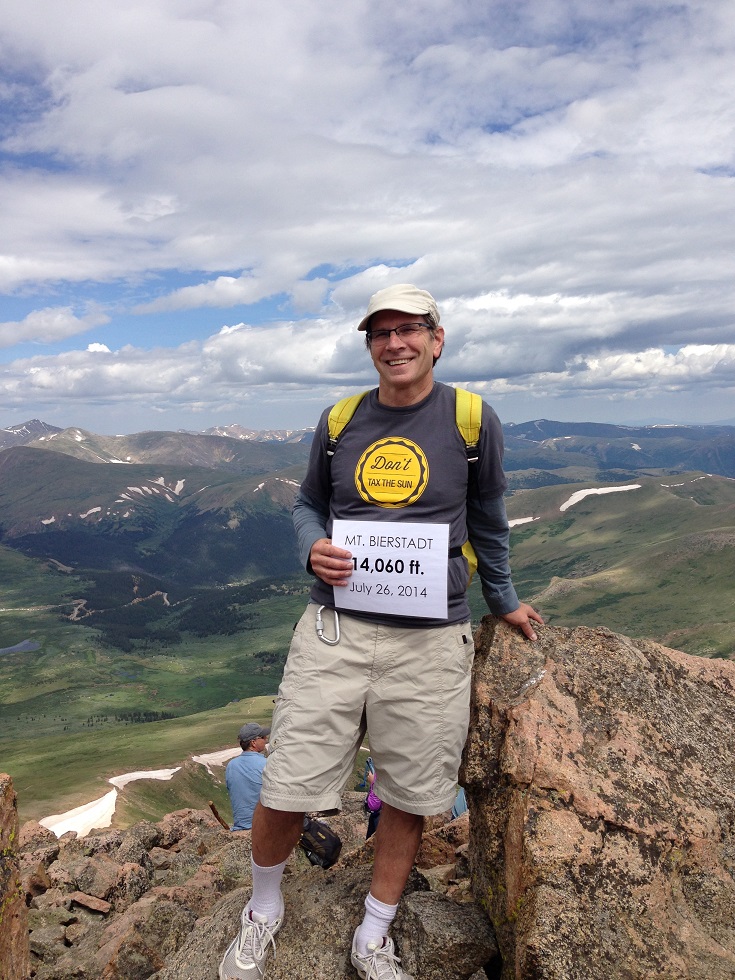
summit john bringenberg“I want to sleep to the brink of the day.  Then start with a smile.  But instead it is often first a focus on the routine and the minutes of getting up and at ‘em … and then hopefully, the smile. Then I want to trudge through the day knocking off the things I must do plus tackle, or at least dabble, in some things I like to do.  When I head to bed, I feel best when I’m worn out and tired, able to reflect on accomplishment or progress – and while the next day starts to bubble up (Mr. Sandman I suspect – though my wife insists it’s just the snoring) and sends me to sleep.”

Introspective:

“Tomorrow in my mind’s eye is not in fact tomorrow but the short, mid or long future ahead.  It is very hard in the big picture to feel significant, especially when we think of our relationships like circles of a stone that lands in still water.  We have circles of close family relationships where we are all significant and always significant.   Consider then our neighborhood, work life, social interactions, social groups, extended family, our town, city, state, country … our planet.  Each circle is further away from our significance.   And so I wish to live tomorrow by being of some significance and to cast a circle as wide as I can.  I wish to live tomorrow so that my footprints and hand prints where I have walked and touched tread lightly and leave a better place in some way than before.”


Posted in Responses | Tagged , | Leave a comment

Trip Log – Day 56 – Spearfish, SD to Rapid City, SD

Spearfish SD to Rapid City SDJune 30, 2015 – Overcast, Sunny, 80 degrees

Miles Today: 56

Miles to Date: 3,412

States to Date: 15

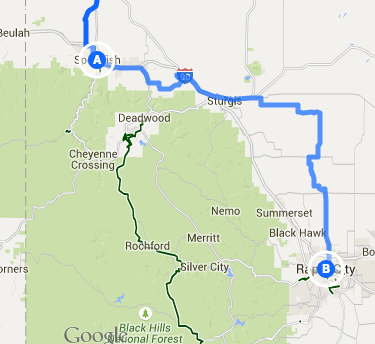
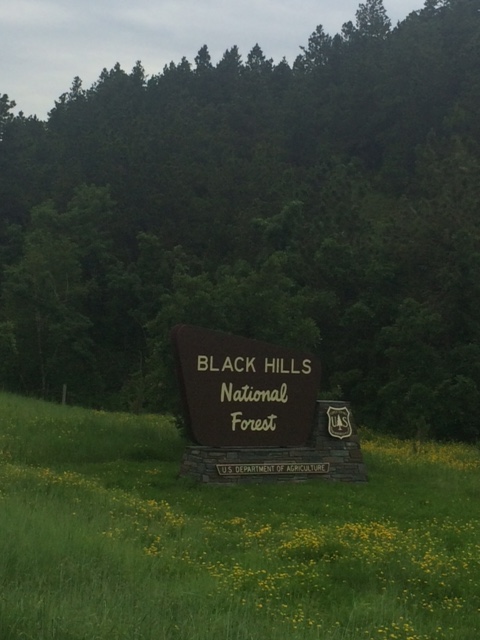
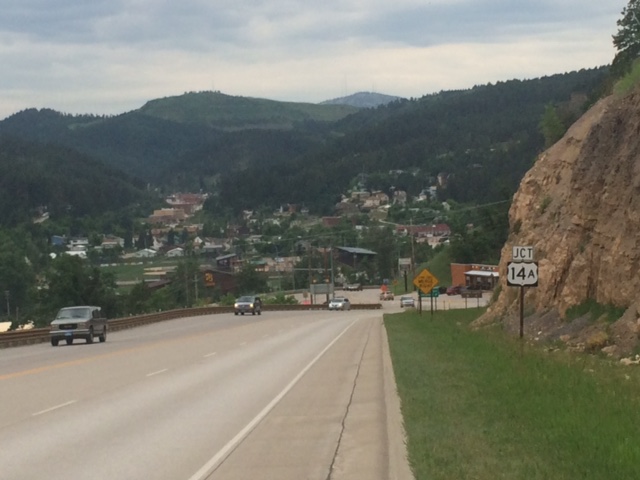
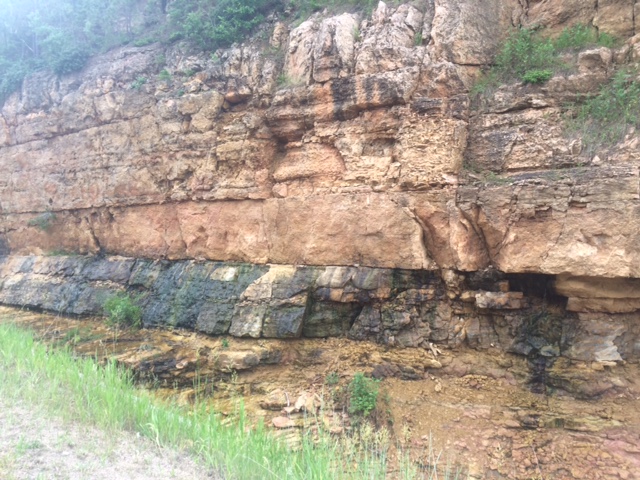
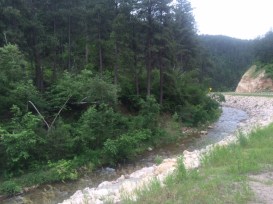
There are several ways to get from Spearfish to Rapid City, depending on how hard a person wants to cycle. I opted for challenging morning and easy afternoon, which proved a good plan. Instead of taking the roads parallel to I-90 from Spearfish to Sturgis, I climbed U.S 85 for six miles, and then took the steep descent into Deadwood. It wasn’t my favorite climb, but then there’s no such thing as a ‘favorite climb’. When I turned east on US 14A from Deadwood to Sturgis I was treated to one of the nicest rides of my journey, through a canyon of tall pines, exposed stone, a loud brook and colorful wildflowers. Even the grey day couldn’t detract from their splendor. More than worth the uphill climb.

IMG_2625 IMG_2626 IMG_2627 IMG_2629 IMG_2631

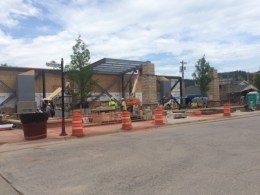
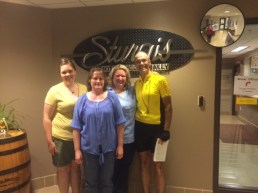
I got to Sturgis by eleven. The town is bustling with construction; the 75th motorcycle rally is less than a month away and they are expecting one million visitors! I found the offices of the famous Sturgis Motorcycle Rally, which is actually an entire city department. Tammy Bohn had great insights into tomorrow, but more importantly, we became fast friends and after an hour together when I left exchanged hugs all around.

IMG_2632 IMG_2636

I enjoyed the pulled pork special at Bob’s Family Restaurant and then headed to Rapid City. This time I opted for the Sturgis Road, which mirrors I-90 but has plenty of its own character. The I-90 corridor from Sturgis to Rapid City is developing fast, and the mix of ranches, campgrounds, golf courses, housing developments and RV superstores is fascinating. After spending a week in farming communities with declining population, I spent some pedal time considering why an area focused on tourism can be expanding so fast. It takes fewer and fewer people to turn out commodities, so agricultural population is waning. Meanwhile we crave more and more exotic experiences (call me Exhibit A), so outdoors oriented places like the Black Hills are growing.

IMG_2646 IMG_2638 IMG_2644 IMG_2642

I arrived in Rapid City by three, with only a few scattered showers to keep me cool. I took a McDonalds Internet break (none of those in North Dakota) and got to my warmshowers host’s house shortly after six. Jessica and I sat on her back patio for hours talking and eating and drinking local beer while her three children and their friends came and went. The night sky was glorious until a flash thunderstorm finally sent us to indoors.

Posted in Bicycle Trip Log | Tagged , , , , | Leave a comment

Profile Response – Bob Basse, Dearborn, MI


HWWLT Logo on yellowI met Bob Basse and his family through my sister; they are neighbors in Denver. Bob’s a geologist and marathon runner, and for the past few years he’s stayed with me in Cambridge when he runs the Boston Marathon. I didn’t know he was born and raised in Dearborn, MI until he heard of my cycling trip and interest in visiting Dearborn. “I’ve been going back a few times a year since my mother died, trying to organize the family house. I’ll plan to visit when you’re there.” Bob’s family home, in Northeast Dearborn, is in the heart of the Muslim community. It is also less than two blocks from the city line with Detroit; a demarcation that is visually and sociologically stark. Bob was instrumental in getting me access to the Muslim community and the City of Dearborn. At dinner at Al Ameer Restaurant, he shared perspectives on his hometown and how it factors into tomorrow.

IMG_2112“My dad bought this house in 1951. It was a two-family. Bill was born here in 1953; I came two years later. When my younger sister Barbara was born, the family took over the entire house. My dad did very well at Ford but he never wanted to move to West Dearborn, where the executives live.

“There were always Lebanese. When I graduated high school in the mid-1970’s they were, maybe, 10% of the students. They came into the Southside, near the Rouge plant. That’s where all the immigrants enter Dearborn. Now, the high school is 90% Arab American and Hispanics are moving into the Southside.

“Dearborn is vibrant and stable. You can see national trends of expansion and contraction, but we have a population that does not want to subsist. We are two blocks from Detroit, and when you cross that line you feel it, you see it. Dearborn is run very tight. You don’t park your car on the lawn, you don’t let your paint peel. If you do, you’ll be cited. That level of attention doesn’t exist in Detroit. But if you call the police on this side of the line they are here in minutes. On that side of the line, good luck.

IMG_2105“Dearborn is a choice. You come to Dearborn to work hard and have the opportunity to move out. The interesting thing about Dearborn is that everybody is stepping up. Nobody is stepping down, like in Detroit. People come here and work hard and they move up and out. The waves of migration last a long time, a generation maybe two, but they are not permanent.”

How will we live tomorrow?

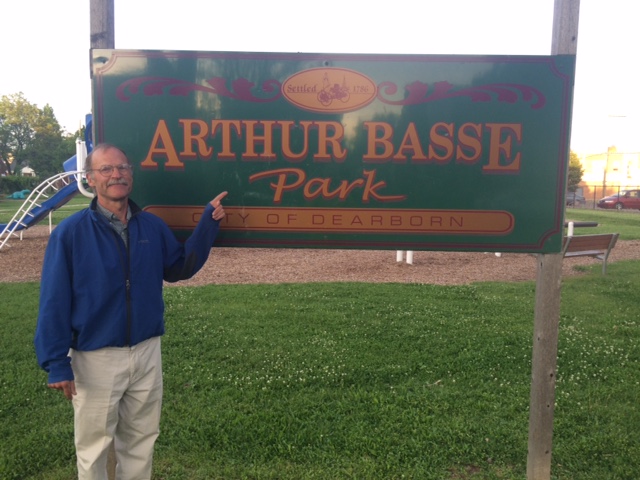
IMG_2104“We would do well to live like we do in Dearborn. This was a great place to grow up, a great place for my parents to live most of their lives. My mom loved the neighbors, whatever their nationality, and everybody loved her. My dad was instrumental in getting the park near that bears his name. I’ve lived other places and enjoyed them, but there’s no place like Dearborn.”


Posted in Responses | Tagged , , , , , | Leave a comment

Trip Log – Day 55 –Buffalo, SD to Spearfish, SD

Buffalo SD to Spearfish SDJune 29, 2015 – Sunny, 95 degrees

Miles Today: 84

Miles to Date: 3,365

States to Date: 15

Buffalo, SD was hopping at 6 a.m. with guys wanting to play in dirt. When I came down early for breakfast at the Tipperary Motel, two Mexican-American laborers were having breakfast before heading out to dig the foundation for a carport and three paleontologists from Toronto were packing a pick-up with supplies to drive ten miles outside of town and scrape at fossils all day. On the way out of town I passed the five dirt bikers I met at lunch yesterday, rousing from their night of sleep in the park and preparing to ride their bikes in mud again all day. I strive to stay vertical on pavement, but maybe I’m missing something.

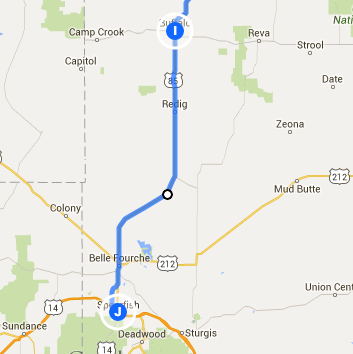
IMG_2614Still, I was happy to avoid dirt in the longest unsupported ride of my trip – seventy miles without a soul through a gorgeous Western landscape under still, sweltering skies. Folks in Buffalo told me there was a gas station twenty miles out. When I came to Reding I found a collection of three-dozen abandoned vehicles, two mobile home shells, and a small building with the words ‘Pop and snacks’ painted on the side. I propped my bike in the structure’s shade and entered. No one. Just the remnants of a Post Office and a well-stocked refrigerator with water, pop, and tea. I drank a tea and left a buck and my card on the counter.

IMG_2617 IMG_2615 IMG_2616

Then I pedaled for fifty miles; spinning, singing, and enjoying the amazing countryside; free-grazing herds of cattle and sheep, narrow creeks, and broad plains. Not a cloud in the sky except for the bed toupee poofs above distant buttes. At one point I stopped to absorb the silence. Beyond a distant butte I heard a chorus of cattle, their bellows like ancestral vibrations.

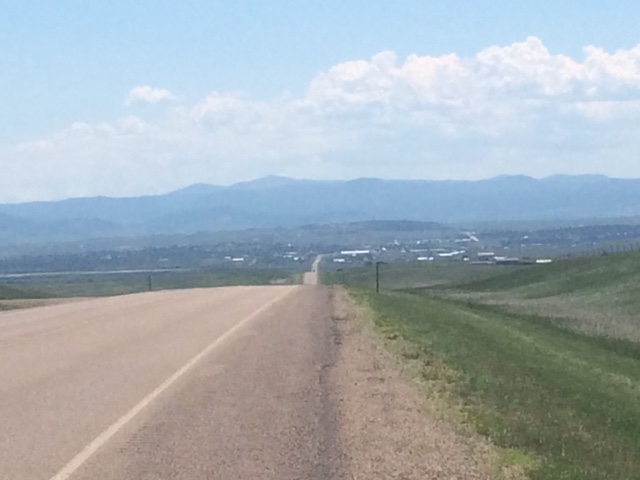
The shoulder was rough, so I kept to the road as much as possible, which meant a lot of ‘defensive friendliness’ in the form of waving to everyone in both directions. It’s easier to hear oncoming vehicles, especially after they pass, than the ones approaching from behind. Ever so slowly, the buttes were replaced by the outline of distant mountains.

IMG_2618 IMG_2619

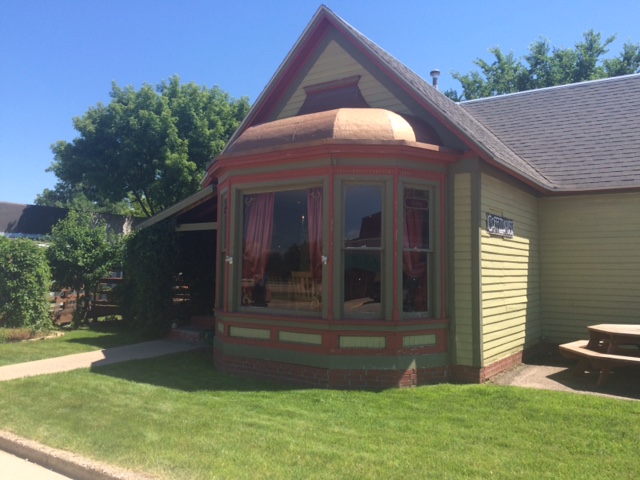
IMG_2620I rolled into Belle Fourche before two, which was good time. I pedaled along Main Street looking for a cafe, but instead found the Green Bean Coffeehouse, which made a pleasant stop for a few hours. I left about five to cycle the fifteen miles to Spearfish.

Belle Fourche is the demarcation between barren plains and the Black Hills. Suddenly there was topography, trees, and many more signs of life. Spearfish is a cool ranching turned college and tourist town. My warmshowers host, Chad, lives in a century old house that has had dozens of additions large and small. I had the entire basement, complete with real pine paneling and a stone fireplace, to myself. We walked down the hill to a bar where that served great microbrew drafts; my first beer in week. I slept like a log in my cool basement with the windows open and gentle breeze all night.

Posted in Bicycle Trip Log | Tagged , , , , | Leave a comment

Profile Response – Mary Laundroche and Dave Norwood; City of Dearborn, MI

HWWLT Logo on yellowMy friend and Dearborn native Bob Basse set up a meeting with Mary Laundroche and Dave Norwood from the City of Dearborn. We met at the Dearborn Administrative Center, a building in an office park across from Ford Corporate Headquarters.

After introductions, Mary described her role as one to foster an ‘engaged and connected community.’ I explained my particular interest in Dearborn as both the headquarters of one of the world’s largest corporations and the center of the Muslim community in America. Mary replied, “We don’t think of ourselves as the Muslim Capital of America. We strive to promote community among everyone.”

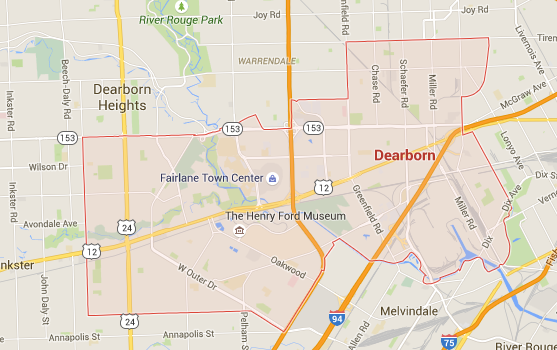
Mary described Dearborn as a city known for its outstanding services, with strong support from Ford, the largest employer. Besides having its corporate headquarters in Dearborn, Ford also has a large research and development facility here and manufacturers F-150 pick-ups at the revitalized Rouge Assembly plant. Geographically, Dearborn is a long city, “Ford land shapes the entire city, with its corporate campus as the fulcrum between East and West Dearborn.”

Screen Shot 2015-06-29 at 3.01.55 PMDearborn was first settled in the 1700’s, but the community’s growth is tied to Ford. In the 1920’s, when Henry Ford opened the River Rouge plant and employed 100,000 workers, the city grew. It also expanded in the 1950’s, when cars became available to even more people after World War II. Ford has always invested in Dearborn; yet, Dearborn was never a ‘company town’ like Pullman Illinois.

Dave added that Henry Ford gave to the community through parks, schools, and contributions to healthcare and the arts. But the government remained separate and stable; Dearborn has had only five mayors in 80 years.

Dave sees his role as Sustainability Coordinator to ensure that Dearborn will make decisions today that allow future generations to live well. He iterated a number of initiatives and accomplishments, from the multi-modal transit center to bike sharing to canoeing on the River Rouge, water purity enhancements and LED street light conversions as steps to make Dearborn more sustainable.

Mary shared with me the Dearborn Calendar, sent to every resident annually, that lists an array of events and participation opportunities, as well as a breakdown of how tax dollars are spent and explanations of property owner responsibilities (lawns maintained, no cars on grass, no peeling paint, etc.). This is one example of how the city strives to keep citizens engaged and connected.

How will we live tomorrow?

Mary: “I hope we’ll live with even greater connection between each other. As we are more integrated we can find more of what we have in common. Dearborn is an excellent model of that.”

Dave: “We are a unified community with diversity, and our diversity will continue. Hispanics are our fastest growing minority. I see the River Rouge, which used to be a waste pool, as something that joins us.”

__________

Dave walked Bob and me out of the facility. He explained that Dearborn’s former City Hall is being turned into artist housing; all city functions now take place in the administrative center.

After we shook hands and headed to the parking lot, I realized how this brief conversation with two city employees clarified the pattern of disconnection between the people I’ve talked with on my journey and our government. Not because of what they said – Mary and Dave were right on message – but because of what they didn’t say, or rather couldn’t say.

imgres copy images-1

When I mentioned Dearborn as the Muslim Capital of America Mary politely shut it down. Yet, like it or not, Dearborn is the Muslim Capital of America, and, like it or not, the City’s Director of Public Information ought to be able to acknowledge how the rest of America sees her city. It is especially disconcerting when America could benefit from positive images of a Muslim community, and everything I saw of Muslim Dearborn is so positive.

Similarly, Dave’s description of sustainability efforts was extensive except for one small word – car. How could he mention cars? Sitting in an office that is nearly impossible to get to without an automobile in the shadow of Fords International headquarters, in the city that assembles the most popular motor vehicle in the world. Dearborn’s Suitability Coordinator is free to play around the edges of green, but does it really matter if the new train station is on a bike path in a city where virtually everyone has to own a car to have meaningful mobility?

images imgres

And why has Dearborn abandoned it monumental City Hall to inhabit an Administrative Center in an office park? It’s because we’ve lost our belief in government as a noble enterprise, as the symbol of a proud community. Everywhere I go, people see business, technology, individual initiative, community, and faith as pathways to improve tomorrow, but no one mentions government, in any form, as an agent for positive action.

I appreciate Mary and Dave talking with me, and I appreciate how carefully, as public employees, they must tailor their comments. After all, I’ve approached dozens of elected officials with my question and can’t get a response out of even one. But ultimately that extreme care not to offend, that spin, diminishes government. The official line may be that artist will have cool space and the administrative center is efficient, but the reality is our government no longer represents our collective aspiration. And Dearborn, a responsive and well-run city by any measure, understands that pulse in abandoning a landmark City Hall and moving government functions to a generic place to execute transactions.

Posted in Responses | Tagged , , , , | 2 Comments

Trip Log – Day 54 – Bowman, ND to Buffalo, SD

Bowman ND to Buffalo SDJune 28, 2015 – Sunny, 95 degrees

Miles Today: 46

Miles to Date: 3,281

States to Date: 15

Bowman has more going for it on Sunday morning than Saturday night. The Sunday church crowd at Jabbers Family Restaurant was large, well–scrubbed, and looked like they’d enjoyed many ‘Meat Lover’s Skillet’ breakfasts. I certainly enjoyed mine.

IMG_2607 IMG_2609 IMG_2611

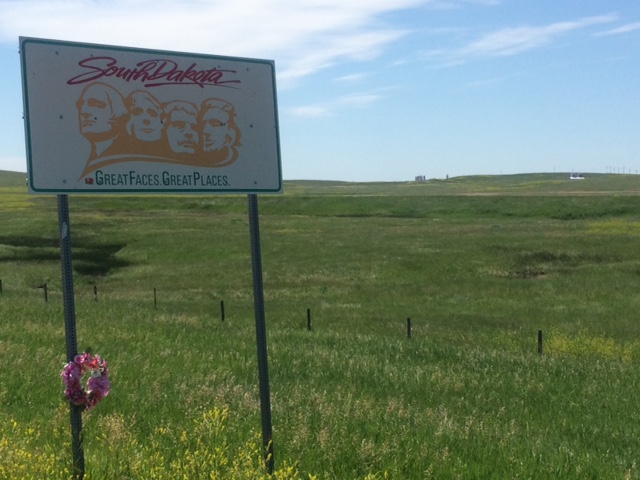
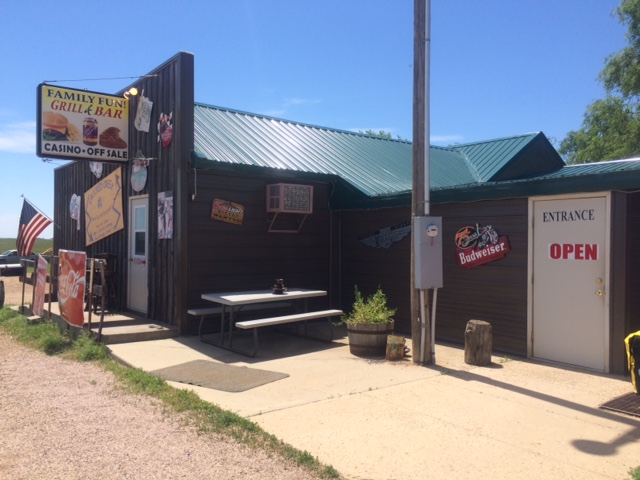
It was 10:30 before I began my short ride to Buffalo, South Dakota. Even the wind took a rest day. Sixteen miles in I crossed the state line and the topography changed. No more farms, just grazing land and buttes without a spec of shade. Riding was easy and I was happy to find Suzette’s Crooked Creek Bar along the road in Ludlow. Suzette is the owner and bar mistress, her husband runs the grille, and she has all cyclists sign her counter, in exchange for free pop. I stayed an hour because Suzette and her place were tons of fun.

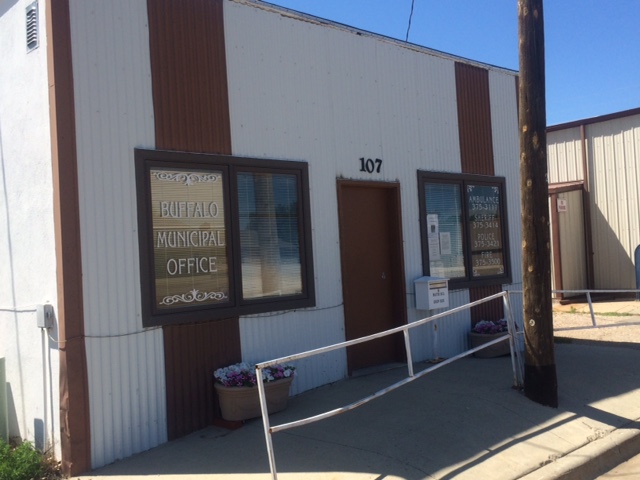
IMG_2612My last twenty miles were uneventful. Buffalo, population 390, is the smallest town I’ve stayed to date. City Hall (which is also Police and Fire and Water) is a metal building. But 3 Saloons was open on Sunday afternoon with good burgers, beer and Internet. I met a group of guys who were doing a four day motorcycle off-road crawl. They were wearing full cover suits and were a heck of a lot hotter than me. The Tipperary Motel, named for a bucking horse and not the place in Ireland, is very nice, though it’s the first motel that had a cattle grate at its driveway. I had to walk my bike across the threshold.


Posted in Bicycle Trip Log | Tagged , , , , , | Leave a comment

Profile Response – Housalla ElMoussa, Dearborn, MI

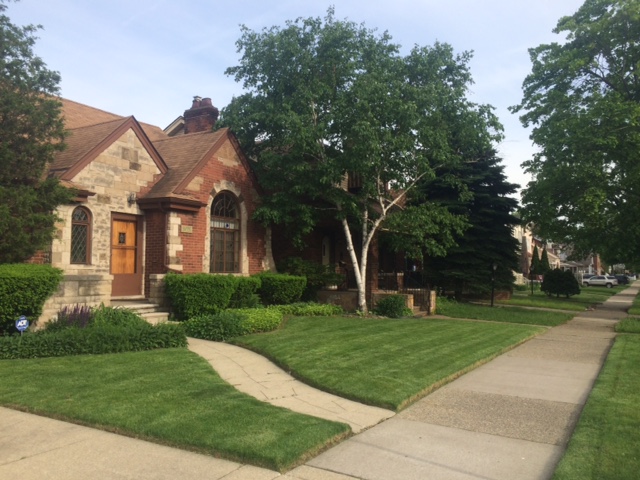
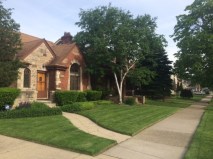
HWWLT Logo on yellowCycling into Dearborn, MI on a late spring afternoon is like riding into the opening credits of a John Hughes movie: rows of solid houses with trim lawns and mature trees, parents sitting on their front porches, children playing ball in the yard and riding their bicycles along the wide sidewalks. It’s a bucolic vision of security and harmony; the epitome of the American dream. Except for one detail: white people populate John Hughes’ movies, while Northeast Dearborn is almost 100% Arab Muslim. The children playing soccer are dark, the women carrying bags from the local grocer all wear hijab. I wind my way along the streets until I find my friend Bob Basse standing in his front yard, chatting with his brother Bill and their Muslim neighbor.

“Hello, call me Bob.” Housalla lets go of the handlebar of the child’s bike he’s straddling to shake hands. Bob’s a staff nurse at a children’s hospital. His wife teaches second grade, although this year she’s home with their newest child, so he’s picking up extra shifts. He came to Dearborn from Lebanon in 1989, and somewhere along the line the name ‘Bob’ stuck, but I’ll call him Housalla since there’s another Bob in this story as well.
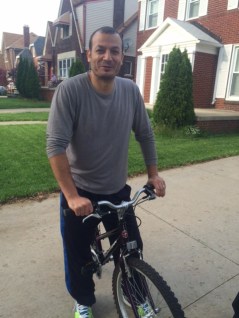
IMG_2100Housalla lives a few doors away from Bob Basse’s family home. Their father bought the two-family house on Middlepointe Street in 1951; he worked for Ford, whose headquarters are in Dearborn. Bob’s father died there in 1995, his mother died last year. Now the Basse children, scattered to distant Detroit suburbs and Colorado, are liquidating their family home.

Housalla’s brother lives across the street, where Housalla lived during nursing school. His brother helped with the down payment for Housalla’s own house in 2000. Now, they also each own an investment property on the street.

According to Housalla, Lebanese are at the top of the Arab hierarchy. They value education and family. “Lebanon has always had a mix of Christian and Muslim influence. We can fit in either way.” The first wave of Arab immigrants to Dearborn, in the 1980’s, were from Lebanon. “We like the houses on this street, but they are too small. They don’t have big enough spaces for family, not just children, but extended family. Most of us fix up the basements to entertain.” Recently, Muslims from other Arab countries have been coming to Dearborn. An Iraqi bought the house next to Housalla. “It makes me want to move. He doesn’t keep his place nice. He had a broken window and stuck a towel in it; he doesn’t cut his grass. He doesn’t realize that it’s important to keep the place up, not just for him, but for everyone. Yemeni’s are different too. They are polite but they live in big groups – up to twenty people in a one house. It’s cultural.”

Bill Basse interjects, “It’s the same migration we saw 30 years ago. When we grew up here, 80% of the people were Polish, everyone’s last name ended in –ski. Dearborn has always been a place to move into the middle class.”
IMG_2099Housalla says, “The Middle class is the worst class. We are stepped on. People on welfare get WIC and free preschool. My kids can’t go to preschool because I can’t afford it and we don’t get subsidies.”

“And yet,” Bill says, “one interesting aspect of Dearborn is that 90% of the kids in the public school are on the lunch program.”

Housalla continues, “We work so hard while they sit on their butt and live as well.”

At this point in the conversation I am perplexed by the recurrent theme that so many people in the United States believe they are getting a raw deal. It is one sensibility that cuts across race, class, economic strata, and ethnic origin. It’s not a positive unifying characteristic, yet it is consistent.

“I am very Americanized. I work in an American environment. There’s good, bad, positive, and negative in every culture. When we first came here, people were laborers, cooks, and gas station attendants. Then we bought those businesses. Now, I have two nieces who are nurses and four who are pharmacists, two are even doctors.”

Housalla’s description of rising up the immigrant ladder mirrors perfectly the evolution that Malcolm Gladwell chronicles of New York Jews in Outliers. First generation immigrants are laborers, second generation are merchants, third generation professionals. Gladwell goes on to show how fourth and fifth generation immigrants, fully assimilated, lose much of their immigrant drive. Will that be the case with Arab immigrants in Dearborn as well?

IMG_2103Bill and Bob explain that there are only three houses left on the street that belong to ‘original’, i.e. non-Muslim owners. When the Basses are ready to sell their family home, they won’t list it with a realtor; there will be a variety of families right on the block that will want to buy it, for their extended family or as an investment.

Housalla nods in agreement, and adds, “But we miss Mrs. Basse. She was a great neighbor.”

Bill says, “Our mom made friends with all of our Arab neighbors.

Housella says, “That’s true. She didn’t know Lebanese from Iraqi from Yemeni. So she made introductions unaware of different Arab backgrounds.”

How will we live tomorrow?

Housella’s response illustrates both a typical American immigrant yearning and the reality that Muslim’s face in this country:

“I was raised that we can walk to the church and the mosque. I tell you ISIS has nothing to do with Islam, any more than the Ku Klux Klan has to do with Christianity.

“I’m thinking of moving out of Dearborn. My insurance is so high because of where I live. My brother in Livonia pays less than half of what I do in Dearborn. I want more space for my family. And there’s the Iraqi. That makes me want to move too.”


Posted in Responses | Tagged , , , , | Leave a comment

Trip Log – Day 53 – Dickinson, ND to Bowman, ND

Dickinson to Bowman NDJune 27, 2015 – Sunny, 95 degrees

Miles Today: 83

Miles to Date: 3,235

States to Date: 14

A great day of bicycle touring. Breakfast at the Oasis Motel doesn’t start until seven, so I slept in and woke ravenous. I started with two hard-boiled eggs and a bowl of cottage cheese with pineapple and plums, then a toasted blueberry bagel with peanut butter and jelly, two biscuits with sausage gravy, and two bowls of frosted flakes for dessert, plus two cups of coffee and three glasses of orange juice. I was ready for distance!

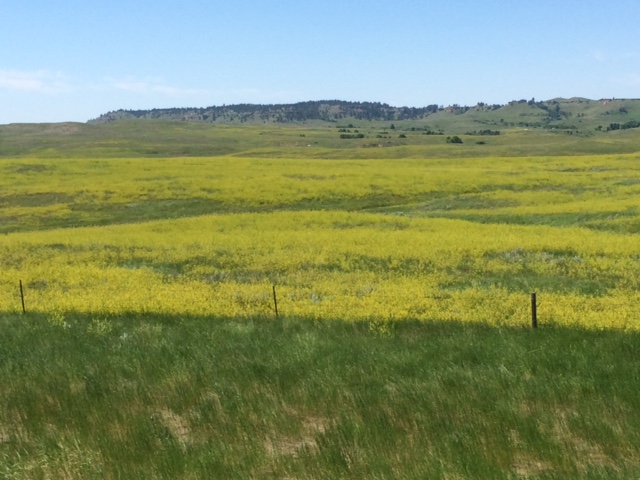
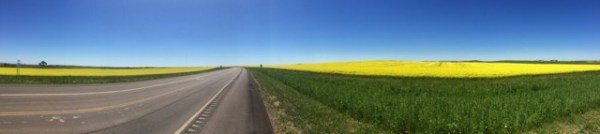
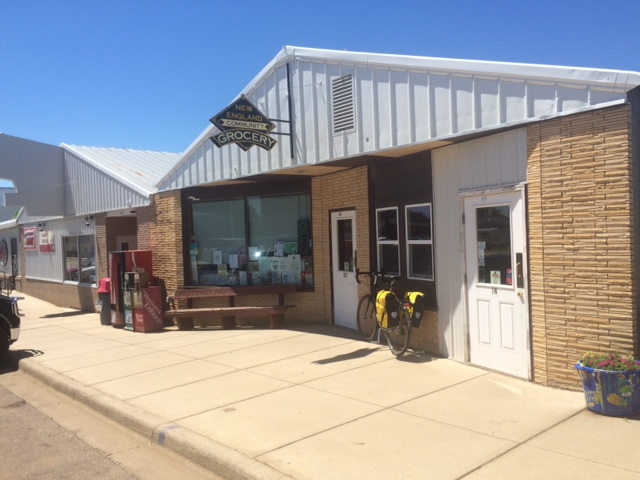
IMG_2600I said goodbye to my warmshowers motel guest, I am Tomorrow. Zach headed west toward Montana, while I finally peeled away from paralleling I-94, which I’ve done since Detroit, and headed toward South Dakota. There was a light wind from the northwest, so rolling south was easy. For miles, I lived in Sting’s Fields of Gold. The undulating yellow flowers were as bright as my shirt. I took a break at the community grocery in New England (back on home turf) and learned the yellow plants are canola. It was almost noon and quite hot, so 32 ounces of PowerAde and a Diet Coke went down smooth.

North Dakota is rich in community run operations. An unnamed native (who warned, “you can’t quote me on this in your blog”) said, “North Dakota is the reddest of states yet it has all kinds of socialist traditions: electric co-ops, a state bank, community groceries and cafes.” I continue to encounter tight, trusting communities on my journey, yet I’m observing limits of community boundaries. When the last grocery store in town closed, the citizens of New England came together and created a community grocery. There’s a display up front with a scrapbook of renovation pictures and flyers that itemize the annual budget. It’s a worthy community effort. But when I suggested North Dakotans really took care of each other, someone said, “True, though I wouldn’t include people from Fargo.”
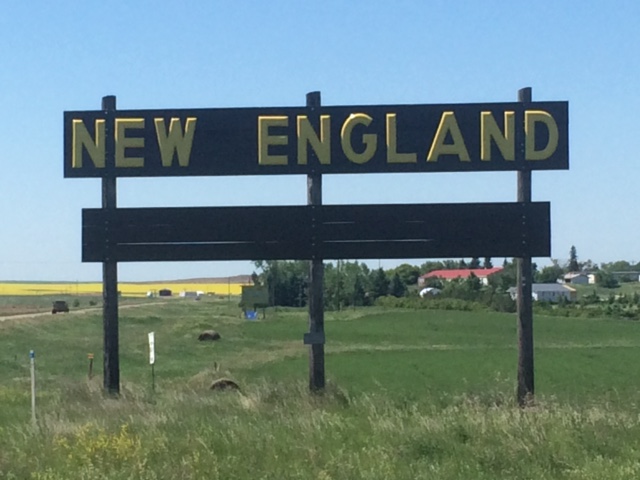
IMG_2601 IMG_2602

And certainly not people from the Twin Cities or Washington, D.C. I am already numb to the statement, “People from (name your state) are the nicest people in the world.” I hear it in every state. Actually, the rotten eggs are pretty evenly distributed and everyone else is nice everywhere. Our tribal chest beating and fear of the next clan, so necessary to hunters and gatherers, is a detrimental trait in a global economy.

Still, nobody doesn’t like a guy on a bike, so I said goodbye to sweet New England and kept pedaling south. Actually, I was supposed to turn west at New England, but the road markings were unclear and I was several miles away before I realized my mistake. Besides, I was enjoying going south too much to want to change my direction. Thirty more miles through Fields of Gold until I hit the next paved road, U.S. 12, and turned west.

IMG_2605

I wound up adding seven miles to my route but also managed to land in Reeder for Reeder Days, which included a kiddie train (a small John Deere tractor pulling painted oil barrels with wheels that were cut out for kids to sit in) and a 50th high school reunion. Although the population of North Dakota has never been higher, the recent boom has favored the cities (those suspicious folks in Fargo). Small towns are still hemorrhaging. The school gym was packed with people who didn’t mind me taking a break in the air-conditioned corridor and buying a Diet Coke from the pop machine, though there might have been more people attending that reunion than live in the town today.

IMG_2606Fueled with cool air and caffeine, the last 24 miles to Bowman were easy, despite a variable headwind. Far from the oil patch, the rail sidings are still full of pipeline equipment rather than grain, and every industrial operation is looking for workers. North Dakota’s boom touches every corner of this state.

Bowman proved to be a lost less than I imagined. It’s where Teddy Roosevelt based his Western explorations in the late 1800’s, and is now the entry to Teddy Roosevelt National Park. There are half dozen sleepy motels on U.S. 12 but not one restaurant open on a Saturday night. I had a pizza and double scoop ice cream cone at the 24-hour travel stop. When the sun finally set, near ten, I heard a ruckus and wandered through town toward the noise. A pretty cool fireworks display!

Posted in Bicycle Trip Log | Tagged , , , , , , , , | Leave a comment

Responses to ‘How will we live tomorrow?”

How will we live tomorrow?

“When you get the answer, let me know… You know, my wife came home from visiting her sister who has cancer yesterday and said to me, ‘I’m retiring’. How many tomorrows are there?”

Donald Hoyle, Carrington, ND

How will we live tomorrow?

“That’s a deep question; scary to think about.”

Heather, Manager at New England Community Grocery, New England, ND

How will we live tomorrow?

“Waking up to track Shorty’s daily adventures and path across the country.  It trumps the newspapers!”

Bob Basse, marathon runner, Denver, CO

How will we live tomorrow?

“Hopefully not what I’m doing today.”

Shane, Home Health Aid and Super 8 motel employee, Fargo, ND

Most people I met in Fargo had two or more jobs.

How will we live tomorrow?

“I have no idea how we’ll live tomorrow.”

Mike, Carrington Inn and Suites, Carrington, ND

How will we live tomorrow?

“Through God’s grace.”

Cindy Ericcson, part of the after church crowd at Page Cafe, Page, ND

How will we live tomorrow?

“I cook at two places, clean buildings in town and work on the ambulance service. We all do more than one thing around here.”

Cindy Workman, cook at Page Cafe, Page, ND

Page Cafe is a community-owned enterprise. “There’s not enough money in it for an individual to own, but the community wants a cafe”

How will we live tomorrow?

“I will live like I’m dying. Nothing more to it.”

Waitress, Dakota Family Restaurant, Mandan, ND

She wrote this response on my check.

How will we live tomorrow?

“I guess its about my kids and my family, making sure they have everything they need.”

Kelli, County Line Cafe, Wilton, ND

How will we live tomorrow?

“We live as if today is our very last day. We look forward to the inevitable, which is not death but eternal life. When Jesus was on earth he spoke of only two things: His Father and His Kingdom. On earth there are only two kingdoms: light and eternal darkness. They are in eternal conflict. One is motivated by love, the other by fear. If you’re operating from fear, you know where you are. It all goes back to the two trees: the tree of life and the tree of the knowledge of good and evil. If things are complicated, it is because you are operating under the tree of the knowledge of good an evil.”

Michael Bushilla, Prayer Minister, Cottage Gove, MN


Posted in Responses | Leave a comment

Trip Log – Day 52 – Dickinson, ND

Mandan to Dickinson NDJune 26, 2015 – Sunny, 90 degrees

Miles Today: 7

Miles to Date: 3,152

States to Date: 14

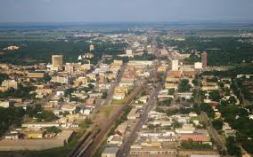
Rest day in Dickinson. I spent the morning relaxing at the Oasis, my new favorite motel. Had a terrific motel breakfast – with five kinds of fresh fruit – and met other guests. They prayed for me; I am getting used to that. I had a 1 p.m. meeting with Blaine Hoffman of Whiting Oil and Gas where I got a great overview of the North Dakota energy business, the recent boom, and how it is settling down. On the way back to the Oasis I scoped out Dickinson, a city divided in time and space by I-94. The north side is all new – big box stores, chain restaurants imgresthe usual highway motels. The south side is the original town; a gird of streets with small houses and a dusty looking downtown. The main east/west route parallels the railroad tracks and is more about automobiles than people. I spotted one restaurant within walking distance of the Oasis, which looked no better or worse than any other.

When I got back to my room, tomorrow was sitting there, staring me in the face! Zachery Shiner is a cyclist traveling from Chicago to Seattle who landed at warmshowers hosts one night behind me through Wisconsin and Minnesota. He wrote a clever email response to my question (I am tomorrow), which inspired me to give him my North Dakota itinerary and offer to warmshowers host him in my motel if he caught up along the way. Today he did, and so I had a fellow cyclist to share the evening. We walked to the sole restaurant, had some mighty good fried chicken, and set up a cot for Zach in my room. My first opportunity to host a warmshowers person; it always feels good to give back.


Posted in Bicycle Trip Log | Tagged , , , | Leave a comment