Profile Response – Mary Laundroche and Dave Norwood; City of Dearborn, MI

HWWLT Logo on yellowMy friend and Dearborn native Bob Basse set up a meeting with Mary Laundroche and Dave Norwood from the City of Dearborn. We met at the Dearborn Administrative Center, a building in an office park across from Ford Corporate Headquarters.

After introductions, Mary described her role as one to foster an ‘engaged and connected community.’ I explained my particular interest in Dearborn as both the headquarters of one of the world’s largest corporations and the center of the Muslim community in America. Mary replied, “We don’t think of ourselves as the Muslim Capital of America. We strive to promote community among everyone.”

Mary described Dearborn as a city known for its outstanding services, with strong support from Ford, the largest employer. Besides having its corporate headquarters in Dearborn, Ford also has a large research and development facility here and manufacturers F-150 pick-ups at the revitalized Rouge Assembly plant. Geographically, Dearborn is a long city, “Ford land shapes the entire city, with its corporate campus as the fulcrum between East and West Dearborn.”
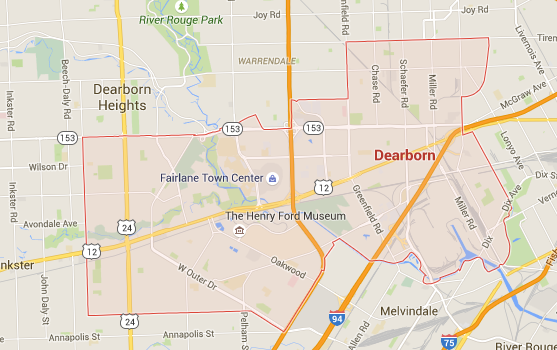
Screen Shot 2015-06-29 at 3.01.55 PMDearborn was first settled in the 1700’s, but the community’s growth is tied to Ford. In the 1920’s, when Henry Ford opened the River Rouge plant and employed 100,000 workers, the city grew. It also expanded in the 1950’s, when cars became available to even more people after World War II. Ford has always invested in Dearborn; yet, Dearborn was never a ‘company town’ like Pullman Illinois.

Dave added that Henry Ford gave to the community through parks, schools, and contributions to healthcare and the arts. But the government remained separate and stable; Dearborn has had only five mayors in 80 years.

Dave sees his role as Sustainability Coordinator to ensure that Dearborn will make decisions today that allow future generations to live well. He iterated a number of initiatives and accomplishments, from the multi-modal transit center to bike sharing to canoeing on the River Rouge, water purity enhancements and LED street light conversions as steps to make Dearborn more sustainable.

Mary shared with me the Dearborn Calendar, sent to every resident annually, that lists an array of events and participation opportunities, as well as a breakdown of how tax dollars are spent and explanations of property owner responsibilities (lawns maintained, no cars on grass, no peeling paint, etc.). This is one example of how the city strives to keep citizens engaged and connected.

How will we live tomorrow?

Mary: “I hope we’ll live with even greater connection between each other. As we are more integrated we can find more of what we have in common. Dearborn is an excellent model of that.”

Dave: “We are a unified community with diversity, and our diversity will continue. Hispanics are our fastest growing minority. I see the River Rouge, which used to be a waste pool, as something that joins us.”

__________

Dave walked Bob and me out of the facility. He explained that Dearborn’s former City Hall is being turned into artist housing; all city functions now take place in the administrative center.

After we shook hands and headed to the parking lot, I realized how this brief conversation with two city employees clarified the pattern of disconnection between the people I’ve talked with on my journey and our government. Not because of what they said – Mary and Dave were right on message – but because of what they didn’t say, or rather couldn’t say.

imgres copy images-1

When I mentioned Dearborn as the Muslim Capital of America Mary politely shut it down. Yet, like it or not, Dearborn is the Muslim Capital of America, and, like it or not, the City’s Director of Public Information ought to be able to acknowledge how the rest of America sees her city. It is especially disconcerting when America could benefit from positive images of a Muslim community, and everything I saw of Muslim Dearborn is so positive.

Similarly, Dave’s description of sustainability efforts was extensive except for one small word – car. How could he mention cars? Sitting in an office that is nearly impossible to get to without an automobile in the shadow of Fords International headquarters, in the city that assembles the most popular motor vehicle in the world. Dearborn’s Suitability Coordinator is free to play around the edges of green, but does it really matter if the new train station is on a bike path in a city where virtually everyone has to own a car to have meaningful mobility?

images imgres

And why has Dearborn abandoned it monumental City Hall to inhabit an Administrative Center in an office park? It’s because we’ve lost our belief in government as a noble enterprise, as the symbol of a proud community. Everywhere I go, people see business, technology, individual initiative, community, and faith as pathways to improve tomorrow, but no one mentions government, in any form, as an agent for positive action.

I appreciate Mary and Dave talking with me, and I appreciate how carefully, as public employees, they must tailor their comments. After all, I’ve approached dozens of elected officials with my question and can’t get a response out of even one. But ultimately that extreme care not to offend, that spin, diminishes government. The official line may be that artist will have cool space and the administrative center is efficient, but the reality is our government no longer represents our collective aspiration. And Dearborn, a responsive and well-run city by any measure, understands that pulse in abandoning a landmark City Hall and moving government functions to a generic place to execute transactions.
Posted in Responses | Tagged , , , , | 2 Comments

Trip Log – Day 54 – Bowman, ND to Buffalo, SD

Bowman ND to Buffalo SDJune 28, 2015 – Sunny, 95 degrees

Miles Today: 46

Miles to Date: 3,281

States to Date: 15

Bowman has more going for it on Sunday morning than Saturday night. The Sunday church crowd at Jabbers Family Restaurant was large, well–scrubbed, and looked like they’d enjoyed many ‘Meat Lover’s Skillet’ breakfasts. I certainly enjoyed mine.

IMG_2607 IMG_2609 IMG_2611

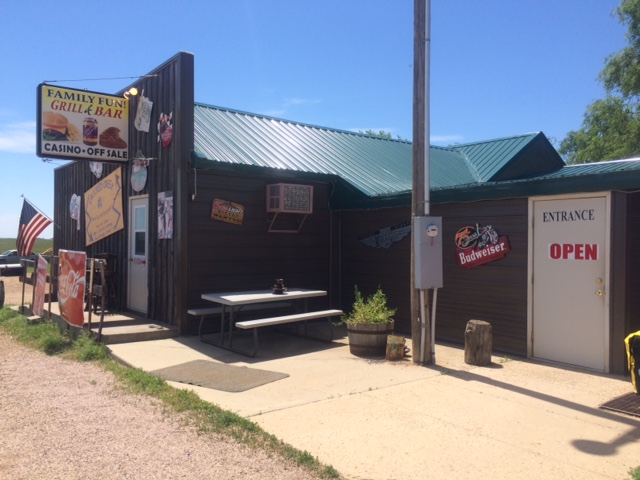
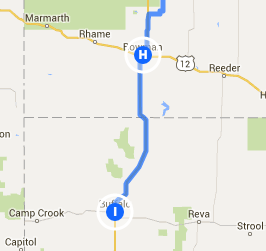
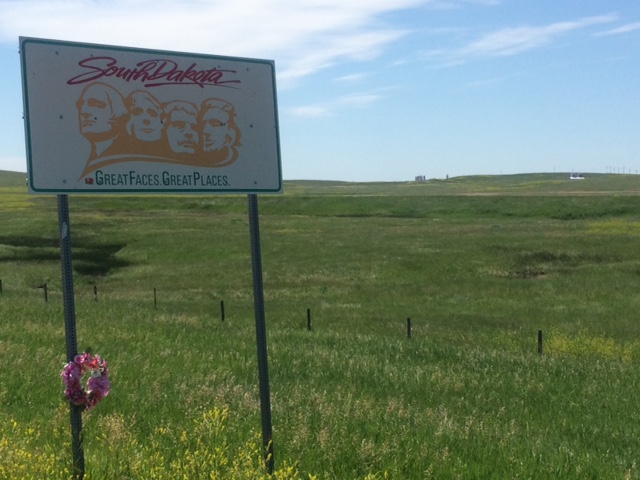
It was 10:30 before I began my short ride to Buffalo, South Dakota. Even the wind took a rest day. Sixteen miles in I crossed the state line and the topography changed. No more farms, just grazing land and buttes without a spec of shade. Riding was easy and I was happy to find Suzette’s Crooked Creek Bar along the road in Ludlow. Suzette is the owner and bar mistress, her husband runs the grille, and she has all cyclists sign her counter, in exchange for free pop. I stayed an hour because Suzette and her place were tons of fun.

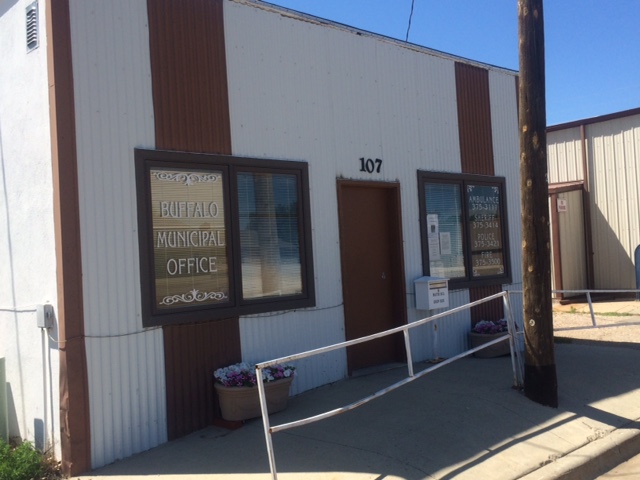
IMG_2612My last twenty miles were uneventful. Buffalo, population 390, is the smallest town I’ve stayed to date. City Hall (which is also Police and Fire and Water) is a metal building. But 3 Saloons was open on Sunday afternoon with good burgers, beer and Internet. I met a group of guys who were doing a four day motorcycle off-road crawl. They were wearing full cover suits and were a heck of a lot hotter than me. The Tipperary Motel, named for a bucking horse and not the place in Ireland, is very nice, though it’s the first motel that had a cattle grate at its driveway. I had to walk my bike across the threshold.


Posted in Bicycle Trip Log | Tagged , , , , , | Leave a comment

Profile Response – Housalla ElMoussa, Dearborn, MI

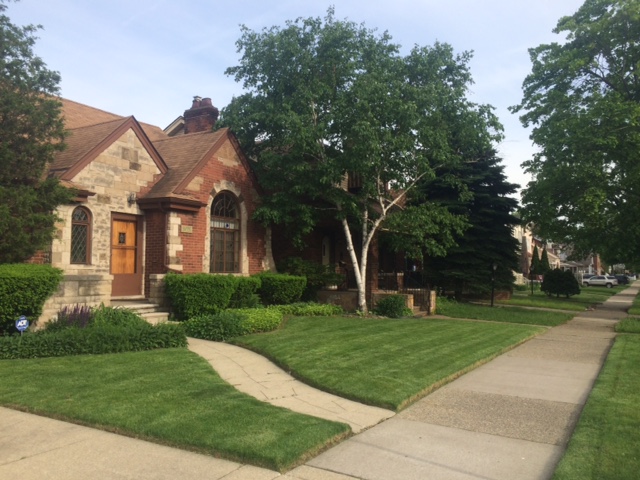
HWWLT Logo on yellowCycling into Dearborn, MI on a late spring afternoon is like riding into the opening credits of a John Hughes movie: rows of solid houses with trim lawns and mature trees, parents sitting on their front porches, children playing ball in the yard and riding their bicycles along the wide sidewalks. It’s a bucolic vision of security and harmony; the epitome of the American dream. Except for one detail: white people populate John Hughes’ movies, while Northeast Dearborn is almost 100% Arab Muslim. The children playing soccer are dark, the women carrying bags from the local grocer all wear hijab. I wind my way along the streets until I find my friend Bob Basse standing in his front yard, chatting with his brother Bill and their Muslim neighbor.

“Hello, call me Bob.” Housalla lets go of the handlebar of the child’s bike he’s straddling to shake hands. Bob’s a staff nurse at a children’s hospital. His wife teaches second grade, although this year she’s home with their newest child, so he’s picking up extra shifts. He came to Dearborn from Lebanon in 1989, and somewhere along the line the name ‘Bob’ stuck, but I’ll call him Housalla since there’s another Bob in this story as well.

IMG_2100Housalla lives a few doors away from Bob Basse’s family home. Their father bought the two-family house on Middlepointe Street in 1951; he worked for Ford, whose headquarters are in Dearborn. Bob’s father died there in 1995, his mother died last year. Now the Basse children, scattered to distant Detroit suburbs and Colorado, are liquidating their family home.

Housalla’s brother lives across the street, where Housalla lived during nursing school. His brother helped with the down payment for Housalla’s own house in 2000. Now, they also each own an investment property on the street.

According to Housalla, Lebanese are at the top of the Arab hierarchy. They value education and family. “Lebanon has always had a mix of Christian and Muslim influence. We can fit in either way.” The first wave of Arab immigrants to Dearborn, in the 1980’s, were from Lebanon. “We like the houses on this street, but they are too small. They don’t have big enough spaces for family, not just children, but extended family. Most of us fix up the basements to entertain.” Recently, Muslims from other Arab countries have been coming to Dearborn. An Iraqi bought the house next to Housalla. “It makes me want to move. He doesn’t keep his place nice. He had a broken window and stuck a towel in it; he doesn’t cut his grass. He doesn’t realize that it’s important to keep the place up, not just for him, but for everyone. Yemeni’s are different too. They are polite but they live in big groups – up to twenty people in a one house. It’s cultural.”

Bill Basse interjects, “It’s the same migration we saw 30 years ago. When we grew up here, 80% of the people were Polish, everyone’s last name ended in –ski. Dearborn has always been a place to move into the middle class.”

IMG_2099Housalla says, “The Middle class is the worst class. We are stepped on. People on welfare get WIC and free preschool. My kids can’t go to preschool because I can’t afford it and we don’t get subsidies.”

“And yet,” Bill says, “one interesting aspect of Dearborn is that 90% of the kids in the public school are on the lunch program.”

Housalla continues, “We work so hard while they sit on their butt and live as well.”

At this point in the conversation I am perplexed by the recurrent theme that so many people in the United States believe they are getting a raw deal. It is one sensibility that cuts across race, class, economic strata, and ethnic origin. It’s not a positive unifying characteristic, yet it is consistent.

“I am very Americanized. I work in an American environment. There’s good, bad, positive, and negative in every culture. When we first came here, people were laborers, cooks, and gas station attendants. Then we bought those businesses. Now, I have two nieces who are nurses and four who are pharmacists, two are even doctors.”

Housalla’s description of rising up the immigrant ladder mirrors perfectly the evolution that Malcolm Gladwell chronicles of New York Jews in Outliers. First generation immigrants are laborers, second generation are merchants, third generation professionals. Gladwell goes on to show how fourth and fifth generation immigrants, fully assimilated, lose much of their immigrant drive. Will that be the case with Arab immigrants in Dearborn as well?

IMG_2103Bill and Bob explain that there are only three houses left on the street that belong to ‘original’, i.e. non-Muslim owners. When the Basses are ready to sell their family home, they won’t list it with a realtor; there will be a variety of families right on the block that will want to buy it, for their extended family or as an investment.

Housalla nods in agreement, and adds, “But we miss Mrs. Basse. She was a great neighbor.”

Bill says, “Our mom made friends with all of our Arab neighbors.

Housella says, “That’s true. She didn’t know Lebanese from Iraqi from Yemeni. So she made introductions unaware of different Arab backgrounds.”

How will we live tomorrow?

Housella’s response illustrates both a typical American immigrant yearning and the reality that Muslim’s face in this country:

“I was raised that we can walk to the church and the mosque. I tell you ISIS has nothing to do with Islam, any more than the Ku Klux Klan has to do with Christianity.

“I’m thinking of moving out of Dearborn. My insurance is so high because of where I live. My brother in Livonia pays less than half of what I do in Dearborn. I want more space for my family. And there’s the Iraqi. That makes me want to move too.”


Posted in Responses | Tagged , , , , | Leave a comment

Trip Log – Day 53 – Dickinson, ND to Bowman, ND

Dickinson to Bowman NDJune 27, 2015 – Sunny, 95 degrees

Miles Today: 83

Miles to Date: 3,235

States to Date: 14

A great day of bicycle touring. Breakfast at the Oasis Motel doesn’t start until seven, so I slept in and woke ravenous. I started with two hard-boiled eggs and a bowl of cottage cheese with pineapple and plums, then a toasted blueberry bagel with peanut butter and jelly, two biscuits with sausage gravy, and two bowls of frosted flakes for dessert, plus two cups of coffee and three glasses of orange juice. I was ready for distance!

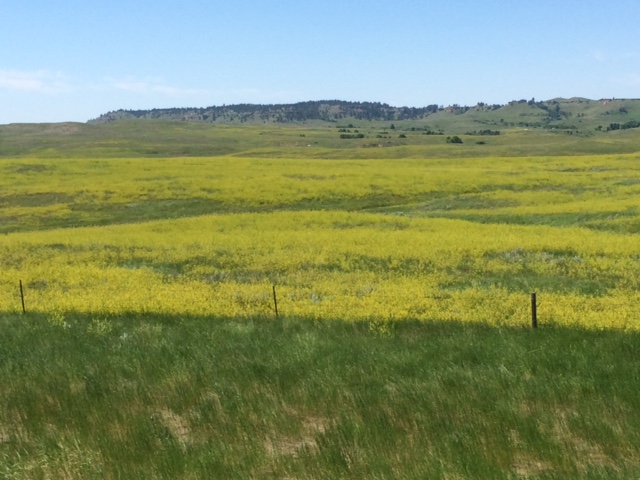
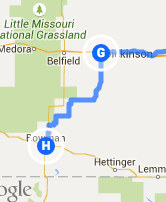
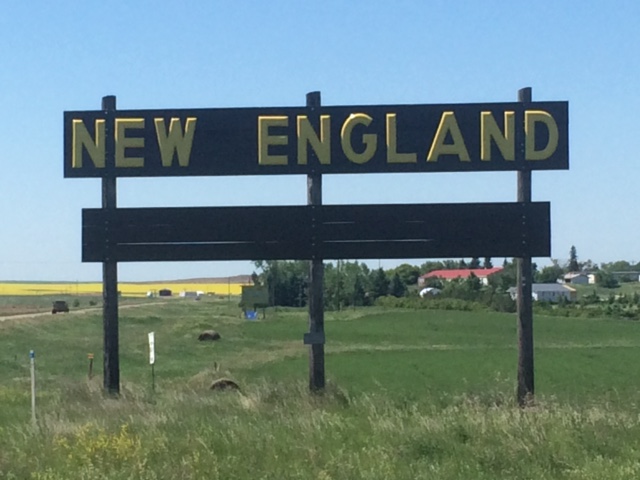
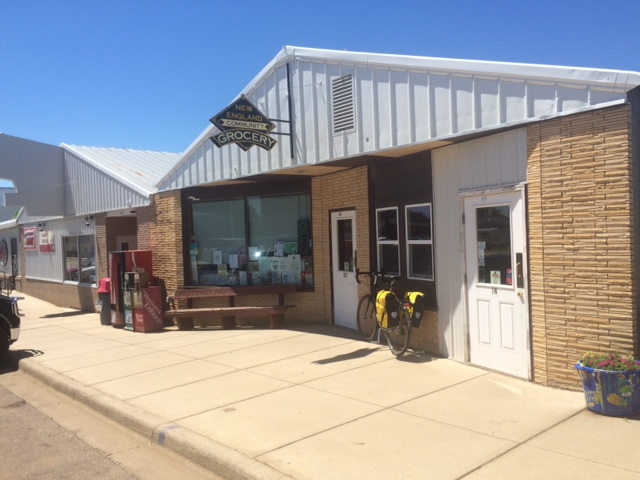
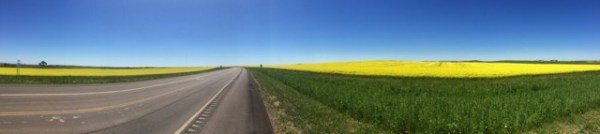
IMG_2600I said goodbye to my warmshowers motel guest, I am Tomorrow. Zach headed west toward Montana, while I finally peeled away from paralleling I-94, which I’ve done since Detroit, and headed toward South Dakota. There was a light wind from the northwest, so rolling south was easy. For miles, I lived in Sting’s Fields of Gold. The undulating yellow flowers were as bright as my shirt. I took a break at the community grocery in New England (back on home turf) and learned the yellow plants are canola. It was almost noon and quite hot, so 32 ounces of PowerAde and a Diet Coke went down smooth.

North Dakota is rich in community run operations. An unnamed native (who warned, “you can’t quote me on this in your blog”) said, “North Dakota is the reddest of states yet it has all kinds of socialist traditions: electric co-ops, a state bank, community groceries and cafes.” I continue to encounter tight, trusting communities on my journey, yet I’m observing limits of community boundaries. When the last grocery store in town closed, the citizens of New England came together and created a community grocery. There’s a display up front with a scrapbook of renovation pictures and flyers that itemize the annual budget. It’s a worthy community effort. But when I suggested North Dakotans really took care of each other, someone said, “True, though I wouldn’t include people from Fargo.”

IMG_2601 IMG_2602

And certainly not people from the Twin Cities or Washington, D.C. I am already numb to the statement, “People from (name your state) are the nicest people in the world.” I hear it in every state. Actually, the rotten eggs are pretty evenly distributed and everyone else is nice everywhere. Our tribal chest beating and fear of the next clan, so necessary to hunters and gatherers, is a detrimental trait in a global economy.

Still, nobody doesn’t like a guy on a bike, so I said goodbye to sweet New England and kept pedaling south. Actually, I was supposed to turn west at New England, but the road markings were unclear and I was several miles away before I realized my mistake. Besides, I was enjoying going south too much to want to change my direction. Thirty more miles through Fields of Gold until I hit the next paved road, U.S. 12, and turned west.

IMG_2605

I wound up adding seven miles to my route but also managed to land in Reeder for Reeder Days, which included a kiddie train (a small John Deere tractor pulling painted oil barrels with wheels that were cut out for kids to sit in) and a 50th high school reunion. Although the population of North Dakota has never been higher, the recent boom has favored the cities (those suspicious folks in Fargo). Small towns are still hemorrhaging. The school gym was packed with people who didn’t mind me taking a break in the air-conditioned corridor and buying a Diet Coke from the pop machine, though there might have been more people attending that reunion than live in the town today.

IMG_2606Fueled with cool air and caffeine, the last 24 miles to Bowman were easy, despite a variable headwind. Far from the oil patch, the rail sidings are still full of pipeline equipment rather than grain, and every industrial operation is looking for workers. North Dakota’s boom touches every corner of this state.

Bowman proved to be a lost less than I imagined. It’s where Teddy Roosevelt based his Western explorations in the late 1800’s, and is now the entry to Teddy Roosevelt National Park. There are half dozen sleepy motels on U.S. 12 but not one restaurant open on a Saturday night. I had a pizza and double scoop ice cream cone at the 24-hour travel stop. When the sun finally set, near ten, I heard a ruckus and wandered through town toward the noise. A pretty cool fireworks display!

Posted in Bicycle Trip Log | Tagged , , , , , , , , | Leave a comment

Responses to ‘How will we live tomorrow?”

How will we live tomorrow?

“When you get the answer, let me know… You know, my wife came home from visiting her sister who has cancer yesterday and said to me, ‘I’m retiring’. How many tomorrows are there?”

Donald Hoyle, Carrington, ND

How will we live tomorrow?

“That’s a deep question; scary to think about.”

Heather, Manager at New England Community Grocery, New England, ND

How will we live tomorrow?

“Waking up to track Shorty’s daily adventures and path across the country.  It trumps the newspapers!”

Bob Basse, marathon runner, Denver, CO

How will we live tomorrow?

“Hopefully not what I’m doing today.”

Shane, Home Health Aid and Super 8 motel employee, Fargo, ND

Most people I met in Fargo had two or more jobs.

How will we live tomorrow?

“I have no idea how we’ll live tomorrow.”

Mike, Carrington Inn and Suites, Carrington, ND

How will we live tomorrow?

“Through God’s grace.”

Cindy Ericcson, part of the after church crowd at Page Cafe, Page, ND

How will we live tomorrow?

“I cook at two places, clean buildings in town and work on the ambulance service. We all do more than one thing around here.”

Cindy Workman, cook at Page Cafe, Page, ND

Page Cafe is a community-owned enterprise. “There’s not enough money in it for an individual to own, but the community wants a cafe”

How will we live tomorrow?

“I will live like I’m dying. Nothing more to it.”

Waitress, Dakota Family Restaurant, Mandan, ND

She wrote this response on my check.

How will we live tomorrow?

“I guess its about my kids and my family, making sure they have everything they need.”

Kelli, County Line Cafe, Wilton, ND

How will we live tomorrow?

“We live as if today is our very last day. We look forward to the inevitable, which is not death but eternal life. When Jesus was on earth he spoke of only two things: His Father and His Kingdom. On earth there are only two kingdoms: light and eternal darkness. They are in eternal conflict. One is motivated by love, the other by fear. If you’re operating from fear, you know where you are. It all goes back to the two trees: the tree of life and the tree of the knowledge of good and evil. If things are complicated, it is because you are operating under the tree of the knowledge of good an evil.”

Michael Bushilla, Prayer Minister, Cottage Gove, MN


Posted in Responses | Leave a comment

Trip Log – Day 52 – Dickinson, ND

Mandan to Dickinson NDJune 26, 2015 – Sunny, 90 degrees

Miles Today: 7

Miles to Date: 3,152

States to Date: 14

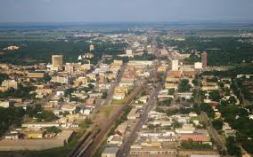
Rest day in Dickinson. I spent the morning relaxing at the Oasis, my new favorite motel. Had a terrific motel breakfast – with five kinds of fresh fruit – and met other guests. They prayed for me; I am getting used to that. I had a 1 p.m. meeting with Blaine Hoffman of Whiting Oil and Gas where I got a great overview of the North Dakota energy business, the recent boom, and how it is settling down. On the way back to the Oasis I scoped out Dickinson, a city divided in time and space by I-94. The north side is all new – big box stores, chain restaurants imgresthe usual highway motels. The south side is the original town; a gird of streets with small houses and a dusty looking downtown. The main east/west route parallels the railroad tracks and is more about automobiles than people. I spotted one restaurant within walking distance of the Oasis, which looked no better or worse than any other.
When I got back to my room, tomorrow was sitting there, staring me in the face! Zachery Shiner is a cyclist traveling from Chicago to Seattle who landed at warmshowers hosts one night behind me through Wisconsin and Minnesota. He wrote a clever email response to my question (I am tomorrow), which inspired me to give him my North Dakota itinerary and offer to warmshowers host him in my motel if he caught up along the way. Today he did, and so I had a fellow cyclist to share the evening. We walked to the sole restaurant, had some mighty good fried chicken, and set up a cot for Zach in my room. My first opportunity to host a warmshowers person; it always feels good to give back.


Posted in Bicycle Trip Log | Tagged , , , | Leave a comment

Profile Response – Martin Lucaj, Owner of Fino’s Restaurant, Monroe, MI


HWWLT Logo on yellow“America, America, even now; everyone wants to come here. That never changes.’

Martin Lucaj came to the United States 1969 from Yugoslavia. He spent most of his life as a truck driver. “I’ve been to every state, except Alaska and Hawaii.” He raised eight children, several of whom work at Fino’s, a family restaurant on Route 125 in Monroe, which he bought three years ago. “It keeps them busy and lets me keep my eye on them.”

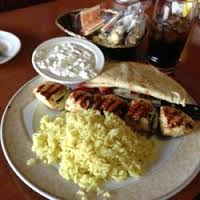
When I arrived for an early lunch, Martin was sitting at the counter reading a paper. He struck up a conversation and when I toted my panniers to a booth, brought his coffee and sat opposite me. We talked while I ordered the gyro special, drank three tall glasses of Diet Pepsi, dipped my fries in ketchup, and devoured a gyro too juicy to set down once begun. When the waitress brought more napkins to clean my fingers, Martin picked up the tab.

imgres-1 images-1 imgres

Martin has an SUV, an RV, two motorcycles and a pair of bicycles. He walked out with me inspect the Surly; most interested in my dual brake configuration. I asked if he ever goes back what was Yugoslavia. “My mother is still alive. I go back, but only because I have to.”

How will we live tomorrow?

“I want to take my motorcycle up to Alaska. I want to get in my RV and travel to Arizona. I love warm weather. What am I doing in Michigan?”


Posted in Responses | Tagged , , , , | Leave a comment

Trip Log – Day 51 –Mandan, ND to Dickinson, ND

Mandan to Dickinson NDJune 25, 2015 – Sun and rain, 80 degrees

Miles Today: 97

Miles to Date: 3,145

States to Date: 14

Today’s the day! I am now on officially on my longest bike trip to date. In 2011 I cycled 3,050 miles from Denver to Boston in 42 days (blog links). I averaged over 72 miles a day. This trip, due to its length and my question, my objective is 50 miles per day; though so far, due to my good weather, I’m ahead of that target.

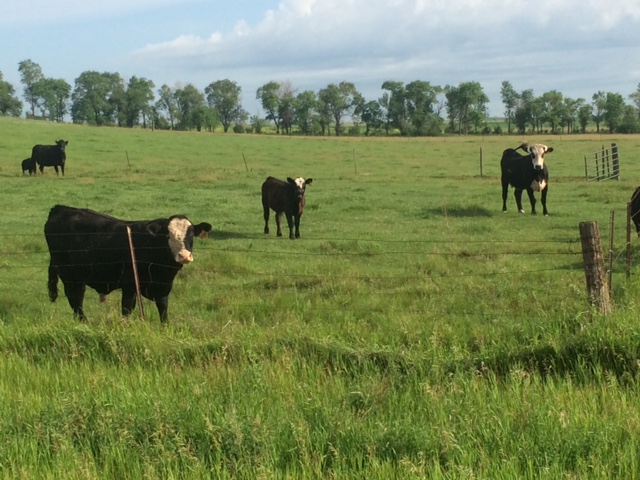
IMG_2579The 3,050-mile milestone is a good point to consider how bicycle travel has changed for me in the past four years. There are many similarities. Cafes serve uniformly solid food. My hunger is often more persistent than my interest in food; sometimes I just can’t bother eating more. I still manage to never pay more than $100 a might for a motel room, and I like the $50 rooms better. Cows still like me; every head of every herd turns to watch me pass. And Murphy’s Law of Wind still applies – the wind is always in my face.

But there are significant differences. The biggest is technology. Four years ago I carried a camera, a flip phone and a parcel of paper maps. My iPhone 5S replaces all that. Last trip I rolled into a town and hoped for a motel, now I have reservations. Considering my question, I spend much more time on logistics than last trip. I contact warmshowers hosts and organizations to interview three to five days in advance. It’s a constant stream of inquiry, scheduling, and thank you’s; all impossible without handy Internet access.

Indians named Patel have cemented their lock on the independent motel market, and moved into the low-end chains. Outside of the Upper Mid-west, Patel’s rule my lodging world, and have done a lot to ramp up the typical Super 8. Why aren’t they in North Dakota, where there are so many jobs? Four years ago I managed to stay in independent places over 90% of the time. Now, there are many fewer left; about half my motel time is in chains. However, half my nights aren’t in motels at all – thanks to warmshowers. Although the site has been around over twenty years ago, I learned about it just before my trip and meeting so many gracious, incredible people has rocketed my personal experience and deepened the discussions of my question. Warmshowers takes the ‘economy’ out the ‘sharing economy’. It’s just about sharing. I’m warmshowers biggest fan.

The changes are significant, but the fundamental truths of cycle touring are intact. More motorists are nice than not. The two-wheel view of the country is amazing, and I meet people at their best.

_________

Despite the banner mileage, my day progressed with the challenges and rewards North Dakota offers. The Ridge Motel in Mandan didn’t even offer coffee, so I stopped at the adjacent convenience store. Amazing to see the diet of oil workers: a fistful of 20 ounces Mountain Dews, a pack of Marlboro’s and a bag of chips. I am such a lightweight with my trial mix and Diet Coke.

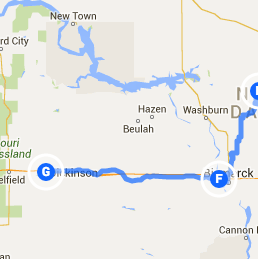
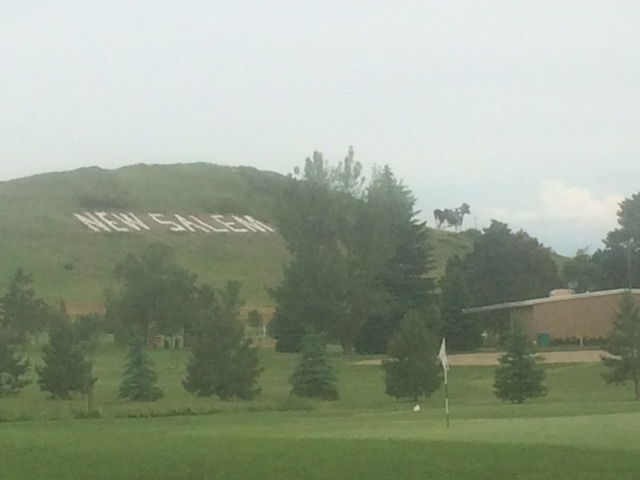
IMG_2586My proposed route of vintage highways that paralleled I-94 went bust after three stints on gravel. Beyond New Salem (with name painted on hillside in typical Western fashion) I buckled under and rode the Interstate forty miles. No services anywhere, not a lick of shade, not much fun. I took a break under a highway overpass. How lame.

Since there was no place to stop, I made good time. But I needed a real break and the afternoon sky threatened, so I exited at Richardton where Google cited a cafe. No cafe, but something much better: a newish grocery store with a prepared food section, seating and free Wi-Fi. If Whole Foods entered the rural market, this is what it would look like, though they’d probably modify the special of the day: two fried chicken breasts, mashed potatoes with gravy, fried rice, whole wheat roll and fruit chunks for dessert. $7.49. The food lady told me, “There are vegetables in the fried rice.” Maybe three peas and two diced carrots.

I stayed at Springfield Market three hours while storms swirled all around but never quite hit. When the western sky looked as good as it was going to get, I tackled the last 24 miles. This was great riding, on a rural road with a nice breeze and an incredible sky. For ten miles my poker straight path headed right to the clear spot between two storms. As I approached, the northern storm crept into my path and I got rained on for a few miles. Then all cleared and I was dry when I arrived in Dickinson.

IMG_2590

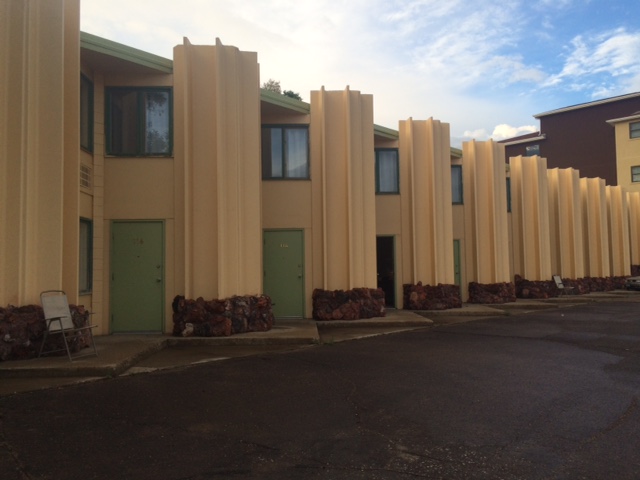
I will be here two nights, and was pleasantly surprised when my motel on the unpromising main drag turned out to be the BEST of the trip! Dual access room, for easy bike entry, cookies in the evening, nice dining room and full breakfast tomorrow. There’s an architectural rendering of the motel from the 1960’s in the lobby, when it must have been considered the height of style. The proprietress was very nice, though she dodged my question. Most people in North Dakota do. They acknowledge when I ask it, but act like I can’t possibly be directing it to them.

IMG_2592 IMG_2591

Posted in Bicycle Trip Log | Tagged , , , , , | Leave a comment

Profile Response: Gordon Hille, Elmore, Ohio

HWWLT Logo on yellowGordon Hille’s Germanic roots run close to the surface. His northern European heritage directs his cultural, political, and religious compass, and provide the benchmark from which he considers the United States. Although Gordon as lived in the United States his entire life, his ancestral motherland still exercises a mighty pull on him.

“I think of myself as Lutheran, though I attend the United Church of Christ. The hierarchy of the Lutheran church is liberal, but American Lutheranism is problematic. My local congregation is very conservative. UCC accepts everyone; it is more contemporary. I miss the Lutheran liturgy, but I cannot agree with the positions of my local church.”

Gordon is simultaneously deeply religious and ecumenical. He’s a big supporter of the House of One (house-of-one.org), a proposed Christian church, Islamic Temple, Jewish Synagogue to be built in Berlin’s Petriplatz on a site where, in 1964, the East Germans destroyed the last of the Churches of Saint Peter.

images images-1

Gordon has been a Special Education teacher for many years, currently working with 18 to 22 year olds in an intermediate care facility. His work with people who will have little access to many opportunities influence what he sees as two major political issues: universal healthcare and gun control. Again, he views them through a European lens. “Americans are always concerned with rights; northern Europeans are concerned with their responsibilities.”

Elmore Ohio, a low-lying area just south of Lake Erie and east of Toledo, was settled later than many of its higher-ground neighbors. Gordon’s ancestors, farmers from Germany’s low lands who knew how to dredge, settled the area. “They represent an early example of balancing the individual and the collective. Everyone knew how to drain their fields, but they drained them into each other’s until they developed a central plan that drained all fields toward the river.”

How will we live tomorrow?
“In the past I’ve been conservative. The older I get, the more liberal I become. I attended the 1980 Republican Convention in Detroit and I’m a big Ayn Rand fan. Then I worked with migrants. One of my employees, who had a two-year-old son, came into work late. The child was not breathing properly. The man took his son to the hospital, and the hospital released him. The next day the boy died. A nurse I knew, who spoke Spanish, talked with the father, and later told me, given the child’s condition, he would been kept for observation overnight if the family spoke English and had insurance.

“I don’t have things all figured out, but I know the world isn’t fair. What I enjoy is the process of deliberation. But some people won’t engage in discussion. They believe they are always right. If there is no discussion, no deliberation, there can be no understanding.”


Posted in Responses | Tagged , , , , , | 2 Comments

Trip Log – Day 50 –McClusky, ND to Mandan, ND

Screen Shot 2015-06-25 at 6.38.50 AMJune 24, 2015 – Overcast, 75 degrees

Miles Today: 74

Miles to Date: 3,048

States to Date: 14

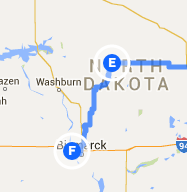
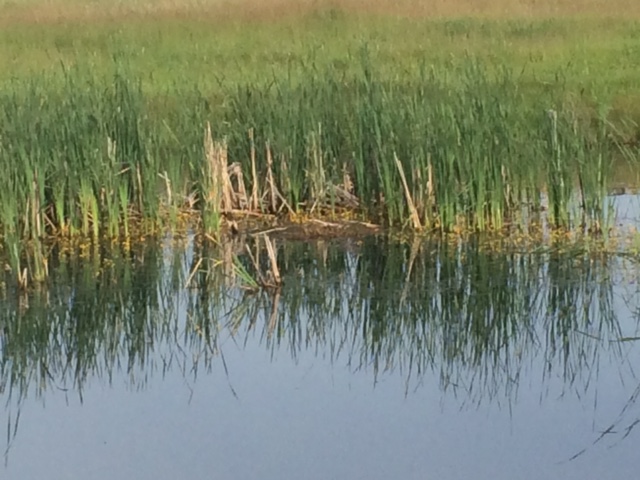
IMG_2549Passing storms through the night left a calm quiet morning. I pedaled west, and then south to Bismarck with great ease. The ponds on the side of the road were like glass, the fowl floating on the surface like they’re on vacation.


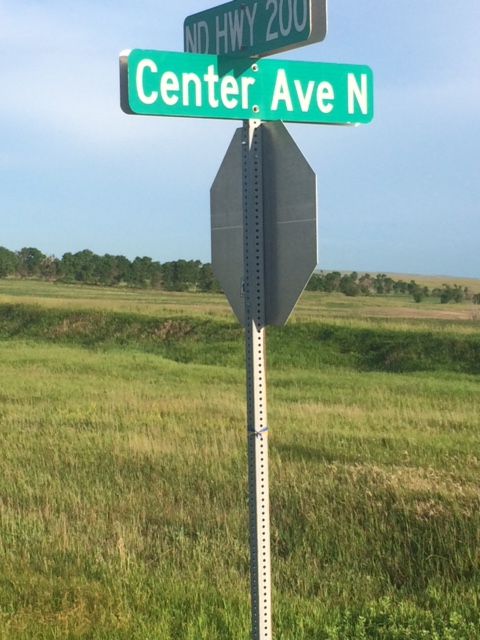
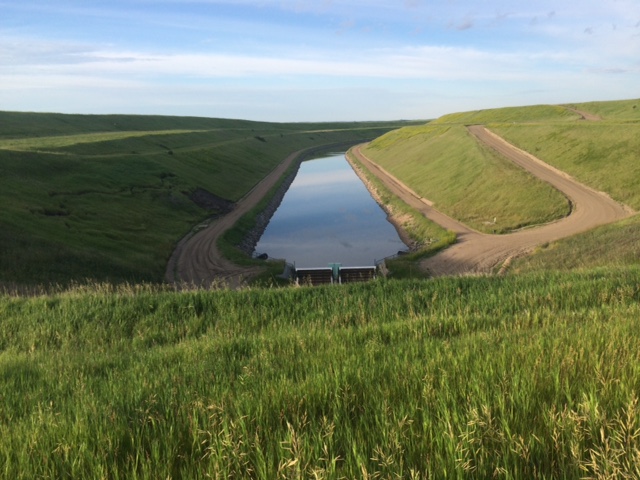
IMG_2547I cycled past Center Line Road; I am halfway through North Dakota. It looks more and more like the west, wide swales and more arid land. I came upon a Bureau of Reclamation project and know I am truly in the West. After seeing one, I realized how much engineering there is in this seemingly wild land: not only the straight roads and long power lines, but also the ponds along the road, usually at intersections. They’ve developed tall grass and a natural look, but they’re not natural.

IMG_254638 miles in I stopped for a late breakfast at Wilton. The County Line cafe was quiet mid morning. As I ate my bacon and eggs a solid guy walked in, landed at a table and ordered with a sigh. The waitress sat down and drew him out. His wife of 56 years is in the hospital with cancer. “I walk into the house and the quiet hits me. I know it hasn’t really hit me yet, but it will.” Kelly told him to come anytime he feels alone and suggested she and her children would come visit him. It was an intimate scene for a public place, but touching. I was too close to pretend I didn’t hear, so I introduced myself to the man and expressed sympathy. I didn’t ask him about tomorrow.

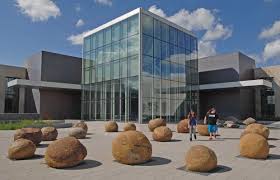
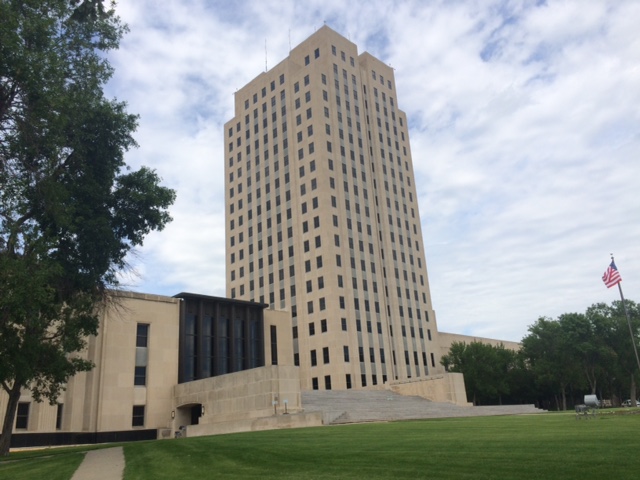
When I came out the weather had shifted. The wind picked up, clouds gathered, and light ran fell on my twenty miles to Bismarck. By the time I arrived at the North Dakota Heritage Center the weather lifted. I spent the afternoon interviewing Beth Campbell, Visitor Coordinator, viewing the exhibits and visiting the State Capital Building, surely the most unique in the land. Built in the 1930’s after the original capital burned, the Deco structure has no dome and isn’t even symmetrical. Imagine Rockefeller Center transported to the Prairie and used for government offices. I ran into James MacPherson, AP Reporter, who gave me more background on this boom. “You have to see it to believe it. There’s nothing else like it anywhere in the country. Of course, booms, by their nature, go bust.”

images IMG_2565 IMG_2567

I pedalede through downtown Bismarck, followed the bike trail along the Missouri River, and crossed over to Mandan. For dinner I tried Fleischkeuchle, a seasoned hamburger in a puff pastry. Once is an experience; I don’t need to order it again.


Posted in Bicycle Trip Log | Tagged , , , , | 4 Comments