Profile Response – James Huggins, Twelve Tribes Community Cambridge, NY

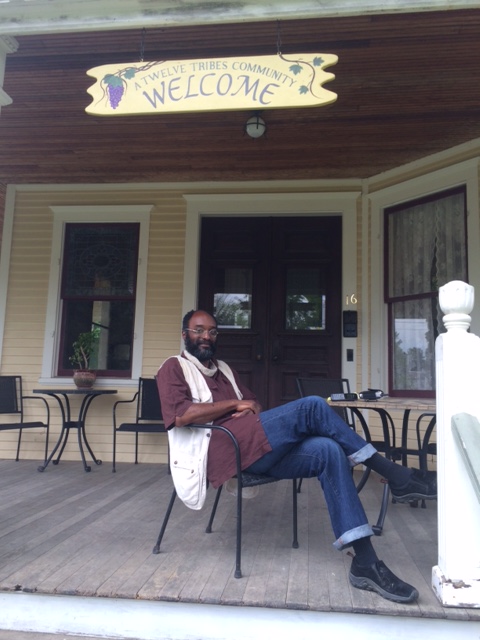
HWWLT Logo on yellowI passed James sitting on his front porch on a Saturday morning. When we waved to each other, I noticed the sign about the porch and decided to stop and chat. James has lived in this Twelve Tribes Community, a large nineteenth century house on Main Street, for 22 years. The community is rooted in Acts 2:4: All of them were filled with the Holy Spirit and began to speak in other tongues as the Spirit enabled them.

150515 HugginsJames describes life in the Twelve Tribes community as a matter of the heart. “The community is a container that allows each of us to see the hurtful things within us, and work toward healing.” Twenty-five people, 12 adults and 13 children, share the house, vehicles and other aspects of life. “But most important we share common struggles. I have four children. I can offer support to the new fathers. As a result, we develop faster here than in other Christian experiences. We share physical work, but the hard thing is working on spiritual problems. It’s like a dance. Not ballet, a tap dance.”

How will we live tomorrow?

“People want to escape reality. That’s what movies and TV do. All we know is hard work and entertainment and we think of them as separate until we see a different reality. Only then do we lose our desire to escape.”

Posted in Responses | Tagged , , | Leave a comment

Trip Log – Day 22 –Johnstown, PA to Pittsburgh, PA

150527 Johnstown to PittsburghMiles Today: 72

Miles to Date: 1,281

May 27, 2015 – Rainy then sunny, 75 degrees


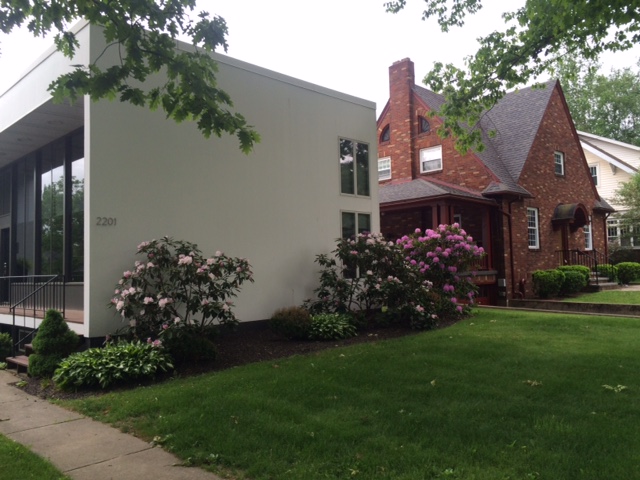
I woke in The Flood City to learn about extensive flooding in Texas and Oklahoma. I called my brother in OKC to make sure everyone was okay and then tucked into my favorite budget motel breakfast: flip waffles! Actually, I had two. Since I was facing 72 miles plus 4,500 feet of vertical rise plus a forecast of rain, I also downed a few other carb intensive treats. I rolled out of Johnstown by 6:30 a.m., which meant pedaling up, up, and up; five miles of steady rise. The higher I went, the nicer the towns. Westmont PA has an interesting mix of contemporary and traditional houses, and incredible trees lining the main road.

IMG_2011IMG_2012

The first twenty miles of my ride were long climbs and dives through deep forests. Rain was sporadic, then steady when I went through the attractive town of Ligonier. The rain slowed down as I merged with U.S. 30, which proved a poor road for cycling. The combination of narrow, sometimes grooved, shoulders, inpatient drivers, road construction and Pennsylvanians’ love for Dodge Ram pick-ups made the stretch to Greensburg nerve wracking. I stopped at the Americans for Prosperity Foundation to ask my question, but no one was in their office. Out making money, I guess.

IMG_2016IMG_2017IMG_2020

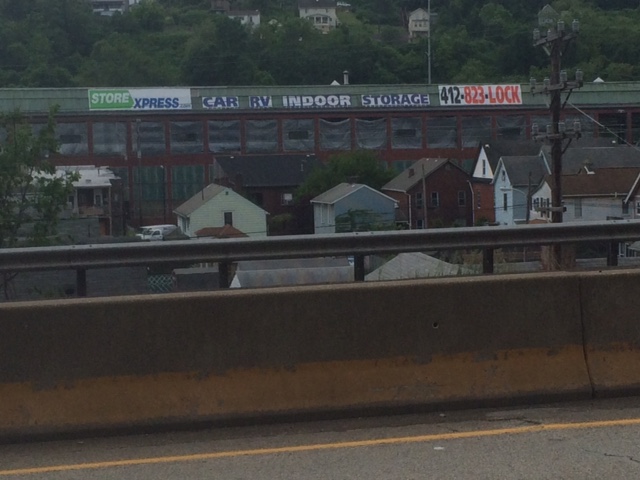
I made a wrong turn in Greensburg and wound up back on 30, when I wanted to be on 130. I wound up in maze of big box stores before navigating to 130 West; a better road, though drivers were no happier to share this road with me than the others. Nearer to Pittsburgh, the number of declining hillside towns and immense industrial shells is amazing. A gigantic former factory at Turtle Creek advertised an interesting concept: indoor storage for RV’s, boats and other big things.

My starchy breakfast gave me the stamina to persevere, but I craved something fresh and crunchy. I discovered a vintage green grocer, bought a banana, apple, and bag of grapes; and sat on a crate enjoying my juicy lunch and trying to engage the clerk about tomorrow.

IMG_2024I had one other direction snafu closer to Pittsburgh and wound up scaling more hills than I cared, yet still arrived at Rivers of Steel Heritage Site in Homestead just after two. Corinne Bechtel, Director of Tourism, gave me an overview of their mission: to preserve a few remaining steel related structures and celebrate the variety of Pittsburgh attributes that resulted from the steel industry; immigration, architecture, food, and culture. After our interview and reviewing exhibits at the Bost Building, Corinne toured me through the Homestead Steel Works Pump House and Carrie Furnaces. The scale of the enterprise was mammoth, the remnants incredible, and Corinne’s tour a delight.

It was after five by the time I climbed up, up, up yet again to get to my warmshowers host’s home for the evening, a bit frazzled and tired, but satisfied. Simon and Melanie fed me delicious Mexican food while their 4-year old son Elliot induced me to log roll down their lawn before he went to the bed and the adults discussed tomorrow.

Posted in Bicycle Trip Log | Tagged , , , , | Leave a comment

Profile Response: Charlie Welch, Dave Stiger, and Marianne Barthel, Dartmouth-Hitchcock Medical Center

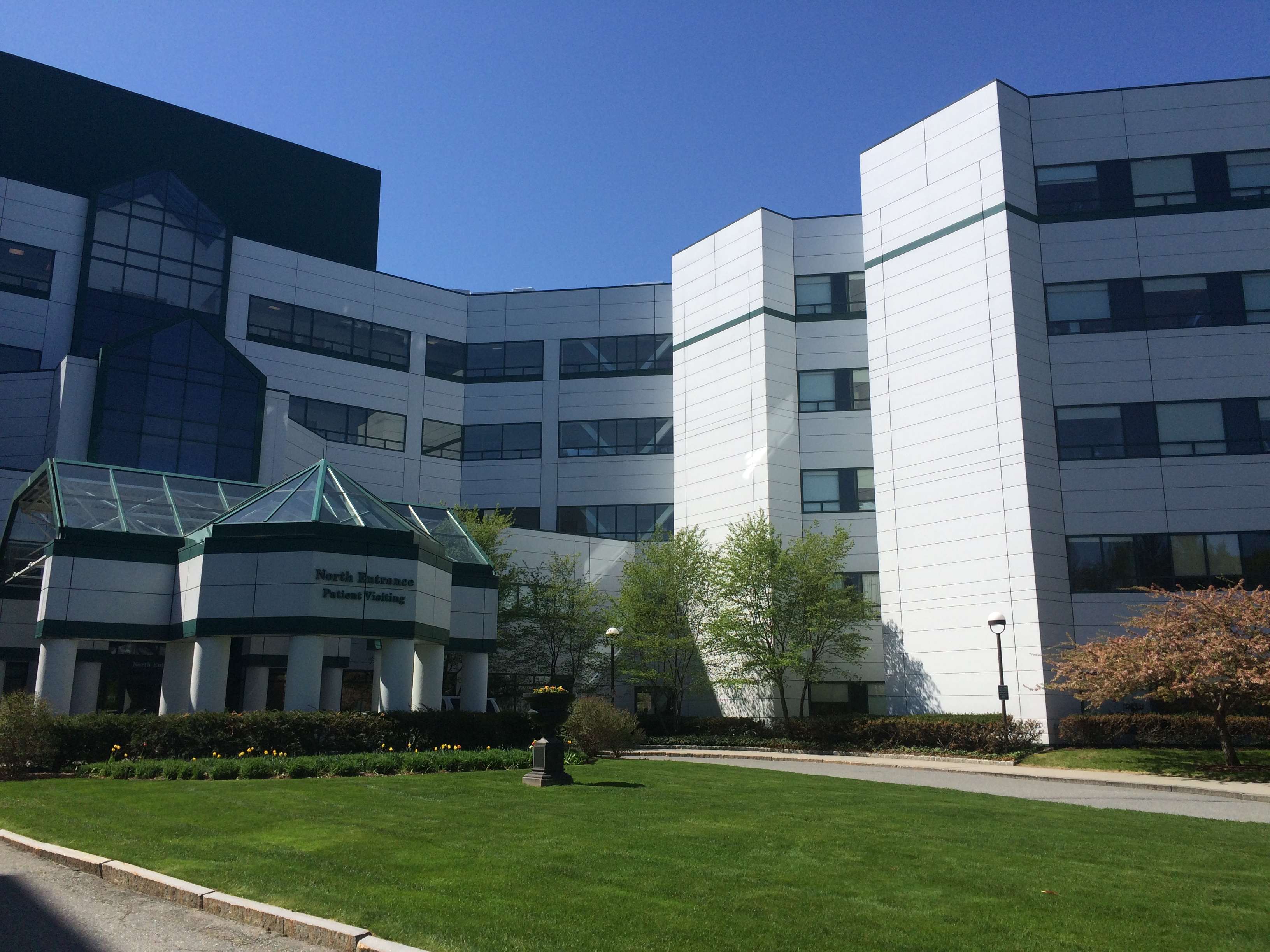
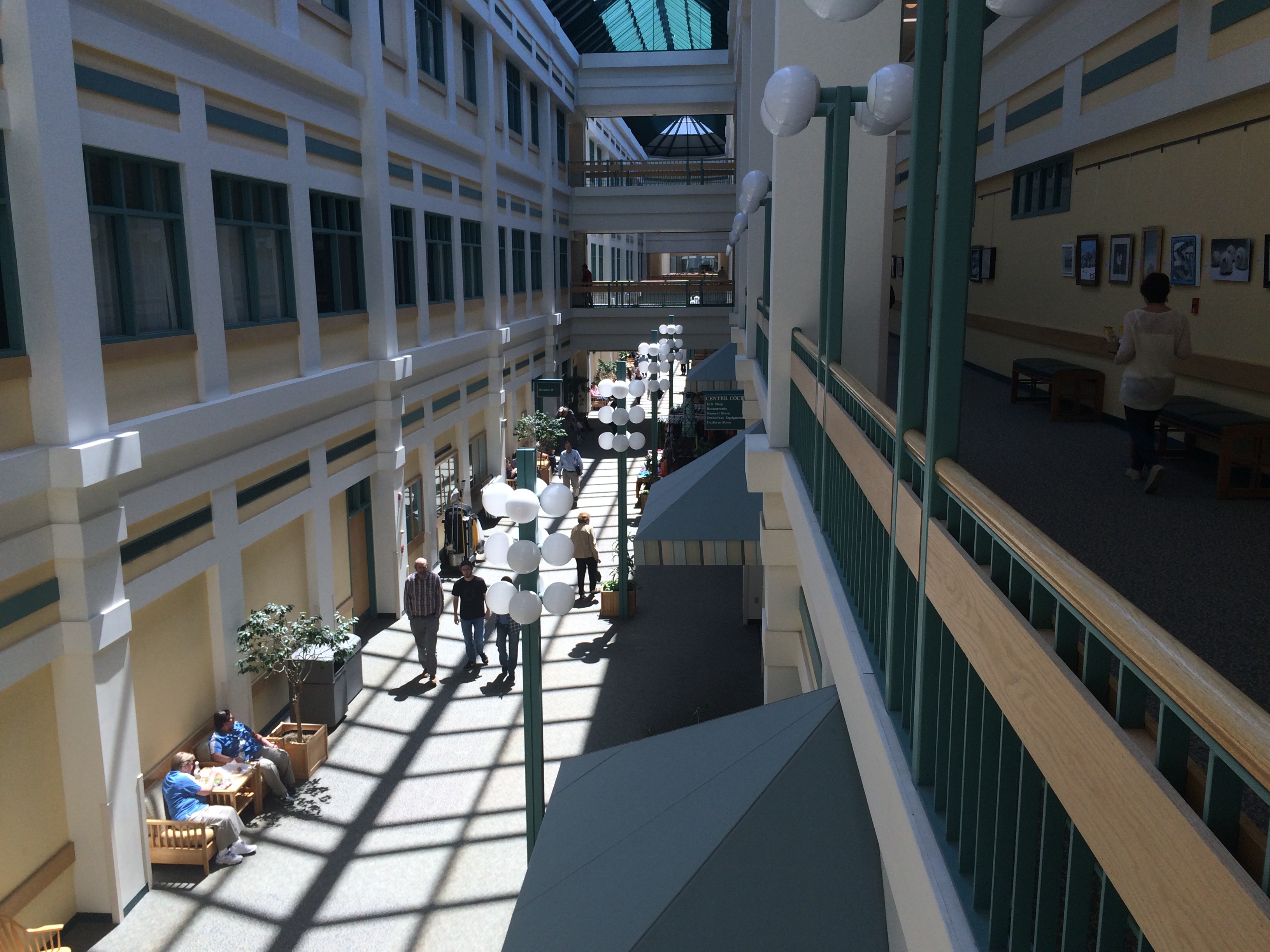
HWWLT Logo on yellowGood bones are as important to appropriate architecture as they are to good health. When I was part of the design team for Dartmouth-Hitchcock Medical Center (DHMC) over 25 years ago, we were rigorous in organizing the 1.4 million square foot complex along a three-story sky lit spine. Today, the central campus contains about 2 million square feet (plus DHMC’s satellite facilities in other cities) yet the complex’s straightforward organization makes it easy to navigate and pleasant to maneuver. DHMC was one of the first ‘medical mall’ facilities in the country, and is still among the best. Nevertheless, the design shortcomings we argued about years ago – that the main stair was too narrow and didn’t descend to the lowest level – are still the first complaints I hear. Reinforcing Frank Lloyd Wright’s observation that, “A doctor can bury his mistakes, an architect can only advise his client to plant vines.” A plant wall might be a more fitting terminus to DHMC’s mall than a stair that no one can use.
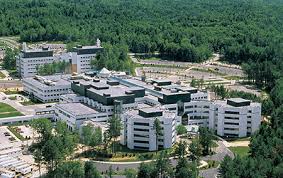
imgresI’ve visited DHMC several times since it opened in 1991, but wanted to visit with the perspective of ‘How will we live tomorrow.’ Charlie Welch, Director of Operational Services; Dave Stiger, Director of Project Management and Construction, and Marianne Barthel, Arts Program Coordinator; met with me to discuss how the facility has adapted and changed, and what they see for tomorrow.

Charlie explained with within ten years of opening, DHMC needed to expand clinical, diagnostic and treatment capabilities. The ‘Project for Progress’ opened in 2003 and 2004, adding MR’s, OR’s and other diagnostics, as well as increased outpatient treatment, cancer care, and cancer research capacity. More recently, growth has been beyond the central campus, with outpatient facilities in Keene, Manchester, Concord, Nashua, and St. Johnsbury, VT. Now, with population growing, and aging, DHMC has the complementary pressure of too few inpatient beds.
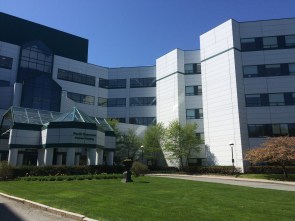
IMG_1829They have managed to add 40 beds through creative space juggling, but there is no easy way to add a significant number without building the third inpatient wing envisioned in the original master plan – at today’s cost of about $200 million.

Chris described how DHMC responds to changes in resource availability. The original campus was powered by oil. They were on the cusp of switching over to wood chip incineration when the natural gas boom occurred. So, they switched to compressed natural gas. They are investigating switching over to liquid natural gas, possibly sharing a central distribution facility with nearby Dartmouth College. Dave’s group investigates renewables like wind and solar on every project, but to date, they have not demonstrated acceptable payback periods.
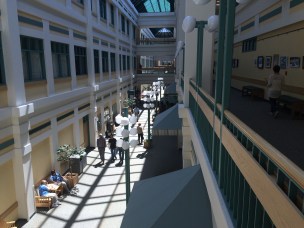
IMG_1833While Charlie and Dave keep people warm and dry, Marianne’s focus is on elevating everyone’s experience – staff, patients and visitors alike. She oversees a program of performances, permanent and rotating art. The day I visited, the extensive Audubon print collection (gift of Mary and Laurance Rockefeller) shared the main lobby with a display of staff art and Frank Logan, a volunteer pianist for over twenty years, filled the space with piano standards.

How will we live tomorrow?

“In healthcare, it will be a challenge as we get older and our expenses rise to accommodate end-of-life care. We are designing a 12-bed palliative care (hospice) facility. Visiting nurses, aging in place, are encouraging steps. We do not need to be the end all here on this campus. We are starting telehealth programs that link doctors to patients for routine care from their homes, and also support more acute patients in smaller hospitals. Our Link Transfer Center will allow EMS teams to identify a regional hospital with the appropriate care and bed space. Hospital census will be spread across the region.” Charlie Welc

“The cost of solar is decreasing. It may be viable on future projects.” Dave Stiger
imgres-1“Aesthetics and art in all of its forms are integral to tomorrow. We have an extensive art collection, but it is all in public areas. If you’re an inpatient here for weeks, you may not enjoy any of it. We want to bring art to the patient room. We’re looking at digital frames with a rotating collection of images. Patients will also have the option to personalize them if they have pictures of family or friends they want to see.” Marianne Barthel

Posted in Responses | Tagged , , , , | Leave a comment

Trip Log – Day 21 –Altoona, PA to Johnstown, PA

Altoona JohnstownMiles Today: 46

Miles to Date: 1,209

May 26, 2015 – Overcast, 65 degrees

I rose early to tackle the Allegheny Ridge, the steep incline that differentiates the Allegheny Mountains to the east and the Allegheny Plateau to the west. My warmshowers host, Deb, was already up with the morning edition of the Altoona Mirror, which included the article about my cross-country trip!

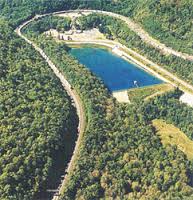
Feeling famous, I rolled out of town, past Reighard’s, America’s oldest gas station, in operation since 1909. I began to climb and passed several reservoirs. Altoona has a huge water supply system, the legacy of being a locomotive manufacturing center and the primary place where steam engines were ‘refueled’. If they can find a way to send their excess water to California, it might help both regions.

images-1images-2

I started the long ascent up to Horseshoe Curve, where the railroad tracks form a tight ‘U’ against the mountain. Unlike most cities, Altoona is not built along a river. It was founded as a staging point to build the railroad across the Alleghany Ridge, and the most impressive achievement is Horseshoe Curve, which opened in 1854. I got there shortly after seven and was able to watch a long train navigate the graceful arc. Then I pedaled the much steeper road to the top of the ridge, an arduous combination of New England incline and Pennsylvania length.

images-3Once I reached the ridge, I had twenty easy miles, though I was never far from a train. The roads followed the crenulated terrain, while the sinuous lines of steel ran mostly out of sight. Whistles and brakes screeched out of the woods as frequent as birdsong. Every few miles the blacktop weaved under the tracks through a narrow tunnel.

The day was grey with occasional sprinkles, which made hillsides towns like Gallitzin and South Fork look as dreary as The Deer Hunter, which was set in this part of Pennsylvania. I had another long climb approaching Johnstown, and then the steepest descent of my trip yet – white knuckle braking on a 14% grade right into downtown. I landed in town just after 11 a.m., which was good because the sprinkles turned into a steady rain. Fortunately, my most challenging riding of the day was behind me.

The sky cleared and I had an afternoon meeting with Bob Layo, Executive Director of the Johnstown Chamber of Commerce, to talk about tomorrow in a town of declining population and opportunity. Afterwards I enjoyed a late lunch at the 24-hour luncheonette, Coney Island: a hot dog, slathered in mustard, chili and sauerkraut; a sundowner, hamburger with chili, cheese and a fried egg; and a signature cookie stuffed with raisins. Total bill: $6.10. Then I rode around downtown and stopped by George’s Song Shop, the oldest record store in America (1932) to ask George about tomorrow.

A Johnstown joke: What has six arms, six legs, and six teeth?

IMG_2005IMG_2007IMG_2009

Answer: The graveyard shift at the Coney Island.


Posted in Bicycle Trip Log | Tagged , , , , , , , | 1 Comment

Profile Response: Josh Trought of D Acres Farm, Dorchester, NH

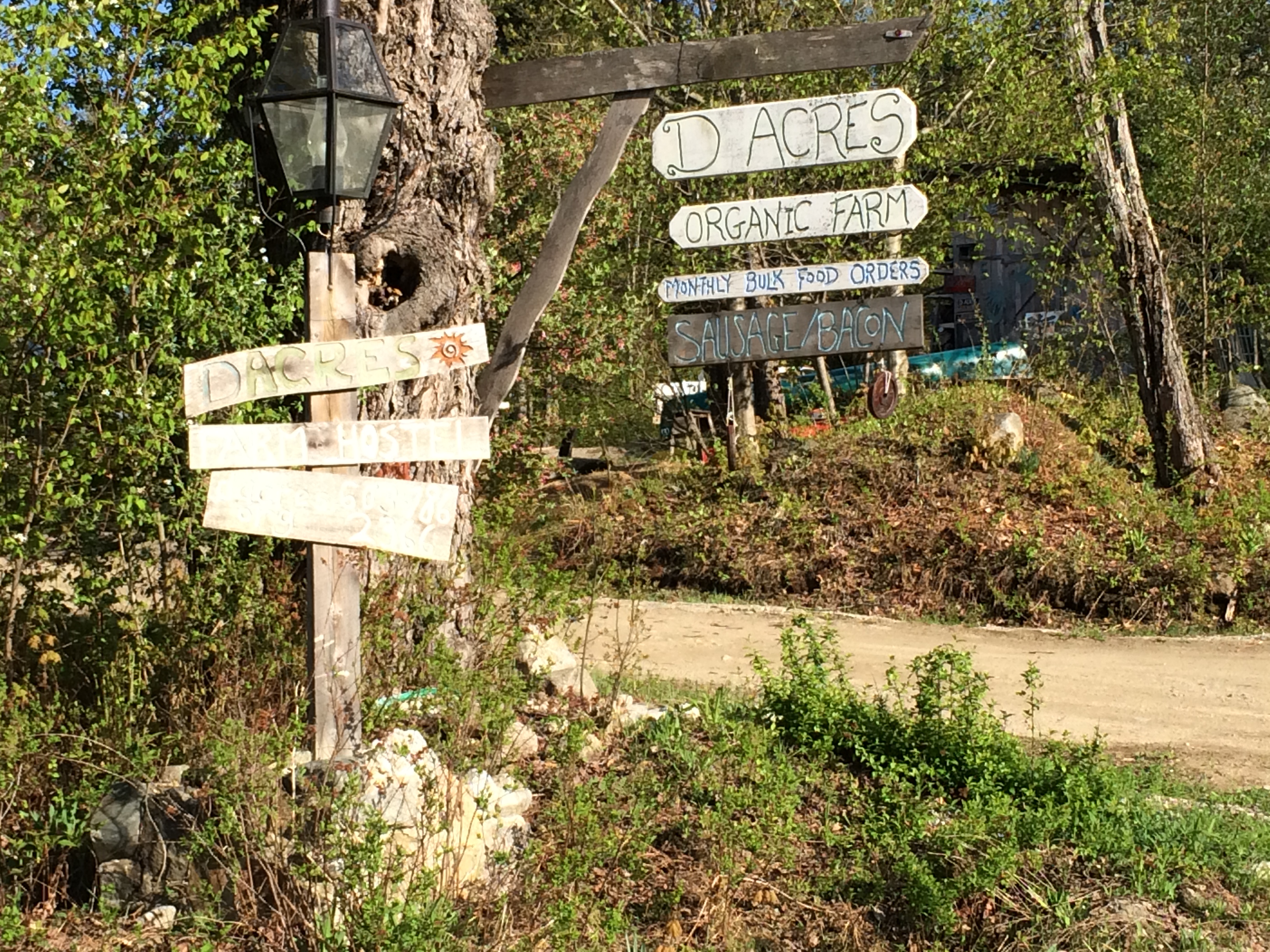
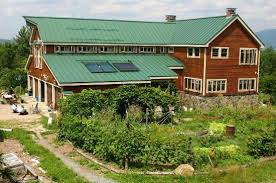
HWWLT Logo on yellowDinner at D Acres Permaculture Farm in Dorchester, NH is an informal, collective affair. When the bell rings, quests and staff arrive at the dining area as they can. I was midway through a delicious meal when Josh Trought, founder of D Acres, filled his plate and entered into the general conversation. At one point he turned to me, “I’d like to sit and talk about your question, but I have a few things to do after dinner. Why don’t you tag along, and we’ll talk when we’ve finished, if we’re not too tired.”

images-4After we put up our dishes, Josh showed me the summer kitchen and greenhouse en route to scalding four turkeys. “We have too many wild turkeys here, and they have few predators anymore. It’s turkey hunting season, so we get a few every day.” I watched as Josh and two staff dipped the turkeys in a vat of hot water and plucked their feathers. The showy creatures looked pretty pathetic when bald. Then, they hauled the carcasses into the kitchen to gut and prepare them for freezing. Six or eight people were involved now, staff and guests alike. I watched the first two, but fatigue trumped curiosity and I realized I was too exhausted to engage Josh in a meaningful conversation, so I went to bed.

IMG_1827images-5imgres-1

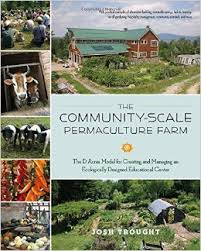
The next morning I was up before group breakfast. While I ate on my own, I perused Josh’s book and found a passage that not only describes potent ideas about tomorrow, and also illustrate how I watched him operate. I realized that he had answered my questions through his actions, rather than in words. Josh will live tomorrow much as he does every day: continue to create the sustainable farm and education center he describes in his book, The Community-Scale Permaculture Farm.

How will we live tomorrow?

imgres“The mainstream perspective demeans manual labor, minimizing the importance of people’s efforts to provide their own essential needs. Success in our culture means freedom from the responsibilities of the natural world…. At some point soon our education and culture must revalue physical work. We need a higher percentage of the population to engage as farmers and shepherds in mutual relationship with plants and animals. The cultivation of food is an act of care for the people and land, rooted in history and cognizant of the future, that requires the presence of human labors. It is through these empowering and enabling physical exertions that we can maintain our connection toward each other and nature.”
Josh Trought, The Community-Scale Permaculture Farm


Posted in Responses | Tagged , , , , | Leave a comment

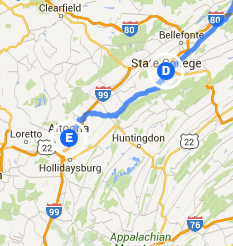
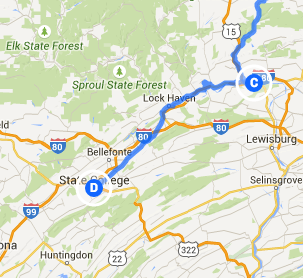
Trip Log – Day 20 – State College, PA to Altoona, PA

State College AltoonaMiles Today: 42

Miles to Date: 1,163

May 25, 2015 – Sunny, 80 degrees


I got on the road before eight for a sweet ride to Altoona. Even on short days, clocking miles in the morning is always best. For the first ten miles I had plenty of company; there were more cyclists and runners in health-conscious State College than vehicles on this postcard perfect holiday morning. The next ten miles took me through beautiful rolling countryside and into the village of Spruce Creek, where I enjoyed a breakfast break along a shady spot on the road overlooking the Juanita River while fly fishermen in waders stood silently flipping their lines into the stream.

IMG_1988IMG_1991IMG_1996

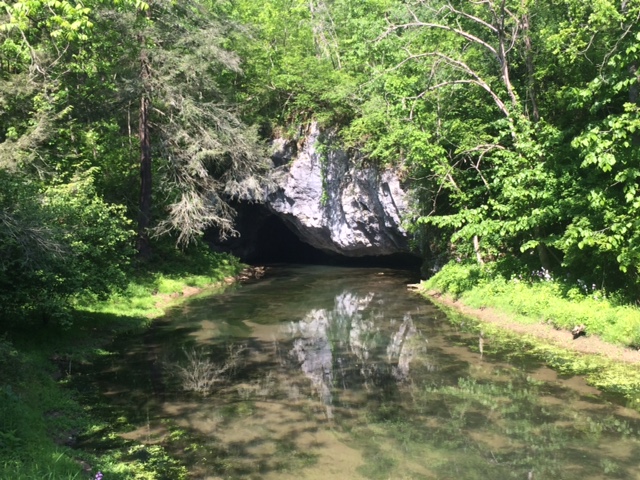
IMG_1997Kettle Road is a slow, steady climb past limestone caves and stately stone farms. The road gains in grade until it opens up to reveal the City of Altoona, and then it dives into town.


imgresI spent some time at the original Sheetz, a PA convenience store chain that started in Altoona and is universally described s ‘very good gas station food’. After a bit of blog time, I arrived at my warmshowers hosts’ home.

The best way to describe Deb Greene is simply to say the world would be a better place if there were more like her. When I knocked on the door of her typical Altoona row house she exclaimed, “My cyclist is here!” She directed me to the shower, and when I returned downstairs, clean, introduced me to the family members assembled for a Memorial Day picnic: mother, daughter, granddaughter, sister, boyfriend, boyfriend’s son, daughter and husband, nieces, nephew. Pretty much every kind of relation within modern families gathered around the deck eating, drinking and talking. They all welcomed me, asked about my adventure and reveled me with tales of Altoona.

I asked Deb where she liked to cycle. “Oh, I don’t cycle. I ski and kayak. I just signed up to host on warmshowers because I like people.”

About two hours in, on my second dessert, Kelly Chernetich, reporter for the Altoona Mirror showed up. Deb had called the paper, told them they should interview us, and Kelly came right over. After the media left, I switched to Yuengling and we kept talking until the sun set.

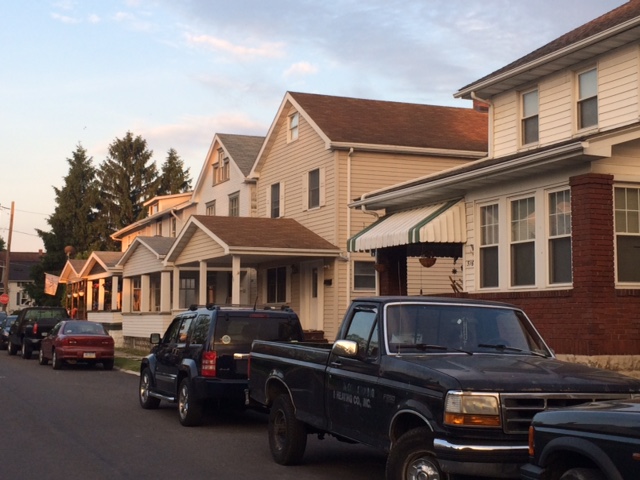
IMG_1998Places like Altoona, declining rust belt cities with houses so close you can touch your neighbors, are easy to dismiss as economic has-beens, populated by people who stay put to maintain family ties rather than chase economic brass rings. In my travels, I’ve spoken with many people who seek a stronger sense of community in their tomorrow. But at Deb Greene’s in Altoona, community thrives and passing cyclists are invited to join in.

Posted in Bicycle Trip Log | Tagged , , , | Leave a comment

Profile Response – Muhidin Libah of SBCMALA, Lewiston, ME

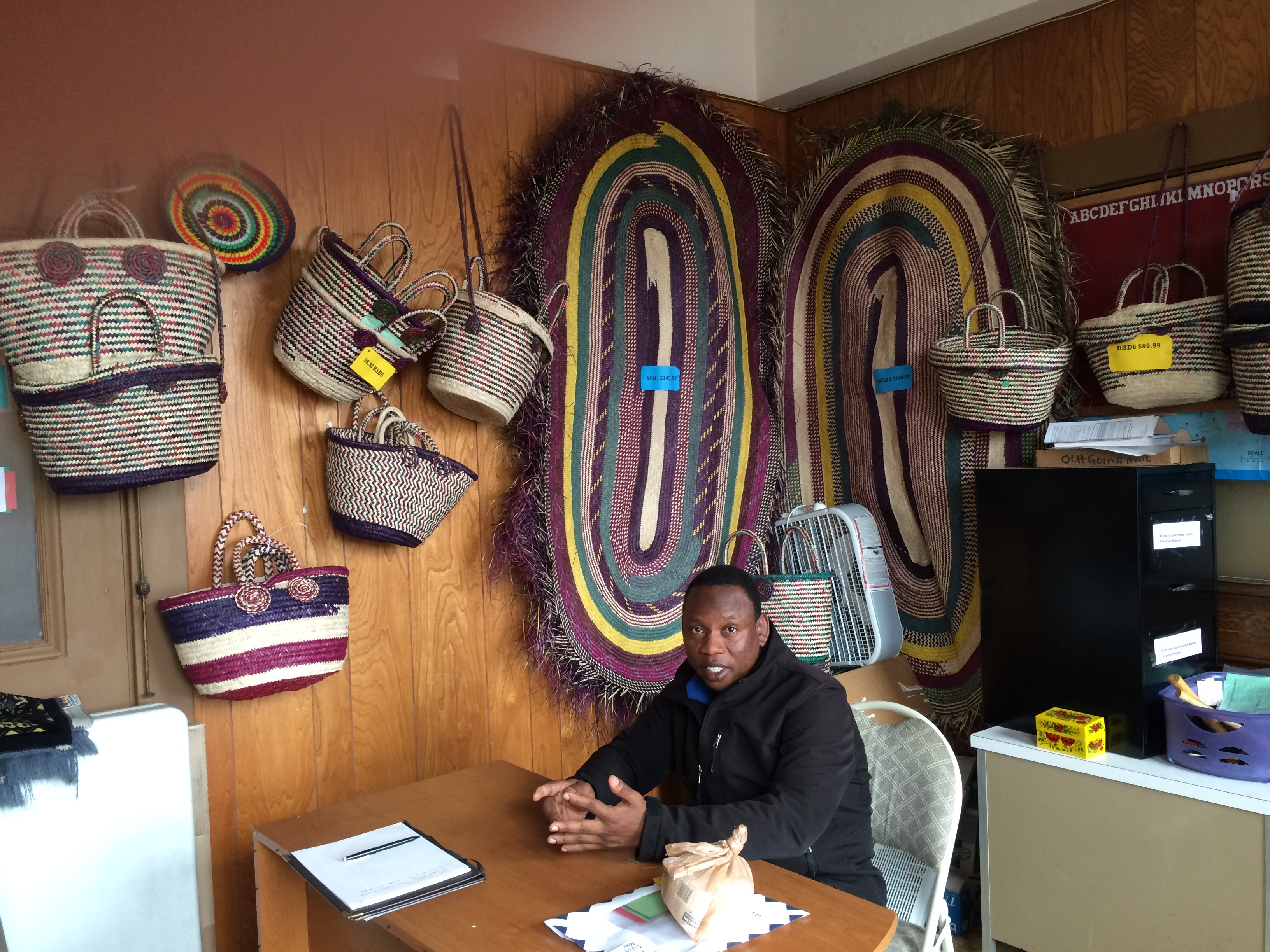
HWWLT Logo on yellowSBCMALA (Somali Bantu Community of Lewiston, Maine) occupies two rooms on the fifth floor of a tall, aging office building on a corner in downtown Lewiston, Maine. Muhidin Libah, Executive Director shares the back office with the raw materials and finished results of their basket weaving and rug braiding operations. On my way in, a stout woman in a swirling rode and scarf staffed the front office. When I left, a narrow man feeding an infant occupied the same desk.

Mr. Libah explained the rank and freedom among various Somali groups. Somali Bantu had been enslaved under colonial rule, and continued to be by ruling Somali after their 1960 independence. In 1999 the U.S. State Department gave Somali Bantu refugees high priority and began bringing large numbers to the United States. By the early 2000’s over 10,000 Somali Bantu had come to the United States, most distributed to larger cities. But like other immigrant groups, they found ways to cluster.

IMG_1772According to Mr. Libah, the first Somali Bantu came to Lewiston in 2004, and most of those who followed came from other American cities. He first lived outside of Syracuse New York with his family of three daughters, but was overwhelmed by the challenges and speed of life there. He investigated where other Bantu were living, and heard good things about Lewiston. “Lewiston is a slow place. There are many elderly. We come here because it is secure. We could not adapt to the speed of life in New York, Atlanta, and other large cities.”
Mr. Libah acknowledges other advantages as well. “The benefits in Maine were generous. They are less so now, but when we arrived welfare was good.” He estimates there are 3,000 Bantu in Lewiston and Auburn, who remain regardless of benefits because the pace of life is slow. He does not shy away from the fact that Bantu receive a high level of public assistance. “100% of Bantu children go to pubic school, and receive free lunch. Almost all Bantu are on food stamps. People complain about us being on welfare, but what would they like us to do? Starve?”

Mr. Libah spoke English when he came here. He’s worked at L.L.Bean and St. Mary’s Hospital. He’ll be in the United States ten years this September. He’s a citizen, boasts that he pays taxes, and feels criticism of Bantu in Lewiston is unrealistic. “We have to evolve economically.” He cites increased commercial activity along Lisbon Street, downtown’s Lewiston’s commercial spine, since the Bantu arrived. I cannot compare the street to any previous time, but the commercial buzz on a weekday in May is faint.

When I ask, “How will we live tomorrow?“, Mr. Libah points to the woven crafts in his office. “My plan is to tell our story, through arts, storytelling, meetings. I want to explain why we are here. We want to share our culture and our food. We aren’t going anywhere anytime soon. We want to be friendly.”

I cannot help but compare SBCMALA with the Cambodian Mutual Assistance Association I met in Lowell, MA. Cambodian refugees came to that city almost thirty years ago now, and are much more integrated into that place than Somali Bantu are in Lewiston. Time changes so much.


Posted in Responses | Tagged , , | Leave a comment

Trip Log – Day 19 – Williamsport, PA to State College, PA

Williamsport State CollegeMiles Today: 68

Miles to Date: 1,121

May 24, 2015 – Sunny, 70 degrees


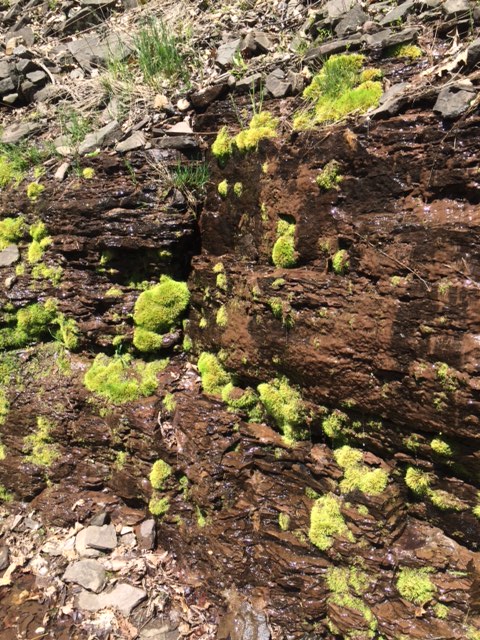
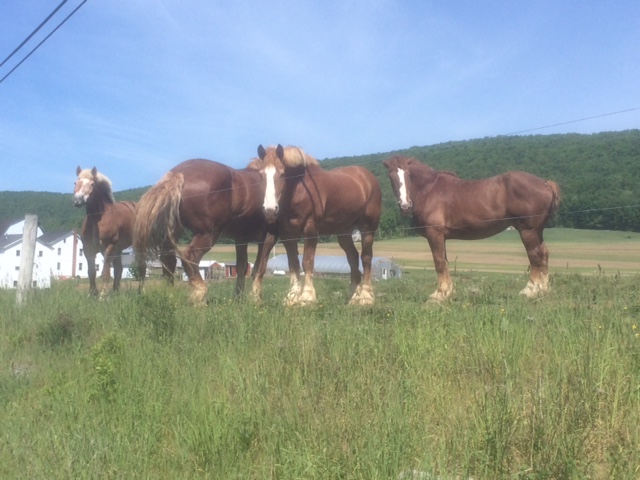
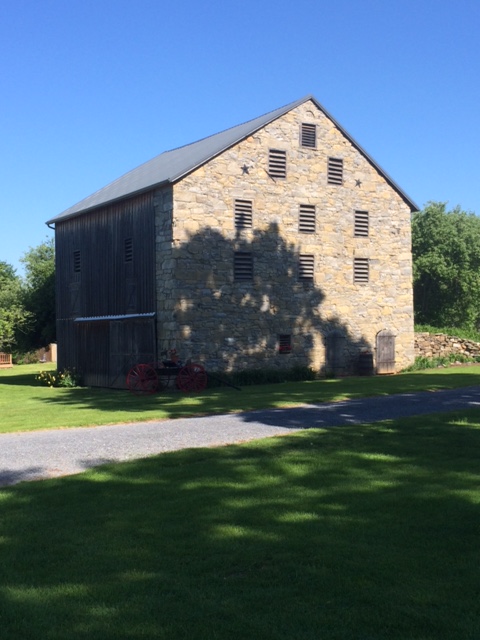
IMG_1958Today was a perfect cycling day over three rigorous, densely forested mountains, separated by broad, fertile valleys. Flags flew everywhere. Rhododendrons were in full bloom. Moss thrived in the watery cracks of the limestone crevices. Cows and horses watched me pass. Mammoth stone barns stood sentry along the side of the road. The valley roads were long, straight, and hot. The farm spreads, most with German names on the mailboxes and many with Mennonite carriages, were immense. But when I climbed up the mountainsides, the trees shaded me and cool breezes wafted off the brooks. I learned that when the road rose above the creek, there was usually another mile or so of hard vertical rise before the descent.

IMG_1964IMG_1955IMG_1971IMG_1967IMG_1974IMG_1975IMG_1953

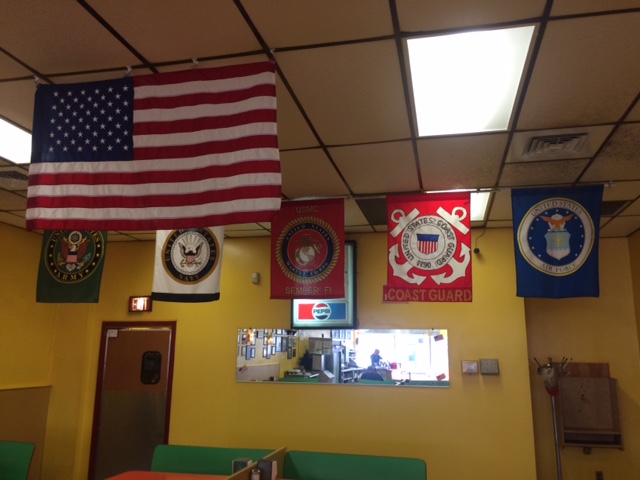
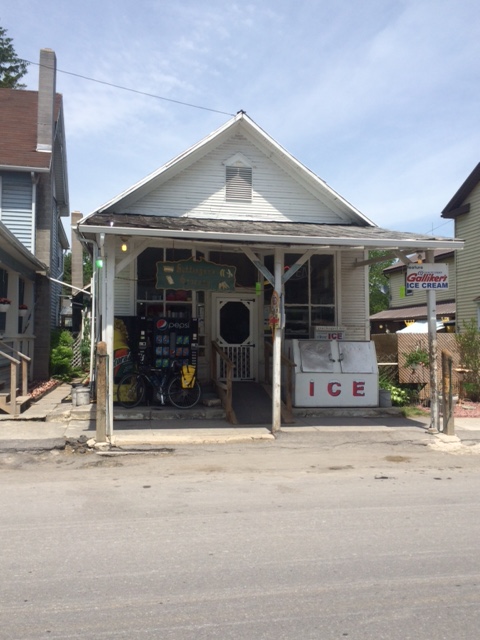
IMG_1976I stopped at the charming general store in Rebersburg, where everyone was friendly, and then pedaled the final twenty miles to Boalsburg, home to the Pennsylvania Military Museum and birthplace of Memorial Day, where a big fair was going on.

It was only a few more miles to State College, where I had a delicious dinner, outside with candlelight, with my warmshowers hosts and some of their friends. We got so involved discussing how will we live tomorrow; we didn’t turn in until after midnight.

Posted in Bicycle Trip Log | Tagged , , , , | Leave a comment

Profile Reponse – Chuck Hayes, CEO of MaineGeneral Medical Center

HWWLT Logo on yellowAs Chuck Hayes, CEO of MaineGeneral Medical Center in Augusta, Maine, tours me through MGMC’s new hospital, he has one very specific response to how we will live tomorrow: “As of July 1, the hospital will stop selling soda. That is not going over too well.”


imgresOffhand comments often reveal deep truths, and the fact that MGMC will stop selling soda is as relevant to healthcare as the $312 million facility they opened in November 2013. I was a member of the initial design team for this LEED Gold, Integrated Project Delivery, evidence-based design facility. Our enlightened client was open to the most advanced healthcare ideas, yet within two years certain design decisions, like a soda fountain in the cafeteria, are passé. While planning this project no one questioned installing a soda fountain the cafeteria. Every hospital cafeteria had one. We never know what will change; we only know that change will occur.

imgres-1My role in healthcare design was to align building design with clinical needs, to ensure efficiency and flexibility. I guided the big decisions. Perhaps that’s why when I tour a completed building I’m struck by the details that evolved later – the signage, the graphics, how the light defines space, and where the interior designers chose to change colors.

images-1MGMC is beautiful at every level of detail, and Chuck is justifiably proud of the building. Yet he, too, focuses on details. He explains how the nurse call system allows patients to send direct requests for water or toilet assistance rather than a general buzz, and how RFID tags help locate equipment and staff. He describes MGMC’s program to incorporate locally sourced food and why the salad bar is the first thing everyone meets upon entering the cafeteria. In fact, Chuck barely touches on the medical parameters of the facility. That MGMC has the latest medical technology is a given. He focuses on the intersection of that technology and the rest of people’s lives: their $4 million effort in community wellness; the demonstration kitchen; and education programs.

Toward the end of the tour, I ask Chuck, “How will we live tomorrow?” His response reflects the focus of our tour:

imgres-2“Right now we are really busy in the inpatient and acute care arena. Even though we are experiencing an aging population, we anticipate that this focus will level off as we shift to health management. There will be more care in outlying clinics and at home. The social issues in making this change are more challenging than the medical ones. Getting people to keep appointments, get transportation, move every day, eat well. These have to align to keep people out of the hospital.”

I spent thirty years working in healthcare in the United States, a system that has always favored the newest, biggest, and best technology over mundane things like primary care, diet, exercise, and wellness. Chuck heads a very sophisticated regional hospital that has all the latest technology. But like so many others in our healthcare system, he understands that while our technology is wonderful, the best health will come to those who do not need those interventions.


Posted in Responses | Tagged , , | Leave a comment

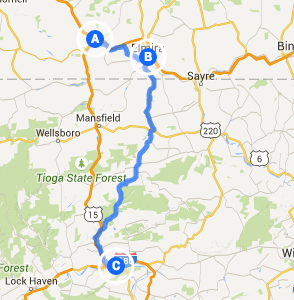
Trip Log – Day 18 – Elmira, NY to Williamsport, PA

Elmira WilliamsportMiles Today: 77

Miles to Date: 1,053

May 23, 2015 – Sunny, 60 degrees


I woke up this morning thinking about my father. It was inevitable that the old man would settle in for entire day I was headed to Williamsport, PA. Fifty summers ago he came home from work one afternoon, announced that he was talking all of his twelve-year-old Little Leaguers to Williamsport for the World Series, and decided there was enough room in the Rambler station wagon for nine-year me as well. There were eight, maybe nine, of us. I climbed in the way back and squatted on top of backpacks in silent awe of my two older brothers and the twelve year old all-stars from Toms River Little League. My father drove all night through torrential rain on pre-Interstate two-lane blacktop. We sang ‘’A Thousand Battles of Beer on the Wall’ all the way down to one. Never done that before or since.

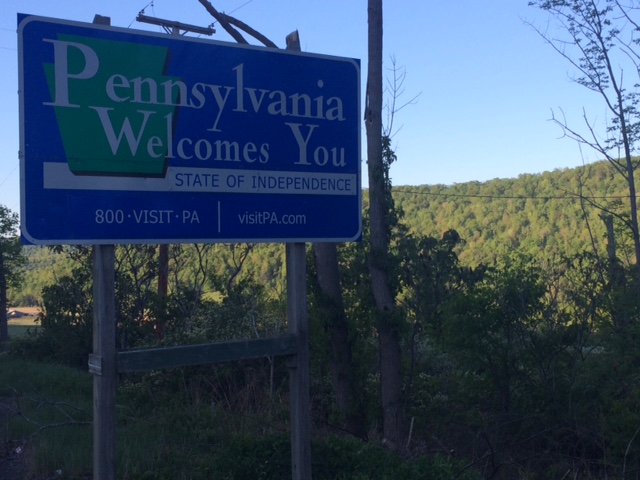
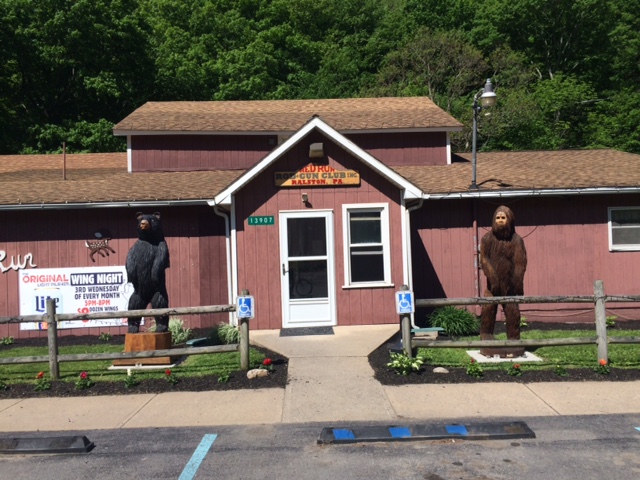
IMG_1942Today was perfect, though cold; not one cloud all day. I slipped out of my warmshowers gig right at six and clocked sixty miles by noon. My fingers were numb, but the rest of the world was heating up for Memorial Day weekend. The VFW guys at the Stebben barn were grilling racks of chicken before seven, to be tender for their noon BBQ fest. The sun hung behind the mountains until after eight. Three deer ran with me for about a mile, stopping every few moments to look back and make me feel clumsy in their grace. The sawmills were humming by nine, holiday weekend be damned. But by ten the sun was high enough to thaw my digits and folks propped themselves in front of RV’s parked along Highway 14 to watch the world pass by. The forests were dense, the rivers crystal clear, and the hunting signs ubiquitous. I wondered why the Rodman Gun Club had a wood sculpture of a Neanderthal outside their clubhouse, but decided not to inquire.

IMG_1945IMG_1950IMG_1951

I stopped for a breakfast sandwich and sweet bun early on, but was hungry again when I came upon the Marsh Hill Market. Candy made me that Pennsylvania specialty: the hoagie. A hoagie is more than a sub. It is everything so bad that it’s really good. Start with a squishy loaf roll. Slice it down the middle and swab it with mayo. Layer on three varieties of low-cost luncheon meat, the kind that’s pinkish plump from too many nitrates. A few slices of indeterminate cheese as well. Scatter hot peppers, sliced onions, and pickles everywhere, add shaved iceberg, drizzle with oil, then drizzle some more, cut it into two huge halves and top each half with pale, cellophane tomatoes. It’s impossible to actually fold a good hoagie, and Candy makes a very good hoagie. After I downed it all, with a Diet Coke and an ice cream sandwich chaser, I handed my cards around the musty market and got blanker stares than the earlier deer.

IMG_1956I was near Williamsport when I passed signs for a Pow Wow Reenactment in Trout Run. I had to go astray. It was an odd event – Native American costumes, drums and dancing coupled with Revolutionary War wannabes and speeches about the heroism of American veterans. I couldn’t make any sense of it until Sandra Lee Hitchcock, a Cayuga Indian from New York, gave me a coherent explanation, as well as the most poetic answer to my question to date. She insisted I accept a leather neck pouch with fresh sage to protect me on my journey.

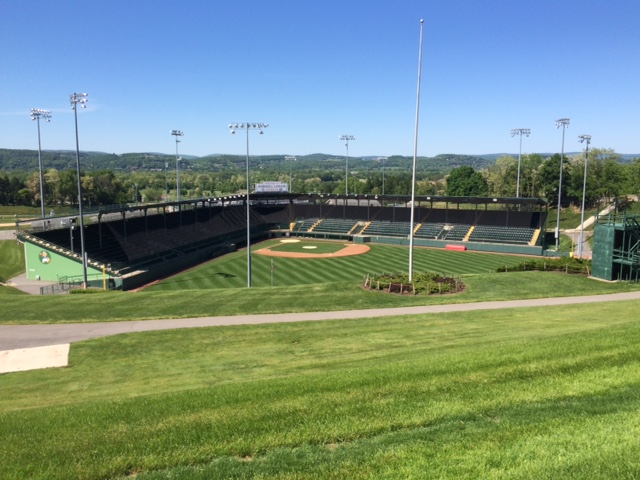
Sandra’s protection was welcome, this being my Jack Fallon day. Fifty years ago, when our station wagon full of boys pulled into Williamsport mid-morning, the sun decided to shine. My father inquired about a room in the City View motel, on a hill overlooking Little League home plate. Miraculously, they had a last minute cancellation and gave us a room with a direct view of the World Series Field. Throngs of people from all over the world crammed for a view of the little ballplayers, while we Johnny-come-lately’s landed the equivalent of a corporate box.

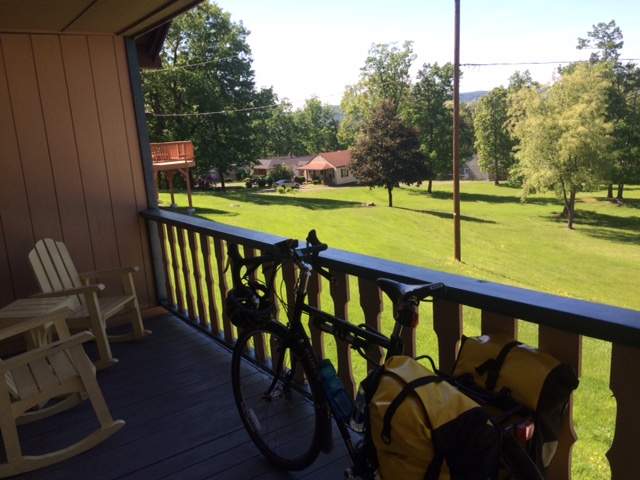
IMG_1961Given that precedent, I was compelled to roll into Williamsport without the security of reservation. I passed through downtown, crossed the Susquehanna, and climbed the hill toward the field. Little League has come far in fifty years. The City View is gone, replaced by a museum and administrative building. The main field is still there, plus a second stadium and a dormitory complex where sixteen teams from all over the globe live during the World Series. I enjoyed touring the complexIMG_1962, and discovered a vintage 50’s motel just down the road where I got the nicest room of my entire trip, with a private outdoor porch in the same orientation as the City View. The only way to channel Jack Fallon is to play fast and loose and come up with the best.

In keeping with the sprit of the day, I walked down to the Mountaineer Lounge fro dinner, an Italian gin mill with wood paneled walls and husky voiced waitresses. I snarfed down a meatball sub with fries and draft beer. When the fake blond hostess asked me if I was alone, I nodded. I figured she might not understand that Jack had been with me all day.

Posted in Bicycle Trip Log | Tagged , , , , | 1 Comment