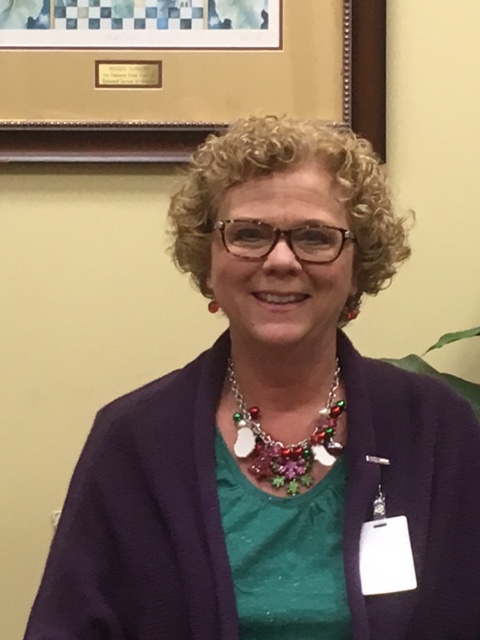
Profile Response: Michael Cooper, CEO Weems Memorial Hospital, Apalachicola FL

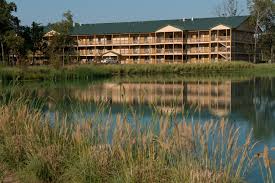
HWWLT Logo on yellowOne of the most unique projects of my architectural career was a replacement facility for Weems Memorial Hospital, a hospital near the mouth of the Apalachicola River at the tip of Florida’s Big Bend. Six years after our initial concept sketches, the project is still nothing more than a drawing on a wall, but Mike Cooper, Weems’ new CEO, is confident construction will begin next year.

“Before I came here, we started with a replacement facility, then developed a conversion and addition scheme, then a smaller addition. All were over budget. The Board of Commissioners set a $10.2 million budget, thinking we would not be able to meet that and they wouldn’t bear the blame. But our latest iteration, which includes renovation and some addition, comes under budget and achieves critical operational changes we need to stay in business.”
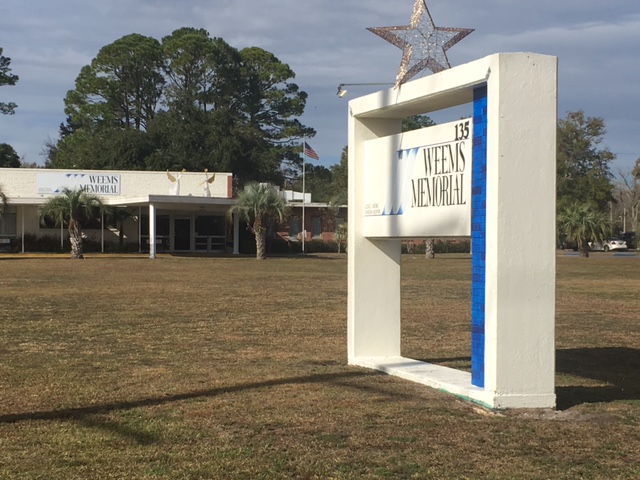
img_8797Mike’s review of the process requires clarification. A hospital is point of pride, and safety, and jobs, for any community. Weems is the only hospital in Florida’s Franklin County. In 1997 Congress passed legislation establishing ‘Critical Access’ designation to rural hospitals that are at least 35 miles from another facility, run a 24/7 emergency department, and have 25 beds or less. Critical Access designation provides some financial cushion for small hospitals, but it does not guarantee they will stay in business.

Mike explained the unpleasant reality of Weem’s business model. “Forty percent of our business is indigents or Medicaid. We get fifty cents on the dollar for Medicaid patients, zero for indigent care. When I spend a dollar on direct care, I’m only taking in sixty cents.” What keeps Weems in business is a one percent county sales tax designated for healthcare. The County Board of Commissioners controls that purse; they have established Mike’s $10.2 million capital budget. “There’s enough money to make the project happen; this area has rebounded from the recession pretty well.”
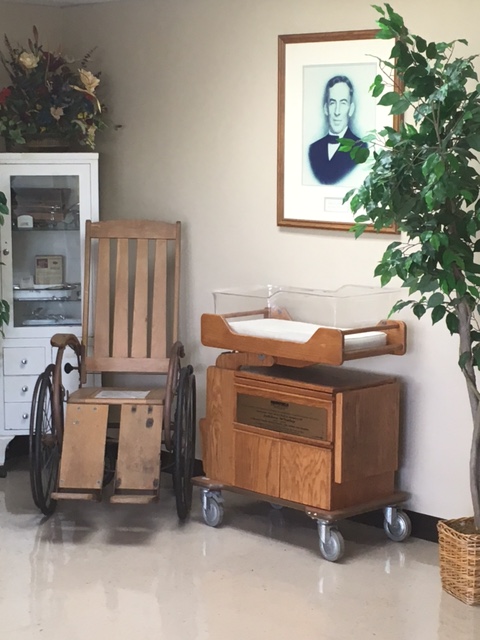
img_8799Mike has worked in rural healthcare in Kentucky, Indiana and Idaho prior to coming to Florida. He appreciates rural life, though doesn’t consider it as unique as local folk imagine. “People say their part of Americana is special, and it is, but all of these places are essentially the same good place.”

From Mike’s perspective, Weems needs this facelift in order to stay alive. The current facility, which hasn’t been updated in over fifty years, requires multiple staff at ED and inpatient areas. The new layout will streamline staffing. “With a patient census in the two to three per day range, and variable ED traffic, we need to have all clinical activities controlled from one point.”

However, Weems’ largest challenge is probably not the location of its nurse station. Twenty-three miles to the west, the Sacred Heart System recently opened a new hospital in Port St. Joe, close enough to lure patients seeking a new facility even though it is in another county.

It is very costly to maintain a full service hospital in a community as small and remote as Apalachicola. If the county wants to keep Weems afloat, and improve the healthcare Weems can provide, it will require subsidies as far as anyone can see.

How will we live tomorrow?
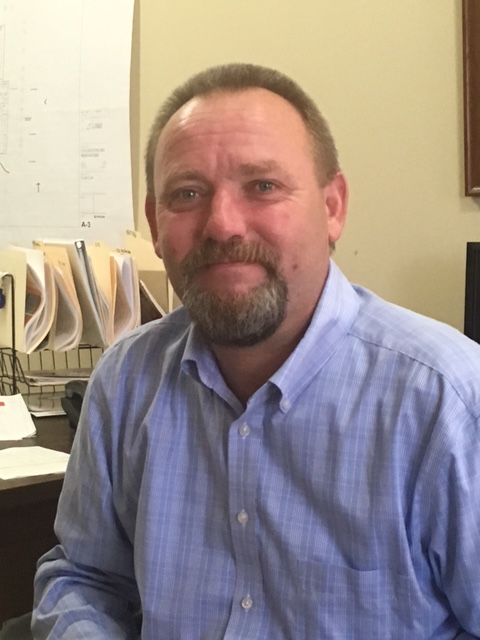
img_8801“I think we are going to be very much defined by technology. Look at education. In Florida and Kentucky you can get a high school diploma and never step foot in a classroom. It is only going to increase as the Millenials have children. Traditional schools will go away and be replaced by a YMCA or Boys’ and Girls’ Club for focused activities.

“From a healthcare perspective, technology will be the order of the day. Small hospitals will go away as we do more with remote procedures and diagnoses. The technology already exists. Right now hospitals would jump on it, but there are no reimbursements for it.

“We’re going to see the demise of the family practitioner. You want a relationship with a doctor, you’ll have a relationship with a mid-level – a nurse practitioner or a PA – who will refer you to specialists. You’re going to see a change in credentialing for nurse practitioners. They’re going to need a doctorate degree. Pharmacists now need a doctorate; physical therapists need a doctorate. Right now, nurse practitioners are the only ones at that level that don’t need a doctorate, and they can prescribe medication.”


Posted in Responses | Tagged , , , | 2 Comments

Profile Response: Adam Collier, Panama City FL

HWWLT Logo on yellowBefore Adam Collier took me out on the town and introduced me to the Bacchanalian delights of Ms. Newby’s bar, we leafed through The Universe, a super-size coffee table book of photos of our galaxy and beyond. Adam purchased the book for $19.99 back in high school and carted it from his hometown of Sarasota, to FIT for degrees in oceanography and engineering management, then on to Groton CT where he worked in nuclear submarine design. “Those projects were going to take thirty years to bring to life. It was my first job. I was not ready to make that commitment.” After six months in Connecticut Adam came to Panama City, where he designs life support systems at NAVSEA for Navy divers. “They tell me it can take two to three years to get the parameters of what we design, but after four months I already like it.”

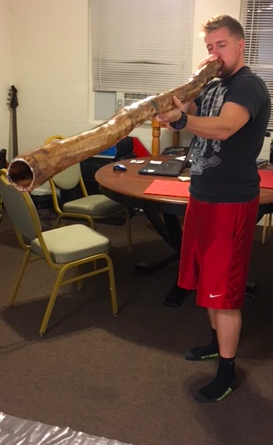
img_8778Adam’s technical bent is balanced by a counter-cultural, spiritual vibe. He’s mostly vegetarian, practices yoga, campaigns against tossing cigarette butts, intones the didgeridoo he hand crafted, and studies Eastern religions. “People ask me all the time if I’m from California.”

Like all good sons of the South, Adam is well versed in the The Bible, a subject I never tire of discussing with people across our land. He explained how, even though he’s no longer a strict believer, The Bible is still holds a unique position among texts. “Shakespeare may be inspired writing, but it doesn’t have near the scope of The Bible. The Bible tells a great story and it outlines how we are supposed to live and it describes a future. If you believe in it, it includes everything you need to know.”

screen-shot-2016-12-24-at-11-05-24-am screen-shot-2016-12-24-at-11-05-44-am

But even the scope of The Bible falls short of the magnificence Adam and I encounter in The Universe. Humans are simultaneously insignificant among the stars and remarkable in all that we can conceive. As we contemplated bursting nebulae and collapsing galaxies Adam looked beyond Christianity’s primary text. “Ancient Buddhists believed that the sky was filled with gods that expanded and then contracted to sleep. How did they know that?”

How will we live tomorrow?

img_8777“I was just watching Cosmos. We have to have something dramatic to force ourselves to reevaluate how we live. We will have to have a disaster to take us to the fundamentals so we can start from scratch and restructure society from the ground up. By then I hope we will be living on other planets. I’m hoping to be part of that transition. I want to be an astronaut; I am getting there by first being an argonaut. I give us two generations until we live in space.

“Commercialization is powerful. Why do so many people thank we need so much stuff? I haven’t had a TV in six years. I watched too much as a kid. I fear addictions; I was addicted to TV. Someone asked me my biggest fear and I said, ‘dying before I make an impact on the world.’ But really, I’m afraid of an addiction. Actually, my biggest fear is a bar of soap. I figure it’s because my mom put one in my mouth when I was a kid. I cannot stand to touch a bar of soap.”


Posted in Responses | Tagged , , , , , , | Leave a comment

Profile Response: Bethany and Dave Garth Montgomery AL


HWWLT Logo on yellowThere’s nothing more rejuvenating than spending time with kindred spirits, folks with whom you don’t have to edit or explain because we’ve had so many common experiences. We can talk in shorthand and find humor in events that leave other people puzzled.

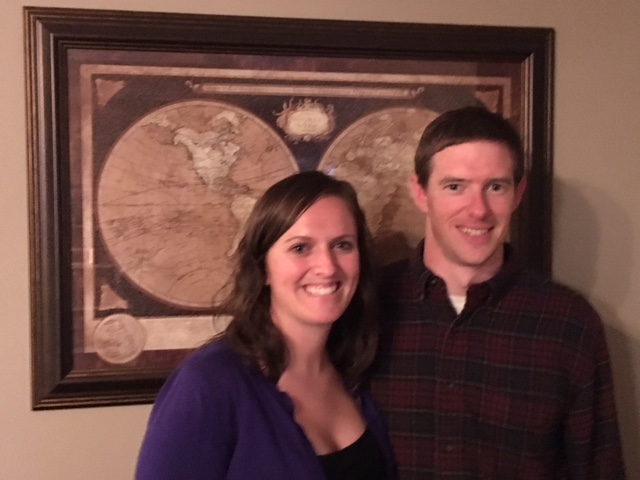
So, it was quite a treat to spend an evening with Bethany and Dave Garth on the day I rolled over 20,000 miles. In 2011-2013, the young couple logged over 22,000 bicycle miles on a worldwide trek that encompassed four continents and too many countries to list. To be sure, their experience – more camping, cross-cultural hijinks, and periods of lingering in favorite places – has different parameters than my journey’s pulse of continuous movement, intentional interactions and couchy creature comfort. Still, the fundamental joys of bicycle touring are the same regardless of terrain or language. As Dave put it, “There’s something profound about showing up in a place on a bicycle.”

east-coast central-america south-america

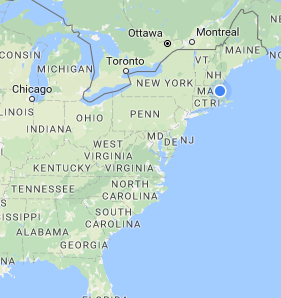
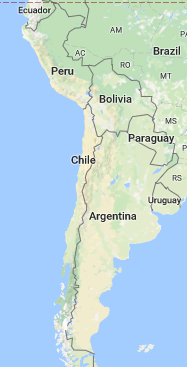
The couple wanted to travel the world and they wanted to have children, and decided to do it in that order. They quit their jobs, took a train up to Maine, cycled to Niagara Falls and down the Appalachians. They flew to Guatemala, cycled Central America, flew to Patagonia, cycled up the Andes to Peru, flew from Quito to Oslo. “Going from Peru to Norway was a shift in every respect.” They meandered through Europe to Istanbul, flew to Hong Kong, toured Southeast Asia to Singapore, flew to Vancouver, and pedaled back to Alabama.

europe se-asia west-coast

Now Bethany and Dave are on an adventure of a very different sort – raising two young children. Some days the perils of crossing rivers on rickety rafts in Laos or waking up to frozen chains in China seems less daunting. But each has its unique rewards.

How will we live tomorrow?

img_8710“With purpose.” – Dave

“I will do the next right thing. My new position as Director of our non-profit is a little overwhelming. I keep reminding myself to just keep doing the next right thing. I’ve read some of your blog, and no matter how people respond, I come back to, if we all just do the next right thing we’ll be all right.” – Bethany


Posted in Responses | Tagged , , , | Leave a comment

Profile Response: Chip Spencer, Marion Junction AL

HWWLT Logo on yellow‘A society grows great when old men plant trees whose shade they shall never sit in.’ This Greek proverb is painted on one wall of the greenhouse at Spencer Farm, next to a map of the world illustrating the home countries of WWOOFers who’ve worked there, their signatures and painted handprints.

Chip Spencer has never lived more than fifteen miles from this spot. He explains how the world comes to his door. “We got happy and content living simply, so we started sharing. We began having teenagers stay with us, then had an intern, now we’ve had WWOOFers for three years. Being sustainable farmers, we cannot leave the farm. Through the WWOOF program, the world comes to us. My children wouldn’t be the independent, smart people they are if they weren’t exposed to WWOOFers. They are the reason I am optimistic. What you found out at age 58, and I found out at 45, they are finding out in their 20’s.”

img_8682But I’m getting ahead of the story, just as Chip does when he walks his farm, more interested in describing his latest endeavor than how a measly 160 acres of over farmed and neglected Blackbelt land became a showcase for small-scale, profitable, sustainable agriculture.

Chip had an excavating business in Marion; his wife Laura was a school teacher who liked horses. Business was good so they started looking for twenty acres or so to raise a few horses. Chip heard about a foreclosure; more land than they needed, but at $335 per acre, a bargain they could not resist. “I had the tools and the desire to make this place work.” They wire cut access from the country road, hauled mounds of trash locals had dumped over the years, and nurtured the bald soil. They built fences and pens, eventually a barn and a house. They worked their jobs all day and built their place nights and weekends. Along the way they had a child, then two.

“Fifteen years ago, we had two toddling children, they had some allergies. One night our son almost died. That was a pinnacle experience. Your question was the one we were trying to answer when we changed the way we lived. I was busy working hard to make money for school, for shoes, for food. My kids only wanted my time and attention. Nobody was getting what theyimg_8689 needed or wanted. We decided to focus on our environment and our health. We began to grow our own food. Everyone’s health improved.”

Chip quit his business to focus on the farm, a dubious proposition for a young man with two small children. “My plan was, if we don’t have to spend money, we don’t have to make money.” They started farming for themselves: chickens and pigs and cattle and gardens. They grew enough to sell. “We still need some money; this place can’t give us salt.” They rejuvenated the land, putting more nutrition into the soil than they removed. Planting trees.

Chip’s focus is local, but his perspective is global. “Forty-one percent of the economic input of Perry Country occurs once a month – that’s how much this county receives in direct federal assistance. Once a person swipes their EBT card at Wal-Mart that money has gone to Arkansas. If we can help people spend that money here, it will stay in the local economy.

screen-shot-2016-12-07-at-6-42-38-pm“The average family of four in the United States will contribute the comparable amount of greenhouse gas as 2500 tress will absorb. So we planted 5,000. There are trees all over the farm. As they planted, and prospered, and appreciated their relationship to the earth, Chip decided to celebrate and give thanks by planting the world’s largest peace sign. “We are twelve miles from Selma, we need to show the world that peace can exist here. Chip planted 59 cedars over seven acres at 43 foot intervals. Cattle graze in and around his work of art and hope.

“We do not get up in the morning and go to work. We get up in the morning and we live.”

How will we live tomorrow?

img_8685“Sustainably.

“To be sustainable we have to live simply. We have to learn to cut back, that cutting back can increase the quality of our lives.

“I was chasing the wrong thing, making good money, buying the things I thought I was supposed to have. But something was missing. I didn’t figure it out until I was in my forties; living a simpler life with the people I love the most. Less is more.”

Posted in Responses | Tagged , , , , , | Leave a comment

Profile Response: Natalie Butts-Ball, Auburn Rural Studio, Newbern AL

HWWLT Logo on yellowHale County Alabama is representative of many rural areas of our nation. The county’s population has fallen by fifty percent over the last century, and continues to decline. The tenth poorest county in Alabama has a median family income under $30,000; almost 30% of the population lives below the poverty line. Yet Hale County has something no comparable place can claim: Auburn Rural Studio.

Since 1993, third year architecture students from Auburn University spend one semester living, designing, and building in Hale County; the other semester in Rome or Istanbul. Although they may enjoy their European experience, they revel in grappling with design at its most fundamental level.

img_8666 img_8675

“Students don’t come here to change the community. They come to become part of the community.” That is certainly true for Natalie Butts-Ball, who came to Newbern ten years ago as a student, stayed on as an intern, left for a stint in a New Orleans architecture firm, and then returned to Rural Studio with her husband. They are raising their family in a place with a satisfying pace. “In an isolated place, you’re always busy but not too stressed.”

img_8669Auburn Rural Studio problems are too modest to even register among the design challenges students encounter in most architecture schools. Instead of designing a community center, school, museum, or entire neighborhood as I presumptuously did in school, students at Auburn Rural Studio tackle simple projects in great depth.

The 20K project began in 2005: design and build a house that can be built on virtually any site for $20,000, materials and labor. To date, twenty different prototypes have been deigned, seventeen built. This year’s fifth year capstone students are designing iteration 21. Several students will remain beyond graduation to build the house that will, most likely, replace one local family’s trailer. The level of concern they invest in an 800 square foot, two-bedroom house that’s inexpensive to build, cheap to operate, handicapped adaptable, and functional, is impressive.

img_8668 img_8671

20K houses have evolved from trailer-proportioned tiny houses to high-concept volumes of questionable functionality to livable places that embody satisfying architecture. Carly, one of the students, said, “When you build a tiny house you radicalize the way people have to live. People don’t want that.”

“There are other design-build programs, but we are the largest in terms of scale and number of projects.” In addition to the 20K project, another group of students is renovating a former medical office / town hall in Faunsdale as a community center. Meanwhile, this semester’s third year students just completed framing a house for a local resident. They will install the roof joists before semester’s end, then fly off to Europe. In February, students returning from Rome will complete the finish work. After studying the Pantheon and the Coliseum, they will try their hand at siding.

How will we live tomorrow?

img_8672“Funny to think how your answer changes over time. I thought one way as a student. Now, as a parent, my thoughts are different. And our politics are so divisive. Post election, there’s a lot of wounds to be healed on both sides; it doesn’t seem to be going away.

“I hope we spend the future taking care of each other and the world we live in.”


Posted in Responses | Tagged , , , , | Leave a comment

Profile Response: Rosalie Gould, McGehee AR

HWWLT Logo on yellowRosalie Gould has striking grey hair, perfectly cut, clear skin and strong features. She is a handsome woman for any age. At 91, Rosalie Gould is a marvel.

Rosalie’s family emigrated to the Arkansas delta from Italy in 1895 when a priest brought twenty families to Lake Village to build the railroads. When she was six her father moved the family to a farm in Tillar, where the other school children had never seen an Italian or a Catholic.

imagesRosalie married a man with a heart defect. In 1955, news of an innovative surgery drew them to Johns Hopkins in Baltimore. Rosalie figures the procedure gave him ten more years, though he died in 1965, leaving her with three children and a farm in Rowher, near site of the former World War II Japanese-American Internment Camp.. “Joe bought 1,000 acres of good land three months before he died. We cleared it ourselves. I’ve just been working all my life. I’ve had some downs, but if anyone hears me complain, they can wallop me upside the head.”

Rosalie moved the children to the nearest big town, McGehee, and got involved in that community. In 1976 she met the young man running for Attorney General, Bill Clinton. “When you talk to Bill you think he’s the smartest man in the world. Then you turn around and think, now what was that about?” The two have enjoyed a long relationship; Rosalie considers him a friend.

screen-shot-2016-12-23-at-9-28-10-amIn 1983 her daughter Lie suggested Rosalie might enjoy being mayor. It seemed a fun idea. Rosalie filed the papers, ran against “three fine men” in the election and won. “I enjoyed it, but I got in a lot of trouble. We had a police force that was not the best; they didn’t like me.” But the voters liked her. Rosalie served until 1995.

During Rosalie’s tenure, the monument at the Internment Camp up in Rowher was not well tended, so she sent a maintenance crew up there every so often. She began hosting Japanese-American visitors for lunch. They gave her keepsakes from the camp, including artwork created by the internees. Rosalie was impressed by these quiet people. “They do not hold anything against the government. They lost face because they were considered traitors. I tell them they should stand up and say, ‘Yes, we were in the camps, that was our part in winning the war.’ I have learned so much from these people and their outlook on life.”

In 1989, after the railroad consolidated and the depot sat empty, Rosalie suggested the town turn it into a museum about the interment camps. The people of the Delta were not ready for that. Rosalie received hate mail, even death threats. But she continued to champion the idea of honoring the Japanese-Americans who lived in the Delta against their will.

screen-shot-2016-12-23-at-9-32-57-am screen-shot-2016-12-23-at-9-26-36-am

Time passes. Rosalie’s art collection was appraised at over $1 million. She donated it to the Butler Center for Arkansas Studies in Little Rock with one stipulation. “Any time any descendent of any internee visits, he can see and hold any piece in the collection.”
Money gets appropriated. Three years ago, McGehee turned the depot into a museum honoring the two intern camps in Arkansas.

But not all wounds heal. Rosalie will not allow any of the art entrusted to her to be displayed in McGehee. She speaks highly of the effort, though she’s never stepped foot inside the museum. I am confident she never will.

screen-shot-2016-12-23-at-9-29-08-am screen-shot-2016-12-23-at-9-31-31-am screen-shot-2016-12-23-at-9-32-17-am

“When we make mistakes, atone and learn from it.” That is what Rosalie learned from Japanese-American Intern camp descendants. But it is difficult to apply to the hate she received from her own neighbors.

How will we live tomorrow?

img_8587“I have a dim view of what’s going to happen. I’m 91 years old. The two or three generations after me are the ‘me’ generation. They want instant gratification. First, they want a nice house, lots of stuff, and when that doesn’t satisfy they pick up marijuana. They are not satisfied.

“Last year I was asked to speak to the seventh and eight grade. Half of the children were asleep, the other half on their phones. I quit talking and left.

“There are good things. Some young people are giving their lives to help others. They are a ray of sunshine.”


Posted in Responses | Tagged , , , | 6 Comments

Profile Response: Cindy Smith, Tillar AR

HWWLT Logo on yellowDinner with Cindy Smith at 43 Grill is a lively affair. As Public Relations Director of Delta Resort and Spa, she knows everyone in the place. Between introductions she spins great stories. And there’s a third presence. Though he was not physically at our table, Cindy’s husband of 35 years, Don, is always on her mind and integrated into her conversation.

When the University of Arkansas coed fell in love with the quiet hunter and farmer she followed her heart back to his roots in McGehee. “Rather than think I didn’t like small town life, I decided to love the life I had. I got involved in my community and set up a shop.” Cindy owned a gift shop in McGehee for 27 years.

images-1Five years ago, after their children were grown, Cindy retired – sort of. They took in another child for a few years and guided him toward adulthood. Then Cindy became one of seventeen Commissioners of the Arkansas State Recreation and Travel Commission, representing the Delta, an area whose recreational appeal is not immediately obvious. Then Delta Resort asked her to spearhead their PR efforts.

Delta Resort is different from say, Yosemite or Miami Beach. Cross a deserted railroad bridge and pedal two miles of straight, flat gravel road to a hotel and clubhouse on a spit of dry land surrounded by marshes that ducks love. The Arkansas Delta is the nation’s premier duck hunting region, and Delta Resort was made for them. During duck season, a hunter can pay $650 per day for an all-inclusive experience that includes lodging, guided hunting, retrieval, and cleaning.

imgres-1 images-2 imgres

Cindy’s job is to broaden Delta Resort’s appeal. She facilitated the 2016 Olympic shooting trials here, and is excited about having Georgia Pellegrini, author of Girl Hunter, lead an adventure weekend for female hunters.

Not that Cindy hunts. That’s Don’s world. “I’ve sat in the deer blind a few times, but hunting is his thing. I’ve told him he can never leave me for another woman because she hunts, since he’s never even tried to teach me.” She laughs and I realize that is a very unlikely prospect. A sound man would never leave such a dedicated wife.

How will we live tomorrow?

img_8601“It’s a weird question. I hope that people will be kind. That’s how we have to be; and with conscientious effort to help others. That’s how we get our own happiness.”


Posted in Responses | Tagged , , , , , , , , | Leave a comment

Profile Response: June Hardin, Bryant AR

HWWLT Logo on yellow“These are sinful. They taste so good you feel you’re doing something wrong.” June Hardin, poet, daughter, sister, citizen, and pecan waffle lover savored every bite of her syrupy Waffle House breakfast while we talked.

Ms. June is a beautiful communicator, a woman of flowing hands, clear voice and precise vocabulary. Her words burrow into the personal deep and then soar to universal pronouncements. During our hour together Ms. June cried three times, but laughed even more often. She is simultaneously in touch with an expansive range of emotion and a profound capacity to express it.

imgres-2“My daddy must have been there sometimes; there were 17 kids. But my parents hated each other more than they loved us. He was a preacher in Louisville. He had a small congregation; they were his true family. His real family didn’t even go to that church. He was a good man, an honest man, just not a good husband. When his church found out about us they drove him down. He died broken.

“I know what it is to be unloved, and it pains me. I forgave my mother when I realized she didn’t hate me; she hated him.

imgres-1“I grew up in Lousiville during busing. I was in bus accidents three times; people cut the brake lines. Then I got to school and I was assigned to tutor a little white girl. Our hearts are all the same color.

“I don’t care what your great grandfather did to my great grandmother. This country has become so toxic I can’t get into this racist thing. If you want to talk that way, go away. Don’t go away angry, just go away. When I was sick a white woman came to my aid, drove me, cared for me, while people of my race did nothing. What’s important to me is not beating the past; it is the intangibles of today.

“Nothing is new. These lifestyles are not new. We’ve had gay people forever. So why is it so divisive now? My brother, a drag queen died at age 28. The gay community embraced him. My own family did not.

imgres-3“Five of my brothers have died. About ten years ago my father died and my sister died. I needed to leave Louisville. A friend invited me to Arkansas. I was 48. Here I still am.

“The pain of the past is always present. You have to decide whether that can help you in the present. If you own the past in front of you, you own it. If you bury the past pain, it is still there. It owns you.

“I graduated with a degree in psychology in my 50’s. Psychology is everything. I learned it to take care of me. You have to find the balance – through education, or drugs, or talk. I love being in my 50’s because I’ve pistol-whipped my demons. I own them.

images“I’ve learned I don’t mind just hanging out with me. I get lonely sometimes; I prefer it to stirring drama. When the vertical is centered, then the horizontal will spread and connect around you.

“Mountaintop thinking is how you gain perspective. You are getting a mountaintop view right now on your trip. When you follow your passion, you are at the mountaintop view. Altitude changes your attitude. When you get high above the fuss and muss you can see so much.

“America is a great nation and things get righted over time. But we will never right things by flames and stoking. Since when do we all have to agree anyway?”

How will we live tomorrow?

imgres“The toxicity that has gripped this nation will have a long effect, but the roots of decency that underpin this country will win out. The folks making the noise are not the majority; the majority will win out in the end.

“We live in the age of dissension. If you only love whom you agree with, that’s not love. Love transcends dissension.

“The only way to change is to shut down certain communications. We are phonetical creatures. We learn what we hear repeated. But preserving decency and honor by stopping to listen to messages that are harmful, that’s not intolerant, it’s protecting certain truths. Sometimes you have to cut communication to rewire your thinking.

“Material desires are fleeting. My hope for tomorrow is that people will learn that material things cannot bring contentment. We are far form that understanding.

“How will we live tomorrow? A lot more guarded, a lot more uncertain.”
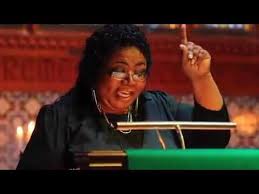
 

Posted in Responses | Tagged , , | Leave a comment

Profile Response: Dean and Terrie Turner Little Rock AR

HWWLT Logo on yellowOne of my favorite songs to sing along the road is “You Made Me a Pallet on the Floor.” The traditional blues/folk tune sounds great at full throttle into the wind and always reminds me of the many, many gracious hosts who have welcomed me into their homes. Some have indeed given me a pallet on the floor; others have cossetted me in guest suites with fully stocked kitchens. Either way I have come to appreciate the generosity from which each person shares what little or largesse they have with a stranger.
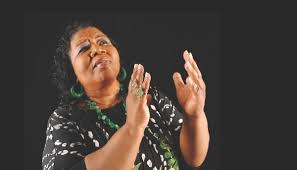
imagesBut no host can compare with Terrie Turner, a marketing specialist from Little Rock four degrees of separation removed from me; now a solid friend. Terrie did not just invite me to her home; she connected me with three other hosts in the area and enabled half a dozen conversations with fascinating people. I stretched my stay in Arkansas’ capital because, thanks to Terrie, it proved one of the most fertile places to talk about tomorrow.

Terrie was homecoming queen in McGehee, a railroad town in the Delta. She left for college in Dallas, and like at least half of the folks I’ve met in Arkansas, thought she’d never return. Terrie met Dean Turner, a fellow Arkansan who one worked on Bill Clinton gubernatorial campaign, in Dallas. They lived there many years, and then moved to Lakeland, Florida to help out Dean’s son.

images-1Terrie liked Dallas well enough, but she appreciated Lakeland in a different way. “I had never been anyplace like Lakeland. People had indoor-outdoor carpet. A neighbor invited us to Thanksgiving, and invited homeless people as well. Those things never happened in Dallas. I know a woman in Dallas who renovated her kitchen before she entertained.”
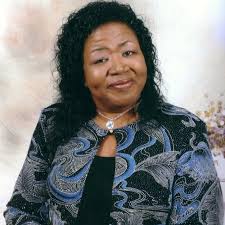
Four years ago Dean’s mom needed care, so they moved to Little Rock. Hard to believe Terrie’s been here that short a time. She knows everyone in Little Rock’s world of philanthropy. She applies thirty years of marketing savvy to raise money for educational, hunger, and children’s organizations. Then she rolls up her sleeves and gives her time to those causes.

imgres imgres-1

Yet when a stranger on a bicycle showed up in town Terrie invited him in, served tasty hors d’oeuvres, and treated him tto he biggest steak of his trip at Doe’s, a Little Rock institution. We still got home before too late because Dean had to get up at five the next morning and go to his prison ministry before work.

In a world filled with good and generous people, Terrie and Dean Turner are extraordinary gems.

How will we live tomorrow?

“By the grace of God. Economically, security, Biologically, there will be dramatic changes, but it will be okay.”- Dean

“Who is ‘we?’ When is ‘tomorrow?’ It depends on the choices we make today. Since I heard your question, I’ve been thinking about 2 Chronicles 7:14: ‘If my people, who are called by my name, will humble themselves and pray and seek my face and turn from their wicked ways, then I will hear from heaven, and I will forgive their sin and will heal their land.’

“The destruction of our planet goes back to the family unit. The violence in our society is no worse than it was in Biblical times. The family unit was more intact in an agrarian society. The industrial revolution deteriorated that. Then mom went to work and kids didn’t get raised by mom and dad. It’s a huge crisis that leads to poverty and less of a moral compass.

“Our government in many ways has been giving out fish rather than teach people how to fish. That leads to the sense of entitlement that’s generational.

“The church’s role has been to minister to the ill, feed the poor and visit the elderly. How many are focusing on that?” – Terrie


Posted in Responses | Tagged , , | Leave a comment

Profile Response: Rhonda Sanders, Arkansas Food Bank, Little Rock AR

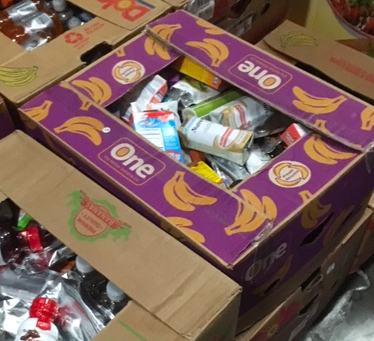
HWWLT Logo on yellow“This is a concept of transferring food from people who have too much to those who don’t have enough.” Rhonda Sanders outlines the basic premise of the Arkansas Food Bank as she tours me through the 76,000 square foot facility that includes a bulk warehouse, a refrigerated warehouse, community rooms, clean preparation rooms, volunteer work spaces, and a small store. Sixty-five employees and over 10,000 annual volunteers accept food from a variety of sources and then store, sort, repackage, and redistribute it. Five AFB trucks deliver 25 million pounds of food to food pantries in 33 counties throughout central and southern Arkansas.

img_8516 img_8520

I appreciate the effort, as well as AFB’s focus on using its $8 million budget ($21 million factoring donated food value) effectively. On the Monday after Thanksgiving, coming off the busiest week of their year, the place hums with quiet efficiency. However, I cannot escape the sense that AFB is yet another lesson in how the United States shuffles ‘stuff.’ So much food; most of it recently available for retail purchase, some donated in food drives, about 10% of it USDA commodity; is now transported and handled and transported again in a secondary, ‘post-consumer’ process.

screen-shot-2016-12-22-at-7-15-23-amArkansas Food Bank is a marvelous facility that fills a real need the way our society is structured. But isn’t it too bad that those who require food – all of us – can’t simply get it, wholesome and fresh, at our local market?


How will we live tomorrow?

img_8524“How will we as a society live tomorrow? Am I having a positive or negative day? The sense I get at this point in time is that we will live selfishly.

“We’ll always get volunteers, but they are more selfish. They want to determine what they do, in a nice space, with a snack and with the friends they’ve made. Even when volunteering, it’s always self. People don’t look for a way to add value; they look for what’s in it for them.

“That’s how society evolves. When you get to the point of more comfort than discomfort, then it starts to disintegrate. It’s the cycle of life.”

Upon reflection, Rhonda clarified, “This is not an accurate depiction of my volunteers. I am very concerned about our society’s selfishness and how so many people are focused on their own comforts and their own gains. We live in a day and time where even those who give a lot slip into a mindset of giving only when it meets their needs. I find myself falling into that trap too often and I see it in others in many different situations like church, community and work. However, I cannot paint everyone with this broad brush nor can I judge others past some things that I see. We have so many wonderful volunteers and so many work very hard and have fun helping.

“Your question made me think of the future and my concern that we have to be vigilant to avoid selfishness and how quickly even good acts can be tainted with a bad attitude or less than perfect motives. This is true of so many people not specifically food bank volunteers. My response to your question was meant to keep me focused on avoiding selfishness first and then to challenge others to be aware of this slippery slope of selfishness and to avoid where it can take us as a society.”

Posted in Responses | Tagged , , | 1 Comment