Trip Log – Day 278 – Durham NC to Raleigh NC

to RaleighAugust 9, 2016 – Partly sunny, 85 degrees

Miles Today: 32

Miles to Date: 14,150

States to Date: 39

Our political and economic system is full of policies established with good intent that, over time, become tools that reinforce power and status quo. Consider zoning. Before the industrial revolution, the idea that work, commerce, and living were separate activities didn’t exist. Zoning was a noble idea to reduce urban density, bring light and air to dwellings, and separate people’s homes from noxious industry. Early zoning codes were a key element of the dramatic increase in public health we witnessed a century ago.

imgres-1 images-1

However, by the time Charles Erwin Wilson, Eisenhower’s Defense Secretary, announced, “What is good for GM is good for the country,” zoning had become a tool to reinforce economic stratification and promote an automobile-based economy. Compartmentalizing our lives became the norm. Daily transportation, most often by private car, became the link between segregated activities; a link that can consume an hour or more each way from home to office.

imgres-2

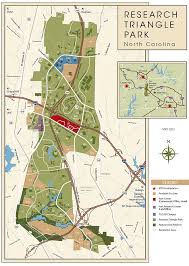
Today I pedaled through Research Triangle Park, perhaps the world’s largest parcel of single use zoning. RTP’s 7,000 acres contain nothing but wide roads connecting over 200 corporate office buildings and parking lots hidden behind trees, trees, and more trees. RTP started in 1959 to create business and research opportunities tied to the area’s three main universities: Duke, UNC, and NC State. It became famous during the 1960’s, when segregating our environment and promoting car travel was king. RTP gained cacheIMG_6560 when IBM transferred a large part of their operations there, though if you are true David Sedaris fan, you know his spin on a North Carolina youth with an IBM dad is not all perfection. At ten a.m. on a weekday morning, I encountered little traffic and no sign of the 50,000 people who work here. After driving a minimum of ten miles to their offices, they were snug indoors.

I don’t buy the idea that great ideas take place in a pastoral environment. Innovation comes from constant contact with problems, not in escaping them. The technology start up I visited yesterday is in bustling downtown Durham. Corporations at Research Triangle Park are big guns, long past nimble.
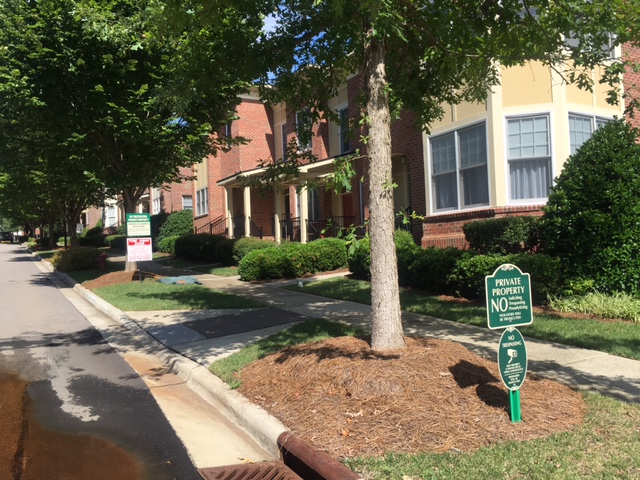
IMG_6562Perhaps the best thing that can be said of sixty years of ultra-low density, monoculture development is that there is plenty of room in RTP for infill. They recently carved out 100 acres, a pittance, to create ‘Center Park’, a new urbanism collection of upscale houses and stores. The first effort at a finer scale of zoning, to create a place rather then simply space. It isn’t much, but it’s a start.
 

Posted in Bicycle Trip Log | Tagged , , | 1 Comment

Profile Response, D’Amore Family, Red Bank, NJ

HWWLT Logo on yellowJoe D’Amore says tomorrow will not be like Happy Days. He ought to know. Joe and his family are excellent representatives of a contemporary family, and they don’t look anything like the Cunningham’s. Joe is Italian. His wife of 36 years, Karen, is a red-freckled Irish lass. Their adopted daughter Alex has Mexican heritage, her fiancé Doug is Germanic, and their eighteen-year-old son Christian is a copper-skinned blend of ethnicities.

Joe retired from a successful career as a chemical process engineer, Karen is a speech pathologist still teaching after thirty years. Alex is a video editor, Doug an IT guru, and Christian is attending culinary school, though his true passion is mixed martial arts. They all share the house near downtown Red Bank that Joe and Karen purchased shortly after they were married and have improved ever since. Alex and Doug, who will marry in October, recently bought their own house. The rest of the family will miss them when they move.

imgresJoe swears he will not die in the house he thought would be their starter home. A few years ago he even bought a lot on the water and planned to build their dream house. But ultimately he and Karen sidestepped the deeper debt that accompanies the trading up habit. Their nice though modest house provides them more financial independence than most Americans.

Joe, Karen and I are old friends who have sweet tooth’s in common. Alex, Doug, Karen, Joe and I sat around their sturdy dining room table eating chocolate covered pretzels, nonpareils, cocoanut patties, and taffy and talking about tomorrow. Our divergent points of view were as telling as the commonalities we found in our discussion. Then Christian joined us and spun the question in a completely different way. Perhaps we all had his carefree focus at age eighteen and just lost it along the way.

How will we live tomorrow?

Doug and Alex“We will do our best to make ourselves and our loved ones happy.” – Doug

“People are in silos. People are less sociable with our devices.” – Joe

“People need to find more commonalities and not focus on their differences. Our values are the same but their packaged differently.” -Alex

“The terrorism stuff is scary, but we are going to figure that out. When we were young, we had the atomic bomb. We survived that threat.” – Joe

Screen Shot 2016-08-05 at 8.39.42 AM“I don’t feel as hopeful as I did growing up. I don’t think the world is a safer place. I think terrorism will continue. I see us moving towards more violence and more attacks. The result is that I feel less hope for my children than I did at their age.” – Karen

“Every generation has its threats. Ours are not worse than any other.” – Alex

“You have to balance your love and your capabilities. There’s been a lost appreciation and respect for educators. Parents say, “It’s not my kid, my kid does nothing wrong. I’ve been in education thirty years. The onus is on the teachers. Kids are not held responsible.” – Karen

How will we live tomorrow?

Screen Shot 2016-08-05 at 8.40.08 AM“Live like we live every day. You’re one person, you’ve got one life; you’ve got one way to live. If you’ve lived it the way you want, you’ve lived well.

“The world is full of problems. You are just one person. There is no right or wrong way to live your life. Each day is a new day to explore, experience. If I died now I’ve enjoyed the eighteen years I existed. Living tomorrow is living any day just like your last. You don’t think about the little things. Take an ant. You step over it. But it has a system, a way of being organized, of raising new ants. Or a bird’s next. How many places does a mother bird go to gather that nest? You don’t think of an anemone or a starfish or a sponge on a day-to-day basis. We cannot know their lives.

“Tomorrow is like any other day, but thinking about how you live, it’s all about flow. There is life everywhere in everything. It’s too hard to comprehend reality. So you just give up and live it. That’s how you live tomorrow: you live today.” – Christian


Posted in Responses | Tagged , , , , , | Leave a comment

Trip Log – Day 277 – Oxford, NC to Durham N

to DurhamAugust 8, 2016 – Overcast, 90 degrees

Miles Today: 40

Miles to Date: 14,118

States to Date: 39

A day of anecdotes.

IMG_7466

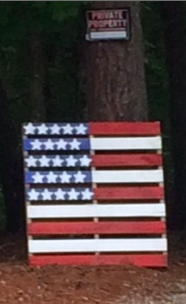
I see flags made from pallets all over rural areas.

imgres

The Federal prison at Butner is a campus, of sorts, very different from Duke’s.

IMG_7474 IMG_7472

Durham was once the Black Wall Street, a hotbed of African-American entrepreneurs.

IMG_7475

My fraternity brothers who founded 8 Rivers Capital have offices overlooking the Durham Bulls ball field.

Posted in Bicycle Trip Log | Tagged , , , | 1 Comment

Profile Response: Patrick Walsh, New York, NY

HWWLT Logo on yellowPatrick Walsh is Irish Catholic to the core; a literary man of deep sensibility who absorbs the marvel and futility of life at every turn. The fifth child of eleven, Patrick was raised in The Bronx and Staten Island. Patrick’s father died when he was sixteen. “That’s when I had to be a man, but I didn’t know how to be a man.”

Patrick kicked around for several years after high school and then studied literature at Rutgers. “I was full of Whitman and Kerouac. I had no idea how different America had become.” He spent four years in Barcelona, living as a musician and acting in American TV shows, then returned to teach at his former high school on Staten Island. “After one year I fled back to Spain. I felt like I didn’t belong in the United States, but I realized I didn’t belong in Spain either.” Patrick was drinking, a lot: ten Guinness’s a day he recalls. He needed to change his path, so he walked the 500-mile Camino de Santiago to clear his head.

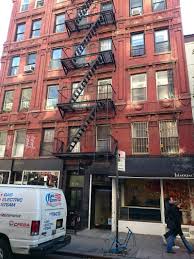
imgresHe returned home. A long relationship ended. Patrick feared a life alone, on a barstool. Then he met his wife Jean, an artist living in a tenement flat in the East Village. Now they live there together, with their eleven-year-old daughter. Three rooms with a bathtub in the kitchen, guitars and paintings hanging on the walls, only one door in the entire place.

Patrick teaches English as a Second Language at a public school in Harlem. Two of his brothers were New York City firefighters; two were police officers. “Teaching in the past ten years has become so difficult. Obama’s Race to the Top wants the best teacher in every classroom. It’s like Bush saying he wants to bring democracy to the Middle East. Who can argue with that? But that’s not what’s going on. We’re so burdened with student tests and teacher evaluations. The single person who most influences my job these days is Bill Gates. Who appointed him to dictate how we educate? It’s his money.”

imagesAlmost all of Patrick’s students are black; African-Americans and East African immigrants. “The two groups are so different. The Muslim children are true believers, very devout. The African-American kids have no direction. I don’t blame them. They were raised by corporate America.” They’re not interested in guiding people toward purpose or contentment; they just want to sell things. “When you look at the African-American community since 1620, the Black church was immense. Where is it now? What substitutes for it? The Muslim kids’ lives have form.”

Patrick has found shape and meaning in his own life by returning, in a fashion, to the Catholic faith of his youth. “In the years I wandered in a spiritual wasteland I had freedom but no form. That’s a dangerous thing. I realized that everyone who loved me, who helped me was catholic. I realized how welcome I felt in Catholic countries. Max Weber, in The Protestant Ethic and the Rise of Capitalism, wrote – now I’m being completely reductive – ‘when a Catholic sees a tree, he sees an entity in nature. When a Protestant sees a tree, he sees something that can be cut and sold. That is reflected in cultures. England is a cold country. Ireland, at the same latitude, is hot.” Patrick doesn’t fathom the church’s preoccupation with sex, but he believes Pope Francis is a great man and could lead toward meaningful change.

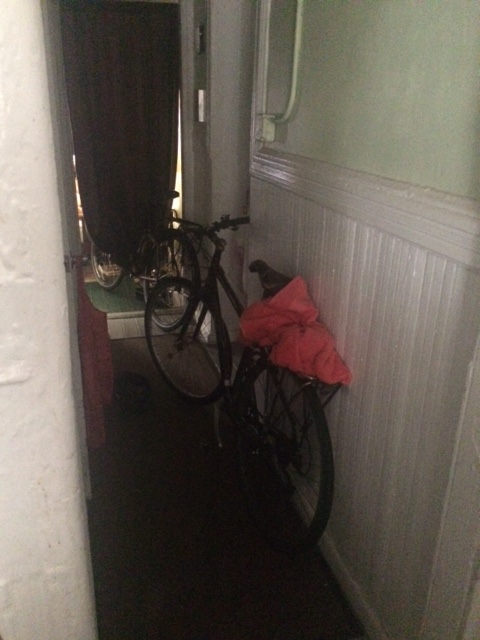
IMG_6940A few years ago Patrick’s oldest brother and his youngest sister died within a few months of each other. Patrick was thrust into the role of ‘man of the family’. “I did everything I needed, especially for my mother, but I was all bottled up. He found release this time not in alcohol or walking, but in bicycling. He rode the Erie Canal towpath across New York State. Flat against the tight corridor leading to his apartments door is a bicycle he uses to ride to work each day, and also as a relief valve to unleash his spirit.

How will we live tomorrow?

Screen Shot 2016-08-05 at 8.16.43 AM“I think it depends on what happens in the next couple of years. We could slip into barbarism. Trump is evidence of that, Hillary ain’t far behind. We’ve become a corporatocracy.

“Unless we develop a conscience, empathy, we cannot go on. Ecology is the obvious example of how we’re failing, but it’s in our social, economic, and cultural lives as well. We are distracted with gadgetry we think gives us freedom, but it does not.

“Obama is a Manchurian candidate, symbolically important but not real change. Bush traumatized this country with his wars and his lies. Then Obama brings on Larry Summers and introduces ‘Race to the Top. I felt betrayed. It was the same stuff, repackaged.”


Posted in Responses | Tagged , , , , , , | 2 Comments

Trip Log – Day 276 – Rice, VA to Oxford, NC

to OxfordAugust 7, 2016 – overcast, 85 degrees

Miles Today: 93

Miles to Date: 14,078

States to Date: 39

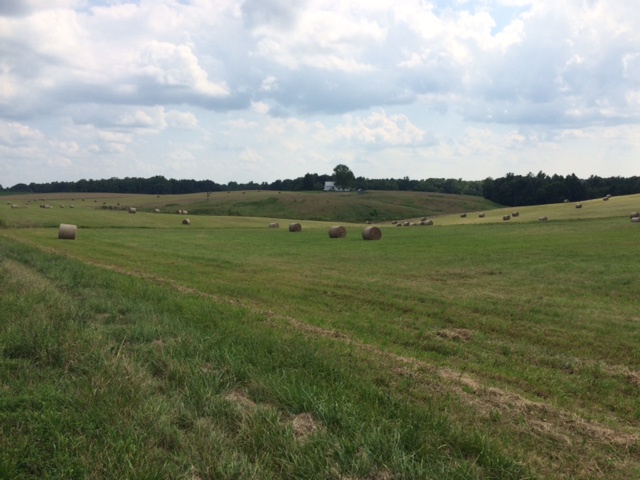
Overnight thunderstorms brought cooler air. I left early to get a jump on my long day; it was actually chilly in the long forest shadows. By nine I enjoyed a pleasant juxtaposition of cool breezes in shade, and warm sun when pedaling along exposed fields.

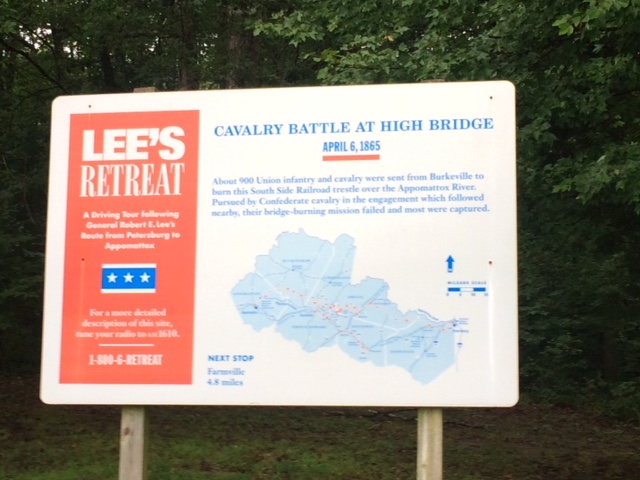
IMG_7451I rode along a portion of Lee’s retreat to Appomattox. The roadside is littered with almost cryptic historical markers. At some point in every depiction of every Civil War altercation are the words ‘the Confederates repulsed the Unionists.’ It takes close reading to decipher that they eventually lost.

Sunday morning 10:00 a.m. in rural Virginia: the most segregated hour of the week. I passed black churches and white churches and empty churches. No integrated churches.

Screen Shot 2016-08-08 at 8.56.27 AM IMG_7455 Screen Shot 2016-08-07 at 7.28.01 PM

My distance from urbanity continued to expand. The hills leveled out to swales; I travelled miles with nothing on either side of me but trees or tobacco. I detoured to Drake’s Branch to avoid a four-lane stretch of highway with a rumble-strip shoulder. The area has great street names like Genesis Road, Gethsemane Church Road, WPA Road (with electric lines), and Poor House Lane. Back on US 15 from Wylliesburg south is a swell ribbon of fresh pavement all the way to Clarksville.

IMG_7459By mid afternoon the heat was rising and the cicadas in the brush alongside the road made such a racket they invaded my headspace. After 68 miles I needed lunch and stillness, so nestled into Gino’s Pizza on Main Street Clarksville. Next time you’re in town, I recommend their steak and cheese sub with all the fixings, served on a roll made from pizza dough. Giant fans churned a breeze in the big empty space. Nascar blasted from the TV.


The line that divides Virginia and North Carolina is arbitrary but ancient. 36 degrees 30 minutes was established by King Charles I in 1665, with absolutely no knowledge of the geography behind it. That latitude eventually influenced the borders of eight states, as far west as Oklahoma.

IMG_7463Arbitrary though it may be, the line has sociological significance. As soon as I entered the Tarheel State, the trucks got bigger and louder, their tires bulged, their speed increased. I held my own, wishing that some cycling advocate might turn the grassy area between the highway and the railroad into a bike path. Until a parade of brawny guys in ATV’s came roaring up that strip, popping wheelies on every obstruction. Obviously, I am on the wrong vehicle for this state.


Posted in Bicycle Trip Log | Tagged , , , , | Leave a comment

Profile Response: Michael Naess, Orpheus Orchestra, New York, NY

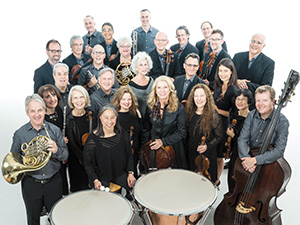
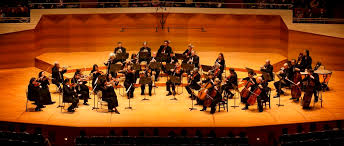
HWWLT Logo on yellowIn the 1970’s, a group of musicians with a radical idea about how to create music reached all the way back to the Greek God of Music, Orpheus, for inspiration. Over the last forty years Orpheus has become one of the world’s premier chamber orchestras. The thirty-two members, who may grow to forty or more for certain works, attribute their success to a singular feature: Orpheus Orchestra has no conductor.

Orpheus selects what it performs through a democratic process, and exchanges leadership for each piece among themselves. The members know who is ‘leading’ each piece, but the audience may not: no one stands in front with a baton. “Rehearsals are different from anywhere else. Any musician can stop, put up his hand and say, ‘I heard this at bar 18. How about we try this?’ At Orpheus, everyone is listening to everyone. You would never see a musician do that under Seiji Ozawa.”

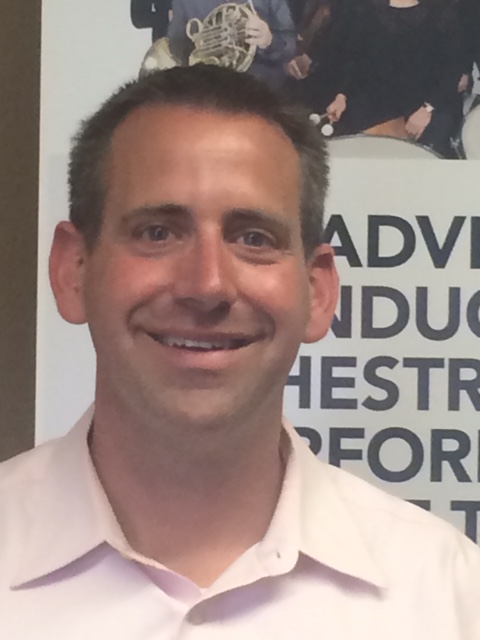
Orpheus_WebImage for CHMichael Naess, Orpheus’ Director of Marketing (mnaess@orpheusnyc.org), believes the Orpheus process is integral to their success and distinctive sound. “Look at Berlin or Vienna; it is the vision of one director. Orpheus is always about the ‘we’, not the ‘I’. Music is such a creative effort. We don’t want it to be limited by one perspective.”

Michael is a drummer and pianist by training with a marketer’s exuberance. He was a sales rep at Washington D.C.’s Kennedy Center, a subscription salesman in Toronto, and Associate Marketing Director at Carnegie Hall before coming into full bloom with Orpheus. He thrives in being part of an organization where the culture of the orchestra permeates through the Board and administration. “At Carnegie Hall, you get a program and you sell it. At Orpheus, you’re part of the conversation from the beginning. Everyone participates, everyone is heard.”
What are the constraints of this seemingly satisfying process? “It takes time; time that is worth every penny in additional rehearsal and coordination. Everyone understands that disagreements will happen, and they can be beneficial. It’s an ever-flowing process. When they perform the same concert program in fifteen different locations, the last concert will not be the same as the first.”

imgresOrpheus performs four concert programs a year at their musical home in Carnegie Hall and then tour to cities all over the world. Most concerts feature guest soloists; many feature commissioned works. “We like to work with composers like Jessie Montgomery, an African–American who grew up around recording studios. Her music does not correspond to any genre.”

Orpheus runs two educational programs that reflect their musical and organization strengths. Their distinctive organization has earned Orpheus WorldBlu recognition as a democratic workplace and enabled them to provide inspiration well beyond what most orchestras offer. The Orpheus Institute facilitates programs on collective decision-making for a wide array of organizations, such as IBM, where a group of musicians recently facilitated a workshop that included an open rehearsal. Participants witnessed how Orpheus’ collective process impacts the evolution of a musical performance.

imagesMichael, a runner preparing for his twentieth marathon this fall, usually runs from his Astoria home to Orpheus’ Riverside Drive offices. His most memorable marathon to date was along the Great Wall of China. “It’s all steps up and down and the air is poor, so no one has a good time. But you are running along one of the Wonders of the World.” He hopes to run Boston for his fiftieth marathon. Even among New Yorkers, Boston shines as the premier marathon. Michael’s also an avid AirBNB host. “I’ve introduced over 175 people to New York. I would say I do it 50/50 for the money and the experience. I have contacts all over the world. When I travel for marathons, I can meet up with them.”

Learning about Orpheus Orchestra prompts me consider the nature of leadership. We simultaneously want to be free and independent, and yet we clamor for the security of a strong leader. The Orpheus model has been in existence for almost fifty years, yet there are only a handful of conductorless orchestras. It takes courage to give up a fixed leader. We like to have them to guide us, and we like to have them as whipping boys for our complaints. Without a leader, we have more say in our lives, but no one to blame but ourselves for the outcome.

How will we live tomorrow?

IMG_6924“I think a lot more democratically. We need to learn more from different cultures. The price of a democratic process is, you have to have an open mind. Living with an open mind can only lead to good things.”


Posted in Responses | Tagged , | Leave a comment

Trip Log – Day 275 – Charlottesville VA to Rice, VA

to RiceAugust 6, 2016 – clouds and sun, 90 degrees

Miles Today: 70

Miles to Date: 13,985

States to Date: 38

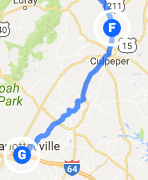
IMG_7434 I rolled under the I-64 overpass south of Charlottesville and climbed Virginia Route 20 toward Scottsville and Dillwyn. Over forty miles gradients became shallower, plantations became mere farms, suburban houses became old time bungalows, or mobile homes, or abandoned properties altogether. I was in the country.

IMG_7436

If we measured population increase and decay by area, larger tracts of our country are losing population than gaining them. Southern Virginia looks like so many places in the Mid-West and far West; the abandoned homesteads, shuttered gas stations and dwindling towns offset the new, mostly modular houses plopped down on five acres.

IMG_7442I continued on US 15, which is perhaps the least ‘improved’ US highway in the country: two lanes with little shoulder. But traffic was light and the courteous Virginia drivers treated me well.

Riding through Farmville on a late summer Saturday reminded me of so many other towns I’d seen on my journey: wide streets with no traffic, underutilized buildings and acres of parking. Heat simmered off so much exposed blacktop. A few souls walked the downtown sidewalk, though few stores were open. I hankered for an ice cream treat, but there wasn’t so much as a convenience store to provide Good Humor.

IMG_7443 IMG_7444

So I continued on to my hosts, who live deep in the woods about ten miles beyond town. All sorts of bugs I’d never seen landed on my sweaty legs as I pedaled along country roads perfectly scaled to bike travel. I arrived a bit early but Bryan, his wife Joy and their twin sons made me feel at home. They had been giving my question some thought before I arrived. Before I even showered and changed, we launched into tomorrow.

Posted in Bicycle Trip Log | Tagged , | Leave a comment

Profile Response: William B. Helmreich, Sociologist, New York, NY

HWWLT Logo on yellowWhen William Helmreich was a kid growing up in New York City, he and his father played a game they called ‘Last Stop.’ “We would ride to the end of the subway line, get off and explore the neighborhood. Once we’d completed the last stops of every line, we went to the ‘second to last stop’ and so on, getting closer and closer to the center of the city.” He walked the city many times in a casual way until, in 2008, he decided to take a systematic approach. He has walked every block of the United States’ largest city; 30 to 35 miles per week, at all times of day, in all seasons and all weather: 6,048 miles total, the equivalent of walking across the United States and back again.

“Riding your bike is good, but it’s not as good as walking. When you walk, you don’t have to dismount to interact with others. Driving is even more remote. A nice car driving through a poor neighborhood is out of place. When you walk, you look like you belong.”

imgres-2Bill realized that no sociologist had written a comprehensive book of all of New York City. Most sociologists focus on a discrete area and extrapolate. He decided to walk the entire city to get to the heart and soul of New York. “I study New York City because I’ve lived here my whole life.” Bill’s portrait of his hometown is The New York Nobody Knows: Walking 6,000 Miles in the City. The book has been a remarkable success; Bill now has contracts to write five more books – one on each borough.

“When you walk systematically, you are forced to confront every aspect of the city. People walk their relevant blocks. There are other blocks in the same zone that people never know.

images“Sometimes it gets boring and you don’t often find things, but you sublimate and let your mind wander. At the very least, it’s healthy.

“I didn’t have a strategy for interacting; I talk with people as opportunity presents itself. My idea is to engage people; I talk with them first. If you are an extrovert, it comes naturally.”


Bill had two criteria for evaluating which of his experiences to include in his book: things that he encountered often, which represent the pattern of the city; and things that were truly unique, landmark experiences.

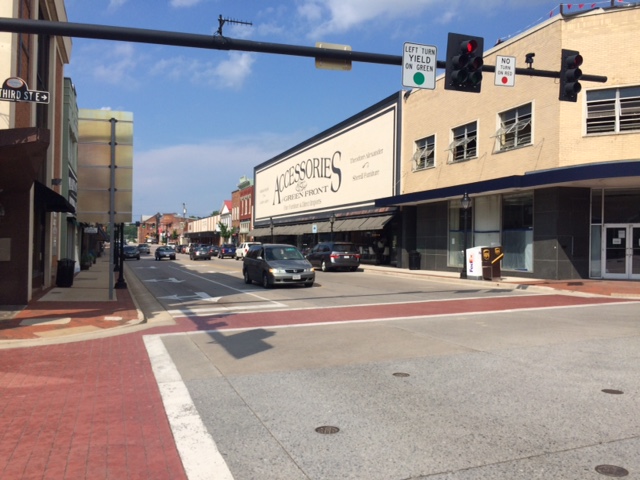
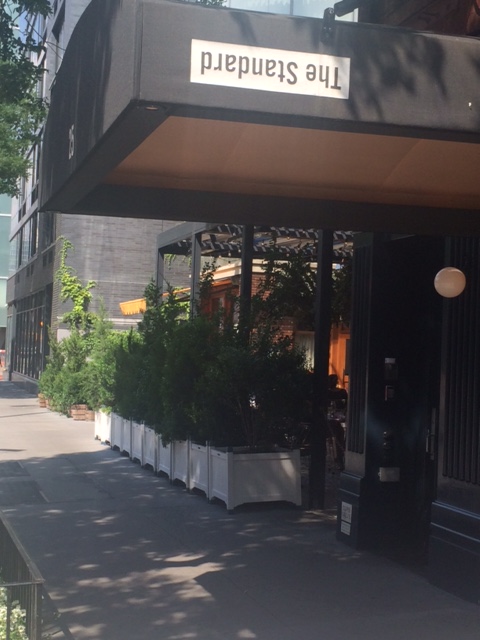
IMG_6916He directed me to visit the corner of Third Avenue and East Fifth Street in the Bowery, where the Hotel Standard is distinguished by its upside down sign. “Look at how the Bowery has been renewed. In the 1960’s, the Bowery was full of flophouses; the fancier the name, the worse the place.” In the spring of 1966 Bill stayed in a Bowery flophouse for five weeks to interview people in the area. “I specialize in interviewing people who are difficult to interview.”

“We haven’t solved our homelessness problem. It’s getting worse. The sense of disorder it creates makes the streets feel unsafe. If you walk from 34th Street to 14th Street, ten to fifteen people will approach you. This does not engender feelings of love. Ninety-five percent of the time nothing happens, but the fear is consistent.”

Bill is a savvy streetwalker, who dispels potential danger before it presents itself. He’s disarmed gang members by complimenting them on their jackets. When he can tell someone is going to approach him for money, he sometimes approaches him first. “My wife was worried about me, but I know how to walk the streets. No one ever bothered me in 6000 miles.”

images-1At CCNY, where Bill is a sociology professor, he plays a game with his students: “Tell me your street and I’ll tell you a story about it.” He doesn’t like lecture format and avoids giving prepared talks. “I like to get questions. I like dialogue and conversation more than presentation.”

“Since 2000 we’ve become a surveillance society. We value our security over our privacy. There are cameras everywhere. Crime is down because people are aware that cameras are documenting everything. I used a recorder for interviews and no one even worried about it. We have come to assume that recording is natural.

“In order for me to understand the city, I have to be part of the city. I’m not doing Statue of Liberty and the Empire State Building. I’m doing the hidden parts of the city.”

How will we live tomorrow?

imgres“In a city like this it is impossible to predict how will we live tomorrow unless you narrow the focus. Maybe we should attack it from a different direction. Who will live in the city? Will we be a city of elites or will we be integrated?

“I see three groups emerging: the assimilationists who seek common identity, the separationists who want national and ethnic definition, and the large middle in between. However you divide us by ethnicity or black lives matter of any other component, the trend is that we are growing into a multi-ethnic society. We are growing more integrated, not less. Within 100 years, we will be a blend.

“How will Black Lives Matter be resolved? I don’t think it will. It’s fifty years since civil rights. We have had a black president for eight years. The people who have been killed are at the fringes of black society. More and more of black society is included within our society. The 1/3 are outliers. Nothing we’ve done seems to work. The Great Society and affirmative action have not been able to touch this group. They are an intransigent part of our legacy.”


Posted in Responses | Tagged , , , , | Leave a comment

Trip Log – Day 274 – Charlottesville VA

To CharlotteAugust 5, 2016 – Rain, 75 degrees

Miles Today: 14

Miles to Date: 13,915

States to Date: 38

People are often surprised that I rarely check the weather. If it’s clear when I get up in the morning, I ride. If there’s a major weather event on the horizon, I hear about it. If I stayed put just because the forecast suggested showers, I would still be in Ohio.

IMG_7414

Today, however, was different. I woke to steady rain; only the second time on my trip. I checked weather.com and learned that it was not raining in Charlottesville and would not rain all day. Dubious data in the face of actual drops. The rain was real, but not really dangerous. So I pedaled off in my yellow slicker to visit Monticello.

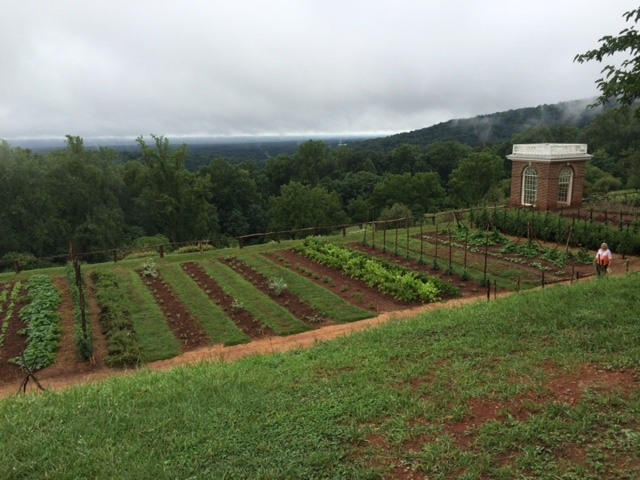
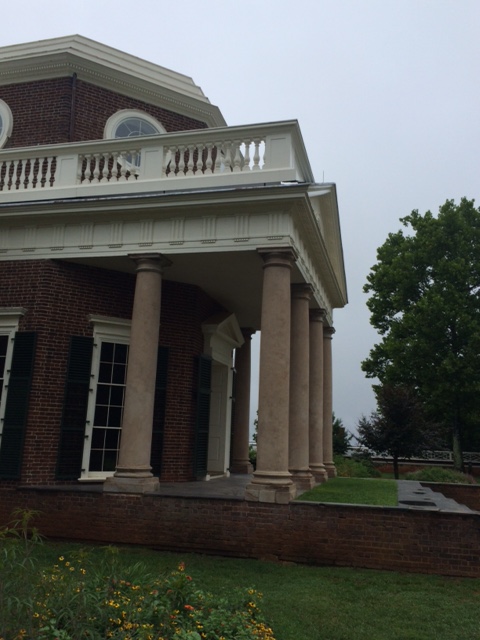
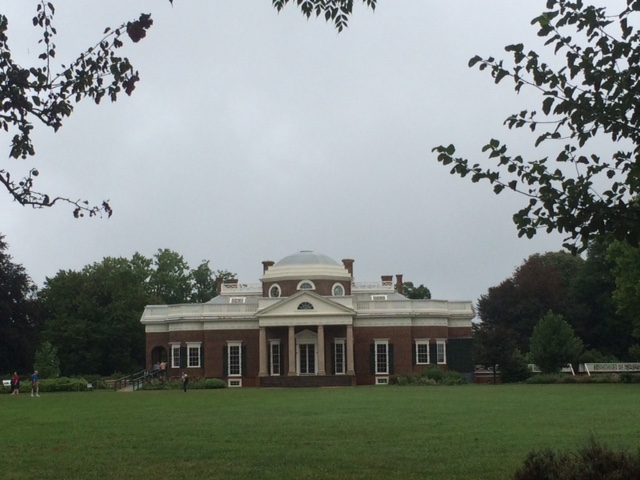
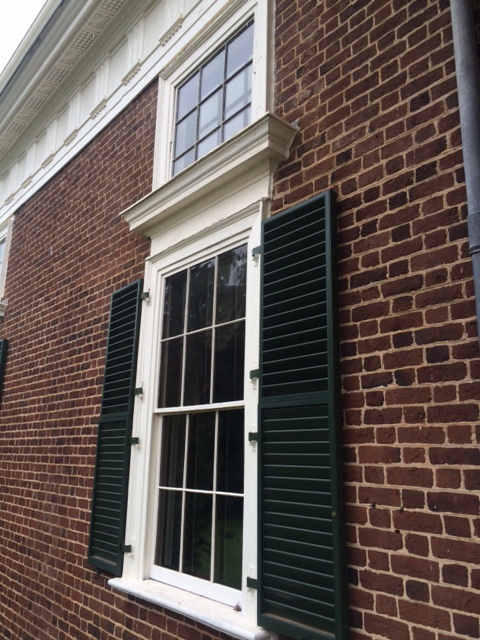
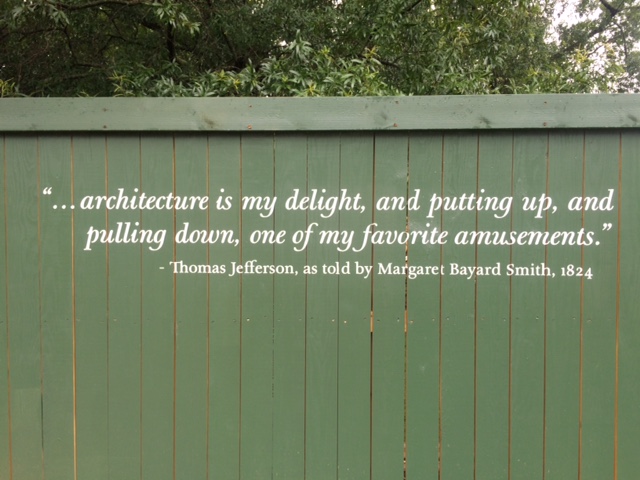
IMG_7422The full paradox of the South is on display in this incredible place constructed over the forty years of Thomas Jefferson’s public life. The man who penned the words, “All men are created equal” owned 600 human beings. That takes a lot of rationalization, which the guides and displays at Monticello weigh with great aplomb. I took the house tour and the slave tour (I’m not a garden tour kind of guy). Each guide was insightful, knowledgeable, and thoughtful.

I imagine the tours were very different thirty years ago. But since the Thomas Jefferson Foundation, which owns Monticello, acknowledged the descendants of Sally Hemming’s six children as part of the Jefferson family in 1998, it cannot shy away from the complex integrations that enabled this segregated society. Jefferson referred to his slaves as ‘servants’ or ‘family’. Every reference to every owned person today is preceded by the word ‘enslaved’.

IMG_7421 IMG_7420 IMG_7413

The amazing thing about Monticello is how the ideals of this great Enlightenment man, its magnificent architecture, the ingenious devices, careful planning, and breathtaking site all become secondary to the careful dance of how the masters and slaves coexisted. One tour guide closed with the Emerson quote: “If you put a chain around the neck of a slave, the other end fastens itself around your own.”

Two hundred years later, all that is best and worst about our nation can be distilled from Monticello: incredible resources, noble ideals, inconsistent opportunity, equality, and justice.

IMG_7431By two the rain had lifted and I rolled downhill to a sumptuous lunch at Michie Tavern, a southern food fest that included the best stewed tomatoes I’ve ever tasted. Sometimes I forget tomatoes are a fruit. I ladled them over fresh biscuits, sweet as any dessert. Bloated with history and sustenance, I returned to town and stayed in a nice alternative-vibe guesthouse.


Posted in Bicycle Trip Log | Tagged , , , , , | 1 Comment

Profile Response: Hillary Brown, New York, NY

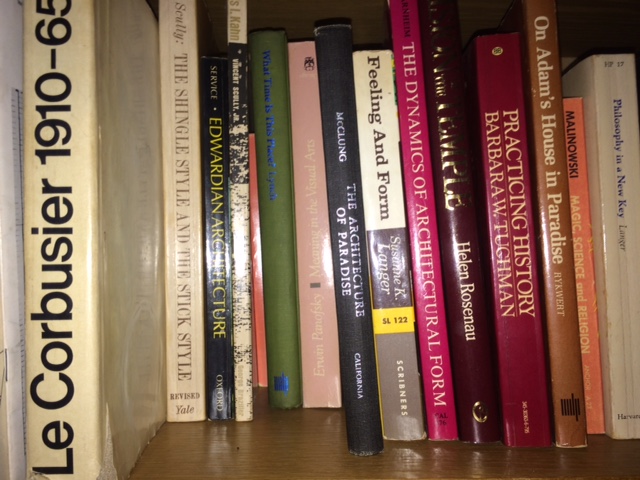
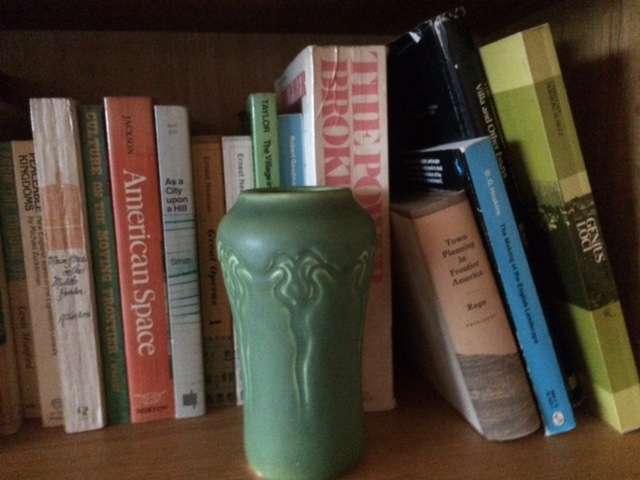
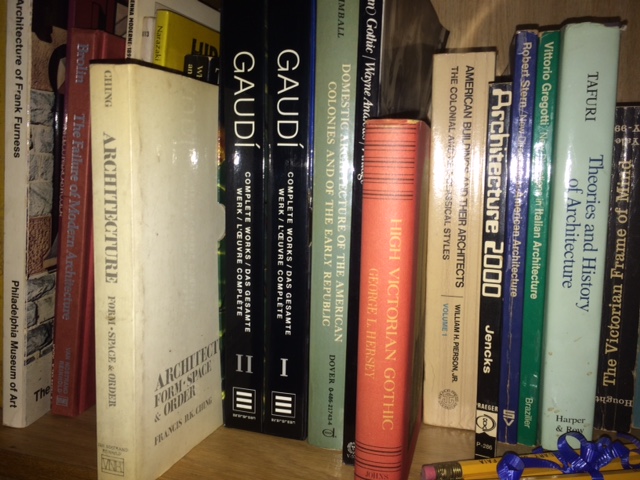
HWWLT Logo on yellowIf books reveal affinities among people, Hillary Brown and I are twins. I never met anyone whose library is so similar to mine. There is a certain logic in this. Hillary and I are both architects schooled during the period of participatory design. Though our careers took different trajectories, we share kinship with Kevin Lynch, Vince Scully, Frank Chang, and Robert Caro.

Actually, Hillary’s career has had several trajectories of its own. After graduating from Yale she worked in Edward Larrabee Barnes’ office back when discrimination against women in architecture was both quiet and ubiquitous. After he told her, “I am the idea, you are the pencil,” she decided to move out on.

IMG_6866Over the years she’s run her own firm – twice. She wore numerous hard hats in the NYC Department of Design and Construction under Mayors Koch, Dinkins, and Giuliani. She founded the Office of Sustainable Design, which wrote New York City’s High Performance Building Guidelines, and oversaw fifteen demonstration projects, all of which were built. Then she consulted with various US cities to develop their sustainability programs. Now Hillary is Director of the MS Program in Sustainability at the Bernard and Anne Spitzer School of Architecture at CCNY. “It’s my fourth career. I never would have thought I liked academia, but the students are so wonderful. CCNY started as a school for immigrants. You walk into the classroom and there’s not a Christian name.”

IMG_6867I met Hillary through a serendipitous Haiti connection. She and several of her Haitian students did some planning work there. They visited Grand Goave, the town where I contributed to reconstruction after the earthquake. Her book, Next Generation Infrastructure, addresses how to simultaneously reinforce our infrastructure while making it more sustainable and resilient. “The training I received in architecture school was less effective about how to build a building than how to identify problems, recognize patterns, and formulate solutions.”

IMG_6868Hillary understands that sustainability is more than matter of reducing consumption and boosting renewable energy. “The bleeding edge of sustainability is, ‘What is the new economic paradigm?’ Slowing down. Working less. Right now, it is only a theoretical model.” To move beyond theory will require a shift in consciousness. “We don’t even know who we are anymore. We on the coast are disconnected from the middle.” We have to acknowledge and appreciate our interconnectedness.

Hillary grew up in the Riverdale section of The Bronx. After living in a downtown loft for over thirty years, she returned to Riverdale two years ago where she lives in a 1950’s mid-rise with a gorgeous view up the Hudson River. “I had an interesting urban view from my loft, water towers and rooftops, but not a bit of green. I realized I needed that.”

How will we live tomorrow?

IMG_6870“I don’t have a revelatory answer, but I still get up in the morning and try to address the situation.

“The trajectory of the future is not in looking at the United States. It’s looking at how emerging societies adopt our values and our consumption.

“We shall live tomorrow if we get in stride with each other and align ourselves with the dictates of the planet. Or we shall not. It’s an either/or.”


Posted in Responses | Tagged , , , , , , , | 1 Comment