Profile Response: Pete Gibson, Imergy, Freemont, CA

HWWLT Logo on yellow“I was there at the end. I went to work one morning. There were no cars in the parking lot. My badge didn’t work. On the other side of the building, a media circus was going on.” Pete Gibson used to work for Solyndra, the solar energy company that went bankrupt in 2011 and defaulted on a $535 million loan guaranteed by the Department of Energy. The default provided highly publicized fodder for Republican critics of Obama’s $80 billion clean technology program. Four years have passed since the supposed scandal. No prosecutions were made. No evidence linked the energy loans to Obama campaign contributors; In fact, the clean energy loan program has turned a profit, though the media won’t give such good news much attention.

imagesBeing on the inside, Pete Gibson saw how a domestic solar panel manufacturer, even with federal loan guarantees, could not compete against China once the Asian behemoth decided to produce solar panels, undercut the market, let the competition fail and then dominate the market. Which is exactly what has occurred. The six largest solar panel manufacturers in the world are in China.

But Pete, a Berkeley trained chemical engineer who was an environmental consultant and worked at Seagate prior to Solyndra, doesn’t dwell on that anymore. Four years is ancient history for a guy who’s worked at Avaya and then Oclaro and now Imerya since Solyndra failed. There are plenty of jobs in Silicon Valley, but permanence is in short supply. “I want to work for a company that has a positive impact, but I’d like more stability.”

imgres imgres-1 images

imgres-3 imgres-2

Pete’s been at Imergy for eighteen months; it’s a good fit with his skills and social concerns. Imergy makes high capacity, large-scale commercial batteries. The units are 4’x6’x6’high. An initial application has been providing back-up power to cell towers throughout India. The batteries can be charged from an electric grid or solar panels. Although there is some power loss during transfer, Imergy’s batteries have zero power loss between charges. “Every product that has appeal needs a specific advantage. Ours is continual life because there is no loss in the reaction.”

I hope that this continual life transfers to a continual job for Pete, at least as long as he wants one.

How will we live tomorrow?
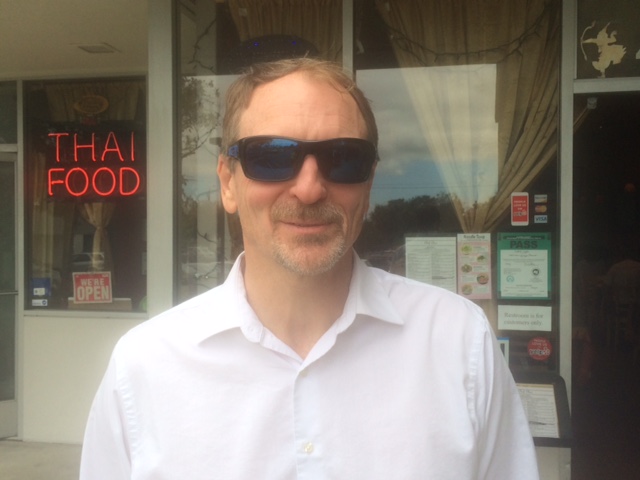
IMG_4776“The big concern about us and our planet is population as the root cause for sustainability. Population control is vacant from the conversation. China’s strategy for managing population is a model the rest of the world should investigate. Curbing birthrates is far preferred to decreasing population through wars and disease. As population and density increase, we all feel less connected to our community.

“We are being more and more isolated. Isolation allows us to be manipulated and controlled. The result is that we don’t trust each other.”

 

Posted in Responses | Tagged , , , , , | Leave a comment

Profile Response: Piaw Na, Sunnyvale, CA

HWWLT Logo on yellowPiaw Na invited me to his home for Sunday breakfast. Piaw, his wife and two sons live in a basic ranch on a quiet street, which in Sunnyvale puts it in the million-dollar range. Maybe more since the property has a grandfathered in-law apartment where his Mandarin speaking in-laws live. Piaw came to the United States from Singapore in 1988, “If you’re going to do computer science, you’re going to do it in the US.” Since graduating from UC Berkeley, Piaw’s been a software engineer with a variety of Silicon Valley start-ups. His cool and rationale temperament translates to every part of his life. When his physician discovered allergies in 2009, Piaw bought his house, stripped it of carpet and curtains, and created a hard-surfaced, minimum dust environment. When the drought became a concern, he pulled out his landscaping and installed artificial turf. Piaw’s lawn is surreally green.

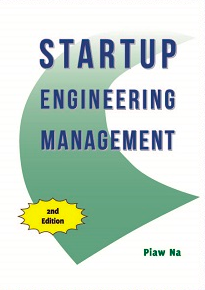
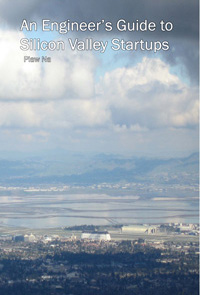
IMG_4758When Piaw develops an interest or expertise, he researches it, applies it to his own life, and then writes a book about it. So far, he’s written four books: managing start-ups; finding Silicon Valley jobs; hiring a financial advisor, and bicycle touring; how-to’s on topics Piaw has mastered.

Like all of us, Piaw’s perspective on the world is filtered through his particular experience. For over twenty years his focus was on start-ups and bicycle touring, the subjects of his first two books. He guided cycle tours for small groups. “Lonely Planet is useless for cyclists. It’s all about the destinations, not the places in between. Cycling is about the places in between.” His start-up work focused around San Jose, last generation’s epicenter of tech action. “Now, all the start-ups are in San Francisco. The younger generation is willing to take public transit and wants to live more densely.”

front_cover front_cover_thumbnail Screen Shot 2015-12-05 at 2.01.02 PM Screen Shot 2015-12-05 at 2.01.21 PM

When I asked Piaw about the real estate inequality in San Francisco he offered a fresh perspective. “There re 80,000 empty units in San Francisco, many bought by foreigners as vacation homes or to keep money out of totalitarian states. The US is the only major country that lets non-citizens buy and own property with all the same rights and guarantees as citizens.”

IMG_4757Now that Piaw is a parent and consultant, his focus is changing. He used to plan cycle trips every two to three years. “Parents become boring people. You can’t subject little people to what adults choose to do.” Although Piaw doesn’t know when his next trip might be, he showed off the four-seat tandem bike that the whole family rides.

Last year, Piaw was diagnosed as pre-diabetic. Since his doctor could hardly tell a man who cycles 10,000 miles a year to exercise more, Piaw lost twenty pounds. “Asians get adult onset diabetes at twice the rate of our Caucasian counterparts. The theory is that we had later exposure to industrialized sugar. But there are few studies. That’s a pet peeve of mine, why medical research focuses on the white male.”

Sounds to me like a good topic for another book.

How will we live tomorrow?

IMG_4755“It’s very clear that the future of transportation will be the electric car, not the bicycle. Density here will have to increase – we are too constrained. The only choice is more density. Eventually, demand will form for real public transportation.

“We will not solve the climate problem until it is too late. If you look at models in the past, they have been too conservative. We’re going to see an ice-free Arctic within a few years. Skiing will be obsolete in thirty years. The waters will rise in San Francisco Bay. I don’t believe for a minute humanity will do anything about it. There is too much pressure on developing countries to provide their citizens a middle class life.

“There are good things. By the time my son is sixteen the streets will be safer. There will be no geriatric drivers; driving will be automated. Taxis and truckers will lead in automated driving, insurers will see how safe they are, and charge much more for traditional driving cars.”


Posted in Responses | Tagged , , , , , , | 4 Comments

Profile Response: Kitty Miner, San Jose, CA

HWWLT Logo on yellowThe amazing thing about our post-industrial economy is how efficient we’ve become through increased specialization. The tragic thing about our post-industrial economy is that people get mired in such minutiae they feel disconnected from the big picture, if they even see it at all. This contradiction seems most stark in Silicon Valley, where people are very well paid to solve digital puzzles several degrees separated from human need. Which makes meeting Kitty Miner so refreshing. Kitty’s a Silicon Valley veteran with a sense of humor that helps preserve a broader perspective.

imagesKitty’s an entrepreneurial jack-of-all-trades. She lived in Sun Valley, Idaho for years, where she raised her two daughters and ran a whitewater rafting company with her husband. She enjoyed watching families disengage their electronics and bond over six days in nature. Her cookbook about outdoor eating is still in print.

Despite enjoying that work, Kitty decided she wanted more traditional employment. She got involved in software product development. Her decision to change proved well grounded. A few years later her marriage ended and Kitty landed as a product manger in San Jose. Like many here, she’s worked for several companies, large and small. Unlike many in this male, immigrant dominated business, “I am used to being the only Caucasian at a meeting, the only woman, the only blonde.”

images-1Kitty’s got an arsenal of funny, cryptic war stories; what constitutes success in Silicon Valley can seem arcane to the rest of us. When Pay Pal was part of ebay, Kitty was in charge of making their payment system compliant with British banking regulations. “In England, transactions have to be processed immediately. None of this letting the bank keep the money for three days like we have here in the States.” Pay Pal stores various elements of each customer’s data on separate servers. This makes their data very secure, but challenging to sync. After several months of coordination, Kitty describes the excitement of running their first British transaction. “We had twenty people on different phone lines, from India, Singapore, the U.S. and England. When the first transaction processed, there were whoops from all corners.” Nice to know an electronic transmission had all the thrill of an international soccer match.

images-2Company shuffles, mergers, start-up failures and layoffs are a daily part of life in Silicon Valley (ebay subsequently spun off Pay Pal). Among the technorazzi, being unemployed is nothing more serious than changing your hairstyle; an awkward transition to a new identity. But Kitty has that nagging sense of ‘what is this all for?’ Since Kitty’s last layoff, she’s been consulting with smaller organizations, often start-ups with a social as well as financial mission. She has a few interesting irons in the fire, including a group creating digital educational materials for developing countries and hopes to land something that’s both permanent and meaningful.

How will we live tomorrow?

Screen Shot 2015-12-09 at 5.32.21 PM“What I hope or what I think will happen? I think things will get tough. People will have to make tough choices. American kids who have grown up entitled will be challenged. I hope it will lead us back to families and community and social responsibility.”

“We have oversized everything. We have depleted our resources and we are gong to have to pay. We have to plan and anticipate instead of just using.”


Posted in Responses | Tagged , , , | 2 Comments

Profile Response: Lea Grundy and Chris Reiner, Berkeley, CA

HWWLT Logo on yellowLea Grundy and Chris Reiner are ‘boots on the ground’ people. They just don’t wear military boots.

Chris provides emergency disaster relief for the EPA. He mediates oil spills, fires, and floods throughout the West, but also throughout American jurisdictions across the Pacific. He just returned from Saipan after assisting the cleanup from Typhoon Soudelor.

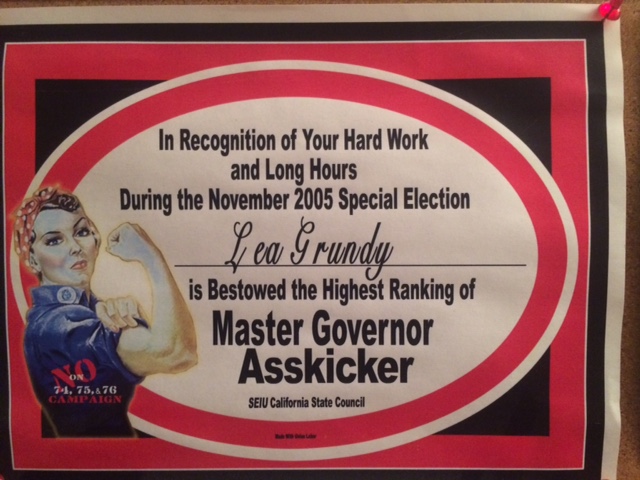
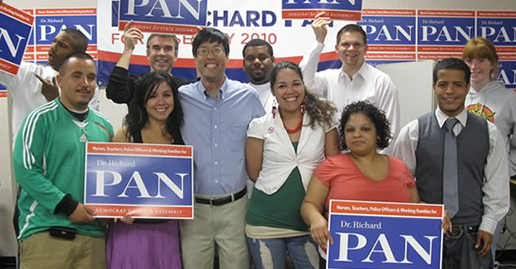
Lea is one of three female partners in Groundworks, a political consulting group on a mission to move the country in a progressive direction. Groundwork’s expertise is direct voter contact, iIMG_4727n face or by telephone, rather than by media. Groundworks mobilizes hundreds of field workers to talk with thousands of people. “People don’t vote in their best interests; we vote viscerally.” Voters respond to a direct conversation; a sizable field organization can swing an election by an eight-point spread. Groundworks is a niche firm that only takes clients whose message aligns with those of the principals. Lea’s firm was instrumental in defeating Proposition 32 in 2012, a measure to weaken labor unions, and elect Dr. Richard Pan to the California legislature in 2010. Dr. Pan defeated Anthony Pugno, author of California’s anti-gay marriage proposition; the only California district in that election to pass from Republican to Democratic hands.

images Screen Shot 2015-12-05 at 8.45.13 AM Screen Shot 2015-12-05 at 8.47.30 AM

When Chris isn’t providing fresh water and temporary shelter, and Lea isn’t organizing battalions of campaigners, they live in a quaint bungalow on a quiet street in Berkeley, with two bright high school age sons. Like every conscientious Californian, they’ve adopted a new relationship to water. They recently installed a grey water system to tap the washing machine rinse to irrigate fruit trees they planted in their yard. Goodbye lawn. Welcome pears.

How will we live tomorrow?

Screen Shot 2015-12-05 at 8.44.29 AM“We are going to live in an increasingly patchwork world.” – Lea

“The thing that comes to mind is the water diverter we installed in the laundry to water the new fruit trees we planted in our yard.” – Chris

“We are all going to face challenges. The Central Valley is facing them first. Will the challenges bring us together or tear us apart?” – Lea

IMG_4730“We are good at the quick disaster – fire and flood. But we are not good at the slow moving disasters – drought and climate change. I believe humans will survive this change, in some ways, some of us. Our ancestors survived mass extinctions before. But we haven’t experienced the kind of extinctions we are facing now in thousands of years.” – Chris

“There is this phrase in Spanish, ‘We will live better with the Union.’ We will live better if we have solidarity and contracts. Within two years we won’t have unions. Unions and limousine liberals are the only two groups that confront capital. I’m apocalyptic. Then, I think it is human nature to come together. That gives me hope. But its sobering.” – Lea


Posted in Responses | Tagged , , , , , , | Leave a comment

Profile Response: Michael Sturtz, Alameda, CA

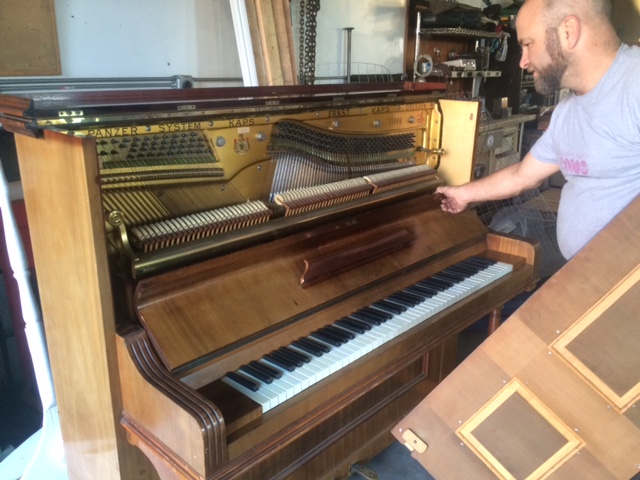
HWWLT Logo on yellowDespite twice confirming our meeting, Michael Sturtz was out when I arrived at Voltage, the motorcycle repair and metalworking shop behind his Victorian home near downtown Alameda. He showed up a few minutes later, towing a piano on a trailer. “It’s a gift for my girlfriend. She’s a gifted pianist.” I helped Michael unload the piano and unhitch the trailer. For the next hour he checked the piano’s innards and polished its wood finish. He looked at me, at most, three times. He never stood still. But he talked continuously. Michael Sturtz’s hands and body can work completely independent of his mind and mouth. I was the not first person chasing Michael’s story; he’d told it before. Nonetheless, our conversation was fresh and thoughtful.

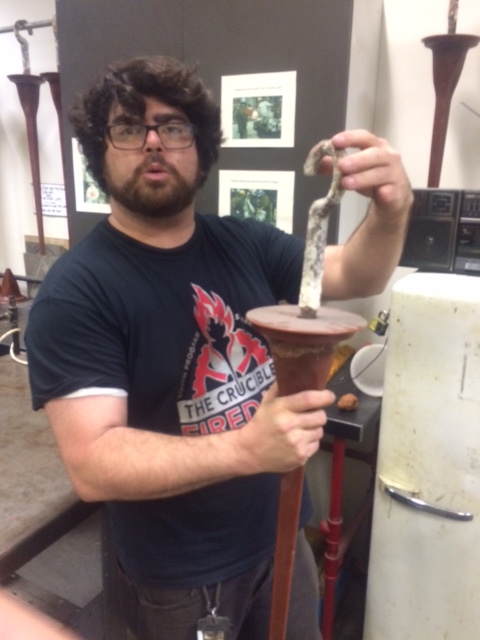
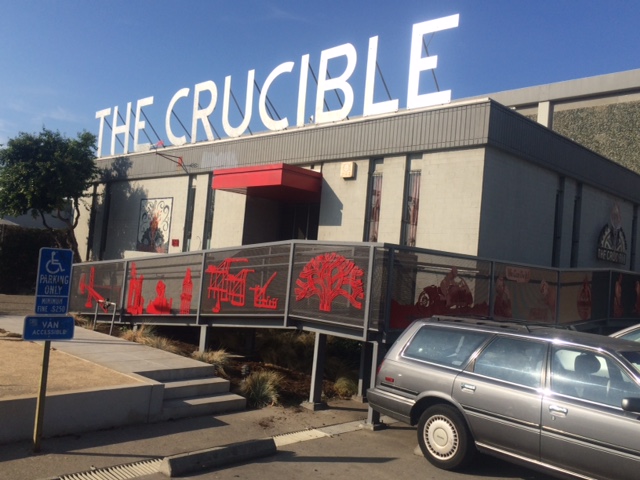
IMG_4721Maybe the world would be mad creative if all boys had dual father figures. Michael Sturtz’ dad was an orthopedic surgeon who groomed his son to follow in his footsteps. His step-dad owned an auto body shop where young Michael spent most of his time. Michael found outlets for creative tinkering at Alfred University where art, ceramics and engineering intermingle, and the Art Institute of Chicago. “I never found the teacher I wanted, so I decided to become that teacher.” At age 26, Michael got a $1,750 grant and started The Crucible. “Foolishness and bravery are really close together.” Fifteen years later, The Crucible is the nation’s largest non-profit industrial arts educator.

IMG_4720 IMG_4725

A few years ago Michael left The Crucible to become what he calls, ‘California retired.’ “I tried it while I was young and healthy, but it didn’t stick.” Michael wanted more than tinkering and inventing at Voltage, so he founded Stanford’s Ignition Lab at Autodesk, and now directs a cross-disciplinary mash-up of high-tech and vo-tech, ivory tower and grease pit, digitally generated and hand crafted. Or, as he puts in collegiate verse, “Our mission is the exploration of visual, experimental, and embodied thinking to influence the future around design and making.”

The Ignition Lab is only six months old, but Michael is excited about getting Stanford students out of their bubble and into real world innovation at Autodesk’s digital fabrication shop, which is the digital version of The Crucible. “We are interested in everything that is not measured by SAT scores. I see them as my agents of change.”

IMG_4723There’s a chameleon quality to Michael, the Stanford-affiliated grease monkey piano polisher. But his agenda, whether in the workshop or classroom, is always the same. “My nature is to find alternative ways to get people together. I might have started an alternative medical school instead of The Crucible if I had gone to med school instead of art school. I want the collaborative team aspects of The Crucible to get applied to the next generation. I want technology to bring people together.” With that, the piano gleamed like new and our time was finished.

How will we live tomorrow?

IMG_4724“My first thought is, will we live tomorrow? Commuting to Stanford three times per week gives me a dystopian view of the world. People in their own vehicles, on their phones, disconnected.

“I hope the way we live tomorrow is a world in which we are much more connected to our creative selves. I like how the Greeks valued philosophy and the Arts. I want the products of our society to be good design in every way – the means of production has to be as elegant and sustainable as the product. Take the iPhone. It’s good design at one level, but its production and environmental impact is not good.

“I want my way of doing things to inspire the next generation to do things differently.”


Posted in Responses | Tagged , , , , , | Leave a comment

Profile Response: Amy McPherson, Volute, San Francisco, CA

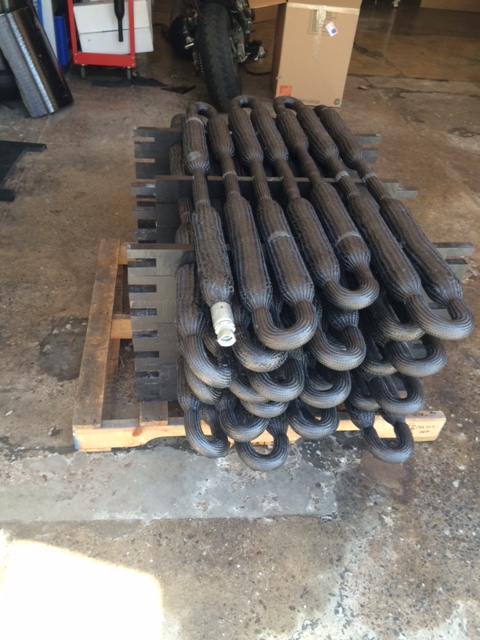
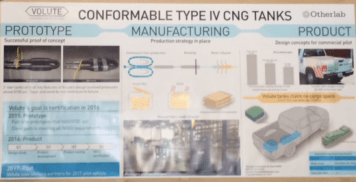
HWWLT Logo on yellowOtherlab is a consortium of start-ups that have a techie / maker vibe. One of them is Volute, a ten-person company that is prototyping configurable CNG tanks. CNG vehicles have much better energy efficiency than combustion engine vehicles, but there are drawbacks to their acceptance. First is the cost of recharge stations. In addition, fuel tanks with enough CNG to meet our expectations between fill-ups are large. Third, refueling is a time consuming process. Volute is focused on the second problem – creating fuel tanks that are not so bulky they take up a third of a vehicle’s carrying capacity.

Volute works with their garage doors open to the world. Amy McPherson, Operations Director, is a North Carolina native who’s been in San Francisco for two years. I simply walked up to Amy from the sidewalk. When I asked if she liked it here, she laughed, “How can you not like it. Look at the climate.” Then she described some of the hurdles Volute faces.

IMG_4670 IMG_4671 IMG_4668

“Vehicles have all sorts of spaces that are not well utilized, but we can’t put a cylindrical tank in them. So, we want to make tanks that are configured to the particular voids within a vehicle.” The big cost in making CNG tanks are the fittings – the interface between the storage medium and the engine. Volute has grants from DARPA and Department of Energy to explore tanks of varied geometries that keep fittings to a minimum. They have been prototyping models and hope to obtain NGV2 certification for their tanks next year. Like every start-up, Volute feels competition on all sides. “Otherlab has one product already in production. There is another company working on solar panels that move with the sun. We are neck and neck wScreen Shot 2015-12-07 at 5.15.09 PMith them to be the second company to go live. Another group is working on a $5,000 CNG recharging station. That will get it down to a residential scale. But they have a long way to go.”
CNG already has viable applications for regular route vehicles. “UPS trucks, trash trucks, those vehicles can operate very efficiently on CNG.” As issues of fuel storage and recharging get resolved, there will be more worthwhile CNG applications. That will not signal the end of fossil fuels, but it will mean less pollution and more efficient vehicles.

How will we live tomorrow?

IMG_4667“Otherlab has a vision for the future. That’s the whole point of the enterprise. We have an eye toward energy-efficient and smart living.”


Posted in Responses | Tagged , , , | Leave a comment

Profile Response: The Crucible, Oakland CA

HWWLT Logo on yellowA person can’t simply stop by The Crucible, an almost mystical place of heat and muscle that many in the Bay Area credit with sparking the maker movement. It’s too large and too interesting and once the staff sucks you into their enthusiasm, you’ve whiled away an afternoon amidst glass furnaces, arc welders, molten iron, and drill presses; drenched in the intoxicating buzz of creativity.

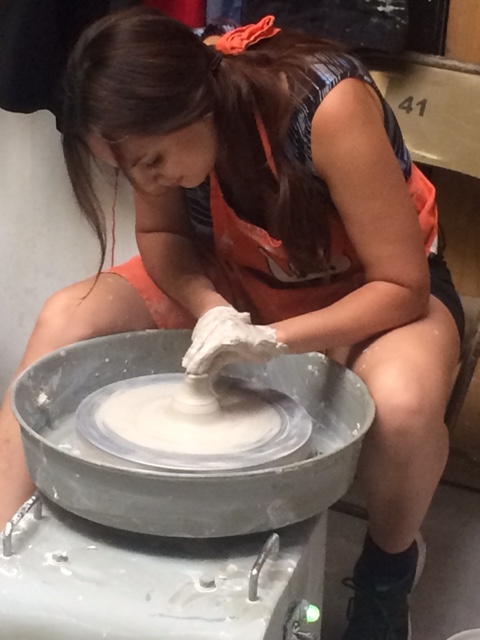
The Crucible is essentially a gym for making things. People buy memberships, attend classes, and use equipment in a giant open space. But instead of machines devoted to cardio, abs, and chest, the Crucible’s studios focus on craft: glass making, wood working, plastics, and metals.

IMG_4696Kristy Alfieri, Education Director, and Carla Hall, Youth Program Director, explained The Crucible’s history and mission. Michael Sturtz, maker movement champion and showman of the first degree, founded The Crucible in Berkeley sixteen years ago. Three years later, he acquired the 50,000 square foot former factory in West Oakland. Michael’s fond of working with fire. He produced Fire Fashion Shows and Fire Operas in conjunction with local art groups. The events drew attention – and money. A few years ago Michael moved on to other endeavors, but his brainchild still captivates over 5,000 craftsmen, young and old, every year.

The Crucible is located near the West Oakland BART Station in one of the city’s toughest neighborhoods. The location enables The Crucible to be both a regional asset, providing workshop space for artists, inventors, and hobbyists; as well as a neighborhood resource that offers special training and shop access to local residents.

IMG_4684 IMG_4682 IMG_4693

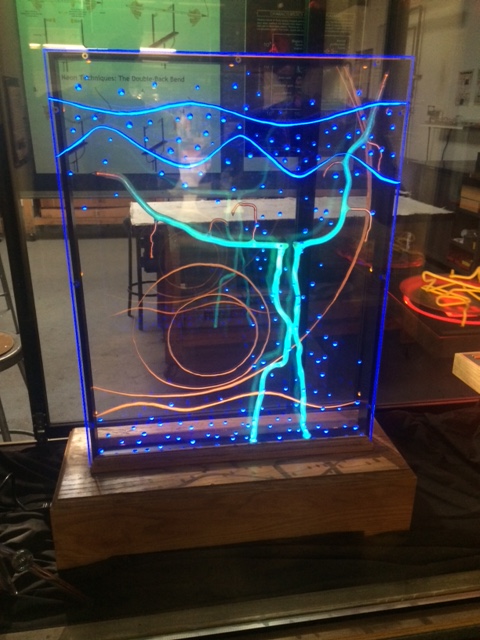
Carla and Kristy turned me over to Kier Lugo, general floor manager and glass blowing studio head. Kier volunteered at the Crucible, became an intern, and has been on staff for ten years. He toured me through all eighteen studios and explained the safety sessions members must pass before working with any equipment. We spent the most time in the glass blowing and foundry studios; there’s something magic about how heat transforms things. When Kier opened the thick glass kiln door and 2600-degree air rushed at me, I felt blown back to the industrial revolution. That connection between basic manufacturing and current technology is The Crucible’s lure. “We get tech people here. They get enthused by doing things with their hands, develop it into an avocation, then a career, and they bring their computer background with them. These things are not obsolete. They are actually more relevant than ever.”

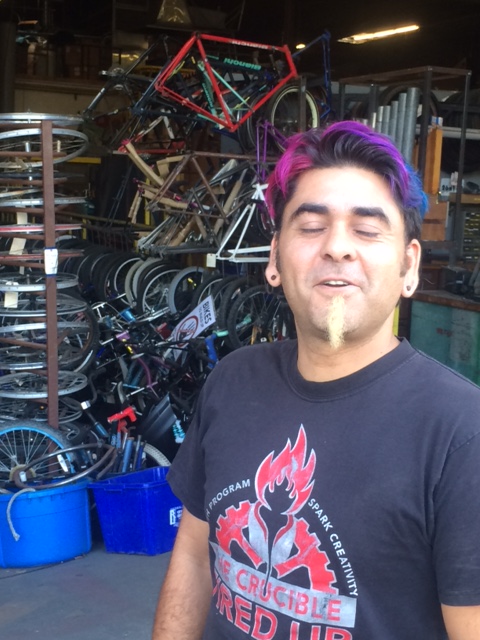
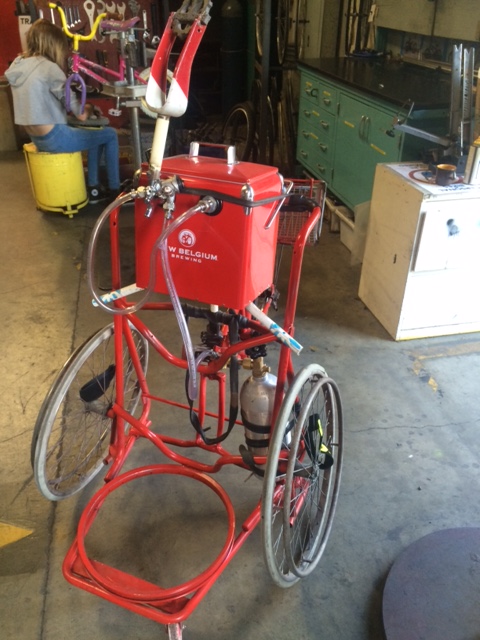
IMG_4686Kier introduced me to several other studio heads. Sudhu Tewari, the blue-haired guy who runs the bike studio, explained how the Earn-a-bike program is often the neighborhood kids’ first experience at the Crucible. “It’s a six-week program where we strip a bike, build it back up, and learn how to fix everything. Kids who complete the program get a bike. After that they can come in after school and work on other bikes for trade.” The Crucible is more than just a bike repair place. They literally build bicycles from component parts, design frames, and weld them together.

Beyond glass blowing and iron, Kier’s tour started to blur studio boundaries: glass polishing, TIG welding, MIG welding, neon, ceramics, leather, textiles, kinesthetic, stone carving, etc. That’s by design. “We bring materials handling knowledge together rather than keeping each discipline separate.” Collaboration among people and projects is fundamental to The Crucible ethos.

IMG_4685 IMG_4689 IMG_4692

Kristy sees The Crucible as the intersection of art, technology and community. “Our culture moved away from creating. The Crucible’s vital because kids make something, and in the process they make community while they gain skills. This encourages them to make something else, more refined and more relevant. Vo-tech used to be a bad term. Michael elevated it and made it cool.”

Carla puts it more succinctly, “What you buy is no longer cool. It’s what’s you make.”

How will we live tomorrow?

Screen Shot 2015-12-07 at 5.02.01 PM“We are in the rebirth of the maker culture, the intersection of creating and making with improved technology for design and fabrication. We will reintroduce the tactile aspects of learning. It is confidence building to see the individual growth.” – Carla Hall, Youth Program Director

“One of the tag lines of The Crucible is, ‘Inspiring creativity in everyone.’ I want to see art as an everyday necessity. The more we connect to our creativity, the more people gain.” – Kristy Alfieri, Education Director

IMG_4681“I live day by day with the thought that today affects tomorrow and I inspire people to do the same.” – Kier Lugo, Studio Operations Manager


Posted in Responses | Tagged , , , , , , | 2 Comments

Profile Response: Ruth McFarlane, Director of Programs, LGBT Center, San Francisco, CA

HWWLT Logo on yellowWhen I arrived at the LGBT Center on a Friday morning, the building was locked, the glass in one of the front doors was shattered, and plywood covered the opening. I texted Ruth McFarlane; she came down to let me in. The computer area in the main lobby was cordoned off. “We had a problem here on Wednesday. A guy at a computer, he must have been on something, went after another person. We managed to get him outside, but he broke the glass trying to get back in. We’re all a little shell-shocked.”

The LGBT Center is open to anyone. That’s a good thing. But as San Francisco’s street population expands up Market Street toward the Castro, the Center has to balance open access with providing a safe place for the LGBT community. Before Ruth and I even settled into our seats to discuss tomorrow, I’d witnessed how San Francisco’s gaping inequality threatens the Center’s mission.

IMG_4710“What I get passionate about is the nitty-gritty of people’s lives. What is their story? In law, you don’t do that. You craft pieces to fit the narrative you want.” Ruth McFarlane is an accomplished drifter. Born in Toronto, Ruth spent her childhood with missionary parents in Africa. She came to the US at fourteen, studied law, and spent six years as an international tax attorney in New York. She about faced her practice and geography by going to South Africa to work with a legal resource center. When she still wasn’t getting the stories she craved, she abandoned law and got a Masters in Social Work, worked in affordable housing, and moved to San Francisco in 2014 to be Director of Programs for the LGBT Center. “This is a dream job for me; supporting my staff and developing programs to meet the needs of this community.”



images-1San Francisco has had openly gay organizations since the 1960’s, though the LGBT Center was not officially formed until the 1990’s. I asked Ruth whether, as time and tolerance progress, the Center might become unnecessary. “We see an ongoing need for the Center, though its role keeps changing.” San Francisco is a transient city, and a magnet for gay people. The Center supports many gay youth. “Thirty percent of the of homeless in San Francisco identify as LGBT; forty percent of the homeless teens. At the same time, more elderly are coming out, and they need support and services.”

How does AIDS figure into the Center’s work? “AIDS is less of a program focus, but from a cultural perspective, it is inescapable.” The LGBT Center doesn’t provide medical or other direct ADIS services. Their AIDS focus is intergenerational. Older people, the guys who fought for rights and survived the plague, have an important perspective for younger people, who may underestimate the impact of the disease.

images-2The LGBT Center is at the leading edge of how we establish personal identity. “Youth are identifying as GBLT younger. Many are not even using those labels. They are queer or gender fluid.” As a person with multiple identities, Ruth prefers the term ‘queer’. Every meeting at the LGBT Center begins with a pronoun check-in. Many use ‘they’ as a singular. “We need an ungendered third person singular.”

How will we live tomorrow?

imgres“In terms of the LGBT Center’s future, we are starting a significant renovation of this building to create space that will be more sustainable over time. We are going to manifest our commitment to connection among all people: this will be yet more difficult in a world of increasing disparity.

“From a personal perspective, living in San Francisco makes me pessimistic. We are going to confront disparities that boggle our current mind. Economic and resource inequalities will shape our lives, our families, and our society. Our income inequality is stark but there is memory loss because there’s so much transience in this city. We confront human misery every day on Market Street. There is no way we can confront that without being changed. Whether you intervene or not, you are changed.”

Posted in Responses | Tagged , , , | Leave a comment

Profile Response: Danielle Engelman and Catherine Borgeson, The Long Now Foundation, San Francisco, CA

HWWLT Logo on yellowWhere does man reside on the spectrum of time? We are conditioned to think of time as linear, with today always at the right hand margin and Homo sapiens representing evolution’s epitome. A few graphic representations show dotted lines projecting into the future, but for the most part, tomorrow is off the page. What would it mean if, instead of seeing ourselves on the cusp of evolution and time, we thought of ourselves in the middle of it? Would it change the way we think about tomorrow? Or how we think about today? What if today were not a mere 24 hours, a blip in time. What if today spanned the breadth of human civilization? What if we are dwelling in the middle of a long now?

images

Stewart Brand (Whole Earth Catalog) founded The Long Now Foundation in 1996 to ‘foster long-term thinking and responsibility in the framework of the next 10,000 years’. Ten thousand years ago agriculture began; projecting ten thousand years hence centers us in this settlement-based period.

IMG_4711I was excited to meet two Long Now staffers since, in many ways; the Long Now Foundation and I are on the same journey. We are extraneous to the flow of everyday society. We are presumptuous in exploring what humans cannot control. Yet we both believe in postulating tomorrow as a means to gain a steadier hand in guiding our destiny.

imagesA middle-aged guy pedaling the country is kind of silly, as are intelligent folks tinkering with a clock that will supposedly tick for 10,000 years. Yet those same activities are profound. People accept my question with more gravity because it’s accompanied by sweat. Contemplating how to build something to survive 500 generations invites new ways to think about design and sustainability.

What does The Long Now Foundation do? Its pursuits are as varied as the responses I receive to my question. The Long Now is measuring time by building a 10,000-year clock that will operate via air currents. The Long Now is documenting our culture for future generationsimages-1: the Rosetta Project encrypts disks that contain the first book of Genesis in 2300 hundred languages that can be read with a magnifying glass; the Internet Archive project explores permanent ways to archive digital information; the 3,000 Book Project is a living manual of our civilization. The Long Now is also shaping today’s culture through seminars and workshops to encourage long-term thinking in science, economics, linguistics, and politics. I’m most fascinated by The Long Now’s scientific endeavor to genetically reconstitute extinct species. The passenger pigeon may one day fly again.


IMG_4713Besides Quixotic pursuits that are both economically worthless and spiritually deep, The Long Now and my adventure share a positive sensibility. According to Danielle Engelman, “Stewart Brand doesn’t have much time for pessimism.” It’s easy enough to paint disaster scenarios for our future, but more rewarding to speculate on how it can be good.

The Long Now deserves more time and attention than this short profile. Check out its website, and savor Michael Chabon’s inspiring essay on the 10,000 year clock. The Long Now’s value won’t be measured by whether it’s clock lasts 10,000 years or passenger pigeons reemerge from beyond death. Its value exists by the foundation’s very existence – now – as an aspirational platform to ponder the future and explore our role in it.

How will we live tomorrow?

IMG_4718“We live in such an incredible area here; we are incredibly fortunate. I hope we will use our resources to be more informed, with better information to make better decisions.” – Danielle

“Our Mission Statement is to foster long term thinking and responsibility. If we can live outside our comfort zone, no matter where we are in our present, we will flourish. I want to see more intention with what we do. Not let efficiency govern. Slow down.” – Catherine


Posted in Responses | Tagged , , , , , , , | Leave a comment

Profile Response: Kathy Schaefer, San Anselmo, CA

HWWLT Logo on yellowMany people leverage academic achievement, a college or professional degree, into a career. Kathy Schaefer is doing the opposite; using her knowledge and experience as a FEMA engineer to get a PhD. “I want to explore how to apply new concepts of risk, many of which corporations use, to fund infrastructure improvements.” Kathy explained that FEMA requires people who live in flood zones to buy flood insurance, but on average people only pay for four years before they let it lapse. As mortgages are sold down the line, the buyers don’t verify that flood insurance is up to date. There’s little incentive to maintain flood insurance because, “FEMA disaster compensation is easier to get if you don’t have flood insurance.”

imagesKathy wants to draw on private sector resources to explore how we tighten up flood insurance requirements and use premiums to create infrastructure that would minimize disaster impacts. She plans to apply Katrisk, a supercomputer model that private insurers use to assess flood risk, to FEMA. “FEMA maps are tied to building restrictions. You have requirements like, ‘raise your house 9.43 feet’ In Katrisk that level of detail doesn’t matter.” It’s actuarially based, not construction based.

images-1I asked Kathy why, after one career in the Air Force and a second at FEMA, she wants to pursue a PhD. “The PhD. is a focal point, it will drive me. Also, I worked and commuted while getting my college degree. I want that collegiate experience I never had.”

How will we live tomorrow?

Screen Shot 2015-12-05 at 5.48.20 PM“I think it’s going to be wonderful. I think we’ll be much more connected. The future is going to be amazing in ways we cannot imagine. Repetitive tasks will be done by machine unless we want the Zen experience.

“Governing will be more fluid. City and county government is going to go away. We’ll make decisions by consensus.

“I think the younger people get it better than we do.”


Posted in Responses | Tagged , , , | Leave a comment