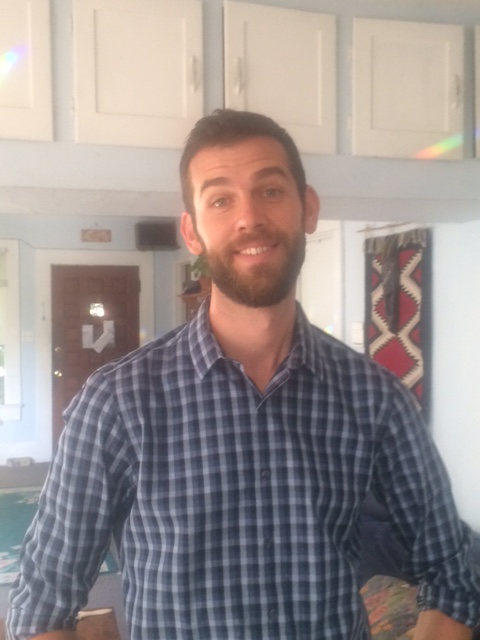
Profile Response: Nick Williams The Unusual Suspects, Los Angeles, CA

HWWLT Logo on yellowThe Unusual Suspects provides an opportunity for rehabilitation through theater. The group moves theater beyond art imitating life. For The Unusual Suspects, art promotes life. It is the generative force that pushes young people off the track of poverty and prison, and onto the track of productive citizen. As Nick Williams, actor and Grants Manager puts it, “incarcerated kids have more to them than their crime.”

The non-profit began in 1992 with one program, working with incarcerated youth. Since then The Unusual Suspects has expanded to offer preventative programs that create theater in middle schools, high schools, and juvenile detention centers, as well as rehabilitative programs in prisons. They have a collaborative process in which a group comes together with professional writers, actors and directors to write, produce, rehearse, and perform an original play together. “It’s exciting to see hardened young men open up.”

IMG_5045This is not quick-fix work. The Unusual Suspects focuses on one group or location over time. They have worked for several years at San Fernando High School and in South LA, often with repeat at-risk students. It may not be possible to measure how many youth The Unusual Suspects save from prison, but one statistic stands out clear. The Los Angeles Unified School District has a forty percent dropout rate, while ninety-eight percent of The Unusual Suspect’s participants graduate high school.

How will we live tomorrow?

Screen Shot 2015-12-12 at 5.11.17 PM“There’s a big divide in the US, a political divide that is making it difficult for us to move forward. Money is in the wrong place. In terms of our work here, people are making money off of incarcerating youth.

“Last week we had lunch with a man who was falsely imprisoned for 28 years. This guy became a painter in prison, got known, and got his case reopened. We met him through a network of organizations working for incarcerated youth.

“We spend $4 billion to kill 17 people on death row. Think of what we could do with $4 billion in terms of education, food, assistance.”


Posted in Responses | Tagged , , | 1 Comment

Profile Response: Diane Haithman and Alan Feldstein, Los Angeles, CA

HWWLT Logo on yellowOne of the clearest indicators of personal well-being is how much a person controls his or her own fate. Too many obligations and too few opportunities wear a body down. Too much freedom makes people disconnected, maybe reckless. There is a sweet spot, where we have enough responsibility to be part of the social fabric but enough autonomy to create our own niche. We may be able to influence that balance by how we craft our families and careers, but we can never determine it completely. Layoffs, divorces, societal shifts affect us in ways we can’t foresee. Just as important to setting our course, is being resilient to life’s storms.

IMG_4982These thoughts filtered through my head after an evening with Diane Haithman and Alan Feldstein, a middle-aged couple that have enjoyed a fair share of education and Baby Boomer opportunities, as well as setbacks that others might not surmount. Near 60, they are at the top of their game, engaged in work that is personally rewarding and culturally rich. I don’t think we’ll ever know why some people rise to the challenges life presents, while others abide them, and still others crumble beneath their weight. But it’s worthwhile to case study people who navigate life to its fullest advantage.

“Falling was the best thing that ever happened to me.” Alan explained during the rather long tale of how he and Diane met. Diane, a feature writer for the LA Times via the Detroit Free Press, had interviewed Alan, a recently divorced entertainment lawyer and youngish member of LA cultural boards, for a story about Arts funding. After the article came out they had dinner together, but nothing sizzled until almost a year later, when Alan feel forty feet rock climbing, was hospitalized, and endured a leg-cast convalescence.

imagesHe and Diane reconnected. Alan invited her to a concert at the Hollywood Bowl (provided she would drive) and it’s been happily ever after. Sure, there was an ex-wife and kids and other details, but anyone who sees how they gaze at each other knows that Diane and Alan are a good thing.

Alan’s law practice morphed into nutritional supplements and their increasing regulation by the FDA, FTC, and state’s attorneys general. Necessary work, but hardly exciting. His passion for rock climbing simmered and he began to kayak. Kayaking took him to Tanzania where, in 2010, a guy convinced him to leave his law practice and start a safari company. Alan has never looked back. “There are a lot of unhappy lawyers out there who say they want to do what I do. I say, ‘You can.’”

imgresDiane got laid off after 22 years at the LA Times. She took up freelancing, became an adjunct professor at USC and wrote a novel. “Set in Detroit in 1983. I just wrote what I wanted, no agent, no format.” In 2014 she published a more marketable novel that mined her LA experience. Dark Lady of Hollywood is, “a mash-up of TV sitcom and Shakespeare” as well as a publishing success.


imgres-1Alan still practices some law so he and Diana can continue a lifestyle more posh than freelancing affords. Although Infinite Safari Adventures is not yet a full-time occupation, it is Alan’s full-time avocation. He has ‘adopted’ an enterprising young man in a Tanzanian village and installed fresh water wells. His heart is in Africa. Still, it’s important to Alan that safaris are a business rather than a hobby. “All my life I’ve been counseling businesses that often made mistakes. I want to do this, and do it right.”

It’s easy to say that Diane and Alan have had more advantages than not, that early career success is easier to expand later in life. To be sure, theirs is not a Horatio Alger tale of bootstrap pickup. But the world is full sparkling youth who morph into burned out, bummed out middle-aged folk, while Diane and Alan are energized, resilient, and creative. We could all use more of what they’ve got.

How will we live tomorrow?
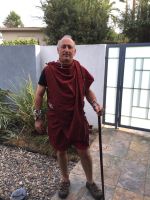
unnamed“Are you asking ‘I’ or ‘we’? My kids will live very differently than me. They are technologically sophisticated. Yet, there will be more physical sharing.

“I am excited, personally, about tomorrow because I’m excited about what I’m doing today. My children and their friends make me hopeful. They are all doing good things.” – Alan


IMG_4984“I wonder how young people will get a toehold. I’m thinking of the USC Journalism majors I teach. They don’t grasp the profession or their place in it. A few don’t think that way, but many are lost.” – Diane


 

Posted in Responses | Tagged , , , , , , | 1 Comment

Profile Response: Angelika and Cord Christensen, Thousand Oaks, CA

HWWLT Logo on yellowAngelika Christensen is in the sandwich generation. Just as her two boys were finished home schooling, her father developed brain cancer. He died a year and half ago. Now Angelika’s focus is administering her father’s estate and relocating her 74-year-old mother from Seattle to Southern California. “We wanted her to move nearby before she needed assistance, so she create her own life here.” The family pooled resources and purchased a house with a larger lot that can accommodate an in-law unit. “Its a great neighborhood, very walkable. One neighbor has already added an in-law unit; there is another one across the street.”

imagesI asked how her mom was accommodating the transition. “We decided to install xeriscaping, because of the drought. There’s about 7,000 square feet of landscape at the new house. Being from Seattle, my mom knew nothing about it, so she researched, designed, and did a lot of the work. She met all the neighbors installing her plants, which has been good. Last week a guy from a landscape company pulled up and took a picture of the yard; it looks really good.”

Cord teaches the grade six introductory Bible course at Oaks Christian School, a non-denominational school open to students of all faiths. He’s taught there since the school opened fifteen years ago. At this point, everyone in the school associates this fundamental course with ‘Mr.C.’ and he has latitude in its content. It’s an overview course, with a focus on the Book of Genesis, that makes relevant connections between the Bible and contemporary life. “I present the Bible as a table spread with rich offerings. Belief in Jesus as the Son of God is something we want each student to taste.”

imgresHe described one assignment to help student’s appreciate the gap between God and Man. “I ask the students to write five sentences to describe their school day to a four year old. They realize that four year olds don’t understand terms like class period. Some people wonder why there isn’t more science in the Bible. The Bible was written for the broadest possible audience, in terms that can be explained to a four year old.”

The students at Oaks Christian, an expensive day school, face different challenges than less privileged children, but they face problems nonetheless. “You can throw all the money you want at a kid’s life, but what they want is time.” After dinner, Cord took to grading an assignment he calls ‘keepers’. Students wrote short essays about what they considered the most important things they had learned in their first two months of school. The essays reflect Cord’s basic motto in teaching and in life: “Go deeper.” Don’t just have an experience. Reflect on it, understand it, grow from it.

imgres-1Several years ago, the entire family cycled from Maine to Oregon, including their dog Mimi. The trip was a seminal family event, recalled in the photos on the living room wall and the ongoing connections they made with people along the way. Cord says, “We were like the circus coming to town: two cycles, a tandem, and a dog.” Angelika adds, “Bicycling is the highest bonding experience. After our trip, we see the entire country as our community. Mimi died last year. When I posted it on Facebook, I heard from people all over the country who met her and shared our loss.”

How will we live tomorrow?

IMG_4969 IMG_4974“We have to live humbly, honestly, and thoughtfully today. If you’re humble, thoughtful, and honest you will be open to others. Today is the training ground for tomorrow.” – Cord

“Each day we need to live intentionally.” – Angelika


Posted in Responses | Tagged , , | 2 Comments

Profile Response: Robert Roebuck, Project Manager, Santa Barbara Public Works, Santa Barbara CA

HWWLT Logo on yellowThis is not California’s first prolonged drought. Back in the late 1980’s, drought prompted the citizens of Santa Barbara to approve and construct a desalinization plant. By the time the design/build plant opened in 1992, conservation measures had slashed the city’s water use by 60%, from 16,500 acre-feet per year to less than 10,000, rains had returned, and water was plentiful once again. So, the city operated the $35 million plant for three months to ensure it got what it paid for, resold key components to Jetta, Saudi Arabia, and for the next twenty years performed a minimum amount of maintenance.

IMG_5356Fast forward to 2011. Water usage had climbed to over 13,000 acre-feet and another, more severe drought threatened capacity. Santa Barbara created a long-term water plan that set ambitious conservation targets and proposed reactivating the desalinization plant. The city would start with 3,125 acre-feet of desalinated water per year, with phased expansion to 7,500 acre-feet or 10,000 acre-feet. By 2015 conservation measures dropped water use below 11,000 acre-feet and the plant will reopen early next year, making Santa Barbara one of the few California cities with a potential surplus of water supply over demand.

images imgres

If desalinization is so terrific, why doesn’t every coastal city do it? First, desalinization plants are expensive to build. Second, they are expensive to operate; desalinating water is an energy intensive process. Third, there are concerns about how transforming seawater to potable water alters the ocean’s ecosystem.

Robert Roebuck, retired transportation and water management engineer, came out of retirement to manage reopening the desalinization plant. Robert is confident that the city has addressed the energy and environmental concerns in practical and sustainable ways. “The new plant will beIMG_5355 much more energy efficient than the old plant. We have better pumps and 98% energy recovery on the desalinization process.”

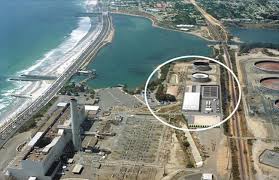
The desalinization plant is located a few blocks off the beach, on the same site as Santa Barbara’s wastewater treatment facility. A seawater intake located several hundred feet offshore delivers water to the plant. One millimeter filters on the intake pipe extract plankton. After desalinization, brine discharge, with twice the salinity of seawater, is combined with Santa Barbara’s treated wastewater and returned to the sea in a pipe that extends a mile and a half beyond shore. The engineers anticipate a 100-meter dilution zone at discharge, an area where, in truth, no one quite knows what will happen. The high salinity should make the area an ocean desert, but the lingering organic material in the wastewater could promote some sea life. The system is designed for the worst case, the ocean desert.

Energy conservationists argue the plant still uses too much non-renewable energy. Environmentalists argue that a 100-meter ocean desert is too large, or that it could wind up being larger, or that the microscopic plankton pulled through the intake filters will unhinge the foundation of the ocean’s food chain. These are all legitimate arguments. Unfortunately, they don’t address the question at hand: how to provide water to the thirsty people and vegetation of California.

images-1 images-3 Screen Shot 2015-12-20 at 5.20.36 PM

California is a skewed ecosystem. The state supports 40 million people who have high creature comfort expectations. It also grows food for millions upon millions more on land that has been manipulated by engineering and political processes for over a century. Until we have the political will to change either our lifestyle or agriculture, we will rely on ever more complex engineering solutions to maintain the status quo. Santa Barbara is wiling to burn a lot of fossil fuel and create a dead zone offshore in order to keep the taps running at a tenable increase in water rates. Other California communities, with equally great water challenges and less of a leg-up, face even more difficult tradeoffs.

How will we live tomorrow?

IMG_4949“I don’t have much to say about that: water is so basic. We have what we have but we modify how to treat it. We are using secondary treated water from wastewater at 1,000 acre-feet for landscape use. We are investigating increasing our wastewater treatment quality for higher use. We are looking at injecting the high treated water into our groundwater.

“Conservation is an important part. Xeriscape is critical. The ratio of water used outdoors to indoors is 80/20 or even 90/10.

“Reusing existing potable water is viewed as preferable to desalinating water. That’s optimal; it’s a closed system. But it’s difficult to take everything out of our wastewater.”


Posted in Responses | Tagged , , , | Leave a comment

Profile Response: Tom Black, San Luis Obispo, CA

HWWLT Logo on yellowTom Black is successful software entrepreneur who sold his business and enjoys elaborate house projects in retirement. He’s renovating his kitchen, building am impressive screening room and installing a terraced garden with outdoor lighting display at his hillside home. All at the same time. He’s also taking care of his former partner recovering from recent neurosurgery and extending support to other family members. Most importantly, he’s driving his BMWi3 electric car. “I’ve never had a car like this. I have withdrawal if I don’t drive it every day. It’s the most fun car ever.”

imagesWe took a Saturday night spin to Petra Mediterranean Pizza; I can attest the car is fun. We enjoyed our pizza and beer outside on a warm October night, the two oldest guys at this college hangout. Over a couple of slices, another aspect of Tom emerged: the meditative Buddhist. Our conversation ricocheted between Western and Eastern sensibilities. A few of Tom’s most fascinating perspectives:

imgres“Our nature requires us to do things, to act. Humans always know the right thing to do. We often act outside that nature, yet still we know. It shows up in dreams, in illness. Pay me now or pay me later. It will always cost more later. We cannot be happy unless we give.


images-1“We are creating a society where people can’t concentrate. It’s a sad thing to see someone running through the mountains with their iPod on.

“In 1775, eighty percent of potential voter’s could read and understand the thoughts contained in Thomas Paine’s Common Sense. Now, 39% of Americans in a recent poll said the sun revolved around the earth.


images-2“When you seek the truth, it is an empowering act. You are aware of your power to inflict pain and feel the pain when you don’t act in truthful ways.”


How will we live tomorrow?

IMG_4912“I see tomorrow as one hundred million years from now. We will still be here. We are infants. We will make many, mistakes, and many more. We are too established to completely wipe out the species. It’s going to take a long time to see evolution. I don’t know how we’ll evolve, but we will. Individual humans will live for thousands of years. The beginning of life will be our whole lifetime now. The older we get, the longer we live, the fewer mistakes we will make.

“Societies work better as our age gets longer. Spread it out to thousands of years and our knowledge and wisdom will be great. We have solutions for the problems confronting us now: food; energy; resources for 7.5 billion people. We don’t have the political will to implement what we know.

“Don’t get me wrong, there will be great suffering along the way, The U.S. will disappear. We will move toward a one-world government. That will be painful; it will only happen through war. But we will survive. We will flourish.”


Posted in Responses | Tagged , , , , , , | Leave a comment

Profile Response: Kathleen and Reuben Basil, Los Osos, CA

HWWLT Logo on yellowKathleen and Reuben Basil are engineers with a quirky sense of humor. That’s the only way I can figure how a mechanical engineer who designs solar energy systems (Reuben) and a civil engineer who specializes in storm water mitigation (Kathleen) came to live in the most bizarre house in California’s notorious ‘unincorporated’ city. Los Osos is a dozen miles from San Luis Obispo. People started building houses along a grid of streets in the 1970’s. No formal government, no central water or sewer. The place grew, the houses got tight, a few stores come to the main street, but still no water or sewer. In the 90’s the state said, “Whoa, we need sewers here.” But the residents didn’t want them, even on the state’s dime. Time passed, development got tighter, wells and septic systems were too close to avoid contamination. Finally, the state demanded sewers installed, at the residents expense. So the streets of Los Osos are chopped up and pipes are being laid. Which is not to say the town has sidewalks or curbs for other urban infrastructure. We may be arms length from neighbors in all directions, but Americans still like to pretend we are in rugged country.

IMG_4895 IMG_4899Then there is the house, built by a group of Cal Poly architecture students, with its sixteen-foot high garage, too many stairs, and oddly sloped roofs. Kathleen sums it up best, “The place is full of neat ideas, but no one made it all come together.” In a state with wicked expensive real estate, a young couple with two small children has to make choices. Maybe there’s logic to the solar designer and water flow expert buying a house with contorted roofs in a town with unsanitary infrastructure. It’s also funny.

Kathleen and Reuben met at Cal Poly, where 25% of all the engineers in California go to college. Kathleen works for a small firm that designs storm water systems for new development, which has been on the uptick for the past few years. “We never have the right amount of water. It’s either too much or too little.” Although rainfall is in short supply in California, when it does rain it can be torrential, so pavement runoff and retention pond design criteria are no less stringent. Are developers adopting pervious paving systimgres-1ems to get better drainage? “Owners don’t like pervious pavement because it takes more maintenance. However, we’re starting to install pervious concrete in parking lots. It has no fine aggregate; water just passes through.”

Reuben works for a solar panel design firm that works all over the country. “No one says, ‘I want to be green.’ All of our projects are based on financial decisions.” Reuben’s work shifts geographically depending on which states have enacted solar subsidies. “Everyone installs solar in Hawaii, without subsidies; electricity is 35 cents a kwH there. Arizona changed its incentives and projects died. The federal credit will go from 30% to 10% next year; that will affect many projects.” California is a big market regardless of subsidies, because the utility costs are high and the system of buying back excess solar power is good.”

imgres-2Companies who own and manage their own properties are more inclined to install solar. “Costco is putting it in all of their stores. It pays for itself in two to four years because they have such high refrigeration needs. But they don’t advertise it.” The green consumer is not their demographic.

How will we live tomorrow?

IMG_4897“Technologically, there will be interesting advances. I remember when there was no Internet. It’s interesting to watch my daughter adapt to complex appliances that didn’t exist when I was young.

“I think our days, getting up, eating, socializing, won’t change much, but technology will affect work and tasks. I am a big mountain biker. Since I started, in the 1970’s, the increase in how they’re made is incredible. I have a great bike now, but it’s exciting to think about what cool stuff the next generation will have.

“I am intrigued by how the shared economy will evolve.” – Reuben

“I’m hoping we all live more simply and life is less of an impact on the natural environment. I look at solar and wind and options that could reduce our footprint. I hope people will be able to see past the start-up costs. We’ll have to live more locally; our supply chains are not sustainable.

“We were doing well, living with less, until we had two children. Then people started giving us all sorts of stuff. People think we need so much. But we really don’t.” – Kathleen


Posted in Responses | Tagged , , , , , , | Leave a comment

Profile Response: Murdock Martin, Pacific Valley, CA

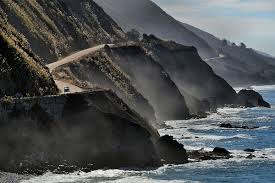
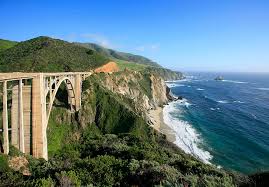
HWWLT Logo on yellowBig Sur is much more than a beach. The rugged terrain that cliffs into the sea proclaims the end of the continent. Millions drive the scenic, circuitous route; thousands bicycle the Pacific Coast Trail, yet very few people actually live in this breathtaking but desolate place an hour and a half by car from anywhere.

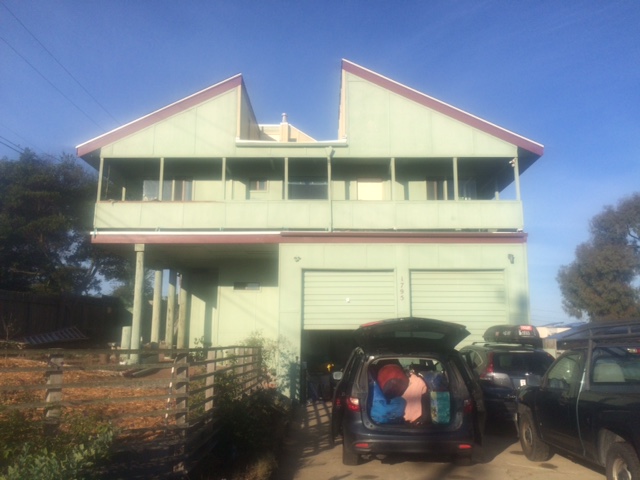
Ten to fifteen miles south of the village of Big Sur, which is nothing more than a deli and a bar with a few fishing camps, the US Forest Service built a fire station along California 1 where Los Padres National Forest reaches out to the coast. They installed half a dozen hook-ups for manufactured homes hoping a few firefighters would live close to the station. Not all the spaces are claimed. But Murdock Martin put his home in a hollow beyond sight of the passing tourists, protected from the sea, in the shadow of a steep mountain.

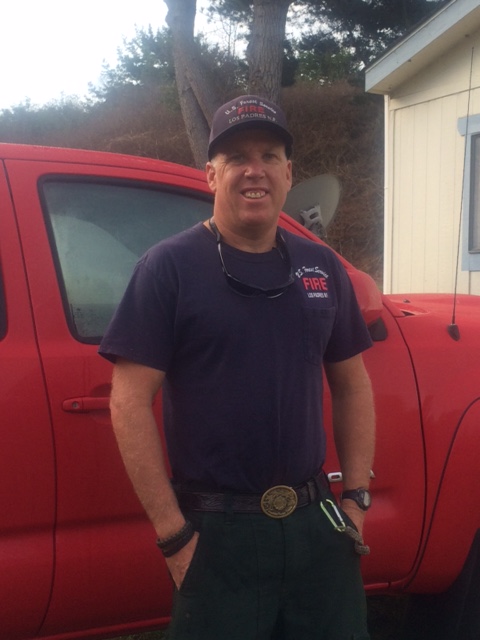
imgresMurdock’s an adventurer. He’s been a fire fighter for eighteen years, for both the National Park Service and the Forest Service. He used to be part of the elite ‘Hot Shot’ Crew. Now, pushing fifty, he captains a fire truck crew of seven. During fire season, which gets longer every summer, he can work up to 16 hours per day for 14 days straight. After that, regulations require mandatory breaks. When not firefighting, Murdock scuba dives for jade along his chilly stretch of ocean. He also aligns adventures with community service streak – last year he worked in a Rwandan orphanage and climbed Kilimanjaro on the same trip.

IMG_4861The only thing Murdock doesn’t do is cycle. However, after seeing cyclists pedal the coast everyday, he became the only warmshowers host for over a hundred miles. He gets dozens of requests; I was fortunate to be his guest number 65.

Murdock is a 49’rs superfan. His house is packed with 49’rs memorabilia. The season ticket seats he had when the team played in Candlestick Park sit in his living room. He’s not a season ticketholder in the 49’rs new stadium. “There was a $15,000 fee for seats as good as I had; it was just too much money.”

IMG_4862 IMG_4863 IMG_4864

Murdock loosens up his healthy eating kick for cyclists; he grilled sausages for dinner and served waffles with syrup and ice cream for breakfast. I wrote in his guest book and took his picture; he gave me a blank notebook and asked for a postcard from somewhere further along my journey. The US map of his travels show six states he has yet to visit; I’ll send him one from a place he’s never been.

imagesAnyplace you live reveals its shadows, even Big Sur. Beyond fire season things appear quiet here. But every week, sometimes three or four times a week, Murdock and his crew get called to clean up after someone drives off the cliffs. “It could be accidents – people looking at their cellphones when they should be paying attention to the road – but a lot of it is suicide. People come to Big Sur to end their lives.” When I pedaled on the following morning, the breathtaking scenery took a tragic twist.

How will we live tomorrow?

IMG_4865“Health is something people take for granted. If you can have your health, tomorrow’s going to be a great day. That’s why we need to diet and exercise. What happens at the end of The Biggest Loser? The winner is off all of his meds. I recently got off high blood pressure medicine. I lost ten pounds. My doctor said, “Ninety percent of people want to get on meds – you want to get off them.” I am active in my job, but I needed to change my diet to lose weight. Keep your body and mind in good shape through diet.”

Posted in Responses | Tagged , , , , | 2 Comments

Profile Response: Scott Joly, Real Estate Agent, Santa Cruz, CA

HWWLT Logo on yellowOne way some people shake the yoke of economic expectation is to choose where they want to live, and then cobbling together jobs, consulting, or free-lancing gigs instead of chasing the optimal job, wherever that may be. By and large, people who want to live in ‘cool’ places like San Francisco or Santa Cruz, CA; Ashland, OR; Leavenworth, WA; or Coeur d’Alene, ID make that choice, although the phenomenon has its regional devotees in places like Madison, WI; Minneapolis, MN; and Portland, ME. The ‘location first / job second’ priority is common among people in their twenties, though I’ve met folks in their thirties and forties who fit the pattern. It’s the most prevalent ‘non-economic’ life decision I’ve witnessed on my journey, and like virtually all non-economic choices, the people who chose their hometown before their job report being happier as a result.

images-1Not everyone has the luxury of ‘location first / job second’. Educated people with facile skills are more likely to select a community based on climate, social or political affinities. But the option is not limited to affluent people. As long as you’re willing to live with less personal space, maybe no car, and postpone illusions of buying a home, people of modest means can choose where to live and finagle the rest as they go.

images images-2 images-3

Scott Joly is a 28-year-old single male with an architectural degree from Cal Poly, an entrepreneurial mind and flexible skills. He’s loves Santa Cruz, so much so that living in a four bedroom bungalow with three other people is not a hindrance. Rather, it’s part of the fun. He’s an active couchsurfing host who almost rejected me because I only asked to stay one night. “It’s impossible to get a feel for a place in one day.” My question persuaded Scott to relax his usual standard. I was fortunate to join Scott and his friends at a local bar for the evening and then stretch out on their sofa in the house’s main room.

Scott traveled the globe for three years after college, with working stints in Chile and Japan. When he returned to the U.S. he moved to Santa Cruz. He’s been a millworker and carpenter, started a painting company and designs furniture. “I don’t have the patience for a career in architecture. I need to be more hands on.” About a year ago Scott got his real estate license. He manages a few properties, finds rentals and has sold two homes.

imgres images-5 images-4

Santa Cruz County has about 200,000 people and 1300 real estate agents; listings are few and the competition is fierce. But Scott leverages his tech abilities to provide data analysis and other computer support to established agents who aren’t as tech savvy as their Silicon Valley clients expect. For Scott, it’s just another income and networking stream.

How will we live tomorrow?

IMG_4797“Seventy percent of all houses are found by buyers, not agents. Within ten years we’ll have a pay and click system to buy a house. People will demand it. Already, 40% of clients close using digital contracts. Redfin and Zillow will become brokerage vehicles to connect buyers and sellers. Buying a house will just be another online transaction.”

Posted in Responses | Tagged , , , | Leave a comment

Profile Response: Liese Siegenthaler, Monterey, CA

HWWLT Logo on yellowLiese Siegenthaler’s got a ready smile; articulate demeanor and an open countenance. She could be a graduate student in environmental studies or psychology. Instead, Liese is tackling two of our planet’s biggest challenges – terrorism and climate change – in her graduate program at Middlebury Institute of International Studies at Monterey. “How are security and climate change related? We’re beginning to explore the connection. Within the last couple of months Susan Rice former US Ambassador to UN linked climate change to security.”

imagesLiese has an undergraduate degree from American University, worked in D.C., the UN in Geneva, and in San Francisco before returning to school. She arrived in Monterrey for a summer intensive in French and is deep into her first semester of a two-year MPA program in non-proliferation and terrorism studies. “I like it because everything is super relevant all the time. But it is disturbing because as my intro to terrorism professor said, ‘there’s no way to predict terrorist attacks.”

images-1Although that’s true, knowledge of the past is as important to terrorism studies as any other discipline. Liese is studying terrorism of the French Revolution and Communism of the 1960’s. “Ethno-centric and religious terrorism are different. Communist extremists tended to be more selective in their attacks, ethno-nationalists are more scattered.”


How are security and terrorism related? “Last night I went to a talk on sea level rise. I know it’s bad. Seven hundred million people will have to move. But our government’s response to it is horrible, since no steps have been taken to deal with long-term climate change challenges.” That kind of dislocation is sure to foment unrest.

images-2Is there something unique about terrorism targeted at Americans? “We believe in exceptionalism. Americans feel we can do whatever we want. We believe in exceptionalism. Terrorists are upset by the U.S. imposing its values more than thinking we are exceptional. Look at Boko Haram in Nigeria. Their names means, literally, ‘against Western Education’. It’s about the U.S.’ soft power. Not all terrorists are against U.S. official policies.” But soft power, being subject to interpretation, is harder to guide and control.

How will we live tomorrow?

IMG_4820“I think it’s going to get pretty ugly. I spent a few weeks reading about climate change and violent conflict. We are not doing enough to prevent climate change. That is just happening. And we don’t know enough about certain kinds of violent conflict. Something on the scale of climate change has never happened to the human race, so we don’t know how to plan.”

Posted in Responses | Tagged , , , , | 2 Comments

Profile Response: Meg and Dean Hoornaert, San Jose, CA

HWWLT Logo on yellowTo paraphrase US Supreme Court Justice Potter Stewart, “I know family values when I see them.” And family values are running rampant on a quiet street in San Jose.

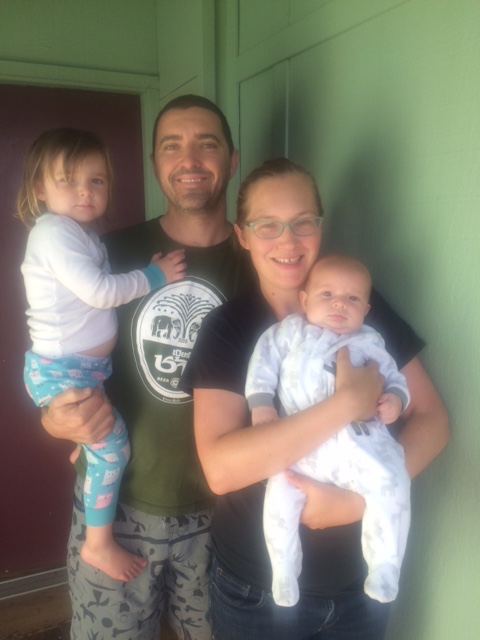
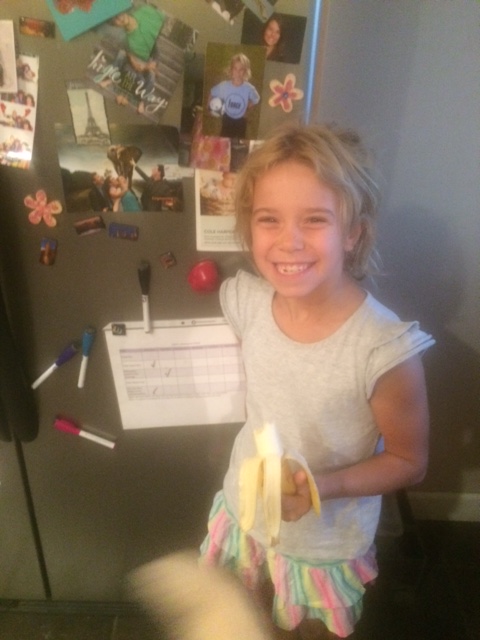
Meg and Dean Hoornaert, their son Dexter (9) and daughter Kyle (8) live in a modest ranch house. They are a textbook nuclear family, yet they do not thrive in isolation. Their neighbor watches the children after school, but also stayed for dinner and an exciting game of Uno, which crafty Kyle won hands down.

imgresMeg and Dean don’t have a white picket fence. In fact, they are tearing down the fences across three backyards so that children and dogs will have more space to run. Several neighbors dropped by to coordinate the upcoming yard expansion.

They also have an open door policy; anyone who arrives at their home gets assistance. Around 9:00 p.m. a young Indian man knocked and entered. Apparently his car was stuck. How it broke down on this side street and how he knew to seek refuge in this house is beyond me. Perhaps it was because we were laughing so loud at our game. Anyway, Dean welcomed the man inside and arranged for an Uber.

imagesMeg and Dean have only one car, which sits in the driveway most days. Their neighborhood is hardly urban, but they can walk to stores and cafes, the library and the post office. Dean rides his bike to Intuitive Surgical in Santa Clara, where he’s been an engineer for eighteen years. The children walk to school; Meg substitute teaches and often walks as well.

Their single car garage is devoted to bikes – many bikes. They each have their own and there’s a pair of tandems for family trips. Meg and Dean toured before their children were born, and are planning more now that Dexter and Kyle are bigger. Next year, the family is taking a sabbatical to travel around the world.

imgres-1That may seem an extraordinary luxury for a young family, but Meg and Dean understand that financial independence is not just a function of what you earn, but also how much you spend. They never bought that second car, the bigger house, the vacation house. What they enjoy – outdoor activities and time with their children – doesn’t cost a lot.
Dean’s bucked the Silicon Valley trend to job hop. “I had a chance to go to Apple a few years ago, but I turned it down.” He’s employee #75 at Intuitive Surgical, developer of the Da Vinci robotic surgery device. Steadfastness has made Dean financially secure. “I have a good friend at work who’s moving to a new job. We are really going to miss her. I wonder why she’s moving on when I am thinking of retiring.”

IMG_4781An evening with the Hoornaert’s is interesting in what’s missing. Our dinner was simply but hearty, served up family style. We didn’t discuss water or real estate, California’s two main topics of conversation. Conservation is the general consciousness of the Hoornaert household. Their real estate is the center of family life first; their investment second. There’s no TV. A piano occupies the wall where most people would hang that. Kyle and Dean played some wicked four-hand duets.

IMG_4782In the morning, amidst the coordinated choreography of getting five people cleaned, dressed, fed, and out to five different places, Dexter had yet to come up with a response to my question. He’s an analytic soul, who accepted my query with gravity. His morning chore was to put out the recycling. “We just need less stuff.” Perhaps he wanted his chore lightened. More likely, I think he understood the values his parents lived. The less stuff we have, the more choices will be available to us.

How will we live tomorrow?

“Tomorrow I will live pretty much the way we do today.” – Dean

“We just need less stuff.” – Dexter

“We’re going to go to school and it will be fun.” – Kyle

“We’re going to live in love.” – Meg

“We will live with less stuff. We are in a sweet spot where energy and possessions are over abundant. That is not sustainable, Contracting will not be bad.” – Dean


Posted in Responses | Tagged , , , | 3 Comments