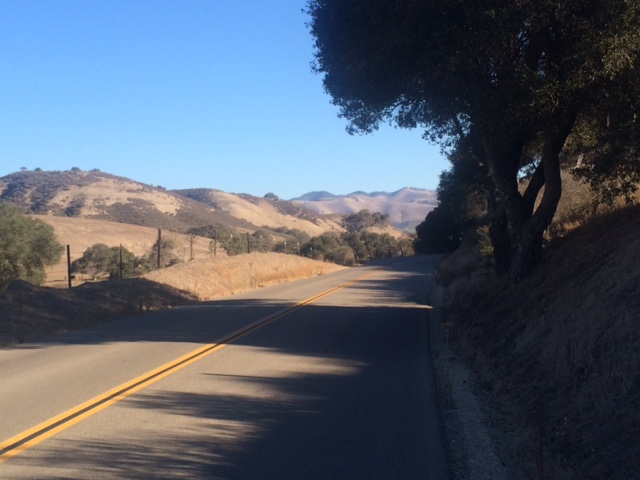
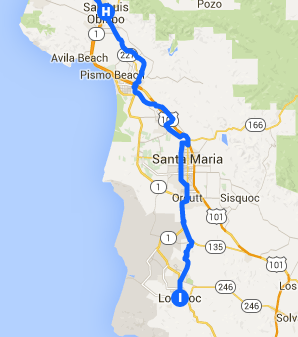
Trip Log – Day 177 – Thousand Oaks, CA to Studio City, CA

Screen Shot 2015-10-28 at 11.23.31 PMOctober 29, 2015 – Sun, 80 degrees

Miles Today: 46

Miles to Date: 9,175

States to Date: 25

The Ronald Reagan Library is the first Presidential Library I have visited on my trip, and it’s inspired me to pedal to more. So-called Presidential Libraries are a modern invention. Part library, mostly museum, and total spin, every president of my lifetime is enshrined in a monument of his greatness. The Ronald Reagan Library conformed to my expectations in many respects. It’s a reproduction California Mission structure on a gorgeous site. The docents I met were all middle-aged, tan, well coiffed Californians; Reagan’s most popular demographic. But I was surprised at the size and diversity of the visitors. The place was packed on an October Thursday morning with a broader array of diversity than I expected. In the 35 years since he was elected our country’s politics have shifted so far right, that Reagan is now a centrist, and sometimes even a liberal hero.

imgresHis actions are presented in sync with current tastes. Displays about how he stood down free speech advocates during campus unrest while governor of California also stress how much he increased funding for education. Descriptions of his environmental achievements fail to mention how James Watt, his Secretary of Interior, dismantled the environmental movement. But more important than how the curators tweak the message to popular taste, the Ronald Reagan Library illustrates how events, often beyond the control of the President, shape his legacy. Reagan got a huge boost when the Iran hostages were freed on Inauguration Day. Then, 71 days later, he was shot and survived, and the United States had our first bionic president. The guy was sharp and he was a great communicator, but he was lucky how events conformed to his message. Under Reagan, Americans could really believe we are a special people.
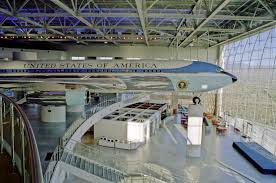
imgres-1The building is well organized and sited, but the museum itself is terrible: cramped, cluttered and chaotic. I came to dead ends several times. The Air Force One Pavilion, however, is terrific. It’s great fun to stroll through the plane that served eleven Presidents. The control panel where the nuclear codes and black box were kept was eerily like the ones I witnessed in North Dakota’s Missile Alert Facility.


IMG_4980 IMG_4979 images

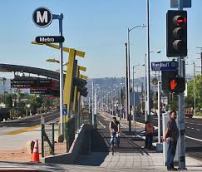
Simi Valley is not all that close to LA. I cycled many miles up and over Santa Susana Pass, against Santa Ana headwinds, before I landed in the San Fernando Valley. Fortunately, I had a nice bike path along the dedicated Orange Way bus line for over ten miles. However, the last five miles, along Ventura Boulevard at rush hour, were dicey. I have never seen so many stores that cater to the beautiful body. Want a gym? Massage? Cosmetics? Mud bath? Pilates? Tummy tuck? Laser hair removal? Fat freeze? Aroma therapy? Yoga? Herbal elixir? It’s all on Ventura Boulevard in Studio City, TV Capital of America.

images-4 images-3 images-2

Posted in Bicycle Trip Log | Tagged , , , , , | Leave a comment

Profile Response: Helen Spencer, Reed College Cooperative Housing, Portland, OR


HWWLT Logo on yellowI never lived in a college dorm, so I never knew the joys of an 11 p.m. fire drill until my conversation with Helen Spencer and her mates in Reed College’s cooperative housing was terminated by an ear-splitting alarm. We exited to the assigned meeting place, dogs and pet rats in tow, until campus security gave us an all clear and we returned. Now that I’ve had that experience, I don’t need to do it again. But our conversation before the drill is worth savoring.

Reed is a small liberal arts college in southeast Portland with a reputation for academic rigor and independent thinking; a liberal arts college in the purest sense. Reed’s mission statement stresses academic inquiry; academics are valued for their own sake rather than practical application. The college has two cooperative houses as alternatives to dorm living. Students vie to get in, but coops aren’t for everyone, since they take more time and energy than dorm life.

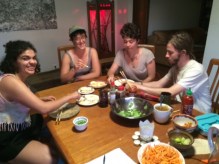
imgresThe night I stayed at Reed, we had a long and delicious dinner, with far-reaching conversation that touched upon tomorrow. We discussed strategies for building consensus. We wondered what boredom felt like. Is it understimulation or a lack of caring; withdrawing from our surroundings or a childhood response to being overwhelmed? We talked about Reed’s Honor Principle and how it’s distillation of the Golden Rule permeates the culture. “The Honor Principle is prescriptive. At Reed, our objective is always to have as little policy as possible to achieve accord.”

Helen and housemate Justin are both in their senior thesis year. Helen is retracing an oral history project from Southern Appalachia, originally recorded in the 1970’s and relating it to today. Justin, a philosophy major, is weighing two different thesis options: Should he explore how one differentiates between not understanding something because you haven’t explored it enough versus not understanding something because it doesn’t make logical sense, or; if philosophy is a premise for an argument, what is intuition’s role in philosophy? Either way, I felt far from my own problem-set based college education.

IMG_3890For Helen, “living in a coop is the best way to lead the life I want to lead. I came from a very unhappy family. Coop living is a way to reinvent the heterosexual monogamous narrative. I want that alternative. It’s a basic form of rebellion. It also makes economic sense. I am prone to depression. When I am living with others I respect, they light the fire under me. I want to spend time with people who support my instincts. I want to be surrounded by those people all the time. I want to be there for them and have them there for me.”
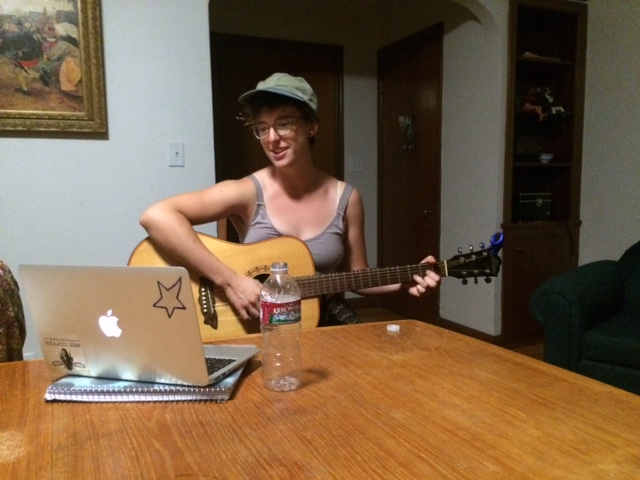
Housemate Lyle added, “We are social engineering all the time. The phrase ‘intentional living’ is often used. We are trying to make a family that is not a family. We have allowances for personalities but we agree that we will get along.”

Helen continued, “We have to balance taking care of ourselves and taking care of other people.”

That afternoon, Helen had attended a memorial service for a Reed classmate and close friend who died over the summer. At one point in the evening, she was overcome with emotion by the loss. She picked up her guitar and sang a beautiful, plaintiff song she’d written. The entire group listened with quiet respect. I recalled the depth of grief I felt when a high school classmate of mine died, and later one of my close college friends. I appreciated the support Helen found in this household. Singing in front of people who cared about her and her grief was so very different than singing alone in her room.

How will we live tomorrow?

IMG_3892“There are two ways I can think of going. What is the ideal? What is the actual? When I envision the ideal I envision coops across the world. The coops are ecologically informed. I envision an equitable system of governance that is beyond nations. When I dwell upon the ideal, I don’t want to consider the actual.”


Posted in Uncategorized | Tagged , , | Leave a comment

Trip Log – Day 176 – Santa Barbara, CA to Thousand Oaks, CA

Screen Shot 2015-10-28 at 11.23.10 PMOctober 28, 2015 – Sun, 80 degrees

Miles Today: 70

Miles to Date: 9,129

States to Date: 25

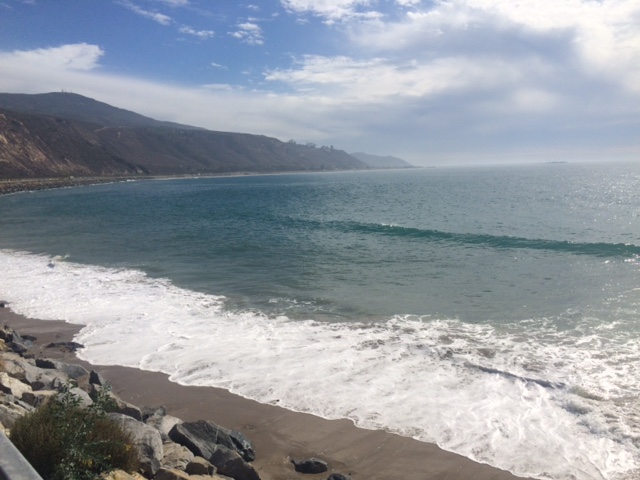
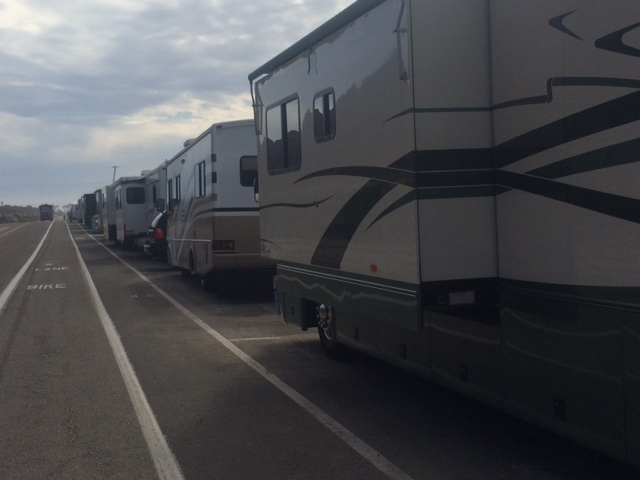
IMG_4962The bike path south along the Pacific Coast Highway is well marked and worth hopping back and forth across US 101 in order to enjoy the times the path hugs the ocean. Along one four-mile stretch the route stretches along a seawall where wave overspray refreshes riders. In another section I rode tight to RV’s set up along the shore. I felt like a voyeur checking out the middle-aged people lounging on their chairs, smoking and staring out to sea. Seemed boring to me, but relaxing is not my forte.

IMG_4960

imagesThe path dissipates in Ventura, so I traveled though the center of this pop legend town. It’s got a good vibe, but more second hand shops per strip of storefront than any town in America. All signs of bike path disappeared east of town. It took some time to find my way to Oxnard, but once I did, I sailed east past the flat farmland with a strong tailwind. Going eighteen miles an hour without having to pedal is like being on an amusement ride!

IMG_4965

All good things must pass, and eventually I had to climb Potrero Road, a few miles of very steep grade that bought me to Thousand Oaks, an affluent bedroom city.

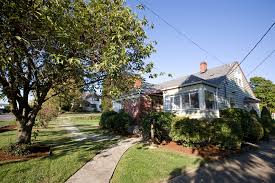
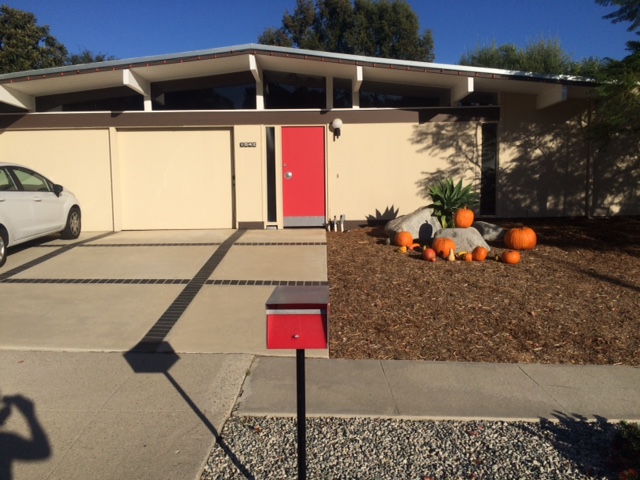
Serendipity took me past a development of Eichler houses, one of the few developers that built Modernist residences. I met several people in the well-preserved development, each of whom loved their iconic home. Note how the mailbox matches the front door. Modernists are cool control freaks.

IMG_4966

Posted in Bicycle Trip Log | Tagged , , , , | Leave a comment

Profile Response: Sean Andreas, The Circus Project, Portland, OR


HWWLT Logo on yellowHomeless people are, by definition, unhinged from their roots. They drift in seemingly random ways, but come together in places that accommodate them with benign weather, supportive services, or community acceptance. Portland, Oregon, a place where those three attributes come together, is a haven for homeless people. Every person I talked with in that city, regardless of economic or social standing, felt a responsibility toward street people and supported services to help them move to more stable conditions. Thousands of homeless people sleep on Portland streets every night; hundreds of them are youth.

Obviously, what these youth need is circus.

IMG_3875

That may be a cheeky statement, but in fact, circus performing has been the path out of homeless for many Portland youth thanks to The Circus Project, a non-profit group founded by Jenn Cohen to train youth, in particular homeless youth, in the circus arts. Seeing Steve Oplin’s film about this unusual organization prompted me to visit The Circus Project in their warehouse facility on the edge of downtown Portland.

IMG_3885Sean Andreas, who started volunteering at The Circus Project three years ago and became Program Director last year, toured me through the high, open space the company moved into in April. Several young women swayed on ropes and rings on a weekday afternoon. Since moving into its own space, the Circus Project offers more classes and programs. The balance of fee paying and scholarship students keeps the organization viable. Beyond specific classes, The Circus Project has drop-in hours that are particularly useful to homeless youth. “Portland has a romanticism among the homeless. We have a tight core, good public transportation, and Portlanders are kind.”

imagesThe Circus Project performs four major shows a year at the Alberta Rose and Echo Theaters in Portland – two of the larger performing arts venues in the city. “Circus studios have been thriving in Canada and Europe for years. Now they are beginning to open in the United States.” The Circus Project offers opportunities for people of means to learn circus arts. But it also offers homeless youth an opportunity to get off the streets and onto the stage.

How will we live tomorrow?

IMG_3878“Fitter. I would hope one of the goals of The Circus Project is to eliminate the barrier between those so have and those who don’t. Performing arts are a way for the homeless to have a voice.”


Posted in Responses | Tagged , , , , , | 3 Comments

Trip Log – Day 175 – Santa Barbara, CA

Lompoc to Santa BarbaraOctober 27, 2015 – Sun, 80 degrees

Miles Today: 20

Miles to Date: 9,059

States to Date: 25

Santa Barbara is paradise. The weather is perfect, the architecture stunning, the people thin and rich. That is, once you overlook the street people who have commandeered the best spots on the beach and all the parks. Even they seem pretty content to lounge in the lovely sea breeze.

imgresI had an early morning interview with the city engineer responsible for overseeing the newly refurbished desalinization plant. Santa Barbara’s water woes are serious. Despite impressive conservation, they are siphoning the dregs out of their reservoirs. But, because this plant will come online and supply about 70% of Santa Barbara’s water needs, with the potential of meeting 100% of current demand, there’s a sense that the water issue is manageable, as long as you’re copasetic with processing sea water.

IMG_4951

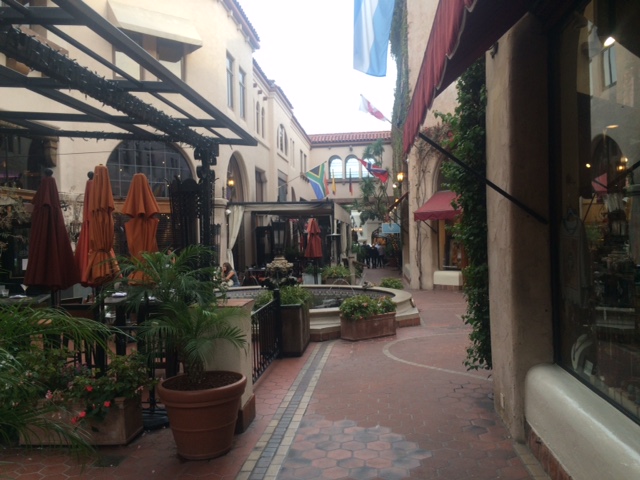
I spent the rest of the day playing tourist: the waterfront, the Mission, the beautiful shopping arcades, the elegant library. In late afternoon I visited the farmer’s market.

IMG_4954 IMG_4955 IMG_4957 IMG_4958

I’d spent a week trying to connect with my brother-in-law Matt, a long-time Santa Barbarian and neat guy, but plans never gelled. So, I found myself in paradise without a place to lay my head for the night. I could, of course, join the many other middle-aged homeless guys with bikes along the beach. But fate has been more generous to me than to them, so I figured I could cough up the cost of a motel.

images-1In the meantime a local cyclist invited me for a beer at Figueroa Mountain Brewery in the funk district. I arrived early, snagged a spot at a community table, and before long was chatting with a personable IT wannabe explorer and a trio of Bakersfield guys on a business trip to the coast. When the men with expense accounts heard my story they insisted on buying me beer and dinner, Eventually, I met the cyclist, and her friends, as well as folks at other tables. When time came to disband Kerry, the IT guy, offered me the floor of his apartment three blocks away. Way more fun than a motel.


 

Posted in Bicycle Trip Log | Tagged , , | 2 Comments

Profile Response: Tyler Termeer, Executive Director Cascade Aids Project, Portland, OR

HWWLT Logo on yellowA positive HIV test changes a person’s life. Too often for the worse. But sometimes it’s a wake-up call to action that has tremendous positive effect. Tyler Termeer was a college junior studying stagecraft when his HIV diagnosis compelled him to move into non-profit work. He has been an advocate of HIV awareness and services as well as a representative for living well with HIV for over a decade. A year ago he moved to Portland with his partner and their two children to become Executive Director of the Cascade AIDS Project (CAP). “This is a transformative time in HIV work. People with access to care and support live longer. I feel great and have been fortunate to work for amazing organizations.”

imagesCAP is one of the oldest HIV organizations in the country; thirty years old this year. It began with a group of men and women sitting around a living room trying to figure out how to advocate for their friends who were dying. “Now, it’s grown up. We’ve gone from a staff of two to a six million dollar organization with a staff of 55. But the backbone of our organization is still our 600 volunteers.” CAP has evolved as people with HIV live longer. Beyond medical treatment, people need housing assistance, employment, and educational services. CAP augments its direct services by networking with other community organizations on behalf of people with HIV. “We don’t own or operate housing. We err on the side of what we know. We work with developers and advocate for affordable housing.”

CAP operated with interim directors for three years until Tyler took the reigns, pivotal years in HIV care due to the Affordable Care Act. One of Tymer’s first initiatives was to develop a five point strategic plan.

images“How do we diversify our income stream from a 70/30-government/donor split? Our biggest traditional fundraiser, the AIDS Walk, has been supplanted by the largest art auction in the Northwest. We are also evaluating the vale of charging for some of our services.

“We want to strengthen organizational partnerships within the community.

“We must address health equity in the community. Access to care is much lower for economically disadvantaged, people of color, youth, and homeless people.

“We want to elevate CAPS leadership capabilities.

images-1“Finally, we have to remain relevant as a traditional AIDS organization. Is the term AIDS limiting in this period of integrated services? Does it inhibit our ability to work with women, youth and people of color? Has the group grown too large to be considered a project? Should CAP open a federally designated health center? How can it serve Portland’s growing homeless youth, when it currently only offers services to people over eighteen? The demographic of the visible LGBTQ community in Portland is still mostly white men, but there are all these other people with HIV.”

How will we live tomorrow?

“It’s an interesting question for any AIDS service organization right now. We are living in an era where we have learned so much about the epidemic that people are living long and managed lives. People who have access and use medication are 96% less likely to transmit. People who are virally suppressed are less likely to transmit. Our challenge is to create an environment where people will stay on track with their care.

imgres“The challenge is thinking about how far we have come and take a moment of pause to stop and think about what do we do, how well are we doing it, and have we really completed our mission?

“CAP is a medium to large organization; we do not think we should ‘go’ yet. We need to grow and change, but that growth has to have integrity with our original mission. We want to be here thirty years from now. We are purchasing a building; we are looking at an increased scope of services. We want to expand what we offer our existing population.

“I hope if we find a cure or a vaccine, we will still be living as an organization that makes sure people have access to vaccines or cures and that we exist as a historical organization that tells the story of the HIV epidemic.

“How do we get to the point when HIV segregation isn’t necessary? We should be there now. We have so many people whose cohort of conditions is more complicated than HIV. But there is still a stigma with HIV that doesn’t exist with other chronic diseases. Until that changes, we will need specialized services.

Nationally we have about 40,000 new infections per year. That remains stable. But the cascade of care is troubling. 25% of people are unaware of their status. Of the remaining 75%, not all are in care. Fewer follow all of their care procedures. Only 25% of people living with HIV have a suppressed virus. We have to do better than that.”

Posted in Responses | Tagged , , , , , | Leave a comment

Trip Log – Day 174 –Santa Maria, CA to Santa Barbara, CA

Lompoc to Santa BarbaraOctober 26, 2015 – Sun, 80 degrees

Miles Today: 67

Miles to Date: 9,039

States to Date: 25

Rule number one of bicycle touring: always listen to knowledgeable locals. My host last night, Bill Korn, gave me detailed directions on back roads from Santa Maria to Santa Barbara that proved to be challenging, beautiful, and worth following.

IMG_4931Faxon Canyon Road follows a valley rather than a traditional canyon. The valley floor has all sorts of agriculture, with sculptural hills rising on either side. I was intrigued by yet another method of efficient harvesting; a twin tractor setup that that included picking and packing in one movable process. I could not figure out what the laborers were harvesting – maybe broccoli?

IMG_4932 IMG_4933

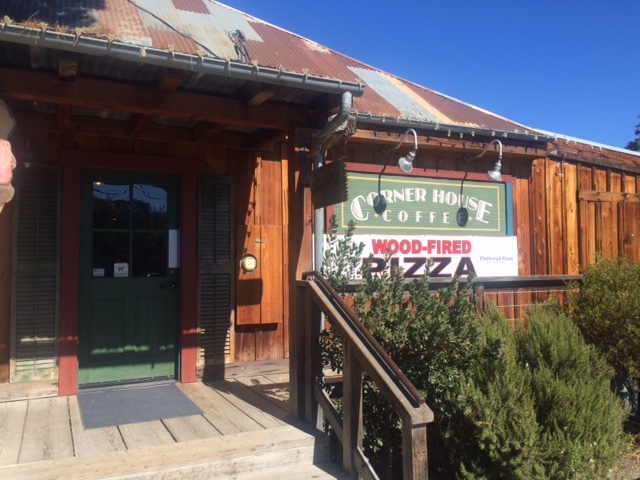
IMG_4939As I climbed higher the fields gave over to vineyards. I had been warmed that Los Olivos, midway along my route, was a tony wine tasting town, but I wasn’t prepared for the disdain every set of eyes shot my way. The chicken panini at Corner House Coffee House was the most expensive and worst sandwich of my trip, served with a side of attitude. The Internet didn’t work (what coffee house doesn’t have superb Internet?) but the leggy staff couldn’t care less when I mentioned it. I longed for a tacqueria. Mexicanos in hairnets standing behind a steam table are so much nicer than gorgeous California girls who don’t give the time of day to a grey haired guy in a garish cycling shirt.

IMG_4936I was happy to shake the dust of Los Olivos from my feet, even if it meant cycling through the hottest part of a very hot, cloudless day. The grass along the road is beyond brown. It’s translucent stubble waiting to spark.

IMG_4942

IMG_4944There’s a pittance of water in Lake Cachuma. The surface of the reservoir is well below the lowest discharge gate. A big green hose siphons water through the dam, an inelegant solution to a problem the dam designers never considered.


IMG_4945Before the big climb over San Marcos Pass, I ducked onto Stagecoach Road, a wonderful meandering path up and up and up. I passed under the giant bridge of Route 154, and eventually wound up higher. My legs were plenty tired when I finally reached the big descent into idyllic Santa Barbara.

IMG_4946

Posted in Bicycle Trip Log | Tagged , , , | Leave a comment

Profile Response: Gerhardt Quast, Portland OR


HWWLT Logo on yellowWe often debate the influence of nature versus nurture in childhood development. But how do the adult forces that act upon us shape middle-aged lives? I know several men whose careers were cut short in their fifties, leaving them without a full span of professional satisfaction or the economic stability they’d anticipated. Gerhardt Quast is a thoughtful man with a background in committed community. Now he lives alone. I could not help but wonder how his career reversals contribute to his more isolated life.

“My friend’s say I’m a hoarder.” Gerhardt remarks without irony as he shows me through his townhouse in Portland’s St. John neighborhood. I am inclined to dismiss his assertion because I’m pretty sure a true hoarder would never admit to it, nor would he invite someone to stay in his home. Gerhardt does have a lot of stuff and many unpacked boxes in a place he’s owned over a year. But I have unpacked boxes in a house I’ve occupied twenty years; I just have the benefit of hiding them in a basement.

Gerhardt’s originally a machinist from Duluth. He’s moved between Minnesota and Oregon a few times as work opportunities sprouted and failed. He had a stable job as a Quality Assurance engineer, secure enough to invest in a house, but he was laid off in July. Like many men unemployed in their fifties, Gerhardt’s disenchanted with his economic options. He’s not pursuing another engineering job. Instead, he’s decided it’s time to do what he wants. He’s studying music and hopes to be a bass player in a band. It may not be the most promising career path at this stage in his life, but it’s time to do what he loves.

Gerhardt is an active member or Portland’s Society of Friends and was involved in one of Portland’s early cohousing communities. He speaks of community with a tinge of reverence and regret, as if he misses it but doesn’t have the energy to commit to it anymore. Late a night I heard Gerhardt playing his guitar. He is very good. I hope music brings him the connections he seeks.

How will we live tomorrow?

imgres“When I lived in Cascadia Cohousing, it was barely intentional, but that is what you need. What I think is going to work is more communities that are organized. There will be more cohousing, more CSA’s (community supported agriculture).

“There are times that I am glad I don’t have kids. I have nieces and nephews and I am embarrassed by what we are leaving them.”

Posted in Responses | Tagged , , , , | Leave a comment

Trip Log – Day 173 – San Luis Obispo, CA to Santa Maria, CA

SSLO to LompucOctober 25, 2015 – Sun, 70 degrees

Miles Today: 47

Miles to Date: 8,972

States to Date: 25

You know you’ve been on a diet of excessive beauty when a day rolling along the California coast seems ho-hum. But after Big Sur, mere hills and valleys, distant seas and invigorating salt air are commonplace. So, instead of dramatic views I offer close-ups of the many trees and plants I found along a single stretch of California Route 227. New England may be glowing in fall colors this time of year, but California offers its own vegetative charm.

IMG_4915 IMG_4916 IMG_4917 IMG_4914 IMG_4919  IMG_4921  IMG_4918 IMG_4922IMG_4920

Posted in Bicycle Trip Log | Tagged , , | Leave a comment

Profile Response: Mike Riscica, Portland, OR


HWWLT Logo on yellowMike Riscica lives in top floor of the Biltmore, a classic early twentieth century apartment block in the Alphabet Soup area of Portland; an appropriate place for a young architect. Within minutes of my arrival, Mike grabbed a Car-2-Go a block away and whisked me downtown to visit Michael Grave’s famous Portland Building, the first significant Postmodern building. “I live in like a five mile bubble.” Mike explained as we strolled back toward his flat, stopping along the way for dinner, then drinks. Mike’s from New York City, and his life in Portland is laced with the attributes we assign to New York hipsters, without The Big Apple’s hassles.

imagesSince architecture school, Mike’s worked for small design firms and the City of Portland. The weekend we met he’d just given notice. At age 35, he was striking out on his own. Although he will likely continue design work on the side, Mike’s main enterprise is a series of blogs and books aimed at young architects; most importantly an online book aimed at helping people pass the Architectural Registration Exam. Mike’s a social media whiz with an entrepreneurial streak, and a bit disenchanted with architectural practice. “The Internet will chip away at traditional models of practice. The big firms, SOM, will not disappear, but will have diminished influence. Small firms will find more specific niches as client’s fine tune the right designer for their project.”

imagesMichael may decide to be more directly involved in design in the future, but for now his full energy is devoted to creating a viable business from his experiences as a young professional and his expertise at completing the registration exam. “I try to be optimistic. Being an architect is great, but it’s also tough and super competitive. The profession will be fine if we can just stay away from the narcissism.” Mike doesn’t have to worry about that.

How will we live tomorrow?

imgres“The Internet will play a much bigger role than it already does. It will move architecture in very good ways. There will be more ways for entrepreneurs to work outside the box.

“From a negative perspective, Internet communication will increase but face-to-face communication will become more important as it becomes more rare. I see a lot of traditional beliefs getting thrown out the window.

“Everything will be redefined. The idea of work, the idea of family; it’s all so different than it was a few years ago, and it is going to evolve further away from our common definitions.”

Posted in Responses | Tagged , , , , , | Leave a comment