Trip Log – Day 127 – Portland, OR to Salem, OR

Portland to SalemSeptember 9, 2015 – Sun, 75 degrees

Miles Today: 56

Miles to Date: 6,601

States to Date: 23

I rode out of Portland through grey skies. Stopped at Winco for yogurt and bagels. Got extra for the homeless folks hanging around. Homeless are all over Portland. Jittery guys who can hardly hold on to their cigarette. Massive woman wrapped in shawls spread out on the sidewalk like muffin tops. I acknowledge them, I try to respect them, but they jar my sensibilities. Perhaps that‘s better than being numb to them. Locals tell me that homeless come here because the climate is mild, the services good, and neighbors are kind. It probably is better to be homeless in Portland than in other places. But being homeless can’t be better than having a safe, supportive home.

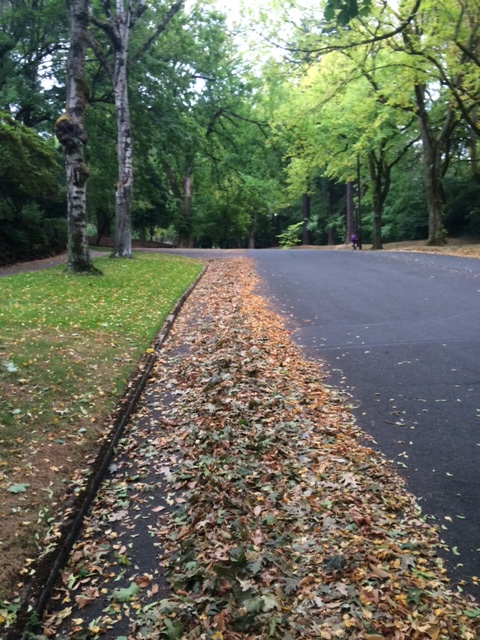
IMG_3895I rolled through Crystal Springs and watched well-scrubbed children in khakis eat breakfast in chandeliered dining rooms before school. I pedaled through Clackamas and passed bands of Mexican American kids with T-shits pulled over tortilla bellies walking to school. In Gladstone three middle schoolboys buzzed by me on their skateboards. A fourth, with long blonde hair undeniably cool, sauntered along at his own pace. I saw my first gold leaves. The calendar pages register two more weeks of summer. But it is fall.

IMG_3897IMG_3899IMG_3900

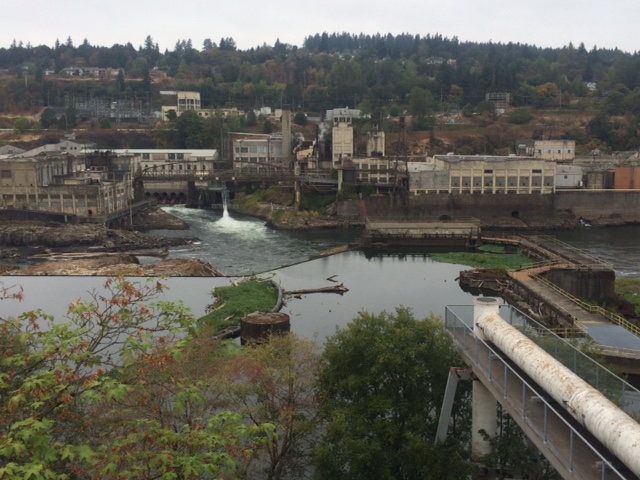
Outside of Oregon City, terminus of the Oregon Trail and the state’s first town, I stopped to study Willamette Falls, a complex array of waterfall, power plant and aging industry. After a few more miles of narrow road, the valley spread out into wide fields. Woodburn had so many taquerias and bakeries I just had to stop and eat a few sweet buns.

imgresI passed the 45th parallel, halfway between the equator and the North Pole. I definitely felt warmer on the far side of the sign.

I reached Salem in early afternoon and enjoyed touring the Capitol – a 1930’s Deco extravaganza. Fred Astaire and Ginger Rogers could have filmed a movie there.

images imgres images-1

I stopped downtown to get my third set of bike lights. I’ve only used lights a few times on my trip, but they keep getting stolen. Instead of buying difficult to remove ones – which get removed anyway – I bought ones that are simple to attach. I plan to keep them in my bags and only attach when needed. Let’s see if that strategy works.

At a street corner I saw a young couple in an ugly fight – loud profanity, pushing, spitting. I witnessed similar fights in St. Helens, on Portland streets, even within the Portland Library. There are so many young people who only know want and disappointment, who can only act from rage. They likely exist everywhere, but Oregon’s permissive attitude toward street people allows them to be more public. Regardless, such needless human suffering brings me down. We have enough for everyone to get his or her share. Why are we so cruel to each other?

My warmshowers hosts, Sharon and Dave, elevated my spirits with good food, good beer and great conversation. They are foster parents for the local shelter and had four of the cutest little kittens scampering over everything.

Posted in Bicycle Trip Log | Tagged , , , , , , | Leave a comment

Profile Response: Sam Hancock, Idaho Falls, ID


HWWLT Logo on yellowWhen the Mormons fled to the West, they founded Utah. In short order they also settled areas north and south of the Wasatch Range. Their influence spreads throughout eastern Idaho and into northern Arizona. It seemed fitting that as I came toward the limit of their influence I met a man raised Mormon who grappled with his faith and ultimately decided he did not believe. To cease being a Latter-day Saint is a momentous decision.

Sam Hancock grew up one of seven children in the tiny town of Ucon, ten miles outside of Idaho Falls. At age 20, when many young Mormon men go on their mission, Sam fell away from the church. But he stayed near his family and in the past ten years has found equilibrium as a non-believer within the dominant culture.

Sam supports the recent Supreme Court decision to allow same sex couples to marry. “That decision is a big deal among Mormons. The LDS put out a statement that man-woman relationships are the only approved relationships.” Yet, in many ways he adheres to the Mormon emphasis on independent living. He worked for a few years as a truck driver and bought a modest house for $50,000 in a neighborhood that has seen better days. He lives mortgage free with a Mormon housemate, works as a freelance IT troubleshooter, drives his grandfather’s pick-up, and maintain s a simple life. His big endeavor in this moment is building a tree house in the massive tree that shades his yard.

IMG_3275“I want to take as few resources as I can and leave no footprints. As long as I’m not married or have children, I only have to work two to three months a year. Living here is cheap. The pick-up runs on propane, which is $1.30 a gallon. Insurance costs $17 a month. Utilities are cheap in Idaho Falls. The city owns the hydro plant. We pay a flat $20 a month. All my expenses are about $600 a month – everything.

“If I find a job that enhanced my quality of life, I would work full time. But I don’t want to work full time just for money.”

When I ask Sam if he ever thinks about getting married or having a family, he laughs. “Sure. All the girls here are looking for husbands. They’re just not looking for husbands like me. Not being a Mormon is a deal breaker every time.”

How will we live tomorrow?

IMG_3274“I remember asking my grandfather when I was a kid, ‘What would the future be?’ He lived on a farm, growing potatoes. He thought things would always be the same. I don’t see it that way because in my thirty years there is change every year. The future will not be like today.

“My concerns are resources. We are going to face the consequences of our actions. We are going to be forced to allocate resources. Here in southeast Idaho people don’t think about things like that. We have so much land and such cheap energy.

“I think people in Idaho are better at ‘Provident living’, which the Mormon Church espouses, than our neighbors in Utah. Utah has become a place where status matters.”


Posted in Responses | Tagged , , , , | Leave a comment

Profile Response: Kathy Vitale and Mike Sullivan, Pocatello, ID

HWWLT Logo on yellow“I love Idaho because it’s behind the times. We are the Alabama of the North. But we value the beauty, the pace, the quiet of this place.” Not everyone would agree with Kathy Vitale’s ode to Idaho, folks from Alabama in particular, but they made perfect sense on a warm Saturday evening sitting around a picnic table on a shady driveway turned patio beside a simple wooden bungalow nestled into the side of a hill on the edge of this railroad town. After spending a week in pristine Utah, it was relaxing to be in a place that wasn’t all shiny and trimmed.

Mike is from Colorado. He won a track scholarship to Idaho State University. “I got into town at night. When I walk up the next morning I thought I was in the wrong place. Idaho was supposed to be all mountains. Pocatello’s not that at all. But I stayed for school, and then I stayed for good.” Mike met Kathy through a friend. Their two daughters are on their own now. Their house has gorgeous rubbed wood, a cozy loft and few doors. Their yard includes a garden, large trees, many bicycles, and a sinuous fence Kathy made from willow branches. Their lives have a purposeful, gentle rhythm that would be difficult to match in Salt Lake or Denver. Everything flows.

IMG_3260 IMG_3261

Kathy is a teaching assistant in a nearby kindergarten; Mike teaches physics in the high school downtown. Eighty percent of the young children in Kathy’s school are on free or reduced lunch, while Mike teaches a full array of background and talents. He sees a shift in education from technical skills to analytical skills; a shift due in large part to standardized tests. It serves some students well, since analytic capability is more easily translated to many aspects of adult life. But students who struggle with concepts come away with little, since we aren’t teaching basic skills. Kathy is more tuned of the inequities in our educational system. “We think the poor are not doing enough by their children. But I disagree. Every parent is doing everything he can to raise his child well. We lose sight of how difficult it is for poor families. They simply can’t be as involved in their child’s education when they have so many pressures of work, transportation, food, and housing.”

Both Kathy and Mike acknowledge our country’s continued disinterest, and disinvestment, in education. Students in the United States are slipping in relationship to their counterparts around the world. There’s a widening gap between those with high educational achievement and everybody else. Everyone needs to be educated. As Kathy says, “Where did we get this idea that some education is more valuable, and some work is more valuable? Any work that is needed is valuable. It should be respected and compensated.”

How will we live tomorrow?

IMG_3257“The path we are on is unsustainable. Our goal has to be to create more common good.” – Mike Sullivan

“We need to provide more access to things for people with low incomes. Sports and extracurricular activities are important. Now, in Pocatello, you have to pay to participate in those things. I can afford to pay for my children but a lot of people can’t. It puts our low income children at yet another disadvantage.” – Kathy Vitale

Posted in Responses | Tagged , , , | Leave a comment

Trip Log – Day 125 – Portland, OR

Longview to PortlandSeptember 7, 2015 – Cloudy, 65 degrees

Miles Today: 25

Miles to Date: 6,532

States to Date: 23

 IMG_3862I started my day by pedaling the far reaches of Northwest Portland to Kelly Point Park, where the Willamette meets the Columbia. My route took me all through St. John’s, which has a wonderful collection of domestic architecture from the 1920’s through the 1960’s. The more recent stuff – not so good. The cloudy skies evaporated, the sun came out, and people flooded the streets. Portland is like Boston in that no own takes sunshine for granted.

IMG_3866 IMG_3864 IMG_3860 IMG_3858 IMG_3856

I returned to the city and spent the afternoon getting social media tips from blogging entrepreneur Mike Riscica. In case I didn’t have enough exercise, I had a steep, steep climb up the hills to get to my warmshowers host high above the city. I spent the evening in spirited discussion with a group of 50-somthings and their 20-something children about tomorrow.

images images-1

Posted in Bicycle Trip Log | Tagged , , | Leave a comment

Profile Response: The Troop Family Bountiful, UT

HWWLT Logo on yellowKadee and Brad Troop were married for five years. They wanted a baby. They were on vacation when they got the call. A boy was available but he had a rare genetic disorder. Within two days they had fourteen-day-old son and a host of challenges.

Zach is twelve now. He has EB (Epidermolysis Bullosa). An explanatory video describes EB as a lawn without roots: Zach’s top layers of skin don’t bind to the rest of his body. The ramifications are immense. Zach is easily bruised. Some wounds last a year or more. He’s prone to infection. His fingers and toes, arms and legs have to be wrapped every other day in sterile gauze to protect his fragile skin. Zach is also an eight grader, a member of the Student Council, a baseball player, and a Boy Scout. EB is an integral part of Zach, but it doesn’t define him.

Kadee and Brad found their rhythm in caring for Zach. Three years later they adopted Liz, whose birth mother abused drugs. They learned of a pair of twins with EB, and adopted Jane and Ellie.   Then Charlie, another girl with drug related syndromes. Alex, now two, is Jane and Ellie’s natural brother, whom the Troops adopted when he too was born with EB. The most recent addition to their family is nine-month old Haley, also born to a substance abusing birth mother.

Kadee and Brad have seven extraordinary children. They are also inspirations of how to love and care for one another. Kadee says, “Seven is the limit.” Then she laughs because no one believes her.

IMG_3197I spent a Wednesday morning with the Troop family; Brad’s day off from his bakery delivery job. “I can’t think of giving it up because the benefits are so good. We pay $30 a month for health insurance. Our minimum health care costs are $1,500 per month if nothing goes wrong. Of course, something always goes wrong.”

The four children with EB receive specialty care at Colorado Children’s Hospital. Kadee explains, “They have check-ups every three months, but we often have to travel to Denver in between. We’ve been there five months of the last six.” The Troops bought a camper van that they park in the hospital lot when in Denver. “We thought about moving to Colorado, but our family is here. We need our family as much as we need our doctors.”

As we visited, rambunctious children climbed on each other and their parents. Once they got comfortable, they climbed on me too. They clamored for cookies and ran up and down the stairs. In other words, the Troop kids are remarkably normal. But Kadee and Brad lift their EB children with extra tenderness, and soothe their other girls with measured patience. Kadee says, “My EB kids face physical obstacles that everyone can see. My other three daughters have internal conflicts and impulses that no one can see. I worry about all my children, but I worry about them more.”

IMG_3196I wondered why the children were indoors on such a nice day until Kadee explained, “Children with EB have to stay cool. They can’t take temperatures above 75 degrees.” During summer the children stay inside all day, except for early mornings and evenings. “We have a trampoline in the back yard. They love it. The scar tissue contracts their muscles. I watch them jump up, and for a moment, they’re weightless. Nothing’s pressing against them.”

Kadee and Brad provide remarkable medial care to their children. It takes an hour and a half to wrap the three younger children every other day. But they’re also remarkable in allowing their children to be as normal as possible. Their Facebook pictures of Zach playing baseball inspire other parents of EB kids. He attended regular Boy Scout camp this summer rather EB summer camp. Zach is strident about being as much like other boys as possible. “If people have to make an exception of something because of EB, I don’t want to do it.”

There is no cure for EB; the majority of people afflicted die before age 30. But Kadee and Brad are hopeful that current research will not only improve their children’s prognosis, it will cure them. “Stanford is making skin grafts that are in human trials. The University of Michigan is producing more stable collagens to bind the skin. The objective is to repair or replace the faulty collagen. EB can be cured.”

IMG_3193Kadee and Brad wear their responsibilities as gifts rather than burdens. “We wanted a family. We met Zach and God said, ‘This is going to be okay.’ Then we took in our drug babies and our EB babies. If you look at the big picture, you think no way can we do this. It’s too much. But we take it one day and a time and we do it.”

How will we live tomorrow?

“Technology will make our lives better.” – Zach Troop

“We grew up watching the birth of computers and the Internet. Now we want everything – and we want it now.” – Brad Troop

“We will always be dependent on our medical system but there is so much hope. We are awakening to the damage we’ve done to our planet and our health. We are on the verge of amazing things. Tomorrow is going to happen, whether we prepare for it or not, whether we are optimistic or not. I choose to be optimistic. – Kadee Troop

Posted in Responses | Tagged , , , , , | 2 Comments

Trip Log – Day 124 – Portland, OR

Longview to PortlandSeptember 6 2015 – Sun and rain, 65 degrees

Miles Today: 21

Miles to Date: 6,507

States to Date: 23

Today marked the four-month anniversary of being on the road and I celebrated by reverting to my roots – I went to yoga! Aside from morning stretches and deep uphill breathing I haven’t practiced organized yoga since I left Cambridge.

imagesMy Portland warmshowers host invited me to his Sunday morning class, so we walked to YoYo Yoga and joined about 35 others for what might pass for church in this city. The teacher quoted inspirational verse and got us chanting before he put us through challenging vinyasa flows. My muscles are a lot tighter than they used to be and my one-legged balance is skew, but I did okay. Terri Cole, one of the owners, told me about their cross-country trip to practice yoga in 100 studios in 100 days. They’ve got a cool blog.

I cycled up Terwilliger Road in the Portland mist to the southwest part of town to talk with the director of the Cascades AIDS Project to talk about tomorrow. I returned along the Willamette River past downtown and out the industrial corridor. Portland is a much more industrial city than I anticipated.

IMG_3851 images-1

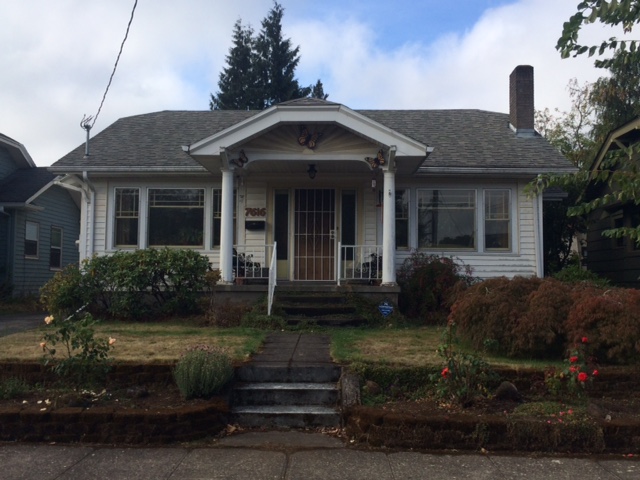
I crossed the beautiful St. John’s Bridge to the remote St. John’s neighborhood. St. Johns feels like a separate place, which it once was. Portland annexed the town of casual streets, tall trees, vintage bungalows and tiny ranch houses. It’s authentically funky.

IMG_3854My Quaker warmshowers host moved here eight years ago because he liked the atmosphere. He pointed out the neighborhood’s merits on our walk into the commercial district for dinner, good beer and live music at Slim’s. On the way home we stopped at the Mexican grocery for a sweet and took a different route through this fascinating neighborhood.

Posted in Bicycle Trip Log | Tagged , , , , | Leave a comment

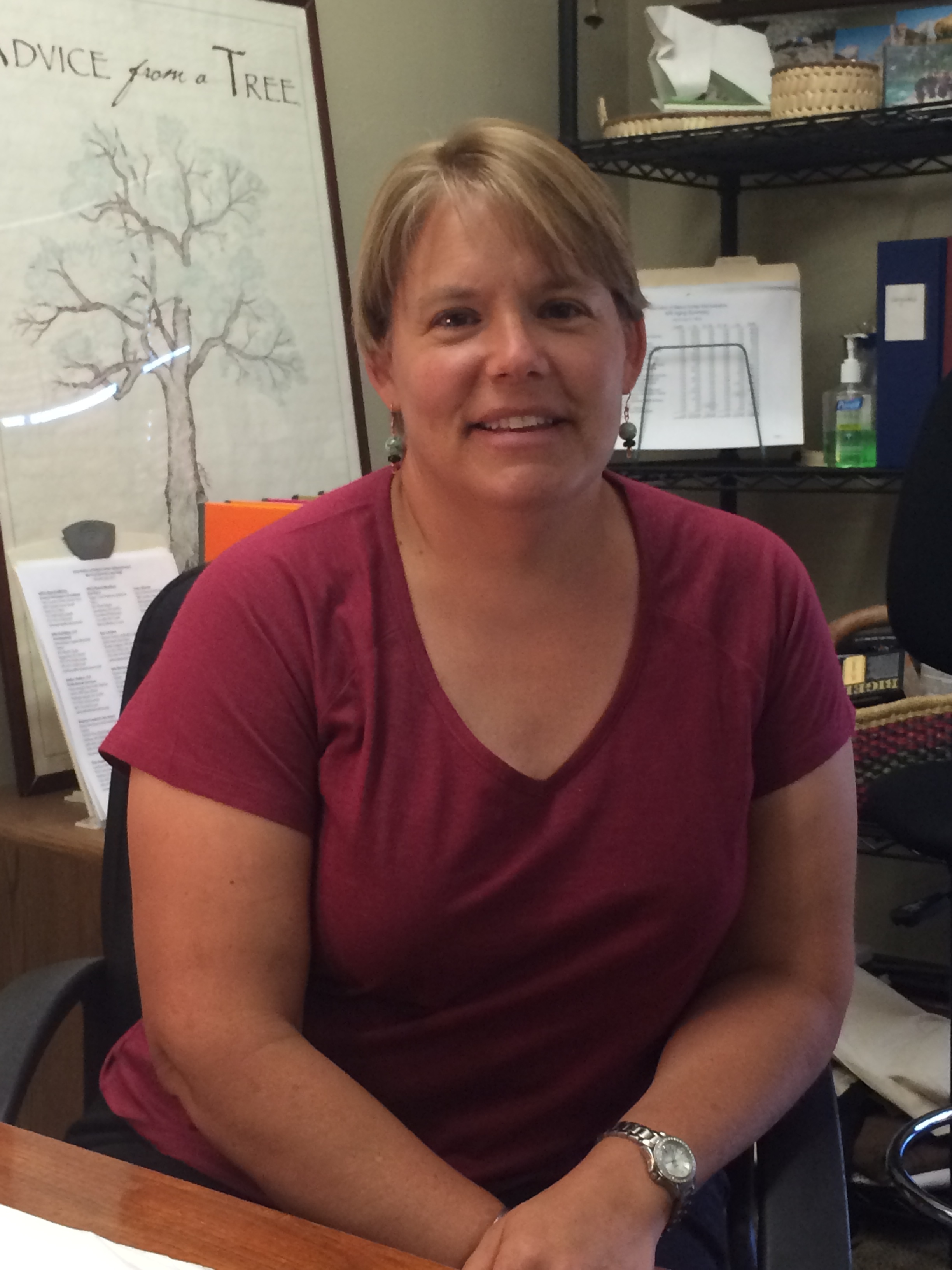
Profile Response: Jen Levy, Executive Director, Association of Nature Center Administrators

HWWLT Logo on yellowRegardless where your passion lies it’s difficult to make an impact in this world without two basic attributes: a communications network and administrative ability. The environmental movement and ecological awareness prompted the creation of nature centers throughout the world. The founders were environmentally passionate, but not necessarily savvy business people. Twenty-five years ago a grass-roots coalition formed the Association of Nature Center Administrators (ANCA) to provide a mechanism for nature centers to share ideas and become more effective organizations.

imgresToday, more than 600 members representing over 350 institutions around the world belong to ANCA. Jen Levy, Executive Director, shares a spacious office with her mostly volunteer assistants in a grand building that houses a number of non-profit groups as well as a local museum. It’s one of the few buildings in Logan more than fifty years old, and well worth preserving. ANCA is a small and nimble organization. Eight years ago, when Jen became director after holding a variety of positions that connected people to nature, she wanted to stay in Logan. So ANCA relocated here.
images-2“Every wildlife and forestry program has a shadow world of boards, budgets and staffs. That is what ANCA focuses on – making those aspects of organizations effective. We are seeing a significant number of people retiring from nature centers, many of whom have roots in the 1970’s.” These visionaries are often being replaced by people with more administrative capabilities.

imagesEach nature center’s mission is shaped by its context. Urban centers connect people to the natural environment in a more cultivated way than rural centers or places with a preservation focus. Universities have consortium programs with centers that include education and research. There are publicly funded nature centers that are integrated into their city’s budget. And then are there are outliers, like the Foxfield Preserve Nature Cemetery in Ohio. Still, every nature center has an educational component, and that component is evolving. “The traditional fourth grade field trip is changing. More centers are concentrating on educational programs for the entire family that often stretch over time. People want an extended connection. Centers tailor programs to the science curriculum of local schools.”

images-1The number of nature centers continues to increase, and their role in communities continues to expand. “We are shifting from an attitude of, ‘we educate, not advocate,’ to acknowledging that we need to advocate. We are beginning to see a shift from people being afraid that their kid will get burned by the sun or bitten by mosquitoes to an understanding that we need unstructured play time, outside; that people need to get dirty. We want to get away from ‘look don’t touch’ to ‘touch all you want.’”

How will we live tomorrow?

IMG_3236“My hope and our goal is to live with a better, stronger connection to the natural world – and that we are all members of our local nature centers.”

Posted in Responses | Tagged , , , , | Leave a comment

Trip Log – Day 123 – Longview, WA to Portland, OR

Longview to PortlandSeptember 5, 2015 – Sun and rain, 65 degrees

Miles Today: 55

Miles to Date: 6,486

States to Date: 23

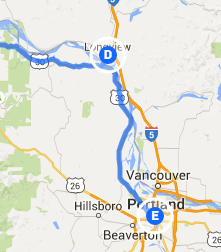
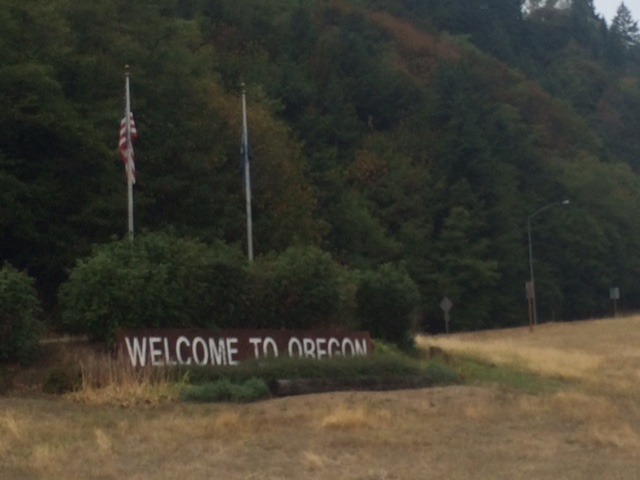
We got a late start pedaling out of Longview. It was 9:30 before I scaled the tall bridge over the Columbia River, observed the two-mile long Weyerheauser plant on the northern shore and entered Oregon. I have now been to all 48 contiguous states – only 25 more left by bike!

IMG_3843 IMG_3844

imgres-2US 30 in Oregon proved a easy ride though less spectacular than my route yesterday. I stopped at St. Helens for a Safeway lunch. I am a total fan of their kale super food salad. When I get the $6 lunch combo meal and ask for that as my main portion the staff always says, ‘You can have fried chicken, you know.” Sometimes I get chicken, but I the kale salad is too good to delegate as a side dish.

The overcast sky turned to rain. I sat out the storm and then and continued on through intermittent clouds and drizzle. Northwest Portland is industrial but quiet on a holiday weekend Saturday. I veered into the Alphabet District (so named because the east/west streets run alphabetical from Burnside to Wilson. I don’t know what happened to ‘A’). Immediately, Portland is different from other places. Sure, there is grunge clothing like Seattle. But there are also women in elegant long skirts, coeds wearing facsimile cheerleading uniforms, aging hippies clutching walking sticks as they parade the sidewalk, and guys in pressed khakis. Anything goes doesn’t mean sloppy. It literally means the full range of personal appearance is embraced.

IMG_3846 IMG_3848 IMG_3847

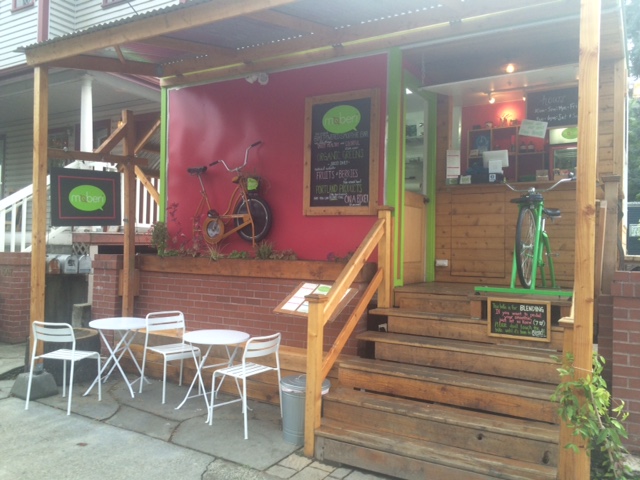
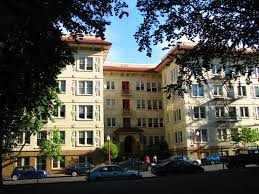
I happened by a lovely branch library to take a writing break, then meandered down 23rd Street past boutiques and cafes. I could have pedaled my own smoothie, but I had cycled enough, so I made my way to the stately Biltmore Apartment building on Nob Hill where my warmshowers host lives on the top floor with a broad view of the city.

imgres-3 tumblr_m7tcm6uIv31qzqju7o1_r4_1280

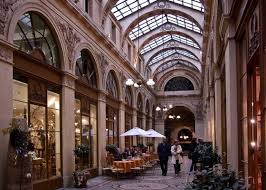
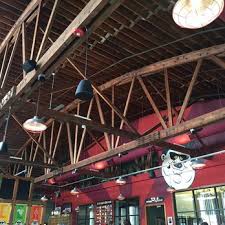
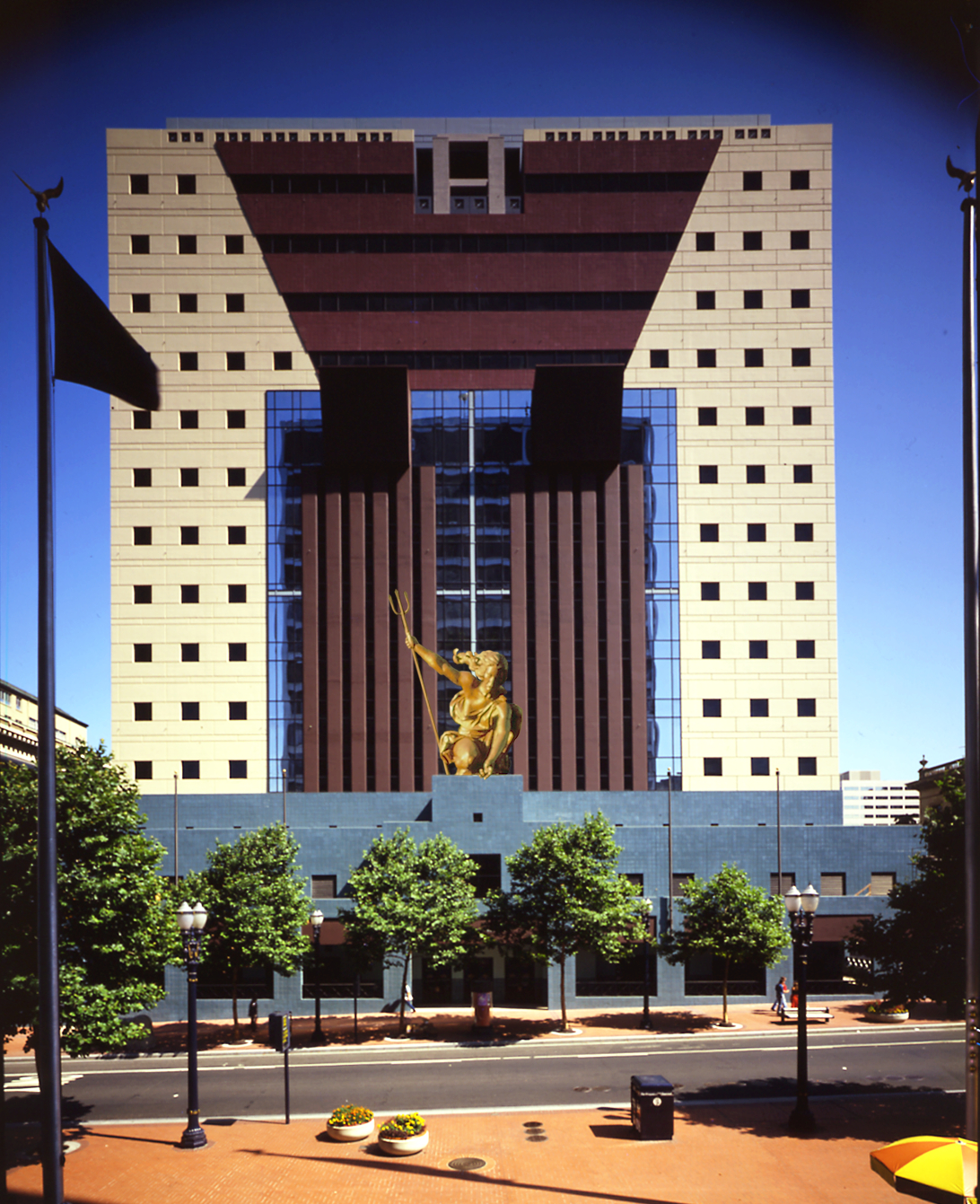
Mike Riscica is a New York transplant, fellow architect, cyclist and accomplished blogger. We had plenty in common. Mike grabbed a Car2Go and we buzzed downtown. Then we spent the evening strolling back home along Portland streets. We visited The Portland Building (the first true Post-Modernism building?), Pioneer Square, and Union Way – a timber frame version of a Parisian shopping concourse. We enjoyed superb beer and a great dinner beneath the massive trusses at Fat Head’s, and a nightcap at another brewery. An altogether terrific introduction to Portland.

imgres imgres-1 images

Posted in Bicycle Trip Log | Tagged , , , , , , , , | 2 Comments

Trip Log – Day 122 –Long Beach, WA to Longview, WA

Long Beach to LongviewSeptember 4, 2015 – Mostly sun, 60 degrees

Miles Today: 94

Miles to Date: 6,525

States to Date: 22

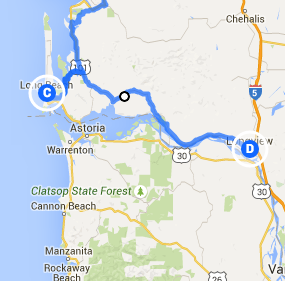
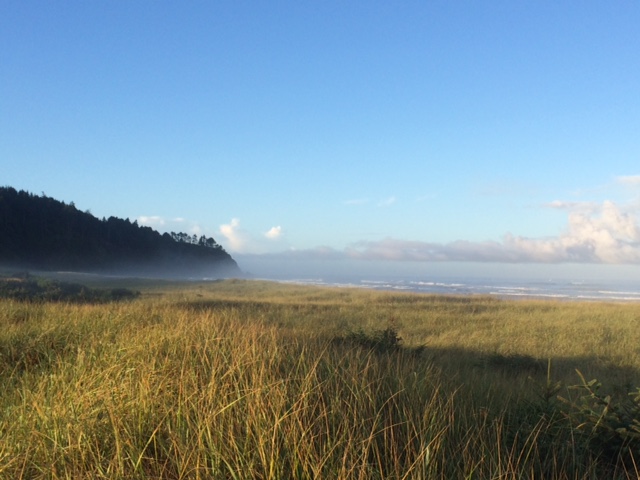
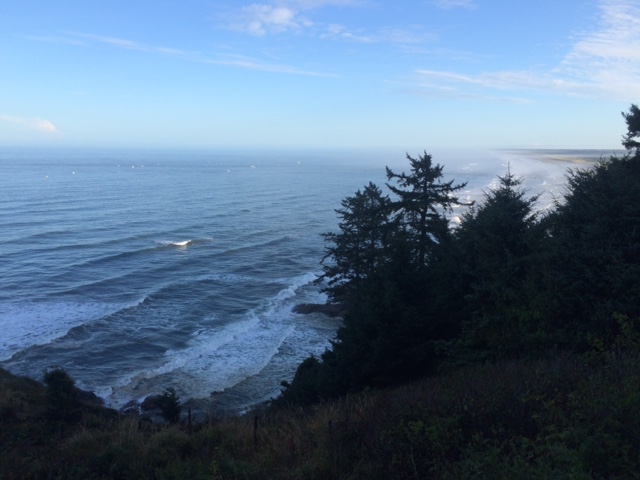
I had a solid 75 miles ride today which extended, over and over with detours, some by choice, others by necessity. Since I hate going back the way I came, I decided to take the longer route around 101 and the Columbia River shore. Then I decided to take the Discovery Bike Trail to Cape Disappointment, so named because 1788 explorer John Meares was disappointed in finding a bay when he was seeking the mouth of the Columbia River. The irony is, of course, that he had found the mouth of the Columbia. There is nothing disappointing about this cape: it is spectacular.

IMG_3813 IMG_3815

I stopped by Fort Columbia, which had a nice campus of old buildings. It also had odd parking fines. Washington state has both high and bizarre fine amounts for littering, speeding and other citizen infractions.

IMG_3824 IMG_3825

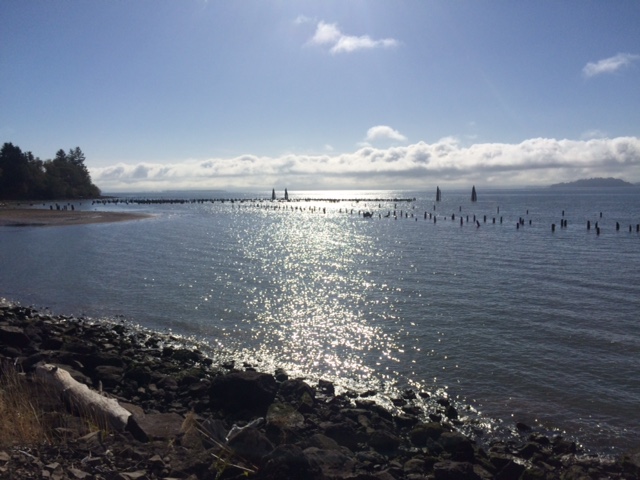
My fear of heights kept me off the four mile Astoria causeway/bridge, so I took the longer route on the Washington side: Route 401 north to Naselle and Route 4 east to Longview. I enjoyed long stretches along the north side of the Columbia River, steady climbs through tall forests and windy descents.

IMG_3818 IMG_3833 IMG_3826

The sky was full of giant clouds all day, though in mid-afternoon they turned grey. Rain fell coincident with a state-imposed detour around Route 4 construction.

IMG_3834

Longview is not a bike friendly city. After too many honks and exhaust revs directed at me along Ocean Highway coming into town, I resorted to riding the sidewalk. Even though I am supposed to be on the roadway, it’s better to be safe than to be right. I was happy to arrive at my warmshowers hosts, who had a good meal, great conversation, and nice bed for me.

Posted in Bicycle Trip Log | Tagged , , , , , , | 1 Comment

Profile Response: Palmer Court Housing, Salt Lake City, UT


HWWLT Logo on yellow“Housing First” is Utah’s slogan for its program to put chronically homeless people in permanent supportive housing. The original slogan, “Housing First, Employment Second” has been abbreviated because employment often comes later than second, if it comes at all. Yet, the benefits of housing first, even if it doesn’t led to employment have proven to be both a humane and economical way to help chronically homeless people secure long term homes.

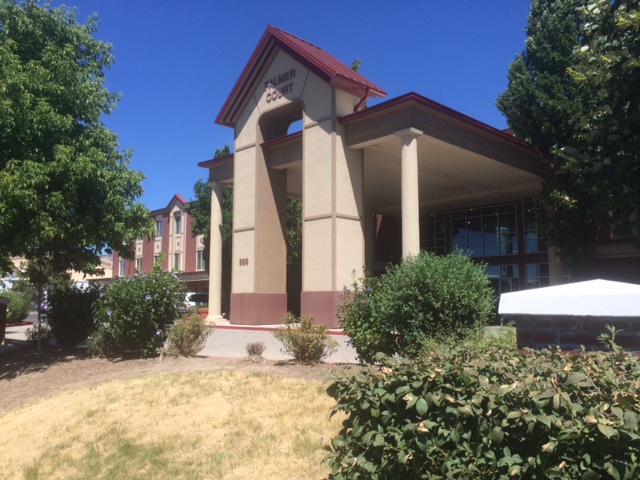
IMG_3185Palmer Court used to be a swank motel a few blocks from downtown Salt Lake City. The lobby is three stories tall; a 1960’s era framed photo in the staff conference room shows Doris Day languishing at the pool. Now, the neighborhood is past its glory, the pool has been filled in, and the motel rooms have been converted into 281 apartments, mostly studios. Banquet rooms have been repurposed as staff offices, classrooms, a fitness center, and other support spaces. The architect in me was excited to see such an appropriate reuse.

IMG_3184Many of the 278 adults and 77 children who live in Palmer House have not had a consistent address in years. In order to qualify for admission, a person has to be homeless for more than a year, (or four episodes in three years). Most have a physical or mental disability, substance abuse, or other chronic condition that makes it difficult to function independently. The facility is owned by the Road Home, a non-profit that provides services to the homeless. Other organizations work with the Road Home to provide vocational, employment, medical, childcare, and social services.

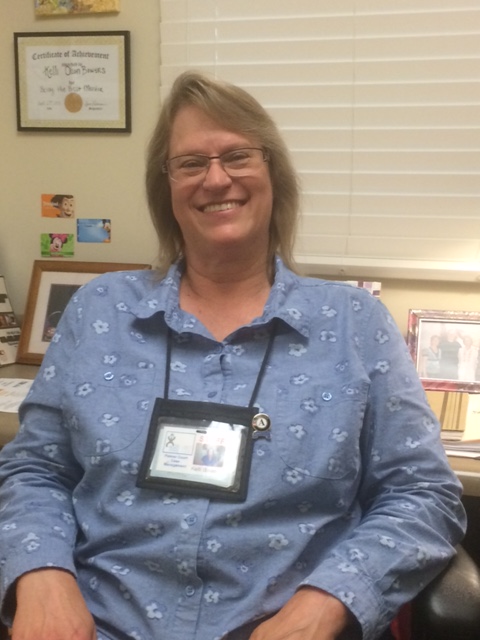
Kelli Bowers, Director of Supportive Services, toured me through the facility. “Palmer Court has a high level of support. If people just need housing, the Road Home has local apartments they ‘sublease’ to individuals and families who cannot get market housing. People here need much more.” Besides human services, Palmer Court helps people get the ‘stuff’ of independent living. The LDS church provides basic furnishings, and a handmade quilt, to people moving into Palmer Court. Organizations also donate accessories and cleaning supplies.

IMG_3178Karen Grenko, Property Manager, oversees maintaining the facility. “Our challenge is to help people learn to be good tenants, while understanding that they are already in housing of last resort. Kelli and I play good cop/bad cop. People here will test the system, but they are are keen to keep what they have. They come around before eviction.”

Kelli added, “The residents lack trust. When they see us keep trying to work things out with them, that is the beginning of trust.”

Mary McConaughy is an employment specialist for the State of Utah who is based in Palmer Court. “Everybody here is at a different point in their journey. Some people take a year or more just to be settled Almost everyone who does work participates in ‘supportive employment’ which include onsite work positions like cleaning the public areas or staffing the laundry room. We often take positions that would be 1 or 2 FTE’s and split them up into smaller parcels so people have meaningful work every week. They may work up to supportive employment outside the facility, and eventually, private workplace jobs.”

IMG_3177

After meeting with Kelli, Karen, and Mary I had a deeper understanding of the term ‘permanent supportive housing’. Most Palmer House residents will need economic and social support for their entire lives. It is a credit to the Road Home and the State of Utah that their inability to function independently does not deny them the dignity and security that comes from having a permanent address – a place they can call home.

How will we live tomorrow?

“Very carefully.” – Karen Grenko

“I don’t have a quick answer. There is no quick answer. I read about a place in the Netherlands where a community of families take in the weaker people of the community, people with mental health issues, and care for them in a family setting. That seems like such a good direction.” – Mary McConaughy

IMG_3183“I think about what Lloyd Pendleton said. The extremely rich; their main concern is connection. For the middle class it’s possessions. For the extremely poor it’s relationships.

“I hope we become better stewards of the earth by taking better care of the earth and its inhabitants instead of taking advantage of them.

“I believe the people I serve are heroes. I don’t know if I could go through what they have gone through, or do what they have done.” – Kelli Bowers


Posted in Responses | Tagged , , , , , , , , | Leave a comment