Profile Response – Melanie and Simon Huntley, Pittsburgh, PA

HWWLT Logo on yellowMelanie and Simon Huntley moved into a 1950’s era contemporary house on a peak overlooking Pittsburgh a year ago. It’s a private space with a nice yard in the Squirrel Hill neighborhood; a great place to raise their sons, Eliot, 4, and Theo, 6 months. After living on a peach farm outside Grand Junction, CO for two years, they returned to Pittsburgh a few years ago to settle near family. Melanie is a trauma nurse with Nurse Practitioner credentials, though she is at home these days with the boys. Simon has merged his heritage and love of farming with his IT expertise to create a business that provides websites and software geared toward small farmers and CSA’s. Melanie and Simon were my warmshowers hosts in Pittsburgh. Their thoughts on tomorrow are distinctly different yet complementary.

How will we live tomorrow?

Simon and I sat in the kitchen, drank a beer, and absorbed the view. “I live in a house where I get to watch the sun set every day. It’s a treat.

“We are only in the middle of the computer revolution. The software revolution will continue for some time, and the robotics revolution is on the horizon. Within ten years we will have autonomous truck driving. Six percent of Americans have jobs related to truck driving. What will it mean when those jobs are gone? Robotics will be an atomic bomb in our economy.

“Pittsburgh is a robotics center. Uber is here, developing autonomous cars. Driverless cars will drive the cost of Uber down, and private car ownership will go away. I think autonomous cars will be good. We are just not that good at driving. What are there, 30,000 auto related deaths per year? I want driving automated, but automation will go so deep in our economy. We will be in a position where everyone needs an education to work It will have tremendous effects on our lives. From an economic perspective how are people going to live? Will we get a ‘draw; just for being citizens that will allow us to live?

IMG_2030“Look at the industrial revolution, 90% of the people lived on farms, now it is three percent. There will be disruption, but I don’t believe in the idea that we will become a leisure economy. People will need jobs. The industrial revolution moved jobs from the farms to the cities. Now, people like me can live anywhere.

“My work in farming has reached a plateau. I have set up my business to pretty much run itself. So now I ask, ‘What do I want to be involved in next?’ I am interested in doing something in automation. I want to position myself in that area over the next five to ten years.

“I used to worry about the future, but I am more confident now. When I look around, we are living amazing lives. I have machines working for me right now. I own the machines. I have over 1000 farm clients and just a few staff. I have no accounting department, no HR department. I have software for all of that.

“Farming is the specific thing that I do. I am pretty positive that we can solve the problems before us until we hit a limiting factor. There will be pain, famine, disruption, but I think we can solve what lies ahead.”

I ask Simon how his point of view evolved from one of fear to one of confidence?

“The earth is resilient, eco-systems are resilient. We are resilient. Look at Pittsburgh’s rebound; it’s amazing. It’s based on universities and healthcare and education. But it’s also affordable and livable. I have this beautiful house in a nice community. My boys will be able to walk to school. I can live anywhere and bring my job with me. I have an awesome life.

“I merged my IT interest with what I know best, farming. Others are doing that in other areas. I believe things can get better for everyone.”

Melanie joined us after Elliot was in bed.

“I hope that people will reach out to one another. I want to connect, in life, with others. We connect electronically, but we hardly talk to anyone. When you are really with someone you find out what they really need.

“Small acts make such a difference. Sometimes, when I have the boys and my bags at the grocery, someone takes my cart back to the store for me. That’s the best.”
 

Posted in Responses | Tagged , , , , | Leave a comment

Trip Log – Day 41 – Cresco IA to Rochester, MN

Cresco to Rochester MNJune 14, 2015 – Wind and rain, 65 degrees

Miles Today: 61

Miles to Date: 2,396

States to Date: 13

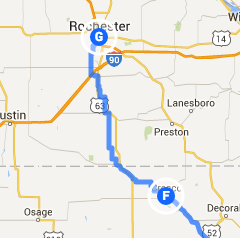
IMG_2346I rode straight north on a still grey and humid morning to Minnesota. Then the country road began to wind and the land turned hilly and the pavement turned to gravel for six miles. I couldn’t help thinking, ‘Is this the best route across the country?’ Pavement returned and I stopped for breakfast at the Preston IGA – the only food option in town – before finding U.S. 52 and a nice wide shoulder. The wind picked up, the rain came down, and I was happy to have the country road behind me.

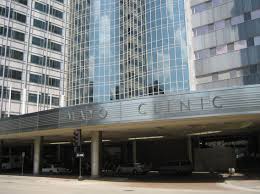
Rain is not conducive to dawdling; I arrived in Rochester at one o’clock. I was interested in talking to an editor of the Mayo Clinic’s online site – one of the most extensive and respected online resources – but had been tardy in contacting them. Their public affairs guy tried to make a connection without luck. I will try again, with more advance notice, when I am Scottsdale or Florida. The Mayo Clinic has satellites.

imgres images images-1

However, as is often the case, I may have learned more by simply camping in their lobby, borrowing their guest Wi-Fi, and observing one of the world’s leading medical institutions in action. I’ve spent a lot of time in hospitals, often to observe, but I’ve never been anyplace that comes closer, in atmosphere and attitude, than the Mayo Clinic when it comes to creating a hospitality experience. Most hotels only dream of having such well appointed spaces and polite yet professional staff. The choreography of so much activity transpiring in an atmosphere of subdued calm is impressive. I visited the public spaces, museum, and 1930’s era offices of the brothers Mayo and came away assured of that fundamental truth of any business: put the emphasis on people and they will flock to you. Rochester is full of hotels, all of which have shuttles to the clinic. People come to this small city from all over the world for healthcare. Yet there’s no reason why Rochester should draw so many patients, except that the Mayo invented patient-centered care, and probably no one does it better.

The sun was shining by the time I left Mayo. I found a great little motel on the edge of the hospital district, had a nice meal in a cafe, and strolled the streets in summer’s lingering daylight.

Posted in Bicycle Trip Log | Tagged , , | Leave a comment

Profile Response – Corinne Bechtel, Director of Tourism, Rivers of Steel National Heritage Site, Pittsburgh, PA


HWWLT Logo on yellowSometimes a person is so well suited to her job that all seems right with the world. At least, that’s how I felt meeting Corinne Bechtel, who loves all things Pittsburgh; in particular the massive Carrie Furnace, the prize relic of the Rivers of Steel National Heritage Area. Corinne’s an expansive person. When she says, “We took the concept behind this National Heritage Area, to celebrate Pittsburgh’s iron and steel making past, and expanded it to include all the groups that came here because of steel and the art and architecture that resulted from it.” you realize that she’s wrapped her arms around anything that’s ever happened in Pittsburgh and given the city a huge hug.

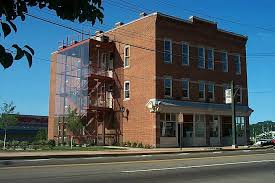
imagesThe actual real estate of the Rivers of Steel National Heritage Area includes the Bost Building in Homestead, PA, a hotel that served as labor headquarters during the Homestead Strike of 1892; an Historic Pump House in Homestead, and the Carrie Furnace across the Monongahela River in Pittsburgh. For those, like me, wanting a history refresher, Corinne explained that the Homestead Strike occurred when Henry Clay Frick, Andrew Carnegie’s main man in the world’s largest steel works, locked out workers trying to organize. Frick hired Pinkerton Guards, who wound up surrendering to the workers at the Pump House. Victory for the workers. Except that the overzealous laborers and their families taunted and beat the Pinkerton Guards on their retreat back to the train. When Harper’s and other media of the day captured the beatings, public opinion swayed against the strikers, who eventually capitulated to Frick. Organized labor didn’t reappear in Pittsburgh for over forty years.

In 1892, 4,000 men worked in the Homestead plant. River barges plus rails to handle over one thousand train cars brought raw materials to Homestead, where they were turned into iron. Then it was transported across the river (first by boat, later by a ‘hot rail’ bridge that reduced the need to cool and then reheat the iron) to become steel. Making steel takes volumes of water, provided gratis by the Monongahela.

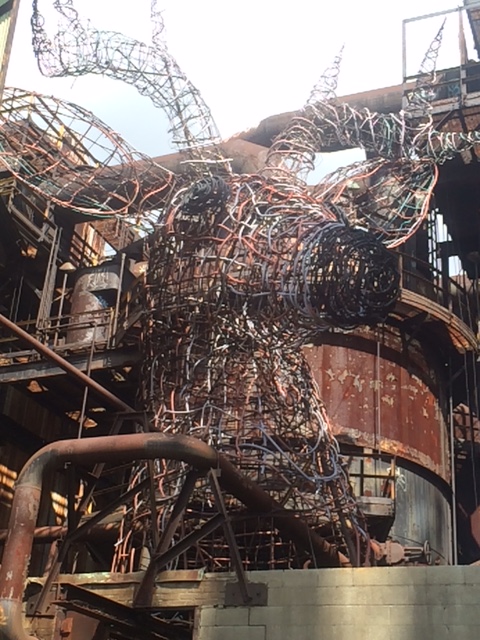
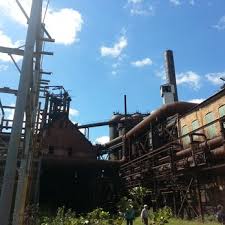
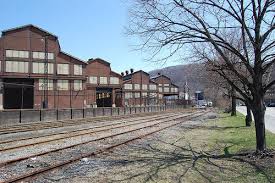
imgres-1No lockouts are required now. The 300 plus acres that Andrew Carnegie owned on either side of the river closed for good in the early 1980’s, leaving a toxic legacy on land and water. Most of the facilities deteriorated and were demolished. Local preservationists rallied to save the Bost Building, eventually earning Heritage Are designation and adding the Pump House and Carrie Furnaces, which operated form 1907 to 1978 and are now the last remaining blast furnaces of that era in Pittsburgh.

Today, the Bost Building is a museum, the Pump House a function space, and the Carrie Furnaces fragile ruins where local artists create intriguing site-specific art. Rivers of Steel is trying to stabilize the Carrie furnaces (blast furnaces all had women’s names) but not refurbish them. Corinne guided me up the narrow stairs and across the metal gangways. It’s refreshing to experience an unsanitized industrial landscape.

IMG_2024 imgres

But these structures are just the starting point for Corinne’s Pittsburgh enthusiasm. Every surface triggers a story. She explained the origin of Pittsburgh rare steak (charred on outside and rare inside by furnace workers who threw their meat against the 1200 degree furnace wall until it fell off, than singed the flip side). I learned the local tradition of a wedding cookie table, where guests bake their specialties to share. Corinne offers tours well beyond the Homestead steel works, including local churches, ethnic food tours, and other cultural destinations. “The immigrant history often unfolds for work reasons, but immigrant maintained a high level of autonomy. They segregated into work groups, neighborhoods, churches, food, and language.”

How will we live tomorrow?

IMG_2028“I think and hope that people want a greater connection to the past, to the things we make with our own hands. We see this all over Pittsburgh; in arts, crafts, cooking, and landscaping. We get our cultural richness from the past, and that is how we’ll live tomorrow.”

When we returned to the Bost Building after our tour, I thanked Corinne for her time and insights. “On a daily basis, I create experience that last a lifetime.” So true.

Posted in Responses | Tagged , , , , , , , , | Leave a comment

Trip Log – Day 40 – McGregor, IA to Cresco, IA

McGregor IA to Cresco IAJune 14, 2015 – Cotton candy clouds, 75 degrees

Miles Today: 61

Miles to Date: 2,335

States to Date: 13

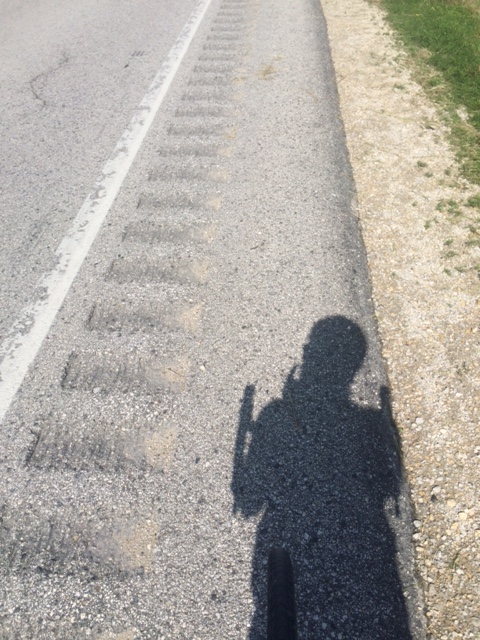
I woke early and climbed, climbed, climbed out of the Mississippi River Valley to the high plateau that is Iowa. Monona didn’t offer much for breakfast, so I had a snack and pedaled in the narrow zone between the rumble strip and the gravel on to Postville. I didn’t expect much more in this sleepy town on a Sunday morning, but was intrigued by the highway sign’s hyperbole proclaiming Postville, ‘Hometown to the World’.

IMG_2331 IMG_2329 images

Main Street looked shut tight until I noticed lights in Glatt’s Supermarket. I entered the store. An Orthodox Jewish woman carrying a baby stood at the register; three small children popped their heads out of the next room to see the strange, bright man. I opened a soft drink and asked about Postville’s ‘Hometown to the World’ slogan. Shaindy Glatt explained that people from all over the world lived in Postville – Orthodox Jews, Ukrainians, Somalis, Mexicans, Germans, Russians, Hispanics – mostly due to the world’s largest Kosher slaughterhouse located there. Her description triggered a news flash. “Is this the place.” “Yes,” I didn’t need to finish; “this is the place where there was the big immigration raid occurred a few years ago.” From Shaindy’s perspective, the raid was overblown, and the resulting justice unfair. The Orthodox Jewish plant manager got 27 years to life in prison, while the banker in cahoots got a wrist slap and a fine. “Before the raid, everyone got along. We had festivals with tents and everyone had their respective foods. We haven’t had that since, although things are getting better, slowly.”

images-1I left Glatt’s and discovered a Mexican cantina on the main corner, settled in to write through the hottest part of the day and had fantastic fajitas for $6.95. My Mexican waitresses kept my water glass and chip basket full, but they didn’t venture into the politics of Postville. Later, however, a man of German descent took a different tack from Shaindy Glatt. “What that guy did was inhumane, working people in slave conditions.”

Since it was Flag Day, and I was in Iowa, in a melting pot no less, I decided to fulfill my promise to contact all the candidates running for President in 2016 and ask them my question. It took a few hours to figure out a comprehensive list, navigate their online personas, and determine how to best contact each one.

Based on web searches alone, I made a few observations:

  1. Ted Cruz’s website is in all capitals – it even transcribed what I inserted into all caps. Everything must be very important to that man.
  2. Carly Fiona, Marco Rubio, and Rand Paul’s sites are impenetrable; there is no way to contact them except to give money, not even through facebook. I resorted to asking my question via tweet.
  3. Mike Huckabee scores points of humor, his ‘Human Validation’ is not some odd array of characters, but a check box that says, “I am not a robot.”
  4. Marco Rubio really ought to answer my question, since his Facebook page sports a faded picture of Hillary with the headline, “Yesterday is STILL over”. A guy so sure of yesterday must have the pulse of tomorrow.
  5. The best website, by far, is Lindsey Graham’s. He not only has a press contact section, but also a button called ‘share’. That is so refreshing after so many buttons with variations of ‘fight’. Hillary Clinton’s website proclaims ‘four fights’. I am so tired of the ‘fight’ word. I’m considering casting my vote for any candidate who expunges that word from his or her rhetoric. About as much chance of that happening as GM or Exxon offering to sponsor my trip.

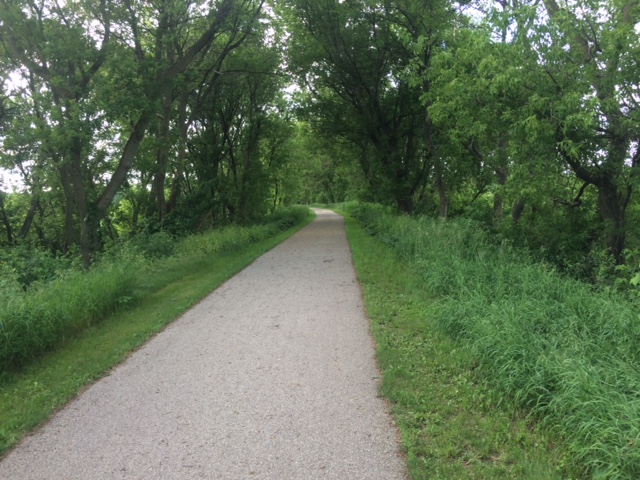
After noting the ‘not yet official candidates (I’ll ask Jeb in a day or two after his hoopla settles), I cycled 20 miles past beautiful farms where all the cows turned their heads to watch me pass, and small towns where the local folks sitting under the canvas tents set up in front of their garages did the same. I passed a parade of old tractors and another of vintage autos. Cycling on a Sunday requires a lot of waving. In Calmar I shifted to the bike path to Cresco. I don’t know why the bike path is paved while the adjacent county road is dirt. For once I got a smoother ride than the pick-ups along my side.

IMG_2336 IMG_2345 imgres

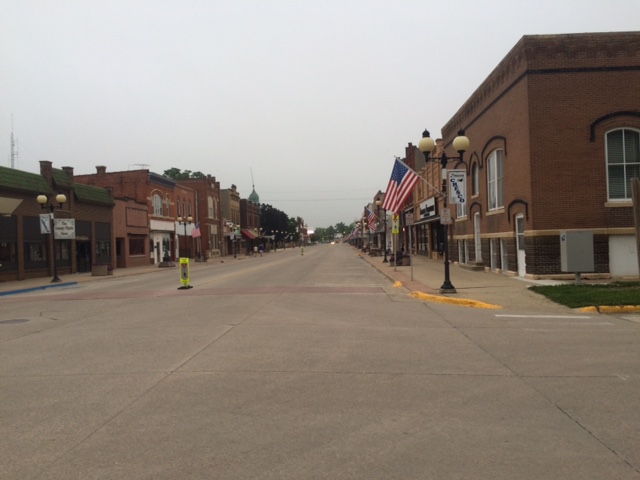
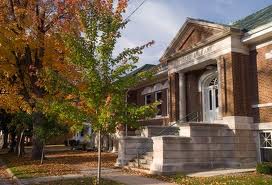
Cresco, like so many Iowa towns, could have been the setting for The Music Man. Harold Hill could parade along the wide main street with its rows of American flags. Marian would be quite at home in the stately public library on North Elm Street, the town’s most prosperous. My warmshowers host, Duane, offered me a tasty Greek salad and a beer, good conversation, and a welcome bed.


Posted in Bicycle Trip Log | Tagged , , , , , | Leave a comment

Profile Response – Robert Layo, Johnstown, PA Chamber of Commerce

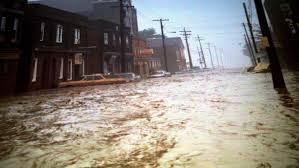
HWWLT Logo on yellowBob Layo, Executive Director of the Johnstown, PA Chamber of Commerce has a tough job. Johnstown, PA is best known for three horrific floods. The 1889 flood killed 2,209 people, the single highest day of civilian disaster deaths until September 11, 2001. The 1936 flood led to an extension of WPA disaster relief and Pennsylvania instituting a ‘disaster relief’ tax on newly legal alcohol. The city was a steel making behemoth; the Bessemer process was invented here, the company that became Bethlehem Steel originated here, and at one time Johnstown was the largest steel-producing town in the world. After each of these floods, Johnstown’s industrial base returned.

imgres-2However, the steel business was already deteriorating when a third major flood hit in 1977, from which the city has never recovered. Johnstown has lost population for the past nine decades, and CNN Money recently named it one of the Seven Fastest Shrinking Cities. Still, it is home to over 20,000 people and has a solid urban core. I knew that Bob would have a positive spin on what tomorrow might look like in Johnstown, and he has valuable insights.

“After the 1977 flood our unemployment rate hit 25%, which was higher than it had been during the Depression. Our homegrown industries, which had been struggling, pulled out. The key to our survival was a very strong Congressman (John Murtha) who helped bring defense-related industry to our area.”

images-5A number of defense manufacturers have created plants in and around Johnstown. There are also a few foundries, specialty milling operations, and a wire factory, utilizing a portion of the mighty plants that occupy the east side of town. The largest employer in town, as in many small cities, is the local hospital. Last year it was bought by Duke LifePoint, and according to Bob it’s too soon to see how becoming a for-profit entity has affected the operation, though it has been making a consistent profit. Both UPMC (University of Pittsburgh Medical Center) and Highmark Blue Shield have presences in Johnstown, so the healthcare sector is solid.

imgresBob described how Chamber of Commerce activities in Johnstown were similar other areas. “We provide business information, though these days most of that is done electronically. It all comes down to networking. The Chamber sponsors a variety of different opportunities for people to meet and learn about business opportunities – a Showcase for Commerce, an Economic Summit on future trends and leadership programs for executives and entrepreneurs.

When I ask how Johnstown positions itself for the future, Bob replied that the regions biggest assets are its natural beauty, resources and water. The water capacity, designed for a larger population and more robust manufacturing, is now being tapped for recreational use, like creating white water rapids opportunities. Pittsburgh, just an hour away, has revitalized in impressive ways. The Chamber is working with entrepreneurial programs at Pitt and Carnegie Mellon to help young people consider the opportunities that we have here. “We have the recreational opportunities that young people want. What we need are family sustaining jobs.”

How will we live tomorrow?

imgres-1“I have an array of answers. Pennsylvania is naturally beautiful; you’ve seen that on your bike. Western Pennsylvania has a unique lifestyle, long history and rich traditions. The state as a whole is stable, but the population is shifting away from older cites, toward the larger cities and to sprawl. We have to find new uses for our existing communities.

“We have many colleges within a short distance of Johnstown, but young people don’t realize that it’s a great place, an entrepreneurial place, timages-4o live. That is one of the byproducts that I hope will result from this oil and gas boom. We are sitting right on the Marcellus Shale. Now, I’m no expert on this, but I understand that there is a deeper, even larger formation of ‘wet gases’ that lie below that, gases that are particularly well suited to different industrial processes. If we have the energy here, and we have the lifestyle here, we can have a strong economic base again.”

Posted in Responses | Tagged , , , | Leave a comment

Trip Log – Day 39 –Madison, WI to McGregor, IA

Madison WI to McGregor IAJune 13, 2015 – Rainy then overcast, 65 degrees

Miles Today: 112

Miles to Date: 2,274

States to Date: 12

My first century of the trip! Not too difficult on a cool day with flat terrain and little traffic. Still, good practice for heading further west, where there will be more, harder ones.

I woke to birdsong and was riding the drizzly streets of Madison by seven. I rode through lovely residential neighborhoods and more of UW campus. When I passed Frank Lloyd Wright’s Unitarian Church, I stopped on a whim and pulled on the doors. They opened! I had a few quiet moments in the meeting hall, and rather like how the ‘altar’ area is like a huge hearth.

imgres images

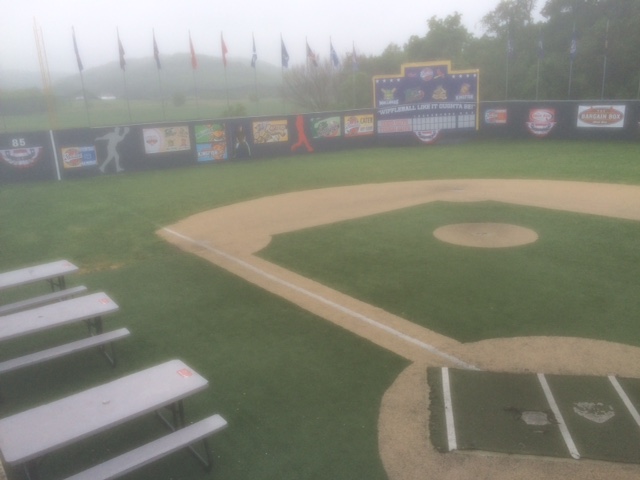
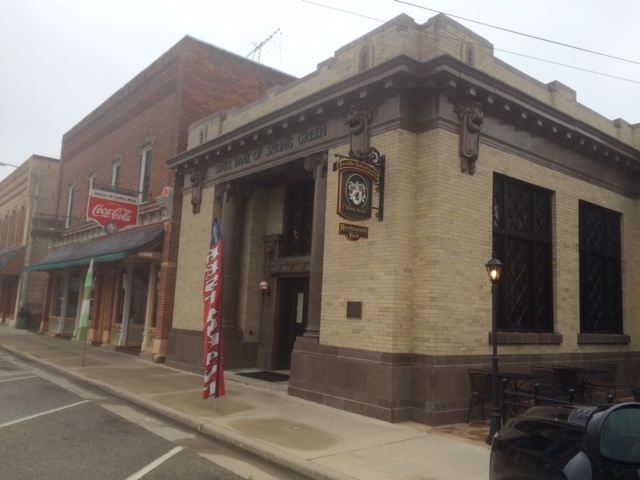
I pedaled forty miles along U.S. 14, ‘the Frank Lloyd Wright Highway’, in various amounts of mist and rain. I wondered why ‘the biggest shoe store in the Midwest’ is in the tiny town of Black Earth, but I loved their whiffle ball field (85’ to the fences). The fertile earth truly is black. I skipped the formal tour of Frank Lloyd Wright’s Taliesin; the visitor center alone provided more reverence for the gifted megalomaniac than I could stomach. However, I enjoyed riding through the town of Spring Green to see how Wright’s influence played out, with varied success, in local buildings. Still, my favorite structure in the small town was a 1915 bank more elegant than any of the Wright stuff.

IMG_2308 IMG_2309 IMG_2316

IMG_2317When I turned onto Route 60 in Gotham, I could tell there would be few services ahead, so ate lunch at the only available place – a bar where a couple of Harley riders had already settled themselves into a rainy afternoon watching a loop of Weather Channel disaster stories. The waitress thought me ordering a Diet Coke lame, but she made a good pizza and I learned how to escape an avalanche.

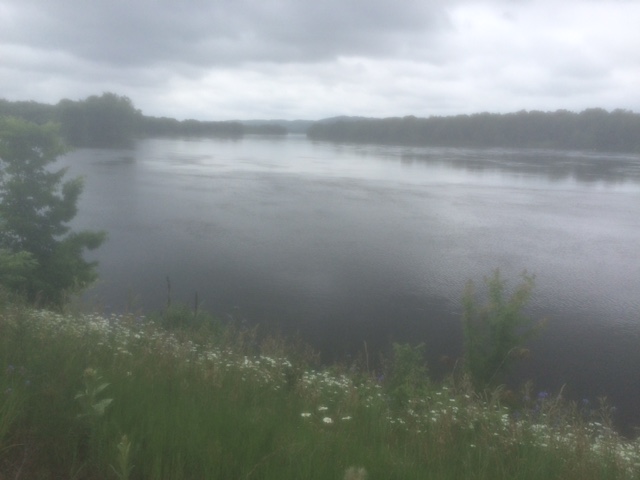
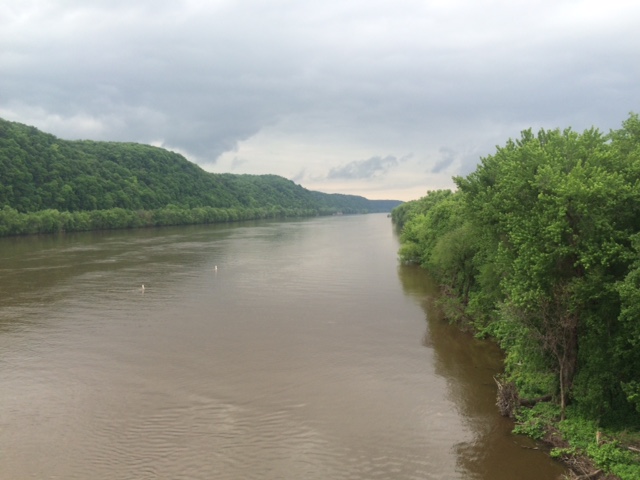
After lunch the rain ceased and I had fifty miles of the most beautiful scenery of my trip; a meandering highway that followed the Wisconsin River west, with occasional portions through lush farmland. After almost two weeks of city to city along Lake Michigan’s urban corridor, I was far from people.

IMG_2320 IMG_2318

Stopped for a snack at the local grocery in Wauteka and downed 32 ounces of Powerade plus a box of six ice cream sandwiches. I know, it’s disgusting, but they were so good. My gluttony turned out to be good planning. Many of the motels in Prairie du Chien were full, and the town wasn’t pleasant. So I crossed the mighty Mississippi and found a clean but remote motel in McGregor. After so many miles (and ice cream sandwiches), a hot shower and comfortable bed were the only amenities I needed.

IMG_2325

Posted in Bicycle Trip Log | Tagged , , , , , , , , | Leave a comment

Responses – How will we live tomorrow?

How will we live tomorrow?

“We got engaged last year. We even set a date, September 12, though we haven’t done anything else to plan it.”

“Char’s been engaged three times.”

“Yes, but each time something wasn’t right. Within a month, I knew this was the man I wanted to marry. He rubs my arthritic hip.”

“And she rubs my arthritic hands.”

Charlene Toncrey and David Klippell, Middle-aged lovers, Naperville, IL

How will we live tomorrow?

“The McDonald’s Corporation has a very clear vision of the future. I will paraphrase what Ray Kroc articulated in Grinding it Out. ‘Whatever the future holds, McDonald’s will be involved, and we will be doing it best. McDonald’s will evolve and change as we need, and always involve the community.”

Nicole Brennan, McDonald’s Corporation, Oak Brook, IL

How will we live tomorrow?

“In the memories of those who love us.”

Shane Dunlop, IT Consultant and Brew master, Oak Creek, WI

How will we live tomorrow?

“I have always had the ability to live today. I like the Sanskrit saying, ‘Yesterday is a dream, tomorrow but a vision. But today well-lived makes every yesterday a dream of happiness, and every tomorrow a vision of hope. Look well, therefore, to this day.’ I can make plans but I can’t determine the outcome. I can say the Cubs will win the World Series, but I can’t know the outcome. I know that if I keep doing what I’m doing I’ll have the life I have now. I learned that through AA.”

Frank Bolin, thirty years sober, Chicago, IL

How will we live tomorrow?

“We should all be doing good work.”

Bonnie Brennan, retired nurse and hiking/cycling great grandmother-to-be, Chicago, IL

How will we live tomorrow?

“In anticipation of what will come next. I’m out of here in June or July. I have tried to embrace city life; I’ve taken public transit for the first time. I long for my own little house and sandbox for my grandchildren.”

Janet Eblovi, retired special education teacher, Chicago, IL

Janet moved to Chicago from Boulder, CO to be near her son, a medical resident, and his young family. “People say, what am I going to do, follow them around? The answer is yes. I have only one son, he has only one son.”

How will we live tomorrow?

“Tomorrow never comes, so I shall try to live today as I tried to live
yesterday. That entails attending to my spirit, mind and body, caring for my
family, helping other creatures in need, near and far, being a good example
of forgiveness to others, helping others learn and laugh, all with the goal
of having many, many know me as a kind-hearted man when I am gone.”

David Leef, cyclist, Madison, WI

How will we live tomorrow?

“I live everyday as a new beginning.”

Debbie, CNA who picked me up when my bike broke, Jefferson, WI

How will we live tomorrow?

“Trust in God.”

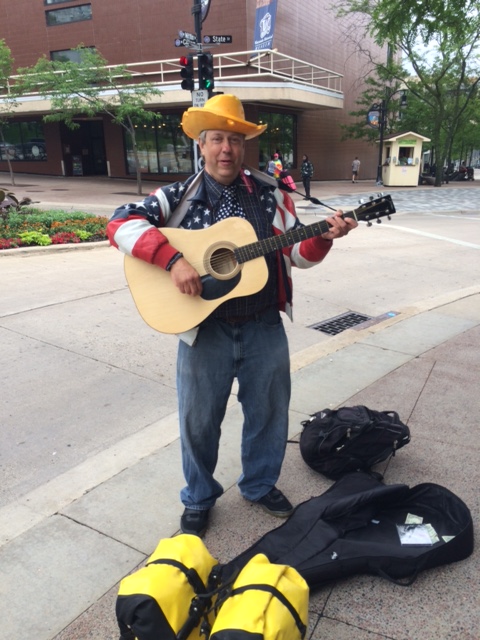
Art Paul Schlosher, Street Musician, Madison WI

How will we live tomorrow?

“I could retire now but I don’t know what I’d do. I don’t have any hobbies.”

Alan Stuckey, Third generation Owner of Stuckey’s Market, Wauteka, WI

Alan’s children have other careers. When Alan retires the only grocery in Wauteka, population 700, will clos for good. There’s a Wal-Mart 15 miles away in either direction.

How will we live tomorrow?

“If you write non-fiction you can’t write about the President or Congress.”

Frank, proprietor of The Frontier Motel, Marquette, IA

Frank’s motel was full on a Saturday night. He called around to find me a place in the next town.

How will we live tomorrow?

“All faiths are legitimate. Look at our tradition: there was nothing and then there was everything. It’s not rational. It’s faith. There are prophets alive today, and visionaries alive today.”

Frank Bolin, retired cook, Chicago, IL

How will we live tomorrow?

“My hope is that tomorrow will be a better time and space that we will have the tools to make our world better and use them… that we will have an ethnically integrated society so that differences will be blurred and racism will cease to exist. My hope is that there will not be any extremes. We will no longer have extreme religions, extreme wealth, extreme use of natural resources, extreme political figures, etc. Instead we will try to live as a world community and be better about sharing and understanding. I don’t see perfection, but my hope and it is only a hope that we will learn to live with each other with harmony.”

Barbara Elfman, yoga practitioner, Cambridge, MA

How will we live tomorrow?

“We should be living like it’s our last day, every day.”

Patrick, waiter at a toda madre Glen Ellyn, IL

How will we live tomorrow?

“That’s a really hard question. It stirs a lot. Sustainability. Responsibility. I’m beginning to work with junior high school kids, and I ask myself, ‘What kind of world are we creating for them?’ Hopeful. I want the world to be hopeful. We must speak the truth.

“I think about this question when I think about having children. Will tomorrow be better? My goal is to have a Bed & Breakfast and teach sustainability on a cranberry farm. Why a cranberry farm? I don’t know. My dream has always been a cranberry farm.”

Karyn Klippell, Young Life Youth Leader, Naperville, IL

How will we live tomorrow?

“Tomorrow I am going to tweak somebody’s nose.”

David Klippell, Class Cut-up University High School Class of ’73, Naperville, IL

How will we live tomorrow?

“I will have to accomplish something. I have to accomplish something every day or I don’t feel good.”

Larry LaPadue, Miller Beach Arts District Gary, IN

How will we live tomorrow?

“I want to go to Jerusalem and walk in the steps of Jesus.”

Mike, serious drinker at 18th Street Brewery, Gary, IN

How will we live tomorrow?

“Positively!”

Charlene Toncrey, Geriatric nurse, Naperville, IL

How will we live tomorrow?

“Happy and healthy for everyone.”

David Klippell, Construction superintendent, Naperville, IL

How will we live tomorrow?

“Every day is a little different but kinda the same. Tomorrow we’ll do different stuff.”

Leif Tenbrink, second grade student, Jackson, MI

How will we live tomorrow?

“Much like today.”

Scott Tenbrink, University of Michigan, Jackson, MI

“I’ve thought about your question ever since you contacted us; I knew you were gong to ask. Now I realize that my answer is almost the same as my son’s.”

How will we live tomorrow?

“When my kids are grown I will live in reserve. Revert back to freedom, life with your friends and partying hard.”

Jeff, Automotive engineer and father of a four-year-old, Jackson, MI

How will we live tomorrow?

“Together. Now, every country and people is doing things in their own way. Our problems are going to take coordination. The mindset of the group is important.”

Karen Tenbrink, Choirmaster, Jackson, MI

How will we live tomorrow?

“With increased bandwidth we’ll have enhanced telepresence. It will compensate for the lack of fuel. This is actually happening already with robotics… Radio is everywhere. Everything is wireless. Technology is good because people can use devices without actually knowing how they work. What I want to know is, why is the speed of light so slow? People don’t notice milliseconds, but we will”

David, Software Engineer, Washington, D.C.

Posted in Responses | Leave a comment

Trip Log – Day 38 – New Berlin, WI to Madison, WI

New Berlon WI to Madison WIJune 12, 2015 – Rainy, 60 degrees

Miles Today: 52

Miles to Date: 2,162

States to Date: 11

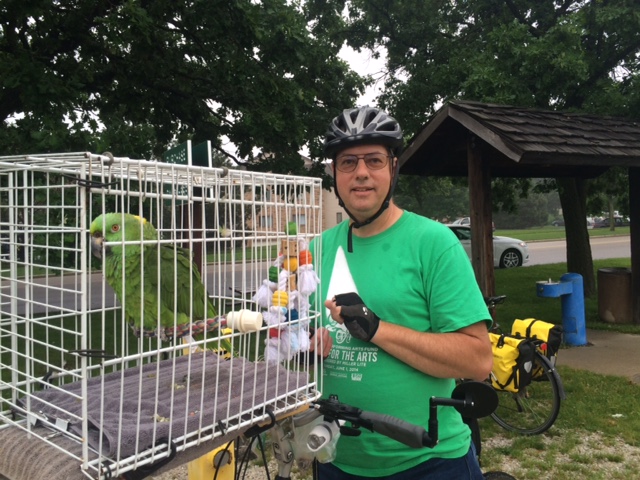
IMG_2295My warmshowers host Herb and his parrot Barney rode me out of New Berlin at 6:20 a.m. They brought me though Waukesha, and got me started on the Glacial Drumlin Trial for my 70 mile ride to Madison and 2:30 p.m. appointment with the Director of Wisconsin Veteran’s Museum. Along the way Herb told me about Kevlar tires – he hasn’t had a flat in over 40,000 miles. In one of life’s odd coincidences, as soon as l learned about Kevlar, I really needed it.

After twenty miles the trail turns to crushed stone and grey skies delivered rain, so I was riding in mud. When they trail came parallel to U.S. 18 I switched to the highway, which had little traffic and a good shoulder. A few miles later I got a flat. The repair meant ‘d have to grab a quick lunch rather than a sit-down meal in order to make it to Madison. Then I got a second flat. I was super fast in this repair, but when I pumped up the new tube, the valve snapped: flat number three, and I was out of tubes. I packed up my pannieres and stuck out my thumb, thankful to be on U.S 18 instead of the desolate bike trail.

Within half an hour a Samaritan stopped, loaded my bike in her SUV, and drove me to a bike shop in Madison. I called in advance, and when I arrived Bryce replaced my tire (with Kevlar!), hung a new chain, checked everything else, and replenished my spare tubes. Total cost, including gas money for my Samaritan – less than $200. And I arrived at the Veteran’s Museum half hour early.

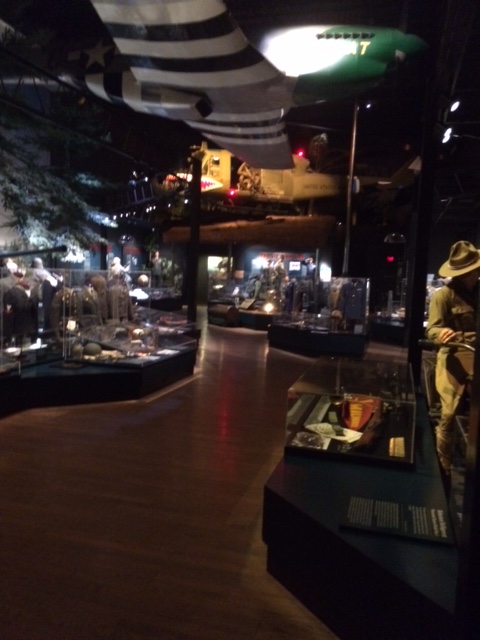
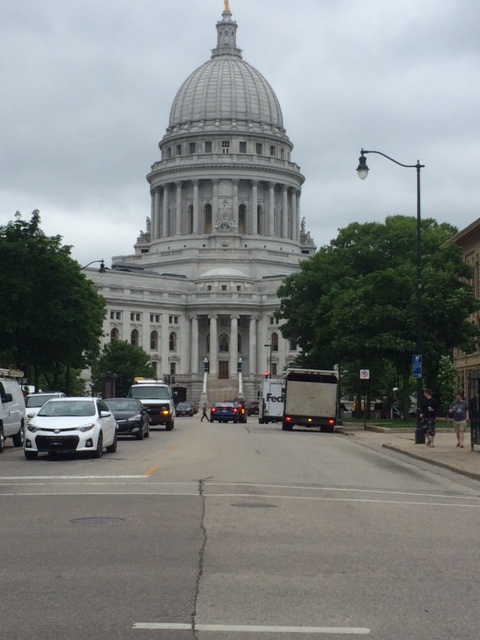
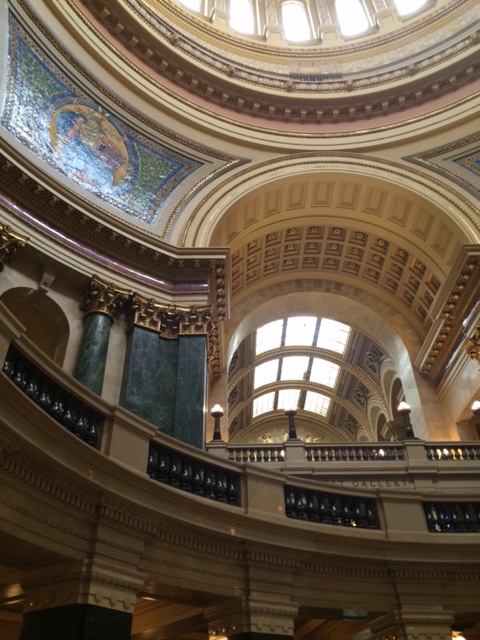
After my meeting, I spent the afternoon touring the Museum’s exhibits, the gorgeous State Capital Building, and chatting up Madison characters, like Art Paul Schlosher, who serenaded me with a bicycle song.

IMG_2302 IMG_2298 IMG_2303 IMG_2305

Jean and Jon, my Madison warmshowers hosts, served a delicious dinner of fresh fish, potatoes, and salad from their garden; finished off with homemade raspberry sorbet and chocolate chop cookies. We ate and talked while we watched the U.S. Women’s Soccer team tie Sweden in a World Cup match.

Posted in Bicycle Trip Log | Tagged , , , , , | Leave a comment

Trip Log – Day 37 – Oak Creek, WI to New Berlin, WI

Screen Shot 2015-06-12 at 5.04.45 PMJune 12, 2015 – Rainy, 60 degrees

Miles Today: 34

Miles to Date: 2,110

States to Date: 11

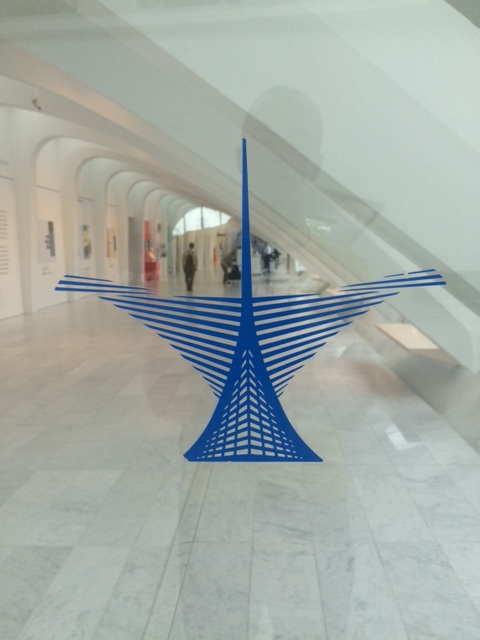
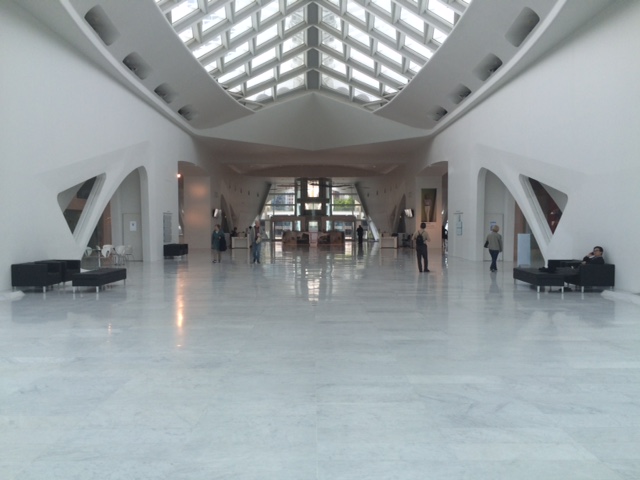
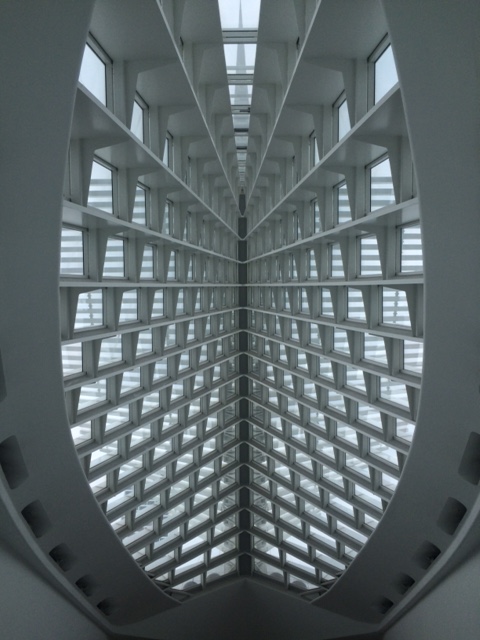
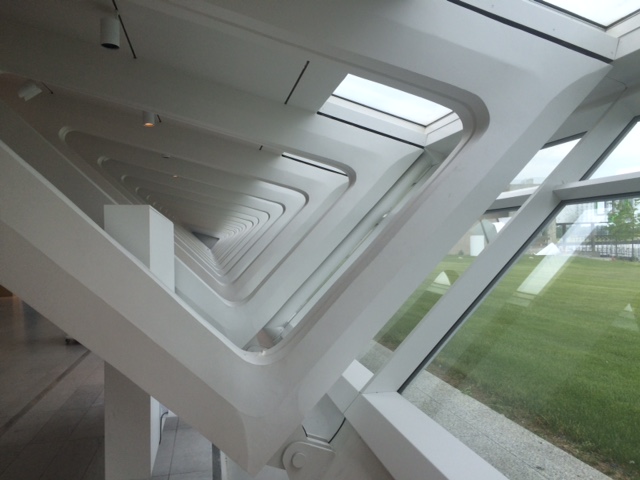
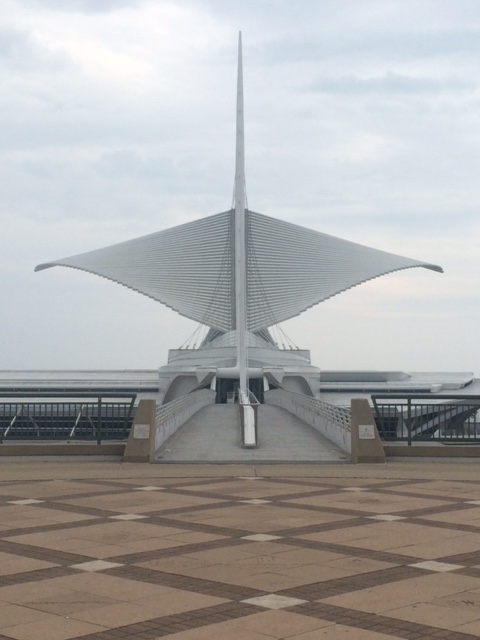
IMG_2275I slept and took my time getting on the road for my short trip to Milwaukee. I wanted to see Calatrava’s Milwaukee Art Museum, and knew in advance his building was all I would see; the permanent collections were closed to renovate the old building, and the blockbuster gallery in the Calatrava building was between installations. I had a leisurely ride north along the coast, meandered into Milwaukee, and spent enough time in Calatrava’s spectacular building to appreciate its majesty and watch its brise soleil close and reopen at noon. The building is smaller than I envisioned, yet it inspires awe at every turn – a sort of nautically themed muscular masterpiece that says, “I do all the tricks of structural gymnastics because I can.”

IMG_2274 IMG_2272 IMG_2277

IMG_2284 IMG_2285 IMG_2286

If Chicago is the Midwest’s answer to New York, Milwaukee is more like Boston – cool and fun and more manageable. Rain began to sputter as I started pedaling through the city, so I stopped for lunch at Jimmy Johns to wait out the downpour. It was still coming down when I headed over to The Brewery, a fascinating historical reuse project at the old Pabst Brewery. The rain was steady, so Dennis Stapleton spent an hour talking to me about the project in a conference room, but it cleared in time for us to walk the site.

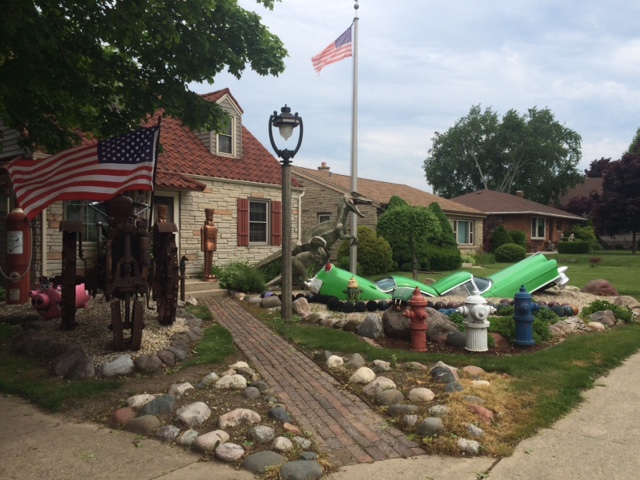
Calatrva wasn’t the only cool art I saw today. I also loved this house along the lake in Cudahy:

IMG_2264 IMG_2268 IMG_2266

I had a bit of writing time and then headed over to my warmshowers host for the evening in New Berlin, who cycles with a parrot, Barney the biking bird!

Posted in Bicycle Trip Log | Tagged , , , , | Leave a comment

Profile Response – Mary Dean Coleman, James Kelly, Kristin and Mike McCarty, State College, PA

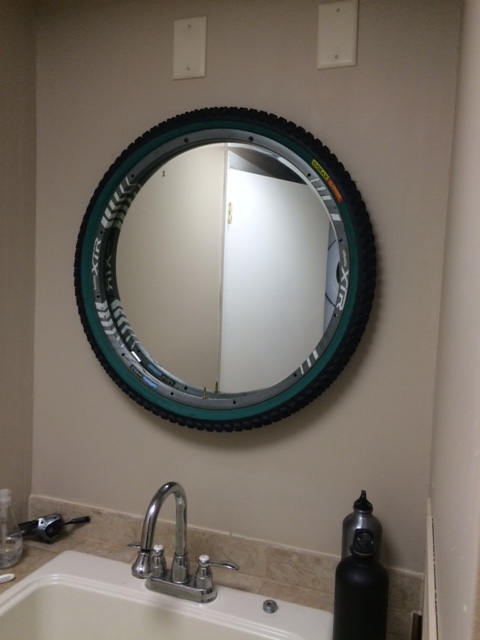
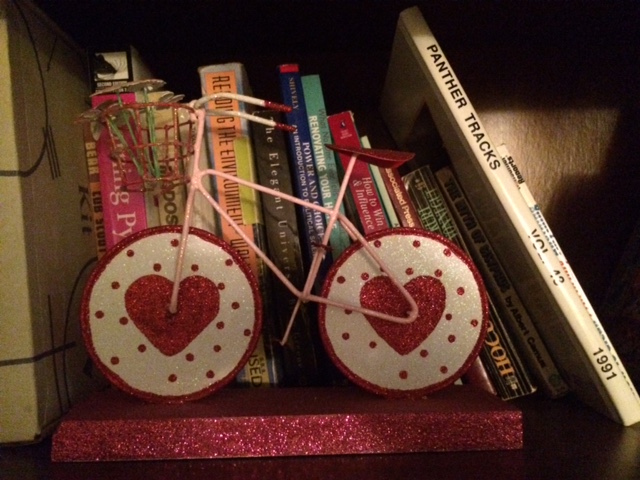
HWWLT Logo on yellowMary Dean teaches nutrition at Penn State; James teaches math in the College of Earth and Mineral Sciences there. They were my warmshowers host in State College PA, in a house full of bicycle themed accessories. Mary Dean and James invited two friends to dinner; Kristin teaches seventh grade in a rural school district, Mike is a psychiatric social worker. Mary Dean kicked off the conversation:

MDC: Everything about teaching is becoming more complex, but so is everything about being a student. Services for student are rampant, yet they have to do all of this stuff online. Technology has many upsides, animations and access to information. But when I consider everything I put online for my students and then multiply by five, I can see why it’s harder for students to navigate college. Government regulations are also a challenge. Compliance is difficult; assessments are tricky. We now have a new Vice-President to oversee assessments. We give students too much assistance; it keeps them from independence. But it’s the rare student who can navigate the maze without help.

MM: There’s a trickle-up problem. Public education accommodations that we provide by right at lower levels become expectations at the college level.

KM: As a public school IMG_1983teacher, I am responsible to make sure that children who are absent have all the materials they need. It’s not their responsibility; it’s mine.
MDC: My typical course syllabus now runs eight pages. It becomes the contract that protects you. Twenty years ago, it would have been two pages, and would have included the assignments. Now, the syllabus is so complex students don’t even read it.

MM: In Pennsylvania, all children with a mental health disability are eligible for medical services. The state used to run the program, but they contracted it out to a managed care company. If you have ADHD or depression, you may eventually wean yourself from the system, but if you have autism, you’ll be in the system forever.

How will we live tomorrow?

MM: How and what role religion will play in establishing the norms of our society will have a big impact. We have such extreme divisions in the world; yet look at Ireland, a Catholic country that just passed gay marriage. Our resources are declining while our population is expanding. When we think of ‘home’ our country is no longer enough; the earth is not even enough.

How are we going to respect people’s dignity and meet their individual needs while maintaining societal norms? How will six billion plus people have individual and collective identities? It’s an equation with six billion variables.

JK: The conservative realist in me can tell you how we will live tomorrow. But that’s self-fulfilling. I shy away from ideologies as Valhalla, but if I’m just an observer, I’m not involved. There is no such thing as ‘more’ simplicity. I want less complexity.

IMG_1984MDC: That’s why cycle touring is so great. You have two bags and you have everything you need. Campers in RV’s bring half of their stuff from home to the outdoors; then the throw what they don’t use away. Our existence in America is, if you have access to money or credit, you get stuff.

We desire to get back to ‘the way it was’. Local food is a romantic notion, but we like the idea more than the actual work required to make it happen. We used to have famine. We had tragedy. We forget that life used to be harder. We will continue to strive for what we think will make our lives easier.

MM: Would someone in 1859 have pined for a romantic past?

KM: Can we keep up? Can we continue American technology and consumption? Is it hurting us? Everything needs to be new. It happens so rapidly. Can we keep it up?

IMG_1985JK: Nothing is repairable or upgradable. I see children today who don’t know how to cope without their technology. I take it away when I coach kids. They resist at first, and then they engage with each other.
MDC: We have a whole lot of anxiety around our devices.

KM: At the end of the 1990’s we didn’t think we had an enemy in this world. Then 9/11 happened and we came together.

MM: For a collective to be a collective, we all need the same information. 9/11 was a collective experience that pulled us all together.

MDC: Part of what pulled us together was that period of the unknown, when no one knew exactly what was going on. The unknown pulled us together.

IMG_1987JK: Collective experiences bind. For our generation it was the Challenger accident. That was the first time we saw America falter.

MDC: Basic human nature craves community. Can technology provide enough community?

Our conversation evolved to a very present challenge in State College. Toll Brothers wants to build ‘luxury student housing’ closer to the primary water supply than many think wise. This issue has triggered much debate in the community, and though the final outcome is not yet determined, the locals thought that Toll Brothers would find a way to implement their plan.

JK: There’s a scale problem. If you take Penn State’s rate of growth, in twenty years there will be 100,000 students paying $100,000 in tuition. Is that sustainable?

________

JK had an epilogue for our discussion, relevant to this project: “You are going to need an epilogue; some way to solicit all of those who interacted with you to come together in the end. It doesn’t have to be a physical reunion, but I want to know where this is going and where goes in the end.


Posted in Responses | Tagged , | Leave a comment