Profile Response – Muhidin Libah of SBCMALA, Lewiston, ME

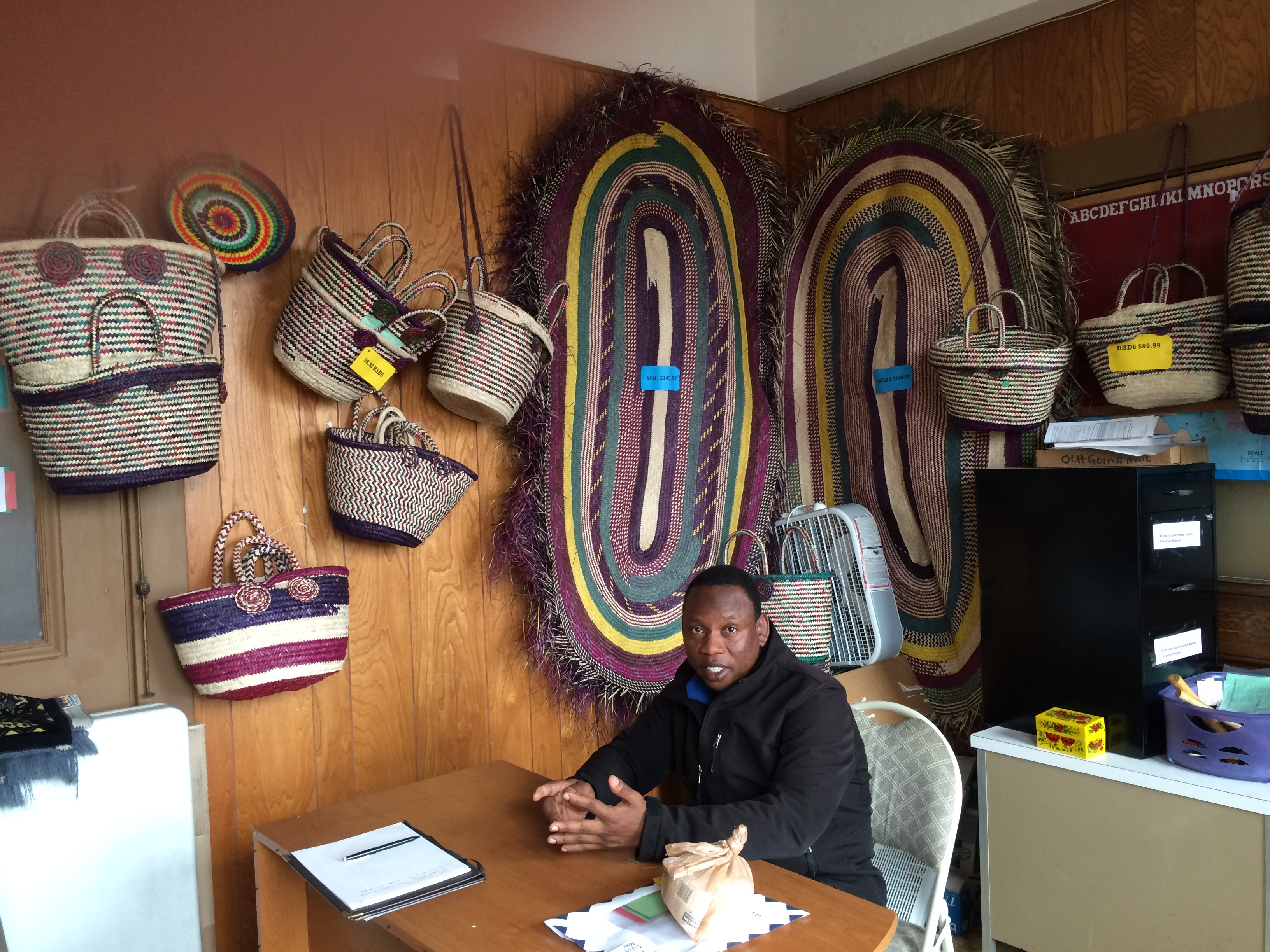
HWWLT Logo on yellowSBCMALA (Somali Bantu Community of Lewiston, Maine) occupies two rooms on the fifth floor of a tall, aging office building on a corner in downtown Lewiston, Maine. Muhidin Libah, Executive Director shares the back office with the raw materials and finished results of their basket weaving and rug braiding operations. On my way in, a stout woman in a swirling rode and scarf staffed the front office. When I left, a narrow man feeding an infant occupied the same desk.

Mr. Libah explained the rank and freedom among various Somali groups. Somali Bantu had been enslaved under colonial rule, and continued to be by ruling Somali after their 1960 independence. In 1999 the U.S. State Department gave Somali Bantu refugees high priority and began bringing large numbers to the United States. By the early 2000’s over 10,000 Somali Bantu had come to the United States, most distributed to larger cities. But like other immigrant groups, they found ways to cluster.

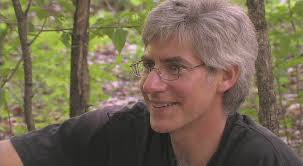
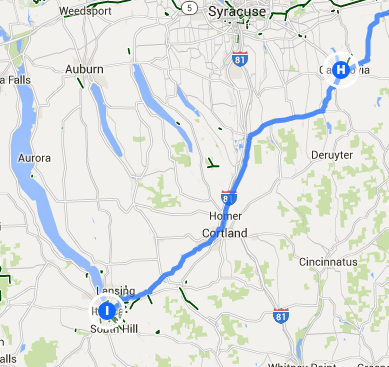
IMG_1772According to Mr. Libah, the first Somali Bantu came to Lewiston in 2004, and most of those who followed came from other American cities. He first lived outside of Syracuse New York with his family of three daughters, but was overwhelmed by the challenges and speed of life there. He investigated where other Bantu were living, and heard good things about Lewiston. “Lewiston is a slow place. There are many elderly. We come here because it is secure. We could not adapt to the speed of life in New York, Atlanta, and other large cities.”

Mr. Libah acknowledges other advantages as well. “The benefits in Maine were generous. They are less so now, but when we arrived welfare was good.” He estimates there are 3,000 Bantu in Lewiston and Auburn, who remain regardless of benefits because the pace of life is slow. He does not shy away from the fact that Bantu receive a high level of public assistance. “100% of Bantu children go to pubic school, and receive free lunch. Almost all Bantu are on food stamps. People complain about us being on welfare, but what would they like us to do? Starve?”

Mr. Libah spoke English when he came here. He’s worked at L.L.Bean and St. Mary’s Hospital. He’ll be in the United States ten years this September. He’s a citizen, boasts that he pays taxes, and feels criticism of Bantu in Lewiston is unrealistic. “We have to evolve economically.” He cites increased commercial activity along Lisbon Street, downtown’s Lewiston’s commercial spine, since the Bantu arrived. I cannot compare the street to any previous time, but the commercial buzz on a weekday in May is faint.

When I ask, “How will we live tomorrow?“, Mr. Libah points to the woven crafts in his office. “My plan is to tell our story, through arts, storytelling, meetings. I want to explain why we are here. We want to share our culture and our food. We aren’t going anywhere anytime soon. We want to be friendly.”

I cannot help but compare SBCMALA with the Cambodian Mutual Assistance Association I met in Lowell, MA. Cambodian refugees came to that city almost thirty years ago now, and are much more integrated into that place than Somali Bantu are in Lewiston. Time changes so much.


Posted in Responses | Tagged , , | Leave a comment

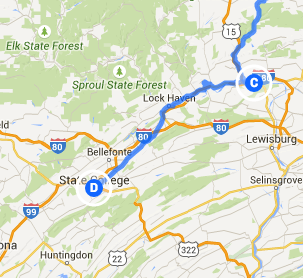
Trip Log – Day 19 – Williamsport, PA to State College, PA

Williamsport State CollegeMiles Today: 68

Miles to Date: 1,121

May 24, 2015 – Sunny, 70 degrees


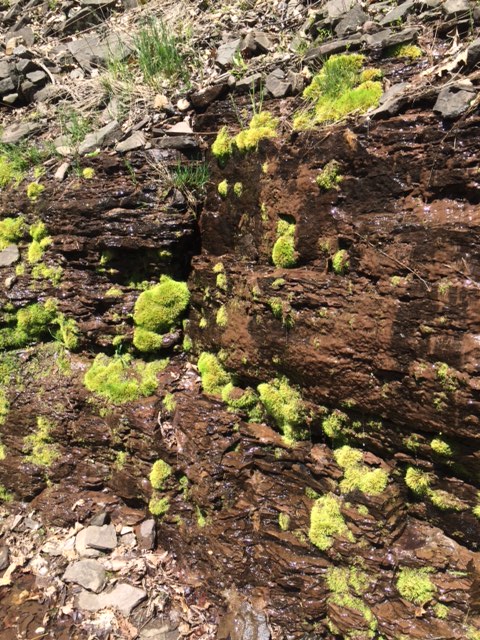
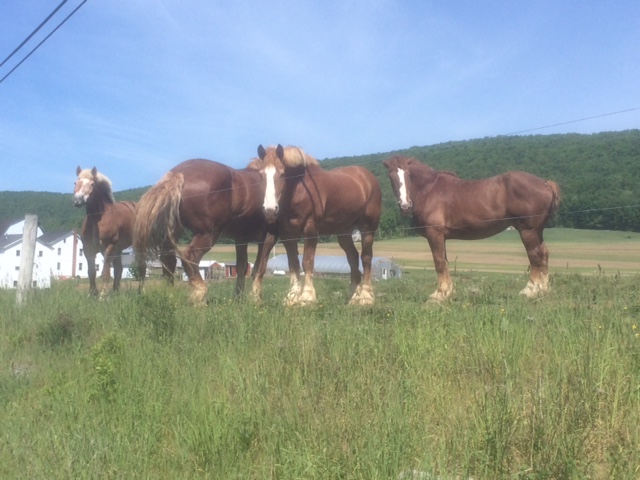
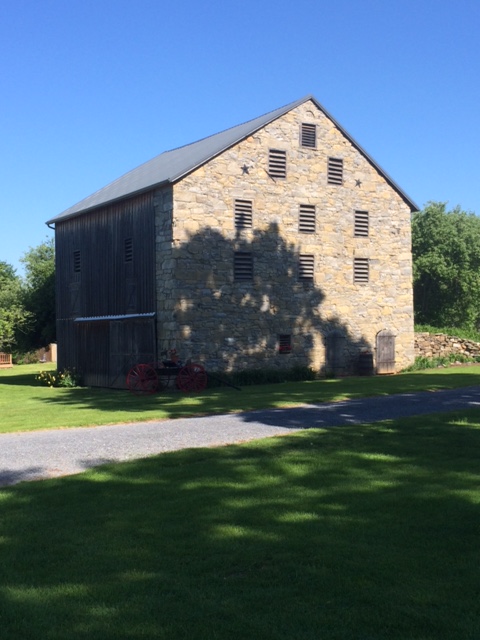
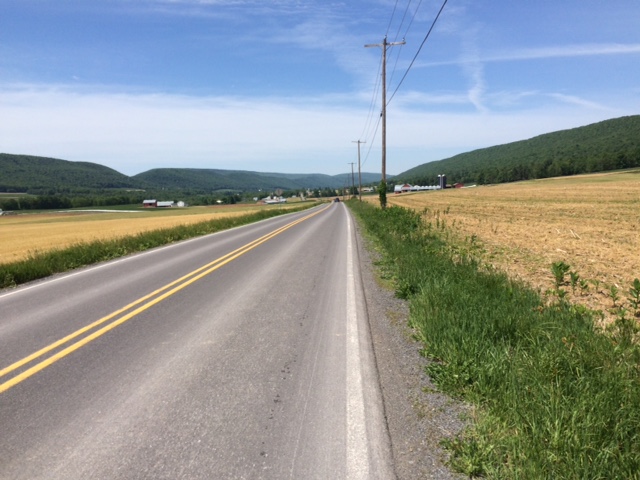
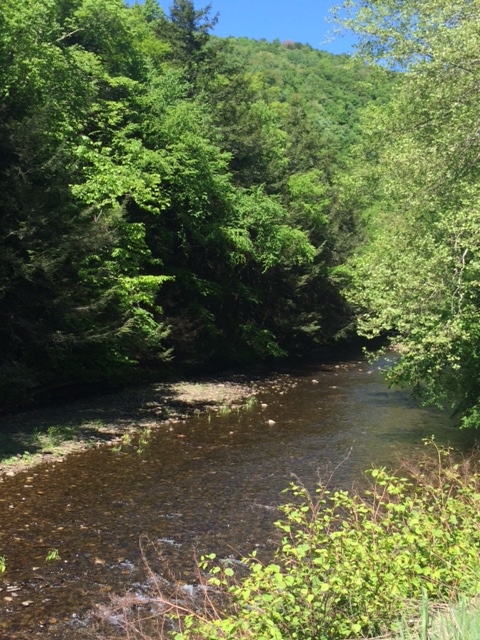
IMG_1958Today was a perfect cycling day over three rigorous, densely forested mountains, separated by broad, fertile valleys. Flags flew everywhere. Rhododendrons were in full bloom. Moss thrived in the watery cracks of the limestone crevices. Cows and horses watched me pass. Mammoth stone barns stood sentry along the side of the road. The valley roads were long, straight, and hot. The farm spreads, most with German names on the mailboxes and many with Mennonite carriages, were immense. But when I climbed up the mountainsides, the trees shaded me and cool breezes wafted off the brooks. I learned that when the road rose above the creek, there was usually another mile or so of hard vertical rise before the descent.

IMG_1964IMG_1955IMG_1971IMG_1967IMG_1974IMG_1975IMG_1953

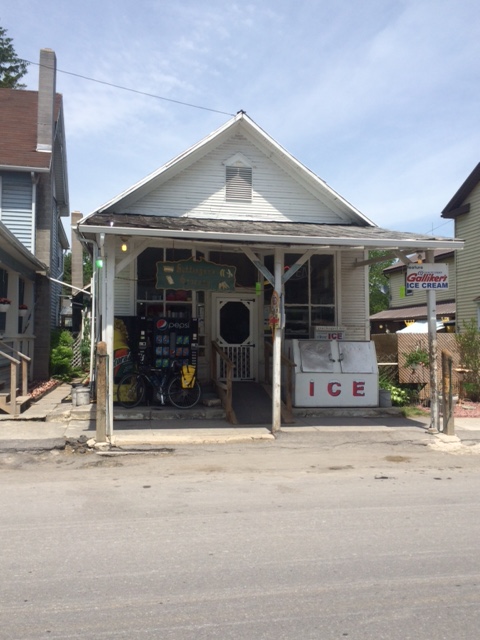
IMG_1976I stopped at the charming general store in Rebersburg, where everyone was friendly, and then pedaled the final twenty miles to Boalsburg, home to the Pennsylvania Military Museum and birthplace of Memorial Day, where a big fair was going on.

It was only a few more miles to State College, where I had a delicious dinner, outside with candlelight, with my warmshowers hosts and some of their friends. We got so involved discussing how will we live tomorrow; we didn’t turn in until after midnight.

Posted in Bicycle Trip Log | Tagged , , , , | Leave a comment

Profile Reponse – Chuck Hayes, CEO of MaineGeneral Medical Center

HWWLT Logo on yellowAs Chuck Hayes, CEO of MaineGeneral Medical Center in Augusta, Maine, tours me through MGMC’s new hospital, he has one very specific response to how we will live tomorrow: “As of July 1, the hospital will stop selling soda. That is not going over too well.”


imgresOffhand comments often reveal deep truths, and the fact that MGMC will stop selling soda is as relevant to healthcare as the $312 million facility they opened in November 2013. I was a member of the initial design team for this LEED Gold, Integrated Project Delivery, evidence-based design facility. Our enlightened client was open to the most advanced healthcare ideas, yet within two years certain design decisions, like a soda fountain in the cafeteria, are passé. While planning this project no one questioned installing a soda fountain the cafeteria. Every hospital cafeteria had one. We never know what will change; we only know that change will occur.

imgres-1My role in healthcare design was to align building design with clinical needs, to ensure efficiency and flexibility. I guided the big decisions. Perhaps that’s why when I tour a completed building I’m struck by the details that evolved later – the signage, the graphics, how the light defines space, and where the interior designers chose to change colors.

images-1MGMC is beautiful at every level of detail, and Chuck is justifiably proud of the building. Yet he, too, focuses on details. He explains how the nurse call system allows patients to send direct requests for water or toilet assistance rather than a general buzz, and how RFID tags help locate equipment and staff. He describes MGMC’s program to incorporate locally sourced food and why the salad bar is the first thing everyone meets upon entering the cafeteria. In fact, Chuck barely touches on the medical parameters of the facility. That MGMC has the latest medical technology is a given. He focuses on the intersection of that technology and the rest of people’s lives: their $4 million effort in community wellness; the demonstration kitchen; and education programs.

Toward the end of the tour, I ask Chuck, “How will we live tomorrow?” His response reflects the focus of our tour:

imgres-2“Right now we are really busy in the inpatient and acute care arena. Even though we are experiencing an aging population, we anticipate that this focus will level off as we shift to health management. There will be more care in outlying clinics and at home. The social issues in making this change are more challenging than the medical ones. Getting people to keep appointments, get transportation, move every day, eat well. These have to align to keep people out of the hospital.”

I spent thirty years working in healthcare in the United States, a system that has always favored the newest, biggest, and best technology over mundane things like primary care, diet, exercise, and wellness. Chuck heads a very sophisticated regional hospital that has all the latest technology. But like so many others in our healthcare system, he understands that while our technology is wonderful, the best health will come to those who do not need those interventions.


Posted in Responses | Tagged , , | Leave a comment

Trip Log – Day 18 – Elmira, NY to Williamsport, PA

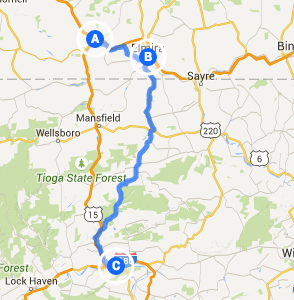
Elmira WilliamsportMiles Today: 77

Miles to Date: 1,053

May 23, 2015 – Sunny, 60 degrees


I woke up this morning thinking about my father. It was inevitable that the old man would settle in for entire day I was headed to Williamsport, PA. Fifty summers ago he came home from work one afternoon, announced that he was talking all of his twelve-year-old Little Leaguers to Williamsport for the World Series, and decided there was enough room in the Rambler station wagon for nine-year me as well. There were eight, maybe nine, of us. I climbed in the way back and squatted on top of backpacks in silent awe of my two older brothers and the twelve year old all-stars from Toms River Little League. My father drove all night through torrential rain on pre-Interstate two-lane blacktop. We sang ‘’A Thousand Battles of Beer on the Wall’ all the way down to one. Never done that before or since.

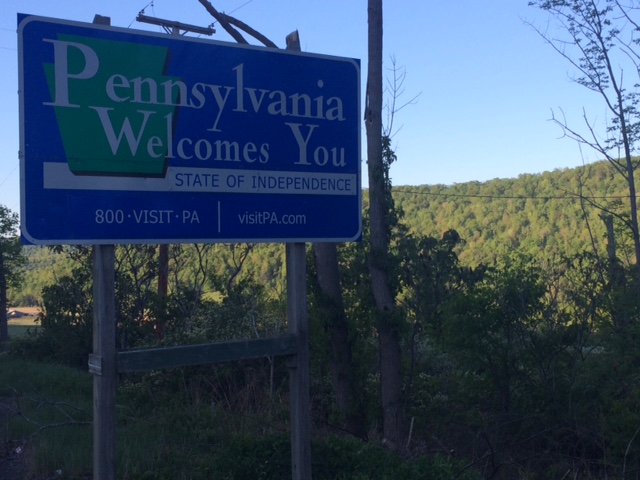
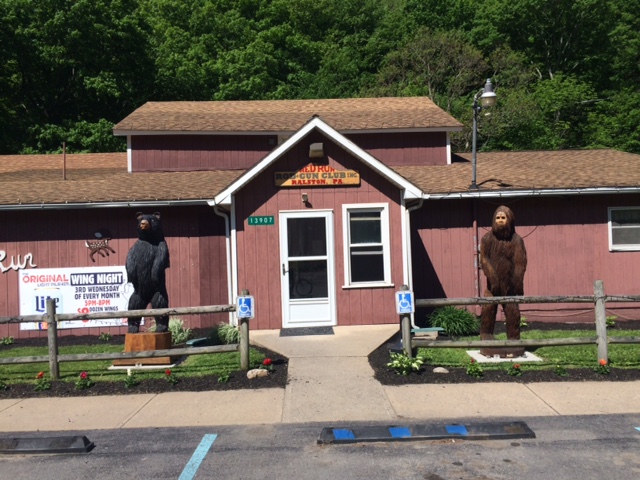
IMG_1942Today was perfect, though cold; not one cloud all day. I slipped out of my warmshowers gig right at six and clocked sixty miles by noon. My fingers were numb, but the rest of the world was heating up for Memorial Day weekend. The VFW guys at the Stebben barn were grilling racks of chicken before seven, to be tender for their noon BBQ fest. The sun hung behind the mountains until after eight. Three deer ran with me for about a mile, stopping every few moments to look back and make me feel clumsy in their grace. The sawmills were humming by nine, holiday weekend be damned. But by ten the sun was high enough to thaw my digits and folks propped themselves in front of RV’s parked along Highway 14 to watch the world pass by. The forests were dense, the rivers crystal clear, and the hunting signs ubiquitous. I wondered why the Rodman Gun Club had a wood sculpture of a Neanderthal outside their clubhouse, but decided not to inquire.

IMG_1945IMG_1950IMG_1951

I stopped for a breakfast sandwich and sweet bun early on, but was hungry again when I came upon the Marsh Hill Market. Candy made me that Pennsylvania specialty: the hoagie. A hoagie is more than a sub. It is everything so bad that it’s really good. Start with a squishy loaf roll. Slice it down the middle and swab it with mayo. Layer on three varieties of low-cost luncheon meat, the kind that’s pinkish plump from too many nitrates. A few slices of indeterminate cheese as well. Scatter hot peppers, sliced onions, and pickles everywhere, add shaved iceberg, drizzle with oil, then drizzle some more, cut it into two huge halves and top each half with pale, cellophane tomatoes. It’s impossible to actually fold a good hoagie, and Candy makes a very good hoagie. After I downed it all, with a Diet Coke and an ice cream sandwich chaser, I handed my cards around the musty market and got blanker stares than the earlier deer.

IMG_1956I was near Williamsport when I passed signs for a Pow Wow Reenactment in Trout Run. I had to go astray. It was an odd event – Native American costumes, drums and dancing coupled with Revolutionary War wannabes and speeches about the heroism of American veterans. I couldn’t make any sense of it until Sandra Lee Hitchcock, a Cayuga Indian from New York, gave me a coherent explanation, as well as the most poetic answer to my question to date. She insisted I accept a leather neck pouch with fresh sage to protect me on my journey.

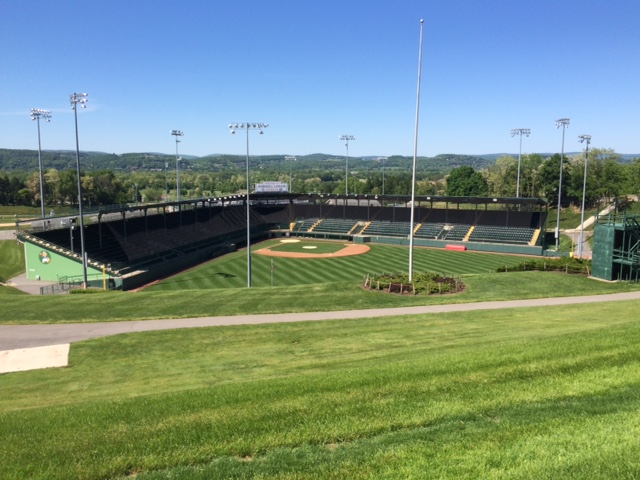
Sandra’s protection was welcome, this being my Jack Fallon day. Fifty years ago, when our station wagon full of boys pulled into Williamsport mid-morning, the sun decided to shine. My father inquired about a room in the City View motel, on a hill overlooking Little League home plate. Miraculously, they had a last minute cancellation and gave us a room with a direct view of the World Series Field. Throngs of people from all over the world crammed for a view of the little ballplayers, while we Johnny-come-lately’s landed the equivalent of a corporate box.

IMG_1961Given that precedent, I was compelled to roll into Williamsport without the security of reservation. I passed through downtown, crossed the Susquehanna, and climbed the hill toward the field. Little League has come far in fifty years. The City View is gone, replaced by a museum and administrative building. The main field is still there, plus a second stadium and a dormitory complex where sixteen teams from all over the globe live during the World Series. I enjoyed touring the complexIMG_1962, and discovered a vintage 50’s motel just down the road where I got the nicest room of my entire trip, with a private outdoor porch in the same orientation as the City View. The only way to channel Jack Fallon is to play fast and loose and come up with the best.

In keeping with the sprit of the day, I walked down to the Mountaineer Lounge fro dinner, an Italian gin mill with wood paneled walls and husky voiced waitresses. I snarfed down a meatball sub with fries and draft beer. When the fake blond hostess asked me if I was alone, I nodded. I figured she might not understand that Jack had been with me all day.

Posted in Bicycle Trip Log | Tagged , , , , | 1 Comment

How will we live tomorrow? – Responses

How will we live tomorrow?

“I feel that by positioning ones self and preparing for the future allows the future to find you. It can’t be forced but if you put the pieces in place the future will find you. Kind of like finding a spouse or a cute little rescue dog ;-)”

Paul Kingsbury, Owner of Kingsbury Cyclery, Elmira NY

How will we live tomorrow?

“I spend time thinking about the rate of technological change. I look at future shock in a microscope. Material development is so fast. I don’t know where it will end up, and am hesitant to make predictions. But the change is so fast.”

Ben, PhD. Candidate in Experimental Physics with focus on electron microscopy at Cornell University, Ithaca, NY

How will we live tomorrow?

“That’s easy. I live tomorrow for my twin two-year olds. Since they’ve been born I’ve been so much better. I quit smoking. I don’t drink as much. I am doing the right thing for them.”

Audie, McDonald’s employee, Corning, NY

How will we live tomorrow? 

“My hope and wish that we will live in a world of clean air and water, renewable energy, equality, and kindness towards all living creatures.”

Abhi Ganju, Physician and artist, Chicago, IL

How will we live tomorrow?

“In togetherness.”

Douglas Stabley, Administrator, Elmira, NY

How will we live tomorrow?

“You can’t lose track of where you’ve been or else you lose appreciation for what you have today.”

Pat Monahan, Events Coordinator, 1796 B. Patterson House, Corning, NY

How will we live tomorrow?

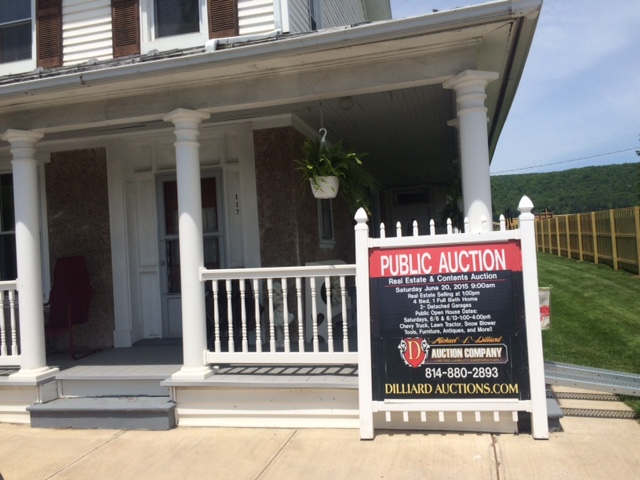
IMG_1978“Right now I live today and tomorrow for my mother. My dad died last year and Mom has to move on. We live in Bloomsburg, but we’re here every weekend. Next month is the auction. We have to sell off 54 years of stuff. Then mom can come and live near us.”

Beth, Daughter, Wife, Mother and Las Vegas aficionado, Rebersburg, PA

How will we live tomorrow?

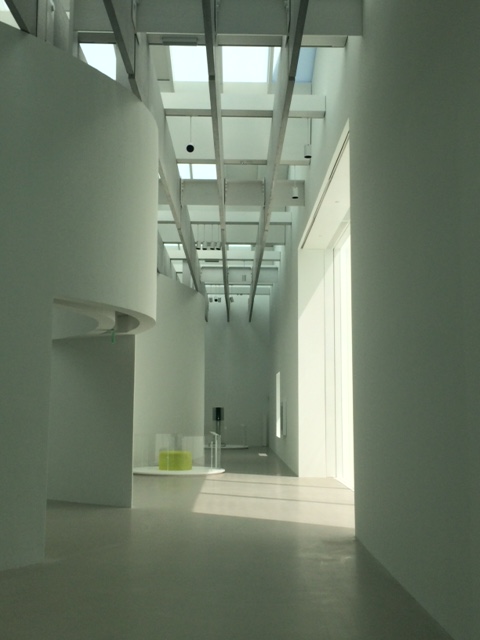
“I will be here, where the light is so nice and the space is so beautiful that you forget the world outside.”

Karen, Docent, Corning Museum of Glass, Corning, NY

How will we live tomorrow?

“I turned 60 a few years ago and thought, whoa, this is the day to start doing the bucket list. I retired; I went sailing on a tall ship. Now I have so many projects but need to set aside time to actually do them.”

David, Software Engineer, Washington, D.C.

How will we live tomorrow?

“Tomorrow is going to be just like the past thirty years.”

Paul Kingsbury, Owner of Kingsbury Cycling since 1981,Elmira, NY

How will we live tomorrow 

“Hopefully, better than today.”

Joella, Cashier at Woody’s in Gillett, PA

How will we live tomorrow?

“We have to have faith in the right direction.”

Terry Barton, wife of Iraqi veteran, Trout Run, PA

How will we live tomorrow?

“When I get a crystal ball, I’ll let you know.”

Mike, World Little League Museum, Williamsport, PA


Posted in Responses | Tagged , , , , | Leave a comment

Trip Log – Day 17 – Corning, NY to Elmira, NY

Corning ElmiraMiles Today: 22

Miles to Date: 976

May 22, 2015 – Sunny, 60 degrees


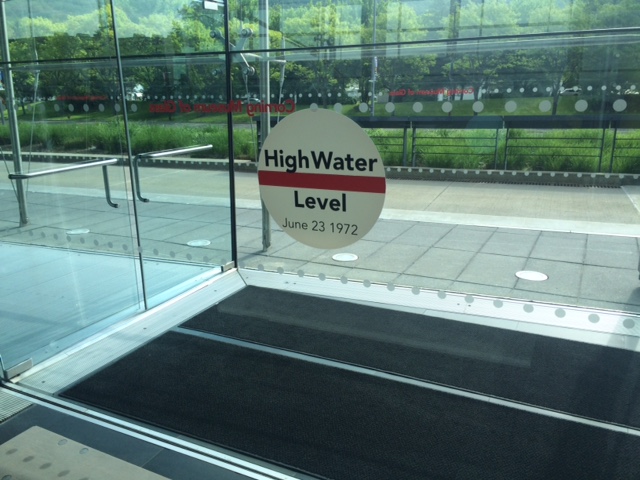
The history of the Chemung Valley can be described in four phases: before settlers, after Corning, before the flood, and after the flood. The flood occurred on June 23, 1972, but for many it is fresh as yesterday.

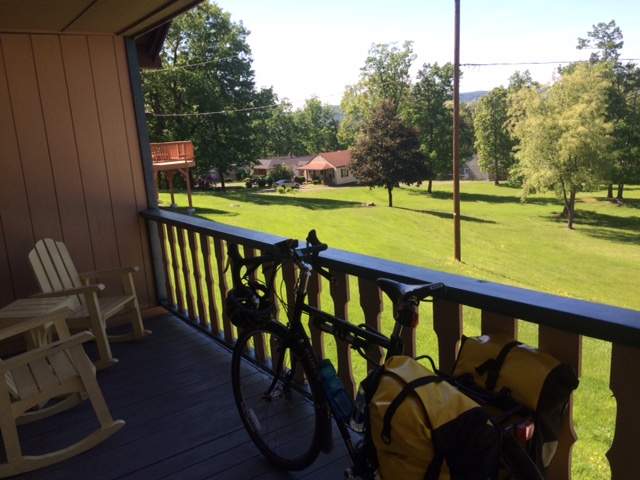
IMG_1929I spent a day as tourist in Corning. After a big breakfast I got a private tour of the Patterson Inn by Events Coordinator Pat Monahan. The Inn was built in 1796, one of three built in this region to accommodate settlers coming north from Philadelphia and New York to tame the land between the New York line and Lake Ontario. It is the centerpiece of Heritage Village of the Southern Finger Lakes, which also includes a restored schoolhouse, blacksmith shop, barn and log cabin. The Inn is beautifully restored with period furnishings and accessories, as well as one of the most intricate looms I’ve seen.

IMG_1931From there I passed Corning headquarters in the center of downtown. The company took the town’s name when it moved from Brooklyn to this rail hub closer to coal sources essential for glass furnaces, and then the company put the city of Corning on the map. The Corning Museum of Glass (CMOG), like so many places in Corning, marks the high water line of the 1972 flood that changed Corning and its sister city Elmira forever. Both cities downtowns were completely underwater, and each has addressed significant reconstruction.

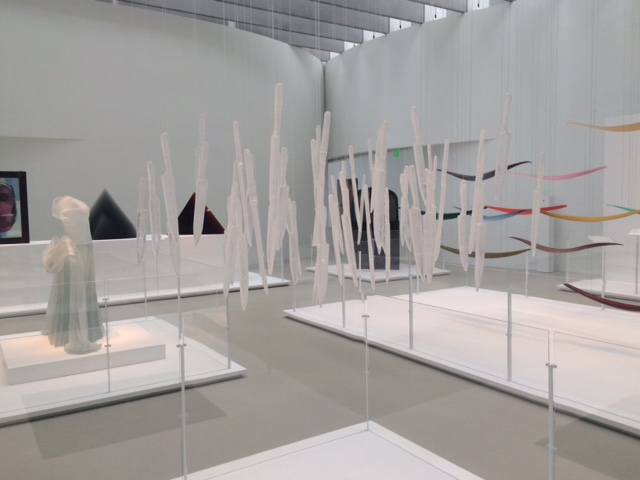
IMG_1934I met with CMOG’s Director of Communication, Yvette Sterbenk, and Chief Scientist, Glen Cook, to talk about tomorrow. Afterward I toured the galleries, which are housed in four interconnected buildings dating from the 1970’s to this year. The span of the collection is tremendous, a balance between demonstrating glass’ technical attributes and artistic possibilities. The new addition by Thomas Phifer is stunning and worth a visit alone, but don’t miss the rest. I met an assortment of people, including a transitioning transgendered person who had incredible ideas about tomorrow.

IMG_1937

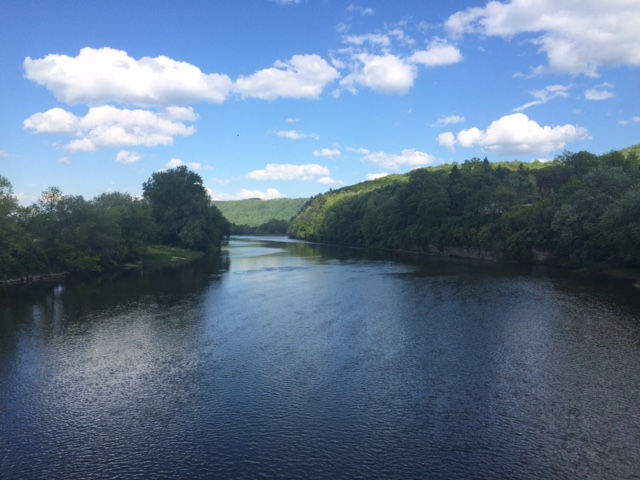
IMG_1940I didn’t leave Corning until after 4, and had my easiest cycling day in every respect. The weather was perfect, the wind at my back, and the road through the Chemung Valley a gentle slope. Of course, it was only 20 miles, so that made it easy as well!

I had a delicious dinner with my warmshowers hosts Paul Kingsbury and Wanda Tocci, along with Paul’s father, Paul. That made three Paul’s. Paul Jr. owns a local bike shop and gave the Surly Long Haul Trucker a once over – the Crown Victoria of bicycles is holding up like a charm. Wanda and Paul live above the shop, in a cool penthouse with a roof deck that would fetch millions in Manhattan. Paul opened his bike shop in 1981, when he was twenty years. This led him to quip that tomorrow would be just like every other day for the past thirty years, but that’s definitely not true. There was a lively energy to our foursome. Not only because we had good food and wine and companionship, but the other two Paul’s possess a zest many 50+ and 80+ year old guys lack. I figured it had to do with romance. Paul and Wanda have been married less than a year, while Paul’s dad, widowed a few years ago, is “communicating every day” with a woman he met on Match.com. With so much good vibe in the present, we didn’t spend much time talking about tomorrow at all.

Posted in Bicycle Trip Log | Tagged , , , , , , , | Leave a comment

Profile Response: Jim Merkel, Belfast, ME

HWWLT Logo on yellowJim Merkel is an aeronautical engineer who walked away from a conventional career in San Luis Obispo, CA, became a bicycle activist, wrote the book Radical Simplicity, lived off the grid in British Columbia, travelled throughout the developing world, was Director of Sustainability for Dartmouth College, and is now an environmental educator.
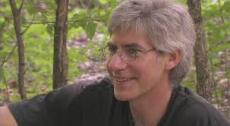


imagesJim became a parent in his fifties. He and his partner Susan searched throughout New England for a community where they wanted to set roots and raise their son Walden. They chose Belfast, Maine, purchased 40 acres on a hill overlooking town, lived in a yurt while they built a super-insulated house from wood milled from clearing their land, and moved into their permanent residence just over a year ago. They are completely off-grid: solar hot water and heat, wood stove back-up, and photovoltaic electric.

Although Susan and Jim are conscious of how they live, they enjoy creature comforts beyond what I think of from living off the land. They own a car, garden with a tractor, and enjoy a 30-foot sailboat. Their home has high quality finishes and is spacious enough to provide both places to congregate as well as individual privacy. They don’t own a television, but otherwise the chaos a five year old brings to a house is evident.

I asked Jim, “How will we live tomorrow?

images-2Our biggest challenge is how to come together as ‘we’ over an issue. When I was a bicycle activist, I studied the Netherlands and how they decided to prioritize bicycle transportation. A series of pedestrian and bicycle accidents, including a few deaths, made people question the wisdom of car domination. This led to conscious changes about how they organized their street system and traffic patterns to make walking and cycling both safer and preferable, while driving became a less desirable option. Accidents declined, the air quality improved, people got healthier. When you needed to drive, it took longer, but the advantages offset this obstacle, and once people adjusted to the new reality that driving wasn’t the fastest way to get around, cycling really took off.

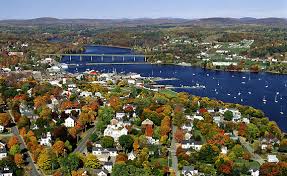
We moved to Belfast because we found a strong collective sense of ‘we’ in this community. Belfast is in its fourth redefinition. It began as a shipbuilding town, then shoe manufactory. In the 1960’s there were giant chicken farms in this area, the kind of mass production now centered in the South. That didn’t last too long, and by the 1970’s this was a very inexpensive place for ‘back to the land’ people. New England doesn’t accommodate large-scale monoculture like the Midwest does, but people can scrape a living from small farms. Those people are the core of this community, which now also thrives from tourism and back-of-imgres-3house services for financial and healthcare companies.
The most dangerous way we can continue is exactly what we are doing now. Native Americans occupied this area for 10,000 years, and evidence indicates that they occupied a one-acre per person footprint. (Acre per person measure is an equivalent consumption index that Jim references throughout his work, and explains in detail in Radical Simplicity. The index equates all of our energy use into land-based equivalents.) Contemporary Americans have a 20-acre per person footprint. There is simply not enough energy or space on the planet for everyone on earth to consume at that level. The level to which the earth will sustain people is a science; it is determinable.

Part of the challenge is that sustainability deteriorates too slowly to see in a short timeframe. When you look out your backyard, nothing looks bad. But consider the loss of fish life over the past twenty years; it’s drastic. Humans accommodate a new normal over a shorter horizon. Ironically, there are still plenty of lobsters. They have no predators now and they thrive.

The reality is that we have no idea how we will live tomorrow. However, when I teach environmental courses I often play, a television game with participants. Not television as in the machine, but television according to its true meaning: to telescope vision. I ask people to go twenty years into the future. I say, “We are in a 100% sustainable world. There are no wars; there is no hunger. You wake up in the morning and remember that the world is sustainable and will continue in health balance. What does that mean?”

imgres-2First, you relax. Then I ask people to describe what that day looks like. We do this in pairs, with one person acting as active listener for the other. Every pair sees a beautiful vision every time. We are able to envision a beautiful future. That is the first step to creating it.

Look at what we did with cycling in San Luis Obispo. We began with visioning exercises. This led to a policy document we presented to the city. The city had proposed $20,000 for bicycle lanes. We asked for $400,000. We made a persuasive argument, and got $200,000. We never would have gotten it without organization and vision.

So, how will we live tomorrow? We have to build the skill set for living together. We have to ask for what we want and not settle for what we think we can get. If our leaders would lead, we could do this within six months. But they won’t. A tiny group of people are making millions and have great incentive to keep things as they are, short-sighted as that is; while we, the majority, are not organized. We are complacent.

images-1The powers vested in the status quo are very successful in navigating the media. Look at NPR. They have a sponsor that says, “Natural gas; think about it.” I don’t want to think about it. I don’t want to consider the pros and cons of fracking. I want to acknowledge that every time we extract a resource that is forever gone, we are not sustainable.

The jury is out on whether social media can coalesce people to action. People have big hearts, and they care. They care about their kids and family and their future. But every day is spent in getting by; they have nothing left to galvanize them to action. I don’t think that many people find time every day to think about their lives.

When I work with college students, I give them a visioning exercise. “What do you love?” I ask them to answer that question and turn it into a life plan. So many people are in unsatisfying careers. They start with a vision – youths have innate vision – but life drains it. Then, you wake up and have a mid-life crisis.
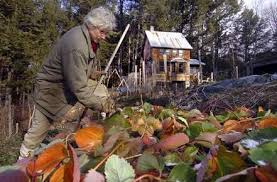
imgres-1The way we have to live tomorrow is to manifest our vision. Live inside our wildest dream. I hear from so many people who read my book and then quit their jobs. But that is not always good plan. You have to have a vision of what you want instead.

One year, when I was at Dartmouth, all freshmen were required to read Tracy Kidder’s book, Mountains Beyond Mountains. One group of students was so inspired they began the Public Health Initiative. If you introduce people to the service option versus the profit and privilege option, at least some will choose service. But most of us are shown privilege as the only viable option.

imgresWe don’t have to throw away capitalism to become sustainable; we just have to tweak its priorities. Harvard has a $13 million Green Loan Fund that has annual returns of 32%. The 2008 bank bailouts would have gone far in eradicating world poverty. Instead, we just threw that money to the banks.

The degrowth movement is gaining traction. Easing us to a better balance with all of earth’s systems. We can decline our population, revise our expectations on standard of living and come into sustainable balance. The Transition Handbook by Rob Hopkins is a good starting point. Take the Stockholm Resilience Centre’s Nine Planetary Boundaries as limiting parameters.

I am not a religious person, but the Buddhist tradition resonates with me: What is the point of hope? If I am in the moment, present, doing what I know I have to do to care for myself and my planet, I can live at peace.


Posted in Responses | Tagged , , , , , , , | Leave a comment

Trip Log – Day 16 – Ithaca, NY to Corning, NY

Screen Shot 2015-05-20 at 12.30.25 PMMiles Today: 49

Miles to Date: 954

May 21, 2015 – Overcast then clearing, 50 degrees


I considered biking back into Ithaca to breakfast at the 24-hour deli, but was more intrigued by moving ahead, even though the next sizable town was over twenty miles. I navigated Ithaca’s big box strip on NY 13 south, and then veered west up a major hill. Thank to the glaciers thousands of years ago, cycling in the East is very predictable: valleys run north/south, so you’ve got to climb and descend when travelling west. In this part of New York, the rise and falls are long, several miles up and then as many down into the next valley.

A light rain fell as I ascended a long hill. I saw a sign for Newbridge, a small town off the main road, and detoured in search of breakfast. I was rewarded with the Varietywich at the Newbridge Cafe: steak and egg with cheese, mushrooms, onions and bacon on a bagel. I met Freddie, who tosses papers three hours a day and loves his job; Nikki, a gas jockey at the local Mobil; and Bridie, the friendly cashier who retired from working for the county, and has been working the cafe counter for sixteen years. “You’ve got to get out. Working here, you meet people.”

By the time I left, full, and pedaled past the covered bridge for which Newbridge is named, the sun started to peak through. My massive breakfast sandwich fueled me all the way to Corning. Trivia of note:

IMG_1913Exquisite Gothic gingerbread architecture

IMG_1914Small waterfalls along the road only people at bicycle speed can appreciate

IMG_1919


Highway crews installing new guard rails. No work is done by hand anymore.

IMG_1918Empty ice cream stands due to the unseasonably cold weather

IMG_1921


Very effective Interstate highway barrier through the town of Horseheads; I couldn’t hear any traffic noise

IMG_1922The gorgeous Chemung River Valley in Corning


I arrived shortly after one, and settled into a McDonald’s for an Internet session. McDonald’s is a mid-day haven for cyclists. Fast and free Internet, pleasant interiors that are never crowded, the folks you meet are the full cross-section of humanity, and I am a sucker for the $1 soft drinks or $1 cone. Audie, my counter help, was about the friendliest person I ever met. I spent over two hours catching up with the world electronically, and enjoying her boisterous banter. I was reminded of Dean Freidman’s song:

I am in love with the McDonald’s Girl
She has the smile of innocence oh so tender and warm.
I am in love with the McDonald’s Girl
She is an angel in a polyester uniform

When I left, after four, I realized that my motel was a ways out of town. Luckily, I passed a great looking barbeque joint on the way and stopped for an awesome early dinner. By the time I got to Corning Inn, I was content to settle in for the night.

Posted in Bicycle Trip Log | Tagged , , , , | Leave a comment

Profile Response: Rose Swan Workshop in Union, ME

HWWLT Logo on yellowThe afternoon before I arrived to visit Rose Swan, a family constellations therapist in rural Maine, she called to ask if she might hold a workshop on the morning after I arrived, centered around the question ‘How will we live tomorrow?” How could I refuse?
A dozen people assembled for shared breakfast and the daylong event. Some had been part of the conversion the night before. Others had participated in a previous workshop led by Rose. I could only stay through noon, as I had cycling to do. Here are my observations of the workshop.

Rose began: “How will we live tomorrow? By telling the truth today.”

imagesShe led us through a meditation and explained, mostly for my benefit, that family constellation work involves identifying the strengths, weaknesses, and energy of your own family, then having fellow participants ‘stand-in’ for actual family members to lead to deeper understanding and move toward resolving internal or external conflict. Since last weekend’s workshop was beneficial but intense, the group wanted to come together again, and Rose chose to organize the follow-up around ‘How will we live tomorrow?’

Rose asked us to consider Mark Ryland’s concept that all anxiety can be alleviated by the simple statement, “You are enough.” Some struggle with “I am not enough.” Some struggle with “I am too much.” Many of us struggle with both of those statements in different sectors of our lives.

images-1“My tomorrow vision is a nightmare, but I want to get to a place of hope.” Rose introduced a beautiful analogy. “Maine bedrock crumbles to create soil. We need the soil to live. We need the bedrock for stability. The crumbling is scary.” Rose believes that we all come to earth with a purpose, but during inception we “hug the tree of forgetfulness”. Then, we spend the rest of our days trying to find that purpose, that genesis.

We did a group check-in, an opportunity for introduction and expression. One of the participants, Luke, said something that resonated with me. “We teach children many skills, but we don’t teach them how to love.

Rose divided us into pairs, dyads, and directed us to find a quiet place, sit knee to knee, and take five minutes, one after the other, to state, “What lives in you?” Ours partner listened actively, but didn’t speak. Then, we reciprocated in kind.

images-2When we came together again, Rose laid a small log on the floor and a soft pillow on one side. She asked us to stand on one side of the log, state where we are, recognize the log as an obstacle to getting where we want to be, and then step over it toward the pillow, where we want to be tomorrow.

I am wary of having my emotions manipulated, Yet, Rose’s solemn manner and deep composure allowed me to relax and accept the shared energy that pulsed through the group. At some point I rose and stood on the far side of the log. Since our conversation last night I had been thinking about community, but this morning’s workshop made me realize that I was inclined to observe, rather than participated in it. I acknowledged that my competent, independent nature allowed my to study community from a distance, then I crossed over the log and expressed hope that my journey would help me find and commit to a community in a more conscious way.

In that small way I moved towards Rose’s guidance: to live tomorrow by standing in truth today.

Posted in Responses | Tagged , , , | Leave a comment

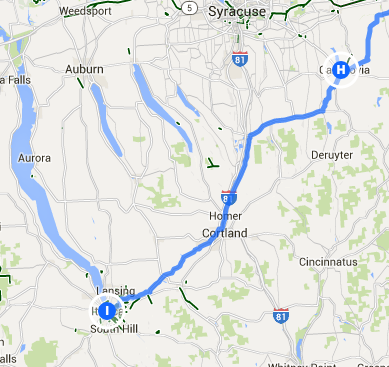
Trip Log – Day 15 – Cazenovia, NY to Ithaca, NY

Screen Shot 2015-05-20 at 12.30.25 PMMiles Today: 59

Miles to Date: 905

May 20, 2015 – Overcast and windy, 40 degrees


IMG_1906I had some good things going for me today. A simple route and easy ride: NY 13 the entire way, with gentle rises and long downslopes along a wide valley. But the moment I stepped out of Stone Cottage on Lake Cazenovia, I realized that the ride would be tougher than anticipated. The weather had taken a hard turn from warm to raw. I began with my windbreaker and Gore Tex gloves. Then I stopped to insert my hand warmers. Then I stopped again to add my fiberfill insulator; more layers than I had used the entire trip. It was difficult to appreciate the beautiful farm country with the grey skies and strong wind, mostly against my favor. The thermometer clung to forty degrees all morning.

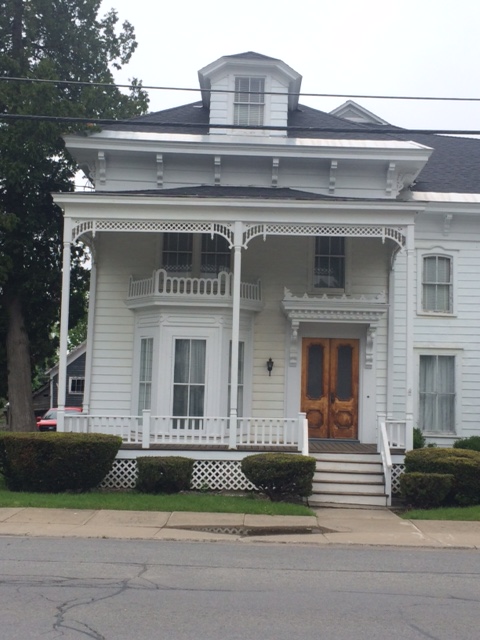
IMG_1907I made decent time, considering my shivers, and saw some elegant nineteenth century architecture along the way. I landed at Cortland Diner before noon. The local crowd all complained about the weather. My neighbor exclaimed, “Well, we’ve had two days of summer, and now it’s back to fall.”

Fragments of sun popped through my 20-mile ride to Ithaca, but it remained a chilly day. For some reason, road kill was rampant. I swerved by an opossum, skunk, turtle, black cat and full-size deer. I’ll spare my readers photos.

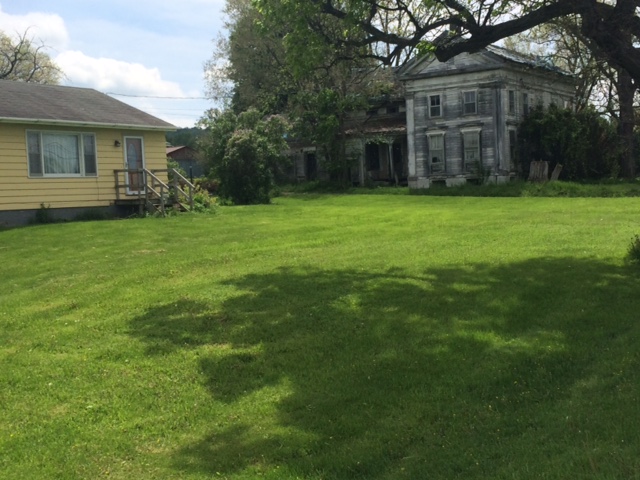
IMG_1909The other unfortunate deterioration I saw were many abandoned houses. This well-kept little ranch next to a well-proportioned Greek revival ruin struck me in particular; though I also saw more recent houses, from the 1950’s and 60’s, abandoned and naked to the elements as well. One man’s palace is another man’s junk.

images-3I rolled into the backside of Cornell and cruised through campus before descending into the center of town. It looks much as I recall from when I was last here, seven years ago, with the spectacular addition of the new IT building, Gates Hall, designed by Thomas Mayne of Morphosis.

After getting set in my motel, I walked to Downtown Commons, which is under construction but funky as ever. Ate an organic burrito at Vive Mexicana and then cancelled out its beneficial effects with a macaroon sandwich – two cocoanut macaroons with chocolate in the middle. Cornell graduation is in two days, so town is full of graduates and families, and most are happy to talk to bike guy about tomorrow

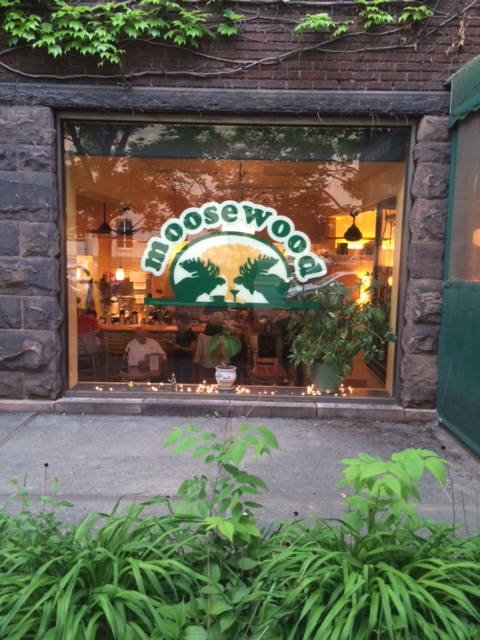
IMG_1912On the way back to my motel I passed the famous Moosewood Restaurant. It would have been a great place to eat and chat with folks, but the serendipity of this journey is that for every experience I gain, there are uncounted missed opportunities. I pass through each place only once and encounter some small slice of life.


Posted in Bicycle Trip Log | Tagged , , , , , , | Leave a comment