Trip Log – Day 74, 75, 76 – Copper Mountain, CO

Screen Shot 2015-07-19 at 4.27.53 PMJuly 18, 19, 20, 2015 – Sun and rain, 50 degrees

Miles Today: 92

Miles to Date: 4,230

States to Date: 18

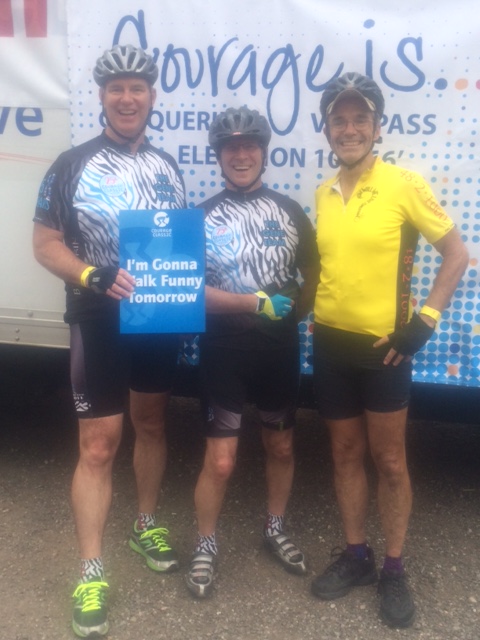
 imgresThe Courage Classic is an annual cycling tour through the Rocky Mountains: 2200 cyclists and 400 volunteers raise over $2 million for the Colorado Children’s Hospital. Some members of my extended family have participated for over twenty years. For the past five years, I’ve included the three-day ride in our annual July reunion. This year, I made the Courage Classic part of my 48-state journey.

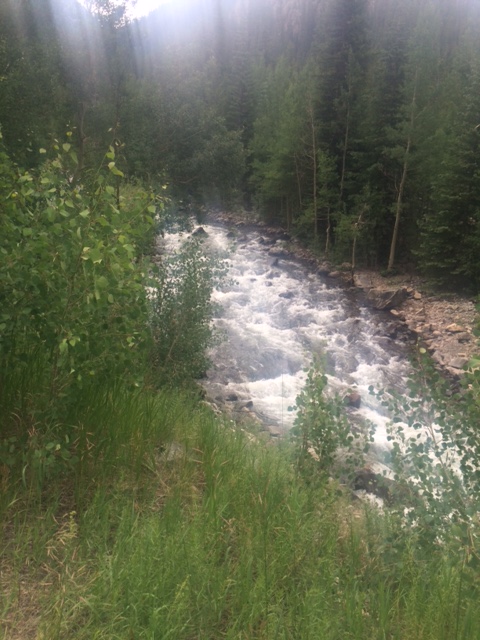
Each day the Courage Classic offers a range of routes and climbing challenges so that any level of cyclist can participate. Since our five core riders are getting older – average age 65 – we cherry pick favorite routes. This year, on day one we ascended Vail Pass east to west, rolled into Vail Resort, and then returned over the top. Day Two we circled Dillon Reservoir climbed Swan Mountain (my favorite stretch) and returned through Officers Gulch. On Day Three we left the crowds altogether and mounted Ute Pass, which is a terrific ride up a little-used road with magnificent views of the Gore Range.

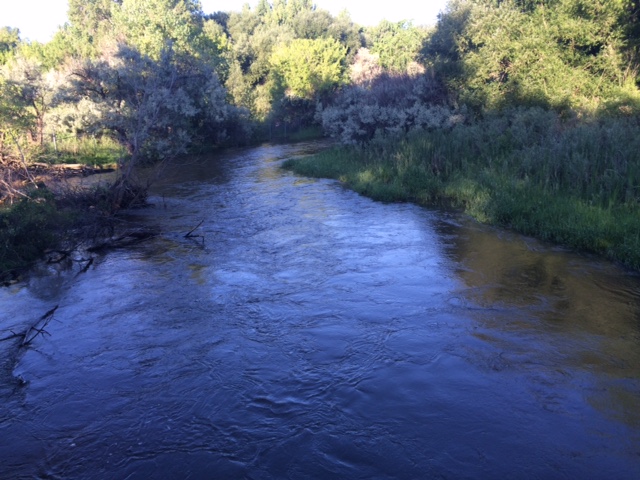
IMG_2992 IMG_2995 IMG_2997

After each days ride we soaked in the hot tub, then ate huge meals, caught up on old times, and played lots of cards. We are wicked competitive at hearts and fan-tan; my niece even got us to play Old Maid. By mid-afternoon Monday everyone headed back to Denver, but I was able to spend one solo night at our condo and continue west on Tuesday morning.

Posted in Bicycle Trip Log | Tagged , , , , , , , | Leave a comment

Profile Response – Connie and Frank Mignone Medina, MN

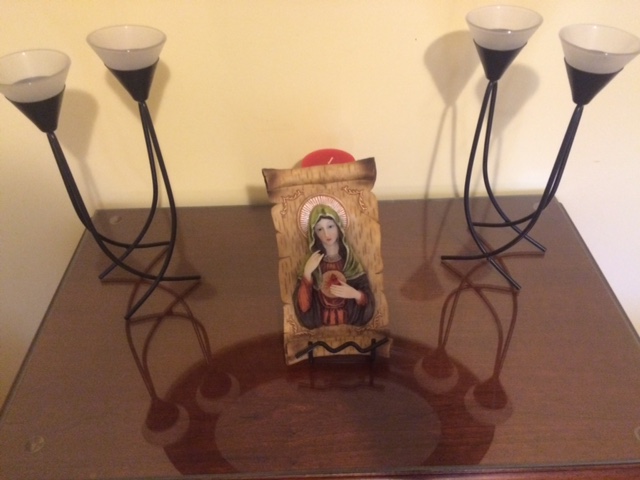
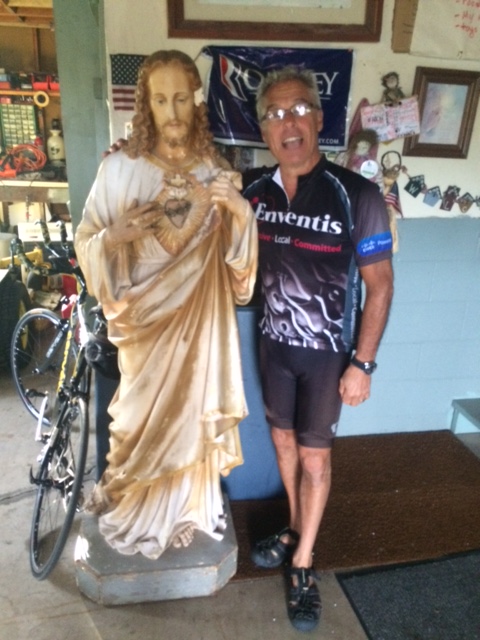
HWWLT Logo on yellowI knew Connie and Frank Mignone were Catholic the moment I turned up their driveway: all four cars have ‘Catholic’ bumper stickers applied to their rear windshields. We share common ground in that department, as I was raised Catholic and count a number of priests and nuns among my aunts and uncles. Yet I’ve never been in a house quite so Catholic as the Mignone’s. There’s a statue of Mary in the back garden, religious imagery in most rooms, and an actual scale statue of Jesus of the Sacred Heart in the garage. I’m sure that’s not his permanent place, as he must have come from a church.

Connie and Frank have lived on their four-acre plot on the outskirts of Medina, MN for over thirty years, among a small cluster of homes on large lots, each with its own well. Last year, a new subdivision of boxy houses tight to each other was constructed across the mile marker road. Frank shrugs, “That’s what happens with water and sewer come into the area.”

IMG_2419Frank is from New York City, and has the residual accent to prove it. Connie is from a small town in Southern Minnesota. They met in New York, but migrated closer to her home to raise their family. They have three children and are expecting their twelfth grandchild; the refrigerator is plastered with school pictures. Frank spent 35 years in the computer business while Connie has always been a housewife. Their favorite expression is “We are blessed.” They truly appreciate their bounty.

Connie and Frank took up cycling in their forties. They ride locally, ride for charity, and even staged a one-day ‘marathon’ with their 4 to 18 year old grandchildren to ride a 1200 collective miles in one day! The couple cycled the Pacific highway from Vancouver to Mexico in 35 days, and in 2006 spent over two months cycling New Zealand.

We traded cycling stories over dinner, though a few of my experiences revealed the dissonance between people with ‘traditional’ American values of family, faith, and work, and others. I mentioned my visit to the Somali neighborhood of Cedar-Riverside in Minneapolis, and they questioned, “Why are they here?” and “Why don’t they assimilate?” When I discussed my visit with the Racine Police Department and their efforts to relieve racial discord, Connie said, “I never felt that tension before. It’s all because of our President.”

At that moment Frank changed the subject. I understood why he did so; Americans accept certain topics as taboo except among closest friends; politics in particular. That is unfortunate. Frank, Connie, and I are all reasonable people, concerned about the welfare of our country. We ought to be able to have reasoned conversation about the big issues of our day. I don’t know why someone thinks President Obama has enflamed racial tension, but I can listen to Connie’s perspective. We need to talk about why Black Americans receive unequal treatment in our judicial system, but we also need to explore why African-Americans are so economically, socially, and educationally disenfranchised. We can question why Somali immigrants don’t assimilate as previous groups did, but we need to acknowledge that Somali’s arrived here under different conditions than previous Minnesota immigrants. When the Federal government bestowed them priority status, what voice did local citizens have?

IMG_2418Frank steered us into an economic discussion. “The only economic worth is manufacturing something. Healthcare adds nothing to the economy. Education doesn’t add anything except another person who knows stuff. I never graduated college. I had a successful career programming Cobalt. It’s nothing more than a trade skill, not unlike being an electrician.”

I asked whether education might lead to innovation. Frank considered that maybe ten percent of education was useful, but real economic worth only comes from manufacturing. “If I make a tractor and sell it to a farmer who improves his yield, that is economic value.”

After pedaling through thousands of miles of a country brimming with ‘stuff’ I asked, “When is enough enough? What is the line between manufacturing what we need and manufacturing because we have the capacity? Must we create demand just to keep the wheels of commerce turning?” I used the example of Pittsburgh’s renaissance, fueled by education, healthcare and research instead of manufacturing. “And what about the experience economy? What is the value of going to Disney world? It doesn’t make anything, except a memory.”

IMG_2421Connie and Frank have been blessed, and they acknowledge that. I believe they know that others are less fortunate through no fault of their own; that life is a mixture of luck and grit, and no two people suffer the same setbacks or enjoy the same rewards.

The key take away from my evening with Connie and Frank is that three people came together, ate, exchanged stories of common ground, and ventured into difficult territory. We did not try to change opinions or about-face years of experience. We simply shared our viewpoints, face-to-face, in a civil way. We had an encounter increasingly rare in this world. Yet, if this world is ever to come to understanding, that is how it will occur. People do not have to agree with each other to respect one another.

How will we live tomorrow?

“In a cave.” Frank says with a laugh. Then, “We’re depending on younger people now. All my life I’ve been accumulating. Every year I’ve been worth more. Now, we’re in spend down mode. It’s good. You can’t leave it all to your kids. You can’t know how they’ll use it.”

Posted in Responses | Tagged , , , | 2 Comments

Trip Log – Day 73 – Denver, CO to Copper Mountain, CO


Screen Shot 2015-07-19 at 4.27.53 PMJuly 17, 2015 – Sunny, 80 degrees

Miles Today: 99

Miles to Date: 4,148

States to Date: 18

 I cannot guess whether this pilgrimage will make me a religious person, but I can attest that it will make me a more deeply spiritual one. The hand of fate continues to intervene on my behalf in ways that are too precipitous to dismiss.

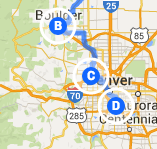
Today I undertook the toughest ride of my journey, a near century from Denver to Copper Mountain that included 9,600 feet of elevation rise, including crossing the Continental Divide at Loveland Pass. I knew it would be difficult, but anxiety turned to excitement as I studied the route, set up sag options with my brother in the event of problems, and confirmed a good weather forecast.
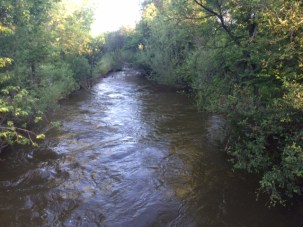
IMG_2948I woke well rested at 5 a.m., ate a ridiculous breakfast (6 hard boiled eggs, two muffins, a bowl of grapes and a banana) and headed west before six. I had pedaled the first quarter of the route before – along Bear Creek through Morrison, and out old U.S. 40 to Genesee. I had also ridden the last quarter – from Keystone Ski resort to Copper Mountain on previous Courage Classic rides. But the middle half, and the most rise, was all new.

About ten miles in, near the Bear Creek reservoir, a a cheerful Christian on a training ride slowed down to talk with me. I gave him my card and asked my question. Recreational cyclists rarely stay with me for long; they are galloping stallions while I am burdened mule. Mark Weiler rode off but looped back a few minutes later.

IMG_2951“Mr. Paul E. Fallon, are you actually cycling to 48 states? I replied yes. “And you ask everyone your question?” Yes, again. And you are riding all the way to Copper Mountain today, Mr. Paul E. Fallon?” Again, I affirmed. “Well, you are the person God sent to me today, you are the man I am supposed to ride with. Mr. Paul E. Fallon, God sent you to me.”

I figured a few miles of scripture would pass the time. Besides, Mark is very handsome and triggered my gaydar, Bible notwithstanding. My gaydar was accurate, but the idea that Mark would tire of my pace after a few miles proved wrong by at least a factor of ten.

Mark and I spent nearly twelve hours together; he rode me all the way to the top of Loveland Pass. Eventually, I suggested he stop calling me Paul E. Fallon. Mark is a U.S. Post Office mail carrier and Air Force veteran. He’s married to a women he adores and has three sons. He is also gay. He is a born again Christian who was raised Catholic, and has followed Buddhism and Pantheism at other times in his life. He is the twelfth of fifteen children born to a pair of alcoholic parents; his father died at age 57 from liver disease and four of his siblings had early, tragic deaths related to the fallout of his dysfunctional family. He is devotee of Robert Bly and the Mankind Project. He was a depressed, TV-watching couch potato until God called him to rise above his origins. Now, he cycles 250 miles a week, lifts weights, belongs to a men’s group and a Bible-based church. Mark is a warrior on a bicycle and his training rides are his mission.
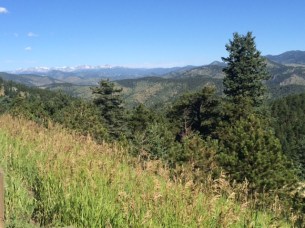
IMG_2952I could go on, because Mark did the lion’s share of talking during our hours together. In part because he is one of the most open, extroverted people I’ve met. But also because most of the time I was breathing too hard to form words, struggling to maintain a measly 4 mph as we climbed toward Loveland Pass.

Mark is a wonderful companion; a better diversion than my usual meditation. My pedaling took an uptick as he recited Psalm 19 at the top of his lungs and gestured his arms to the glory of God’s creation while we climbed toward Genesee. When I revealed, about three hours in, that I am also gay, it was clear that he was truly going to stay by my side through the climb.

IMG_2955I bought us lunch in Georgetown and shared my plentiful snacks and water; Mark had not come out equipped for a seventy-mile climb. When we reached the base of Loveland Pass he called his wife, who agreed to pick him up later, then coached me up the four-mile trek to the summit. His life story unspooled with the rise. “I have never had so much time to tell someone my whole story; it’s great to reveal it all.” And, as often happens when someone opens their heart, I found myself confessing things I usually keep private. In the thrall of a one-day endorphin fueled platonic love affair, we exchanged all manner of secrets.

By the time we achieved the final stretch, Mark was literally looping circles around me; a light racing bike can hardly stay upright at the speed of a loaded Surly on an 8% grade. He alternated between reciting Corinthians Chapter 13 and giving me unflagging encouragement. “You are going to be the first man – ever – to climb Loveland Pass on a loaded bike in tennis shoes. Man, you are one weird cyclist.”

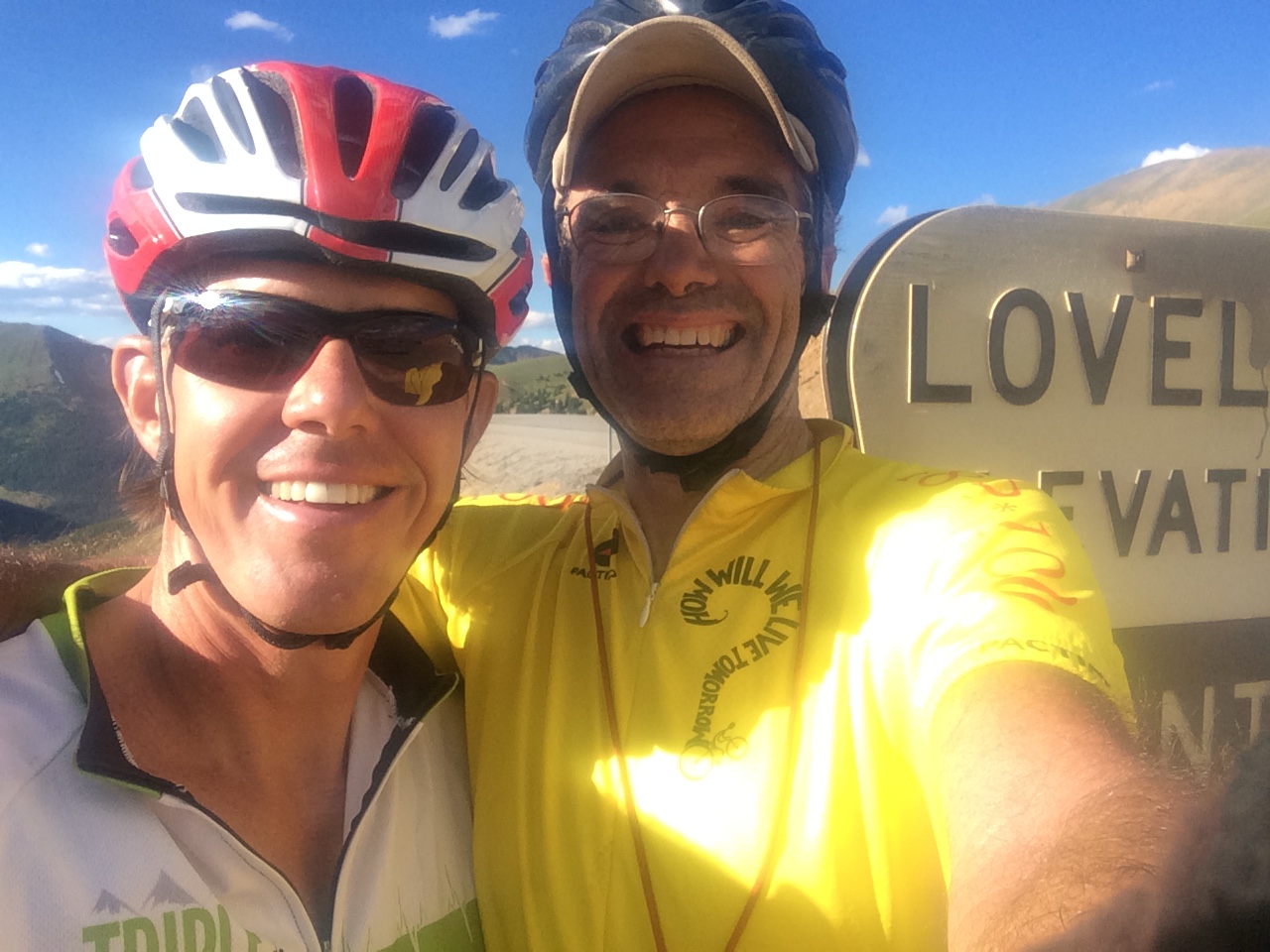
IMG_2965We reached the summit at 6:30 p.m., long past any other pedalers. We took photos, exchanged a tight hug and then headed off in opposite descents: Mark to his wife in Georgetown; me to my family beyond the Divide. Descending the Arapaho Basin into Keystone was one of the most beautiful rides I ever witnessed, even through glazy tears I could not control. Without Mark, I never would have completed this ride. Still, I was overwhelmed by what I had done.

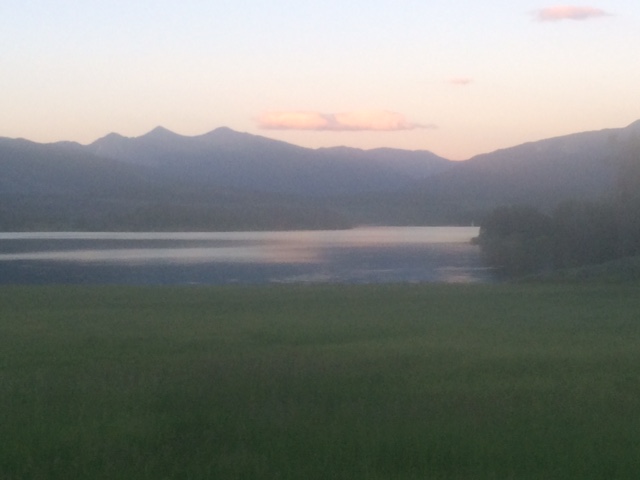
IMG_2973When world leveled out my legs were exhausted, but I wouldn’t accept a sag from my brother. I cycled along Dillon reservoir in sunset and reached the Copper Mountain bike path in twilight. I know this stretch well, and let the emerging stars guide me. I arrived at 9:30 p.m. after fourteen hours of cycling. Physically depleted but emotionally nourished.


IMG_2974

Posted in Bicycle Trip Log | Tagged , , , , , , , , | 9 Comments

Profile Response: Laura Cederberg, American Swedish Institute Minneapolis, MN


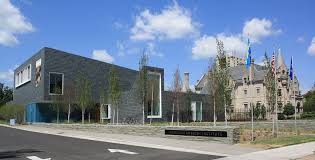
HWWLT Logo on yellowOne quarter of the population of Sweden left the country during the famine of the late 1800’s. More than half of them arrived in Turner Falls, MN and eventually to Minneapolis. Although one in eight returned to the hardships they knew rather than face the ones in this country, those who remained made Minneapolis the Swedish hub of America. Like all immigrant communities, Swedes started at the bottom of the social and economic ladder. But one man, Swan Turnblad, refused to accept that place. He built a newspaper empire and built a mansion in 1908 on Park Avenue, Minneapolis’ first paved street, to proclaim that Swedes had arrived.

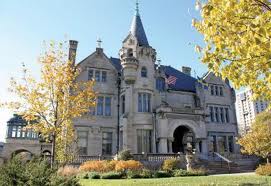
imgresThe mansion was a landmark and social statement from the start; Turnblad scarcely lived there. It became the headquarters of the American Swedish Institute in 1930 and for years was a historic house museum. Fifteen years ago ASI evaluated its mission and determined that they needed to both expand the museum campus and play a larger role it the wider Minneapolis community. The result is the Knolsen Cultural Center, a new building adjacent, and with a link to, the Turnblad mansion. The new building provides a new entrance, cafe, gift shop, and administrative center, as well as educational facility. This frees the house up to its original splendor and purpose as an architectural showcase.

imagesLaura Cederberg, ASI Communications and Marketing Director, toured me through both facilities as she described the features of each, and the evolving face of the American Swedish Institute. “When everything was in the mansion, we were operating from the belly of the beast. The new building is a LEED Gold facility with the largest geothermal installation in Minnesota. There are 88 museums in Stockholm, and they all feature great restaurants. So we put special emphasis on our cafe, which is ranked the best lunch spot in Minneapolis. We had 29,000 visitors a year; now we have 150,000.”

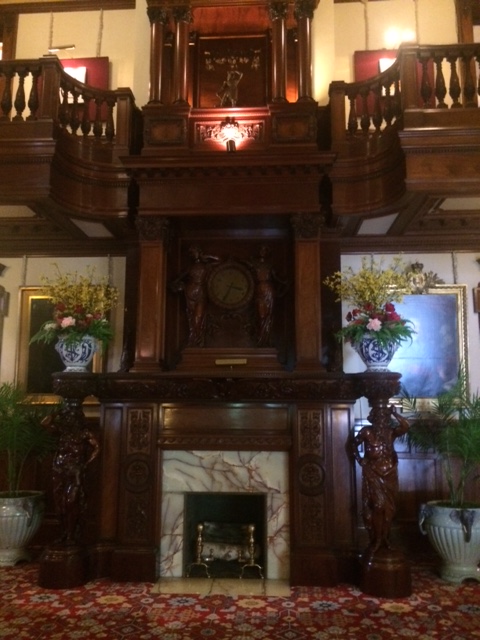
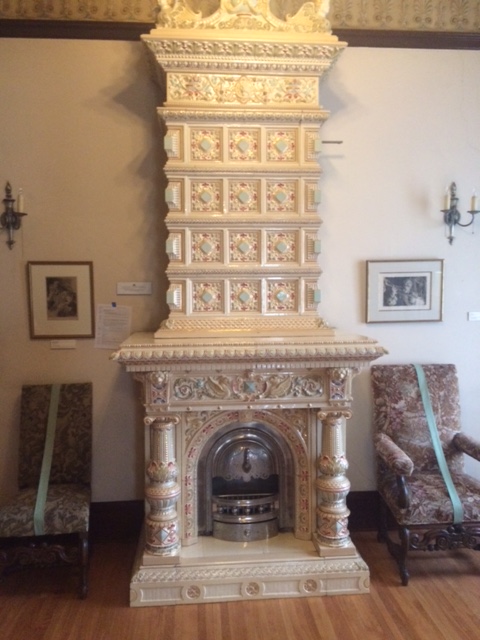
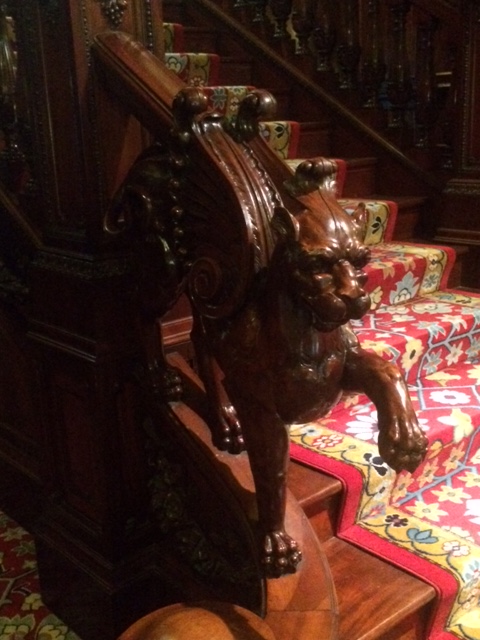
The mansion is unusual among historic homes in that there is very little furniture, as the original furnishings were distributed elsewhere. However this allows the architectural features to show to full advantage. The woodcarvings of Swedish folk, imperial and American patriotic imagery took a artisans four years to complete. The eleven ceramic Swedish stoves are gorgeous. The mansion was the first building in Minnesota to be included on the National Register of Historic places. According to Laura, “The future of the mansion is ensured by the new building and the renewed interest it has generated.”

IMG_2407 IMG_2411 IMG_2410

Laura also described the work ASI does beyond its campus. The perception of Swedes as a minority, let alone an oppressed one, has long faded. The Twin Cities have a strong Nordic identity more than a specific Swedish connection. And new immigrants are from all over the world. ASI takes the ‘Pippi Project’ into elementary schools to use Pippi’s stories of adventure as a springboard for similar stories from other cultures. In high schools they feature ‘story swaps’ where they compare and contrast stories by Swedish authors with those by immigrant writers.

How will we live tomorrow?

imgres-1“Collaboratively, collectively, and globally. That which is designed best will last longest. Everything we do is a value-add. We’ll all have to do this together.”

Posted in Responses | Tagged , , , , | Leave a comment

How will we live tomorrow? – Responses

 How will we live tomorrow?

“I still know how to make coffee the old fashioned way. When the computers go down, I’ll still have coffee.”

Penny, Admin Asst. Western Nebraska Observer, Kimball, NE

How will we live tomorrow?

“I will live tomorrow as God’s cycling warrior, proclaiming his glory to all I meet.”

Mark Weiler, Mail Carrier, Littleton, CO

How will we live tomorrow?

“I only see “We’ll make it up.” My website has my motto: You make the road by walking (ok. Biking too! J). I believe our shadow will create just as much difficulty for us and our communities with behaviors and plans based on fear; our better selves will respond with solutions and plans that remedy and inspire. I don’t imagine anything will be different. Only what actors and directors call ‘color’ will change.”

Perry Carrison, Life Coach and personal friend, Boston, MA

How will we live tomorrow?

“Build a vibe.”

Andy Williams, Owner of Medicine Man Dispensary Denver, CO

How will we live tomorrow?

“I am not optimistic. The political process is full of discord.”

Tim Fallon, School Teacher, Arvada, CO

How will we live tomorrow?

“More compassionately.”

Byron Peterson, Nebraskans for Alternatives to the Death Penalty, Scottsbluff, NE

“People were surprised that we overturned the death penalty in this state. We just focused on three basic issues: the death penalty is unfair, expensive, and rooted in vengeance rather than justice.”

How will we live tomorrow?

“One day at a time.”

Liz Fallon, Choral Librarian, Arvada, CO

How will we live tomorrow?

“I live for tomorrow by planning for progress and occasionally I give myself a day off. Lol.”

Jamie Fallon, Nurse and mother, Oklahoma City, OK

How will we live tomorrow?

“Tomorrow will be so much better than today.”

Brian, Insurance Agent Denver CO

Brain responded after dismounting at the finish line from cycling over Vail Pass. During the ride he had to stop several times and needed a back seizure massage.


Posted in Responses | Leave a comment

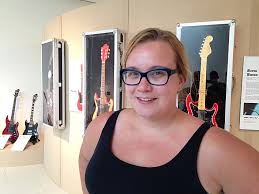
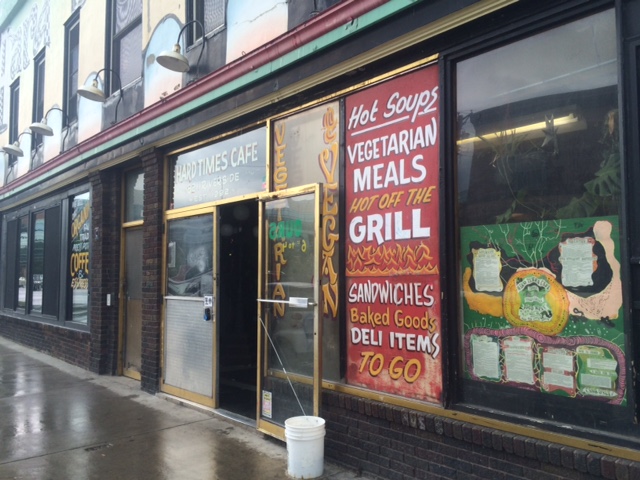
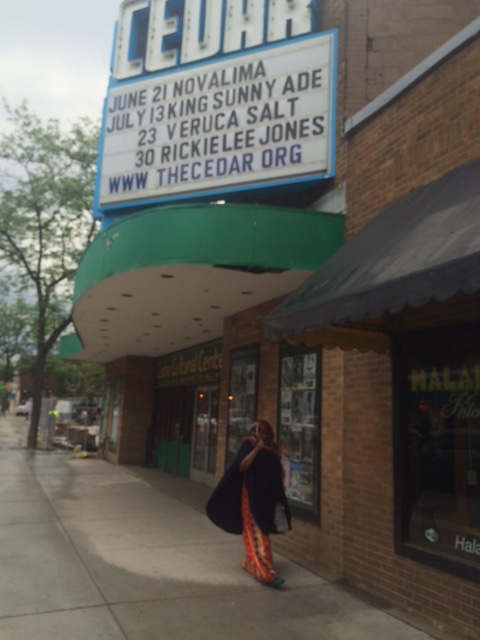
Profile Response: Brian Corner, Cedar Cultural Center, Minneapolis, MN


HWWLT Logo on yellowBohemian. Transitional. Immigrant. Artsy. Gentrifying. Somali. Close-in. Far-out. There is no end to the adjectives that can be used to describe the Cedar-Riverside neighborhood, an enclave in the shadows of Minneapolis’ downtown towers. Twenty-six years ago a group of artists took over a vintage 1948 movie theater, tore out the seats, leveled the floor and began offering alternative live music performances. Now, the Cedar Cultural Center is national model for keeping live and local music vital, and a centerpiece of this neighborhood that refuses to die, or get too cleaned up.

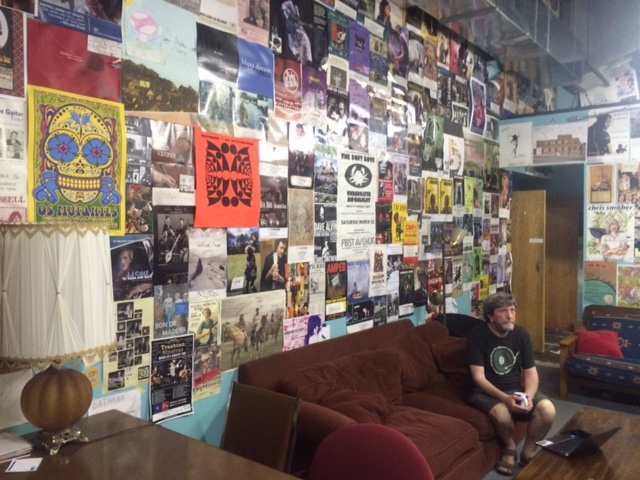
IMG_2395Brian arrived in Minneapolis from New Zealand nineteen years ago. Next month he will return to New Zealand permanently, “The winter has finally gotten to me.” He came to the United States, earned his PhD. in Genetics and worked in that field for some time. But he was always more interested in music. ”I started volunteering here. We have sixteen to twenty volunteers a night who set up, take down, and do everything in between. Sometimes we get to see the show, Or else, we get credit for another show.” Eleven years ago Brian began working at CCC full time; he’s now the House Manager. He met me in the lobby, offered coffee from the popcorn station, showed off the main stage, and invited me to the green room, where the walls are plastered with posters.

IMG_2398I asked Brian how CCC has evolved. “There are many more shows. We used to do 140 a year, now we do more than 250. We are also doing more shows at other venues. The CCC name has value, so we can be an incubator for emerging artists, even in other venues.” The main stage at CCC can sit 425 people, or accommodate 600 for standing performances.

“Our real growth is working with the Somali community. Cedar-Riverside is the largest Somali-expat community in the United States. Their musical culture has been hammered by conflict. Since we have a tradition of sponsoring local musicians, it makes sense that we sponsor Somali artists. Our ‘Midnimo’ program exposed Millennials to Islamic music. Now we’re seeing a cross-fertilization of Somali music with jazz and pop, which is new and exciting.

The local Somali community patronizes Somali shows as well as Reggae events. We have been offering free tickets to locals for other concerts to break down perceived barriers.”

IMG_2394I asked Brian about the benefits and challenges of being a non-profit organization. “We don’t have to worry too much about commercial viability, which gives us more freedom in programming. We get about 65% of our revenue from ticket sales; the rest is from donations.”


What sorts of people donate to CCC? “People have profound experiences here. The artists appreciate this place. There is a need to break down prejudice and bring people together through music. This isn’t a place where middle class white people get their annual dose of culture. People like what we are about.”

How will we live tomorrow?

“We have to figure out a way to get along with each other. I see the value of places like this. I’m a PhD. biologist but my longest job is working at a non-profit music venue because I believe in it.

“How will we live tomorrow? It all depends on how well we succeed in our mutual venture. The issue I think most about is climate change – the paramount issue of our age, which must be addressed collectively. If we can pull that off, great. Otherwise, we’re not going to be living very well tomorrow.

IMG_2399 IMG_2397 IMG_2401

“In terms of this place, CCC is doing well. We have a big capital campaign going on, the first phase is the patio reconstruction you see outside. It will allow us to host outdoor performances, free performances that connect us to the community. The new condos signal gentrification, although the huge public housing complex around the corner makes this Somali central. It was Korean before and Swedish before that. This area was hippie heaven in the 1970’s, we have more music venues per block than anywhere in the Twin Cities. But I know when I come back five years from now, it will be more gentrified.”

Posted in Responses | Tagged , , , , | Leave a comment

Trip Log – Day 72 – Denver, CO

Arvada to DenverJuly 16, 2015 – Sunny, 80 degrees

Miles Today: 26

Miles to Date: 4,039

States to Date: 18

 My three days of R&R have included long visits with family, interviews with Medicine Man Denver marijuana dispensary, Collier Hospice Center, and EcoTech Institute, Renewable Energy College, as well a three evenings of book promotion for Architecture by Moonlight. It has been great fun but will end tomorrow with a bang when I attempt the most challenging ride of my trip: 96 miles from Denver to Copper Mountain, over Loveland Pass and the Continental Divide – 9,600 feet of vertical rise!

IMG_2903

When I arrive at Copper Mountain I will be in severe need of a shower, and judging from my experience to date, I’ll encounter a huge variety of soap. Over the past ten weeks I’ve stayed in more than forty different households. They have all been generous and thoughtful. But they also have one other unifying characteristic – a dizzying array of liquid soap.

When did the bar of soap become an artifact? What is in all of these bottles of gel and foam that a simple bar cannot deliver? To be sure, a few homes still have bars of soap, in addition to their bath gel and body wash and hand sanitizer. But nobody only has soap, and many people have no hard soap at all. Even people who compost every scrap of food, recycle every bit of packaging and reject any form of fossil fuel transport have shower stalls littered with plastic bottles of odd colored liquid.

I carry a bar of soap. It’s compact, and portable. When I scrub myself, the friction makes me feel clean. I use it until it’s gone; I don’t lose that extra 20% of product that never shakes out of the container.

IMG_2902

Now that I am aware of the liquid soap phenomenon, I realize that bars have become bottom shelf grocery store items. The liquid stuff, which surely has a higher profit margin and more adverse environmental impact, is easier to reach. When my bar runs out I am going to get another plain bar of soap. It will keep me clean. And when I have to bend low to reach it at the grocery, I’ll consider it yoga.

Send me good energy as I climb, climb, climb to the other side of America. I’ll clean up as soon as I get to the other side.

Posted in Uncategorized | Tagged , , , , , , , , | 1 Comment

Profile Response: Duane Heit, Cresco, IA

HWWLT Logo on yellowDuane Heit is a man who attends to details. Halfway between Calmar and Cresco, the bike path runs through a park in Ridgeway. “Are you Paul?” A man sitting in a folding chair reading a Bible on the edge of the park called out as I passed. I stopped, affirmed, and he introduced himself. “I spent the day hiking east of here and just wanted to make sure you were on the right track.” Duane proceeded to Cresco in his car while I continued on my bike. When I arrived at his house, he was fully prepared to make my stay as his warmshowers guest a good one.

Duane and I are kindred spirits in being the same age (60), gay, and longtime single men, though Duane never had children and has stayed closer to home than me. He was born 31 miles south of Cresco and has spent most of his life in Eastern Iowa. Duane was a mortician in Lansing, IA most of his career, but that position ended four years ago, so he moved to Cresco, bought a solid house for $40,000 and joined a local mortuary practice where he hopes to retire in five years.

IMG_2343Duane indulged his wanderlust in 1998, when he took a year off and traversed the globe, trekking in India, South Africa, and Europe. His study is full of memorabilia from that period that still lives large in his psyche. Hearing Duane’s stories made me realize that I am in the middle of my own version of his yearlong adventure. More recently Duane’s adventures have been shorter but more intense; he rides ultra marathons, cycling over 200 miles in a single day.

I know little about the mortuary business and was fascinated by Duane’s perspective. “The funeral business has changed in many ways. Twenty years ago we offered standard burial packages and services usually took place shortly after someone died. Baby boomers are not interested in traditional funerals; everything is a la carte now and they price shop for what they want. The only thing that a funeral home must do by law is embalming; families can do almost everything themselves if they want.

“Take obituaries. They used to be cut and dry, formulaic. Newspapers had a flat dollar amount for an obit. Now, the paper will print by the word and families want to add all sorts of information, but it gets complicated. Who are grandchildren? Do we include names from past marriages? Do we use women’s professional or married names? All of these issues come up and have to be resolved in a short timeframe.”

I suggest that it is made more difficult during a period of family stress. “Not at all. Most of our clientele are wonderful, but the people who give us a hard time are the same people who give the plumber and the electrician a hard time. Demanding people are demanding in any situation.”

One of the biggest changes in the funeral business is the move away from having services and burial shortly after a person dies. “It used to be that somebody dies and your life stopped to address that. Now, it’s a big inconvenience. Some funerals are ten to fourteen days after people died. I have had services scheduled around children’s soccer games. People want 24/7 service; technology creates high expectations for convenience.” Duane speaks from experience; his typical schedule is Monday through Friday 8 to 5 plus 19 days on-call, after which he gets two days off.

How will we live tomorrow?

IMG_2342“We are becoming a nanny state; the government is involved in everything we do, and that will only increase. There will be far more technology and far more government involvement.

“Personally, I hope to retire within five years. I would like to move where it’s warmer; the Iowa winters get harder all the time. I won’t be able to afford to live in Florida or even Phoenix, which I like very much. I will be content to settle in Arkansas or even Southern Missouri.”

Posted in Responses | Tagged , , , , | Leave a comment

Trip Log – Day 71 – Denver, CO

Arvada to DenverJuly 15, 2015 – Sunny, 80 degrees

Miles Today: 0

Miles to Date: 4,013

States to Date: 18

Let’s all get along on the road. In the four years since my last cycle tour, people have become much more considerate of cyclists. However, we suffer from being in a hybrid world, neither pedestrian nor motor vehicle. We rarely have our own space. The cars want us on the sidewalks; the pedestrians want us on the shoulder. Most everyone wants us in the gutter.

Five things I have observed after 4000 miles that cyclists and the rest of the world can do to make cycling even better for everyone.

Screen Shot 2015-07-14 at 4.09.12 PMDear Google: I love your bicycle route maps. They give me options, they give me estimated time, they give me vertical rise and fall. What they don’t tell me is whether the suggested roads are paved or not. I think you do that for cars – could you do that for bikes as well? Whether a road is paved makes a big difference in determining a route.

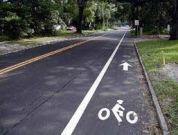
imagesDear highway engineers: Bike lanes marked on the road pavement are saver than bike paths set back from the street. This seems counterintuitive, but when I’m on the pavement, cars see me. When I’m set apart by a curb and grass strip, drivers aren’t looking for me at cross streets. My only mishap to date happened when cars at right angles were unaware of me coming off a bike path set back from the road.

imgresDear people who consider bike paths routes for ten-year-olds to get to a ball game: Take the silly curves out of bake paths. Let us get from Point A to Point B with the same clarify that other vehicles use. If I want to zig-zag my path, I’ll play Candyland.

 

images-2Dear vehicle drivers: If a cyclist is riding along the shoulder and following the rules of the road – don’t honk! I don’t know if you are perturbed that I exist or are jealous that you’re stuck in your car while I’m in the open air. Either way, being honked at is unnerving.
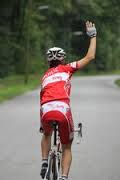
 

images-3Dear cyclists. Follow the rules of the road. I know we are independent-minded souls who hate being regimented, but we have to stop at red lights, signal, etc. Okay, okay, if no one’s around roll through the stop sign, but don’t make vehicles nervous about whether we’re going to stop, go, or head off in an unexpected direction. We chose to cycle, so enjoy the journey and accept we can’t get everywhere as fast as possible.

Posted in Bicycle Trip Log | Tagged , , , | Leave a comment

Profile Response: Michael Telzrow, Wisconsin Veterans Museum, Madison, WI

HWWLT Logo on yellowAfter the Civil War, Union veterans formed the Grand Army of the Republic, a fraternal organization with both social and political objectives. In Wisconsin, GAR persuaded the state to create a museum of Civil War memorabilia. The museum opened in 1901 with the expanded mission to also preserve artifacts from the Spanish-American War and any future wars. The Wisconsin Veterans Museum occupied space within the Capitol Building for nearly one hundred years, reflecting its political clout. It was closely aligned with the Republican Party, though any Union Army or Navy vet could claim affiliation. After World War II the museum was transferred to the Wisconsin Department of Veteran’s Affairs, and sought to celebrate the contributions of all Wisconsin veterans. In 1993 the museum moved across the street from the Capitol to designated exhibit space.

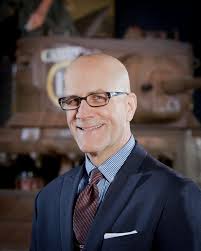
imgres-1 Michael Telzrow has been director since 2010, though he worked at Wisconsin Veterans Museum as a graduate student. Michael is a Coast Guard veteran and longtime military history buff. Prior to leading WVM, he worked in a variety of museum settings, including Director of the National Railroad Museum.

images“Our challenge is how to make the veteran’s experience relevant thirty years from now. What happened after World War II, when being a veteran was an almost universal experience, won’t happen again. The numbers of veterans is down; fewer people have direct connection to veterans.
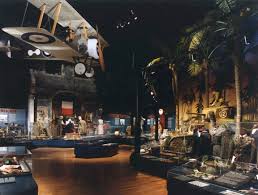
“We are in the process of developing a new museum concept that will expand our space by a third and tell the veterans’ story in a different way. Now, our museum is chronological, from the Civil War through the Gulf Wars. What we want to capture are the universal elements of the soldier experience. There is a common path most veteran’s experience. They are citizens who undergo core training to become a soldier. Then they receive specialized training and are sent somewhere, often far from home, where they engage in activities thimgresat are completely different from their previous life. This often includes combat, and culminates in a homecoming. It is a pattern of passages. Not all experiences are alike: the particulars of a World War II soldier and a Vietnam soldier and an Iraqi soldier are not the same, but the passages are similar.
 

How will we live tomorrow?

imgres-2“A place like the Wisconsin Veterans Museum is important for two reasons. First, we have a moral obligation to remember veteran’s service in a way that is meaningful. Second, we play an important role in the civic values of our nation. This museum is a repository of our shared achievements. If we lose connection to the past, we lose the glue that connects us. Otherwise, we are just people sharing space.

“We order our lives through memories. That’s how human’s act.”

Posted in Responses | Tagged , , , , | Leave a comment